Lady Pancake & Sir French Toast by Josh Funk

Share

lady pancake and Sir

Lady Pancake & Sir French Toast
Author: Josh Funk
Illustrated by: Brendan Kearney
Published September 1st, 2015 by Sterling

Goodreads Summary: A thoroughly delicious picture book about the funniest “food fight!” ever! Lady Pancake and Sir French Toast have a beautiful friendship—until they discover that there’s ONLY ONE DROP of maple syrup left. Off they go, racing past the Orange Juice Fountain, skiing through Sauerkraut Peak, and reeling down the linguini. But who will enjoy the sweet taste of victory? And could working together be better than tearing each other apart? The action-packed rhyme makes for an adrenaline-filled breakfast . . . even without a drop of coffee!

About the Author: Josh Funk grew up in New England and studied Computer Science in school. Today, he still lives in New England and when not writing Java code or Python scripts, he drinks Java coffee and writes picture book manuscripts alongside his wife, children, and assorted pets & monsters.

Josh is a board member of The Writers’ Loft in Sherborn, MA and the co-coordinator of the 2016 and 2017 New England Regional SCBWI Conferences.

Josh is the author of LADY PANCAKE & SIR FRENCH TOAST (Sterling), as well as the forthcoming picture books DEAR DRAGON (Viking/Penguin 2016), PIRASAURS! (Scholastic 2017), JACK! [and the beanstalk] (Two Lions, 2017), and more.

Josh is terrible at writing bios, so please help fill in the blanks. Josh enjoys _______ during ________ and has always loved __________. He has played ____________ since age __ and his biggest fear in life is being eaten by a __________.

Josh is represented by Kathleen Rushall of Marsal Lyon Literary Agency.

To learn more about Josh, follow him on Twitter @JoshFunkBooks or visit his blog https://papajfunk.wordpress.com.

To learn more about Lady Pancake & Sir French Toast, visit Josh’s website.

And don’t forget to check out Josh’s Extra Special Author Top Ten Tuesday!: Favorite Fictional Picture Book Educators here at Unleashing Readers.

Kellee’s Review: This book is a humorous, epic adventure through the dangers of the refrigerator. The mix of the well-rhymed text and highly comical and colorful artwork really brings the story to life. I found myself laughing out loud as dressings, beans, jam, and more challenge Lady Pancake and Sir French Toast as they challenge each other to be the first to the syrup. The way that the different foods in the fridge play a part in the story are so clever! I also found myself reading parts of the book out loud to hear the rhyme and rhythm. Josh really did a great job and included rhymes that I would have never thought of like conversed/first, meanie/linguini, and ranch/avalanche. This is definitely a text that is made to be read aloud and shared with children who will laugh and cheer and *gasp* at the twist (did I mention there was a twist?!).

Ricki’s Review: I have been anticipating this book for the past year and have spent quite a bit of time contemplating whether I will be Team Lady Pancake or Team Sir French Toast. When the book arrived in the mail, I shrieked with glee and told my son we had a treat for bedtime. That night, I cracked the crisp cover and smoothed my hands over the pages. I was immediately taken by the gorgeous artwork. I could see my son’s eyes darting from character to character. He has a short attention span, and this book held his interest from cover to cover. Meanwhile, as he looked at the artwork, I lingered on each page and became enveloped in the comical story. Above all, I was blown away by the engaging writing. The first time I read a picture book, I often stumble over the words. It usually takes a few readings to read a book aloud at a steady pace. But the words and phrases flowed beautifully in this book. I couldn’t help but wonder how many times the author revised in order to get the language just right. This book will be a crowd-pleaser in the classroom. I highly recommend it as a read-aloud.

Teachers’ Tools for Navigation: A free activity kit for the book is available which includes art activities, a crossword, a rhyming activity, and thought questions for readers to answer.

Teachers could start by using this book as a mentor text to teach personification in writing. The text is so cleverly crafted that students will be itching to create their own stories. We think it would be very fun for elementary school students to pair up and write their own adventures for Lady Pancake and Sir French Toast. This seems like the next popular duo in children’s literature, and we demand a companion text, Josh Funk!

Discussion Questions: How does the author use rhyme to engage readers in the story? How does the illustrator depict the characters in a fun, eye-appealing way?; How does the author infuse humor to teach a good lesson? What is the theme of the story?; Are Team Lady Pancake or Team French Toast? How did you make this decision? Which team do you think the author is on, and why?

Book Trailer: 

Read This If You Loved: Ballet Cat by Bob Shea, This is a Moose by Richard T. Morris, Tommy Can’t Stop by Tim Federle

Recommended For: 

readaloudbuttonsmall classroomlibrarybuttonsmall

Kellee Signature andRickiSig

**Thank you to Lauren at Sterling for providing copies for review!**
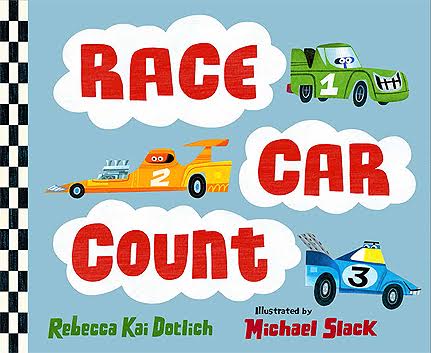
Race Car Count by Rebecca Kai Dotlich, Illustrated by Michael Slack

Share

Race car count

Race Car Count
Author: Rebecca Kai Dotlich
Illustrator: Michael Slack
Published: October 27, 2015 by Henry Holt and Co. (BYR)

Goodreads Summary: Race car 1 honks look at me!
He zooms in front with the turn of a key.

Race car 2 is close behind.
The sound of vroom is on his mind.

This simple, rhyming text is perfect for reinforcing counting with young children, and the vibrant, energetic illustrations make this a terrific package for the youngest vehicle enthusiasts.

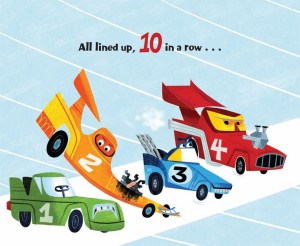
Ricki’s Review and Teachers’ Tools for Navigation: My son is absolutely obsessed with cars, so I consider myself to be a car book connoisseur. In the past year, I have read at least fifty books about cars, and Race Car Count stands out from the rest. Upon Henry’s request, we’ve read it about eight times in the last three days. Parents and teachers know that when kids take an interest in a topic, they want to read every book about that interest. I am very pleased that my son wants to read this book over and over again because we can practice counting several times a day. As we read each page, I ask him to count each car with me. He loves the ways the cars pile up on each page, and says “Uh oh!” each time we turn to a car pileup.

The illustrations are fantastic, and they keep him engaged. Each numbered car is consistent throughout the book, which adds great characterization/personification to each car. We spend a lot of time on the last page, where my son stares at all of the cars. Each car has different interests. For example, car number ten (my personal favorite) is yellow and named Groovy. It loves popcorn and collects bumper stickers. Teachers might ask students to illustrate car number 11 and share that car’s personality. Or, they can ask students to create their own number books with something that interests them! I suspect my son’s next step would be to create a book to count construction vehicles. 😉

Kellee’s Review and Teachers’ Tools for Navigation:  Whenever I think there cannot be any new interesting ABC and counting books, I am introduced to another book that proves me wrong. Race Car Counts is going to be loved by so many kids and teachers. Not only is it a fun story of racing with vibrant and colorful illustrations, it is a great book to teach counting, colors, personality/character traits, and rhyming. Each car is introduced, and the reader learns their number, their color, and a bit about their personality. And I think the addition of the character cards in the back of the book that includes more information about each race car really pushes the book into being a mentor text for writing as well because students could duplicate the cards with their own characters.

Discussion Questions: How does the author use rhymes to enhance the story?; How does she use adjectives to make the story fun and engaging?; How does the illustrator personify each car?; Which car is your favorite and why?

We Flagged: “Race car 4, all shiny red, rumbles grumbles, pulls ahead.”

race car count
From http://us.macmillan.com/racecarcount/rebeccakaidotlich

Read This If You Love: The Racecar Alphabet by Brian Floca, Alphabeep: A Zipping, Zooming ABC by Debora PearsonThe Three Little Rigs by David Gordon, Ten Little School Cars by School Specialty Publishing

Recommended For: 

classroomlibrarybuttonsmall readaloudbuttonsmall

RickiSigandSignature

**Thank you to Michael Slack for providing copies for review!**
Never Take a Shark to the Dentist (and other things not to do) by Judi Barrett

Share

shark

Never Take a Shark to the Dentist (and other things not to do)
Author: Judi Barrett
Illustrator: John Nickle
Published March 4th, 2008 by Atheneum Books for Young Readers

Goodreads Summary: There are many things you should never, ever, ever do. Like sit next to a porcupine on the subway (ouch!). Or hold hands with a lobster (double ouch!). Or take a shark to the dentist (triple ouch!).

Bestselling author JUDI BARRETT and imaginative illustrator JOHN NICKLE give us a raucous look at the perils of taking giraffes to the movies, goats to the library, and pigs out to lunch…and other such silly stuff.

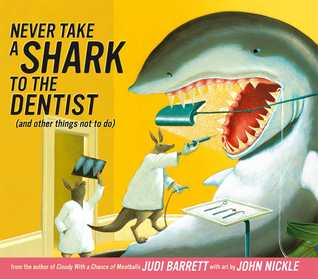
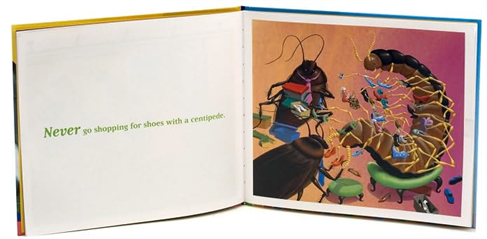
My Review and Teachers’ Tools for Navigation: The combination of Judi Barrett’s humorous DO NOTs and John Nickle’s fantastic illustrations, this book just cracked me up! It is not only a perfect read aloud to suck students in, it is definitely a book that can be used in the classroom. First, each instance has something not to do (Never take a shark to the dentist) with cartoony illustrations, but doesn’t elaborate after that. What would happen? Why wouldn’t you ____? A great cause and effect discussion. These little DO NOTs would also be perfect prompts to get students writing. It can be a prompt for a humorous narrative or for an expository essay about why not do to do these things.

Discussion Questions: What would happen next? Why wouldn’t you ____? What would cause you to need to ____?

We Flagged: 

nevergo

Check out Amazon to LOOK INSIDE Never Take a Shark to the Dentist (and other things not to do)

Read This Book If You Loved: Cloudy with a Chance of Meatballs by Judi Barrett, This Is Not My Hat & I Want My Hat Back by Jon Klassen, Press Here by Herve Tullet, Battle Bunny by Jon Sciezska, The Book of Bad Ideas by Laura Huliska-Beith

Recommended For: 

readaloudbuttonsmall closereadinganalysisbuttonsmall

Signature

What Do You Do with an Idea? by Kobi Yamada

Share

idea

What Do You Do with an Idea?
Author: Kobi Yamada; Illustrator: Mae Besom
Published: February 1, 2014 by Compendium Inc.

Summary: This is the story of one brilliant idea and the child who helps to bring it into the world. As the child’s confidence grows, so does the idea itself. And then, one day, something amazing happens. This is a story for anyone, at any age, who’s ever had an idea that seemed a little too big, too odd, too difficult. It’s a story to inspire you to welcome that idea, to give it some space to grow, and to see what happens next. Because your idea isn’t going anywhere. In fact, it’s just getting started.

Review: I read this book slowly and purposefully. By page two, I realized I had come upon something very special, and I wanted to savor the moment—because while we can enjoy books over and over again, we can never read a book for the first time twice. When I think of this book, I will remember reading it quietly aloud (cross-legged on the floor of the bookstore) as my son played with trains beside me. What Do You Do with an Idea? illustrates the complexity of ideas, which are inherently imbued with feelings of self-doubt. The child in this book learns to treasure his idea and comes to realize the beauty of its potential. After I read this book, I immediately mailed a copy to my younger sister (who works at Google) because her mind brims with ideas. This book is inspirational for people of all ages. I hope you find it to be inspirational, too.  

Check out Kellee’s review of this text.

Teacher’s Tools for Navigation: The author and illustrator combine efforts to illustrate an abstract idea as a physical thing. Readers might consider how they do this with words and illustrations. Then, they could try to illustrated a different abstract idea in a story of their own.

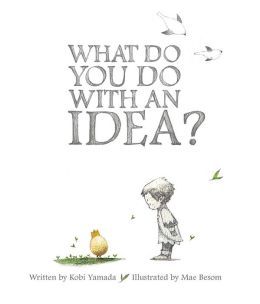
Discussion Questions: Why might the illustrator have chosen to characterize the idea as an egg with a crown?; How is color intentionally used to tell the story?; Why might the author have chosen to use a first person point-of-view? How might the story have been different otherwise?; What is the author’s purpose?; Why/How might this book resonate with readers of all ages?

We Flagged: 

What Do You Do with an Idea 2

Image from: www.amazon.com

Read This If You Loved: The Most Magnificent Thing by Ashley Spires; The Dot by Peter H. Reynolds, The Noisy Paint Box by Barb Rosenstock, Lost and Found by Oliver Jeffers, Journey by Aaron Becker

Recommended For:

  readaloudbuttonsmall closereadinganalysisbuttonsmall classroomlibrarybuttonsmall

RickiSig

Once Upon an Alphabet by Oliver Jeffers

Share

Once Upon an Alphabet

Once Upon an Alphabet: Short Stories for all the Letters
Author: Oliver Jeffers
Published October 14th, 2014 by Philomel

Goodreads Summary: If words make up the stories and letters make up the words, then stories are made up of letters. In this menagerie we have stories made of words, made FOR all the letters.

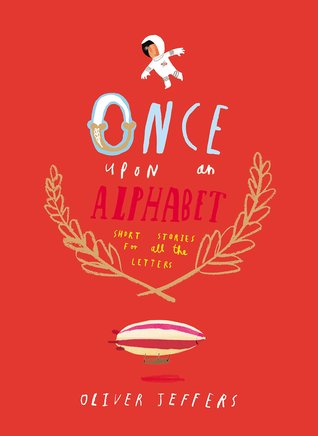
The most inventive and irresistible book of the year spans a mere 26 letters (don’t they all!) and 112 pages. From an Astronaut who’s afraid of heights, to a Bridge that ends up burned between friends, to a Cup stuck in a cupboard and longing for freedom, Once Upon an Alphabet is a creative tour de force from A through Z. Slyly funny in a way kids can’t resist, and gorgeously illustrated in a way readers of all ages will pour over, this series of interconnected stories and characters explores the alphabet in a way that will forever raise the bar.

In Once Upon an Alphabet, #1 New York Times bestseller Oliver Jeffers has created a stunning collection of words and artwork that is a story book, alphabet book, and gorgeously designed art book all in one.

Kellee’s Review and Teachers’ Tools for Navigation: Oliver Jeffers is just brilliant. Everything he does is unique, and he actually keeps surprising me with each new book. And he makes me laugh out loud, which is always such a treat. This book has 26 quirky short stories, each corresponding with a letter. Each story has characters, plot, theme, and conflict, and each is quite clever and funny. It is just so well done!

I’d love to see this book used as a read aloud for 26 days. Each day as a different letter. With every letter, teachers could focus on different things: the letter, illustrations, voice, characterization, plot arc, conflict, theme, mood, figurative language, etc. It would be a great opener to the day and would also be a lot of fun to ask students to write their own stories for the letters. This pushes an alphabet book to a whole different level!

Ricki’s Review and Teachers’ Tools for Navigation: I agree with Kellee. Decades from now, children will still be enjoying Jeffers’ books. For me, he is comparable to the greats in children’s literature. My favorite part about this book was the way he connected the letters. It made me excited when he returned to some of the previous short stories.

This book begs for students to write. The short stories teach literary skills in an engaging way. Kellee’s idea was similar to my own. I would love to see a classroom book of these letters. Each student could be assigned a letter or two. With some funding, perhaps the students could bring a bound version home. It would be much more fun for students to practice letters when they can read their classmate’s stories! The way Jeffers flexes his creative muscles would also be inspiring to high school students.

Discussion Questions: Which letter’s story was your favorite? Why?; In what ways was Oliver Jeffers creative in his storytelling?; Can you think of other stories for each letter?

We Flagged: 

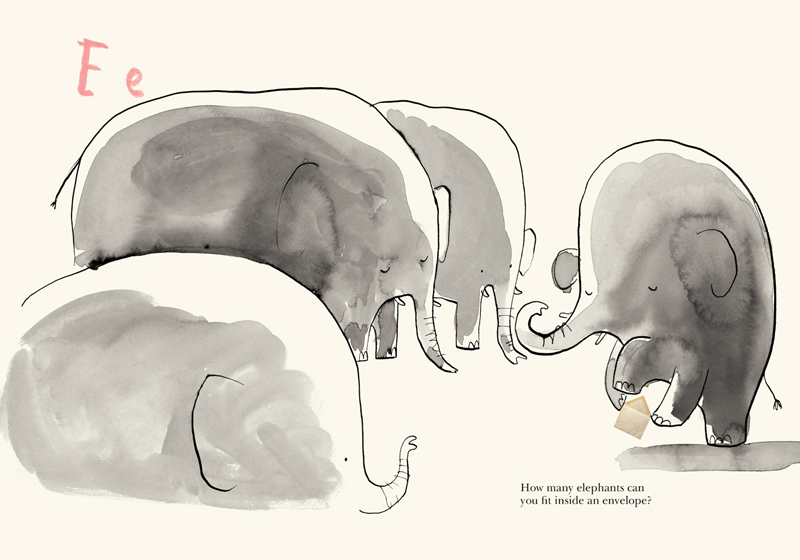
jeffers-e
http://www.oliverjeffers.com/media/5-e-2-web.jpg

Read This If You Loved: Any books by Oliver Jeffers, Eric Carle, or Dr. Seuss

Recommended For: 

classroomlibrarybuttonsmall readaloudbuttonsmall closereadinganalysisbuttonsmall

Signature andRickiSig

**Thank you to Penguin Young Readers Group for providing copies for review!**

Blog Tour and Review!: Catch that Cookie! by Hallie Durand

Share

cookie

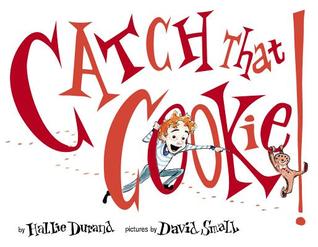
Catch That Cookie!
Author: Hallie Durand
Illustrator: David Small
Published August 14th, 2014 by Dial

Publisher Summary: Gingerbread men can play a mean game of sneaky tag!  Don’t believe it? Marshall didn’t either no matter how much his teacher, Ms. Gray, told him. But when the cookies go missing from the oven and the students find clues all around the classroom, Marshall can deny it no longer: Gingerbread men are real and they’re on the run!

From the author of the Dessert First Trilogy and Mitchell books, Hallie Durand, and Caldecott winner and two time honoree illustrator David Small, comes a tantalizing new tale that will have readers racing through the pages, eager to see where the gingerbread men have gone.

My Review and Teachers’ Tools for Navigation: This book has the potential to not only be a fun, interactive read for kids, but one that could definitely be used in a classroom. Since the reader, along with Mitchell, are given clues throughout the book, the reader can work with Mitchell to try to figure out where the gingerbread men went. It would be so much fun to read this with kids. The clues are rhyming with words left out, so they must use the context clues and rhyming skills to figure out the missing word. Also, to complete track the men down in the end, Mitchell has to make some inferences which would be a great discussion on how he figured it out. So, either in the classroom or at home, this book is definitely going to get some laughs and start good conversations.

Discussion Questions: If your gingerbread man could run, where do you think he would go?; Marshall gave his cookie six raisin eyes! Tell us how you would design your own gingerbread man.

I would make my gingerbread man look like a ninja so that he would be the hardest gingerbread man to find and he would always be where ever you weren’t looking!

Comment below OR share through Twitter using #catchthatcookie!

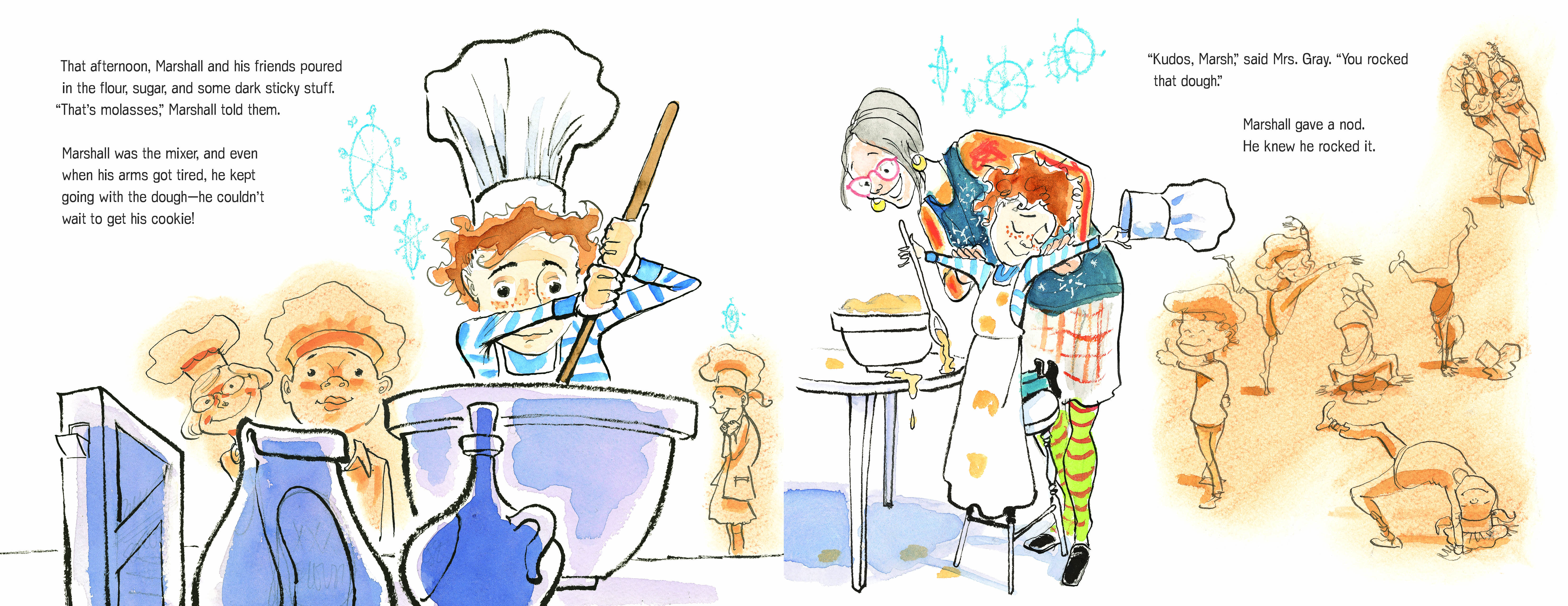
We Flagged: 

Cookie_10-11

Read This If You Loved: Mitchell books by Hallie Durand, Help! We Need a Title by Herve Tullet 

Recommended For: 

classroomlibrarybuttonsmall readaloudbuttonsmall

Signature

**Thank you to Rachel at Penguin for having us as a stop on the blog tour!**

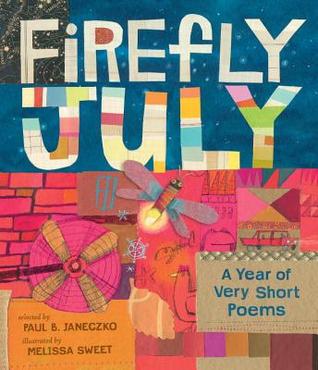
Firefly July: A Year of Very Short Poems selected by Paul B. Janeczko

Share

NF PB 2014

Nonfiction Picture Book Wednesday

Nonfiction Picture Book Wednesday is hosted by Kid Lit Frenzy and was started to help promote the reading of nonfiction texts. Most Wednesdays, we will be participating and will review a nonfiction text (though it may not always be a picture book).
Be sure to visit Kid Lit Frenzy and see what other nonfiction books are shared this week!

firefly

Firefly July: A Year of Very Short Poems
Selected by: Paul B. Janeczko
Illustrator: Melissa Sweet
Published March 11, 2014 by Candlewick Press

Goodreads Summary: Celebrated poet and anthologist Paul B. Janeczko pairs with Caldecott Honoree Melissa Sweet for a collection of short poems to sample and savor. 

It only takes a few words, if they’re the right words, to create a strong image. Whether listened to in the comfort of a cozy lap or read independently, the thirty-six very short poems in this collection remind readers young and old that a few perfect words and pictures can make the world glow. Selected by acclaimed poet Paul B. Janeczko and gorgeously illustrated by Melissa Sweet, Firefly July: A Year of Very Short Poemsinvites children to sample poems throughout the four seasons

My Review: Paul B. Janeczko did a wonderful job choosing poems that represent each season beautifully from amazing poets such as Sandburg, Williams, Hughes, and Fletcher, then add Melissa Sweet’s mixed media illustrations that engulf the page in color, and you have a perfect poetry anthology for any age.  There isn’t much more to say about this book, but that it is something every person should see.

Teachers’ Tools for Navigation: What can you not do with this book?! It has every type of poem imaginable that can be used in so many different situations. Need an example of a type of figurative language? You’ll find it in here. Need an example of a rhyme scheme? Yep, in here. Need to talk about rhythm? This’ll do. Want to introduce poetry? Have examples of poems for mentor texts? Allow students to draw how they interpret different poems and come back together and share? All can be done with this. And all with short, non-overwhelming, yet amazing poems.

Discussion Questions: What poems would you have chosen for the different seasons?; Which poem is your favorite?; How do you picture ______?

We Flagged: 

Read This If You Loved: Any poetry.

Recommended For: 

closereadinganalysisbuttonsmall readaloudbuttonsmall classroomlibrarybuttonsmall litcirclesbuttonsmall

Signature

**Thank you to Rachel at Candlewick for providing a copy for review**