My Friend Maggie by Hannah E. Harrison

Share

my friend maggie

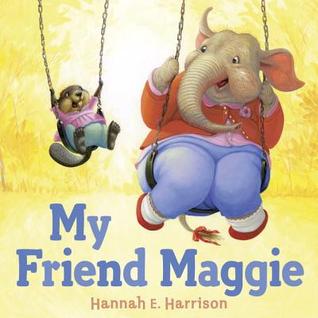
My Friend Maggie
Author and Illustrator: Hannah E. Harrison
Anticipated Publication: August 9, 2016 by Dial

Goodreads Summary: A sweet and heart-tugging story about bullying, friendship, and fitting in, perfect for readers of Stand Tall, Molly Lou Melon

Paula and Maggie have been friends forever. Paula thinks Maggie is the best—until mean girl Veronica says otherwise. Suddenly, Paula starts to notice that Maggie is big and clumsy, and her clothes are sort of snuggish. Rather than sticking up for Maggie, Paula ignores her old friend and plays with Veronica instead. Luckily, when Veronica turns on Paula, Maggie’s true colors shine through.

This moving friendship story has all the heart and emotion of The Giving Tree and Kevin Henkes’s Chrysanthemum. The gorgeous artwork and important message make this a book to treasure. It’s truly a classic in the making.

Ricki’s Review: I loved this book from the moment I read it, and it will always hold a special place in my heart. I read it to some family members, and they had tears in their eyes by the end. It is a very special book that teaches wonderful lessons to children about friendship and bullying. The characters are incredibly endearing, and the illustrations make them come alive. My son asks me to read this book over and over again. I received this book as a galley, but I will be buying it to have a hard cover copy to love forever.

Kellee’s Review: This text deals with such a true issue that is not often touched in picture books: bullying and lack of friends because of being overweight. But anyone who is in schools knows that this type of behavior is happening younger and younger which leaves a large portion of young students feeling excluded from their peers. Maggie’s story gives teachers and parents an opportunity to discuss this issue without it seeming “real” because it is with animals. But this story is more than a bullying story, it is a story about true friends and how they aren’t always who you are looking for. 

Teachers’ Tools for Navigation: This would be a fantastic book to share with students on the first day of school. The characters experience problems that are common to most humans as their friendships evolve. It shows the effects of bullying and the power of friendship. Teachers might refer back to this book whenever bullying or friendships seem to be affecting students and/or the classroom environment.

Discussion Questions: What choices does Paula make? Why do you think that she makes these choices? How do they affect her friendship with Maggie?; What kinds of qualities does Maggie portray? Do you think she made the right decision?; How have some of your friendships evolved as you’ve grown up?

Flagged Passage: “This is my friend Maggie. We’ve been friends forever. She’s great at splashing in mud puddles. She helps me reach the reddest apples. She even lifts me up when I can’t see.”

*Make sure to check out the book to see the detailed and perfect illustrations.

Read This If You Loved: You Are (Not) Small by Anna Kang, Each Kindness by Jacqueline Woodson (Kellee’s Review | Ricki’s Review), Big Bug by Henry Cole, Horns to Toes by Sandra Boynton, Giraffes Can’t Dance by Giles Andreae, Unicorn Thinks He’s Pretty Great by Bob Shea, The Magic of Maxwell and His Tail by Maureen Stolar Kanefield

Recommended For: 

readaloudbuttonsmall classroomlibrarybuttonsmall

RickiSigandSignature

What Do You Do with a Problem? by Kobi Yamada

Share

what do you do with a problem

What Do You Do with a Problem?
Author: Kobi Yamada; Illustrator: Mae Besom
Published: July 1, 2016 by Compendium Inc.

GoodReads Summary: From the same author and illustrator as our #1 nationally best-selling What Do You Do With an Idea? comes a new book to encourage you to look closely at problems and discover the possibilities they can hold.

What do you do with a problem? Especially one that follows you around and doesn’t seem to be going away? Do you worry about it? Ignore it? Do you run and hide from it?

This is the story of a persistent problem and the child who isn’t so sure what to make of it. The longer the problem is avoided, the bigger it seems to get. But when the child finally musters up the courage to face it, the problem turns out to be something quite different than it appeared.

This is a story for anyone, at any age, who has ever had a problem that they wished would go away. It’s a story to inspire you to look closely at that problem and to find out why it’s here. Because you might discover something amazing about your problem… and yourself.

What are problems for? They challenge us, shape us, push us, and help us to discover just how strong and brave and capable we really are. Even though we don’t always want them, problems have a way of bringing unexpected gifts.

So, what will you do with your problem? Now that’s up to you.

Review: There is something so magical about the combination of writer Kobi Yamada and illustrator Mae Besom. When I saw that these creators of What Do You Do with an Idea? had another book, I jumped at the chance to read it. It’s no secret that I am in love with this first book. I have gifted it to many friends and children, and I include it on many of my favorites and Top Ten Tuesday lists. I was pleased that What Do You Do with a Problem? is just as stunning. These two books are a teacher’s dream. They utilize many literary elements and are perfect for close analysis. I would use them at all grade levels. What Do You Do with a Problem? is a great text to teach readers how to reconsider a problem (or problems) that they might have. They can compare the problem with illustrations and consider how that problem may, for example, be all-encompassing. I like how the book balances both the weight of the problem and the proverbial light at the end of the tunnel. By looking at this problem in a new light, readers will be able to take more of an outside perspective of the conflict—and hopefully/potentially work toward a resolution.

Teacher’s Tools for Navigation: To start, teachers might ask students to consider the symbolism within the text. They might even grapple with the definition of an allegory and discuss ways the definition might be connected with the text and illustrations. Then, students could think of an abstract idea and try to associate an object with that idea. They might even consider writing their own picture book that connects the object and abstract idea. I also think it would be great for teachers to read both this text and What Do You Do with an Idea? to students. Then, they might compare and contrast the stories and their messages.

Discussion Questions: What do you do with a problem? How do we deal with problems in different ways? How do others in our lives deal with problems in ways that differ from us?; How do the author and illustrator work together to create a compelling story? What symbols do they use to convey their message?

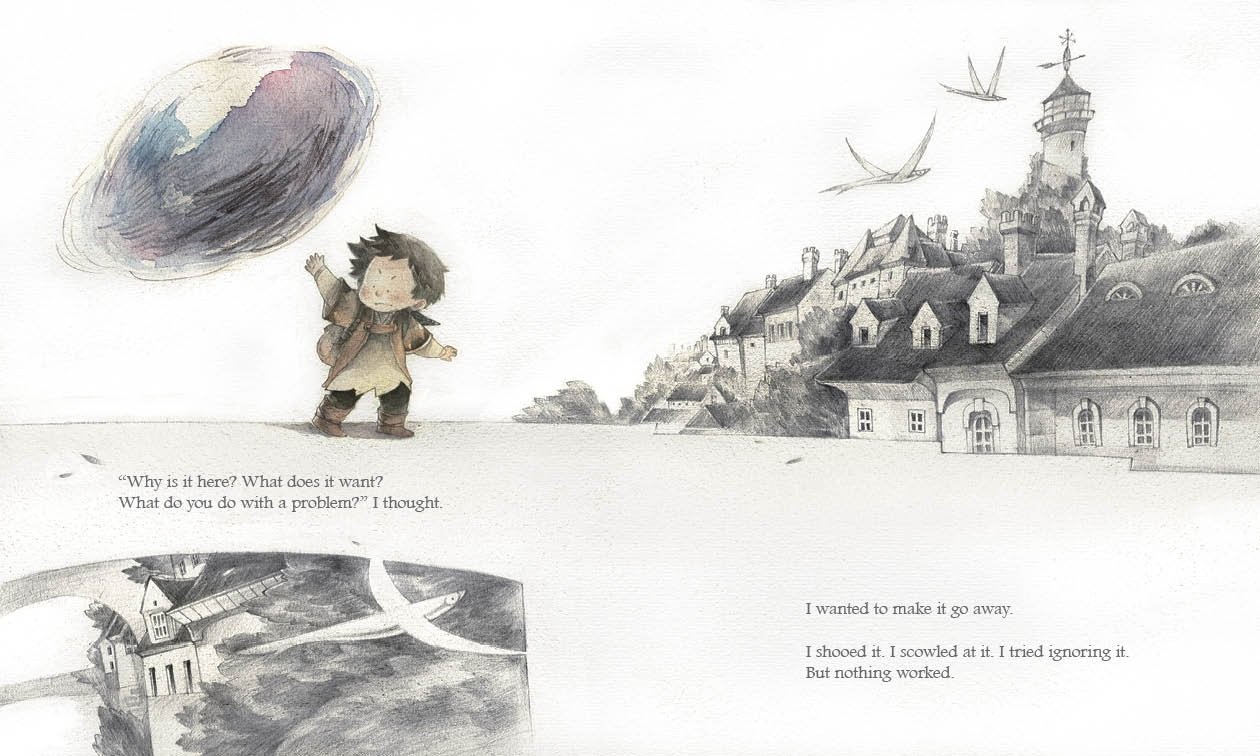
Flagged Passage: 

what do you do with a problem spread

Image from: www.amazon.com

Read This If You Loved: What Do You Do with an Idea? by Kobi Yamada; The Most Magnificent Thing by Ashley Spires; The Dot by Peter H. Reynolds, The Noisy Paint Box by Barb Rosenstock, Lost and Found by Oliver Jeffers, Journey by Aaron Becker

Recommended For:

  readaloudbuttonsmall closereadinganalysisbuttonsmall classroomlibrarybuttonsmall

RickiSig

Teeny Tiny Toady by Jill Esbaum

Share

teeny tiny toad

Teeny Tiny Toady
Author: Jill Esbaum
Illustrator: Keika Yamaguchi
Published: March 1, 2016 by Sterling Children’s Books

Goodreads Summary: When a giant hand scoops up her mama and puts her in a pail, a terrified tiny toad named Teeny hops faster than she ever did in her life. “Mama’s stuck inside a bucket! Help me get her out!” she begs her big, clumsy brothers. “Don’t you worry, kid. We’ll save her!” they promise, bumbling and stumbling and jumbling out the door. But as the boys rush headlong to the rescue, pushing their little sister aside, it becomes clear: brawn isn’t always better than brains—and the smallest of the family may just be the smartest one of all.  Written in lilting verse.

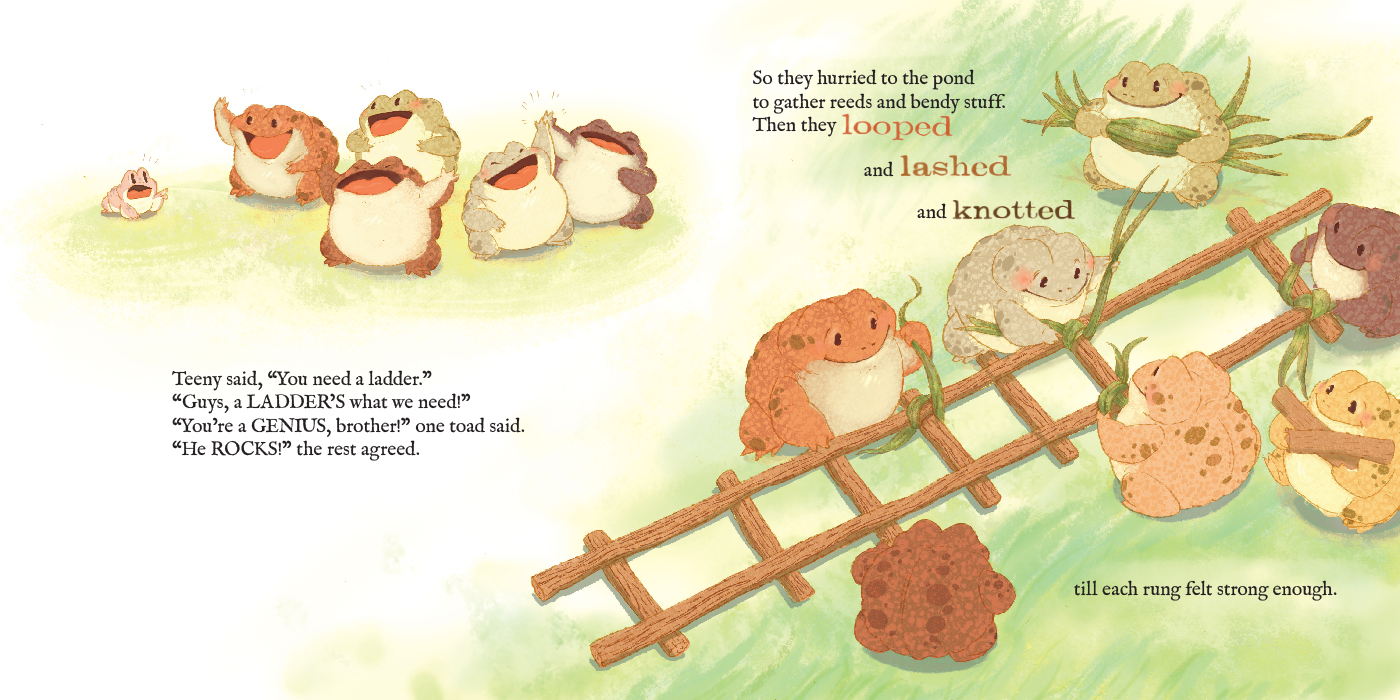
Ricki’s Review: I should be honest that frogs and toads are my favorite animal. I love everything about them! Reading this book was such a joy. I loved how the words danced across the page. If you look at the image below, you will see the way the words pop. The toads are personified in a way that makes me smile. They high five, cheer, hold each other up, etc. Teeny may be little, but she is fierce. It takes her some time to realize that she has valuable ideas. I enjoy teaching my son to be critical of gender as we read this book, and I particularly enjoyed the feminist theme.

Kellee’s Review: I should be honest that frogs and toads are one of my least favorite animals. However, that did not keep me from loving this book! Ricki touched on much of what is superb about the book including the onomatopoeias throughout, the way the words hop like toads all over the page, and the joyousness of these toads’ family. I also particularly enjoyed the theme of this book–it definitely shows how you shouldn’t underestimate people especially if you are basing it off of a prejudicial stereotype. It also  I plan on using this for one of my precept/theme activities with my students because I feel there is so much that could be discussed in this teeny, tiny book. 

Teachers’ Tools for Navigation: This story would be great to use in a creative writing class. The author and illustrator cleverly craft the phrasing and presentation of the story, and this will be inspirational for writers and illustrators. Teachers might also use this text to teach personification, onomatopoeias, and effective use of rhyme.

Discussion Questions: When does Teeny realize that her ideas are valuable? How does her size impact how she feels about herself?; Are there other ways that Teeny could have gotten her family out of the bucket? Try to think of as many ways as you can and how they would have impact the telling of the story.

Flagged Passage:

teeny passageSpread from: http://andreacmiller.com/projects/teeny-tiny-toady/

Read This If You Loved: The Frog and Toad series; Stick by Steve Green; Green Wilma by Tedd Arnold

Recommended For: 

readaloudbuttonsmall classroomlibrarybuttonsmall

RickiSigand Kellee Signature

**Thank you to Josh at Sterling Books for providing copies for review!**

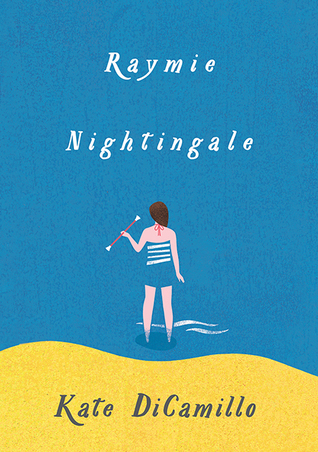
Exclusive Reveal!: Teaching Guide for Raymie Nightingale by Kate DiCamillo

Share

raymie

Raymie Nightingale by Kate DiCamillo is out today!

And we are happy to be able to be able to exclusively reveal the teaching guide.

Kate DiCamillo writes heartprint stories, and Raymie Nightingale is no different. Raymie Nightingale shares with the reader a story of three very different girls who all are enveloped in sadness for different reasons and need each other to find their way out. You will love Raymie and the Three Rancheros!

I had so much fun writing this guide, and I hope that many of you find the activities and discussion questions within it useful to you and your students!

Please note: There are some spoilers in the guide, so please be aware if you are reading the guide before reading the book.

You can also access the teaching guide here.

You can learn more about Raymie on Candlewick Press’s Raymie Nightingale page.

Recommended For: 

readaloudbuttonsmall classroomlibrarybuttonsmall litcirclesbuttonsmall closereadinganalysisbuttonsmall

Don’t miss out on this one!

Kellee Signature

Mother Bruce by Ryan T. Higgins

Share

Mother Bruce

Mother Bruce
Author: Ryan T. Higgins
Published November 24, 2015 by Disney-Hyperion

Goodreads Summary: Bruce the bear likes to keep to himself. That, and eat eggs. But when his hard-boiled goose eggs turn out to be real, live goslings, he starts to lose his appetite. And even worse, the goslings are convinced he’s their mother. Bruce tries to get the geese to go south, but he can’t seem to rid himself of his new companions. What’s a bear to do?

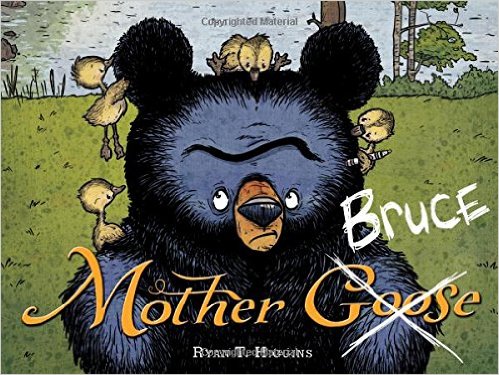
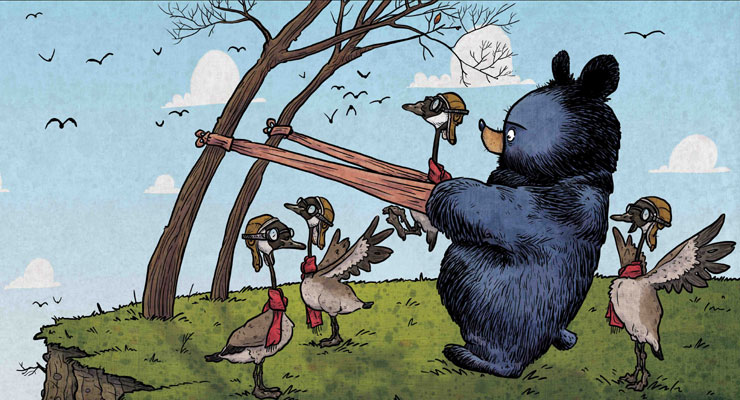
Ricki’s Review: I dare you to try reading this book without smiling. I had so much fun reading this book with my son. It tells the story of a grumpy bear who accidentally hatches goslings instead of hard-boiled eggs for his newest recipe. The goslings imprint on him, and he can’t get rid of them! As you can see below, the illustrations are hilarious. The author is very clever. I will be reading more of his work!

Teachers’ Tools for Navigation: It is always fun to look at original fairy tales and the ways they compare to fairy tale retellings. This book is a bit different because Mother Goose is the imaginary author of fairy tales. The title of this book is a pun on the Mother Goose name. ‘d love to hear the ways that kids can compare this story to other fairy tales. I imagine they would come up with some really clever ideas!

Discussion Questions: What strategies does Bruce use to try to get rid of the goslings?; How does Bruce change throughout the story?; In what ways does the author add humor to the story in both the language and illustrations?; What does the title mean?

We Flagged: 

Mother-Bruce-2

**Image from: http://www.modernmom.com/mother-bruce-giveaway-100-visa-gift-card-116459.html. **

Read This If You Loved: Wilfred by Ryan T. Higgins, Wolfie the Bunny by Ame Dyckman, No Fits, Nilson by Zacharia Ohora, Sylvester and the Magic Pebble by William Steig, This Is Not My Hat by Jon Klassen

Recommended For: 

readaloudbuttonsmall classroomlibrarybuttonsmall

RickiSig

Reviews and Giveaway!: The Color Monster by Anna Llenas, Dining with Monsters by Agnese Baruzzi, Mind Your Monsters by Catherine Bailey, and Monster Trouble! by Lane Fredrickson

Share

Halloween Button 2015

Monster Color Monster

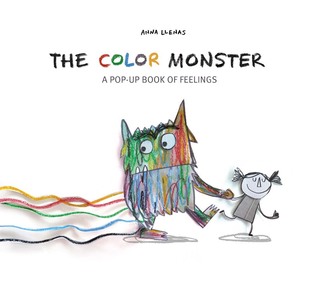
The Color Monster: A Pop-Up Book of Feelings
Author and Illustrator: Anna Llenas
Published September 1st, 2015 by Sterling Children’s Books

Goodreads Summary: We teach toddlers to identify colors, numbers, shapes, and letters—but what about their feelings? By illustrating such common emotions as happiness, sadness, anger, fear, and calm, this sensitive book gently encourages young children to open up with parents, teachers, and daycare providers. And kids will LOVE the bright illustrations and amazing 3-D pop-ups on every page!

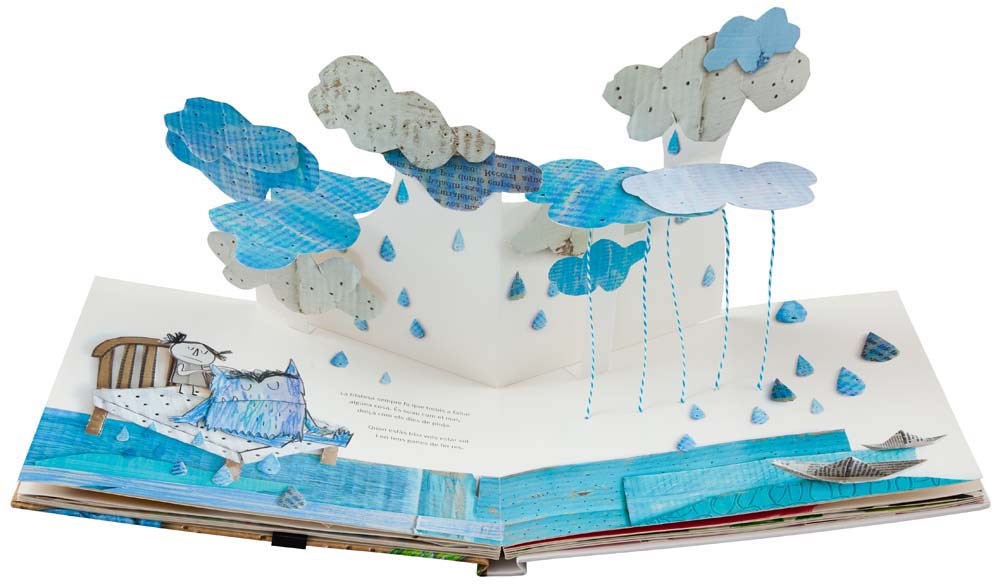
Kellee’s Review: I was blown away by this book. The personification (monsterfication?) of the emotions were so well done. It is hard to explain without showing an example: 
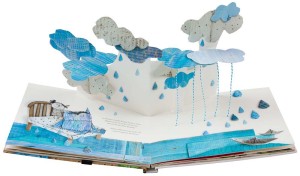
Monster Color Monster spread

Llenas did a beautiful job making entire scenes and monsters that embodied the emotions. I also liked the uniqueness of the pop ups. They were multimedia with collages and rope.

Ricki’s Review: Opening a pop-up book is exciting. Opening this pop-up book is mind-blowing. This text is a work of art, and I kept spinning the book in different ways while wondering, “Wow. How did she do that?” My son couldn’t keep his hands off of this book. It is quite magical. Every child deserves to have this book. It would make a great gift.

Teachers’ Tools for Navigation: The Color Monster would be a great text to mix socio-emotional lessons with academic lessons. While reading the book, the class can discuss the different emotions, why the author illustrated them the way she did, and how emotions look in real life. Then students could choose emotions and illustrate them with their own setting and monster.

Recommended For:

classroomlibrarybuttonsmall readaloudbuttonsmall closereadinganalysisbuttonsmall


U7566717 Cop A pranzo coi mostri WSPdef.jpg

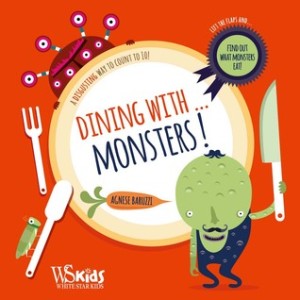
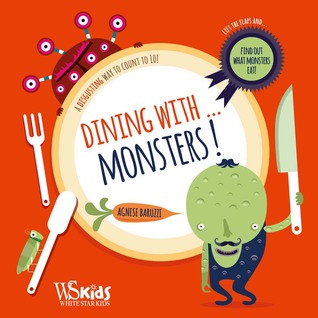
Dining With…Monsters!: A Disgusting Way to Count to 10!
Author and Illustrator: Agnese Baruzzi
Published September 1st, 2015 by White Star Kids

Goodreads Summary: What do hungry monsters like to eat? 1 spider swallowed whole, 2 leaping frogs, and 3 entire whales for the ogre with gigantic claws and scales! And for Mr. One-Eye, four mice are very nice. Kids will enjoy this fun feast of a counting book, with 10 colorful creatures and their meals of grasshoppers, scorpions, owls, and prickly porcupines. Foldout pages and simple, humorous rhyming text make this a delight to read aloud.

Kellee’s Review: This book is so much fun! Trent had such a fun time reading this book with me because the flaps are like a little surprise each time you lift them. We would open and close them like the monsters’ mouths and make nom nom noises. The illustrations of the scary-ish, (though more) funny monsters are elaborate and colorful, and the text is quite funny. 

Ricki’s Review: My son absolutely loves books with flaps, and he is a tough critic. If the flaps aren’t interesting enough, he tosses the book over his head. He was engaged in this book from the front to the back cover. At each flap, he started bouncing up and down in excitement. I am really happy to have this book because it will be very helpful for me as I teach my son to count. This is an excellent counting book, and I highly recommend it.

Teachers’ Tools for Navigation: What a fun text to use in early education classrooms to talk about colors, adjectives, rhyming, and counting! This text would be perfect for around Halloween because each page has a different monster that is described with adjectives then, with a flap flip, you find out a rhyming thing the monster eats.  This text could also then lead to a writing activity with describing a monster and finding a rhyming thing for it to eat. Additionally, there are some great vocabulary words (shrieks, icky, grisly).

Recommended For:
classroomlibrarybuttonsmall readaloudbuttonsmall


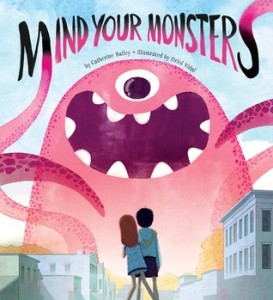
Monster Mind your Monsters

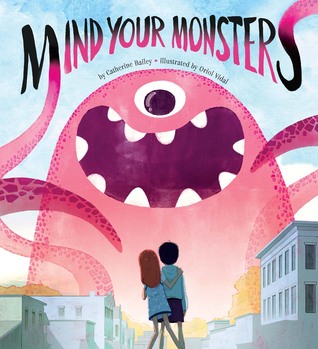
Mind Your Monsters
Author: Catherine Bailey
Illustrator: Oriol Vidal
Published August 4th, 2015 by Sterling Children’s Books

Goodreads Summary: Vampires and werewolves and zombies—oh my! It’s a monster invasion, and the stinky-smelling creatures are destroying Wally’s peaceful little town. They scare the kids, knock over the lampposts, and make a mess of everything. And no one can stop them—until, fed up, Wally says . . . the magic word, “PLEASE.” Learning good manners has never been as monstrously fun!

Kellee’s Review: I love the realistic setting and character illustrations mixed with the huge, imaginative monsters in the book. It really brings the book to life. I also think the protagonists will be kids that readers can connect with because they just seem so real and easy-going. Also, this book will be a very fun book to read with kids because it really doesn’t go the way you think it is going to go when you start reading it (and the message is one that we want all kids to learn).   

Side note: I appreciate the author including diversity in the town featured in the story. There are all different types of people which really does reflect society realistically.

Ricki’s Review: Parents and teachers love books about manners, and this book is no exception. Both teachers and parents will nod enthusiastically when Wally says, “Please.” The illustrations are gorgeous, and readers will be drawn to the beauty of this text. I loved the many different kinds of monsters that were featured in the story (from more traditional to contemporary). This will provide teachers and students with many opportunities to make connections to other texts about monsters and scary things! 

Teachers’ Tools for Navigation: Like many teachers, we enjoy making social contracts with my students. Together, we created a list of rules and then signed the contract. It involves students in a more democratic process. We think that this book would be a great way to kick off a discussion on rules and manners. This could precede the creation of the social contracts.

Recommended For:
classroomlibrarybuttonsmall readaloudbuttonsmall


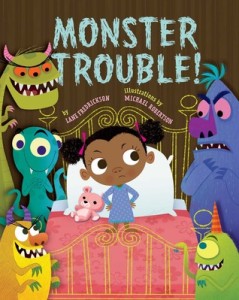
Monster Trouble

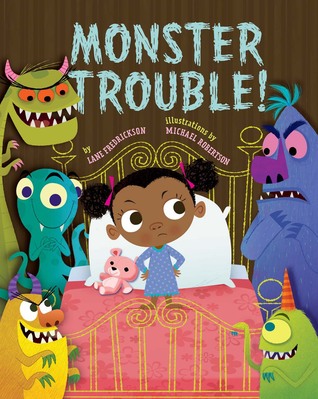
Monster Trouble!
Author: Lane Fredrickson
Illustrator: Michael Robertson
Published September 1st, 2015 by Sterling Children’s Books

Goodreads Summary: Nothing frightens Winifred Schnitzel—but she DOES need her sleep, and the neighborhood monsters WON’T let her be! Every night they sneak in, growling and belching and making a ruckus. Winifred constructs clever traps, but nothing stops these crafty creatures. What’s a girl to do? (Hint: Monsters HATE kisses!) The delightfully sweet ending will have every kid—and little monster—begging for an encore.

Kellee’s Review: What a fun premise and a great way to promote love instead of fear! I can just picture this book being paired with Monsters, Inc. to discuss perceptions and fears of monsters. Maybe teachers could even talk about where the folklores that started the “monster/bogeyman in your closet” fear. My only worry about reading this book aloud at bed time is that this book will make young readers think monsters are going to invade their room, but I think it is something we can discuss and hopefully move on from after talking about how there isn’t anything to be afraid of. 

Ricki’s Review: The monsters in this book are illustrated in a silly way, which makes the concept of monsters much more approachable for kids. I was giggling as I read this one to my son, and that made him giggle, too. (Then, of course, I smothered him in kisses.) I loved the premise of this charming book and will absolutely be keeping it in my library for when my son develops a fear (monsters or not).

Teachers’ Tools for Navigation: Teachers could hold a classroom discussion of fears, and students might critically examine their fears. Winifred is quite brave, so the students could discuss how they would show bravery when they encounter their fears.

Recommended For:

classroomlibrarybuttonsmall readaloudbuttonsmall


Giveaway!

a Rafflecopter giveaway

  Signatureand RickiSig

**Thank you to Josh at Sterling Children’s Books for providing copies for review!**

Little Tree by Loren Long

Share

little tree

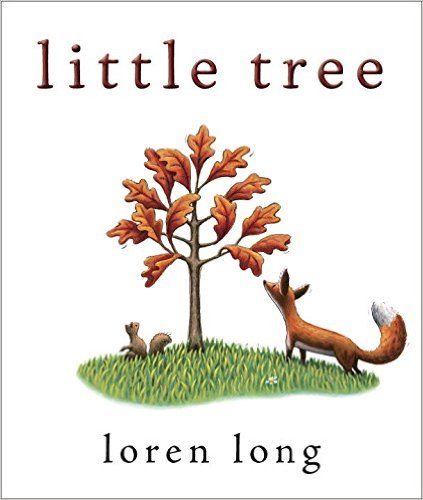
Little Tree
Author and Illustrator: Loren Long
Expected Publication: October 27th, 2015 by Philomel Books

Goodreads Summary: In the middle of a little forest, there lives a Little Tree who loves his life and the splendid leaves that keep him cool in the heat of long summer days. Life is perfect just the way it is.

Autumn arrives, and with it the cool winds that ruffle Little Tree’s leaves. One by one the other trees drop their leaves, facing the cold of winter head on. But not Little Tree—he hugs his leaves as tightly as he can. Year after year Little Tree remains unchanged, despite words of encouragement from a squirrel, a fawn, and a fox, his leaves having long since turned brown and withered. As Little Tree sits in the shadow of the other trees, now grown sturdy and tall as though to touch the sun, he remembers when they were all the same size. And he knows he has an important decision to make. From #1 New York Times bestselling Loren Long comes a gorgeously-illustrated story that challenges each of us to have the courage to let go and to reach for the sun.

Kellee’s Review: Loren Long’s books, Otis and The Little Engine That Could, are household names, and I believe Little Tree will find its home along side these books. Little Tree is a sweet, little story at the surface, but it is really very deep. The story can be read as a story at bedtime to talk about nature or as a starting point for a discussion about growing up and/or making hard choices. The illustrations are beautiful yet simple, so that the readers eyes are drawn into Little Tree and its friends.

Ricki’s Review: This book represents everything I love in literature. From the moment I cracked the cover, I was whisked into the quiet story, and I felt a bit of a rush as I turned each page. The publishers graciously sent me a print from the book, which I plan to hang in my son’s bedroom. My advisor has the print resting behind her desk in the office. Kellee accurately described this book. While it seems simple, there are so many ways this texts could be used to promote quality conversations in the classroom. This would be my mentor text to teach personification.

Teachers’ Tools for Navigation: Little Tree will be a read aloud favorite for many teachers and students, but it can also be used to promote great discussions. At the surface, the book is a great jumping off point to talk about the seasons and nature and how nature changes throughout the seasons and would be a great companion to nonfiction books about the seasons. If you want to go a bit deeper, there is definitely a message in Little Tree about letting go, growing up, and making choices that may not be easy.

Discussion Questions: Why did Little Tree not want to let go of its leaves?; What happened as a result of not letting go of its leaves?; What does the author want you to think about after reading Little Tree’s story?

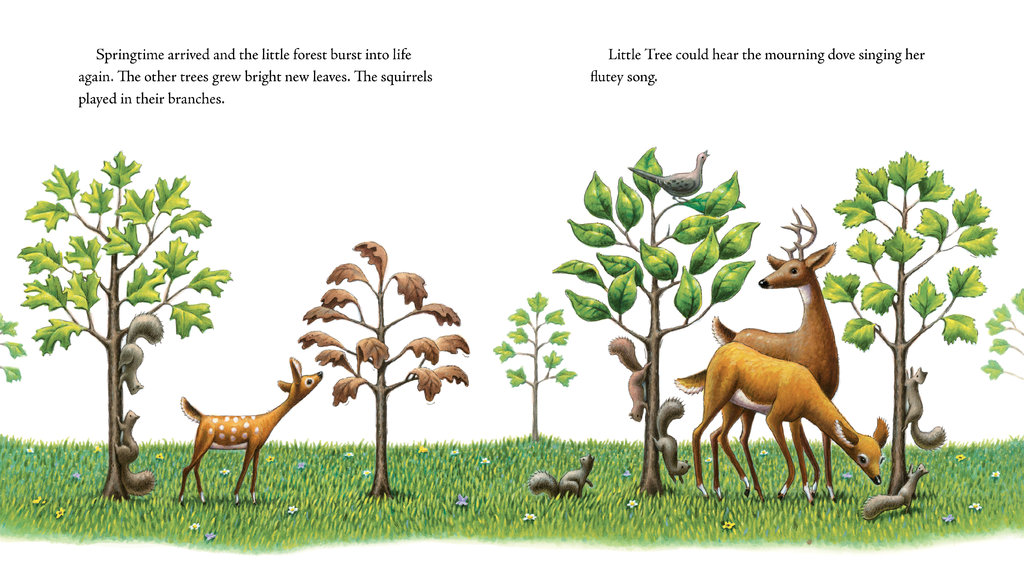
We Flagged:

little tree image
From http://www.nytimes.com/interactive/2015/09/11/books/review/13bookshelf-lettinggo.html?_r=0

Read This If You Loved: The Little Engine That Could by Watty Piper and Loren Long, The Story of Ferdinand by Munro Leaf, Frozen Wild by Jim ArnoskyCounting Crows by Kathi Appelt, and other nonfiction texts about seasons

Recommended For:

classroomlibrarybuttonsmall readaloudbuttonsmall

  Signatureand RickiSig

**Thank you to Penguin for providing copies for review!**