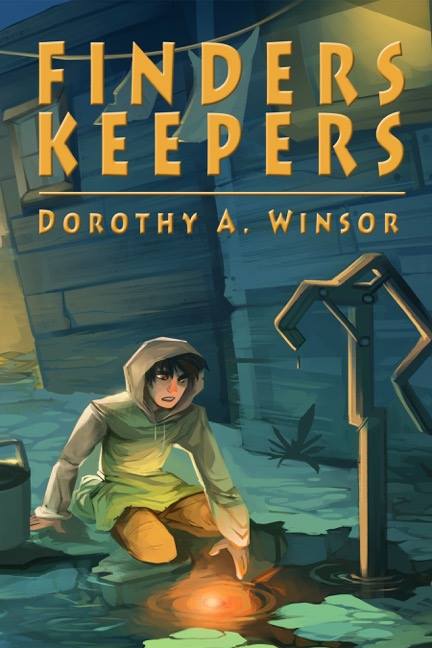
Author Guest Post!: “Why Read (And Write) Fantasy” by Dorothy Winsor, Author of Finders Keepers

Share

“Why Read (And Write) Fantasy”

Not infrequently, I run into adults who are clearly skeptical about fantasy novels. Sometimes they even ask why I write fantasy rather than something “real.” These same adults roll their eyes when their kids read Rick Riordan or J. K. Rowling and say, “Well, at least they’re reading,” as if a fantasy novel is some sort of lesser book that might build a bridge to “real” reading.

In at least one way, I understand that skepticism because I’m an intensely practical person who’s uncomfortable with too much magic. At some point, I reach the end of my willing suspension of disbelief, and that point comes sooner for me that it does for many other people. As a matter of fact, I started reading fantasy only when my son was a young reader who was entranced by it.

I’ve come to see that fantasy is a good way for a middle-grade or tween reader to try out adult responsibilities and see kids take actions with real consequences.

Middle-grade and young adult fantasy allow a writer to put young characters in dangerous situations they wouldn’t face in Ames, Iowa, for instance. If the writer is clever enough, fantasy lets them take a dilemma a young reader might face in our world and show it acted out in a way our world doesn’t allow.

Readers can follow characters is stressful situations because in a quasi-medieval world, young characters aren’t stuck in school all day. Anyone who remembers high school or middle school knows that being locked up there can be pretty maddening. Adults boss you around and you have to do what they say no matter how unreasonable it is. And that doesn’t touch the jungle world of life among your fellow adolescents.

But in a traditional fantasy world, characters take on responsibilities that we reserve for adults. Most notably, they work, meaning they interact with adults and wider events. Their families often depend on the results of their labor to survive. They sometimes have to make decisions that affect another character’s survival or the way a war will turn out. In other words, in such a setting, a writer can up the stakes and strengthen tension.

For example, in Finders Keepers, Cade takes a delivery boy job partly to earn enough to eat and partly to search rich people’s houses for his missing mother. There’s no adult to check his less considered actions because he and his teenaged brother are on their own, a situation unlikely to occur in our world. That lack of guidance lets Cade get into situations that make for a much more entertaining story.

Urban fantasy achieves the same goal by throwing powerful supernatural creatures into our world, so the young character has to engage in a bigger than life struggle.

Given how crappy school can be, readers may be relieved to identify with someone not slumped in a desk. As a writer, I like being able to expose a character to danger and increase what’s at stake if the character screws up.

Additionally, both urban and traditional fantasy situations can be used as metaphors for normal life. For instance, when Cade learns he’s a Finder, he’s horrified because he’s been taught Finders are stone-mad and destructive. Through the story, he learns to accept what he is and be proud of it. Most readers aren’t going to learn they’re from a group their society imprisons, but they are going to find they’re nerds, or fat, or gay, or unacceptable in some other way, and maybe Cade’s situation will speak to them. So the fantasy genre gives me a way to treat a common young person’s need in a more intense, metaphorical way.

Not all genres speak to all readers, but for me, fantasy isn’t “unreal.” Rather it’s a way to get at reality in a more vivid and heartfelt way.

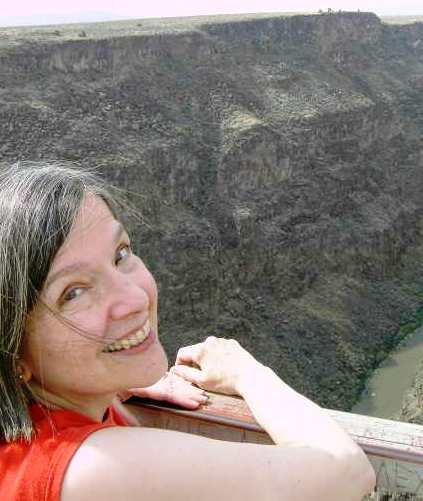
Headhshot

About the Author: Dorothy A. Winsor spent years as a technical communications professor, studying the writing of engineers, before discovering that writing YA and MG fantasy was much more fun. Finders Keepers is Winsor’s first novel, though if you look closely, you can probably find a literal million words of Winsor’s Tolkien fanfiction posted somewhere. Winsor lives in Iowa.

Finders Keepers

140-character story pitch: Boy senses presence of heart stones. Girl recruits him to steal some. World ends at New Year if they fail. Boy also rescues mother. Tricky.

Summary of Finders Keepers: The eight gods that govern the world are tricky and fickle, and even the most innocuous of their blessings comes with consequences. Those who find a blessing are cursed to dance on strings in exchange for good fortune. Which raises the question: is finding one good fortune at all?

Cade lives a simple life with his mother and brother, but when he finds a heart stone, he wonders if he can’t change that. Heart stones are said to bring luck to those who hold them, and Cade’s tiny family could surely do with good fortune.

But heart stones aren’t just tokens of good luck; simply tracking one down is a sign of a special gift. Cade is a Finder, just like his mother before him, but this gift is hardly what is seems; if the larger community finds out about this, Cade’s entire life will change.

And not for the better.

Now he lives outside the law, struggling to find a way to repair the disaster he brought home to him family, all while fending off a new hardship that he never anticipated: an overwhelming desire to have heart stones in his hands.

No matter the cost.

Thank you to Dorothy for her post!

Kellee Signature andRickiSig

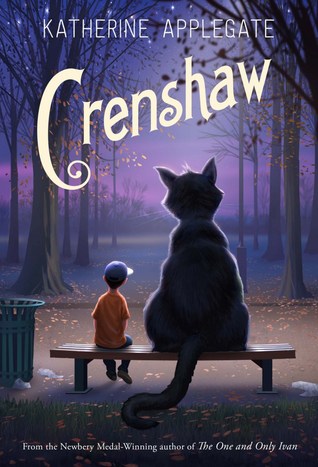
Crenshaw by Katherine Applegate

Share

crenshaw

Crenshaw
Author: Katherine Applegate
Published September 22nd, 2015 by Feiwel & Friends

Goodreads Summary: In her first novel since winning the Newbery Medal, Katherine Applegate delivers an unforgettable and magical story about family, friendship, and resilience.

Jackson and his family have fallen on hard times. There’s no more money for rent. And not much for food, either. His parents, his little sister, and their dog may have to live in their minivan. Again.

Crenshaw is a cat. He’s large, he’s outspoken, and he’s imaginary. He has come back into Jackson’s life to help him. But is an imaginary friend enough to save this family from losing everything?

Beloved author Katherine Applegate proves in unexpected ways that friends matter, whether real or imaginary.

My Review: It is not fair to compare this book to The One and Only Ivan. The only similarity is that they are both beautifully written and put a very special issue in the spotlight. Like Ivan made you think about animal’s imprisonment, Crenshaw makes you think about homelessness; however, it is more than that. This book made me think about so many things. First, this book shows the speed and brutality of homelessness. It can affect anyone and can come from no where. There is an extended scene from Jackson’s past that made me want to jump into the book to give him a hug and help his family in anyway I could. Second, this book looks at how much children sometimes have to deal with because of their home situation. Jackson had such anxiety and pressure on him because he felt like he had to be a grown up (specifically for his sister). Finally, the book looks at friendship–both of the imaginary and real kind–and how important they are. And specifically how the magic of both kinds are something you need to hold onto.

Teachers’ Tools for Navigation: Crenshaw is going to be added to so many teachers’ read aloud queue. It is such a special book that can cause lots of discussion and enlightening reflection.

Discussion Questions: What are ways that Jackson and Robin try to trick their stomachs when they are hungry? Why do you think the games work?; What did you learn about homelessness by reading this book?; Why did Crenshaw return to Jackson when he did?; What type of friend is Marisol? Why is she so important to Jackson?

We Flagged: “My mom was right, of course. They were just things. Bits of plastic and wood and cardboard and steel. Bunches of atoms. I knew all too well that there were people in the world who didn’t have Monopoly games or race car beds. I had a roof over my head. I had food most of the time. I had clothes and blankets and a dog and a family. Still I felt twisted inside. Like I’d swallowed a knotted-up rope.

It wasn’t about losing my stuff. Well, okay. Maybe that was a little part of it. It wasn’t about feeling different from other kids. Well, okay. Maybe that was part of it too.

What bothered me the most, though, was that I couldn’t fix anything. I couldn’t control anything. It was like driving a bumper car without a steering wheel. I kept getting slammed, and I just had to sit there and hold tight.”

Read This If You Loved: Hold Fast by Blue Balliett, No Place by Todd Strasser, Almost Home by Joan Bauer

Recommended For: 

classroomlibrarybuttonsmall readaloudbuttonsmall

Kellee Signature

Blog Tour with Review, Author’s Guest Post, and Giveaway!: Ghostlight by Sonia Gensler

Share

Ghostlight_banner_final (2)

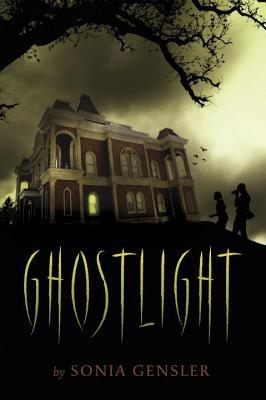
Ghostlight

Ghostlight
Author: Sonia Gensler
Published August 4th, 2015 by Knopf Books for Young Readers

Goodreads Summary: Things that go bump in the night are just the beginning when a summer film project becomes a real-life ghost story!

Avery is looking forward to another summer at Grandma’s farm, at least until her brother says he’s too old for “Kingdom,” the imaginary world they’d spent years creating. Lucky for her, there’s a new kid staying in the cottage down the road: a city boy with a famous dad, Julian’s more than a little full of himself, but he’s also a storyteller like Avery. So when he announces his plan to film a ghost story, Avery is eager to join in.

Unfortunately, Julian wants to film at Hilliard House, a looming, empty mansion that Grandma has absolutely forbidden her to enter. As terrified as Avery is of Grandma’s wrath, the allure of filmmaking is impossible to resist.

As the kids explore the secrets of Hilliard house, eerie things begin to happen, and the “imaginary” dangers in their movie threaten to become very real. Have Avery and Julian awakened a menacing presence? Can they turn back before they go too far?

My Review: I do not do creepy. No creepy books, movies, haunted houses…nothing. So, a creepy book had to sound really good or be recommended to me by someone I trust for me to read it. This one was both, so I agreed to give it a chance. Although it did scare the kajeebees out of me, I am very glad that I picked it up. First, the ghost story part of the plot is done so well. It isn’t over the top, it seemed real, and it really got me! Second, the book was so much more than a ghost story. It was a look at rural vs. urban, celebrity, the definition of family, mental disorders, filmmaking, and more. Third, the characters seemed real. You have four very different preteens/teens, but they all represent a different type of person. Each has flaws, and each is wonderful

Teachers’ Tools for Navigation: I was fascinated by all of the filmmaking information that Julian shares with Avery. I would love to use this part of the book with students, as well as information from other sources, to help them make a film from a script they wrote. They could also use the information to make a book trailer with good filmmaking technique.

P.S. I book talked Ghostlight on Tuesday to my class, and 90% of them put it on their TBR list. They all want to know what is going on in that house!

Discussion Questions: Would you forgive Julian and Lily after what they did to Avery?; If you were Avery, and you were asked about your father, how would you respond?; What does Avery’s family situation tell us about what family is?; What specifically made the ghost in Ghostlight scary?;

We Flagged: “…Julian paused the video. This time I could see the wispy thing hanging in the air across from Lily. It wasn’t a person, but it was something.” (p. 119)

Book Trailer: 

Read This If You Love: All the Lovely Bad Ones by Mary Downing Hahn, Doll Bones by Holly Black, Liesl & Po by Lauren Oliver, Seer of Shadows by Avi, City of the Dead by Tony Abbott, Skeleton Man by Joseph Bruchac

Sonia Gensler has some more books to share that you may enjoy: Ghostlight, my first middle grade novel, was inspired by classic B&W horror films and the spine-tingling tales of authors like Mary Downing Hahn and Patricia Clapp. To celebrate its release, I thought I’d share other recent middle grade ghost novels that raise the stakes with deft characterization and unique conflicts.

Breathe: A Ghost Story by Cliff McNish (2006): Jack and his mother move into an old farmhouse, but only he can see the resident ghosts. Having once nearly died of asthma, Jack has a special sensitivity to those who have crossed to the other side. In fact, Jack senses several ghostly individuals within the house, but the more he learns, the more vulnerable he becomes to the most powerful of the spectral entities — one who wishes to control all the inhabitants of the house, living or dead. Breathe presents the ghostly characters and their conflicts in an innovative way that will keep readers gripped to the very end.

Seer of Shadows, by Avi (2008): Young Horace apprentices with a society photographer in 19th-century New York City. When Horace finds an eerie image on a developed photograph — the likeness of the subject’s dead daughter — dark things begin to happen. I am fascinated by the notion of Victorian spirit photography, so this story was particularly to my liking! (Another spirit photography novel for readers interested in more mature characters and themes would be Cat Winters’ In the Shadow of Blackbirds.)

The Aviary, by Kathleen O’Dell (2011): Clara lives in the crumbling Glendoveer Mansion, where her mother is housekeeper. Her life is comfortable enough, but she can’t go outside, has no friends, and actively fears the exotic birds kept by old Mrs. Glendoveer. One day, the mynah bird speaks to her, and he seems to be saying a name. Eliot. When Clara investigates, she gradually learns the dark history of the Glendoveer family, and in turn discovers secrets from her own past. While not a traditional ghost story, this Gothic tale is full of mystery and chilling reveals.

Doll Bones, by Holly Black (2013): Zach has decided to put childhood things behind, but when his old friend Poppy tells him she is being haunted by her china doll, he agrees to help her properly bury it. Creepy dolls aside, this book is haunting in its look at childhood play and imagination–particularly what may be lost in the transition from childhood to adolescence.

A Curious Tale of the In-Between, by Lauren DeStefano (2015): Pram, who can see and speak with the dead, wishes more than anything to meet her living father. The mysterious Lady Savant says she can help, but Pram soon learns the lady has a dark agenda of her own. This captivating novel is more mystery than horror, and I was intrigued by how it represented interactions between the living and dead. The novel’s focus on the manipulation of memories reminded me (in a very good way) of the film Inception.

About the Author: Sonia Gensler is also the author of the young adult novels The Dark Between and The Revenant. She grew up in a small Tennessee town and spent her early adulthood collecting impractical degrees from various Midwestern universities. A former high school English teacher, she now writes full-time in Oklahoma. To learn more, and to download a free curriculum guide, visit soniagensler.com or her Twitter: @soniagensler

Sonia Gensler_credit Eden Wilson Photography

Giveaway: 

a Rafflecopter giveaway

Follow the Ghostlight Tour!

Mon, Sept 14
Cracking the Cover
Tues, Sept 15
Ms. Yingling Reads
Wed, Sept 16
Charlotte’s Library
Thurs, Sept 17
The Book Smugglers
Fri, Sept 18
Unleashing Readers
Mon, Sept 21
The Hiding Spot
Tues, Sept 22
Proseandkahn
Wed, Sept 23
Word Spelunking
Thurs, Sept 24
The Book Monsters
Fri, Sept 25
GreenBeanTeenQueen
Mon, Sept 28
The Haunting of Orchid Forsythia
Tues, Sept 29
Kid Lit Frenzy
Wed, Oct 1
Mother Daughter Book Club

Recommended For: 

classroomlibrarybuttonsmall

Kellee Signature

**Thank you to Barbara from Blue Slip Media for providing a copy for review and giveaway as well as a big thank you to Sonia Gensler for her guest post!**

Windsnap Wednesday! Blog Tour, Giveaway, and Author Interview: Emily Windsnap by Liz Kessler

Share

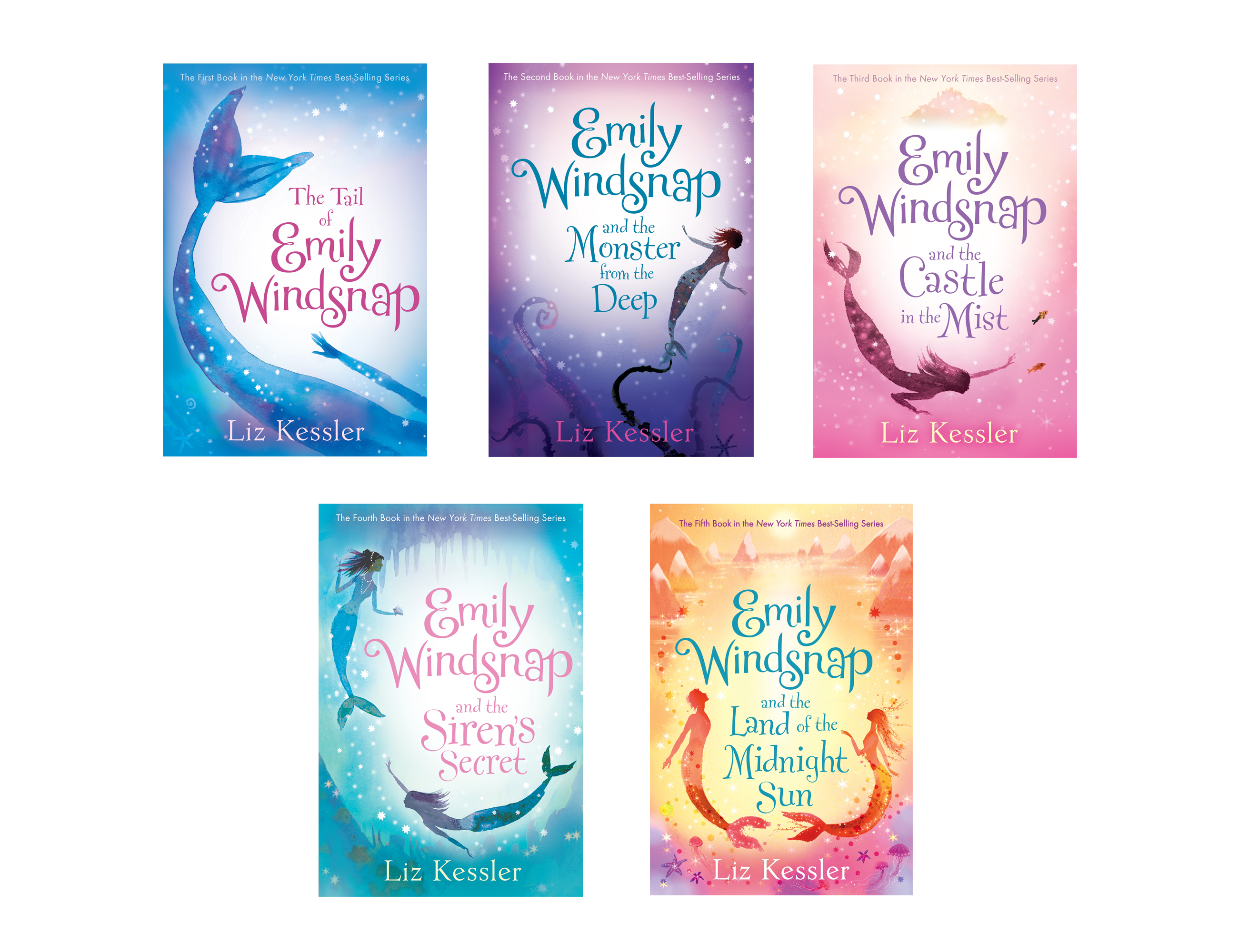
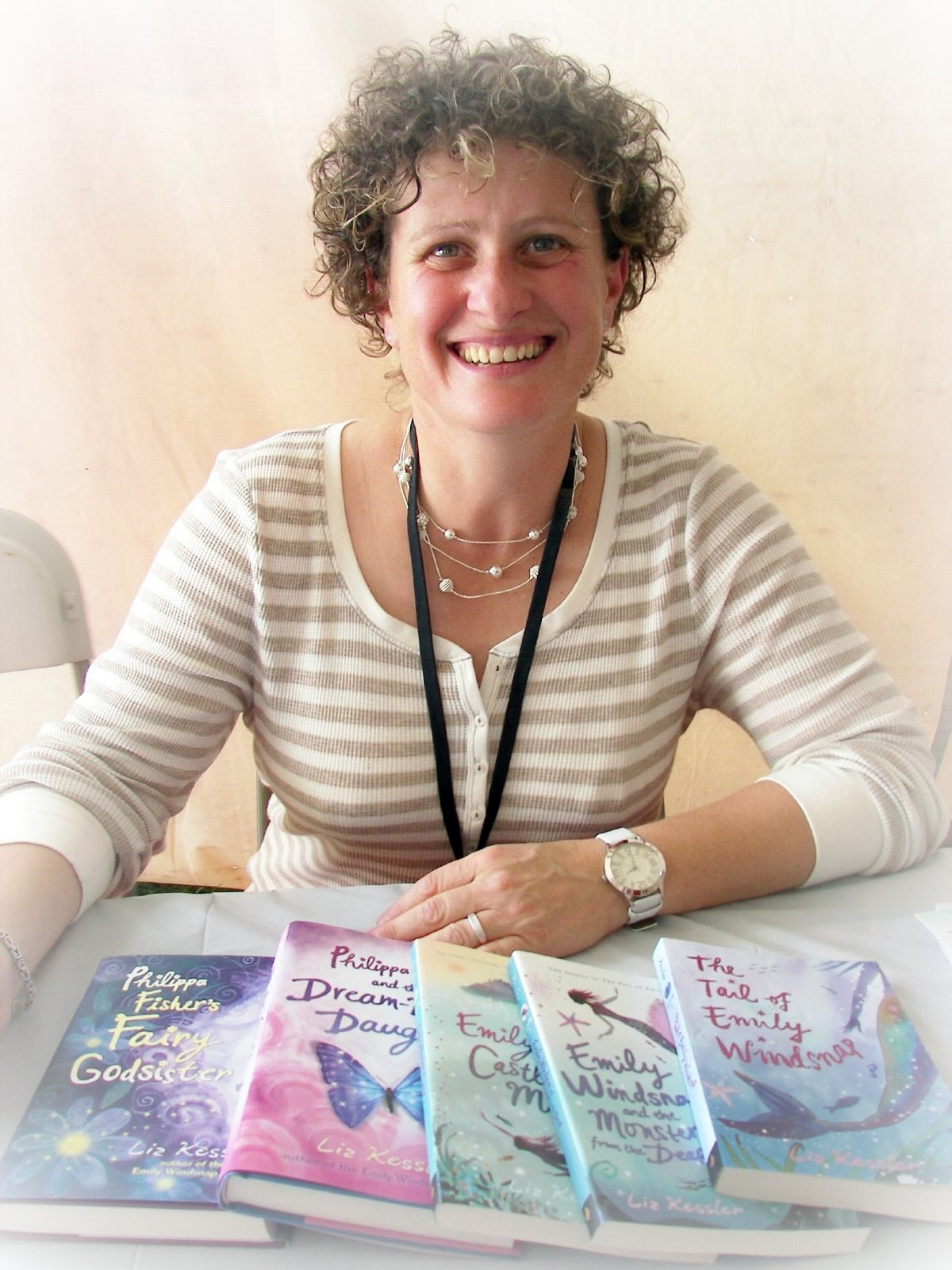
EmilyWindsnap_series_shot

9780763676889

Emily Windsnap series
Author: Liz Kessler
Illustrator: Sarah Gibb

Book 1: The Tail of Emily Windsnap
Published April 27th, 2010 by Candlewick Press

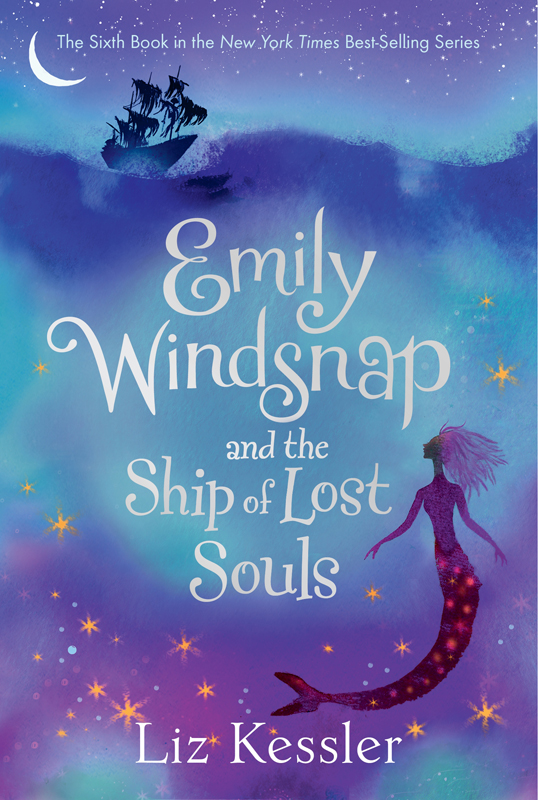
Book 6: Emily Windsnap and the Ship of Lost Souls
Published August 4th, 2015 by Candlewick Press

To celebrate the book birthday of the sixth book in the Emily Windsnap series, we want to share with you information about the series, a link to the activity kit for the series, an exclusive interview with the author, and a giveaway of ALL of the books in the series!

The Tail of Emily Windsnap Goodread’s Summary: For as long as she can remember, twelve-year-old Emily Windsnap has lived on a boat. And, oddly enough, for just as long, her mother has seemed anxious to keep her away from the water. But when Mom finally agrees to let her take swimming lessons, Emily makes a startling discovery – about her own identity, the mysterious father she’s never met, and the thrilling possibilities and perils shimmering deep below the water’s surface. With a sure sense of suspense and richly imaginative details, first-time author Liz Kessler lures us into a glorious undersea world where mermaids study shipwrecks at school and Neptune rules with an iron trident – an enchanting fantasy about family secrets, loyal friendship, and the convention-defying power of love.

Emily Windsnap and the Ship of Lost Souls Publisher’s Summary: A field trip to a mysterious island quickly turns into an adventure when Emily Windsnap and Aaron discover a secret lookout point from which they spot a ghostly ship that no one else seems to be able to see. The ship appears and disappears only at certain times of day—growing fainter each time. Searching for answers only leads to more questions until Emily and her friends confront the island’s keeper, uncovering the incredible story of a ship caught between land and sea, day and night . . . life and death. Only Emily, with her ability to transform from mermaid to human, can enter Atlantis to try to bring the ship’s passengers back before the portal is closed forever. Emily knows that if she fails, not only will the passengers never see their loved ones again, but Emily won’t be able to return either. Will she be able to resist the allure of Atlantis and return home before it’s too late?

Activity Kit can be accessed here.

About the Author: Liz Kessler is the author of the New York Times best-selling series about Emily Windsnap as well as three adventures about Philippa Fisher and her fairy godsister. She is also the author of the middle-grade novels A Year Without Autumn, North of Nowhere, and Has Anyone Seen Jessica Jenkins? and the Poppy the Pirate Dog series for young readers. Liz Kessler lives in England.
Twitter: @LizKessler
Website: http://www.lizkessler.co.uk/

Kessler_photo_by_P.Baraloto

Unleashing Readers: What has been the hardest aspect of writing a series? What has been the most rewarding?

Liz Kessler: The hardest thing is making sure I remember everything that has gone before. I once knew an author who had one of her characters doing something in a book and had forgotten that she’d killed him off in an earlier chapter! Luckily, I don’t generally kill off my characters (I’d miss them too much) but when you are writing the sixth book in a series, that’s five books-worth of characters and stories to remember!

Most rewarding – I love having interaction with my readers and hearing about how Emily has inspired them, either with their reading or in their lives in general.

UR: How has Emily changed and grown throughout the series?

LK: Well, in many ways, she is the same person as she started out being: she likes adventure, she will always look after her friends and family, and she will always stand up for what she believes in. But she has matured a bit as the series has gone on. For one thing, she now has a boyfriend as well as a best friend! For another, I think that she thinks about things a little bit more before plunging into the next adventure. Luckily for me – and for my readers – she still plunges in once she’s thought about it! Life would be boring if she didn’t!

UR: How did you plan the series? Did you have the whole series outlined when you wrote the first book?

LK: Not at all. I wrote one book, had the second in mind and didn’t know what would happen after that! Each time, I’ve had a new idea and something that I’ve wanted to explore, and I’ve loved diving back into each book.

UR: What other character in the series do you think has had the biggest effect on Emily?

LK: Gosh. Good question. The other characters affect her in different ways. Shona gives her confidence and makes her feel good about having a best friend. Emily has a LOT of adventures because of her friendship with Shona. Mandy made her think about forgiveness on quite a deep level, as did Mr Beeston. Neptune is the one who challenges her the most. And Aaron has brought out a whole new side to her. Can I say all of them???! 🙂

UR: Next to Emily, who is your favorite mermaid?

LK: I love the ‘Real Mermaids’ series by Hélène Boudreau right now.

a Rafflecopter giveaway

Check out other U.S. Windsnap Wednesday stops

Watch. Connect. Read.

Barnes and Noble Kids Blog

Thank you so much to Liz Kessler for the interview and Candlewick Press for providing copies of the books for giveaway!

Signatureand RickiSig

Circus Mirandus by Cassie Beasley

Share


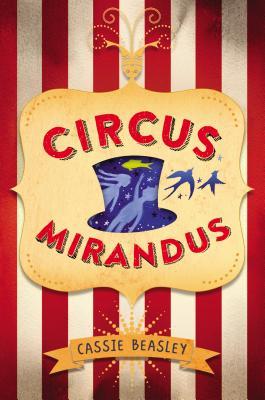
circus mirandus

Circus Mirandus
Author: Cassie Beasley
Published January 1, 2015 by Dial

Goodreads Summary:
Do you believe in magic?
Micah Tuttle does.

Even though his awful Great-Aunt Gertrudis doesn’t approve, Micah believes in the stories his dying Grandpa Ephraim tells him of the magical Circus Mirandus: the invisible tiger guarding the gates, the beautiful flying birdwoman, and the magician more powerful than any other—the Man Who Bends Light. Finally, Grandpa Ephraim offers proof. The Circus is real. And the Lightbender owes Ephraim a miracle. With his friend Jenny Mendoza in tow, Micah sets out to find the Circus and the man he believes will save his grandfather.

The only problem is, the Lightbender doesn’t want to keep his promise. And now it’s up to Micah to get the miracle he came for.

Ricki’s Review: I was only a few pages in when I knew this book would be special. I was captivated by the beautifully described setting and the words that seemed to dance off the pages. This book is about magic, but the writing is quite magical in itself. I usually give my ARCs away, but I am hanging on to this copy because I plan to read it to my son when he is a bit older. I’ll likely buy another copy because I am eager to see the illustrations! I suspect that this text will create lifelong readers. It belongs in every classroom in America. Circus Mirandus is the kind of book that takes you to another world—one that will stay in your heart forever.

Kellee’s Review: I liked Circus Mirandus  from the very beginning, but as soon as the circus officially enters he story, the magic just engulfs you. I think it is the Lightbender that makes the story. He is a mystery, but also the person that I feel like I connected with the most. I truly feel that he is what makes this book as magical as it is. I also really liked Jenny. Jenny represents the main stream (which is odd to say because Jenny is a little bit odd), but Jenny has already moved past magic and is so straight forward. Convincing her to believe in anything past what she sees and knows was such a challenge for Micah. (But she is such a great friend!)

One of the things I really liked about the text is the theme of helping kids stay kids for as long as possible. Circus Mirandus is around to help keep the magic of childhood alive. That is something I can believe in!

Circus Mirandus was my informal Twitter book club’s choice for July, and I loved chatting with them about the book (and Ricki joined us this time!). To see the archive of our chat, you can view it here. (Warning: There are spoilers for the book in the chat.)
Some of my favorite quotes from the chat were:

“I loved that Jenny was willing to go along on the journey even if she had trouble believing.” -Alyson Beecher

–“Yes! That is what made me love her. She was willing to support her friend.” -Kellee Moye

–“And Jenny needed a friend, found something in herself that “might” want to believe, too?” -Linda Baie

–“I love how great Jenny and Micah are for each other…helping each other find courage and comfort.” -Beth Sanderson

“It was interesting that the light bender just dismissed G., rather as we all should dismiss evil people.” -Linda Baie

“I loved the relationship between Micah and Gpa. He had so many words of wisdom to prepare Micah.” -Leigh Anne Eck

–“The wonderful relationship between Micah and his Grandpa is what I will remember the most about this book.” -Cynthia Alaniz

“I don’t think we should hide kids from life truths like death. Kids need to be taught healthy ways to grieve.” -Ricki Ginsberg

“The artwork is special! It is interesting to read the Ch then look at the art & find the reasoning behind the art.” -Kellee Moye

–“Yes! There is something special when physical aesthetic of book matches aesthetic of the language.” -Christy Rush-Levine

Favorite quotes shared from the book:

“Because when you try too hard to hold on to something, you break it.”

“Who you are is more than good enough.”

Teachers’ Tools for Navigation: This book naturally lends itself to a creative project. I would love to have students work together to design their own circus. Perhaps each student could be in charge of designing a different section of the circus and writing about it. For example, one student might be in charge of writing the opening speech for a circus act; another student could be in charge of writing a newspaper article about the events; another student might be in charge of writing to the mayor to ask permission to use a field for the circus. I’d allow students to generate their own ideas, so they can take ownership of their work.

However, the best place that this book could end up is in as many kids’ hands as possible! It deserves to be read and read widely.

Discussion Questions: What is Jenny’s role in the novel? How does she add to the story?; Do you think you would believe in the circus? Why or why not?; Which characters showed bravery? Why or why not?; What role does fantasy play in this text? How would it be different if it was a work of realistic fiction?

We Flagged: “You never need an invitation to go home.”

Read This If You Loved: Books by Roald Dahl, A Snicker of Magic by Natalie Lloyd, Wonder Show by Hannah Barnaby, Miss Peregrine’s Home for Peculiar Children by Ransom Riggs, Big Fish by Daniel Wallace, Night Circus by Erin Morgenstern, Peter Pan by J.M. Barrie

Recommended For: 

 readaloudbuttonsmall litcirclesbuttonsmall closereadinganalysisbuttonsmall classroomlibrarybuttonsmall

 RickiSigandSignature

**Thank you to Penguin for providing copies for review!**

Sofi and the Magic, Musical Mural by Raquel M. Ortiz

Share

sofi

Sofi and the Magic, Musical Mural
Sofi y el Mágico Mural Musical
Author: Raquel M. Ortiz
Illustrator: Maria Dominguez
Published May 31st, 2015 by Piñata Books

Goodreads Summary: When Sofi walks through her barrio to the local store, she always passes a huge mural with images from Puerto Rico: musicians, dancers, tropical flowers and—her least favorite—a vejigante, a character from carnival that wears a scary mask.

One day on her way home from the bodega, she stops in front of the mural. Is one of the dancers inviting her to be his partner? “Okay, let’s dance,” Sofi giggles, and suddenly she’s in Old San Juan, surrounded by dancers and musicians playing bongos, tambourines and güiros. She begins to dance and sing with her new friends, but her pleasure turns to fear when the vejigante—wearing a black jumper with yellow fringe and a red, three-horned mask—spins her around and around! What does he want from her? How can she get away?

This story about an imaginative girl and a magical mural is an engaging exploration of Puerto Rico’s cultural traditions as well as an ode to public art and the community it depicts. Featuring Maria Dominguez’s lovingly rendered, colorful illustrations, this bilingual picture book introduces the topic of community art to children ages 4 to 8. After reading this book, children—and some adults too—will want to make and share their own artistic creations!

Ricki’s Review: While this book offers much enrichment due to the Spanish/English language, I most liked how it was a book about imagination. Sofía’s mind takes her to a great many places, and the Puerto Rican culture emanates from this text. I loved the beautiful illustrations and the ways the words danced from page to page. I am passing this book along to a Spanish teacher to use in her classroom because it has much to offer students.

Kellee’s Review: Sofía’s adventure is a great introduction to Puerto Rican culture. I loved being transported into Puerto Rico and learning about the music, mythology, and landscape of the U.S. territory. I learned so much reading this book, and I found myself rereading after visiting the glossary in the back of the book.  I also, as the daughter of an art museum director, loved the focus on community art. Maria’s story of the mural featured in the book shows how powerful art can be. 

Teachers’ Tools for Navigation: After a class reads this book, the teacher might ask students to write their own picture book translations. They could pair with a Spanish class in the school to do an interdisciplinary unit. Additionally, teachers might ask students to find a famous painting and write a picture book or story about getting lost in that painting. There are many creative opportunities with this text.

Discussion Questions: Sofía visits different parts of Puerto Rico on her journey within the mural. Look at a map of Puerto Rico and map where she visited. Many different types of instruments and music are mentioned in the text. Listen to examples of the different instruments and styles of music then create a web describing what you hear.

We Flagged: “Suddenly, Sofía found herself in the middle of Viejo San Juan, on the island of Puerto Rico, surrounded by the music of tambourines, bongos, maracas, and güiros.

‘W-W-W-What’s going on?” stuttered Sofia.
‘Well, you said you wanted to dance!” her new friend said.

Sofía, too shocked to do anything else, began to dance.
Before she knew it, a group of musicians and dancers made a circle around them. They were singing a famous plena song:

The plena music that I know
is not from China, it comes from home.
Because the plena was born in Ponce
it’s from teh barrio of San Antón.”

Read This If You Loved: Magic Windows by Carmen Lomas Garza, Little Roja Riding Hood by Susan Middleton Elya

Recommended For: 

readaloudbuttonsmall

Signature andRickiSig

**Thank you to Eloisa at Arte Público Press for providing copies for review!**
Blog Tour with Review, Author Guest Post, and Giveaway!: The Vanishing Island by Barry Wolverton

Share

vanishing island preview tour banner updated

VanishingIslandHC

The Chronicles of the Black Tulip: The Vanishing Island
Author: Barry Wolverton
Published September 1st, 2015 by Walden Pond Press

Goodreads Summary: Does the Vanishing Island really exist? And if so, what treasure—or terrible secret—was hidden by its disappearance?

It’s 1599, the Age of Discovery in Europe. But for Bren Owen, growing up in the small town of Map on the coast of Britannia has meant anything but adventure. Enticed by the tales sailors have brought through Map’s port, and inspired by the arcane maps his father creates as a cartographer for the cruel and charismatic map mogul named Rand McNally, Bren is convinced that fame and fortune await him elsewhere. That is, until his repeated attempts to run away land him a punishment worse than death—cleaning up the town vomitorium.

It is there that Bren meets a dying sailor, who gives him a strange gift that hides a hidden message. Cracking the code could lead Bren to a fabled lost treasure that could change his life forever, and that of his widowed father. But to get there he will have to tie his fate to a mysterious Dutch admiral obsessed with a Chinese legend about an island that long ago disappeared from any map.

Before long, Bren is in greater danger than he ever imagined, and will need the help of an unusual friend named Mouse to survive. Barry Wolverton’s thrilling adventure spans oceans and cultures, brings together the folklore of East and West, and proves that fortune is always a double-edged sword.

My Review: Whoa! Quite a book! Part swashbuckling adventure, part historical fiction, part folklore, part fantasy, part ghost story, Barry Wolverton has given us quite an intense adventure. I couldn’t predict anything that happened in the book. There were twists and turns throughout, and I never knew who to trust (though I am happy to say my favorite sailor was trustworthy). There were some really gruesome parts (blood and guts and vomit) and there were some really beautiful fairy tales. Overall, quite an adventure! (Though I warn: by gruesome, I mean gruesome!)

Discussion Questions: How did the author use folklore throughout the story to move along the plot?; What parts of history that were shared within the book were true? Fictional?; Throughout the book, stop and try to predict what you think is going to happen next then check your predictions as you read more.; As you read, make a list of all of the seafaring vocabulary that is used within The Vanishing Islands then illustrate each of the vocabulary words as they are used in the book.; Wolverton used Marco Polo’s written works throughout the book–what allusions to Polo’s text can you find in The Vanishing Island?

We Flagged: “The summer began with the grim warning that the wolves were running again. In Britannia, this was code. It meant that Her Majesty’s navy was in need of fresh bodies to replace all of the seamen lost during the year to disease, desertion, or battle. Crimping, they called it. Men and older boys kidnapped and forced to enlist, of the good of God, queen, and country. Britannia, after all, was just one of many nations fighting for nothing less than to control the world.

One boy who didn’t have to worry about being crimped was Bren Owens of Map, the dirtiest, noisiest, smelliest city in all of Britannia. (He had heard rotten things about London, too, but he’d never been there.) Bren was what they called spindly–tall for his age, but unsteady, like a chair you might be afraid to sit on. He had been born in Map because he’d had no choice in the matter.

But that didn’t mean he had to stay here. And now, too skinny for the wolves, he had been forced to take matters into his own hands.” (p. 9-10)

Author Guest Post: 

“Be Careful What You Read, or Why Books Are Dangerous” by Barry Wolverton

Beginning in 1978, when Metrocenter mall opened near my home in Jackson, Miss., my family would go to the mall every Friday night. We would have dinner at one of the fine mall establishments, and then my mother would go clothes shopping, my brother would go nerd out at Radio Shack or Spencer’s, my father would go sit somewhere and smoke (you could do that then), and I would plop myself down in an aisle at Waldenbooks. I remember exactly how it felt to have that to look forward to, which is why Black’s Antique Books and Collectibles is Bren’s home away from home in The Vanishing Island. (Although the way I describe Black’s is more like I remembered Shakespeare and Co. in Paris, the ur-bookstore.)

But for a curious, receptive mind, books can do mischievous things. As I describe it in the book, “the bookstore was a blessing and a curse for [Bren]. Every few weeks seemed to bring in new adventure books, travelogues, and epic poems of war and conquest that were so popular these days. Tales from other lands and other times. For Bren, they offered proof that all things exotic and exciting lay anywhere but here.”

Books give Bren ideas. Ideas about places he’d rather be, things he’d rather be doing, possibilities that his current life doesn’t offer. Books also give him information. For instance, information about ships and the routines of their crew, so that an enterprising young man might figure out the best time to sneak aboard a ship and the best places to hide.

And it was undoubtedly in Black’s that Bren first found a copy of Travels by Marco Polo, the book that National Geographic described as “the founding adventure book of the modern world. Polo gave to the age of exploration that followed the marvels of the East, the strange customs, the fabulous riches, the tribes with gold teeth. It was a Book of Dreams, an incentive, a goad. Out of it came Columbus (whose own copy of the book was heavily annotated), Magellan, Vasco da Gama, and the rest of modern history.”

Wow, some book. Especially considering how much of it is considered dubious. Polo dictated his stories to a fiction writer named Rustichello while both were in prison during the Venice-Genoa war, and between Polo’s possible exaggerations and Rustichello’s flare for embellishment, we can be pretty sure Marco Polo didn’t really see a unicorn. (He may have seen a Sumatran rhino, though, which is still magical.)

Given all that, I hope you’ll appreciate why the Polo legend figures prominently in The Vanishing Island, without making light of the terrible cost of exploration and colonialism.

About the Author: Barry Wolverton is the author of Neversink. He has more than fifteen years’ experience creating books, documentary television scripts, and website content for international networks and publishers, including National Geographic, Scholastic.com, the Library of Congress, and the Discovery Networks. He lives in Memphis, Tennessee. You can visit him online at www.barrywolverton.com.

Barry Wolverton Author Photo

Read This If You Loved: The True Confessions of Charlotte Doyle by Avi, The Graveyard Book by Neil Gaiman, Emerald Atlas by John Stephens, The Dungeoneers by John David Anderson

Recommended For: 

classroomlibrarybuttonsmall

Make sure to visit other stops on The Vanishing Island blog tour!
Tour information: http://www.walden.com/8039-2/

6/15/2015 Blue Stocking Thinking                  bluestockingthinking.blogspot.com
6/16/2015 The Haunting of Orchid Forsythia    hauntedorchid.blogspot.com
6/17/2015 Small Review                               smallreview.blogspot.com
6/18/2015 Maria’s Melange                         www.mariaselke.com/
6/19/2015 Unleashing Readers                    unleashingreaders.com
6/19/2015 The Hiding Spot                             ​thehidingspot.blogspot.com
6/22/2015 This Kid Reviews Books              thiskidreviewsbooks.com
6/23/2015 Mundie Kids                                mundiekids.blogspot.com/
6/24/2015 Paige in Training                        pageintraining.wordpress.com
6/25/2015 Novel Novice                              novelnovice.com

Giveaway!

a Rafflecopter giveaway

Signature

**Thank you to Walden Pond Press for having us be part of the blog tour
and for providing copies for review and giveaway!**

Links for Barry Wolverton: 

Website: http://www.barrywolverton.com/
Twitter: https://twitter.com/wolvertonhill
Facebook: https://www.facebook.com/bwolverton
Instagram: https://instagram.com/wolvertonhill/

Links for Walden Pond Press:

Twitter: https://twitter.com/WaldenPondPress
Facebook: https://www.facebook.com/WaldenPondPress
Website/Blog: http://www.walden.com/books/
Pinterest: https://www.pinterest.com/waldenpondpress/