Giveaway and Review!: Magic Candies by Heena Baek, Translated by Sophie Bowman

Share

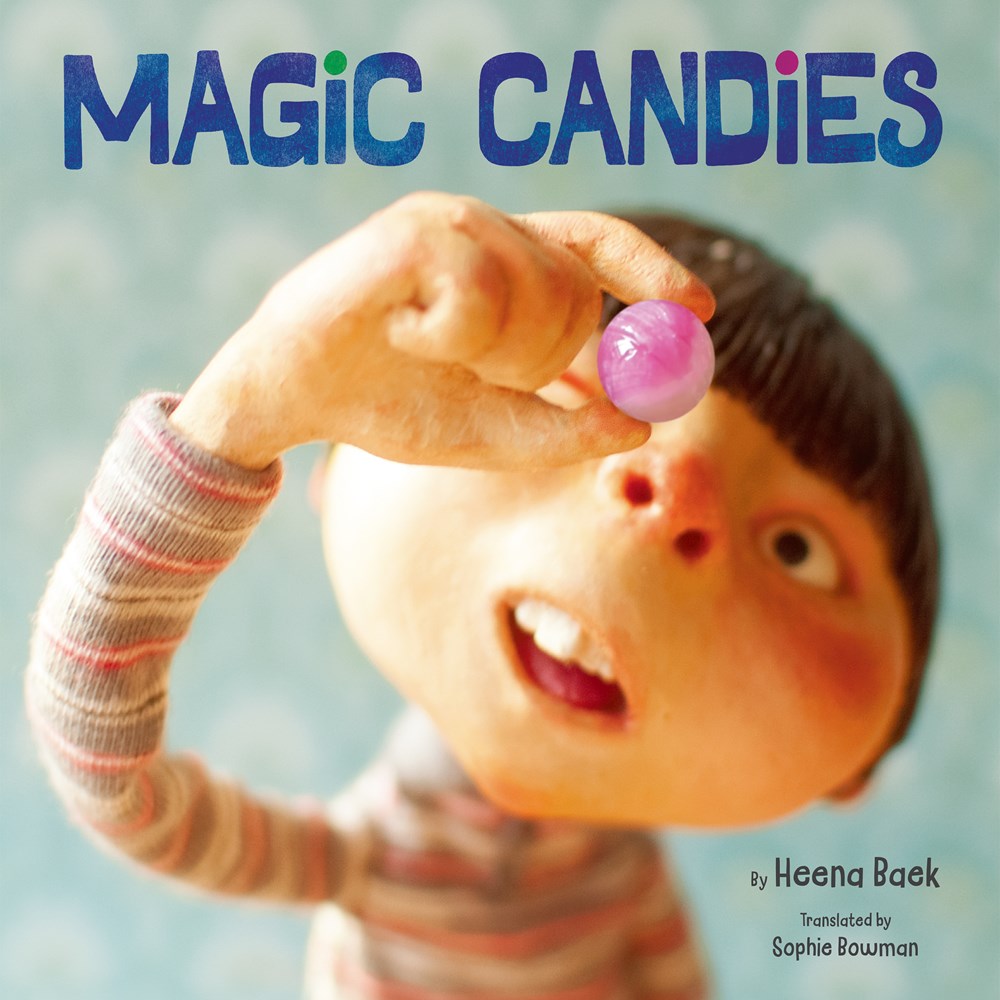
Magic Candies
Author: Heena Baek
Translator: Sophie Bowman
Published: September 1, 2021 by Amazon Crossing Kids

Summary: A quirky story about finding your voice, from internationally acclaimed author Heena Baek.

Tong Tong could never have imagined what everyone around him was thinking. But when he gets hold of some magic candies, suddenly there are voices everywhere. He can hear how his couch feels, what upsets his dog, that his demanding dad loves him. He even gets to catch up with his dead grandmother. It turns out, these voices in Tong Tong’s life have A LOT to say! Is Tong Tong ready to hear it?

At turns funny, weird, and heartfelt, this imaginative picture book from award-winning Korean author Heena Baek will take readers along on Tong Tong’s journey as he goes from lonely to brave.

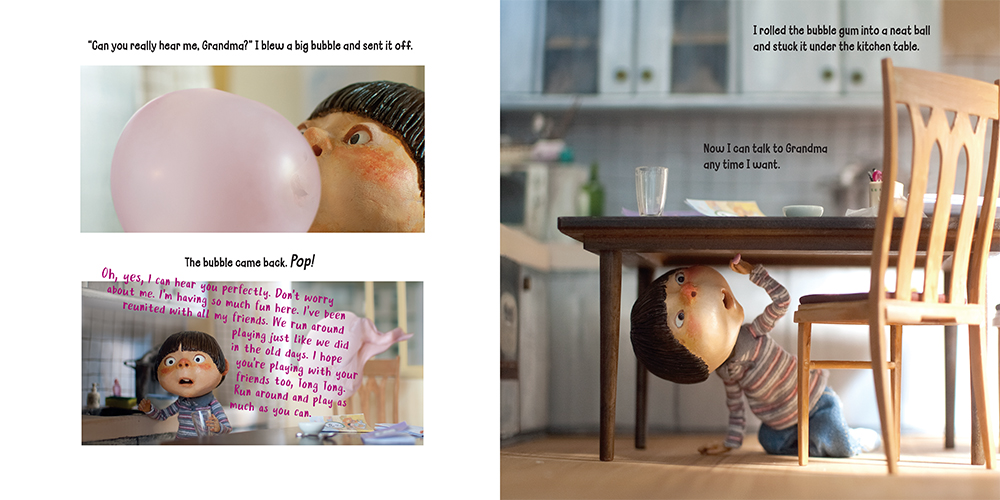
★“Show-stopping spreads by Baek, similar to art by Red Nose Studio, feature molded, emotive figures in meticulously constructed scenery with miniature furniture, photographed under dramatic lighting—an effect startlingly close to animation. It’s a fully realized world that considers discerning meaning and making friends, while offering artwork that lingers in the memory.” —Publishers Weekly (starred)

“The enhanced artwork establishes depth and perspective…depictions of facial expressions are skillful and endearing, and the interplay between text and illustrations will cause readers to linger and ponder. An enigmatic, quirky representation of an active imagination in search of understanding and companionship.” —Kirkus Reviews

“Deeply touching, funny, and incredibly odd, this is the kind of picture book that gets you excited about picture books all over again…Magic Candies is so remarkable…a book that is both about giving voice to the voiceless and finding your own.” —Betsy Bird, School Library Journal

Heena Baek is an acclaimed picture book author and illustrator from South Korea. She won the 2020 Astrid Lindgren Memorial Award, a huge international award honoring the body of work of children’s book creators. She studied educational technology at Ewha Womans University and animation at the California Institute of the Arts. Utilizing her diverse animation production experience, Heena creates powerful and interesting picture books, often sculpting characters and building sets. She is the author and illustrator of a number of picture books, many of which have been translated and have received awards from South Korea and internationally. Follow her on Twitter @heenastory. On Instagram: @baekheena

Sophie Bowman is a PhD student at the University of Toronto, studying Korean literature. She was awarded the ICF Literature Translation Fellowship at Ewha Womans University. In 2015, she won the Korea Times Modern Korean Literature Translation Award grand prize for poetry with her translations of Jin Eun-young and co-translated Kim Bo-Young’s I’m Waiting for You and Other Stories. Follow her on Twitter @SophieOrbital.

Review: I was fortunate to receive this book about a month ago, and I have read it at least one hundred times to my children. They just can’t get enough of the quirkiness, and neither can I. After my very first reading, I immediately flipped to the first page to read it again. It’s a really neat book that sparks readers’ imaginations. The kids and I love to debate about which sculpture/illustration is our favorite. This book reminds me why I love picture books so much. It’s difficult to describe, but it offers a sense of magic for me. The main character’s words and actions bring out so many emotions for me. I felt simultaneous humor and sadness when he speaks to his grandmother through bubble gum under the table, for instance. The book is such a fascinating concept, and the author/illustrator is incredibly talented.

Teachers’ Tools for Navigation: Teachers might to ask students to use clay to sculpt and write a missing spread with a different colored candy in the book.

Discussion Questions: 

  • How does the author make the narrator come alive?
  • How does the candies differ? Evolve?
  • What is the dog’s name? Why is this interesting?
  • What does this book teach you about being human?

Flagged Passages: 

Read This If You Love: The Caiman by María Eugenia Manrique; Sam & Dave Dig a Hole by Mac Barnett; Hug Machine by Scott Campbell; Dragons Love Tacos by Adam Rubin

Giveaway:

a Rafflecopter giveaway

Recommended For: 

classroomlibrarybuttonsmall

**Thank you to Barbara at Blue Slip Media for Providing a Copy for Review!**

Kellee’s #MustReadIn2021 Fall Update!

Share

First, thank you to Carrie at There’s A Book for That for starting this challenge and to Leigh Ann of A Day in the Life and Cheriee of Library Matters for co-hosting the revival. Check out others’ fall updates on Library Matters.

In January, I shared about the #MustReadin2021 challenge and my plans. In April and June, I updated you all and it is time for the Fall update!

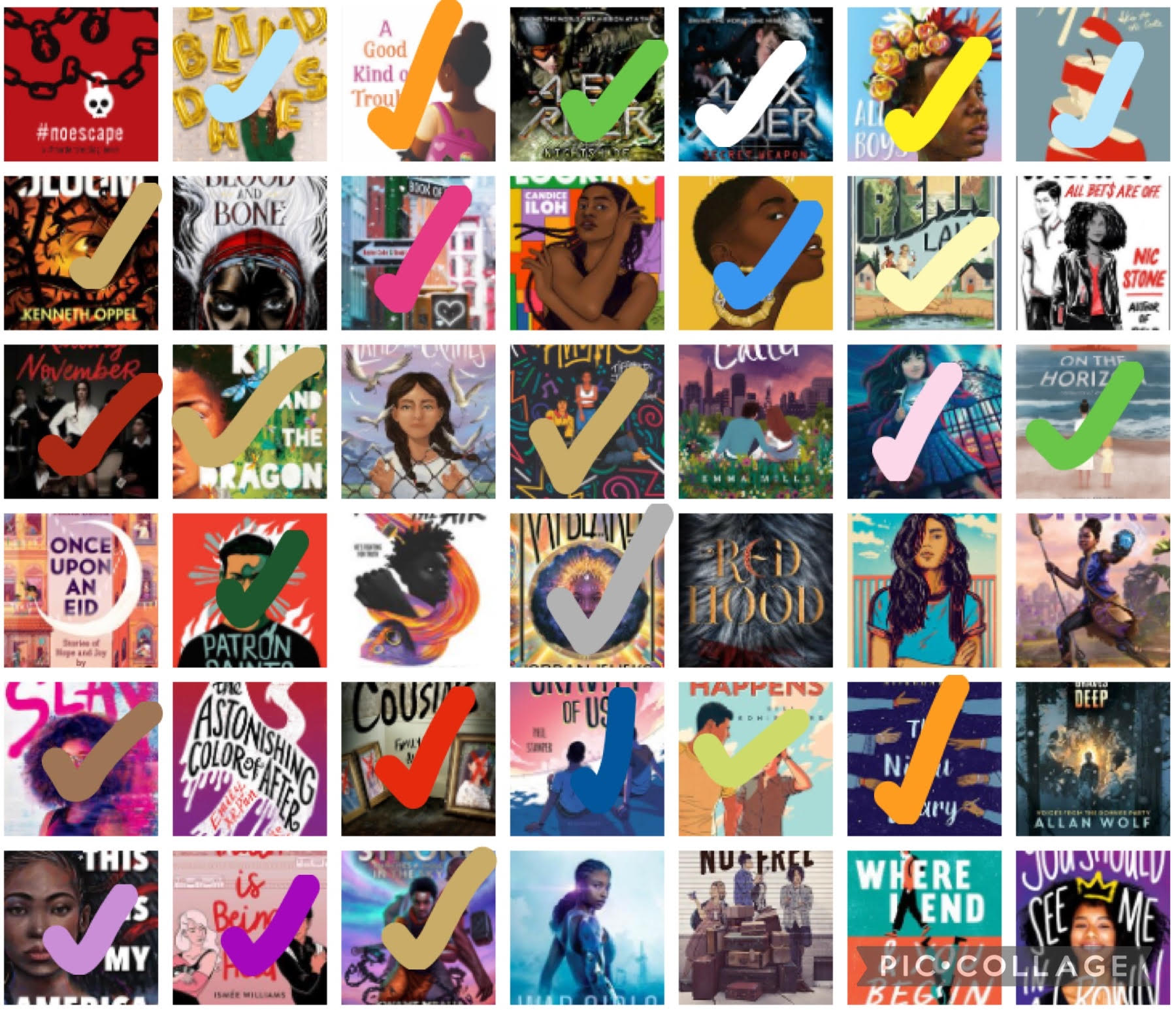
I chose 42 novels for my #MustReadin2021 challenge, and thus far, as of April I had read 13 of them, in June I was up to 20, and now I am at 25! (16 left to go!) I have linked each title to the IMWAYR post where I shared my thoughts on the books.

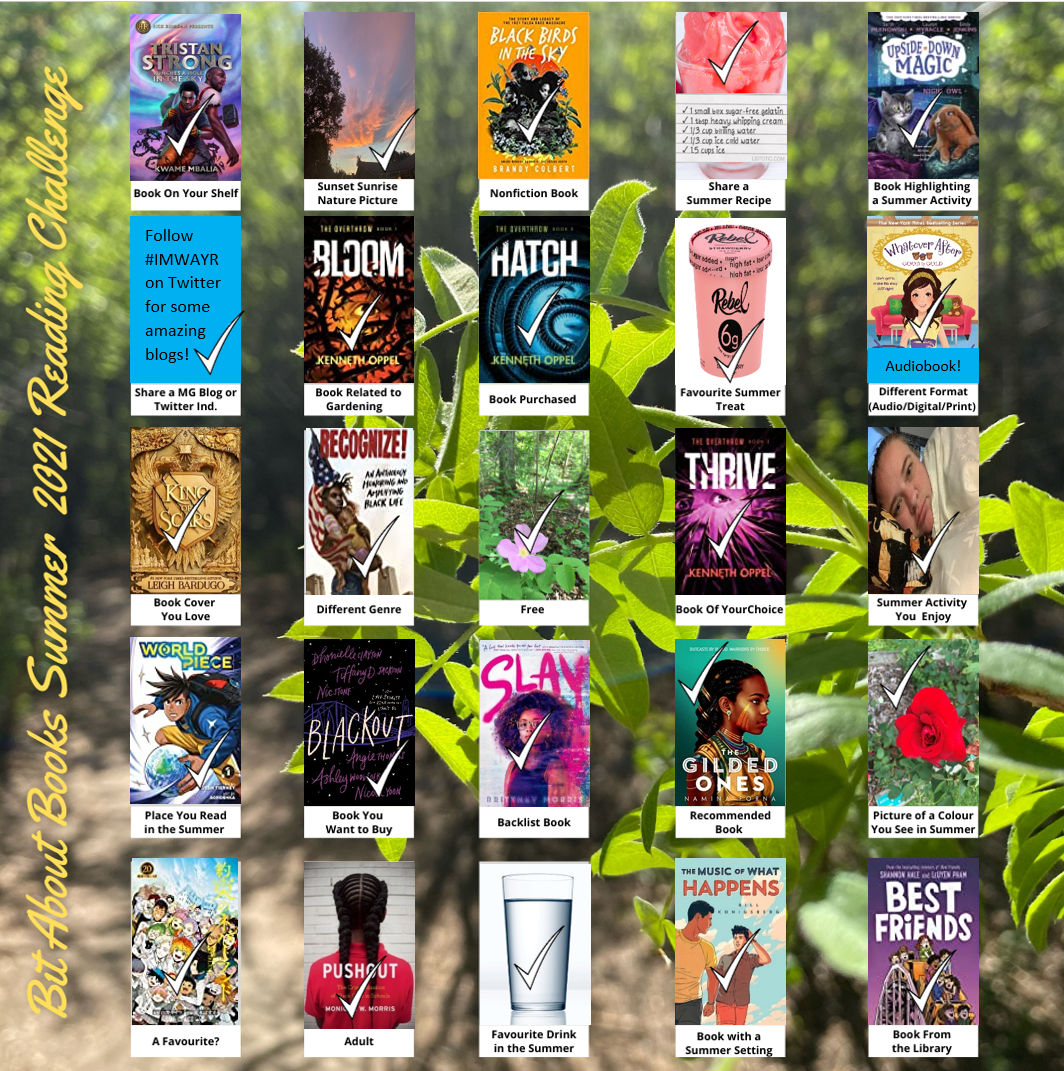
I also finished my #BitAbout Books Summer 2021 Reading Challenge!

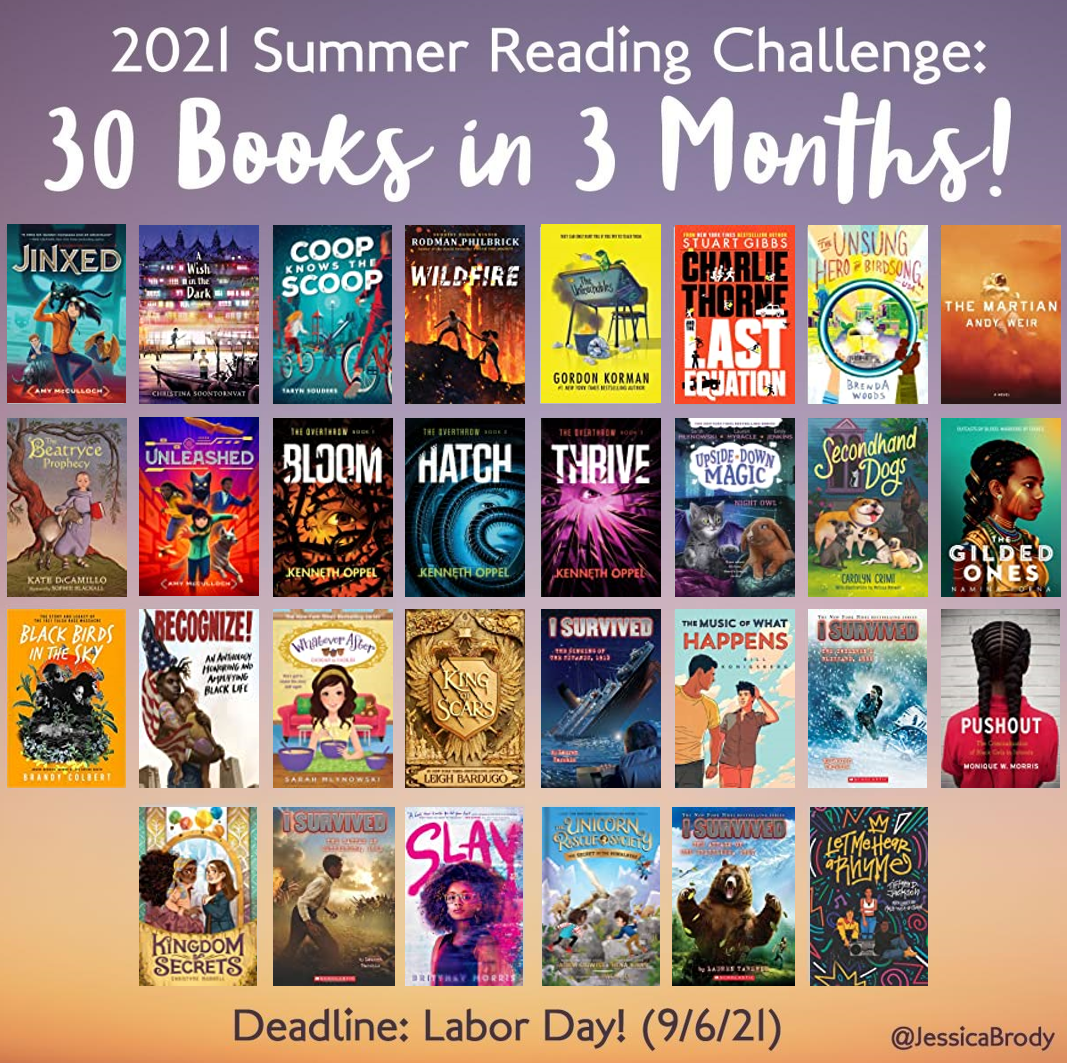
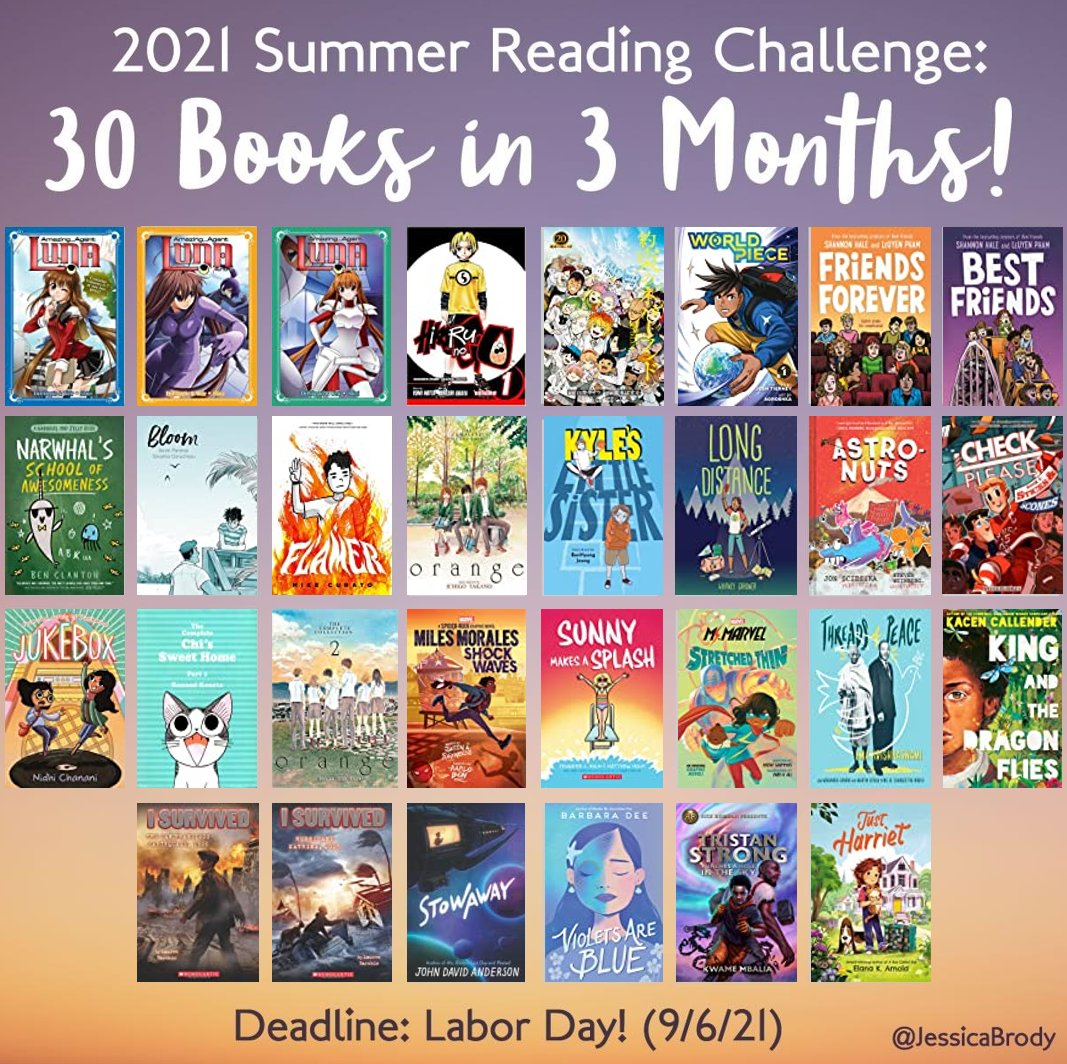
I also challenged myself to the 2021 Summer Reading Challenge: 30 Books in 3 Months! I separated my challenge, and I aimed to complete 30 prose books and 30 graphic books from June to Labor Day. And I didn’t exactly meet my challenge, but I did finish reading 60 books in 3 months!

I finished my prose YA & MG books challenge and have moved into my second 30.

I almost finished my graphic novel/manga challenge, but if I add in the prose YA & MG novels I’ve read in addition to the 30 above, it perfectly finishes it!

I’m having so much fun doing these challenges!! Check out my Goodreads 2021 Challenge or my Goodreads Read Bookshelf to learn more about any of these books as well 😊
What are you reading? 

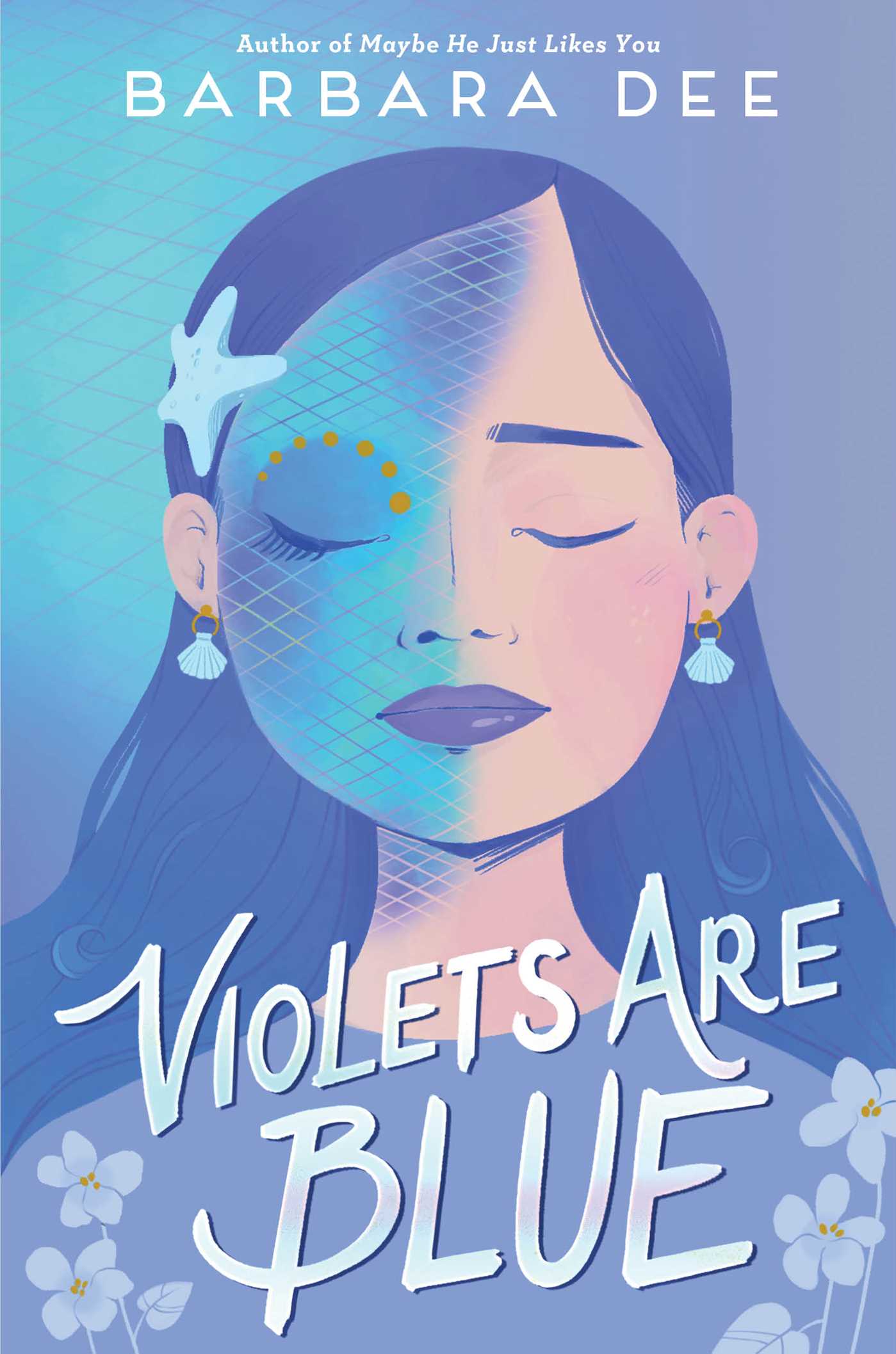
Violets are Blue by Barbara Dee

Share

Violets are Blue
Author: Barbara Dee
Published: September 28, 2020 by Aladdin

Summary: From the author of the acclaimed My Life in the Fish Tank and Maybe He Just Likes You comes a moving and relatable middle grade novel about secrets, family, and the power of forgiveness.

Twelve-year-old Wren loves makeup—special effect makeup, to be exact. When she is experimenting with new looks, Wren can create a different version of herself. A girl who isn’t in a sort-of-best friendship with someone who seems like she hates her. A girl whose parents aren’t divorced and doesn’t have to learn to like her new stepmom.

So, when Wren and her mom move to a new town for a fresh start, she is cautiously optimistic. And things seem to fall into place when Wren meets potential friends and gets selected as the makeup artist for her school’s upcoming production of Wicked.

Only, Wren’s mom isn’t doing so well. She’s taking a lot of naps, starts snapping at Wren for no reason, and always seems to be sick. And what’s worse, Wren keeps getting hints that things aren’t going well at her new job at the hospital, where her mom is a nurse. And after an opening night disaster leads to a heartbreaking discovery, Wren realizes that her mother has a serious problem—a problem that can’t be wiped away or covered up.

After all the progress she’s made, can Wren start over again with her devastating new normal? And will she ever be able to heal the broken trust with her mom?

Ricki’s Review: This book ripped me apart and put me back together. It is unflinchingly honest, and it is a book that so many middle grade kids need. The characterization is beautiful, and the book would make for a great study on the relationships between humans and a general study on humanity. No character in this book is perfect—all are flawed, and this reflects who we are as people. I stayed up late at night reading this book (when I should have been sleeping), and I cannot recommend it highly enough. We all deserve to reinvent ourselves, and this book gives us permission to do so.

Kellee’s Review: Barbara Dee is so wonderful at writing such relatable middle school books with characters that deal with the real issues that middle schoolers are dealing with today. This book is no different as we get to watch Wren deal with her own identity, dealing with divorce & remarriage, moving, finding new friends, and just learning how to be happy. All of this in addition to what Wren ends up needing to work through when it comes to her mom. Dee does a great job balancing all of these plot points while also building such full characters. All characters in the main characters in the book are well developed and are truly themselves–flaws and all!

Teachers’ Tools for Navigation: This book works beautiful to teach about characterization. Students might select a character to study in a group and then work individually to study a person in their own lives (personal or famous). This offers opportunities for rich discussions about imperfection and the flaws in all of us.

Discussion Questions:

  • How does Wren’s hobby with makeup reflect her life? How does it connect with the story?
  • How does Wren’s mother evolve in the story, and why do you think she makes specific decisions in the text?
  • Why do we keep secrets? How does secret-keeping impact others?
  • What did you learn from this story? What will you take with you?
  • How does Wren and her mom moving change the trajectory of the story?
  • Were there clues about Wren’s mom earlier in the book?
  • Why is it that people have such a hard time with girls and boys just being friends with each other?

Flagged Passage:

Chapter 2: Changes: “The day Dad left us, just a little over nine months ago, it all happened so fast. One gray Saturday morning in February, when we were still living in the house in Abingodon, I woke up to the sound of loud arguing in the kitchen. Yelling, actually, which happened a lot those days, followed by a car zooming out of our driveaway.”

Chapter 9: Nebula “[CatFX’s YouTube Channel] Here’s my secret message to you guys: fantasy is not the opposite of truth.”

Read This Book If You Loved: My Life in a Fish Tank by Barbara Dee; The Seventh Wish by Kate Messner; Sunny Side Up by Jennifer Holm and Matthew Holm; Genesis Begins Again by Alicia D. Williams

Recommended For: 

classroomlibrarybuttonsmall litcirclesbuttonsmall

  RickiSigand
**Thank you to Casey at Media Masters Publicity for providing a copy for review!

Blog Tour with Review: Stowaway by John David Anderson

Share

Stowaway
Author: John David Anderson
Published August 3rd, 2021 by Walden Pond Press

Summary: The beloved author of Posted and Ms. Bixby’s Last Day returns with the first book in a coming-of-age sci-fi duology about Leo, a kid trying to navigate the galaxy in order to save his family—and, possibly, the planet Earth.

When scientists discover a rare and mysterious mineral buried in the Earth’s crust, they have no idea that it just happens to be the most valuable substance in the entire universe. It’s not long before aliens show up to our little corner of the galaxy offering a promise of protection, some fabulous new technology, and entry into their intergalactic coalition—all in exchange for this precious resource. A material so precious that other alien forces are willing to start a war over it. A war that soon makes its way to Earth.

Leo knows this all too well. His mother was killed in one such attack, and soon after, his father, a Coalition scientist, decides it would be best for them to leave Earth behind. It’s on this expedition that their ship is attacked, Leo’s father is kidnapped, and Leo and his brother are stranded in the middle of space. The only chance they have is for Leo to stow away on a strange ship of mercenary space pirates bound for who knows where and beg the captain to help him find his father.

But the road is dangerous, and pirates, of course, only look out for themselves. Leo must decide who to trust as he tries to stay alive and save his family, even as he comes to understand that there aren’t many people—human or alien—that he can count on in this brave new universe.

Praise: “The Mandalorian meets Guardians of the Galaxy in this fast-paced space adventure that will have readers turning the pages as they are pulled into a unique yet strangely familiar world that reflects our own. This series opener is an ideal pick for middle-grade sci-fi fans.” – Booklist, starred review 

“This novel not only provides an otherworldly adventure, but a sincere tale about dealing with loss, finding bravery, and navigating the complexity of war. VERDICT: A page-turning space adventure that deals with complex issues.” – School Library Journal

“Anderson spins a fast-paced tale of piracy among the stars. Featuring a winning cast of misfits who stumble into unexpected kinship, Anderson employs warm humor and pop culture references to ground the narrative against cosmic-level stakes and underlying commentary about exploitation and the cost of war.” – Publishers Weekly

“Leo’s narration aches with pathos but also provides moments of humor and finally ends on a cliffhanger. A heartfelt adventure.” – Kirkus

About the Author: John David Anderson is the author of many highly acclaimed books for kids, including the New York Times Notable Book Ms. Bixby’s Last DayPostedGrantedOne Last Shot, and Stowaway. A dedicated root beer connoisseur and chocolate fiend, he lives with his wonderful wife, two frawesome kids, and clumsy cat, Smudge, in Indianapolis, Indiana. You can visit him online at www.johndavidanderson.org.

Review: There are very few authors that I have encountered that can write across genres and do it well. John David Anderson is one of those authors. I have read almost all of his books and they include fantasy, realistic fiction, and sci-fi, and all are so well done and so different than each other. Stowaway adds another awesome title to his works list.

Once again, Anderson is able to mix adventure, humor, and seriousness in a way that only he can to have the reader reflect on death, choices after loss, mental health, first impressions, and war while also making us laugh about snoring, clothing, descriptions of gyurt, and bad (GOOD!) puns.

And you will love the world-building in this one. Anderson did a great job of making the universe as vast and diverse as it is but not making it all so complicated that the reader cannot keep up with the planets and species.

But I think my favorite thing about this book is the characters. Each character is intriguing, has its own back story, and is so much more than you at first realize. And this is not just Leo’s character, it is all of the characters in the book. I love Baz and his crew, I love Leo and his family, and I love all of the aliens & humans that Leo meets along the way, good and bad! And I assume we’ll get to know even more in the 2nd book!

Teachers’ Tools for Navigation: On John David Anderson’s website, you can find writing prompts specifically for Stowaway: 

Hi All! John David Anderson here. If you’re like me, you like to ponder the really deep existential questions challenging humanity, such as, is there other intelligent life out there in the galaxy, and if so, are they friendly or do they want to eat us? And if they eat us, will they find us gamey or surprisingly moist and tender? What kinds of flavorings will they use? Have they heard of garlic?

Also if you are like me, you like to write down some of your thoughts when you are pondering what kind of meal you might make for our future alien overlords. So with that in mind I’ve penned a few writing prompts to get you started. You can use these to write a story, a novel, a poem, a list of things you should do to prepare for the impending invasion—whatever. The important thing is to use your imagination and have fun.

  • Imagine you are told that you have to leave Earth on a spaceship and you aren’t sure when you will return. All essentials such as clothes, food, toiletries, and medicine will be provided for you. Otherwise you are allowed to take one backpack with you. What do you put in your pack and why?
  • Imagine aliens show up at our doorstep tomorrow and bring with them all kind of advanced technology, the likes of which we’ve only dared to dream. What is one piece of technology or scientific advancement you would want the aliens to give us and why?
  • Imagine you and your sibling (or best friend) are both stricken by some terrible disease that only gives you days to live, but you are given one pill that you’re told might cure the disease. Would you take the pill yourself or give it to this other important person in your life (note: these are the only two available options. Don’t try to cut the pill in half or study it to determine its chemical compound in the hopes of recreating a duplicate)?
  • Describe the scariest possible alien you can imagine. Consider its appearance, temperament, technology, and desires. Give the alien a name. Now imagine it shows up at your doorstep.
  • Pick a necessity that we currently have plenty of (water, trees, daylight, rain, electricity) and imagine what the Earth would be like if what you chose suddenly disappeared. How would humans adjust to the sudden absence? What would it change about society and culture? What disastrous consequences could it lead to?

Discussion Questions: Here are some extra discussion questions I came up with:

  • How were the pirates different than what Leo, or you, assumed?
  • Why would Leo’s father make the choice that he made at the end of the book?
  • Although Baz wants to be a notorious, vicious pirate, I think he is much more than that. What words would you use to describe him as a character?
  • There are flashbacks throughout the book. Why did the author include these in the story?
  • Which side would you choose in the war? Is there a “right” side?
  • What do you think is going to happen in the next book?

Flagged Passages: Prologue “The explosion nearly threw them off their feet as the Beagle lurched sideways. The steel beams shuddered. Leo’s ears rang. The links blinked off, on , then off again, triggering the fluorescent yellow emergency lighting that ran along the floor. Leo put a hand on the wall to steady himself. His brother’s eyes shone like moons. “What was that?”

The question was answered with a second explosion, the ship quaking again. Every alarm screamed at once. Leo stumbled, falling into his brother’s ready arms. From down the corridor he could hear the crew of the Beagle shouting to one another, though it was impossible to hear anything over the ship’s wounded bleating until the captain’s voice echoed over the coms.

“Attention crew of the Beagle. We are under attack. Security personnel report to the bridge immediately. Engineering to the drive chamber.”

Leo looked at his brother, still holding him tight. “Did she just say we’re under attack?”

Gareth nodded, then looked sideways, startled by the sound of boot heels clomping down the hall.

Leo knew the sound. He’d learned to recognize the rhythm of his father’s footfalls. Like the sound of his brother’s snoring or his mother’s pensive sighs. Leo spied his father turning the corner, his eyes falling on him and Gareth, pressed together. Dr. Calvin Fender’s face softened, then hardened again. He spoke in a whirlwind. “What are you two doing out here? Didn’t you hear what Captain Saito said? You need to hide. Hurry!”

Their father pointed to the nearest door, leading to an empty bunk room barely half the size of the one the Fenders shared. He hustled Gareth and Leo into a corner, his white lab coat flapping on both sides like broken wings. Leo could tell he was scared–he could see it in his father’s eyes, even if he couldn’t hear it in his voice.

His father was seldom scared.”

Read This If You Love: Bloom by Kenneth Oppel, The Dark Side of Nowhere by Neal Shusterman, Children of Exile by Margaret Peterson Haddix, or if you are just a huge fan of John David Anderson

Recommended For: 

classroomlibrarybuttonsmall

Stop by the other Blog Tour Stops!

August 15, 2021 Nerdy Book Club
August 17, 2021 Writer’s Rumpus
August 23, 2021 A Library Mama
August 24, 2021 Unleashing Readers
August 26, 2021 Satisfaction for Insatiable Readers

Signature

**Thank you to Walden Pond Press for a copy for review!!**

Threads of Peace: How Mohandas Gandhi and Martin Luther King Jr. Changed the World by Uma Krishnaswami

Share

Threads of Peace: How Mohandas Gandhi and Martin Luther King Jr. Changed the World 
Author: Uma Krishnaswami
Published August 17th, 2021 

Summary: Mahatma Gandhi and Reverend Martin Luther King Jr. both shook, and changed, the world, in their quest for peace among all people, but what threads connected these great activists together in their shared goal of social revolution?

A lawyer and activist, tiny of stature with giant ideas, in British-ruled India at the beginning of the 20th century.

A minister from Georgia with a thunderous voice and hopes for peace at the height of the civil rights movement in America.

Born more than a half-century apart, with seemingly little in common except one shared wish, both would go on to be icons of peaceful resistance and human decency. Both preached love for all human beings, regardless of race or religion. Both believed that freedom and justice were won by not one, but many. Both met their ends in the most unpeaceful of ways—assassination.

But what led them down the path of peace? How did their experiences parallel…and diverge? Threads of Peace keenly examines and celebrates these extraordinary activists’ lives, the threads that connect them, and the threads of peace they laid throughout the world, for us to pick up, and weave together.

Praise: “The book’s attractive design, lucid text, and carefully chosen details combine to create an inviting and original treatment of its subjects. History has been carefully intertwined with the present in this engaging and reflective book.” —Kirkus Reviews (starred)

About the Author: Uma Krishnaswami is the author of several books for children including Book Uncle and Me (International Literacy Association Social Justice Literature Award, USBBY Outstanding International Book) and Step Up to the Plate, Maria Singh (Asian Pacific American Librarians Award, FOCAL Award). She was born in New Delhi, India, and now lives in British Columbia, Canada. To learn more, visit her website: umakrishnaswami.org.

Review: First, happy book birthday!!!!!! 🎉 

In the Author’s Note, Krishnaswami notes, “Then, in 2008, I read The End of Empires: African Americans and India by historian and African American studies professor Gerald Horne. It was an eye-opener. I was born in India and I’d lived in the United States for nearly thirty years, but in neither country had I ever learned this history.” As I’ve noted over and over again when I review nonfiction or historical fiction, it is only through brilliant books that I have learned true history as my history classes were so US-centered that we hardly learn anything other than basic history about the world and it is so white-washed that even when slavery or Civil Rights is covered, it very much focuses on the successes. It is because of this that I am so thankful that books like this exist and allow me to share the erased history with students. Because even with Martin Luther King Jr., who all are familiar with, there is so much of him and his journey and point of view that are erased in history books. 

Everything I learned about India’s history was from some books before I read this: The Night Diary by Veera Hiranandani, I am Gandhi (both picture book & graphic novel) by Brad Meltzer, and A Taste of Freedom: Gandhi and the Great Salt March by Elizabeth Cody Kimmel. That was all of my prior knowledge, so I was taken aback by the breadth of India’s history that I was ignorant about. Krishnaswami did a brilliant job telling about Gandhi’s personal life while also teaching about Indian history. In the second half of the book, we switch to Martin Luther King Jr.’s life and the racial injustices happening in the United States. Again, the book focuses not only on King’s personal life but the history of the US at the time as well. I learned so much in this book. It made me think, reflect, get angry, cry, and have purpose for continuing with a focus on anti-racism. 

Uma Krishnaswami does a beautiful job using the imagery of threads figuratively throughout this book to tie Gandhi and King through their views on peace and nonviolence as well as Gandhi and King to the histories they helped shape. 

Teachers’ Tools for Navigation & Discussion Questions: There is so much to discuss in this book! I could see parts of it being used to supplement curriculum, I could see it being used AS the curriculum, I could see it being used as a resource for research, I could see it being an independent reading book for an interested student…. It has endless potential. 

  • Why would the author choose thread to be the figurative imagery in the book? 
  • Although Gandhi and King both were focused on equality and nonviolence, they differed in many ways also–how so? 
  • In both cases, Gandhi and King continued their work despite potentially putting their family in danger. Why would they do this? 
  • How was India’s reach for freedom similar to the Civil Rights Movement in the United States? 
  • Both Gandhi and King had assassination attempts multiple times in their life. They both did not want their attackers charged–why not? What does this tell you about them? 
  • In the end they were both assassinated, how did hatred, fear, and ignorance lead to both of their deaths? 
  • Both had such strong women as wives. How did both women help support their husband’s mission? 
  • Do you believe that Martin Luther King Jr. would have the same beliefs without Gandhi pathing the way? 

Flagged Passages: “Chapter 25: Spinning New Threads of Peace”

To spin thread on a spilling wheel like the one Gandhi designed when he was in jail, you bein with a roll of fluffy, carded cotton. In the Hindi language, this is called pooni. You attach the pooni to a length of thread looped around a small metal spindle. You hold the fluffy cotton loosely in one hand and draw it slowly, outward and upward, to arm’s length. With your other hand, you turn a flat wheel. A few turns clockwise, then a quarter turn counterclockwise, over and over, until the rhythm takes hold of you and you no longer have to link about it. 

It takes patience. It takes time. Each had has to learn to do its work without getting distracted. 

At first, the cotton drifts apart. The yarn is not twisted enough. This it’s twisted too tightly. It breaks. The spindle falls off its course. The cord that drives the spinning wheel slips from its grove. But slowly, slowly, if you keep at it, the thousands of fibers contained within a single handful of cotton begin to twist around one another, becoming one, united and strong enough to endure. The cotton springs to life, and a thread begins to form! Only inches of it, but it is real cotton thread. 

The threads of peace movements are like that. They continue to spin outward over and over, long after they have been created. 

In April 1968, after Dr. King’s assassination, the Chicago Sun-Times published this cartoon: 

Look at Gandhi, seated on the floor, his hand outstretched, making his point to an attentive Dr. King. You’d think they were old friends. There they are in this alternate reality, perhaps even in the artist’s imagined heaven, reminding us that the voices of peacemakers can resonate long after they are gone. 

Although they never met, Gandhi and King were kindred spirits. Gandhi was aware of racial injustice in the United States and hoped that Black American would create their own nonviolent movement. 

Martin Luther King Jr. read books by and about Gandhi. He knew people who had met Gandhi. Gandhi’s teaching supported King’s own beliefs that grew out of the love of family, of community, of Jesus. King integrated Gandhian methods and principles into the work of his life, much as he did with the Christian gospel.”

Read This If You Love: I am Gandhi (both picture book & graphic novel) by Brad Meltzer; A Taste of Freedom: Gandhi and the Great Salt March by Elizabeth Cody Kimmel; Chasing Lincoln’s Killer by James L. Swanson; Martin’s Big Words: The Life of Dr. Martin Luther King Jr. by Doreen Rappaport; Be a King: Dr. Martin Luther King Jr.’s Dream and You by Carole Boston Weatherford; Memphis, Martin, and the Mountaintop: The Sanitation Strike of 1968 by Alice Faye Duncan; March trilogy by John Lewis with Andrew Aydin; A Good Kind of Trouble by Lisa Ramée; The Night Diary by Veera Hiranandani

Recommended For: 

classroomlibrarybuttonsmall 

Signature

**Thank you to Barbara at Blue Slip Media for providing a copy for review!**


Juan Hormiga by Gustavo Roldán, Translated by Robert Croll

Share

Juan Hormiga
Author & Illustrator: Gustavo Roldán
Translator: Robert Croll
Published Originally in 2013, Translated and Published May 4th, 2021 by Elsewhere Editions

Summary: Juan Hormiga, the greatest storyteller of his entire anthill, loves to recount his fearless grandfather’s adventures. When Juan and his fellow ants gather around for story time, he hypnotizes all with tales of his grandfather’s many exploits – including his escape from an eagle’s talons and the time he leapt from a tree with just a leaf for a parachute. When he’s through telling these tales, Juan loves to cozy up for a nice long nap. He’s such a serious napper that he takes up to ten siestas every day! Though well loved by his ant friends, Juan decides telling tales and sleeping aren’t quite enough for him – it’s time to set off on his own adventure. With whimsical, irresistible illustrations, Juan Hormiga affirms the joys of sharing stories, and of creating your own out in the world.

About the Author: Gustavo Roldán was born in Argentina in 1965. His illustrations are widely published, and he has been exhibiting his work since 1985. His books have been published in numerous countries including Mexico, Belgium, Spain, the Netherlands, Brazil, South Korea, and Switzerland and have earned him recognition from A.L.I.J.A., the Prix Octogone, and inclusion in the White Ravens catalogue created by the Jugendbibliothek. His other books include El señor G and Historias de conejo y elefante, both published internationally. He currently lives in Barcelona, where he is a contributor to several publishing houses.

About the Translator: Robert Croll is a writer, translator, musician, and visual artist from Asheville, North Carolina. He first came to translation during his undergraduate studies at Amherst College, where he focused on Julio Cortázar’s short fiction. His translations include The Diaries of Emilio Renzi by Ricardo Piglia, published by Restless Books.

Review: From the first couple of pages when Juan Hormiga napped his way around the spread and showed his curiosity, I fell in love with this little ant. He may not fit what we normally think of when we think of ants, but he is an example of the importance of different types of people in a community: every time Juan Hormiga speaks to tell a story, all of the other ants stop and listen because that is the power of a good story. This message is also one that made my heart happy as I read it.

I also loved that there was no shunning or pushes to be different involved in the story. The ants loved Juan Hormiga for who he was and utilized him for his strengths.

Author Rivka Galchen called Juan Hormiga “magnificent and silly and tender all at once–a perfect book,” and I can attest that all is there: magnificent in the message and stories, silliness in the illustrations and conversation, and tender in the love for each other.

Teachers’ Tools for Navigation: Students will love hearing this book read out loud, and it will lend itself nicely to a creative writing activity where students can create their own adventures for Juan Hormiga’s grandfather–what other adventures did he go on?

Discussion Questions: 

  • How is Juan Hormiga different from his fellow ants?
  • Why is Juan Hormiga so important to his colony even though he doesn’t do the same labor the other ants do?
  • The author shared that this book was inspired by nights when his family camped in the mountains and his mother told them stories. How do you see this inspiration in the story?
  • What do you think the author is trying to portray about the power of storytelling?
  • How do you think the ants feel when they find Juan in the willow tree?

Flagged Passages: 


Read This If You Love: Little Fox by Edward van de Vendel, Lucy by Randy Cecil, Normal Norman by Tara Lazar

Recommended For: 

classroomlibrarybuttonsmall

Signature

**Thank you to Elsewhere Editions for providing a copy for review!**

Long Distance by Whitney Gardner

Share

Long Distance
Author: Whitney Gardner
Published June 29th 2021 by Simon & Schuster Books for Young Readers

GoodReads Summary: From the creator of Fake Blood comes another exceptionally charming middle grade graphic novel about friendships both near and far, far away.

Vega’s summer vacation is not going well.

When her parents decide it’s time to pack up and leave her hometown of Portland, Oregon, behind for boring Seattle, Washington, Vega is more than upset—she’s downright miserable. Forced to leave her one and only best friend, Halley, behind, Vega is convinced she’ll never make another friend again.

To help her settle into her new life in Seattle, her parents send Vega off to summer camp to make new friends. Except Vega is determined to get her old life back. But when her cellphone unexpectedly calls it quits and things at camp start getting stranger and stranger, Vega has no choice but to team up with her bunkmates to figure out what’s going on!

Ricki’s Review: I read this book with my 7-year-old (he is not the target audience), and we really enjoyed it. The book has a very drastic twist towards the end of the book that will shock readers. The illustrations are wonderful, and the characters are quirky and fun, and I am glad that I read the book. It teaches about the layers of friendship, and the different ways in which we judge (and don’t judge) humans. Long Distance will offer teachers and students rich opportunities to discuss and consider how we think about others, and how we engage and participate in friendships.

Kellee’s Review: What a fun new graphic novel to add to my library! This book is going to have no trouble finding readers because it has a great mix of realistic (moving, friendship), information (all the science), and sci fi (you’ll see!). Because of these three factors, it is going to have a wide range of readers. The diversity of characters will help with the reach also: Vega is a girl of color, she has two fathers who are both people of color, and the twins at camp are characters of color also. Additionally to the diverse representation of identities, the characters area all quite different personality-wise, so every reader is going to find someone that they are rooting for or connect with. 

You’ll see below in the “Flagged Passages” that the illustrations are super colorful and eye catching, but not so busy that you lose focus. This is a huge benefit, specifically in middle school, because students love a color-filled graphic novel. 

Teachers’ Tools for Navigation: As described above, the twist in this book drastically shifts the storyline. Teachers might ask students to rewrite the twist to shift the story’s ending in a different direction.

The book also has a great SEL opportunity to look at how to make friends, using George as a great example of how not to. 

The text could also be used for prediction as the reader is as ignorant about the facts of the camp as Vega is but there are clues to something odd going on. As you read, students can look at the clues and try to make guesses about what the truth about the camp is. 

Also, the book has many cross overs with science! If you look at the “Flagged Passages” below, you’ll see that Vega is gifted a star chart by her friend and the author uses the opportunity to talk about what a star chart is. This happens a handful of times within the book with topics including astronomy, geology, and electrical engineering. In addition to the sidebars with info, there is science strewn throughout the narrative! 

Finally, Simon & Schuster has created “Drawn to Reading: A S&S Guide to Using Graphic Novels in the Classroom” which might assist you in utilizing this book with students. 

Discussion Questions: 

  • What does Vega learn about friendship?
  • Which camper was most interesting for you? What did you find interesting about them?
  • Many of the characters have different hobbies. What are your hobbies, and how do they compare with those of the characters in the book?
  • How did the author tie science into this science fiction graphic novel? 
  • How does Vega’s interest in stars and space help her discover the truth about the camp? 
  • If you had been in Vega’s position, would you have stayed with George? 
  • How did Halley figure out where Vega was? 
  • What scientific information that was shared in the book would you like to learn more about? 
  • Do you think we are alone in this universe? 

Flagged Passage: 

Read This If You Loved: Star Scouts by Mike Lawrence, HiLo series by Judd Winick, Katie the Catsitter by Colleen A.F. Venable, Real Friends series by Shannon Hale, Sisters by Raina Telgemeier, Drama by Raina Telgemeier, Fake Blood by Whitney Gardner

Recommended For:
 classroomlibrarybuttonsmall

RickiSigand

**Thank you, Audrey, at Simon & Schuster, for providing copies for review!**