What Do You Do with a Chance? by Kobi Yamada

Share

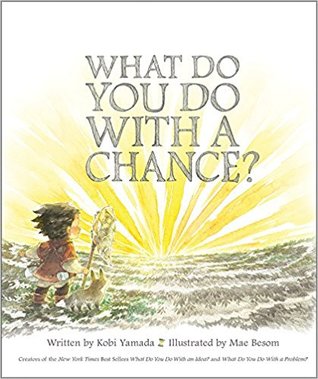
What Do You Do with a Chance?
Author: Kobi Yamada
Illustrator: Mae Besom
Published: July 1, 2016 by Compendium Inc.

Summary: The award–winning creators of The New York Times best sellers What Do You Do With an Idea?and What Do You Do With a Problem? return with a captivating story about a child who isn’t sure what to make of a chance encounter and then discovers that when you have courage, take chances, and say yes to new experiences, amazing things can happen.

In this story, a child is visited by his first chance and unsure what to do with it, he lets it go. Later on, when a new chance arrives he reaches for it, but this time he misses and falls. Embarrassed and afraid, he begins ignoring each new chance that comes by, even though he still wants to take them. Then one day he realizes that he doesn’t need to be brave all the time, just at the right time, to find out what amazing things can happen when he takes a chance.

The final addition to the award-winning What Do You Do With…? picture book series created by New York Times best selling author Kobi Yamada and illustrator by Mae Besom, What Do You Do With a Chance? inspires kids of all ages and parents alike to find the courage to go for the opportunities that come their way. Because you never know when a chance, once taken, might be the one to change everything.

Ricki’s Review: There is something absolutely magical about these books. This author/illustrator team is simply remarkable in their ability to make the abstract come alive. Each semester, I read one of the books from this series aloud to my preservice teachers. They will be teaching in secondary schools, but this book series makes it obvious about how they can powerfully use picture books in their classrooms. After I read the book aloud, I don’t need to go through a long justification of why picture books work well in middle and high schools. What I like about this series is that each book is different from the other two. They overlap in their conceptualization and they all are remarkable choices for the instruction of symbolism and creating writing–but they all teach very different, big ideas. I can see each book pairing well with a different canonical or YA text. 

Kellee’s Review: I hope each and every one my students leave my class with is that life is about trying and working hard and being creative and kindness and so much more than just passing tests, and Yamada’s series teaches all of these things in such a beautiful, fun, and inspiring way! The newest book in the series looks at the fear that comes with new things, and I think this is something that is so important to talk to kids about, doing anything different or new can be scary for a bunch of different reasons. And this ranges from toddlers (Trent is afraid of fast rides) to teenagers (who may be afraid of doing something that may look uncool or are too busy to grab a chance when it comes by). I am so sad that this is the final installation of the series, but I am so glad that we have the three we do. 

Teacher’s Tools for Navigation: In previous posts for this series, we have discussed how teachers might use this book to teach word choice, symbolism, and creative writing. Teachers might also consider reading all three books aloud to students and talking about the ways they are conceptually similar and different. Students might discuss the paratext of the novels and the marketing of the books. They might also compare and contrast how the books offer completely different, powerful illustrations of abstract ideas.

Discussion Questions: What do you do with a chance?; How do the author and illustrator work together to make the abstract concept of a “chance” more concrete?; What does the book teach about courage?; When have you taken a chance? Did it work out? What did it teach you? What famous people in history have taken chances? What do you think they learned?

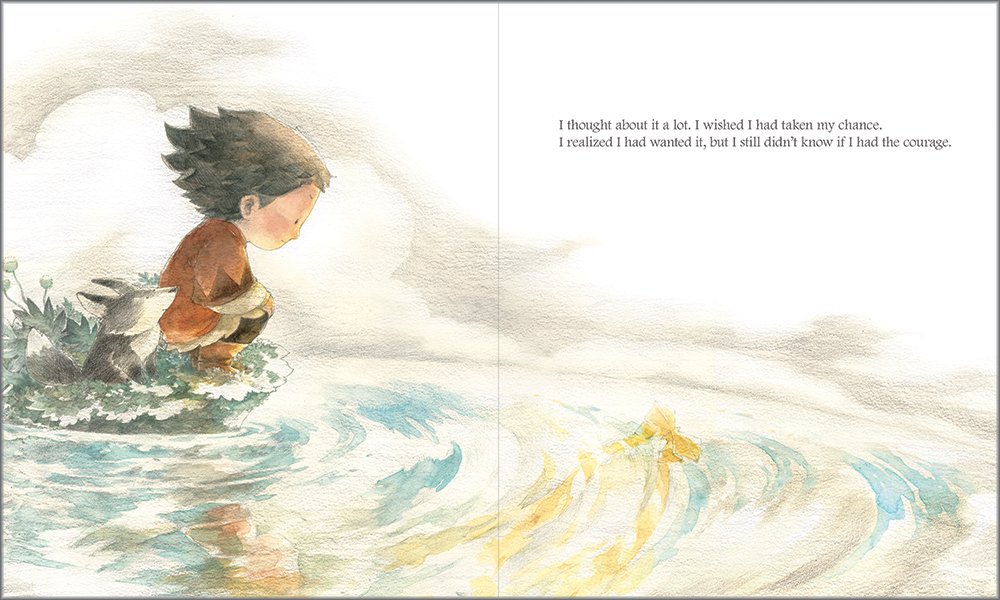
Flagged Passage: 
Read This If You Loved: What Do You Do with an Idea? by Kobi Yamada; What Do You Do With a Problem? by Kobi Yamada; The Most Magnificent Thing by Ashley Spires; The Dot by Peter H. Reynolds, The Noisy Paint Box by Barb Rosenstock, Lost and Found by Oliver Jeffers, Journey by Aaron Becker

Recommended For:

  readaloudbuttonsmall closereadinganalysisbuttonsmall classroomlibrarybuttonsmall

 and

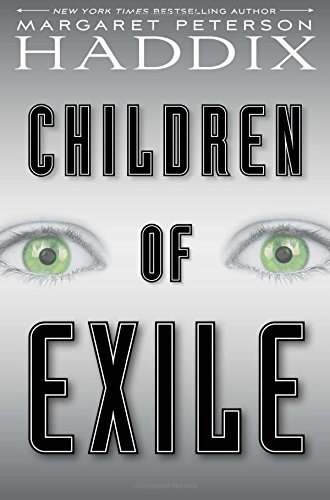
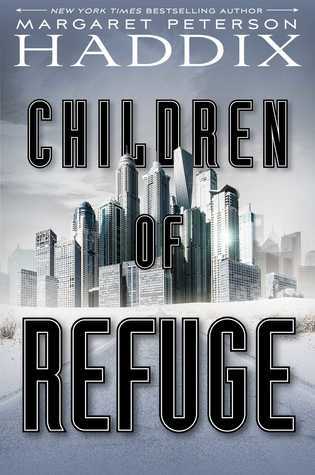
Children of Exile (#1) & Children of Refuge (#2) by Margaret Peterson Haddix

Share

Children of Exile
Published September 13th, 2016 by Simon & Schuster for Young Readers

Children of Refuge
Published September 12th, 2017 by Simon & Schuster for Young Readers

Author: Margaret Peterson Haddix

Children of Exile Summary: For the past twelve years, adults called “Freds” have raised Rosi, her younger brother Bobo, and the other children of their town, saying it is too dangerous for them to stay with their parents, but now they are all being sent back. Since Rosi is the oldest, all the younger kids are looking to her with questions she doesn’t have the answers to. She’d always trusted the Freds completely, but now she’s not so sure.

And their home is nothing like she’d expected, like nothing the Freds had prepared them for. Will Rosi and the other kids be able to adjust to their new reality?

Children of Refuge Summary: After Edwy is smuggled off to Refuge City to stay with his brother and sister, Rosi, Bobo, and Cana are stuck alone—and in danger—in Cursed Town in the thrilling follow-up to Children of Exile from New York Times bestselling author, Margaret Peterson Haddix.

It’s been barely a day since Edwy left Fredtown to be with his parents and, already, he is being sent away. He’s smuggled off to boarding school in Refuge City, where he will be with his brother and sister, who don’t even like him very much. The boarding school is nothing like the school that he knew, there’s no one around looking up to him now, and he’s still not allowed to ask questions!

Alone and confused, Edwy seeks out other children brought back from Fredtown and soon discovers that Rosi and the others—still stuck in the Cursed Town—might be in danger. Can Edwy find his way back to his friends before it’s too late?

ReviewOne thing you can always guarantee when you read a Haddix book is that it will suck you in and will be super unique! The Children of Exile series did not disappoint. I will admit, it is really hard to review either of the books without spoiling. The summaries above both did a really great job, but everything that happens after that suspense-building summary happens would spoil something for you. But I will promise you these things:

  • You will be on the edge of your seat and not be able to figure out what is going on for 90% of the first book.
  • You will be disgusted by the treatment of the children once they are returned to their parents.
  • You will want to help Edwy and his friends so badly throughout the entire second book.
  • You will have to stop reading when the reveal happens in the first book just to process it. Then you’ll reread. Then you’ll text someone who has read it.
  • You will want to know more than book 2 tells you, so we’ll all be waiting impatiently for #3.
  • You will realize that these books are actually a bit older and darker than they first seem.

Teachers’ Tools for Navigation: Like other Haddix books, you will find the best home for these books in the hands of kids. They are going to be talking about these books after they read them!

Discussion Questions: Discussion questions are available on Haddix’s website.

Flagged Passages: “‘Remember to be good little children!’

Good little children, good little children, good little children…

I saw children crying and clinging to their Fred-parents’ legs. I saw men yanking babies from their Fred-parents’ arms. I turned my back to my own Fred-mama and Fred-daddy — maybe to grab them as hard as I could — but the crowd surged just then, pushing Bobo and me up the stairs. I couldn’t see my Fred-parents anymore. I hadn’t even had a chance to tell them a proper good-bye.” (Children of Exile, Chapter 3)

“I’d been counting on being able to run fast enough no one caught up.

‘Good,’ an oily voice whispered in my ear. ‘Now you understand that screaming is useless.’

‘No, I was just–‘ Before I could add deciding what to scream next, a thick hand slid over my mouth. It smelled of onions and sweat and mud and, I don’t know, maybe puke as well.” (Children of Exile, Prologue)

Read This If You Love: Knife of Never Letting Go by Patrick Ness, Tesla’s Attic by Neal Shusterman, Masterminds by Gordon Korman, Spillzone by Scott Westerfeld

Recommended For: 

Signature

**Thank you to Casey at Media Masters for providing copies for review!**

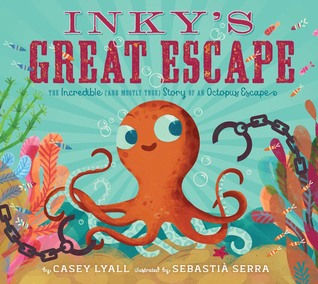
Inky’s Great Escape by Casey Lyall

Share

Inky’s Great Escape: The Incredible (and Mostly True) Story of an Octopus Escape
Author: Casey Lyall
Illustrator: Sebastia Serra
Published: November 7, 2017 by Sterling Children’s Books

Goodreads Summary: Inky’s Incredible Idea for an Ingenious Escape .
Based on a true story, this tale follows a daring, Houdini-esque octopus as he performs his greatest escape act yet.

In April 2016, The New York Times published an article about an octopus named Inky who escaped from the National Aquarium of New Zealand through a drainpipe and into the sea. In this charming fictionalized account, Inky, worn out from his exciting life in the ocean, has retired to the aquarium. There he quietly plays cards, makes faces at the visitors, and regales his tankmate Blotchy with tales of his past adventures. Then Blotchy dares Inky to make one more great escape: out of their tank. Will Inky succeed?

Ricki’s Review: Inky! This is a fun, thrilling text that will surely entertain a classroom of kids. I can imagine all of the questions that would accompany a read-aloud of this book. When my son and I read it, the first thing we did was research Inky’s story on the internet (see Kellee’s review for more info about this). We talked about all of the exciting ways that an octopus might escape from an aquarium. I love how the author creatively interpreted Inky’s story and made it a sort of challenge from Inky’s friend Blotchy. This made me chuckle. This text is versatile and could be used in many ways in the classroom, and it has high appeal. Kids will love it.

Kellee’s Review: Although Inky’s Great Escape is a fictionalized version of the events that happened at the National Aquarium of New Zealand in 2016, if you go and research about the escape, you’ll learn that the Inky truly is one incredible octopus! Although Lyall used creative freedom to build up Inky’s backstory (he’d retired to the aquarium after many daring escapes, and only escaped from the aquarium because Blotchy challenged him), much of the escape sequence was what truly transpired when Inky made his escape. Kids will fall in love with Inky’s bravery, personality, and with his contrasting friend, Blotchy, who stayed behind. With colorful full page illustrations and two octopuses with character traits and personalities that will start conversations, Inky’s Great Escape is going to be a favorite read aloud and classroom library book in elementary classrooms (and would be a great companion to a cephalapoda discussion!).

Teachers’ Tools for Navigation: Teachers might take some time to point out New Zealand on a map and to research the habitat in New Zealand. They might specifically look into Inky’s story and how the author took a bit of creative license to interpret the truth a bit. Teachers might also ask students to create their own escape stories with another animal. They could illustrate these and bind them into books!

Discussion Questions: Why does Inky decide to escape? What does he do?; What is Blotchy’s role in the story? How might we compare this to situations in our lives?; What is the true story? How did the author creatively interpret that story?

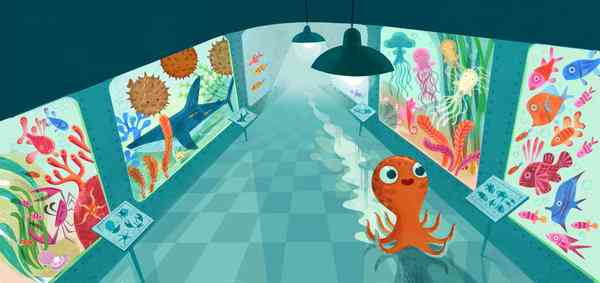
Flagged Spread: 

Read This If You Loved: Prince and Pirate by Charlotte Gunnufson; Lady Pancake & Sir French Toast by Josh Funk; Whose Story is This, Anyway? by Mike Flaherty; Dragons Love Tacos by Adam Rubin

Recommended For: 

readaloudbuttonsmall classroomlibrarybuttonsmall

RickiSigandSignature

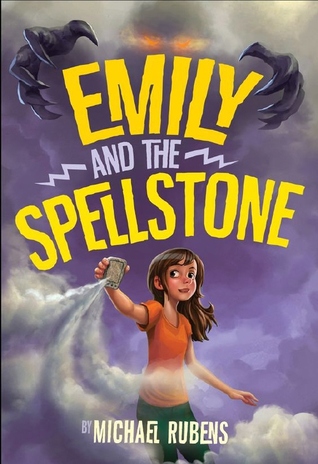
Emily and the Spellstone by Michael Rubens

Share

Emily and the Spellstone
Author: Michael Rubens
Published June 13th, 2017 by Clarion Books

Summary: This summer, comedy writer and YA author Michael Rubens makes his middle grade debut with Emily and the Spellstone, a hilarious and accessible fantasy about growing up and coming into your own.

Emily is fed up with her frustrating family and the clique-filled hallways of elementary school. All she wants for her twelfth birthday is a cell phone, but of course her tech-obsessed older sister had to go and get carpal tunnel, so now Emily isn’t allowed to have one. Worst birthday ever. As she stomps off down the beach to get away from it all, she stumbles across a strange stone that seems to speak to her, and looks oddly like the cell phone she desperately wants. What Emily doesn’t know is that this weird rock is actually an ancient Spellstone, and only she can unlock its powers. What could go wrong?

Rubens’ whimsical wordplay and delightful prose bring this unpredictable adventure to life. Monsters and magic will inspire readers’ imaginations, while Emily’s more terrestrial troubles like mean girls and annoying little brothers will resonate with anyone who has ever been new or felt out of place in their own family. According to Booklist, the quick pacing, playful narration, and high stakes are plenty to keep reluctant readers and young fantasy fans engaged.” With a diverse cast of supporting characters and a spunky heroine, this wacky romp is a perfect summer read.

About the Author: Michael Rubens is the author of two YA novels, Sons of the 613 and The Bad Decisions Playlist, and one novel for grownups, The Sheriff of Yrnameer. A correspondent and producer for Full Frontal with Samantha Bee, he has also been a producer for Last Week Tonight with John Oliver and The Daily Show with Jon Stewart. His writing has appeared in places like The New Yorker’s Daily ShoutsSalon and McSweeney’s. He lives with his family in Brooklyn. Visit his website at www.michaelrubens.com.

Review: It is obvious that Rubens writes comedy for a living. Emily’s story is a perfect mix of laugh out loud moments, puns, and crazy adventures with monsters and evil. And unlike other books this reminded me of, Rubens has created his own monsters and villains instead of using an established mythology which means it made it really hard for me to make predictions, so I was on the edge of my seat (LAUGHING along the way) the entire novel. As soon as I finished, I went on Twitter to make sure all of my middle grade teacher friends knew about this one because I think that fans of Riordan’s books are going to really enjoy this one.

Teachers’ Tools for Navigation: Primarily, I picture this book in classrooms/libraries for independent reading or being used in classes during lit circles/book clubs. However, there are some really funny read aloud parts that could definitely be used to discuss humor, word choice, puns, and voice. It would also be lots of fun to make up apps that could be on Emily’s Spellstone.

Discussion Questions: 

  • How did Emily change from the beginning to the end of the novel? What plot points were key in her character development?
  • Find examples in the book that show Emily’s and Gorgo’s sense of humor.
  • How do you think Emily feels by the end of the book about being a Stonemaster?
  • Were there any signs throughout the book to indicate that Gorgo was going to make the decision he did?
  • If all of the humorous passages were eliminated from the book, how would that change the tone of the book? How does the word choice the author chose help make the tone what it is?
  • Why were the Venomüch family included in the story?

Flagged Passages: “Emily lay as still as she could, not daring to move, barely daring to breathe.

There was something lurking in the darkness.

She couldn’t hear it or see it, but she could feel it, the sheer foulness of its presence.

It wasn’t Gorgo. She knew that. This was something else. Something far worse. . . . . .

‘There was. . . something in my room last night.’

‘Ah, right. I thought I felt somehthing. Some sort of shade or spirit, probably sniffing around after the Stone.’

‘Why?’

He shrugged. ‘Dunno. Maybe someone sent it. Or maybe it just showed up, drawn by the Stone,’ he said. ‘You’re about to say ‘why’ again, aren’t you?’

‘Yes. Why. Why would that thing be drawn to this stone?’

‘Because it’s a Stone. They’re incredibly powerful, Stones are. Powerful and rare. A Stonemaster can use them to work great magics. That’s a very ancient relic you have there. Well, sort of modern ancient. The first Stones were massive. You’ve heard of Stonehenge, right? Well, thos are really old-fashioned. You couldn’t move them anywhere. The one you have, though, it’s portable, or, uh. . .’

‘Mobile?’ said Emily.

‘Right!’

‘A mobile. . . Stone?’

‘Precisely!’

‘A mobile Stone for casting spells.’

‘Right again.’

‘It’s a Mobile. Spell. Stone.’

‘You seem fixated on that.’

‘It’s like a mobile cell phone.’

‘Not sure what you’re talkinga bout, but if you say so.’ (p. 55, 69-70)

Read This If You Love: The Lightning Thief by Rick Riordan, Guardians of the Gryphon’s Claw by Todd Calgi Gallicano, Harry Potter, Lemony Snicket

Recommended For: 

Signature

**Thank you to Tracy at Media Masters Publicity for providing a copy for review!**

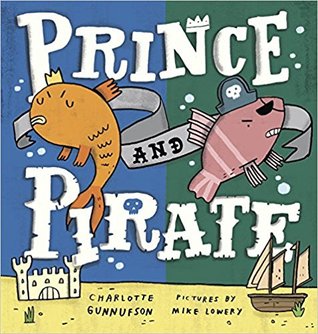
Prince and Pirate by Charlotte Gunnufson

Share

Prince and Pirate
Author: Charlotte Gunnufson
Illustrator: Mike Lowery
Anticipated Publication: May 9, 2017 by Putnam

Goodreads Summary: When two little fish with big personalities have to share the same tank, there are rough seas ahead!

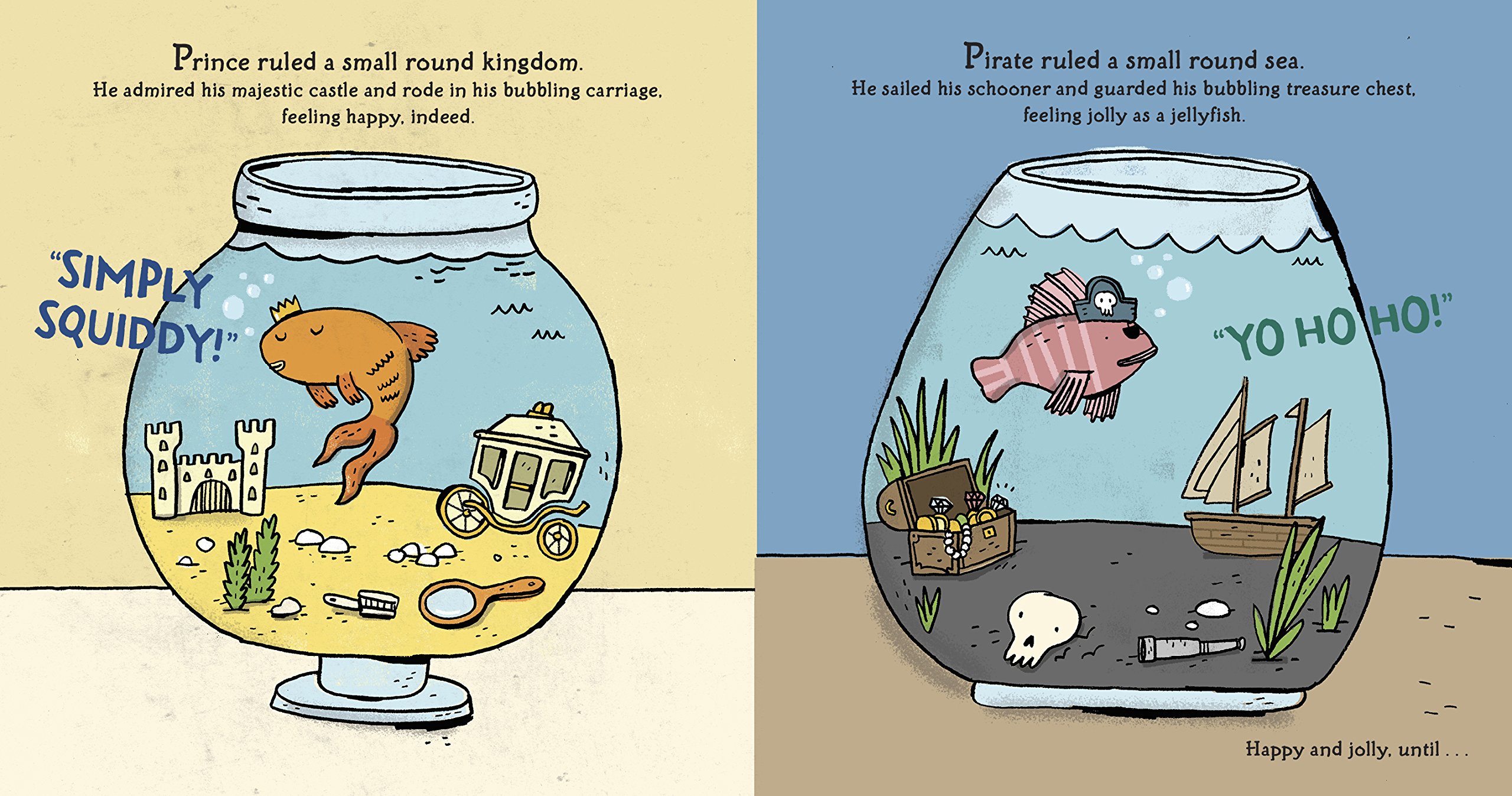
Prince and Pirate are proud masters of their very own fishbowls, and life goes along swimmingly–until they’re scooped up and plopped into shared waters.
Prince is horrified to find this cheeky cod trespassing in his kingdom.
Pirate is sure this scurvy sea slug has come to plunder his treasure.
Thus, a battle of regal sneers, seaworthy stink-eyes, and off-the-hook insults begins.
Prince and Pirate’s hilarious duel for territory will elicit gales of giggles, hearty guffaws, and heartfelt smiles. Just when it seems their struggle might end in a silly stalemate, a little surprise convinces them to find a way to get along–swimmingly.

Ricki’s Review: My son has Charlotte Gunnufson’s Halloween Hustle, and we read it quite often. He loves the kooky characters and fun within the text. Prince and Pirate is no different. I loved reading this book aloud, and my son was giggling as turned each page. The book is cleverly crafted, and the words and illustrations pop off of the pages. I can’t help but think about how the author conceptualized the novel. I imagine her looking at a fishbowl and thinking about the characters amongst her fish. This book would make a wonderful text to spur creative writing amongst students. I think their imaginations would soar after reading it. 

Kellee’s Review: I think Mike Lowery’s illustrations are so much fun and add such a special personality to any story, and with this book, his illustrations met a story that definitely lived up to his standards. (I also want to compliment the book’s designer who also made the font as fun as the illustrations.) Prince and Pirate were loners who all of a sudden are forced to live together and do. not. like. it. However, when they both have the same goal to try to reach, they are able to cooperate and learn to work (and live) together. Through humor and ridiculous name calling, Gunnufson tells a story that shows how differences don’t have to be the end of a possible friendship.

Teachers’ Tools for Navigation: Teachers might ask students to create their own fish characters. They could use the prince and pirate as a model and design a similar text. This book serves as a wonderful mentor text for learning about how to build character and/or teaching dialogue. Don’t forget to check out the Educator’s Guide along with other fun, free activities on the author’s website, https://www.booksbycharlotte.com/activities.

Discussion Questions: How do you think the author conceptualized this book?; How do the words and illustrations work together to form an effective story?; How does the author build character? What other fish characters might emerge in the story? How would the story be different if the author introduce a ____ type of fish?

Flagged Spread: 

Read This If You Loved: Halloween Hustle by Charlotte Gunnufson; Lady Pancake & Sir French Toast by Josh Funk; Whose Story is This, Anyway? by Mike Flaherty; Dragons Love Tacos by Adam Rubin, Doodle Adventures by Mike Lowery

Recommended For: 

readaloudbuttonsmall classroomlibrarybuttonsmall

RickiSigandSignature

Teaching Guide with Activities and Discussion Questions for Charlie and Mouse and Grumpy by Laurel Snyder

Share

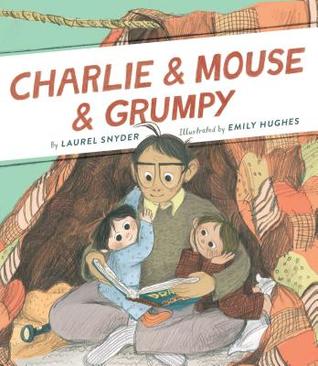
Charlie & Mouse & Grumpy
Author: Laurel Snyder
Illustrator: Emily Hughes
Published October 3rd, 2017 by Chronicle

Summary: In this heartwarming sequel to Laurel Snyder’s beginning chapter book Charlie & Mouse, the two brothers enjoy a special visit from their grandpa, Grumpy. Follow along as they discuss being medium, pounce each other, sing the wrong songs, build blanket forts, and more. Paired with effervescent illustrations by Emily Hughes, this touching, funny celebration of imagination and bonding will enchant readers young and old.

View our post about Charlie and Grumpy book one (with teaching guide) here!

Activities include: 

Bedtime Songs

Grumpy doesn’t know the right bedtime song to sing for Charlie and Mouse, so he tries to guess. Using the clues he gave, we can assume he was talking about “Circle Game” by Joni Mitchell, “Hush, Little Baby,” and possibly “Jump in the River” by Sinead O’Connor. Play these three songs for your students.

  • Which do you like the most? Why?
  • Which do you think would be the best bedtime song? Why?

After Grumpy guesses, Charlie sings the right bedtime song to Grumpy.

  • We don’t know what song Charlie sang, but what song would you have sung to Grumpy?

After gathering all of the bedtime songs discussed as a group, have students analyze the different songs (theirs and the three Grumpy mentioned) by having them (in groups or independently):

  • Identify rhyming words within the songs.
  • Does the author repeat any words? Why did the author choose to repeat these words?
  • How does the author supply rhythm in the song?

Infer

There are a few times in the book that the text doesn’t tell you what happened, but you can infer from the illustrations what occurred such as p. 17, p. 27, and p.37. Have students use the illustrations to see how each of these chapters concluded and have them write out what they see in the illustrations.

Rain

In the final chapter, it is raining while Charlie and Mouse say good-bye to Grumpy. Even though the rain seems to be happening because of the mood of the chapter, rain actually occurs because of the water cycle. After discussing the mood of the chapter (see discussion question), share the scientific reason for rain by sharing the water cycle. One activity that could be done to help students understand the water cycle is the “Simple Water Cycle in a Bag” experiment: http://www.rookieparenting.com/what-is-water-cycle/.

Discussion Questions include: 

  • The text never says that Grumpy is Charlie and Mouse’s grandfather, but you can infer he is. What clues from the text and illustration help you know that he is their grandfather?
  • In the final chapter, the author chose to have it be raining. Why does this type of weather make the most sense for this final chapter? What mood does it set for the chapter?
  • Using the clues throughout the book, how many days and nights did Grumpy stay with Charlie and Mouse? How did you know?

Teaching Guide Created by Me (Kellee): 

You can also access the teaching guide through Chronicle’s website here.

Recommended For: 

readaloudbuttonsmall classroomlibrarybuttonsmall closereadinganalysisbuttonsmall

Kellee Signature

Aliens Get the Sniffles Too! Ahhh-Choo! by Katy S. Duffield

Share

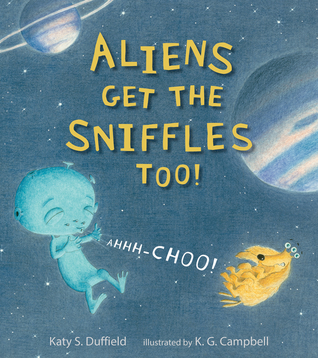
Aliens Get the Sniffles Too
Author: Katy S. Duffield
Illustrator: K. G. Campbell
Published November 7, 2017 by Candlewick

Summary: Ahhh-flying-saucer-shooting-star-CHOO! Laughter is the best medicine when you’re a little alien feeling under the weather.

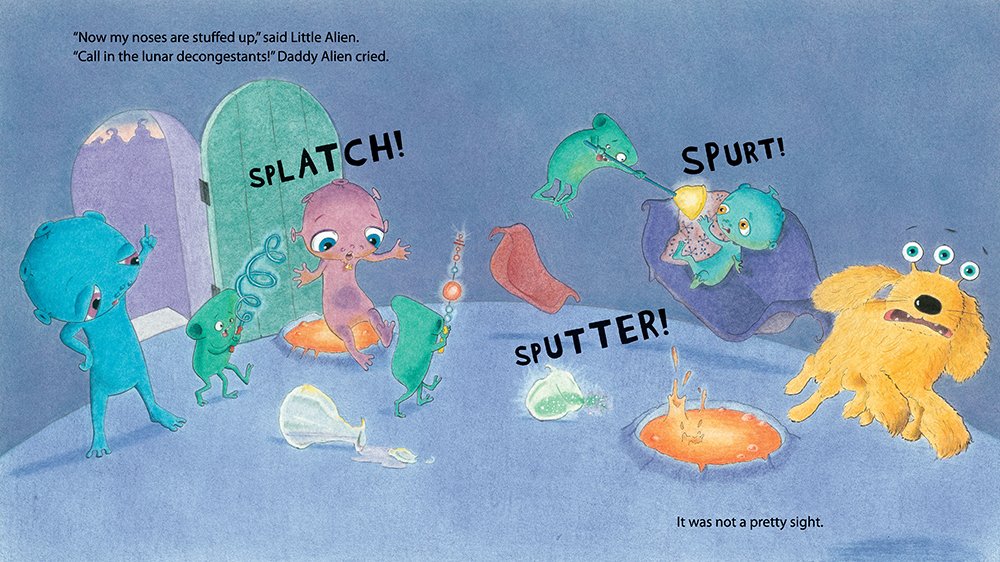
Little Alien is sick. And sick is extra-terrestrial bad when you have two scratchy throats, five ears that hurt, and three runny noses. Splatch! Sputter! Spurt! Luckily Mama and Daddy Alien have an arsenal of lunar decongestants and meteor showers on hand to make him feel a little better (not to mention a Milky Way milkshake to help the medicine go down). Even so, the family’s alien pooch, Mars Rover, can’t stand to see his little buddy feeling out of sorts. Can a loyal pup’s funny tricks finally coax a smile?

About the Author and Illustrator: Katy Duffield is the award-winning author of more than twenty-five books for children. She lives in Florida with her husband. To learn more, and to download classroom resources, visit katyduffield.com. Twitter: @KatyDuffield

Check out Katy on Pinterest!
 
K. G. Campbell is the illustrator of Flora & Ulysses by Kate DiCamillo and the author-illustrator of Lester’s Dreadful Sweaters. He was born in Kenya, raised in Scotland, and now lives in southern California.

Ricki’s Review: This book has been a blessing in my house. Both of my kids have had colds for the past several weeks. It seems they catch cold after cold! We’ve been reading this book quite often and making connections with Little Alien. As a parent, I particularly appreciate that the end of the book allows me space to talk about how Little Alien got Mars Rover sick. Every time we read the book, we point to the part where Little Alien spreads his germs to Mars Rover. Then, we make the cause-effect relationship about what happens when we spread our germs. I know that teachers in elementary school will love this connect. We spend a lot of time talking with kids of all ages about spreading germs!

On a literary note, the author has some great plays on words. I chuckle every time that I read the book. Kids who are obsessed with space will adore this book and all of its space references.

Kellee’s Review: Whenever Trent is sick, he is so miserable, so Little Alien’s story of trying everything to feel better is going to be the perfect companion to my sweet boy when he is feeling under the weather. Just like Mars Rover will do anything to help make Little Alien feel better, I will as well, and Aliens Get the Sniffles, Too! will be a perfect part of our feel better routine.

I loved the use of onomatopeoias in the book and mixed with the detailed, colorful, full page illustrations really brings Little Alien’s story to life.

Teachers’ Tools for Navigation: Teacher might group students in pairs and assign them a spread. Students might hunt for the references to space on the pages and look up to learn more about those aspects of space. For example, for the spread below, students might look up the word “lunar” and share it with the whole group. Then, the teacher might reread the entire text again and pause to allow students to share the word play of their assigned spread as they read the book aloud together.

Discussion Questions: How does Mars Rover feel when Little Alien gets sick? Have you ever felt that way when a friend or family member got sick?; How does Mars Rover get sick? Can you point to the specific page?; Which new words did you learn while reading this book? How are they connected to the story? How does the author create a theme around the concept of space?

Flagged Passages: 

Read This If You Loved: Your Alien by Tammi Sauer,  Faraway Friends by Russ CoxBoy + Bot by Ame DyckmanLife on Mars by Jon Agee

Giveaway:  TWO giveaway opportunities!!

  1. One grand-prize winner will receive a out-of-this-world alien backpack with a signed copy of Aliens Get the Sniffles Too! along with tissue packs, toy mini aliens, and space pencils.
  2. Ten lucky runners-up will receive a copy of Aliens Get the Sniffles Too!
To enter, click here.

Recommended For:

  readaloudbuttonsmall classroomlibrarybuttonsmall

andKellee Signature

**Thank you to Barbara from Blue Slip Media for providing copies for review!**