National Geographic Kids: Farm Animals & Rascally Rabbits!

Share

NFPB2016

Nonfiction Wednesday

Nonfiction Picture Book Wednesday is hosted by Kid Lit Frenzy and was started to help promote the reading of nonfiction texts. Most Wednesdays, we will be participating and will review a nonfiction text (though it may not always be a picture book).
Be sure to visit Kid Lit Frenzy and see what other nonfiction books are shared this week!
farm animals

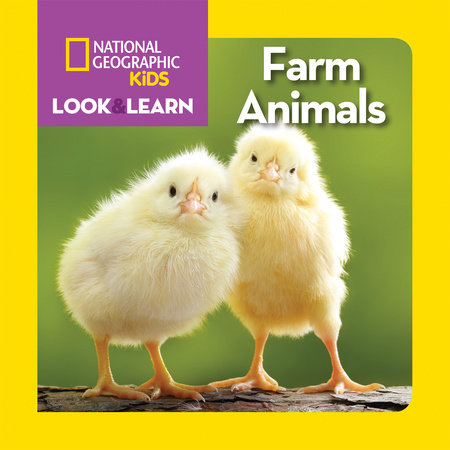
Farm Animals
Author: Catherine D. Hughes
Photographs from National Geographic
Published February 9th, 2016 by National Geographic Children’s Books

Goodreads Summary: Young readers will meet their favorite farm animals and learn more about them through simple, age-appropriate language in this colorful board book.

rascally

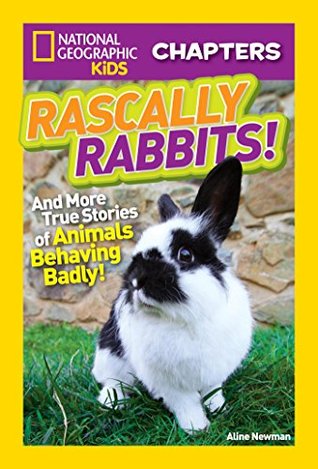
Rascally Rabbits! And More True Stories of Animals Behaving Badly!
Author: Aline Alexander Newman
Photographs from National Geographic
Published February 9th, 2016 by National Geographic Children’s Books

Goodreads Summary: These bunnies may look adorable, but there’s more than meets the eye! In Rascally Rabbits, meet some rabbits that cause nothing but trouble, a rescue pup who will eat ANYTHING, and a sneaky bear with a taste for treats. Readers won’t stop laughing as they read these hilarious–and completely true!–stories. Filled with engaging photos, fast facts, and fascinating sidebars, readers won’t want to put this book down.


Kellee’s Review: What I like so much about National Geographic Kids books are that they really do take nonfiction to the next level. First, they have nonfiction for all ages. The Look & Learn series are for kids ages 1-4 then move to their Readers Series which is an early reader then to Chapters that is primary level. Each level adds more text but continue to include interesting facts and photographs. Once you get up to Chapters, the text even includes sidebars, an index, and a bibliography. 

Farm Animals was a favorite with Trent immediately. One of his stations at school is all about animals and they spend their time there talking about the different animals, what color they are, and what sound they made, so Trent loved telling me all of the animals’ names and the sound they make. I loved that there were animals facts and sidebars in addition to just the animal photographs and sounds.

Rascally Rabbits! is a perfect first chapter book because it is quite funny (these animals do some crazy things), it is educational because it teaches about the animals as well, and it splits up the stories into nice sections.

Ricki’s Review: I completely agree with Kellee. I much prefer narrative nonfiction, so I always hesitate to pick up informational nonfiction. The National Geographic books remind me just how wrong my assumptions are. I am not crazy about leveling, particularly with nonfiction, but I think that some parents really like it. And I think the leveling in these books is far more accurate than in fiction texts. 

I knew Henry would love Farm Animals the second we got it in the mail. Like most kids, he loves animals. He immediately began singing “Old McDonald” as we started reading the book, and he was bouncing up and down as we went through each of the brightly colored pictures.

Rascally Rabbits! is a bit challenging for him, but he loved the pictures. I opted to read selected text to him aloud, and I read the entire book on my own. Kids who are interested in rabbits will absolutely adore these books. I still remember reading dozens of books about poodles when I was younger. Because I was so interested in the content, I didn’t realize how much I was learning! The book is organized very well, and they did a really nice job with this one.

Teachers’ Tools for Navigation: National Geographic Kids’ books should be a go to for a teacher’s informational nonfiction section. Students will love reading and learning from these texts. Farm Animals and other Look & Learn books are perfect for read alouds and helping young children learn about different parts of our world. Rascally Rabbits! and other chapter books can be used for read aloud, independent reading, or even within a lit circle/jigsaw. For example, with Rascally Rabbits! each group could read about each of the different animals who made a mistake then go group with one person from each of the other groups to share what they read.

Discussion Questions: (Farm Animals) What product do each of these animals give to us?; What other farm animals do you know? What sounds do they make?; (Rascally Rabbits!) What are some things that Babbity does to make Flopsy’s life tough?; What makes bears get near humans?; Why was Neil afraid something bad might happen with Moose? Did something bad happen? Was it Neil’s fault?

We Flagged: “Moo! Cows eat grass. A group of cows is called a herd. People drink milk that comes from cows. Guess What? One cow can give enough milk in a day to fill 400 glasses.” (Farm Animals)

“Did You Know? The best way to pet a rabbit is to gently scratch its forehead and between its eyes.” (Rascally Rabbits!, p. 9)

“A young black dog ran without purpose along a forest road in Lewis County, New York, U.S.A. Rain was pouring down and freezing on the ground. Tiny icicle hung from the dog’s ears and chin. He had a wild-eyed look on his face.” (Rascally Rabbits!, p. 71)

Read This If You Loved: Nonfiction animals books

Recommended For: 

classroomlibrarybuttonsmall readaloudbuttonsmall litcirclesbuttonsmall

Signatureand RickiSig

**Thank you Karen from Media Masters Publicity for providing copies for review!**

Blog Tour, Giveaway, and Review!: The Typewriter by Bill Thomson

Share

Thomson_TheTypewriter_6603_JK_FL_ v3.indd

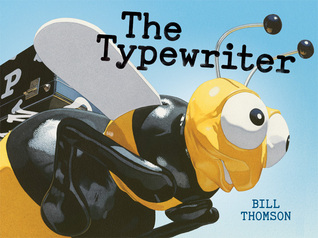
The Typewriter
Author & Illustrator: Bill Thomson
Published March 8th, 2016 by Two Lions

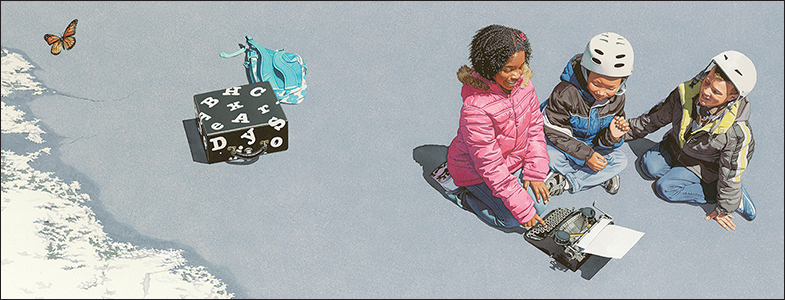
Goodreads Summary: Using just nine words, the award-winning creator of Chalk takes readers on another unforgettable journey. When three children discover a typewriter on a carousel, they are transported on an adventure of their own creation—complete with a giant beach ball and a threatening crab. Stunning, richly colored artwork is paired with limited text so children can tell their own version of the story.

About the Author: Bill Thomson is the creator of Chalk and Fossil and the illustrator of Baseball Hour, Karate Hour, Soccer Hour, and Building with Dad, all written by Carol Nevius. Thomson’s books have received many accolades: the National Parenting Publications Gold Award, designation as a Notable Children’s Book by the American Library Association, a Teacher’s Choice selection from the International Reading Association, a Booklist Editor’s Choice, the Connecticut Book Award for Children’s Illustrator, Kentucky’s Bluegrass Award, Ohio’s Buckeye Children’s Book Award, and the Prix Livrentête in Paris, France. Thomson’s artwork has also received more than 75 awards in the country’s most prestigious juried illustration competitions.

Bill Thomson RGB photo (2)

Thomson lives with his family in Southington, Connecticut and is also a professor of illustration at the University of Hartford. To see more of his artwork, visit: www.billthomson.com.

Kellee’s Review: I often hear that it is best to show not tell in writing, and this is taken to another level with this wordless picture book. I’m always blown away by excellent wordless picture books because there are illustrators that can take you on such an amazing journey without telling you anything. Although Bill Thomson does use nine words in The Typewriter, it is his illustrations that transport you into the story. He is an incredibly talented illustrator. Just like with Chalk, I am in awe of how realistic his illustrations are!

Ricki’s Review: This book is very innovative in the way it shares story. Readers will zoom into and out of the scenes on each page and will be pulled right into the book. My son has read this book several times, and I love how he carefully and slowly examines all of the illustrations on the pages. When he gets a bit older, I plan to ask him to tell his own story that connects the illustrations. We can change the story just a bit each night. Thomson creates the story to be interpretive for readers, and I can’t wait to hear what my son comes up with! This would be a great story for the classroom. The magic of this book will not be lost on readers.

Teachers’ Tools for Navigation: The Typewriter is a wonderful jumping off point for a creative writing unit. There are two different directions that it can be taken. First, as with all wordless picture books, you can have students narrate The Typewriter. I also would love to see what students would do if they had the magic typewriter. The Typewriter could be used as a prompt for students to write their own story as a sequel when they find the magic typewriter on the carousel.

Other classroom activities can be found in the free curriculum guide.

Discussion Questions: Without using words, how does the author show how the characters feel during the story?; What do you think the backstory of the typewriter is? How did it get there? Where did it come from?; What is the turning point in the story?; What caused the kids to put the typewriter back?

We Flagged: 

Thomson-TheTypewriter-8-9 (2)
Illustration from THE TYPEWRITER copyright © 2016 by Bill Thomson Published by Two Lions

Read This If You Loved: Chalk by Bill Thomson, Journey by Aaron Becker, Float by Daniel Miyares, Mr. Wuffles by David Wiesner

Recommended For: 

classroomlibrarybuttonsmall readaloudbuttonsmall

Follow All the Stops on the Tour: 

Fri, Mar 4
Teach Mentor Texts
Mon, Mar 7
The Book Monsters
Tues, Mar 8
Kid Lit Frenzy
Wed, Mar 9
5 Minutes for Books
Thur, Mar 10
Cracking the Cover
Fri, Mar 11
Unleashing Readers
Mon, Mar 14
Sharpread
Tues, Mar 15
Jean Little Library
Wed, Mar 16
NC Teacher Stuff
Thur, Mar 17
A Rup Life
Fri, Mar 18
A Foodie Bibliophile in Wanderlust
Tues, Mar 22
Library Fanatic

And Don’t Forget to Enter the Giveaway!

a Rafflecopter giveaway

Kellee Signature andRickiSig

**Thank you to Barbara for sending us this book and for allowing us to host the giveaway!**

Blog Tour, Author Guest Post, and Review!: Dig In! by Cindy Jenson-Elliott

Share

NFPB2016

Nonfiction Wednesday

Nonfiction Picture Book Wednesday is hosted by Kid Lit Frenzy and was started to help promote the reading of nonfiction texts. Most Wednesdays, we will be participating and will review a nonfiction text (though it may not always be a picture book).
Be sure to visit Kid Lit Frenzy and see what other nonfiction books are shared this week!

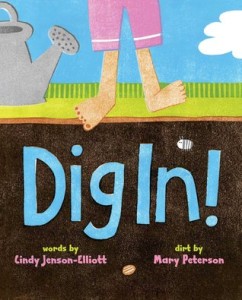
dig in

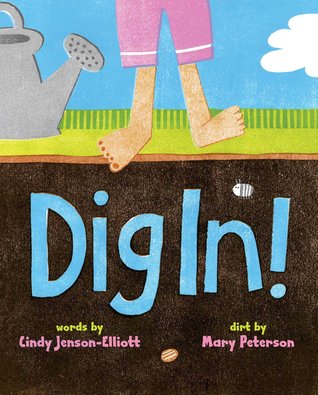
Dig In!
Author: Cindy Jenson-Elliott
Illustrator: Mary Peterson
Published March 1st, 2016 by Beach Lane Books

Summary: Dig in to this vibrant picture book that celebrates all the surprises found down in the dirt!

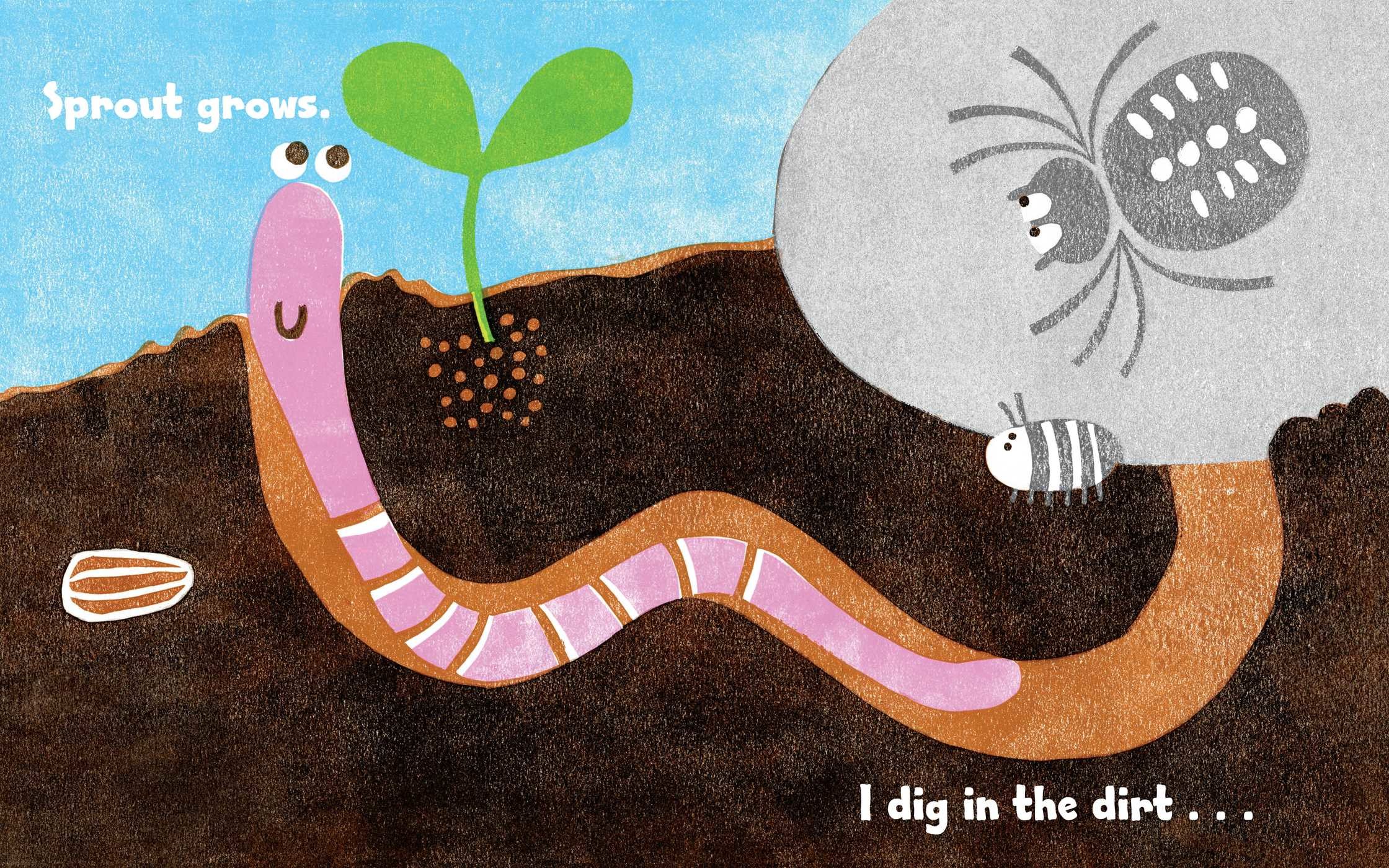
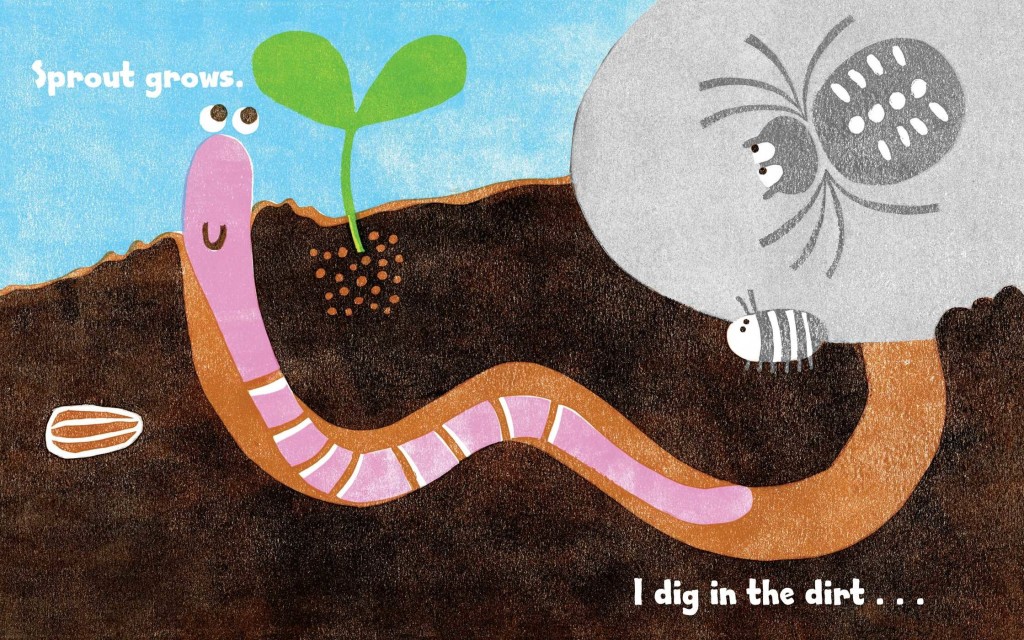
I dig in the dirt…and find a seed.
Seed waits.
I dig in the dirt…and find a spider.
Spider runs.

Explore all of the creepy, crawly, dirty, muddy, green, and growing things that can be found outside in the garden. From pill bugs to worms to leafy green sprouts, young readers will love discovering the muddy garden habitat within the pages of this book—and outside in their own backyards!

This sweet and playful celebration of outdoor exploration is a perfect read aloud for story time.

About the Author: Cindy Jenson-Elliott is the author of the celebrated Weeds Find a Way illustrated by Carolyn Fisher. She is a freelance writer for a variety of newspapers, magazines, and educational publishers, as well as a teacher and natural history instructor. She has an MA in education, and she enjoys spending time outdoors in San Diego, California, where she lives with her family. Visit her at CindyJensonElliott.com.

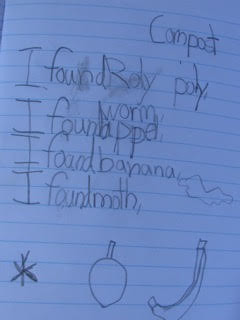
Kellee’s Review: Both of Cindy Jenson-Elliott’s books have truly made me want to get down and dirty in the garden which, if you know me, is exactly the opposite of what you would guess I want to do. Jenson-Elliott has a way of making the ordinary, and dirty, seem extraordinary. It would be great to have students catalog all of the things they find in a dirt. This would make their trips outside quite exciting!

Ricki’s Review: Kellee is absolutely right. Reading this book made me want to get outside in my garden! Oh, I cannot wait for spring! When my son and I read this book, I kept pointing to the pictures and telling him about all of the digging we will do this spring, and I am excited to have this book (and Jenson-Elliott’s Weeds Find a Way) on hand for when the time comes! We live in Connecticut (which is much colder than where Kellee lives), so we can’t quite do any digging yet. This book emanates warmth, and it will make kids want to go outside and start exploring! Cindy Jenson-Elliott seems to find the beauty in things that others may perceive negatively, and I love teaching my son to find the beauty in these unappreciated things!

Teachers’ Tools for Navigation: Cindy Jenson-Elliott has some amazing ideas on how to bring a garden into your curriculum (see below), but you can also use Dig In! to discuss sequencing and cause/effect. First, you can discuss sequencing by having students share each step of what needs to be done to plant and maintain a garden. You can also take the sequencing and extend it into cause/effect by discussing different things you can do to a garden to help or hurt it. It would also be interesting to ask students to research local dirt inhabitants. They might then research the garden plants and critters of another location to learn more about different habitats.

Some More Teachers’ Tools from Cindy Jenson-Elliott:  

“From Compost to Blossoms: Falling in Love with Literature in the School Garden”

An empty pile of dirt. A blank page. A great book. A tender idea. This is how most of my garden adventures with children begin.

Teaching in the garden is alive with possibility in more ways than one. Ideas spring up like weeds – a crazy tangle without discernable order. Bringing an idea to fruition –doing something I have never done before — feels like an enormous reach.  It is like trying to untangle a vine: where should the project begin? What are the steps? Who will help me figure it out? It’s terrifying — and thrilling! Teaching in the garden wakes you up to being a learner, even as you teach. You and the students are partners, learning together from nature. We all know teaching is risky business. Hands-on, project-based teaching – especially in the garden–  is downright dangerous.

Books take the edge off and give you a jumping off point for great projects that connect inside and outside learning. Here are some book ideas to get you started on some thrilling garden adventures of your own.

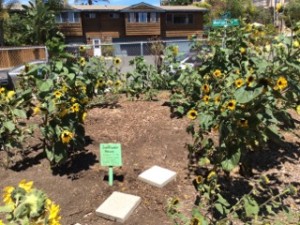
Sunflower House

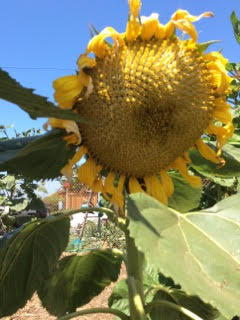
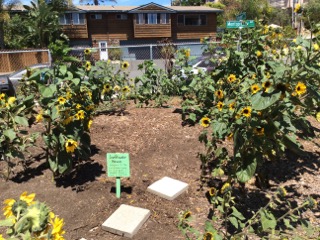
On one particular day in November, I shared Sunflower House by Eve Bunting with my TK- grade 3 students. My crazy idea was to grow our own sunflower house in a bare patch of dirt in the corner of the school garden.

First, I read the book to the children, and I shared my idea.

“We’re going to need a nice pile of garden dirt to go over in that corner,” I told them. “Right now it’s just hard clay.”

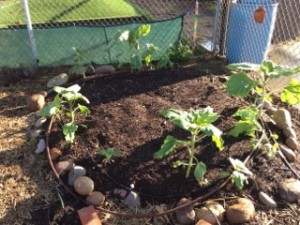
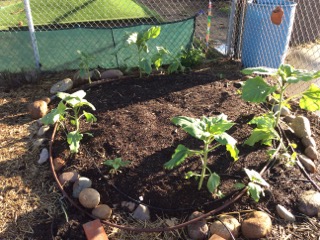
We piled dirt and compost on top of cafeteria trays reserved for gardening and students worked in partners to carry them over to the corner. We made a round, flat pad 1 foot high and 10 feet across. After school, I tapped into our drip-line watering system and ran a flexible watering tube over to the circle, looping around and around. The next garden time, students added a small amount of organic fertilizer and planted dozens of sunflower seeds. We planted Russian Mammoths, but also other multicolored and multi-sized varieties. We created a pathway leading to the dirt pad, and put up stakes protecting the area. Then we sat back and and waited, working on other garden projects all the while.

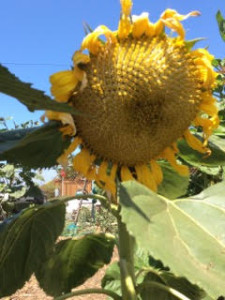
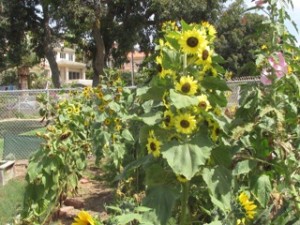
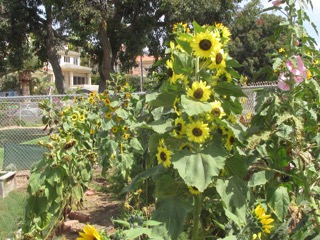
Winter rains in drought-stricken Southern California were sparse, but with dripping irrigation a few times a week, soon the sunflowers were sprouting. We measured them week by week, watching them grow higher and higher. Soon they were as high as a first grader’s head. Finally they were higher than my own head and shooting out buds.

The Sunflower House gave us endless opportunities for learning. We measured and drew the growing plants with pastels and black paper to draw blossoms. Some teachers extended the activity by learning about Van Gough and looking at his paintings of sunflowers. We watched bees visit the blossoms and learned about pollination. When the stalks dried and the heads turned inside out, we learned about the birds that came to eat the seeds. And when the next generation of sunflowers sprouted up from fallen seeds, we could see the complete cycle of life in our circle of flowers. Best of all, students loved sitting in the Sunflower  House to write or draw, or just be. From one book, we developed an entire year’s worth of activities.

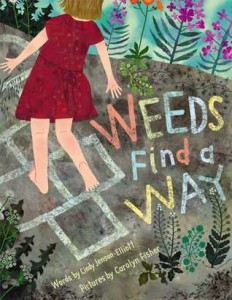
Weeds Find a Way
weeds find a way

After reading my 2014 picture book Weeds Find a Way we searched our garden for the weeds pictured in the book. We drew weeds and researched them, asking how the weeds adapted for survival. Some classes used Weeds Find a Way as a mentor text to write their own “Something Finds a Way” books about another topic. We wrote poetry, and students developed social-emotional understandings by looking at the tenacity, grit and adaptability of weeds and comparing it with their own. Finally, we tried our hands at botanical drawing and we made a giant art piece to hang on the fence of the garden.

Trellis-Bridge Project

A trellis we built last year to hold up a new passion fruit vine in the garden  collapsed and we needed a new trellis. This problem was the catalyst for learning about bridges. Pop’s Bridge by Eve Bunting and Bridges! By Carol Johmann and Elizabeth J. Rieth, were jumping off points for learning about bridges, and designing and building a trellis to hold up our passion fruit plants.

Dig In! #1000HandsDigIn Photography Project

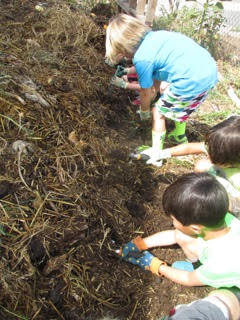
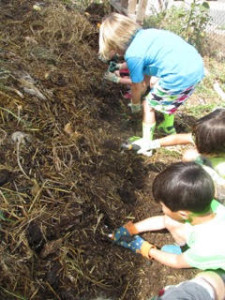
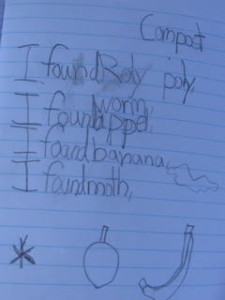
Last week we read Dig In! for the first time. Then we went out to the garden to dig in and photograph our hands and whatever our Mixed Age Class (MAC) grade 1 – 3 students found in the school garden. Students learned to frame, take and edit photos from fabulous teacher Margit Boyeson. Students are sharing their photos to twitter at #1000HandDigIn.

Engagement with Common Core Reading and Writing in the School Garden

            Picture books are the perfect way to connect inside learning and outside doing in the garden. Read Roxaboxen or Westlandia and create your  own special civilization. Read Creepy Carrots and plant a less scary variety. Then write your own creepy stories. Dive into Muncha, Munch, Muncha and see what critters are eating up your garden. Then write your own stories about the critters in the garden. And before you even plant seeds, take a look at your soil. Read Dig In! and discover the wonders living in your dirt.

What will you find when you Dig In! to gardening and literature? A world of wonder!

To see more literature-based projects you can do with students in the school garden, visit my website and follow the links to my naturexplorer blog at www.cindyjensonelliott.com.
unnamed (1) unnamed Ava's 1000HandsPhoto unnamed (2)

IMG_0211 IMG_3441 (1) IMG_1308

Discussion Questions: How are worms, spider, and pillbugs beneficial to a garden?; What other bugs are beneficial to gardens?; What else does a garden need to succeed?

We Flagged: 
dig-in-9781442412613.in03

Read This If You Loved: Weeds Find a Way by Cindy Jenson-ElliottThe Troublemaker by Lauren Castillo, In the Garden by Elizabeth Spurr

Recommended For: 

classroomlibrarybuttonsmall readaloudbuttonsmall

Kellee Signature andRickiSig

**Thank you Shifa at Simon & Schuster and Cindy Jenson-Elliott for providing a copy for review and for having us as part of the blog tour!**

The Happy Dandelion App

Share

Happy Dandelion

The Happy Dandelion App

We were contacted by Joshua and Donna Wilson, a husband-wife team and The Happy Dandelion creators, who asked if we’d review their picture book app. Because apps stray toward the advertising sector, we always review the apps carefully before we feature them on the blog. As you all know, we are not for-profit, and we are truly here for the love of teaching books, but after previewing the app, we decided it was too lovely not to share.

The books featured are picture books for all ages, and we were able to pull our sons (who are toddlers) onto our laps, and they loved pushing parts of the books to see the words spin, bump, and twist. It was fun to navigate the books because there were so many places to push, and we felt like we’d won for each time that we pushed the right places!

The first book we reviewed was The Sometimes Road. This was a calming book that is directed more for adults and is about the twists and turns of life. It was a story that will be appreciated by kids, too! There were many quotable sections that felt very zen to us. The music in the background was peaceful, and the storyline discusses the difficulties and triumphs we experience in life. The artwork is absolutely stunning. Ricki accessed this book after yoga class, and it was the perfect time to look at it. It kept her heart calm and made her feel peaceful.

We also accessed The UnStealer, which was very different from the first book. The watercolors popped, and there were many fun twists to this story. It is about an UnStealer who steals, “uns,” which was a very fun play on words. Our kids loved this one, and we think this would be very fun to use as a read-aloud in class. It would be great to take student volunteers to push different parts of the book during the read-aloud.

Check out The UnStealer in action:

We loved playing around with The Happy Dandelion app and think it would be a great resource in a classroom. This would be a great app to load onto an iPad for kids to use during independent reading or to use in groups at a reading station. A special thanks to Joshua and Donna Wilson for recommending their app to us. We had great fun!

RickiSigand Kellee Signature

Review and Teaching Guide!: Trashed by Derf Backderf

Share

NFPB2016

Nonfiction Wednesday

Nonfiction Picture Book Wednesday is hosted by Kid Lit Frenzy and was started to help promote the reading of nonfiction texts. Most Wednesdays, we will be participating and will review a nonfiction text (though it may not always be a picture book).
Be sure to visit Kid Lit Frenzy and see what other nonfiction books are shared this week!

trashed

Trashed
Author: Derf Backderf
Published November 3rd, 2015 by Harry N. Abrams

Goodreads Summary: Every week we pile our garbage on the curb and it disappears–like magic! The reality is anything but, of course. Trashed, Derf Backderf’s follow-up to the critically acclaimed, award-winning international bestseller My Friend Dahmer, is an ode to the crap job of all crap jobs–garbage collector. Anyone who has ever been trapped in a soul-sucking gig will relate to this tale. Trashed follows the raucous escapades of three 20-something friends as they clean the streets of pile after pile of stinking garbage, while battling annoying small-town bureaucrats, bizarre townfolk, sweltering summer heat, and frigid winter storms. Trashed is fiction, but is inspired by Derf’s own experiences as a garbage­man. Interspersed are nonfiction pages that detail what our garbage is and where it goes. The answers will stun you. Hop on the garbage truck named Betty and ride along with JB on a journey into the vast, secret world of garbage. Trashed is a hilarious, stomach-churning tale that will leave you laughing and wincing in disbelief.

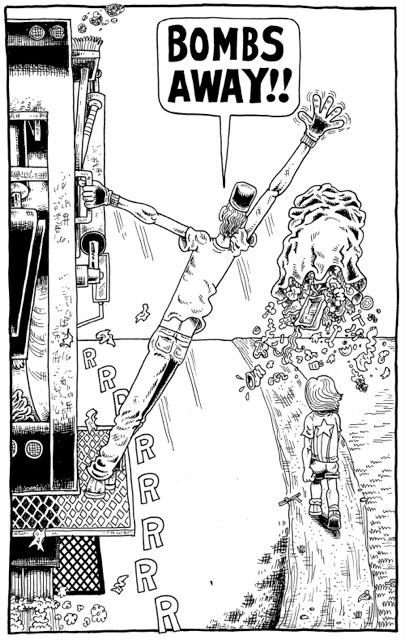
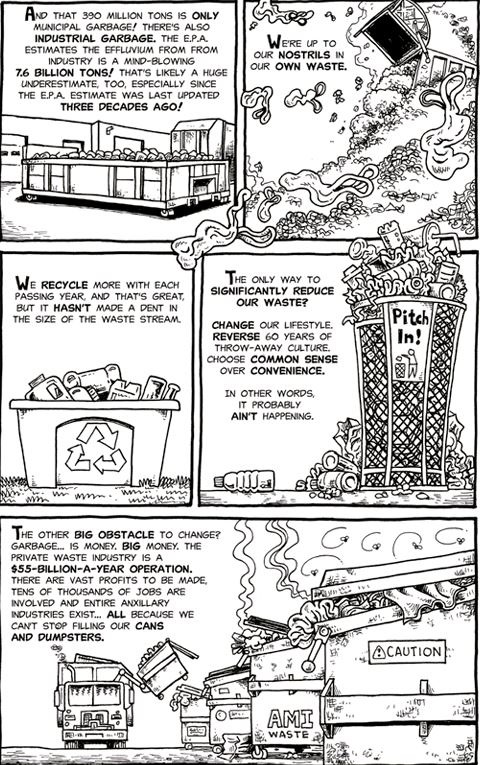
My Review:  I must first start by saying that this book is not completely nonfiction. The story is based roughly on Backderf’s life, but the story is overall fiction. However, the nonfiction aspect of the book lies in multi-genre aspect of this graphic novel. While Backderf tells you the story of JB’s life as a garbageman, he includes information about the state of garbage in the United States. The mix of JB’s story with information from Columbia University and an EPA report really makes this text so unique. Backderf does a great job balancing the fiction component (filled with dark humor and stark reality) with the information that puts everything in perspective.

Teachers’ Tools for Navigation: I have created a teaching guide for Trashed which can be found at:  https://www.scribd.com/doc/296747329/Trashed-Teaching-Guide 

Within the guide, I include discussion questions, but also a project-based assessment combining Trashed, the Columbia University report about municipal solid wast, an EPA report on advancing sustainable materials management, The Inconvenient Truth, and the six-step creative problem solving process.

Discussion Questions: Trashed’s structure is unique in its mix of fiction and fact. Why do you think the author chose to mix the two instead of sticking with only one genre? Also, why do you think he chose to not make this a memoir based on his own experiences and instead make a fictional narrative?; JB’s tone throughout the text is primarily negative seeming annoyed, bitter, or hopeless. Some examples of this can be found on pages 10-11, 37, and 202. How would you describe JB’s tone? What words were specifically used throughout the text to set the tone? Why do you think the author chose to write JB’s character this way?; What claim do you think Backderf is making by including all of the factual evidence about municipal waste? How is his claim developed over time? How did he use rhetoric throughout the text to advance his point of view?; Looking at the information Backderf shared from the Columbia University and EPA reports, how did the author choose the order in which he revealed information?; Was there any factual information shared in Trashed that surprised you? Why did it surprise you, and what does it make you reflect on?

We Flagged: 

Trashed 2trashed 1

Read This If You Loved: My Friend Dahmer by Derf Backderf, Nonfiction texts about the environment, Nonfiction graphic novels, Adult graphic novels

Recommended For: 

classroomlibrarybuttonsmall closereadinganalysisbuttonsmall

Signature

The Perfect Tree by Chloe Bonfield

Share

perfect tree

The Perfect Tree
Author and Illustrator: Chloe Bonfield
Published January 5th, 2016 by Running Press Kids

Summary: Jack is searching for the perfect tree—one that he can chop, hack, and stack! But when it becomes too hard to find, Jack stumbles across three unlikely friends who want to show him their perfect trees.

In this lively, enchanting story, The Perfect Tree is a reminder to notice the wonders we often overlook, and to value our friendship with the natural world.

Kellee’s Review: The Perfect Tree is a book that I hope doesn’t go beneath the radar because it is a wonderful book with a positive theme and beautiful illustrations. Jack’s story makes the reader think about all the harm we do when we destroy the forest, but it does so without listing or preaching. It just shows. It mentions in her biography that Chloe Bonfield is fond of printmaking, and you can see this in her artwork that accompanies Jack’s story. It is mixed media, 3D, collage, and illustrated and just really takes the book to the next level.

Ricki’s Review: Whew. This book is quite beautiful. I felt like I went through a journey as I turned the pages. When I got to the end, I flipped to the front of the book and read it once more. My 2-year-old son kept saying, “Ooooo,” as I turned the pages. The words flow naturally in a way that is both quiet in its delivery and loud in its message. And the artwork—oh the artwork! I love the way the images are layered to grab readers’ attention. I spent much time on each page wondering, “But how did she do this?!” The mixed media will captivate readers and inspire them to want to create their own works of art/literature. I am excited to have this book in my library because I know it will be inspirational to my son.

Teachers’ Tools for Navigation: This book is a great one to discuss theme with. It is one that you have to infer, but it isn’t too difficult to interpret which would make it a good scaffolding tool to longer narratives. Additionally, it would be a great book to read around Earth Day because of the environmental lesson and love of nature.

Discussion Questions: Why does Jack change his mind?; Why is it important to take care of nature?; What are some ways that the author helps you see Jack’s story (through illustrations and text)?

We Flagged: “Once a boy named Jack went on a journey to find the perfect tree. Not to climb, not to draw, and definitely not to hug. No, Jack wanted a perfect tree to chop. A perfect tree to hack! A perfect tree to stack.”

perfect tree illustration

Read This If You Loved: The Lorax by Dr. Seuss, The Giving Tree by Shel Silverstein, The Tree Lady by H. Joseph Hopkins, Can We Save the Tiger? by Martin Jenkins, Mama Miti by Donna Jo Napoli

Recommended For: 

readaloudbuttonsmall classroomlibrarybuttonsmall

Kellee Signature andRickiSig

**Thank you to Cassie from Running Press for providing copies for review!!**

A Wilcox and Griswold Mystery: The Case of the Missing Carrot Cake by Robin Newman, Illustrated by Deborah Zemke

Share

case of the missing carrot

A Wilcox and Griswold Mystery: The Case of the Missing Carrot Cake
Author: Robin Newman
Illustrator: Deborah Zemke
Published May 12th, 2015 by Creston Books

Goodreads Summary: When food goes missing on Ed’s farm, Detectives Wilcox and Griswold do what it takes to track down the thieves. In this case, Miss Rabbit’s carrot cake has disappeared. Has it been stolen? Or eaten? Or both? Who dunnit?

“Readers ready for chapter books will solve the crime and then be surprised by the twist at the end. Here’s hoping for more hard-boiled detecting from Wilcox and Griswold!”
— Kirkus Reviews, Starred Review

My Review: This book starts with a letter to the reader about the two detectives who will be leading the case, and I automatically thought of Dragnet as soon as I read it, and that was the voice I heard all the way through the book which made it even more fun to read! I love how this book was crafted: set up like a police file with times of interviews, suspects, and clues throughout. The detectives are also quite humorous and the ending is just surprising enough though some students may be able to predict it if they follow the clues. 

Teachers’ Tools for Navigation: The Case of the Missing Carrot is a perfect read aloud to practice inferring and prediction as students try to figure out what is going on at the farm. Students can keep track of clues and characters (suspects), and the book also gives opportunities to discuss sequence, vocabulary, dialogue, point of view, and voice. The text is just so much fun to read, but can also be a great discussion starter/exemplar for so many language arts topics.

Discussion Questions: (Thoughout the book) What clues did this section give us? Who is a new suspect? Who is no longer a suspect? How has your prediction changed? What is your prediction now?

We Flagged: 

case of the missing carrot illustration

“Captain, stop the car!” I shouted. “There’s something up ahead. It’s orange.”

The captain grabbed his magnifying glass and tweezers. He picked up the object.

“A carrot!” I said.

I ran back to the squad car to get the crime scene photos.

“This carrot matches the ones we found in Miss Rabbit’s kitchen. We’re onto something.”

The captain twitched his tail furiously. (p. 19)

Read This If You Loved: Francine Poulet Meets the Ghost Raccoon by Kate DiCamilloThe Troublemaker by Lauren Castillo, Mercy Watson series by Kate DiCamillo, Lulu series by Judith Viorst

Recommended For:

classroomlibrarybuttonsmall readaloudbuttonsmall

  Signature

*Thank you to Creston Books for providing copies for review!**