Top Ten Tuesday: Books We Wish Had More Pages in Them

Share

top ten tuesday

Top Ten Tuesday is an original feature/weekly meme created at The Broke and the Bookish. The feature was created because The Broke and Bookish are particularly fond of lists (as are we!). Each week a new Top Ten list topic is given and bloggers can participate.

 Today’s Topic: Ten Books We Wish Had More Pages in Them

Ricki

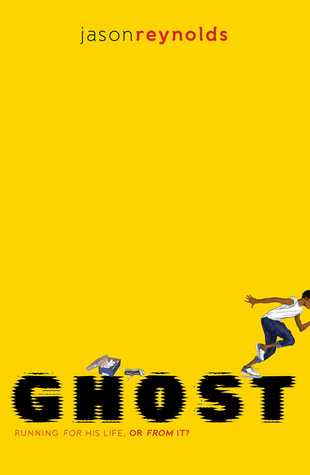
1. Ghost by Jason Reynolds

ghost

I read this book in one sitting and longed for more, more, more!

2. Anything by Kristin Cashore

kristin cashore

Every time I end a Kristin Cashore book, I wish I could relive it again. Unlike the other books on my list, these books are already quite long, so including this on the list makes me chuckle. More pages, please! Psst—she has a new book coming out in September!

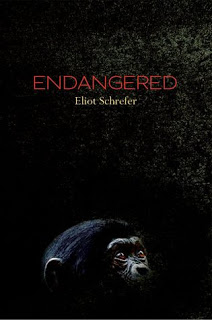
3. Endangered by Eliot Schrefer

endangered

This book is much too short because I have so much love for it. I would love to have more of it! Can we make that happen?

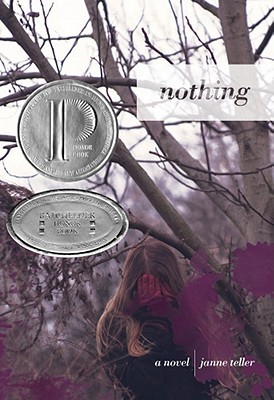
4. Nothing by Janne Teller

nothing

Gosh, I love this book. When I got to the end, I felt like it needed—it had—to be longer. I didn’t want it to be over!

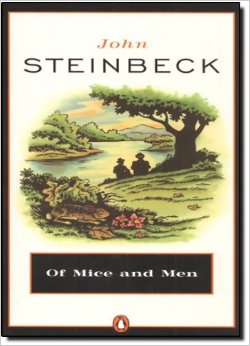
5. Of Mice and Men by John Steinbeck

of mice and men

Ah, I love this little book. I have it memorized because I taught it so many times. I wish there was more to soak in!

Kellee

Man! I try to get to these before Ricki just because we so often have the same opinion. I very much agree about Ghost, Endangered, and Kristin Cashore books! Here are some other books I wish were longer because I loved being in the story so much:

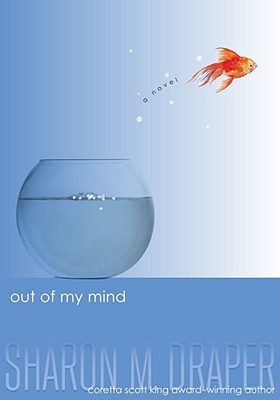
1. Out of My Mind by Sharon Draper

I want to know how Melody grows up. I want to see who else makes a difference in her life. I want to see what difference she makes in the lives of others.

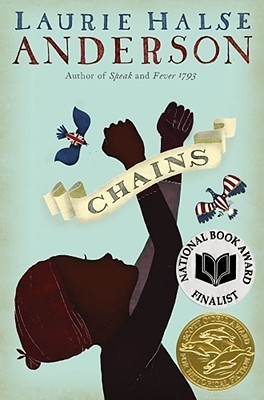
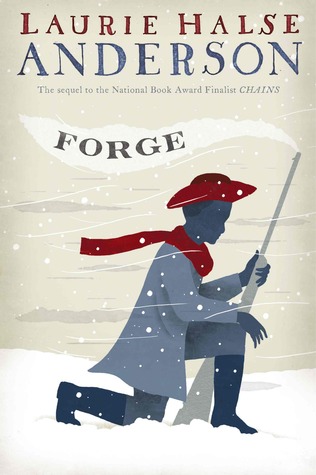
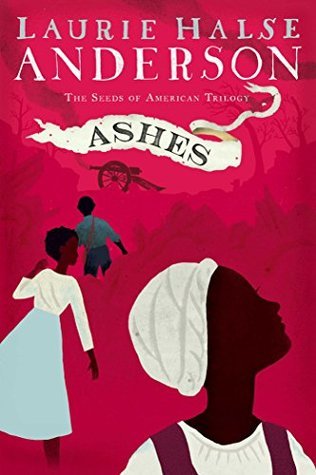
2. Seeds of America series by Laurie Halse Anderson

I love Isabel and Curzon, and I was just getting to know Ruth. I want more. But I know it is over. 🙁

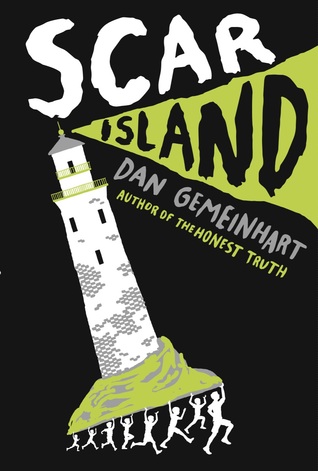
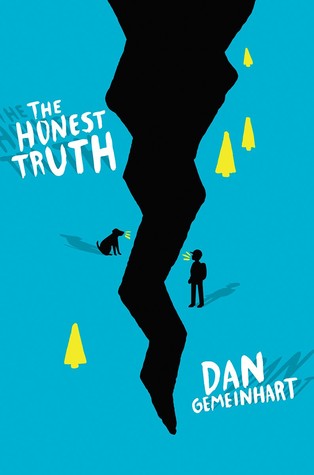
3. Scar Island by Dan Gemeinhart AND The Honest Truth by Dan Gemeinhart

Both of these books are so good, but they seem like they are just telling us the stories of Mark and Jonathan. When we Skyped with Dan, my book club kept asking questions about what happens after the book, but he was very clear that anything outside of the pages is not his story to tell.

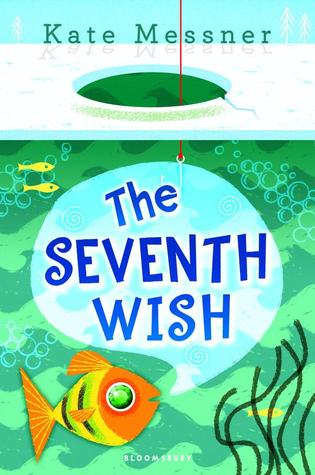
4. The Seventh Wish by Kate Messner

I wasn’t done with Charlie. I want to know more about her. And I want to know more about how her family continues to grow and deal.

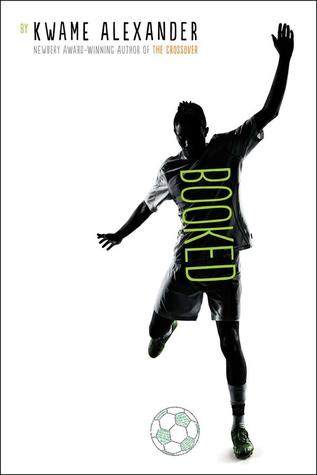
5. Booked by Kwame Alexander 

If you’ve read this, you know exactly why I wish there were more pages! If you haven’t read it, read it to find out!

Which books do you wish had more pages in them?

RickiSig and Signature

Because of Mr. Terupt by Rob Buyea

Share

Because of Mr. Terupt
Author: Rob Buyea
Published October 12, 2010 by Delacorte

A Guest Review by Julia Kipphut

Summary: Mr. Terupt’s fifth grade class at Snow Hill School is comprised of various types of students, some including: a new student, a popular girl, a bully, and a troublemaker. Their teacher, Mr. Terupt who is passionate and energetic, strives to engage his students and instill a sense of community amongst his class. Unfortunately, one day, a snowball fight goes awry and leaves Mr. Terupt in a coma. His class is rattled and must learn to work together, be kind, and hope for Mr. Terupt’s recovery.

Review: This book includes a variety of characters, each owning their own identity and personality. Each chapter is written from a different character’s perspective, making for a fluid and interesting read. They are relatable for children and allow them to recognize themselves in each character. Each character evolves in the story and shows tremendous growth, proving the rich development of the people in this book. The message of community and forgiveness is nicely intertwined in the story and proves that it is always better to choose kindness. The theme of this book is positive and motivational. 

Teachers’ Tools for Navigation: Because of Mr. Terupt serves as a great reader aloud for upper elementary school students. 4th and 5th graders who are struggling with their identity and place in a classroom community can learn the importance of compassion. Students can learn to embrace individual differences for a common goal or outcome, mirroring the characters in this book. Additionally, this book allows students to study character development throughout the story; each character evolves- allowing for effective classroom discussion.

Because of each character of this book is written from a different character’s perspective, students are able to study point of view and consider the influence each chapter has on the story as a whole. Students are able to learn about each character in depth and can even use literature circles to each study a character for analysis.

Discussion Questions: How might the story be different if the snowball accident did not happen?; What do you think the author’s purpose or message was for this story?; Why do you think the author chose to write this story from different characters points of views? Do you think this was effective?

Book Trailer: 

Read This If You Loved: Out of My Mind by Sharon Draper; Wonder by R. J. Palacio

Recommended For:

  litcirclesbuttonsmall  classroomlibrarybuttonsmall

Thank you, Julia!

RickiSig

Review and Giveaway: Mr. Fuzzbuster Knows He’s the Favorite by Stacy McAnulty

Share

Mr. Fuzzbuster Knows He’s the Favorite
Author: Stacy McAnulty; Illustrator: Edward Hemingway
Published: February 7, 2017 by Two Lions

GoodReads Summary: Mr. Fuzzbuster knew he was Lily’s favorite. They did everything together. Naps. Story time. Walks. And more naps. But now four more animals lived in the house.…

To prove he’s still Lily’s favorite, Mr. Fuzzbuster will have to ask her, but will her answer surprise him? This funny, heartwarming story is for every child who has ever wondered if there’s a favorite in the house.

Ricki’s Review: This was a very fun book to read aloud to my son. It reminded me of my childhood—my siblings and I often fought over who was the favorite child. The dramatic hooks at the end of each page make for a silly, giggly read aloud. Mr. Fuzzbuster has a hysterical personality that kids will surely adore. I have a feeling that this book will get funnier and funnier after each read aloud! The illustrations and humor will have readers begging for more Mr. Fuzzbuster.

Kellee’s Review: Unlike Ricki, my siblings and I didn’t have to fight about who was the favorite–I knew I was! 😉 [We’ll see if they read this review!] So I may be a bit like Mr. Fuzzbuster who is just loves his owner, Lily, so much that he cannot imagine his life without her. Kids will definitely relate to Mr. Fuzzbuster, and the book will also be a great chance to talk about how sometimes there are no favorites–a lesson that is taught in such a fun way that the reader won’t even realize they are being taught something! And the cartoonish, humorous illustrations just add to the fun of this book. Hemingway has such a distinct style of illustrations that are just so eye-catching and exciting to read. 

Teachers’ Tools for Navigation: Teachers might ask students to make predictions at the end of each page. Because of the dramatic hooks, it would make predictions very enjoyable. I tried doing this with my three-year-old and while he is a bit young, we think we might be able to use this book for predictions in the near future! He slowly caught on!

Did you know Mr. Fuzzbuster loves writing notes? He wants to send cards to young readers across the country.  Maybe he will be your favorite. More information can be found at http://www.stacymcanulty.com/fuzzbuster-email.

Discussion Questions: Who is Lily’s favorite?; Why does the book end the way that it does?; Why do we feel a strong desire to be the favorite? How may this be harmful?

Flagged Passage: “Mr. Fuzzbuster knew he was Lily’s favorite. They’d been together since he fit in a teacup and she fit in diapers.”

Read This If You Loved: Dog vs. Cat by Chris Gall, Barkus by Patricia MacLachlanMemoirs of a Goldfish by Devin Scillian,  One Cool Friend by Toni Buzzeo, They All Saw a Cat by Brendan Wenzel, Ballet Cat by Bob Shea, Cat the Cat by Mo Willems

Recommended For:

classroomlibrarybuttonsmall 

Giveaway!
Two Lions is offering a copy of MR. FUZZBUSTER KNOWS HE’S THE FAVORITE to one lucky winner (U.S. addresses).
About the Author and Illustrator:
STACY MCANULTY is certain she’s her mom’s favorite. Her younger brother disagrees. She’s the author of Beautiful, illustrated by Joanne Lew-Vriethoff; Excellent Ed, illustrated by Julia Sarcone-Roach; and 101 Reasons Why I’m Not Taking a Bath, illustrated by Joy Ang. Originally from upstate New York, she now lives in Kernersville, North Carolina, with her three children, two dogs, and one husband. She doesn’t have a favorite. You can find her online at www.stacymcanulty.com.
 
EDWARD HEMINGWAY is certain he’s Stacy McAnulty’s favorite illustrator, although the illustrators of Stacy’s other books may disagree. Edward himself is the author and illustrator of the children’s books Bump in the Night, Bad Apple: A Tale of Friendship, Bad Apple’s Perfect Day, and Field Guide to the Grumpasaurus. Originally from Bozeman, Montana, he now lives in Brooklyn where he teaches creative writing at the master’s level at SVA in Manhattan. If he has any favorite students, he’ll never tell. Learn more about him online at www.edwardhemingway.com.

RickiSig andKellee Signature

**Thank you to Barbara at Blue Slip for providing a copy for review!**

Top Ten Tuesday: Favorite LGBTQ Love Stories

Share

top ten tuesday

Top Ten Tuesday is an original feature/weekly meme created at The Broke and the Bookish. The feature was created because The Broke and Bookish are particularly fond of lists (as are we!). Each week a new Top Ten list topic is given and bloggers can participate.

 Today’s Topic: Ten Favorite LGBTQ Love Stories

The TTT topic for this week is romance, and we felt that topic was much too broad and as supporters of marriage (and love!) equality, we wanted to highlight our favorite LGBTQ love stories.

Ricki

1. Aristotle and Dante Discover the Secrets of the Universe by Benjamin Alire Sáenz

aristotleand

This is one of the most beautiful books that I’ve ever read.

2. Ask the Passengers by A.S. King

ask the passengers

This book touched me deeply. A.S. King is such a clever, smart author. I envy her ability!

3. If You Could Be Mine by Sara Farizan

if you could be mine

If you haven’t read this book, drop everything and read it! It is incredibly powerful, and I learned a lot!

4. More Happy Than Not by Adam Silvera

More Happy Than Not

After I finished this book, I was thinking, thinking, thinking. It made me examine my beliefs about the morality of altering our personal histories. This is a great book .

5. And Tango Makes Three by Justin Richardson

tango

I reread this book every year to my students. I just read it last week, and they absolutely loved it. I love this story!

Kellee

I’ve read 4 of the 5 books Ricki listed, and I LOVED them also! (I need to read If You Could Be Mine!)

1. Boy Meets Boy by David Levithan

I love Paul’s town and Paul’s story. With prejudice nonexistent, this is just a love story.

2. Jess, Chunk, and the Road Trip to Infinity by Kristin Elizabeth Clark

The book may seem like a road trip book about a transgendered teen standing up to her father, but there is love inside of this adventure.

3. Honestly Ben by Bill Konigsberg

While Openly Straight focused on Rafe’s identity, Honestly Ben focuses on sexuality and love.

4. Two Boys Kissing by David Levithan

This book is a concoction of love stories and romance.

5. Personal Effects by E.M. Kokie

The romance in this story is secondary but it is the definition of a perfect love story.

Which are your favorite LGBTQ love stories?

RickiSig and Signature

Author Guest Post: “Overwhelm and Fear” by Mary Cronk Farrell, Author of Fannie Never Flinched

Share

“Overwhelm and Fear”

One of the hardest things about writing is getting started, and two of the most common obstacles are overwhelm and fear. The subject of my new biography, Fannie Sellins, showed me how to work through both.

Beginning writers, students of all levels and even best-selling authors sometimes face overwhelm and fear, feelings that can cause you to procrastinate, or tighten you up, make you hold back and keep you from doing your best writing.

It’s tempting when beset by overwhelm or fear to tell yourself to man up, or put on your big girl panties and charge ahead as these emotions are irrelevant. If this works for you, go ahead and stop reading here, because I believe these feelings are part of the creative process, and working through them gives you the courage to do powerful work.

Fannie Never Flinched: The Story of One Woman’s Courage in the Struggle for American Labor Union Rights tells of a garment worker at the height of the Industrial Revolution, who left her sewing machine to inspire and organize workers to stand up and demand just wages and humane treatment.

Fannie was so good, she frightened the powerful men who ran coal and steel companies. They threatened her life, told her to leave town. And when she stayed and kept encouraging men to strike, they shot her dead.

If Fannie could find that kind of courage, I told myself, surely, I can find the courage to put words on a blank page.

In the early 1900s, poor workers fought a losing battle, especially in West Virginia and Pennsylvania. Strikes for shorter hours and better pay, sometimes won small concessions short term, but overall, companies aided by local deputies and federal soldiers slammed unions into submission. Now, that’s overwhelm.

Still, Fannie got up every day, went out and talked to workers, convinced them they deserved better, inspired them to take a chance, join the union. Often, it was the wives she encouraged, who in turn emboldened their husbands. A father had a hard time walking off the job, if his children were hungry. Fannie started a strike with social work, soliciting money, seeing to the basic needs of families.

In my research I never found anything Fannie said about how she coped with overwhelm. But looking at her actions, it seems to me that she maintained a double-focused vision. She kept one eye like a laser on the close-up, seeing what was right in front of her and dealing with it. At the same time, she never lost sight of the larger picture, her belief in the dignity of workers and the justice they deserved.

This strategy cuts through overwhelm when I see a sprawl of research, a mess of unconnected ideas, or when a project feels impossible to finish. Grounded in my larger goal, I can pick one small place to start, write one sentence, or choose one task. Keeping a double focus, I can let go of most of the work and tackle one thing at a time.

But even with a solid plan and the best of intentions, fear can rush in, cloud your focus and stop you from doing even one small thing. What I learned from Fannie Sellins, is to look at fear straight on. Fannie admitted that the first time she first stood at a podium to speak to a large crowd, she was scared.

But during her first strike, Fannie traveled around the country speaking for two years, telling people about the garment workers plight, raising funds and urging a boycott of suits and pants sewed in sweatshop conditions. She became a charismatic speaker, gaining enough support for the strikers to hold out for two years until their demands were met.

Fannie explained that she overcame her fear before speaking by remembering the faces of the women she had worked with in the factory. Fannie used compassion to motivate herself to move out of her comfort zone. She used love to deflate fear.

I knew last week that I needed to get going on a revision of my current manuscript. But every time I thought about it, I felt this clutch in my stomach. And when I sat at the computer I got a slighter version of that feeling in my chest when somebody runs a red light and barely misses crashing into me at full speed.

Now that I’ve been writing for a couple decades, I know those emotions are normal. If I didn’t care about my writing, if I wasn’t risking anything, if I didn’t believe my words would be important, there’d be nothing to fear. So, I follow Fannie’s example and choose to have compassion, for the girls in the factory and for myself at the keyboard.

I put my hand on my heart, and I tell myself there’s nothing wrong with being afraid.

I look at my fear straight on, honor that the feeling is real, and ask myself what am I afraid of? Here are some of the bugaboos I discover. I’m afraid I’m not a good enough writer. I’m afraid I’ll disappoint myself. I’m afraid it will be too hard. I see that basically I’m afraid I’ll fail. With compassion I remind myself, it’s okay to be afraid because it’s true. I might fail.

And now, the decision I need to make is clear. Would failing be so bad that I dare not risk it?

Would failing to make progress on this one revision of this one manuscript, on this one particular day mean I’m a total failure? If so, I should probably deal with some other s#%t first, figure out how to have some compassion for myself.

But if I can find enough compassion for myself to live with this kind if failure, why not take a stab at it? And that’s what I usually do, and it’s usually not as hard as I think it will be once I get started.

Finding compassion and facing fear straight on allows the rational brain to evaluate the risks of failure more accurately. Having a double focus, an eye on both the long term vision and one next step allows everything in-between to drop away and reduces the overwhelming magnitude of the work to be done. For further inspiration in writing and life, read more about Fannie Sellins in Fannie Never Flinched.

About the Book: Fannie Sellins (1872–1919) lived during the Gilded Age of American Industrialization, when the Carnegies and Morgans wore jewels while their laborers wore rags. Fannie dreamed that America could achieve its ideals of equality and justice for all, and she sacrificed her life to help that dream come true. Fannie became a union activist, helping to create St. Louis, Missouri, Local 67 of the United Garment Workers of America. She traveled the nation and eventually gave her life, calling for fair wages and decent working and living conditions for workers in both the garment and mining industries. Her accomplishments live on today. This book includes an index, glossary, a timeline of unions in the United States, and endnotes.

About the Author: Mary Cronk Farrell is an award-winning author of five books for young people and former television journalist with a passion for stories about women facing great adversity with courage. She researches little known stories form history and relates them with engaging and powerful language in her books, multi-media presentations and workshops. Farrell has appeared on TB and radio across the nation. She speaks to women’s groups, civic groups, and at museums, schools and libraries.

Thank you for inspiring us, Mary!!

Kellee Signature andRickiSig

Ghost by Jason Reynolds

Share

ghost

Ghost
Author: Jason Reynolds
Published: August 30, 2016 byAtheneum/Caitlyn Dlouhy Books

GoodReads Summary: Running. That’s all that Ghost (real name Castle Cranshaw) has ever known. But never for a track team. Nope, his game has always been ball. But when Ghost impulsively challenges an elite sprinter to a race — and wins — the Olympic medalist track coach sees he has something: crazy natural talent. Thing is, Ghost has something else: a lot of anger, and a past that he is trying to outrun. Can Ghost harness his raw talent for speed and meld with the team, or will his past finally catch up to him?

Ricki’s Review: I will read anything by Jason Reynolds. He captures the adolescent voice perfectly. Ghost reminds me of so many kids that I taught, and if I was still teaching, I would be thrilled to bring this book to school to recommend it to dozens of my students. Luckily, I can now share it with preservice teachers! I am very excited that this book will be one installment of a series of companion texts. It doesn’t end with a hook, which I am grateful for, and I believe the next book will feature a different character. There are so many great lessons that emerge from this story. Teachers would have much to discuss in their classrooms. I highly, highly recommend this text. It belongs in schools and in the hands of kids.

Kellee’s Review: This book is one of those books that I don’t like to tell people what it is about because any summary just doesn’t capture the brilliance of the characterization and story. However, through the word-of-mouth compliments of middle schoolers, it has become a favorite book for many of our school’s students and even won our HCMS Mock Newbery Award! I think it is Jason Reynolds’s way of connecting with adolescent readers through a true voice and circumstances that so many of them will connect to.

Teachers’ Tools for Navigation: We recommend using this book to teach characterization. Ghost reflects the qualities of a human—he has good and bad qualities and makes some mistakes. Students might list all of the lessons that Ghost learns through the story. They could even try to map the lessons he learns in a visual diagram of their choice.

Discussion Questions: How does Ghost’s past haunt him? Does it shape who he is?; What poor choices does Ghost make? Why does he make the choices, and are they justified?; How does the track team act as an unconventional family for Ghost?

Flagged Passage: “You can’t run away from who you are, but what you can do is run toward who you want to be.”

Read This If You Loved:  The Boy in the Black Suit by Jason Reynolds; The Running Dream by Wendelin Van Draanen; Boy21 by Matthew Quick; Ball Don’t Lie by Matt de la Peña

Recommended For:

readaloudbuttonsmall litcirclesbuttonsmall closereadinganalysisbuttonsmall classroomlibrarybuttonsmall

RickiSig andKellee Signature

Books to Deepen Our Understanding of the Countries on the #MuslimBan List

Share

In order to understand something, I read, read, read. For I believe that in order to understand the dignity, the passions, the humanity of others, we have to imagine ourselves in their skin. It is my hope that sharing these books will encourage others to deepen their understandings of other people and cultures. I breathe books, so this is my method for deepening my own understanding, but please share other approaches that have worked for you.

1. Iran

If You Could Be Mine by Sara Farizan

This stunning text tells the story of two teenaged girls who are in love in Iran. I was mesmerized by its beauty and couldn’t wait to share it with others.

2. Iraq

Sunrise Over Fallujah by Walter Dean Myers

This is an incredibly powerful book about a young man from Harlem who goes to war in Iraq. Initially, when I created this list, I intended to feature characters and authors who are from each of the countries on the #MuslimBan list, but this particular book vividly features the country and is a wonderful read.

3. Libya

In the Country of Men by Hisham Matar

This is a difficult text to read because it features complicated issues. It is told from the perspective of Suleiman, a 9-year-old boy who lives in 1979 Libya.

4. Somalia

Infidel by Ayaan Hirsi Ali

I have not read this book, but it is coming my way through the Interlibrary Loan! An excerpt: “Infidel shows the coming of age of this distinguished political superstar and champion of free speech as well as the development of her beliefs, iron will, and extraordinary determination to fight injustice.” I can’t wait to read it!

5. Syria

In Praise of Hatred by Khaled Khalifa

This is a second book that I have on Interlibrary Loan, and it looks fantastic. The reviews note that it is dark, gritty, and eye-opening. I will report back after I’ve read it!

6. Sudan

A Long Walk to Water by Linda Sue Park

Many of the readers of this blog know this book quite well. It is This book is based on the true story of Salva Dut, a Lost Boy of Sudan. I know several teachers who do Water for South Sudan challenge with their students. This sort of advocacy is incredibly empowering.

7. Yemen

I am Nujood, Age 10 and Divorced by Nujood Ali

A friend told me about this book. She said it changed her. I have asked her to borrow her copy. In the meantime, I will share an excerpt: “I’m a simple village girl who has always obeyed the orders of my father and brothers. Since forever, I have learned to say yes to everything. Today I have decided to say no.”

I have read four out of seven of these books, and I am looking forward to diving into them all. I will never claim to be an expert, and I don’t believe that reading books that feature other countries will make me an expert. It will, however, help me better understand humanity. If you’ve read any of the books above, please comment, as I hope this can be a place for us to share books with each other. I would love any suggestions of other texts featuring these countries!

With the exception of Walter Dean Myers (who writes about an American who goes to Iraq), I intentionally chose texts that are written by authors who are from the countries they write about. This list is in no way exhaustive—reading one book set in one country most obviously will not help us understand the experiences of all (or even most) of the people who live there. It will, however, give us one snapshot of one life.

RickiSig