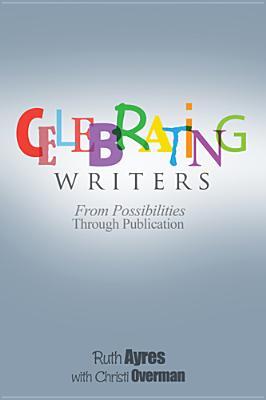
Celebrating Writers: From Possibilities Through Publication by Ruth Ayres

Share

18249491

Celebrating Writers: From Possibilities Through Publication
Authors: Ruth Ayres with Christi Overman
Published: November 28th, 2013 by Stenhouse Publishers

GoodReads Summary: Writing begins before students even pick up a pencil, but there are many reasons to stop and rejoice between the idea and the finished project. By helping students celebrate each stage of the writing process and applauding success, we help our students persevere through what can be an extended and challenging process.

In their innovative new book, Celebrating Writers, Ruth Ayres and Christi Overman discuss dozens of ways to respond, reflect, and rejoice along the journey to a finished project. This type of celebration nurtures students, makes them better writers, and helps them recognize that writing is a process filled with notable moments, not simply a result where publication is the only marker of success. From traveling notebooks to lunch-table writing, from author interviews with a writing partner to silent reflection, from swapping stories around a “campfire” to tweeting favorite lines, Ruth and Christi share dozens of fun and effective ways for you and your students to commemorate their progress as writers. As the authors write, “It’s time to expand the idea of celebration to include the process of writers and the products they create. Let’s build an approach that weaves celebration into the heart of all writers. Be ready to learn to refuel the writers in your classroom, even on the tough days.”

Review and Teacher’s Tools for Navigation: I know a professional development text is a good one when I feel compelled to get out of my bed to nab my highlighter. There are many flag-worthy passages in this book. My focus is Secondary English Education, and even though this book seems to be primarily focused on Elementary Education, I plan to share some of the ideas from this text with my students tomorrow. The true audience of this book is all teachers of writing. Ayres and Overman provide a plethora of ideas to help students celebrate their writing. They state, “When we celebrate throughout the process, we help students become people who know their words can influence, encourage, and incite change” (p. 7).

While I always thought I celebrated my students’ writing, this book taught me so many MORE ways to help them rejoice in order to truly nourish them as writers. Some of the ideas the authors include are methods for students to respond to their peers’ writing, ways for students to formally assess and reflect upon their own writing, ideas for students to examine their own strengths and weaknesses as writers, and numerous modes for students to share their writing with online communities. There are a variety of handouts that are all downloadable from the companion website (a HUGE plus for busy teachers). The fifth chapter of this book is my favorite—it details forty formal celebration ideas. These are ideas that are much more clever than asking students to bring in cupcakes.

Discussion Questions: How do I teach my students to rejoice in their writing? Why is this important?; How do I help my students share their writing with online communities?; How do I help my students learn to rejoice in the writing of their peers?

We Flagged: “Response, reflection, and rejoicing position us to celebrate the writer in addition to the writing. These frames also allow us to celebrate throughout the writing process instead of solely at the end. They move us to a focus on learning as writers. Our celebrations nourish writers, nudging them to continue writing with expertise and energy” (p. 15).

Read This If You Loved: Black Ants and Buddhists by Mary Cowhey, In the Middle by Nancie Atwell, Bird by Bird by Anne Lamott, Writing Workshop by Ralph Fletcher

026F3FBCC8C3913BD3A4D3F6920340D5

What is your favorite book for teaching writing? Have you read this one? What did you think? Please share your thoughts!

**Thank you, Stenhouse Publishers, for sending me this book for review!**

Top Ten Tuesday: Books We Wouldn’t Mind Santa Bringing Us

Share

top ten tuesday

Top Ten Tuesday is an original feature/weekly meme created at The Broke and the Bookish. The feature was created because The Broke and Bookish are particularly fond of lists (as are we!). Each week a new Top Ten list topic is given and bloggers can participate.

 Today’s Topic: Top Ten Books We Wouldn’t Mind Santa Bringing Us

You hearing us, husbands?

Ricki

I’ve decided to go with books for my new baby because he is more important than I am! These are books that Henry wants Santa to bring him so he can read them with his mommy.

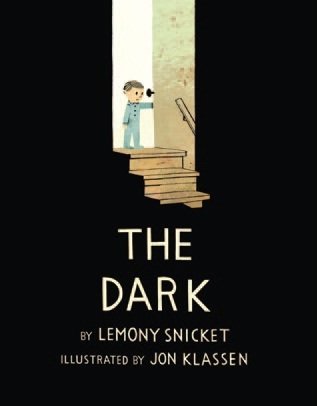
1. The Dark by Lemony Snicket and Illustrated by Jon Klassen

15790852

I was always afraid of the dark growing up, and I think Henry would love to hear this story so he won’t be afraid!

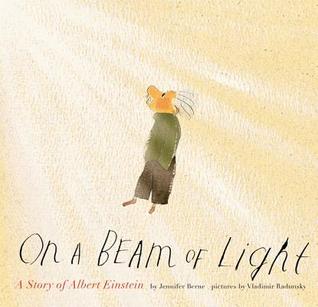
2. On a Beam of Light by Jennifer Berne and Illustrated by Vladimir Radunsky

on a beam

I really want Henry to be a huge dork like his parents, so this story of Albert Einstein’s childhood looks awesome.

3. Boy and Bot by Ame Dyckman and Illustrated by Dan Yaccarino

12448586

Henry’s daddy (my husband) is an engineer. I thought this would be a great story for them to read together!

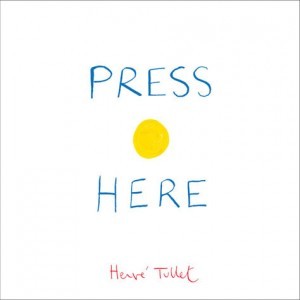
 4. Press Here by Herve Tullet and Illustrated by Christopher Franceschelli

9677870

I hear that this book is fantastic. It is interactive and very fun, so I thought Henry might enjoy it!

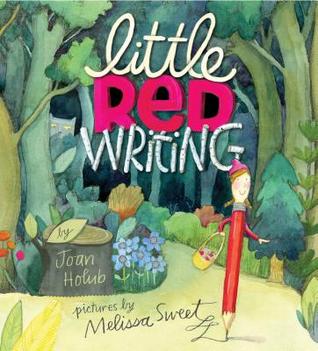
5. Little Red Writing by Joan Holub and Illustrated by Melissa Sweet

16668399

I thought this humorous take on Little Red Riding Hood would be fun for us to read together!

Kellee

I am going to do a mix. The first book is one I really want while the other four are picture books I really want Baby Boy Moye to own (any of the ones Ricki listed would be great as well!) though much like his Mommy, Baby Boy Moye’s bookshelf is overflowing! We may have to rethink our organization of his books…

1. The Living by Matt De La Pena

13515320

Matt has tried something new with The Living and I cannot wait to read it!

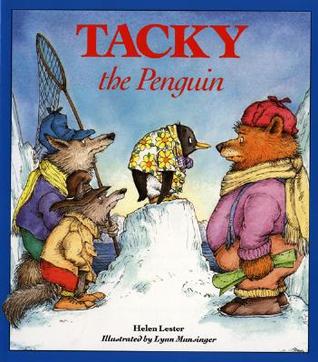
2. Tacky the Penguin by Helen Lester

883051

I actually own Tacky the Penguin, but it is my school copy and I really want Baby Boy Moye to have his own. Tacky is such a great role model and his books are just so funny!

3. The Foot Book by Dr. Seuss

105548

I want to put Baby Boy Moye’s footprints in The Foot Book, but I need to own a copy first.

4. Elephant and Piggie books by Mo Willems

13624190

I love these two best friends and I only own one of the series right now.

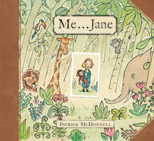
5. Me…Jane by Patrick McDonnell

jane

I want Baby Boy Moye to know that possibilities are endless and Me…Jane is a great picture book for that.

Which books would you like most this holiday season?

RickiSig andSignature


Helping our Students Achieve the Reading and Writing Flow

Share

Achieving Flow-page0001

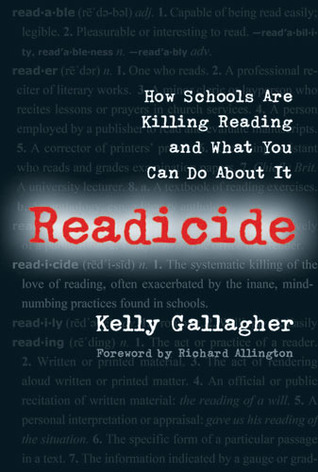
Kelly Gallagher stresses balance in his book, Readicide. We, as teachers, try our best not to tear apart texts for students. We want to study author’s craft, but if we overanalyze and nitpick at every detail, it becomes terribly boring for students (and us!). So where is the balance? How do we help students come to appreciate the minute details of an author’s writing without committing this act of readicide? Gallagher also discusses the “reading flow.” It is important for teachers to understand when to stop students and when to allow them to find the flow—to get into the groove of reading. It makes sense, thinking of my own reading habits. If I was forced to stop at every page (or even every ten pages) to analyze an author’s writing, I would throw the book at the wall.

 How do you help your students achieve reading flow?

As a teacher, what works best for me (and this may not work best for you), is to analyze the first few pages of a text. I have my students do a close reading, and we try to examine elements like voice, writing style, form, and manipulation of language, among others. Then, I let them explore. I try to assign them enough reading so they can hit the flow but not too much reading that they don’t do the assignment. For me, this is the most effective way to help students find this “reading flow” that Gallagher discusses. Once I have helped my students grapple with and (hopefully) appreciate the language of an author, I set them free from the nest. This approach doesn’t work well with every text. For example, much more complex texts may require more analysis and comprehension techniques before I can set my students free.

But how do we find the flow for writing? Recently, I read a section of Murray’s Write to Learn. He made me think more about how this “reading flow” concept might be applied to writing. From my experience, my students feel like stuttering cars when they begin to write. Often, they can’t even get their cars to start. Some of the techniques that Murray offers are interesting when I look at them through the lens of the writing flow.

We need our students to connect to their writing. One way to start is by having students write down their territories. Murray starts this in a brainstorming list, where students make a list of topics. He suggests connect elements on their lists to try to find ideas for writing. Murray also describes other methods that won’t be new to most teachers like freewriting about topics or brainstorming in the form of a map or tree. With the map, students can show the way their thoughts emerge from and digress to each other. With the tree, students can brainstorm about a more focused topic. Murray also suggests interviewing ourselves.

How do you help your students achieve writing flow?

One technique I have found to be useful to help students start writing short stories is by providing the first sentence for them. I write a series of evocative sentences like “He was a most peculiar boy.” Or, “As his name was called, he knew his life would drastically change.” Or, “She woke up barefoot, lost, and with something unusual beside her.” My students brainstorm the second sentence for a dozen or so of these sentence starters. Then, I set them free to expand one of the starters a bit further. We don’t look at grammar, and instead, we focus on just keeping the flow. I remind them that authors often discuss how their first draft is terrible, and this is okay. We are getting ideas onto paper and finding our flow. We’ll worry about the revision and editing later, right?

Let’s share!

How do we get our students to hit this reading and/or writing flow?

Do any activities work well for you?

RickiSig

Top Ten Tuesday: New to Us Authors We Read in 2013

Share

top ten tuesday

Top Ten Tuesday is an original feature/weekly meme created at The Broke and the Bookish. The feature was created because The Broke and Bookish are particularly fond of lists (as are we!). Each week a new Top Ten list topic is given and bloggers can participate.

 Today’s Topic: Top Ten New to Us Authors We Read in 2013

We loved these authors and can’t wait to read more by them!

Ricki

1. Rainbow Rowell

rainbow rowell

I loved both Eleanor & Park and Fangirl. Wow. This author understands humans in a way that makes her books come alive!

2. Katherine Applegate

katherine applegate

I missed The One and Only Ivan last year, and I was so glad Kellee insisted I read it. I would share this book with readers of all levels and can’t wait to read more from her (as I haven’t read any of her others).

3. Elizabeth Wein

elizabeth wein

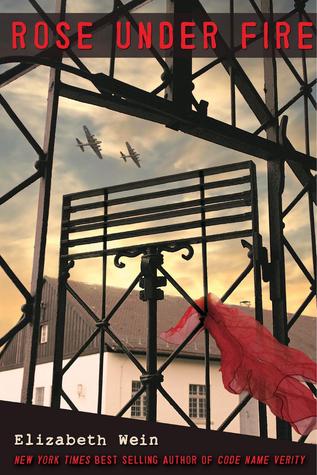
I read both Code Name Verity and Rose Under Fire this year. These are two of my favorite young adult books of all time. I will be pre-ordering anything that Elizabeth Wein writes!

4. Barry Lyga

barry lyga

I was hooked to I Hunt Killers and am excited to get lost in more of Barry Lyga’s books. They have such strong appeal. My past students still message me about Jasper!

5. R. J. Palacio

RJ Palacio

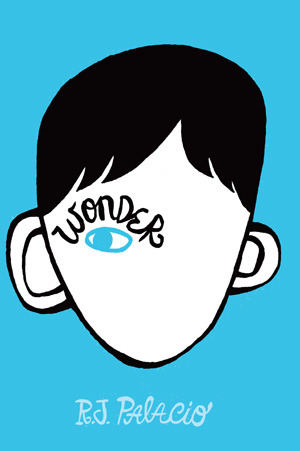
I can’t stop thinking about Wonder. I am in love with this beautiful story and am longing for Palacio to write another book!

Kellee

1. Rainbow Rowell

rainbow rowell

I really liked Eleanor and Park and the realness of the story and look forward to reading Fangirl.

2. Matthew Quick

Matthew Quick is an author that very often brought up on award and best selling lists. I am so happy that I finally picked up Boy 21 this year so I could be exposed to his writing.

3. Benjamin Alire Saenz

Benjamin Saenz 2009.jpg

Aristotle and Dante Discover the Secrets of the Universe is beautiful. I am so glad to be introduced to Saenz.

4. Eliot Schrefer

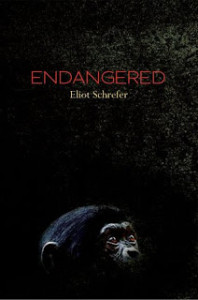
Eliot Schrefer has quickly become one of my favorite people and authors. Endangered climbed my list of favorite books after reading it and then reading it aloud with my students. He also skyped with my students and was such a good sport. Then after meeting him at ALAN I know that he is going to be not only an author I go back to constantly, but also a friend. (I also just read his 2014 novel Threatened and it is so great!)

5. Jeffrey Brown

Jeffrey Brown is so funny and his illustrations really bring his books to life. This year I read 3 of his books: Darth Vader and SonVader’s Little Princess, and Star Wars: Jedi Academy and I really enjoyed all of them.

Which authors were new to you in 2013?

RickiSig andSignature

Crow Call by Lois Lowry

Share

6135987

Crow Call
Author: Lois Lowry
Illustrator: Bagram Ibatoulline
Published October 1st, 2009 by Scholastic Press

Goodreads Summary: Two-time Newbery medalist Lois Lowry has crafted a beautiful picture book about the power of longing and the importance of reconnection between a girl and her father in post-WWII America.

This is the story of young Liz, her father, and their strained relationship. Dad has been away at WWII for longer than she can remember, and they begin their journey of reconnection through a hunting shirt, cherry pie, tender conversation, and the crow call. This allegorical story shows how, like the birds gathering above, the relationship between the girl and her father is graced with the chance to fly.

Review: This book felt very real, so I was not surprised to learn that it was based on a day in Lois Lowry’s life, when she went hunting with her father after he returned from World War II. As more of our children’s fathers and mothers return from Iraq and Afghanistan, I can’t think of a more appropriate book. Liz longs for a connection with her father, but she is uncomfortable saying the word, “Daddy.” The reader feels her sense of longing and reaches for the connection with her. This is a beautiful picture book that can be read to students of all ages.

Teacher’s Tools for Navigation: Often, classics and YAL grapple with the emotional effects of soldiers in wars. The pulse of the war reaches family members, create a lasting aftermath of emotions like uncertainty, loneliness, and helplessness. I would love to see this book paired with a book about war (whether the other text takes place during the war or after the war). Teachers might have students pick out lines or actions that show the emotions that subside after a family member returns from war.

Discussion Questions: How is the crow call symbolic?; Why does Liz fear the hunting side of her father? Does he recognize this? How do you know?; What does the ending show about her relationship with her father?

We Flagged: “I practice his name to myself, whispering it under my breath. Daddy. Daddy” (p. 7).

Read This If You Loved: Purple Heart by Patricia McCormick, The Silver Path by Christine Harris, Owl Moon by Jane Yolen

Recommended For: 

readaloudbuttonsmall classroomlibrarybuttonsmall

RickiSig

Top Ten Tuesday: Books on Our Winter TBR Lists

Share

top ten tuesday

Top Ten Tuesday is an original feature/weekly meme created at The Broke and the Bookish. The feature was created because The Broke and Bookish are particularly fond of lists (as are we!). Each week a new Top Ten list topic is given and bloggers can participate.

 Today’s Topic: Top Ten Books on Our Winter TBR Lists

We really need to get to these books!

Ricki

1. Allegiant by Veronica Roth

Allegiant_DemiJacket_WetProofTest.indd

I absolutely loved the first two books in this series, so I am very eager to get to the third! I haven’t read it yet because I have too many other library books that are at-risk of giving me overdue fines!

2. Two Boys Kissing by David Levithan

17237214

I have heard such wonderful things about this book. I am waiting for my library to get it in!

3. Unsouled by Neal Shusterman

12792658

The first two books in the series are fantastic, and I will probably hear a few spoilers before I get my hands on it.

4. The Real Boy by Anne Ursu

17349055

I don’t usually crave middle grade books as much as I crave high school books, but everyone is raving about this book, so now I NEED to get it!

5. The Day the Crayons Quit by Drew Daywalt

16101018

 I wanted to read this book so badly that I put it on my baby registry. I have it in hand, but my husband says I can’t read it until the baby is born. BOO!

Kellee

1. Mira’s Diary: Home Sweet Rome by Marissa Moss

15942613

I really , really loved the first one of this series and am so excited to have the newest to read. I loved the way Marissa Moss combines time travel, history, and art in Mira’s stories.

2. Fangirl by Rainbow Rowell

16068905

This book is being raved about and since I liked Eleanor and Park I am so very looking forward to Fangirl.

3. Period 8 by Chris Crutcher

15789615

I haven’t read enough Chris Crutcher and after hearing him speak at ALAN I know I need to read more.

4. Two Boys Kissing by David Leviathan

17237214

This is on so many people’s BEST OF lists for 2013 and I cannot wait to get my hands on it.

5. Explorer: The Lost Islands edited by Kazu Kibuishi

17290285

This one I need to read ASAP so I can get it into the hands of my students. They LOVE Kazu Kibuishi and I know they will love this one as well.

Which are the top books on your winter TBR lists?

RickiSig andSignature

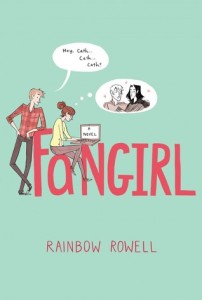
Fangirl by Rainbow Rowell (Ricki’s Review)

Share

16068905

Fangirl
Author: Rainbow Rowell
Published: September 10th, 2013 by St. Martin’s Griffin

GoodReads Summary: A coming-of-age tale of fan fiction, family and first love.

Cath is a Simon Snow fan.

Okay, the whole world is a Simon Snow fan . . .

But for Cath, being a fan is her life — and she’s really good at it. She and her twin sister, Wren, ensconced themselves in the Simon Snow series when they were just kids; it’s what got them through their mother leaving.

Reading. Rereading. Hanging out in Simon Snow forums, writing Simon Snow fan fiction, dressing up like the characters for every movie premiere.

Cath’s sister has mostly grown away from fandom, but Cath can’t let go. She doesn’t want to.

Now that they’re going to college, Wren has told Cath she doesn’t want to be roommates. Cath is on her own, completely outside of her comfort zone. She’s got a surly roommate with a charming, always-around boyfriend, a fiction-writing professor who thinks fan fiction is the end of the civilized world, a handsome classmate who only wants to talk about words . . . And she can’t stop worrying about her dad, who’s loving and fragile and has never really been alone.

For Cath, the question is: Can she do this?

Can she make it without Wren holding her hand? Is she ready to start living her own life? Writing her own stories?

And does she even want to move on if it means leaving Simon Snow behind?

Review: I can’t remember reading a book that felt so authentic to and aligned with my own experiences. I have this urge to buy hundreds of copies of this book and pass them out to college freshmen. Freshman year of college is an incredibly difficult time, and this book helped me remember it vividly. From Rowell’s descriptions of the domesticated squirrels to the awkwardness of roommate interactions to the feeling of entering the dining hall for the first time and not knowing where to go or where to sit (and feeling sure everyone is watching you), this book perfectly captures the minute details of college life–and all of the insecurities that come with it. I loved the parallels cast between Simon Snow’s story and Cather’s, and it inspired me to want to be a writer. This is a beautifully compelling story that will resonate with readers.

View Kellee’s review of Fangirl HERE.

Teacher’s Tools for Navigation: This would be a great book to teach along with a creative writing unit. It would inspire students to want to become stronger writers. Students could write their own fanfictions or alternate storytelling (like Nick and Cather did). Cather’s struggles as a writer are inspirational, and I am betting that most people, like me, close this book and want to get out their computers and start writing.

Very few authors are able to hone in on the minute details of humanity. I noticed Rowell’s incredible ability to do this in Eleanor & Park, and she certainly did not stop there. I would love to copy passages of this book for close readings. This would really help students understand good, powerful writing.

Discussion Questions: Cather finds it difficult to write about any world other than that of Simon Snow. Why do you think that might be?; How are Cather and Wren different? Do you think there are any underlying reasons for their differences?; What is Nick’s purpose in the novel? What does he show about Cather?

We Flagged:

“I feel sorry for you, and I’m going to be your friend.”
“I don’t want to be your friend,” Cath said as sternly as she could. “I like that we’re not friends.”
“Me, too. I’m sorry you ruined it by being so pathetic.”

“In new situations, all the trickiest rules are the ones nobody bothers to explain to you. (And the ones you can’t Google.)”

Read This If You Loved: Eleanor & Park by Rainbow Rowell, Looking for Alaska by John Green, The Perks of Being a Wallflower by Stephen Chbosky, Same Difference by Siobhan Vivian

Recommended For:

closereadinganalysisbuttonsmall litcirclesbuttonsmall classroomlibrarybuttonsmall

RickiSig