Blog Tour!: Roar! by Julie Bayless

Share

roar

Roar!
Author and Illustrator: Julie Bayless
Expected Publication October 13th, 2015 by Running Press Kids

Goodreads Summary: A moonlit tale of friendship and play.

It is nighttime in the savanna, which means that it is time to play for one rambunctious lion cub! The cub tries to make new friends with the hippos and the giraffes, but roaring at them only chases them away. The young lion is about to give up, but when a rabbit accidentally mistakes the cub’s tail for a carrot, the lion realizes she might have met her match, in all the right ways.

Kellee’s Review: Roar! is told in mostly onomatopoeias, so it is up to the reader to really read into the colorful and clue-filled illustrations. Bayless does a really great job at using her illustrations to build her characters without ever giving them anything to say next to ROAR and MORE and YAWN and SNORE. Trent loves reading this book because he is obsessed with saying ROAR if you even mention a lion and bunny is one of the newest animals he can identify. 

Ricki’s Review: I had so much fun reading this book with my son. He knows a lot of words, but he specializes in sound effects. He takes great pride in his roar, so it was fun for me to point to the word and wait for him to respond with a big “ROAAAR!” This would be a great book to use for kids who are just learning to read because the repetition is very helpful. It will build their reading confidence. As Kellee said, the illustrations add significantly to the character development. I smiled through the entire reading.

Teachers’ Tools for Navigation: Roar! is made to be read with kids. I think it’d be so much fun to make it interactive and have the students read the word bubbles as the teacher turns the pages. Another fun activity that could be done with Roar! is having students write out what is happening on each page and even naming the characters and using the illustrations to figure out their character traits.

Discussion Questions: In nature, would the lion and rabbit have been friends?; What onomatopoeias can you find within Roar!?; How would you describe the lion’s personality? The rabbit’s?

We Flagged:

roar spread

Read This If You Loved: Yo! Yes? by Chris Raschka, Moo by David LaRochelle, Look! by Jeff Mack, Giraffes Can’t Dance by Giles Andreae, Night Animals by Gianna Marino, Cat Says Meow and Other Onomatopoeia by Michael Arndt

Recommended For:

readaloudbuttonsmall

  Signatureand RickiSig

**Thank you to Cassie at Running Press for providing copies for review!!**

Blog Tour!: Last-But-Not-Least Lola and the Cupcake Queens by Christine Pakkala

Share

Lola and the Cupcake Queens

Last-But-Not-Least Lola and the Cupcake Queens
Author: Christine Pakkala
Illustrator: Paul Hoppe
Published October 6th, 2015 by Boyds Mills Press

Goodreads Summary: Lola’s mom is home but not home, because she’s frantically working all the time. Lola’s friends are here but not here as allegiances among the foursome change faster than you can forget your lines for a school play. Lola means well but can’t help acting on her emotions and getting into trouble. She’ll need to dig for bravery as she deals with a possible ghost next door, stage fright, and, hardest of all, making amends with her friends. Lola is braver than she thinks and her friendships are stronger than she realizes in this funny, heartwarming tale.

Kellee’s Review: I love that we are finding more and more girls like Lola in books. Lola is unique and smart and creative and not perfect yet also so very normal. She can be both a really good friend yet also a girl who makes mistakes. Lola is such a great role model for readers because she is all of these things, both good and bad. Readers will see themselves in her because she is very human.

In Lola and the Cupcake Queens, we get to know Lola even better. We learn that she has insecurities, that she loves her friends but doesn’t always know how to act, and that she underestimates herself. Each story about Lola’s puts her in more and more situations that readers will be able to connect with.

Ricki’s Review: I adored this charming series and immediately contacted a few friends who have young daughters who I know will fall in love with these books. Lola is a feisty redhead who seems to get herself into quite a bit of trouble. My favorite scene in the book is when Lola finds herself (yet again) in the principal’s office. She and the principal are great friends, and she casually struts into the office and is a bit taken aback when her friend is nervous. Her confidence and feistiness made me want to meet her! As she talks to the principal, she stops halfway through her sentence to lower her voice because yelling is not allowed. She knows the rules but seems to have a bit of difficulty following them—despite how hard she tries.

Lola reminds me of so many kids that I taught. She wants to do well, so she strives to be a good person. Even though she gets into a lot of trouble, it isn’t malicious. She just makes a lot of mistakes. These kinds of characters are fantastic for young readers because, like Kellee said, they allow children to see that they can learn from their mistakes. This series is a must for classrooms—it is the kind of series that turn kids into avid readers.

Teachers’ Tools for Navigation: Lola is going to be a favorite character of so many readers. She belongs in classroom and school libraries so readers can fall in love with her in the ways that we did.  In the book, Lola’s teacher did an activity that would also be great in the classroom. As the students were planning their Halloween costumes, she asked each child describe his/her costume without saying what it was. This activity would be a great way to help students build their imagery and descriptive language skills within creative writing.

As another idea, teachers might ask students to consider what it means to be a good friend. They could trace Lola’s actions to determine how she evolves as a friend in the series and then apply her actions to their own lives. This will help them think about friendship critically and relate it back to their own lives.

Discussion Questions: Do you think Lola intentionally gets into trouble? Why or why not?; What qualities would you use to describe Lola? Which of her actions reflect these qualities?; Is Lola a good friend? Why or why not?

We Flagged: “N-n-n-no,” she cries. “I’ve just never ever gotten in trouble and gone to the principal’s office. I’m not bad like you.”

“I’m not bad!” I yell, but part-way through I turn the volume down because yelling is bad. Especially right in front of the principal” (p. 65).

Read This If You Loved: Franklin School Friends series by Claudia Mills, Marty McGuire series by Kate Messner, Bink and Gollie series by Kate DiCamillo, Cody and the Fountain of Happiness by Tricia Springstubb, Eleanor books by Julie Sternberg, Babymouse series by Jennifer L. Holm, Bramble and Maggie series by Jessie Haas, The Trouble with Ants by Claudia Mills

Recommended For:

classroomlibrarybuttonsmall

  Signatureand RickiSig

**Thank you to Kayleigh at Boyds Mills Press for providing copies for review!**

Jump Back, Paul: The Life and Poems of Paul Laurence Dunbar by Sally Derby

Share

NFPB2015

Nonfiction Picture Book Wednesday

Nonfiction Picture Book Wednesday is hosted by Kid Lit Frenzy and was started to help promote the reading of nonfiction texts. Most Wednesdays, we will be participating and will review a nonfiction text (though it may not always be a picture book).
Be sure to visit Kid Lit Frenzy and see what other nonfiction books are shared this week!

jump back paul

Jump Back, Paul: The Life and Poems of Paul Laurence Dunbar
Author: Sally Derby
Illustrator: Sean Qualls
Published September 22nd, 2015 by Candlewick Pres

Goodreads Summary: Discover the breadth and depth of Paul Laurence Dunbar’s poetry—and learn how it reflects his singular life as a late-nineteenth-century black man.

Did you know that Paul Laurence Dunbar originated such famous lines as “I know why the caged bird sings” and “We wear the mask that grins and lies”? From his childhood in poverty and his early promise as a poet to his immense fame and his untimely death, Dunbar’s story is one of triumph and tragedy. But his legacy remains in his much-beloved poetry—told in both Standard English and in dialect—which continues to delight and inspire readers today. More than two dozen of Dunbar’s poems are woven throughout this volume, illuminating the phases of his life and serving as examples of dialect, imagery, and tone. Narrating in a voice full of admiration and respect, Sally Derby introduces Paul Laurence Dunbar’s life and poetry to readers young and old, aided by Sean Qualls’s striking black-and-white illustrations.

My Review: I came into this book not knowing much about Paul Laurence Dunbar aside from knowing that the line “I know why the caged bird sings” was written by him which inspired Maya Angelou’s autobiography’s title; however, I didn’t know much else about his life or his poetry. Derby’s book does a fantastic job remedying that. Not only are you exposed to more than 20 of Dunbar’s poems, you are exposed to them in very specific ways as Derby tells Dunbar’s life story. Each poem’s inclusion is purposeful and perfectly timed. When finished, I wanted to read more of Dunbar’s poems and actually hear some of them being performed (his dialect poems are screaming to be read aloud). Qualls also does a brilliant job, as always, illustrating the tone of the text in beautiful black-and-white drawings.

Teachers’ Tools for Navigation: This book not only can be used to share information about Paul Laurence Dunbar’s life and his poetry, but it also includes fascinating information about what it was like to live after the Emancipation Proclamation then after Plessy v. Ferguson.

First, in an English classroom, this text truly puts Dunbar’s poems in a perspective which will allow more depth when analyzing. The way Derby set up the narrative of Dunbar’s life around his poems helps the reader understand the underlying meaning of his poetry even better than they would with a cold read.

Also, cross-curricularly while studying Dunbar’s poems, during history, a tie-in to this tumultuous time period would be easy and effective.  The time period that Dunbar lived in is not often discussed as it is a time after slavery but before segregation that many students may not know about.

Discussion Questions: Who do you think had the biggest influence on Dunbar becoming a poet?; Do you think Dunbar’s father’s absence affected how he was as a husband to Alice?; How do you think Frederick Douglass influence Dunbar?; How was the voice that told the story chosen by Derby? Do you think the way she structured and told the story was helpful in understanding Dunbar’s life and poetry?

We Flagged: “You never heard of the poet Paul Laurence Dunbar? Child, where’ve you been? I got to have a word with you. Why, back in the day, you’d have whole families sitting around listening while one of them performed “When Malindy Sings” or “Little Brown Baby” or “A Negro Love Song” (which folks most always call “Jump Back, Honey”).”

Read This If You Loved: Paul Laurence Dunbar’s poetry, I Know Why the Caged Bird Sings by Maya Angelou, Henry Aaron’s Dream by Matt Tavares, The Underground Abductor by Nathan Hale

Recommended For: 

classroomlibrarybuttonsmall readaloudbuttonsmall closereadinganalysisbuttonsmall

Signature

**Thank you to Candlewick for providing a copy for review!!**

Top Ten Tuesday: Books I’d Recommend to Students If They Like _____.

Share

top ten tuesday

Top Ten Tuesday is an original feature/weekly meme created at The Broke and the Bookish. The feature was created because The Broke and Bookish are particularly fond of lists (as are we!). Each week a new Top Ten list topic is given and bloggers can participate.

 Today’s Topic: Books I’d Recommend to Students if They Like ______.

One of my most important jobs as a reading teacher is helping students find books that they will like. Often students don’t know what to read next, and it is up to me to help them find their next book. My Top Ten Tuesday list this week is ten books/series that my students really enjoy and some books/series I may recommend, depending on the student, for them to read next.

Kellee

1. If a student likes the Amulet series by Kazu Kibuishi, I recommend the Battling Boy series by Paul Pope or Doug TenNapel graphic novels.

Battling Boy 0-545-31480-1

All of these graphic novels are very complex and deep, but often my students get stuck wanting to read only Kibuishi’s work. Paul Pope and Doug TenNapel are perfect books to turn to because they are brilliant graphic novelists.

2. If a student likes the Percy Jackson series by Rick Riordan, I may recommend Promise of Shadows by Justina Ireland, the Olympians series by George O’Connor, or Oh. My. Gods. by Tera Lynn Childs.

promise of shadows zeus oh my gods

Often by the end of any of the Riordan series, students are fascinated by and experts in the mythology that was shared. To continue expanding their mythology knowledge, O’Connor’s Olympians series is perfect while the other two novels are YA mythology-based action books that are perfect for Percy Jackson fans.

3. If a student likes the Diary of a Wimpy Kid series by Jeff Kinney, I may recommend the Origami Yoda series by Tom Angleberger or the Joey Pigza Series by Jack Gantos. 

origami yoda joey pigza

Kids who like Diary of a Wimpy Kid like it for the humor and illustrations. While Origami Yoda and Joey Pigza may have less illustrations, they both are hilarious.

4. If a student likes the Hunger Games series by Suzanne Collins, I may recommend the Uglies series by Scott Westerfeld.

uglies

While Hunger Games is probably the most popular dystopian series, when I think of the epitome of dystopian, I think of Scott Westerfeld’s series.

5. If a student likes the Dork Diaries series by Rachel Renée Russell, I may recommend Sugar and Ice by Kate Messner or the Ginny Davis series by Jennifer Holm.

sugar and ice middle school is

My students who read Dork Diaries are looking for stories that they will connect with. Both Sugar and Ice and Ginny’s books are true representations of middle school, and I know students will find the same connection with them.

6. If a student liked the Alex Rider series by Anthony Horowitz, I may recommend the I, Q series by Roland Smith or the Matt Cruse series by Kenneth Oppel.

i, qairborn

Alex Rider is definitely my go to for adventure/spy books for my students, but when they finish his series, I always recommend Matt and Q’s story as a next step because they are both as action-packed as Alex’s stories yet different enough to be new and exciting.

7. If a student likes Wonder by RJ Pacalio, I may recommend Rain Reign by Ann M. Martin or Out of My Mind by Sharon Draper.

rain reign out of my mind

The protagonists in all three novels are so special, and readers reading their stories will build empathy for those around them.

8. If a student likes the Harry Potter series, I may recommend The Dungeoneers by John David Anderson or The Books of Beginning series by John Stephens.

dungeoneers -c emerald atlas

When I read both of these books, my very first thought was that students who were Harry Potter fans will love these as well. They are fantasy-based yet not too far fetched while also being adventurous and well done.

9. If a student likes Smile and Sisters by Raina Telgemeier, I may recommend El Deafo by Cece Bell.

el deafo

Smile and Sisters are so popular, but students often don’t know what to read when they finish with Raina’s books; however, they don’t have far to look because Newbery Honor El Deafo is sitting on the shelf right next to Raina’s books and is brilliant, thought-provoking, emotional, and funny.

10. If a student likes the Maze Runner series, I may recommend the Chaos Walking series by Patrick Ness.

knife of never letting

The Maze Runner series is suspenseful, has an evil government, and is packed with excitement from beginning to end. My readers who finish The Maze Runner series are looking for another book that will hold there attention, and the Chaos Walking series is the epitome of suspense, evil antagonists, and excitement.

What books do you recommend if your student likes _____?

Signature

It’s Monday! What Are You Reading? #IMWAYR 10/5/15

Share

IMWAYR

It’s Monday! What Are You Reading? From Picture Books to YA!

It’s Monday! What are you Reading? is a meme hosted by Sheila at Book Journeys. It is a great way to recap what you read and/or reviewed the previous week and to plan out your reading and reviews for the upcoming week. It’s also a great chance to see what others are reading right now…you just might discover the next “must-read” book!

Jen Vincent, of Teach Mentor Texts, and Kellee decided to give It’s Monday! What Are You Reading? a kidlit focus. If you read and review books in children’s literature – picture books, chapter books, middle grade novels, young adult novels, anything in the world of kidlit – join us! We love this meme and think you will, too.

We encourage everyone who participates to support the blogging community by visiting at least three of the other book bloggers that link up and leave comments for them.

CONGRATULATIONS

ERIC W. 

for winning a copy of Sloth Slept On

and

BETH P. 

for winning a copy of The Trouble with Ants!

Last Week’s Posts

top ten tuesday ebola like water on stone Zack delacruz

Tuesday: YA Text Recommendations for Bestselling Adult Texts

Wednesday: Review and Author Interview!: Ebola: Fears and Facts by Patricia Newman

Friday: Review and Giveaway!: Zack Delacruz: Me and My Big Mouth by Jeff Anderson

Giveaway open until Friday!

**Click on any picture/link to view the post**

 Last Week’s Journeys

Kellee: Thank you all so much for all the kind words last week! We had a wonderful visit with my mother, and I miss her so much!

Over the last 2 weeks, I’ve had quite a variety of reading. I read one middle grade novel, Zack Delacruz, which I reviewed on Friday, one early chapter book, Last-But-Not-Least Lola and the Cupcake Queens, which we’ll review Thursday, one MG/YA nonfiction text, Jump Back, Paul which I’m reviewing on Wednesday, one nonfiction picture book, Frozen Wild by Jim Arnosky which I’ll review next week, and two fiction picture books, Interstellar Cinderella by Deborah Underwood and Cock-A-Doodle Oops! by Lori Degman both of which will be reviewed in the near future. They are all very different, but all very much worth reading.

Trent has become quite a voracious reader. I have a post planned later in October to give an update of all of his favorite books, but I thought I’d give a minor update today since I haven’t talked about his reading in a while. This last week we read a few new board books, and they were all a hit:

  • Don’t Push the Button! by Bill Cotter, a super fun interactive book that Trent finds hilarious
  • If I Had a Tail! by Jeane Cabral Schlatter, a flap book with a fun guessing game
  • Llama Llama Nighty Night by Anna Dewdney, another Llama Llama book to add to Trent’s collection
  • National Geographic Little Kids Look & Learn: Things that Go, Trent’s new favorite things are vehicles which meant this book was right up his alley
  • Elmo’s World: First Flap-Book Library, Trent loves Sesame Street (especially Elmo), so these are definitely a favorite
  • My Big Truck Book, My Big Train Book, and My Big Dinosaur Book by Roger Priddy, this series is a full of bright pictures that are labeled, and Trent loves to sit and look through them

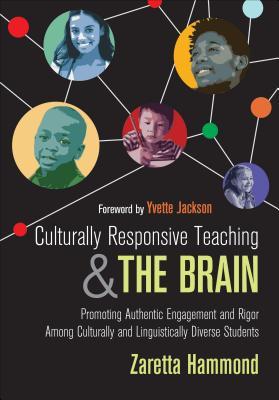
Ricki: I also read and enjoyed the early chapter book, Last-But-Not-Least Lola and the Cupcake Queens. I finished Culturally Responsive Teaching and the Brain by Zaretta Hammond (full review to come soon). I find myself paraphrasing sections frequently, which means it is a good book. And then I did the Ricki thing where I started six books that I am excited about (see below).

This Week’s Expeditions

Kellee: I started Hook’s Revenge by Heidi Schulz Saturday, and I am truly enjoying it so far! Jocelyn Hook would really love The Terror of the Southlands, and I think any of you that loved The Very Nearly Honorable League of Pirates, you will love Hook’s Revenge as well. I also have the four novels for my ALAN panel that I need to read, so I plan on starting one of them when I finish Hook’s Revenge.

Ricki: I am loving the audio of The Lions of Little Rock by Kristin Levine. What a treasure! I am also enjoying Enchanted Air: Two Cultures, Two Wings by Margarita Engle. This is a memoir in verse, and it is quite lovely. I am too early in the others to say more, but I will report back soon.

Upcoming Week’s Posts

top ten tuesday jump back paul Lola and the Cupcake Queens roar Book of Names

Tuesday: Books I’d Recommend to Students  if they Like _____.

Thursday: Blog Tour!: Last-But-Not-Least Lola and the Cupcake Queens by Christine Pakkala

Friday: Blog Tour!: Roar! by Julie Bayless

Sunday: Author Guest Post!: “What’s in a Name?” by Royce Leville, author of The Book of Names

 So, what are you reading?

Link up below and go check out what everyone else is reading. Please support other bloggers by viewing and commenting on at least 3 other blogs. If you tweet about your Monday post, tag the tweet with #IMWAYR!

 Signature andRickiSig

Review and Giveaway!: Zack Delacruz: Me and My Big Mouth by Jeff Anderson

Share

Zack delacruz

Zack Delacruz: Me and My Big Mouth
Author: Jeff Anderson
Published August 4th, 2015 by Sterling Children’s Books

Goodreads Summary: Zack Delacruz is unnoticed at his middle school—and that’s just the way he likes it. But a school assembly, a typhoon of spit, and an uncharacteristic moment of bravery are all it takes to change everything. Suddenly Zack is in charge of the class fundraiser. Worse, his partner is the school’s biggest bully! If they don’t sell all the chocolate bars, there will be no dance for the sixth grade.  Zack never wanted to be a hero, but with his classmates’ hopes on the line, can he save the day?

About the Author: Jeff Anderson is the author of Mechanically Inclined, Everyday Editing, 10 Things Every Writer Needs to Know, and Revision DecisionsZack Delacruz: Me And My Big Mouth is his debut middle grade novel.  A former elementary and middle school teacher, Jeff travels to schools across the country working with teachers and students to discover joy and power in the writing process. Jeff lives in San Antonio, TX.  Visit him at writeguy.net or follow him on Twitter at @writeguyjeff.

My Review and Teachers’ Tools for Navigation: If I know one thing about middle school it is that it is a tough place. It can be a lot of fun, but at the bottom of it, being between the ages of 11 and 14 are just a rocky time for most people. Jeff Anderson captures that awkward time in Zack’s life perfectly. Zack has done everything in his power to stay under the radar at the school, but when he decides to do the right thing by standing up for a girl who is getting bullied, it pulls him into the forefront. I think this also shows how hard it is to stand up to a bully because it then puts a bulls eye on you, but Zack ends up handling it beautifully.

I did really like the easy diversity and true relationships in Zack Delacruz. I think it is such a real reflection of what middle school is actually like. Sometimes the bullying got to me, but that is how bullying is–it is uncomfortable and wrong, so if I felt that way that means it was written just right.

This is a book that will be a hit with middle school readers. They are going to so easily be able to connect with the characters and the story, and they will find some parts of it to be very funny. It also will make readers think about bullying, middle school, friendship, and more.

Discussion Questions: How does Zack evolve throughout the book?; If you were in Zack’s position, would you have stood up for Janie? Why or why not?; How did the one decision of standing up for Janie change Zack’s life?; Why do you think Jose acts the way he does?; Do you think Davy Crockett Middle School is a good representation of middle schools?; What do you think life is like for Zack and Janie after the book?

We Flagged: “A typhoon spray of spit. A stupid assembly. And my big mouth. That’s all it took to ruin my life.

If you’re a sixth grader at Davy Crockett Middle School in San Antonio, Texas, you start off every day in advisory. Besides cruel and unusual punishment, advisory is an avoiding game: avoiding eye contact, avoiding talking, and, so far, avoiding trouble.” (p. 1)

Read This If You Loved: Frank Einstein by Jon Scieszka, Pickle by Kim Baker, Better Nate Than Ever by Tim Federle

GIVEAWAY!
Enter to win your own copy of Zack Delacruz!

a Rafflecopter giveaway

Recommended For:

classroomlibrarybuttonsmall

  Signature

**Thank you to Lauren at Sterling Publishing for providing a copy for review and giveaway!!**

Review and Author Interview!: Ebola: Fears and Facts by Patricia Newman

Share

NFPB2015

Nonfiction Picture Book Wednesday

Nonfiction Picture Book Wednesday is hosted by Kid Lit Frenzy and was started to help promote the reading of nonfiction texts. Most Wednesdays, we will be participating and will review a nonfiction text (though it may not always be a picture book).
Be sure to visit Kid Lit Frenzy and see what other nonfiction books are shared this week!

ebola

Ebola: Fears and Facts
Author: Patricia Newman
Expected Published October 28th, 2015 by Lerner Publishing Group

Goodreads Summary: Ebola is a deadly contagious disease. From 1975 to 2013, it killed about 1,500 people. But a 2014 epidemic killed more than six times that number. At first the outbreak was contained to one country. But soon it spread to two others―the virus was on the move, and people were scared. When two American healthcare workers became infected and were sent to the United States for treatment, many people feared a pandemic―an outbreak that would spread all over the world. Could it happen?

Ebola: Fears and Facts takes you behind the sensational headlines to address questions and concerns about the virus. Learn about the history of the disease, its symptoms, and how it spreads. Find out how the 2014 epidemic compares to past Ebola outbreaks, as well as to outbreaks of other infectious diseases. With a question-and-answer section and reference maps, Ebola: Fears and Facts will help you to better understand this most-feared disease.

My Review: The Ebola epidemic of 2014 caused pure panic around the world. Because of the 24-hour news coverage of the disease as it entered the U.S, Ebola became a hot topic; however, there was so much misconception about the disease. As a teacher during the epidemic, I saw how scared students were of the disease and how little they knew about it. The text is a wonderful resource to help kids learn about the disease.

Teachers’ Tools for Navigation: Patricia Newman’s middle grade nonfiction texts are a necessity for middle school classrooms. They teach the reader so much about the topic though do so in an interesting way to keep the readers’ attention. They are also about important topics that kids can make a difference by learning about. Her books, including Ebola, need to be available to students.

I really like how the book is set up. It begins with the history then goes into the way Ebola works and finally looks at the 2014 outbreak and how Ebola could possibly be conquered. It allows readers to navigate to the section they want or build up their knowledge from beginning to end.

Discussion Questions: What did you learn about Ebola that you didn’t know before reading?; What is the difference between Ebola and diseases like the measles?; How did the Ebola virus begin?; How is the Ebola virus a threat to apes in Africa?

“Truth or Hype?…The next time you come across a story about Ebola–or any topic–ask yourself the following questions. 1. What does the storyteller want us to remember? 2. How might different people understand the story? 3. Does the storyteller present facts or opinions? How do we know? What words are used? Does the storyteller quote scientific or eyewitness sources? 4. What action does the storyteller want us to take? 5. Do our emotions influence the way we evaluate the story?” (p. 35)

Author Interview: Thank you to Patricia for answering some of my questions!

What research did you do when writing Ebola? 

I visited East Africa several years ago, so I had a general sense of the landscape, the bush, the people, the cadence of their speech. But the crowded cities and steamy jungles of West Africa are different than the wide open savannas of the east. Of course, I needed to learn about the physiology of the disease, but I also wanted to know where in the jungle it came from and how it affected all aspects of peoples’ lives.

I interviewed a CDC epidemiologist who’d just returned from Liberia; read books by David Quammen and Peter Piot; deciphered scientific studies in journals such as the New England Journal of Medicine and Vector Borne and Zoonotic Diseases; scoured the CDC, WHO and MSF websites for case counts and anecdotal information; and read every news story (or watched every video) I could get my hands on. I also interviewed a nurse at a Sacramento hospital near my home who specializes in speaking to children about serious illnesses. Her compassion and common sense were tremendously helpful. A small fraction of my sources are listed in the back of the book.

My nurse-source also gave me a full set of Ebola protective gear. I share it with students at school visits and talk to them about how health-care professionals put it on and take it off.

Why did you decide to research and write about Ebola?

My editor, Carol Hinz, came to me in November 2014 with the idea. Millbrook Press wanted to publish a book about the 2014 epidemic, and thought I was the person to do it. I was flattered by their faith in me and overjoyed with the way they handled Plastic, Ahoy! Investigating the Great Pacific Garbage Patch, so I said yes. Carol and I learned a lot from this book. Because the deadline was so tight (my final manuscript was due February 1, 2015) we developed the outline together. Before we went to press, we revised or otherwise massaged every line in the book, always working to stay abreast of current reports. At one point I added several hundred words because of planned vaccine trials and Ebola survivors. Thank goodness Millbrook paid for a fact checker because the editing process became more and more chaotic. For example at one point in April, I gave an all-day writing workshop to a group of conservation scientists interested in writing their research for children. During my lunch break I had to edit Ebola one final time before it went to press!

What is the biggest misconception you have found about Ebola? 

I think there are two frequent misconceptions. The first is that Ebola is airborne like measles or the common cold. It is not, nor is it every likely to be. Ebola is spread by contact with bodily fluids (saliva, vomit, stool, sweat, blood, semen). Generally one person infected with an airborne disease spreads the disease to more people than one person infected with Ebola. For instance, one Ebola patient infects between 1.5 and 2 people. In comparison, one measles patient infects 18 others (assuming those people have not been vaccinated). NPR wrote an interesting article about this concept.

The second misconception is that Ebola is deadly no matter what we do. Based on our success treating Ebola patients in the U.S., and the successes in some of the vaccine trials, Ebola need not be a death sentence. Two factors that contributed to the high death rate in West Africa were the lack of education about communicable diseases and the lack of high-quality medical care.

As information about the disease changes rapidly, what would be the best resources for people who want to continue learning about the disease? 

News from the front lines altered the manuscript even as my editor and I were preparing it for printing, and I worried about how my readers will stay informed as our understanding of Ebola develops. I decided to include a sidebar in the last chapter of the book, Conquering Ebola, to help readers stay informed by sharing the Ebola pages for WHO, CDC, USAid, and Doctors Without Borders. For students writing Ebola reports, many of these sites have RSS feeds that will deliver information straight to their inbox.

What is the topic of your next book? 

I have a book proposal under consideration at Millbrook—hopefully the editorial team will decide to take it—so for now the topic is a secret. But I can tell you to expect more science.

We Flagged: “Ebola. The word calls up images of sick people in Africa and doctors wearing space-suit-like protective gear. Before 1976, however, Ebola was simply the name of a winding river in central Africa.” (p. 5)

Read This If You Loved: Plastics Ahoy! by Patricia Newman

Recommended For: 

classroomlibrarybuttonsmall readaloudbuttonsmall closereadinganalysisbuttonsmall

Signature

**Thank you to Patricia and Lerner for providing a copy for review and specifically to Patricia for the Q&A!!**