Author Guest Post!: “How Kids Can Help Homeless Children” by Melody J. Bremen, Author of The Boy Who Painted the World

Share

How Kids Can Help Homeless Children

While writing my latest novel, The Boy Who Painted the World, I did research on homeless people – specifically, homeless children. The main character of the book, Indigo, is a ten-year-old homeless boy and I wanted to understand a little bit about what his world is like. I came upon some pretty scary statistics:

There are 100 million homeless children around the world.

There are 2.5 million homeless children in the United States. That means there is likely to be one homeless child in every classroom.

That’s a lot of kids without a permanent roof over their head. These children might be sleeping in a shelter, a motel, or even in a car. They’re under a lot of stress, which causes them to do poorly socially and in school. Their circumstances can affect them great later in life with both physical and psychological issues.

What Can I Do?

Every person, no matter how old, can help, and it doesn’t have to be anything mind-blowing or difficult. Even a simple smile to someone on the street can cheer someone up.

Here are some easy ways that you can make a difference:

  1. Give money: Carry some small change with you and give it to people who are asking for money on the street. That money may just buy them their next meal.
  2. Donate clothing: Save old clothing and shoes that you no longer wear and donate it.
  3. Donate toys and books: Donate gently used toys and books that you are no longer using.
  4. Volunteer: Volunteer some of your time and help out at a shelter or soup kitchen. You can also tutor kids and help them out with their homework.

If everyone person does a little something, it can go a long way to alleviating the hardships of the homeless.

Links to websites that can help you take action

Stand Up for Kids: http://www.standupforkids.org/

School on Wheels: https://www.schoolonwheels.org/

Volunteers of America: https://www.voa.org/


The Boy Who Painted the World
Author: Melody J. Bremen
Published 2017

About the Book: Indigo is a boy with a dream. He spends his mornings in a refrigerator box, his afternoons shoveling snow, and his nights in the basement of a homeless shelter. But during every free moment, he draws and dreams of becoming a famous artist. His best friend Jade looks after him, but she is arrested for shoplifting and he’s left all alone. With his box of pencils under his arm, he sets out on a quest to search for Jade and discovers a whole new world… full of the art he loves.

His journey brings him friendship, family, and the courage to hold onto his dreams.

About the Author: Melody J. Bremen writes books for middle grade and young adult readers. She lives on a distant planet where all they do is write and read books. (Sometimes they eat jelly beans.) She has a faithful computer named Oswald.

Visit Melody’s blog: http://melodybremen.com/blog/
Sign up for Melody’s newsletter: http://www.subscribepage.com/newsletter-sign-up

Thank you, Melody, for this important guest post!

 and

Tinyville Town by Brian Biggs

Share

Tinyville Town Series
Author & Illustrator: Brian Biggs
Published by Appleseed, an Abrams Imprint starting in 2016

Brian Biggs describes the series as Sesame Street meets Fisher Price. 

I say it is Richard Scarry meets Mr. Rogers and Thomas the Train (but there are no talking trains).

There will be at least 8 books. 

Though hopefully more because I want one about every member of the town!

There are two kinds of books in the series: 

Board books about individual members of the society

Large-format picture books about how the whole town comes together. 

This set up is perfect because when you read the picture book, you can find all of the members of the board books in the picture book. They become friends that you recognize like a search-and-find within the story.

In the classroom, Tinyville Town would fit perfectly with Junior Achievement and early-ed social studies as students learn about jobs and communities.

Parents, your kids will love these books! It is a perfect combination of everything kids and adults want in picture books.

For more information:
Here’s an interview with Brian Biggs about Tinyville Town
Here’s Brian Biggs’s Blog Post about Tinyville Town

Recommended For: 

classroomlibrarybuttonsmall 

Signature

In the Middle School: Setting Up the School Year in Week One with Expectations, Kindness Goals, One Word Goals, and Six-Word Memoirs

Share

Monday

The first week of school is scary for all students. And boring. It is filled with syllabus review and lunch room rules. I want my students’ first day to be filled with friendliness. This year, to do this I started the year with telling my students about me. I have a philosophy that if students see you as a human, they are more likely to respect you and your class. After sharing about me, my family, my history, and my life, we played a fun game of Kahoot about me.

On day one, I wanted to make my expectations clear: I want you to do your best all year. That’s all I ask. To start this conversation, I showed them one of my favorite TED Talks: “Grit: The Power of Passion and Perseverance” by Angela Lee Duckworth, a psychologist who studies grit in many different aspects. When finished with the TED Talk, I asked each class, “Why would I show you this on day one?” One of my 6th grade girls said it the best, “You showed it to us because you want us to do our best all year because effort and wanting to grow is really important.” Our district has been focusing on growth mindset in students and teachers, and the idea of grit fits this goal.

Finally, I also introduced my students to the idea of OneWord365–that instead of setting unrealistic and too many goals, pick a word that summarizes the path they want the year to take. Most of the students’ choices included words that fit the growth mindset. Once each student had turned in their word to me, we then picked One Word for each class that embodied everyone’s word. Our words are: determination, try, and happiness.

Sidenote: I did this activity on our first day of preplanning with my entire staff, and I only got positive feedback about it. Each teacher came up their own One Word then as a PLC (professional learning community) they came up with a summarizing word and a visual representation.
Tuesday

Tuesday was Code of Conduct and Syllabus day, so it was a bit boring; however, I fancied up my syllabus this year, so it was a bit more fun to look at:

I redid my rules this year to be called “Expectations” and to be short, sweet, and what I really see as important in humans:
  • Be kind

  • Be respectful
  • Be responsible
  • Do your best

Wednesday

Wednesday was all about getting to know my students. Each year I have my students fill out an interesting and reading survey to help me get to know them. Wednesday was also BOOK DAY! Students were so excited to be able to dive into my classroom library. As students looked for books and filled out their survey, I went around to help with book selection and make discussion.

Thursday

Each year in the first week, I make sure to read Each Kindness by Jacqueline Woodson to my students. With looping students, I try not to duplicate from year to year, but this is a text that I read at the beginning of the school year no matter what. Why? Because it uses Chloe’s tough lesson of not being kind to Maia to teach us about the power of kindness ripples and how they can affect the universe.

When we finished the book, I point out that Chloe wasn’t “bad” nor a “bully” but what she did by excluding Maia was devastating. I asked them to think about something in their life that they could do just a bit kinder: either broad like smiling at strangers more or specific like being nicer to a certain person. They then set kindness goals for the year which I’ll post for the entire year.

Friday

Friday it was once again about getting to know my students. I introduced them to the idea of six-word memoirs. First, we talked about Ernest Hemingway’s six-word story (“For Sale: Baby Shoes, Never Worn”) and the power of his six words and how Smith Magazine took the idea and turned it into people writing their memoir in six words.

To help them understand the idea, I showed them the Six Magazine You Tube video with teens’ six-word memoirs:

And I shared fiction characters’ six-word memoirs:

  • Cinderella: Sometimes the shoes you pick matter OR Sometimes fairy godmothers do show up.
  • Simba: Don’t believe an uncle with scars.
  • Alice: Down the rabbit hole yet again.
  • Romeo: Loving someone may very much kill

Then I gave them Smith Magazine’s six tips for writing a six-word memoir:

  1. It only works if it is personal.
  2. Limitations force you to be creative.
  3. Get inspired by reading other memoirs.
  4. Like any story, make revisions.
  5. Put the best six words in the best order.
  6. Publish your story to inspire others. (Though I made it clear this was optional)

And I sent them on their way, and the response has been phenomenal (shared only those with permission given):

  • Fear is my greatest enemy, always. -Amy, 6th grade
  • I fear an average human life. -Anonymous, 6th grade
  • Books are portals, go through them. -Anonymous, 6th grade
  • Music–the best thing that happened. -Anonymous, 6th grade
  • Sibling always wanted. Five years old. -Anonymous, 6th grade
  • Hospital. Diagnosed. Kept on living great. -Daniel, 6th grade
  • If you believe, you can succeed.” -Ian, 6th grade
  • Face what scares you most. -Lorenza, 7th grade
  • The great outdoors is my indoors. -Alexandra, 7th grade
  • Life is like a hard dream. -Anonymous, 7th grade
  • Who I am is not clear. -Anonymous, 7th grade
  • You can die happy or unhappy. -Anonymous, 7th grade
  • Hufflepuff isn’t the same without me. -Vanessa, 7th grade
  • Family means nobody gets left behind. -Anonymous, 7th grade
  • I said it was impossible. “Nevermind.” -Anonymous, 7th grade
  • Stop being worried and live life. -Anonymous, 7th grade
  • Why do people tell unnecessary lies? -Anonymous, 8th grade
  • Why do girls create unnecessary drama? -Emily, 8th grade
  • Don’t think twice, or never achieve. -Anonymous, 8th grade
  • Fake smiles, fake laugh, real tears. -Anonymous, 8th grade
  • It is not just a game. -Christian, 8th grade
  • 2009: Plane ticket–Egypt to America. -Clara, 8th grade
  • Your separation made everything more difficult. -Amanda, 8th grade
  • See you later, Island of Enchantment. -Lucas, 8th grade
  • Dancing is how I express myself. -Ashley, 8th grade
  • Parents can never stick together forever. -Anonymous, 8th grade
  • Try your best; get better results. -Anonymous, 8th grade
  • Divorce can break a child’s heart. -Anonymous, 8th grade
  • Prepared to succeed; failed of hesitation. -Anonymous, 8th grade

It is through these activities that I show my students that I care for them. 

What do you do your first week of school?

Marti’s Song for Freedom | Martí y sus versos por la libertad by Emma Otheguy

Share

ínfpb2017

Nonfiction Wednesday

Nonfiction Picture Book Wednesday is hosted by Kid Lit Frenzy and was started to help promote the reading of nonfiction texts. Most Wednesdays, we will be participating and will review a nonfiction text (though it may not always be a picture book).
Be sure to visit Kid Lit Frenzy and see what other nonfiction books are shared this week!

Marti’s Song for Freedom | Martí y sus versos por la libertad
Author: Emma Otheguy
Illustrator: Beatriz Vidal
Published July 17, 2017 by Lee & Low Books

Summary:

Yo soy un hombre sincero
De donde crece la palma,
Y antes de morirme quiero
Echar mis versos del alma
.

As a boy, José Martí was inspired by the natural world. He found freedom in the river that rushed to the sea and peace in the palmas reales that swayed in the wind. Freedom, he believed, was the inherent right of all men and women. But his home island of Cuba was colonized by Spain, and some of the people were enslaved by rich landowners. Enraged, Martí took up his pen and fought against this oppression through his writings. By age seventeen, he was declared an enemy of Spain and forced to leave his beloved island.

Martí traveled the world, speaking out for Cuba’s independence. But throughout his exile, he suffered from illness and homesickness. He found solace in New York’s Catskill Mountains, where nature inspired him once again to fight for independence.

Written in verse, with excerpts from Martí’s seminal Versos sencillos, this book is a beautiful tribute to a brilliant political writer and courageous fighter of freedom for all men and women.

Praise: 

“A sensitive and poignant tribute to one of Latin America’s most important historical figures.” – School Library Journal, starred review

“A moving account of [Marti’s] crusade for justice.” -Publishers Weekly, starred review

“A timely story that will inspire many to fight for equality and sing songs for freedom.” -Booklist, starred review

“Spotlights a steadfast hero and brilliant writer still worth admiring today.” -Kirkus reviews, starred review

“A direct and approachable introduction to the life and works of Cuban poet and freedom fighter José Martí.” -Shelf Awareness, starred review

About the Creators: 

Emma Otheguy is a children’s book author and a historian of Spain and colonial Latin America. She is a member of the Bank Street Writers Lab, and her short story “Fairies in Town” was awarded a Magazine Merit Honor by the Society of Children’s Book Writers and Illustrators (SCBWI). Otheguy lives with her husband in New York City. This is her picture book debut. You can find her online at emmaotheguy.com.

Beatriz Vidal is an award-winning painter, illustrator, and teacher. Her work has appeared in well-known publications such as The New York Times Magazine, Woman’s Day, and the New Yorker. Her artwork has also been featured on PBS programs and in numerous exhibitions around the world, including the International Exhibition of Illustrations for Children in Italy and the Society of Illustrators in New York. Vidal divides her time between New York City and Buenos Aires, Argentina. You can visit her online at beatrizvidal.com.

ReviewThis beautiful bilingual biography deserves all the praise it is receiving. The beautiful pieces of art that accompany the poetic verses turns this picture book biography into a piece of art! I also loved that not only is Martí’s biography in Spanish and English, but so is the author’s back matter.

I also am so glad that I learned about José Martí! I didn’t know anything about the Cuban war for independence and emancipation from slavery. Cuba has such an extensive history that is not taught here, so this story definitely fills a gap in history education. While the story teaches primarily of Martí’s life, the back matter goes deeper into Cuban independence and reading both is definitely going to pique interests to learn more. I think this book would pair nicely with books about our Civil War to compare the United States to other countries’ fights for freedom.

Teachers’ Tools for Navigation: Emma Otheguy was kind enough to share an activity guide for the text. All of the activities come in Spanish and English and can be downloaded at http://emmaotheguy.com/my-new-book/.

Activity 1: “José Martí wrote many letters throughout his life. He wrote about things he found beautiful or interesting, and also about injustices, and how he though they might get better. Write a letter to a friend, a relative, or an elected official about something you’re passionate about. It can be anything you care about, whether it’s helping your neighbors, caring for animals, or respecting the planet–just share how you feel. Then cut out your letter an mail it.” Followed by a outlined letter for kids to feel out.

Activity 2: “Did you know that José Martí was a poet, and that is poetry book Versos Sencillos was written and published right here in the United States? If you ever hear the song Guantanamera you’ll notice words from Marti’s poetry in the song! Read the first stanza of Martí’s poem, then fill in the blanks to create your own poem.”

Activity 3: “Read the book and solve this crossword puzzle”

Activity 4: “As teenagers, José Martí and his friends wrote and published their own newspaper, La Patria Libre (the free homeland), supporting Cuban independence. Can you create a newspaper? Fill out the boxes with the latest news.” Includes a place for Read All About It, Letter to the Editor, and an illustration.

Discussion Questions: How did José Martí play a part in Cuba’s fight for independence?; Did his age when sent to America surprise you?; Why is Cuba such a mix of culture?; How did the author use José Martí’s own words within her biography of him?; If you were to write to your government about an injustice you see in your country, what would you write about?

Flagged Passages: 

Read This If You Love: Margarita Engle’s books, Henry’s Freedom Box  by Henry Levine and other biographies about the fight for emancipation in the United States, Nonfiction picture book biographies

Recommended For: 

classroomlibrarybuttonsmallclosereadinganalysisbuttonsmall

Signature

**Thank you to Emma Otheguy for providing a copy for review!**

Top Ten Tuesday: Top Ten Antagonists from Christian, 8th grade

Share

top ten tuesday

Top Ten Tuesday is an original feature/weekly meme created at The Broke and the Bookish. The feature was created because The Broke and Bookish are particularly fond of lists (as are we!). Each week a new Top Ten list topic is given and bloggers can participate.

 Today’s Topic: Top Ten Antagonists

from Christian U., 7th grade (now 8th grade!!)

1. Queen Wasp from The Nest by Kenneth Oppel

Queen Wasp attempts to convince Steven to kill his own baby for a new one from a series of dreams. Strategic, Queen Wasp really deserves a spot on the list of the best antagonists.

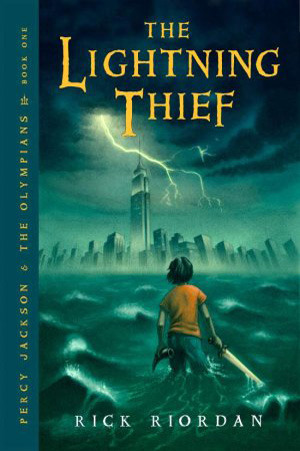
2. Luke from The Lightning Thief by Rick Riordan

Luke was strategic, acting as the hero the whole book but was really the villain. With Luke being able to trick Percy into doing his dirty work, he is one of the most hated antagonists.

3. The Warden from Holes by Louis Sachar

The Warden tricks a group of kids to dig holes just for her to try and find a buried suitcase of money. Sneaky, the Warden is one of my top 10 antagonists.

4. Coastal Guard from The Neptune Project by Polly Holyoke

The Coastal Guard tries to fight off the experiments who try to make it to an area with others of their kind. Fearless, the Coastal Guards are actually the enemy.

5. The Animals from Frenzy by Robert Lettrick

The animals of the forest are infected and start to pick off the humans. One by one. Unstoppable, the animals kick everyone out of their way.

6. The Witches from Sinister Sweetness of Splendid Academy by Nikki Loftin

The witches disguise themselves as school teachers just to eat their students. Strategic (and kinda gross!), the witches are surely evil antagonists.

7. Giant Cyclops from The Sea of Monsters by Rick Riordan

The Giant Cyclops captures Grover and threatens to eat him up. The Giant Cyclops is fearless and will take down anyone in his path.

8. The Government in Bot Wars by J.V. Kade

The U.D. Government tries to take away Trout’s dad because he supports bots (who didn’t do anything wrong). The U.D. Government bombs bot territory and is bad to the good bots.

9. Hitler and the Nazi Party from Echo by Pam Muñoz Ryan

Hitler affected Fredrich’s future in music and sent his dad to prison for him not following the Nazi Party. Hitler is pure evil.

10. The Poacher from Hurt Go Happy by Ginny Rorby

The poacher killed Sukari’s mother which was the reason why Sukari went to Charlie. The poacher caused many of the problems and is a dangerous antagonist.

Thank you, Christian!

Signature

It’s Monday! What Are You Reading? #IMWAYR 8/21/17

Share

IMWAYR 2015 logo

It’s Monday! What Are You Reading? From Picture Books to YA!

It’s Monday! What are you Reading? is a meme started by Sheila at Book Journeys and now hosted by Kathryn at The Book Date. It is a great way to recap what you read and/or reviewed the previous week and to plan out your reading and reviews for the upcoming week. It’s also a great chance to see what others are reading right now…you just might discover the next “must-read” book!

Kellee and Jen, of Teach Mentor Texts, decided to give It’s Monday! What Are You Reading? a kidlit focus. If you read and review books in children’s literature – picture books, chapter books, middle grade novels, young adult novels, anything in the world of kidlit – join us! We love this meme and think you will, too.

We encourage everyone who participates to support the blogging community by visiting at least three of the other book bloggers that link up and leave comments for them.

Bold_line

Last Week’s Posts

**Click on any picture/link to view the post**


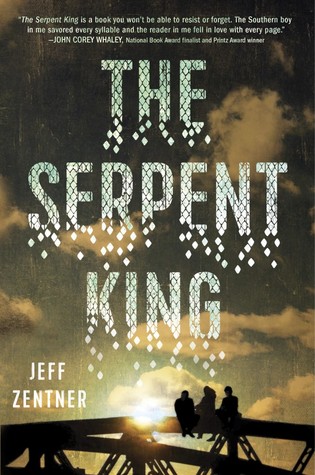
Tuesday: Amelia Elizabeth Walden Award Special Announcement! The Serpent King by Jeff Zentner Wins the 2017 Amelia Elizabeth Walden Award! Finalists: Girl in Pieces by Kathleen Glasgow, Salt to the Sea by Ruta Sepetys, The Smell of Other People’s Houses by Bonnie-Sue Hitchcock, & The Sun is Also a Star by Nicola Yoon

Wednesday: Blog Tour with Review and Giveaway: The Real Us by Tommy Greenwald
**Giveaway open until Tuesday!!!**

Thursday: Ricki’s Adolescents’ Literature Class Syllabus

Friday: Vanished by James Ponti

Sunday: Author Guest Post!: “Cap’n Rex’s Steps to Writing a Fictional Picture Book” by Henry Herz, Author of Cap’n Rex & His Clever Crew

Bold_line

 Last Week’s Journeys

Kellee

Ah. The start of the school year. There is no tired like the first week of school tired. And that tired means very little reading; however, it does mean I’m back to driving 25 miles each way daily, so it allows for great audiobook listening time. I LOVED Highly Illogical Behavior! I am so glad that Ricki told me to listen to it–it is definitely a winning audiobook.

 Ricki

My sister is getting married, so I am flying back to Connecticut this week and weekend. I’m sorry I’ll miss you all!

Bold_line

This Week’s Expeditions
Kellee

I

  • Currently reading: Unsouled by Neal Shusterman – I need to get going because I want to get through it and the final book in the series before the ebook expires from the library! And I have Scythe to read for my faculty book club on 8/8, so I need to finished the Unwind Dystology to start Shusterman’s new series.
  • Currently reading: Gamer Squad: Attack of the Not-So-Virtual Monsters by Kim Harrington – These are going to be loved by my students! Perfect for a fans of monster fantasy, video games, and Pokemon.
  • Currently listening to: The Smell of Other People’s Houses by Bonnie-Sue Hitchcock – I have read 3 of the 5 Walden honorees, so I grabbed this one when I saw that the audibook was available from my library.

Bold_line

Upcoming Week’s Posts

Tuesday: Top Ten Antagonists from Christian U., 7th grade

Wednesday: Marti’s Song for Freedom by Emma Otheguy

Thursday: The First Week in Kellee’s Classroom

Friday: Tinyville Town by Biran Biggs

Sunday: Author Guest post

 So, what are you reading?

Link up below and go check out what everyone else is reading. Please support other bloggers by viewing and commenting on at least 3 other blogs. If you tweet about your Monday post, tag the tweet with #IMWAYR!

 Signature andRickiSig

Author Guest Post!: “Cap’n Rex’s Steps to Writing a Fictional Picture Book” by Henry Herz, Author of Cap’n Rex & His Clever Crew

Share

“Cap’n Rex’s Steps to Writing a Fictional Picture Book”

Today, author Henry Herz joins us. His picture books include: MONSTER GOOSE NURSERY RHYMES, WHEN YOU GIVE AN IMP A PENNY, MABEL & THE QUEEN OF DREAMS, AND LITTLE RED CUTTLEFISH.  His latest, just out from Sterling, is CAP’N REX & HIS CLEVER CREW. The protagonist, Cap’n Rex, has agreed to offer advice about how to get classrooms excited about a writing assignment, and some of the other things they will learn along the way. Please welcome, Cap’n Rex.

Arrr! It’s a pleasure to be aboard, me lasses. I may be a long-in-the-tooth dinosaur pirate, but I’ve a mess o’ experience teaching wee sailors how to write fictional picture books. It keeps ’em from getting bored on our long sea voyages. There be seven steps on my map to the buried treasure of children’s literacy. Read on, if ye dare!

  1. Form crews – Arrr, there be nothin’ like a little friendly competition to inspire performance. Arrange yer students into teams o’ four. Have each team pick a name. Some o’ me favorites arrr Mystery Marauders, Biography Buccaneers, and Paranormal Pirates. But, I may be biased toward piratey appellations. Each team’ll be writing their own picture book. Savvy?
  2. Define the details – Have each team parley among themselves to figger out the story elements listed below. This here be a bonus learning opportunity to teach them some writing concepts.
    • Main character – What is the main character’s name, race/species, gender, title/role, and personality traits?
    • Other characters – Do the same for yer other characters. Limit yerself to no more than four characters in all.
    • Theme – If yer story will offer a lesson for the reader, what is it? Fer example, do unto others as you’d have others do unto you, or think outside the box.
    • Goal/obstacles – Stories are more fun if there’s tension. What goal is the main character trying to reach (in my case, it’s usually booty). And what obstacle(s) must he or she overcome to reach that goal? One tried and true formula is: try-fail, try-fail, try-succeed. That makes victory all the sweeter, me buccos.
    • Time frame – Will yer story take place in the past, present, or future? How far back in the past or into the future?
    • Setting – Where will your tale unfold? On the high seas? In yer backyard? On Mars? In an ant hill?
    • Genre – Will yer tale be fantasy, science fiction, mystery, historical, comedy, romance, horror, tragedy, or somethin’ else?
    • Point of view – Does it work better if the tale be told by the main character or by a narrator?
    • Tense – Should the tale be told in the present tense, as if it’s happening right now? Or, would it be better described in the past tense as something that’s already happened?
  3. Tell yer tale – Fictional picture books can have anywhere from zero (it’s true!) to 1,000 words. Aim fer about 500 words. Since there are often fourteen two-page “spreads”, that works out to an average of 36 words (three to four sentences) per spread. Picture books are usually written fer three to seven year-olds. So, make sure yer word choices are suitable for younger readers. Not too many syllables per word or words per sentence, or ye’ll walk the plank! Now yer teams can write their first draft of the manuscript.
  4. Time fer inspection – Just as dinosaur pirates have their work inspected by their handsome T-rex captain, yer young writers will need some guidance. Pair up yer teams. Have each member of one team read the other team’s story. Then, they offer feedback, alternating between things they liked about the story and things in the story that didn’t make sense or didn’t seem to help the story. Team members should not defend their writing. Just listen politely and take notes.
  5. Swab the deck – Just as a ship’s deck needs cleaning, so too does yer writin’. Now it be time for the teams to use the feedback they received to revise their story and make it seaworthy.
  6. Draw yer pictures – Now it be time to paint a pretty picture. A spread can be completely filled with a single illustration. Or, it can contain two to four smaller spot images. The latter is often used when the story pace has quickened. Give each team fourteen 11”x17” pieces o’ paper. Each team will divide their revised manuscript text up across the fourteen spreads. Then they’ll draw or paint pictures that help describe what is happening.
  7. Celebrate – Treats and grog (non-alcoholic) fer all when the stories be done! Each team takes turn reading their yarn to the class. Stories can be posted on the mainmast fer later parental enjoyment. What fine little writers ye arrr!

Cap’n Rex & His Clever Crew
Author: Henry L. Herz
Illustrator: Benjamin Schipper
Published August 1st, 2017 by Sterling Children’s Books

Shiver me timbers! It’s the DINOSAUR PIRATES!

Meet Captain Rex and his band of buccaneers. These dinosaur pirates sail the seven seas in search of buried treasure, but whenever they hit an obstacle—like a giant shark or pea-soup fog—the crew members are quick to say they can’t overcome. To this, Captain Rex just glares with teeth bared and says, “CAN’T YE?” And, somehow, the crew always comes up with a clever solution.

A delightful story about using one’s creativity and individual strengths to solve problems. It will encourage kids everywhere to think and say, “I can!”

Learn more about CAP’N REX & HIS CLEVER CREW and author Henry Herz at www.henryherz.com.

We Thank Ye fer Today’s Post, Cap’n Rex & Henry!

 and