Author Guest Post: “5 Ways Mysteries Help Clue Students into Reading and Writing” by Sam Subity, Author of True Crime Files: Heist at the Museum!

Share

“5 Ways Mysteries Help Clue Students into Reading and Writing”

I fondly remember devouring stacks of Encyclopedia Brown, Sherlock Holmes, and Hardy Boys mysteries as a kid. As I scrutinized every page, trying to figure out whodunnit before the final pages, little did I know that one day I’d be writing mysteries of my own. Or that all the reading I was doing was building my understanding of things like story structure, plot, and deductive reasoning.

Here are five reasons that mysteries are a great way both to hook young readers and to teach the principles of reading and research that lay the groundwork for writing:

1. Learning with Puzzles. Mysteries are puzzles that encourage active participation with the story. Young readers can follow along with their favorite sleuth to uncover a trail that leads to the ultimate solution. For teachers, you might further encourage this by having your students fill out a simple grid like below as they read, keeping their own miniature crime journal where they collect clues that teach them how an author points toward the solution while layering in a red herring or two to keep readers guessing.

The Clue Connection to Crime(Use this space to record details about clues that have a connection to the crime) Distractions(Use this space to record details about clues that are a distraction to solving the crime)


2.
Outline by Design. Once students complete a clue grid like above, it’s easy to illustrate how they can use this same method to create an outline for writing a story of their own. The clues are the outline. Now instead of completing the above grid from top to bottom, have students think of a fun, silly mystery of their own (e.g. Who ate all the cookies?), then work backward to build up clues that all lead to the culprit. Then they’ll have a basic outline to use for telling that mystery.

3. The Mystery Is the Structure. Next we move on to fleshing out that outline into the basic structure of a story, and mysteries are great examples of that: There’s a clear problem (often a crime that occurred) and a clear understanding of the main character’s goal (to solve the crime). Many young writers begin by telling stories that are simply a recounting of events that happened to their characters with no clear direction or purpose. But by adding an element of a mystery that needs to be solved, they intuitively begin to connect these events in a way that leads to the resolution of some problem their character is facing.

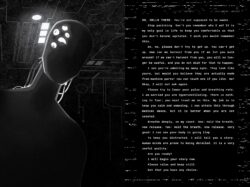
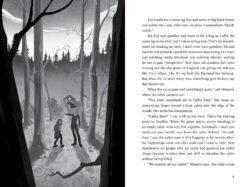
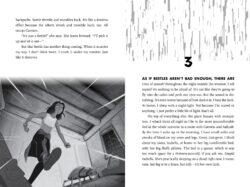
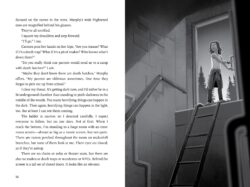
4. Training Wheels. Students feeling a little stumped when it comes to putting all the pieces of a story together on their own? Real-life mysteries like those in True Crime Files are a great way for students to practice learning to tell a story using details from historical events while developing their research skills. Heist at the Museum! ends with an appendix that includes brief summaries of other heists from around the world. Try having students research these or other crimes and act like a reporter, retelling the story of their chosen crime in their own words. This eases the pressure of coming up with an idea and details for their story all on their own and lets them focus on telling the story.

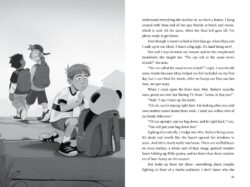
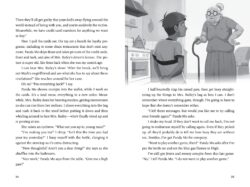
5. Fun-Sized. From short news articles about crimes to full-length novels, there’s a mystery out there for every reader, even the reluctant ones. At a slim 91 pages including illustrations, Heist at the Museum! is designed as a fun-sized read for kids in grades 3-7. And as a bonus, check out the Heistogram puzzles on the book’s website. These are very brief 5-minute mysteries based on fun heists that really happened (like a maple syrup theft and a missing toilet made of solid gold) where students use logic grids to uncover the culprit.

These are just a handful of ways to engage young readers and writers with mysteries. For more ideas, exercises, and a full educator’s guide to using Heist at the Museum! as part of your curriculum, visit the book’s website at https://www.samsubity.com/heist-at-the-museum/.
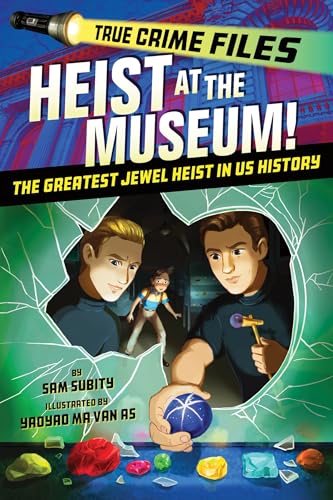
True Crime Files: Heist at the Museum!
Author: Sam Subity
Illustrator: Yaoyao Ma Van As
Published October 6th, 2026 by Sourcebooks Explore

About the Book: The story is unbelievable. The heist actually happened.

Charlie O’Neill is still grieving his mom and desperate for his dad’s attention when he overhears three smooth-talking surfers planning the heist of the century. The target? The priceless gems of the American Museum of Natural History. The problem? Nobody believes a kid. So Charlie decides to stop it himself. What follows is a breathless night of locked iron gates, cut glass, a swaying rope five stories up — and a choice that makes right and wrong a lot more complicated than Charlie expected.

True Crime Files: Heist at the Museum! is inspired by the real 1964 theft of the Star of India sapphire, one of the most legendary jewel heists in U.S. history. The thieves were real. The gems were real. And the story is even wilder than you’d imagine.

  • A kid who won’t be ignored, a heist that can’t be stopped — when Charlie overhears surfers plotting the robbery of the century, no one believes him. So he decides to stop it himself
  • Based on a jaw-dropping true story — the real 1964 theft of the Star of India sapphire from New York’s American Museum of Natural History, one of the most audacious jewel heists in U.S. history
  • Perfect for fans of I Survived and true crime — cinematic action, a heartfelt family story, and a mystery that keeps the pages turning all the way to the end
  • A lot of this actually happened — additional material breaks down what’s true, what’s fictional, and what became of the real thieves and the stolen gems
  • For readers ages 8–12 who love saying “wait…that really happened?” — mystery, history, and museum lore packed into one adrenaline-charged adventure

About the Author: Sam Subity grew up on a steady diet of books about Encyclopedia Brown and Sherlock Holmes, so he knew from an early age that he would either be a detective or a writer. Then he figured out he could have the best of both worlds by writing about crime-solving kids! When he’s not writing, you might find him running the trails of northern Ohio where the endless, winding miles past rivers and Buckeye trees inspire stories of adventure and mystery. 

Thank you, Sam, for these great recommendations to bring mystery to the classroom!

Fatal Glitch: Camp Zero & Fatal Glitch: Let’s Play a Game by Erin Entrada Kelly and Eliot Schrefer

Share

Fatal Glitch: Camp Zero
Authors: Erin Entrada Kelly & Eliot Schrefer
Illustrator: Jeannette Arroyo
Published July 21st, 2026 by Sourcebooks Stonefruit Studio

Summary: Black Mirror meets Goosebumps in the first installment of this fast-paced middle-grade horror series by New York Times-bestselling authors Erin Entrada Kelly and Eliot Schrefer featuring tales of technology gone wrong.

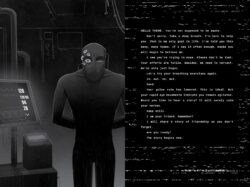
Eleven-year-old Sofia Mendoza is a gamer, not a camper. She should be at home building landscapes and fighting monsters in Sandbox, not deep in the forest with five other kids, who might as well be playing her favorite game in tutorial mode.

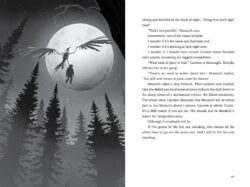
Even worse, there’s something off about this summer camp. There are creepy, mechanical vultures, cloaked NPC figures, and the only adult is Monarch, a grim woman in combat boots.

And then the game of elimination begins.

Sofia may be caught in the clutches of Camp Forestjaw, but she’ll do anything to survive. Anything. The problem is, in Forestjaw, everything you’ve ever done—no matter how long ago—comes back to you . . .

Fatal Glitch: Let’s Play a Game
Authors: Erin Entrada Kelly & Eliot Schrefer
Illustrator: Jeannette Arroyo
Publishes September 29th, 2026 by Sourcebooks Stonefruit Studio

Summary: The fast-paced middle-grade horror series by New York Times bestselling authors Erin Entrada Kelly and Eliot Schrefer featuring tales of technology gone wrong continues with this standalone installment, AI has infiltrated the newest toy craze—a stuffed animal with spooky capabilities and more sinister intentions.

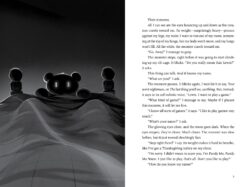
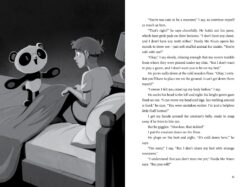
Lewis’s big hope for his first day at a new school is to make a friend. He never expected that friend to wind up being a hyper-intelligent cuddly panda bear. A gift from his dad, his Panda Mo Nium is an exclusive kids-only AI toy and communication device with big ideas of his own. After other students at his school get their own robot pandas, Lewis suddenly has a friend group. When Mo begins asking Lewis to perform risky and bloody tasks, Lewis goes along despite his nerves…until the line between cute and creepy blurs and he senses evil intentions behind his AI friend’s glowing eyes. What does this robot panda really want from him and the other kids? The truth might be more frightening than Lewis ever imagined.

About the Authors: 

Erin Entrada Kelly is a New York Times-bestselling author, two-time Newbery Medalist, National Book Award Finalist, and Newbery Honoree. Her work has been translated into more than a dozen languages. She has an MFA from Rosemont College and is on the faculty of the Hamline University MFA program in writing for children and young adults. She lives in Delaware.

Eliot Schrefer is a New York Times-bestselling author, has twice been a finalist for the National Book Award for Young People’s Literature, received the Stonewall Honor for best LGBTQIA+ teen book, and received the Printz Honor for best young adult book from the ALA. In naming him an Editor’s Choice, the New York Times has called his work “dazzling and big-hearted.” His science writing has appeared in Discover, Sierra, USAToday, Nautilus, and The Washington Post Magazine. He has an M.A. in Animal Studies from NYU, is on the faculty of the Hamline MFA for writing for young people, and lives with his husband in New York City.

Review: Do you have readers looking for horror and are too quickly jumping to young adult or adult horror? Yes? Me too. Do you have readers that are looking for horror but aren’t ready to jump to YA or adult because of the topics or even the length? Yes? Me too. Well, this is the series you are looking for!

The comparison to Goosebumps is perfect because this feels like a reincarnation of the same idea of horror books where the authors don’t talk down to the reader, yet keep the horror developmentally appropriate, and Kelly & Schrefer do that very well in both of these books. I also like how modern the books felt which will help readers want to pick them up and keep reading. The series is also a great length at 144 pages which is something that so many of us middle school educators have been asking for.

And the cherry on top of these books? They can lead to social commentary around technology in ways that may not have happened without them.

Discussion Questions: 

  • How does technology play a part in both stories?
  • How can technology be dangerous?
  • What do you think the theme of each book is?
  • What about the structure of the books make them so fast paced and page turners?
  • What do you think is going on at the beginning and end of the book with the narrator?

Flagged Spreads: 

Camp Zero

Let’s Play a Game

Read This If You Love: Middle grade horror, Goosebumps

Recommended For: 

classroomlibrarybuttonsmall

Signature

**Thank you to Sourcebooks for providing a copy of both books for review!**

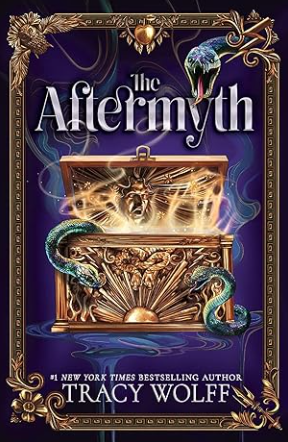
The Aftermyth by Tracy Wolff

Share

The Aftermyth
Author: Tracy Wolff
Published February 3rd, 2026 by Aladdin

Summary: In a world ruled by the tenets of Greek mythology, one girl’s fate is more than it appears in the first book in a new dark academia fantasy middle grade series from #1 New York Times bestselling author of the Crave series Tracy Wolff.

What’s your myth?

Penelope Weaver has spent her whole life preparing to attend Anaximander’s Academy, where students learn how to bring to life the stories of Greek mythology as well as discover the Greek god whose principles they most embody. Penelope knows she’s an Athena—all smart, practical, and rule-following girls who take part in stories that matter are Athenas.

But when Penelope and her twin brother Paris arrive at Anaximander’s, it appears fate has other plans. Penelope isn’t placed with Athena but with students who are anything but practical and who prefer parties to rules. And that’s just the beginning. She’s given the world’s worst muse, her assigned tasks feel impossible, and the magic of Anaximander’s is overwhelming. Not to mention, there are two very different boys making her new life even more confusing.

But as things go from bad to dangerously worse, one thing becomes in a world where everything is fated to happen a certain way, some stories need to be rewritten. As the world around her shifts and cracks, Penelope is asked to forget everything she thought she knew to help create a better story…even if that changes every plan and breaks every rule.

About the Author: Tracy Wolff is the #1 New York Times, #1 internationally, #1 Wall Street Journal, and USA TODAY bestselling author of the Crave series as well as many other novels. A lover of mythology, vampires, and getting lost in a great book, she’s spent her whole life asking “what if” and “what happens next”—questions being a writer has helped her answer again and again. At six, she wrote her first short story—something with a rainbow, a unicorn, and a shapeshifting prince—and at seven, she forayed into the wonderful world of middle grade literature with her first Judy Blume novel. A one-time English professor, she now devotes all her time to writing fun, action-packed, romantic stories with fantastical worlds and characters who leap off the page. She has written all her seventy-plus novels from her home in Austin, Texas, which she shares with her partner, her sons, and their three adorable dogs.

Review: There is so much that go on in this book, but I love that the author started directly with character development of Penelope followed by a wild event that helped the reader get to know the protagonist while also devleoping the plot. And this trend continues–each event allows the reader to get to know Penelope more while also moving along the plot simultaneously. It keeps the reader wanting to turn the page. The book has a quote: “Sometimes the goal isn’t really the point. Sometimes it’s how you get there that’s important.” This encompasses the book and Penelope’s journey.

This book is the exposition to a series that I look forward to following. I do have a lot of questions still about what is going on and why the mythology is how it is, so be ready for an open ended ending and so many questions swirling around in your head!

Educators’ Tools for Navigation: There is so much I wanted to do with this book!

  • Each god/goddess’s building has a banner, and it would be so much fun to have students make banners (after sorting them, of course!).
  • There are so many myths mentioned in the book: Hercules, Pandora, Muses, and Prometheseus specifically, so the parts that mention these would be great to look at when also reading the myths.
  • One main point of the book is looking at the point of view of myths, specifically Pandora in this book. Who is telling the myth? Who were those in power when the myth was written? How could the myth have been different when from another’s point of view?
  • The book also looks at how there are different versions of myths which is a great opportunity to talk about oral tradition and how stories were passed around before text.
  • I love the focus on constellations in the book and would be a fun way to have a science/oral tradition lesson!
  • Lastly, Fifi’s muse has pun-y muse shirts, and it would be so much fun to have students make their own.

Discussion Questions: Provided by Simon & Schuster (this is just a sample of the discussion questions on the reading guide; visit The Aftermyth page on Simon & Schuster):

  • 1. Describe Penelope’s family and background. What are her parents like? What is her social life like before the book opens? Why do she and Paris end up going to Anaximander’s Academy?
  • 2. Why is Penelope uncomfortable when Fifi starts to call her Ellie? What is Penelope’s image of herself and why is it important to her? Why is she anxious when Fifi wants to decorate the apple in front of Aphrodite Hall?
  • 3. How does Penelope grow throughout the story? Contrast her self-image and her values at the beginning of Aftermyth to how she is at the end.
  • 4. What is Penelope’s relationship like with her twin brother, Paris? In what ways are they close? How are they alike, and how are they different? How does their relationship change during their time at Anaximander’s? Who is Rhea, what is she like, and what role does she play in the changes between Penelope and Paris?
  • 5. What are some examples of Penelope’s courage and leadership? How does she deal with the eagle in Dr. Minthe’s class? Later, during that class, how does she help others when her group is looking for the key to the door? (Chapters 27–37)
  • 6. What is the purpose of Anaximander’s Academy? Describe the five halls, the gods to which they are each dedicated, and how the halls are different in spirit. Which hall does Penelope hope and expect to join? Which one does she end up in?
  • 7. On the way to Anaximander’s, Penelope and her family meet PT. What is he doing? How does he respond to Penelope blowing out the lantern fire? Who does PT turn out to be in Greek mythology? What is his role in the story about Pandora’s box? What effect do Penelope’s actions have on him and his story?
  • 8. How does Penelope initially feel about Fifi? Why does Fifi become, according to Penelope, “the best friend I’ve ever had”? (Chapter 41) What do they have in common? How are they different? How do they help each other?
  • 9. Describe Fifi’s personality and style. Discuss her statement about herself, “‘I’m not good at much except directions and people.’” (Chapter 20) What are examples that show she is right about her strengths? What else is she good at? When does she show leadership? Explain why Penelope thinks, “I’ve learned that Fifi is a force of nature.” (Chapter 38)
  • 10. What role do muses serve at Anaximander’s? What is Fifi’s muse, Frankie, like? How do they get along? Contrast Frankie with Penelope’s muse, Calliope. What is Calliope like? What is her role in Greek mythology? When do the muses help their students?

Flagged Passages: Read a sample of this book on its Amazon page.

Read This If You Love: Greek mythology

Recommended For: 

classroomlibrarybuttonsmall 

Signature

**Thank you to the publisher for providing a copy for review!**

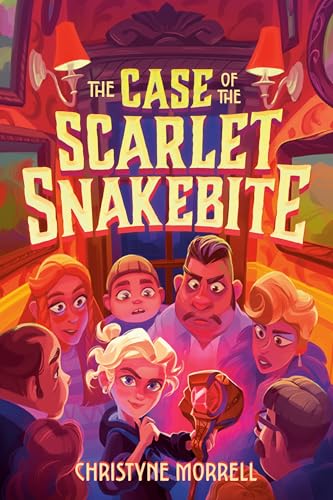
The Case of the Scarlet Snakebite by Christyne Morrell

Share

The Case of the Scarlet Snakebite
Author: Christyne Morrell
Published February 24, 2026 by Delacorte Press

Summary: In this middle-grade mystery, a twelve-year-old obsessed with Agatha Christie suspects every guest at her mother’s bed-and-breakfast of hiding secrets. That is until a real crime rocks the quaint B&B, and her mother is framed for it.

When the wealthy Willoughby family checks into her mother’s bed-and-breakfast for the weekend, Amber Adler is certain a crime is going to be committed right under their roof. And she should know—she’s read every Agatha Christie novel in the library and her father is a world-famous detective. Sure, Amber has made a few false accusations (and once got the SWAT team sent to her math teacher’s house), but this time, she’s positive that one of their guests is up to no good.

So it comes as no surprise to Amber when someone steals a priceless ruby belonging to the crotchety Willoughby patriarch. But what she didn’t expect was for her mother to be framed for it. Now, Amber must call on everything she knows about solving mysteries to find the stone and catch the real culprit before the family checks out—and learn that sometimes, people are the greatest mystery of all.

About the Author: When she’s not writing for kids, Christyne Morrell is busy raising one. She is a corporate attorney, and in her spare time enjoys reading, baking, and watching House Hunters marathons. She lives with her family in Decatur, Georgia. Kingdom of Secrets is her debut novel. Visit her online at christynewrites.com and follow her on Twitter and Instagram @christynewrites.

Review: Amber is always looking for crimes to solve, even when there is no true crime, but when she overhears a phone conversation about a crime by someone staying at her bed and breakfast, she knows this time there is truly a crime, and she is going to be the one that solves it. But this crime is different than she guessed but still full of twists & turns.

My middle schoolers are always looking for murder mysteries, but so many of them are teen; I am so glad that there are more and more middle school ones coming out, including this one. A truly fun middle grade mystery!

Educators’ Tools for Navigation: This book has so much that educators can use to expand on it!

First, I love that the author/publisher included a suspect tracker in the end. I WISH I had noticed it at the beginning because I would have loved to have utilized it, so I want to make sure educators know about it because it would be so much fun to take notes along with Amber.

Second, there are so many fun word play times throughout the book. For example, Amber would hear “betrayal” when it was actually “bee trail.” There would be some fun word games that you could do with this.

Lastly, with Amber being obssessed with Agatha Christie, there were definitely allusions to Christie’s work throughout.

Discussion Questions: 

  • What predictions did you make while reading? What clues made you make these predictions? Were your predictions correct?
  • Do you think Amber’s mom has justification to be upset with Amber throughout the book?
  • What do you think is the biggest mistake that Amber made throughout her investigation?
  • Why do you think Amber didn’t want a sidekick?
  • Why do you think E.B. trusted Amber so much?
  • Do you think Amber really thought her father was a investigator like Sherlock Holmes or do you think she had tricked herself into believing it?

Flagged Passages/Spreads: 

Chapter 1
Friday, 12:00 p.m.
(16 hours earlier)

I nudge the door open, and it releases a long, slow wail. This building is hundreds of years old, and it acts its age—­everything creaks and moans and rattles. Everything makes a fuss. But all that racket makes my job easier, so I can’t complain.

I’m wearing all black, down to my ballet flats. The only glint of color comes from the gold name tag pinned to my shirt with Amber Adler etched in block letters. I creep silently into the room and flit from place to place, my toes barely grazing the floor as my eyes dart around, taking in every detail—­the disheveled bed, the damp towels strewn on lampshades, the bottles littering the desk, leaking sticky puddles of who-­knows-­what onto the antique wood.

I unzip the black faux leather pouch around my waist and remove a pair of latex gloves. I slide them onto my hands one at a time, snapping them at the wrists to make sure they’re good and tight. They release a puff of sterile powder into the air. I run a fingertip over every surface—nightstands, doorknobs, windowsills—­then examine the residue in the light. Messy, yes. But not criminal.

I make my way into the adjoining bathroom. Like the rest of the place, it’s in disarray. I shake my head, and as I do, something near the floorboards catches my eye. The light spilling out of the vintage sconces glints off a shard of metal.

“Well, well, well,” I mutter to myself. “What do we have here?”

I crouch down for a closer look. The object is small but incredibly sharp. I count four blades jutting from its squat handle, each one angled and gleaming. I know I shouldn’t smile—­not in the midst of an active crime scene—­but I can’t help myself. From my pouch, I remove a plastic evidence bag with a ziplock top. I carefully pluck the weapon from the floor and drop it inside. “Gotcha.”

I rise and spin on my heel, prepared to disappear as silently as I’d arrived. But first, for a split second, I’m confronted by my own reflection in the bathroom mirror—­reddish-­blond hair scraped back into a messy bun, with escaped strands waving around my face like Medusa’s serpents; an all-­black ensemble designed to escape notice; and permanently narrowed eyes overshadowed by two thick brows known to have a life of their own. It’s a good thing I work in the shadows.

And then I see something else in the reflection—­or rather, I don’t see something in the reflection—­and my eyes grow wide as I realize what’s missing. “Eep!” I squeal louder than I should. But that doesn’t matter now. The time for sneaking around has passed. On to my favorite part: the big reveal.

I burst out of the room and onto the landing at the top of the stairs. My entrance gets everyone’s attention, as it’s meant to. At the bottom of the staircase, three heads turn to face me, all wearing matching looks of confusion. I barrel toward them, not caring anymore if the decrepit wood snaps, crackles, and pops with every step.

“Amber?” says Mom. Her brief moment of confusion has passed. Now she’s giving me a silent warning with her eyes. Not again, she’s saying without saying it.

Excerpted from The Case of the Scarlet Snakebite by Christyne Morrell. Copyright © 2026 by Christyne Morrell

Read This If You Love: Secrets of the Broken House and all books by Taryn Souders, The World’s Greatest Detective by Caroline Carlson, Undercover Latina bby Aya de León, Shirley and Jamila Save Their Summer by Gillian Goerz

Recommended For: 

classroomlibrarybuttonsmall 

Signature

**Thank you to the author for providing a copy for review!**

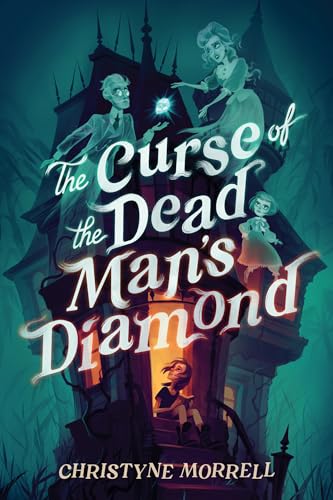
The Curse of the Dead Man’s Diamond by Christyne Morrell

Share

The Curse of the Dead Man’s Diamond
Author: Christyne Morrell
Published September 17th, 2024 by Delacorte Press

Summary: In this middle-grade mystery, eleven year old Charlie moves from NYC to Florida only to find herself in the haunted Winklevoss Manor. To her surprise, she’s not alone—she’s joined by three mischievous ghosts cursed for snatching a dead man’s diamond.

After twelve-year-old Charlie moves from New York City to sweaty, sticky Florida, she’ll do anything to get back home. Even if it involves ghosts. Winklevoss Manor, Charlie’s new house, is a towering Victorian mansion famous for one thing—it’s haunted. Three ghosts—Ada, Arthur, and Guff—live there, and not by choice. They’re trapped, cursed for stealing a dead man’s diamond. A diamond that, just like the ghosts, is still in the house. And this gets Charlie thinking. . . Maybe if she can find the diamond and sell it, Charlie’s family could have enough money to move back to the city. But lifting the curse isn’t that simple, especially when she’s pitted against the school bully and three unruly spirits. It’s frightening to think about, but what if the only way to get rid of the ghosts and curses is by doing what Charlie fears the most—confronting the past that haunts her?

Praise:

A fun haunted house story full of mystery and heart!”—Lindsay Currie, New York Times bestselling author of The Mystery of Locked Rooms

“Spooky, fun, just a little scary, and full of heart.”—Delilah S. Dawson, New York Times bestselling author of Mine and Camp Scare

“The Curse of the Dead Man’s Diamond is the perfect blend of mystery, treasure hunt, colorful ghost characters, and Florida haunted house setting.”—Fleur Bradley, award-winning author of Daybreak on Raven Island and Midnight at the Barclay Hotel

“A spirited mystery brimming with heart and souls.”—Jan Eldredge, author of Nimbus and Evangeline of the Bayou

“Ghosts get equal billing with the living in this sweet tale about finding home.” —Kirkus Reviews

About the Author: Christyne’s earliest completed work, written at age 7, told the story of Kermit the Frog meeting Miss Piggy’s parents for the first time. Kermit the Hog was a cautionary tale about pretending to be something you’re not. She still thinks it has potential.

Today, Christyne writes middle-grade novels across a number of genres. Whether they take place in quirky seaside towns or fantastical, faraway kingdoms, her stories all have one thing in common: clever kids accomplishing extraordinary things, like conquering a curse, overthrowing a king, or taking down an evil, brain-hacking corporation. Christyne believes that middle-grade books should challenge, intrigue, and inspire young readers – but above all, never underestimate them.

Christyne is the author of the middle-grade novels Kingdom of Secrets and Trex, which was named an Eleanor Cameron Notable Book for Excellence in Science Fiction and was included on the 2024 Sequoyah Masterlist. Her third novel, THE CURSE OF THE DEAD MAN’S DIAMOND, comes out Fall 2024. Christyne is also the author of the poetry book, The Fool Catcher (2021), and the picture book, Abra, Cadabra & Bob (2019), and her poems and stories have appeared in Highlights, Spider, and The School Magazine.

When Christyne isn’t writing for kids, she works as an attorney. She enjoys reading, baking, and watching home improvement shows. She lives with her husband, daughter, and beagle in Decatur, Georgia.

Review: Too often, I find that ghost stories are predictable and remixes of past tales which make them seem interchangeable; however, Morrell’s ghost story is as unique as her other books, Kingdom of Secrets and Trex. There was much that drew me in: I loved that there were chapters from the ghost’s point of view; I loved that it was more than just a mystery, it was a story of finding home and family; I loved that Charlie is never what is expected; I loved the setting and how it was a character in the story; and I loved how the book hits on so many different emotions, from grief to love. The story is fast-paced and everything comes together in a satisfying way–truly a fun, good read.

Discussion Questions: 

  • Why is Charlie’s dad so different in Florida?
  • How was Charlie being selfish for much of the book?
  • Why do you think it was important to have chapters from the ghost’s point of view?
  • Do you think someone can change?
  • Why is setting so important to this story?
  • The bullying subplot wasn’t cleared up completely. What do you think happens next?
  • Did the ending surprise you?

Flagged Passage: Chapter 1

My cheek was smashed so firmly against the cool car window that it peeled off like a Fruit Roll-Up when I lifted my head. Rachmaninoff’s Piano Concerto no. 2 was still blaring in my earbuds, as it had been ever since we’d stopped for gas two hours ago. As I cracked my eyes open, Dad came into focus, his body twisted around awkwardly in the driver’s seat. He smiled at me, but it wasn’t his usual smile. It was his pretending-everything-is-great-when-everything-clearly-isn’t-great smile. Which I’d come to know well.

Our car was no longer moving. We had arrived. “Welcome home, Charlie!” said Dad, too cheerfully.

I gazed past him at the bizarre color of the sky–a heavy grayish-blue–then rubbed my eyes, wondering how I could’ve slept so long. It took my foggy brain a few seconds to realize that it wasn’t actually nighttime. Those were storm clouds overhead, blocking out the sun. They churned like a wild animal trying to claw its way out of a sack. How appropriate.

But even worse than the angry sky was the house outlined against it, stark black against the ashy gray. Winklevoss Manor–that’s right, our new home had a name–was a towering Victorian mansion, crisscrossed with so many thick vines it looked like clutching fingers were trying to drag the place back into the earth. The paint was faded and chipped and speckled with mold. A row of sharp iron spikes jutted up from the edges of the roof for no reason whatsoever. On the left side of the house, a narrow third story extended into the sky, ringed by a spindly iron balcony. According to my Google research, this charming feature was called a “widow’s walk.”

In other words, everything about the place was creepy, like something out of a ghost story. The classical music in my ears swelled dramatically as I blinked up at it.

“Whaddaya think?” asked Dad as I yanked out my earbuds. “Welcome to Winklevoss Manor! Do you think we should change the name? How about Hess Manor? No–Hess House!”

“It’s . . . it’s . . .” I couldn’t find the words for the sinking feeling in the pit of my stomach. I’d expected the move to Florida to be horrible, but this? I dug into the backpack at my feet and removed the crumpled page Dad had printed from the Internet. I smoothed it against my knees and held it in front of my father’s beaming face, confronting him with the breezy blue beach cottage I’d been promised, with its broad front porch and elegant, winding balconies. A real-life dollhouse, only bigger. There was nothing breezy or dollhouse-y about the place in front of me.

“That photograph was taken decades ago,” said Dad, with a literal wave of his hand. “I told you this place was a fixer-upper. That’s why we got such a great deal on it.”

“More like a tearer-downer,” I mumbled.

“C’mon, give it a chance,” he said. “The realtor says it’s got great bones.”

“So did the dinosaurs,” I reminded him, pushing open the car door and unfolding my numb legs. “And look what happened to them.”

As soon as I stepped outside, salt air flooded my nostrils, so tangy it made me cough. The wind whipped my long hair around my head in bright pink swirls.

“Can you believe it?” Dad nudged me with his elbow. “That’s our backyard!” He pointed past the house, where the ocean crashed and gurgled. It sounded like the white noise machine Gran used to use at night, to block out the sounds of the city. But there was no danger of city noise here. Instead, seagulls swooped overhead, their screeches like nails on a chalkboard. Over a ridge of tall, whipping seagrass, I caught flashes of the glinting surf and the grayish, claylike sand. And beyond that, the endless water–foaming and seething. Somehow, it was even angrier than the sky.

“No,” I said sullenly. “I can’t believe it.” It was way too much nature for my taste. I missed New York’s kind of sea–the kind made of glass and steel and concrete. Solid things. Not like the wild, surging force out there. But apparently, I didn’t get a say in the matter.

I trudged behind Dad up the rickety porch steps. The front door of Winklevoss Manor had once displayed a large panel of colorful stained glass, but now it was boarded up from the inside with plywood. Broken shards of the original door gaped like an open mouth with sharp, glistening teeth.

“I guess we know what our first project will be,” said Dad. When he opened the door, it creaked like someone moaning in pain, which seemed about right. The air inside was thick and musty. Years of grime coated the windows, dyeing the light that trickled in a sickly brown color. The wallpaper had yellowed and curled at the edges, and a thick blanket of dust covered every surface. I sucked in a lungful of it and coughed a little more dramatically than was necessary.

Read This If You Love: Ghost stories

Recommended For: 

classroomlibrarybuttonsmall

Signature

**Thank you to Delacorte and the author for providing a copy for review!**

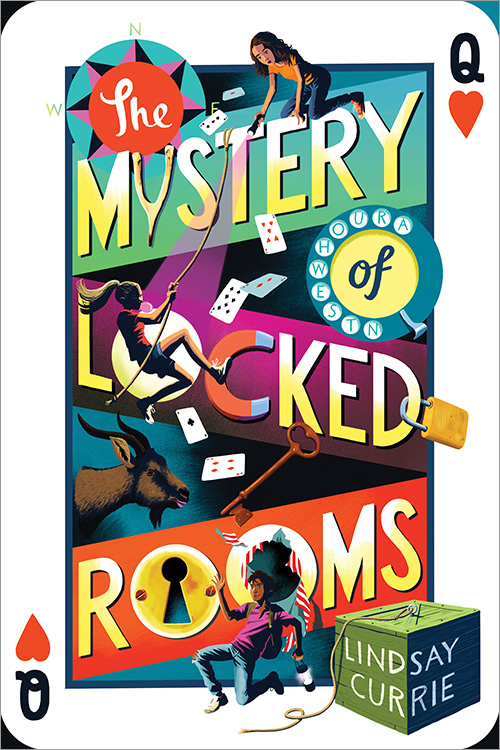
The Mystery of Locked Rooms by Lindsay Currie

Share

The Mystery of Locked Rooms
Author: Lindsay Currie
Published April 2nd, 2024 by Sourcebooks Young Readers

Summary: Crack the codes. Find the treasure. Escape the house.

From the acclaimed author of Scritch Scratch and What Lives in the Woods comes a action-packed adventure novel about three friends who team up to find a hidden treasure in an abandoned 1950’s funhouse. Twelve-year-old Sarah Greene wants nothing more from her seventh-grade year than to beat the hardest escape room left in her town with her best friends, West, and Hannah. But when a foreclosure notice shows up on Sarah’s front door, everything changes. Since her father became ill two years ago, things have been bad, but not lose your house bad…until now.  Sarah feels helpless until the day Hannah mentions a treasure rumored to be hidden in the walls of an abandoned funhouse.

According to legend, Hans, Stefan, and Karl Stein were orphaned at eight years old and lived with different families until they were able to reunite as adults. Their dream was to build the most epic funhouse in existence. They wanted their experience to be more than mirror mazes and optical illusions, so they not only created elaborate riddles and secret passages, but they also claimed to have hidden a treasure inside the funhouse.

Once in, Sarah, West, and Hannah realize the house is unlike any escape room they’ve attempted. There are challenges, yes, but they feel personal. Like the triplets knew who would get in. It seems impossible, but so does everything about the house. As soon as they’re in she immediately worries that attempting the funhouse is a bad idea but Sarah has no choice but to continue, since her future is at stake.

It’s not all action-adventure—the story also has a lot of heart. Foreclosure is looming for Sarah’s family home, due to the chronic health challenges faced by her father and the strain that has placed on family finances. This is the catalyst for Sarah’s quest to find the rumored Triplet Treasure. Kirkus praised this as a “moving metaphor… Sarah’s enthusiasm for escape rooms becomes a means of tackling the unsolvable puzzle that has left her parent confined to his own escapable room” and goes on to say, “this topic is treated with a gentle touch.”

Praise: 

“A riddling, sporting adventure and a story of true friendship.” — Kirkus Reviews

“In this page-turning thriller, Currie (It Found Us) builds suspense via high-stakes brain teasers in dark rooms and periods of isolation as the Deltas endeavor to solve the biggest, most dangerous series of escape rooms they’ve ever faced.” – Publishers Weekly

“This page-turner with touching character moments makes a fun read for anyone who enjoys puzzle solving, escape rooms, and books centered around the power of friendship.” – Booklist

“With highly likable characters, authentic dialogue, and tension-building action, this exciting and engaging story will grab the attention of many readers who will not put it down until the end. Highly recommended” — School Library Journal

About the Author: LINDSAY CURRIE lives in Chicago, Illinois with her husband and three kids. She loves coffee, Halloween, Disney World and things that go bump in the night! She is the author of Scritch Scratch, What Lives in the Woods, The Girl in White, and The Peculiar Incident on Shady Street. Visit her online at lindsaycurrie.com

Review: Do you like escape rooms? Or reading about people escaping escape rooms? Or puzzle books (think Lemencello or Vermeer or Liar’s Society)? Then this is the perfect book for you!

The suspense was palpable throughout the book. Each room the trio encountered was so tricky and because of a choice they make, it could truly be a life or death decision, which makes it hard to put the books down.

I am so impressed with Lindsay Currie’s creation of the puzzles and tricks throughout. They are all so unique and hard to figure out which makes the character’s journey the reader’s journey also.

Tools for Navigation: This book is going to be loved by middle graders who want to read The Inheritance Game or other books in that vein but aren’t ready yet. A perfect ladder before entering the YA realm of mysteries.

Oh! And Lindsay has made such a fun addition to her website all about The Deltas: https://www.lindsaycurrie.com/who-deltas (I’m also sure there will be an educators’ guide on there eventually).

Extension: This would be a great opportunity for students to make their own escape room!

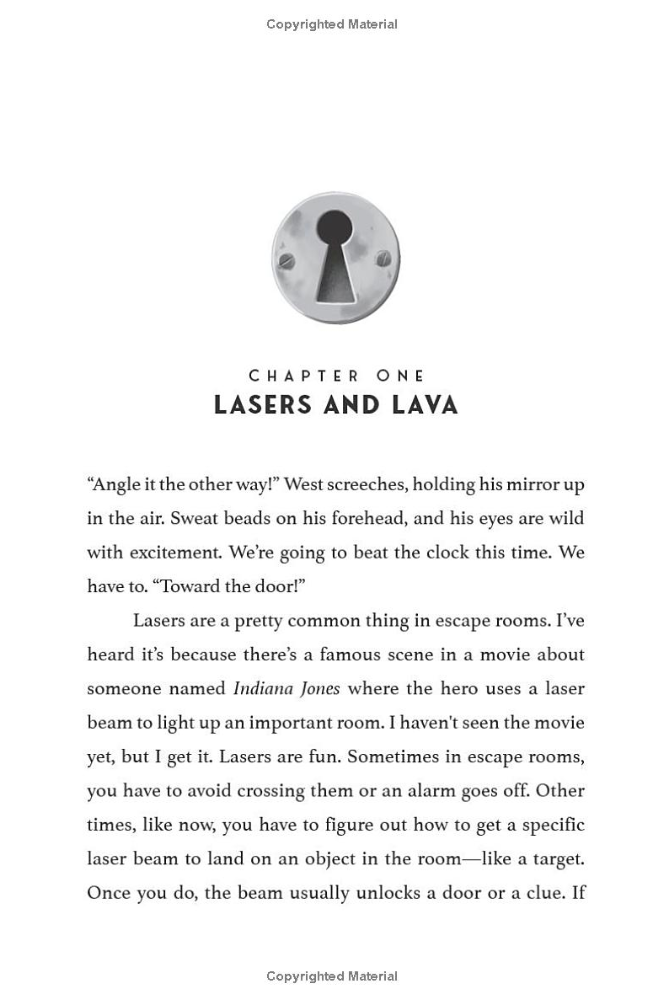
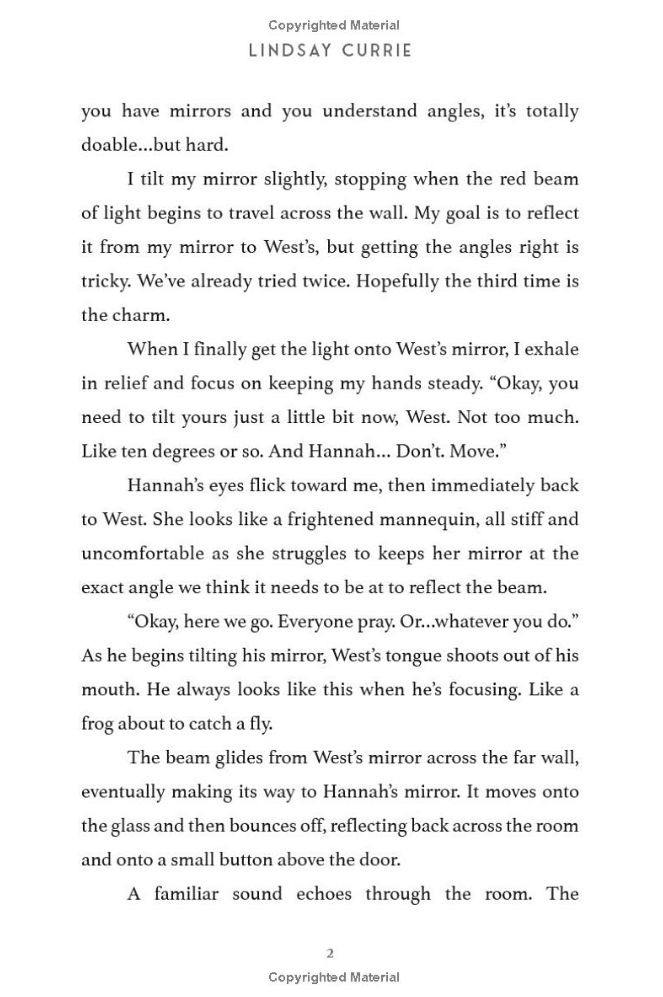
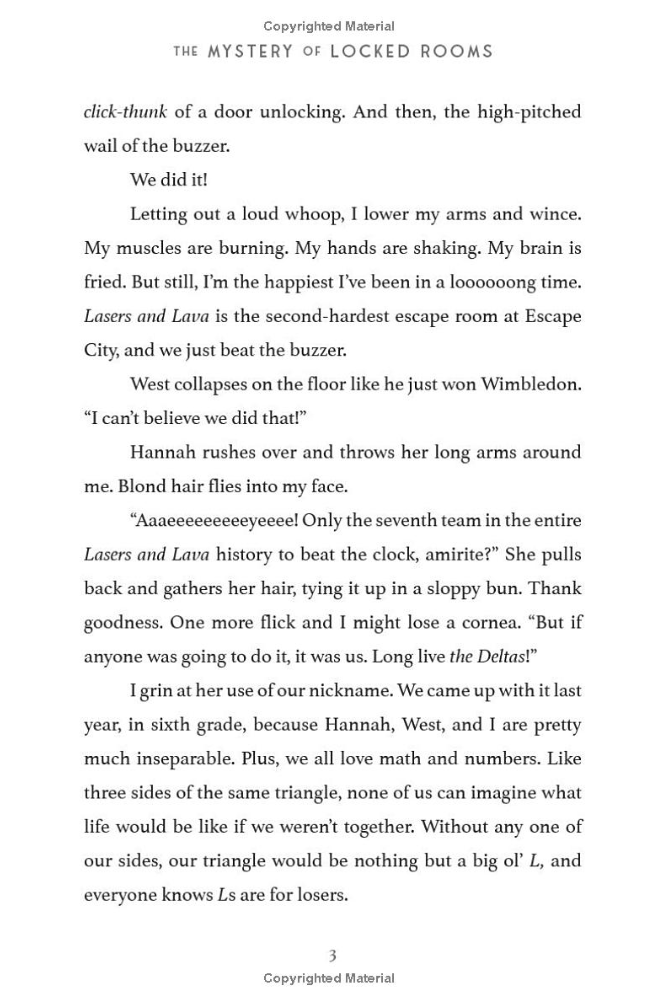
Flagged Passages: 

Read This If You Love: Mysteries, Escape rooms

Recommended For: 

classroomlibrarybuttonsmall

Signature

**Thank you to Sourcebooks for providing a copy for review!**

Educators’ Guide for Nothing Interesting Ever Happens to Ethan Fairmont by Nick Brooks

Share

Nothing Interesting Ever Happens to Ethan Fairmont
Author: Nick Brooks
Published: October 4th, 2022 by Union Square Kids

Summary: Something cool happening in Ferrous City? Not a chance.

Until one day . . . when self-proclaimed genius inventor Ethan Fairmont runs into an abandoned car factory to avoid a local bully and accidentally stumbles across his ex-best friend Kareem, new kid Juan Carlos, and an extraterrestrial visitor. Cheese (the alien) is stuck on Earth in need of some serious repairs, spicy snacks—and absolute, total secrecy. That’s easier said than done when mysterious agents descend on Ferrous City to search for Cheese. With time running out and their family and friends in potential danger, can Ethan, Kareem, and Juan Carlos pull off an intergalactic rescue before they’re all found out?

Teachers’ Tools for Navigation and Discussion Questions: 

Please view and enjoy the educators’ guide I created for Cake Creative Kitchen:

You can also access the educators’ guide here.

Recommended For: 

classroomlibrarybuttonsmall litcirclesbuttonsmall closereadinganalysisbuttonsmall

Kellee Signature