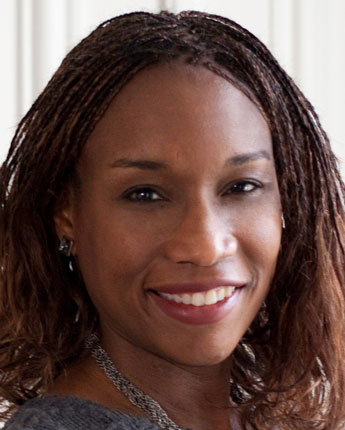
Author Guest Post: “Self-Esteem and Students” by Karen S. McGowan, Author of Kelly’s Adventures

Share

“Self-Esteem and Students”

Astronauts traveling to a new planet are not the only humans who need the right stuff. Students, as well as adults, are always wondering where they stand and if they measure up. When students have low self-esteem you will generally find numerous other issues. Low self-esteem is linked to violence, school dropout rates, teenage pregnancy, suicide, and low academic achievement.

Teachers know that when kids feel better about themselves, they do better in school. The two core aspects of positive self-esteem are the belief and the experience that one is loveable and capable. Students come into your classroom with feelings of self worth or self doubt pre-programed through interactions within their own family setting starting in infancy. Some families are very nurturing, others are toxic. As teachers, we can tell if a student has grown up in a caring family.

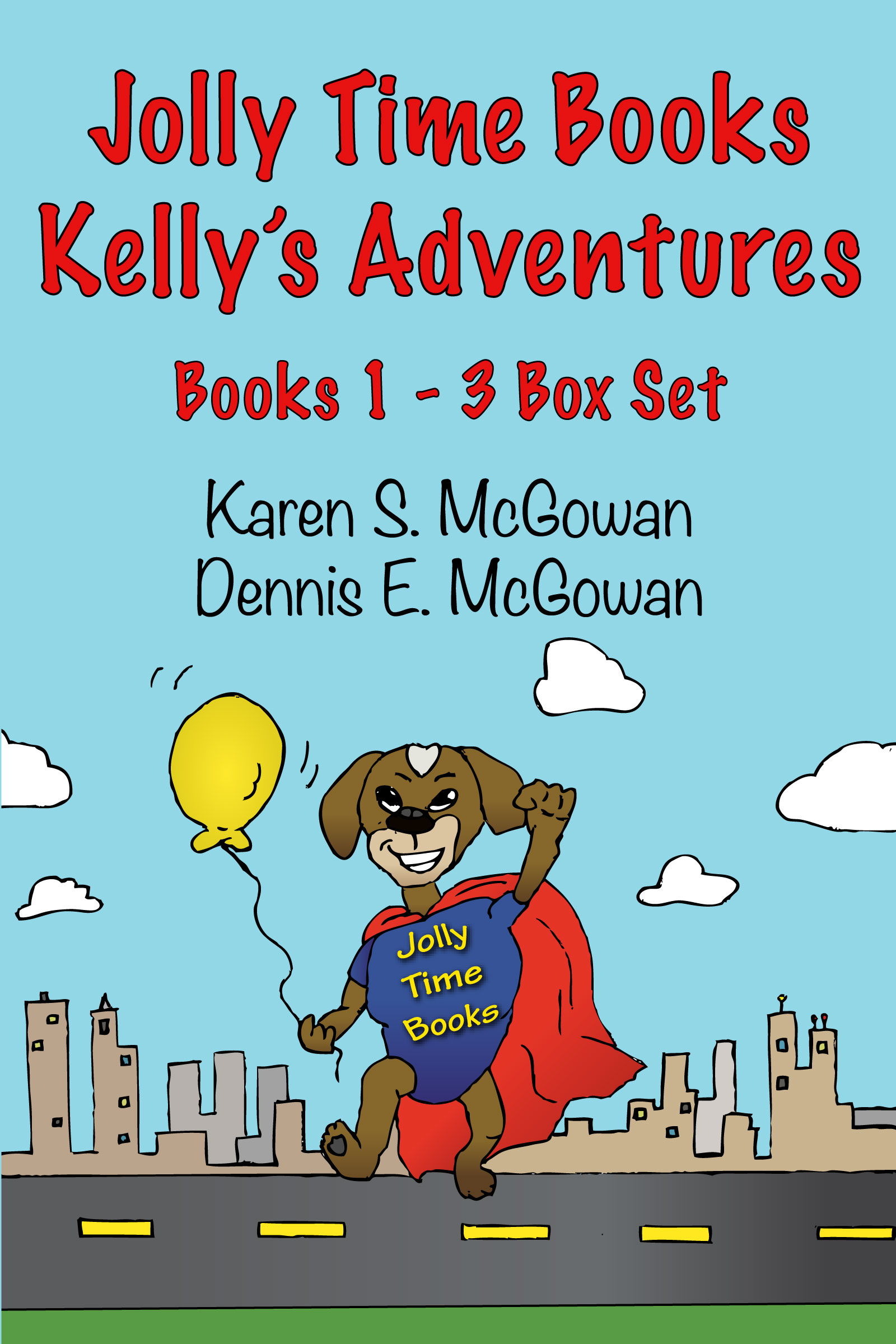
When your students are at an age where they are constantly testing their emotions and asking whether they measure up, teachers will find a perfect fit with the Jolly Time Books trilogy. Kelly’s Adventures, a three-book box set, focuses on authentic characters, offering an easy to follow plot about family, school life, and everything centered on growing up in a chaotic world. The characters are believable, diverse, and instantly likeable. With relatable problems and intriguing themes, even the most reluctant readers will remain engaged.

The reader will connect with the characters and find situations that they have likely faced. Themes emphasized include bullies, friendship, values, problem solving, body image, entrepreneurship, perseverance, diversity, unity, and empathy. Teachers are depicted as positive role models who help inspire their students.

Good self-esteem is an essential component for everything children do – from positive academic performance to social skills. Classroom relationships with peers and teachers improve with a healthy dose of self-esteem:  children are better equipped to cope with mistakes, disappointment, and failure. Students are more likely to persevere, stick with challenging tasks, and complete learning activities. As teachers, we have the opportunity to help boost a child’s self-esteem through reading.

What happens when a main character immediately faces a crisis? Many readers relate and respond with empathy. In the opening scene of book 1, Lizzy and others erupt like exploding volcanoes on the kitchen floor after stuffing themselves with cake and ice cream. This embarrassing incident happened to me as a young girl. After she is ostracized by her boyfriend and picked on by bullies, how will Lizzy recover? The highly engaging personal situations and emotional roller coasters will keep the independent reader turning the pages of this book.

As a classroom teacher, I found that students learned better when reading and writing activities were followed by healthy discussions. That is why the three Study Guides for Jolly Time Books are designed as a teacher’s resource. This will save you time in lesson planning, and lead to rewarding classroom experiences. Each free downloadable Study Guide is presented by scene and chapter to match and complement the story. The Study Guides activate students’ ability to recall specific information about the scenes, events, and characters while enhancing their higher-level thinking skills.

The three free Study Guides provide a clear focus at every stage of teaching the text. The questions and interactive activities can be used as a class, in small focus groups, or as homework. The Study Guides contain both closed, comprehension questions, and open, higher order questions, exploring student response, opinion and analysis. The activities are designed to promote thinking and reflection while enhancing individual learning.

As teachers, we have the future of the world sitting in our classrooms every day. Let’s seize the opportunity and help shape what our world will look like in the future.

Jolly Time Books: Kelly’s Adventures Books 1 – 3 Box Set
Also available as individual eBooks or 3 individual paperback books
Book 1 – Searching for Kelly,
Book 2 – Chasing Kelly’s Shadow, and
Book 3 – Kelly Saves the Day

Book Description: In book 1, a black cat crosses Lizzy’s path, and she knows things can only get worse. Her brother, Ben, thinks that moving to a larger city is the answer. Big changes and magical twists abound when the Jolly family moves to Washington, D.C. They discover that Kelly, their new puppy, only adds to the chaos. Who knew?

The adventures continue in book 2 when Lizzy and Ben discover that moving hasn’t solved all their problems. Why does that black cat keep crossing their paths? WHAM! SPLAT! Is Kelly the only one to blame when Grandma decides to ride the Christmas tree, and winds up sprawled on the floor?

In book 3, the pressure on Lizzy heats up after she flips over backward at a student council rally. Will anyone vote for her now? Will Kelly survive the operation to save her life? To relieve tensions, they go on a picnic and hike with friends. What happens when Mr. Jolly becomes separated from the rest of the hikers? Could Ben’s teacher with psychic powers have predicted that this daytime hike would turn into a nighttime rescue?

Study Guides: The best way for readers to access the free eBook Study Guides is to download them from Amazon. All three Study Guides are on the first page of my Author Page. Here is a direct link to my Amazon Author Page.

About the Author: Karen S. McGowan is the author of Jolly Time Books:  Kelly’s Adventures Books 1 – 3 Box Set. She has worked more than 20 years as a teacher and holds a Master of Education degree. She is a leading advocate of education, and has written and published more than six dozen books for children.

Thank you so much for this guest post looking at how equal rights for women is still very much a timely topic!

Blog Tour with Author Guest Post: “Creating Words and Pictures: How Authors and Illustrators Work Together” by Alison Donald and Ariel Landy, Creators of The Spacesuit: How a Seamstress Helped Put Man on the Moon

Share

“Creating Words and Pictures for The Spacesuit – How Authors and Illustrators Work Together”

Alison Donald: Just like the Apollo program, a book is a product of a collaboration of a team.  I’ve always wished I could draw.  I can see parts of my story unfold vividly in my head.  But I don’t have the necessary skills or talent to actually draw what I want to the quality that I want.

Thank goodness for illustrators.  Illustrators can read a text and bring it to life.  I was lucky to have Ariel Landy illustrate my latest book:  ‘The Spacesuit – How a Seamstress Helped put Man on the moon”.  But, do we actually work together?  The answer is yes, but indirectly though illustration notes.

Illustration notes:

When I submitted ‘Spacesuit’ to my publisher Maverick Arts, I included a few illustration notes.  I really wanted a 1960’s feel to book.  I also wanted it to be fashionable.  Afterall, it’s about seamstresses who were fashioning one of the most important garments in world history!

I identified when sewing machines and spacesuits needed to be in the text and I asked for the seamstresses to be crowded around the tv watching Neil Armstrong on the moon (spoiler alert! Sorry!).

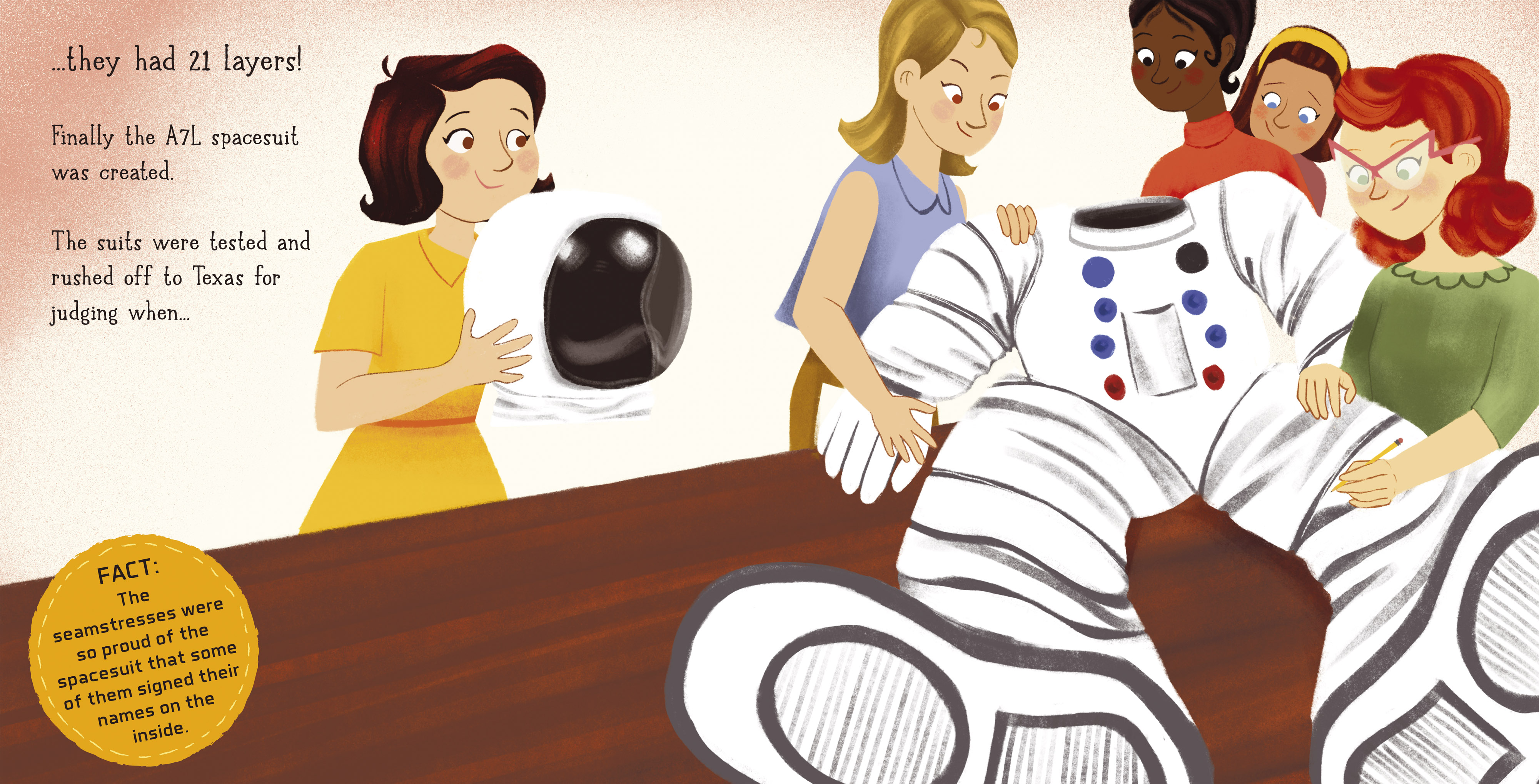
I researched the A7L spacesuit and provided diagrams.  I also provided photographs of the actual seamstresses at the factory of Playtex / ILC dover for reference.

Then, I sat back while Kim, my fabulous editor / designer found an illustrator.

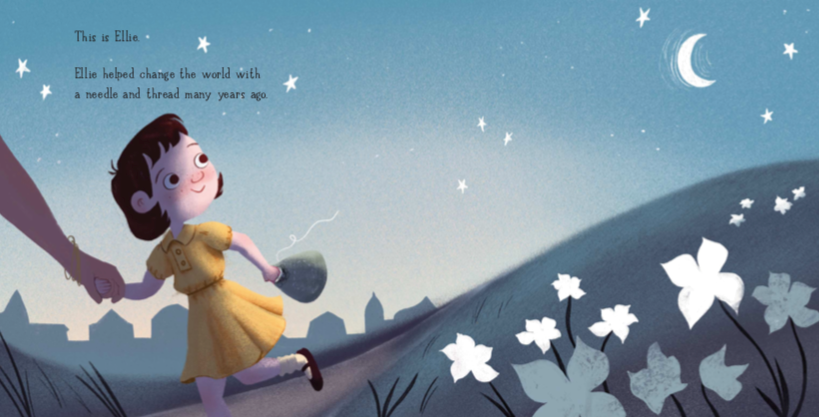
It’s an exciting day when a sample spread arrives in my inbox.  Here was Ariel’s sample spread for the Spacesuit:

Just perfect!

The editor:

Editors / designers have a much better sense of layout, how much text should be on a page, and they know more about colour palettes than I do.  Kim worked with Ariel and then shared Ariel’s sketches with me.

I acted as another pair of eyes to make sure the pictures were factually correct.

It’s a just right fit when authors can weigh in on visual details that are relevant to the story (thanks Kim!).

Otherwise, it’s nice to leave it to the illustrator to create her own magic.

And as you can see, Ariel certainly did!

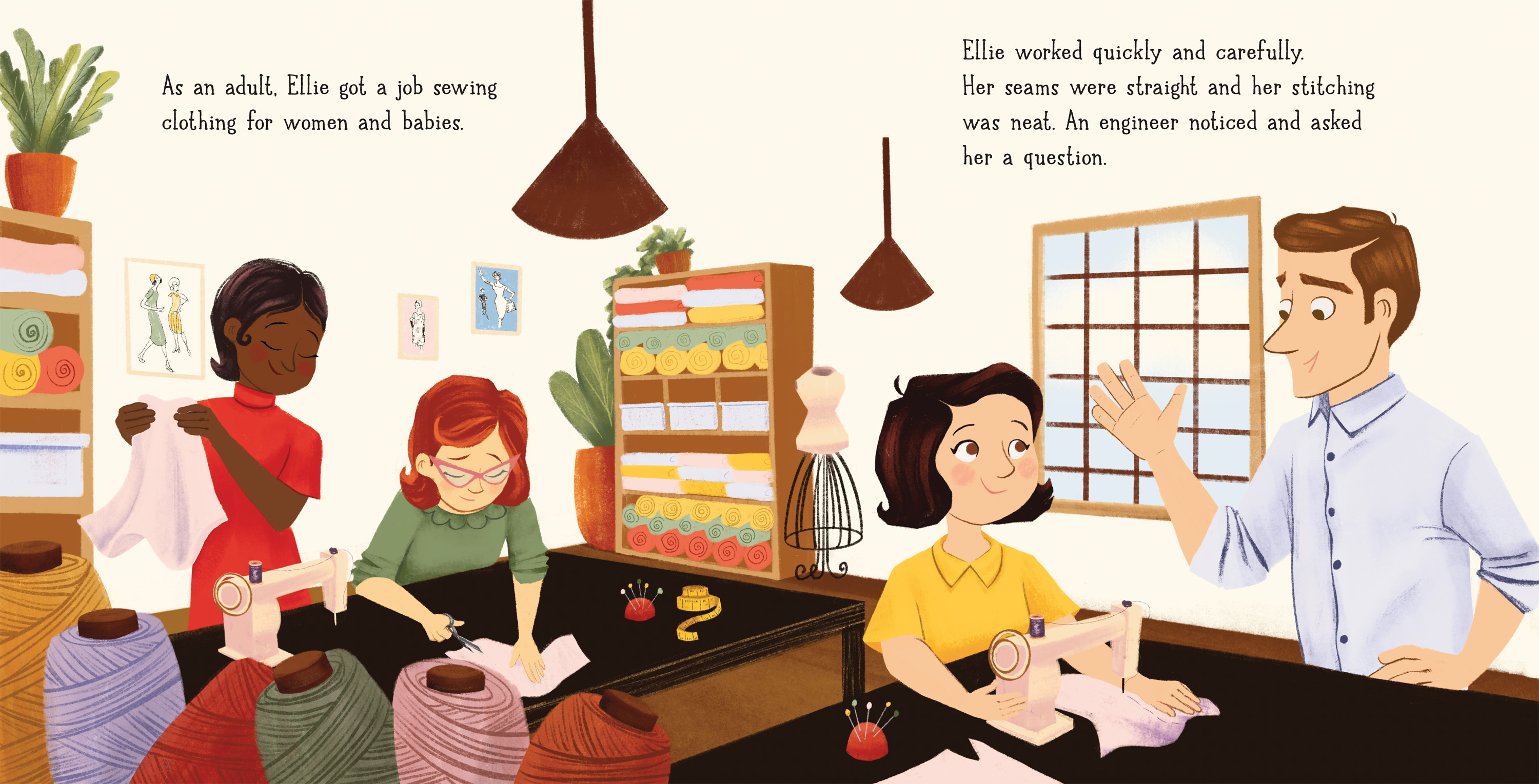
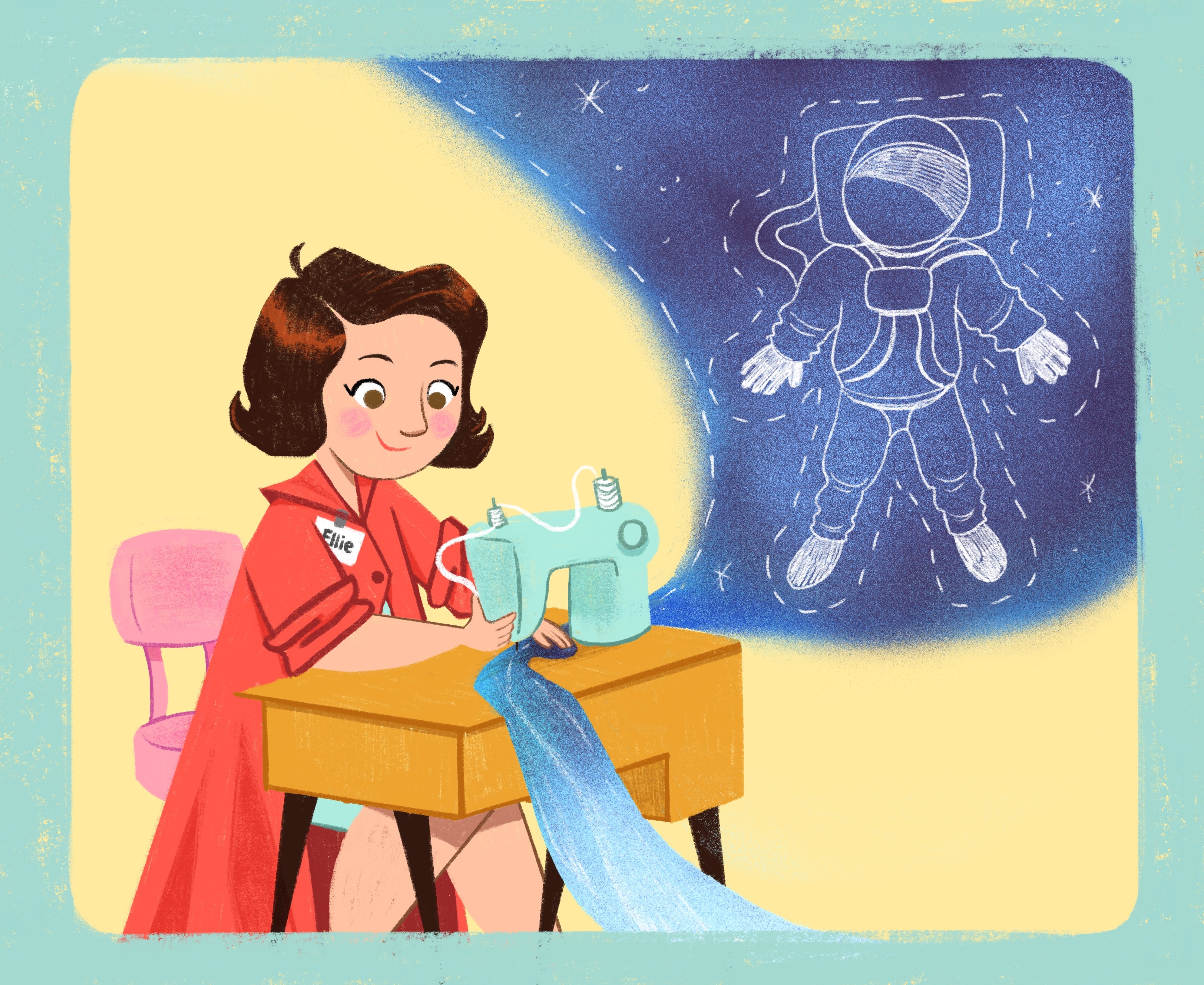
Ariel Landy: Happily, for me, by the time I got the story so much research for The Spacesuit had already been done, both by Alison and the editing team at Maverick. When I read the story for the first time, I had a briefing from our editors complete with photographs of Ellie and the talented ladies who actually worked on the spacesuit in various stages. I relied heavily on these primary sources to draw many elements of the story such as the pink factory coat that Ellie wears while working on a small sewing machine, and ‘Sweet Sue’ and ‘Big Moe’, the giant sewing machines brought in to help the seamstresses sew the many, many layers of the spacesuit! Also, fortunately for me, I had fact-checkers at Maverick to catch some of my anachronisms, such as coloring in the TV screen that shows the moon landing, when it likely would have been in black and white.

Of course, the internet is the ultimate research tool! There were so many accessible photos of the spacesuit at my fingertips, both on its own and adorning the astronauts. I was also fortunate to see the documentary Apollo 11, which happened to have a limited run in New York City just as I was working on the coloring stage of the illustrations. The film is all real color footage from the launching of the rocket that brought the brave astronauts to the moon. It was chock full of real spectators sporting the most wonderful 60s clothing and hairstyles. After seeing it I couldn’t wait to go back and tweak my characters!

I feel really lucky to have had such a great writing and editing team collaborating at different stages to make such a special book! Thanks team!

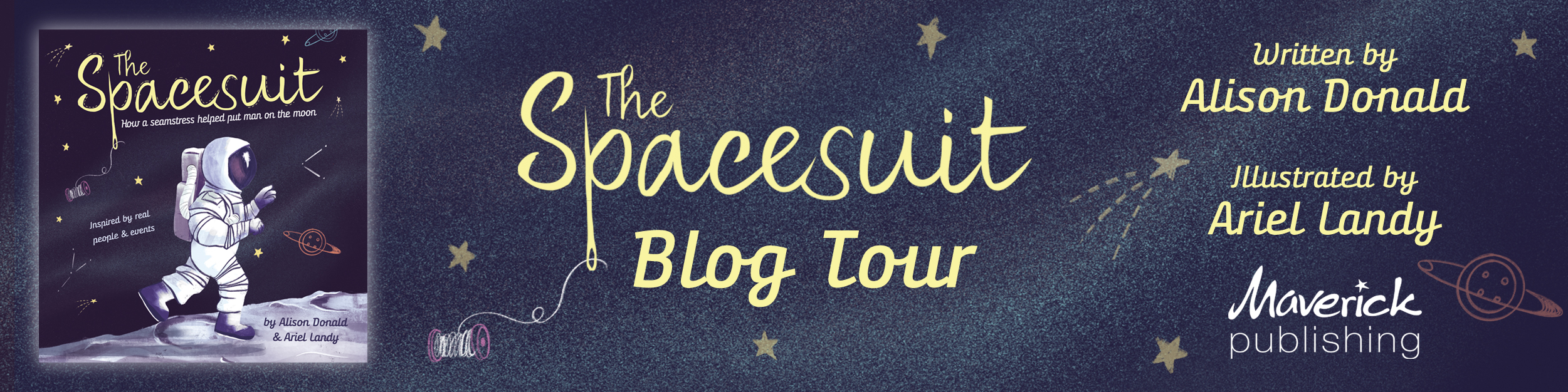
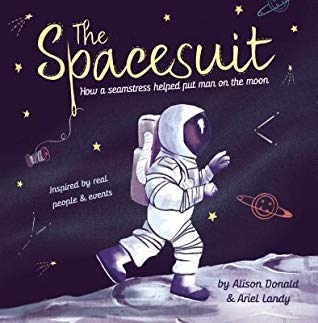
The Spacesuit: How a Seamstress Helped Put Man on the Moon
Author: Alison Donald
Illustrator: Ariel Landy
Published June 18th, 2019 by Maverick Arts

About the Book:There is a competition to make the spacesuit for the first moon landing! Ellie, an ordinary woman, is asked to lead a team of other talented seamstresses. No one believes they can win, but they are determined to try.

Based on the incredible true story behind the spacesuit that astronauts wore on the first moon walk and the team of women who sewed it together.

Don’t miss the other Blog Tour stops! 

Monday, July 15th: Publisher Spotlight Blog
http://www.publisherspotlight.com/blog/

Tuesday, July 16th: YA Books Central
https://www.yabookscentral.com/

Wednesday, July 17th: Randomly Reading
https://randomlyreading.blogspot.com/

Thank you so much for this guest post about this incredible true story!

Author Guest Post: “Making Lemonade out of Lemons: Creating Humor out of Sadness” by Naomi Milliner, Author of Super Jake & the King of Chaos

Share

“Making Lemonade out of Lemons: Creating Humor out of Sadness”

One of the things I’m asked most often about my debut middle grade novel, SUPER JAKE & THE KING OF CHAOS, is the role of humor – specifically how there’s so much in what could be a very sad book. Both the humor and the heaviness stem from truth, because SUPER JAKE is inspired by life with my three sons, the youngest of whom (Jake) had special needs.

Jake’s many limitations were heartbreaking, as was his death at only 28 months. And yet, my family – especially Jake’s big brothers – managed to find, and create, a lot of laughter and joy despite the difficulties. For that reason I tried to balance the inherent sadness surrounding his fragile health with a sense of playfulness and humor throughout the book. Here are five ways to use humor in a sad story, with examples from SUPER JAKE.

  • Establish a fun, or funny, tone from the get-go.

In early drafts, the story opened with the 11-year-old hero, Ethan, being awakened in the middle of the night because of a Jake-related medical emergency. This scene is still in the book; it just comes 155 pages later. Although it was a sure-fire dramatic start, as the main story shifted from Jake to Ethan, it was clear that the book needed to start with Ethan doing his favorite thing: magic. And what could be funnier, and more endearing, than entertaining a dozen 3-year-old girls dressed like Disney princesses? Throw in goofy younger brother, 7-year-old Freddy, and an unexpected appearance by SpongeBob, and you’ve got a fun tone to kick things off. Later in the chapter Jake shows up, too, and a bit of sadness creeps in but – hopefully – the reader already knows this story will have plenty of lighthearted moments.

  • Include a character who provides comic relief.

This, without question, is Freddy, the lovable middle brother. I could always count on him to come to the rescue when things got too sad. Sometimes it was a simple visual gag, like bubble gum exploding all over his face. Other times it was unexpected dialogue, or his interrupting a somber moment any number of ways. And sometimes, it was just his sweet, innocent take on things: he was a great vehicle to lighten tension.

  • Incorporate a sense of play, and playfulness, to mitigate sad circumstances.

There is nothing remotely fun, or funny, about having to “stretch” Jake’s arms and legs because he was unable to do it on his own. And yet in the book, as in real life, his big brothers got in on the act and even managed to turn physical therapy into a good time: Ethan takes a benign teddy bear and creates… Ninja Bear! Another example is how Jake’s unusual hearing creates a funny scene when Ethan plays his trumpet without waking Jake to stir, but Mom’s quiet (and angry) whisper immediately wakes him up.

  • Do something surprising.

This technique is very helpful and can be used frequently and in many ways. Have someone you wouldn’t expect do something unexpected: Ms. Carlin, Ethan’s beloved English teacher, has a crush on Ethan’s hero, Magnus the Magnificent. (Spoiler alert: teachers are human! You heard it here first.) Have an unexpected dialogue exchange, like on p. 23:

Freddy:            I’m doing a huge battle of dinosaurs versus Star Wars. I thought the Star Wars people would win because they’ve got lightsabers. But the dinosaurs were  hungry, so they ate them.

Ethan:              The lightsabers?

Freddy:            The people.

Or create an unexpected, and much-needed, break in tension. This occurs organically in lots of Ethan’s magic tricks. It seems like something has gone wrong, then he pulls it off. Another example of breaking tension with humor is when Ethan tries to convince his frenemy, Ned, that cake will make him feel better. Just as Ethan is about to give up, Ned asks, “What flavor is it?”

  • Switch from tears to laughter.

One of my favorite writers, Paula Danziger, said that her favorite thing to do was switch from tears to laughter, or laughter to tears, “on a dime.” I have tried to do the same. Even if it’s something small, the contrast makes the new, unexpected emotion pack a bigger punch.

Laughter to tears is pretty easy when you’ve got a character like Jake. Here’s bit with Ethan and his buddies at lunch, as they try to figure out how he can pay for a magic competition:

Brian:              Hey! Maybe you could sell one of your brothers.

Ethan:              Nah. I’d have to pay somebody to take Freddy.

Daniel:            How about Jake? Lots of people want babies.

Brian:              Only perfect ones.

Tears to laughter usually happens courtesy of Freddy. In the dialogue below, the truth is the possibility of Jake ever tackling homework is a sad reminder that his limitations are far-reaching and probably permanent. And yet…

Freddy:            Hey, Ethan, you think someday I’ll help Jake with his math homework?

Ethan:              I don’t know. How much is eight plus two?

Freddy:            Twelve?

Creating laughter from tears, or happiness from sadness, isn’t only doable: it’s critical, especially in children’s books. I hope these approaches will show readers that they can find – and make – joy out of even the saddest situations.

More information on the book can be found at: https://www.hachettebookgroup.com/titles/naomi-milliner/super-jake-and-the-king-of-chaos/9780762466160/.

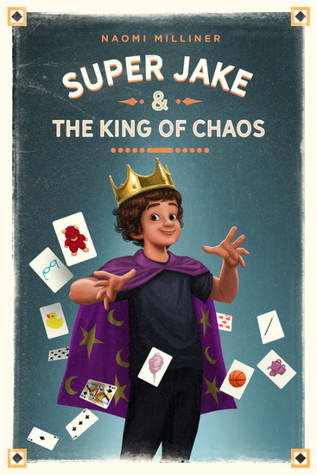
Super Jake & the King of Chaos
Author: Naomi Milliner
Published May 7th, 2019 by Running Press Kids

About the Book: A debut contemporary novel about 11-year-old aspiring magician Ethan, who discovers that heroes come in all sizes, and real magic can be found in the most unexpected places.

When life revolves around stressed-out parents and ER visits for his special needs little brother Jake, eleven-year-old Ethan escapes to a world of top hats, trick decks, and magic wands. When he hears of a junior magic competition where the top prize is to meet and perform with his hero, Magnus the Magnificent, Ethan is determined to do whatever he needs to get there–and to win.

His dedication and hard work pay off, and he makes it to the top five finalists: his dream really could come true! Then Jake falls dangerously ill and Ethan’s hopes and plans are in jeopardy. As he searches for any sort of magic that might save Jake, Ethan learns what is truly important . . . and what real magic is.

About the Author: Naomi Milliner has a Bachelor’s Degree in English and a Master’s in Screenwriting from USC Film School. As a long-time member of SCBWI, she created the Authors Book Club (ABC) for published authors and illustrators to share their journey with other members. She has also served on the Women’s National Book Association’s Great Group Reads Committee since 2009. She lives in Maryland, with her husband and sons.

Thank you so much for this guest post about how authors mix sadness and humor!

Author Guest Post: “Suspension of Disbelief: Walking the Fine Line” by Tom Alan Brosz, Author of Roger Mantis

Share

“Suspension of Disbelief: Walking the Fine Line” 

In many works of science fiction or fantasy, books or movies, the reader or viewer is often required to do what’s called “suspending disbelief.”

This means that the reader must gently suppress some of the logical response to features of the story in order to enjoy the story itself. This is not a bad thing, and it happens all the time, particularly in fantasy. That’s why it’s called fantasy. When you read Watership Down, you know quite well that rabbits aren’t intelligent, and can’t talk, but you easily overlook it to immerse yourself in the book. Talking animals in stories predates writing itself, which tells you how long people have been suspending disbelief to enjoy a good yarn, or a fable with a lesson.

It’s not all that easy, though. As a writer of fantasy or SF, you need to encourage the suspension, but not push it too far, and it’s way too easy to push it too far. The last thing you want from your reader is the response, “Oh, come on, now. I’m not buying this!” The response isn’t usually that specific in the reader’s mind, it’s more often just a nagging discomfort that the writing has some big bumps in it that are distracting from the story itself.

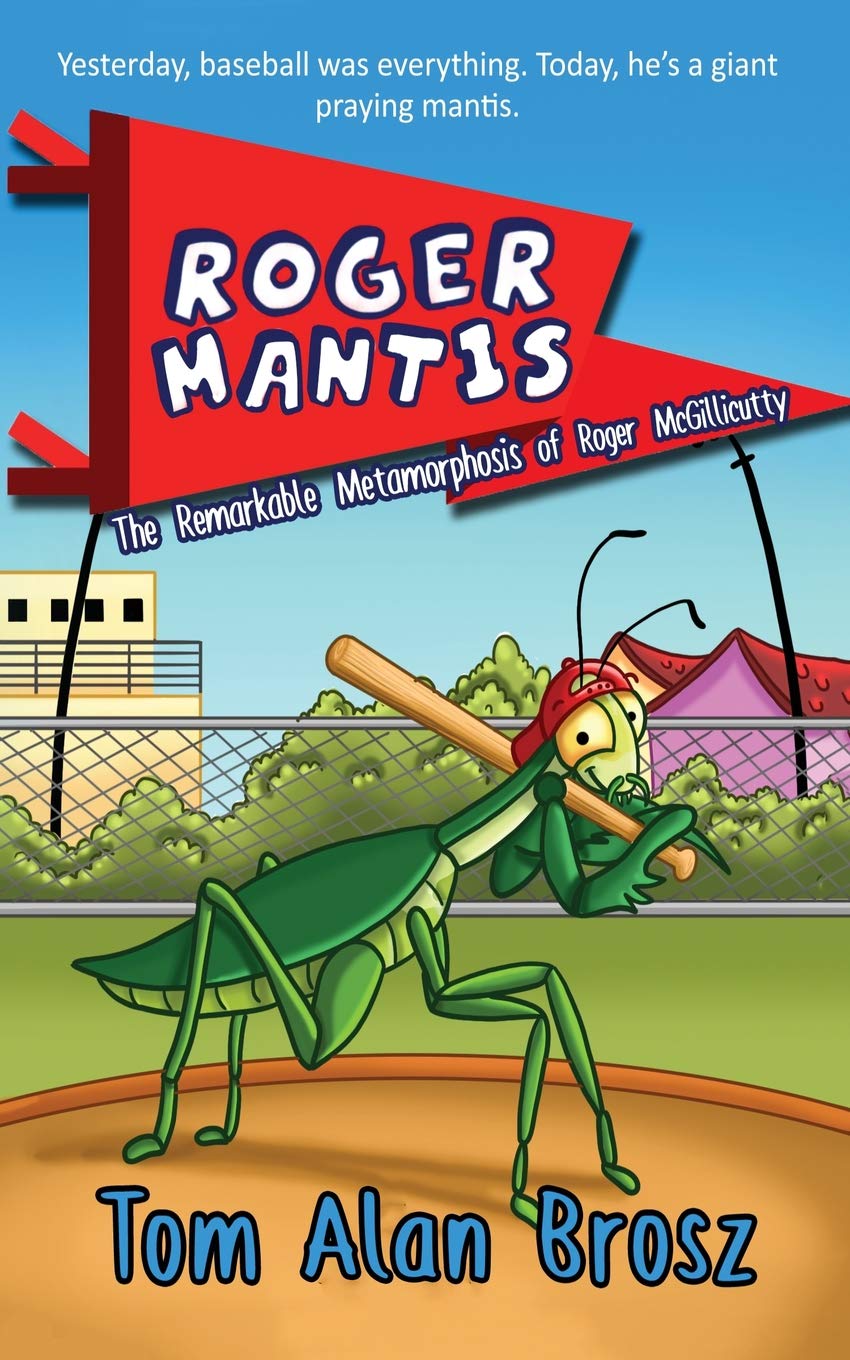
My own book, Roger Mantis, is a humorous take-off of Kafka’s The Metamorphosis. In this case, the victim of a surprise transformation into a giant insect is an 11-year old boy, Roger McGillicutty. Roger Mantis is about how Roger manages to deal with it, how his friends and family deal with it, and how Roger manages the loss of his baseball dreams and tries to find new ones.

To make the story work, it was essential that the people around Roger accept his transformation into a giant praying mantis much more easily than would probably happen in real life. Otherwise, the idea of Roger talking to friends, going to school, and trying to play baseball just wouldn’t work at all.

If I were totally realistic about the situation (other than the giant mantis itself), my book would have ended at Chapter Two with poor Roger up a tall tree with terrified townspeople waving pitchforks, shotguns, and torches down below. So, a little suspension of disbelief, please.

My first attempt at this was to directly follow the lead of The Metamorphosis, where the characters are almost weirdly blasé about Gregor becoming a huge bug. It’s more of a household inconvenience than anything else. Even Gregor seems more concerned about his work issues than his six legs.

So, I tried this with Roger Mantis. This moved the story along nicely, but … well, here’s an early draft from the start of my story, as Roger the Giant Mantis surprises his mother coming out of his bedroom:

His mother dropped the laundry basket, and clothes fell on the floor as she stared at Roger.

“Mom?  Mom!  It’s me!  Roger!”  Roger tried to hold his evil-looking claws behind his narrow back.  It didn’t really work.

“Roger?  Roger!  What on earth have you done to yourself?” She looked at the floor. “Oh, no! My clean clothes!”

Okay, it’s funny, in a British humor kind of sense, but my editors thought it was a bit over the top as far as “acceptance” went. And if that’s what occurs to the reader first, instead of wanting to see what happens next, then you’ve gone over the suspension line. I had to agree with them, and the beginning of the book now has Roger hiding in the woods first, and his transformation is broken more slowly to his parents.

Okay, the level of acceptance is still a bit unrealistic, but hopefully not enough so that the reader gets pulled out of the book, and we can go on to the fun parts, and the real story of a boy dealing with something that can’t help but change his life drastically.

There were other issues of suspension of disbelief in Roger Mantis. The story depends on an entire town being able to mostly keep the secret of Roger’s existence. I placed the story back in the 70s to avoid the ubiquitous smartphones that make secrecy on almost anything impossible. But even so, it’s probably unlikely the existence of a giant talking insect wouldn’t leak out to a much larger extent than it did in the book. But by keeping it gentle, and having a few small leaks, I think I kept it within the suspension-of-disbelief limits.

And then of course, there’s the science. As one character in the book, Marlene, points out, a real giant insect couldn’t even stand up, and certainly couldn’t fly, but Roger does all these things easily. Weirdly, a character “hanging a lampshade” on something like this often actually helps the writer get across a disbelief hump. It kind of sends a message from the author to the reader, “Yeah, I know about this, but let’s all agree to overlook it together so we can have some fun.” Note to science fiction writers: you have a tougher row to hoe in this area than fantasy writers.

It’s not just about fantasy and science fiction, either. The suspension of disbelief problem can be an issue for any kind of story. Way too many coincidences in the plot? A first-class deus ex machina? A glaring plot hole? Even a mystery or romance book can fall afoul of these problems, and haul the reader uncomfortably out of the story.

Are there hard and fast rules to help with suspension of disbelief? Not really. The borderline between belief and disbelief depends on genre, writing style, humorous or serious, age of the target reader, and way too many other things.

So how do you deal with it? Experience helps, including a lot of reading in your chosen genre and age group, and some good beta readers. And of course, a good editor helps a lot more.

Roger Mantis: The Remarkable Transformation of Roger McGillicutty
Author: Tom Alan Borsz
Published April 2nd, 2019 by Tantrum Books

About the Book: Roger McGillicutty, 11, wakes up one Saturday morning and finds out he has unexpectedly transformed into a five-foot praying mantis.

His parents seem to be coping with it fairly well, and his dog Lou is okay with it, but how will the rest of the town of Highland Falls handle it? Roger has school on Monday, the carnival’s coming to town next week, and his Little League team is playing their biggest rival Centerville next Saturday. Being a giant bug will seriously cramp his style!

Or maybe not. Things begin to change when Roger performs a spectacular rescue of his classmates from a broken Ferris wheel.

Roger McGillicutty: a six-legged freak, or just possibly a superhero?

Roger’s story takes off from the famous beginning lines of Kafka’s The Metamorphosis, and then flies in an entirely different direction. Behind the adventure and the humor is a story about accepting who you are—your talents and limitations—and learning how to make the most of it.

About the Author: Tom Alan Brosz actually is a rocket scientist (sort of), having done design and engineering work in the private space industry back before the private space industry was cool. His qualifications for writing this book are that he has experience in raising children who like bugs and raising pet mantises for those children. Normal-sized mantises, of course.

Blog: https://tomalanbrosz.wordpress.com/
Roger Mantis website: https://rogermantis.com/

Thank you so much for this guest post looking at the thought process into fantasy writing!

Author Guest Post: “Understanding Race in a Country Divided” by Barbara Diggs, Author of Race Relations: The Struggle for Equality in America

Share

“Understanding Race in a Country Divided”

Race and racism can be tricky topics to discuss in the classroom. With so many diverse experiences, perspectives, and opinions on these emotionally-charged issues, it can be tempting to avoid conversations about race to skirt potential conflict.

But if there’s any hope of creating greater harmony and understanding among people of all colors in our society, we have to face these issues head-on. Our kids must learn to discuss racial issues openly, with honesty, empathy–and historical perspective.

To my mind, no fruitful discussion of the United States’ racial issues can occur without having a comprehensive grasp of America’s history of race relations. This long and painful story is key to understanding today’s divisive racial climate and recognizing how America’s past continues to haunt and impact race relations today.

My book, Race Relations: The Struggle for Equality in America, helps put the complexity of contemporary U.S. race relations into historical context. It offers kids the chance to explore race and racism in ways that promote critical thinking about difficult societal problems.

The book begins, not with slavery, but with the creation of racial categories in the fifteenth century. Readers learn, in a fact-based way, how European colonizers embraced and honed these categories to create a racial hierarchy to justify the enslavement and persecution of races they believed to be inferior. Even as some people fought against it, this hierarchy would become codified in U.S. laws and woven into American social codes for the next 400 years, substantially affecting how people of different colors view and treat each other.

Race Relations guides tweens and teens through these four centuries of American race relations. It touches every major era, from colonization and slavery to Reconstruction, Jim Crow, and Civil Rights to the presidencies of Barack Obama and Donald Trump. Links to online primary sources such as narratives, laws, articles, poems, songs, statistics, and even YouTube videos help them explore the nature of American race relations during each era and allow them to consider how relations have changed–or haven’t–over the years.

The book also fosters discussions of contemporary racial issues, such as voting rights, imprisonment rate disparities, and affirmative action, and asks students to reflect on concepts such as racial bias, prejudice, and privilege and how these impact their lives. It further highlights current social justice movements, including Black Lives Matters, and encourages students to consider actions they can take to help improve race relations.

I wrote Race Relations to provide young teens with the tools for recognizing racism and the historical context for talking about it.  Only by addressing these problems can we begin to bridge our differences, understand each other’s realities, and build a more peaceful and unified society.

Here are some activities to get healthy conversations started!

Check Yourself

History isn’t the only factor that can influence our perception of races different from our own. Naturally, having a personal relationship with people of a different race plays a huge role in your perceptions, as does the nature of that relationship with them. But we also receive input from a variety of other sources—our family, friends, neighborhood, community, images on television, magazines, newspapers, books, videos, and music. How do all these factors influence our perception of race?

Write down the different factors that influence your perceptions of these races as listed on the U.S. Census: White, Latino, African American, Native American, Asian American. You do not have to share this list with anyone—it is for you to gain insights into your perceptions of other races and where they come from.

  • Do you know anyone of each race?
  • How many people?
  • Have you ever participated in any social events with someone of each race?
  • What do you frequently hear about people of each race?
  • What three adjectives would you use to describe people of each race?
  • Where do your strongest impressions of each race come from?
  • Can you find any patterns in your thinking? Are your impressions about groups that include people you know personally more positive than those groups that don’t contain anyone you know? What other patterns can you spot?

To investigate more, give yourself an assignment of reading, watching, or listening to books, movies, and music produced by people from each of the different races. Does this change your perception? If so, how?

Mass Depopulation of Native Americans

Before Europeans arrived in 1492, an estimated 54 million Native Americans were living in what is now the United States. Within decades, millions died due to European diseases, war, and displacement. By 1890, the Native American population had dropped to 228,000. Although historians debate whether the devastation of the Native American population was an intentional genocide, they do not dispute that Europeans caused the dramatic depopulation, whether by acting purposefully, accidentally, or with reckless indifference.

Trace the history of one of the Native American tribes. Choose between the Cherokee, Iroquois, Mohawk, Seminole, Sioux, Comanche, Algonquin, or Cheyenne.

Make a timeline of significant events in the tribe’s history. These should include important relationships with colonists or Americans, treaties made with the U.S. government, wars, peacetimes, displacements, and current status.

Research the culture of your chosen tribe. How did the historical events affect that culture?

To investigate more, write a short play or scene about an event in your chosen tribe’s history that affected its lifestyle or population. Incorporate differing views tribe members may have had and how they may have felt looking to the future.

More classroom resources can be found at https://nomadpress.net/wordpress/wp-content/uploads/2018/07/Race-Relations-Classroom-Guide.pdf.

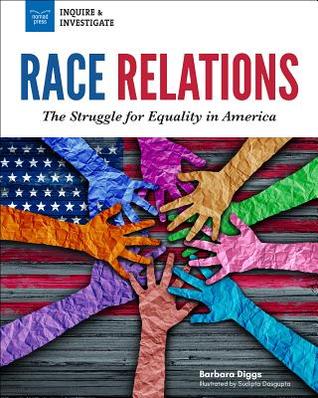
Race Relations: The Struggle for Equality in America
Author: Barbara Diggs
Illustrator: Richard Chapman
Published April 9th, 2019 by Nomad Press

About the Book: How could a country founded on the honorable ideals of freedom and equality have so willingly embraced the evils of enslavement and oppression?

America’s history of race relations is a difficult one, full of uncomfortable inconsistencies and unpleasant truths. Although the topic is sensitive, it is important to face this painful past unflinchingly—knowing this history is key to understanding today’s racial climate and working towards a more harmonious society.

In Race Relations: The Struggle for Equality in America, kids ages 12 to 15 follow the evolution of race relations in America from the country’s earliest beginnings until present day. The book examines how the concept of race was constructed in the seventeenth century and how American colonists used racial differences to justify slavery, discrimination and the persecution of people of color. Through links to online primary sources such as newspaper articles, letters, poems, and songs, young readers will explore how race relations changed—and didn’t—through the eras of Reconstruction, Jim Crow, and Civil Rights, and under the presidencies of Barack Obama and Donald Trump.

About the Author: Barbara Diggs is a non-fiction writer who has written a range of historical articles for children. Her work has been featured in Learning Through History MagazineHistory Magazine, and Renaissance, among others. A graduate of Stanford Law School, Barbara practiced law in New York for several years before becoming a professional writer. She and her family currently split their time between Paris, France, and Washington DC. Website: barbaradiggs.com

Thank you so much for this guest post looking at the history, present, and future of race relations in the United States!

Author Guest Post: “Feminism: Finding Our Way Forward” by Jill Dearman, Author of Feminism: The March Towards Equal Rights for Women

Share

“Feminism: Finding Our Way Forward”

Do you think men and women are equal? Do you think women around the world enjoy the same rights and privileges as men? What about jobs—can men and women work the same jobs and get paid the same for their work?

Many people believe that all people should be treated equally, whether they’re male, female, or gender nonconforming. But the way our world works doesn’t always reflect this ideal of equality. Women are often treated differently from men. Even today, in the United States, women statistically earn less than men working the same jobs. You’ll find few women heading up large corporations. And women are more likely than men to live in poverty.

This can be a distressing topic to discuss in classrooms! It’s hard for people of any age to learn that their gender might be unfairly counted against them, but perhaps especially for girls in their teens, who are dealing with a slew of messages from society about how women look and behave. However, it’s an important subject to talk about. Only by recognizing what has improved and what needs work can future generations develop their own goals and plans and continue the process of addressing the inequality they see in the world.

An important part of this process is learning the history of feminism. Who was Alice Paul and what did she do for women? How did Queen Elizabeth maintain her power? Why was abolitionism such an important step for feminism in the United States? What is intersectionality and what does it have to do with all women?

As kids start to dive into questions like these and confront their own expectations, biases, and assumptions, they can begin to develop goals and pinpoint ways they can be part of making gender equality a reality for all people. It’s an exciting step!

In Feminism: The March Toward Equal Rights for Women, young people get the chance to explore the history of those who came before and imagine the future of those who continue the work. There is still a long way to go before women are considered equal around the world, but the journey is a necessary one that can be fully experienced by those paying attention.

Here are some ideas to get kids to pay attention to the ongoing work for equal rights for all genders!

Share Your Concerns

How is the world different for those of different genders? What are some of the different experiences, reactions, and ideas that different genders have?

In this activity, you’ll share your thoughts in a safe space with people who aren’t the same gender as you.

Ask a group of classmates or friends to finish this sentence according to their own gender: “Having my gender identity means . . . .” Have everyone write down one or two responses on individual sticky notes.

On a whiteboard, put the sticky notes in groups according to gender identity. In those groups, put the sticky notes in positive and negative sections. For example, someone might write, “Being female means getting to wear skirts when it’s hot” or “Being male means not letting yourself cry.”

As a group, discuss the idea on each sticky note. Consider these questions.

  • Can a male, female, or nonconforming gender do this?
  • Why or why not?
  • Do people of all genders want to do this?
  • What’s preventing them?
  • Has this action been open to other genders in the past?
  • What changed?
  • How can society support the needs and wishes of all genders?

To investigate more, do some research and find examples of times in history when a woman protested a law that kept her from doing something she wanted to do. For example, women have been barred from working certain jobs and holding office. How did they work to change those laws? How long did it take? How did changing one law change the world for many people?

Write Your Politician

Suffragists did a lot of letter writing as they fought for women’s right to vote. This was before email and social media, so their letters were written on paper and sent by mail. In today’s world, politicians receive lots of communications about different causes that people feel strongly about. Add your voice!

Choose a topic that you feel strongly about. This can be climate change, immigration, war, human rights, or something else.

At the library or on the internet, do some research on your chosen topic. Who are the major players with the power to effect change? What are their views on the topic? Do different people have different viewpoints?

Choose one person who agrees with your views and another person who has the opposite views. Write each of them a letter explaining your position. What can you write to get them to agree with you? How can you show your support for the person whose values align with yours?

Read the letters aloud to a friend or classmate. See if they can guess who it is you’re writing to. Do they think your letters were convincing?

To investigate more, imagine how one or more of the historical figures from this chapter would collaborate with a feminist, real or imagined, of today? What would feminists past and present focus on together in the twenty-first century?

More classroom resources can be found at https://nomadpress.net/wordpress/wp-content/uploads/2018/07/Feminism-Classroom-Guide.pdf.

Feminism: The March Toward Equal Rights for Women
Author: Jill Dearman
Illustrator: Alexis Cornell
Published April 9th, 2019 by Nomad Press

About the Book: Why are women treated differently from men? What is feminism? Why is this movement such an important part of the history of civic rights, and why is it still important today?

Feminism: The March Toward Equal Rights for Women invites middle and high schoolers to examine the different stages of the feminist movement, from early mentions in history through the suffragettes’ fight for the vote to today’s evidence of feminism in the struggle for equal pay and equal rights around the world. As social justice movements gain more traction in the national news media, many students are evolving into activist citizens who are working towards bettering humanity and the planet. This history of feminism gives them an introduction to the ways and means of community activism, which can be applied to a multitude of causes.

Feminism: The March Toward Equal Rights for Women introduces readers to some of the icons of feminism, including Simone De Bouvier, Gloria Steinem, and Angela Davis. By examining and deconstructing writings and other arts, readers gain a deeper understanding of the struggles women and men have undertaken for the deceptively simple goal of equal rights for all. Issues such as domestic violence and the fight for equal pay for equal work, plus a discussion of the more recent #metoo movement, all encourage kids to pay close attention to the world in which we live and insist on justice at every turn.

Feminism includes critical-thinking activities and research exercises to encourage readers to dive deep into the topic and consider viewpoints from many different identities. Fun facts, links to online primary sources and other supplemental material, and essential questions take readers on an exploration of the past, present, and future of feminism.

Feminism is part of a set of four books called Inquire & Investigate Social Issues of the Twenty-First Century, which explores the social challenges that have faced our world in the past and that continue to drive us to do better in the future. Other titles in this set are Gender IdentityImmigration Nation, and Race Relations.

Nomad Press books integrate content with participation, encouraging readers to engage in student-directed learning as opposed to teacher-guided instruction. This student-centered approach provides readers with the tools they need to become inquiry-based learners. Common Core State Standards and National Curriculum Standards for Social Studies all place project-based learning as key building blocks in education. Combining content with inquiry-based projects stimulates learning and makes it active and alive. As informational texts, our books provide key ideas and details from which readers can make their own inferences. Nomad’s unique approach simultaneously grounds kids in factual knowledge while allowing them the space to be curious, creative, and critical thinkers.

About the Author: Jill Dearman earned an MFA from the New School and is an award-winning author of several books, including The Great Bravura (She Writes Press, 2015). She teaches writing at NYU’s College of Applied Liberal Arts and at The College of New Rochelle, Rosa Parks Campus, and also serves as a private editing and writing coach. She lives in New York City.

Thank you so much for this guest post looking at how equal rights for women is still very much a timely topic!

Author Guest Post: “Transgender and Non-Binary People Have Always Been Here” by Maria Cook, Author of Gender Identity: Beyond Pronouns and Bathrooms

Share

“Transgender and Non-Binary People Have Always Been Here”

There’s been a lot of news in the last few years about transgender and non-binary people. Yet many folks don’t know for sure what the words “transgender” or “non-binary” mean.

Adding to the confusion are headlines and articles that declare that the fight for transgender and non-binary people’s rights are “the newest frontier in civil rights!” While this may be well-meaning, it is incorrect. The fight for transgender and non-binary rights is not new. Far from it! Transgender and non-binary people are not a fad, a trend, or a new phenomenon. They have always been here, from the beginning of human history. Which means that they have made incredible contributions to the world, in the form of protests, art, important writings, and more. What a cool—and important—fact for young people to learn!

In Gender Identity: Beyond Pronouns and Bathrooms, my goal was to create a resource that would allow young people to do three things: to learn what gender identity is (and thereby learn how to refer to people with differing gender identities), to unlearn the idea that the fight for trans and non-binary rights is a new thing, and to meet the incredible transgender, non-binary, intersex, and gender non-conforming people who have shaped American history.

As a young person, I loved learning about history. But some teaching methods are more effective than others. In my opinion, the best way to teach history is by introducing readers to the people who made history happen.

Every American should know about LGBTQ rights activists like Sylvia Rivera and Marsha P. Johnson, who marched for equality even when some in the LGBTQ tried to exclude them. Every American should also know about the incredible transgender people making history right now, like superstar actress Laverne Cox, the first openly transgender woman to win a Daytime Emmy Award and the first to appear on the cover of Time Magazine. And what about politician Christine Hallquist, the first openly transgender major party nominee for governor in the United States, who also happened to write the forward for this book? I believe that the stories of these incredible people will stick with readers long after they’ve set this book down.

I hope that cisgender readers (readers whose gender identity aligns with the gender they were assigned at birth) can learn how to relate and appreciate those whose gender identity differs from their own. I hope that transgender and non-binary readers can learn that they are not alone, nor have they ever been. And I hope educators who bring this book into their classrooms can use it to help them navigate this sensitive but incredibly important topic.

Below are two activities from the book which are intended to help readers explore the issue of gender identity in an easy-to-understand way.

Explore Cultural Expectations

Cultural expectations change over time, including expectations of men and women. For example, high-heeled shoes, which are now associated with women’s fashion, were originally created for men. In this activity, you’ll explore some cultural expectations and explore how they might have changed, from past to present.

  • Find three items or behaviors that your culture associates with women. Do some research online or at the library or a museum to discover their origins. Can you find the first instance of the items or behaviors? Why do we associate them with women?
  • Then do the same for three items or behaviors expected of men. Consider the following questions:
  1. How did the items or behaviors come to be?
  2. How have they changed, over time?
  3. Was there a defining moment in history that caused the expectations to change?

Write about your findings and include sources. Present what you have learned to other people and discuss your findings with one another.

Time to Move!

Now that you know about the beginnings of the LGBTQ rights movement, research the events that sparked one of America’s other civil rights movements in the 1960s, such as the African American civil rights movement or the women’s liberation movement.

  • What’s similar between the beginnings of these two movements? What’s different?
  • Civil rights movements are an important part of the history of the United States. Can you imagine what life would be like for women if the women’s rights movement had never occurred? What about the lives of African Americans—how would they be different if the country had never heard the speeches of Martin Luther King Jr. or seen the power of the March on Washington?
  • Research the early beginnings of a few civil rights movements. Consider these questions:
  1. What did these movements have in common?
  2. What was different about them?
  3. Did every movement have certain leaders who stood out? What were they like?
  4. Are there movements just beginning today that have similarities to these movements?
  • Draw a Venn Diagram to show what these early movements had in common and how they differed. What conclusions can you draw from your research?

More classroom resources can be found at https://nomadpress.net/wordpress/wp-content/uploads/2018/07/Gender-ID-Classroom-Guide.pdf.

Gender Identity: Beyond Pronouns and Bathrooms
Author: Maria Cook
Illustrator: Alexis Cornell
Published April 9th, 2019 by Nomad Press

About the Book: What does it mean to think of gender as being a range instead of simply male or female?

Gender Identity: Beyond Pronouns and Bathrooms invites readers to consider the cultural significance of gender identity in the United States and beyond. Middle and high schoolers learn about the history of LGBT rights, with a particular focus on transgender rights and the rights of gender-variant people, while engaging in research activities to help put what they have learned into context. These activities encourage teens to form their own, well-informed opinions about public figures, historical events, and current news regarding gender identity.

Busting the myth that the gender identity movement is a new phenomenon, this book teaches teens about some of the first openly transgender public figures in history, such as Lili Elbe, the first recorded person to ever medically transition in the 1930s, and Christine Jorgensen, who medically transitioned and rose to fame in the 1950s. The stories of activists and other important public figures are highlighted throughout the book and offer plenty of opportunity to connect with the history of the gender identity movement on a human level. From the Stonewall riots to the institution of the Transgender Day of Remembrance, teens will gain a rich understanding of how gender identity fits into culture, past and present.

About the Author: Maria Cook is an award-winning freelance writer who holds a BS in secondary English education and an MFA in writing, both from Butler University. Her nonfiction can be found in such publications as Marie ClaireNarratively, and Green Matters. Maria lives in Indianapolis, Indiana.

Thank you so much for this guest post about this topic that is such an important topic and this book is so needed for so many!