Top Ten Tuesday: Books that Feature LGBTQ Characters or Issues

Share

top ten tuesday

Top Ten Tuesday is an original feature/weekly meme created at The Broke and the Bookish. The feature was created because The Broke and Bookish are particularly fond of lists (as are we!). Each week a new Top Ten list topic is given and bloggers can participate.

 Today’s Topic: Books that Feature LGBTQ Characters or Issues

When this week’s topic popped up about celebrating diversity, we knew that we wanted to celebrate books with LGBTQ characters or issues (particularly in light of the SCOTUS same-sex marriage ruling). Below are 10 books we’ve read that we feel are wonderful representations of middle grade and young adult literature that include LGBTQ characters or issues. They are listed in no particular order, and to be honest, we had a hard time narrowing the list to ten!

Ricki and Kellee

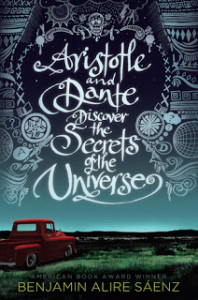
1. Aristotle and Dante Discover the Secrets of the Universe by Benjamin Alire Sáenz
aristotleand

A beautiful, quiet book that is very literary, Aristotle and Dante Discover the Secrets of the Universe follows Aristotle, a boy who doesn’t have friends until he meets Dante. Through Dante, he learns about friendship, life, and loyalty.

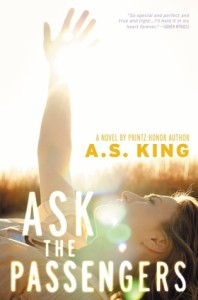
2. Ask the Passengers by A.S. King
ask the passengers

Astrid is very cerebral–she can get lost in philosophical theories and questions about the world. Her favorite pastime is laying on the bench in her backyard so she can send her love to the passengers on the airplanes that fly overhead. At her catering job, Astrid meets Dee, and she falls in love. She isn’t sure if this makes her a lesbian, as she has never loved another girl, and society wants to fit her in a box that she isn’t quite sure describes her.

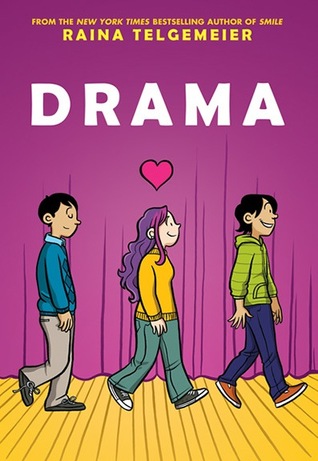
3. Drama by Raina Telgemeier
drama

Drama takes place during a middle school theater production and deals with dating and friendships of the theater kids. This book needed to be included on our list for the way that homosexuality is dealt with as a non-issue in the book. It is just straight forward and matter of fact–just part of life.

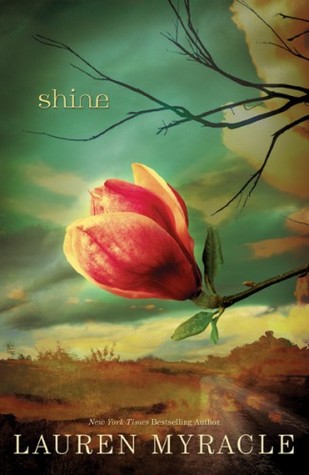
4. Shine by Lauren Myracle
shine

Cat is best friends with Patrick, and they are inseparable. After some troubling incidents, she decides to stray from Patrick and their group of friends and becomes a loner. The book starts off with Patrick, beaten until he is unconscious, slumped in front of a gas station with a gas nozzle hanging from his mouth and a sign that reads “Suck this, faggot.” With every page, readers become more and more hooked to the mystery that unfolds. This is a book that teaches readers to look internally at the judgments they make of others. Most importantly, this is a book that teaches us to SHINE.

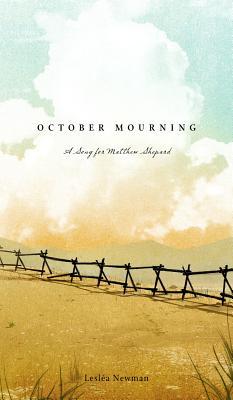
5. October Mourning by Lesléa Newman
october

This is an incredibly important publication–both for those who know and remember his story, and for those who were too young to have lived through the horror of it all. Matthew Shepard, a 21-year-old, openly gay college student encountered two other college students in a bar on fateful night on October 6th, 1998. Pretending to be gay, the two men lured Matthew into their truck, drove to a deserted area, tied him to a fence, and beat him with a pistol as he begged for his life. Eighteen hours later, a biker saw Matthew and rode for help. Sadly, Matthew died in a hospital five days later with his family by his side. Leslea Newman, the author, was scheduled as the keynote speaker at Matthew’s school for Gay Awareness week the following Sunday. Using resources and documents, she constructs a beautiful, unforgettable book in verse that truly captures the horrifying events of this tragedy.

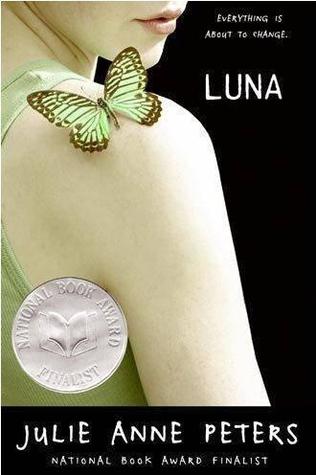
6. Luna by Julie Anne Peters
luna

Regan is the only person who knows that her brother, Liam, secretly feels he is a female. As Liam transgenders into Luna, the reader is able to feel the multitude of emotions that both Regan and Luna feel throughout the process. This book is worthy of the awards it has received.

7. So Hard to Say by Alex Sanchez
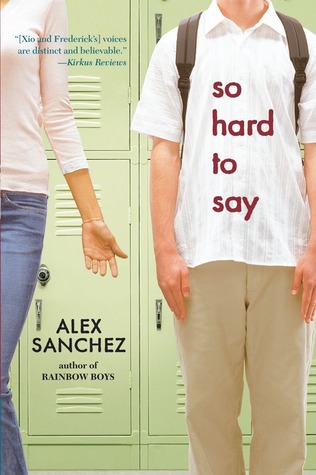
so hard to say

Very few books deal with questioning sexuality in middle school, but Alex Sanchez does just that in So Hard to Say.

8. Boy Meets Boy by David Leviathan
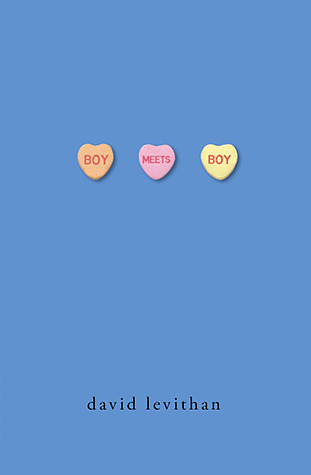
boy meets

This was the first David Leviathan book that I ever read, and I was truly enthralled with the world that he crafted. In Boy Meets Boy, different is normal and prejudice doesn’t exist, so it is a romantic comedy which just happens to be between a boy and a boy.

Note: Two Boys Kissing also deserves to be honored in this list. It weaves together stories of four gay teens as they face the challenges of being young and gay as they navigate the world.

9. Openly Straight by Bill Konigsberg
openly

Rafe just wants to be a regular teen. Not the GAY teen who does this and that. Just a teen. So, for his senior year, he transfers to a boarding school and keeps his sexuality a secret; however, hiding who you are is harder than Rafe ever thought it’d be.

10. I Am J by Cris Beam
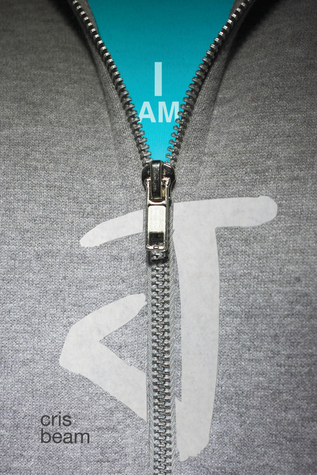
i am j

J is a boy but was mistakenly born as a girl. I am J is his story of working through the depression associated with having a body that was “assigned” to him. This is a truly inspiring, heartfelt, and change-making novel.

Honorary
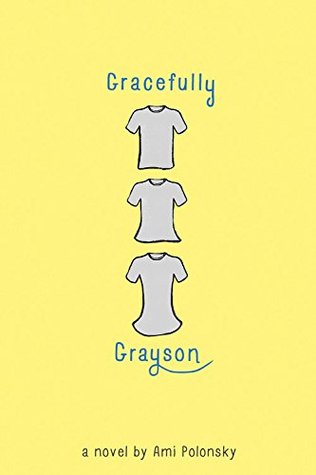
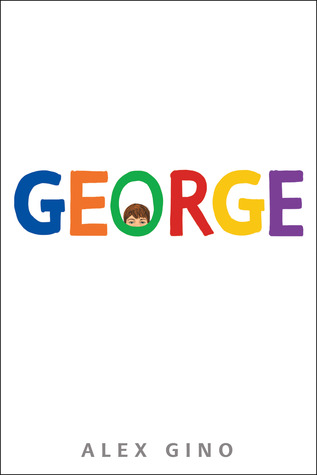
gracefully george

Gracefully Grayson and George are both about transgendered youth, and their search for acceptance. Neither of us have read these books, but we are so excited that such important LBGT books are being published in the MG/YA world! We cannot wait to read these.

For more LBGT titles, check out the Stonewall Book Award which is a set of three literary awards that annually recognize “exceptional merit relating to the gay/lesbian/bisexual/transgender experience” in English-language books published in the U.S.


There are so many great books about LGBTQ issues, and as we stated above, we had a hard time narrowing down our list to just ten books. Which would you add?

RickiSig and Signature

It’s Monday! What Are You Reading? #IMWAYR 7/20/15

Share

IMWAYR

It’s Monday! What Are You Reading? From Picture Books to YA!

It’s Monday! What are you Reading? is a meme hosted by Sheila at Book Journeys. It is a great way to recap what you read and/or reviewed the previous week and to plan out your reading and reviews for the upcoming week. It’s also a great chance to see what others are reading right now…you just might discover the next “must-read” book!

Jen Vincent, of Teach Mentor Texts, and Kellee decided to give It’s Monday! What Are You Reading? a kidlit focus. If you read and review books in children’s literature – picture books, chapter books, middle grade novels, young adult novels, anything in the world of kidlit – join us! We love this meme and think you will, too.

We encourage everyone who participates to support the blogging community by visiting at least three of the other book bloggers that link up and leave comments for them.

Last Week’s Posts

top ten tuesday freedom summer Engaging Classroom Discussion Techniques-page-001

Space Boy ScareScapes_1_ebook

Tuesday: Last Ten Books We Bought For Our Boys

Thursday: A variety of alternatives to the traditional classroom discussion

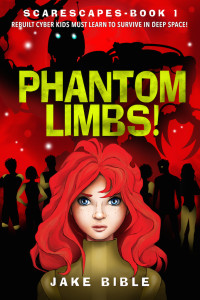
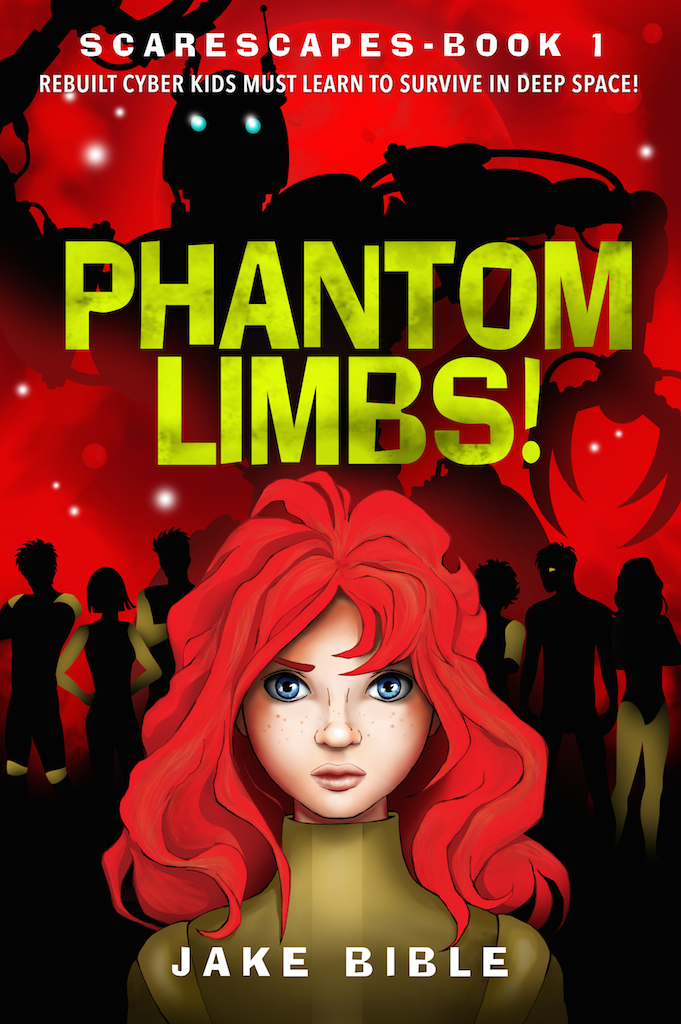
Sunday: “Reaching Reluctant Readers with Action and Suspense” by Jake Bible, Author of Phantom Limbs!, Scarescapes Book 1

**Click on any picture/link to view the post**

 Last Week’s Journeys

Kellee: This week I read Circus Mirandus by Cassie Beasley in preparation for my Twitter book chat on Thursday (#MirandusChat). I am excited to talk about this book. Ricki and I are both reviewing the book on the 30th, so I’ll share my thoughts then. I also read Trashed  by Derf Backderf which is a fictionalized account of being a garbageman filled with information about the state of trash in the world. Although very different than My Friend Dahmer, Derf still finds truth in situations that others do not.

In addition to these novels, I read four fiction picture books (see Upcoming Week’s Posts), I am Lucille Ball by Brad Metzer (I’ll be reviewing it in a couple of weeks), and four new-to-us board books from the library with Trent. His favorite that we read was How Fast Can You Go? by Kate Riggs and Millie Goes for a Drive by Peter Curry because they both have things he knows and can point out: cat, dog, bird, bubbles, train, car, plane, etc. He also was gifted a book about fire engines by D.K. Publishing which has four wheels on it, so he can push it around–win, win! It’s a toy and a book. He is enthralled! I love seeing him so excited. And as always, we are still reading our old favorites, but it is nice to have new books that he is also enjoying.

Ricki: This week, I’ve read about thirty journal articles, so I fell behind on my pleasure reading. I’ve been working on my dissertation proposal, which is quite time-consuming. I’ve also read half of Go Set a Watchman by Harper Lee. I know it’s controversial, but I fall on the side that I have to trust the independent investigators and their work and not assume an elderly person is senile. I do understand both sides of the argument and fully respect the opinions of those who elect not to read it. I had to think long and hard about my choice, and I admit it may not be the right one! 

This Week’s Expeditions

Kellee: I am so excited to read Sunny Side Up by Jennifer L. Holm and Matthew Holm this week! I am so looking forward to it! Although I would read it no matter what, I am also reading it in preparation for my NCTE presentation with Jenni (and 4 other amazing female authors: Kristen Kittscher, Kim Baker, Caroline Carlson, and Heidi Schultz) on how humor is for everyone. I am also going to finish Reading Workshop 2.0 by Frank Serafini in preparation for my August #rwworkshop book chat on the text.

Ricki: I will finish Lee’s book and hope to finish two textbooks I am reading. I also hope to finish Cold War on Maple Street by Gayle Rosengren. So far, I am really enjoying it.

Upcoming Week’s Posts

top ten tuesday Henry's Freedom Box Civil Rights Text Set Ladder
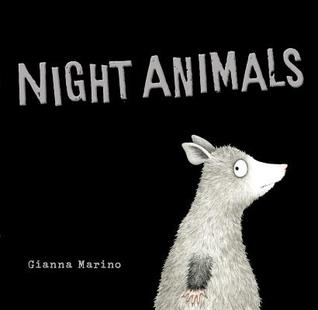
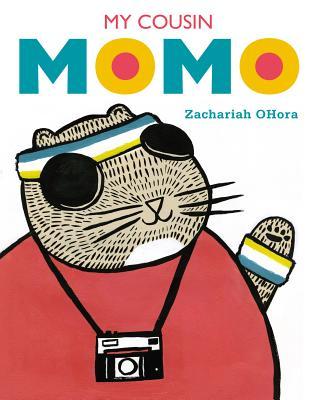
bunny roo Night Animals Sea Rex Momo

Tuesday: Ten (+ Two) Books That Celebrate LGBTQ Characters

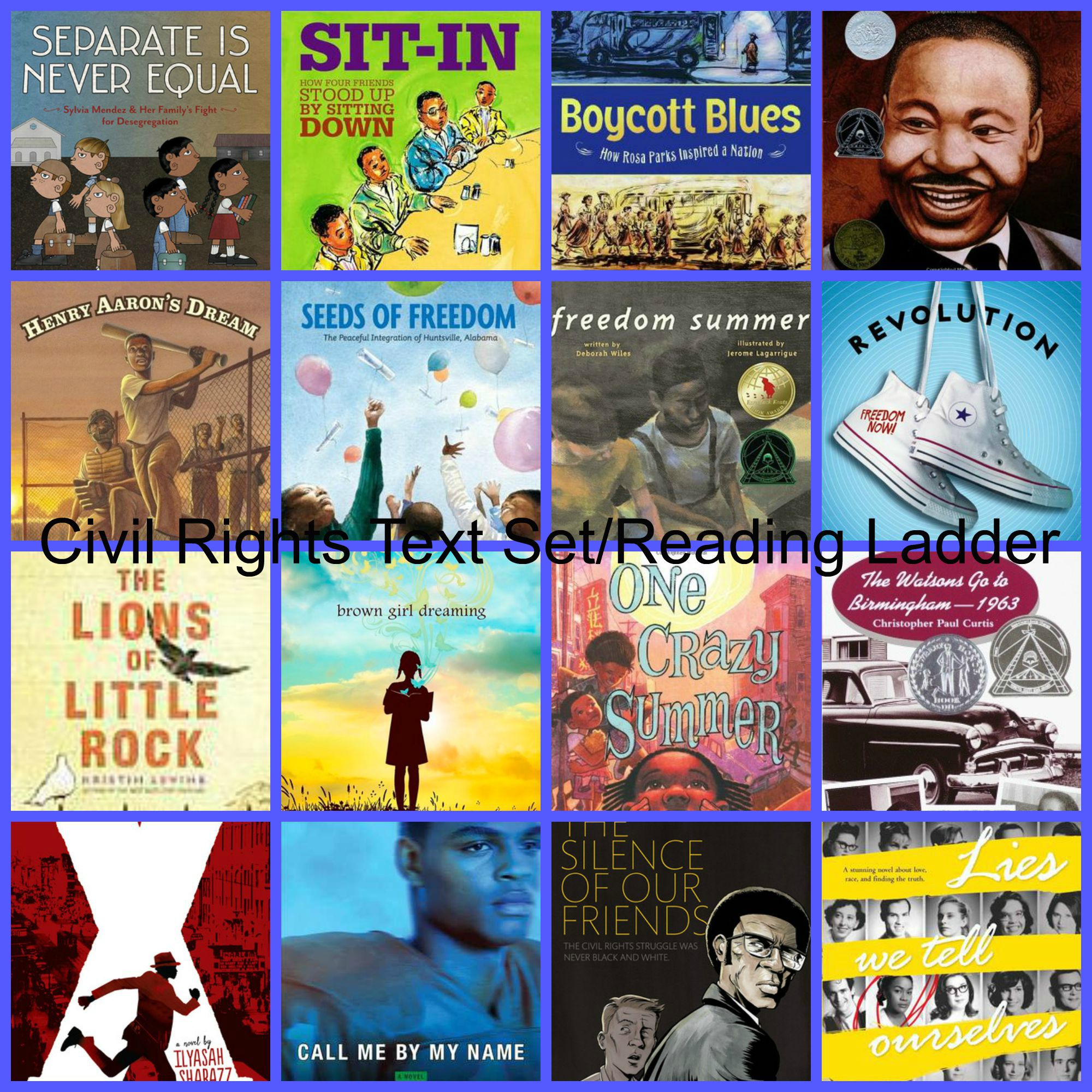
Thursday: Civil Rights Text Set/Reading Ladder

Friday: Kellee’s Recently Read Picture Books: Penguin Young Reader Group

 So, what are you reading?

Link up below and go check out what everyone else is reading. Please support other bloggers by viewing and commenting on at least 3 other blogs. If you tweet about your Monday post, tag the tweet with #IMWAYR!

 Signature andRickiSig

Author Guest Post!: “Reaching Reluctant Readers with Action and Suspense” by Jake Bible, Author of Scarescapes

Share

Reaching Reluctant Readers with Action and Suspense

by Jake Bible

I really had no concept of what a reluctant reader was until my daughter started reading. My son is exactly like me and will devour books without blinking. My daughter? Not so much. Getting her to read past the first few pages in a book is like pulling teeth. As a writer, this has been more than frustrating.

Being a concerned father, I asked her questions about why she’d start a book, but never finish it. I asked lots of questions. Yet no matter the question I always received the same answer (or a version of the same answer).

“It’s boring.”

Huh. Boring? The characters? The plot? The story? The cover? What was boring?

“I don’t know. It just was.”

Double huh.

This troubled me. That bit of fear in the back of my head was that maybe she had a learning disability. Of course, the Voice of Reason spoke up and said, “She’s just a reluctant reader.”

That voice was my wife’s. I say she was the voice of reason not because of some ingrained, antiquated notion of gender roles within the household, but because my wife is an elementary school teacher with nearly two decades of experience, a master’s degree, several certifications in various subjects, and is a reluctant reader herself.

That’s a voice of reason, folks.

To grab a reluctant reader’s attention you need relatable characters, you need fast pacing with short chapters, you need the prose to be clear and interesting, you need to give them a reason to keep reading. This is basically what all good writers strive for anyway. But the big difference is you can’t slack. One misstep and that book is down and forgotten.

In my research on reluctant readers I found out that the make or break age is 8-12. Those are the ages where so many kids decide whether or not reading for fun and pleasure is their thing. It just so happened I was writing a series of scifi/horror books aimed at middle grade ages. That 8-12 year old danger spot. No pressure, right?

So, I decided to do what I do best: write six books that packed as much non-stop action and suspense into them as I could get away with while considering my target age group.

I went with the classic serial structure of one book ending on a cliff hanger and the next picking it up right from that exact same spot. I also wrote each book as told from a different character’s point of view. This made sure that no matter what gender or race my young readers turned out to be, there would be a character, and a specific book in the series, that they could personally relate to. I put the characters into an impossible situation of being alone on a space ship in deep, deep space without parents around, all of them having to band together and fend for their themselves.

Then I set things in motion.

Writing action isn’t hard. You just keep things moving. The trick is to keep things interesting. Constant running does not always make for great story. That’s where the suspense comes in. And you only have so much time for suspense before boredom kicks in. It’s a delicate dance.

I began each book with some explanation of the situation the children were in. For this series, a giant asteroid outfitted for deep space travel and human habitation so people could find a new home in the universe after Earth has been polluted beyond repair. Explanation done, I immediately moved to danger. Got to have danger to motivate the characters into action. Once danger was established, and the characters were active, I threw in roadblocks.

Roadblocks are key to good action. The reader, and especially a reluctant reader, will get bored if the action just goes from point A to point Z. You need to send them off into tangents. You have to destroy points B, C, and D so the characters are forced to figure out how to skip to point E directly. Give those characters roadblocks and the action becomes believable, no matter how fantastical. And believable is another key to keeping a reluctant reader’s attention.

Okay, so I had explanation, I had motivation, I had action, I had roadblocks. But where was the story?

That’s where I got to sneak in the suspense. My story revolved around a mystery. And not just a mystery of why all the danger and chaos was happening to these characters. I introduced a new character. One that should have been a danger sign immediately in any “normal” situation. Is that suspense?

You bet it is. Who is this new entity? Where did it come from? What is its motivation? If the characters trust it will they regret it later?

Suspense is the anticipation of the unknown; the fear of something beyond a character’s understanding, beyond the reader’s understanding. Suspense requires trusting that moving forward is the only option even though moving forward is the most dangerous option.

To complete my formula (and for middle grade I needed a formula) I twisted the action and the suspense together, intertwining them in a narrative that would continually keep the readers off balance, afraid, excited, interested, and engaged. I wove the suspense within the action so that the story was layered in a way to keep reluctant readers from drifting off. I did my job as a writer and made it impossible for them to stop reading without stopping in the middle of an action scene or a bug reveal in the plot.

Or that was my goal, at least.

Did I succeed?

Well, my reluctant reader of a daughter didn’t put the manuscripts down.

Whether the books are received well out in the world or not, I count that as a success. No question there.


ScareScapes

About the Book: On the Earth Colony Asteroid Scorpio, something has gone terribly wrong. Millions of light years off course and 900 years late, the ship’s AIs wake up only seven kids, leaving the adults stuck in cryosleep! Damaged from the long journey, the AIs must repair the awakened seven with the only thing available–cybernetic robot parts.

Along with learning to function with new cyber parts, the all-kid crew must unravel the mystery of what went wrong with the Scorpio. As if the nightmare of deep space isn’t enough, the kids soon find themselves battling the ship’s maintenance robots while their cyber parts begin taking on a life of their own!

Scarescapes: Phantom Limbs! is the first book in the middle-grade YA series Scarescapes series by Bram Stoker Award nominated author Jake Bible. The ebooks are $2.99 and are available at Amazon, Barnes and Noble, Smashwords, Google Play, and Kobo. Paperback copies will follow later this year.

Jake Bible

About the Author: Jake Bible lives in Asheville, NC with his wife and two kids. Novelist, short story writer, independent screenwriter, podcaster, and inventor of the Drabble Novel, Jake is able to switch between or mash-up genres with ease to create new and exciting storyscapes that have captivated and built an audience of thousands. He is the author of the Young Adult horror novels Little Dead Man and Intentional Haunting, as well as the best selling adult horror series Z-Burbia and adult thriller/adventure series, Mega. Find him at jakebible.com. Join him on Twitter and Facebook.


Thank you to Hannah at Permuted Press for connecting us with Jake!

RickiSigandSignature

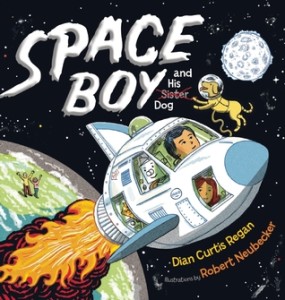
Space Boy and His Dog by Dian Curtis Regan

Share

Space Boy

Space Boy and His Sister Dog
Author: Dian Curtis Regan
Illustrator: Robert Neubecker
Published April 7th, 2015 by Boyds Mills Press

Goodreads Summary: Niko may live on boring old Earth with his family, but he’s always finding a new adventure. Using the spaceship that he built from a box in his backyard and a little imagination, he flies off into space with his robot, Radar, and his dog, Tag. The only one NOT invited is his sister Posh who keeps trying to insert herself into Niko’s story. In this first mission, Niko and crew (and maybe also pesky Posh) fly to the moon in search of a lost cat. Illustrated in comic–book style and featuring easy–to–read text packed with humor, Space Boy and His Dog is Niko’s first adventure, with two more books planned in the series.

About the Author: Dian Curtis Regan is the author of more than 60 books for young readers, including The Snow Blew Inn, Rocky Cave Kids, Monster of the Month Club, Barnyard Slam, and the bestselling Princess Nevermore. Her books have received many honors, including Best Books for Young Adults, Los Angeles Times Recommended Book, and Children’s Choice Awards. For more information on her books, visitdiancurtisregan.com and spaceboybooks.com.

Kellee’s Review: Regan and Neubecker do a great job in this picture book making Niko’s story come to life. It is a fun story with elaborate, bright full-page illustrations. I also like that it is a chapter picture book. It sequences Niko’s adventure into different “chapters” which would make it a nice introduction to the idea of chapter books. This is a story that will trigger interest in space! It would spur some really wonderful conversations about the moon, but there are so many exciting elements to discuss. I love that the book promotes imagination (reminds me of Faraway Friends by Russ Cox in that aspect). It shows that playing in the backyard and pretending can be so much fun! It would offer excellent opportunities to analyze the interactions between Posh and Niko, Niko’s voice, as well as the character traits of the two characters.

Ricki’s Review: After reading this book, I showed it to a middle school science teacher who loves everything related to space. She told me she is excited to use it in her classroom to introduce her unit on space. The book reads like a fantasy, so she plans to do a lesson at the end of her unit (after they study the different planets), and her students will imagine themselves on a planet. As an educator, I very much value interdisciplinary connections, and I think teachers would enjoy using this book to kick off or conclude a unit about space. Students can consistently refer to the book and ask, “What was real, and what was fantasy?” The books is quite clever and very funny, and I was smiling as I read it to my toddler. I recommend this book particularly for early elementary school classrooms, but I think it can be used at all levels.

Teachers’ Tools for Navigation: Monday, July 20th, is the anniversary of the first moon landing, so this is perfect timing to celebrate this book. It would be a fun way to start a lesson about the moon and would definitely be a jumping off point to discussing the atmosphere of the moon, how long it would take to get to the moon, and space ships.

A curriculum guide for Space Boy and His Dog is available here. The curriculum guide not only focuses on the space elements of the story, but also asks the reader to think about characterization, the interactions between Niko and Posh, author’s purpose, and how illustrations affect a story.

Discussion Questions: What would Niko and Post need to survive a visit to the moon?; How long does it take to get to the moon?; Looking at Niko’s spaceship, how does it compare to NASA spaceships?

We Flagged: 

SpaceBoySpread2
from http://www.neubeckerbooks.com/

Read This If You Loved: Faraway Friends by Russ CoxSpace Encyclopedia by National Geographic

Recommended For: 

readaloudbuttonsmall classroomlibrarybuttonsmall

Signature andRickiSig

**Thank you to Barbara at Blue Slip Media for providing copies for review!**

Engaging Classroom Discussion Strategies

Share

Engaging Classroom Discussion Techniques-page-001

My favorite part about teaching is that teachers love to share resources. We are a community. The more I teach methods courses at the university level, the more frequently I find myself sharing some ways I’ve hosted classroom discussions. I did not create any of these ideas below, and sadly, I cannot even share the source of the methods. I credit my advisor, Wendy Glenn, for introducing me to many of them. After I graduated and started teaching, I found other great books along the way which taught me others. While some of these ideas may be old news for you, I hope you are able to learn at least one new, useful method below.

1. The good ol’ fashioned circle (with a twist)

I never get tired of the circle, but my students often get tired of it. In my last year of teaching, I vowed that I would never create the discussion questions because I was working toward a student-centered classroom. After each reading, I required students to generate quality conversation starters. They submitted their questions on slips of paper, and whenever the conversation slowed down, we grabbed a new question.

2. Fishbowl

Every time I use the fishbowl in my college courses, the students are blown away at how fun it is. I remember feeling the same way as an undergraduate. This is a bit tricky to explain. There is an inner and an outer circle. Three to five kids are in the inner circle, and they are the only students allowed to speak. We draw questions (usually student-submitted questions), and those students have a conversation as if they are the only people in the room. When someone in the outer circle wants to make a comment, s/he taps the shoulder of a person in the inner circle, and they swap seats. I remind my students that they all must enter the inner circle twice, and they shouldn’t tap someone’s should unless they have made two comments. When the conversation gets dry, we pull a new question. This method takes some getting used to, but the kids find it to be quite fun. If the outer circle isn’t paying attention, I require them to take notes on the discussion.

3. Socratic Seminar

This method is similar to the fishbowl. I always use an inner and outer circle. Instead, the inner circle is closely examining a text and asking a lot of questions about it: Where did the idea come from? What is the purpose of this line?

I have an even number of inner students as outer students. Each inner student is paired with an outer student as his/her coach. At several points, I take a break and give that pair time to talk about how the inner student is doing. They can offer ideas and support to help the inner circle person contribute to the discussion. I find this video to be particularly helpful, and the website offers rubrics and ideas about helping students set goals for this discussion.

4. Jigsaw

For this technique, we ask four groups of students to read four different articles or research four different topics that have a common theme. Usually, they do this for homework. If I have 24 students in my class, six students will be reading Article 1, six students will be reading Article 2, six students will be reading Article 3, and six students will be reading Article 4.  When the students come to class, I group them by their article. This is their “home” group. They spend time discussing the article and outlining how they will present it to their peers. This gives them the confidence to share its content. Within each group, I assign each student a different letter. So for Article 1, if I have six students, I assign them A, B, C, D, E, and F. I go to each group and assign those same letters to each group. (I’ve also seen people line up students based on their articles, but both methods work fine). Then, all of the students regroup based on their letter. So out of the A students, I will now have four students in the group, one from each of the original four articles. The students’ job is to listen to each other and take notes (often in a graphic organizer I’ve created).

For those of you who are unfamiliar with this method, it might sound like a lot of work, but it really is quite easy to organize. The benefit is the students learn about four related articles without having to read them all. I used to do this when we talked about modern genocide as it related to the Holocaust text I was teaching. Instead of asking the students to research many countries, I assigned four countries to four groups. In the end, the students were responsible for sharing about the country they researched, and as a group, connecting that knowledge to the text.

5. Concentric Circles

We have an equal number of students in an inner circle and in an outer circle. The students in the inner circle face the students in the outer circle, and each student is paired with another student. I ask a discussion question (e.g. What did you think about the decision of the trial?) and only the inner circle person can speak. The outer circle person can only listen. Then, I ask the same question to the outer circle person, and his or her job is to listen. This teaches listening skills, and it also teaches the speaker to elaborate. After about thirty seconds, I ask the inner circle to rotate clockwise three people to swap partners (or however many times I feel like). I ask a different question (or sometimes, the same question!). The same process continues (either the inner or outer circle person is in charge of speaking and then it swaps). Then, I have the outer circle rotate counter-clockwise two people to swap partners. The students have fun discussing the questions with different people each time, and they find the turning of the circles to be wildly fun.

6. Give One, Get One

I ask the students to fold a piece of paper lengthwise so they have two columns. Then, I ask them to write everything they learned from the text in the right hand column. I tell them the more they write down, the better. When they are finished, I ask them to write numbers 1 through 10 in the right-hand column. Their job is to go around the room and to collect (from ten different peers) ten ideas that they don’t have on the left-hand side of their papers. This requires them to spend time with each peer, reviewing the information they learned and wrote down, and find something they missed or didn’t consider. They groan when you tell them what they have to do, but while they discuss the text, they are always laughing at the obscure or specific facts their peers come up with.

7. Post-It Walk

I post four to six major discussion questions in different areas of the room. I put small groups of students at each question and give them post-it notes. Their job is to discuss the question in front of them and write one idea/topic they discussed on the post-it note. Then, the entire class rotates clockwise. They read the question, read the post-it(s) from a previous group or groups. Their job is to discuss the question and come up with something different to put on their post-it note. After groups have rotated and put post-it notes on every discussion question, the groups stay at the last question on the wall. They are required to share out to the entire class one or two great ideas from the post-its on the question in front of them.

8. Pass the Butcher Paper

Students sit in groups. In front of each group is a different character (or topic). I ask them a question about that character (e.g. What do we know about him/her based on his/her actions in the book thus far?). They write notes on the butcher paper. Then, they pass the butcher papers clockwise, and they receive a new character. Their job is to read the notes of the previous group. Then I ask a different question (e.g. How do you predict the character will act in the rest of the novel?). They write notes, and we keep passing. This allows the students to see the ideas of many of their peers about different questions, and they feel like they are working as a whole class to create a complex understanding of each character. We post the butcher paper in the room.

9. Four Corners

This works best as a pre-reading activity for a book, but it could be modified for any subject area. I did it in my Methods class as an undergraduate student and loved it. My students enjoyed it, too. I provide a handout with major themes from a novel (e.g. Revenge is justifiable.), and ask students to circle “Strongly Agree,” “Agree,” “Disagree,” or “Strongly Disagree” for each statement. Then I read the questions aloud and ask students to walk to the corner of the room that has the sign (“Strongly Agree,” “Agree,” “Disagree,” “Strongly Disagree”) that matches their opinions. I ask a volunteer from each corner to share his/her opinion. This often leads to heated debates, and it gets the students thinking about the novel.

 10. Facts of Five

Ask students to write down the five main ideas they got from a text. (This can be adjusted in a variety of ways, but it is good to require students to write five ______. For instance, they might write down five ways to connect the text to the real world.) Then, ask students to get into groups of three. Their job is to talk through each of their lists and pair the fifteen ideas down to five ideas. Then, their group of three joins another group of three. The six group members talk through their ideas and reach a consensus of the top five ideas. Then, all of the groups share out, and we have a class discussion to agree on the five, main points. This discussion technique requires groups to talk through ideas and determine essential, important concepts from a text. It also allows students to spend time considering how their ideas fit in with the ideas of their peers.

11. The Pinwheel

I just came across this neat technique by Sarah Brown Wessling. I recommend you watch the 7-minute video to see how it is organized. Students are arranged into a pinwheel shape. Three groups are each assigned to a different author, and a fourth group serves as “provocateurs” who ask probing questions. This would be a great way to synthesize multiple texts that you have read in class.

Please, please post a comment explaining any methods that I’ve missed, and I will incorporate your ideas into the post! Want more ideas? Check out this page more closely related to novels!

RickiSig

Freedom Summer by Deborah Wiles (Kellee’s Review)

Share

NFPB2015

Nonfiction Picture Book Wednesday

Nonfiction Picture Book Wednesday is hosted by Kid Lit Frenzy and was started to help promote the reading of nonfiction texts. Most Wednesdays, we will be participating and will review a nonfiction text (though it may not always be a picture book).
Be sure to visit Kid Lit Frenzy and see what other nonfiction books are shared this week!

Disclaimer: This book is technically historical fiction, but I felt it belonged on a Wednesday because of its base in fact (see “A Note About The Text”).

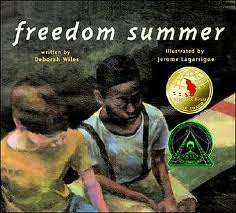
freedom summer

Freedom Summer
Author: Deborah Wiles
Illustrator: Jerome Lagarrigue
Published January 1st, 2005 by Aladdin

Goodreads Summary: 

John Henry swims better than anyone I know.
He crawls like a catfish,
blows bubbles like a swamp monster,
but he doesn’t swim in the town pool with me.
He’s not allowed.

Joe and John Henry are a lot alike. They both like shooting marbles, they both want to be firemen, and they both love to swim. But there’s one important way they’re different: Joe is white and John Henry is black, and in the South in 1964, that means John Henry isn’t allowed to do everything his best friend is. Then a law is passed that forbids segregation and opens the town pool to everyone. Joe and John Henry are so excited they race each other there…only to discover that it takes more than a new law to change people’s hearts.

My Review:  Deborah Wiles amazes me every time I read something by her. I think I need to get everything she has written and devour it. Her books make me a better person. This one is no exception to these statements. Freedom Summer starts with a personal story of Wiles’s and sets the stage for the book: What would it be like to have a best friend who is black in the South in 1964? Do you know what it is like? Any other friendship! Except many people felt that it was wrong and you cannot go places together. Freedom Summer is about Joe and John Henry. They are both young boys. They both like to swim. They both love ice cream. However, only one can go to the pool and only one can buy ice cream from the store. I think what makes this story so impactful is that Wiles sets the stage of the friendship as something so normal (because it is!!) then shows how different their lives are. So powerful. Made me cry. It’s lyrical writing, soft and beautiful illustrations, and powerful message are so moving. Go read it if you haven’t.

You can view Ricki’s review of Freedom Summer here.

Teachers’ Tools for Navigation: This book belongs in classrooms. It will start discussions and make students think. Luckily, Deborah Wiles helps us out a ton by sharing so many resources with us on her Pinterest board https://www.pinterest.com/debbiewiles/ and her website http://deborahwiles.com/site/resources-for-educators/.

Discussion Questions: Why was the pool being filled with tar?; What do you think will happen after the end of the book?; Based on Joe’s parents letting him be friends with John Henry, what can you infer their viewpoint of integration is?

We Flagged: 

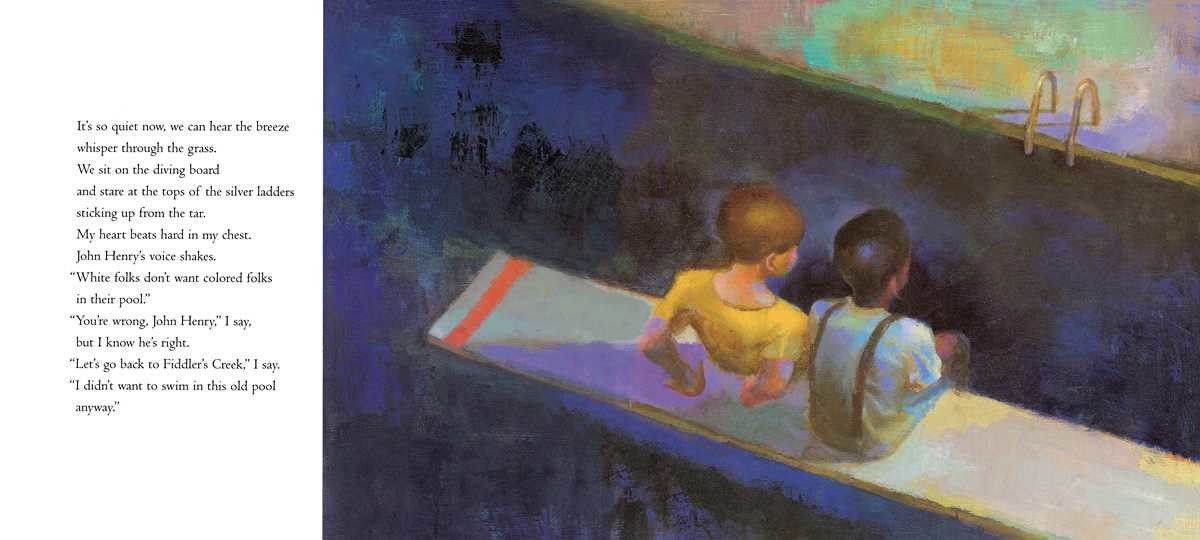
freedom summer spread
from http://books.simonandschuster.ca/Freedom-Summer/Deborah-Wiles/9781481422987

Read This If You Loved: Revolution by Deborah WilesSeeds of Freedom by Hester BassSeparate is Never Equal by Duncan TonatiuhThe Lions of Little Rock by Kristin Levine, Sin-In by Andrea Pinkney

Recommended For: 

classroomlibrarybuttonsmall readaloudbuttonsmall litcirclesbuttonsmall

Signature

Top Ten Tuesday: Last Ten Books We Bought for Our Boys

Share

top ten tuesday

Top Ten Tuesday is an original feature/weekly meme created at The Broke and the Bookish. The feature was created because The Broke and Bookish are particularly fond of lists (as are we!). Each week a new Top Ten list topic is given and bloggers can participate.

 Today’s Topic: Last Ten Books We Bought for Our Boys

We read a lot of picture books, and in order to keep up with diapers, we can only buy the books that are truly special. Here are the last ten that we bought. For those of you who are new to the blog, Ricki’s son is 19 months old, and Kellee’s son is 16 months old.

Ricki

1. Freedom Summer by Deborah Wiles

freedom summer

Readers of this blog know that I am head over heels for this book. I am going to read it to him very often when he is older.

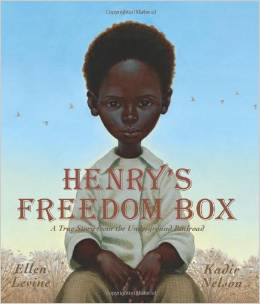
2. Henry’s Freedom Box by Ellen Levine

Henry's Freedom Box

I purchased this book because I saw many positive reviews. It is based on a true story. I read it to Henry, and he enjoyed listening, but I may wait a bit longer until he is at an appropriate age that I can begin to discuss the serious matters of the book. I look forward to reading it to him often.

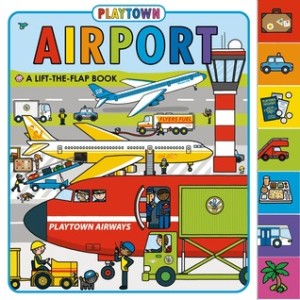
3. Playtown: Airport by Roger Priddy

Playtown Airport

My son is madly in love with the Playtown series. He owns the first book of the series and a few more installments are coming out within the next year or two. There is a chance we have to take a six-hour plane ride next month, so I bought this and hid it. I can’t WAIT to show it to him. He is going to be so excited.

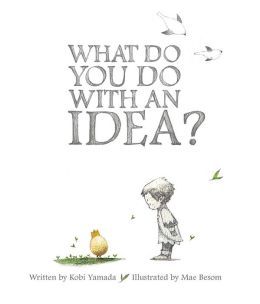
4. What Do You Do with an Idea? by Kobi Yamada

idea

I read this book in the bookstore and was blown away. I immediately bought a copy for Henry and a copy for my sister (who is a dreamer and constantly thinking of inventions). It is a beautiful book.

5. That’s Not My Train by Fiona Watt

That's Not My Train

This book is quite short and nothing too exciting, but my son loves it. I wouldn’t call it literary, but he always asks me to read it at night.

Kellee

I actually was quite lucky to have worked the Scholastic Warehouse Sale not that long ago, and when you work the sale, you get paid in books! This is perfect timing to get picture books for Trent, and these 5 books are the ones I am most excited about reading with Trent (I haven’t debuted them with Trent yet; we are still reading primarily board books). One of the reasons I’m highlighting these particular books that I got (out of 19) is because of the illustrators. Young, Brown, Santat, and Reynolds are by far on my favorites list of illustrators.

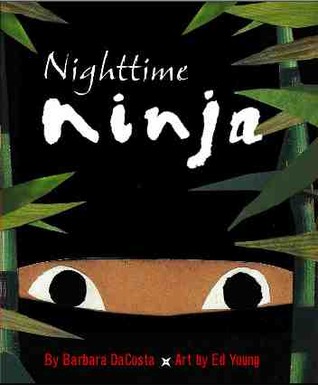
1. Nighttime Ninja by Barbara DaCost, Illustrated by Ed Young

nighttime ninja

I read this book when it first came out, and I knew that I would need to get it to read it to my son. It is so funny!

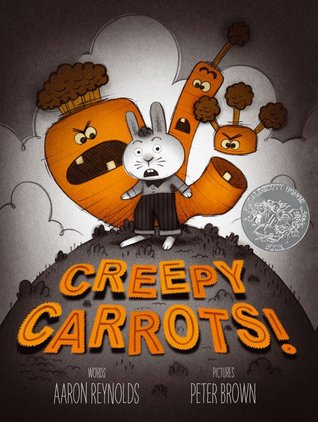
2. Creepy Carrots by Aaron Reynolds, Illustrated by Peter Brown

creepy carrot

I have wanted to read this book since it came out and even more once it received a Caldecott Honor. So excited to get my hands on it!

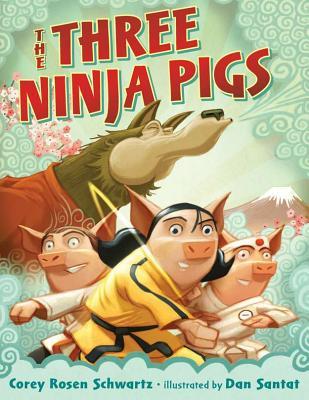
3. The Three Ninja Pigs by Corey Rosen Schwartz, Illustrated by Dan Santat

three ninja pigs

This was one of the books that Scholastic put on the posters all around the sale, and it cracked me up every time I walked by. I knew I had to have it.

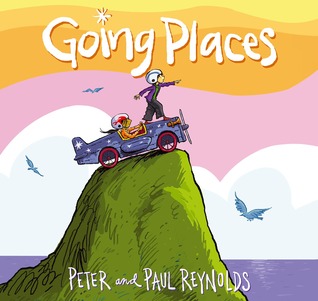
4. Going Places by Peter and Paul Reynolds

going places

This is one of those books that promotes friendship, imagination, and creativity. I cannot wait to read it to Trent.

5. Sesame Street Bus

sesame street bus

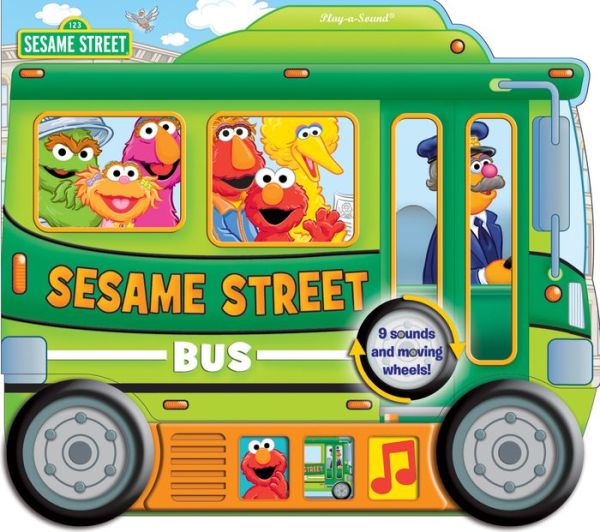
This is the only one not purchased at Scholastic, but it is the most recent book we bought. Trent is in love with Elmo right now. I am not sure how he learned who Elmo is, but now everything is about Elmo. He saw this book in Target when we were shopping for a birthday present, and I had to get it for him. He loves pressing the Elmo button.

Which books do you recommend for our toddlers? 

RickiSig and Signature