
I was thrilled to join Leigh Hall, Professor at the University of Wyoming on her blog for Literacy teachers this week. If you haven’t checked out the videos on her blog, I recommend them highly. They are invigorated and inspiring!

I was thrilled to join Leigh Hall, Professor at the University of Wyoming on her blog for Literacy teachers this week. If you haven’t checked out the videos on her blog, I recommend them highly. They are invigorated and inspiring!
It’s Monday! What Are You Reading? From Picture Books to YA!
It’s Monday! What are you Reading? is a meme started by Sheila at Book Journeys and now hosted by Kathryn at The Book Date. It is a great way to recap what you read and/or reviewed the previous week and to plan out your reading and reviews for the upcoming week. It’s also a great chance to see what others are reading right now…you just might discover the next “must-read” book!
Kellee and Jen, of Teach Mentor Texts, decided to give It’s Monday! What Are You Reading? a kidlit focus. If you read and review books in children’s literature – picture books, chapter books, middle grade novels, young adult novels, anything in the world of kidlit – join us! We love this meme and think you will, too.
We encourage everyone who participates to support the blogging community by visiting at least three of the other book bloggers that link up and leave comments for them.

CONGRATULATIONS
Shaye
for winning the Garbage Island giveaway!


Wednesday: Blog Tour with Review, Book Trailer, and Giveaway!: Eduardo Guadardo, Elite Sheep by Anthony Pearson
Giveaway open until Thursday!!!!
Thursday: We Are Grateful: Otsaliheliga by Traci Sorell
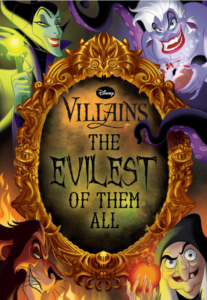
Friday: Disney Villains: The Evilest of Them All by Rachel Upton
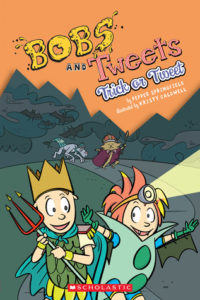
Sunday: Author Guest Post! by Pepper Springfield, Author of the Bobs and Tweets series
**Click on any picture/link to view the post**

Kellee
Ricki
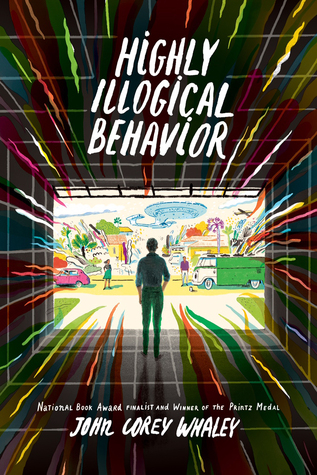
This week, we are talking about mental health and adolescence in my Adolescents’ Literature course. Students are reading Oshiro’s Anger is a Gift, Colbert’s Little & Lion, and Whaley’s Highly Illogical Behavior. Last night, I reread Highly Illogical Behavior to refresh my memory. I am really excited to talk across these three texts!
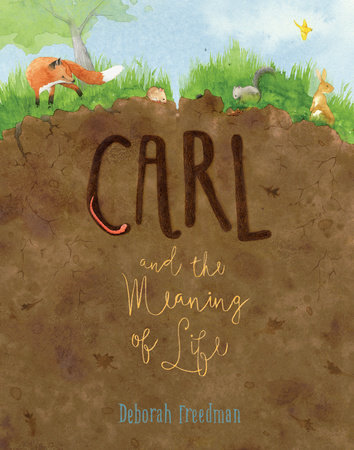
I read Deborah Freedman’s new book, Carl and the Meaning of Life. It is such a clever book. It perfectly balances traditional picture books with their repetition and innovation in its message.
Kellee
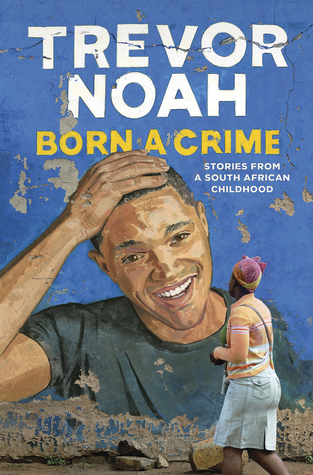
Ricki
I’ll be rereading A.S. King’s Me and Marvin Gardens for my class next week. I am also hopeful that I will finish a few other books that I’ve started recently. 🙂

Tuesday: Video about Lexiles with Leigh Hall, Professor at University of Wyoming
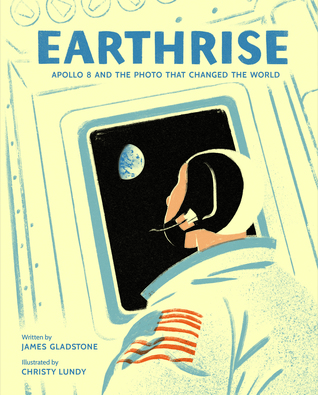
Wednesday: Earthrise: Apollo 8 and the Photo that Changed the World by James Gladstone
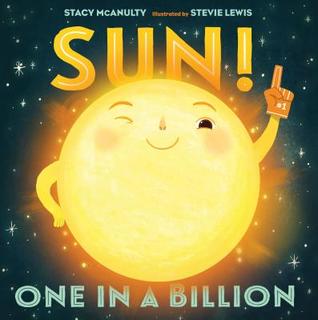
Thursday: Sun! One in a Billion by Stacey McAnulty
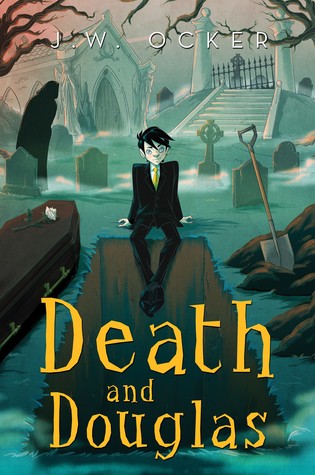
Friday: Death and Douglas by J.W. Ockler
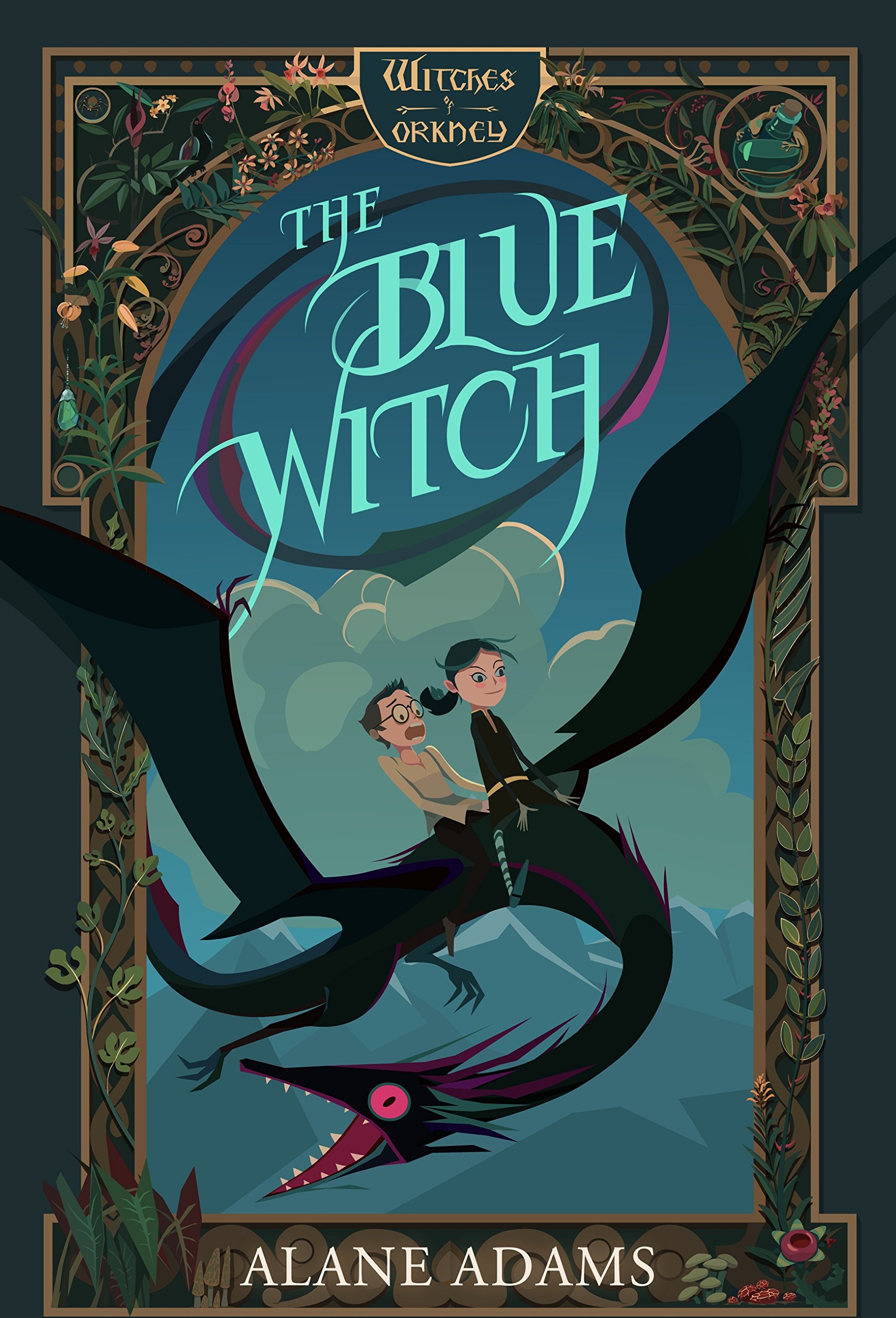
Sunday: Author Guest Post by Alane Adams, Author of The Blue Witch
Link up below and go check out what everyone else is reading. Please support other bloggers by viewing and commenting on at least 3 other blogs. If you tweet about your Monday post, tag the tweet with #IMWAYR!
 and
and
“Trick or Read”
When I was in fifth grade I made an awesome Halloween costume: I was a jar of Skippy Peanut Butter. No one could tell who I really was since my head was covered, but I got lots of compliments on my cool creativity.
However, that was the high point: after that I was never able to figure out another Halloween costume I was comfortable wearing.
So, decades later, still blocked on finding a suitable costume, I decided to approach Halloween from another angle: I started giving out books, instead of candy, to trick or treaters.
Moaning like zombies, my family and friends told me this was not a good idea: “no one,” they said, “wants to trick or treat for books.” “Halloween,” they howled like werewolves, “is for handing out candy.” “No kids,” “they screeched like a scary witch, “will come to our house for books.”
But… they were all wrong.
Twenty-five years later I am still handing out books to hundreds and hundreds of kids on Halloween. And even though I still haven’t figured out a good costume for myself, I do have another persona: I am known in town as “The Book Lady.”
I have to leave work and my job as President of Scholastic Book Clubs early on Halloween, because kids and their families who come from all over town as well as from neighboring communities (and even in groups from community centers), start lining up early—around 3:30 in the afternoon—to make sure they don’t miss out on the reading FUN! The police come to help direct traffic and the whole community gets into the act.

It makes me so happy to see all these kids and their families—who come from miles around—line up just to make sure they get books! I live on a long, flat street, with wonderful neighbors, who are, for the most part, happy to answer the door with all kind of creative treats (including toothbrushes!) for the swarms of kids who make their way down the block after they leave the “Book House.”

It was all this Halloween excitement that inspired me to write Trick or Tweet, the third book in the Bobs and Tweets series, illustrated by Kristy Caldwell.
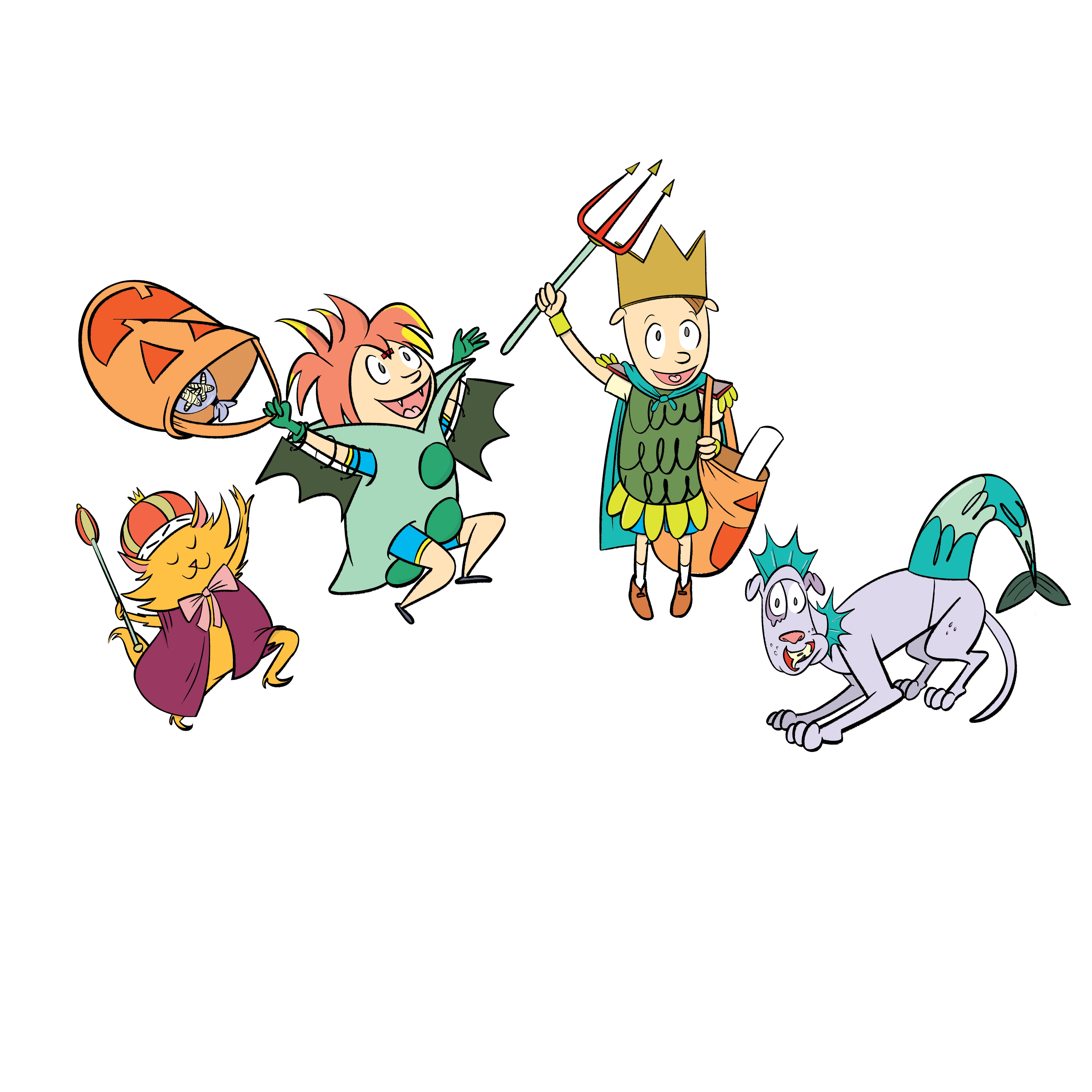
I got so much inspiration from all kids who have come to “The Book House” on Halloween: kids stuffed into vegetable costumes, like Lou Tweet. Vampires and zombies, like the Bobs. Ninjas, and superheroes, and mermaids, and unicorns, (along with people handing out toothbrushes, and awesome decorations and…well you name it!) Last year, a child came dressed as a jar of Skippy Peanut Butter, which as you can imagine made me smile.
The trick or treaters all want to tell me what books they want to read and how they enjoyed—or did not like — the books they got from the Book House last year. There is nothing quite so thrilling for me as talking to hundreds of children dressed up in costumes, expressing their creativity and their ideas– and talking about books.
Most of us who work in children’s book publishing strive to help children discover books in which they can see themselves. We know that when kids choose and own their own books they read more and start to see themselves as readers. In my day job, as President of Scholastic Book Clubs I am privileged to work with 800,000 classroom teachers and their students—from pre-K through high school–all across the country, creating book orders filled with affordable books for all children to choose and own.
In my Halloween role as “The Book Lady, “ it is so fun and inspiring to hand out books to super eager trick or treaters who all love lining up for books on Halloween. And as, Pepper Springfield, the author of the Bobs and Tweets books, I am truly honored to engage with readers through my characters on Bonefish Street.
So… I guess I don’t need another Halloween costume for myself after all.
Happy Reading! Happy Halloween!
About the Author: Pepper (aka Judy Newman to PW readers, close friends, and family) was born and raised in Massachusetts. She LOVES rock ‘n’ roll and chocolate, just like Lou Tweet. And, like Dean Bob, Pepper loves to read and do crossword puzzles. Over the years, Pepper has loved all kinds of pets: dogs, cats, hamsters, turtles, fish, a bunny, and an imaginary monkey.
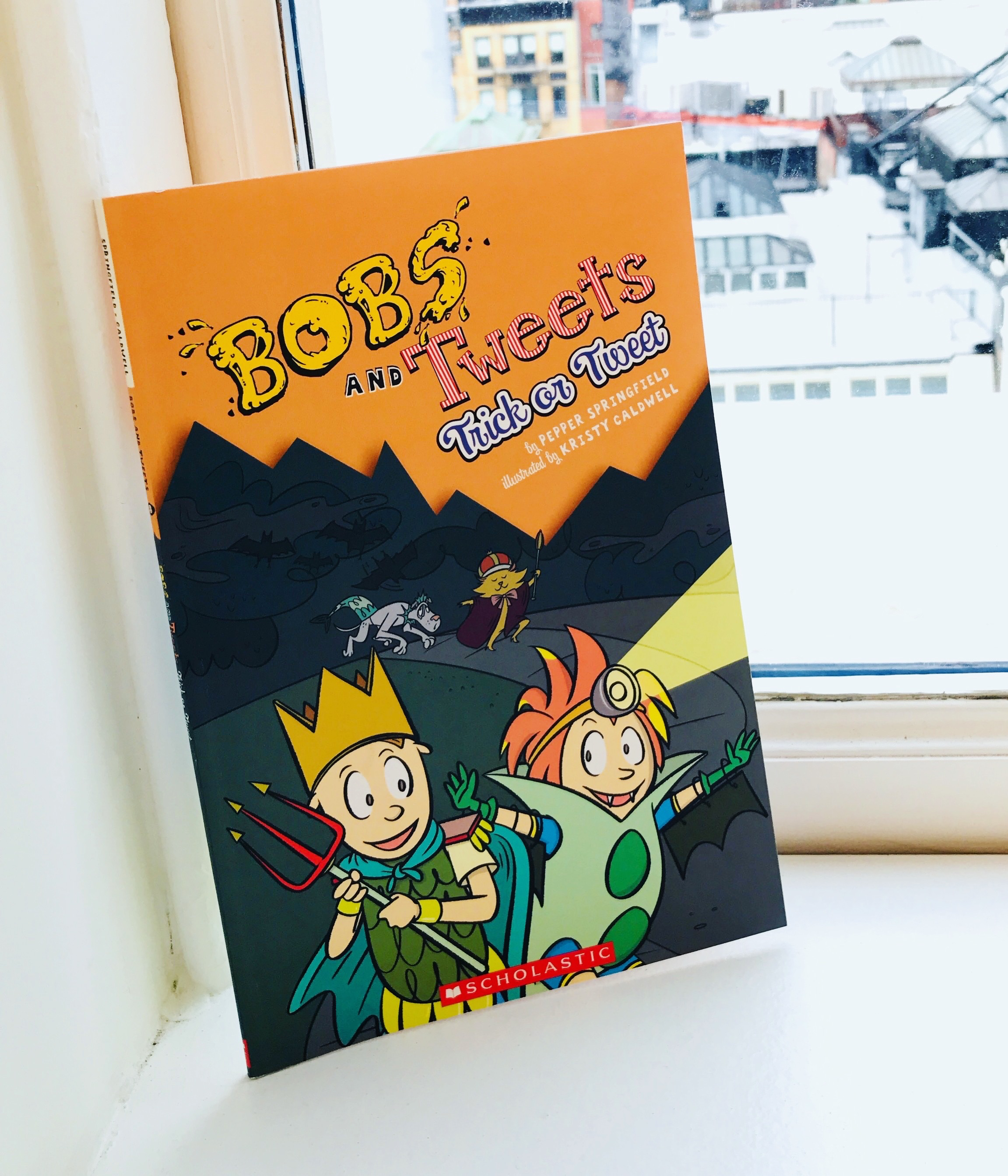
Bobs and Tweets: Trick or Tweet
Author: Pepper Springfield
Illustrator: Kristy Caldwell
Published August 28th, 2018 by Scholastic
About the Book: Lou Tweet and Dean Bob can’t wait to go trick-or-treating on Bonefish Street on Halloween. This year, they’re entering the Best Halloween Block contest, which means they need to visit every house and mark down each delicious treat that they receive.
But with spooky houses, a power outtage, and another big Tweets and Bobs family feud, will Lou and Dean be able to accomplish their task and win the contest? Find out in another spooky installment of Bobs and Tweets, this time with funhouses, new friends, and lots and lots of candy!
This third book in the Bobs and Tweets series is filled with full-color illustrations and high-interest rhymes that’s just right for reluctant readers. It’s Dr. Seuss meets Captain Underpants wrapped into one zany Halloween adventure! So go ahead, read and laugh and trick-or-treat with the Bobs and Tweets!
Thank you, Pepper, for showing how book lovers can spread the reading love on Halloween!

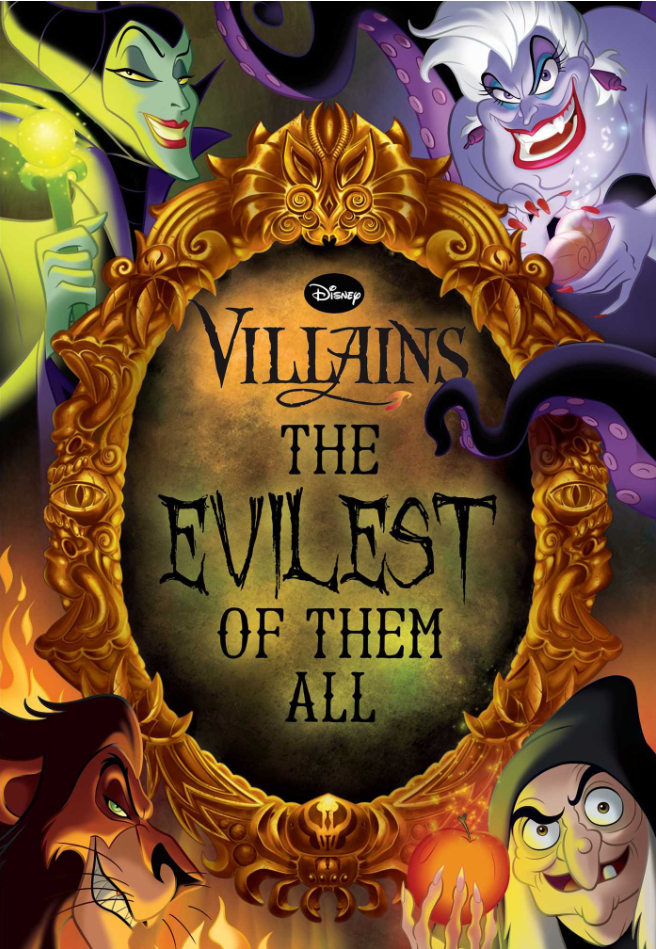
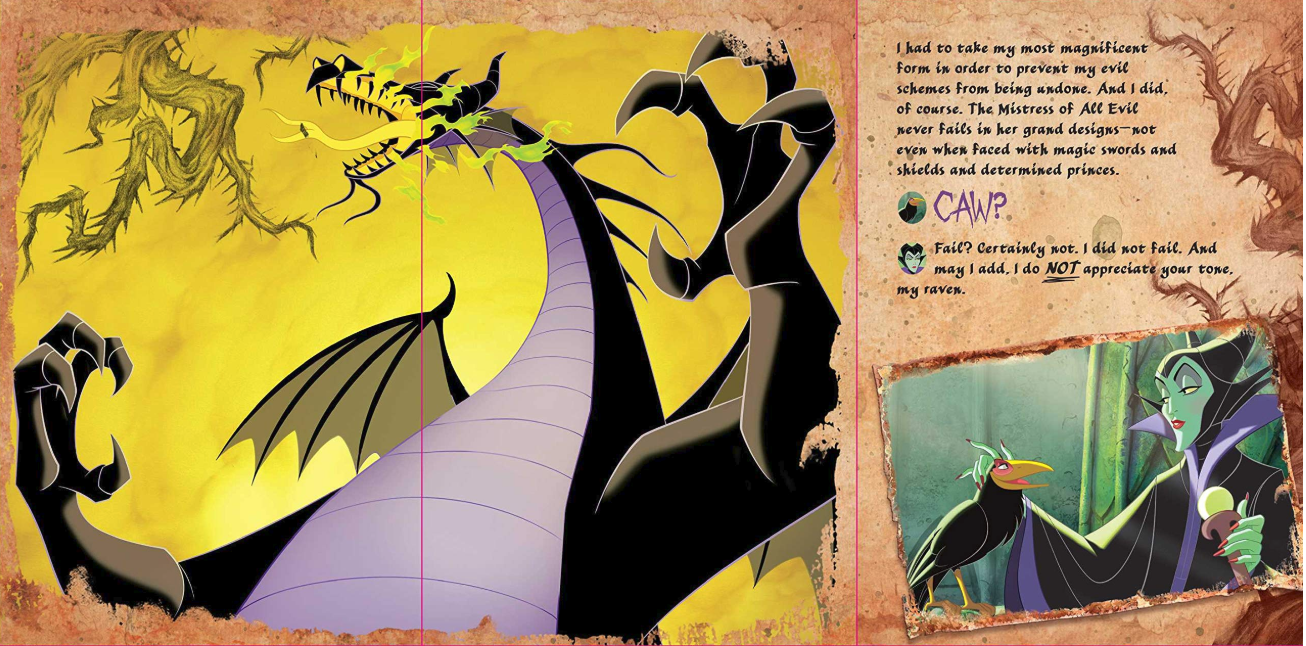
Disney Villains: The Evilest of Them All
Author: Rachael Upton
Illustrator: Various Disney Story Art Team
Published 2018 by Fun Studio International
Summary: Dive into the devilish thoughts of Disney’s most masterful villains and become a part of the story . . . for better or for worse.
WANTED: The most evil, wicked, abhorrent, vile villain to ever curse this world . . . or any others.
A villain acting vile is merely part of the job description . . . but which of Disney’s famed scoundrels is the evilest of them all? Dive into the devilish thoughts of The Evil Queen, Jafar, Ursula, and more as they recall their most wicked achievements. With gatefolds and lift-the-flaps, readers can dive into minds of the best of the worst in this fun read for Disney fans of all ages.
Villains Include…
Evil Queen (Snow White)
Jafar (Aladdin)
Mother Gothel (Rapunzel)
Lady Tremaine (Cinderella)
Ursula (The Little Mermaid)
Scar (Lion King)
Cruella De Vil (101 Dalmatians)
Gaston (Beauty and the Beast)
Malificent (Sleeping Beauty)
Queen of Hearts (Alice in Wonderland)
Captain Hook (Peter Pan)
Hades (Hercules)
Dr. Facilier (The Princess and the Frog)
Review: I must share that I am very bias when it comes to this one. I love Disney. Period. However, this book was even better than expected. I loved the highlight of the villains and how the book was set up as a character profile for each of them like a business resume as well as fun anecdotal information about each of them–including a lot of humor!
Teachers’ Tools for Navigation: I am so ready to use this book in my class as an argumentative or debate activity! Each section does a phenomenal job breaking down the evilness of each of the villains including their skills, possessions, education, work experience, likes, dislikes, and a random list of information about them. Using this information, students would make an argument for why their villain is the “evilest of them all.”
The book also would fit perfectly in a compare and contrast unit since each villain has the same topics highlighted.
Discussion Questions:
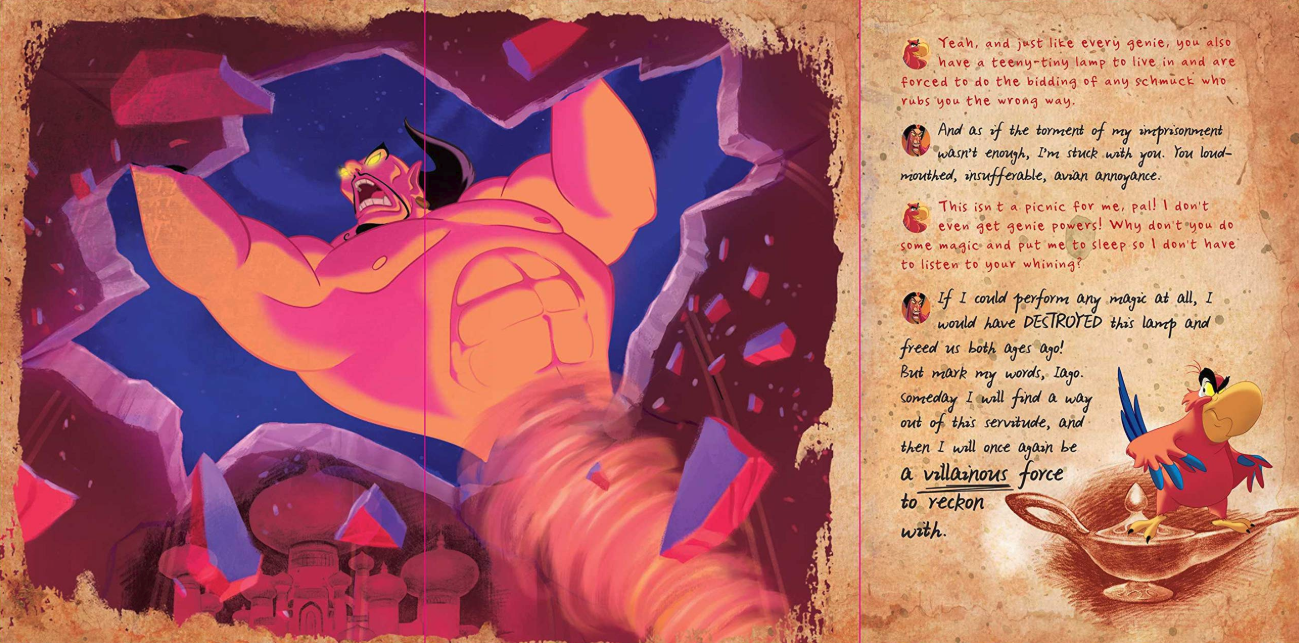
Flagged Passages:
Read This If You Love: Disney, Villains, Profile Books, Humor
Recommended For:

**Thank you to Casey at Media Masters Publicity for providing a copy for review!**
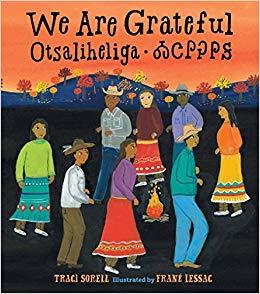
We Are Grateful: Otsaliheliga
Author: Traci Sorell
Illustrator: Frané Lessac
Published September 4, 2018 by Charlesbridge Publishing
Summary: A look at modern Native American life as told by a citizen of the Cherokee Nation
The word otsaliheliga (oh-jah-LEE-hay-lee-gah) is used by members of the Cherokee Nation to express gratitude. Beginning in the fall with the new year and ending in summer, follow a full Cherokee year of celebrations and experiences.
Appended with a glossary and the complete Cherokee syllabary, originally created by Sequoyah
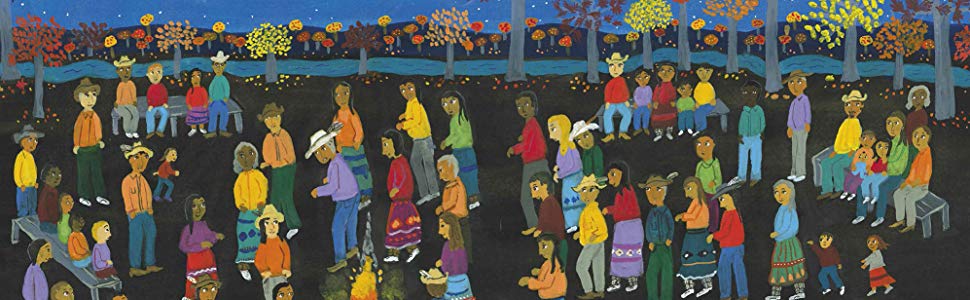
Review: This beautiful book makes for a wonderful read-aloud. I loved the repetition and the different things to be grateful for. The images are captivating, and I found myself slowing down as I read and turned each page. The seasons shift through the text, which offers great opportunities for discussion. Indigenous people are often perceived to be people of the past, but this book demonstrates that they are living, breathing people. The culture is very much alive. I’ll be gifting this book to several friends with young children.
Teacher’s Tool For Navigation: Students might list the different things that they are grateful for and draw accompanying pictures. It offers great opportunities for discussing how Native people still exists and are not relics of the past, reserved for discussions on Thanksgiving day.
We Flagged: “…while we collect buckbrush and honeysuckle to weave baskets.”
Read This If You Loved: The People Shall Continue by Simon J. Ortiz; Dreamers by Yuyi Morales; The Day You Begin by Jacqueline Woodson
Recommended For:

**Thank you, Donna, from Charlesbridge Publishing for sending a copy for review!**
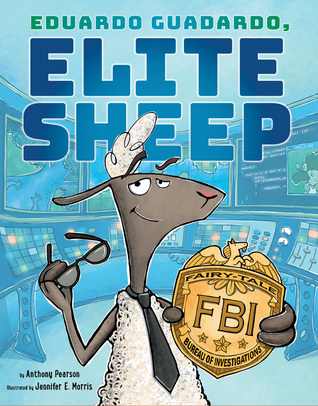
Eduardo Guadardo, Elite Sheet
Author: Anthony Pearson
Illustrator: Jennifer E. Morris
Published October 1st, 2018 by Two Lions
Summary: Eduardo Guadardo may look fluffy. He may look cute. But he’s no little lamb. He’s about to graduate from the FBI—that’s the Fairytale Bureau of Investigations—as an Elite Sheep. He knows five forms of kung fu, and he can outfox the foxiest of foxes. In fact, he’s so good they put him on his own case: to keep the farmer’s daughter, Mary, safe from Wolf, Troll, and Witch. It’s a job for somebody baaaaaaad—someone like a soon-to-be Elite Sheep. The thing is, protecting Mary isn’t quite as easy as Eduardo expected…
This imaginary backstory for “Mary Had a Little Lamb” is hilarious, action-packed, and filled with subterfuge (that means pulling the wool over your eyes, for you civilians).
About the Author: Anthony Pearson is not a spy. He’s not. We promise. He’s actually a school counselor, a child therapist, and the author of Baby Bear Eats the Night, illustrated by Bonnie Leick. But that didn’t stop him from digging for clues about “Mary Had a Little Lamb.” What he found made him imagine what could have inspired the rhyme: a sheep that is totally, absolutely, 100 percent in control of things … or maybe just 95 percent. And squirrels in sunglasses. Oh, and a witch flying a helicopter. But you didn’t hear about the Fairytale Bureau of Investigations from him. Anthony and his family live in deep cover in Georgia. Get more intel about him at www.AnthonyPearson.info. Twitter: @APearson_Writer
About the Illustrator: Jennifer E. Morris has written and illustrated award-winning picture books and has also illustrated children’s magazines, greeting cards, partyware, and educational materials. She has not illustrated classified documents nor is she a super secret agent. She is, however, the creator of May I Please Have a Cookie? which has infiltrated more than a million homes. If you say “The dove flies at noon,” she may tell you what the ducks recorded on their cameras. Maybe. But most likely not. Jennifer lives with her family in Massachusetts, just a few miles from the little red schoolhouse where “Mary Had a Little Lamb” originated. Read more of her dossier (that’s DAH-see-ay) at www.jenmorris.com. Twitter: @jemorrisbooks
Review: What a fun and quite smart idea! I didn’t know that I ever wondered how Mary got her lamb, but this backstory is one epic way for that nursery rhyme to come about! And Eduardo Guadardo is quite the character, and it really does give another outlook on why Mary’s lamb went to school with her. I also liked the additional layer that the author added to the story to show how arrogance does not lead to success and that even if you are good at something, if you can’t learn and work with others, you will not do well.
Teachers’ Tools for Navigation: Allusions, allusions, allusions! Eduardo Guadardo may be a backstory for Mary Has a Little Lamb, but so many other fairy tale and nursery rhyme characters are scattered throughout the book! Trent and I played a scavenger hunt for characters in the book and with older students who could do more discussions and analysis with these cameos.
Discussion Questions:
Book Trailer:
Read This If You Love: Fractured Fairy Tales!
Recommended For:
Giveaway!
*Thank you to Blue Slip Media and Two Lions for providing copies for review and giveaway!**
Just so we all have the same definition of close reading, I wanted to share how I define it:
The process of close reading is reading a short, worthy text more than once to get deeper into its meaning.
(See “A Secret About Close Reading” for more information.)
Here is a fun close reading activity I did with my reading classes a couple of weeks ago.
Standards for this lesson: RL.1 & RI.1 (Inference & text evidence), RL.2 (Theme), RI.2 (Central Idea), RL.3 (Narrative elements interact)

Tacky the Penguin by Helen Lester is a much more complex text than it first seems, so I really wanted to take this fun text and push my students’ thinking to realize that Tacky teaches us more than they first thought.
First read: For the first read of Tacky the Penguin, I just had my students enjoy the story. I love watching kids see this book for the first time because he is such a ridiculous yet awesome penguin.
Second read: When we read the story again, this time I chunked the text and had them take notes about a different characters’ emotions for each section. They then went on our Canvas discussion board and made an inference about how the character was feeling based on their notes and included evidence.
“The other penguins are much more accepting of Tacky at the end. In the text it shows that all the penguins hugged Tacky since his oddness had scared the hunters away and saved them. This action showed that even though they might disagree on how to do things they were still thankful of him.” -EX, 8th grade
“I think that the other penguins, Goodly, Lovely, Angel, Neatly and Perfect are happy that Tacky is around. In the story it is showing all the penguins celebrating that the hunters were gone. Usually when you are celebrating it is because someone has accomplished something and you feel happy for them. So, you can conclude that the other penguins are happy that Tacky is around because he got rid of the hunters and without Tacky they might’ve died.” -JK, 6th grade
For the final section of the text, I asked them to think about the theme of the story, and they answered their inferred theme with evidence on the discussion board.
“I think the theme of Tacky the penguin is that differences can be good. I think that because at first the other penguins didn’t like Tacky because he was very different in the way he acted. They thought he was annoying and didn’t really include him in their group. At the end, they appreciate him because he saved them from the hunters, so his differences were good.” -AN, 8th grade
“The theme is to treat everyone fairly. Because in the beginning the other penguins treated Tacky badly, by excluding him, being annoyed at his greets, singing, and diving. But when Tacky acted like a hero they all appreciated him like they should of in the beginning.” -AK, 8th grade
“I think the theme of TACKY THE PENGUIN is to always be yourself. In the beginning of the story, the other penguins didn’t seem to really like Tacky because he did things so differently from them. However, as the middle towards end of the story, Tacky uses that to his advantage to scare away the hunters. So really, because Tacky was himself, he saved the day!” -DV, 7th grade
As we know, there are many themes that can be taken from a story, and most of the themes I received were spot on and focused primarily on how Tacky may seem odd but that doesn’t mean being different is bad. But there was one theme that I didn’t have any students pick up on, and I felt it was a big one. So, for the third read, I added in another text.
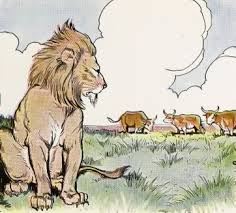
Third read: For the third read, I had my students read an Aesop Fable to connect with Tacky. “The Lion and the Three Bullocks” has the theme “In Unity is Strength” because the bulls survive the predator because they work together. The students did a wonderful job realizing that this theme connected to Tacky because it was only when all the of the penguins worked together that they were able to ward off the hunters.
“The theme “Unity is Strength” works for both books because together they defeated the enemy(ies). In Tacky the Penguin it says, “ Tacky began to sing, and from behind the block of ice came the voices of his companions, all singing as loudly and dreadfully as they could.” This shows that together the penguins can work together to be strong. The next page says “The hunters could not stand the horrible singing” This evidence illustrates that together as a team they can do anything. In Aesop For Children (Three Bullocks and a Lion), it says that a hungry lion is looking for his next meal. He was only sitting and watching because all of them were together so he would lose. In a little bit the bullocks separated and it was the lion’s time to strike (He ate them). This shows that when you are together you can be even stronger then when you were alone.” -EN, 7th grade
At this point, I was so proud of the connections my students were making, but it was still on a level where they were not connecting it to life–they saw it as a penguin and bullocks lesson mostly. This meant that I added in another text that I had them close read:

Scila Elworthy’s TED Talk is titled “Fighting with Nonviolence” and shares how fighting violence with violence is not successful while using nonviolence has been successful. I love TED Talks because you have the video and the transcript! What a great text for the classroom! (And thank you Jennifer Shettel for pointing me in this direction!)
First read: We watched the first 5 minutes and 11 seconds of the TED talk, and I gave each student a Post-It note. I asked them to write down words that stuck out to them. We then shared the words and defined any words they didn’t know.
Second read: For their second read of the text, they went to the transcript and were to focus on the central idea of this section of the text. Each person wrote down their own central idea.
Then I did a variety on one of the discussion ideas that Ricki shared in her Engaging Classroom Discussion Techniques post. Kind of like in Facts of Five, I had students then go into groups of three and come up with a consensus of a central idea together. They then wrote these on sentences strips to display in the room. We also discussed each one and talked about the supporting evidence for each central idea. I called it “Most Important Point.”
“As a group for the “most important point activity” we came up with the point that “solving a problem with violence only ever causes more violence”. Toward the end of the ted talk the speaker gives an example of when her ‘heroine’ was faced with guns during a protest and solved it by walking up to them and getting them to put their guns down. Had she not solved that problem this way it can be assumed that the soldiers would have shot them. By solving a situation with non violence she avoided the problem all together. We concluded from this, and the other points she made in ted talk including Nelson Mandela and her own personal anecdote about non violence, that that was the central point.” -KA, 8th grade
Third read: For the culminating task for all of these texts, I added in one more text to truly make all of this connect to reality. I knew I wanted to pick an image from the Civil Rights Movement because it is a true example of this idea at work. I introduced my students to sit-ins.
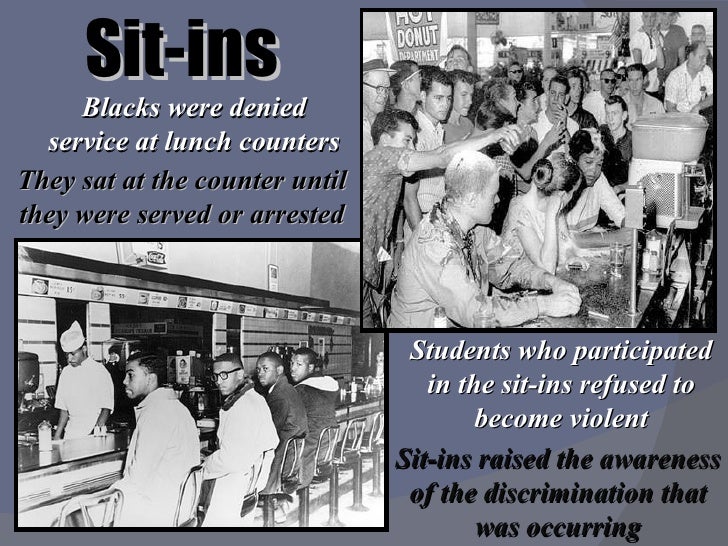
I then asked, “Why did we watch this TED Talk and why did I share the Sit-In images after reading Tacky the Penguin and the Aesop Fable? How do they all connect? Write a short paragraph explaining the connection, and remember to Restate, Answer, have Text evidence, and Explain/elaborate.”
“All of these connect because they all show them going against things together. In “Tacky the Penguin” all of the penguins started singing in the end together, driving them away. If it was only Tacky singing, the hunters might not have gone away if the other penguins had not shown up. In “Three Bullocks and a Lion”, the lion would not attack them when they were together because he knew he was no match for all three of them combined. In the Sit- In photo, there are four people sitting at a counter, and in the other photo, it shows them getting drinks poured on them from other people in the restaurant. If there was only one person sitting at the counter, the point would not have been proven as well as it would if there were four. All of them show that when they are together, they are stronger.” -MA, 7th grade
“The Ted Talk, Sit-in images, Tacky the Penguin, and Aesop Fable connect because they show how if we stick together and try to solve conflict in nonviolent ways, we will not have to resolve problems with more fighting. The Ted Talk says that bullies use violence to intimidate, terrorize, and undermine, but “only very rarely in few cases does it work to use more violence.” This just makes people more and more violent. An example is when the “Students who participated in sit-ins refused to become violent” even when people were not treating them fair by not serving them or even pouring a drink on them. Tacky the Penguin helped save all the penguins from being taken away by hunters because he had the attitude that people should be friendly and kind to each other and because he acted like this, it scared the hunters and they ran away. In the Aesop Fable, the bulls were able to keep the lion from eating them by staying close and being strong together. When they began to argue and separated from each other, they were not strong enough alone to keep from being attacked. “It was now an easy matter for the lion to attack them one at a time, and this he proceeded to do with the greatest satisfaction and relish.” This shows that we need each other to be strong and reach our goals and when we begin to fight, we lose our strength against enemies. We can control all of this, like she says, “It’s my response, my attitude, to oppression that I’ve got control over, and that I can do something about.” -DA, 6th grade
I was so impressed with my students’ deep thinking, connections, inferences, and elaboration! And overall they truly loved the activity, and I think that it truly shows that a text to analyze can be more than the canon!