I Want to Be…. by Ruby Brown

Share

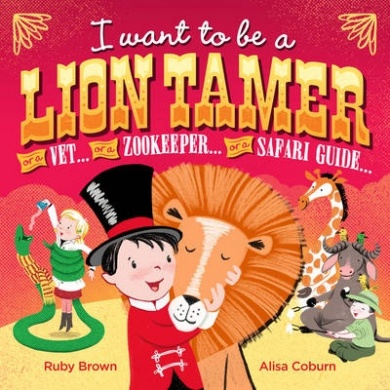
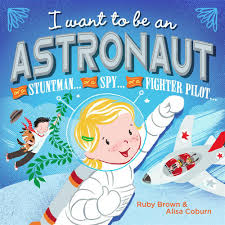
i want to be a lion tamer i want to be an astronaught

I Want to Be a Lion Tamer…
I Want to Be an Astronaut…
Author: Ruby Brown
Illustrator: Alisa Coburn
Published 2015 by Kane Miller Publishing

Summary: What do I want to be when I grow up? When I grow up, I can be anything I want to be! A vet? A dog walker? A lion tamer? A spy? An astronaut? A deep-sea diver?

Kellee’s Review: The thing I loved the most about these books was the lesson that readers will take away: You can be anything you want when you grown up! From a young age we really need to be teaching kids to have dreams and do what they can to reach them, and part of having a dream is knowing what a job entails. These books are a very nice introduction to a bunch of different jobs and would be a great jumping off point to talk to kids of a very young age about what they want to be when they grow up and what that job is like. I also liked the illustrations so much! Coburn’s illustrations are so colorful and lively–they take Brown’s words of a kid’s imagination and brings them to life. 

Ricki’s Review: I’ve read these books dozens of times with my two-year-old son. He may be a bit young to understand the concepts of the books, but he loves the pictures! I am happy to have them because I know I will be able to use them in the future to teach him that he can be anything he wants to be. I could see these books being great to use during job fairs and job talks. I’d even use these with high schoolers to get them in the mindset that they can be anything they want to be. I particularly enjoyed the diversity of jobs featured in the books. These are a great resource for teachers.

Teachers’ Tools for Navigation: The I Want to Be books can be used as a read aloud to begin a discussion of different types of careers and what students want to be when they grow up. You can use this time to talk about goals, how to reach them, and maybe even do a small research project where students find what the job they are interested in includes. Students can then use this information to write a 3 sentence poem following Ruby Brown’s style explaining their dream job.

Discussion Questions: What do you want to be when you grow up? What are the pros and cons of different jobs? How might you group jobs into categories?

We Flagged: “When I grow up, I want to be…

A marine biologist.
I’ll work at an aquarium with lots of fish.
I’ll study animals and plant life from the sea.
And I’ll even discover a new type of sea creature.

An archaeologist.
I’ll excavate ancient tombs and old cities.
I’ll discover artifacts that are very old.
And I’ll study them and unlock secrets from the past.”

Read This If You Loved: Interstellar Cinderella by Deborah Underwood, The Most Magnificent Thing by Ashley Spire
(Both of these books are ladders up from the I Want to Be… books.); When I Grow Up by Mercer Mayer, The Berenstain Bears: Jobs Around Town by Stan and Jan Berenstain with Mike Berenstain

Recommended For: 

readaloudbuttonsmall

Kellee Signature andRickiSig

**Thank you to Lynn at Kane Miller Books for providing copies for review!**
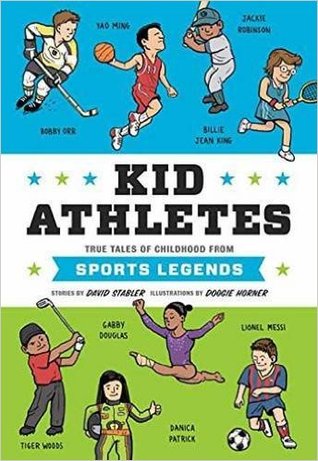
Kid Athletes: True Tales of Childhood from Sports Legends by David Stabler

Share

NFPB2016

Nonfiction Wednesday

Nonfiction Picture Book Wednesday is hosted by Kid Lit Frenzy and was started to help promote the reading of nonfiction texts. Most Wednesdays, we will be participating and will review a nonfiction text (though it may not always be a picture book).
Be sure to visit Kid Lit Frenzy and see what other nonfiction books are shared this week!

kid athlete

Kid Athletes: True Tales of Childhood from Sports Legends
Author: David Stabler
Illustator: Doogie Horner
Published November 17th, 2015 by Quirk Books

Goodreads Summary: Forget the gold medals, the championships, and the undefeated seasons. When all-star athletes were growing up, they had regular-kid problems just like you. Baseball legend Babe Ruth was such a troublemaker, his family sent him to reform school. Race car champion Danica Patrick fended off bullies who told her “girls can’t drive.” And football superstar Peyton Manning was forced to dance the tango in his school play. Kid Athletestells all of their stories and more with full-color cartoon illustrations on every page. Other subjects include Billie Jean King, Jackie Robinson, Yao Ming, Gabby Douglas, Tiger Woods, Julie Krone, Bruce Lee, Muhammad Ali, Bobby Orr, Lionel Messi, and more!

My Review: I really enjoyed this book of short stories about sports legends as children. I think the author did a great job sucking the reader in by starting with something about each athlete’s career then tying their childhood obstacles into their successes. I was impressed by how each story did have a lesson, but they did not feel didactical, and the author also made the stories ones that kids are going to connect with. This allow with fun illustrations will definitely keep readers entertained!

Teachers’ Tools for Navigation: I’m in a theme unit in my class right now and as I was reading each story, I automatically grasped the theme the author was trying to get across for each short story. Some are quite explicit while others are inferred which makes it a perfect book as you scaffold students determining theme independently. The author also uses primary sources throughout the text would be a good way to discuss primary vs. secondary sources. It could even lead into students writing their own biographical story of a historical person using primary and secondary sources. Finally, I would love to discuss the illustrations with students! They all are a bit quirky and funny though tie into the story in different ways. It would be interesting to see if kids grasp the subtle humor.

Discussion Questions: What obstacle did ______ overcome?; What character traits did _____ show while overcoming ____?; What is the theme of ______ ? How did the author support the theme throughout?; How are the stories within each section similar? Different?

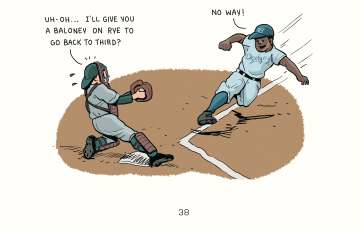
We Flagged: “In 1962, he was elected to the Baseball Hall of Fame. Historians have praised him for refusing to fight back in the face of racial discrimination. But Jackie did fight back, in his won way, by being the best person he could be, instead of following the bad examples of his enemies. That was a lesson he had learned from his days as the tiny terror of the Pepper Street Gang.” (p. 38)

kidathletes_jackierobinson

Read This If You Loved: Picture book biographies of athletes, Sports biographies

Recommended For: 

litcirclesbuttonsmall readaloudbuttonsmall classroomlibrarybuttonsmall

Kellee Signature

**Thank you to Quirk Books for providing a copy for review!**
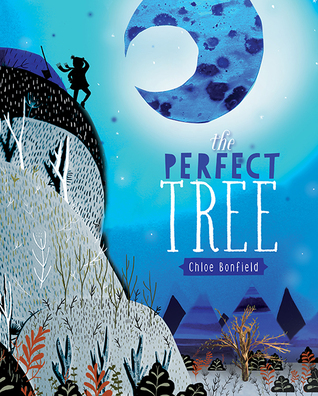
The Perfect Tree by Chloe Bonfield

Share

perfect tree

The Perfect Tree
Author and Illustrator: Chloe Bonfield
Published January 5th, 2016 by Running Press Kids

Summary: Jack is searching for the perfect tree—one that he can chop, hack, and stack! But when it becomes too hard to find, Jack stumbles across three unlikely friends who want to show him their perfect trees.

In this lively, enchanting story, The Perfect Tree is a reminder to notice the wonders we often overlook, and to value our friendship with the natural world.

Kellee’s Review: The Perfect Tree is a book that I hope doesn’t go beneath the radar because it is a wonderful book with a positive theme and beautiful illustrations. Jack’s story makes the reader think about all the harm we do when we destroy the forest, but it does so without listing or preaching. It just shows. It mentions in her biography that Chloe Bonfield is fond of printmaking, and you can see this in her artwork that accompanies Jack’s story. It is mixed media, 3D, collage, and illustrated and just really takes the book to the next level.

Ricki’s Review: Whew. This book is quite beautiful. I felt like I went through a journey as I turned the pages. When I got to the end, I flipped to the front of the book and read it once more. My 2-year-old son kept saying, “Ooooo,” as I turned the pages. The words flow naturally in a way that is both quiet in its delivery and loud in its message. And the artwork—oh the artwork! I love the way the images are layered to grab readers’ attention. I spent much time on each page wondering, “But how did she do this?!” The mixed media will captivate readers and inspire them to want to create their own works of art/literature. I am excited to have this book in my library because I know it will be inspirational to my son.

Teachers’ Tools for Navigation: This book is a great one to discuss theme with. It is one that you have to infer, but it isn’t too difficult to interpret which would make it a good scaffolding tool to longer narratives. Additionally, it would be a great book to read around Earth Day because of the environmental lesson and love of nature.

Discussion Questions: Why does Jack change his mind?; Why is it important to take care of nature?; What are some ways that the author helps you see Jack’s story (through illustrations and text)?

We Flagged: “Once a boy named Jack went on a journey to find the perfect tree. Not to climb, not to draw, and definitely not to hug. No, Jack wanted a perfect tree to chop. A perfect tree to hack! A perfect tree to stack.”

perfect tree illustration

Read This If You Loved: The Lorax by Dr. Seuss, The Giving Tree by Shel Silverstein, The Tree Lady by H. Joseph Hopkins, Can We Save the Tiger? by Martin Jenkins, Mama Miti by Donna Jo Napoli

Recommended For: 

readaloudbuttonsmall classroomlibrarybuttonsmall

Kellee Signature andRickiSig

**Thank you to Cassie from Running Press for providing copies for review!!**

Text Sets for Teachers: Gender’s Lens: Society’s Views and Expressions of Gender

Share

Text Set Button

Gender’s Lens: Society’s Views and Expressions of Gender
Text Set for Every Day by David Levithan
created by Jack Dunn

At a time where celebrities like Caitlyn Jenner exist, society is increasingly regarding gender as a fluid construct. With this established, one can better examine the how’s of society’s view of gender. I chose this approach because I think too often the context of gender is lost in its portrayal in different texts. When it comes to women, often the discussion is framed as a “How does (female character) embody/defy the stereotypes of women in (role)?” While ideas like “strong female archetypes” are important, it is equally important to understand why roles like this matter in literature. Women do not exist merely as affirmations and challenges to society and so should not be regarded solely as such within the classroom. We must consider womanhood as a varied, independent structure, not a response to a long-established, less-than definite construct of genders and their roles. As for masculinity, any discussion at all would be breaking from the norm. The ways that Pudge in Looking for Alaska challenges masculine stereotypes, that Finny in A Separate Peace might embody them are not typical discussion topics. I am not suggesting that these are questions that warrant discussion, but why they are not discussed is something worth exploring.

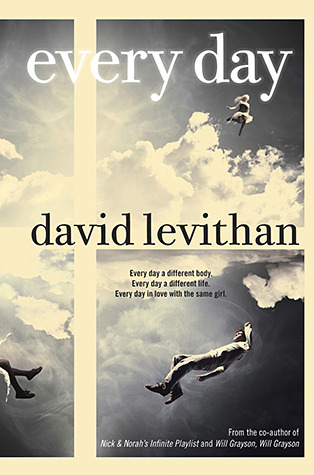
Every Day by David Levithan seemed like a logical choice as an anchor text. Its protagonist is genderless, and is afforded a unique perspective into the lives of both men and women. From there, I looked for texts that could be explored from this particular perspective in new and interesting ways. I tried to include as many different perspectives as possible. I wanted to then expand the context that this conversation exists within. I tried to include both anecdotal and objective information about gender from numerous perspectives. I also included information about transgender people as it is a growing important part of the gender discussion. This text set is mean to open up the conversation about a topic that has been contentious lately.

Anchor Text (although other texts may be used!):
Every Day by David Levithan
every day

Books or Book Excerpts
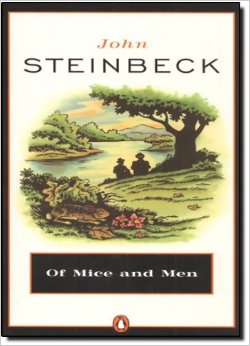
Of Mice and Men by John Steinbeck
of mice and men
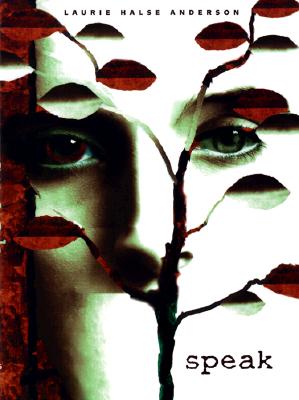
Speak by Laurie Halse Anderson
Speak
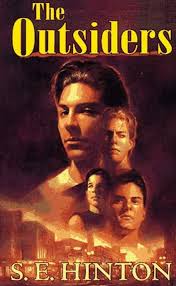
The Outsiders by S.E. Hinton
outsiders
A Wrinkle in Time by Madeleine L’Engle
wrinkle

Poems and Songs
Jezebel – Iron & Wine https://www.youtube.com/watch?v=990kOZxIOKw
Shrinking Women – Lily Myers https://www.youtube.com/watch?v=zQucWXWXp3k
Gender Bender by Jennifer Michael Hecht

Short Stories
How to Date a Brown Girl (Black Girl, White Girl, or Halfie) by Junot Diaz
he Wife of Bath’s Tale by Geoffrey Chaucer

Videos/Movies
The Dark Knight Rises
The Demise of Guys? – Phillip Zimbardo
A Powerful Poem on What it Feels Like to Be
Darius Simpson & Scout Bostley – “Lost Voices” (CUPSI 2015)

Articles/Internet Sources
Caitlyn Jenner – Diane Sawyer interview
Beyond ‘he’ and ‘she’: The Rise of non-binary pronouns
Excerpts from Constructing New Masculinities: The Representation of Masculinity in U.S. Literature and Cinema
Tips for Allies of Transgender PeopleGLAAD
Toys Are More Divided by Gender Now Than They Were 50 Years Ago by Elizabeth Sweet

Guiding Questions

  • What does being a woman mean? What does being a man mean?
  • Is gender binary? Should it be binary?
  • How does gender affect individuals?
  • Is gender a necessary categorization of people?
  • To what extent is gender a fluid construct?
  • What do we talk about when we talk about gender?
  • How does American culture define/express gender through different media and language?
  • What traits and ethics are associated with gender? What are the implications of those associations?

Writing Prompts

  • What does gender mean to you? Does YOUR gender mean something to you? If so, what?
  • How are the stereotypes and ideas that are applied to femininity/masculinity a woman/man?
  • How do ideas about gender affect those they apply to? How does this manifest itself in literature and the real world?
  • What does it mean to be a Strong Female Archetype? How does the way society views gender influence their prevalence in fiction? People to consider during your response: Meg Murry, Selena Kyle (Catwoman), Melinda Sordino, and Jezebel
  • Compare and contrast the relationships of Ponyboy-Cherry Valance, Bruce Wayne/Batman-Selena Kyle/Catwoman and A-Rhiannon? What part do gender and society’s views of gender play in each? What factors affect/complicate the role of gender in these relationships?

A special thanks to Jack for taking a unique perspective on the topic of gender. We hope this text set will prove useful for many anchor texts and classroom discussions! What do you think?

RickiSigandKellee Signature

Text Sets for Teachers: Good vs. Evil: Exploring Morality Through the Holocaust

Share

Text Set Button

Good vs. Evil: Exploring Morality Through the Holocaust
Text Set for Night by Elie Wiesel
created by Kellie-Anne Crane

It is of the utmost importance that teachers prepare their students for their futures, whether that includes continuing their education or entering the work force. No matter what path students choose to take, there are certain concepts that all people need to recognize and consider as human beings, like the concept of morality. Everyone is confronted with moral decisions on a daily basis—whether it is a monumental decision, or even something as small as deciding to give the last cookie to your sister or to keep it for yourself. The events of the Holocaust and World War II are incredibly essential to study, not only because these events are our shared history but because of the unbelievable turmoil faced by millions. Teachers must help students to understand the gravity of this time period and work to teach it to students in a way that is both approachable and comprehensive.

By exploring the concept of morality through the Holocaust, students will be educated on what is perhaps the greatest tragedy of mankind and be forced to contemplate the morality of multiple scenarios throughout the holocaust. As upstanding citizens, we would like to think that we do not need to worry about anything like the Holocaust—but the fact remains that it happened less than a century ago. Teachers must help students examine the decisions and events that occurred during this vile period on a personal and real level so that they can gain a deeper understanding of the moral struggle faced during the era. Our youth must be educated on our past, both good and bad, to ensure that a similar situation such as this never arises.

Anchor Texts (although other texts may be used!):
Night by Elie Wiesel
night

Novel Excerpts
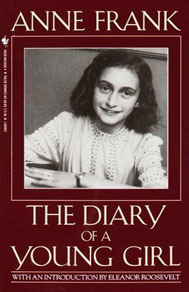
The Diary of a Young Girl by Anne Frank
anne frank
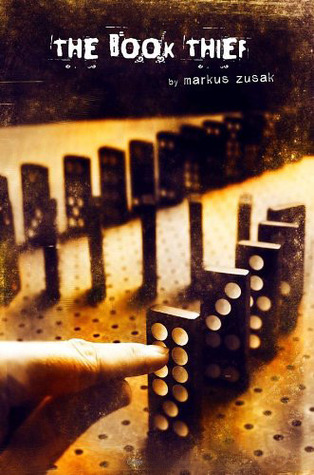
The Book Thief by Marcus Zusak
book thief
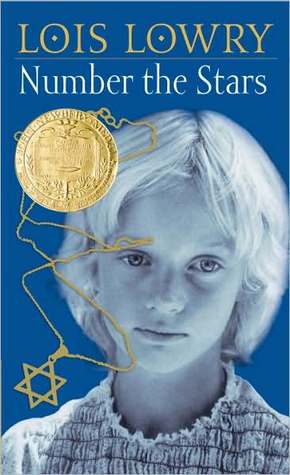
Number the Stars by Lois Lowry
number the stars

Graphic Novel
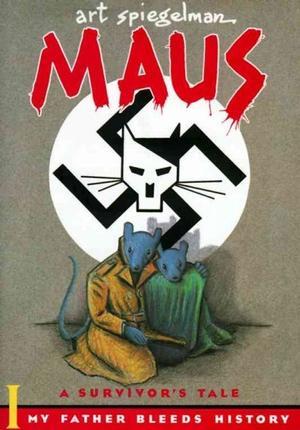
Maus I: A Survivor’s Tale by Art Spiegelman
maus

Picture Books
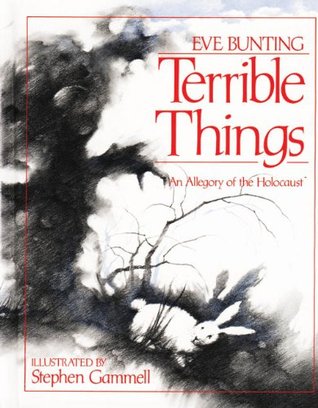
Terrible Things by Eve Bunting
terrible things
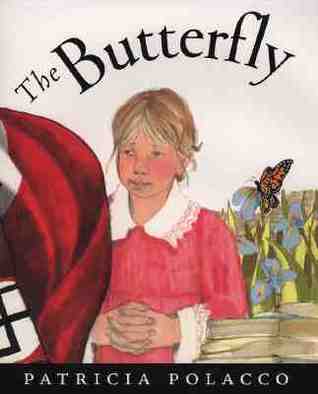
The Butterfly by Patricia Polacco
butterfly
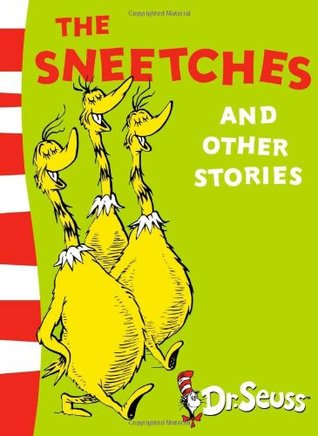
The Sneetches by Dr. Seuss
sneetches

Pledge of Allegiance”

Songs
“Empty Chairs at Empty Tables” from Les Misérables
“Hide and Seek” by Imogen Heap

Speeches
Winston Churchill’s First Speech as Prime Minister on May 13, 1940
President Roosevelt’s Speech to Congress on December 8, 1941
Adolf Hitler’s Speech Declaring War Against the United States on December 11, 1941
Pope John Paul II’s Speech at Israel’s Holocaust Museum March 23, 2000

Poems
“The Creed of a Holocaust Survivor” by Alexander Kimel
“The Action in the Ghetto of Rohatyn, March 1942” by Alexander Kimel

Charts
Lawrence Kohlberg’s Stages of Moral Development

Online Resources
Timeline from 1918-2000
Viktor Frankl: Why Believe in Others TED Talk
“‪Oprah and Elie Weisel at Auschwitz” (1:20- 6:05)
“Man that saved hundreds of children from the Holocaust surprised by them decades later”

Articles
“Ghettos Under Nazis” by Susan D. Glazer
“Baking Saved this Man during the Holocaust, and Is Still His Livelihood” by John M. Glionna
“3 Famous Moral Dilemmas That Will Really Make You Think” by Lenna Son
“German Woman, 91, is Charged with 260,000 Counts of Accessory to murder as Prosecutors Accuse Her of Being a Nazi SS Radio Operator Who Served in Auschwitz”

Guiding Questions

  • Are there tenets of morality that are universal?
  • Can a person’s sense of morality be altered by their situation or surroundings?
  • Did the conditions of the holocaust change people’s morals? How so?
  • Are there good and bad people?
  • What can we learn from the tragedy of the Holocaust?

Writing Prompts

  • Consider one of the famous moral dilemmas we have discussed. What do you believe is the right answer in this context? Why
  • What makes someone a good person? A bad person? Are there clear binaries between the two?
  • Choose a text (novel, story, video, song, etc.) from class that has helped to give you a better understanding of the holocaust. What did you learn from this text? Why is it important?
  • Choose a quote or passage from Night. What does this scene say about morality?
  • Is there any moral(s) that you find to be universal, as in followed and accepted by everyone? What is it and why is it so widely accepted? If not, explain why you think there is no universal set of morals.

A special thanks to Kellie-Anne for this inspiring text set! We think this text set would be useful for many anchor texts! What do you think?

Kellee Signatureand RickiSig

Text Sets for Teachers: Finding the Line: What is “Good?

Share

Text Set Button

Finding the Line: What is “Good?
Text Set for The Kite Runner by Khaled Hosseini
created by Alexandria Bottelsen

What makes someone a good person? When are you beyond redemption?

For many young adults, the world seems black and white. In many forms of literature and pop culture, there is a dichotomy between good and bad, heroes and villains. That being said, things such as morality and the “right” thing to do are rarely clear-cut. Not only do these determinations depend on cultural and societal norms, they are also based on individual values. Through The Kite Runner, students will have the opportunity to explore what it truly means to be good, and when—and ultimately if—people are beyond redemption and forgiveness.

The Kite Runner by Khaled Hosseini deals with these issues of morality in a modern, engaging way and thus serves as the anchor text for this unit. That being said, the novel does take place in Afghanistan, where the culture and values are far different than those of high school students in the United States. While it is important for students to see that these issues are universal, I wanted to choose other texts—such as Harry Potter and Scandal—that they could easily relate to and grabble with. Similarly, many of the Internet texts are very modern. I want our discussion in class to transfer to other classes as well as their daily life, so including local police blotters, news articles about Snowden, and discussing the morality of current wars will expose them to wide range of contexts in which this argument exists.

Anchor Text (although other texts may be used!):
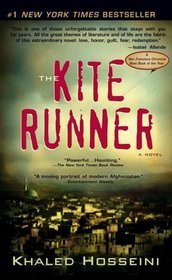
The Kite Runner by Khaled Hosseini
kite runner

Book Excerpts
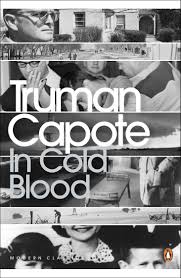
In Cold Blood by Truman Capote
in cold blood

Videos
Episode of Scandal (e.g. Season 4, Episode 19) and Abby and Harrison Talk About Morality
Clips from Harry Potter: Snape vs. Dumbledore
Les Miserables (2012): Clip where the bishop forgives Valjan
Criminal Minds Episodes (various)

Websites
The Scales of Good and Evil
Thought Experiment I
Thought Experiment II or Thought Experiment III
Who would you forgive?: List of Historically Famous “Bad Guys” (Instead of giving students the website rankings, ask the famous “bad guys” and debate/discuss this process. Can we rank evilness?)

Charts
Kohlberg’s Stages of Moral Development

Short Stories
“Young Goodman Brown” by Nathaniel Hawthorne
“Lather and Nothing Else” by Hernando Tellez
“The Lottery” by Shirley Jackson

Articles
“Does Reading Good Literature Make You Moral?”: Boston Review
“Is War Ever Morally Justified?”: The Week
Newspaper Scavenger Hunt for Good and Evil: Police Blotter
Bill Cosby vs. Michael Jackson: How Are They Remembered?
Edward Snowden

Essay
“The Prince” Machiavelli

Guiding Questions

  • How does the culture we live in help/hurt our definition of morality? How does the line between good and evil differ between cultures?
  • Does someone’s position in society (e.g. a role model, celebrity, or public servant) change where the line of morality is for them?
  • Is anyone entirely “good” or “bad,” or can people move freely between categories?
  • How does someone’s fall from morality affect our memory of them as a person?
  • Is there a point at which we can no longer forgive someone? Who defines that point?
  • Are good and bad situational, or are they concrete across all contexts?
  • Do the “ends justify the means”? In other words, is it ok to act “badly” if the result is “good”?

Writing Prompts

  • Think of a time when someone betrayed you. What did they do and why was that so bad for you? Would someone have taken equal offense to it? Were you able to forgive them? Why or why not?
  • What is one thing you think is beyond forgiveness? Why did you choose this? Can you think of any situations where you may forgive a person for that action?
  • List your top three values as an individual. Where do these values come from? How do they affect your view of “good” and “bad”?
  • Trace Amir’s morality throughout the novel, then decide, is Amir ultimately a moral person? Do you forgive him? Write a short paragraph for each side of the argument, then highlight which one you personally agree with the most.

A special thanks to Alex for this critical, thoughtful text set! We hope this will prove useful for many anchor texts! What do you think?

RickiSigandKellee Signature

Text Sets for Teachers: The Power of Words: Witnessing the Impact of Words

Share

Text Set Button

The Power of Words: Witnessing the Impact of Words
Text Set for The Book Thief by Markus Zusak
created by Kelly Markle

I chose this theme because I think that it is very important in The Book Thief and also important for confronting large events that based on control, such as the Holocaust. This theme could be used with almost any Holocaust text to highlight the psychological side of such a horrific time. The idea of “the power of words” is also something that would be very beneficial to talk about inside of a middle or high school classroom because it touches on issues that are extremely relevant to the students’ personal lives. This is a time of many insecurities and judgments, so it is a good way to explore this reality through other sources and texts. When designing the text set, I wanted to have a solid combination of historical and new sources that were relevant to what the students already know. I included musical sources, using a well-known song along with less popular songs that they may not know. I also did this by having a speech from Obama along with a speech by Hitler to highlight the fact that they are both very well spoken people and that they both have power in their words, but those words can be used to influence people differently.

When creating the set, I tried to start by thinking of activities that can be done based on this theme inside of the classroom. Then, I found sources to support those ideas, so that they were not thrown into a list that was nonsensical. This is important to my text set because many of the sources are videos and it is important to remember that there will be follow up activities that ask the students to write, respond, or participate in an activity based on what they are seeing so that it does not feel like they are only getting visual experiences. I also plan to print copies of lyrics to songs and speeches so that my students could read along and reference as the unit develops. I think that this theme lends itself to many different situations so that the discussions differ. There are also many levels of the influence words from a personal to a national level, which is something that is important to show students because one leads to another. This theme is relevant to the subject of English in general because if words did not have power, literature would not exist, and that could be used to help students realize the importance of the class and why books, poems, words endure.

Anchor Texts (although other texts may be used!):
The Book Thief by Markus Zusak
book thief

Novels
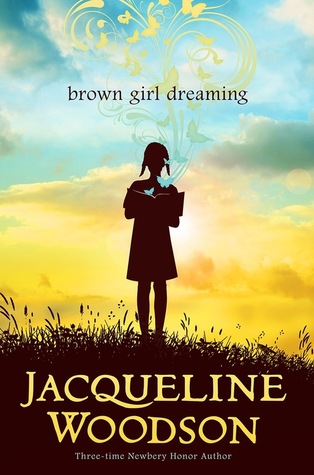
brown girl dreaming (excerpt) by Jaqueline Woodson
brown girl
The Diary of a Young Girl (excerpt) by Anne Frank
anne frank

Videos/Clips
Kid President: 20 Things We Should Say More Often
Blind Man: The Power of Words
Hannah Brencher’s Ted Talk
Fight Song in Spanish
Why Sign

Speeches
Hitler Youth Speech
Obama Campaign Speech
Obama: “Don’t Tell Me Words Don’t Matter”
Miss Teen USA 2007- South Carolina
“I Have a Dream”

Songs
“Consequence of Sounds” – Regina Spektor
“Same Love” – Macklemore
“A Hard Rain’s Gonna Fall” – Bob Dylan
“It’s Alright Ma” – Bob Dylan
“Misheard Song Lyrics”

Poems
“Jabberwocky” by Lewis Carol
“Every Kid Needs a Champion” by Rita Pierson
“The Power of Words” by Letitia Landon

Timelines
Holocaust timeline to represent how quickly Adolf Hitler gained power over the people

Histories
Churchill: The Power of Words

Images
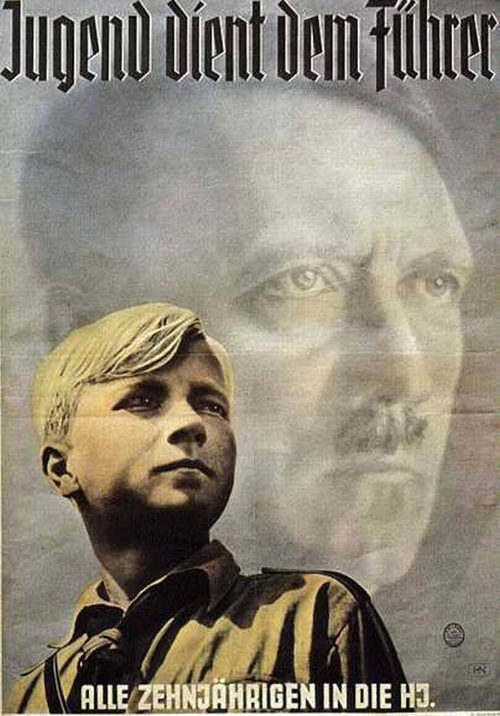
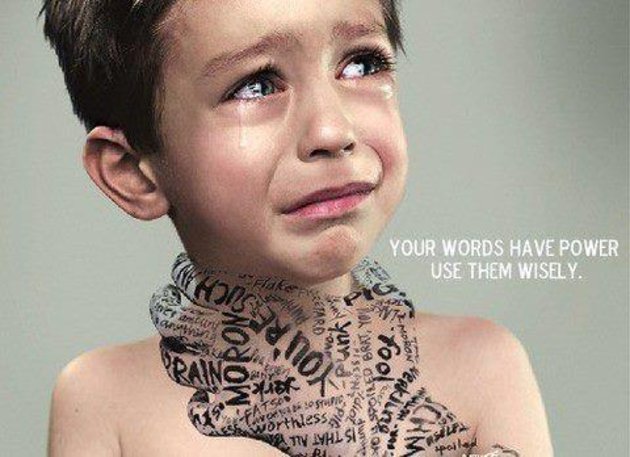
10-Youth-Serves-the-Leader-All-10-Year-Olds-in-the-Hitler-Youth boy words

 Short Stories
“The Children’s Story” by James Clavell
“The Pledge of Allegiance”

Activities (Some Are Teacher Created/Shared)
How words are added to the dictionary
Word poems
Favorite Song Activity
Mein Kampf– 4 Corners Activity
Word Play (laughter/slaughter)
Label Game: Each student is randomly assigned one word to define
Brenna’s lesson with quotes about technology
Andrew’s mismatch word activity

Guiding Questions

  • How many words does it take to make a difference?
  • What is the value in the words that are not said? Is tehre any? When should silence prevail?
  • Why do words hold such power?
  • Is this power a good thing or a bad thing? Does the good outweigh the bad, or vice versa?
  • Do words have the same impact no matter who says them? Does definition of a word matter, or the background and emotion behind them?

Writing Prompts

  • Have you ever experienced a time when you have been influenced by words in some way? Have you ever used words to influence others?
  • Create a poem, song, speech, or advertisement that confronts an issue that you find important and use it to convince the readers to feel the way that you do about it through words. Take a strong stance.
  • After reading The Book Thief and completing this unit, what have you realized about the power of words that you did not think about before?
  • Make a list of single words that you think have the most power and explain why.
  • Do you think that you were influenced by words growing up? Whose words? What affect did they have on you? Does this help or hurt society as a whole?

A special thanks to Kelly for this phenomenal text set! We think this text set would be useful for many anchor texts! What do you think?

Kellee Signatureand RickiSig`1111`