Author Guest Post: “Learning Empathy, Compassion, and Self-Acceptance from Mooz” by Hasan Namir, Author of Banana Dream

Share

“Learning Empathy, Compassion, and Self-Acceptance from Mooz”

I was born in Baghdad, Iraq and grew up there until I was 11 years old. I remember one time, I was seven years old, my father had just returned from Amman, Jordan, a neighbor country.  His face was beaming with excitement. I could tell he had a surprise for me, my mom and my sister. I was waiting in anticipation when he revealed what he brought cross the border: bananas. I was so excited because we never had bananas in Iraq. After Saddam Hussein invaded Kuwait, the United Nations Security Council imposed sanctions against Iraq. What that meant was countries weren’t allowed to import food, fruits and vegetables into Iraq. Instead the U.N. would give monthly food basket for families that included wheat, flour, sugar, rice, milk powder, tea, salt, detergents, soaps, beans, lentils and cooking oil. The basket didn’t include any fruits, vegetables, meats. Sadly, bananas weren’t allowed to be imported to Iraq and also they weren’t locally grown. I grew up dreaming about bananas, and I would see the fruit only on television. When my father came back from Amman, he had brought bananas with him and I was so happy. I ate so much and I wanted to eat more of them. My mom said to take a breather and not overeat otherwise, I would get a stomach ache. I wanted to bring some bananas to school. My mom wouldn’t let me do that. She didn’t want other kids to see me with them.  

As a kid, I had a lot of unanswered questions. I didn’t understand why my mama wouldn’t let me bring bananas to school. I quickly learned that not everyone was privileged to eat the fruit. Like my parents, I wanted to grow up to be more empathetic and compassionate. 

In 1998, my family immigrated to Canada and I quickly noticed that bananas were plentiful and cheap. Every time I ate the fruit, I had memories of Iraq and how bananas weren’t imported locally. Things have changed in 2003 during the Iraq War. All the sanctions were removed. Bananas became plentiful. I was happy to see Iraqi children being able to eat the fruit. My heart was with all the children who lived through war-stricken Iraq.  

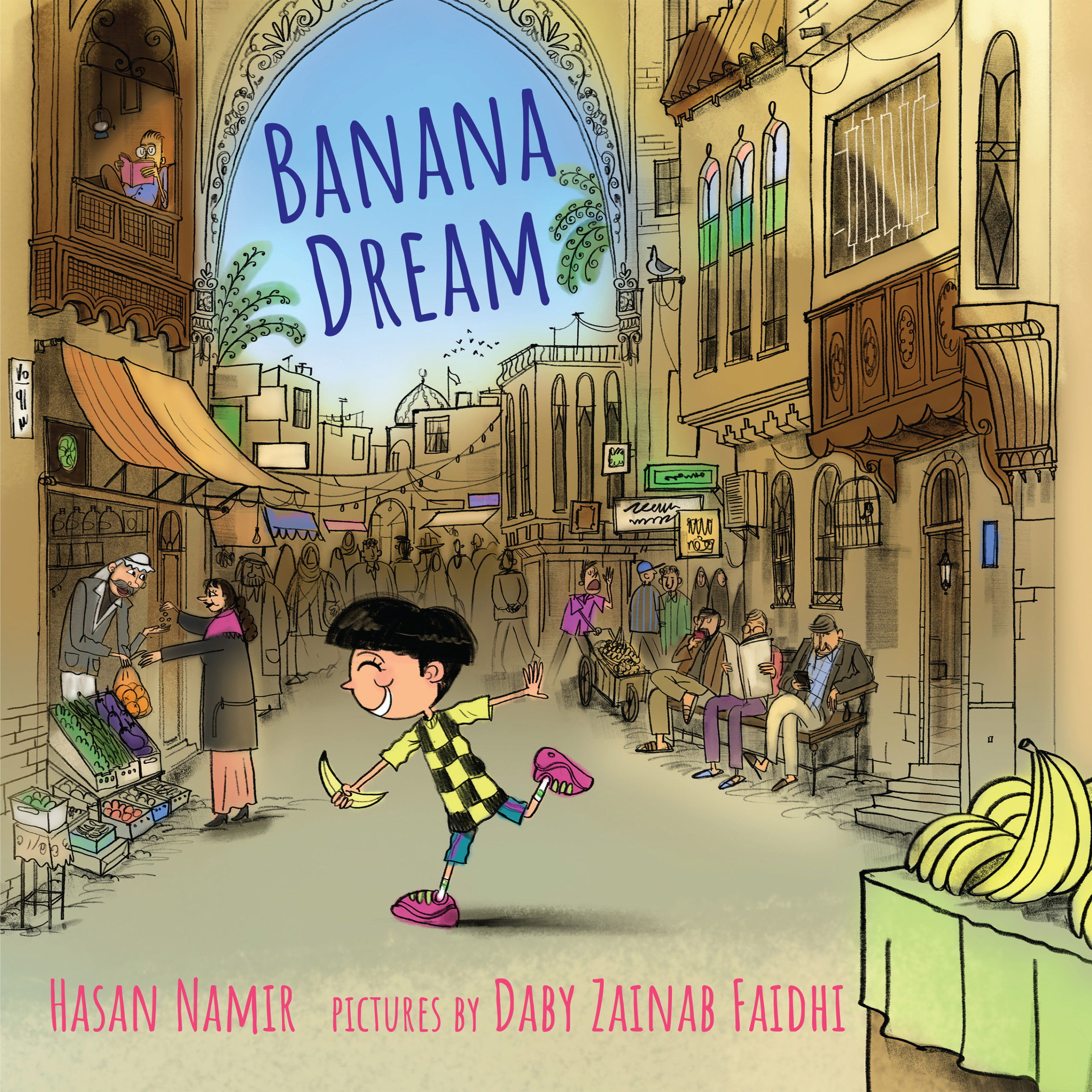
For many years, I wanted to bring the story of bananas in Iraq to life. When my son Malek was born, I knew that I wanted to turn the story into a children’s picture book. As such, I wrote Banana Dream. The story is about Mooz, an Iraqi boy growing up in war-stricken Iraq. His name means Banana in Arabic and he dislikes his name because he feels left out, like an outsider, when all his cousins were named Ali and Mohammad. His classmates mock his name and make fun of him because he was named after a fruit and that was such a strange thing. Mooz was always curious about his name so he asked his mother about it. His mama tells him the story of his birth. After years of being unable to get pregnant, she dreamed that she was feeding a baby a banana. After she told Mooz’s father about the dream, he drove for hours to Amman, Jordan to find her some bananas, and soon after, Mooz was born. After hearing this story, Mooz’s perception of his own name changes for the better. He becomes proud of his name and even defends his classmates who mocked him once again. He has a new appreciation of his name. The story also highlights Mooz’s dream of eating bananas too after sanctions were removed after the Iraq war. I wanted to show the thrill and excitement of Mooz eating a banana for the very first time. It is the same feeling I was having when I had a banana for the first time. It was such a magical feeling. 

I hope with Banana Dream, kids of all ages can learn to be empathetic and compassionate toward anyone who is not as privileged. I knew that I was writing a story about war so I treated it with extra sensitivity. I hope that the young readers will have empathy for Mooz as he goes through his journey of self-acceptance. 

When I wrote this story, I wrote it for my son, Malek, because I want him to read Mooz’s story so he can he learn about the time when bananas weren’t grown in Iraq and they were only just a dream. I hope that Malek and all kids who read the book will have a new appreciation of the fruit. May the story bring joy to all readers and also may it remind them not to take anything for granted. This experience has helped me appreciate the little things in life that I otherwise would not have paid attention to. 
Published July 11th, 2023 by Neal Porter Books

About the Book: A young boy in Iraq yearns to taste the bananas that have been made unavailable by warfare.

Growing up in Iraq after the Gulf War, Mooz didn’t always like his name, which means “banana”. But when he learns the story behind it, he’s proud, even when being teased by his classmates. Now all he yearns for is to taste a banana—a lofty dream in a time when few countries are trading with Iraq, where bananas don’t grow.

Inspired by author Hasan Namir’s own childhood, Banana Dream is at once a celebration of a seemingly ordinary fruit and a snapshot of how war can alter a landscape. Artist Daby Zainab Faidhi’s background in architectural illustration is evident as she brings the story’s setting vividly to life.

★ “This vibrantly illustrated picture book introduces children to the toll of war through a relatable experience: learning the meaning of one’s name. Mooz emerges as a fully formed, layered character, while the Iraq setting is richly drawn. The stylized artwork has an appropriately dreamy feel in places. What’s in a name? Plenty, as this clever and poignant tale makes clear.”—Kirkus Reviews, Starred Review

About the Author: Hasan Namir is an award- winning Iraqi-Canadian children’s book author. His debut picture book was The Name I Call Myself. He has also published books of poetry and a novel. He lives in Vancouver with his family. 

Visit him online at HasanNamir.com
Twitter – @HNamir
Instagram – @Hasan.Namir

https://holidayhouse.com/book/banana-dream/
Twitter, Instagram, and Facebook – @HolidayHouseBks

Thank you, Hasan, for bringing us Mooz who will truly help readers grow!

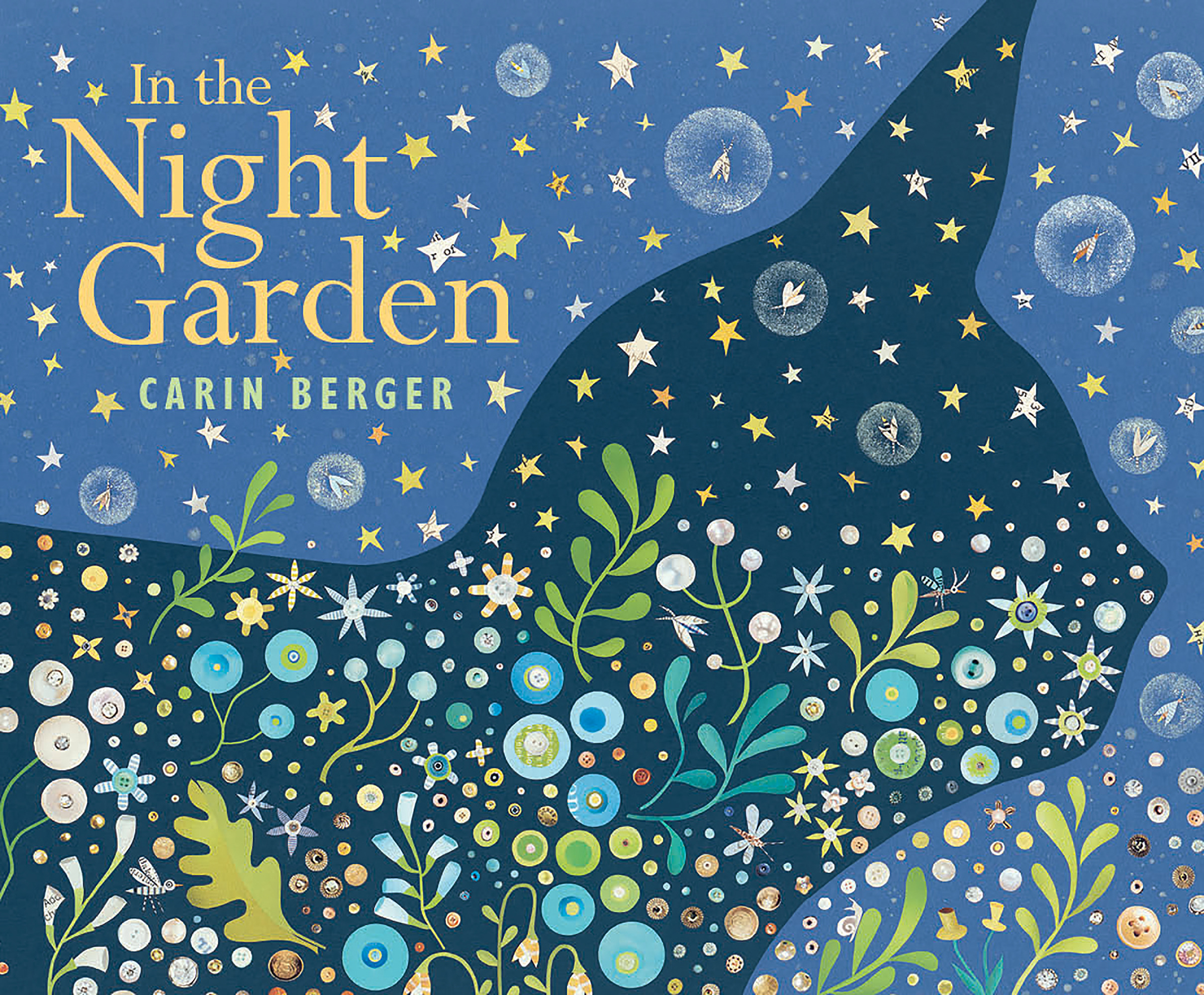
Author Guest Post: “Unpacking the Layers of Meaning Hidden within a Picture Book” by Carin Berger, Author of In the Night Garden

Share

“Unpacking the Layers of Meaning Hidden within a Picture Book”

On its face a picture book can seem like a simple thing. After all, most picture books are composed of a mere 16 spreads and a handful of words, plus a jacket, a case, end papers and a title page (all worth taking careful note of!). And yet a good picture book is a multi-layered, complex balancing act with many elements. Ideally, it works on several levels with layers of meaning woven within it that are revealed with repeat readings.

As an author and illustrator, I am fortunate to be able to toggle between visual and textual storytelling and allow a kind of play between the words and pictures. I can build secrets within the illustrations that continue to reveal new things upon multiple visits. I create my collages by hand, working with vintage ephemera, a material that I choose because I love the fact that each piece comes with built-in, hidden stories. One more layer of complexity. My goal is to build depth within my books, so that when they are used in a classroom, they can help foster meaningful discussions, cultivate careful observations, and to deepen visual and textual literacy. In the Night Garden, at first read, might seem to be simply a good night book. It has a lulling rhythm and takes place at night and ends with the phrase “Sleep tight.” An alert reader will notice a black cat who is on every page, and who chaperones the reader through the story, and functions as the narrator. The reader might also notice the passage of seasons within the illustrations. Certain spreads have interesting treats waiting to be discovered, for example the “visual onomatopoeia” in the illustration of the crickets and bullfrogs songs. Or the fact that hidden in the spread of the girl’s bedroom at the end of the book, there are objects from all of the previous spreads. Can you find them?

There are personal nuggets hidden within my books as well. I am a long-time fan of Al Hirschfeld’s illustrations. He always included his daughter’s name, Nina, within his illustrations. I have done this as well. The name of my daughter, Thea, is somewhere, hiding within the illustrations in all of my books including In the Night Garden. You will need sharp eyes, but I bet you can find it. Also keep an eye out for the letter T…as in Thea! In the Night Garden was in part inspired by Thea’s fear of the dark and difficulty in going to sleep at night. I think many children have some anxiety around this transition, and I hope that celebrating the beauty of the darkness will be useful. We used to lie out on the porch, gazing at the stars and identifying unfamiliar sounds as a way to ease her fear. This became a treasured ritual and part of the inspiration of In the Night Garden. My burgeoning love of gardening also inspired the book. I grew up around talented gardeners and I always longed to have my own bit of dirt to garden in. Now that we have our house in the country, I am insatiable. I find it a delight to watch the changes in the garden as seasons pass. There are often magical moments that happen: There was one early morning where I spotted a trio of fox cubs splashing playfully in our stream, and one autumn dusk when a hoot owl was only a few feet away, gazing steadily at me from our apple tree. We watch the dance of fireflies in the summer, and the whirl of bats that swirl above us in the early evening; we marvel at the silent transformation that occurs after a heavy snowfall. In some ways the book is an ode to Cupcake, the name our daughter gave our house, this place that we love. As you can see, it is deeply personal!

Finally, and also deeply personal, there is a more profound meaning tucked within the simplicity of In the Night Garden. I hope that the book inspires awe and wonder about nature and night time, as well as about seasons and the sometimes dazzling and sometimes subtle transformations that the natural world helps to highlight. I hope it lulls the reluctant sleeper to sleep. But it is more important to me that In the Night Garden works on a deeper level. I hope that the book can spark curiosity and initiate discussions about learning to explore the unfamiliar in a broader sense. I think fearing the unknown is universal, especially in childhood which is filled with newness and uncertainty. It is my deep wish that In the Night Garden can serve as a tool to start conversations about openness to things we aren’t familiar with, and that it will encourage readers to learn about new things, new people, new ideas. I hope that these conversations can help institute an openness to the “other”, something that I think is incredibly important, especially in these divisive times.

As you can see, picture books are not so simple!

Published July 4th, 2023 by Neal Porter Books

About the Book: A gentle, collage-illustrated bedtime read about the often mysterious and always beautiful experiences to be found in nighttime spaces.

In the night garden fireflies look like fallen stars.
Moonflowers unfurl and release their intoxicating perfume.

In the night garden you can lie
on the cool grass and look up to the
millions and trillions of stars…

In the night garden, nothing is as it seems and everything is made new. Blinking stars and pale moonlight might reveal a lone cat tiptoeing across a roof, luminous flowers unfurling in the cool air, a mama fox escorting her sleepy cubs home. Listen closely and you might hear the wind blowing through the trees, the murmur of a slow stream, or the gentle song of crickets and bullfrogs, lulling you to sleep.

Carin Berger is the award-winning author of The Little Yellow Leaf, a New York Times Best Illustrated Book. With soothing words and spectacularly detailed, hand-cut collage artwork, she has fashioned a bedtime book like no other. Curious readers will be rewarded when they look for the mysterious cat that appears on every page!

A Junior Library Guild Gold Standard Selection

★  “In tandem, the text and art endow nighttime with a sense of whimsy and wonder, and for little ones readying for bed, they’ll find comfort and reassurance for sweeter dreams.”—Booklist, Starred Review

★ “Nighttime is the right time for young readers thanks to this perfect amalgamation of soothing text and image.”—Kirkus Reviews, Starred Review

★ “Carin Berger’s sweet, gentle bedtime story is more than just a pretty face; it fully captures the imagination. Using her own garden as a muse, Berger (Finding Spring) takes the unease out of nighttime. . . .”—BookPage, Starred Review

★ “Berger’s attention to detail in the art, alongside her sophisticated and accessible text, creates a magical nighttime world. This spellbinding picture book will undoubtedly hold children in that glorious tension between wide-eyed curiosity and heavy-lidded drowsiness before they drift off to sleep.”—The Horn Book, Starred Review

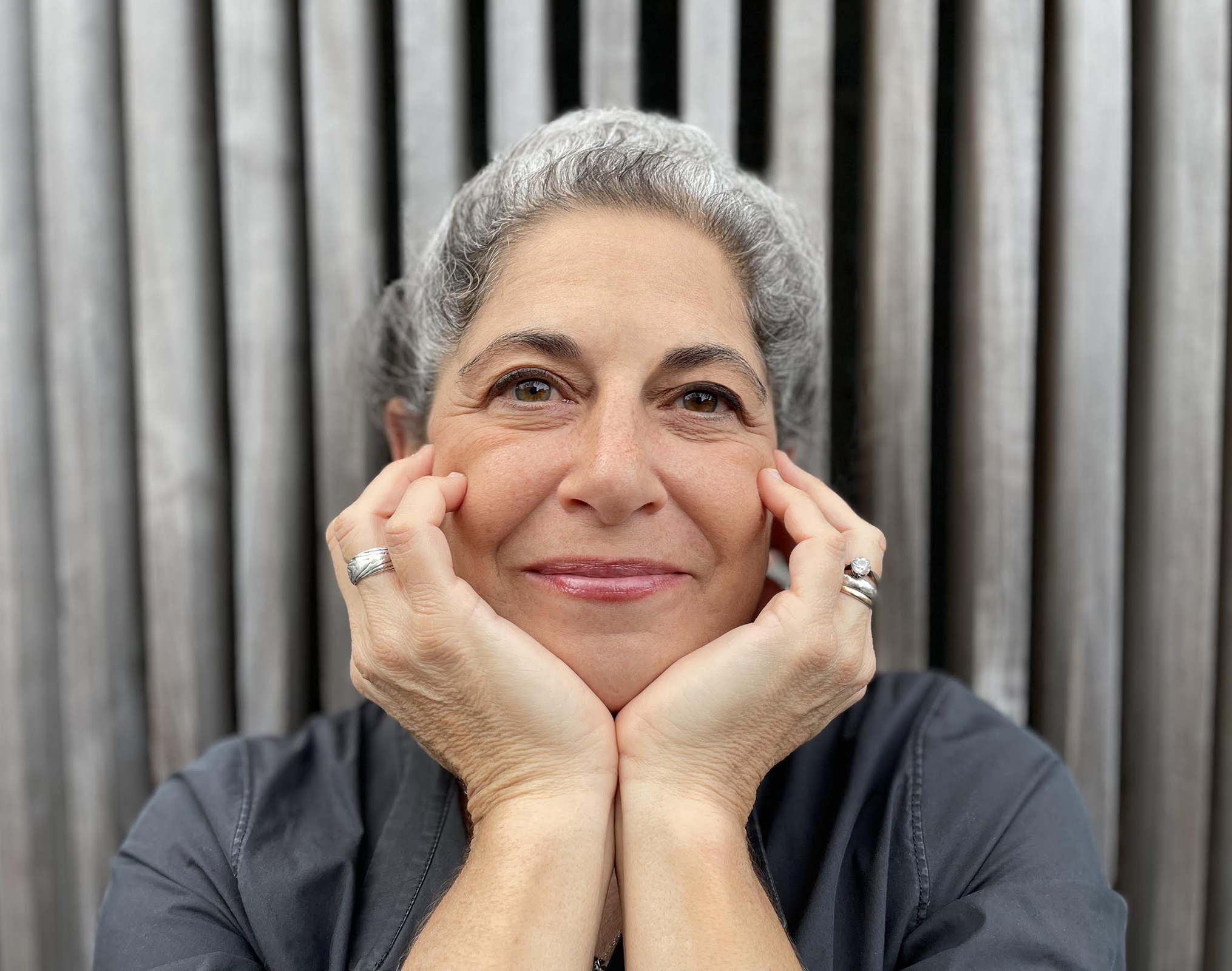
About the Author: CARIN BERGER is the award-winning author and illustrator of almost a dozen picture books for children, including The Little Yellow Leaf, a New York Times Best Illustrated Book; All of Us; and Finding Spring. She is also the illustrator of Behold the Bold Umbrellaphant by Jack Prelutsky, and Are We Pears Yet? by Miranda Paul. She and her family divide their time between NewYork City and “Cupcake,” their home in the Hudson Valley. Carin spends all of her spare time tending her garden. Cupcake makes an appearance in and was the inspiration for In the Night Garden. 

http://www.carinberger.com/
@carinberger on Twitter
@carinbergerdesign on Instagram
https://holidayhouse.com/book/in-the-night-garden/

Thank you, Carin, for reminding our readers about the complexity of picture books and their importance in our society!

Peaceful Me and Angry Me by Sandra V. Feder, Illustrated by Rahele Jomepour Bell

Share

Peaceful Me       &        Angry Me
Author: Sandra V. Feder
Illustrator: Rahele Jomepour Bell
Published May 2nd, 2023 & May 1st, 2022 by Groundwood Books

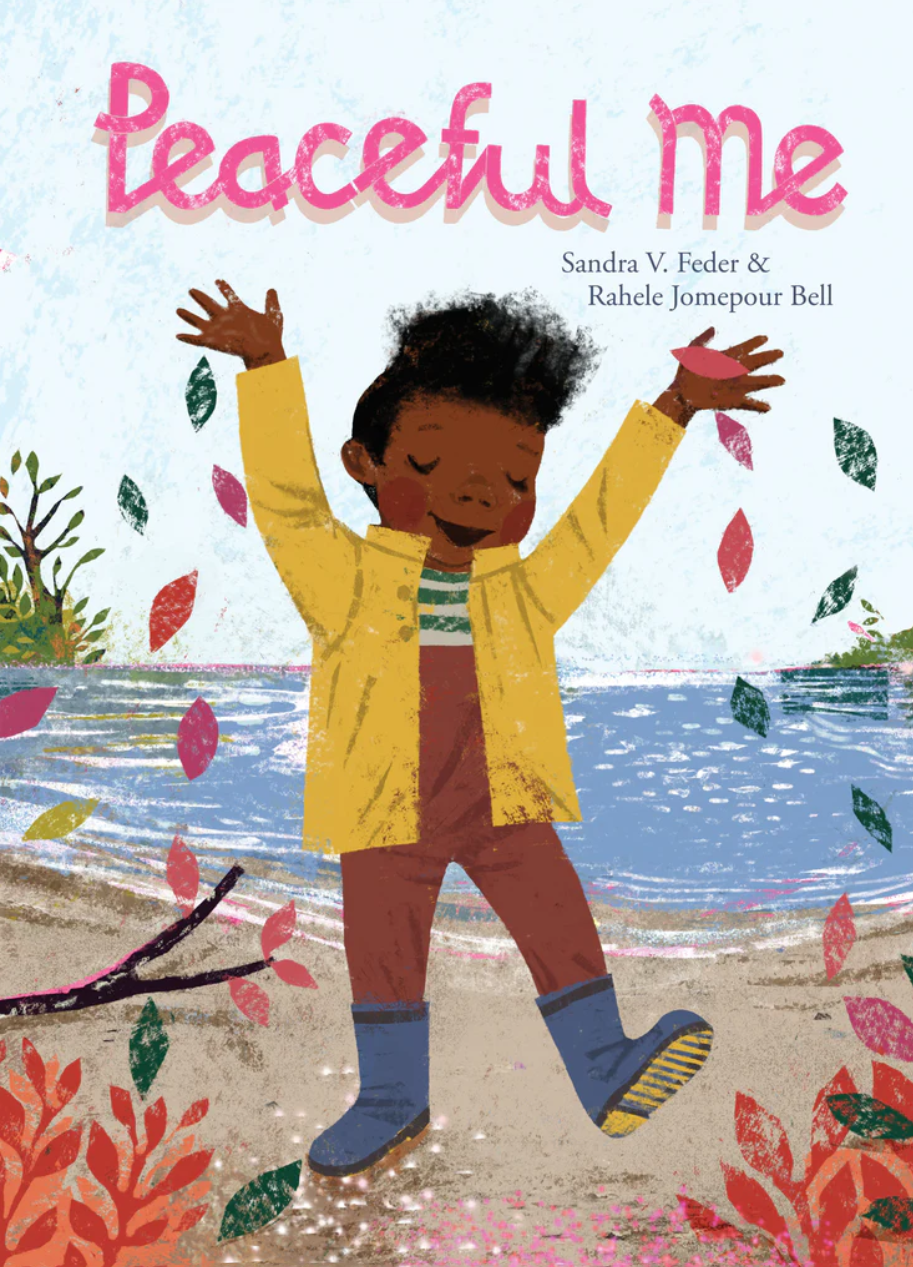
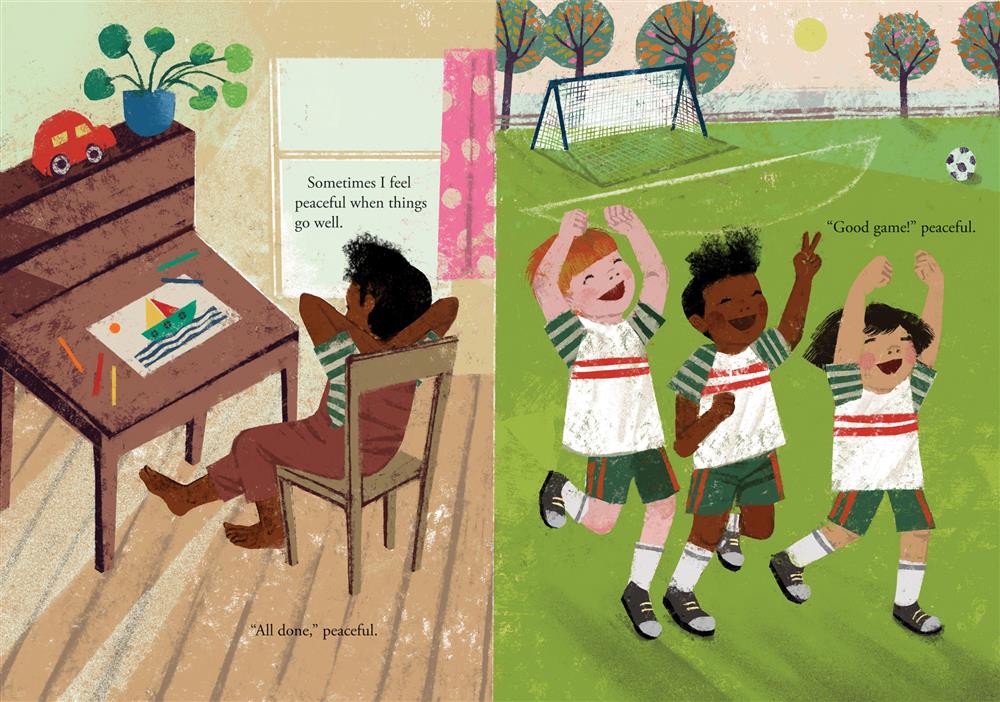
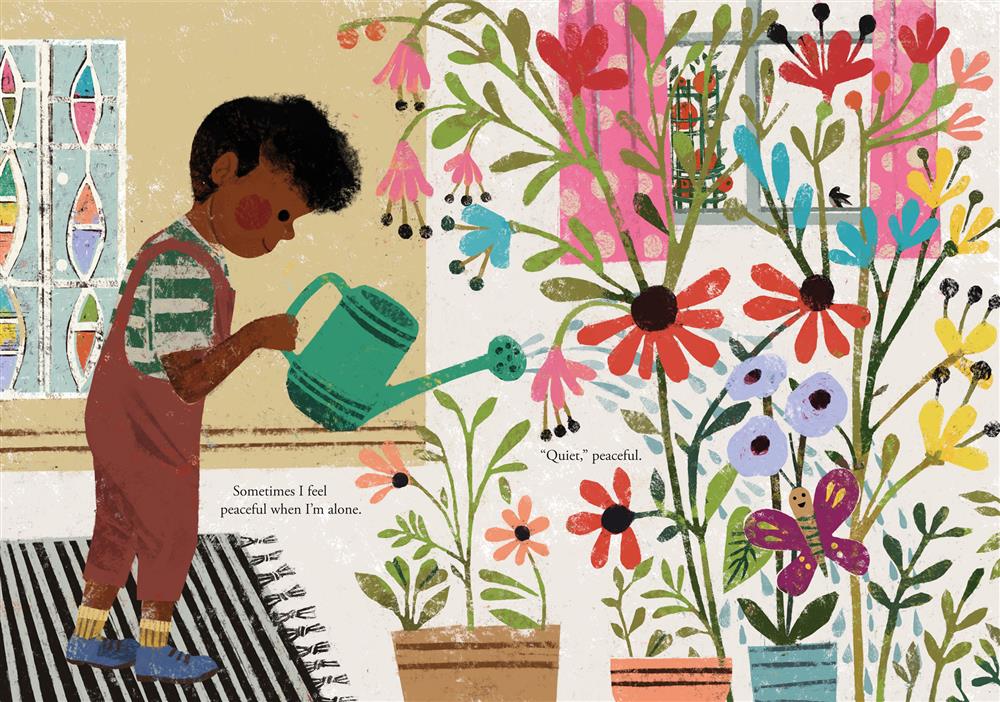
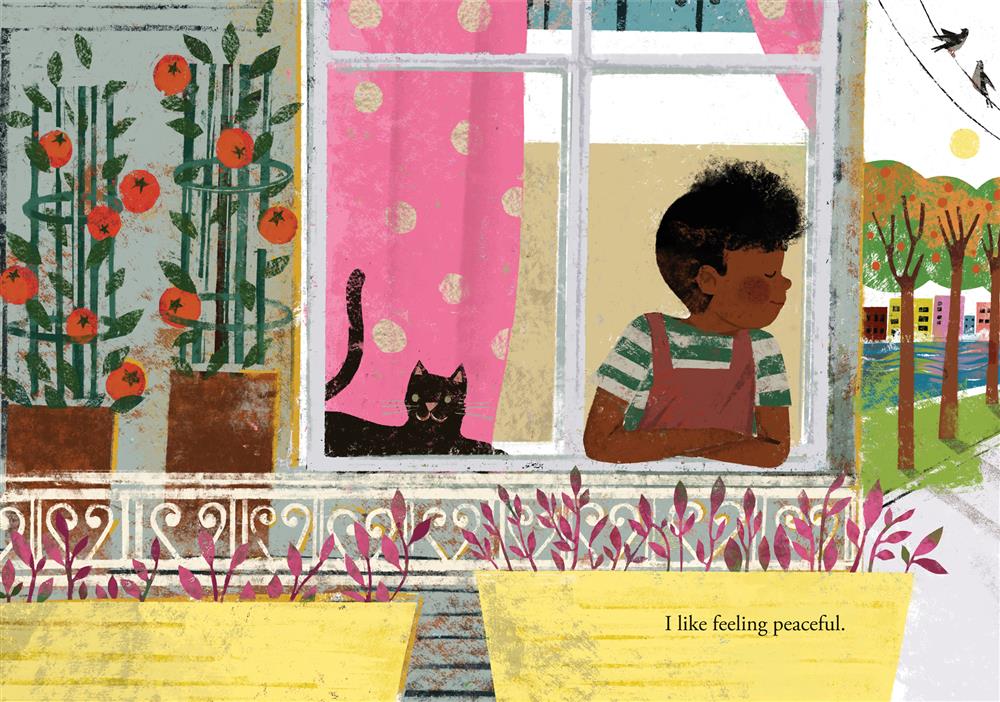
Peaceful Me Summary: A young child tells us about the different times when he feels peaceful, as well as how he copes when he needs to find a peaceful state again.

Acclaimed picture-book creators Sandra V. Feder and Rahele Jomepour Bell have teamed up once again to create a thoughtful and beautifully illustrated exploration of peacefulness.

“I like feeling peaceful,” the young narrator tells us, then describes the times when he is filled with this emotion. When he is playing with a friend, he feels “free peaceful”; when he is having family dinner, “yummy peaceful”; when he is outside gazing up at the sky, “fluffy clouds peaceful”. But, of course, he doesn’t always feel peaceful, and we hear about his strategies for coping during those times, such as taking deep breaths, imagining his favorite things, and finding a quiet refuge or a hug.

Peaceful Me is the perfect companion to Angry Me — together, they encourage readers to let anger come and go, while inviting peace to come and stay.

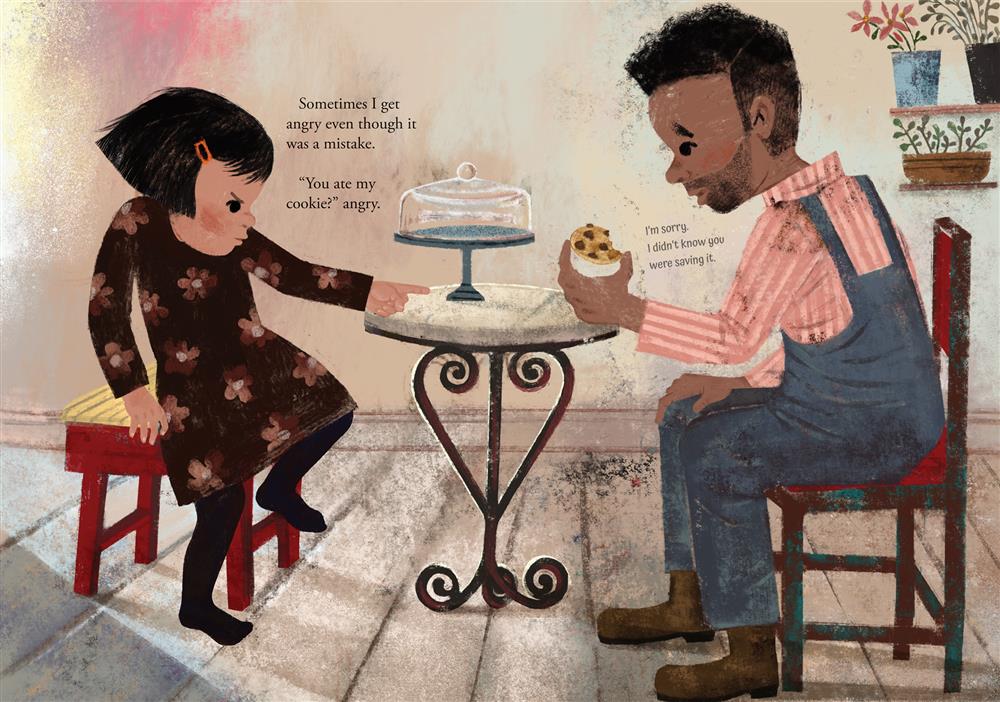
Angry Me Summary: A young child tells us what makes her angry and how she tries to let the anger come and go. An artful starting point for conversations about strong feelings.

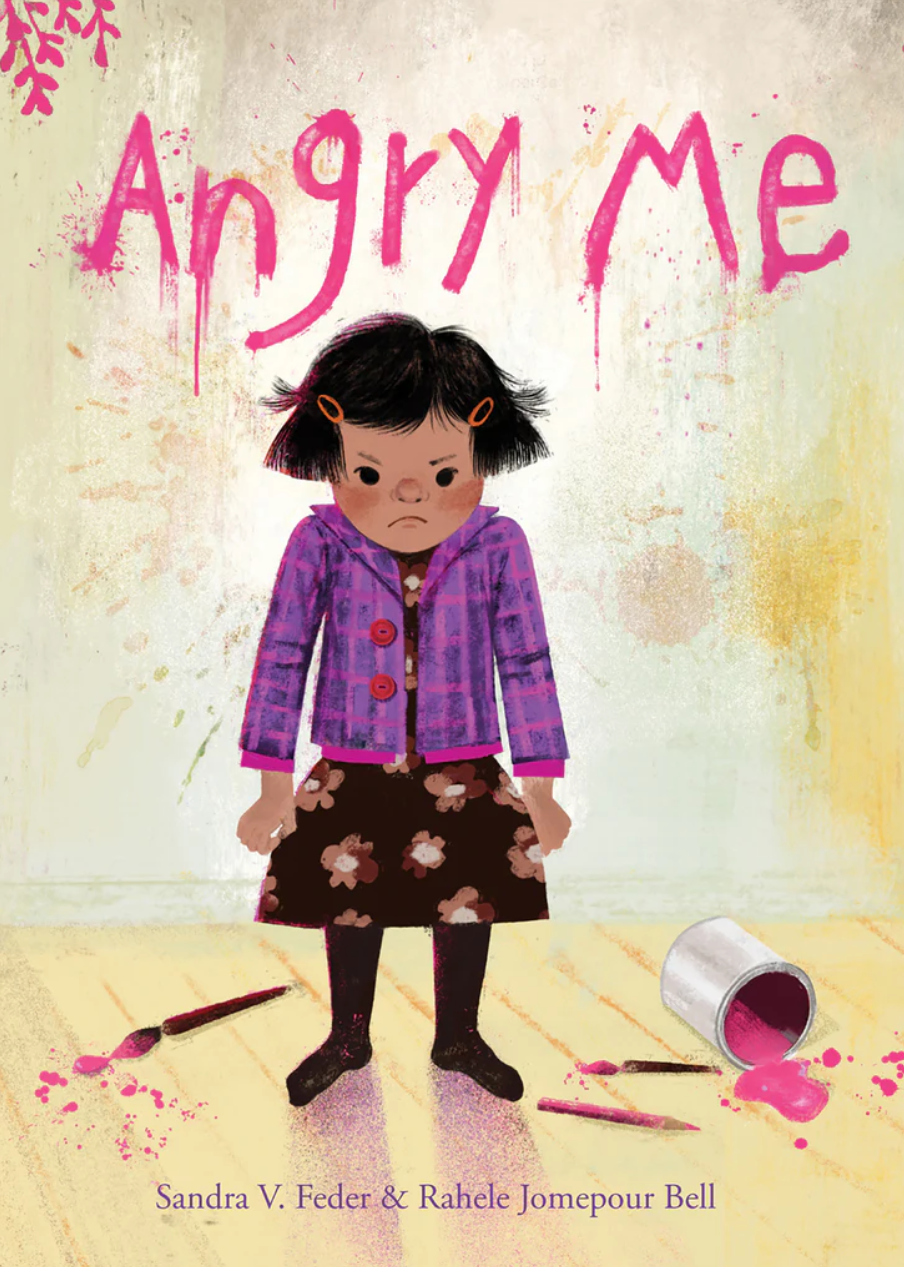
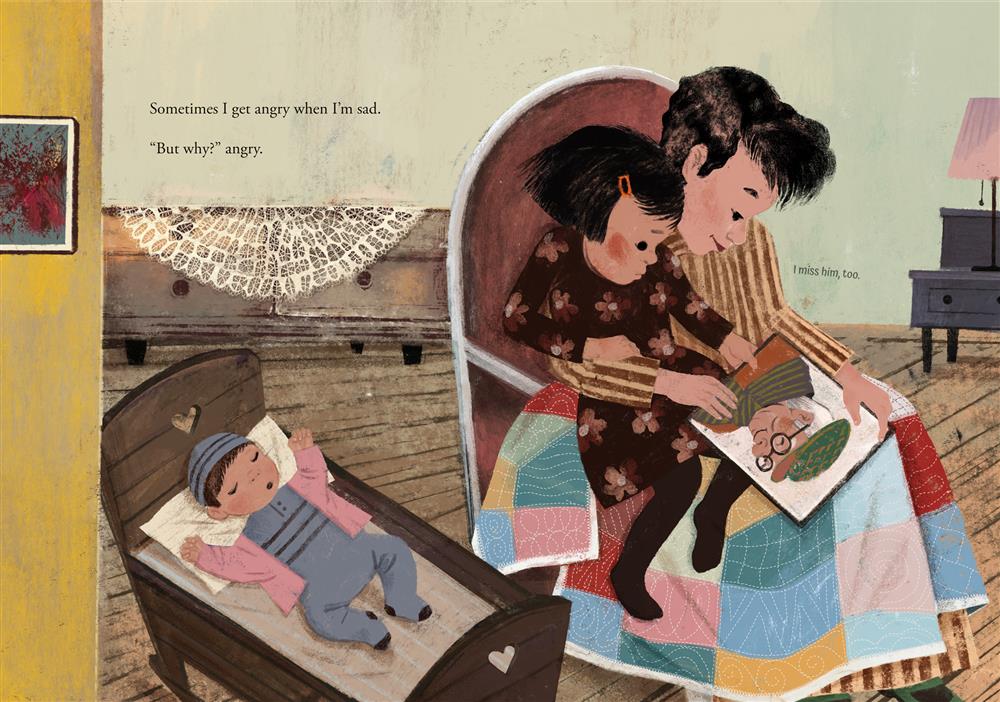
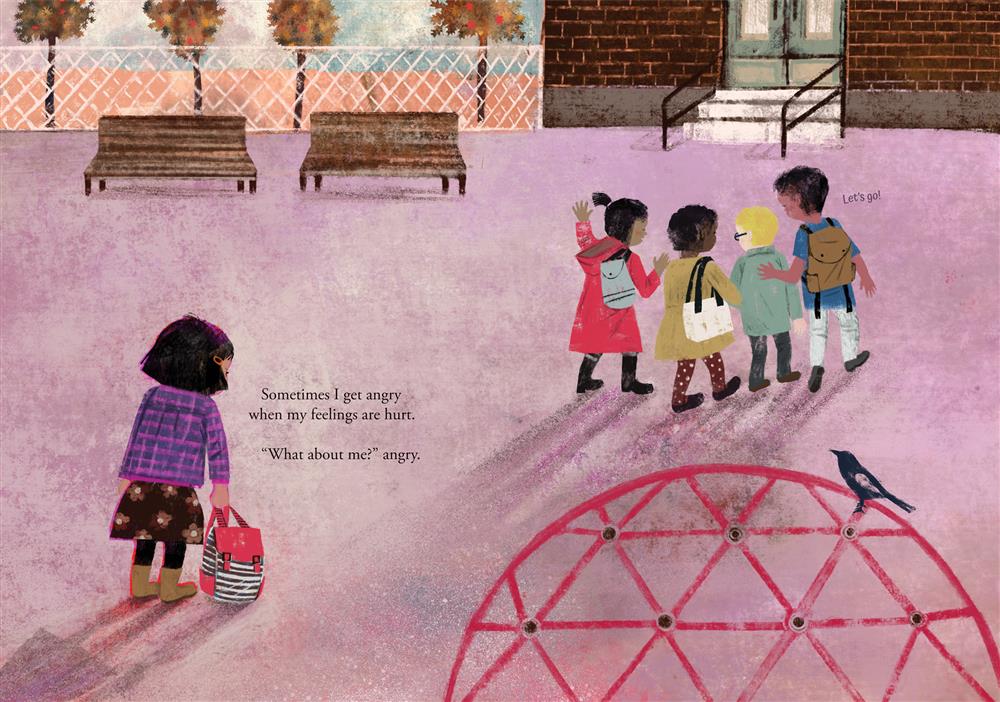
“I get angry,” says a little girl, looking fiercely in the mirror. Sometimes she gets angry when someone is mean and tries to take her toy away, when it feels unfair that there’s not enough time to go swimming, when she’s tired and just wants to go home, or when the kids at school leave her out, hurting her feelings.

When she’s angry, she tries to remember to use her words — even though that doesn’t always work. Sometimes she can’t find the right words, or the words don’t come out the way she intends. But sometimes words do help, and when her anger melts away a new feeling can blossom.

Sandra Feder’s cleverly constructed text presents different situations in which a child might feel angry, creating a nuanced look at anger and its many underlying emotions. Rahele Jomepour Bell’s illustrations show a loveable, angry little girl, brimming with personality, who learns how to express herself as she moves through her feelings.

Praise for Angry Me: 

“A valuable tool for teaching children the important skill of recognizing and naming feelings.” —Kirkus Reviews

“A fresh addition to teeming ‘anger management’ shelves.” —Booklist

“Artfully captures the nuances of anger. STARRED REVIEW” —Shelf Awareness

“An effective springboard for discussing a topic that may be hard for young children to verbalize.” —School Library Connection

About the Creators: 

SANDRA V. FEDER is the author of three acclaimed picture books: Angry Me, illustrated by Rahele Jomepour Bell; Bitter and Sweet, illustrated by Kyrsten Brooker, a PJ Library selection; and The Moon Inside, illustrated by Aimée Sicuro, which has been translated into multiple languages. She has also written the Daisy series of early chapter books, illustrated by Susan Mitchell. Sandra lives in California.

RAHELE JOMEPOUR BELL’s charming illustrations have appeared in Angry Me by Sandra V. Feder, The Treasure Box by Dave J. Keane and Our Favorite Day of the Year by A. E. Ali (Kirkus Best Picture Books of the Year), among others. She has also published seven picture books in Iran and has received a number of awards and honors for her work.

Review: These are such important books! Children become better adults when they can learn to name and deal with the actual feelings they are feeling, and these texts start this process. These books would be perfect to use at the beginning of the year to talk about emotional regulation and how conflicts will be resolved in the classroom. I also think that parents will benefit from these texts to discussion emotions, as will therapists and counselors. They are so multifaceted!

What made these books even more special were the way that the text does one purpose and then the illustrations add a whole other element to the book. I would love to see these books used not only with a social emotional learning purpose, but also use the illustrations to tie in narrative and creative writing elements. Students can take what they learn in the illustrations and write a whole other story!

Teachers’ Tools for Navigation (from the publisher): 

  • Key Text Features:
    • explanation
    • illustrations
    • vignettes
  • Correlates to the Common Core State Standards in English Language Arts:
    • CCSS.ELA-LITERACY.RL.K.7 With prompting and support, describe the relationship between illustrations and the story in which they appear (e.g., what moment in a story an illustration depicts).
    • CCSS.ELA-LITERACY.RL.1.2 Retell stories, including key details, and demonstrate understanding of their central message or lesson.
    • CCSS.ELA-LITERACY.RL.1.4 Identify words and phrases in stories or poems that suggest feelings or appeal to the senses.
    • CCSS.ELA-LITERACY.RL.1.7 Use illustrations and details in a story to describe its characters, setting, or events.

Discussion Questions: 

  • When do you feel peaceful? Angry?
  • What is your favorite time you feel peaceful?
  • How do you deal with feeling angry? What can you do to turn from angry to peaceful?
  • Is it better to talk about your feelings or hold them in?
  • How does talking about your feelings help you process?
  • How do the illustrations of Peaceful Me and Angry Me help you with understanding the book better? How do they support the message of the book(s)?
  • What is the main theme of Peaceful Me? Angry Me?

Flagged Passages: 

Peaceful Me

Angry Me

Read This If You Love: Jory John’s & Pete Oswald’s Food Group Books; Sunny and Oswaldo by Nicole Melleby, Illustrated by Alexandra Colombo; Invisible Things by Andy J. Pizza, Illustrated by Sophie Miller; I Don’t Care by Julie Fogliano & Molly Idle, Illustrated by Juana Martinez Neal; In the Blue by Erin Hourigan; Harold the Iceberg Melts Down by Lisa Wyzlic, Illustrated by Rebecca Syracus

Recommended For: 

classroomlibrarybuttonsmall 

Signature

**Thank you to Nicole Banholzer PR for providing copies for review!**

Author Guest Post: “Big Ideas: Ways of Making Abstract Concepts More Tangible for Students” by Laura Wippell, Author of Feeling Hopeful

Share

“Big Ideas: Ways of Making Abstract Concepts More Tangible for Students”

One of my favourite things about picture books is their ability to communicate BIG IDEAS, BIG EMOTIONS and BIG ISSUES on their relatively small pages.

In an age of book bans it’s extremely encouraging to see authors continuing to tackle these big subjects within picture books, but is it something we are doing enough of in our classrooms?

I’m an Australian teacher who has been teaching English to students in Chile for almost a decade.  It can be challenging to explore BIG ideas with my ESL primary school students, who often need extra support when it comes to vocabulary or finding ways to describe these non-tangible concepts.  So, what I try to do is find ways to help them visualise these abstract concepts, or make them more tangible.

Here are three examples of how I’ve done that:

  • Show, don’t tell

When it comes to ESL classes, students have sometimes shown anxiety when I introduce a new concept, because while they might know what it is, they haven’t heard the term before in English, and it sounds big and scary.  When starting a new unit, I’ve learned that it’s best to retain a bit of mystery, and rather than telling students what our new unit will be about, I use inquiry activities such as the Question Formulation Technique, or Project Zero’s Thinking Routines from Harvard.  One example is their Name, Describe, Act activity.

Here’s how I’ve adapted that activity for my class:

I wanted to talk about fear as an emotion (a fairly abstract concept), so I displayed an emoji on the board and the students had to try to name it, describe it, and explain what sort of actions that emoji might produce.

The great thing about inquiry activities is that the students’ answers can give you a good indication about their prior knowledge on the subject, and how much support you might need to give them in the upcoming classes.

  • Food is a love language!

I’ve come across quite a few language and cultural barriers since living in Chile, but one sure way of breaking them down is through food.  Gosh, Chile has some incredible food!  From its soft, spongy marraqueta bread, to its creamy ‘manjar’ or ‘dulce de leche’ as it’s often referred to in other countries, to its colourful rainbow of seasonal berries and fruits, there’s something here for every appetite.  Food is a fantastic way to find common ground when meeting someone new, both in and out of the classroom.

Since food is so universal, I find it to be a great tool for making connections to more abstract ideas or concepts with students.  When I tutored students one-on-one, I was able to bring a few snacks for us to smell and nibble on and then compare each snack to something abstract, like an emotion or even a character from a book.

If the visual aspect of food wasn’t enough for them to make connections, the students could use their sense of touch, smell and taste to make surprising connections to those intangible concepts.  I once heard that watermelon was chosen to represent fear, because of all of those scary dark seeds that are hidden within.  Who would have thought?

For bigger classes at school where food sharing can sometimes be tricky or not allowed, you can always show high resolution pictures or videos.  The Hiho Kids channel on YouTube has a lot of cute videos of children trying food from around the world.

  • Differentiation is key

If food isn’t your thing, you might like to get your students to choose how they would like to describe a concept in a more tangible way.

For example, if you are exploring ‘fear’, they could choose between one of the following options:

  • If they had to write a letter to their fear, what would they say to it? Here you can always use vocabulary lists for extra support.
  • How would they represent fear in a dance? What music genre would they dance to?
  • What about a meme? If they had to sum up what their fear looks like in one meme or gif, what would it be?
  • How would they draw their fear? What does fear look like to them?

If you’re wondering why I’ve used fear as an example in my activities, it’s because it’s something that I feel we need to talk more about.  As teachers we often have a lot of social-emotional check-ins with our students about how they are feeling, but sometimes we need to dig deeper and look at their current fears in order to understand why someone might be feeling a certain way.

Fear can be tough to explore, so I wrote a picture book about it.

Published

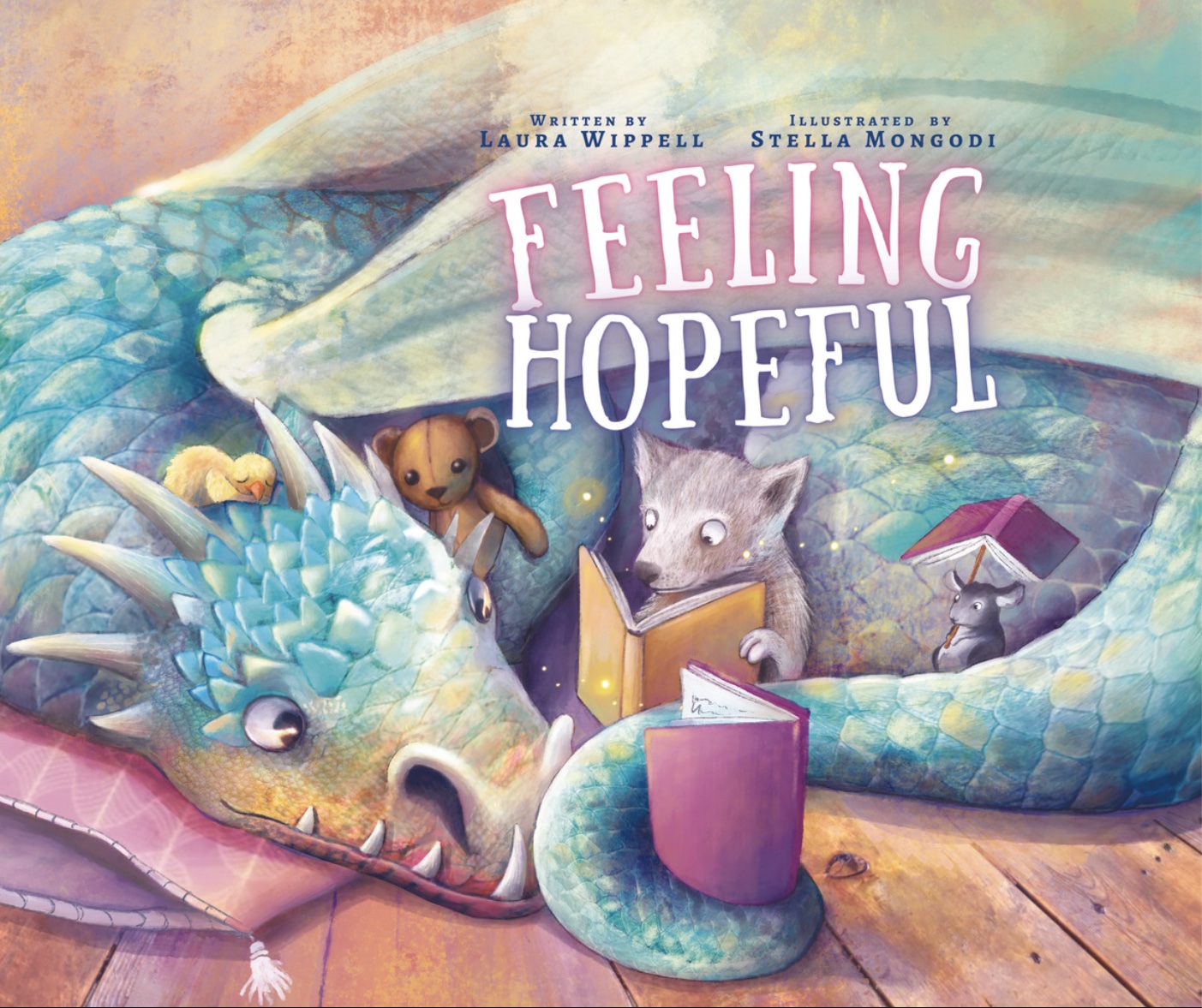
About the Book: In my picture book, Feeling Hopeful, Hope takes on the form of a happy, somersaulting dragon, who is hunting Fear.  Fear appears as a creature that likes to climb on children so they feel its full weight and presence.  Don’t worry though, there is a happy ending!

Far above the world, Hope the dragon somersaults through the sky, protecting those below.  But he encounters a formidable opponent in Fear.  Fear proves no match for Hope, until he meets a curious character, The Reader.  And it’s inside The Reader’s vast library that Hope finds what he’s looking for, plus much more…

This lyrical story has an uplifting SEL message and contains themes of hope, fear, the importance of reading and friendship.  While this book is marketed at a younger audience of up to six years old, I’ve used it with students up to 11 years old, and all of them have been able to make surprising, honest and beautiful connections.

That’s the beauty of working with BIG ideas, emotions and issues – they really have no age limit.

You can find a free teaching resource for Feeling Hopeful on my website at https://www.laurawippell.com/resources, which contains activities aimed at helping students visualise hope and fear.  Please feel free to reach out with comments or questions via my contact page.

About the Author: Laura is a children’s author.  In 2022, she won the Bee Ethicool author contest, which received over five thousand entries.  Laura’s debut picture book, Feeling Hopeful, is out now with Ethicool Books.  As an Australian living in Chile, Laura loves writing imaginative children’s books that make you feel local, and think global.  Laura has a background in Education, and is passionate about sharing her books with children and educators around the world.  Visit her at https://www.laurawippell.com/

Thank you, Laura, for these activities for the classroom!

Author Guest Post: “Using Fiction to Tell Your Truth” by Kaz Windness, Author of Bitsy Bat, School Star

Share

“Using Fiction to Tell Your Truth”

“Write what you know.” We’ve all heard this advice, and likely your earliest writing assignments were personal narratives. Mine were. Now as a more experienced author, how can you write stories that are still authentic to you but utilize fictional characters and worlds? The answer is metaphor.

Since I discovered I was autistic six years ago, I’ve wanted to write a children’s book that captured my experience of trying to fit in a world not designed for me. I’ve always known I was different and struggled, but it took my child getting diagnosed through school to realize I fit the criteria, too. Finding out was life-changing and healing, but it also led me to discover how much work we still have to do to help the world understand autism. As a children’s book author, illustrator, teacher, and mom, I knew I needed to use my platform to help spread awareness. But how?

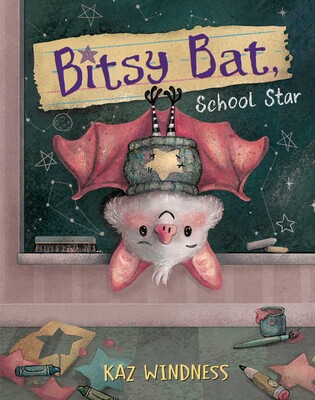
One day as I was chatting with an autistic illustration student and drawing bats in my sketchbook, I compared being autistic to being a bat in a classroom full of mice. The second I said it, I knew this was the book idea I’d been waiting for. “What if a bat tried to fit in at a school for mice?” I went straight to work writing Bitsy Bat, School Star.

Bats may look like mice, but their physiology and needs differ greatly. Additionally, they have traits common to autistics. For example, a bat’s eyes are sensitive to light and their ears are sensitive to sound. They flap when happy and prefer to eat a few specific foods. Moreover, they are misunderstood and need more love and understanding.

As I began working with my editor, Bitsy’s story evolved to include all sorts of nocturnal animals besides mice—a bunny, a porcupine, a fox, a mole, a raccoon, and a possum. Besides being a story about a little bat finding acceptance, we saw the potential for all children to feel seen. When Bitsy learns to share what makes her unique, she invites her classmates to do the same. The book ends with each child participating in a “Shine and Share” activity to celebrate everyone in the class.

Take a moment now to think about something that makes you uniquely you. This could be something about your background, your life experience, a disability, a unique talent, or any other aspect that is specific to you. Write a few sentences to describe what this is. Now brainstorm characters or circumstances that could mirror this story of your uniqueness.

During quarantine, many picture book authors wrote stories about a big storm. The storm was a metaphor for dangerous circumstances outside of our control. Forced to stay inside and shelter while the destruction was happening everywhere, we experienced fear and loss but grew closer as families and remained hopeful for brighter days ahead.

Metaphors offer safe places to experience big feelings in ways that are both more gentle and more impactful. We can go to extremes within the expanse and safety of fiction. Imagine if Max had moped around in his room for thirty pages instead of sailing to the island of monsters and living out a fantasy of being king of the Wild Things.

Don’t shy away from talking about your unique identity or struggles. Every time I’ve faced my fears and exposed a vulnerable part of myself, rather than being shamed or ridiculed, I’ve helped people who are like me in some way, just waiting for someone to break the silence so they knew they weren’t alone. Writing your truth will always resonate with readers. It helps heal others and yourself, too.

Try your hand at metaphor and tell stories that bring your authentic self to fiction.

Published January 1st, 2023 by Simon & Schuster

About the Book: A little bat struggles to fit in only to learn to celebrate differences in this heartfelt picture book from an autistic perspective about starting school, making friends, and seeing what makes each person special.

About the Author: Kaz Windness is an author-illustrator who loves to make her readers laugh. When she’s not writing or illustrating books, Kaz teaches illustration at the Rocky Mountain College of Art + Design and enjoys making deep-dish pizza. Kaz lives in Denver, Colorado, with her husband, two children, and Boston terrier. She’s the author of picture books Swim, Jim! and Bitsy Bat, School Star. She also created the Level 1 Ready-to-Read Graphics Worm and Caterpillar Are Friends and the Level 1 Ready-to-Read Cat vs. Vac. Visit her at WindnessBooks.com.

Thank you, Kaz, for sharing your truth and pushing writers to share theirs too!

Author Guest Post: “Building Empathy” by Kim Taylor, Author of A Flag for Juneteenth

Share

“Building Empathy”

When I was a young girl, I was an avid reader. I did not have the distractions that are seemingly everywhere today. I picked up anything I could get my hands on, but I was most attracted to stories with a main character that was trying to find their place in the world. If the writing was very good, I was drawn into the story and felt deeply connected to the protagonist. I had the best of two worlds. I spent my formative years living in an apartment building in Brooklyn, and every summer I would go to sleep away camp in the Catskills. I loved the excitement of playing outdoor games with friends in our building’s courtyard, but always looked forward to the calming peace of the woods and lake at camp. It’s no wonder that I would seek out books with these familiar themes.

When I was doing research to prepare for writing my debut book A Flag for Juneteenth, I googled, listened to podcasts, and read books about slavery in America. I also looked at pictures of enslaved people which helped me to imagine their personalities and lives. One picture of a little girl that I found on the Library of Congress website seemed to embody the spirit of my heroine, and I kept her image in mind as I developed the character.

I wanted my main character’s name to be unusual, one that would be new to my readers. I envisioned this character to be a prophet, one who could bear witness to the announcement of the end of slavery as a legal institution in America and could also foretell a future free of bondage. I googled biblical female prophets and an image of a beautiful Black woman appeared on my screen. Her name was Huldah. As soon as I saw her, I knew that this would be the name of my main character. Eve, the name of Huldah’s baby sister, is also biblical. It is derived from a Hebrew word meaning “to breathe”, or “to live”. In my story Eve is an infant. She will have the opportunity to live her life without the burden of enslavement. One other character in my story has a name. Mr. Menard is the oldest man on the plantation. He has the last name of Michel B. Menard, the first plantation owner in Galveston Texas where my story takes place. I thought that it was important to demonstrate that enslaved people were often given the last name of their enslavers to erase any connection to their own family lineage.

I thought about ways to help young readers to be interested in an event in history that is rarely taught in schools, and to feel connected to a reality so far removed from their own. I knew that I would need to draw them in early in the story and decided to start with my main character feeling excited about her upcoming birthday celebration. Huldah is a mature, curious, insightful little girl. She has the very ‘grown up’ responsibility of caring for her baby sister during the day while her parents labor on the plantation. The reader meets Huldah for the first time on the day before her 10th birthday, which fell on a Sunday that year. Sundays were a day for rest and reconnecting with family and community. Huldah’s mom baked Huldah’s favorite tea cakes for her upcoming birthday, a luxury she may not have had time for when the long work hours started again the next day. The characters in my book are purposefully faceless. I am hoping that my readers will see themselves in the story and connect with the characters on a deeper level.

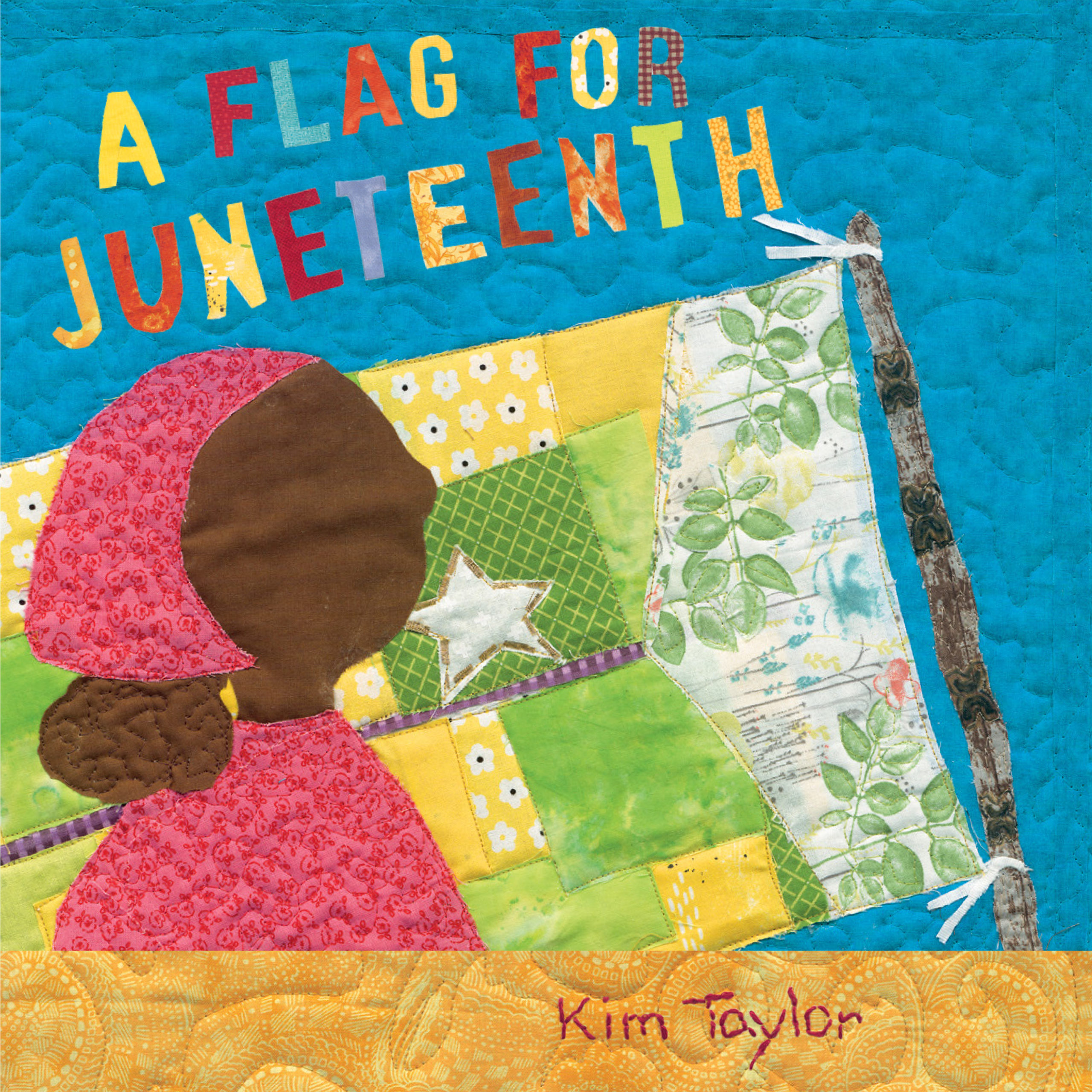
I am incredibly proud to have illustrated this book with quilting, an art form that was used by my ancestors to tell their own stories. When planning the illustrations, I tried to keep the text in mind, and made decisions about what aspects of the text I thought needed to be enhanced. For example, the first page describes tea cakes, a type of traditional cookie that enslaved people made using simple pantry ingredients. I thought that it was important to help my readers visualize a teacake, so I set out to create them using one of the brown fabrics from my stash that had some color variations. Teacakes were not fancy back then, but they were delicious and smelled amazing, so I used hand embroidered lettering to show the movement of the scent wafting through the air. The illustrations took a little over a year to create. It was an enormous undertaking and a very emotional journey. Because the people in this book have no faces, I had to figure out how to give Huldah depth and to showcase her personality in other ways. I also needed to make her consistent and recognizable in every illustration. That is no easy task when working with fabric on such a small scale! I remember telling a friend that I felt as though Huldah had become like a daughter to me. I felt a deep connection to the character.

When teaching about this troubling time in American history, I feel that is critical to highlight the beauty and resilience of African and African American people during their enslavement, as well as to showcase how important strong family and community ties was to them then and continues to be today. As educators we should not leave out what life was like for enslaved people when they were not laboring. Although difficult, these were people who did all that they could to connect with their immediate and extended families, and to build a sense of community despite such oppressive circumstances. By humanizing them we build empathy and help our young readers to see their commonalities rather than their differences. Hopefully this will encourage them to want to learn more about this significant time in American history.

Published

About the Book: This powerful title shares a unique story of the celebration of the first Juneteenth, from the perspective of a young girl. 

A Flag for Juneteenth depicts a close-knit community of enslaved African Americans on a plantation in Texas, the day before the announcement is to be made that all enslaved people are free. Young Huldah, who is preparing to celebrate her tenth birthday, can’t possibly anticipate how much her life will change that Juneteenth morning. The story follows Huldah and her community as they process the news of their freedom and celebrate together by creating a community freedom flag.  

Kim Taylor sets A Flag for Juneteenth apart from other Juneteenth books by applying her skills as an expert quilter. Each of the illustrations has been lovingly hand sewn and quilted, giving the book a homespun, tactile quality that will appeal to readers young and old.

Educators’ Guide: 

About the Author: Kim Taylor is a speech language pathologist and Department Supervisor at a large school for deaf children. She is also an expert quilter whose works have been exhibited at several venues throughout the Mid-Atlantic region. Kim’s quilts reflect African American life, and she tells stories through her materials. After researching the origins of the Juneteenth celebration, she created a Juneteenth story quilt which she has exhibited and presented in dozens of local schools. Realizing that many teachers and students were unaware of the holiday, she was moved to write this book. She lives in Baldwin, New York. 

To see more of Kim’s quilts, visit her website at MaterialGirlStoryQuilts.com or visit her on Twitter at https://twitter.com/comfortzne1.

Thank you, Kim, for this beautiful post about empathy!

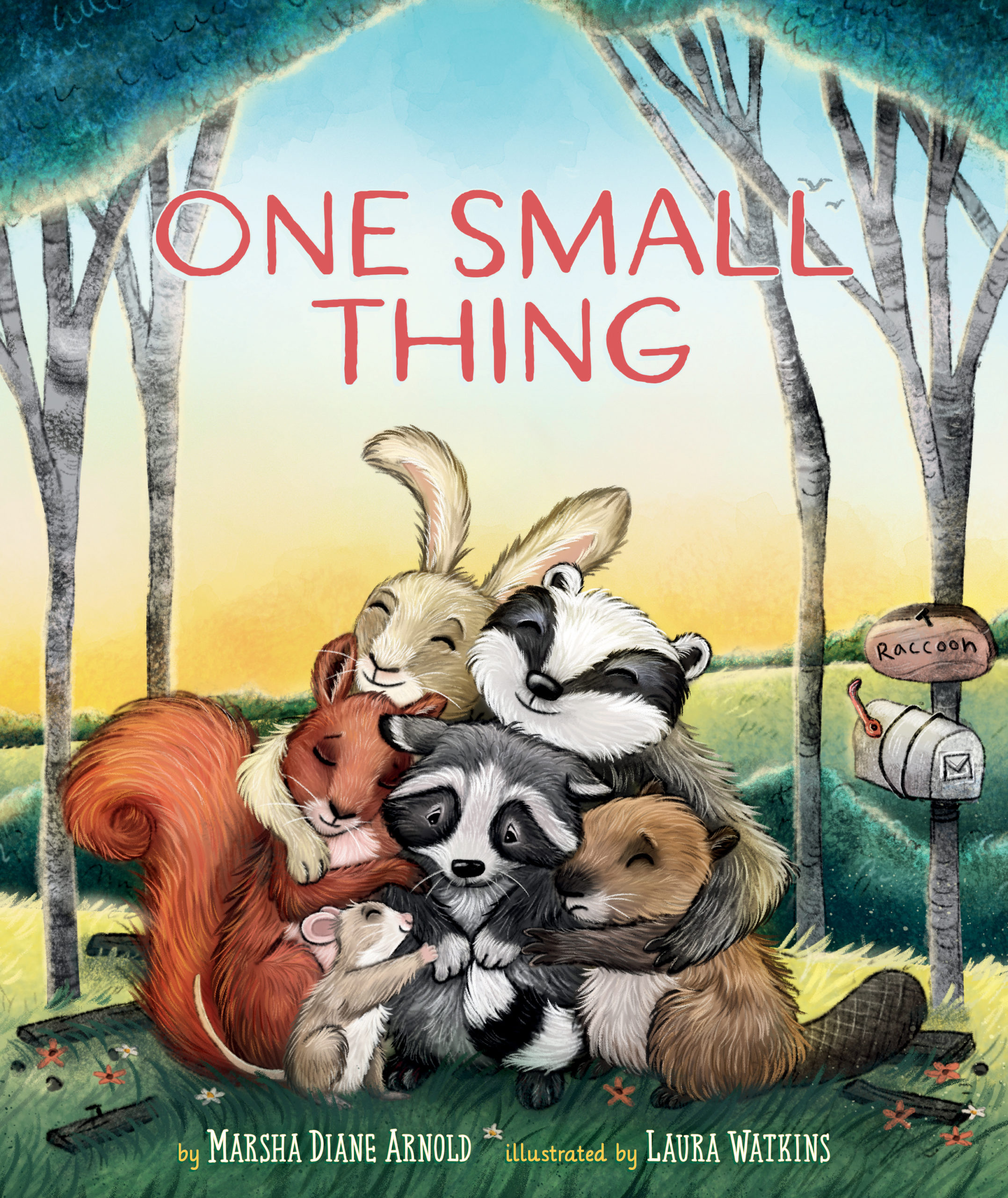
Author Guest Post: “Small Things Lead to Social Emotional Learning” by Marsha Diane Arnold, Author of One Small Thing

Share

“Small Things Lead to Social Emotional Learning”

In 2017, my husband and I survived Hurricane Irma in Lee County, Florida. 130 mph gusts right over our house! That same year, the Tubbs wildfire roared through Napa, Sonoma, and Lake County in California. My husband and I had moved from Sonoma county, where we’d lived 35 years, to Florida just a few years before. The fire destroyed the homes of a number of friends, including our goddaughter’s. Disasters seemed to surround us.

When Raccoon’s home is destroyed by lightning in One Small Thing, Mouse says, “It’s such a BIG catastrophe! And we’re so small.” Catastrophes can paralyze. Children can feel overwhelmed with concern and helplessness when they experience a natural disaster or when a calamity happens to someone in their community. One Small Thing offers examples of how each of us, child or adult, can use our energy and talent to spread kindness.

It’s especially important to spread kindness during difficult times, but it’s also important to spread kindness on a daily basis. Doing “one small thing” daily will help children understand their feelings, understand others’ feelings, and assist them in making empathetic decisions. Small actions daily will help them be ready to communicate and act when a “big catastrophe” happens.

After reading One Small Thing, you may wish to discuss a few of the questions found in the One Small Thing Activity Guide: https://marshadianearnold.com/activities-one-small-thing/.

*How did each animal feel when they learned about what happened to Raccoon
*Squirrel felt so sad, he couldn’t move. Do you ever feel there is too much to be fixed? Do you ever feel things are so hard or sad you may as well give up?
*Which animal felt they didn’t have anything to offer, that there was nothing they could do? (Mouse)
*How do you feel when something scary or bad happens?
*What makes you feel better when you are scared or sad?

After the discussion, have the children talk about “one small thing” they could do as a class.

Lead the children to try a couple of activities for others. Perhaps start with “one small thing” for animal friends.

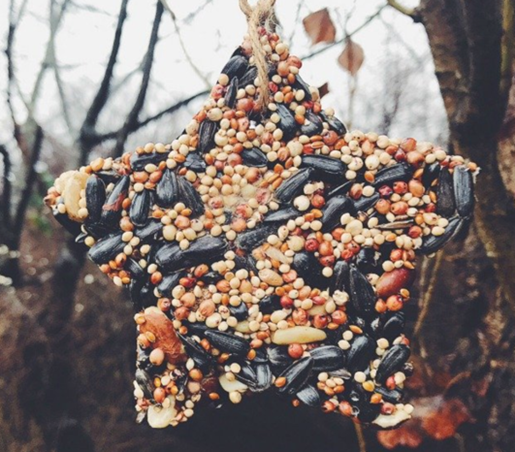
My educator friend is planning to read One Small Thing to a class and then work with them to make Cookie Cutter Bird Feeders. There are several slightly different “recipes” online; she plans to try this one. She hasn’t tried this yet, but folks who have say this will make several cookie cutter bird feeders.

Materials Needed

  • 2 cups small birdseed (Have extra in case you need to thicken the mixture more.)
  • 2 packets unflavored gelatin (8 gram packets)
  • 2/3 cup water
  • Spoon
  • Twine or Ribbon
  • (Plastic Straws, if using straws to poke the holes)
  • Cookie cutters – (Stars and acorns are fun.)
  • Baking sheets
  • Parchment paper

What to do

  1. Place parchment paper on baking sheets.
  2. Place cookie cutters on baking sheets. Set these to the side.
  3. In a mixing bowl place 2/3 cup boiled water and 2 packet of gelatin. You can also do this on a stove in a pan.
  4. Stir until the gelatin is dissolved, a minute or two.
  5. Stir in 2 cups birdseed until most of the liquid is absorbed.
  6. Tie a piece of twine or ribbon into a loop. (Some prefer to place a straw in the birdseed cookies to make a hole. After the cookies dry, the twine or ribbon can be pulled through and tied.)
  7. Fill a cookie cutter halfway with birdseed, using a spoon. Press the birdseed down with the back of the spoon.
  8. Push the tied part of string into the birdseed.
  9. Fill the cookie cutter with the rest of the birdseed mixture.
  10. Some place the cookie cutters in the refrigerator for a few hours to set. Others simply move on to drying.
  11. Dry the birdseed cookies overnight.
  12. Turn the birdseed cookies over and let the other side dry overnight.
  13. Carefully push the bird seed feeder out of the cookie cutter.
  14. Hang the birdseed cookies from tree branches or a bird feeding station.

Now you might have the  children brainstorm “one small thing” they could do as a class for a person. Is there an Assisted Living Residence or Retirement Community nearby that would appreciate colorful cards? You might choose a holiday like May Day and have the children draw colorful flowers on folded paper with a brief message like “Happy May Day!” or “May Basket” and their name.

These two activities seem like small things to do…but that is the point. They are small, but lots of small things add up to something wonderful. May the gentle, cozy message of One Small Thing add to the social emotional learning canon and to kindness, all around.

Educators and parents can find more activities in the One Small Thing Activity Guide on my website, here: https://marshadianearnold.com/activities-one-small-thing/.

Published May 9th, 2023 by Beaming Books

About the Book: After Raccoon’s home burns down in a lightning storm, his friends don’t know what they can do to help. Squirrel, Beaver, Mouse, Badger, and Rabbit all go back to their own homes, trying to focus on something other than Raccoon’s tragedy. But each animal discovers one small thing they can do for Raccoon–and it turns out that each small act may not be so small after all.

One Small Thing is a gentle and powerful look at how small actions can make a big impact.

About the Author: Called a “born storyteller” by the media, Marsha Diane Arnold is a picture book author of 24 books, with over one million books sold.  Her books have garnered honors like Best First Book by a New Author (Heart of a Tiger), Smithsonian Notable (The Pumpkin Runner), and Dolly Parton’s Imagination Library (Roar of a Snore). Her bilingual Galápagos Girl won the Green Prize for Sustainable Literature. Lights Out, about light pollution, has been praised by the Dark Sky community as well as the children’s lit community and was a finalist for the SCBWI Golden Kite Award for Picture Book Text.

Marsha enjoys sharing her love of story through school visits, manuscript consultations, her Writing Wonderful Character-Driven Picture Books e-course, and especially by reading to her four grandchildren.

Growing up on the Kansas prairies, Marsha lived in Northern California for most of her life. Now she lives with her husband in southwest Florida, near the Caloosahatchee River and her daughter’s family and only a short flight from her son’s family. Besides creating stories, her favorite activities are scuba diving and snorkeling, hiking, traveling, gardening, and climbing trees.

You may learn more about Marsha, her books, and her world, at www.marshadianearnold.com.

Thank you, Marsha, for these activities and the focus on kindness!