Author Guest Post!: “Reaching Reluctant Readers with Action and Suspense” by Jake Bible, Author of Scarescapes

Share

Reaching Reluctant Readers with Action and Suspense

by Jake Bible

I really had no concept of what a reluctant reader was until my daughter started reading. My son is exactly like me and will devour books without blinking. My daughter? Not so much. Getting her to read past the first few pages in a book is like pulling teeth. As a writer, this has been more than frustrating.

Being a concerned father, I asked her questions about why she’d start a book, but never finish it. I asked lots of questions. Yet no matter the question I always received the same answer (or a version of the same answer).

“It’s boring.”

Huh. Boring? The characters? The plot? The story? The cover? What was boring?

“I don’t know. It just was.”

Double huh.

This troubled me. That bit of fear in the back of my head was that maybe she had a learning disability. Of course, the Voice of Reason spoke up and said, “She’s just a reluctant reader.”

That voice was my wife’s. I say she was the voice of reason not because of some ingrained, antiquated notion of gender roles within the household, but because my wife is an elementary school teacher with nearly two decades of experience, a master’s degree, several certifications in various subjects, and is a reluctant reader herself.

That’s a voice of reason, folks.

To grab a reluctant reader’s attention you need relatable characters, you need fast pacing with short chapters, you need the prose to be clear and interesting, you need to give them a reason to keep reading. This is basically what all good writers strive for anyway. But the big difference is you can’t slack. One misstep and that book is down and forgotten.

In my research on reluctant readers I found out that the make or break age is 8-12. Those are the ages where so many kids decide whether or not reading for fun and pleasure is their thing. It just so happened I was writing a series of scifi/horror books aimed at middle grade ages. That 8-12 year old danger spot. No pressure, right?

So, I decided to do what I do best: write six books that packed as much non-stop action and suspense into them as I could get away with while considering my target age group.

I went with the classic serial structure of one book ending on a cliff hanger and the next picking it up right from that exact same spot. I also wrote each book as told from a different character’s point of view. This made sure that no matter what gender or race my young readers turned out to be, there would be a character, and a specific book in the series, that they could personally relate to. I put the characters into an impossible situation of being alone on a space ship in deep, deep space without parents around, all of them having to band together and fend for their themselves.

Then I set things in motion.

Writing action isn’t hard. You just keep things moving. The trick is to keep things interesting. Constant running does not always make for great story. That’s where the suspense comes in. And you only have so much time for suspense before boredom kicks in. It’s a delicate dance.

I began each book with some explanation of the situation the children were in. For this series, a giant asteroid outfitted for deep space travel and human habitation so people could find a new home in the universe after Earth has been polluted beyond repair. Explanation done, I immediately moved to danger. Got to have danger to motivate the characters into action. Once danger was established, and the characters were active, I threw in roadblocks.

Roadblocks are key to good action. The reader, and especially a reluctant reader, will get bored if the action just goes from point A to point Z. You need to send them off into tangents. You have to destroy points B, C, and D so the characters are forced to figure out how to skip to point E directly. Give those characters roadblocks and the action becomes believable, no matter how fantastical. And believable is another key to keeping a reluctant reader’s attention.

Okay, so I had explanation, I had motivation, I had action, I had roadblocks. But where was the story?

That’s where I got to sneak in the suspense. My story revolved around a mystery. And not just a mystery of why all the danger and chaos was happening to these characters. I introduced a new character. One that should have been a danger sign immediately in any “normal” situation. Is that suspense?

You bet it is. Who is this new entity? Where did it come from? What is its motivation? If the characters trust it will they regret it later?

Suspense is the anticipation of the unknown; the fear of something beyond a character’s understanding, beyond the reader’s understanding. Suspense requires trusting that moving forward is the only option even though moving forward is the most dangerous option.

To complete my formula (and for middle grade I needed a formula) I twisted the action and the suspense together, intertwining them in a narrative that would continually keep the readers off balance, afraid, excited, interested, and engaged. I wove the suspense within the action so that the story was layered in a way to keep reluctant readers from drifting off. I did my job as a writer and made it impossible for them to stop reading without stopping in the middle of an action scene or a bug reveal in the plot.

Or that was my goal, at least.

Did I succeed?

Well, my reluctant reader of a daughter didn’t put the manuscripts down.

Whether the books are received well out in the world or not, I count that as a success. No question there.


ScareScapes

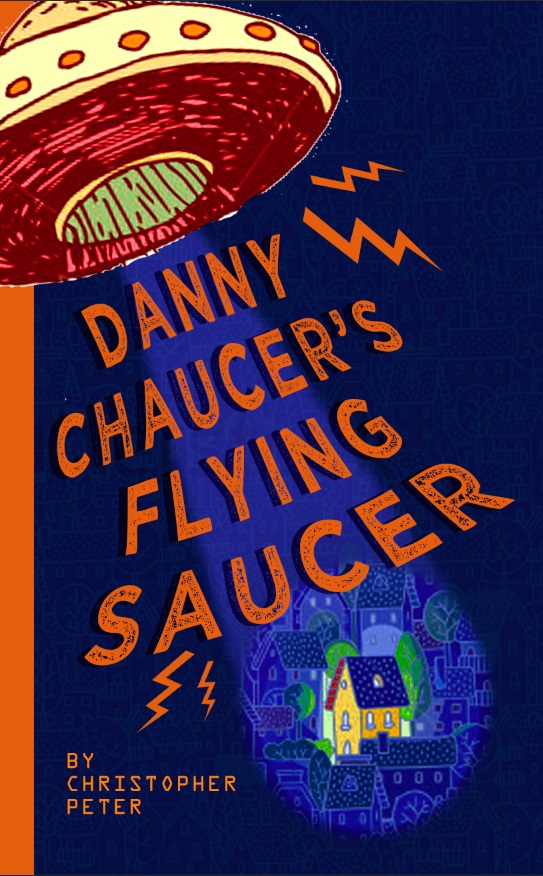
About the Book: On the Earth Colony Asteroid Scorpio, something has gone terribly wrong. Millions of light years off course and 900 years late, the ship’s AIs wake up only seven kids, leaving the adults stuck in cryosleep! Damaged from the long journey, the AIs must repair the awakened seven with the only thing available–cybernetic robot parts.

Along with learning to function with new cyber parts, the all-kid crew must unravel the mystery of what went wrong with the Scorpio. As if the nightmare of deep space isn’t enough, the kids soon find themselves battling the ship’s maintenance robots while their cyber parts begin taking on a life of their own!

Scarescapes: Phantom Limbs! is the first book in the middle-grade YA series Scarescapes series by Bram Stoker Award nominated author Jake Bible. The ebooks are $2.99 and are available at Amazon, Barnes and Noble, Smashwords, Google Play, and Kobo. Paperback copies will follow later this year.

Jake Bible

About the Author: Jake Bible lives in Asheville, NC with his wife and two kids. Novelist, short story writer, independent screenwriter, podcaster, and inventor of the Drabble Novel, Jake is able to switch between or mash-up genres with ease to create new and exciting storyscapes that have captivated and built an audience of thousands. He is the author of the Young Adult horror novels Little Dead Man and Intentional Haunting, as well as the best selling adult horror series Z-Burbia and adult thriller/adventure series, Mega. Find him at jakebible.com. Join him on Twitter and Facebook.


Thank you to Hannah at Permuted Press for connecting us with Jake!

RickiSigandSignature

Author Guest Post!: “Be Careful or You Might Learn Something…” by Linda Fausnet, Author of The Joyville Sweat Sox

Share

“Be Careful or You Might Learn Something…”

I always hated summer reading lists as a kid. Teachers gave us a list of super-educational, historically accurate, classic books of literary significance to read over the summer so we could either write a book report or pass a test when we got back to school in September.

For me, this was the literary equivalent of brussels sprouts.

I actually liked to read in the summer. The trouble was, every time I picked up a book I actually wanted to read, I’d think to myself, “Ugh. I need to read those awful school books first.” I put off reading those books until later, so I ended up reading very little. Toward the end of the summer, I forced myself to read the brussels sprouts books, but really didn’t get much out of the experience.

It’s understandable that teachers want kids to learn from the books they read, but forcing kids to read Johnny Tremain isn’t likely to get them all fired up about reading. I remember reading Johnny Tremain at some point, but I remember precious little about the book.

Know what I do remember? My fourth grade teacher, Mrs. Garrett, reading to us for a few minutes at the end of the school day. I remember her reading Lenny Kendall, Smart Aleck, Tales of a Fourth Grade Nothing, and Superfudge. The books were uproariously funny, and I can clearly remember the sound of Mrs. Garrett’s voice; the inflection, the enthusiasm, the fun. I eagerly went to the library and got some of those books and reread them on my own.

A few years ago, I went to a wonderful used bookstore called Books With a Past. I asked if they had Lenny Kendall, Smart Aleck so I could read it to my kids. The lady in the store said she hadn’t heard of the book, but she put me on the list in case it ever turned up. Then I went to the barbecue restaurant next door with my kids. A few minutes later, the bookstore lady showed up there. She must have heard us mention where we were headed. Anyway, she showed up with Lenny Kendall in tow. She found it after all!

We took the book home and I happily read it aloud to my kids. It was such a wonderful experience. It brought back such great memories and I loved hearing my kids laugh.

I am a passionate writer who happens to be married a to a man who is dyslexic. He hates to read because it’s hard for him, and, try as I might, I’ve been unsuccessful at getting my kids to love reading. I’ve written several grown-up books which they are not allowed to read, but I’ve written two middle-grade ones that are appropriate for them. It’s been tough even to get them to crack those books!

I recently published a middle-grade book about baseball entitled The Joyville Sweat Sox. (as in, there is no mud in Joyville. Baseball fans will get that…) I dedicated the book to my son, Noah, who plays Little League. I didn’t have to force him to read that one because 1. Mommy wrote it and, 2. It’s about baseball. Noah is a good-hearted kid who would tell me he loved it no matter what, so it was hard to tell if he really liked it. Then one day I came home from work and heard him laughing in the other room. He didn’t know I was home yet, so I knew his reaction was real. Sure enough, he was reading my book and though it was really funny. Is there any higher praise than that?

The Joyville Sweat Sox is about a young woman who is forced to coach a baseball team full of clueless kids as punishment for breaking her town’s No Anger law. It’s won’t be easy to teach them the rules of the game without losing her temper… The book does have some teachable information in it, I suppose. Okay, it would mainly be for physical education teachers… Kids who know how to play baseball will giggle at the players in the book who are a bit slow on the uptake to learn, and kids who are unfamiliar with the sport will easily learn it as the poor coach teaches her hapless players what to do.  However, the overarching lesson can be summed up when Konnie, the coach with anger management issues says, “Sometimes mean people aren’t mean. Sometimes they’re just sad.”

Konnie would know. Her anger and bitterness started when her father died, the same year that a mean guy stole baseball from the town of Joyville. Some of her happiest memories were of her times at the ballpark with her dad, and the idea that his last summer on earth was spent without baseball just hurts too much. At first, Konnie is annoyed beyond belief by these crazy kids she’s suddenly saddled with. Then she comes to care deeply for her little guys as she is able to teach them to love the game that meant so much to her and her father. At the end, the judge who sentenced her for getting mad in the first place actually comes to her defense for getting angry. This time, she got mad and risked severe punishment by standing up for her little players. The judge tells her that he’s proud of her, and that he saw a lot of her father in her that day.

My favorite type of book to write – and to read – is one that has both humor and heart. Joyville is funny (ask my son!) and definitely has heart. It made both my critique partner and my daughter cry – in a good way!

Kids want to be entertained as much as we want them to be educated. My philosophy is to encourage them to read something fun and hope they might learn a thing or two along the way.

joyville

About the Book: It’s against the law to get mad in Joyville. Will Konnie Mack be able to coach a ragtag team of kids who are clueless about baseball without completely losing her cool?

Twenty-one-year-old Konnie has broken the No Anger law for the third time. She has two choices for punishment: coach Joyville’s Little League baseball team for the summer, or spend five years in jail.

Konnie used to be the best baseball player in town, but she hasn’t played the game she loves since she was sixteen. That was the year Bobby Hearsay stole Joyville’s team in the middle of the night. It was also the year her father died.

The current team includes the likes of Clueless Joe Jackson, Joltin’ Joanna Demargio, and Carl Repkin, Jr. Keeping her temper in check with these kids won’t be easy, and it’s going to be nearly impossible for this bunch to win any games. But Konnie has no choice. Getting mad will land her in the slammer, and her punishment for losing will be far worse than any jail sentence. She will be banished from playing baseball forever….

The Joyville Sweat Sox is available here – http://www.amazon.com/dp/B00YXUD7FI

IMG_11735462659993

About the Author: Linda Fausnet is the author of several books, mostly adult fiction. She has also written numerous screenplays of various genres. Two of her scripts have been optioned by production companies in Los Angeles; Mega Films, Inc. and Runaway Productions. Her screenplay, Queen Henry, was a Finalist in the national Progress Writers Competition. Linda runs an educational and promotional website for indie writers at www.wannabepride.com
Twitter – @lindafausnet
Facebook for Readers – https://www.facebook.com/lindafausnet
Facebook Group for Writers – https://www.facebook.com/groups/369053709961293/
Email List – Choose either WRITER’S or READER’S list – http://wannabepride.com/blog/?page_id=3466

We very much agree–finding the right book and doing summer reading right are both so important!
Thank you to Linda for this post!

Signature andRickiSig

2015 Big Book Summer Challenge: Revolution by Deborah Wiles & East of Eden by John Steinbeck

Share

bigbooksummer

Big Book Summer Challenge is a challenge hosted by Sue at Book by Book. The inspiration behind the challenge is to push the bigger books to the top of the TBR pile during summer time.

The Details:

  • Anything over 400 pages qualifies as a big book.
  • The challenge will run from Memorial Day weekend (starting May 22 this year) through Labor Day weekend (Labor Day is September 7 this year).
  • Choose one or two or however many big books you want as your goal.  Wait, did you get that?  You only need to read 1 book with over 400 pages this summer to participate! (Though you are welcome to read more, if you want.)
  • Choose from what’s on your shelves already or a big book you’ve been meaning to read for ages or anything that catches your eye in the library – whatever peaks your interest!
  • Sign up on Book by Book.
  • Write a post to kick things off – you can list the exact big books you plan to read or just publish your intent to participate, but be sure to include the Big Book Summer Challenge pic above, with a link back to Book by Book.
  • Write a post to wrap up at the end, listing the big books you read during the summer.
  • You can write progress posts if you want to and/or reviews of the big books you’ve read…but you don’t have to!  There is a separate links list below for big book review posts.

Today, we are combining the last three bullet points–we both have finished our big books!

Kellee

revolution

Revolution
Author: Deborah Wiles
Published May 27th, 2014 by Scholastic Press
538 pages

Goodreads Summary: It’s 1964, and Sunny’s town is being invaded.  Or at least that’s what the adults of Greenwood, Mississippi, are saying. All Sunny knows is that people from up north are coming to help people register to vote.  They’re calling it Freedom Summer.

Meanwhile, Sunny can’t help but feel like her house is being invaded, too.  She has a new stepmother, a new brother, and a new sister crowding her life, giving her little room to breathe.  And things get even trickier when Sunny and her brother are caught sneaking into the local swimming pool — where they bump into a mystery boy whose life is going to become tangled up in theirs.

As she did in her groundbreaking documentary novel Countdown, award-winning author Deborah Wiles uses stories and images to tell the riveting story of a certain time and place — and of kids who, in a world where everyone is choosing sides, must figure out how to stand up for themselves and fight for what’s right.

*A 2014 National Book Award Finalist

Kellee’s Thoughts: What is so amazing about this book is that it doesn’t feel like a big book. Well, it FEELS like a big book because it is heavy and thick, but when you are done reading, it doesn’t feel like you had to trudge through anything. Not once did I feel like there were too many pages. Wiles does an amazing job filling each and every page with important information for the historical context, characterization, or plot development.

Revolution is a perfectly-crafted look at one of the toughest times in American history. What Wiles does is truly delve into the emotions felt during the Freedom Summer and some of the smaller actions that may not have made the history books. One of my favorite things about Wiles’s Sixties Trilogy books is that she includes historical resources throughout the book that truly puts the story in context. The primary sources/stories and other embedded pieces of history really show that the narrative she has created is not truly a work of fiction. It may include fictional characters, but the setting, the feelings, the conflict, the time period, the history–those are all fact.

Revolution couldn’t work without the Sunny and her cast of characters though. This book could have gone terribly wrong if the voice, thoughts, and feelings of our protagonist were not so believable since Wiles was having us learn about such a tumultuous time through the eyes of a child. However, no need to worry about that because Sunny is perfect. She is easy to connect to and seems true. My favorite characters are those around her that push her and help change her: Annabelle, Jo Ellen, and Ray. Annabelle is so patient, truly loves Sunny, and has some of the best lines in the book; Jo Ellen is so head-strong, forward-thinking, and intelligent; and Ray is just crazy but also overwhelmingly brave.

I am part of an informal Twitter book club, and our June read was Revolution. Deborah Wiles even stopped by to chat with us! If you are interested in reading it, I archived it here. Warning: There may be spoilers if you haven’t read the book. Some of my favorite quotes from the chat that truly show the impact of the book are:

“What a brilliant idea Deborah Wiles had with these books–to embed all of the history.” -Carrie Gelson

“Sunny’s story hit my heart.” -Michele Knott

Countdown and Revolution are like…seeing beyond the headlines.” -Cheriee Weichel

“So hard to read how something you think people could do (register) but couldn’t because of effects (lose job, name in paper, etc.)” -Michele Knott

“It took Sunny witnessing the civil unrest to grow up and realize how to accept her own life.” -Kellee Moye

“There is so much about the Civil Rights Movement that seems like it should be easy, but ignorance stops it.” Kellee Moye

“Immerse as much as possible.” -Deborah Wiles, referencing part of her research process

Favorite quote from the book: “Everything is connected. Every choice matters.Every person is vital, valuable, and worthy of respect.” pg. 361

Recommended For: 

classroomlibrarybuttonsmall readaloudbuttonsmall closereadinganalysisbuttonsmall litcirclesbuttonsmall

Ricki

I also plan to tackle Wonderstruck by Brian Selznick, as well, but I am not sure if I will make it by the end of the summer. East of Eden was quite an epic read!

east of eden

East of Eden
Author: John Steinbeck
Published in 1952
601 pages

Goodreads Summary: Set in the rich farmland of California’s Salinas Valley, this sprawling and often brutal novel follows the intertwined destinies of two families—the Trasks and the Hamiltons—whose generations helplessly reenact the fall of Adam and Eve and the poisonous rivalry of Cain and Abel. Here Steinbeck created some of his most memorable characters and explored his most enduring themes: the mystery of identity; the inexplicability of love; and the murderous consequences of love’s absence.

Ricki’s Thoughts: I’ve had this book on my to-be-read list for several years. In fact, I realized I own three identical copies of it, so I have considered reading it for quite some time. I love Of Mice and Men and Grapes of Wrath. In fact, I love the six or so Steinbeck books I’ve read. I’d heard this book was related to the Cain/Abel story, so I never got around to reading it because I thought I knew the ending. As an aside, I didn’t, but even if all of my predictions were accurate, it still would have been well worth the read.

The book consists of several interwoven stories and families. Two good friends (who aren’t avid readers) listened to this book in the car, and they continually urged me to read it. When I finally started, they kept saying, “We know which character you will love.” Sam Hamilton is a good man–a salt of the Earth kind of man. He reminds me of Slim for Of Mice and Men. Essentially, he teaches us what it means to be good to the very hollows of our souls. Another character who will stick with me forever is Cathy. Phew. She is quite a complex character—a sociopath, I would say—and her evilness makes my skin crawl. She is unlike any other character I’ve ever read. I could continue forward and describe more characters, but it feels as if I won’t do them justice.

The story does meander at times, but anyone who appreciates Steinbeck’s work knows that this is, in fact, a positive quality. His stories feel very true to life. We don’t follow plot diagrams. I will never forget reading this book. The story and its characters will stay with me forever. I highly recommend it.

A few great quotes that depict the beauty of Steinbeck’s words:

“I believe a strong woman may be stronger than a man, particularly if she happens to have love in her heart. I guess a loving woman is indestructible.”

“All great and precious things are lonely.”

“I believe that there is one story in the world, and only one. . . . Humans are caught—in their lives, in their thoughts, in their hungers and ambitions, in their avarice and cruelty, and in their kindness and generosity too—in a net of good and evil. . . . There is no other story. A man, after he has brushed off the dust and chips of his life, will have left only the hard, clean questions: Was it good or was it evil? Have I done well—or ill?”

“There’s more beauty in truth, even if it is dreadful beauty.”

Recommended For: 

classroomlibrarybuttonsmall closereadinganalysisbuttonsmall

Thank you to Sue for hosting the challenge and pushing us! 

What big books do you have planned for the summer? You should join in the challenge too!

Signature andRickiSig

Author Guest Post!: “The Joy of Sharing Literature in A Classroom” by Miriam Spitzer Franklin, Author of Extraordinary

Share

“The Joy of Sharing Literature in A Classroom”

by Miriam Spitzer Franklin

With the push for better standardized test scores, reading workshops have increasingly turned toward focusing on building stamina during independent reading so that students will be able to read multiple passages and answer questions during a test that lasts hours. Helping students build stamina so that they can read longer independently is a worthy goal. But for some students, like my third grade daughter, being expected to read on her own for 45 minutes means she’ll lose her focus after 15 minutes and will spend the rest of the time quietly floundering on her own.

A better strategy is to have shorter independent reading sessions and spend more of the workshop teaching literature in small groups or to the whole class. During the class reading of a high-quality literary work, those students who are unable to sustain focus will be redirected if the material is engaging. Teachers can set expectations for reading, help students make predictions, and check often for understanding. In a group with a wide range of learners, some of the students can read independently while the others have a more structured approach with a combination of read-alouds, short sections of silent reading, and teacher modeling of expressive oral reading.

Literature studies should focus on higher level thinking skills. Teachers should ask questions that lead to divergent answers and deeper discussions. Teachers should choose books that lead students to think about different themes, to help them make connections with the characters, and to encourage questions that lead to better understandings of themselves and how they fit into the world.

In my middle grade novel, Extraordinary, ten-year-old Pansy decides she’s going to become an extraordinary person after her best friend suffers a brain injury. She is sure that the upcoming surgery for seizures will fix her brain, and when that happens, Pansy is going to make up for all the times she’s let her friend down in the past. My novel explores themes of hope, perseverance, self-esteem, friendship, and acceptance. Students can work in partners and small groups to identify character traits, character growth, and interpretations of the themes. Because students are all reading the same book instead of reading independent choices, peer or teacher-led discussions will lead to deeper understanding and analysis of the novel.

If we want students to dig below the surface to find meaning in text, they need to be evaluated through creative projects, written responses, and class discussions, not through a multiple choice test. In this way, students will discover a different purpose for reading; instead of reading to get the right answer, they will read to discover the joy of literature and the way books can transport them to places and situations they have never experienced before.

About the author: Miriam Spitzer Franklin taught elementary and middle school for twenty years, in both public and private school. Currently she teaches homeschooled students, designs curriculum for an online site, and is a writer-in-residence with the Charlotte Arts & Science Council. Other jobs she has held include working as a frazzled and unorganized waitress at a number of restaurants, driving the Zamboni and working the skate counter at the ice skating rink, teaching ice skating lessons, and owning a toy and gift store with her husband, Scott. Miriam lives with her husband, two daughters, and two pampered cats in Charlotte, North Carolina.

www.miriamfranklin.com

extraordinary cover

About the book: Last spring, Pansy chickened out on going to spring break camp, even though she’d promised her best friend, Anna, she’d go. It was just like when they went to get their hair cut for Locks of Love; only one of them walked out with a new hairstyle, and it wasn’t Pansy. But Pansy never got the chance to make it up to Anna. While at camp, Anna contracted meningitis and a dangerously high fever, and she hasn’t been the same since. Now all Pansy wants is her best friend back—not the silent girl in the wheelchair who has to go to a special school and who can’t do all the things Pansy used to chicken out of doing. So when Pansy discovers that Anna is getting a surgery that might cure her, Pansy realizes this is her chance—she’ll become the friend she always should have been. She’ll become the best friend Anna’s ever had—even if it means taking risks, trying new things (like those scary roller skates), and running herself ragged in the process.

Pansy’s chasing extraordinary, hoping she reaches it in time for her friend’s triumphant return. But what lies at the end of Pansy’s journey might not be exactly what she had expected—or wanted.

Extraordinary is a heartfelt, occasionally funny, coming-of-age middle grade novel by debut author Miriam Spitzer Franklin. It’s sure to appeal to fans of Cynthia Lord’s Rules and will inspire young friends to cherish the times they spend together. Every day should be lived like it’s extraordinary.

From the Atlanta Journal-Constitution: This moving novel is narrated by Pansy, whose best friend Anna has contracted a disease that has impaired her brain. “Losing” a best friend this way can be a tough challenge. North Carolina author Franklin firmly grasps the climate and struggles among kids today. Her crystal-clear writing is filled with rich detail and believable characters. The sensitive story will resonate with young girls wrestling with friendship pains. (Sky Pony Press, ages 8-12)

Thank you to Miriam for her wonderful guest post!

Signature andRickiSig


Blog Tour with Review, Author Guest Post, and Giveaway!: The Vanishing Island by Barry Wolverton

Share

vanishing island preview tour banner updated

VanishingIslandHC

The Chronicles of the Black Tulip: The Vanishing Island
Author: Barry Wolverton
Published September 1st, 2015 by Walden Pond Press

Goodreads Summary: Does the Vanishing Island really exist? And if so, what treasure—or terrible secret—was hidden by its disappearance?

It’s 1599, the Age of Discovery in Europe. But for Bren Owen, growing up in the small town of Map on the coast of Britannia has meant anything but adventure. Enticed by the tales sailors have brought through Map’s port, and inspired by the arcane maps his father creates as a cartographer for the cruel and charismatic map mogul named Rand McNally, Bren is convinced that fame and fortune await him elsewhere. That is, until his repeated attempts to run away land him a punishment worse than death—cleaning up the town vomitorium.

It is there that Bren meets a dying sailor, who gives him a strange gift that hides a hidden message. Cracking the code could lead Bren to a fabled lost treasure that could change his life forever, and that of his widowed father. But to get there he will have to tie his fate to a mysterious Dutch admiral obsessed with a Chinese legend about an island that long ago disappeared from any map.

Before long, Bren is in greater danger than he ever imagined, and will need the help of an unusual friend named Mouse to survive. Barry Wolverton’s thrilling adventure spans oceans and cultures, brings together the folklore of East and West, and proves that fortune is always a double-edged sword.

My Review: Whoa! Quite a book! Part swashbuckling adventure, part historical fiction, part folklore, part fantasy, part ghost story, Barry Wolverton has given us quite an intense adventure. I couldn’t predict anything that happened in the book. There were twists and turns throughout, and I never knew who to trust (though I am happy to say my favorite sailor was trustworthy). There were some really gruesome parts (blood and guts and vomit) and there were some really beautiful fairy tales. Overall, quite an adventure! (Though I warn: by gruesome, I mean gruesome!)

Discussion Questions: How did the author use folklore throughout the story to move along the plot?; What parts of history that were shared within the book were true? Fictional?; Throughout the book, stop and try to predict what you think is going to happen next then check your predictions as you read more.; As you read, make a list of all of the seafaring vocabulary that is used within The Vanishing Islands then illustrate each of the vocabulary words as they are used in the book.; Wolverton used Marco Polo’s written works throughout the book–what allusions to Polo’s text can you find in The Vanishing Island?

We Flagged: “The summer began with the grim warning that the wolves were running again. In Britannia, this was code. It meant that Her Majesty’s navy was in need of fresh bodies to replace all of the seamen lost during the year to disease, desertion, or battle. Crimping, they called it. Men and older boys kidnapped and forced to enlist, of the good of God, queen, and country. Britannia, after all, was just one of many nations fighting for nothing less than to control the world.

One boy who didn’t have to worry about being crimped was Bren Owens of Map, the dirtiest, noisiest, smelliest city in all of Britannia. (He had heard rotten things about London, too, but he’d never been there.) Bren was what they called spindly–tall for his age, but unsteady, like a chair you might be afraid to sit on. He had been born in Map because he’d had no choice in the matter.

But that didn’t mean he had to stay here. And now, too skinny for the wolves, he had been forced to take matters into his own hands.” (p. 9-10)

Author Guest Post: 

“Be Careful What You Read, or Why Books Are Dangerous” by Barry Wolverton

Beginning in 1978, when Metrocenter mall opened near my home in Jackson, Miss., my family would go to the mall every Friday night. We would have dinner at one of the fine mall establishments, and then my mother would go clothes shopping, my brother would go nerd out at Radio Shack or Spencer’s, my father would go sit somewhere and smoke (you could do that then), and I would plop myself down in an aisle at Waldenbooks. I remember exactly how it felt to have that to look forward to, which is why Black’s Antique Books and Collectibles is Bren’s home away from home in The Vanishing Island. (Although the way I describe Black’s is more like I remembered Shakespeare and Co. in Paris, the ur-bookstore.)

But for a curious, receptive mind, books can do mischievous things. As I describe it in the book, “the bookstore was a blessing and a curse for [Bren]. Every few weeks seemed to bring in new adventure books, travelogues, and epic poems of war and conquest that were so popular these days. Tales from other lands and other times. For Bren, they offered proof that all things exotic and exciting lay anywhere but here.”

Books give Bren ideas. Ideas about places he’d rather be, things he’d rather be doing, possibilities that his current life doesn’t offer. Books also give him information. For instance, information about ships and the routines of their crew, so that an enterprising young man might figure out the best time to sneak aboard a ship and the best places to hide.

And it was undoubtedly in Black’s that Bren first found a copy of Travels by Marco Polo, the book that National Geographic described as “the founding adventure book of the modern world. Polo gave to the age of exploration that followed the marvels of the East, the strange customs, the fabulous riches, the tribes with gold teeth. It was a Book of Dreams, an incentive, a goad. Out of it came Columbus (whose own copy of the book was heavily annotated), Magellan, Vasco da Gama, and the rest of modern history.”

Wow, some book. Especially considering how much of it is considered dubious. Polo dictated his stories to a fiction writer named Rustichello while both were in prison during the Venice-Genoa war, and between Polo’s possible exaggerations and Rustichello’s flare for embellishment, we can be pretty sure Marco Polo didn’t really see a unicorn. (He may have seen a Sumatran rhino, though, which is still magical.)

Given all that, I hope you’ll appreciate why the Polo legend figures prominently in The Vanishing Island, without making light of the terrible cost of exploration and colonialism.

About the Author: Barry Wolverton is the author of Neversink. He has more than fifteen years’ experience creating books, documentary television scripts, and website content for international networks and publishers, including National Geographic, Scholastic.com, the Library of Congress, and the Discovery Networks. He lives in Memphis, Tennessee. You can visit him online at www.barrywolverton.com.

Barry Wolverton Author Photo

Read This If You Loved: The True Confessions of Charlotte Doyle by Avi, The Graveyard Book by Neil Gaiman, Emerald Atlas by John Stephens, The Dungeoneers by John David Anderson

Recommended For: 

classroomlibrarybuttonsmall

Make sure to visit other stops on The Vanishing Island blog tour!
Tour information: http://www.walden.com/8039-2/

6/15/2015 Blue Stocking Thinking                  bluestockingthinking.blogspot.com
6/16/2015 The Haunting of Orchid Forsythia    hauntedorchid.blogspot.com
6/17/2015 Small Review                               smallreview.blogspot.com
6/18/2015 Maria’s Melange                         www.mariaselke.com/
6/19/2015 Unleashing Readers                    unleashingreaders.com
6/19/2015 The Hiding Spot                             ​thehidingspot.blogspot.com
6/22/2015 This Kid Reviews Books              thiskidreviewsbooks.com
6/23/2015 Mundie Kids                                mundiekids.blogspot.com/
6/24/2015 Paige in Training                        pageintraining.wordpress.com
6/25/2015 Novel Novice                              novelnovice.com

Giveaway!

a Rafflecopter giveaway

Signature

**Thank you to Walden Pond Press for having us be part of the blog tour
and for providing copies for review and giveaway!**

Links for Barry Wolverton: 

Website: http://www.barrywolverton.com/
Twitter: https://twitter.com/wolvertonhill
Facebook: https://www.facebook.com/bwolverton
Instagram: https://instagram.com/wolvertonhill/

Links for Walden Pond Press:

Twitter: https://twitter.com/WaldenPondPress
Facebook: https://www.facebook.com/WaldenPondPress
Website/Blog: http://www.walden.com/books/
Pinterest: https://www.pinterest.com/waldenpondpress/

X by Ilyasah Shabazz and Kekla Magoon

Share

x

X
Authors: Ilyasah Shabazz and Kekla Magoon
Published: January 6, 2015 by Candlewick Press

GoodReads Summary: Cowritten by Malcolm X’s daughter, this riveting and revealing novel follows the formative years of the man whose words and actions shook the world.

I am Malcolm.
I am my father’s son. But to be my father’s son means that they will always come for me.

They will always come for me, and I will always succumb.

Malcolm Little’s parents have always told him that he can achieve anything, but from what he can tell, that’s nothing but a pack of lies—after all, his father’s been murdered, his mother’s been taken away, and his dreams of becoming a lawyer have gotten him laughed out of school. There’s no point in trying, he figures, and lured by the nightlife of Boston and New York, he escapes into a world of fancy suits, jazz, girls, and reefer.

But Malcolm’s efforts to leave the past behind lead him into increasingly dangerous territory when what starts as some small-time hustling quickly spins out of control. Deep down, he knows that the freedom he’s found is only an illusion—and that he can’t run forever.

X follows Malcolm from his childhood to his imprisonment for theft at age twenty, when he found the faith that would lead him to forge a new path and command a voice that still resonates today.

Review: If you’ve been reading the blog the past few weeks, my love for this book may feel repetitive (and I am not sorry!). Some books just stick to our bones and by Ilyasah Shabazz and Kekla Magoon will remain with me forever. It kept me awake late at night, and I was floored by the captivating writing. This is a very special book and well worth the hype it has received. I plan to use it in my future Methods classes because there are so many themes and topics for discussion. Most texts are written about Malcolm Little’s later life, but this book encapsulates his early years—this restless young man is dissatisfied with his circumstances and attempts to make a name for himself. He does not always make the best choices, but he learns from his many mistakes, and his spirit will inspire readers. I highly recommend this book for all readers. Malcolm has a lot to teach us.

Teachers’ Tools for Navigation: This book made me want to sign out Malcolm X’s autobiography from the library. I wondered what else I could learn about him. Teachers might ask students to research Malcolm X’s life. They might explore the ways Malcolm inspired troubled youth and why he made connections with them. Based on this text and others, it seems that many of Malcolm X’s actions may be misrepresented, so it might be wise for teachers to discuss his life, mission, and actions with students. This would allow students to form their own understandings of his later life.

Discussion Questions: If you could change one decision Malcolm made, what would it be? What do you think he should have done differently?; Malcolm may inspire us, but who inspired Malcolm?; How is Malcolm different from his family members? How does this impact him?

We Flagged: “I did what I had to. Didn’t see anything wrong with it. Not a thing” (p. 36).

Read This If You Loved: The Rock and the River by Kekla Magoon; How it Went Down by Kekla Magoon; Freedom Summer by Deborah Wiles; Audacity by Melanie Crowder; The Boy in the Black Suit by Jason Reynolds

Recommended For:

readaloudbuttonsmall litcirclesbuttonsmall closereadinganalysisbuttonsmall classroomlibrarybuttonsmall

RickiSig

Blog Tour with Review and Giveaway!: The Disappearance of Emily H. by Barrie Summy

Share

disappearance of Emily

The Disappearance of Emily H.
Author: Barrie Summy
Published May 12th, 2015 by Delacorte Books for Young Readers

Goodreads Summary: A girl who can see the past tries to save the future in this compelling tween mystery.

A girl is missing. Three girls are lying. One girl can get to the truth.

Emily Huvar vanished without a trace. And the clues are right beneath Raine’s fingertips. Literally. Raine isn’t like other eighth graders. One touch of a glittering sparkle that only Raine can see, and she’s swept into a memory from the past. If she touches enough sparkles, she can piece together what happened to Emily.

When Raine realizes that the cliquey group of girls making her life miserable know more than they’re letting on about Emily’s disappearance, she has to do something. She’ll use her supernatural gift for good . . . to fight evil.

But is it too late to save Emily?

About the Author: Barrie Summy is the author of the I So Don’t Do mystery series starring thirteen-year-old detective Sherry Holmes Baldwin and the recently released The Disappearance of Emily H. Barrie lives in Southern California with her husband, their four children, two dogs, a veiled chameleon, and a fish. There was once a dwarf hamster, but let’s not go there. Visit her online atbarriesummy.com. Facebook: https://www.facebook.com/Barrie.Cox.Summy

My Review: Raine has moved from town to town throughout her life as her mother tries to find the man of her dreams; however, her mom promises that this last move is finally where they are going to settle. When Raine starts school though, she finds that this may not be where she wants to stay. On top of all of this, she has moved into a missing girl’s home which throws her in the center of Emily H’s disappearance. When Raine finds herself investigating Emily, she ends up in the middle of more than she bargained form.

I often find myself struggling with magical realism books because I can’t grasp the magic that the author is trying to throw in the real world. With this book, however, I really liked the magical twist that was put on this mystery book. Raine has the ability to grab memories. She sees sparkles that show her where the memories lie, and she is transported into the memory. I really liked this addition because it reminded me a little bit of Medium the TV show–just some more clues in a mystery.

Overall a book that I read in one sitting and had twists and turns that made me want to keep reading, and the mystery itself had a satisfying ending.

Teachers’ Tools for Navigation: This book will find its most success in a middle school classroom or school library. It is one of those books that one student is going to read and is going to make his/her friend read so they can talk about it.

In a classroom, I, personally, would use this book to talk about bullying and best choices. Sections of the book could be pulled out that will definitely start conversations.

Discussion Questions: Do you think Raine made the right choice when she discovered the secret?; Do you think Raine made the right choice when dealing with Jennifer?; Why do you think Jennifer is so mean?; What caused ____ to make the choice s/he did?; Do you believe that Raine’s mother can change?

We Flagged: “I reach into my front pocket for the small, scratched-up silver heart with a dent in the side where I once dropped it on the sidewalk. I balance the heart in my palm and watch as tiny sparkles dance across it, sparkles only I can see.

I need a memory from my first day of kindergarten. A shot of courage for facing Yielding Middle and all the yuck that goes along with being the new girl.

I close my hand to trap the sparkles, then shut my eyes, drifting into the memory.” (p. 2)

Read This If You Loved: The Face on the Milk Carton by Caroline B. Cooney, A Snicker of Magic by Natalie Lloyd

Recommended For:

classroomlibrarybuttonsmall closereadinganalysisbuttonsmall

Don’t miss out on the other stops of the blog tour!

Thursday, June 4
Ms. Yingling Reads
Fri, June 5
proseandkahn
Mon, June 8
Once Upon a Story
Tues, June 9
Read Now, Sleep Later
Wed, June 10
Sharpread
Thurs, June 11
Unleashing Readers
Fri, June 12
Small Review

GIVEAWAY!

a Rafflecopter giveaway

  Signature

**Thank you to Barbara at Blue Slip Media for having us be part of the blog tour
and for providing copies of the text for review and giveaway!**

Find Blue Slip Media on Facebook
On Twitter: @barbfisch   @blueslipper
Visit their website