The Memory of Things by Gae Polisner

Share

the memory of things

The Memory of Things
Author: Gae Polisner
Published: September 6, 2016 by St. Martin’s Griffin

GoodReads Summary: The powerful story of two teenagers finding friendship, comfort, and first love in the days following 9/11 as their fractured city tries to put itself back together.

On the morning of September 11, 2001, sixteen-year-old Kyle Donohue watches the first twin tower come down from the window of Stuyvesant High School. Moments later, terrified and fleeing home to safety across the Brooklyn Bridge, he stumbles across a girl perched in the shadows. She is covered in ash and wearing a pair of costume wings. With his mother and sister in California and unable to reach his father, a New York City detective likely on his way to the disaster, Kyle makes the split-second decision to bring the girl home. What follows is their story, told in alternating points of view, as Kyle tries to unravel the mystery of the girl so he can return her to her family. But what if the girl has forgotten everything, even her own name? And what if the more Kyle gets to know her, the less he wants her to go home? The Memory of Things tells a stunning story of friendship and first love and of carrying on with our day-to-day living in the midst of world-changing tragedy and unforgettable pain—it tells a story of hope.

Review: I read this book several weeks ago, and I still can’t thinking about it. As a few other bloggers have said, this is a book about 9/11—but it isn’t a book about 9/11. It is more a book about friendship, about growing up, and about being human. There are so many topics in this book that are worthy of discussion, and I think teachers will really appreciate its beauty. The writing is quiet yet powerful, and the book has a sort of shattering impact on readers. I loved the connections that Kyle makes in this book, and I particularly enjoyed the ways each of the individuals he interacts with tells the reader more about him. He grows from everyone in this book, and I’d love to discuss this growth with students.

Teacher’s Tools for Navigation: Teachers might ask students to research the many themes of this book to provide background information. They might look at disability/caregivers, PTSD, suicide, and 9/11—just to name a few. They could also look at the different stages of trauma to learn more about how each of the characters reacts differently to the tragic events that occurred on 9/11.

Discussion Questions: Is Kyle helping the girl, or is she helping him?; What do we learn from Kyle’s uncle? What does he teach us about disability and humanity?; In what ways does Kyle show strength, and in what ways does he show weakness? How does he grow from each experience of the text?

We Flagged: “So now I get it. Now I fully understand. Tuesday, and those planes, they’ve broken something. Permanently. And in the process, they’ve changed everything. And everyone.”

This is a quote from an advanced reader’s copy. Some quotes may change before publication.

Read This If You Loved: Extremely Loud and Incredibly Close by Jonathan Safran Foer; The Impossible Knife of Memory by Laurie Halse Anderson; Personal Effects by E.M. Kokie, The Things a Brother Knows by Dana Reinhardt, If I Lie by Corrine Jackson, Purple Heart by Patricia McCormick

Recommended For:

 litcirclesbuttonsmall classroomlibrarybuttonsmall

RickiSig

Special Announcement!: All American Boys by Jason Reynolds and Brendan Kiely Wins the 2016 Amelia Elizabeth Walden Award | Finalists: All the Bright Places by Jennifer Nevin, Challenger Deep by Neal Shusterman, Out of Darkness by Ashley Hope Pérez, and Wolf by Wolf by Ryan Graudin

Share

walden

2016 Amelia Elizabeth Walden Book Award Winner & Finalists Announced

The Assembly on Literature for Adolescents (ALAN) of the National Council of Teachers of English (NCTE) is pleased and proud to announce the 2016 Amelia Elizabeth Walden Book Award for Young Adult Fiction finalists and winning title.  Established in 2008 to honor the wishes of young adult author Amelia Elizabeth Walden, the award allows for the sum of $5,000 to be presented annually to the author of a young adult title selected by the ALAN Amelia Elizabeth Walden Book Award Committee as demonstrating a positive approach to life, widespread teen appeal, and literary merit.

The 2016 Amelia Elizabeth Walden Award Winner is:

All American Boys by Jason Reynolds and Brendan Kiely
(Atheneum Books for Young Readers / Caitlyn Dlouhy Books)

All American Boys

The 2016 Amelia Elizabeth Walden Award finalists are:

All the Bright Places by Jennifer Niven
(Penguin Random House / Knopf Books for Young Readers)

all the bright places

Challenger Deep by Neal Shusterman
(HarperCollins / HarperTeen)

challenger deep

Out of Darkness by Ashley Hope Pérez
(Lerner / Carolrhoda Lab)

out-of-darkness

Wolf by Wolf by Ryan Graudin
(Little, Brown Books for Young Readers)

wolf by wolf

All Walden Award titles will be identified by an award sticker—gold for the winner and silver for the four finalists. The winning title and finalists will be honored at the 2016 ALAN Workshop on Monday, November 21st at 4:30pm in Atlanta, GA, and the authors will be invited to participate in a panel discussion.

The 2016 Amelia Elizabeth Walden Award Committee would like to thank: the Amelia Elizabeth Walden Award Foundation, the ALAN Executive Council, the ALAN Board of Directors, NCTE, and the many publishers who submitted titles for consideration.

The 2016 Amelia Elizabeth Walden Award Committee considered over 350 young adult titles throughout the process.  The committee was comprised of eleven members representing the university, K-12 school, and library communities.  They are:

Mark Letcher, Committee Chair
Assistant Professor of English Education
Lewis University, Romeoville, IL

Lois Stover, Past Committee Chair
Dean, School of Education and Human Services
Marymount University, Arlington, VA

Cathy Blackler
ELA Teacher
Santana Alternative High School, La Puente, CA

Nancy Johnson
Professor of Children’s/YA Literature and English/Language Arts Education
Western Washington University, Bellingham, WA

Sara Kajder
Assistant Professor of English Education
University of Georgia, Athens, GA

Joellen Maples
Associate Professor, Graduate Literacy Program
St.  John Fisher College, Rochester, NY

Lisa Morris-Wilkey
Librarian
Casa Grande Union High School, Casa Grande, AZ

Beth Scanlon
ELA Teacher, Literacy Coach
Cypress Creek High School, Orlando, FL

Jessica Lorentz Smith
Teacher-Librarian
Bend Senior High School, Bend, OR

Wendy Stephens
Library Media Specialist
Cullman High School, Cullman, AL

Lisa Scherff Warren
ELA Teacher
Cypress Lake High School, Fort Myers, FL

For more information on the award, please visit ALAN Online: The Official Site of the Assembly on Literature for Adolescents http://www.alan-ya.org/awards/walden-award/

Congratulations to all of the authors, and thank you to the AEWA committee members for all of your hard work! As past chairs of the committee, we know the amount of love, time, and thought that has been put into this choice.

To learn more about the Walden Award, visit our cumulative list of posts about AEWA: My Time on the Walden Committee

Our review of All American Boys

Ricki’s review of All the Bright Places

Kellee Signature andRickiSig

Top Checked Out Books by Kellee’s Middle School Readers 2015-2016

Share

Top Checked Out Books 1516

Yearly, starting with 2012-2013 (and excluding 2013-2014), I have shared the most popular books in my classroom library:
2012-2013 Top Books for Struggling/Reluctant Middle School Readers
2014-2015 Top Checked Out Books by Kellee’s Middle School Readers

In 2012-2013, I taught an intensive reading class with students who had not been successful on the state reading test; however, last year and this year, I switched to teaching advanced reading, but my library is still available for the three intensive reading classes in my school. The books below are the top 15 graphic novels and the top 15 novels checked out from my classroom library.

The most read and loved books of 2015-2016 in my 6th-8th grade classroom library.
**I did combine some series into one if all of the books in the series were high volume check outs.**

Top 15 Checked Out Graphic and Illustrated Novels

15. Maximum Ride Manga #1 by James Patterson

maximum ride manga

14. Nnewts by Doug TenNapel

Nnewts

13. Cleopatra in Space series by Mike Maihack

cleopatra cleopatra 2 cleopatra 3

12. Sidekicks by Dan Santat

sidekicks

11. El Deafo by Cece Bell

el deafo

Review of El Deafo

10. Bad Island by Doug TenNapel

0-545-31480-1

9. Sunny Side Up by Jenni L. Holm

sunny side up

Review of Sunny Side Up

8. Explorer series edited by Kazu Kibuishi

explorerboxes explorer explorer hidden

Teaching Guide for Explorer 1 & 2

7. Cardboard by Doug TenNapel

Unknown

6. Ghostopolis by Doug TenNapel

0-545-21028-3

5. Dogs of War by Sheila Keenan

Dogs of War

4. Drama by Raina Telgemeier

drama

Review of Drama

3. Diary of a Wimpy Kid series by Jeff Kinney

diary of a wimpy kid

2. Smile and Sisters by Raina Telgemeier

FC_BC_9780545132060.pdf sisters

1. Amulet (series) by Kazu Kibuishi
**By far the most popular book in my classroom since book #1 came out**

amulet amulet2 amulet3 

amulet4 amulet5 amulet6 firelight

Graphic novels are very popular with ALL of my readers. I think there are many reasons why graphic novels are favorites: helps students visualize, fun to read as many of these students have only found reading to be a horrible chore, and colorful! Graphic novels are something I truly believe will help students love reading more and become better readers, and if you look at how much these students are reading and increasing in their reading ability, I think they back me up. (To see more research about the importance of graphic novels, check out my graphic novel teaching guide with Abrams.)

Top 15 Checked Out Novels

15. Snicker of Magic by Natalie Lloyd

snicker of magic

14. Twerp by Mark Goldblatt

twerp

13. Tiara on the Terrace by Kristen Kittscher

tiara on the terrace

Review of Tiara on the Terrace

12. Night Gardener by Jonathan Auxier

night gardener

11. Kingdom Keepers by Ridley Pearson

kingdom keepers

10. I, Q by Roland Smith

i, q

9. Wake by Lisa McMann

wake

8. Counting by 7s by Holly Goldberg Sloan

counting by 7s

7. Red Pyramid by Rick Riordan

red pyramid

6. The Heroes of Olympus by Rick Riordan

heroes of olympus

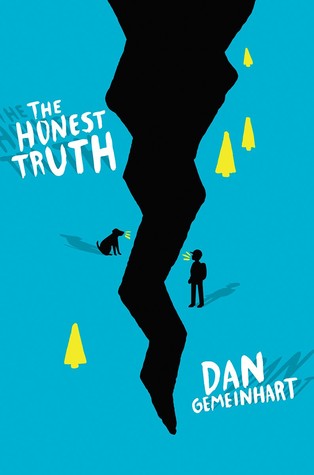
5. The Honest Truth by Dan Gemeinhart

honest truth

4. Stung series by Bethany Wiggins

stung cured

3. Harry Potter series by J.K. Rowling

harry potter series

2. Alex Rider series by Anthony Horowitz

alex rider series

1. Percy Jackson and the Olympians series by Rick Riordan 

percy jackson series

As you can tell, series are very popular. Students love to be able to keep reading about characters. And Rick Riordan is a middle school rock star! Number 4, 8, 12, and 14 were on our 2015-2016 state award list (Stung won our state award!), and number 5 is on next year’s list.

What books/series do you find to be most popular with your middle school readers?
Have you found success with the books I listed above?
Have you read any of the books I’ve listed? Did you enjoy them?

I hope this list of books helps point you in the direction of some texts that your readers will truly love!

Signature

Author Guest Post!: “Jackie Robinson Overcomes” by Geoff Griffen, Author of Brooklyn Bat Boy

Share

“Jackie Robinson Overcomes”

When Jackie Robinson took the field as a member of the Brooklyn Dodgers on April 15, 1947, he not only changed baseball, he changed American history. We justly remember him as a civil rights pioneer who integrated Major League Baseball, but his remarkable story also touches on a number of topics middle grade readers will find interesting, timely and relevant to their own lives.

As a former sportswriter who now teaches at the elementary school level, I wanted to find a way to communicate what can be positive about sports to middle grade readers. The answer was obvious – the Jackie Robinson story. As I researched my book, Brooklyn Bat Boy, historical fiction about Robinson’s 1947 season told through the eyes of the Dodgers 12-year-old bat boy, I was reminded of how important Robinson’s legacy is in a variety of ways.

In developing curriculum to go with the book, I tried to focus on how the Jackie Robinson story is interesting to middle grade students because it has a hero, good triumphs over evil, there is a day of celebration, his story has relevance to things still happening today and the story can be used to teach about bullying, friendship and teamwork. Best of all – it’s got baseball!

A Hero To Root For

Kids love heroes and Jackie Robinson is a classic example of what it means to be a hero. He faced an incredibly difficult situation and through courage and determination emerged victorious while also helping to make the world a better place. His story is historically important on a number of levels.

He changed an American institution in 1947, years before the Civil Rights milestones of the 1950s and 60s. As Martin Luther King, Jr., said of Robinson, “He was a sit-inner before sit-ins, a freedom rider before freedom rides.”

When releasing his documentary Jackie Robinson, in the spring of 2016, filmmaker Ken Burns said of Robinson, “I would argue that he is the most important person in the history of American sports and he is one of the greatest Americans who’s ever lived – period.”

Good wins! Good wins!

The Jackie Robinson story is one of integration overcoming segregation, diversity overcoming racism, acceptance overcoming bias, one season of change overcoming decades of stubbornness, one man’s determination overcoming a chorus of doubters. It was a time when America made a positive change for the better. In short, it’s a feel-good story where kids will find themselves rooting for Jackie Robinson.

April 15

Major League Baseball celebrates Jackie Robinson Day every year on April 15. Every player on every team wears a jersey with the number “42” – the number Robinson wore with the Dodgers. It’s also the only day to see anyone in a “42” jersey because the number has been retired for all teams in MLB, something that has never been done for any other player.

It’s always fun for students to be able to build towards a special day that relates to what they are studying, and Jackie Robinson Day makes for a fun goal date. It’s also a great day to schedule a special activities or events.

From 1947 to 2016

While things have improved significantly in American race relations since 1947, any glance at the news of today will show that there is still plenty of work to be done, and there are still lessons to be learned from the Jackie Robinson story as we move forward. Elementary school students will vary in their ability to understand today’s events or their own attitudes about diversity, but learning about someone who dealt with these issues before can give them a way into understanding their own feelings and views.

Bullies, Buddies and Teammates

Any definition of bullying can be applied to what Jackie Robinson went through. In 1947, he withstood racial epithets, death threats and pitchers throwing at him, yet still found a way to show courage and earn respect without resorting to violence. While middle grade readers might not understand how his actions set a template for non-violent resistance in the Civil Rights Movement in coming decades, they will definitely be able to understand how fans, opposing players and even teammates who initially opposed Robinson came to cheer him. Many things that he went through can create great discussion moments in the classroom about bullying, the effects bullying has on other people, ways to help stop bullying, what it means to be a friend and what it means to work as a team.

By the Way, There’s Baseball

Did I mention baseball? It’s more enjoyable to study any subject when you add baseball to the mix.

Jackie Robinson is not only a pivotal figure in American history, he is also a hero whose story can still have relevance and meaning for children today.

Griffin Shot 6 Small

About the Author:

Geoff Griffin has worked as a teacher, lawyer, journalist and editor. He has over 20 years of experience writing for a variety of newspapers and magazines. He has had a number of essays published in anthologies and is co-host of the award-winning Travel Brigade Radio Show and Podcast. Brooklyn Bat Boy is Griffin’s first work of fiction.

Pageflex Persona [document: PRS0000026_00089]

Brooklyn Bat Boy

About the Book: 

Bobby Kelly is a 12-year-old Brooklyn boy who loves playing stickball in the street with his friends and cheering for the Dodgers. Bobby’s dream of being part of the Dodgers comes true in 1947 when he lands the job of bat boy for the team. There’s just one thing Bobby’s not sure about. The Dodgers are planning to do something that has never been done before. An African-American named Jackie Robinson will be playing for Brooklyn. Bobby isn’t sure how to feel about it, especially since members of his family and kids in his neighborhood don’t like the idea. In order to truly become part of the Dodgers, Bobby will have to learn to accept Robinson as a member of the team and learn from his example. This fictional story looks at an important point in baseball history from a young person’s perspective and highlights the time period, including using popular slang from the East Coast in the 1940s.

Thank you, Geoff, for this post! We love baseball and had so much fun reading it!

RickiSigand Kellee Signature

Author Guest Post!: “Teaching Was a Lot More Than Following a Lesson Plan” by P. E. Yudkoff, Author of Packing Evil

Share

“Teaching Was a Lot More Than Following a Lesson Plan”

My experience as a teacher only spans forty-five minutes. In the spring of my senior year of high school at the end of a long, lazy lunch period I heard my named called in that firm voice of Mr. Hutchins that made everything he said sound like a command. He asked if I were free during the next period “to help him out.” As I said, everything he ever said to me sounded like an order, and this time was no different. So, I was free regardless of the fact I was going to meet up with friends.

The help I was to render was to take charge of a 7th grade English class. The teacher had been called away for reasons that were never disclosed to me, and I was instructed to follow the day’s lesson plan and keep the students in their seats. From the tone of Mr. Hutchins’ voice I gathered that keeping my charges in their seats was of paramount importance. “Just follow the lesson plan. Have them read the story, then go through the discussion points. And take attendance.” He handed me a folder. Inside, a dozen mimeographed sheets (in fast fading blue ink), and one typed page with ten or so questions.

Introductions were simple. I told the class who I was. They each told me their name.

Taking attendance was easy. I passed around a sheet of paper for them to sign.

Then it all went downhill.

I handed out the mimeographed story about a boy rushing through his chores so he could go to the county fair. Somewhere along the way he didn’t latch a gate and a cow (or maybe it was a goat) wandered out and devoured the neighbor’s garden. His time at the fair is ruined by a run-in with a bully, but fortune smiles on the boy when he learns that none other than the bully is blamed for the unlatched gate. Of course, the boy takes responsibility for the roaming cow and transforms the bully into a friend.

I asked the class to read the story. Within seconds one kid calls out he’s already read it, half the class groans and ask why they have to read anything since their “real” teacher isn’t there, and the other half is silent, either staring out the window or at the floor.

I wouldn’t call the next forty minutes a nightmare. Tiring, exasperating, difficult, chaotic all come to mind now. Even so, I did give it the old high school try and blundered on with the lesson plan. (I must admit I quickly gave up on keeping them in their seats. Two boys ended up perching on the heating registers.)

It quickly became apparent that the interest level, reading skill level, conversational skill level, and wakefulness level were as varied as the number of kids in the class. Nothing I could do or say could keep the entire class focused on the lesson plan. The only one who was learning anything related to English class was me: I now fully grasped the meaning of the idiom herding cats.

Despairing how I was going to get through the entire period, and nervous that Mr. Hutchins might pop in, I finally caught a break when one boy loudly called out that the protagonist was an idiot for letting the bully off the hook. I asked if anyone else agreed. They all answered in the affirmative. Even the silent ones! This was a straw I had to grasp. Remembering a long ago assignment (I think it was 6th grade with Mr. Cain.), I proposed we write a different ending to the story. To my surprise they liked this idea and after some discussion it was resolved that we would reverse much of the story. I wrote a sentence on the chalk board and invited a boy up to rewrite it, changing verbs, nouns, adjectives, adverbs as he saw fit.

Of course, the class was noisy, and a bit disorderly, as students took turns rewriting sentences with the help of their classmates. But they were engaged. I think we got through four or five sentences. I did have one moment of actual teaching when I pulled off the shelf a Roget’s Thesaurus and instructed the boys how to navigate it to find antonyms.

After class I returned the folder with the attendance sheet to Mr. Hutchins. He thanked me. I should have thanked him. Even though I had already been a student for more than a dozen years, I learned that day that teaching was a lot more than following a lesson plan.

About the Author: P. E. Yudkoff is the author of The Kylxon Chronicles. When he is not writing he is often tinkering with animation or creating designs for 3D printing. Away from the computer Yudkoff enjoys a good hands-on building project or a leisurely walk with the family dog, Josie. Visit his website at: peyudkoff.com

Packing Evil

Packing Evil

About the Book: Thirteen-year-old Pack’s world is turned upside down when he discovers an old pair of shoes that magically makes him very smart. But Pack begins to suspect there’s more to the shoes than increased brainpower. Soon, voices pop into his head offering all kinds of advice. Some of it helpful and some of it very dangerous, but none explaining what they’re doing in his head. When a neighbor mysteriously disappears, suspecting foul play Pack and his best friend, Sydney, start to investigate. Pack’s new skills and power come in handy, but soon the magic reveals a vile side. Sydney fears the changes she sees in her friend as he strays down a villainous path. But Sydney’s a tough girl, and she’s not giving up her best buddy to a ratty pair of weird, old shoes without a fight!

Giveaway for Packing Evil!: http://www.thechildrensbookreview.com/weblog/2016/07/packing-evil-book-one-in-the-kylxon-chronicles-book-giveaway.html/

Book Trailer:

Thank you, P. E., for this post! We had a lot of fun reading about your teaching experience!

RickiSigand Kellee Signature

Author Guest Post!: “Building Stories with Words” by John E. Stith, Author of Deep Quarry, Manhattan Transfer, and others

Share

“Building Stories with Words” 

The writing life is filled with challenges. Early on it might be the need to sell that first story. Later you could be irked that Hollywood picked that actor to play your protagonist.

Today’s focus is the early stage, where stories are being rejected too often, or some of your Amazon reviews mention grammar.

“I can always hire an editor,” you might say, and I would reply, “But you want to be a writer. You build stories with words. You have to know how to use the only tools you have.”

In fiction, when you get one detail wrong, and then another, readers start to doubt you. That undermines your entire job. And when you misuse words, readers start to wonder, “If this writer hasn’t yet spent the time to master basic use of words, how will the writer handle far more difficult stuff, like creating compelling characters and generating a satisfying ending?” Word misuse is a red flag.

What readers want from a story covers a spectrum, but most readers are going to notice, either subliminally, or directly, if you make spelling or grammar errors. I’m not talking about the rare typo, but the actual and consistent misuse of words.

Here are highlights from the list of problems I see most frequently in workshop manuscripts or books published by impatient writers who haven’t yet learned the craft.

***

Emphasis is typically not indicated with ALL CAPS. Don’t use the comic-book style of multiple exclamation points. (Use ! or ? or whatever’s applicable; avoid ?!, ??, !!, and variations.)

Avoid dialect. Show different speech patterns and word choices in ways that are easier on the reader.
“Aggravate” means to make worse, not to irritate.
“All right” is preferred over “alright.”
“Alot” isn’t correct when you mean to say, “A lot of the…”
“Anxious” isn’t the same as “eager.”
“Awhile” means “for a while.” “For awhile” means “for for a while.”
“Farther” is for distance; “further” is for metaphorical use or to mean “additional.”
“Grey” is the British spelling; “gray” is the U.S. version. Use all US spellings for the US market and all British spellings for the British market. Arbitrarily mixing them makes you look inexperienced or pretentious.
Watch out for misusing “hopefully.” “Hopefully the tree will survive” is wrong unless the tree truly is hopeful.
“It’s” means “it is.” “Its” is possessive.
Look up “lie” and “lay” if all country songs sound grammatically correct to you. Look them up anyway.
If you’re tempted to write “close proximity” look up the meaning of “proximity.”
“Return back” is redundant. Use “return” or “go back” but don’t try to get them both into the sentence.

Hyphenate compound modifiers, but “ly” adverbs don’t take hyphens.

Almost always, starting a sentence with “so” is superfluous.

Be careful with gerund phrases, e.g. “Dialing the phone, I broke a nail.”  Unless you add a qualifier such as “before” or “after,” “while” is implied at the start of the gerund phrase. (While dialing the phone, I broke a nail.”) If you mentally put in the “while” you’ll probably find it harder to mistakenly complete the sentence with an action that does not happen concurrently. To belabor the point: “Dialing the phone, I asked the store what time they opened,” is wrong because the events are sequential, not concurrent. For sequential actions put “after” at the beginning.

Here’s a good example from Dan Brown’s ANGELS & DEMONS. “After parking the cart on the wide lawn directly behind St. Peter’s Basilica, the guard escorted Langdon and Vittoria up a stone escarpment to a marble plaza off the back of the basilica.” (He uses the old-fashioned–most would say sexist–technique of last name for male and first name for female, but the gerund usage is correct. A less careful writer would have skipped the “after.”)

Use “said” ninety percent of the time, or more, for dialogue (or omit speech tags); using your thesaurus for substitutes just calls attention to the substitute. Write dialogue clear enough that you don’t have to resort to writing things like: “You always get the good ones,” she said enviously.   Don’t use a substitute that doesn’t actually mean “say.”

Look carefully when you’re reading published fiction by a pro to see how dialogue is punctuated.
WRONG: “Hello,” he laughed.
RIGHT: “Hello.” He laughed.
RIGHT: “Hello,” he said with a laugh.

Set off direct address with commas.
WRONG: “Yes sir.” “Hello Frank.”
RIGHT: “Yes, sir.” “Hello, Frank.”

Think about the huge difference between these two lines:
“Let’s eat, dad.”
“Let’s eat dad.”

Semicolons can join related and complete sentences; don’t use them to join fragments. Semicolons are not interchangeable with commas.
WRONG: “The mist was clearing, Samantha could tell it was going to be a beautiful day.”
RIGHT: “The mist was clearing. Samantha could tell it was going to be a beautiful day.”

Don’t splice complete sentences together with commas. Don’t just guess when to use a semicolon (and don’t sprinkle apostrophes around just in case if you haven’t learned how to differentiate between contractions, plurals, and possessives.)   Use the serial comma (the last comma in the previous sentence and AKA the Oxford comma) because sometimes it really matters and being consistent helps clarity. Newspapers don’t use them, and newspapers have other stylistic ways they differ from fiction. Newspapers also use single quotation marks, where in fiction the double quotes are used–except when the sentence itself is in quotation marks.
WRONG: The car was advertised ‘as-is.’
RIGHT: The car was advertised “as-is.”
RIGHT: “The car was advertised ‘as-is,'” Sally said.

Additional note on the serial comma. The whole point of normally using the serial comma is for clarity, especially in the rare cases when the sentence is correct without it. For example: “The menu included the choices of pancakes, waffles, fish and chips.” If you normally use the serial comma correctly in other instances, the reader will know the omission of the serial comma here indicates the last choice on the menu is fish and chips, not chips.

Be consistent with singular and plural. “He” is singular, as is “she.” “Their” is plural. Some new writers try to avoid sexist writing merely by substituting “their” for “his” for instance, and some new writers just don’t understand the issue. With no more effort, any sentence can be written gender-neutral without introducing grammatical errors. Example:
OLD: A writer should express his own opinions.
WRONG: A writer should express their own opinions.
NEW: Writers should express their own opinions.

***

Some new writers are tempted to skip the basics, or they succumb to the perception that they need to get out lots of books instead of great books, or they make marketing errors like ending a book with a cliffhanger to get people to buy the next.

Don’t.

Some of your potential audience might not give you a second chance.

John, Crested Butte, 2011, cropped

About the Author: John E. Stith is a Nebula Award nominee for Redshift Rendezvous (Ace Books). His backlist is being reissued by ReAnimus Press during 2016 and 2017. Find him at http://www.neverend.com, on Facebook at https://www.facebook.com/john.e.stith, and on Twitter @JohnEStith.

John Stith

Thank you, John, for this post! We, as English and reading teachers, couldn’t agree with you more. 

Kellee Signature andRickiSig

Author Guest Post!: “An Enterprising Young Reader” by Steve Hockensmith, Co-Author of Nick and Tesla’s Solar-Powered Showdown

Share

“An Enterprising Young Reader”

Throughout the 1970s, every polyester-clad television program director in Evansville, Indiana, did me a huge favor: They chose not to show Star Trek on their channel. At the time, this seemed like a gross injustice to me – the kind of thing that would (and did) make a budding young nerdling (which is what I was) shake a flabby fist at the heavens and cry “Why, God, why?” But looking back, I can see that my hometown TV stations, by choosing The Beverly Hillbillies and Mr. Ed over Star Trek, where steering me away from TV and toward my destiny.

Books.

I discovered Star Trek during a visit with my grandparents in Louisville, Kentucky. Louisville seemed to get all the cool shows Evansville didn’t: Voyage to the Bottom of the Sea, Lost in Space, Wild Wild West, etc. etc. Which was why I had to be pried from the TV set kicking and screaming for every family meal.

My kicking and screaming was loudest for Star Trek, the coolest of the cool. Trek was different for a few reasons. First off, it was objectively good (most of the time, anyway), something that couldn’t be said of monster-of-the-week silliness like Voyage to the Bottom of the Sea. And second, even though this was in the days before DVDs or even VCRS, I could take Trek home with me.

My grandmother, you see, in addition to having access to way cooler adventure shows (not that she cared), was also a bargain hound. And in one of her many garage sale sorties she bought (for reasons I never learned) a battered old copy of Star Trek 3 by James Blish. Star Trek 3 has nothing to do with the movie Star Trek III: The Search for Spock. The film would come later. Star Trek 3 is a collection of short story adaptations of Trek scripts. So while it would be years before I actually got to see classic episodes like “The Trouble with Tribbles” and “The Doomsday Machine” on TV, I could see them in my mind’s eye whenever I opened the book.

Thanks to Star Trek 3, I knew Trek could always be found on the greatest TV station around: my brain. So I began to explore strange new bookstores. Seek out new libraries and new yard sales. To boldly go where every Trekkie in Evansville had to go: to books.

From 1977-ish to 1985-ish, I read a lot of Star Trek novels. And I got more out of them than a mental rerun of a favorite show. I got adventure and escape. I got a respect for science and teamwork and diversity. I got new ideas and new hope. And I got a doorway.

My interest in Star Trek led to an interest in science fiction in general. Which led to an interest in novels in general. Which led to an interest in writing in general. Which led a career in writing.

Which led to here: me promoting (in an incredibly roundabout way) my new science-based middle grade mystery by reminding teachers that inspiration can come in surprising packages.

How many librarians rolled their eyes when I asked if there were any Star Trek books to check out? How many teachers shook their heads when I said I wanted to skip the pre-approved “classic” and do my book report on science fiction fare like The Adventures of the Stainless Steel Rat or Dune Messiah?

I’ll tell you how many. None. I was never discouraged from reading Star Trek tie-in books or SF novels. Or comic books, for that matter. Back in the day, all three were the Rodney Dangerfields of the library – no respect! – yet they opened up new worlds for me. Thank god no one told me they shouldn’t.

What are today’s literary Dangerfields? Manga? Twilight-inspired YA? Online fan fiction? Romance novels? I hope students are being encouraged to boldly pursue whichever might strike their fancy.  The results could be out of this world.

Nick and Tesla 6 Cover_72dpi_120715

Nick and Tesla’s Solar-Powered Showdown: A Mystery with Sun-Powered Gadgets You Can Build Yourself
Authors: Steve Hockensmith and Bob Pflugfelder
Published May 10th, 2016 by Quirk Books

About the Book: Kid inventors Nick and Tesla Holt have outsmarted crooks, spies, and kidnappers. Now they have to crack their biggest mystery yet: Where the heck are their parents? To outwit the criminal mastermind who’s holding their parents hostage, the twins will need all their brainpower, the help of their eccentric Uncle Newt, and an assortment of homemade solar gadgets. Will the Holt family be reunited? Or will a hijacked solar satellite beam down doom from the skies? This adventure – the sixth in the exciting and unique “Nick and Tesla” series – includes instructions for creating a solar-powered hot-dog cooker, alarm, secret listening device, and model car, plus a nighttime signal cannon that fires illuminated ping-pong balls.

Hockensmith Steve_N&T

About the Author: Steve Hockensmith is a New York Times best-selling author and an Edgar Award finalist. His books include Pride and Prejudice and Zombies: Dawn of the Dreadfuls, The White Magic Five and Dime, Holmes on the Range and six “Nick and Tesla” middle-grade mysteries. His coauthor for the “Nick and Tesla” books, “Science Bob” Pflugfelder, is an elementary school teacher in Newton, Massachusetts. A fan of science since the age of six, he promotes Random Acts of Science through instructional videos, public presentations, workshops, and appearances on national televisions shows including Jimmy Kimmel Live, The Dr. Oz Show, and Live! with Kelly & Michael.

Thank you, Steve, for your reminder that there are many different ways to find your passion!

Kellee Signature andRickiSig