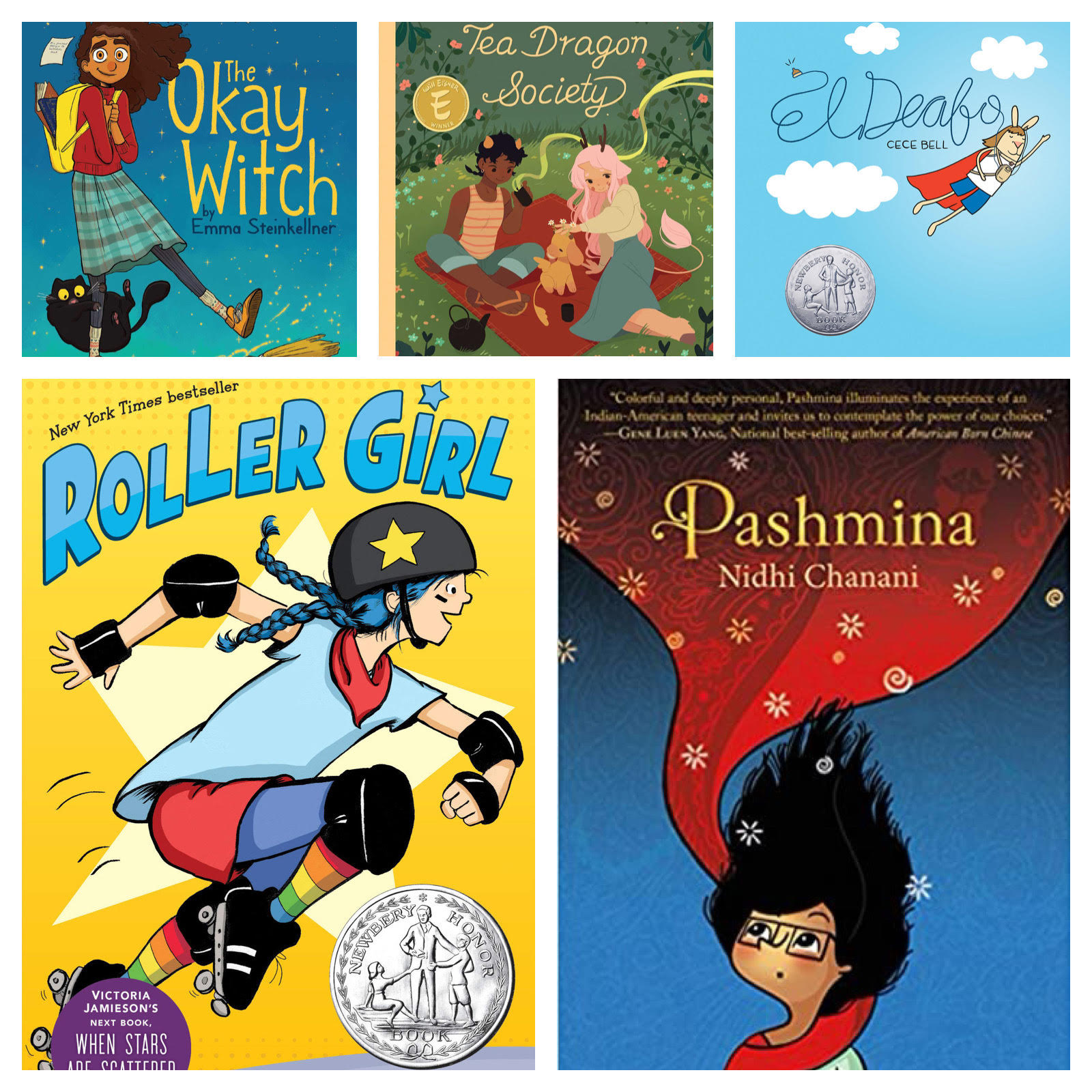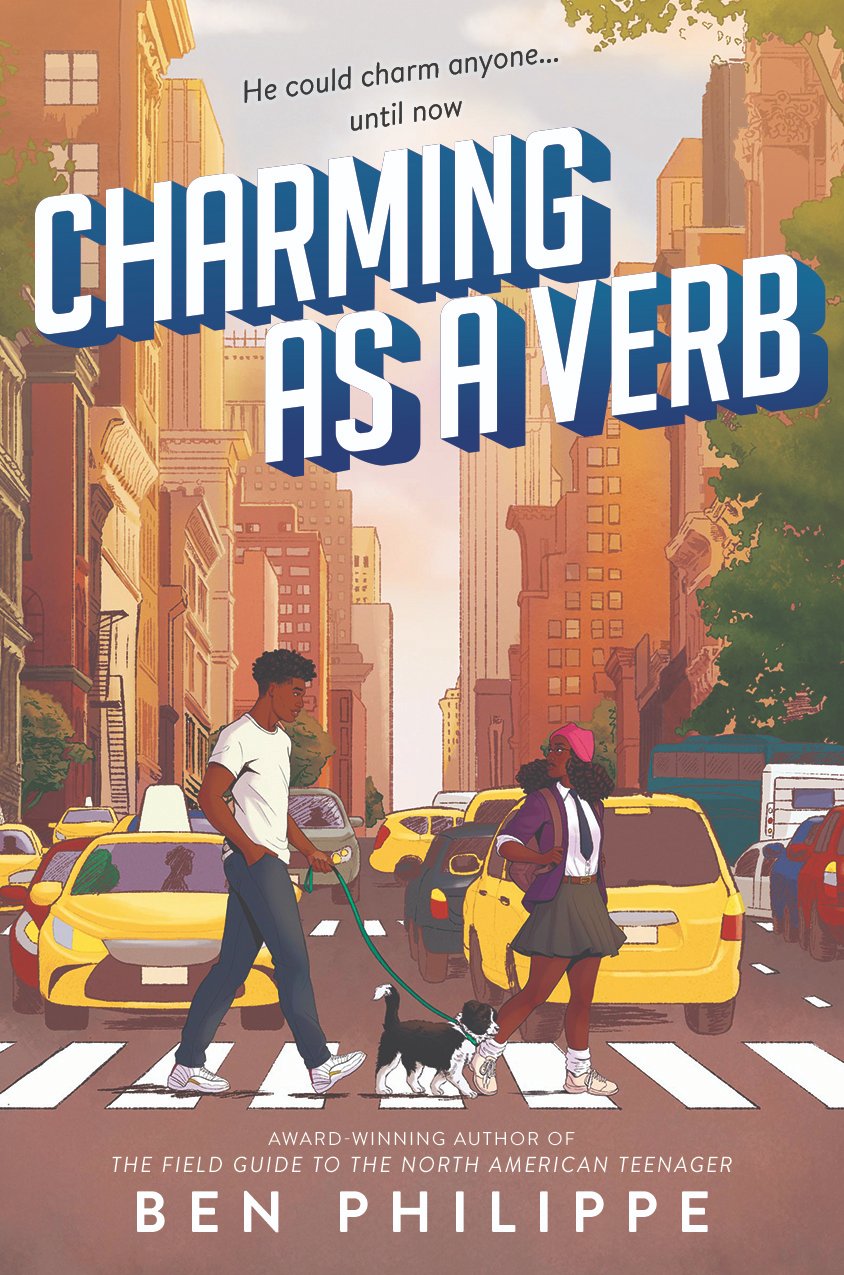
Charming as a Verb by Ben Philippe

Share

Charming as a Verb
Author: Ben Philippe
Published October 13, 2020 by Balzer + Bray

Summary: Henri “Halti” Haltiwanger can charm just about anyone. He is a star debater and popular student at the prestigious FATE academy, the dutiful first-generation Haitian son, and the trusted dog walker for his wealthy New York City neighbors. But his easy smiles mask a burning ambition to attend his dream college, Columbia University.

There is only one person who seems immune to Henri’s charms: his “intense” classmate and neighbor Corinne Troy. When she uncovers Henri’s less-than-honest dog-walking scheme, she blackmails him into helping her change her image at school. Henri agrees, seeing a potential upside for himself.

Soon what started as a mutual hustle turns into something more surprising than either of them ever bargained for. . . .

This is a sharply funny and insightful novel about the countless hustles we have to keep from doing the hardest thing: being ourselves.

Review: This is one of the best examples of characterization that I’ve read in a book. I fell in love with so many characters (even minor ones!), which drew me into the story even more. Henri reminds me of some of my favorite students that I’ve had. He’s charming, driven, and likable. There’s a lot that happens in this book that I don’t want to spoil—but I should write that it teaches an incredibly powerful lesson. There’s one scene that made my stomach do flips, and I will think of that scene often. This would be a great text to use to explore concepts of ethics. It also offers a lot of insight about the college prep experiences for teens. I highly recommend this book to readers. It’s a powerful story and one that will stick with me.

Discussion Questions: 

  • How does the characterization of the text add to the story? Who were your favorite characters, and why?
  • Which minor characters really stand out to you? How does the author make them so noteworthy?
  • What did you learn from this book?
  • What does this book teach us about ethics? About humanity?

Flagged Passage: 

“There’s no use complaining about it and wishing the world was different. This isn’t how we change things for ourselves.”

Read this if You Loved: Love is a Revolution by Renée Watson; The Field Guide to the North American Teenager by Ben Philippe; I Crawl Through It by A.S. King

Recommended For: 

classroomlibrarybuttonsmall  

Love is a Revolution by Renée Watson

Share

Love is a Revolution
Author: Renée Watson
Published February 2, 2021 by Bloomsbury

Summary: From New York Times bestselling and award-winning author Renée Watson comes a new YA–a love story about not only a romantic relationship but how a girl finds herself and falls in love with who she really is.

When Nala Robertson reluctantly agrees to attend an open mic night for her cousin-sister-friend Imani’s birthday, she finds herself falling in instant love with Tye Brown, the MC. He’s perfect, except . . . Tye is an activist and is spending the summer putting on events for the community when Nala would rather watch movies and try out the new seasonal flavors at the local creamery. In order to impress Tye, Nala tells a few tiny lies to have enough in common with him. As they spend more time together, sharing more of themselves, some of those lies get harder to keep up. As Nala falls deeper into keeping up her lies and into love, she’ll learn all the ways love is hard, and how self-love is revolutionary.

In Love Is a Revolution, plus size girls are beautiful and get the attention of the hot guys, the popular girl clique is not shallow but has strong convictions and substance, and the ultimate love story is not only about romance but about how to show radical love to the people in your life, including to yourself.

Ricki’s Review: There is so much to write about this book! First, I loved the way it elevated body positivity. The comments (implicit and explicit) about Nala’s size felt, at times, infuriating. I was so proud of the way she handled these comments. I also loved the idea that everyone doesn’t need to be a loud activist to be doing amazing work. Nala was keenly focused on her family, and the work that she did was important work. I admired her greatly. The book made me think a lot about my own convictions and what I value most. This is a book that belongs in all classrooms, and I recommend it highly. 

Discussion Questions: 

  • How is Nala different from the other characters in the book? What do we learn from her?
  • What does Tye value? What do we learn from him?
  • How is Nala and Tye’s relationship perceived?
  • How do different characters in this book perceive family? Which characters reflect your own values, and why?

Flagged Passage: 

I can’t stand when people don’t follow through. Make a plan, stick to it. Say what you mean and mean what you say.”

Read This If You Love: Piecing Me Together by Renée Watson; Fat Chance, Charlie Vega by Crystal Maldonado

Recommended For: 

classroomlibrarybuttonsmall  

Author Guest Post: “7 Ways to Get Your Child Who Reads Less Frequently to Read More” by Paul Lonardo, Author of The Goblin Pitcher

Share

“7 Ways to Get Your Child Who Reads Less Frequently to Read More”

1.  LEAD BY EXAMPLE

If your children see you reading, they will be more inclined to read themselves, especially if they see that you are genuinely engrossed in a book and will to share your experience by talking about what you are reading and expressing to them what it is about the story or subject that fascinates you. By explaining what you like about a particular story, whether it is the mood, the setting, or an interesting plotline or character, in essence you are encouraging them to pick up a book without having to force them to read. Plenty of studies have shown that forcing students to read something that they have little interest in is likely to result in students not reading books at all. The enthusiasm that you show for a book alone could spark a child’s interest, if not in the same book you’re reading, then perhaps in a different one. But it is not a bad idea to read books yourself that are written for the age of your child. You might even be pleasantly surprised how well-written and entertaining many young adult, middle grade, and even children’s book are for any age reader.

2. THE BROCCOLI PRINCIPLE

Similar to foods children don’t like to eat, like broccoli, or whatever vegetable it might be, the best way to get them to eat it is by giving them small portions. It makes sense. You can’t put a plateful of broccoli in front of them and expect that they are going to eat all of it. Whatever they eat will be better than nothing, so give them a small portion to start off. Even a little bit will benefit them. Take the same approach with reading. Set aside some time every day for reading. Keep in mind, it doesn’t have to be a significant amount of time. However long it might be, five minutes, ten, fifteen, it is better than nothing. It’s a starting place, and it can only grow from there. You may be surprised what even this minimal effort will accomplish over time. Maybe it’s just a chapter at night, but after a few weeks, or a month, if a book really takes root with your child’s imagination, they may want to read multiple chapters each day to find out what will happen next, and before you know it, fifteen minutes a day could quickly extend to twenty minutes, twenty-five, or more on certain days. And that is something you have to look at as a victory.

3. CHOSE BOOKS WITH A SUBJECT MATTER THAT INTERESTS THEM

This may be obvious, but it’s really important. Everybody has an interest or two, and you know your child better than anyone. Find out what they are into. Whether it is a nature, animals or magic, plots in stories involve a wide variety of subjects and interests. It doesn’t even have to be fiction. A nonfiction book that become an enjoyable experience achieves the goal you are seeking, which in this case is getting your child to go from not reading at all to reading something on a regular basis.

When my son was younger, it was a challenge to get him to read anything that wasn’t required. For me, as a writer, this was a real dilemma. Like any parent in this situation, I had to find ways to get him to read more. I knew the two things he liked more than anything was baseball and creepy stories, anything in the Goosebumps and Scooby-Doo vein. My new novel, THE GOBLIN PITCHER, is a kids’ book that I wrote with him in mind. Hopefully, it will be of interest to other finicky readers.

4. VISIT LIBRARIES AND BOOKSTORES

Visit as many as you can, chain and independents alike. Finding topics that your child is interested will be a cinch if you show them that there are ample books on whatever subjects that matter most to them. Seeing shelf after shelf spreading out in all directions might just be a source of inspiration, showing your child how books are revered, old and new titles alike. Watch them explore and see what sections they gravitate to. The library/bookstore experience is made easier these days with the children-friendly themes and attractions you are likely to find inside as well as outside, where there is often a playground. For the parents, coffee is usually available because it could turn into a long afternoon. But it is well worth it if your child finds a hidden treasure to take home.

5.  START SMALL

Lengthy books can be intimidating and a turn off for young people who do not read a lot. Start with chapter books or short novels. It doesn’t matter if they read one long book or a couple of shorter works. It tends to be easier to draw beginning readers into narratives of shorter stories. Everything happens faster, and there are few if any subplots to detract from the main action, which was why they chose the book to begin with.

When I began writing, I eased into it by writing short stories. This is not something all writers do, of course, but for me it was easier than jumping into writing a full-length book my first time out. Graphic novels are a great way to introduce young readers to books. They are illustrated, but there are story lines and plots to follow just as there are in traditional novels.

6. BASED ON A NOVEL
Take your child to the movies. Yes, that’s right, the movies. Whether in the theater or at home, on Netflix, or whatever platform you prefer. Pick a movie that your child likes and has seen before, or one you know they will enjoy. The only thing you must do is make sure the movie was based on a book, the more popular the better, and preferably one that can be enjoyed at any age, such as The Wizard of Oz, Cloudy with a Chance of Meatballs, Willy Wonk and the Chocolate Factory, or Lemony Snicket’s A Series Of Unfortunate Events. There is bound to be a movie or two they have seen that they did not know had been a book first. If your child liked to film, it might just be enough to get them to seek out the original source to learn even more about the characters and storylines that did not make it into the film.

7. READ, READ AGAIN

It’s okay to read the same book twice, or even multiple times. If a child enjoys a book, there’s nothing wrong with them reading it as many times as they want. It’s all about reading and enjoyment. In rereading the story, they are liable to discover things about their favorite characters and the story that they did not know before, and they might end up seeking out another book by the author. And today, with so many books that are part of a series, odds are there are other adventures with the same characters that they can follow.

These are my humble suggestions to get young people interesting in books. You might have some other ways, but whatever it takes to ease children onto that road to discovery and fascination, you will be initiating an experience that they will enjoy for a lifetime.

The Goblin Pitcher
Author: Paul Lonardo
Published April 11, 2021 by PL Publishing

About the Book: The one thing eleven-year-old Jake Lupo loves more than anything else is baseball. However, despite his father being a professional pitcher, Jake’s fear of failing has kept him from competing against children his own age. When his father, who has recovered from a serious arm injury, is invited to pitch for an independent team, Jake and his parents move to Pine Barrows, a far flung forested mountain outpost. Jake is excited about his father’s chance at a comeback, but he soon learns that he is not the only one in Pine Barrows who loves baseball. Goblins love to play baseball, too, and Pine Barrows happens to be chock full of them. Then Jake discovers that the region is occupied by two factions of warring goblins.

Seeking to take control of the goblin kingdom, the leader of the evil goblins kidnaps Jake’s mother and bans baseball, a game which itself is a natural source of power for the goblins.

It turns out that Jake has a secret kinship with the legendary beings, and he is the only one who can save them, their kingdom and his mother. However, Jake must believe in himself and play a winner-take-all game against the best goblin players in Pine Barrows.

About the Author: While this is my first book for young people, I have authored both fiction and nonfiction books in a variety of genres, from true crime to romance. As a freelance writer, I often collaborate with people to help them write and publish their biographies, memoirs, or to tell of a particularly compelling personal experience.

I studied filmmaking / screenwriting at Columbia College – Hollywood. I earned an A.S. (Mortuary Science) from Mount Ida College and a B.A. (English) from the University of Rhode Island.

I live in Lincoln, RI with my wife and son.

Thank you, Paul, for sharing strategies to encourage kids to read more!

Author Guest Post: “Two Words That Can Help with Writer’s Block in Students!” by By I.M. Maynard, Author of the Roger Tarkington and the Magic Calendar

Share

“Two Words That Can Help with Writer’s Block in Students!”

Imagine, you’ve just announced an end-of-school year creative writing assignment for your students. You are expecting a positive response given your school just hosted a local author who talked about the writing process or your class just finished an inspiring novel. Besides, all students want to express themselves, right? And in creative writing, there are no wrong answers and so this should be a slam dunk assignment.

Then the arms shoot up into the air.

“What can we write about?” Anything, you respond.

“Can it be about space aliens?” Yes.

“How about super heroes?” Absolutely.

Can I write about myself?” Sure. This is your assignment. Be creative and have fun.

This is going really well. The students are as excited as you are about this assignment. But when you walk down the row of desks to check on their progress you notice that several notebooks or laptops remain blank. These students defend their lack of progress by saying that they have nothing to write about. They don’t know how to start. Even the students who started strong complained of writer’s block. “I don’t know what to write next. I’m stuck.”

If this scene plays out in your classroom, it is time to let them in on the creative writing secret that has launched stories and even writing careers. It was certainly key to my middle grade time travel series, Roger Tarkington and the Magic Calendar. The creative writing secret I refer to is what I call the what if technique. In my view, what if are the two most important words in creative writing.

The origin of my middle grade time travel series started as a what if. My toddler son was obsessed with calendars. About the same time, he was given a children’s magic kit with a cartoon magician featured on outside of the kit box. It got me thinking: what if the magic wand was used to turn the calendar magic? Thus started my journey with Roger Tarkington and his adventures at Jefferson Middle School.

While I can’t be certain, I would imagine that many stories started using what if.

          What if a boy were trapped inside a video game (Trapped in a Video Game)? What if a student with a face deformity went to school for the first time (Wonder)What if a boy was stranded alone in the woods (Hatchet)? Asking what if can help turn an ordinary situation, such as playing a video game, hiking in the woods, or going to school, into an intriguing premise for your next story.

Answering the what if question often leads to more questions. For example, how did a boy end up in the woods by himself? Perhaps the author used what if to come up with options, such as: What if he got lost by taking the wrong trail? What if he was on a school or Boy Scout outing and got separated from the group? What if the small plane he traveled in crashed in the middle of the woods?

I went through several what if scenarios before I settled on the premise of Roger Tarkington and the Magic Calendar. Originally, I was focused on the magic wand from the magic kit. I looked around my son’s playroom and asked a series of what if questions. What if the magic wand brought my son’s stuffed animals to life? I liked that idea, but it was too similar to the movie, Toy Story. What if the magic wand was used to turn my toddler son into a grown man? No, I wanted to tell a children’s focused story and so I opted against that idea. It wasn’t until I saw my son sitting near the magic kit while looking through a wall calendar that I came up with the premise of a magic calendar that allows someone to repeat days of the week by touching inside the calendar day. The idea matched my interest in writing about everyday school life, but with a fun time travel-like twist.

Inevitably, writer’s hit snags in their story. The what if technique is a great place to start in overcoming what seems like impossible roadblocks. During this brainstorming, I write down every what if answer, especially the silliest ones. If nothing stands out, I come back to the sheet of paper later and reread the answers. If nothing else, you’ll get a good laugh. However, this review often triggers new what if answers, sometimes ones that combine elements of two different answers.

The what if technique forces writers to face the creative problems they face with action. The technique also shifts the focus from negative thinking (i.e., I don’t have any ideas, I have writer’s block) to possibility simply by framing the roadblock as a question.

So does the what if technique solve every writing problem? Of course not. What if won’t motivate you to write, it won’t help with sentence structure or spelling, and it won’t address writer doubt or fatigue. However, the what if technique and similar writing strategies can help writers at any level or writing stages to address challenges and find solutions so that writers can get to the two next important words in creative writing: the end.

About the Book: Meet Roger Tarkington.

The almost 11-year-old has a plan for middle school greatness. A perfect plan that—lasts for all of about five minutes. 286 seconds, to be exact.

It’s all ruined when Kyle-the-Vile Brossman appears unexpectedly on the first day of school. Making matters worse, Kyle pledges to make Roger’s year miserable, just like he did at Bellingware Elementary School.

Roger’s unlucky start to sixth grade turns magical when his calendar turns into a time travel portal that allows him to repeat days.

Influenced by his Middle School Greatness Tip #31 (Don’t wait for it to happen, make it happen), Roger devises a new plan to use his magic calendar to beat Kyle, clearing his path to middle school greatness.

Foolproof plan for middle school success, right? Maybe in real life, but remember, this is middle school!

Will Roger succeed in using his magic calendar to standout at Jefferson Middle School and achieve middle school greatness?

Or will he fall under the constant attacks from Kyle and the unexpected, everyday obstacles of middle school?

About the Author: I.M. Maynard is the author of the Roger Tarkington and the Magic Calendar middle grade time travel series. The first book in the series, Roger Tarkington and the Magic Calendar: Quest for Middle School Greatness, was released in 2020. The second book in the series, Roger Tarkington and the Magic Calendar: Surviving Middle School, was released in 2021. I.M. Maynard is currently working on the third and final book in the series. When he isn’t writing, I.M. Maynard enjoys reading. HIs favorite contemporary authors include Louis Sachar (Holes), Stuart Gibbs (Spy School), Gordon Korman (Jackpot), and Chris Rylander (The Fourth Stall). Born and educated in the Midwest, I.M. Maynard now lives on the East Coast with his wife and son, who was the inspiration for the middle grade series. Learn more about I.M. Maynard at https://www.maynardauthor.com/.

Thank you, I.M., for this post showing how to help students get those creative juices flowing!

Sofia’s Kids’ Corner: My Life as a Billionaire by Janet Tashjian

Share

Sofia is an 9-year-old brilliant reader who aspires to be a book reviewer. On select Saturdays, Sofia shares her favorite books with kids! She is one of the most well-read elementary schoolers that we know, so she is highly qualified for this role!

Dear readers,

Wow, wow, wow, wow and wow! Presenting…My Life as a Billionaire by Janet Tashjian illustrated by Jake Tashjian! This book was surprisingly good and I loved it because even though the kid was a billionaire he still donated tons of money to charity, gave his school a top-notch media room equipped with green screens and all of that other stuff and even gave a lot of his friends presents like his handicapped friend really wanted this skater BMX wheelchair and Derek gave it to him. Also another friend of his lost her phone and he bought her a brand new one. But what I also like is that it stays really real because like any normal kid of course he buys eight thousand dollar sneakers and his own private skatepark in his backyard! Also what helps it stay real is that there are family problems about the money. This book is recommended for ages 9-12.

When twelve year old Derek wins the lottery everybody goes ballistic. The money technically isn’t his though even though his older brother gave him the ticket for doing his own chores for him. Derek isn’t old enough to cash in his check though and his older brother is. Derek has two choices, split the money half and half with his brother or want it all to himself and then their mom will take it and give all of the money to charity. Derek takes the typical approach of course and shares with his brother so he at least has some of the money and that some is in the millions! Derek is super excited to pick up his prize and his parents tell him he can do it after school. When school is over Derek is the first out of the school building and as soon as he gets the money his parents already put some aside for college tuition. His brother who is over eighteen goes off and gives his band enough money to go on tours and other stuff like a brand new super nicely furnished band bus. Since Derek is only twelve though his parents still have control over him and they have a few rules. First of all they don’t want Derek spending nearly as much money as his brother and therefore forbid him to spend way too much. So when his dad drops him off at the sneaker store he tells him only to buy two pairs of sneakers. A friend came with him too. The thing is his friend has some other ideas. He convinces Derek to buy an eight thousand dollar shoe pair for himself and a one thousand dollar shoe pair for him, his friend. Derek barely wears those pairs of shoes because he does not want his parents asking him about them since they cost so much.

Derek starts noticing that his classmates and all of the kids in school treat him differently now that he is rich. For example they exclude him from things they used to do as a group. Derek also realizes that kids who have never talked to him or noticed him are now buzzing around him like bees around a beehive. Also a lot of people have been telling him about what they really want and maybe when they lost their phone or something else, probably hoping to be noticed by Derek and get what they want or a replacement for their lost stuff.

This book is great because it shows how somebody lucky enough to win the lottery shares his money and gives it to charity and buys gifts for all of his friends. I also like this book because it teaches about spending. It helps you understand not to buy overpriced things or buy things with ridiculous price tags that may be the same quality of the same thing just with a much much much lower price tag. But mostly I love this book because it was so funny and entertaining! I almost blew up in laughs while reading it. The great thing about this book is that there was so much suspense that I carried this book everywhere I went. LITERALLY! When my parents took us for a bike ride I read the book on the way there! I am so reading all of the other books in this series!


**Thanks so much to Sofia for this review! It made us smile!**


Review and Giveaway!: Rescue at Lake Wild by Terry Lynn Johnson

Share

Rescue at Lake Wild
Author: Terry Lynn Johnson
Published April 27, 2021 by HMH Books for Young Readers

Summary: In this funny and moving animals-in-peril adventure, a twelve-year-old girl and her two best friends determine to rescue two orphaned beaver kits—and soon find themselves trying to solve a local environmental crisis.

Everyone knows that twelve-year-old Madison “Madi” Lewis is not allowed to bring home any more animals. After she’s saved hairless mice, two birds, a rabbit, and a stray tom cat that ended up destroying the front porch, Madi’s parents decide that if they find one more stray animal in the house, she won’t be allowed to meet Jane Goodall at an upcoming gala event.

But when Madi and her two best friends, Aaron and Jack, rescue beaver kits whose mother was killed, they find themselves at the center of a local conspiracy that’s putting the beavers and their habitats in danger. As Madi and her friends race to uncover the threat targeting the beavers, Madi must put her animal whisperer skills to the test in both raising the orphaned beaver kits and staying out of trouble long enough.

About the Author: Terry Lynn Johnson writes about the wild with the wisdom and passion of someone who has spent her life working to preserve and protect it – both as a backcountry canoe ranger in Quetico Provincial Park and in her current job as a conservation officer with the Ontario Ministry of Natural Resources and Forestry. She lives at the edge of a lake in northern Ontario, Canada, where she loves watching all wildlife, including beavers. Visit her online at terrylynnjohnson.com

Twitter: @TerryLynnJ
Instagram: terry_lynn_johnson

Review: This book is everything the summary promises and more. I read it in one sitting because I couldn’t put it down. It was so interesting learning about beavers and conservation, but also watching Madi and her friends figure out the solution to a problem that adults automatically went to the extreme about.

Kids are going to love Madi and her friends. Their banter is so funny yet right on point for their age. I also love seeing how close they are even as they grow up and change.

In addition to the main story about the beaver rescue, Madi’s family situation will bring about good conversation about different types of families.

But truly, the real stars of this book are the beavers. I never knew as much about them as I do now, and they are such interesting animals. This book definitely led to inquiry as I wanted to learn so much more about environmental conservation and beavers.

Teachers’ Tools for Navigation: In addition to being a book that so many kids are going to want to pick up and read, this book lends itself perfectly to so much in the classroom!

Madi talks often in the book about her grandmother and Jane Goodall and all of the work they did to help preserve animals; however, there are tons of other scientists who help converse nature and animals’ habitats. Have students research these scientists, and remind them to think about local and smaller rescue facilities who do work that often aren’t recognized.

Madi LOVES animals and we learn so much about beavers in this book. Use the idea of Madi’s notebook to have students pick an animal and research it.

Madi solves a problem by going step by step through the problem solving process. Look at the six-step problem solving process and work through how Madi made her way through to help her town and the beavers.

Finally, learn about Terry Lynn Johnson’s inspiration for Rescue at Lake Wild here. This would lend to a great discussion about author’s purpose and point of view.

Discussion Questions: 

  • Why do the adults of the town automatically start killing beavers?
  • How does Madi figure out a solution to the problem?
  • How did the setting play a part in the story?
  • Which character did you most relate to and why?
  • Who do you look up to like Madi looks up to Jane Goodall?
  • What is your passion and how can you pursue it in your life?
  • How did having her two friends to help her lend to Madi being successful?
  • How did Madi’s grandmother inspire her? Who has inspired you in your life?
  • Madi’s mother said no more animals, which Madi obviously disagreed with, and although it seems harsh, she has her reasons. What do you feel about this? Can someone be right and wrong at the same time?

Flagged Passages: Chapter 1

I hear it again.

Urgent chattering reaches us from the mound of sticks and mud just off the bow of our boat.

“We’re going to have to do it,” I say, and then can’t help add, “I told you they were here.”

As an animal whisperer, I know these things, but sometimes I have to remind certain people.

A breeze catches the boat and swings us around the anchor line. The channel’s empty except for the beaver lodge, the three of us, and one bored dog.

“We’re sure the parents aren’t coming back, Madi?” Aaron asks.

“You saw their parents,” I say. “They’re not coming.” We’ve been here almost two hours to make sure there were no other adults in the lodge.

Finally Jack says, “Let’s do it already.”

“Before you say I should do it because I’m smallest,” Aaron says, “let me remind you I’ve been the rescuer the last two times.”

He’s talking about when we boosted him into a tree to save a raccoon that turned out not to need saving. Okay, I was wrong that one time. But the day we lowered him from the window by his feet to save the baby bird? That bird would have died without us.

“Out of the three of us, you’re the easiest to hang by the feet,” I say reasonably.

“It’s not my turn.” Aaron shifts on the aluminum seat. “And I’m not that small.”

“We’ve never done this before,” Jack says. “So it starts over.”

“What starts over?”

“Turns,” Jack says.

Adjusting the tiller handle, I move to sit next to Aaron in the middle of the boat. “We should play for it.” I hold up a fist, the universal sign for rock-paper-scissors. “So it’s fair.”

The three of us stick our fists together. Jack’s black Lab, Lid, pokes his nose into the circle too, ever hopeful that we’re about to unveil food.

“One, two, three!

“No!” Aaron yells at our scissors to his paper. “Rigged!”

“I’d take your shirt off if I were you,” Jack advises. “So it doesn’t get stuck and snag you down there. We probably wouldn’t be able to pull you up.”

Aaron pales but tries to look brave. “I always end up doing it,” he grumbles, reaching behind his back to pull off his T-shirt. The hot July sun bounces off his blinding white torso.

Aaron scowls at us and then glances over the side of the boat. He studies the brown water and mutters something about leeches.

“Maybe you should keep your shirt on for protection,” I suggest, eyeing his stick-thin arms covered in rust-brown freckles, and his pale shoulder blades that could cut a breakfast sausage.

“Are they even still alive?” Aaron says. “I can’t hear them anymore.”

He’s right. There’d been no sounds from the lodge in the last few minutes we’ve been sitting here arguing.

Earlier, we’d found two adult beavers floating dead on the other side of the channel. Jack, as usual, had wanted to investigate the crime scene immediately. But the noises from the lodge mean babies inside. Those babies will starve to death if we don’t rescue them.

We’ve been waiting here long enough to know there are no other adult beavers coming to take care of them. But how long have the young ones been alone in there? Maybe they’re starved already.

“Shhh!” I say. “Listen.”

We still our movements in the boat and drift. An enthusiastic frog trills next to us. The wind rustles the leaves of trembling aspen towering above. The water gently laps at the aluminum beneath us. We strain to hear anything. The silence stretches.

A long, high-pitched noise erupts from Lid’s rear end. It echoes strangely from the bottom of the boat, sounding like an optimistic elephant. Surprised, Lid looks behind him.

Aaron and Jack both burst out laughing. It’s so hard to keep boys focused.

“Guys, I don’t hear them. Maybe we waited too long.” Maybe the little beavers are just too weak now to make noise and desperately need help right this very second. I grab the anchor and haul it up. “We have to hurry!”

I yank at the oars and thrust the boat up onto the muddy bank of the lodge. Lid jumps out first, followed by Jack, who ties us off on a log. Aaron warms up, swinging his arms, further accentuating his shoulder blades.

Stepping onto the latticed sticks, I peer at a section of the lodge’s roof that’s been ripped apart, most likely by wolves. But the predators haven’t gotten through. The only way into an indestructible beaver lodge is underwater.

“Okay. You’re looking for the opening to the tunnel,” I say to Aaron. “It’ll be hidden among all the sticks. Hopefully it’ll be wide enough for you to fit. You can breathe once you get into the chamber. It’ll be a room above water like a den. That’s where you’ll find the baby beavers.”

Aaron nods while staring at the lodge. He examines the murky water.

I watch him uneasily and think about when we’d boosted him into that tree. He’d spent most of the time clutching the trunk and yelling for us to bring him down. And when we’d lowered him for the bird he insisted over and over, “Pull me up!”

This is actually dangerous. If Aaron panics, he could drown for real. He could get lost under there, or get caught on something, like Jack said.

A fluttery feeling builds inside my chest. Did Jane Goodall let someone else face aggressive chimps at the Tanzania research center? No.

It should be me.

Read This If You Love: Lost in the River of Grass and Hurt Go Happy by Ginny Rorby; Song for a Whale by Lynne Kelly;  Vet Volunteers by Laurie Halse Anderson; Primates: The Fearless Science of Jane Goodall, Dian Fossey, and Biruté Galdikas by Jim Ottaviani

Recommended For: 

classroomlibrarybuttonsmall

Giveaway!

a Rafflecopter giveaway

Signature

**Thank you to Barbara at Blue Slip Media for providing a copy for review and giveaway!**

Sofia’s Kids’ Corner: Breathing Underwater by Sarah Allen

Share

Sofia is an 9-year-old brilliant reader who aspires to be a book reviewer. On select Saturdays, Sofia shares her favorite books with kids! She is one of the most well-read elementary schoolers that we know, so she is highly qualified for this role!


Dear readers,

This book is wonderful in the sense that it perfectly describes sisters. The thing that is really interesting and sad about this book is that the main character’s sister struggles with feelings. The main character, Olivia, tries her hardest to help her older sister but she usually can’t. The author almost made me cry in so many scenes. This book is recommended for ages 10-14.

Olivia’s big sister, Ruth, has a medical condition in which she struggles with feelings. This means that Olivia usually looks for signs on how Ruth is feeling. For example, what music she is listening to. Ruth listens to “happy” songs and sometimes she listens to “sad” songs. Ruth listens to all of these songs on an IPod. The old type, not the new mobile device that looks just like a miniature IPhone. She has had it for almost forever. Olivia wants to make Ruth happy again and she plans on taking her back to their first home. She remembers a game her sister and her called Treasure Hunt. The way that it worked was Ruth found a word like New or Sparkley. Then Olivia went around wherever they were and took photos that had something to do with the word Ruth picked. While Olivia was doing that Ruth made a playlist of songs that have something to do with that same word. After all of their tasks were completed they met back at a certain spot and shared what they had found. Ruth didn’t seem to have the illness back at her first home. She only started having bad days around the big move. Olivia is planning a road trip to their first home and she plans to find a treasure box that she buried there the last time they were there. She also plans on making the whole road trip a treasure hunt without Ruth noticing. Olivia really hopes that the road trip will make Ruth happier and stop her bad days from happening.

I sped through this book like a torpedo! This was the first book I have ever read on a kindle and I thought I would be reading less often because of that, but obviously I was wrong! I love this book! I almost cried or screamed at some parts because the author is really great at writing things and making people feel emotional while reading them. I am definitely keeping a lookout for some of her other books!


**Thanks so much to Sofia for this review. We are looking forward to reading this book and had heard it was really well done. Now we know we need to read it!**