Women Athletes Who Rule! from Sports Illustrated Kids: The 101 Stars Every Fan Needs to Know by Elizabeth McGarr McCue

Share

Women Athletes Who Rule! from Sports Illustrated Kids: The 101 Stars Every Fan Needs to Know
Author: Elizabeth McGarr McCue
Published June 5th, 2018 by Sports Illustrated

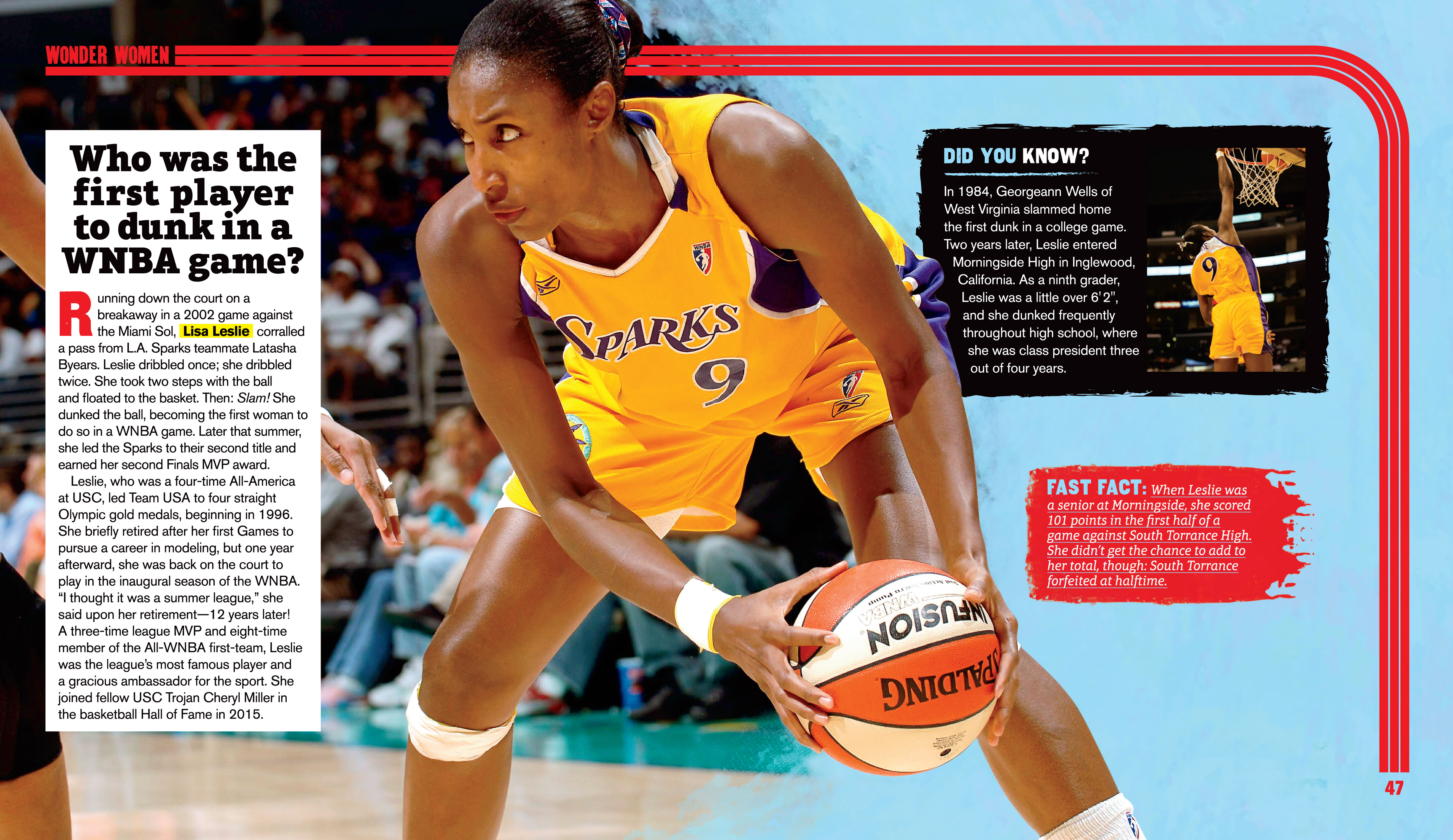
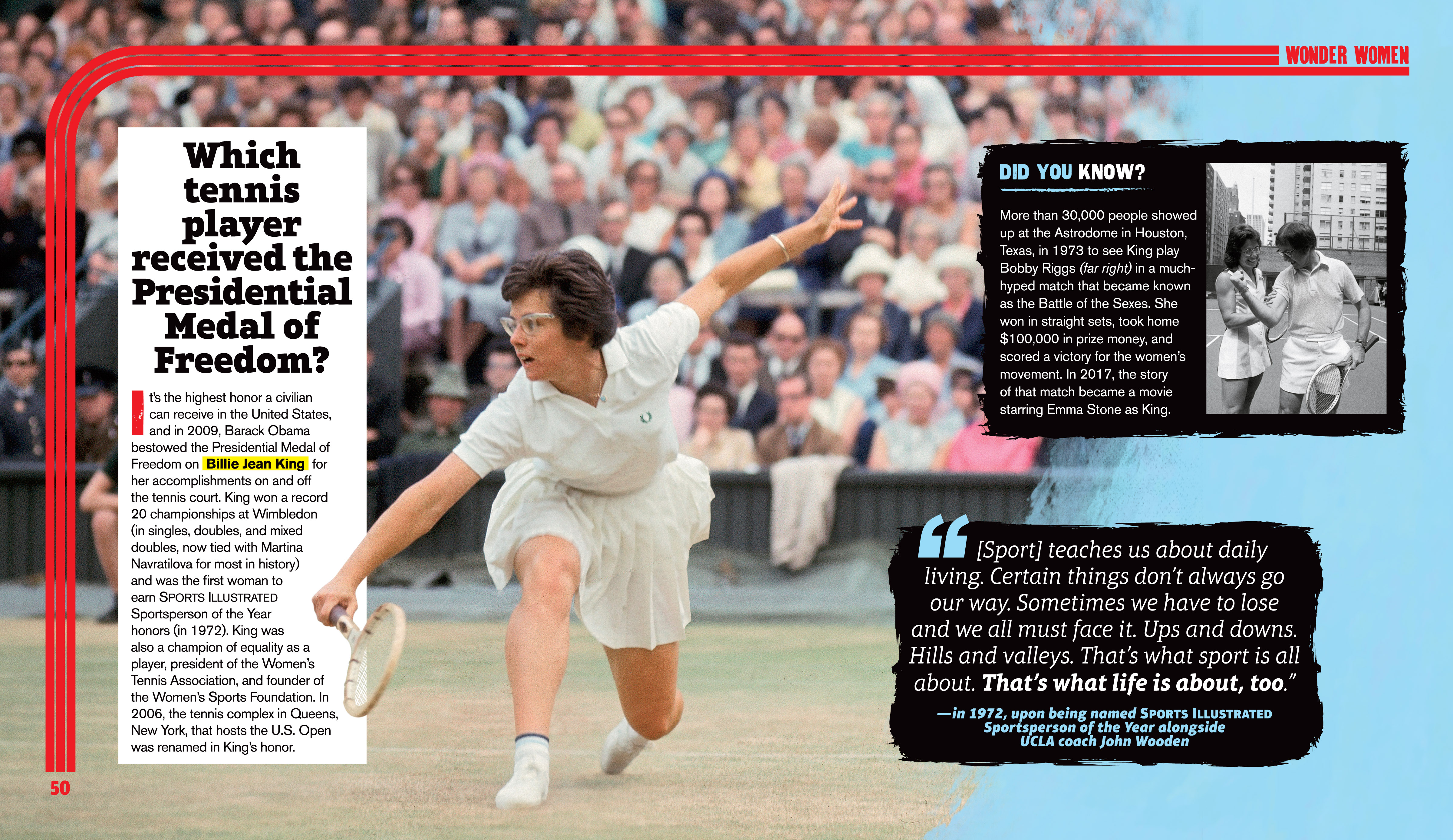
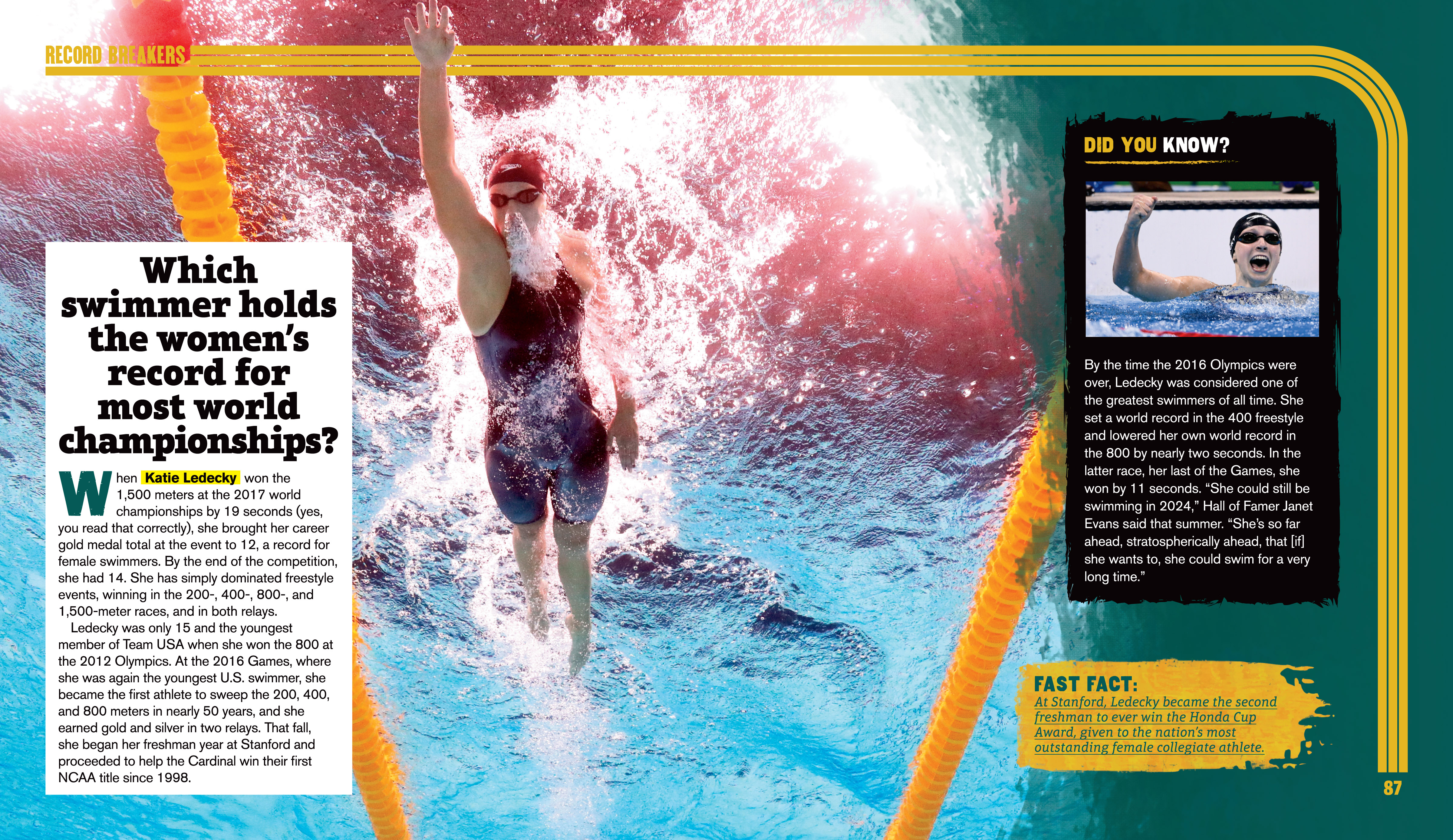
Summary: The fifth book in the Big Book of Who series from Sports Illustrated Kids profiles extraordinary athletes who shaped the narratives of their sports. The best women athletes–past and present–including Billie Jean King, Serena Williams, Nadia Comaneci, Simone Biles, and dozens more are grouped into these categories: Superstars who reinvented what it means to be a sports celebrity, Wonder Women who transcend sports and created seismic shifts in our culture, Trail Blazers who broke barriers and paved the way for others to follow, Record Breakers who set new standards for excellence, and the Champions who showed heart and gumption as winners. All of their stories bring excellence in women’s sports to readers hungry for empowering stories for kids–girls and boys alike. 

ReviewAlthough I wish there were just more women in a book called ATHLETES WHO RULE, I am happy to have a book that celebrates female athletes that kick butt in their sport! This book celebrates firsts, amazing accomplishments, broken records, and champions. I adore that it spans from the early 1900s to today looking at women who paved the way for the extraordinary athletes that are superstars of today.

Teachers’ Tools for Navigation: The text is structured like a Guinness Book of World Records book making it quite friendly for kid readers who want to read the whole text or for readers who want to browse for fun facts. It could also be a great resource for a literacy activity in a physical education class.

Discussion Questions: 

  • How did the women of the early 1900s help pave the way for women athletes today?
  • How are women athletes treated differently than male athletes?
  • Which woman athlete was a new name to you and impressed you with their accomplishments?
  • How was the book structured? What other ways could it have been organized?
  • How did the “Fast Facts,” “Did You Know,” and “Wow Factor” sidebars help with the intrigue the book built?

Flagged Passages: 

Credit: Excerpted from Women Athletes Who Rule by the Editors of Sports illustrated Kids. Copyright © 2018 Liberty Street. Reprinted with permission from Time Inc. Books, a division of Meredith Corporation. New York, NY. All rights reserved.

Read This If You Love: Sports!, Sports history, Sports Illustrated Kids

Recommended For: 

classroomlibrarybuttonsmall

Signature

**Thank you to little bigfoot for providing a copy for review!**

Author Guest Post with Teaching Tools!: “How can we tell we’re living in a global village?” by Carla Mooney, Author of Globalization: Why We Care About Faraway Events

Share

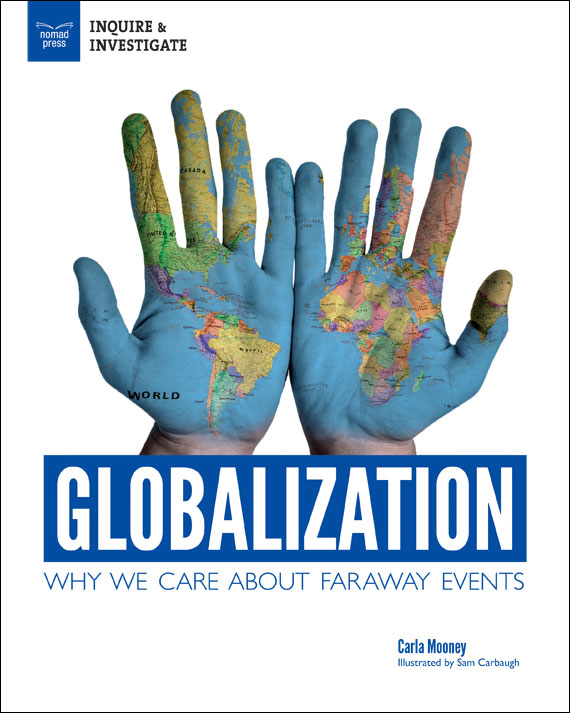
Globalization: Why We Care About Faraway Events
Carla Mooney
Published May 1st, 2018 by Nomad Press

Summary: Have you noticed that our planet is becoming increasingly connected?

In Globalization: Why We Care About Faraway Events, kids ages 12 to 15 focus on the definition of globalization and discover how technology drives globalization, which affects economies, political systems, human rights, and cultures around the world. The book also explores the future of globalization and discusses issues the global community might face in coming years.

  • Readers hear news stories about globalization on a daily basis.
  • Investigating previous events in the world’s history can help students understand the causes and effects of current events.
  • Uses links to online primary sources to imbue readers with a curiosity about the topic and engage in further, independent inquiry.

About the Author: Carla Mooney has written more than 70 books for children and young adults. Her work has appeared in many magazines including HighlightsFaces, and Learning Through History. Carla lives in Pittsburgh, Pennsylvania.

Author Guest Post: 

“How can we tell we’re living in a global village?”

Where was your phone manufactured? How many different countries did you send digital waves to when you checked your social media feeds this afternoon? What nations did you read about in the paper over your morning cup of coffee?

It’s pretty easy to recognize that globalization is a driving force in our daily lives. Everything we do has consequences, both our actions as individuals and our actions as nations. It can be a little tougher to get kids to recognize what this means!

For example, consider the withdrawal of the United States from the Iran nuclear deal, which kids have probably heard about on the news. What kind of repercussions might this have in the life of an eighth grader? Well, as sanctions are potentially put back in place, global relationships will change, which means the way we trade will change, which might make things such airplane tickets more expensive for the average consumer. A 13-year-old will certainly notice if their family has to skip a summer vacation because the cost of flying is prohibitively expensive. They’ll also notice if digital devices go down in price, because their parents might be more inclined to purchase the most recent version of their phone!

Globalization is a complex topic that can help kids recognize the interconnected workings of our world. While your students’ lives might not be super changed as a result of things like the Iran nuclear deal or the trade negotiations with China, at some level, these issues affect all of us, and exploring these connections can be a lesson rich in discovery.

This is what was in my mind as I wrote Globalization: Why We Care About Faraway Events. As you might imagine, research for this book was a deep dive into the innumerable ways countries are connected, from trade policies to political partnerships to environmental agreements. It’s a very tangled web! But the more kids know about these connections, the better equipped they’ll be to make the kinds of decisions they’ll be faced with as tomorrow’s leaders.

Teachers’ Tools for Navigation: 

To get them started, here are three activities from the book.

SHOW THE CONNECTIONS

Globalization is the great connector, bringing together people, ideas, and more from all around the world. You can learn about these connections simply by studying something from your everyday life.

Pick three items that you use on a daily basis. They could be music you listen to, a T-shirt you wear, the bed you sleep in, the toothpaste you use, or the apple you eat.

For each item, think about the following.

  • Is your item affected by globalization?
  • Where is it made or grown?
  • Where is it shipped to?
  • How is it transported?
  • What laws affect it?
  • Who benefits from it and why?
  • Who suffers from it and why?

Create a map on poster board or in PowerPoint to illustrate the global connections you have found for each object. Present the map and findings to your class.

How are the journey and connections for each item similar? How are they different?

To investigate more, pick a country to research. Write an essay on how globalization has impacted the country, both positively and negatively.

WINNERS OR LOSERS?

Global trade has many benefits. It lowers the price of goods, increases wages, and fuels economic growth. Yet the global economy has both winners and losers.

To further understand this issue, you can explore the following articles or research some additional information on your own.

“More Wealth, More Jobs, but Not for Everyone: What Fuels the Backlash on Trade”

“The Toughest Questions About Global Trade”

Based on what you learn, consider the effects of global trade on individuals, companies, and governments. For example, think about the effect of global trade on a multinational toy corporation, an American factory worker, a Chinese factory worker, an Indian software engineer, an American chief executive officer, a local toy retailer, the United States government, and the Chinese government.

Who are the winners and losers? Create a chart that shows the effects of global trade on the different groups.

Do you think that increasing global trade will have a positive, negative, or neutral effect on the world overall? What about for the United States? Do you believe that the United States should enter into more free-trade agreements? Or do you believe that trade protectionism is a better strategy? Explain your position.

To investigate more, consider that as globalization changes the economy, local workers and businesses can be hurt by disappearing sales and jobs. What policies can the government put in place to support workers and businesses hurt by globalization?

VANISHING CULTURES

Many indigenous cultures are facing a battle between traditional ways of life and globalization. As older generations die out, many of the culture’s traditions are dying with them.

Use the internet and other sources to research a specific indigenous culture. You might choose the Maasai of Africa, the Wanniyala-Aetto of Sri Lanka, the Yanomami of South America, or another group of your choosing. Once you have chosen a group to investigate, consider the following.

  • Where does the group traditionally live? What are the climate and environment like?
  • What is their traditional lifestyle? How do they eat and gather food?
  • What tools do they use to get and prepare food?
  • What ceremonies, celebrations, or festivals do they observe?
  • What role does the extended family play?
  • What types of jobs do people typically hold? How do they get around?
  • How are traditions passed from one generation to the next?

Next, research how globalization has impacted these indigenous people and their culture. What changes have occurred in their environment, society, and political systems? What has caused these changes? How have these changes affected the group’s culture, beliefs, and traditions? Prepare a presentation to share what you have learned with your class.

To investigate more, imagine that you were going to live with this group for a week. What items from your culture would you bring with you? Why are these items important to you? How would they help you to live with this indigenous group? What would people from this group think about the items you have brought? Write a diary entry to describe your visit.

Find more resources in the free classroom teaching guide!

Thank you so much, Carla and Nomad Press!
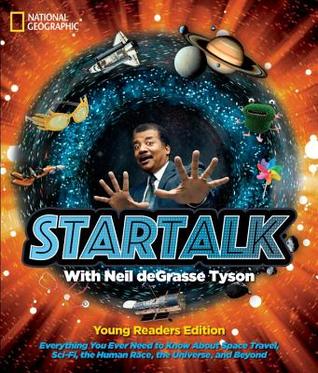
StarTalk with Neil deGrasse Tyson Young Readers Edition Edited by Shelby Alinsky

Share

StarTalk with Neil deGrasse Tyson
Editor: Shelby Alinsky
Published March 20th, 2018 by National Geographic Children’s Books

Summary: Now abridged for YA audiences, this beautifully illustrated companion to celebrated scientist Neil deGrasse Tyson’s popular podcast and National Geographic Channel TV show is an eye-opening journey for anyone curious about the complexities of our universe.

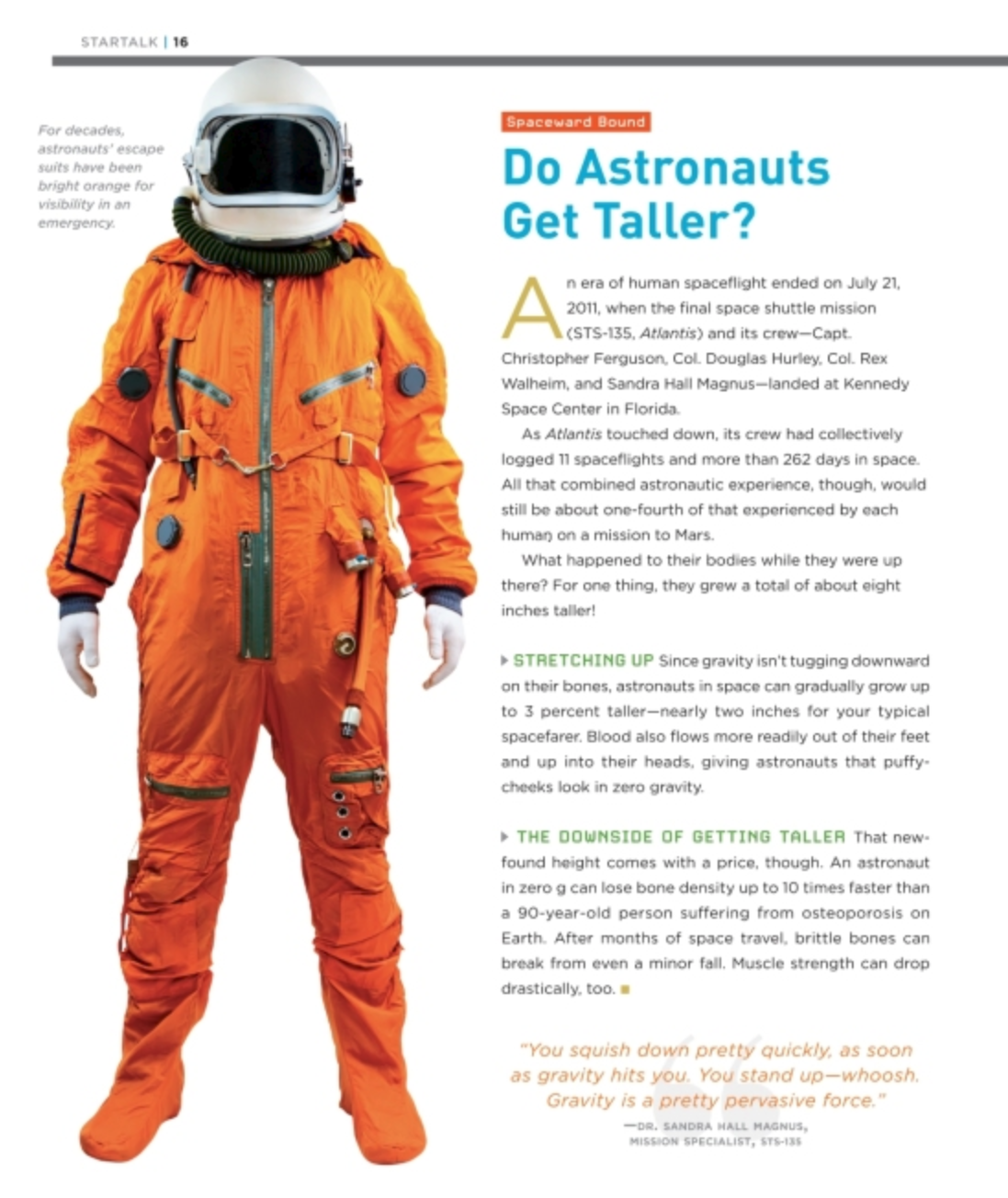
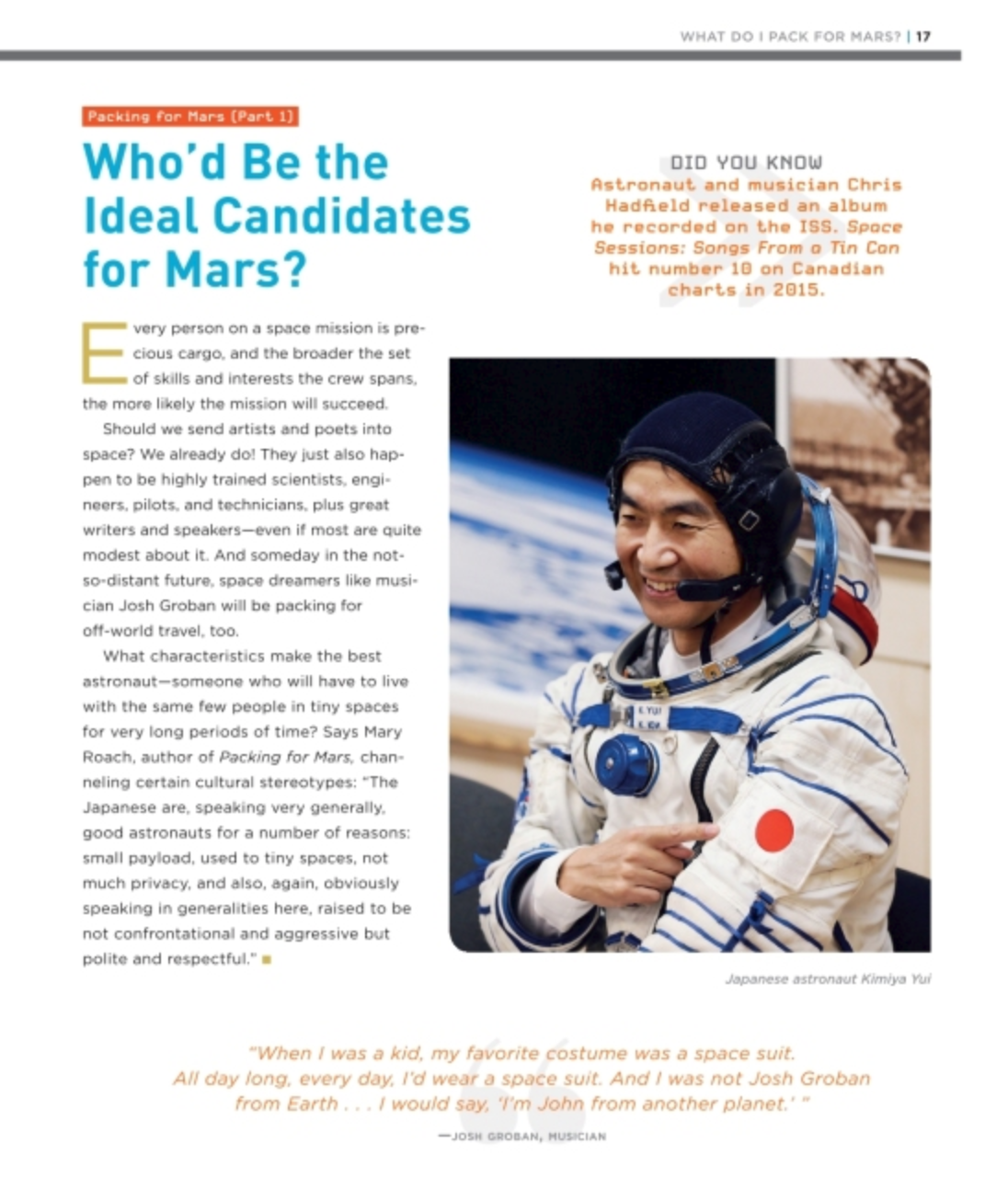
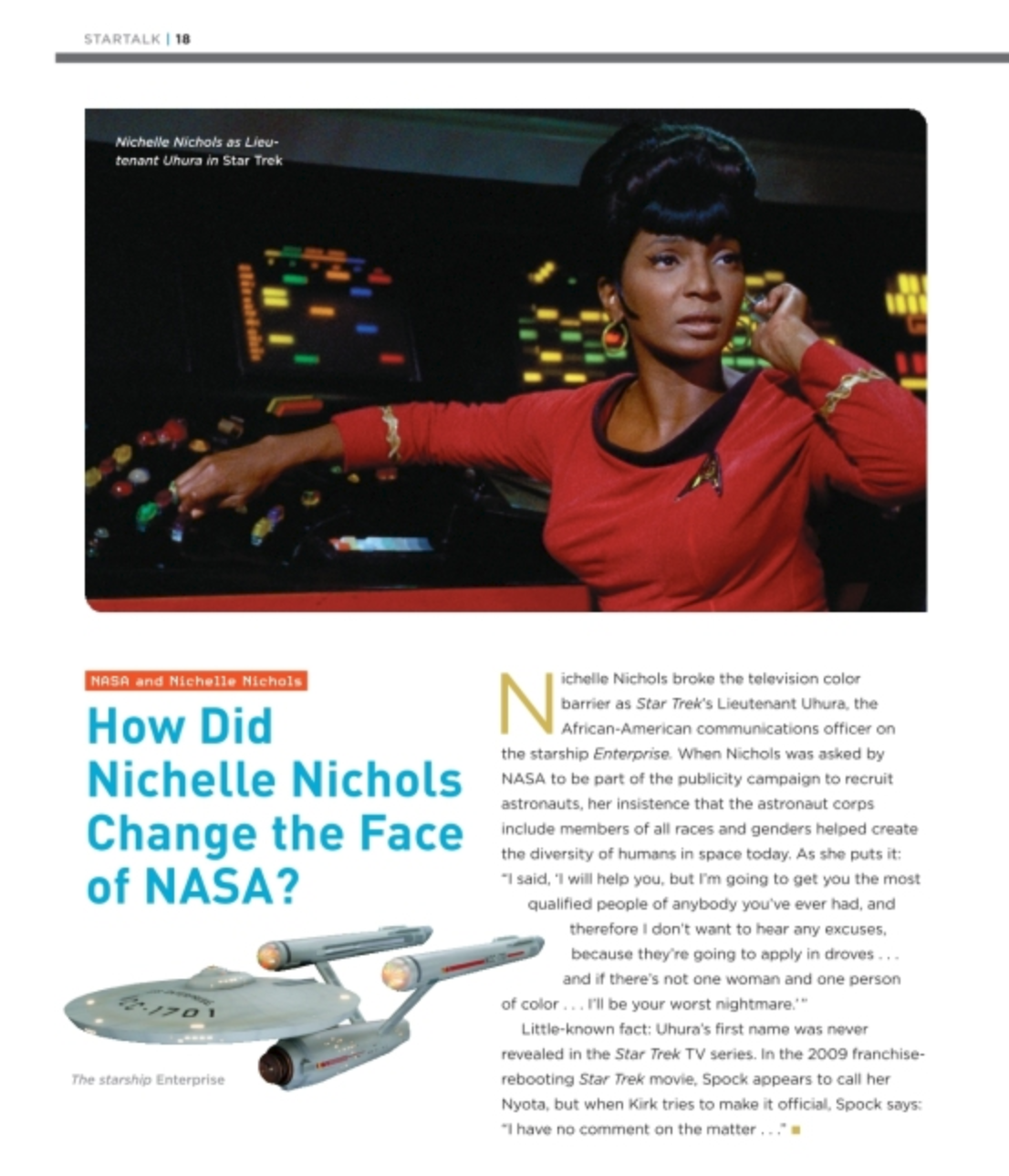
For decades, beloved astrophysicist Neil deGrasse Tyson has interpreted science with a combination of brainpower and charm that resonates with fans everywhere. In 2009, he founded StarTalk, the wildly popular podcast that became an Emmy-nominated talk show on the National Geographic Channel in 2015. Tyson’s pioneering book takes the greatest hits from the airwaves to the page in one smart, richly illustrated compendium for young adult readers. Featuring vivid photography, thought-provoking sidebars, enlightening facts, and fun quotes from science and entertainment luminaries like Bill Nye and Josh Groban, StarTalk reimagines science’s most challenging topics–from how the brain works to the physics of comic book superheroes–in a relatable, humorous way that will attract curious young readers.

Praise: “Most notable throughout the book, as on the original television show, are the connections between science and creativity, art, and wonder. Educational and entertaining, this will engage loyal followers and recruit new fans.”—Booklist

ReviewThis book is everything you would think a book by Neil deGrasse Tyson named after his National Geographic Channel’s late-night talk show and his podcast. Tyson mixes culture, creativity, and science in a fun and interesting way that will suck in readers of all kinds in.

I loved the structure of the book! The mix of Tyson’s answers to science-based questions, fun facts about the topics, extension activities, and all sorts of other fun text features! And the topics are so interesting! Split into space, planet earth, being human, and futures imagined, the text looks at so many interesting topics including going to Mars, evolution, Superman, and Bigfoot!

Teachers’ Tools for Navigation: I love texts like this because they can be used for research or as interest starters or just for fun! This book is perfect for classroom libraries, school libraries, and as a class resource!

Discussion Questions: Almost every page has a discussion question!

Flagged Passages: 

Read This If You Love: To learn, Science, Astonomy, Neil deGrasse Tyson

Recommended For: 

classroomlibrarybuttonsmall 

Signature

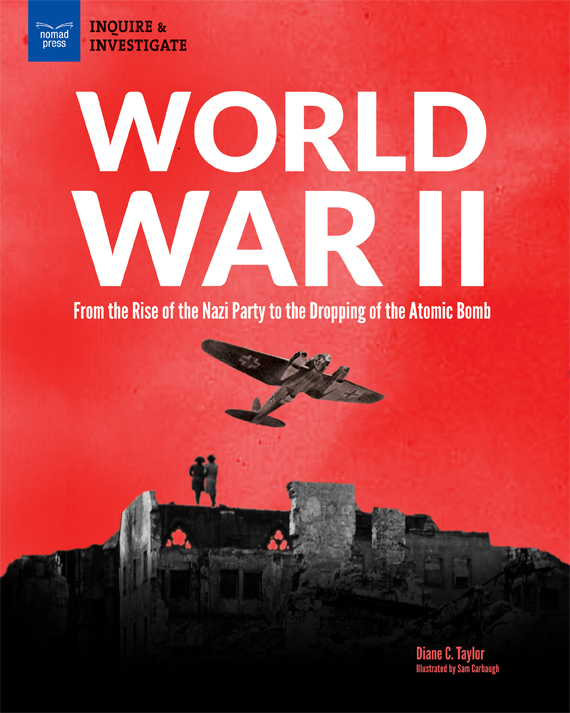
Author Guest Post with Teaching Tools!: “Talking to Kids about World War II” by Diane C. Taylor, Author of World War II: From the Rise of the Nazi Party to the Dropping of the Atomic Bomb

Share

World War II: From the Rise of the Nazi Party to the Dropping of the Atomic Bomb
Diane C. Taylor
Published May 1st, 2018 by Nomad Press

Summary: Why did the world find itself immersed in another global conflict only two decades after World War I?

World War II: From the Rise of the Nazi Party to the Dropping of the Atomic Bomb introduces kids ages 12 to 15 to the political, military, and cultural forces that shook the globe from 1939 to 1945 and beyond. Middle school students examine the events leading up to, during, and after WWII and the repercussions of these events on populations around the world, from Germany’s invasion of Poland to the resulting domino fall of events that engaged several countries and caused the deaths of 60 million people, including 40 million civilians. They also see how the dark side of Hitler’s ideology was always present, eventually resulting in the Holocaust, the systematic murder of 11 million people, including 6 million Jews and other populations.

About the Author: Diane C. Taylor is a freelance writer whose published works include both fiction and nonfiction. She has written educational material for a nonprofit arts program in Dallas, Texas, and has been an English instructor for students in middle school, high school, and college. Diane lives in Bowling Green, Kentucky.

Author Guest Post: 

“Talking to Kids About World War II”

No event of the twentieth century was as big or as bad as World War II. For six years, from 1939 to 1945, a conflict that started when Germany invaded Poland quickly encompassed all four corners of the globe. No one—neither countries nor individuals—sat out this conflict. The political and economic reverberations of the war were simply too widespread to be ignored.

Like it or not, there was no such thing as being a disinterested party to World War II.

I think the same can be said as it pertains to teaching this subject to children. World War II fundamentally changed the world, and it’s not done affecting us even today. Conflict between Israel and Palestine. Tensions within the European Union. The role of the United Nations. The challenge of caring for displaced persons. The nuclear arms race. Just listen to the news and you’ll hear about scores of international issues that trace their origins back to the Second World War.

If all the world is a stage, then World War II is the de facto backdrop of the ongoing drama. This is why teaching about World War II and the Holocaust is a crucial part of raising future generations who can solve problems that were created before these kids were even born.

But how do you explain something as monstrous—and as monstrously complex—as World War II to a 12-year-old child?

That was the foremost question on my mind the entire time I was writing World War II: From the Rise of Hitler to the Dropping of the Atomic Bomb. To my immense relief, I discovered that World War II can be dismantled and reassembled into a coherent narrative that a young reader can understand. If you take one piece of the story at a time, and strip it down to its barest essentials, you can put it all back together in a way that makes sense of the mass insanity that was the Second World War.

By working to ensure our kids know the history and consequences of the greatest conflict in human history, we can do our best to avoid future wars on the same scale.

Teachers’ Tools for Navigation: 

Hands-on activities are another great way to make the experiences of World War II feel relevant and important to teenagers. Try one of these!

Prevent Starvation

Throughout World War II, starvation was a constant concern. Food was scarce everywhere. As a result, people frequently planted vegetable gardens in any available outdoor space.

Form a group with friends or classmates and take a walk around your neighborhood. Your goal is to figure out where you can grow food.

  • How much land is available? Do homes have front or back yards? Are there parks or medians that you can use?
  • Is the available terrain easy to garden? Is it hilly or flat? Heavily or sparsely wooded? Do you have access to water?
  • Does the soil lend itself to gardening? How can you tell?

Draw up a map of where you will plant your gardens and indicate what you will grow. Can you calculate how much food you will produce or how many people will you be able to feed?

To investigate more, find out as much as you can about where you food comes from right now. Is much of it grown locally, or is it transported from far away? If the food distribution system in your area were disrupted, what products would stop showing up in the grocery store?

The President Speaks

On December 8, 1941, Americans tuned their radios to hear President Roosevelt declare war against Japan. You can listen to that address at this website.

Or try searching these words together: Roosevelt, congress, war.

In an era before television, this is most likely how you would have experienced this historic event.

Discuss your reaction to FDR’s speech among your classmates or friends, or write a journal entry.

  • What is the atmosphere surrounding this speech?
  • Did you learn anything new by listening to this broadcast?
  • What is your impression of President Roosevelt?

Would you have chosen to take the United States to war, or would you have followed the lead of Rep. Jeanette Rankin, who voted against the war? Compose and deliver a brief speech of your own, outlining your reasons for either going to war or staying out of the fight. Assume your audience is made up of friends or classmates.

To investigate more, click here to listen or watch speeches that other presidents of the United States have given. Contrast and compare one of those speeches to the one you listened to from President Roosevelt. How do they differ in style, language, and substance? How are they similar?

Find more resources in the free classroom teaching guide!

Thank you so much, Diane and Nomad Press!
Author Guest Post with Teaching Tools!: “Take a Trip to the Moon” by Matthew Brenden Wood, Author of The Space Race: How the Cold War Put Humans on the Moon

Share

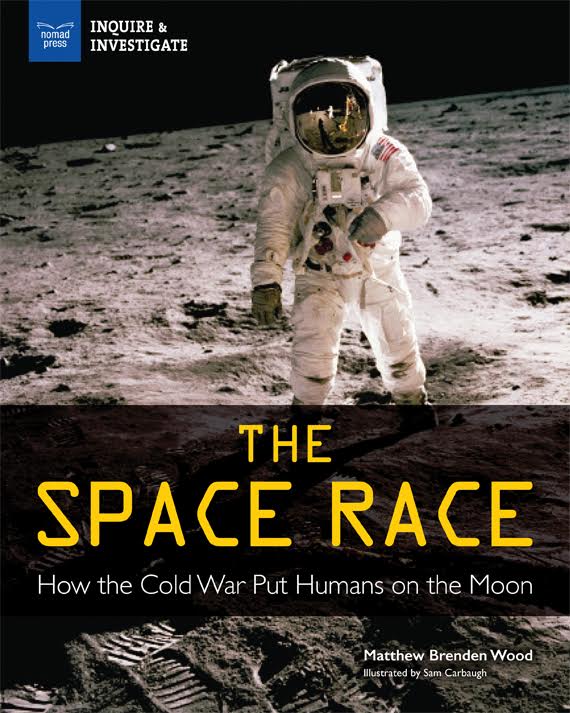
The Space Race: How the Cold War Put Humans on the Moon
From the Nomad Press Inquire and Investigate Series
Author: Matthew Brenden Wood
Illustrated by: Sam Carbaugh

Summary: What do you see when you look up at the night sky? The potential for amazing discoveries and scientific advancement? During the 1950s and 60s, some people also saw a place that needed to be claimed.

In The Space Race: How the Cold War Put Humans on the Moon, middle school students will explore the bitter rivalry between the United States and the Soviet Union that served as fuel for the fire that catapulted rockets into the great unknown of the next frontier-space. While Neil Armstrong will always be remembered as the first person to set foot on the moon, the people and events behind this accomplishment populate a fascinating tale of politics, science, technology, and teamwork that resulted in what might be the greatest accomplishment of the twentieth century.

About the Author: Matthew Brenden Wood is a math and science teacher with a passion for STEAM education. He is also an avid amateur astronomer and astrophotographer. Wood holds a bachelor’s degree in astronomy from the University of Massachusetts at Amherst and lives in Phoenix, Arizona.

Author Guest Post: 

“Take a Trip to the Moon!”

What pops into your head when you think about the Space Race? Most people probably think of Neil Armstrong’s famous line, “That’s one small step…” Or perhaps they think of the sound of Sputnik’s beep as it circled the globe. But that’s only a part of the amazing story of a race that started more than two decades before Neil and Buzz left their bootprints in the lunar dust, even before President Kennedy declared that the United States would send people to the moon and return them safely to Earth.

The path to the moon started at the end of World War II, as the United States and Soviet Union eyed each other warily across what became known as the Iron Curtain. New and fearsome weapons such as the atomic bomb and the Inter-Continental Ballistic Missile were front-page news as both nations looked to outdo the other.

The West viewed the Soviets as a backwards nation, lagging far behind in technology, education, and industry. However, everything changed with the launch of Sputnik on October 4, 1957. People around the world marveled at the feat, and a new fear of communism swept across America. How had the Soviets beaten the Americans into space? What would they do next? How would the United States respond?

The launch of the world’s first artificial satellite was the firing of the starting gun in the race to the moon—it was also a new, dangerous development in the early days of the Cold War. Not only did the Soviets have a rocket that might carry a person into space, but that same rocket could carry an atomic bomb to any place on Earth. Suddenly, the United States was behind, and needed to catch up—fast. The race was on.

I wrote The Space Race: How the Cold War Put Humans on the Moon to take kids on the journey through the Space Race and the backdrop of the Cold War. For kids interested in history, it’s a look at how the relationship between the United States and Soviet Union shaped the world we live in today, from North Korea and Cuba to Russia and China. For those interested in space, it’s a window into the early days of space exploration and the incredible accomplishments on the way to the moon.

Teachers’ Tools for Navigation: Here are some activities to get your kids thinking about the space race!

FIRST-PERSON ACCOUNT

The Cold War and Space Race were very important events in history. People around the world lived through the struggle between the United States and the Soviet Union, and millions tuned in to witness humanity’s first steps on a different world. Do you know someone who lived through these events?

  • Interview a family member or friend who experienced the Cold War and Space Race up close.

Questions to consider include the following:

  • How was life during the Cold War different from today?
    • Did it affect their everyday life?
    • Were they ever afraid during the Cold War? Why or why not?
    • Did they watch the moon landing? How did they and their friends and family react?
    • How did it feel to watch such an important moment in human history? Did they know how special it was at the time?

To investigate more, present their story however you think best represents their experience. You could write an essay, create a presentation, film a documentary—it’s up to you!

SPLAT!

Protecting an astronaut from the dangers of space travel is a difficult task. The early spacecraft used by both space programs were small, cramped capsules designed with only one thing in mind—bringing the passenger back safely to Earth. Can you do the same? Here’s your challenge: design a “space capsule” to protect a raw egg from the forces of gravity!

  • Assemble the materials you have on hand. What can you use that could protect an egg?
    • Design your space capsule. How will you use your materials? What is the best way to protect your “eggstronaut”?
    • Assemble your craft and test it (you can try using a hard-boiled egg first) by dropping it from shoulder height. Make any changes needed.
    • Try dropping your capsule with its passenger from differing heights. How does your design hold up? What is the biggest drop your eggstronaut can survive?

To investigate more, challenge others to a contest. Compare your strategies and designs. What materials and ideas work best?

Find more resources in the free classroom teaching guide!

Thank you so much, Matthew & Nomad Press!

Blog Tour with Review!: The Moment is Your Life (And So Is This One) by Mariam Gates

Share

The Moment is Your Life (And So Is This One)
Author: Mariam Gates; Illustrator: Libby VanderPloeg
Published May 22, 2018 by Dial

Book Summary: Don’t just do something, be here.

The key to happiness is being able to find comfort in this moment, here and now. When you are completely present and not distracted by regrets, worries, and plans, even for a little while, you begin to feel more confident and can deal more easily with everything you experience. This is mindfulness: paying attention to this very moment, on purpose and without judgment–simply being present with curiosity.

This engaging guide, packed with simple exercises and endearing full-color artwork, provides a handy starting point for bringing mindfulness into your daily life. Chapters on meditation, yoga, and mindful breathing explain the benefits of these practices, and you are free to pick and choose what to try. There are quick exercises throughout, and a more extensive tool kit at the end of each chapter. The final chapter offers satisfying five-day challenges that map out ways to pull all of the book’s mindfulness techniques together in your day-to-day life.

With the appeal of a workbook or guided journal, and full of examples relevant to tweens and teens today, this book will be your trusted companion as you begin the valuable, stress-relieving work of being still with skill.

About the Author: Mariam Gates has a master’s degree in education from Harvard University and has been teaching children for more than twenty years. The founder of Kid Power Yoga, she now devotes herself to training children and adults in yoga and mindfulness. She is the author of the picture books Meditate with MeGood Night Yoga, and Good Morning Yoga. She lives with her husband, Rolf Gates, and their two children in Santa Cruz, California.

Mariam Gates

About the Author: Libby VanderPloeg is an illustrator and designer living in Greenpoint, Brooklyn. She grew up in Grand Haven, Michigan, on the edge of the Great Lakes, and since then, she has lived in Grand Rapids, Chicago, New York, and Stockholm. She’s created book covers and editorial illustrations for the New York Times, the Wall Street Journal, and Design*Sponge, among others, and as well as a line of cards and prints that she sells via her Etsy shop and in stores.

Review: I wish I’d had this book as a pre-teen/early adolescent. It would have truly helped me as I struggled with a lot of emotions that made me frustrated, unsure, and overwhelmed. This is a book that has a very expansive age range. I’d give it to a reader between the ages of 8 and 14, but it can be read and appreciated by people of all ages. After I was done reading it, I gifted it to a preservice teacher student who is very passionate about infusing mindfulness in the classroom. We spent a lot of time talking about how she might infuse this book into her student teaching with targeted read alouds. I loved Gates’ picture books (see Good Morning Yoga), and this book was no different. It’s thoughtfully crafted and incredibly relevant to young people. I particularly appreciated the action steps within the text. This provided me with concrete steps for infusing mindfulness into my life.

Teachers’ Tools for Navigation: As a classroom teacher, I would use this book as an initiation each day. It’s always very difficult to get students into the learning mindset. They come in with baggage and also with a lot of energy (positive and negative). This book serves as a reset and allows students to be mindful of their bodies and minds. It also allows students to destress to prepare for the classroom learning.

Discussion Questions: How do the author and illustrator work together to effectively present the material?; What is the author’s purpose? How does she effectively convey this purpose?; Which sections felt most relevant to your life?; What are the key takeaways that emerged from this book? How will you employ the strategies in this book directly into your life?

Flagged Pages:


Read This If You Loved: 

Good Night Yoga (2)

Recommended For: 

readaloudbuttonsmall classroomlibrarybuttonsmall


Follow All the Stops on the Tour: 

WEEK ONE

May 15 – Little Flower Yoga – Review

May 16 – Crossroad Reviews – Review

May 17 – Alissa Yoga – Review

May 18 – Whitney Davis Yoga – Review

WEEK TWO

May 21 – Prose and Khan – Review + Favorite Yoga Poses with Pictures

May 22 –  Librariel Book Reviews – Favorite Yoga Poses + Review

May 23 – Foodie Bibliophile in Wanderlust – Review

May 24 – Unleashing Readers – Review

RickiSig

**Thank you to Friya at Penguin for sending this book for review!**

Author Q&A with Lynn Brunelle, Author of Turn This Book Into a Beehive!

Share

Turn This Book Into a Beehive! And 19 Other Experiments and Activities That Explore the Amazing World of Bees
Author: Lynn Brunelle
Illustrator: Anna-Maria Jung
Published April 3rd, 2018 by Workman Publishing

Summary: What a promise! Actually, promises. First, here’s a book that teaches kids all about the fascinating world of bees. Second, fun exercises, activities, and illustrations engage the imagination and offer a deeper understanding of bee life and bee behavior. Third, by following a few simple steps including removing the book’s cover and taping it together, readers can transform the book into an actual living home for backyard bees. Fourth, added all together,Turn This Book Into a Beehive! lets kids make a difference in the world—building a home where bees can thrive is one small but critical step in reversing the alarming trend of dwindling bee populations.

Turn This Book Into a Beehive!introduces kids to the amazing mason bee, a non-aggressive, non-stinging super-pollinator that does the work of over 100 honeybees. Mason bees usually live in hollow reeds or holes in wood, but here’s how to make a home just for them: Tear out the perforated paper—each illustrated as a different room in a house—roll the sheets into tubes, enclose the tubes using the book’s cover, and hang the structure outside. The bees will arrive, pack mud into the tubes, and begin pollinating all the plants in your backyard.

Twenty experiments and activities reveal even more about bees—how to smell like a bee, understand the role of flowers and pollen, learn how bees communicate with each other through “dance,” and more. It’s the real buzz on bees, delivered in the most ingenious and interactive way.

About the Author: Lynn Brunelle is a four-time Emmy Award–winning writer for Bill Nye the Science Guy and author of over 45 books, including the bestselling Pop Bottle Science and Camp Out! She is a regular contributor to KING-TV’s New Day Northwest as a family science guru and NPR’s Science Friday.

Q&A with Author, Lynn Brunelle:

Unleashing Readers: How did you research and learn more about the mason bee?

Lynn Brunelle: First I went to garden stores and asked around about bees.

I learned that honeybees and social bees were only 2% of the bees on the world. 98% of the bees are solitary wild bees that do amazing work as pollinators. I saw some of the houses these garden centers were selling to attract these bees. Then I went online and did some digging. All honeybees are domesticated and were brought here by colonists. In fact honeybees have been domesticated for a loooooooong time! There are images of beekeepers carved into caves, chiseled into Egyptian art, painted on Greek pottery and minted into Roman coins.

The solitary bees like mason bees are native bees and they’re amazing pollinators. I found experts as well. I contacted the USDA mason bee lab in Utah and spoke with bee people from around the country. It was so interesting and really exciting to learn so much.

Then I made my prototype of a book-turned-hive and stuck it out in my garden. Mason bees came! It worked; my garden has never been so productive!!

UR: How did you generate the activities within the book?

LB: My favorite thing is to make big concepts accessible to people of all ages, especially kids. And I think using laughter and hands-on fun is a great way for kids to really understand a concept. So when I was writing all of the amazing things about bees, I was always keeping in mind what kind of hands-on activity I could share for kids to really absorb the content. The fact that bees are positively charged and flowers are negatively charged and that makes pollen leap to a bee is FANTASTIC! And you can show that with a balloon and confetti. The fact that bees are amazing smellers is a perfect lead-in for getting kids to tune into their own sense of smell.

UR: Which activity is your favorite?

LB: It’s the actual making of the mason bee home that I love. Turning the book into a hive and watching as things unfold in the garden.

With mason bees, every girl’s a queen—like a single mom she finds the house—usually a hollow reed or stem or any tube—even paper ones in an inside out book cover!!! She gathers food, makes a pile of food, lays an egg on top of the food pile and then gathers mud to spackle a wall. In a good hollow tube, she can make 6-10 little rooms with an egg and a food supply in each one.

UR: What’s something else we might learn about you, either as a writer or as a person?

LB: I love my job! I get to learn about new things and share them every day. I love the outdoors. My family and I love hiking through the woods with the dogs, kayaking on the water and paddle boarding in the summer. We enjoy camping and exploring. I have a happy garden, I make jewelry and fused glass and am learning how to weld. My sons and I play the ukulele. They are teaching me to tell the difference between rap artists and I play the trombone. I make a great hummus and am getting better at rolling sushi with the help of my patient husband.

We Flagged: 


Thank you to Lynn Brunelle and Workman Press for this interview!