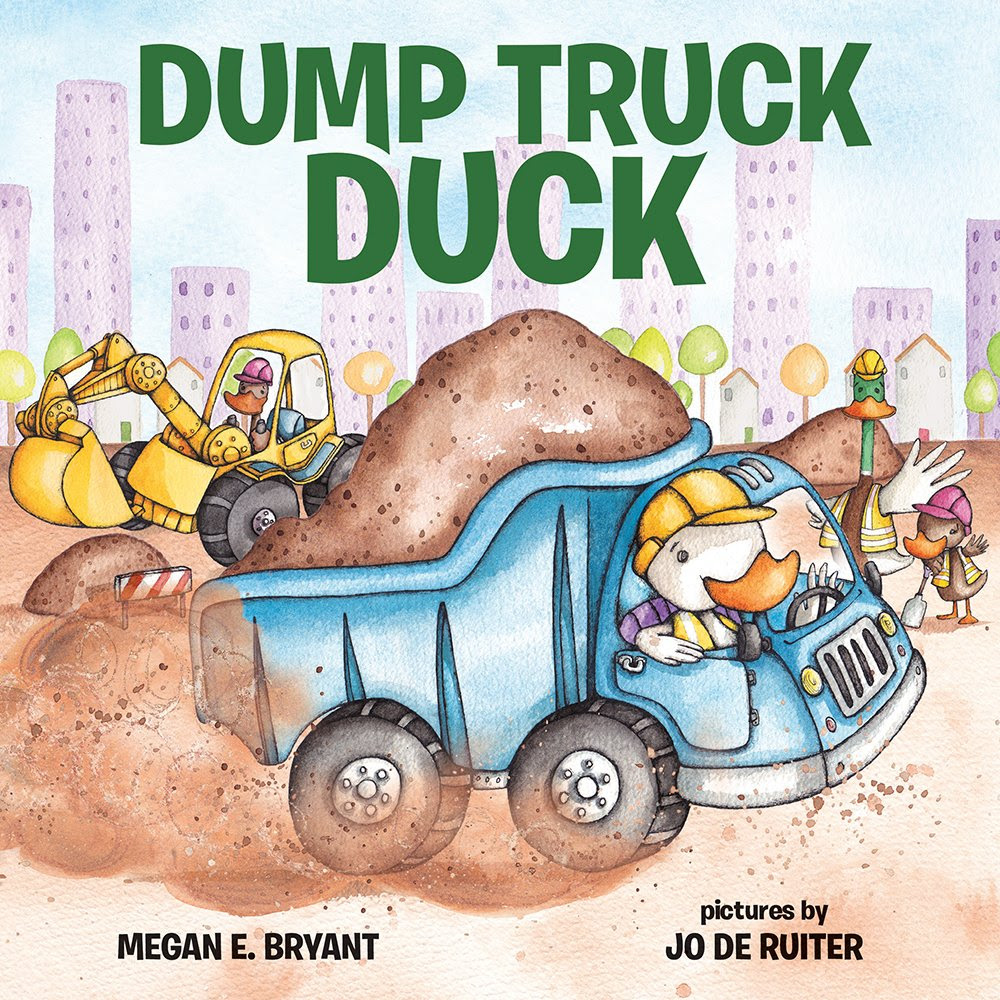
Dump Truck Duck by Megan E. Bryant

Share

Dump Truck Duck

Dump Truck Duck
Author: Megan E. Bryant;  Illustrator: Jo de Ruiter
Published: May 1, 2016 by Albert Whitman & Company

Goodreads Summary: Dump Truck Duck honks and zooms and steers his dump truck all through the day, helping the other hardworking ducks build a new park. With adorable illustrations and playful rhyming text, Dump Truck Duck is certain to become a new read-aloud favorite!

Ricki’s Review: My son has so much fun reading this picture book. I am of the mindset that there can never be too many vehicle-themed picture books. As the mother of a child who reads dozens of truck picture books a day, I love the variety. On top of it all, this playful, fun picture book makes us giggle! The rhymes work well, and the story line is very amusing. The book is quite clever, and we really enjoy reading it together. It is sure to be a favorite amongst little readers. I want my own Dump Truck Duck stuffed animal!

Kellee’s Review: Trent is so picky about his picture books. He owns so many books, but he has a set few books that he reads over and over again. It is really hard for a book to make its way into his book rotation, but Dump Truck Duck did. He even made me bring it to breakfast with us, and we had to read it while we waited for our food. I think what really sucks the little readers in are the combination of a favorite animal (everyone loves to quack!) and construction vehicles. Take this winning combination and add in fun illustrations and great rhyme, and you get a well-loved picture book! 

Teachers’ Tools for Navigation: We imagine that this book would be very inspirational, writing-wise, for students. After reading this story, teachers might ask students to create their own animal-themed story. They should try to stray from ducks and trucks. Perhaps, they could work as an entire class to create their own rhyming story. The teacher could then submit the story for publication!

Discussion Questions: How does the author use rhyme to capture your attention?; How does the rhythm/pacing enhance your reading?; What other animals would make great, funny truck drivers?; In what ways is the author creative with her craft? How might you use this in your own writing?; What literary devices does the author use?

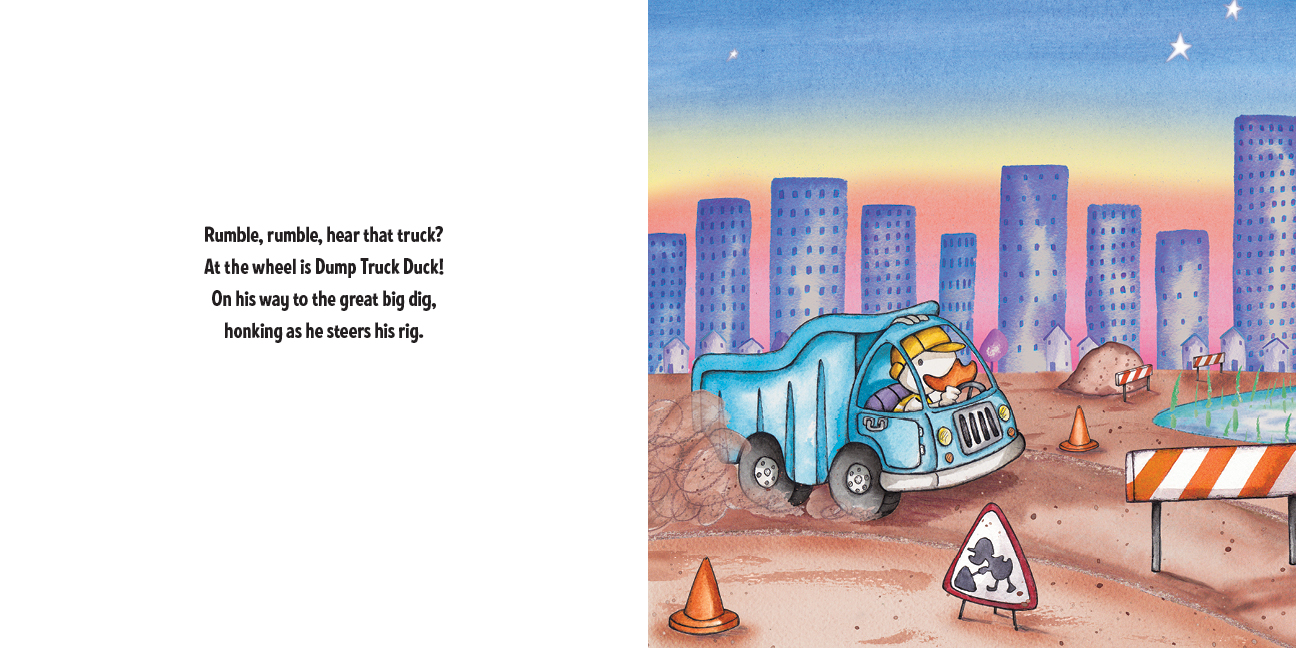
Flagged Passage: 

DumpTruckDuck_INT2-3

Read This If You Loved: Goodnight, Goodnight, Construction Site by Sherri Duskey Rinker, Demolition by Sally Sutton, Little Blue Truck by Alice Shertle, Where Do Diggers Sleep at Night? by Brianna Caplan Sayres

Recommended For: 

readaloudbuttonsmall classroomlibrarybuttonsmall

Don’t miss out on other stops on the tour!

DTD blog tour graphic

RickiSigand Kellee Signature

**Thank you to Megan for providing copies for review!**

Review and Giveaway!: Bucky and Stu vs. the Mikanikal Man by Cornelius Van Wright

Share

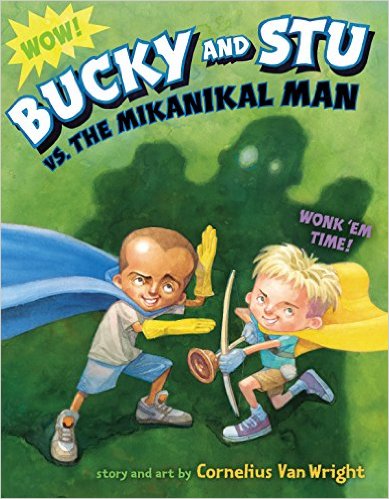
Bucky and Stu cover

Bucky and Stu vs. the Mikanikal Man
Author and Illustrator: Cornelius Van Wright
Published: July 28, 2015 by Nancy Paulsen Books

Goodreads Summary: It’s the adventure of a lifetime when best friends—and self-proclaimed superheroes—defeat bad guys of their own invention.

It’s wonk ’em time when Bucky and Stu have to stand up to Phat Tyre, TrashMan and Hose-Nose. No matter that the bad guys are all made out of household items that Bucky and Stu have assembled themselves—these bad guys don’t stand a chance against the boys’ power moves. Still, it’s quite a surprise when their latest villain, the giant Mikanikal Man, gets zapped during a lightning storm and comes to life! The battle—and thrill—of a lifetime ensue. Full of surprises and laughs, this upbeat, action-packed story celebrates imagination, creativity, and friendship in even the most unexpected forms. Cornelius Van Wright’s hilarious illustrations are full of surprises and are perfect for portraying the high-speed antics of two enthusiastic boys.

About the Author:

Cornelius Van Wright

Cornelius Van Wright (www.corneliusvanwright.com) wrote and illustrated When an Alien Meets a Swamp Monster, and has also illustrated several other picture books, including Princess Grace (by Mary Hoffman) and Jingle Dancer (by Cynthia Leitich Smith). His work has appeared on Reading Rainbow and Storytime and has been exhibited with the Society of Illustrators. He lives in New York City.

Ricki’s Review: For me, this book celebrates the imagination. These two boys build their own villains out of household items, and the end results are hilarious. My son enjoys reading this book, and after our first reading we created our own villain out of couch cushions, a colander, and other cooking tools. While many readers will automatically attribute this book to boys, I think girls would love it, too! Who doesn’t love creating a monster out of every day items? Next winter, I plan to read this book with my son and take him outside to create an imaginative snowman. It will be the hit of the block!

Kellee’s Review: What a perfect book to review to coincide with the release of Captain America: Civil War! It highlights how anyone can be a superhero if they use their imagination and whatever they can find! I know that this is going to be a favorite of parents who like comic books and will be a reading ladder to super hero comic books because the next step after fighting Phat Tyre is Green Goblin! I also think that the story will really get kids’ minds reeling and get them playing! Too often I hear that kids aren’t playing enough anymore, but I believe that is because video games and TV are so stimulating. Bucky and Stu is imaginative enough that it will stimulate the minds of its readers and get them playing. 

Teachers’ Tools for Navigation: This book would be a great choice to kick off a unit on imagination. Some elementary schools do invention fairs, and this would be a great book to initiate excitement in the fair. Further, with the highlight on STEM in education, teachers might consider pairing with a robotics teacher to show students how robots were made. It would be really neat if they could try their own hand at creating their very own robot! Now THAT is authentic learning!

Check out the downloadable CCSS-aligned curriculum guide at: https://www.scribd.com/doc/310658230/Bucky-and-Stu-vs-the-Mikanikal-Man-Curriculum-Guide

Discussion Questions: How does using our imagination help us in life? When have you had to use your imagination creatively? What famous people (current or in history) are known for their imaginations?; How might this book inspire you to make your own invention?

Book Trailer: 

This made us giggle and highlights the good fun of this book!

Read This If You Loved: The Most Magnificent Thing by Ashley Spires, What Do You Do with an Idea? by Kobi Yamada, The Dot by Peter H. Reynolds, The Noisy Paint Box by Barb Rosenstock, Lost and Found by Oliver Jeffers, Journey by Aaron Becker

Giveaway!:

a Rafflecopter giveaway

Recommended For: 

readaloudbuttonsmall classroomlibrarybuttonsmall

RickiSigand Kellee Signature

**Thank you to Barbara at Blue Slip Media for providing copies for review!**

Teeny Tiny Toady by Jill Esbaum

Share

teeny tiny toad

Teeny Tiny Toady
Author: Jill Esbaum
Illustrator: Keika Yamaguchi
Published: March 1, 2016 by Sterling Children’s Books

Goodreads Summary: When a giant hand scoops up her mama and puts her in a pail, a terrified tiny toad named Teeny hops faster than she ever did in her life. “Mama’s stuck inside a bucket! Help me get her out!” she begs her big, clumsy brothers. “Don’t you worry, kid. We’ll save her!” they promise, bumbling and stumbling and jumbling out the door. But as the boys rush headlong to the rescue, pushing their little sister aside, it becomes clear: brawn isn’t always better than brains—and the smallest of the family may just be the smartest one of all.  Written in lilting verse.

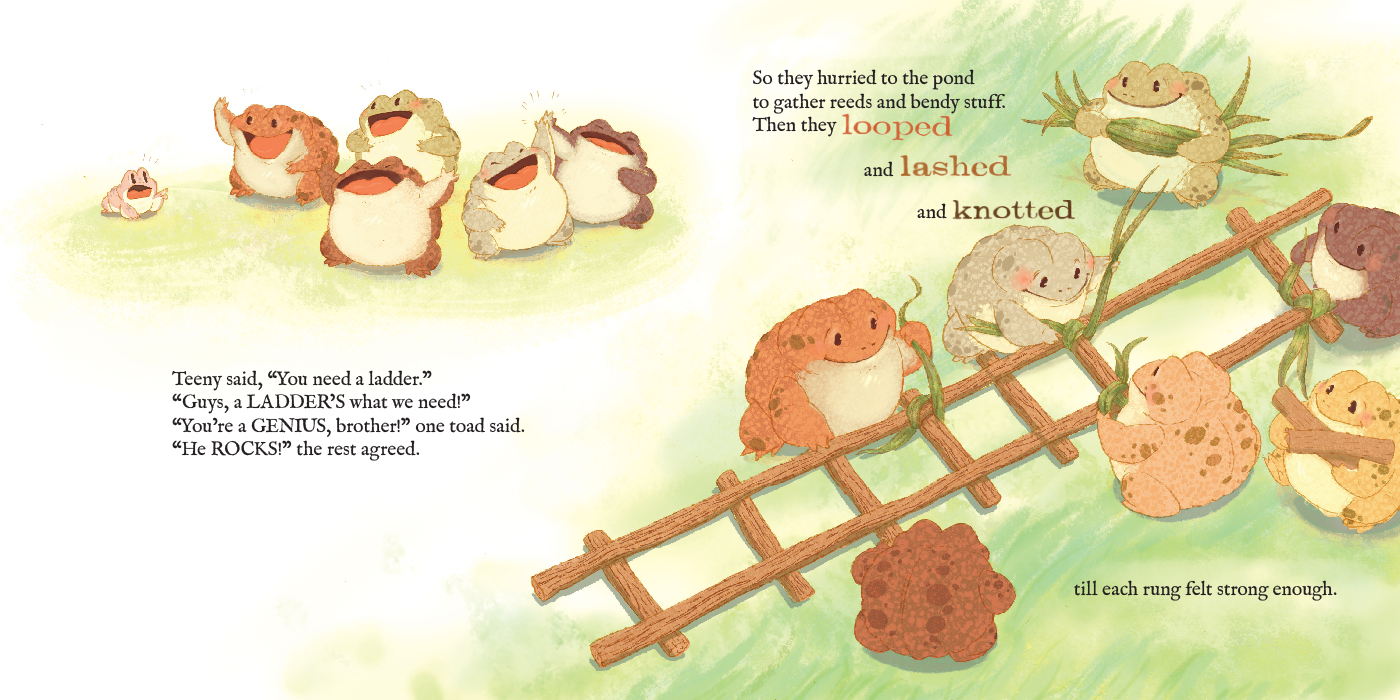
Ricki’s Review: I should be honest that frogs and toads are my favorite animal. I love everything about them! Reading this book was such a joy. I loved how the words danced across the page. If you look at the image below, you will see the way the words pop. The toads are personified in a way that makes me smile. They high five, cheer, hold each other up, etc. Teeny may be little, but she is fierce. It takes her some time to realize that she has valuable ideas. I enjoy teaching my son to be critical of gender as we read this book, and I particularly enjoyed the feminist theme.

Kellee’s Review: I should be honest that frogs and toads are one of my least favorite animals. However, that did not keep me from loving this book! Ricki touched on much of what is superb about the book including the onomatopoeias throughout, the way the words hop like toads all over the page, and the joyousness of these toads’ family. I also particularly enjoyed the theme of this book–it definitely shows how you shouldn’t underestimate people especially if you are basing it off of a prejudicial stereotype. It also  I plan on using this for one of my precept/theme activities with my students because I feel there is so much that could be discussed in this teeny, tiny book. 

Teachers’ Tools for Navigation: This story would be great to use in a creative writing class. The author and illustrator cleverly craft the phrasing and presentation of the story, and this will be inspirational for writers and illustrators. Teachers might also use this text to teach personification, onomatopoeias, and effective use of rhyme.

Discussion Questions: When does Teeny realize that her ideas are valuable? How does her size impact how she feels about herself?; Are there other ways that Teeny could have gotten her family out of the bucket? Try to think of as many ways as you can and how they would have impact the telling of the story.

Flagged Passage:

teeny passageSpread from: http://andreacmiller.com/projects/teeny-tiny-toady/

Read This If You Loved: The Frog and Toad series; Stick by Steve Green; Green Wilma by Tedd Arnold

Recommended For: 

readaloudbuttonsmall classroomlibrarybuttonsmall

RickiSigand Kellee Signature

**Thank you to Josh at Sterling Books for providing copies for review!**

Blog Tour and Review!: Monster Needs to Go to School by Paul Czajak

Share

monster banner

Interactive Monster Needs to go to School Banner

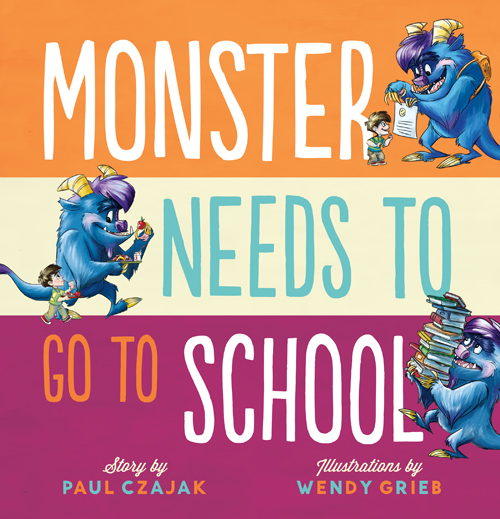
Monster School Cover

Monster Needs to Go to School
Author: Paul Czajak
Illustrator: Wendy Grieb
Anticipated Publication June 28, 2016 by Mighty Media Kids
(Please note the new publication date!)

Goodreads Summary: Monster is dreading his first day of school. But his classroom is full of new friends and so many fun things to learn that Monster forgets his fears in no time…until he catches his friends bullying. What will Monster do?

Another exuberant addition to the award-winning Monster & Me series, addressing back-to-school jitters and the difficulty of dealing with bullies—especially when they’re friends.

Ricki’s Review: The Monster books rank up there as one of my favorite series. I absolutely love reading these books because the monster always make me laugh. My son giggles as we look at the big monster squeezing into a tiny classroom seat. My son is starting preschool in the fall, so it was great to use this book as a teaching tool to discuss his first day of school with him. He became more excited about going to school after reading this book. I also enjoy the lessons that these books teach. Monster sees bullying and isn’t a silent bystander. He speaks out for what he believes is wrong. As a mom, I plan to talk about bullying often. I want my son to stand up for his peers when he sees bullying, and it is great to have this book as a resource to start these conversations.

Kellee’s Review: I love the Monster motto: “Teach kids what matters! After all, they are our future.” This is something I truly believe as well, and I think the Monster books do a great job teaching our children about being a good citizen and human. My first Monster book was Monster Needs Your Vote, and I was really impressed with how Czajak dealt with teaching about politics. Monster Needs to go to School is a bit different because it doesn’t as much teach about a topic but focuses on the importance of education and for kindness. This book will be great to read right before school starts, at the beginning of school, if someone is struggling with school, or when bullying is a problem. I think it would equally work for any of these situations because Monster’s story is fun and one that the reader will connect with. 

Teachers’ Tools for Navigation: This would be an excellent book to start off the school year. I’d read this book on the very first day. It would calm students’ nerves to see a giant monster who is afraid of school. Further, it would jumpstart conversations about bullying to tackle the issue before it might begin.

Discussion Questions: What is monster afraid of? What kinds of things make us afraid? Why is this okay?; What does monster do when he sees bullying? Why is it important to stand up for what is right? What is a bystander? Would you be strong and speak up against bullying?

We Flagged: “When Monster hopped onto the bus, his nerves were at their peak. He crumpled in the nearest seat, afraid to even speak.”

Read This If You Loved: Each Kindness (Kellee’s Review; Ricki’s Review) by Jacqueline Woodson, Unicorn Thinks He’s Pretty Great by Bob Shea, the rest of the books in the Monster & Me series

Recommended For: 

readaloudbuttonsmall classroomlibrarybuttonsmall

RickiSigand Kellee Signature

**Thank you to Carolyn at Mighty Media Press for providing copies for review!**

Mother Bruce by Ryan T. Higgins

Share

Mother Bruce

Mother Bruce
Author: Ryan T. Higgins
Published November 24, 2015 by Disney-Hyperion

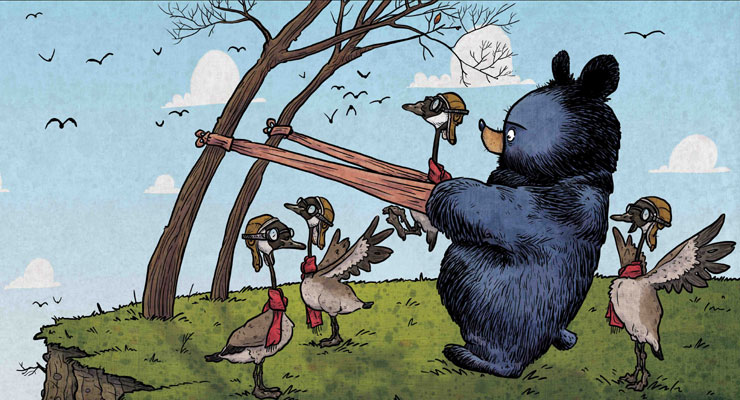
Goodreads Summary: Bruce the bear likes to keep to himself. That, and eat eggs. But when his hard-boiled goose eggs turn out to be real, live goslings, he starts to lose his appetite. And even worse, the goslings are convinced he’s their mother. Bruce tries to get the geese to go south, but he can’t seem to rid himself of his new companions. What’s a bear to do?

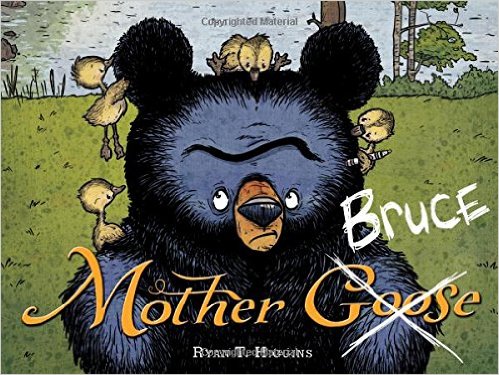
Ricki’s Review: I dare you to try reading this book without smiling. I had so much fun reading this book with my son. It tells the story of a grumpy bear who accidentally hatches goslings instead of hard-boiled eggs for his newest recipe. The goslings imprint on him, and he can’t get rid of them! As you can see below, the illustrations are hilarious. The author is very clever. I will be reading more of his work!

Teachers’ Tools for Navigation: It is always fun to look at original fairy tales and the ways they compare to fairy tale retellings. This book is a bit different because Mother Goose is the imaginary author of fairy tales. The title of this book is a pun on the Mother Goose name. ‘d love to hear the ways that kids can compare this story to other fairy tales. I imagine they would come up with some really clever ideas!

Discussion Questions: What strategies does Bruce use to try to get rid of the goslings?; How does Bruce change throughout the story?; In what ways does the author add humor to the story in both the language and illustrations?; What does the title mean?

We Flagged: 

Mother-Bruce-2

**Image from: http://www.modernmom.com/mother-bruce-giveaway-100-visa-gift-card-116459.html. **

Read This If You Loved: Wilfred by Ryan T. Higgins, Wolfie the Bunny by Ame Dyckman, No Fits, Nilson by Zacharia Ohora, Sylvester and the Magic Pebble by William Steig, This Is Not My Hat by Jon Klassen

Recommended For: 

readaloudbuttonsmall classroomlibrarybuttonsmall

RickiSig

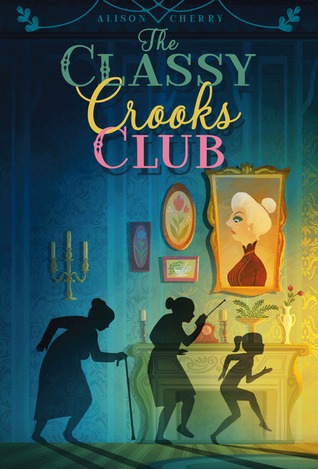
Blog Tour, Author Guest Post, and Review!: The Classy Crooks Club by Alison Cherry

Share

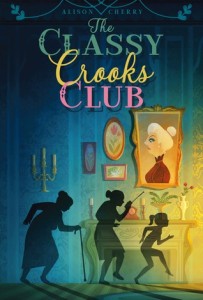
classy crooks club

The Classy Crooks Club
Author: Alison Cherry
Published March 29th, 2016 by Aladdin

Goodreads Summary: Twelve-year-old AJ dreads spending an entire month living with her strict Grandma Jo. Not only does her grandmother dictate how she walks, what she eats, and which rooms she can enter, she fills all AJ’s free time with boring sewing lessons. Grandma Jo wants nothing more than to transform her adventurous, fun-loving granddaughter into a prim and proper lady.

But AJ’s dull summer takes a sharp turn when she discovers that her grandmother’s “bridge group” is actually a heist club. When Grandma Jo offers to let AJ learn lock-picking instead of embroidery in exchange for help with a few capers, AJ is happy to join her grandmother’s madcap band of thieves, who claim to steal only for ethical reasons. But even the most respectable ladies can hide truly surprising secrets, and AJ finds she must decide for herself what it means to be one of the good guys.

My Review: I love AJ. She is a perfect protagonist because she is just a real middle schooler. She is multi-faceted, funny, has quite a personality, has fears, makes mistakes, and is overall likeable. And she is not the only well-crafted character. Each of the characters, main, secondary, or supporting, are so fully developed that you feel like you know everyone in AJ’s life. I often am skeptical about first person POV because it is always tough to get a character/narrator’s voice perfect while also developing the characters, but Cherry does a great job of both. AJ is a normal middle school girl that is dealing with a quite terrible grandmother who happens to have an unexpected hobby.

Another thing that blew me away about this novel is that something happened that was completely unexpected! Usually when I am reading middle grade novels, I love them but am not often surprised because I can sense foreshadowing and predict; however, Cherry really caught me off guard in this one! You’ll have to let me know if you see it coming!

And finally, I loved the unique premise of the book! Who ever thought there’d be a book about a bunch of old ladies who “liberate” *cough* steal *cough* exotic birds and anything else that suits their fancy?!

Teachers’ Tools for Navigation: Alison’s guest post, below, made me really think about how grandparents play the role in different books, so Classy Crooks Club and the books listed below could be part of a grandparent-focused lit circle. How do the grandparents in the book differ from the parents (if they are present)? How are the grandparents different than stereotypical grandparents? How do the grandparents influence the main character?

Discussion Questions: Did you predict the climax of the story?; Why do you think the author chose first person point of view?; Why do you think the author doesn’t share what us about Betty’s past?; How does AJ overcome her fear?; Which of the Classy Crooks Club ladies would you want to hang out with and why?; What does Brianna teach AJ about not judging a book by its cover?; Why do you think Brianna is so mean to Maddie?; Why does Maddie get so mad at AJ? Would you have reacted the same way?

We Flagged: “Every single piece of furniture in my grandmother’s house has a name with too many syllables.

At home we have chairs. We have a couch. We have tables. But right now my grandmother is pointing at this hulking wooden thing in the corner of one of her guest bedrooms — my bedroom, for the next month — and calling it a ‘mission chifforobe.’ It looks like what might happen if a dresser and a closet had a really ugly baby. ‘I trust you’ll be very careful with this chiffrobe while you’re here,’ Grandma Jo says, like it’s some fragile, spindly thing I could possibly break by accident. ‘It was once owned by Buckminster Fuller, as was that ottoman.'” (p. 1)

Read This If You Loved: Wig in the WindowTiara on the Terrace by Kristen KittscherHeist Society by Ally Carter, Peter Nimble and his Fantastic Eyes by Jonathan Auxier

“Five Books I Loved That Featured Grandparents” by Alison Cherry: 

The Witches, Roald Dahl:

This creepy novel from 1983 features a boy who is sent to live with his grandmother after the death of his parents. Grandmother is a retired witch-hunter, and she makes sure her grandson knows how to recognize witches by their unusual traits: bald heads that they cover with wigs, square feet with no toes, clawed hands, and blue spit. Unfortunately, this doesn’t prevent the boy from having a run-in with witches while on vacation, and they turn him into a mouse. Grandmother is presented as incredibly kind and accepting—she doesn’t love her grandson any less once he’s a mouse. She’s also very clever and helps devise a plan to get revenge on the witches. The scene that sticks with me most is one in which Grandmother tells the boy that being a mouse will significantly shorten his lifespan, and he says he doesn’t mind because he doesn’t want to outlive her. I read this book over and over as a child!

Tortilla Sun, Jennifer Cervantes:

When her mother gets a grant to study in Costa Rica for the summer, twelve-year-old Izzy is sent to live with her nana in her tiny, rural New Mexican village. Izzy knows nothing about her Latina heritage or her dead father, whom her mother has always refused to discuss, and her summer with Nana is her first opportunity to learn where she comes from and who she is. Izzy’s nana is patient, wise, warm, and loving, and she lets her granddaughter discover pieces of her past slowly, when she’s ready and able to handle them. Reading this book is a rich sensory experience; the descriptions of Nana’s colorful house, the food she teaches Izzy to cook, and the rest of the characters in the neighborhood are beautifully drawn. It made me want to hang out in the world of the story long after it was over.

You’re Invited, Jen Malone and Gail Nall

This novel from four points of view is about a group of girls who start a party-planning business in their small seaside town. While the book isn’t centered around a grandparent like the other four on this list, Lauren’s grandmother Bubby is my favorite part of the story. Bubby is loud, opinionated, bubbly, and a total flirt—she spends most of the book zooming around on her bright red scooter, Wanda, and trying to catch the eye of “hot” Mr. Vernon from her retirement community. Despite her advanced age, Bubby tries her best to act and speak like a teenager—she’s active on “the Tweeter” and constantly refers to things as “amazeballs” and “ubercute.” This horrifies Lauren, who is significantly more dignified, but it delights me to no end. I sincerely wish I had a grandmother like Bubby.

The Lightning Queen, Laura Resau:

This gorgeous novel is about Teo, an indigenous Mexican boy, and Esma, a Romani girl who comes through his village with her caravan each summer. Despite their differences, a fortune teller states that they are destined to be friends for life, however unlikely it may seem. Because the story is told primarily in flashbacks, the reader gets to meet Teo as both a child and as an elderly healer who has lost touch with his lifelong friend and needs his grandson’s help to find her again. Teo is a delight in both incarnations—he’s kind and gentle and incredibly smart, the only boy in his village who braves school and learns to read. Teo also has a soft spot for rescuing animals—as a child, his constant companions are a duck, a blind goat, and a three-legged skunk. Both the Mixteco and Romani communities are treated with great sensitivity, and the writing is captivating.

The Secret Hum of a Daisy, Tracy Holczer:

When her mother dies suddenly, Grace is forced to move in with her estranged grandmother, who sent Grace’s mother away when she got pregnant as a teenager. Grace automatically assumes her grandmother is a horrible person and sets out to be a complete brat, hoping she’ll be sent away. Grace’s grandmother isn’t warm, but she’s patient and steady and gives Grace the space she needs to work out her grief; she’s there every time Grace needs her, but she doesn’t try to force her into a relationship before she’s ready. Grace eventually begins to respect her grandmother’s honesty, forthrightness, and willingness to take responsibility for mistakes she made in the past, even when it makes her look bad. The writing in this book is beautiful, lyrical, and deeply felt—it feels as if Tracy Holczer dug this story up from deep in her soul and pasted it directly onto the page. It’s one of my favorite depictions of two people who have suffered deep losses taking a chance on loving each other, even though it’s hard and painful.

Recommended For: 

classroomlibrarybuttonsmall litcirclesbuttonsmall

Don’t miss out on the other blog tour stops!

March 28-29: Pop! Goes the Reader (http://www.popgoesthereader.com/)
March 30: The Hiding Spot (http://thehidingspot.blogspot.com/)
March 31: Mundie Kids (http://mundiekids.blogspot.com/)
April 1: Unleashing Readers
April 4: Kidsmomo (http://www.kidsmomo.com/)
April 5: KidLit Frenzy (http://www.kidlitfrenzy.com/)
April 6: Kidliterati (http://www.kidliterati.com/)

Kellee Signature

**Thank you to Alison for providing a copy for review and the guest post!**

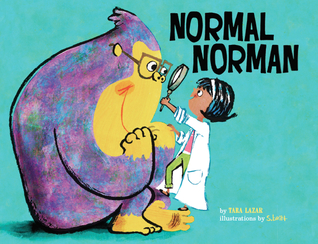
Normal Norman Written by Tara Lazar, Illustrated by S.britt

Share

normal norman

Normal Norman
Author: Tara Lazar; Illustrator: S. britt
Published March 1, 2016 by Sterling Children’s Books

GoodReads Summary: What is “normal?” That’s the question an eager young scientist, narrating her very first book, hopes to answer. Unfortunately, her exceedingly “normal” subject—an orangutan named Norman—turns out to be exceptionally strange. He speaks English, sleeps in a bed, loves his stuffed toy, goes bananas over pizza, and even deep-sea dives! Oh, no: what’s a “normal” scientist to do?

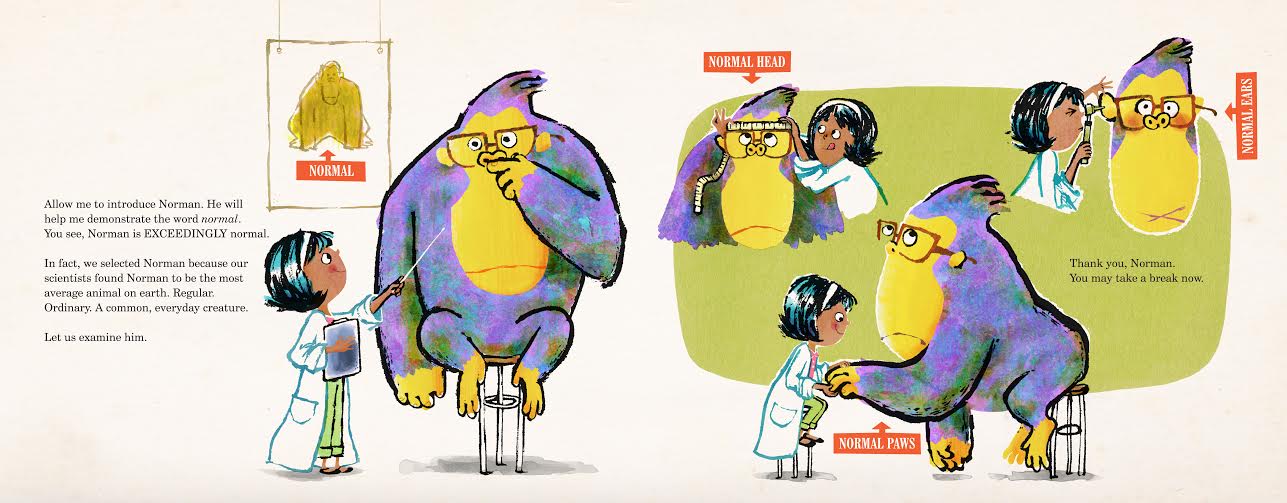
Ricki’s Review: Norman is one of those great literary characters that will stick with readers for a long time. The book is quite humorous, and my son was giggling as we read it together. Norman is anything but normal, yet the young scientist makes strong efforts to prove that he is normal. She becomes very frustrated, and then Norman teaches her an important lesson. I enjoyed this book because it was a fresh take on the idea of: What does it mean to be normal? I also enjoyed the layout of each page. The quote bubbles from the characters added another layer to the text that would be great to discuss in the classroom with a close reading. This will be a favorite in classrooms, and I recommend it highly.

Kellee’s Review: I love everything that this book stands for. It shows that normal is whatever you make it, that everyone should be accepted for what they are, and normal isn’t always what it seems. Norman helps mold the young scientist’s mind which will hopefully lead readers to also rethink what they think normal is. I am definitely going to use this book as one of our “precepts” in the future because I really think it’ll make students think. 

Teachers’ Tools for Navigation: Teachers might consider using this text to teach broad conceptions of normalcy. Often, young students conceive of normalcy as anything similar to them. A teacher might introduce different groups, customs, and cultures to allow students to understand that normal is a socially constructed concept, and people can be different yet still normal. Or perhaps, students might determine that there is no such thing as being “normal.”

Discussion Questions: What does it mean to be normal? Is anyone normal? How might we conceive of normalcy more broadly?; What lessons does the scientist learn? How does she learn them?

We Flagged: “Allow me to introduce Norman. He will help me demonstrate the word normal. You see, Norman is EXCEEDINGLY normal.” 

normal norman spread

Reprinted with permission from Normal Norman © 2016 by Tara Lazar, Sterling Children’s Books, an imprint of Sterling Publishing Co., Inc. Illustrations © 2016 by Stephan Britt.

Read This If You Loved: You Are (Not) Small by Anna KangGiraffes Can’t Dance by Giles Andreae, Unicorn Thinks He’s Pretty Great by Bob SheaThe Magic of Maxwell and His Tail by Maureen Stolar Kanefield

Recommended For: 

closereadinganalysisbuttonsmall readaloudbuttonsmall classroomlibrarybuttonsmall

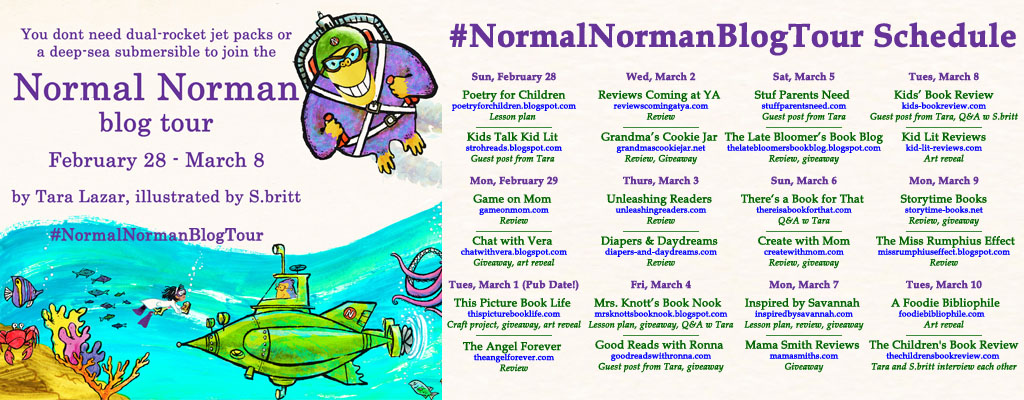
Check Out Normal Norman at the other stops on the tour!:

NN Tour Schedule - Sized for Twitter (1)

RickiSigandKellee Signature

**Thank you to Josh from Sterling books for providing copies for review!!**