X Authors: Ilyasah Shabazz and Kekla Magoon
Published: January 6, 2015 by Candlewick Press
GoodReads Summary: Cowritten by Malcolm X’s daughter, this riveting and revealing novel follows the formative years of the man whose words and actions shook the world.
I am Malcolm.
I am my father’s son. But to be my father’s son means that they will always come for me. They will always come for me, and I will always succumb.
Malcolm Little’s parents have always told him that he can achieve anything, but from what he can tell, that’s nothing but a pack of lies—after all, his father’s been murdered, his mother’s been taken away, and his dreams of becoming a lawyer have gotten him laughed out of school. There’s no point in trying, he figures, and lured by the nightlife of Boston and New York, he escapes into a world of fancy suits, jazz, girls, and reefer.
But Malcolm’s efforts to leave the past behind lead him into increasingly dangerous territory when what starts as some small-time hustling quickly spins out of control. Deep down, he knows that the freedom he’s found is only an illusion—and that he can’t run forever.
X follows Malcolm from his childhood to his imprisonment for theft at age twenty, when he found the faith that would lead him to forge a new path and command a voice that still resonates today.
Review: If you’ve been reading the blog the past few weeks, my love for this book may feel repetitive (and I am not sorry!). Some books just stick to our bones and X by Ilyasah Shabazz and Kekla Magoon will remain with me forever. It kept me awake late at night, and I was floored by the captivating writing. This is a very special book and well worth the hype it has received. I plan to use it in my future Methods classes because there are so many themes and topics for discussion. Most texts are written about Malcolm Little’s later life, but this book encapsulates his early years—this restless young man is dissatisfied with his circumstances and attempts to make a name for himself. He does not always make the best choices, but he learns from his many mistakes, and his spirit will inspire readers. I highly recommend this book for all readers. Malcolm has a lot to teach us.
Teachers’ Tools for Navigation: This book made me want to sign out Malcolm X’s autobiography from the library. I wondered what else I could learn about him. Teachers might ask students to research Malcolm X’s life. They might explore the ways Malcolm inspired troubled youth and why he made connections with them. Based on this text and others, it seems that many of Malcolm X’s actions may be misrepresented, so it might be wise for teachers to discuss his life, mission, and actions with students. This would allow students to form their own understandings of his later life.
Discussion Questions: If you could change one decision Malcolm made, what would it be? What do you think he should have done differently?; Malcolm may inspire us, but who inspired Malcolm?; How is Malcolm different from his family members? How does this impact him?
We Flagged: “I did what I had to. Didn’t see anything wrong with it. Not a thing” (p. 36).
Read This If You Loved: The Rock and the River by Kekla Magoon; How it Went Down by Kekla Magoon; Freedom Summer by Deborah Wiles; Audacity by Melanie Crowder; The Boy in the Black Suit by Jason Reynolds
Top Ten Tuesday is an original feature/weekly meme created at The Broke and the Bookish. The feature was created because The Broke and Bookish are particularly fond of lists (as are we!). Each week a new Top Ten list topic is given and bloggers can participate.
Today’s Topic: Top Ten Books On Our TBR Lists For Summer 2015
Here are some of the books we plan to (hopefully) read this summer.
Ricki
1. Saint Anything by Sarah Dessen
I read everything by Sarah Dessen, so I am thrilled to have this book!
2. The Sacred Lies of Minnow Bly by Stephanie Oakes
Doesn’t this cover just suck you in?
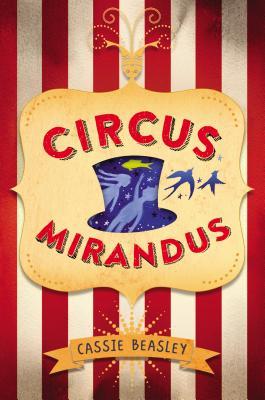
3. Circus Mirandus by Cassie Beasley
Everyone is raving about this one. I will absolutely be reading it.
4. The Boys Who Challenged Hitler by Phillip Hoose
This true story of seven Danish teens is definitely on my list.
5. Dear Hank Williams by Kimberly Willis Holt
The synopsis of this book includes the phrase: “gradually unfolds a story of overcoming tragedy, of family love, of small-town gossip, and of a young girl learning to find her voice.” I can’t wait to read it!
Kellee
1. Ivy and Bean: What’s the Big Idea? by Annie Barrows
I promised myself and Carrie Gelson that I’d read some early chapter books this summer, so when I saw this one at the Scholastic Warehouse sale, I scooped it up!
2. Honor Girl: A Graphic Memoir by Maggie Thrash
Looks like an important book about sexuality and identity. And I love graphic memoirs!
3. If You’re Reading This by Trent Reedy
My students put this on the list of books that they thought I should get for my classroom library, so I plan on reading it this summer.
4. Secret Coders by Gene Luen Yang and Mike Holmes
I love Yang’s graphic novels, so I very much look forward to reading this one that comes out in the fall.
5. Crenshaw by Katherine Applegate
Yes, yes, yes, yes, yes!! I am so excited to read this one! Yay for being approved on Netgalley!
My Dog is the Best Author: Laurie Ann Thompson
Illustrator: Paul Schmid
Published: June 9, 2015 by Farrar, Straus, and Giroux
Goodreads Summary: What do you get when you combine one energetic, enthusiastic little boy with his sleepy but tolerant dog? Unconditional love. Using simple words and spare illustrations, My Dog Is the Best celebrates the special bond that exists between a young child and a beloved family pet. It’s the heartwarming story of two best friends. . . told by a boy with a very active imagination.
Ricki’s Review and Teachers’ Tools for Navigation: This charming tale will surely win the hearts of many children. It made me feel a bit guilty that I don’t have a dog for my son! I can imagine teachers reading this story aloud to captivated audiences. Teachers might ask students to compare this story with others in their classrooms. The way the illustrator and text focuses on the two subjects makes their friendship shine. You can find an example of the text’s playfulness in the flagged page below. It made me smile! After reading this story, I would encourage my students to write their own stories about friendships that they have.
Kellee’s Review and Teachers’ Tools for Navigation: This book makes me want a dog (and like Ricki said, I feel a bit guilty for not having a dog for Trent!). I loved this sweet story of a sleepy dog and a rambunctious child who is going to have fun with his dog no matter what the dog thinks about it. The play between the words and illustrations is what really made this book special and made the quiet humor really ring through. I also think that kids are really going to like the end of the book. Like Ricki, I think that this text could be a great mentor text for writing about times of imagination and friendship. What other ways could the boy have played with the dog? How do you play with your pet/toy? I also think that it is a great story to use to talk about humor and irony. Why was the ending funny?
Discussion Questions: What kinds of games do you play with your best friend/pet/toy?; Do you have a pet? How is your relationship with your pet similar or dissimilar with this story?; In what ways is it obvious that the author and illustrator worked together to create this book? How do the drawings enhance the story?; Why is the ending ironic?
Read This if You Loved: Look! by Jeff Mack; The Poky Little Puppy by Janette Sebring Lowrey; May the Best Dog Win by Kelly Hashway; Bark, George by Jules Feiffer; Emmanuel’s Dream by Laurie Ann Thompson
Recommended For:
Interview with the Laurie Ann Thompson and Paul Schmid!
Questions to Laurie:
What inspired you to write this book?
I first wrote the text as an assignment for a course I was taking, Anastasia Suen’s Easy Reader/Chapter Book Workshop. I’ve always loved dogs, and it’s a great word for beginning readers, so I started there. I noticed that most of the time when I said, “Good dog!” to my poor old dog, Sara, she was either curling up and getting ready to go to sleep or already sleeping. She would give me this confused look that said, “What? I’m not doing anything!” She’d been a hyperactive, crazy dog in her younger years, so it was a huge relief when she finally started slowing down a little. I appreciated the humor in those interactions. At the same time, I had an awfully busy little boy at home, so both the tension between their very different energy levels and their special “best friends” relationship were natural ingredients for the story.
Did you have a specific dog when you were growing up that you were thinking of as you wrote this book?
It’s really a collection of all of them. My dogs were my best friends, and they put up with so much of my probably unwanted attention. I had one special dog named Sammy that I used to dress up in doll clothes, push in a baby swing, and take for rides in my bicycle basket. (He loved those last two activities, but I’m pretty sure he merely tolerated the first!) He was the best. When I was bit older, my dog Ripper used to wait at the end of our driveway—every single day—for the school bus to bring me home. He listened to all of my tales of teenage angst and always let me dry my tears on his fur. He was devoted and dependable. He was the best. Then, as an adult, there was Sara. She was the best, too. I think whatever dog we make room for in our lives becomes “the best,” just by virtue of us loving them.
You write both YA and children’s books. How is your writing process different for each?
It’s very different! For my YA books, I’m a rather obsessive planner. I research and outline, then research some more and revise the outline and so on, for a long time, before I’m finally ready to start writing. For my picture books, I like to just play. I just start writing and see what happens. As a result, I typically spend less time revising the YA books than the picture books, even though the picture books are much, much shorter! It usually takes a lot of revision to make a picture book work just right.
What was it like to work with an illustrator?
With my YA books, like Be a Changemaker, there is no illustrator, so the final product is the result of the collaboration between my editors and me—and we’re all primarily word people. As a picture book author, though, it’s always exciting to see what another person with a very different way of working and of seeing the world will bring to my original vision. Authors don’t usually get much say in the illustrations (and rightly so, as I surely am no art expert!). With my second book (and first picture book), Emmanuel’s Dream, I had never met the illustrator, Sean Qualls, and I didn’t see any of his stunning artwork until it was almost all finished. I was on pins and needles, but what a pleasant surprise! For My Dog Is the Best the experience was a bit unusual but every bit as special. It just happened that Paul Schmid and I live not far apart and had known each other for years. When he took on the manuscript, I was ecstatic! We kept in touch throughout the process, and I even got to spend a day collaborating with him in his studio—one of my all-time favorite writing days ever! We both ended up influencing both the art and the text, and we ended up with something we’re both really proud of.
Questions to Paul:
How did you decide what the characters would look like?
Initially, I form a clear picture of the characters personalities. Are they active? Sedentary? Outgoing or shy? The design of a character should provide solid clues to who they are. Our dog in the book just wants to nap, and I imagined an old, tolerant, comfortable Basset Hound of established habits. The boy is much more active, but young and naive. He is also sweet and loving, as the book is itself. So I felt the boy needed a kind, gullible, gentle look that was at the same time visually sympathetic to his dog, in order to form an emotional connection between the two for the reader. As a result, they both ended up round and gentle looking.
What does the artistic process look like?
Many many sketches. Then many more. Then a few more. Eventually I have to start the final art. I don’t think I ever really feel like I’m done improving things, but a deadline shows up and helps me stop.
Top Ten Tuesday is an original feature/weekly meme created at The Broke and the Bookish. The feature was created because The Broke and Bookish are particularly fond of lists (as are we!). Each week a new Top Ten list topic is given and bloggers can participate.
Today’s Topic: Top Ten Most Anticipated Releases for the Rest of 2015
Ricki and Kellee
Once we started listing our books, we realized that most of our books overlapped, so we are doing this list together.
**In no particular order!**
1. Go Set a Watchman by Harper Lee
How could we not have this on our list?! To Kill a Mockingbird is one of our favorites!
2. Carry On by Rainbow Rowell
A whole book of Simon and Baz from Fangirl is so exciting!
3. Stand Off by Andrew Smith
We don’t know if Andrew Smith can top Winger, but we cannot wait to see what happens to Ryan Dean during senior year.
4. Goodbye Stranger by Rebecca Stead
So many great reviews for this one from people we trust.
5. Lady Pancake and Sir French Toast by Josh Funk
How can we not want to read this book by the hilarious Josh Funk?! This has been on our TBR list for quite a long time!
6. Little Robot by Ben Hatke
Kellee loves Ben Hatke’s Zita series and very much looks forward to his newest.
7. George by Alex Gino
We’ve heard this book is a game changer (along with Gracefully Grayson).
8. House Arrest by K.A. Holt
Teri Lesesne said she couldn’t put this one down, so we know we have to pick it up.
9. The Rest of Us Just Live Here by Patrick Ness
We don’t know much about this book except that it is by Patrick Ness. Yes, please.
10. Another Day by David Levithan
It is going to be so interesting to hear Every Day‘s story told from Rhiannon’s point of view.
We are very excited about these 2016 books, as well!
Untitled by Ruta Sepetys (2016)
We are both huge fans of Sepetys’s first two novels, Between Shades of Gray and Out of Easy, and we cannot wait to read her next one! We know the title, but we aren’t sure if it is public, so we can’t share it here.
Honestly Ben by Bill Konigsberg (2016)
Bill Konigsberg just announced that there is going to be a sequel to Openly Straight from Ben’s point of view—so exciting!
Cast Off: The Strange Adventures of Petra de Winter and Bram Broen Author: Eve Yohalem
Published: March 10, 2015 by Calkins Creek
GoodReads Summary: It’s 1663 and there is an extra passenger on board a Dutch merchant ship setting sail for the East Indies. Twelve-year-old Petra has stowed away to escape her abusive father. But she quickly realizes that surviving for months at sea will be impossible without help. So when Bram, the half-Dutch / Half-Javanese son of the ship’s carpenter, finds her hiding spot, Petra convinces him to help her stay hidden . . .and help disguise her as a boy.
If Petra is discovered and exposed as a girl, she could be tossed overboard, or worse . . . returned to her father. And if Bram is exposed for helping her, he could lose the only home—and family—he has. As tensions rise on the ship, with pirates attacking, deadly illness, and even mutiny, Petra and Bram face impossible decisions that test their friendship and threaten their dreams of freedom.
Told in alternating voices and filled with secrets and intrigue, this richly researched novel is historical fiction at its best.
Review: Take me away! This book whisked me off on a marvelous adventure filled with grave dangers, stow aways, tall ships, and mutiny. I couldn’t help but be reminded of one of my childhood favorites, The True Confessions of Charlotte Doyle by Avi. Petra escapes from a horribly abusive relationship with her father, and her bravery is an excellent model for young readers. She is discovered by Bram, the illegitimate son of the ship’s carpenter, and they form a very special friendship. This book delivers richly realized themes—particularly those of loyalty, heroism, sexism, and racism—that are very relevant to readers across time. I imagine a wide variety of audiences would appreciate this text because it touches on so many fascinating topics. It is clear that the author did her homework, and the result is magnificently entertaining.
Teachers’ Tools for Navigation: This book is an excellent example of a text that could be analyzed with a critical theorist lens. (See Appleman’s book about teaching critical theory to students of all levels.) I imagine rich classroom discussions would evolve from the application of gender theory or race theory, for instance, to this text. This is a compliment to the author and the depth of this book.
Discussion Questions: In what ways do gender and race play a role in this text?; How does the author weave history into the story?; What does Petra and Bram’s friendship teach us about humans in general?; How do the main characters display qualities of bravery?
Read This If You Loved: The True Confessions of Charlotte Doyle by Avi; Leviathan by Scott Westerfeld; Secrets of the Realm by Bev Stout; Peter Pan by J.M. Barrie
Recommended For:
Giveaway!
One lucky winner will receive a copy of CAST OFF: The Strange Adventures of Petra De Winter and Bram Broen (U.S. addresses; allow 4-6 weeks for delivery; offer ends 7/10/15).
In 2009 I got this great idea for a seafaring adventure about two kids who sail from Amsterdam to the East Indies in the seventeenth century. There was just one problem: I knew next to nothing about the seventeenth century. Or the Netherlands. Or the East Indies. Or sailing.
No matter. I like a challenge. I researched for a full year before I started writing, and after I started writing, I kept researching. I’m still researching. (I like researching.)
Today my Cast Off file has more than four hundred different source notes. I read lots of books: scholarly academic stuff, journalistic stuff, fiction, memoirs, journals, every first person account I could find. I spoke to people who knew much more than me—VOC scholars, maritime scholars, curators, my husband (he sails), surgeons, and dentists. I hung out in oddball museums. I traveled to Indonesia, where I slept in the jungle and held baby orangutans, and to the Netherlands, where I retraced every step of my characters that I could and explored the dark nooks of two different full-scale East Indiamen replicas.
I have no research training. It would have helped if I’d majored in history in college, but I didn’t. Mostly, I followed my nose. I knew that my story would begin in Amsterdam and take place mostly at sea on an East Indiaman bound for Batavia. I knew two of my characters: a Dutch girl and an East Indian boy, both twelve years old. That’s a lot to get started with.
What’s surgery like by candlelight below deck on a rocking ship before the invention of anesthesia? How do you fire a 4,000 pound canon without getting crushed by the recoil? These were the kinds of questions I tried to answer.
I tried to convey what it felt like to cram three hundred men onto a 150-foot long vessel for six months (damp, dark, and airless below, smelled bad, no privacy). The layout of the ship is based on actual ships of the period, as are the various jobs, daily schedule, terrible food.
For my characters’ medical knowledge, I have to thank John Woodall’s The Surgeon’s Mate, a seventeenth century medical guide no ship’s surgeon would have been without.
And in case anyone’s wondering, I got most of my slang from the always entertaining A New Dictionary of the Terms Ancient and Modern of the Canting Crew: In Its Several Tribes of Gypsies, Beggars, Thieves, Cheats, &c., with an Addition of Some Proverbs, Phrases, Figurative Speeches, &c. by B. E. Gent, c 1698. In my opinion, some of these terms should be brought back into everyday use. Please help make “Kiss my blind cheeks!” go viral!
Top Ten Tuesday is an original feature/weekly meme created at The Broke and the Bookish. The feature was created because The Broke and Bookish are particularly fond of lists (as are we!). Each week a new Top Ten list topic is given and bloggers can participate.
Tyrell, A Long Way Gone, All the Bright Places, Absolutely True Diary, Aristotle and Dante
Today’s Topic: Top Ten Books We’d Love to See as Movies or TV Shows
Ricki
1. Tyrell by Coe Booth
My students would faint if this book became a movie.
2. A Long Way Gone by Ishmael Beah
I loved teaching this book and found it to be very inspirational. I think it would be well-received by audiences.
3. All the Bright Places by Jennifer Niven
I will be surprised if Hollywood doesn’t pick up this book. It would be a really big hit.
4. The Absolutely True Diary of a Part-Time Indian by Sherman Alexie
If this became a movie, I would be a very, very happy girl.
5. Aristotle and Dante Discover the Secrets of the Universe by Benjamin Alire Sáenz
I am not sure how this would translate to film, but with a good, creative director, I think it could be marvelous.
Kellee
1. The Living by Matt de la Pena
Whoa! Would this movie be intense! It would definitely be a summer blockbuster!
2. Alex Rider by Anthony Horowitz
The first book, Stormbreaker, has already been made into a movie, but I think the series would make a fascinating TV show following a young spy as he tries to save the world (reluctantly) from Scorpia.
3. The Dungeoneers by John David Anderson
Fans of Harry Potter are going to love this book, and it would make an epic movie just like Rowling’s series.
4. Endangered by Eliot Schrefer
Endangered would make such a wonderful movie! Being able to journey with Sophie as she tries to save herself and Otto would be so suspenseful!
5. Princess in Black by Shannon Hale
I love the Princess in Hale’s books, and I think she would make such a wonderful protagonist in a princess adventure story.
Which books would you love to see brought to the big/small screen?
Fatal Fever: Tracking Down Typhoid Mary Author: Gail Jarrow
Published: March 10, 2015 by Calkins Creek
GoodReads Summary: In March 1907, the lives of three remarkable people collided at a New York City brownstone where Mary Mallon worked as a cook. They were brought together by typhoid fever, a dreaded scourge that killed tens of thousands of Americans each year. Fatal Fever: Tracking Down Typhoid Mary is the first middle-grade trade book that tells the true story of the woman who unwittingly spread deadly bacteria, the epidemiologist who discovered her trail of infection, and the health department that decided her fate. This gripping story follows this tragic disease as it shatters lives from the early twentieth century to today. It will keep readers on the edges of the seats wondering what happened to Mary and the innocent typhoid victims. With glossary, timeline, list of well-known typhoid sufferers and victims, further resource section, author’s note, and source notes.
Review: This narrative nonfiction essentially begins with in media res—Typhoid Mary is running from people who want to catch her and take her blood. By chapter two, the text shifts back to the history of typhoid fever and gives readers a no-nonsense look at the gory realities of this horrid disease. My father and brother are doctors and my mom was a nurse, and I was finally able to take part in medical conversations at a family gathering! It would have been easy for the author to slip into the extreme technical details of this disease, but she does an excellent job balancing science, history, and story. I was engaged in the book from beginning to end. I never thought I would find the sanitation systems in the early 1900s to be so fascinating!
Teachers’ Tools for Navigation: Students will read this book and want to learn more about other deadly epidemics in history. They would likely be interested in the ways this disease still impacts countries today. I found Typhoid Mary’s story to be very interesting, and I wanted to learn more about medical scapegoats in history. All in all, this book inspires readers to want to learn more about medical topics. I imagine this book would be a good choice for students interested in medical professions, but it will also captivate students who are interested in science and history. This makes it a true interdisciplinary text.
Discussion Questions: How was Typhoid Mary treated by the community? Why? Do you think she deserved her treatment at the end of her life?; What other diseases have impacted history? How do they compare to typhoid fever?
We Flagged: “She didn’t know it, but she wasn’t alone in that cramped, cold closet. Deep insider her body, billions of deadly microorganisms were hiding, too.”
Read This If You Loved: Red Madness: How a Medical Mystery Changed What We Eat by Gail Jarrow; Invincible Microbe: Tuberculosis and the Never-Ending Search for a Cure by Jim Murphy and Alison Blank
Recommended For:
*Thank you to Kerry at Boyds Mills Press for sending this book for review!*