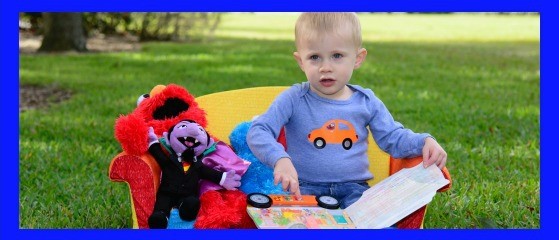
Top Ten Tuesday: Reasons We Love Being Moms to Readers

Share

top ten tuesday

Top Ten Tuesday is an original feature/weekly meme created at The Broke and the Bookish. The feature was created because The Broke and Bookish are particularly fond of lists (as are we!). Each week a new Top Ten list topic is given and bloggers can participate.

 Today’s Topic: Reasons We Love Being Moms to Readers

Ricki

1. I feel compelled to keep up with the latest picture books.

2. We get extra family time, reading books together each night.

3. And then my son reads books by nightlight after we read as a family. The way he sneaks extra books reminds me of my own childhood.

4. I spend several days a week in the library, and it is a peaceful, wonderful place to be.

5. I have a partner to share my joy when we open packages that have books in them. His “Ooos” and “Ahhs” rivel mine.

6. (I am cheating with one more than my allowed five): I have a stronger sense of the power of rereading. My son can read the same book thirty times in one day (and this can extend over several months). It amazes me.

Kellee

I hope through raising my son around books and around a mom who loves books, he’ll become a voracious reader. He already loves books which makes me so happy!

Trent Book

1. Listening to my son “read” books to me. Trent is reaching the stage where he is learning what is said for each page in his favorite books, and it has gone further than just knowing a few words per book , liked Pete the Cat, and towards him knowing the entire book of board book s like Llama Llama Zippity Zoom and longer books like Go Dog Go. 

2. I love our time at night where Jim and I read to Trent. It is one of my favorite parts of the day.

3. Watching Trent learn through books is such an amazing experience. This is very similar to #1, but I love having him look at pictures and ask questions and learn. He is such an inquirer.

4. In the future, I cannot wait to listen to audiobooks of novels I love with Trent and especially cannot wait for Harry Potter.

5. In the future, I cannot wait to have a partner in library and book store visits. Right now, he does enjoy going, but it’ll be even more wonderful when he will wander the shelves with me and look at books and we can discuss and laugh and talk. My husband is a different type of reader than me, so I hope that Trent becomes a book lover like I am.

If you are a parent or caregiver, what is your favorite part about having a reader in your home?

RickiSig and Signature

Author Guest Post!: “Finding the Joy in Writing” by Laurisa White Reyes, Author of The Kids’ Guide to Writing Fiction

Share

“Finding the Joy in Writing”

Any parent knows that if you want a kid to really hate something, just tell him he has to do it, or else. That was my son’s reaction when I told him he had to write a five paragraph essay. My instructions were met with so much whining and moaning you would have thought I’d asked him to scrub the bathroom with a toothbrush. His reaction, however, was not an unusual one. Many parents can attest to their children’s seemingly built-in aversion to writing. While some kids seem naturally drawn to writing, others would rather carry a load of rocks up a mountain than write a compound sentence. This is why I wrote The Kids’ Guide to Writing Fiction, because within every child is a story waiting to be told, whether they realize it or not.

Make Writing Fun

Remember the classic children’s film Mary Poppins? Jane and Michael Banks live in turn of the century London. These conniving pranksters manage to chase away every nanny their father hired for them. Their parents are at their wits’ end. Then Mary Poppins arrives. One of the first tasks she requests of the children is to pick up their room. Jane and Michael balk and whine. To them it is a tedious, pointless chore. What does Mary Poppins do to change their attitudes? She throws in a spoonful of sugar and makes the whole thing a game. In no time at all the room is clean and the children are tucked neatly in their beds.

Now, obviously, real life doesn’t work quite like that. We have no magical carpetbag from which to pull out hat racks and measuring sticks. But as parents and/or educators, we do have the same power as Mary Poppins to create an atmosphere of cooperation and optimism in our homes and classrooms. Whether or not our children will hate what we ask them to do, or do it willingly and cheerfully, depends largely on us.

I started teaching creative writing classes to children and teens about the same time my son was learning to write those essays. I looked for ways to encourage my students to write, and met with great success. Once I applied what I was using in my classes to my son, his attitude toward writing changed. And although it is still not his favorite activity, he has become a capable and skilled writer.

Writing is a Means of Self-Expression   

Writing well demands that the writer enjoy writing. When writing is nothing more than an assignment with no purpose except to earn a grade on a report card, chances are that the student will come to dread writing. He will view it as chore, just like washing the dishes or making his bed.

Is this the attitude we want our children to have about writing? Do we want them to write five-paragraph essays just for a grade? Is that really the purpose of a writing education? Of course not. The ultimate goal is for our children to feel confident in their writing skills, to use writing as a means of self-expression. But to achieve that goal requires that we, as adults, help our kids find the joy in writing.

In my writing classes, I taught students how to write. I did not, however, grade anything, nor did I spend much time critiquing their work. In fact, my students didn’t even realize they were learning to write well, because they were so excited about what they were doing. Over the years, I’ve heard from many of my students’ parents about how their children were transformed from reluctant writers to kids who wouldn’t put their pencils down. The key to this transformation was that I made writing fun.

To me, there is nothing more enjoyable than sitting alone at my computer in the middle of the night to write. I would rather do that than just about anything else. The question is, how do we transfer this love of writing to our kids?

The first step in helping kids write well is to take writing out of the picture. Writing is a means to an end, a tool for getting what is inside someone’s head onto paper. What’s really important is the message or information writing conveys.

Think of words as clay. Clay by itself is nothing but a gray lump on a potter’s wheel. But in the hands of the potter, the clay begins to take shape. If the potter doesn’t like the form, he can squash it and start all over again. He can do this over and over until he gets it just right. Once it is finished and the piece is fired and glazed, we see not the lump of clay, but a beautiful piece of art or a functional object, such as a vase.

Writers use words to create something beautiful and useful. They are not as concerned with the words as they are with the finished product. When children focus on that finished product, be it a poem or essay or story, words become tools, the medium by which they can bring their dreams to life.

The Storyteller Within

One the most effective ways to help kids fall in love with writing is by helping them discover the storyteller within. We are all storytellers. A storyteller is someone who relates events in a logical order to someone else. Think about the last time you told a friend about a movie you a saw, or an event you attended, or even just something that happened that was interesting. How did you share that information? Most likely, you told it in the form of a story.

The reason so many children and teens are averse to writing, particularly in school, is because they have not yet tapped in to their own natural storytelling abilities. That is my objective with The Kids’ Guide to Writing Fiction. In this book, I teach kids about the six fundamental building blocks needed to create stories: characterization, setting, plot, perspective, imagery, and dialogue. I take them step-by-step through the process of crafting a story and help them excavate their own imaginations for ideas. Then I help them put those ideas into words and onto paper.

Once a child has written a story of his own, he feels a great sense of satisfaction. He discovers that writing is fun. This discovery is what can tear down the walls of resistance and self-doubt, and can build confidence in his ability to learn other forms of writing, such as those dreaded 5 paragraph essays.

The ultimate goal of a writing education is to teach kids to write well, but if they hate writing, that goal is nearly impossible to achieve. However, once a child discovers the joy of tapping into his own creativity, then, like Mary Poppins’ carpet bag, writing becomes limitless…and magical.

The Kids’ Guide to Writing Fiction

rsz_front_cover

About the Book: We are all storytellers. Whether weaving mythologies in ancient times or describing the plot of a favorite movie today, humans have, since the beginning of time, loved to tell stories. In The Kids’ Guide to Writing Fiction, students explore the building blocks needed to construct a story: characterization, setting, plot, perspective, plot, imagery, and dialog. Then, using these building blocks, they create their own stories.

Accessible to both the struggling student and the budding novelist—as well as to teachers, parents, and even adult aspiring writers, author Laurisa White Reyes presents key elements of story writing and clarifies them with examples and worksheets. Concepts are explained in simple, clear language while gently introducing vocabulary words.The Kids’ Guide to Writing Fiction offers welcome guidance to storytellers of all ages.

Links:
Twitter: @lwreyes


P10 (2)

About the Author: Laurisa White Reyes is the author of four novels for young readers, including the 2015 Spark Award winner, The Storytellers. She is also the author of The Kids’ Guide to Writing Fiction & Teaching Kids to Write Well: Six Secrets Every Grown-up Should Know. In addition to writing, she also manages to squeeze time into her busy life to teach college English; run her own editorial/publishing business, Skyrocket Press; and be mom to her five children. You can learn more about her at: www.LaurisaWhiteReyes.com.

Thank you to Laurisa for this very helpful post!

RickiSigandKellee Signature

Thunder Boy Jr. by Sherman Alexie

Share

thunder boy jr

Thunder Boy Jr.
Author: Sherman Alexie;  Illustrator: Yuyi Morales
Published: May 10, 2016 by Little, Brown Books for Young Readers

Goodreads Summary: Thunder Boy Jr. is named after his dad, but he wants a name that’s all his own. Just because people call his dad Big Thunder doesn’t mean he wants to be Little Thunder. He wants a name that celebrates something cool he’s done, like Touch the Clouds, Not Afraid of Ten Thousand Teeth, or Full of Wonder.

But just when Thunder Boy Jr. thinks all hope is lost, he and his dad pick the perfect name…a name that is sure to light up the sky.

National Book Award-winner Sherman Alexie’s lyrical text and Caldecott Honor-winner Yuyi Morales’s striking and beautiful illustrations celebrate the special relationship between father and son.

My Review and Teachers’ Tools for NavigationI should start by admitting that I have a mildly unhealthy obsession with Sherman Alexie’s work. Ever since I discovered his greatness in college, I can’t get enough of him! So I broke one of my rules and pre-ordered this book. It surely didn’t disappoint! His writing and Yuyi Morales’ illustrations makes for a masterful text. As you can see from the flagged passage (a spread) below, the writing and illustrations pop, and readers will be captivated by the text. My two-year-old son loved reading it with me. 

One of the critiques I’ve read about this book is that it should come with a teacher’s guide for Native American naming traditions. I fully understand this critique can understand where it is coming from. While I think an author’s note would have been helpful, as a fellow Native American, I wonder if this really should be a critique of the text. Why must Sherman Alexie (and other Native Americans) feel the need to always justify and explain their stories? I imagine that Alexie would cringe at a teacher’s (well-intentioned) attempt to follow up a reading of this text with their own naming ceremonies/activities. That said, I don’t believe this is necessarily his job. A little bit of background research will surely produce a wealth of materials about the sacredness of these rituals. I believe it seems to normalize Whiteness when we constantly request authors of color to provide teaching materials for texts. Like others, while I’d love for some aspect of the paratext to include this extra material, I don’t believe that this is a flaw of the text.

Discussion Questions: Why does Thunder Boy Jr. want a different name from his father? How does the author build the story in order to share more about Thunder Boy Jr.’s feelings?; What qualities do you share with other family members? How are you different from your family members? Do we all feel a yearning to be unique or different? In what ways are you unique?

Flagged Passage: 

Spread from: http://www.slj.com/2016/03/diversity/how-a-library-raised-yuyi-morales-the-award-winning-illustrator-on-sherman-alexies-thunder-boy-jr-and-more/#_

Read This If You Loved: The Absolutely True Diary of a Part-Time Indian by Sherman Alexie, Crossing Bok Chitto by Tim Tingle, Jingle Dancer by Cynthia Leitich Smith, My Abuelita by Tony Jonston (Illustrated by Yuyi Morales), The Lone Ranger and Tonto Fistfight in Heaven by Sherman Alexie

Recommended For: 

readaloudbuttonsmall classroomlibrarybuttonsmall

RickiSig

Top Ten Tuesday: Non-Shallow Beach Reads

Share

top ten tuesday

Top Ten Tuesday is an original feature/weekly meme created at The Broke and the Bookish. The feature was created because The Broke and Bookish are particularly fond of lists (as are we!). Each week a new Top Ten list topic is given and bloggers can participate.

 Today’s Topic: Non-Shallow Beach Reads

These books would be great to read at the beach, and they are not shallow or trashy!

Ricki

1. Me Before You by Jojo Moyes

me before you

This book is gut-wrenching. I love enjoying a romance on the beach, and this one would be a great pick.

2. Just One Day by Gayle Forman

just one day

Gayle Forman’s writing is anything but shallow. I felt like I was traveling Europe as I read this one!

3. Anything by Sarah Dessen

sarah dessen

Sarah Dessen’s books are perfect for vacations. They have a little bit of romance, and their depth of emotions always captures my heart. She tackles tough issues, and I always feel like I’ve grown as a person after I read her books.

4. Twenty Boy Summer by Sarah Ockler

twenty boy summer

I read this book at the beach, and it was a great pick. I loved the way it swept me away into Anna’s story.

5. Bloom by Elizabeth Scott

678891

This book was always a hit in my classroom. Because I love reading romances on the beach, I think it would be a great choice.

Kellee

When I think of beach reads, I think of romance. These are some well-written novels that have some romance in them.

1. Atlantia by Ally Condie

atlantia

This book isn’t about the romance (though it has some), but it is about an underground city. Very beach appropriate.

2. Bridget Jones’s Diary series by Helen Fielding

bridget jones

If you have not read the books, you are missing out on hilarity! And with a 3rd movie coming out this year, this would be a perfect time to pick them up.

3. From What I Remember… by Stacy Kramer

From What I remember

This book has everything. Romance, adventure, drama, humor- it was a roller coaster! I loved it so much. It read like a movie making you feel like you were there, and I loved how distinctly different the multiple point of views were. Perfect fun for the beach!

4. Forgive My Fins by Tera Lynn Childs

forgive my fins

A fun mermaid story? And with romance? A great series for beach reading!

5. The Mediator series by Meg Cabot

mediator

This is one of my favorite romance series. It is a bit romance novel-y in that Suze loves a ghost since she is a mediator, but it is also really well done and written well because it is Meg Cabot.

What books do you love to read on the beach? 

RickiSig and Signature

Dump Truck Duck by Megan E. Bryant

Share

Dump Truck Duck

Dump Truck Duck
Author: Megan E. Bryant;  Illustrator: Jo de Ruiter
Published: May 1, 2016 by Albert Whitman & Company

Goodreads Summary: Dump Truck Duck honks and zooms and steers his dump truck all through the day, helping the other hardworking ducks build a new park. With adorable illustrations and playful rhyming text, Dump Truck Duck is certain to become a new read-aloud favorite!

Ricki’s Review: My son has so much fun reading this picture book. I am of the mindset that there can never be too many vehicle-themed picture books. As the mother of a child who reads dozens of truck picture books a day, I love the variety. On top of it all, this playful, fun picture book makes us giggle! The rhymes work well, and the story line is very amusing. The book is quite clever, and we really enjoy reading it together. It is sure to be a favorite amongst little readers. I want my own Dump Truck Duck stuffed animal!

Kellee’s Review: Trent is so picky about his picture books. He owns so many books, but he has a set few books that he reads over and over again. It is really hard for a book to make its way into his book rotation, but Dump Truck Duck did. He even made me bring it to breakfast with us, and we had to read it while we waited for our food. I think what really sucks the little readers in are the combination of a favorite animal (everyone loves to quack!) and construction vehicles. Take this winning combination and add in fun illustrations and great rhyme, and you get a well-loved picture book! 

Teachers’ Tools for Navigation: We imagine that this book would be very inspirational, writing-wise, for students. After reading this story, teachers might ask students to create their own animal-themed story. They should try to stray from ducks and trucks. Perhaps, they could work as an entire class to create their own rhyming story. The teacher could then submit the story for publication!

Discussion Questions: How does the author use rhyme to capture your attention?; How does the rhythm/pacing enhance your reading?; What other animals would make great, funny truck drivers?; In what ways is the author creative with her craft? How might you use this in your own writing?; What literary devices does the author use?

Flagged Passage: 

DumpTruckDuck_INT2-3

Read This If You Loved: Goodnight, Goodnight, Construction Site by Sherri Duskey Rinker, Demolition by Sally Sutton, Little Blue Truck by Alice Shertle, Where Do Diggers Sleep at Night? by Brianna Caplan Sayres

Recommended For: 

readaloudbuttonsmall classroomlibrarybuttonsmall

Don’t miss out on other stops on the tour!

DTD blog tour graphic

RickiSigand Kellee Signature

**Thank you to Megan for providing copies for review!**

Top Ten Tuesday: Books We Feel Differently About as Time Has Passed

Share

top ten tuesday

Top Ten Tuesday is an original feature/weekly meme created at The Broke and the Bookish. The feature was created because The Broke and Bookish are particularly fond of lists (as are we!). Each week a new Top Ten list topic is given and bloggers can participate.

 Today’s Topic: Books We Feel Differently About as Time Has Passed

Ricki

1. American Girl Series

american girl

I loved these books and read them multiple times. I am grateful to them because they fueled my reading habits. Now that I am older and perhaps a bit wiser, I realize the flaws in these books. Writing aside, they lack historical accuracy, pigeonhole women in ways that make me uncomfortable, and have problematic displays of tokenism in race. That all said, I do think these books played an integral role in my reading development.

2. The Great Gatsby by F. Scott Fitzgerald

The Great Gatsby

I hated this book in high school, and I strongly disliked it the first two years I was forced to teach it. Then, something clicked. I got excited when I was ready to teach it in my third teaching year. I realized what it did for my students and the wealth of aspects I could discuss with them. Now, I love the book!

3. To Kill a Mockingbird by Harper Lee 

to kill a mockingbird

I thought this book was okay when I was a freshman in high school. I read it again after college and fell in love with it. When I taught it to juniors, they loved it, too. I strongly believe this book is more powerful to teach to older age groups because there are so many complexities that require emotional maturity and experience. I know that many will disagree, though!

4. Goodnight Moon by Margaret Wise Brown

Goodnight Moon

I liked this book as a child, but it didn’t hit me. After reading it a minimum of 500 times to my son, it feels like it is a piece of me. As a mom, this book has captured my heart.

5. Chicka Chicka Boom Boom by Bill Martin Jr. and John Archambault

chicka

I’ll admit that I thought this book was pretty dumb when I first read it. After reading it many times with my son, I love it! It is so fun to read!

Kellee

1. Flowers in the Attic by V.C. Andrews

flowers in the attic

I LOVED this book when I was in high school. I thought it was the best book I’d ever read. But then I read more. Now I know better. It is still quite addictive though!

2. Red Kayak by Priscilla Cummings

red kayak

I actually just read this book for the 2nd time about 8 years since I’ve read it last. When I first read it, it was just a mystery to me. This time I read it with a mom point of view. The heartache of all the moms in the book were so real to me.

3. Go Dog Go by P.D. Eastman

go dog go

This is a favorite picture book of my mom’s and my sister’s, but I really liked the board book better because of the length. The full picture book just seemed to ramble on with the same information. But then Trent fell in love with the picture book, and I realize it teaches him so much. Also, watching your 2-year-old son “read” a book for the first time really moves that book into a special place in your heart.

4. The Giver by Lois Lowery

giver

If anything, I’ve learn to love this book more and more each time I read it. I read it for the first time when I was in middle school, and I’ve probably read it 20 times since then. Every time it makes me think of something new based on what time in my life I am in. It is a book that really makes you look at life differently.

5. Baby-Sitter Club Books

bsc kristy

These books are what made me the reader I am. Several summers ago, a handful of teacher friends and I decided to reread the first 30 or so BSC books, and I was so surprised to realize how formulaic the stories are. I still loved them and their girl power and diversity though and for making me love kids and reading.

Which books have you felt differently about after time has passed?

RickiSig and Signature

Author Guest Post!: “Taking the Fear out of Shakespeare” by Stephanie Kate Strohm, Author of The Taming of the Drew

Share

“Taking the Fear out of Shakespeare”

When I started writing The Taming of the Drew, I had a very specific audience in mind. If I’m being perfectly honest with myself, I was writing it for me at sixteen.

The Taming of the Drew is a reverse-gendered retelling of The Taming of the Shrew set at an outdoor summer Shakespeare theatre in Vermont, where the backstage hijinks begin to mirror the plot playing out onstage. All of the characters have recently graduated from high school and are one hundred percent bonkers obsessed with theatre, just like I was. I was a passionate reader as a teen, but I never read any books about teens who were really into acting, and believe me, I would have loved one. So I set out to write The Taming of the Drew for past me, and, hopefully, any high school drama dorks who are currently caking on the foundation before the curtain goes up on their production of Much Ado About Nothing.

I’m not just a writer; I also work at a high school on the west side of Chicago. When my students asked me what my book was about, I found out that none of them had heard of The Taming of the Shrew – most of them, in fact, only had a vague idea of who Shakespeare was, and the ones who did know Shakespeare were most decidedly not fans of his. But the more I talked about my book, the more I realized I’d actually been writing for a different audience.

I was a Shakespeare nut from an early age – a freakishly early age – but I was first exposed to Shakespeare not from reading his plays, but from Charles and Mary Lamb’s Tales from Shakespeare. I loved the stories I read about exiled sorcerers and tragic kings. They were like fairy tales, and I devoured them. Thanks to those books, I loved Shakespeare before I’d heard a single line of his or watched any of his plays. By the time 10 Things I Hate About You came out in 1999, I was twelve and already a pretty advanced Shakespeare snob, but I loved that movie. Still do. I remember feeling a sense of supreme vindication when it came out. “See?!” I practically shouted at my friends. “Shakespeare is cool! I told you so!”

If students are first introduced to Shakespeare as seniors in a high school English class, it can be kind of a shock. The language is weird. It seems like too much effort to try and understand what anyone is saying.   Frankly, the whole thing is intimidating. Shakespeare is so scary there’s even a whole series of books called No Fear Shakespeare! But I was never afraid of Shakespeare because I didn’t know I was supposed to be.

Several summers ago I taught the five to eight year old age group at the summer camp at MaineStage Shakespeare, an outdoor summer Shakespeare theatre in Kennebunk, Maine. Many people are surprised that five year olds attended a Shakespeare camp, but they made magnificent fairies in A Midsummer Night’s Dream. We wrote silly plays and learned fairy dances, but they also declaimed lines from Richard III in their vocal classes and offered lots of opinions on the nuances of Titania and Oberon’s relationship. They didn’t know Shakespeare was supposed to be hard. They knew he wrote funny stories about guys with donkey heads.

I wish we could some how introduce all five year olds to Shakespeare before they know he’s “supposed” to be scary. I realize, of course, that’s insanely unrealistic – but rest assured, if I ever become the benevolent dictator of this country, that will certainly be part of the program – but I also know there are ways to show that Shakespeare isn’t scary. That’s why I’m such a huge fan of retellings. Retellings are a great way to introduce reluctant readers who might otherwise balk at Shakespeare to the world of his plays. I know there isn’t a guarantee that everyone who reads Saving Juliet by Suzanne Selfors or The Fool’s Girl by Celia Rees or Ophelia by Lisa M. Klein will immediately search out the original source material, but I think it’s definitely a step in the right direction. The more the stigma of “scary” gets taken out of the conversation, the better students will fare when they’re inevitably staring down a Macbeth monologue in English class.

I had thought I was writing The Taming of the Drew for students like I had been, who have the entirety of Juliet memorized “just in case.” And if those students find the book, I really hope they like it. But I realized later on that this book is just as much, if not more so, for readers who have only the vaguest idea of who Shakespeare is, or who actively dislike him and his frequent usage of the word “forsooth.” I hope this book becomes somebody’s 10 Things I Hate About You: a pop culture gateway drug into classical theater.

“This sounds funny, Ms. Strohm,” one of my students said after I explained the plot of The Taming of the Shrew. “I can’t believe he ripped up her clothes like that. He’s crazy.”

“You think that’s crazy?” I asked. “Let me tell you about a guy named Titus Andronicus.”

And so I did.

The Taming of the Drew

Taming of the Drew_REVISED

About the Book: Cass McKay has been called stubborn, temperamental, difficult, and that word that rhymes with “witch” more times than she cares to count. But that’s all about to pay off. She has finally landed the role she was born to play—Kate, in The Taming of the Shrew—in the summer apprentice program of a renowned Shakespeare theater company in the forests of Vermont.

But Cass can barely lace up her corset before her troubles begin. Her leading man, Drew, is a complete troll, and he’s going to ruin Cass’s summer. Even worse, Cass’s bunkmate Amy has somehow fallen head over heels for Drew. Cass can’t let Amy throw herself at a total jerk, so she comes up with a genius plan to give Drew the personality makeover he so desperately needs: they’ll tame Drew just as Petruchio tames Kate! But as Shakespeare’s classic plays out offstage, Cass finds it harder and harder to resist falling for Drew herself.

The best kind of entertainment, The Taming of the Drew is smart, funny, fresh, and original. You’re going to love this badass heroine and her friends. You might even end up liking Drew, too.


stephanie kate strohm

Author Stephanie Strohm photographed for her “Pilgrams don’t wear Pink” book. Copyright Melissa Lynn 2011

About the Author: Stephanie Kate Strohm is the author of Pilgrims Don’t Wear Pink and Confederates Don’t Wear Couture. She graduated with a dual degree in theater and history and has acted her way around the United States, performing in more than twenty-five states. She currently lives in Chicago with her fiancé and a dog named Lorelei Lee.


Thank you to Stephanie for this honest post. 

Thank you to Cheryl at Skyhorse Publishing for connecting us with Stephanie!

RickiSigandKellee Signature