It’s Monday! What Are You Reading? From Picture Books to YA!
It’s Monday! What are you Reading? is a meme started by Sheila at Book Journeys and now hosted by Kathryn at The Book Date. It is a great way to recap what you read and/or reviewed the previous week and to plan out your reading and reviews for the upcoming week. It’s also a great chance to see what others are reading right now…you just might discover the next “must-read” book!
Kellee and Jen, of Teach Mentor Texts, decided to give It’s Monday! What Are You Reading? a kidlit focus. If you read and review books in children’s literature – picture books, chapter books, middle grade novels, young adult novels, anything in the world of kidlit – join us! We love this meme and think you will, too.
We encourage everyone who participates to support the blogging community by visiting at least three of the other book bloggers that link up and leave comments for them.
Have a safe and wonderful New Year’s Day! Enjoy whatever more time you have off (we will!), and we’ll see you next Monday 🙂
Upcoming Week’s Posts
Tuesday: Ricki’s and Kellee’s #MustReadin2018 Lists
So, what are you reading?
Link up below and go check out what everyone else is reading. Please support other bloggers by viewing and commenting on at least 3 other blogs. If you tweet about your Monday post, tag the tweet with #IMWAYR!
“For anyone out there with a To Be Read list that seems like it will never end, this challenge is for you! This is all about making your own personal list of books (5? 10? 20? 30? more?) that you commit to reading in 2016. Books can be published in any year, be from any genre, and be from any category (adult, YA, MG, Graphics, NF, etc.). As your TBR list grows, you promise you will get to the books on this list.”
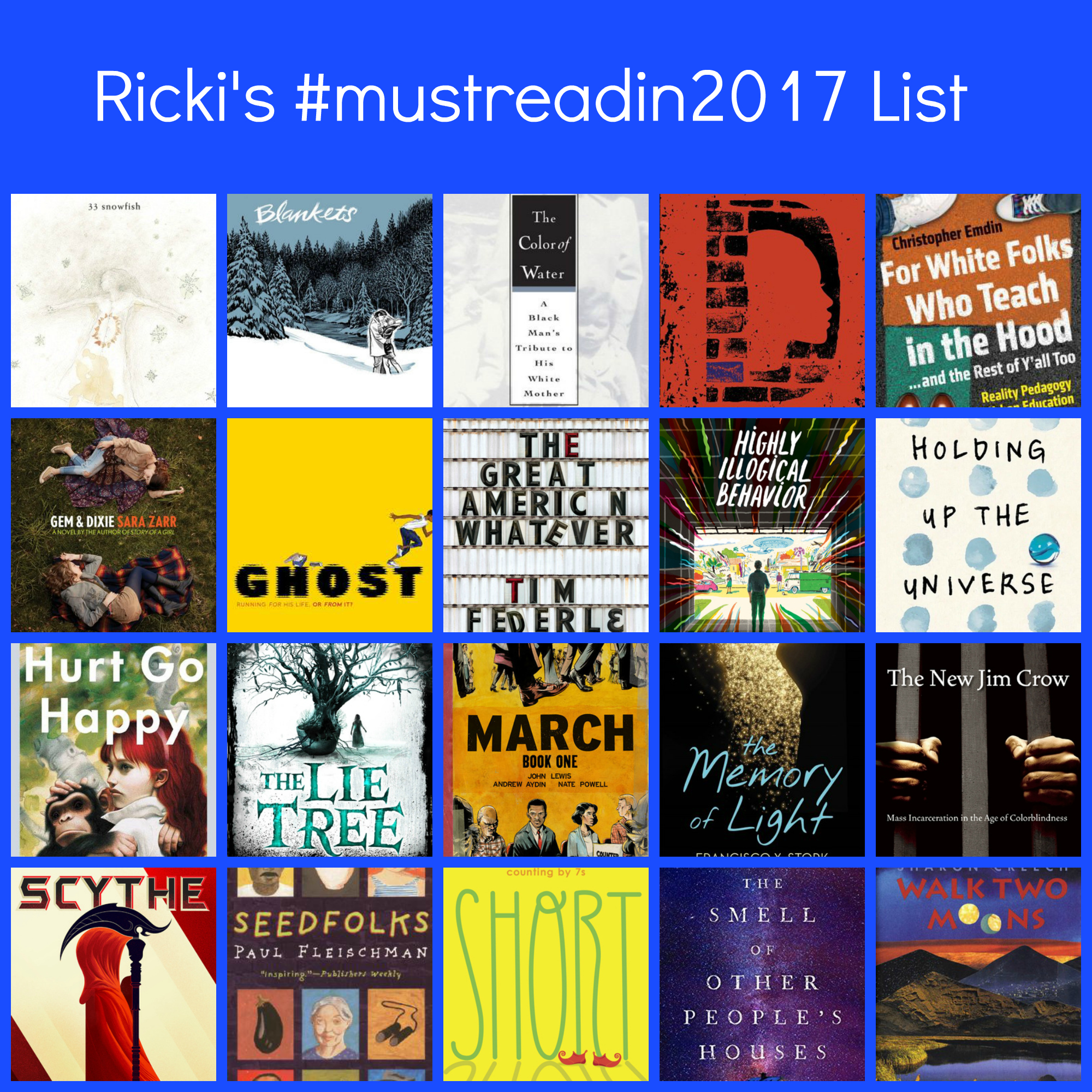
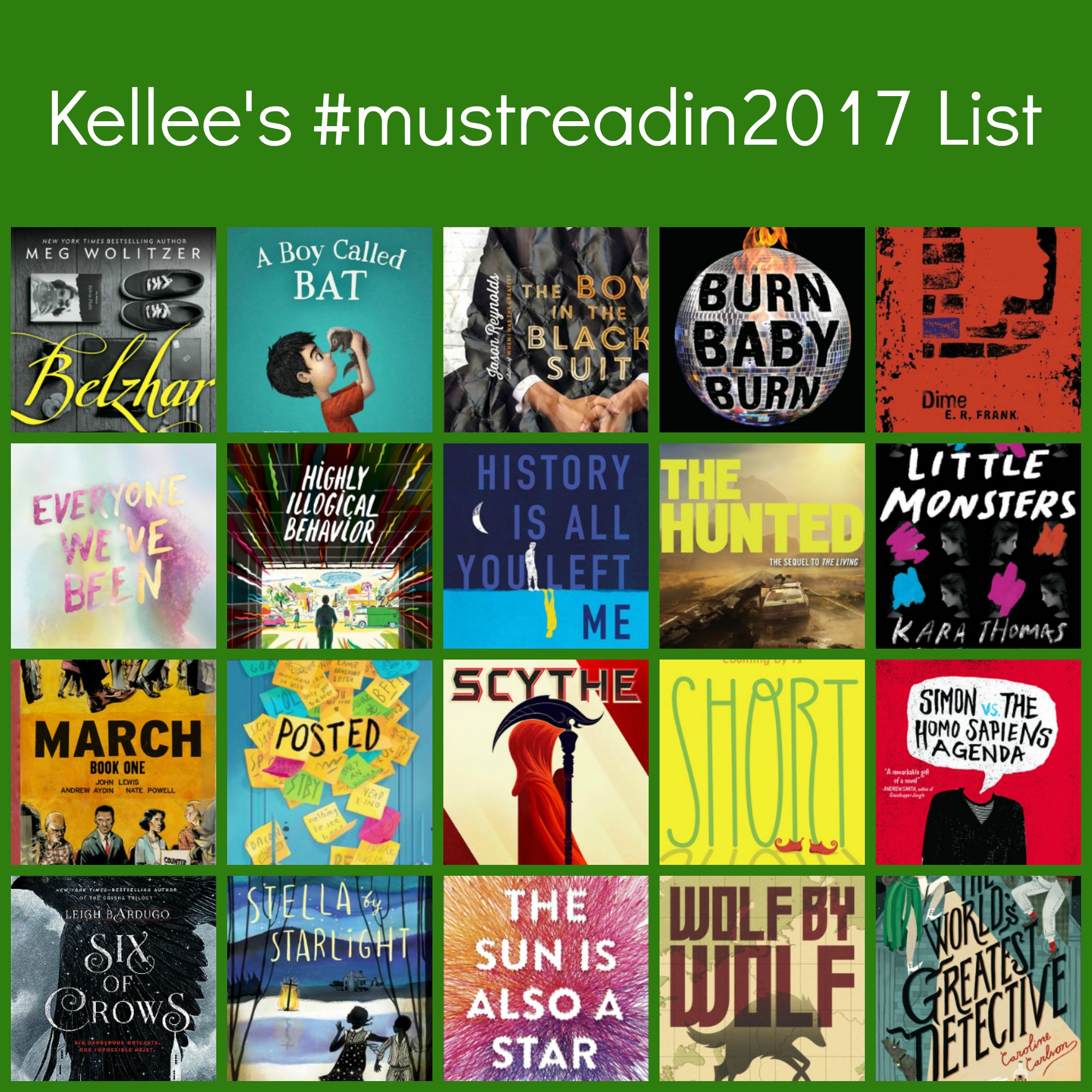
Our (hopeful) #mustreadin2017 Lists:
Ricki
I completed 5 out of 20. This is disappointing to me because I usually do much better to this. Moving to Colorado really put a damper on my reading. I still can’t find most of these books in the boxes that I packed back in July, and I don’t feel compelled to buy new copies. I did read a lot this year, but I didn’t focus strongly enough on this list. I won’t do as poorly next year. Bah!
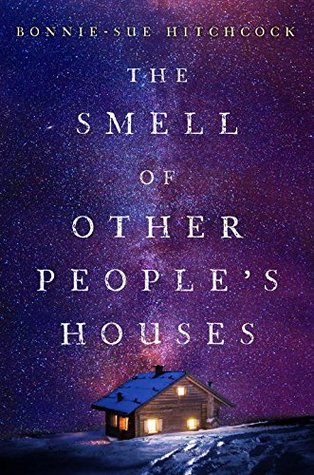
The Smell of Other People’s Houses by Bonnie-Sue Hitchcock Finished 10/23/17
I absolutely adore this book. It’s written so beautifully. I can’t wait to read Bonnie-Sue Hitchcock’s next book. Her writing is so different. She is wildly talented. It also doesn’t hurt that she is a fantastic person.
Kellee
I completed 16 out of 20!
I always have a slow start to my #mustread lists, but I pick it up as the year goes on, and this year was the best yet! 80% read!
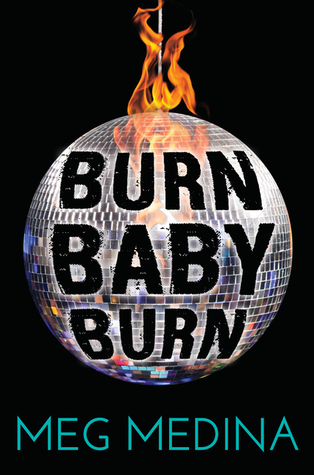
Burn Baby Burn by Meg Medina Finished 11/8/17
Burn Baby Burn was such a good read! It is so much more than I thought it was going to be. It was a look at the effects of divorce, the challenges of having a mentally ill sibling, the struggles during the summer of Son of Sam and the NYC blackout, and mostly about growing up and figuring out what you want to be.
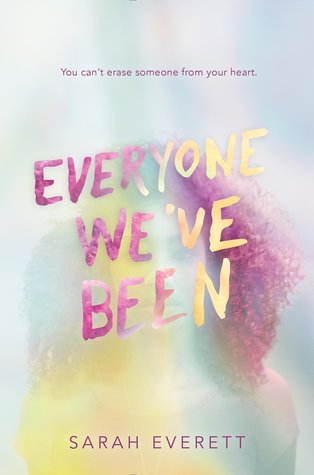
Everyone We’ve Been by Sarah Everett Finished 9/15/17
I picked this because it reminded me a bit of More Happy Than Not by Adam Silvera, but it ended up being more different than the same. The only similarity was the manipulation of memory.
History is All You Left Me by Adam Silvera Finished 10/9/17
Whoa. What a roller coaster. The book switches between the past where Griffin and Theo were in love and the present where Theo has passed away and his current boyfriend, Jackson, comes to town for the funeral. Heartbreaking yet hopeful. You’ll only understand if you read.
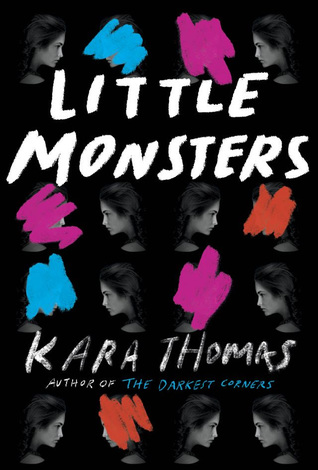
Little Monsters by Kara Thomas Finished 10/6/17
Little Monsters was a mystery that I just couldn’t solve which is my favorite type! The ending was shocking and overall the story was so crazy and messed up!
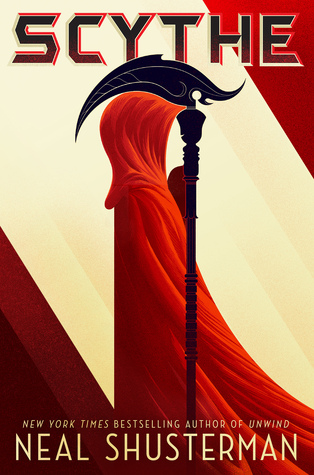
Scythe by Neal Shusterman Finished 9/5/17
This may be one of my favorite books of all time. I cannot wait to read Thunderhead. If you haven’t read this, just trust me: READ IT!
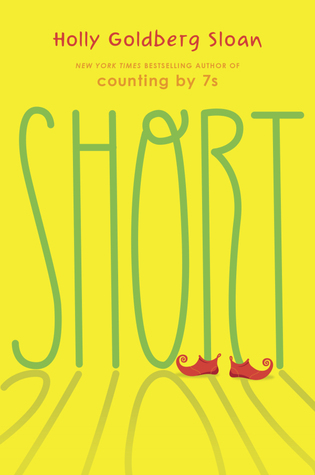
Short by Holly Goldberg Sloan Finished 9/30/17
I loved this look at how one thing cannot define a person. And although I loved Julia’s story, it was the secondary characters who made this story for me.
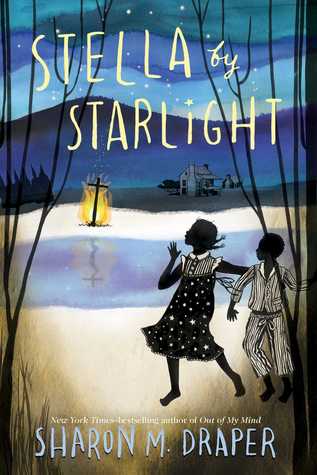
Stella by Starlight by Sharon Draper Finished 10/18/17
Draper is brilliant at everything she does. Stella lives in the segregated South but all had been primarily peaceful until one night the KKK shows itself in the darkness. Stella by Starlight is the story of Stella’s coming of age but also of her community’s fight in a place full of prejudice.
It’s Monday! What Are You Reading? From Picture Books to YA!
It’s Monday! What are you Reading? is a meme started by Sheila at Book Journeys and now hosted by Kathryn at The Book Date. It is a great way to recap what you read and/or reviewed the previous week and to plan out your reading and reviews for the upcoming week. It’s also a great chance to see what others are reading right now…you just might discover the next “must-read” book!
Kellee and Jen, of Teach Mentor Texts, decided to give It’s Monday! What Are You Reading? a kidlit focus. If you read and review books in children’s literature – picture books, chapter books, middle grade novels, young adult novels, anything in the world of kidlit – join us! We love this meme and think you will, too.
We encourage everyone who participates to support the blogging community by visiting at least three of the other book bloggers that link up and leave comments for them.
Enjoy your time off with your families and friends and books 🙂
Merry Everything and a Happy Always to all!
Upcoming Week’s Posts
Thursday: #MustReadin2017 Final Update
So, what are you reading?
Link up below and go check out what everyone else is reading. Please support other bloggers by viewing and commenting on at least 3 other blogs. If you tweet about your Monday post, tag the tweet with #IMWAYR!
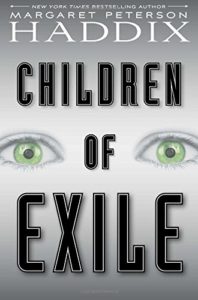
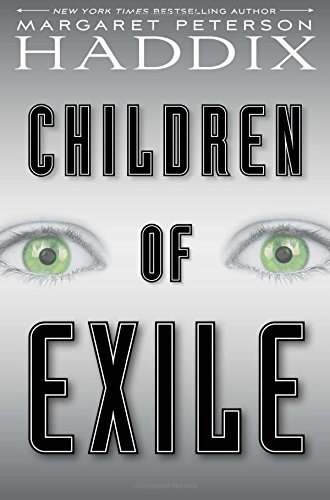
Children of Exile Published September 13th, 2016 by Simon & Schuster for Young Readers
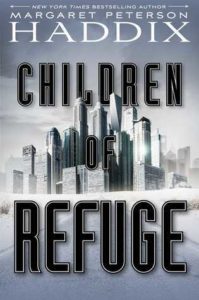
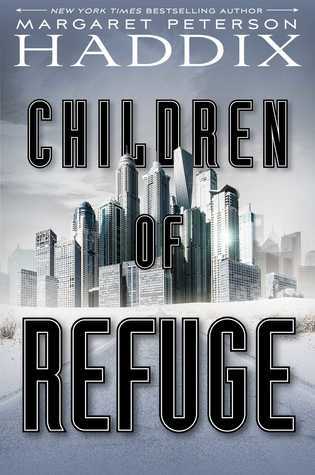
Children of Refuge Published September 12th, 2017 by Simon & Schuster for Young Readers
Author: Margaret Peterson Haddix
Children of Exile Summary: For the past twelve years, adults called “Freds” have raised Rosi, her younger brother Bobo, and the other children of their town, saying it is too dangerous for them to stay with their parents, but now they are all being sent back. Since Rosi is the oldest, all the younger kids are looking to her with questions she doesn’t have the answers to. She’d always trusted the Freds completely, but now she’s not so sure.
And their home is nothing like she’d expected, like nothing the Freds had prepared them for. Will Rosi and the other kids be able to adjust to their new reality?
Children of Refuge Summary: After Edwy is smuggled off to Refuge City to stay with his brother and sister, Rosi, Bobo, and Cana are stuck alone—and in danger—in Cursed Town in the thrilling follow-up to Children of Exile from New York Times bestselling author, Margaret Peterson Haddix.
It’s been barely a day since Edwy left Fredtown to be with his parents and, already, he is being sent away. He’s smuggled off to boarding school in Refuge City, where he will be with his brother and sister, who don’t even like him very much. The boarding school is nothing like the school that he knew, there’s no one around looking up to him now, and he’s still not allowed to ask questions!
Alone and confused, Edwy seeks out other children brought back from Fredtown and soon discovers that Rosi and the others—still stuck in the Cursed Town—might be in danger. Can Edwy find his way back to his friends before it’s too late?
Review: One thing you can always guarantee when you read a Haddix book is that it will suck you in and will be super unique! The Children of Exile series did not disappoint. I will admit, it is really hard to review either of the books without spoiling. The summaries above both did a really great job, but everything that happens after that suspense-building summary happens would spoil something for you. But I will promise you these things:
You will be on the edge of your seat and not be able to figure out what is going on for 90% of the first book.
You will be disgusted by the treatment of the children once they are returned to their parents.
You will want to help Edwy and his friends so badly throughout the entire second book.
You will have to stop reading when the reveal happens in the first book just to process it. Then you’ll reread. Then you’ll text someone who has read it.
You will want to know more than book 2 tells you, so we’ll all be waiting impatiently for #3.
You will realize that these books are actually a bit older and darker than they first seem.
Teachers’ Tools for Navigation: Like other Haddix books, you will find the best home for these books in the hands of kids. They are going to be talking about these books after they read them!
Discussion Questions: Discussion questions are available on Haddix’s website.
Flagged Passages: “‘Remember to be good little children!’
Good little children, good little children, good little children…
I saw children crying and clinging to their Fred-parents’ legs. I saw men yanking babies from their Fred-parents’ arms. I turned my back to my own Fred-mama and Fred-daddy — maybe to grab them as hard as I could — but the crowd surged just then, pushing Bobo and me up the stairs. I couldn’t see my Fred-parents anymore. I hadn’t even had a chance to tell them a proper good-bye.” (Children of Exile, Chapter 3)
“I’d been counting on being able to run fast enough no one caught up.
‘Good,’ an oily voice whispered in my ear. ‘Now you understand that screaming is useless.’
‘No, I was just–‘ Before I could add deciding what to scream next, a thick hand slid over my mouth. It smelled of onions and sweat and mud and, I don’t know, maybe puke as well.” (Children of Exile, Prologue)
Read This If You Love: Knife of Never Letting Go by Patrick Ness, Tesla’s Attic by Neal Shusterman, Masterminds by Gordon Korman, Spillzone by Scott Westerfeld
Recommended For:
**Thank you to Casey at Media Masters for providing copies for review!**
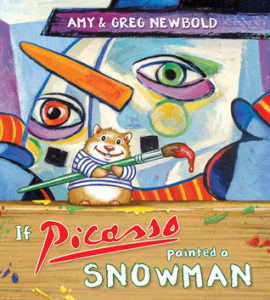
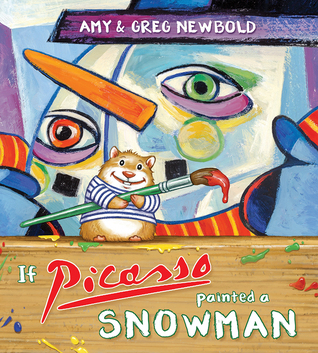
If Picasso Painted a Snowman
Author: Amy Newbold
Illustrator: Greg Newbold
Published October 3rd, 2017 by Tilbury House Publishers
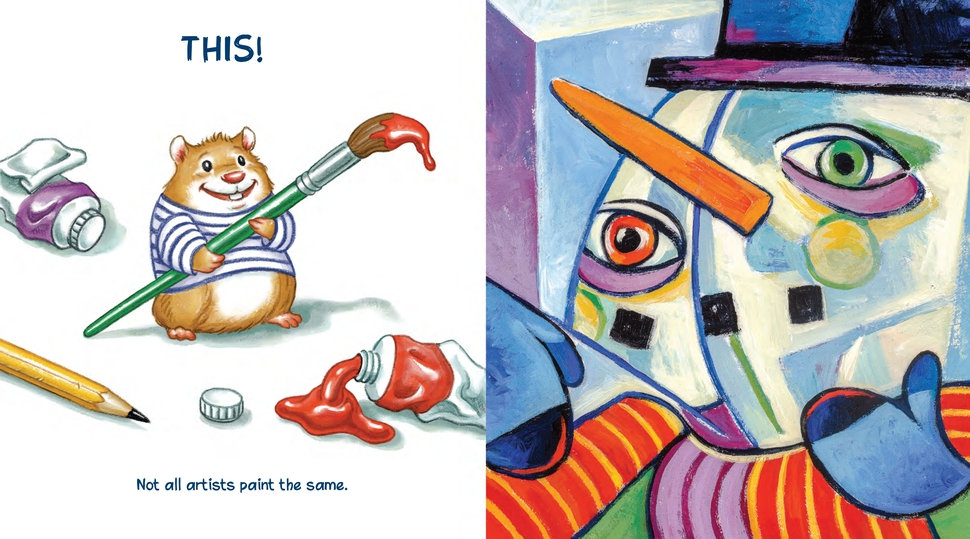
Summary: If someone asked you to paint a snowman, you would probably start with three white circles stacked one upon another. Then you would add black dots for eyes, an orange triangle for a nose, and a black dotted smile. But if Picasso painted a snowman…
From that simple premise flows this delightful, whimsical, educational picture book that shows how the artist’s imagination can summon magic from a prosaic subject. Greg Newbold’s chameleon-like artistry shows us Roy Lichtenstein’s snow hero saving the day, Georgia O’Keefe’s snowman blooming in the desert, Claude Monet’s snowmen among haystacks, Grant Wood’s American Gothic snowman, Jackson Pollock’s snowman in ten thousand splats, Salvador Dali’s snowmen dripping like melty cheese, and snowmen as they might have been rendered by J. M. W. Turner, Gustav Klimt, Paul Klee, Marc Chagall, Georges Seurat, Pablita Velarde, Piet Mondrian, Sonia Delaunay, Jacob Lawrence, and Vincent van Gogh. Our guide for this tour is a lively hamster who—also chameleon-like—sports a Dali mustache on one spread, a Van Gogh ear bandage on the next.
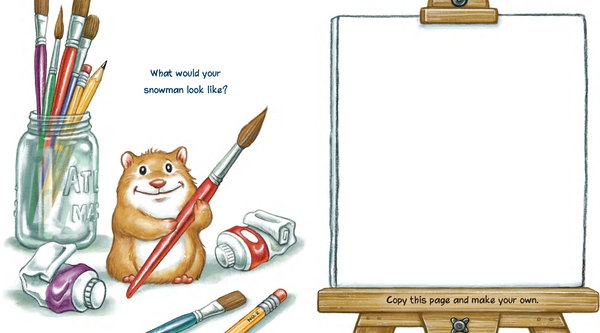
“What would your snowman look like?” the book asks, and then offers a page with a picture frame for a child to fill in. Backmatter thumbnail biographies of the artists complete this highly original tour of the creative imagination that will delight adults as well as children.
Review: Trent and I are really big fans of this one! It has become a regular bedtime book. Amy & Greg Newbold did a fantastic job teaching about art and artists while at the same time adding an entertainment factor through an imaginative and narrative aspect. Now, my experience reading this book for the first time is very different than Trent’s and other readers’ experiences will be like because of prior knowledge. Since I already knew the artists, I could pick out the style elements that were included in the snowman artwork, loved many of the snowmen because of how much it did look like the artists’ work, and even found aspects funny. Trent, on the other hand, read the book from a different lens because he saw all the snowmen first then we talked about each artist and using the back matter and internet, he learned about each of the artists.
Teachers’ Tools for Navigation: It would be so interesting to use the book in both ways: either with giving background knowledge ahead of time or introducing the book then the artists. And the book does such a wonderful job promoting creative freedom and sharing that each artist has their own style and medium which would lead to some really great opportunities for students to explore what their artistic style would be.
Discussion Questions:
[After studying an artist not in the book] How do you think ____ would paint/make/create a snowman?
What parts of each artist’s style did the Newbolds utilize when creating If Picasso Painted a Snowman?
Which snowman creation was your favorite? Why?
After reading the back matter, which artist would you like to learn more about?
Compare and contrast a “regular” snowman which each snowman in the book. Compare and contrast the different types of snowmen.
Author Interview: I was lucky enough to ask Amy & Greg interview questions. I chose to ask:
-How did you choose which artists to highlight in your book?
-How did you each prepare for writing the book?
-Any specific reason for the choice of a hamster?
-Other than art history, what do you hope readers get from the book?
Amy: I got the idea for If Picasso Painted a Snowman while visiting the Musee Picasso in Paris, France. Pablo Picasso’s work was so inventive, and I wondered what it would look like if he created a snowman. That was the beginning of the book. I knew right away certain artists that I wanted to include in the book, including Georges Seurat, Jackson Pollock, Piet Mondrian, and Salvador Dali. In the beginning, I wanted to include all my favorite artists, but as the project took shape, it became more important for me to include artists who made a significant contribution to art. Greg and I discussed each artist, as he had to envision how to paint a snowman in the style of that painter. He brought in artists like Paul Klee and Roy Lichtenstein. It was a wonderful experience to research each of these artists and we both gained a deeper appreciation for their work.
The actual writing of the book took place over many months. Some of the lines in the book came easily, while others took quite a bit of time to figure out. I read the text out loud multiple times and made changes if the words weren’t flowing. Greg and I also participated in a workshop at a writing conference where we were able to get critiques on the book during the writing process. Testing out the manuscript in front of a group really helped. I didn’t write the biographies of each artist until we had signed our contract with Tilbury House to do the book. Once we had a contract, I got busy researching so I could write something that is hopefully informative and interesting about each of these amazing painters.
Greg: This project was so much fun that it often felt like playing rather than work. Before beginning a piece, I researched the artist’s style, the materials and techniques that they used and what motifs and design quirks made them unique. Each piece was a treat to work on and for the most part, I feel that I captured some of the essence of what each artist was known for. I learned many new processes but probably the most fun I had was imitating Jackson Pollock’s drip style “action paintings”. Some people look at Pollock’s work and assume that they could do it since all you have to do is splatter paint around. After more study I realized that Pollock’s work is far from random and unplanned. There is an interesting rhythm and process in the way he layered paint. I had a great afternoon in the back yard dancing around my canvas laid on the ground deciding where the next splash of paint would look the best and trying to put it there. My Pollock turned out pretty well and was also used as the endpapers of the book. I was so entertained by the process that I want to do it again.
I designed the hamster in honor of a family pet named Max. He is the visual tour guide through the book, and you can see evidence of him on nearly every page. His presence adds another dimension to the book as he does things like carry a ruler to get straight lines on the Mondrian piece. In another picture, he wears Picasso’s striped shirt, or Monet’s beret. The hamster is not in the text, but offers several fun references for readers in the know. Keep an eye out for him and his wardrobe changes throughout the book!
Amy & Greg: We both hope that this book encourages artists of all ages to have fun with art. It is simply an introduction, an invitation to try different techniques and styles, use unexpected colors, explore and distort shape and line. By looking at the variety of ways artists painted in history, we hope kids understand that they can find and express their own creative vision.
Flagged Passages:
THIS! is how a snowman would look if Picasso painted one.
Top Ten Tuesday is an original feature/weekly meme created at The Broke and the Bookish. The feature was created because The Broke and Bookish are particularly fond of lists (as are we!). Each week a new Top Ten list topic is given and bloggers can participate.
Today’s Topic: Ten Books We Hope Santa Brings Our Kids
Ricki
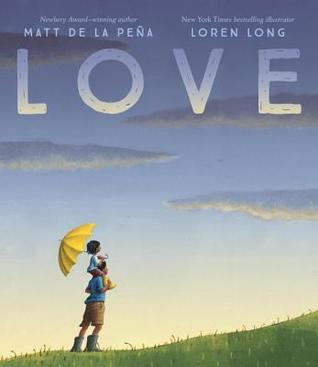
1. Love by Matt de la Peña
This book is at the top of my list…I mean, Henry’s list. Ah, it’s so beautiful! I read the ARC, and I know my boys will love it. It requires a good snuggle.
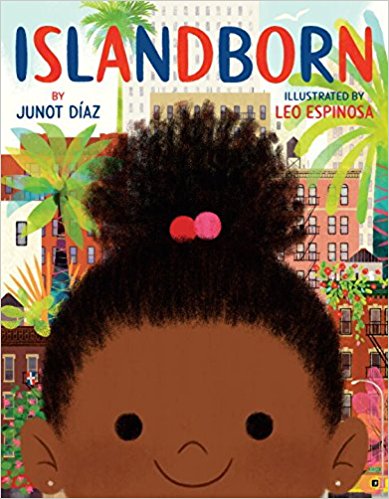
2. Islandborn by Junot Diaz
If this book doesn’t win the Caldecott, I will be disappointed. It’s gorgeous! I was so impressed by it, and I can’t wait for it to be released in March. The Spanish translation is called Lola!
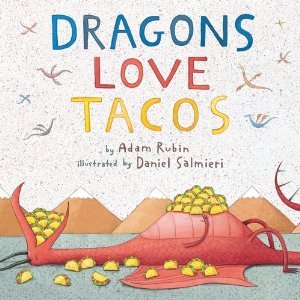
3. Dragons Love Tacos by Adam Rubin
We don’t own this book, but we talk about it often (every time Henry eats tacos!).
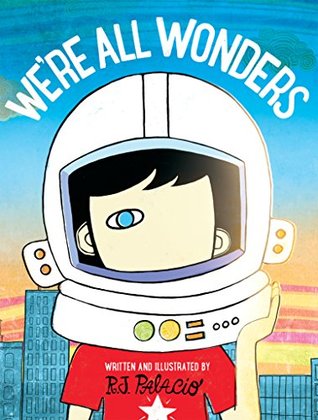
4. We’re All Wonders by R. J. Palacio
I love everything Wonder-related, and this book is no exception.
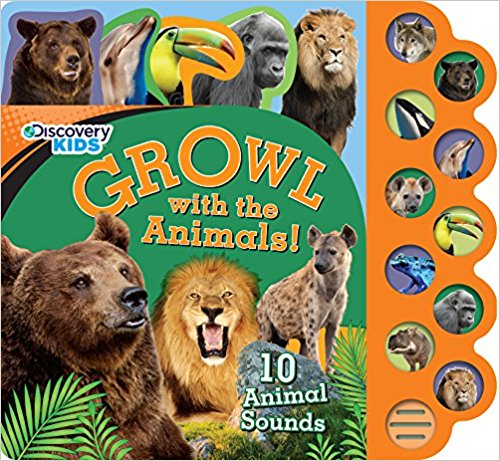
5. Growl with the Animals by Discovery Kids
And this book for my Benny. He loves to growl, and he loves sound books. This would be a hit!
Kellee
Santa and I have already met up, and here are five books I know Trent is getting for Christmas:
1. Love by Matt de la Peña
This is one of my favorite books of all time. Matt read the poem to us at ALAN, and I cried then. And when I saw the finished book this year at NCTE, it took my breath away. Beautiful. Important. Special. I am so glad Santa was able to get a finished copy at NCTE!
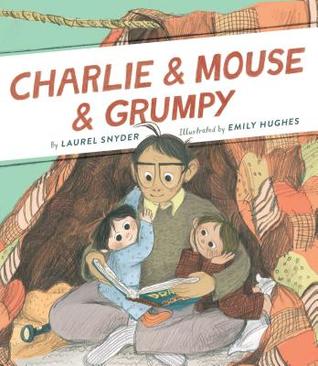
2. Charlie and Mouse and Charlie and Mouse and Grumpy by Laurel Snyder
I was so lucky to be able to see these books early in their creation because I had the honor of writing their teaching guide; however, Trent has not read them because I didn’t have the hard copies, but we will soon! Yay!
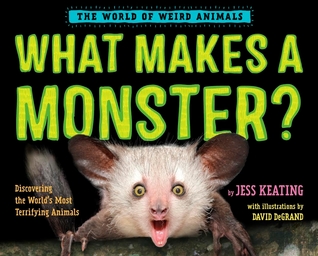
3. What Makes a Monster? by Jess Keating
Trent loves learning about animals and all things science and nature related–I am so glad Trent will be receiving this fun and informative book from Jess Keating. (He is also getting The Big Book of Animals!)
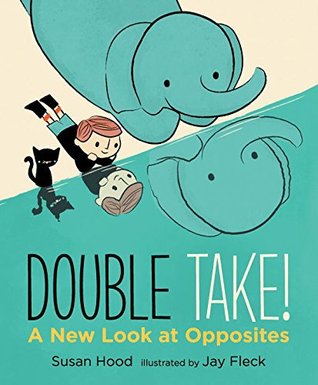
4. Double Take by Susan Hood
I’ve seen so much goodness about this book; I am so glad Trent and I will be able to read it.
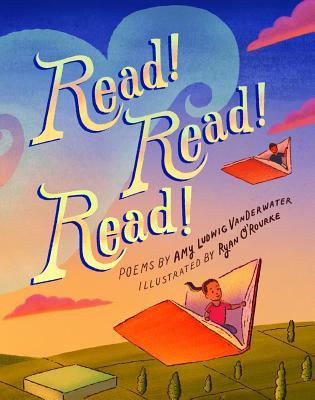
5. Read! Read! Read! by Amy Ludwig VanDerwater
Any book that celebrates reading is a book that we want.
It’s Monday! What Are You Reading? From Picture Books to YA!
It’s Monday! What are you Reading? is a meme started by Sheila at Book Journeys and now hosted by Kathryn at The Book Date. It is a great way to recap what you read and/or reviewed the previous week and to plan out your reading and reviews for the upcoming week. It’s also a great chance to see what others are reading right now…you just might discover the next “must-read” book!
Kellee and Jen, of Teach Mentor Texts, decided to give It’s Monday! What Are You Reading? a kidlit focus. If you read and review books in children’s literature – picture books, chapter books, middle grade novels, young adult novels, anything in the world of kidlit – join us! We love this meme and think you will, too.
We encourage everyone who participates to support the blogging community by visiting at least three of the other book bloggers that link up and leave comments for them.
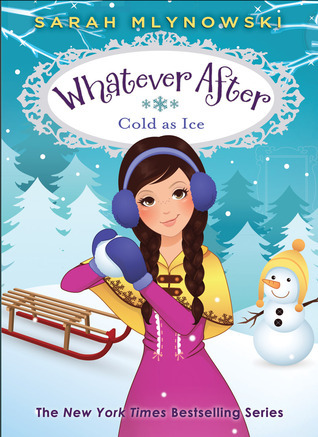
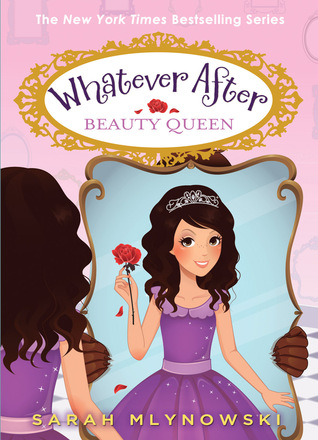
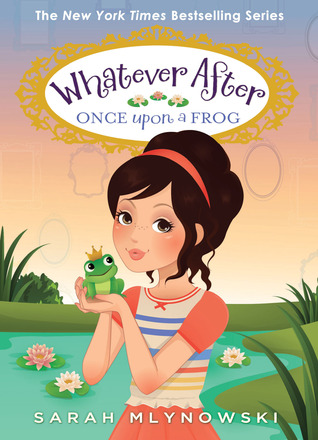
I love this series! Abby and Jonah are such good kids yet there are still lessons in each books without them ever losing their integrety. I also love how each fairy tale is looked at in a modern light and helps the characters get an ending they actually want and deserve.
Confession: I did a good amount of audiobook listening, but I did not read hardly at all. SHHHHH! This seems to happen to me about once a year where reading removes itself from my routine, but I’ll definitely work on getting it back in. I think part of it is that I have been working really hard on proposals for NCTE 2018 including reading research, reaching out to publishers, and collaborating with other educators. Working on proposals plus busy holiday activities equals asleep as soon as my head hits the pillow. Thank goodness for audiobooks!
Ricki
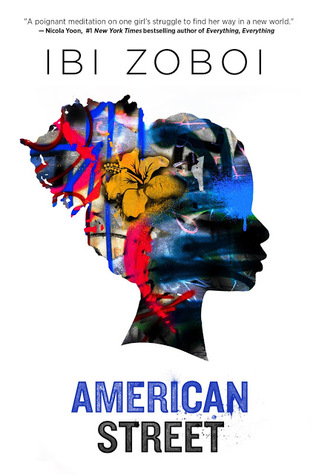
Holy, heck. This book. American Street by Ibi Zoboi is absolutely incredible. As I was reading it, I turned to my husband and said, “This book is so good.” It’s beautifully written; it’s lyrical; it’s powerful.
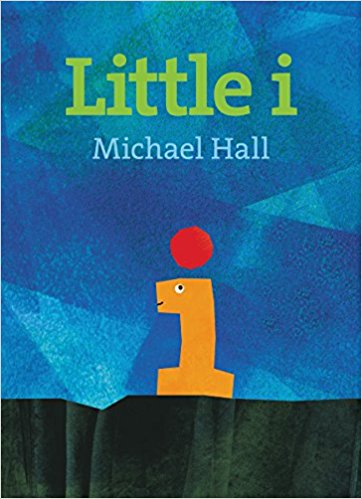
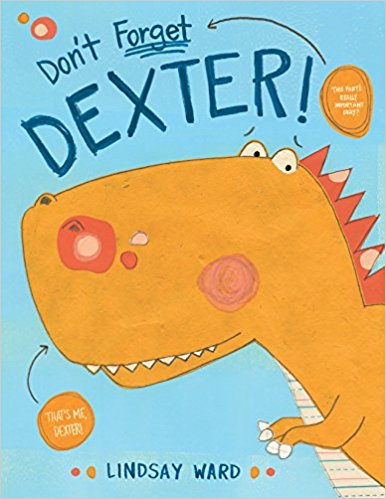
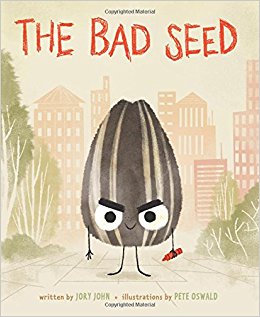
We’ve been reading a lot of new picture books at my house. These three stand out as stellar reads. Little i by Michael Hall is about a lower-cased i who loses his dot. He goes searching for it. Don’t Forget Dexter by Lindsay Ward is a household favorite. My son fondly calls it “my dinosaur book.” He has many dinosaur books, so this is a big compliment. And we adore The Bad Seed by Jory John. It has been a great resource to discuss good and bad behavior. I like how it complicates common notions of the ideas of being simply “bad” or “good.” It also teaches kids about bettering themselves.
This Week’s Expeditions
Kellee
Let’s see what the week brings. I don’t want to say what I hope to read just in case I have another less than stellar reading week because I don’t want it to seem like it was the book. It never is.
I will be continuing my listening of the Whatever After series. I look forward to see where they go next!
Ricki
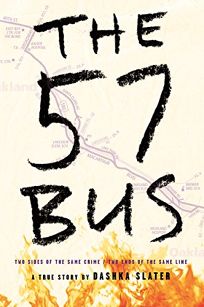
I just started The 57 Bus by Dashka Slater, and I can already tell it is going to be a great read.
Upcoming Week’s Posts
Tuesday: Ten Books We Hope Santa Brings to our Boys
Wednesday: If Picasso Painted a Snowman by Amy & Greg Newbold
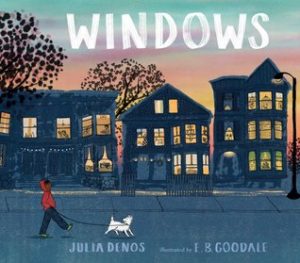
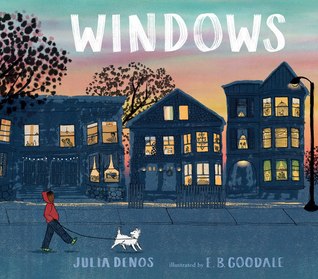
Thursday: Windows by Julia Denos
Friday: Children of Exile and Children of Refuge by Margaret Peterson Haddix
So, what are you reading?
Link up below and go check out what everyone else is reading. Please support other bloggers by viewing and commenting on at least 3 other blogs. If you tweet about your Monday post, tag the tweet with #IMWAYR!





 and
and