Blog Tour with Reviews and Giveaway!: We Are (Not) Friends by Anna Kang and Christopher Weyant

Share

We Are (Not) Friends
Author: Anna Kang
Illustrator: Christopher Weyant
Published May 1st, 2019 by Two Lions

Summary: Two fuzzy friends are having a fun playdate when a new pal hops in. As the day continues, each friend feels left out at times. It isn’t so easy to figure out how to act when everything seems to change. With humor and heart, the beloved characters from Theodor Seuss Geisel Award winner You Are (Not) Small navigate a friendship triangle as only they can.

About the Creators: Anna Kang and Christopher Weyant are the creators of Theodor Seuss Geisel Award winner You Are (Not) Small as well as series titles That’s (Not) Mine, I Am (Not) Scared, and We Are (Not) Friends. They also wrote and illustrated Eraser, which was recently honored with The Christopher Award, Can I Tell You a Secret?, and Will You Help Me Fall Asleep? Christopher’s work can also be seen in The New Yorker, and his cartoons are syndicated worldwide. This husband-and-wife team lives in New Jersey with their two daughters and their rescue dog. Visit them at www.annakang.com and www.christopherweyant.com.

Twitter: @annakang27 @christophweyant
Instagram: annakangbooks; christopherweyant
Facebook: Anna Kang – Author; Christopher Weyant

Praise for You Are (Not) Small:

Winner of the 2015 Theodore Seuss Geisel Award
ALA Notable Children’s Book
Parents’ Choice Awards Silver Honor
NPR Best Books of 2014

Kellee’s Review: When I first read this series to my son, he had a hard time because so much of it has to do with reading facial expressions and understanding dialogue; however, now that he is five (vs. three), this series is a favorite! The conversations we have around the two aspects that made this book better for a pre-k kid instead of a preschooler are phenomenal. And although I loved the series as a reader when I first was introduced, now as a mom I appreciate it so much more. The newest one is definitely a perfect one to read with someone Trent’s age as it is about playing nice, sharing friends and toys, and just overall being a kind person. 

Ricki’s Review: I absolutely love this series, and my kids love it, too. I have gifted a few copies of the books to friends with young kids. The messages are wonderful, and they allow for discussions about important topics in age-appropriate ways. For instance, when I was reading it to my two-year-old, I pointed to the picture of the character who was sad and asked questions like, “How does he feel? Why does he feel sad? Have you ever felt sad? Have you ever felt left out? What do you do when you see a friend who is sad?” I particularly liked this book because it focuses on issues of friendship. Sometimes, kids feel like they need to claim other kids as their best friends, and this makes other kids feel left out. Also, sometimes, kids get excluded from play. This is an issue I see in both my two-year-old’s and five-year-old’s classes. The book is accessible for kids of many ages, and the lessons are important. If you haven’t read the books in this series, I recommend them highly!

Teachers’ Tools for Navigation: Read this series with kids! Read it to them, discuss it with them, let them navigate it on their own, and let them love it. Each book has a different lesson without being didactic. And they are just so much fun and have fantastic illustrations!

Discussion Questions: 

  • How does ____ feel? How can you tell?
  • Why do you think ____ feels this way?
  • What could ____ have done to make the situation different?
  • How is what happened in the book like something in your life?

Flagged Passages: 

Read This If You Love: Anything by the Kang and Weyant team

Recommended For: 

classroomlibrarybuttonsmall 

Giveaway!

a Rafflecopter giveaway

Signatureand

**Thank you to Blue Slip Media and Two Lions for copies for review and giveaway!!**

In-Class Book Clubs with Kellee’s Classes

Share

In-Class Book Clubs are one of my favorite units that I do in my classes. They are my version of lit circles but with the only job of all students is to read, analyze, and discuss. These book clubs build community, stamina, and reading love in my classroom.

I’ve shared a few times about these in-class book clubs. First in April, 2018 where I went over the basic procedures of the book clubs and then in November, 2018 where I shared my students’ choices for this year’s clubs. Now, I am happy to share how this school year’s clubs went!

I did things a little bit differently this year. I had noticed that students were understanding the basics of the narrative and loving the reading but weren’t meeting the standards. I had to make sure to help guide their thinking but also I didn’t want to make the act of reading tedious. It is a slippery slope that I know I am always going to be reflecting about.

Because of this, I went with thought logs this year. A thought log was a strategy I was introduced to by my teacher friend Sarah Krajewski. Thought logs have four boxes for students to take notes while reading. My thought logs had two constant boxes: 1) Important details & 2) Conflict. Important details allowed them to just take notes on anything important that happened and the conflict box had them track the progress of the conflict. The other two boxes changed for each thought log: Confusion, Characters, Setting, My Feelings, Change, & Theme/Impact. Additionally, I added a bottom to my thought log that asked the students to come up with three open-ended discussion questions. Here’s our first thought log, so you can see an example:

Other than the new thought logs, everything else stayed the same: Students chose their books, I made their groups, we came up with class book club norms, they created their schedule, they met once a week, at the end of the unit I gave an individualized standards-focused assessment, and the kids LOVED it.

Well, everyone stayed the same until the end. At NCTE 2018, I went to one of Kelly Gallagher’s sessions and he shared a way he connects nonfiction and fiction when his students are reading novels: He has the students find nonfiction text features that connect to their novel. I decided to try this with my students, and I loved it!

As a book club, my students found two nonfiction elements (maps, graphs, images, etc.) that would help the reader of their book have their experience enhanced. They then said what page they would place the element and explain why it is important.

Here are some of my favorites:

The Honest Truth by Dan Gemeinhart

Rules by Cynthia Lord

Resistance by Jennifer Nielsen

Ravenmaster’s Secret: Escape from the Tower of London by Elvira Woodruff

Reflection: I’m not completely sold on the Thought Logs yet. I don’t want to kill the joy of reading. Ever. But my job is to teach standards, too. Always a conflict within me, and we’ll see what I decide next year! I will say that I loved the nonfiction element, so I think that will stay. Until next year!

Signature

It’s Monday! What Are You Reading? #IMWAYR 4/29/19

Share

IMWAYR 2015 logo

It’s Monday! What Are You Reading? From Picture Books to YA!

It’s Monday! What are you Reading? is a meme started by Sheila at Book Journeys and now hosted by Kathryn at The Book Date. It is a great way to recap what you read and/or reviewed the previous week and to plan out your reading and reviews for the upcoming week. It’s also a great chance to see what others are reading right now…you just might discover the next “must-read” book!

Kellee and Jen, of Teach Mentor Texts, decided to give It’s Monday! What Are You Reading? a kidlit focus. If you read and review books in children’s literature – picture books, chapter books, middle grade novels, young adult novels, anything in the world of kidlit – join us! We love this meme and think you will, too.

We encourage everyone who participates to support the blogging community by visiting at least three of the other book bloggers that link up and leave comments for them.

Bold_line

Tuesday: Call for Teachers of YAL Classes

Wednesday: Celebrate #NationalParkWeek! Review and Giveaway: If I Were a Park Ranger by Catherine Stier

Thursday: Guest Review: Isle of Blood and Stone by Makiia Lucier

Sunday: Author Guest Post!: “Celebrate Biodiversity: Life + Variety = Biodiversity” by Laura Perdew, Author of Biodiversity: Explore the Diversity of Life on Earth

**Click on any picture/link to view the post**

Bold_line

Kellee

First, and I know you all always say you understand and it is okay, but I have to apologize for not commenting recently on IMWAYR. I’ve been reading them on my phone, but I can’t comment easily from there… I’ve recently become part of something that is time consuming and with the end of the year and Ricki being on maternity leave (Yay new Ginsberg baby!) and with all the regular mom and teacher stuff… well, life just zips by some times. But know I appreciate and love you all!

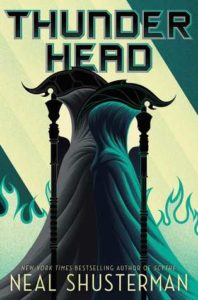
  • Finished both The Shadow Club and The Schwa Was Here by Neal Shusterman. Interestingly, they both have to do with the feeling of not being seen as an adolescent. As a teacher and mom, this topic makes me so sad! I want every kid to be seen and know they are amazing!

So much reading with Trent! Makes my heart happy 🙂

  • I read A Friend for Dragon a while ago, and I am happy to see Acorn imprint rereleasing it and so is Trent. He is a forever Dav Pilkey fan.
  • Fergus and Zeke were instant favorites in our household! Although I think Trent had a bit more comprehension issues with this second one because he didn’t understand many of the science fair references, but he still loved their story!
  • This Book is NOT About Dragons by Shelley Moore Thomas may be my new favorite read aloud with Trent. How funny! If you haven’t read it, I highly recommend!
  • Fresh Princess by Denene Miller is illustrated by a local artist, so I was so happy to be able to support her–and I even got a signed copy! The new take on the Fresh Prince story makes for a good book.
  • Be Quiet! by Ryan T. Higgins and Santa Bruce by Ryan T. Higgins are Trent favorites, and he loves to read along to the audiobook on Hoopla.
  • I also realized while searching Hoopla that Trent had never read Tacky the Penguin, so I fixed that!

Ricki

Ricki is away on maternity leave and will return mid-June. Happy reading!

Bold_line

Kellee


  • Starting: Song for a Whale by Lynne Kelly
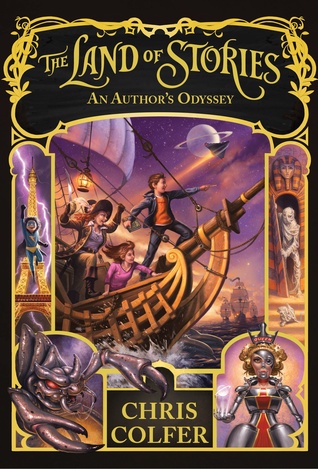
  • Listening: The Land of Stories: Beyond the Kingdoms by Chris Colfer
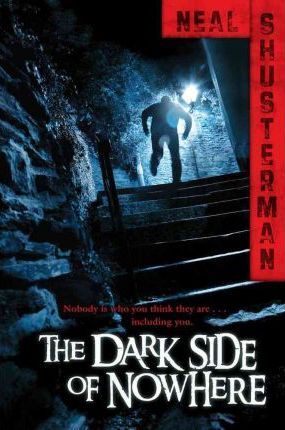
  • On Deck: The Dark Side of Nowhere by Neal Shusterman
  • In the Hole: Glass Sword by Victoria Aveyard
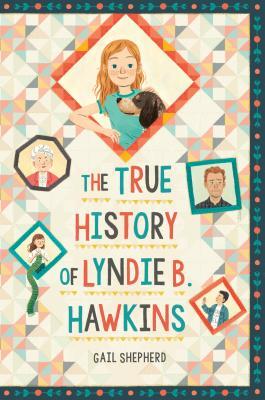
  • On Hold at my Library: The True History of Lyndie B. Hawkins by Gail Shepherd
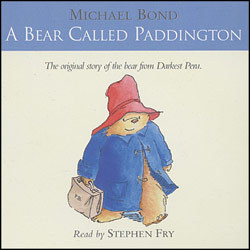
  • Listening with Trent: A Bear Called Paddington by Michael Bond
  • Picture Book On Deck with Trent: Who knows!
  • Chapter Book On Deck with Trent: Ricky Ricotta’s Mighty Robot by Dav Pilkey

Bold_line

Tuesday: In-Class Book Clubs in Kellee’s Classes

Thursday: Guest Review: Picture Us in the Light by Kelly Loy Gilbert

Friday: Blog Tour with Review and Giveaway!: We Are (Not) Friends by Anna Kang

Sunday: Author Guest Post!: “Environmental Science Activities for Kids” by Donna Latham, Author of Biomes: Discover the Earth’s Ecosystems with Environmental Science Activities for Kids

Bold_line

Link up below and go check out what everyone else is reading. Please support other bloggers by viewing and commenting on at least 3 other blogs. If you tweet about your Monday post, tag the tweet with #IMWAYR!

 Signature andRickiSig

Author Guest Post: “Celebrate Biodiversity: Life + Variety = Biodiversity” by Laura Perdew, Author of Biodiversity: Explore the Diversity of Life on Earth

Share

“Celebrate Biodiversity: Life + Variety = Biodiversity”

From smelly stinkhorn mushrooms to hardy tardigrades, and towering sequoia to soaring condors, and creepy anglerfish to the Hercules beetle, Earth is home to MILLIONS of known species of plants, animals, fungi, bacteria, and microorganisms of all shapes and sizes. Scientists estimate there could be millions (if not billions) more species that have not yet been identified.

Biodiversity is present everywhere on the planet including some pretty extreme places: near volcanoes, at the deepest parts of the ocean, in the sand, in hot springs and mud pots, in the ice, and even under the ice. And consider this – wherever you are at this moment you are in the company of hundreds or maybe even thousands of other species growing, squiggling, flying, reproducing, wriggling, feeding, and thriving.

Biodiversity: Explore the Diversity of Life on Earth explores genetic, species, and ecosystem biodiversity and how each species, no matter how large or how small, has a role to play. It is all CONNECTED. As John Muir once wrote, “When we try to pick out anything by itself, we find it hitched to everything else in the Universe.”

These interconnections make our planet mighty, yet also fragile and vulnerable. Writing and researching Biodiversity gave me an increased appreciation for the amount, variety, and complexity of life on our planet. Unfortunately, I am also now even more aware of the many threats to biodiversity. The time for action is now. To quote Dr. Seuss, “Unless,” he wrote in The Lorax in 1971, “unless someone like you cares a whole awful lot, nothing is going to get better, it’s not.”

My hope is that the book will inspire wonder in kids and raise awareness.

Wonder leads to caring (hopefully a lot!).

And if kids care, they will act.

Starred review from Booklist:

“By book’s end, readers will truly understand what biodiversity is, its importance to the health of the planet, and humans’ impact on the complex natural systems where it thrives.”

Activity: Explore Biodiversity

To start the discussion about biodiversity, generate a list as a group of five examples of each of the following: plants, animals, fungi, bacteria, and microorganisms. This list will ultimately spark conversations. Next, challenge students to research and discover one species of plants, animals, fungi, bacteria, and microorganisms they’ve never heard of. To generate even more interest, challenge them to find the most unique or bizarre species they can. Their findings can be shared in any number of formats, including a museum-style gallery walk, an online slide show, or a “show and tell.”

Questions for discussion:

  1. What are the similarities between the all plants discovered? What are the differences?
  2. What would happen if one of the animals students researched disappeared?
  3. What role do the fungi play in the ecosystem?
  4. Bacteria are often thought of as something to get rid of. What do you think the larger results of this might be?
  5. How do you feel about the microorganisms all around you?

Activity: Get Involved

There are many ways for students to get involved to support biodiversity. One is to protect or create new habitats.

Today, the populations of pollinators are in decline, especially butterflies and bees. Much of this is due to habitat loss and poisoning as a result of pesticide use in agriculture. To support pollinators, conservationists are encouraging people to plant pollinator gardens at home, work, school, and in the community.

Start by identifying a place where kids can plant a garden. If space is an issue, consider using a large pot or a planter outside a window because they will attract pollinators too! The next step is to research the types of pollinators in your area. Then research types of plants that these pollinators are attracted to. Try to find a variety of plants that flower throughout the spring, summer, and fall. Perhaps go talk to a local expert or invite one into the classroom. Draw plans for the gardens and plant in the spring. As the garden grows, record observations about the growth and about the species that visit the garden.

Questions for discussion:

  1. How many different species have you observed in your garden? Do certain pollinators like specific types of flowers?
  2. There is a lot going on above the soil. Did you ever consider what is going on below the soil? What kinds of species may be living there? Are they harmful to the garden or helpful?
  3. What would it take to launch a local effort to create pollinator gardens? Could you educate neighbors about planting their own gardens? Can you convince the school to set aside a larger area for a garden? How about in the community?

Activity: Celebrate Biodiversity!

Understanding and appreciating biodiversity are a critical part of the effort to protect it. Kids can play a key role in raising awareness about the threats to biodiversity. Have kids create a piece of visual art that celebrates biodiversity. It can celebrate the biodiversity around the world, just in your community, unseen biodiversity, or biodiversity in a single ecosystem. Each student should choose their own medium – painting, sculpture, collage, photograph, or whatever interests them. The goal is to create a piece that celebrates the variety and value of life on Earth, and to make others stop to think as well.

Consider places where the artwork can be displayed – in the school, community centers, churches, other gathering places, or even online. Invite family and friends to view the pieces. International Day for Biological Diversity is May 22, but, of course, you can celebrate any day.

Questions for discussion:

  1. As you worked on your piece, did you slow down and spend more time thinking about biodiversity?
  2. What was the reaction to the pieces from others?
  3. Have you been inspired to do even more to raise awareness of the issues facing biodiversity? What else can you do?

More teaching resources for Biodiversity at https://nomadpress.net/wordpress/wp-content/uploads/2018/07/Biodiversity-Classroom-Guide.pdf.

Biodiversity: Explore the Diversity of Life on Earth with Environmental Science Activities for Kids
Author: Laura Perdew
Illustrator: Tom Casteel
Published March 5th, 2019 by Nomad Press

About the Book: From the tallest tree to the smallest microbe, Earth is home to more than 1.5 million known species of plants, animals, fungi, bacteria, and microorganisms. And scientists estimate there could be millions, if not billions, more that have not yet been identified!

Biodiversity: Explore the Diversity of Life on Earth with Environmental Activities for Kids introduces middle schoolers to the evolution of life on Earth, beginning with the first single-celled organisms that emerged 3.8 billion years ago to the complex, multi-celled organisms that exist today and make up the tree of life. Biodiversity is found everywhere on the planet—on land, in the water, and even in extreme environments such as ice and volcanoes. There are actually entire microbiomes beneath our feet, in puddles, and even in our belly buttons!

Biodiversity includes hands-on STEM activities and critical thinking exercises to encourage readers to consider the threat to biodiversity and figure out ways to be part of the solution. Fun facts, links to online primary sources and other supplemental material, and essential questions take readers on an exploration of the incredible biodiversity on Earth.

About the Author: Laura Perdew is an author, writing consultant, and former middle school teacher. She has written more than 15 books for the education market on a wide range of subjects, including the animal rights movement, the history of the toilet, eating local, and the Great Pacific Garbage Patch. She is a long-time member of the Society of Children’s Book Authors and Illustrators. Laura lives in Boulder, Colorado.

Website: lauraperdew.com

Thank you, Laura, for this wonderful post about our amazing Earth!

Celebrate #NationalParkWeek! Review and Giveaway: If I Were a Park Ranger by Catherine Stier

Share

If I Were a Park Ranger
Author: Catherine Stier
Illustrator: Patrick Corrigan
Published April 1st, 2019 by Albert Whitman Company

Summary: If you were a national park ranger, you’d spend every day in one of the most treasured places in America. You’d have an amazing job protecting animals, the environment, and our country’s natural and historical heritage, from the wilds of Denali to the Statue of Liberty!

About the Creators:

As a child, Catherine Stier wanted to be an author or park ranger. She visited her first national park as a baby and has been a fan ever since. She is the author of If I Were President and several other award-winning picture books, and has worked as a magazine writer, newspaper columnist, writing instructor, and children’s literature researcher. She lives in San Antonio, Texas with her husband and volunteers with programs that connect families and children with nature and the outdoors. To learn more, and to download free activity sheets and curriculum guides, visit her website: catherinestier.com.

Patrick Corrigan was born in the north of England and grew up drawing and designing. After University, he was an art director in a design studio for nearly ten years. He now lives in London with his wife and cat, illustrating children’s books. See more of his work at www.patrickcorrigan.co.uk.

Review: What a great informational text about National Parks and the park rangers that take care of them! The text did a wonderful job introducing not only the National Parks and all the different ones throughout the country but also all of the amazing things that park rangers do to take care of these national treasures. I was most impressed by how it was all inclusive of all the different types of jobs that keep the parks going as well as all the different types of parks that can be visited. The text, filled with information, along with the colorful illustrations bring it all to life for the reader and keeps them engaged in a way that other non-narrative informational texts struggle with sometimes.

Teachers’ Tools for Navigation: 

2019’s National Park Week is April 20-28th, and If I Were a Park Ranger is a perfect read aloud for the week! It would be perfect for when a class is learning about Theodore Roosevelt or any other founder of National Parks also.

The author’s website also includes activity pages for the book: http://www.catherinestier.com/curriculum-guides/!

Discussion Questions: 

  • What National Park would you want to visit?
  • What does it take to be a park ranger?
  • What type of person do you think would succeed the most as a park ranger?
  • How does science fit into a park ranger’s job? Technology? Engineering? Math? Art?
  • What is the author’s purpose for creating the text?

Flagged Passages: 

Read This If You Love: National Parks, Nature, Conservation

Recommended For: 

classroomlibrarybuttonsmall

Giveaway!

Ten lucky winners will receive a copy of If I Were A Park Ranger by Catherine Stier. One Grand Prize winner will receive a signed copy of the book PLUS a Park Ranger Stuffed Doll, a “National Park Geek” Iron-on Patch, National Park Animal Cookies, Camping Stickers, Woodland Animal Mini Notebook, and Book Cover Postcards! Winners will be selected at random and notified via email. One entry per person, please. US addresses only. Entries are due by 5/3/19. Follow this link to enter!

Signature

**Thank you to Blue Slip Media for providing a copy for review!**

It’s Monday! What Are You Reading? #IMWAYR 4/22/19

Share

IMWAYR 2015 logo

It’s Monday! What Are You Reading? From Picture Books to YA!

It’s Monday! What are you Reading? is a meme started by Sheila at Book Journeys and now hosted by Kathryn at The Book Date. It is a great way to recap what you read and/or reviewed the previous week and to plan out your reading and reviews for the upcoming week. It’s also a great chance to see what others are reading right now…you just might discover the next “must-read” book!

Kellee and Jen, of Teach Mentor Texts, decided to give It’s Monday! What Are You Reading? a kidlit focus. If you read and review books in children’s literature – picture books, chapter books, middle grade novels, young adult novels, anything in the world of kidlit – join us! We love this meme and think you will, too.

We encourage everyone who participates to support the blogging community by visiting at least three of the other book bloggers that link up and leave comments for them.
Bold_line

Tuesday: H is for Haiku: A Treasury of Haiku from A to Z by Sydell Rosenberg

Wednesday: On the Come Up by Angie Thomas

Thursday: You Choose In Space by Nick Sharratt & Pippa Goodhart

Sunday: Author Guest Post!: “Talking Trash” by Donna Latham, Author of Garbage: Follow the Path of Your Trash

**Click on any picture/link to view the post**

Bold_line

Kellee

  • Super Jake and the King of Chaos is debut middle grade novel about Ethan, a middle school magician, and his family whose priorities surround Jake, their one-year-old who was born with brain damage.
  • Since starting all of the Gordon Korman books, I’ve been really shocked to find out how many of his books that are SO GOOD are out of print. The Island series is another one. High interest and well written!

Ricki

Ricki is away on maternity leave and will return mid-June. Happy reading!
Bold_line

Kellee

  • Listening with Trent: A Bear Called Paddington by Michael Bond
  • Listening: Beyond the Kingdoms by Chris Colfer
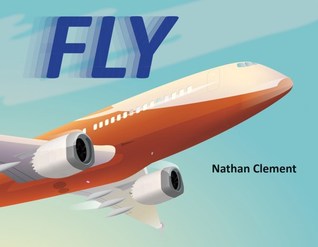
  • Reading: The Shadow Club by Neal Shusterman
  • On Deck: The Schwa was Here by Neal Shusterman
  • In the Hole (if nothing changes): The True History of Lyndie B. Hawkins by Gail Shepherd

Bold_line

Tuesday: Call for Teachers of YAL Classes

Wednesday: Celebrate #NationalParkWeek! Review and Giveaway: If I Were a Park Ranger by Catherine Stier

Thursday: Guest Review: Isle of Blood and Stone by Makiia Lucier

Sunday: Author Guest Post!: “Celebrate Biodiversity: Life + Variety = Biodiversity” by Laura Perdew, Author of Biodiversity: Explore the Diversity of Life on Earth

Bold_line

Link up below and go check out what everyone else is reading. Please support other bloggers by viewing and commenting on at least 3 other blogs. If you tweet about your Monday post, tag the tweet with #IMWAYR!

 Signature andRickiSig

Author Guest Post!: “Talking Trash” by Donna Latham, Author of Garbage: Follow the Path of Your Trash with Environmental Science Activities for Kids

Share

“Talking Trash!”

Life with kids is pretty busy, and it can be easy to forget to consider the environment with every purchase we make. Bottled water, individual snack packages, and upgraded devices all seem like the standard price we pay for being parents and educators in modern society, but in fact, the garbage we produce from this lifestyle has an impact that lasts far longer than—or just as long as—a laminated piece of child’s artwork.

What have you tossed in the trash today? A gnawed apple core? A plastic straw? A tattered handbag? A piece of furniture?

We throw tons of garbage away every day. Anywhere you find people, you’ll find garbage—mounds and mounds of it. A gyre of plastic trash floats in the middle of the ocean. Garbage is even marooned on the surface of the moon.

Usually, we don’t realize how much stuff we throw away. In just one year, an average family of four in the United States churns out 6,351 pounds of waste. That’s enough to fill a three-bedroom house to the ceiling.

And where does all that trash go? It doesn’t simply disappear, as much as we’d like to think so. Even the stuff that gets lugged to the landfill requires a careful process of sorting and arranging so that the runoff and off-gassing doesn’t make us ill. Or it might get burned and filtered to reduce the amount of toxins that are released into the atmosphere.
But still—our oceans fill with plastic, which gets eaten by marine life. Our highways and back roads are lined with litter. Our beaches are minefields of trash.
However! Through effort and education, we can make a difference and be part of the cleanup. And we owe it to our kids to model behaviors that will result in positive changes to the world—such as reducing the amount of trash we create! While the three R’s of Reduce, Reuse, and Recycle are critical in our quest to make Earth healthy, there’s another R of equal importance—Rethink. Rethink the way you make purchases and the way you use what you have. This is an incredibly important lesson for kids to see acted out on a daily basis.
To help, try these environmental activities with the children in your life!

TRACK YOUR TRASH

What’s in your rubbish? For one week, track and record every item your family discards. Be very careful because trash can contain broken or sharp objects.

  • Use a scale to weigh three large empty plastic tubs. Record the weights in a science journal.
  • Reuse cardboard, index cards, or scratch paper to make three labels for the tubs: “Trash,” “Reusable,” “Recyclable.” Attach the labels to the tubs.
  • For one week, become your family’s garbage collector. Put on rubber gloves to rummage through every item of trash. Be on the lookout for broken or sharp items and handle with care. Categorize each as trash, reusable, or recyclable. Place each article in the appropriate container.
  • At the end of the week, weigh each tub of stuff. Subtract the original weight of the empty tub from the total and record how much waste each tub has.
  • Compare and contrast your totals with those published by the EPA. Did each person in your household produce about 31. pounds of garbage, which is the national average?
  • Challenge your family to cut down your amount of garbage. Rethink your trash choices. What can you reuse or recycle, instead of discarding? If you get a composter, you can compost food waste.
  • A month from now, try this activity again to observe your success. Are your results different?

TO DYE FOR!

Has your old T-shirt seen better days? No need to let it die. Dye it instead! Next time your family boils colorful veggies, don’t dump the water. Use it to brew natural dyes the way colonists and pioneers did. Then, use those dyes to jazz up your shirt and give it new life.

Choose your color. Beets will make red. Carrots produce orange. Gold onions make yellow, red cabbage produces purple, and spinach gives you green. Put the vegetables in a pot, cover with water, and boil them. Drain the liquid and strain out any solid bits. Store the liquid in a glass jar until you’re ready to dye the shirt.

Before you use your colored liquid, you’ll need to make sure the dye will set in the fabric. Pour 4 cups of cold water and 1 cup of vinegar into a large pot. Place the T-shirt into the mixture. Then, put the pot on the stove and simmer the shirt for a full hour. Check on it now and then to make sure the mixture doesn’t boil away. After an hour, remove the shirt and rinse it in cold water.

Now you’re ready to work with your dye. Return the pot and T-shirt to the stove and pour in the colored water. Simmer again. When you are happy with the color of the shirt, turn off the heat. Wear rubber gloves to handle the shirt because dye stains skin. The color will dry a few shades lighter than it looks in the pot. Hint: When it’s time to launder your shirt, wash it separately in cold water. The dye will last longer and won’t stain anything else.

JUNK MAIL BEAD NECKLACE

It’s fun to get a card or package in the mail. But junk mail? Not so much. You don’t ask for junk mail, but it shows up anyway. It’s usually advertising materials such as catalogs, flyers, credit card applications, and even CDs. One credit card company sends out materials in a fancy gold box with a plastic window, two Styrofoam bumpers, and five individual flyers inside! According to the New York University School of Law, most families in the United States receive 848 pieces of junk mail annually. About 46 percent is never even opened. Many people toss it straight into the trash, so about 5.6 million tons of the stuff clogs landfills.

Reuse junk mail to create colorful trash-to-treasure paper beads for a necklace.

Hint: Reuse clasps from broken jewelry. You can also string pearls, beads, and charms along with your completed paper beads.

Collect all the mail your family receives for one week. Make one pile of regular mail and one of junk mail. Tally the number of pieces in each, and record your totals in your science journal. Weigh each pile and jot down those totals. How do they compare?

Place the junk mail into categories of your choice. For example, make piles of catalogs, advertisements, flyers, or magazine subscription offers. How many pieces are in each pile? Note your findings.

Now it’s time to reuse! First decide how long you’d like your necklace to be. Measure a length of thin cord or fishing line and cut it.

Create a template with a piece of cardboard. Draw a triangular shape 1 inch wide at its base and 6 inches long. Cut out the template and use it to trace about 30 strips on glossy paper from your junk mail. Cut out the strips. If you discover later that you need more beads, then come back to this step.

Firmly wrap the wide end of the first strip around a wooden skewer or chopstick and roll the strip toward the pointed end. The tighter the paper, the more decorative the bead. When you have about 2 inches of bead left to roll, use a glue stick to swipe the remaining length.

Finish rolling the bead and hold it firmly in place until the glue sets. Carefully remove the bead from the stick and set aside. Repeat with all the strips until you’ve made all the beads.

For strong, durable beads, seal them with a coat of decoupage glue, or Elmer’s glue with water added. This makes a nice finish. You might find it’s easier to apply glue if you place each bead back on the skewer tip first. After applying the glue, set each bead aside to dry.

Tightly tie a metal clasp to an end of the fishing line. When the beads are dried and feel firm to the touch, string them on the line. Once the line is completely full, tightly attach the other clasp. Enjoy your junk mail jewelry!

Discussion questions:

Why does it matter where our garbage goes after we throw it out?

Do you produce more inorganic or organic waste?

How has garbage dumping changed throughout history?

What role do landfills play in solid-waste management?

How does hazardous waste cause problems in landfills and the environment?

How will you recycle and reduce to limit what you dump into the waste stream?

How can you use creativity and ingenuity to reuse items?

How will you challenge yourself to recycle more?

How can you rethink choices to develop a waste-reduction action plan?

About the Author: Donna Latham is an award-winning author and playwright. She is the author of Amazing Biome Projects You Can Build YourselfBackyard Biology Investigate Habitats Outside Your Door With 25 ProjectsDeciduousForestsDesertsGarbage Investigate What Happens When You Throw It Out With 25 ProjectsNorah JonesOceansRespiration and PhotosynthesisSavannas and Grasslands, and Tundra. She is a member of the Society of Children’s Book Writers and Illustrators and the Society of Midland Authors. She lives in Batavia, Illinois. Website: donnalatham.com

About the Book: That potato chip bag you tossed in your trash can this afternoon—where does it go when it leaves your house?

Garbage: Follow the Path of Your Trash with Environmental Science Activities for Kids invites middle graders to investigate the world of trash! The average American produces more than four pounds of trash every day—multiply that by 300 million people and you’ve got a lot of garbage! Where does it go? How does it break down? What are the challenges of dealing with so much waste? What can we do decrease the amount of stuff we are throwing away? Garbage explores questions like these while encouraging kids to think about the choices they make that generate garbage in the first place.

Try these hands-on environmental projects!

  • Investigate a mini midden
  • String a junk mail bead necklace
  • Snag air pollution on a stick-it can

More information including free teacher resources at https://nomadpress.net/nomadpress-books/garbage/ 

Thank you to Donna for her important and thought-provoking post!