Author Guest Post!: “Three Bowls of Porridge…” by Lisa Heathfield, Author of Seed

Share

“Three Bowls of Porridge…” by Lisa Heathfield, Author of Seed

When I write, I have a ‘writing spirit’ that takes over. I sit for hours at the kitchen table, pen in hand and time sort-of stops. I don’t really know what I’ve written until I read back over my words. So I was surprised when reading a day’s work on my book, Seed, to see the line: ‘There are three bowls on the table, the porridge still warm.’ It seemed lifted straight out of the fairytale ‘Goldilocks and the Three Bears’.

A few days later, it happened again. When I read how Bobby was making a tiny house out of sticks, it made me think of the tale of ‘Three Little Pigs’. I then realised who Nana Willow reminded me of – tucked up in her bed, with blankets pulled up to her chin, she was the image of Little Red Riding Hood’s grandmother. And outside, the wolf, in the guise of Papa S, was waiting.

In so many fairytales, there’s a wicked character that the protagonist must overcome – could this be Papa S? A handsome prince swoops in to save the day – is Ellis inadvertently walking in these shoes? Am I clutching at straws to say that Pearl leaving her slippers in Papa S’ chamber is reminiscent of ‘Cinderella’? I don’t think I am. Because since seeing references to fairytales scattered amongst the lines of SEED, I can see their influence everywhere. I wonder if the roots of fairytales are in every book we read?

The writer and child psychologist, Bruno Bettelheim, said that fairytales were ‘consoling’ to children, yet having re-read many of them recently, I think I sit more squarely in Angela Carter’s camp, seeing fairytales as violent and menacing. Many fairytales have true horror at their core. Take ‘The Juniper Tree’ – in it, a woman cuts off the head of her step-son, attempts to hide her crime by tying his head back onto his neck, before chopping him up into a stew which she feeds to his father. I could hardly bear to read it, yet it began its life as a story for children! Perhaps it’s a natural progression then, that teenagers go on to devour so-called ‘dark’ books. Is any theme ‘off-limits’, when they’ve been fed a literary diet of kidnapping, murder and corruption from such a young age?

With the memory of fairytales unintentionally at SEED’s core, it’s perhaps unsurprising that parts of it are dark. Unsettling themes weave in and out of the pages. It appears that my ‘writing spirit’ was definitely paying attention and taking notes all those years ago. However, she seems to have missed out something crucial – the ‘happily ever after’ part. Maybe she can sort it out in SEED’s sequel…

About Lisa: 

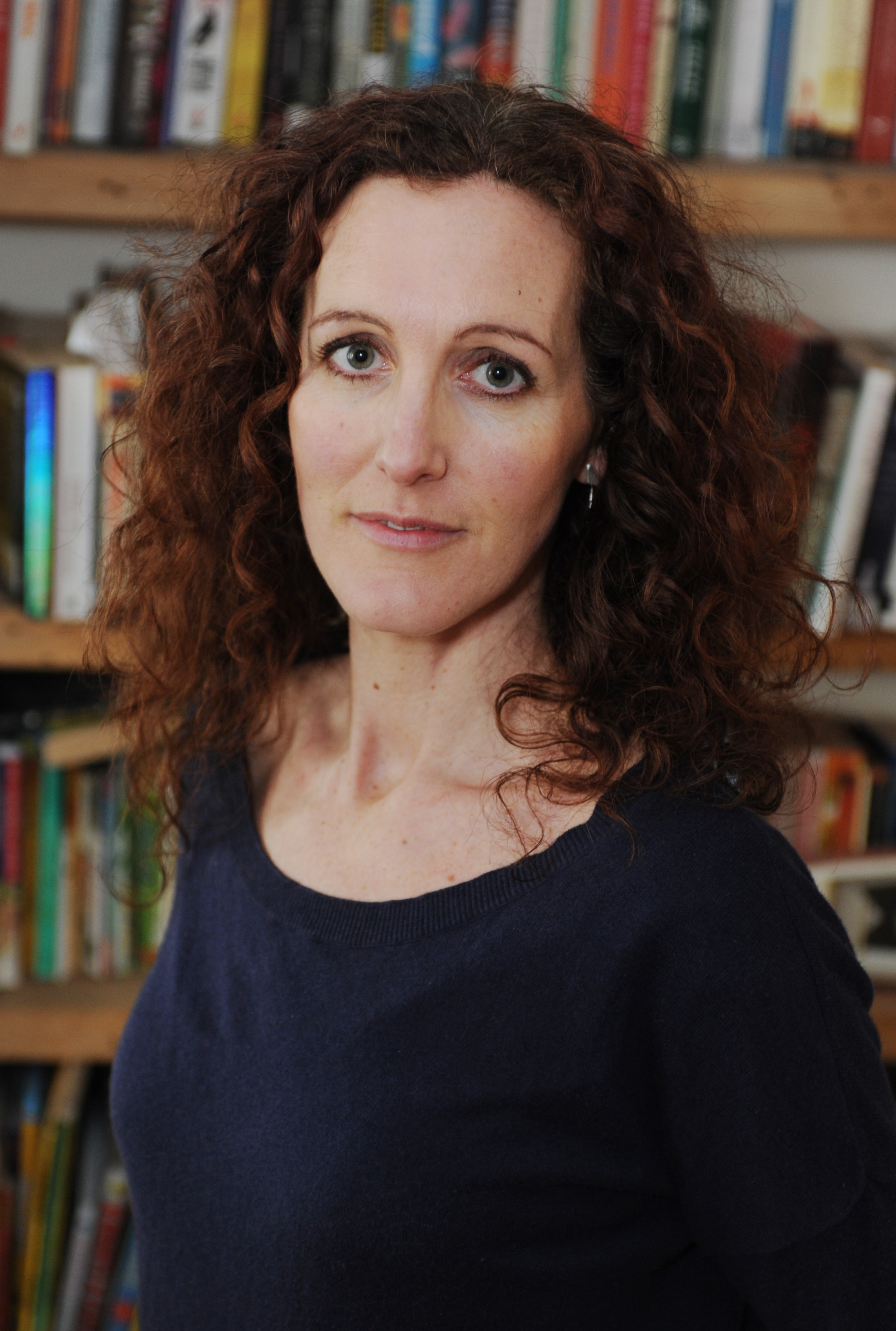
Lisa Heathfield

Lisa always dreamed of being a writer. She wrote her first book when she was nine – set in a haunted house, in the middle of a dark wood! And she’d sit for hours at her typewriter, creating stories to send off to magazine competitions (none of which got close to winning, but it didn’t put her off trying).

She was always reading. Lying in the grass, on her bed, up a tree, there was always a book in her hand. It was only natural that she would study English at university and go on to become an English teacher in a secondary school. An early fascination with Helen Keller followed her to the classroom and she began teaching hearing-impaired children.

Lisa and her husband settled in Brighton, on the south coast of England, where she concentrated on raising their three wonderful boys. After an ill-advised stint running a cafe, the need to write became too difficult to ignore. And her debut novel, Seed, was born.

About Seed:

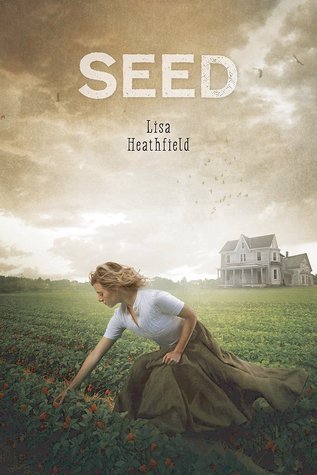
seed

Fifteen-year old Pearl has lived her whole life protected within the small community at Seed, where they worship Nature and idolize their leader, Papa S. When some outsiders join, everything changes. Pearl is forced to question everything she’s ever known and all she’s ever believed in. As she prepares to become Papa S’s Companion for the first time, she begins to realize that there’s darkness at the heart of Seed, a darkness that she must escape, before it’s too late.

Excerpt from Seed:

I look at Elizabeth. In the candlelight her cheeks look sunken, her eyes hollow. Is there fear hidden within her?
      “I’ve seen it now,” I say quietly. My voice sounds flat as it catches in the earth. “Can I go?”
      “We have all done this, Pearl. Every woman at Seed. I promise you will be all right.”
      “What do you mean?”
      “When you get your first Blessing, when you first start to bleed, you must stay with Nature so that she may give you the gift of a healthy womb,” she says.
       I don’t understand. I just stare at her in the flickering light.
       “You must stay deep in her womb, so your own womb may become fertile.”
       “What do you mean, fertile?”
       “So that when it is your time, you will be able to have children.”
       “I don’t want to be here, Elizabeth.” My voice cracks as I start to cry. I look at the earth circling me and I’m suddenly filled with terror. Does she want me to stay here?
      She puts the lamp down and wraps her arms around me, her face hidden in the shadows. “You know that you must not cry. Your life spirit will leave you and without it, you are nothing.”
      I can smell the sweetness of her vanilla scent. It masks the smell of the blood and the damp earth that is blocking the air.
      “It won’t be for long.”
      “So you’ll shut the trapdoor?” The words fall from my mouth.
      Elizabeth steps back and nods. She’s trying to smile.
      “But how will I breathe?”
      Elizabeth picks up the lantern and shines it on the bottom of the curved earth walls. Tiny black pipes stick out all around. “I have been here, Pearl. It’s all right.”
      “It’s not,” I say and I start to cry again. “I don’t want to stay.” My voice is getting louder and Elizabeth looks up the steps toward the light above.
      “Shh, now. Papa S must not hear you cry. And Nature is hearing every word.” Then she puts down the lantern once again and turns to go up the steps.
      I can’t move. Something holds me to the ground. I want to run after Elizabeth, pull her back, to escape, but I just watch as she goes up towards the air. The last thing I see is her blonde hair as she quickly lowers the trapdoor. It shuts with a muffled thud.

Thank you so much to Lisa for being our special guest this Sunday!

RickiSig andSignature

Author Guest Post!: “Beyond Setting: A Couple of Thoughts and Some Fun Writing Prompts” by Tricia Springstubb, Author of Moonpenny Island

Share

Beyond Setting: A Couple of Thoughts and Some Fun Writing Prompts

Setting: the time and place where the story happens. Yawn. Compared to characters and plot, setting can be a snoozefest. What happens next? That’s what most readers, young or old, want to know.

But here’s what genius writer Katherine Paterson has to say on the subject: “Setting for me is not a background against which a story is played out, but the very stuff with which the story is woven. The characters will not determine the setting, but the setting to a great extent will determine both what they will be like and how they will act.”

Think of “Bridge to Terabithia” and you’ll immediately understand what she means. Could that miraculous, heart-wrenching story be set anywhere but the kingdom Jess and Leslie create together?  Not only is that place enchanted, it’s secret, a spot where they feel all-powerful and safe from the real world–which of course makes the book’s tragedy all the more devastating.

Setting can be a catalyst. It can make things happen. Stanley Yelnats gets sent to Camp Green Lake where, instead of a lovely lake, he finds a desert full of strange holes, and the die is cast. (“Holes”, by Louis Sachar). Ditto what happens when Brian Robeson’s plane goes down not on the edge of a corn field, but in the middle of the Canadian wilderness (“Hatchet” by Gary Paulsen).

Full confession: sense of place is all important in my work. “What Happened on Fox Street” pivots on how much Mo Wren loves her home. Everything she treasures is there–her friends, her secret hide-out, her fox-quest and her memories of her mother. The discovery that her adored father means to move away makes her furious and sets the rest of the story in motion.

In “Mo Wren Lost and Found”, Mo has had to move away after all. Here the setting reflects and enhances her feelings of confusion and lonesomeness. “East 213th . Their new street didn’t even have a name. Just a number. That was only the beginning of how different it was. Being a dead end, where Fox Street began and where it stopped were perfectly clear. Once Upon a Time and The End. But if East 213th was a story, it’d say To be continued…with those three dots that mean anything might happen.”

My newest book, “Moonpenny Island”, is about how living on a small lump of limestone surrounded by water is paradise for some, prison for others. The very stuff of the story!

I always encourage young writers to think about setting. Think, I tell them, how important place is to “Harry Potter”, “Percy Jackson” or “The Giver”.  Think how much you love stepping into a story’s new, amazing and compelling world. Experiencing a great setting is the closest we can come to teleportation. When you’re a writer, you have the power to build a world!

Below are some writing exercises to help kids understand the power of setting–and have fun too!

  • Take a familiar story and set it in another place or time. What if Little Red Riding Hood lived in New York City?  How would the plot change if Cinderella was set in the present day?
  • Without naming it, describe some place you know as fully as you can. Use all five senses. Trade descriptions with someone else, and use each other’s place as the setting for a new story.
  • Draw a map of an imaginary place. Go wild! Use it as the setting for a story.
  • Describe the room you’re in right now. Just the facts please. Messy classroom desks, windows onto the street, one kid asleep in the corner.
    Now describe the room through the eyes of a fictional character. A shy, nervous new kid entering for the first time. An ant on the floor. A girl with a crush on the boy sitting next to her. An alien whose saucer has just landed outside. (It’s up to you. Remember, when you’re a writer, you’re the boss of your story!) Will they all see the same setting? How will past experiences and present feelings influence the way each of them perceives the room?

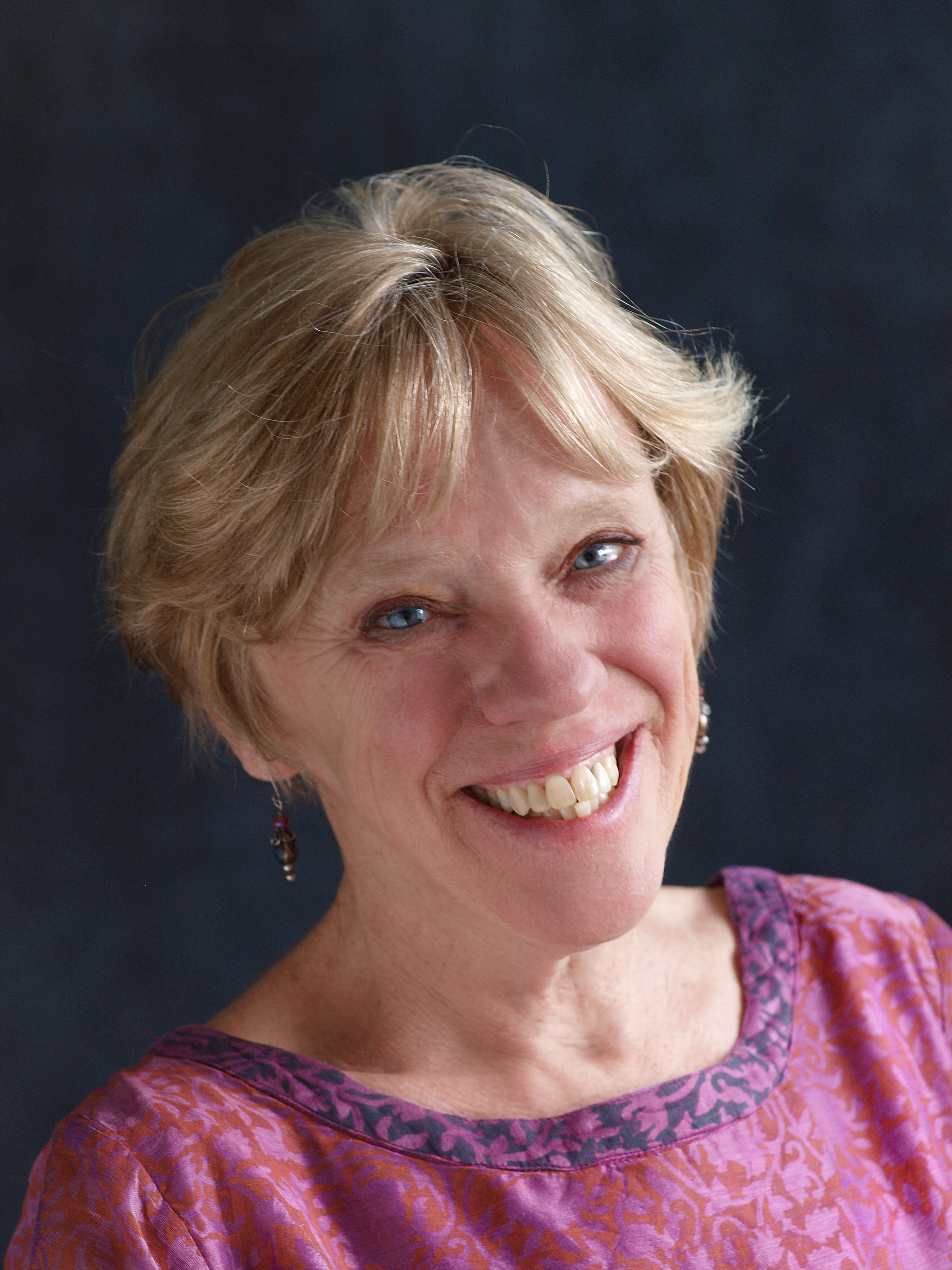
Tricia Springstubb is a frequent speaker in schools and libraries. When she can’t get there in person, she enjoys doing Skype visits. Her new middle grade novel, “Moonpenny Island”, publishes with HarperCollins on February 10. “Cody and the Fountain of Happiness”, the first book in her new series for readers ages 7-10, publishes with Candlewick in April.

Tricia lives and writes in good old Cleveland. You can learn more about her and her books at triciaspringstubb.com
cody OLYMPUS DIGITAL CAMERA moonpenny

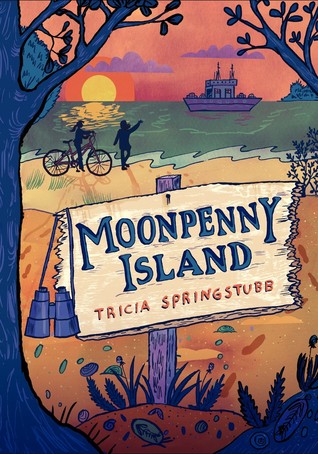
Moonpenny Island Summary: Moonpenny is a tiny island in a great lake. When the summer people leave and the ferries stop running, just the tried-and-true islanders are left behind. Flor and her best, her perfect friend, Sylvie, are the only eleven-year-olds for miles and miles—and Flor couldn’t be happier.

But come the end of summer, unthinkable things begin to happen. Sylvie is suddenly, mysteriously whisked away to school on the mainland. Flor’s mother leaves to take care of Flor’s sick grandmother and doesn’t come back. Her big sister has a secret, and Flor fears it’s a dangerous one.

Meanwhile, a geologist and his peculiar daughter arrive to excavate prehistoric trilobites, one of the first creatures to develop sight. Soon Flor is helping them. As her own ability to see her life on this little lump of limestone evolves, she faces truths about those she loves—and about herself—she never imagined.

Tricia Springstubb tells a warm and deeply affecting story about what it means to see, and why the biggest feat of all may be seeing through someone else’s eyes.

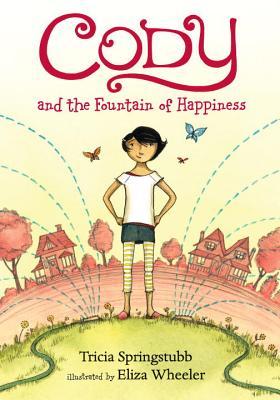
Cody and the Fountain of Happiness Summary: For whimsical Cody, many things are beautiful, especially ants who say hello by rubbing feelers. But nothing is as beautiful as the first day of summer vacation, and Cody doesn’t want to waste one minute of it. Meanwhile, teenage brother Wyatt is moping over a girl, Mom is stressed about her new job as Head of Shoes, Dad is off hauling chairs in his long-distance truck, and even camp has been closed for the summer. What to do? Just when all seems lost, Cody bumps into a neighborhood boy named Spencer who is looking for a runaway cat. With a new friend and a soon-to-be-found cat, Cody is on her way to the fountain of happiness.


Thank you so much to Tricia for being our special guest this Sunday!
Signature andRickiSig

Author Guest Post and Giveaway!: The Shadow Lantern, Book 3 of The Blackhope Enigma Trilogy by Teresa Flavin

Share

shadowenigma

The Shadow Lantern
Author: Teresa Flavin
Published July 22nd, 2014 by Candlewick Press

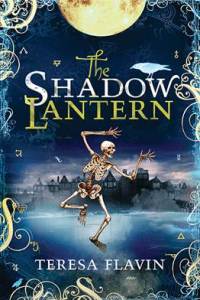
Publisher’s Summary: It’s Halloween at the Blackhope Tower and the spirits are rising… When a mysterious oil lantern and a box of painted slides appear at Blackhope Tower, Sunni and Blaise are drawn back to the place where their adventures first began. When they discover that the slides conceal secrets about artist-magician Fausto Corvo, the pair find themselves once again caught up in a deadly pursuit. An old enemy is still tracking Corvo and will stop at nothing to find him. Sunni and Blaise must fight to protect Corvo’s secrets and rid themselves of Soranzo’s evil threat once and for all.

Sunni and Blaise face their most dangerous challenge yet in their third and final adventure.

The Shadow Lantern is the third book in The Blackhope Enigma trilogy.

Book 1’s Publisher’s Summary: For centuries, Blackhope Tower has been shrouded in intrigue, centering on a labyrinth and painting in the Mariner’s Chamber. When fourteen-year-old Sunni Forrest visits the tower and sees her stepbrother, Dean, disappear, seemingly into the painting itself, she must find him and risk being drawn into the heart of the Blackhope enigma. This action-packed debut follows Dean, Sunni, and her friend Blaise on a journey to the heart of an age-old mystery.

An ancient painting, a magical labyrinth, and skeletons found in a locked room.

Book Trailer: 

Scribd Chapter Sampler: http://www.scribd.com/doc/201971141/The-Shadow-Lantern-Chapter-Sampler

About the Author: Teresa Flavin was born in New York and studied art in Boston and at Syracuse University. After moving to Glasgow, Scotland, she was awarded the Scottish Arts Council New Writers Bursary. She has illustrated a number of picture books. Her first novel, The Blackhope Enigma, was nominated for a Cybil Award. Teresa Flavin lives in Scotland.

Website | Facebook | Twitter | Google+ | Tumblr

Today we are lucky enough to have Teresa here at Unleashing Readers to talk to us about her process:

I’m a planner, pure and simple. Once an idea for a story has taken hold in my head, I make notes, create mind maps and get the bones of it down on paper. At the same time, I don’t want to have every scene mapped out so tightly the story can’t breathe and evolve in an unexpected and interesting way – which it inevitably does!

I look forward to previously unplanned characters showing up on the page wanting a piece of the action. And because I find so much inspiration in history, and do a fair amount of research, I often stumble on a nugget of information that can move my story in exciting and serendipitous ways. For example, when I learned that the development of some artists’ paint pigments was tied up with alchemy, I saw what a great element it could bring to the second story in the trilogy, The Crimson Shard.

Before I get too far with a new story I share a short synopsis with my agent because she’s great at asking tough questions that test the bones of my idea. I revise that synopsis until we both consider it viable, knowing that the story will change a lot. When I look back over old versions of my synopses I am astonished at how much the stories evolved before I even started writing them.

Once I know roughly where a story is going, I write it from start to finish. I am not good at skipping around and writing scenes out of order. That would feel like fast-forwarding the film and missing important links in the middle. I admire authors who can work in a non-linear way but I prefer my own method. I like how a story unfolds, how one scene influences the next.

If I’m on a deadline, I write to a daily word count, breaking the story down into manageable chunks. Some days are definitely more productive than others! I revise my finished manuscript at least two or three times on the recommendations of my editors. I am infinitely grateful to all of them because they read with clarity when I am too close to the story. Though I am the writer, I see my books as team efforts, with my editors inspiring me to make the best story I can.

People often ask me whether I read other children’s books while I’m writing my own and what books influenced my trilogy. I tend to avoid reading children’s fiction while I am creating my own, but I do read adult non-fiction such as history books. If I read any fiction, it’s for grown-ups and generally quite different from the kind of fantasy books I write.

Before I started writing for young people, I read very little children’s or young adult fiction. I think that my writing is probably influenced most by the books I enjoyed as a kid, from The Chronicles of Narnia to Sherlock Holmes to Ray Bradbury stories like The Illustrated Man. If it was a colorful, atmospheric adventure, I was hooked. If my own trilogy can intrigue young readers as fully as any of the books I loved, my mission is accomplished.

Many thanks to Unleashing Readers for hosting me!

And thank you Teresa! We loved hearing about your process!

GIVEAWAY

a Rafflecopter giveaway

Thank you so much to Teresa Flavin and Candlewick Press for the guest post and giveaway!

Signature

Author Guest Post!: Five Ways to Bring MG into the Classroom by F.T. Bradley, author of the Double Vision series

Share

Double Vision front coverCode Name 711--coverDouble Vision The Alias Men hi-res cover

Today, F.T. Bradley, author of the Double Vision trilogy, joins us with a wonderful post for middle grade teachers. Last year, Ricki reviewed (and loved) the second book in the series, Double Vision: Code Name 711We strongly encourage you to check out the entire series and are excited to announce that the third book, Double Vision: The Alias Men, went on sale this week! Please join us in welcoming F.T. Bradley to the blog today. 

   F.T. Bradley--photo

Five Ways to Bring MG into the Classroom

By F.T. Bradley

Reading is good for kids—we all know this. But trying to find ways to bring books into an already over-tasked classroom can be more than a challenge. Every year, I visit several school and library conventions, where I talk about ways to reach reluctant readers. Let’s face it: every classroom has a good portion of kids who would anything to avoid opening another book. So how do you bring middle-grade books into the classroom without boring your students? Here are a few ways to keep reading fresh in the classroom:

1. Find a Theme

Is your class or grade covering a certain period in history? Chances are, there are a host of MG titles that cover it. Math, science, art—authors love to use curriculum as a jumping off point in their fiction. When looking for titles, start by casting a wide net, including non-fiction (reluctant readers are easier to hook with those books), and graphic novels, too. For middle-school teachers, this can be an opportunity to collaborate with other teachers across subjects. A library visit, or a simple Google search can be a good start to find titles, but also look at book review sites like Goodreads, where reviewers often have top-ten lists of like-themed books. Author websites (like mine) sometimes have links and resources too, so don’t forget to browse the web.

2. Host a Book Club

You don’t have to be Oprah to host a book club. It can be small scale, like a class-wide joint read, or an after school club or even an elective for middle-schoolers. One school librarian told me she hosted a book club during lunch once a week—what a great idea! If you’re looking for a more challenging approach to group reading, try reading a non-fiction and fiction title on the same topic or historical period at the same time. How is the fiction title holding up against reality? Another fun challenge: reading a classic title like A Wrinkle in Time, and comparing it to its graphic novel counterpart. Or comparing the book with the movie—a great way to show that books connect to popular entertainment. To start your book club, look for more accessible options (so all kids will be interested, even those who read less), and increase the challenge as you go. 

3. Host a Review Blog or Website

Kids are already expected to write book reports—why not have them write reviews, too? This can be a school or classroom blog, where you post reviews written by kids. You can even post them to other review sites, or on your local bookstore website (if they’re interested—could be a great start to collaboration). Publishers (and sometimes authors) may even be willing to donate a copy of a book in exchange for a review, especially if you post reviews regularly. Just be sure to protect kids’ privacy as you post the reviews.

4. Rewrite the Story

Have you ever read a book with the class, only to be disappointed with the ending? Or maybe it wasn’t the ending you expected—or maybe it was too cliché? Rewrite the end with the class! This can be a great writing assignment—not only does this teach writing and editing skills, it shows kids that stories aren’t set in stone. (Note: this was not my idea, but shared by a Mississippi teacher and her class, who loved this exercise). Other ideas: writing short stories, like fan fiction, featuring the other characters in a book. How does the story change if written from a different perspective? Or: write letters as two characters in conflict with each other. If you’re working with a non-fiction title, consider having kids write fictional stories featuring some of the facts in the book. Or vice-versa: research any facts in the fiction title you’re reading—did the author stay close to the truth?

5. Host a (Virtual) Author Visit

Nothing makes a book, and the profession of writing, come to life more than a visit from a real author. Kids will never forget that day. To find available authors in your area, look at professional organizations’ websites, like the Society of Children’s Book Writers and Illustrators. You can also ask your local library, or your independent bookstore—staff often know who lives locally, and who does great presentations. Don’t have access to local authors or funds to bring authors to your school? Try a Skype visit instead! These virtual visits are often free, and require nothing more than a computer/tablet with a webcam and a (free) Skype account. To find authors who Skype for free (like me), visit author Kate Messner’s website for a list. For non-fiction tie-ins, Skype in the Classroom offers lessons that run the gamut when it comes to curriculum, and even connects classrooms across the globe.   When I host the session on reaching reluctant readers (using these ideas and more) at library and teacher conventions, I get my best tips, book recommendations, and out-of-the-box ideas from teachers and librarians themselves.

How about you? Do you have any ideas or tips to share?

Follow along with the Double Vision: The Alias Men blog tour:

Oct. 6-10: The Secret Files of Fairday Morrow features Double Vision: The Alias Men with a review, author interview, plus a GIVEAWAY..!

Oct. 13: Linc hangs out at the great Erik’s blog, This Kid Reviews Books. Linc talks about spy techniques he picked up on his Pandora missions. And there’s another GIVEAWAY

Oct. 14: Double Vision: The Alias Men is released! Have a virtual party at the YA Sleuth blog…! And follow F.T. on Twitter @FTBradleyAuthor for more kid spy fun.

Oct. 16: F.T. Bradley gives you Five Ways to Bring MG into The Classroom at the Unleashing Readers blog, plus a GIVEAWAY.

Oct. 17: Linc is interviewed by Lizzy, Fairday and Marcus over at The Secret Files of Fairday Morrow blog. A fun post!

Oct. 20: Buried in Books lets F.T. Bradley talk about the Double Vision trilogy…

Oct. 20: Also this day, the fabulous Ms. Yingling reviews Double Vision: The Alias Men on her blog for Marvelous MG Monday…

Oct. 21: Another favorite blog, YA Book Nerd, hosts F.T. Bradley and the Double Vision trilogy, plus a GIVEAWAY

Oct. 21: F.T. Bradley hangs out at Sleuths, Spies and Alibis

Oct. 24: F.T. Bradley gives tips for parents of reluctant readers, Seven Ways to Get Your Kid to Read, at Pragmatic Mom’s blog, plus a GIVEAWAY!

Oct. 25: At the Nerdy Book Club, find F.T. Bradley’s top 10 books for reluctant readers…

RickiSig

Blog Tour, Review, Giveaway, and Author Guest Post!: The Top-Secret Diary of Cecile Valentine: Friendship Over by Julie Sternberg

Share

topsecretdiary

The Top-Secret Diary of Celie Valentine: Friendship Over
Author: Julie Sternberg
Illustrator: Johanna Wright
Published October 1st, 2014 by Boyds Mills Press

Goodreads Summary: Ten-year-old Celie has quite a few things on her mind — fights with her sister Jo, secrets at school, an increasingly forgetful grandmother, and worst of all, a best friend who won’t speak to her. How can a girl who hates change survive, when everything in her life is changing? By writing, of course! Celie’s often comical and always heartfelt diary entries include notes, e-mails, homework assignments, and pages from her top-secret spy notebook.

My Review: I am a very big fan of Julie Sternberg’s Eleanor books. What I enjoy the most about these books is that Julie Sternberg has a way to get into 10 year old’s heads and make her narrator’s voice sound so spot on. As someone who teaches middle school, I am always so impressed when a first person narrative sounds like the students I teach. When I found out that Julie Sternberg had a new series coming out and it would be a diary, I was super excited, and this book did not disappoint.

Celie fills her journal with her deepest thoughts, her art, and other items that help tell her story. Readers will connect with Celie while she deals with her grandmother’s declining health, her best friend’s sudden silence, and her older sister’s identity issues. Great discussions will start with questions such as “Have you and your best friend ever gotten into a fight?”

I asked Julie to share with us how she find her inner 10-year-old voice so effectively. Here is her answer: 

I’m fixated on voice in writing. It’s problematic. I tend to spend weeks—sometimes months—on the first thirty or so pages of a novel, trying and trying to get the voice right. I cannot move forward until I believe I’ve succeeded.

I recognize that this is a silly way to write. I tell myself, Turn off your internal editor! Knock out a terrible first draft! Revising is so much easier than confronting a blank page. Just KEEP GOING! 

But I never can. Because without the right voice, I don’t have a book.

When I think about voice, I think about not just who is telling the story, but also to whom. Audience makes a difference. A child, for example, will relate an anecdote differently to a teacher than to a best friend. So, for my first series, Like Pickle Juice on a Cookie and its sequels, I imagined the main character, Eleanor, telling stories to a friend her age. And, for my latest series, The Top-Secret Diary of Celie Valentine, I imagine Celie pouring her uncensored thoughts into a diary.

Voice is most shaped by the narrator’s personality and background. When I need a brilliant reminder of this, I re-read Voices in the Park, a picture book by Anthony Browne. In it, four separate narrators tell their version of the same story (one shared afternoon in the park). We get a staggeringly clear sense of each character just from the voice they use to relate that simple story.

voices in the park cover

When I’m trying to define a voice, I pay particular attention to the rhythm and structure of sentences. In The Top-Secret Diary of Celie Valentine, for example, feisty Celie uses simpler and more pointed sentences than her chattier and messier older sister, Jo. For instance, here’s the first sentence in a long note that Jo writes to Celie: “Mom says I’m not allowed to talk to you (I’m supposed to ‘give you your space’) until the end of your timeout, so I can’t just go in there and tell you this, which is what I really want to do.” Celie responds in three sentences, not one of which has more than four words.

A compelling voice can compensate for a host of sins. I learned this as a reader. Some of my favorite books could have better plots, for example. I don’t care. I love the voice in those books, and I want to spend my days with their narrators.

Of course I don’t write perfect books, either (though I want to). If readers nonetheless want to spend their days with Eleanor or Celie or my other narrators because of their voices, then I’m ecstatic.

Author: Julie Sternberg is the author of the best-selling Like Pickle Juice on a Cookie and its sequels, Like Bug Juice on a Burger and Like Carrot Juice on a Cupcake. Like Pickle Juice on a Cookie is a Gryphon Award winner and a Texas Bluebonnet Award finalist; Like Bug Juice on a Burger is a Gryphon Honor Book, a Pennsylvania Young Reader’s Choice Awards Nominee, and an Illinois Monarch Award Finalist. Formerly a public interest lawyer, Julie is a graduate of the New School’s MFA program in Creative Writing, with a concentration in writing for children. She lives with her family in Brooklyn, New York. For more information about her life and work and to download free activity materials based on her books, visit her website: juliesternberg.com.

We Flagged: 

Johanna Wright illustration_Celie and Jo in bed image-on-swing-set-with-words

From Julie Sternberg’s website

Read This If You Loved: Eleanor series by Julie Sternberg, Middle School is Worse than Meatloaf by Jennifer L. Holm, Where I Live by Eileen Spinelli, The Popularity Papers by Amy Ignatow, Mackenzie Blue by Tina Wells

Recommended For: 

classroomlibrarybuttonsmall

Also don’t forget to check out the other stops on Julie’s blog tour: 

Mon, Sept 29
Mother Daughter Book Club
Tues, Sept 30
5 Minutes for Mom
Wed, Oct 1
Sharpread
Thurs, Oct 2
KidLit Frenzy
Fri, Oct 3
The Hiding Spot
Sat, Oct 4
Booking Mama
Mon, Oct 6
Ms. Yingling Reads
Tues, Oct 7
GreenBeanTeenQueen
Wed, Oct 8
Great Kid Books
Thurs, Oct 9
Teach Mentor Texts
Fri, Oct 10
Unleashing Readers
Sat, Oct 11
Bermuda Onion

GIVEAWAY

a Rafflecopter giveaway

Signature

**Thank you to Barbara at Blue Slip Media for providing a copy for review and having us be part of the blog tour!!**

Blog Tour, Review, and Author Guest Post!: Be a Changemaker: How to Start Something That Matters by Laurie Ann Thompson

Share

NF PB 2014

Nonfiction Picture Book Wednesday and BE A CHANGEMAKER Blog Tour!

Nonfiction Picture Book Wednesday is hosted by Kid Lit Frenzy and was started to help promote the reading of nonfiction texts. Most Wednesdays, we will be participating and will review a nonfiction text (though it may not always be a picture book).
Be sure to visit Kid Lit Frenzy and see what other nonfiction books are shared this week!

Be a Changemaker

Be a Changemaker: How to Start Something That Matters
Author: Laurie Ann Thompson
Expected Publication: September 16, 2014 by Simon Pulse/Beyond Words

Goodreads Summary: We’ve had the civil rights movement and the women’s movement—now it’s time for the youth movement.

When Divine Bradley was seventeen, he just wanted a safe place to hang out away from gangs and violence, and Team Revolution was born. At age eleven, Jessica Markowitz learned that girls in Rwanda are often not allowed to attend school, and Richard’s Rwanda took shape. During his sophomore year of high school, Zach Steinfeld put his love of baking to good use and started the Baking for Breast Cancer Club.

Gone are the days when kids were supposed to be “seen and not heard.” Today, youth everywhere are rising up, building new organizations, and creating the changes they want to see in their communities and around the world. Be a Changemaker gives readers the tools and confidence they need to affect real change. Readers will learn how to:

– Research ideas
– Build a strong and passionate team
– Create a business plan
– Enlist a savvy adult
– Plan events
– Work with the media
– And more!

Plus, profiles of youth-led social organizations show readers that it’s never too early to become a changemaker.

Ricki’s Review: My favorite aspect of this book is the way it is organized. The chapters and headings are very clear, and it moves in a fluent, understandable manner. Thompson provides very informative, necessary lessons about honing and fine-tuning leadership skills. Some of the sections I liked most were the tips about leading meetings (from standard operating procedures to icebreaker activities), the sample business plan with budgetary advice, the ways to make money (with grants and marketing tips), and the speaking skills (particularly the section about elevator pitches). Across the country, more and more states are requiring the development of advisory groups for high school students to learn life skills. This text would be perfect for this setting. I can also see the text working well in a business or entrepreneurship class. The best part about the way this book is set up is the fact that teachers can assign chapters to groups or teach the portions of the text that matter most to their syllabi or curricula.

Kellee’s Review: I was blown away by how much this book impacted me as I read it. I want to do something right now, so I know that this book will impact young readers. Like Ricki, I was fond of how it was organized. It is ultimately a step-by-step book for leadership, planning, and making a difference in the world.

What I liked the most about the book, though, was the “Profile” sections where actual groups started by kids were highlighted. This really connected it to real life and showed the reader that being a changemaker is definitely something that anyone can do.

Teachers’ Tools for Navigation: We recommend using this book for jigsaw discussions. This would maximize instruction and allow students to access all parts of the text. If you are unfamiliar with jigsawing, learn how to use this discussion technique here: http://www.jigsaw.org/steps.htm.

Throughout the book, there are steps to brainstorming, reflecting, and journaling in a “venture journal” to help plan the steps to becoming a changemaker. The activities Thompson lay out would be a really deep activity to do in a classroom.

Discussion Questions: What is a problem that you see in our society? In your life? What steps could you take to help solve or alleviate this problem?; Which of the highlighted organizations started by fellow kids did you find the most intriguing? How could you help this organization?

We Flagged: “How many times have you complained about something but done nothing to fix it? Or noticed something and thought, Someone should do something about that? We all have those thoughts sometimes. And it’s okay, because none of us can solve every problem we encounter. But guess what…you’re someone. And when you set your mind to it, you absolutely can do something that matters.” (p.1)

Read This If You Loved: The 7 Habits of Highly Effective Teens by Sean Covey; Don’t Sweat the Small Stuff for Teens by Richard Carlson

Author’s Guest Post: 

Recommended For: 

 classroomlibrarybuttonsmall closereadinganalysisbuttonsmall readaloudbuttonsmall

Guest Post by Laurie Ann Thompson

10 Ways Young People Can Make a Difference 

There are many ways for people of all ages to make a difference in their communities and around the world. Here are some ideas that can be adapted to a variety of different age groups and interests.

  1. Collect money. Gather funds to support a cause by placing collection cans in stores, having a penny drive at school, participating in a fundraising walk, etc. Kids (or their parents) can also create a page on a crowdfunding website like com. Either way, friends and family can be great sources of support.
  2. Collect goods. Organize ways for people to donate goods like food drives, donation bins in retail outlets, school supply collections, etc. Most nonprofits maintain a wish list of needed items. Or, kids can go the other direction by finding a cause that can use their excess goods. Last Halloween, for example, a student at my children’s school had the kids bring in their extra candy, which he then sent to U.S. troops stationed overseas.
  3. Donate gifts. Ask for donations to be made to a favorite charity in lieu of presents. Kids can quickly and easily collect a significant amount of money or goods, while also spreading awareness for the chosen cause. It’s a win-win!
  4. Make something. Many young people enjoy making things they can then donate or sell. Can they knit? Hats or scarves for the homeless are much appreciated. Do they make jewelry? Maybe they could sell it at a farmer’s market or on com to raise money. Almost anyone can make no-sew fringe-tie fleece blankets, which are great for animal shelters and child services organizations. And don’t forget the tried-and-true lemonade stand—or a new twist on the same idea!
  5. Form a club. If there’s something one kid is passionate about, chances are others will be, too. A club can help someone find other like-minded individuals as well as recruit others to the cause. Many of the most successful organizations I profiled in Be a Changemaker started when one kid joined with a few classmates to form a simple club at school.
  6. Start a petition, or sign one. These can be done on paper and delivered in physical form, or they can be rolled out online via websites like org or whitehouse.gov. For inspiration, check out how a high-school student got Gatorade to remove flame retardants from its sports drinks, or how grade-school kids are trying to get Dunkin’ Donuts to stop using Styrofoam cups. Kids can also check out existing petitions and sign the ones they support (or ask their parents to).
  7. Write letters. Even young kids can make their opinions known by writing letters to their government officials, local newspapers, magazines they read, companies whose products they use, etc. Against how chickens are treated in factory farms? Write to KFC and McDonald’s and let them know! Kids can multiply their impact by recruiting others to write letters, too.
  8. Get involved. Many governments and companies have a youth advisory board to help them understand the issues affecting their teen constituents or consumers. Most schools have a student council and/or appoint student representatives to the school board. Youth may not always get voting rights, but at least they’ll have a chance to voice their opinions about the issues that affect them. The adults in charge might not otherwise know the full impacts of their decisions.
  9. Check with local organizations and/or the nearest United Way to find appropriate organized opportunities to volunteer, or make your own. You may have to get creative, but the potential is boundless. Anyone can pick up trash at their local park or beach, many retirement homes welcome young performers, some animal shelters will allow the public to come in and socialize the animals, or perhaps an elderly neighbor would probably appreciate help with the yard work. Everyone has skills: they just need to find a place to put them to good use.
  10. Read! Obviously, reading can provide kids with facts and practical knowledge. But studies have also shown that reading builds empathy, an essential element for making a positive difference. Whatever kids (or adults!) choose to read, they’re sure to be expanding their world views, analyzing new ideas, and growing as human beings. So, when they’re not out there changing the world, make sure they have time to enjoy a good book. 

Be a Changemaker: How to Start Something that Matters, is loaded with advice, hands-on exercises, and examples for middle-school or high-school kids who want to take these ideas further, plus profiles of young people who already did.

laurieannthompson

Laurie Ann Thompson comes from a family of entrepreneurs and small business owners. She has worked at IBM, Intel, and Microsoft, and she co-founded a successful internet startup. In addition, she has led a regional nonprofit professional organization and volunteered with Ashoka’s Youth Venture, which supports teens with big ideas. This is her first book. She lives with her family in the Pacific Northwest. Visit her at LaurieThompson.com.

Follow all of the stops on the blog tour!:

Mon, Sept 8
Sally’s Bookshelf
Tues, Sept 9
Girl Scout Leader 101
Wed, Sept 10
Unleashing Readers
Thurs, Sept 11
Teen Librarian Toolbox
Fri, Sept 12
The Nonfiction Detectives AND Kirby’s Lane
Sat, Sept 13
The Styling Librarian
Mon, Sept 15
NC Teacher Stuff
Tues, Sept 16
The Hiding Spot
Wed, Sept 17
Kid Lit Frenzy
Thurs, Sept 18
GreenBeanTeenQueen
Fri, Sept 19
A Foodie Bibliophile in Wanderlust
Sat. Sept 20
Elizabeth O. Dulemba
Teen Librarian’s Toolbox is creating a free downloadable workshop guide for libraries and classrooms for the book that will be available on Laurie Thompson’s website in late October.

Signatureand RickiSig

**Thank you to Barbara at Blue Slip Media for providing copies for review**

Author Guest Post!: Turning Young Readers on to Historical Fiction by Laurie Calkhoven, author of the Boys of Wartime series

Share

“Turning Young Readers on to Historical Fiction” by Laurie Calkhoven

It’s hard to believe that something as small as a broken egg could change the course of American history, but one did. It was March of 1775 and the fifth anniversary of the Boston Massacre. The Sons of Liberty planned a church service at Old South Meeting House to honor the men who had died. All of the leaders of the Sons of Liberty, indeed all Patriots in Boston, would be in attendance.

The Redcoats had a plan to bring the colonial rebellion to an end. They ordered a soldier to go to the meeting and throw an egg at the speaker. An insult like that would start a riot, and they intended to arrest the leaders of the Sons of Liberty—Samuel Adams, John Adams, John Hancock, and the others—and ship them to England to stand trial for starting a riot. The British thought that with the leaders out of the way, those hotheads in Boston would settle down and stop their foolish rebellion.

The reason why you haven’t read about those arrests in your history texts is that the soldier fell on his way to the service. Not only did he break the egg. He hurt his leg so badly that he didn’t make it to the meeting at all. There were no arrests. The rebellion lived on. The next time the Redcoats went after those leaders, war erupted in Lexington and Concord.

That egg incident, one I came across in long out-of-print history of the time period, frames the beginning of my novel Daniel at the Siege of Boston, 1776. Daniel helps foil the British plan and goes on to do much more, but if not for that broken egg, there wouldn’t be a story to tell.

Historical fiction can be a hard sell for young readers. Many of them expect it to be boring. When I visit schools and talk to young readers, I always begin by telling them stories—true stories. Soon they’re hooked. They want to know what happens next.

Kids love wacky facts, and so in my Civil War novel (Will at the Battle of Gettysburg, 1863), I included the fact that on the first night of the battle six-year-old Mary McLean stuck her head out of her window and sang a song to the Confederate soldiers who had taken her town—a song about their President, Jefferson Davis:

Hang Jeff Davis from a sour apple tree.

Mary’s father thought the whole family would be shot, but the Rebel soldiers only laughed and sang their own song about President Lincoln.

My latest Boys of Wartime novel, Michael at the Invasion of France, 1943, is about a boy who helps shot-down and trapped American airmen evade the Nazis in a World War II version of the Underground Railroad. Kids love to hear about all the everyday American habits that gave the men away. Things like walking with their hands in their pockets, or whistling—two things French men never did.

My Boys of Wartime novels are about ordinary boys who get caught up in extraordinary moments in history—they become spies for General Washington, help save the Union, and resist the Nazis. One ordinary person—just like them—and small ordinary moments can change the course of history. I research extensively to fill my novels with real-life action and adventure stories to keep my readers turning the pages.

All kinds weird, wacky, and wonderful stories never make it into our history textbooks. Historical fiction is full of those stories. Once your young readers figure that out, they’ll be back for more.


About the author: Laurie Calkhoven is the author of nearly fifty books for young readers including the Boys of Wartime series and I Grew Up to be President. Find CCSS activities and learn about her school visit program at lauriecalkhoven.com.

wartime3 wartime2 wartime 0-545-33152-8

Thank you Laurie for your post!

Signature