Author Guest Post: “When Things Aren’t Perfect” by Laurie McKay, Author of The Last Dragon Charmer Series

Share

“When Things Aren’t Perfect”

A long time ago, in this galaxy and not so far away, I was in an English class. My teacher returned my paper and there was a blue ninety-nine scribbled on the top corner. I looked over my work to see where I lost that one point, and found no marks, no grammatical mistakes, no misspelled words. So, of course, I asked about it.

My teacher raised her brows and told me, “Writing can’t be perfect.”

Well. Isn’t that the entire problem right there? If writing is never perfect, when is it good enough?

After working on my debut novel Villain Keeper, I found that it was good enough for the publisher after three content edits, one copy edit, and at least one proof pages pass. And these by no means were the first revisions I’d done.

When my agent first sold the book series to HarperCollins, I’d already revised book one myself over and over again. Also, my critique partners (from here on known as my mom and my sister) had made suggestions and my agent had given me feedback, all of which I’d applied.

What surprised me the most, however, was how much better the book became after listening to each person’s (my mom’s, my sister’s, my agent’s, my editor’s) critiques, reading their comments, and thinking – with as open a mind as possible – about those editorial suggestions.

Somewhere in the midst of all these revisions, my manuscript got in pretty good shape. I was proud of it at least. It still benefited from additional revisions.

This has changed the way I view criticism. Instead of thinking of it as censure, I think of it as analysis. It’s not meant to condemn my work, it’s meant to benefit it.

There is this phrase I see on writing sites sometimes:

Give yourself permission to write badly.

Or, as I prefer it, Give yourself permission to write not good – at least at first.

It helps me when I get stuck. I remind myself it’s alright for things not to be perfect. I’ve got to start somewhere. Write something down. Practice. Revise. Get feedback. Then write some more. I try not to put the pressure of instant perfection on myself. It’s counterproductive. The idea is to first get something written.

Nora Roberts once said, “I can fix a bad page, I can’t fix a blank one.” She’s written over two hundred books in thirty years. That’s an astounding six to seven novels per year.  She’s a NY Times bestselling author. She still has to give herself permission to write bad pages and fix them.

When it comes to fixing pages, I’ve probably applied about ninety percent of feedback I’ve received on my writing. But not all criticisms are equal.

There is another quote, this one attributed to Neil Gaiman, which inspires me when it comes to sorting good criticism from not-so-good criticism. He said, “Remember: when people tell you something’s wrong or doesn’t work for them, they are almost always right. When they tell you exactly what they think is wrong and how to fix it, they are almost always wrong.”

With my mom and sister, my agent, and my editor, the criticism I’ve gotten has been overwhelmingly wonderful. Writing is subjective, though. Occasionally, I don’t agree with them. When that happens, I make myself consider their opinion as carefully as possible. Sometimes, I decide they’re right. Their suggestion is better than what I have. Other times, I decide they’re not, and that’s okay.

When I see the results of applying those analyses and suggestions, I’m wowed. And appreciative. It’s probably important to note, giving good feedback is hard work, too.

I’m also a teacher. I’ve taught some combination of biology, chemistry, and math for the last ten years. Many of my students are like I was. They don’t want a mark of ninety-nine. They want a perfect hundred. They often don’t want to revise, either. And I understand. It’s almost like they think if it needs improvement, it’s a failure. Or, if they think it’s good already, it can’t be improved.

But I think it’s a better idea to think of writing not in terms of ‘good’ and ‘bad’, but it terms of a ‘work-in-progress’.  The goal isn’t to hit perfection. It’s to hone skills. Improve. And criticism and revision are essential. They are part of the process. Once I’ve been over the same piece of work many times, there comes a point where I decide I’m happy with it, and move on to the next thing.

I just finished editing the second book Quest Maker in my series. I went through several rounds of feedback and revisions on it as well. I hope, and believe, my skills keep improving. I’m happy with book two, too.

Besides, there is something wonderful about always having room for improvement, always having something to strive for. Who knows? Maybe that was what my English teacher was trying to tell me way back when with that blue ninety-nine.

VillainKeeperLastDragon_CVR

Villain Keeper Summary: All his life, Prince Caden has dreamed of slaying a dragon. But before he has the chance, he is ripped from his home in the Great Winterlands of Razzon and finds himself in Asheville, North Carolina—a land with no magic and no dragons.

Or so he thinks. The longer Caden spends in Asheville, the more he comes to realize that there is unexpected and dangerous magic in this strange land. There just may be dragons here, too. But what if Caden’s destiny isn’t to slay a dragon, after all?

Quest Maker Cover

Quest Maker (Book 2)
Expected Publication February 2nd, 2016 by HarperCollins

About the Author: Laurie McKay is an author and biology instructor who lives in Durham, NC. When she’s not working, she spends time with her family and her two elderly dogs. Her debut MG fantasy novel, VILLAIN KEEPER (The Last Dragon Charmer #1), is available now, and her second book QUEST MAKER (The Last Dragon Charmer #2) will be available Feb. 2, 2016. To learn more about her or to see pictures of her dogs (and her family) follow her at lauriemckay.net or on Twitter or Facebook. You can find her book at GoodreadsIndieboundAmazonBN, and wherever books are sold.

Thank you so much to Laurie for her reflections on revision and critique! Such a great lesson for students (and adult writers!)

Signature andRickiSig

Top Ten Tuesday: Our Auto-Buy Authors

Share

top ten tuesday

Top Ten Tuesday is an original feature/weekly meme created at The Broke and the Bookish. The feature was created because The Broke and Bookish are particularly fond of lists (as are we!). Each week a new Top Ten list topic is given and bloggers can participate.

 Today’s Topic: Our Auto-Buy Authors

We run out and buy (or preorder) all the books for these authors!

Ricki

In no particular order (and please excuse my brevity—my arm is in a cast). I have many more than five auto-buy authors, by the way. 🙂

1. Ruta Sepetys

Everything this woman touches is gold.

2. John Green

His characters stick make an imprint on my heart.

3. Matt de la Peña

He id sn unbelievable storyteller.

4. Kekla Magoon

She brings me right into the setting.

5. Sarah Dessen

Every book she’s written has made me feel warm and fuzzy.

Kellee

1. John Green

He hasn’t written a book I haven’t loved yet!

2. Eliot Schrefer

I loved Endangered and Threatened, and I am waiting very impatiently for the third book of the Ape Quartet.
(Though I haven’t read his earlier novels–I probably should!)

3. Kazu Kibuishi

His books are loved by myself and my students. When I buy one, I have to read it that night because there is already a waiting list for it at school.

4. Raina Telgemeier

Same as Kazu. A favorite of all!

5. Ginny Rorby

I love all of her books and am always waiting to see what she comes up with next. Her books always make me cheer and cry.

Which authors’ books do you automatically buy? 

RickiSig and Signature

Author Guest Post!: “In This Place: An Imagery Writing Activity” by Kate Ormand, Author of The Wanderers

Share

“In This Place…” 

Exploring the five senses allows your reader to feel like they’re there inside your story. Expanding from visual description by bringing in other senses adds layers and makes it more real. Readers can relate more to the atmosphere of a place if relatable description is given.

Obviously, this can be overwhelming if done too much, but small details really make a scene, so this is a task I like to set myself sometimes:

In this place, I see…
In this place, I touch…
In this place, I smell…
In this place, I hear…
In this place, I taste…

I got the original exercise from ACID author, Emma Pass, who uses it in her writing workshops.

The Wanderers is set in a circus environment, which is so much fun to explore in this way. Here are some quotes from the book that support each of these, which started off as notes alongside the prompts:

In this place, I see… The sparkly blue bows around their necks catch the light, dazzling. Well, they’re supposed to dazzle. And maybe they would if everything wasn’t so cheap.

In this place, I touch… Outside, it’s more plastic and crinkles when I touch it.

In this place, I smell… The smell of hot pastry and the tang of ale fills the air, adding to the comfort.

In this place, I hear… The sound of cellos pours softly from the speakers, so low that I can hear the rustling of popcorn bags and hot dog wrappers coming from the audience.

In this place, I taste… The smell of grease and salt and so many bodies packed into the tent is overwhelming. I can almost taste it on my tongue.

Thanks so much for having me!

kate ormandtw

About the author: Kate Ormand is YA author of DARK DAYS and THE WANDERERS. She lives in the UK with her family, her partner, and a cocker spaniel called Freddie. She graduated from university with a first class degree in Fine Art Painting. It was during this course that Kate discovered her love of reading YA books, prompting her to try a new creative angle and experiment with writing. Kate is also member and co-creator of an online group of published writers and illustrators called Author Allsorts. And she writes children’s picture books under the name Kate Louise. Kate is represented by Isabel Atherton at Creative Authors Ltd. You can see more about Kate and her writing by visiting her website (www.kateormand.wordpress.com) or on Twitter (@kateormand).

wanderers
Expected publication: September 1st, 2015 by Sky Pony Press

About The Wanderers: Flo lives an eccentric life—she travels with a popular circus in which the main acts star orphaned children with secret shape-shifting abilities. Once Flo turns sixteen, she must perform, but she’s not ready. While practicing jumping a flaming hurdle in a clearing beside the circus, she spots a dark figure in the trees and fears he saw her shift. The news sends the circus into a panic.

In Flo’s world, shifters are unknown to humans with the exception of a secret organization—the EOS, referred to as “hunters.” Hunters capture and kill. They send some shifters to labs for observation and testing—testing they don’t often survive—and deem others useless, a danger to society, and eliminate them. To avoid discovery, shifters travel in packs, constantly moving and keeping themselves hidden. Up until now, the circus was the perfect disguise.

Believing she has brought attention to the group, Flo feels dread and anxiety, causing her to make a mistake during her performance in front of the audience—a mistake that triggers a violent attack from the hunters.

Flo manages to flee the torched circus grounds with Jett, the bear shifter who loves her; the annoying elephant triplets; and a bratty tiger named Pru. Together they begin a new journey, alone in a world they don’t understand and don’t know how to navigate. On the run, they unravel secrets and lies that surround the circus and their lives—secrets and lies that all point to the unthinkable: Have they been betrayed by the people they trusted most?

Thank you to Kate for her post! What a great activity to expand the imagery in writing!

Signature andRickiSig

**Thank you to Cheryl at Skyhorse Publishing for connecting us!**

Author Guest Post!: “How Settings Help Shape Characters’ Character” by Anne Boles Levy, Author of The Temple of Doubt

Share

How Settings Help Shape Characters’ Character

by Anne Boles Levy

I love long walks on sunlit beaches, or watching it rain outside my window, or listening to the happy screams of kids on a playground. I love settings, in other words. I’m in different moods in each of those places, and I’m always curious to see how that’s true of characters in novels and movies.

People react to their surroundings – think of yourself, stuck in traffic, with someone cutting in front of you. Honnnkkk! Then think of yourself in your favorite reading spot, curled up with a book and a cup of cocoa. I know where I’d rather be.

And why shouldn’t characters be the same? How would one of your students describe Katniss Everdeen hunting in the woods near her home versus her state of mind in the Hunger Games arena? Or Harry Potter living in the cupboard under the stairs versus his first view of Hogwarts?

I love teaching about setting to my middle schoolers, and I think I achieved a Zen-like bliss creating my own setting for The Temple of Doubt.

In it, my protagonist, Hadara, squirms with discomfort in a hot, sticky classroom on a tropical island. She can’t wait for the open spaces of her town and its surrounding wilds. She too reacts differently in each place, until it was hard for me to separate setting from situation, and situation from characterization. Her ability to wade through a swamp, shimmy up a tree, and find her way among treetop huts says something about the choices she makes and where she feels she can be herself.

Characters don’t merely interact in their settings – it’s not just a place where stuff happens. Take these two characters: one wakes up each morning between silk sheets, the sun streaming through high windows into an airy room. The other wakes up on a hard pallet in the hayloft of a barn, with only a scratchy horse blanket for warmth.

Without knowing anything else about the characters – gender or age, ethnicity or national origin – you’re likely already inferring a few facts about their life circumstances. Maybe you’re imagining that one is likely well off and the other, not so much. Were they born into these circumstances, or is this a recent quirk of fate for each? What might happen if they met?

When I taught 6th grade, I had my students keep a little chart for all the settings in A Wrinkle in Time, since Meg and her companions land on several planets, including a two-dimensional one! But we start at Meg’s comfy home, with its brightly lit kitchen, and we compare not only all the different places she winds up, but how her attitude and reactions also change.

Characters, like real people, are at least partly a product of their environments, and their sense of belonging – or not – can in turn spark the central conflict. Sometimes they fit perfectly in a setting, and it comes under attack, forcing them to act. Other times, home is no longer where the heart lies, and it’s time to journey on.

When seen through the character’s eyes, setting becomes so much more than a place and a time. It’s often a map to the parts of themselves that matter most.


Temple of Doubt

About the Book: 

It’s been two six-days since a falling star crashed into the marshes beyond Port Sapphire, putting the wilds of Kuldor off-limits to fifteen-year-old Hadara. She feels this loss deeply and is eager to join her mother beyond the city limits to gather illegal herbs and throw off the yoke of her tedious religious schooling. Medicines of any sort are heresy to the people of Port Sapphire, who must rely on magic provided by the god Nihil for aid. And if people die from that magic, their own lack of faith is surely to blame. At least, that’s what Hadara has been taught—and has so far refused to believe.

Hadara and her mother have ignored the priests’ many warnings about their herb gathering, secure in knowing their tropical island is far from Nihil’s critical gaze. Then two powerful high priests arrive from Nihil’s home city to investigate the fallen star, insisting it harbors an unseen demon. This sets off speculation that an evil force is already at work in Port Sapphire and brings one of the holy men to Hadara’s doorstep. When he chooses Hadara as a guide into the wilds, she sets off a chain of events that will upend everything she’s been taught about the sacred and the profane.

The Temple of Doubt is the first installment in a series that follows a teenager who is given a greater destiny and purpose than she could’ve ever imagined.

Excerpt from the Book:

My sandals thunked across age-worn planks on a bridge that linked the two halves of the city, east and west, commerce and families. The bridge’s arch gave me a flaw­less view of the flat rows of warehouses, the ships in their berths, the gleaming white of the Customs House at the mouth of the harbor. I could hear the singsong street ven­dors that gave Callers Wharf its name. It was already filling with crowds anticipating a spectacle. We hurried across the bridge and plunged into its teeming market. A brass trinket lured here, a whiff of savory spices pulled there. Amaniel tapped her foot impatiently while I took a peek into a few stalls before they closed.

“What if Nihil himself is coming? Honestly, Hadara, you’d make him wait while you tried on scarves.”

“The kiosks are always closed by the time school lets out.” I was sure I could face anything, even Nihil, in a pair of cloth slippers dyed a vivid pink, but they were about to vanish behind a reed shutter. “If Nihil’s coming, the port might be closed for a long time. If he isn’t, then maybe he won’t be offended if I shop some.”

Amaniel gripped my sleeve. “I’m dragging you if you don’t come. I mean it. I’m not missing this.”

“Alright, alright,” I said. “I don’t know what bitter root you’ve been eating today, but you’re all pucker.”


Anne Levy

About the Author: Anne Boles Levy has lived in eight states, forcing her to make up settings for her fantasy novels since she can’t remember what any real place looks like. She currently teaches English to middle schoolers after more than two decades writing and editing for print, web, and radio. Anne is a graduate of Smith College and studied abroad at University College London, and has her master’s in journalism from Columbia University. She’s also an amateur silversmith and the absent-minded wife to her long-suffering husband, Brett. They run around after two children and a cat in Scottsdale, Arizona.


Thank you to Cheryl at Skyhorse Publishing, Inc. for connecting us with Anne!

RickiSigandSignature

Author Guest Post!: “Reaching Reluctant Readers with Action and Suspense” by Jake Bible, Author of Scarescapes

Share

Reaching Reluctant Readers with Action and Suspense

by Jake Bible

I really had no concept of what a reluctant reader was until my daughter started reading. My son is exactly like me and will devour books without blinking. My daughter? Not so much. Getting her to read past the first few pages in a book is like pulling teeth. As a writer, this has been more than frustrating.

Being a concerned father, I asked her questions about why she’d start a book, but never finish it. I asked lots of questions. Yet no matter the question I always received the same answer (or a version of the same answer).

“It’s boring.”

Huh. Boring? The characters? The plot? The story? The cover? What was boring?

“I don’t know. It just was.”

Double huh.

This troubled me. That bit of fear in the back of my head was that maybe she had a learning disability. Of course, the Voice of Reason spoke up and said, “She’s just a reluctant reader.”

That voice was my wife’s. I say she was the voice of reason not because of some ingrained, antiquated notion of gender roles within the household, but because my wife is an elementary school teacher with nearly two decades of experience, a master’s degree, several certifications in various subjects, and is a reluctant reader herself.

That’s a voice of reason, folks.

To grab a reluctant reader’s attention you need relatable characters, you need fast pacing with short chapters, you need the prose to be clear and interesting, you need to give them a reason to keep reading. This is basically what all good writers strive for anyway. But the big difference is you can’t slack. One misstep and that book is down and forgotten.

In my research on reluctant readers I found out that the make or break age is 8-12. Those are the ages where so many kids decide whether or not reading for fun and pleasure is their thing. It just so happened I was writing a series of scifi/horror books aimed at middle grade ages. That 8-12 year old danger spot. No pressure, right?

So, I decided to do what I do best: write six books that packed as much non-stop action and suspense into them as I could get away with while considering my target age group.

I went with the classic serial structure of one book ending on a cliff hanger and the next picking it up right from that exact same spot. I also wrote each book as told from a different character’s point of view. This made sure that no matter what gender or race my young readers turned out to be, there would be a character, and a specific book in the series, that they could personally relate to. I put the characters into an impossible situation of being alone on a space ship in deep, deep space without parents around, all of them having to band together and fend for their themselves.

Then I set things in motion.

Writing action isn’t hard. You just keep things moving. The trick is to keep things interesting. Constant running does not always make for great story. That’s where the suspense comes in. And you only have so much time for suspense before boredom kicks in. It’s a delicate dance.

I began each book with some explanation of the situation the children were in. For this series, a giant asteroid outfitted for deep space travel and human habitation so people could find a new home in the universe after Earth has been polluted beyond repair. Explanation done, I immediately moved to danger. Got to have danger to motivate the characters into action. Once danger was established, and the characters were active, I threw in roadblocks.

Roadblocks are key to good action. The reader, and especially a reluctant reader, will get bored if the action just goes from point A to point Z. You need to send them off into tangents. You have to destroy points B, C, and D so the characters are forced to figure out how to skip to point E directly. Give those characters roadblocks and the action becomes believable, no matter how fantastical. And believable is another key to keeping a reluctant reader’s attention.

Okay, so I had explanation, I had motivation, I had action, I had roadblocks. But where was the story?

That’s where I got to sneak in the suspense. My story revolved around a mystery. And not just a mystery of why all the danger and chaos was happening to these characters. I introduced a new character. One that should have been a danger sign immediately in any “normal” situation. Is that suspense?

You bet it is. Who is this new entity? Where did it come from? What is its motivation? If the characters trust it will they regret it later?

Suspense is the anticipation of the unknown; the fear of something beyond a character’s understanding, beyond the reader’s understanding. Suspense requires trusting that moving forward is the only option even though moving forward is the most dangerous option.

To complete my formula (and for middle grade I needed a formula) I twisted the action and the suspense together, intertwining them in a narrative that would continually keep the readers off balance, afraid, excited, interested, and engaged. I wove the suspense within the action so that the story was layered in a way to keep reluctant readers from drifting off. I did my job as a writer and made it impossible for them to stop reading without stopping in the middle of an action scene or a bug reveal in the plot.

Or that was my goal, at least.

Did I succeed?

Well, my reluctant reader of a daughter didn’t put the manuscripts down.

Whether the books are received well out in the world or not, I count that as a success. No question there.


ScareScapes

About the Book: On the Earth Colony Asteroid Scorpio, something has gone terribly wrong. Millions of light years off course and 900 years late, the ship’s AIs wake up only seven kids, leaving the adults stuck in cryosleep! Damaged from the long journey, the AIs must repair the awakened seven with the only thing available–cybernetic robot parts.

Along with learning to function with new cyber parts, the all-kid crew must unravel the mystery of what went wrong with the Scorpio. As if the nightmare of deep space isn’t enough, the kids soon find themselves battling the ship’s maintenance robots while their cyber parts begin taking on a life of their own!

Scarescapes: Phantom Limbs! is the first book in the middle-grade YA series Scarescapes series by Bram Stoker Award nominated author Jake Bible. The ebooks are $2.99 and are available at Amazon, Barnes and Noble, Smashwords, Google Play, and Kobo. Paperback copies will follow later this year.

Jake Bible

About the Author: Jake Bible lives in Asheville, NC with his wife and two kids. Novelist, short story writer, independent screenwriter, podcaster, and inventor of the Drabble Novel, Jake is able to switch between or mash-up genres with ease to create new and exciting storyscapes that have captivated and built an audience of thousands. He is the author of the Young Adult horror novels Little Dead Man and Intentional Haunting, as well as the best selling adult horror series Z-Burbia and adult thriller/adventure series, Mega. Find him at jakebible.com. Join him on Twitter and Facebook.


Thank you to Hannah at Permuted Press for connecting us with Jake!

RickiSigandSignature

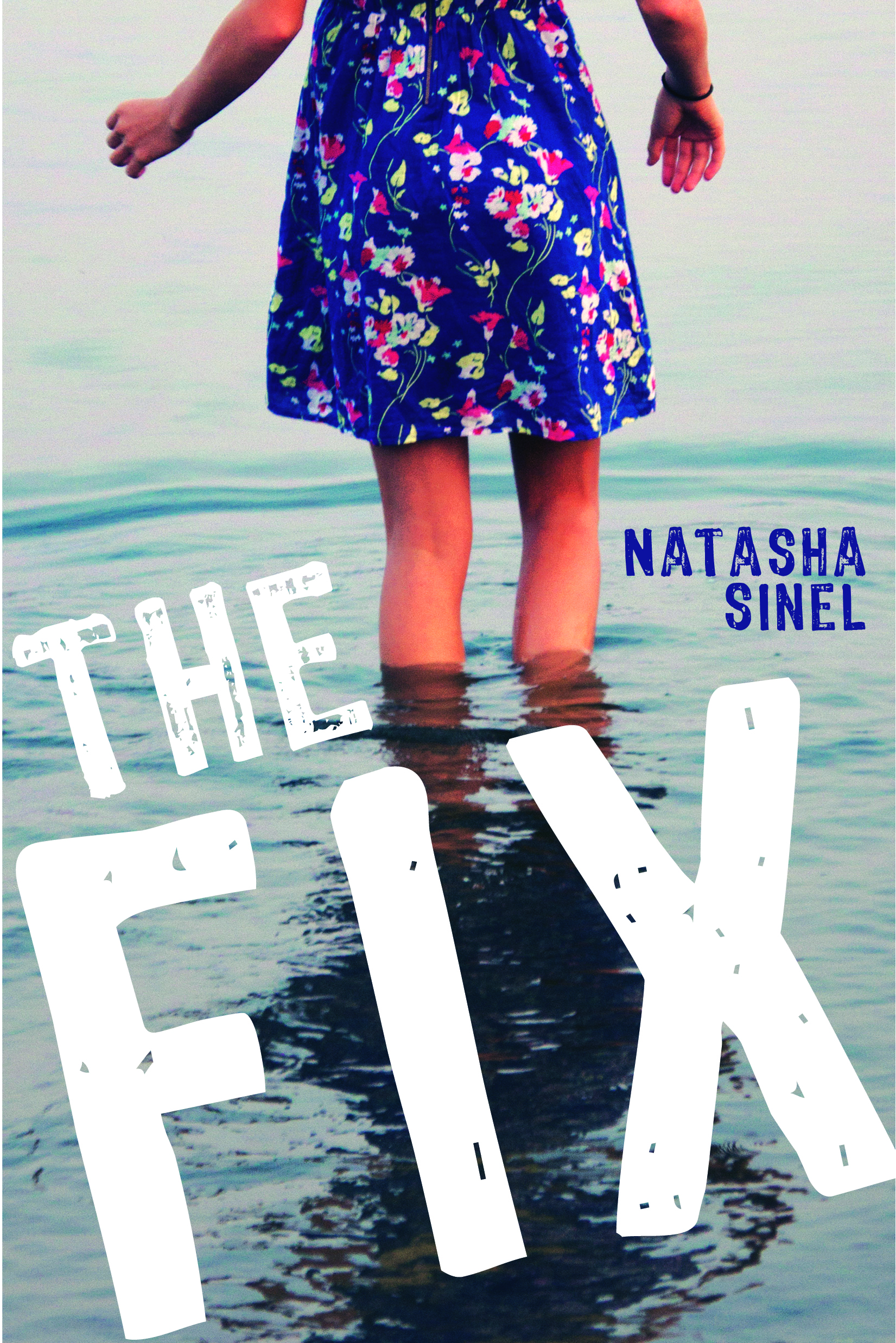
Author Guest Post!: “Be Careful or You Might Learn Something…” by Linda Fausnet, Author of The Joyville Sweat Sox

Share

“Be Careful or You Might Learn Something…”

I always hated summer reading lists as a kid. Teachers gave us a list of super-educational, historically accurate, classic books of literary significance to read over the summer so we could either write a book report or pass a test when we got back to school in September.

For me, this was the literary equivalent of brussels sprouts.

I actually liked to read in the summer. The trouble was, every time I picked up a book I actually wanted to read, I’d think to myself, “Ugh. I need to read those awful school books first.” I put off reading those books until later, so I ended up reading very little. Toward the end of the summer, I forced myself to read the brussels sprouts books, but really didn’t get much out of the experience.

It’s understandable that teachers want kids to learn from the books they read, but forcing kids to read Johnny Tremain isn’t likely to get them all fired up about reading. I remember reading Johnny Tremain at some point, but I remember precious little about the book.

Know what I do remember? My fourth grade teacher, Mrs. Garrett, reading to us for a few minutes at the end of the school day. I remember her reading Lenny Kendall, Smart Aleck, Tales of a Fourth Grade Nothing, and Superfudge. The books were uproariously funny, and I can clearly remember the sound of Mrs. Garrett’s voice; the inflection, the enthusiasm, the fun. I eagerly went to the library and got some of those books and reread them on my own.

A few years ago, I went to a wonderful used bookstore called Books With a Past. I asked if they had Lenny Kendall, Smart Aleck so I could read it to my kids. The lady in the store said she hadn’t heard of the book, but she put me on the list in case it ever turned up. Then I went to the barbecue restaurant next door with my kids. A few minutes later, the bookstore lady showed up there. She must have heard us mention where we were headed. Anyway, she showed up with Lenny Kendall in tow. She found it after all!

We took the book home and I happily read it aloud to my kids. It was such a wonderful experience. It brought back such great memories and I loved hearing my kids laugh.

I am a passionate writer who happens to be married a to a man who is dyslexic. He hates to read because it’s hard for him, and, try as I might, I’ve been unsuccessful at getting my kids to love reading. I’ve written several grown-up books which they are not allowed to read, but I’ve written two middle-grade ones that are appropriate for them. It’s been tough even to get them to crack those books!

I recently published a middle-grade book about baseball entitled The Joyville Sweat Sox. (as in, there is no mud in Joyville. Baseball fans will get that…) I dedicated the book to my son, Noah, who plays Little League. I didn’t have to force him to read that one because 1. Mommy wrote it and, 2. It’s about baseball. Noah is a good-hearted kid who would tell me he loved it no matter what, so it was hard to tell if he really liked it. Then one day I came home from work and heard him laughing in the other room. He didn’t know I was home yet, so I knew his reaction was real. Sure enough, he was reading my book and though it was really funny. Is there any higher praise than that?

The Joyville Sweat Sox is about a young woman who is forced to coach a baseball team full of clueless kids as punishment for breaking her town’s No Anger law. It’s won’t be easy to teach them the rules of the game without losing her temper… The book does have some teachable information in it, I suppose. Okay, it would mainly be for physical education teachers… Kids who know how to play baseball will giggle at the players in the book who are a bit slow on the uptake to learn, and kids who are unfamiliar with the sport will easily learn it as the poor coach teaches her hapless players what to do.  However, the overarching lesson can be summed up when Konnie, the coach with anger management issues says, “Sometimes mean people aren’t mean. Sometimes they’re just sad.”

Konnie would know. Her anger and bitterness started when her father died, the same year that a mean guy stole baseball from the town of Joyville. Some of her happiest memories were of her times at the ballpark with her dad, and the idea that his last summer on earth was spent without baseball just hurts too much. At first, Konnie is annoyed beyond belief by these crazy kids she’s suddenly saddled with. Then she comes to care deeply for her little guys as she is able to teach them to love the game that meant so much to her and her father. At the end, the judge who sentenced her for getting mad in the first place actually comes to her defense for getting angry. This time, she got mad and risked severe punishment by standing up for her little players. The judge tells her that he’s proud of her, and that he saw a lot of her father in her that day.

My favorite type of book to write – and to read – is one that has both humor and heart. Joyville is funny (ask my son!) and definitely has heart. It made both my critique partner and my daughter cry – in a good way!

Kids want to be entertained as much as we want them to be educated. My philosophy is to encourage them to read something fun and hope they might learn a thing or two along the way.

joyville

About the Book: It’s against the law to get mad in Joyville. Will Konnie Mack be able to coach a ragtag team of kids who are clueless about baseball without completely losing her cool?

Twenty-one-year-old Konnie has broken the No Anger law for the third time. She has two choices for punishment: coach Joyville’s Little League baseball team for the summer, or spend five years in jail.

Konnie used to be the best baseball player in town, but she hasn’t played the game she loves since she was sixteen. That was the year Bobby Hearsay stole Joyville’s team in the middle of the night. It was also the year her father died.

The current team includes the likes of Clueless Joe Jackson, Joltin’ Joanna Demargio, and Carl Repkin, Jr. Keeping her temper in check with these kids won’t be easy, and it’s going to be nearly impossible for this bunch to win any games. But Konnie has no choice. Getting mad will land her in the slammer, and her punishment for losing will be far worse than any jail sentence. She will be banished from playing baseball forever….

The Joyville Sweat Sox is available here – http://www.amazon.com/dp/B00YXUD7FI

IMG_11735462659993

About the Author: Linda Fausnet is the author of several books, mostly adult fiction. She has also written numerous screenplays of various genres. Two of her scripts have been optioned by production companies in Los Angeles; Mega Films, Inc. and Runaway Productions. Her screenplay, Queen Henry, was a Finalist in the national Progress Writers Competition. Linda runs an educational and promotional website for indie writers at www.wannabepride.com
Twitter – @lindafausnet
Facebook for Readers – https://www.facebook.com/lindafausnet
Facebook Group for Writers – https://www.facebook.com/groups/369053709961293/
Email List – Choose either WRITER’S or READER’S list – http://wannabepride.com/blog/?page_id=3466

We very much agree–finding the right book and doing summer reading right are both so important!
Thank you to Linda for this post!

Signature andRickiSig

Author Guest Post!: “The Joy of Sharing Literature in A Classroom” by Miriam Spitzer Franklin, Author of Extraordinary

Share

“The Joy of Sharing Literature in A Classroom”

by Miriam Spitzer Franklin

With the push for better standardized test scores, reading workshops have increasingly turned toward focusing on building stamina during independent reading so that students will be able to read multiple passages and answer questions during a test that lasts hours. Helping students build stamina so that they can read longer independently is a worthy goal. But for some students, like my third grade daughter, being expected to read on her own for 45 minutes means she’ll lose her focus after 15 minutes and will spend the rest of the time quietly floundering on her own.

A better strategy is to have shorter independent reading sessions and spend more of the workshop teaching literature in small groups or to the whole class. During the class reading of a high-quality literary work, those students who are unable to sustain focus will be redirected if the material is engaging. Teachers can set expectations for reading, help students make predictions, and check often for understanding. In a group with a wide range of learners, some of the students can read independently while the others have a more structured approach with a combination of read-alouds, short sections of silent reading, and teacher modeling of expressive oral reading.

Literature studies should focus on higher level thinking skills. Teachers should ask questions that lead to divergent answers and deeper discussions. Teachers should choose books that lead students to think about different themes, to help them make connections with the characters, and to encourage questions that lead to better understandings of themselves and how they fit into the world.

In my middle grade novel, Extraordinary, ten-year-old Pansy decides she’s going to become an extraordinary person after her best friend suffers a brain injury. She is sure that the upcoming surgery for seizures will fix her brain, and when that happens, Pansy is going to make up for all the times she’s let her friend down in the past. My novel explores themes of hope, perseverance, self-esteem, friendship, and acceptance. Students can work in partners and small groups to identify character traits, character growth, and interpretations of the themes. Because students are all reading the same book instead of reading independent choices, peer or teacher-led discussions will lead to deeper understanding and analysis of the novel.

If we want students to dig below the surface to find meaning in text, they need to be evaluated through creative projects, written responses, and class discussions, not through a multiple choice test. In this way, students will discover a different purpose for reading; instead of reading to get the right answer, they will read to discover the joy of literature and the way books can transport them to places and situations they have never experienced before.

About the author: Miriam Spitzer Franklin taught elementary and middle school for twenty years, in both public and private school. Currently she teaches homeschooled students, designs curriculum for an online site, and is a writer-in-residence with the Charlotte Arts & Science Council. Other jobs she has held include working as a frazzled and unorganized waitress at a number of restaurants, driving the Zamboni and working the skate counter at the ice skating rink, teaching ice skating lessons, and owning a toy and gift store with her husband, Scott. Miriam lives with her husband, two daughters, and two pampered cats in Charlotte, North Carolina.

www.miriamfranklin.com

extraordinary cover

About the book: Last spring, Pansy chickened out on going to spring break camp, even though she’d promised her best friend, Anna, she’d go. It was just like when they went to get their hair cut for Locks of Love; only one of them walked out with a new hairstyle, and it wasn’t Pansy. But Pansy never got the chance to make it up to Anna. While at camp, Anna contracted meningitis and a dangerously high fever, and she hasn’t been the same since. Now all Pansy wants is her best friend back—not the silent girl in the wheelchair who has to go to a special school and who can’t do all the things Pansy used to chicken out of doing. So when Pansy discovers that Anna is getting a surgery that might cure her, Pansy realizes this is her chance—she’ll become the friend she always should have been. She’ll become the best friend Anna’s ever had—even if it means taking risks, trying new things (like those scary roller skates), and running herself ragged in the process.

Pansy’s chasing extraordinary, hoping she reaches it in time for her friend’s triumphant return. But what lies at the end of Pansy’s journey might not be exactly what she had expected—or wanted.

Extraordinary is a heartfelt, occasionally funny, coming-of-age middle grade novel by debut author Miriam Spitzer Franklin. It’s sure to appeal to fans of Cynthia Lord’s Rules and will inspire young friends to cherish the times they spend together. Every day should be lived like it’s extraordinary.

From the Atlanta Journal-Constitution: This moving novel is narrated by Pansy, whose best friend Anna has contracted a disease that has impaired her brain. “Losing” a best friend this way can be a tough challenge. North Carolina author Franklin firmly grasps the climate and struggles among kids today. Her crystal-clear writing is filled with rich detail and believable characters. The sensitive story will resonate with young girls wrestling with friendship pains. (Sky Pony Press, ages 8-12)

Thank you to Miriam for her wonderful guest post!

Signature andRickiSig