Blog Tour with Author Guest Post and Giveaway!: Children of Jubilee by Margaret Peterson Haddix

Share
Welcome to the Children of Jubilee Blog Tour!


To celebrate the release of The Children of Jubilee (Children of Exile #3), blogs across the web are featuring exclusive content from author Margaret Peterson Haddix and 10 chances to win the complete trilogy!

“Series Goodbye”
by Margaret Peterson Haddix

When I finished writing my very first series, The Shadow Children, I thought I had discovered the perfect way to explain how it felt to say good-bye to Luke and the other characters I’d watched grow and change over the course of seven books:“It’s like sending kids off to college,” I told anyone who asked. “You know they’re grown up and ready to leave home—they’re ready to say goodbye–but you still miss them.”My actual children were barely out of elementary school at the time, so I was describing an experience I hadn’t had in real life yet—I was only projecting.

Then my real kids grew up and left for college, and I realized I had totally underplayed what a heart-wrenching experience that would be. So at least with finishing a series, I have the comfort of knowing that I’ve already gone through worse heartache, and survived.

But there are similarities: To do our job as parents, my husband and I had to let our kids grow up and become independent and make their own choices. To do my job as a writer, I have to let my characters make their own mistakes and grow and learn and then bring their stories to a close.

And I do miss my characters after I’ve finished writing their stories. This is true with any character I’ve created, but the missing is particularly intense with series characters I’ve spent years imagining and thinking about and living with.

My real kids, of course, have continued to have new experiences and adventures, and they’ve continued to grow and change since the day my husband and I dropped each of them off at their college freshman dorms. (And, happily, they also call and text and come home to visit. And they welcome us when we go to visit them.) It would seem that my fictional characters would stay more fixed in time; once I turn in the last draft of the last book of a series, theoretically my characters have become who they are, and they’re never going to change again.

But fictional characters don’t just belong to an author at a fixed point in time, as she’s writing. They also belong to readers—and to the writer’s continued imagination.

One of the joys of being a writer is hearing from readers who whole-heartedly embrace the characters I love (or love to hate) as friends or enemies, as riddles to be figured out or rivals to be outsmarted. This can be a mixed blessing, because sometimes readers’ strong opinions are nothing like my own, and there are times when I want to huddle protectively over my characters and maybe even cup my hands over their ears so they don’t have to hear harsh criticism.

Other times, readers have amazing insights that make me see my own characters in a new light. Even very young readers have made me understand aspects of my characters’ personalities that I hadn’t noticed. Readers tell me, “I know just how Luke felt when…” or “I can relate to Katherine because…” or “I’m like Ella because…” And sometimes their epiphanies become mine as well.

I was already an adult and at least theoretically all grown up by the time I started writing series books. But even so, life and new experiences continue to change me both as a person and as a writer, so I also change my perspective sometimes on characters I wrote about in the past. Sometimes I want to go back and apologize to the characters in my early books: “Sorry—I wrote your story as well as I was able to back then; I really do wish I could have done it better!” And sometimes my own life experiences make me see how brave my characters were; how glibly I forced them to grow up and take responsibility. Sometimes I want to apologize for that, too.

With the publication this winter of Children of Jubilee—the third and final book in the Children of Exile series—I’m saying goodbye to yet another set of beloved characters: Rosi and Bobo, Edwy and Kiandra and Enu… I’m sure they will be fine, out in the world (or in their case, out in the universe) on their own.

I will miss them. But I won’t stop thinking about them. And I look forward to hearing from readers who are thinking about them, too.

*****
Blog Tour Schedule:
December 3rd — Beach Bound Books
December 4th — Ms. Yingling Reads
December 5thChristy’s Cozy Corners
December 6thCrossroad Reviews
December 7th — A Dream Within A Dream
December 10th — Book Briefs
December 11th — Chat with Vera
December 12th — Bookhounds
December 13th — Java John Z’s
December 14th — Unleashing Readers


Follow Margaret: Website | Twitter | Facebook | Instagram

Kiandra has to use her wits and tech-savvy ways to help rescue Edwy, Enu, and the others from the clutches of the Enforcers in the thrilling final novel of the Children of Exile series from New York Times bestselling author, Margaret Peterson Haddix.

Since the Enforcers raided Refuge City, Rosi, Edwy, and the others are captured and forced to work as slave labor on an alien planet, digging up strange pearls. Weak and hungry, none of them are certain they will make it out of this alive.

But Edwy’s tech-savvy sister, Kiandra, has always been the one with all the answers, and so they turn to her. But Kiandra realizes that she can’t find her way out of this one on her own, and they all might need to rely on young Cana and her alien friend if they are going to survive.


About the Author: Margaret Peterson Haddix is the author of many critically and popularly acclaimed YA and middle grade novels, including the Children of Exile series, The Missing series, the Under Their Skin series, and the Shadow Children series. A graduate of Miami University (of Ohio), she worked for several years as a reporter for The Indianapolis News. She also taught at the Danville (Illinois) Area Community College. She lives with her family in Columbus, Ohio. Visit her at HaddixBooks.com.


GIVEAWAY

  • One (1) winner will receive the complete Children of Exile trilogy: Children of Exile, Children of Refuge, and Children of Jubilee
  • US/Canada only

a Rafflecopter giveaway

Author Guest Post!: “Heads Up for Projectile Science!” by Matthew Brenden Wood, Author of Projectile Science: The Physics Behind Kicking a Field Goal and Launching a Rocket

Share

“Heads Up For Projectile Science!”

I have always been fascinated by slingshots and potato cannons. Not only is there the wow factor when rock hits tree or potato hits haybale (if you’re lucky and skilled)—there’s also the challenge of guesstimating where your projectile is going to land. Because funny enough, there’s no magic involved. Just math and science.

And the same thing applies with basketballs, soccer balls, golf balls—any ball that’s been kicked, hit, tossed, or chucked is on a defined path from foot, hand, driver, to the end destination.

And what kid has never thrown a ball? None that I’ve met!

Exploring projectile science is a fantastic way to invite kids to make the connection between math, science, and their own lives. Encouraging them to discover the shape of a parabola, experiment with the laws of motion, and harness the power of mechanical energy makes for learning that lasts.

And there’s a human application beyond sports to consider when discussing projectile science. For one thing, without a sense of how your arrow is going to fly when it’s released, you’d have a lot of trouble hunting enough food to make it through a winter. While not everyone has to rely on their own weaponry skills to eat dinner these days, the historical applications of projectile science are an important aspect in the whole “When are we ever going to use this?” argument.

And for an even larger leap of the imagination—the rules of physics that govern your soccer ball are the same ones that dictate how a spaceship gets launched into space!

While educators need to make sure kids are being careful when they’re having fun with projectile science (eye protection is a must!), it’s a terrific way to get students making connections between their own experiences and the rules of mathematics.

Try these fun activities for some hands-on learning about projectile science!

ATLATL BATTLE

Different kinds of spear-throwing tools were used by ancient people around the world, but they all worked in the same basic way. It takes a lot of practice to use an atlatl, but you can make your own and try it out at home!

Warning: Never point or fire any weapon at a living creature and always wear eye protection. Ask an adult to help with the knife in this activity.

  • Attach one binder clip to one end of the ruler. This is the “spur.” Fold the clip handles back.
  • Using a small knife, CAREFULLY carve a notch into the eraser of each pencil. The notch should go about half way into the eraser and be wide enough to fit onto the binder clip handle. The pencils will be your darts.
  • Place an eraser cap on the unsharpened end of the pencil. This will help your dart fly and be much safer!
  • Place the binder handle into the notch in the eraser and lay the pencil onto the ruler lengthwise.
  • Attach binder clips on either side of the pencil. These will help keep the dart from sliding off the sides of the ruler. DO NOT clip the pencil to the ruler. The pencil only needs to rest on the ruler.
  • In a safe and open space, hold the ruler at the end opposite the spur. Don’t hold onto the pencil! It should only rest on the ruler.
  • Keeping the ruler flat and level so the dart can’t slide out, reach back, and quickly bring the ruler forward like you’re throwing a paper airplane. Turn your wrist down at the end of the motion. Don’t let go of the ruler!
  • What happened? Was the motion what you expected? Using an atlatl takes a lot of patience and practice!

Questions to think about

How is the atlatl a machine?
What forces are acting on the dart as it’s thrown?
What forces are acting on it once it’s released?
What other motions are like the one you use to throw the dart?

Try This!

Try hitting a target! How accurate can you be? What might make your dart moreaccurate? How  far can you throw? Try comparing the atlatl to simply throwing your dart. Which gives you greater range? Does adding weight to the dart or the atlatl make a difference? Try making a larger atlatl to throw even larger darts. How far can you throw?

LAUNCH TIME

You don’t need a special launch pad or a million-dollar spacecraft to understand how rockets work. You can study their flight at home! All you’ll need are supplies such as string, drinking straws, and balloons.

  • Attach one end of a piece of string to a sturdy object, such as a chair or doorknob, or have friend or family member hold it.
  • Thread the string through one straw. Attach the other end of the string to another sturdy object. Make sure the string is level and taut.
  • Blow up a balloon and pinch the opening closed—don’t tie it!
  • Attach the balloon to the straw so that the balloon’s opening points along the string.
  • Move the balloon and straw to one end of the string. What do you think will happen when you release the balloon?
  • Release the balloon! What happens?
  • Vary the experiment by inflating the balloon with more air and then less air. How does the amount of air affect the balloon’s motion?
  • Now make the string vertical. What happens when you release the balloon?

Questions to think about

What direction does the balloon travel when the string is horizontal? When it’s vertical?
Can you explain what’s going on using Newton’s laws?
What forces affect the vertical launch more than the horizontal launch? Can you explain why?

Try This!

Try different sizes and shapes of balloons. What effect do size and shape have on the motion of the balloon? Is there a best size or shape to get the farthest distance? Think about the shape of rockets. Would making the balloon look more like a rocket change how far or fast it goes?

LAUNCH ANGLE TEST

What launch angle will send a projectile the greatest distance? Using a yardstick equipped with a protractor to measure angles, you can launch rubber bands to see,

  • On a yardstick, mark a spot at about 22 inches.
  • To attach a protractor to the yardstick, place the origin (the center dot or circle) of the protractor at the 22-inch mark. Align the protractor so that the 90-degree angle (the baseline) points along the yardstick, and that 0 degrees is perpendicular to the yardstick. Then secure the protractor to the yardstick with clear tape, being careful not to cover up the angles on the protractor.
  • Make a loop of string. It should be long enough to hang 1 to 2 inches below the protractor from the origin.
  • Place a pushpin at the origin. Hang the string on the pushpin.
  • Tape a binder clip or other small weight to the bottom of the string.
  • Choose a launch angle. Hold the yardstick so that the string hangs freely across the protractor.
  • Prepare your projectile. Loop a rubber band around the end of the yardstick farthest from the protractor.
  • Fire your rubber band! Each time you launch a rubber band, be sure to stretch it the same amount. Place a mark on the yardstick to help you remember how far you stretched!
  • Record several different launch angles! Make sure that you’re launching from the same height off the ground each time.

Questions to think about

Which launch angle gives your rubber band the greatest range?
Why is it important to keep the height of the launcher the same?
Why does the rubber band need to be stretched the same length each time?
What forces affect the rubber band when it’s in flight?

Try This!

Try stretching the rubber band a different amount. How does this affect the distance? What happens if you launch your rubber band projectile at 0 degrees or 90 degrees? Can you create a way to launch something other than a rubber band?

About the Author: Matthew Brenden Wood is a math and science teacher with a passion for STEAM education. He is also an avid amateur astronomer and astrophotographer. Wood is the author of The Space Race: How the Cold War Put Humans on the Moon; Planetary Science: Explore New Frontiers; and The Science of Science Fiction. He lives in Phoenix, Arizona.
Facebook: facebook.com/matthewbrendenwood

About the Book: What are the forces behind projectiles? Why do rocks and rockets soar through the air in an arch?

The game is on the line. You crouch, you shoot—will the ball go in the basket? You might think that nailing a three-pointer is just luck, but there are many forces at work that determine if you’ve made a game-winning shot. In Projectile Science: The Physics Behind Kicking a Field Goal and Launching a Rocket with Science Activities with Kids, readers ages 10 to 15 learn why projectiles follow the paths they do.

Young learners who are fascinated with potato cannons, slingshots, and rocketry will love taking that next step and applying what they learn about the laws of physics to the science of figuring out where to aim. In this book, readers learn about the forces that act on the projectiles and how to calculate those forces to make educated predictions about where their homemade rockets and other projectiles will land.

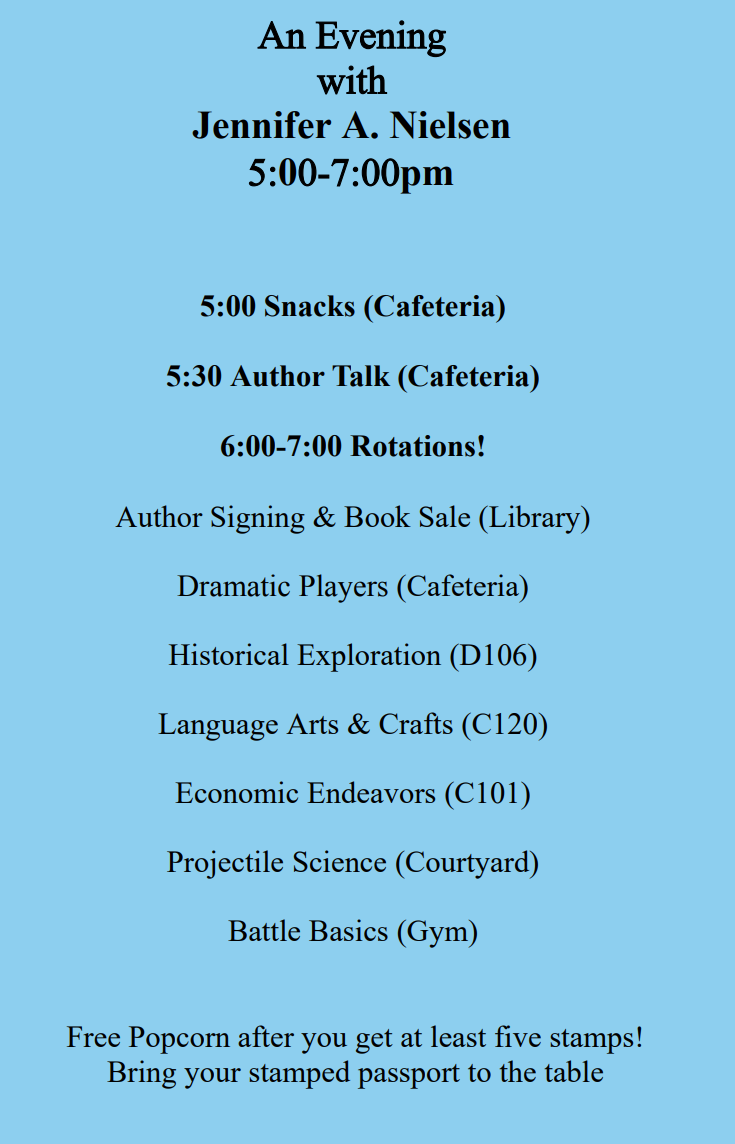
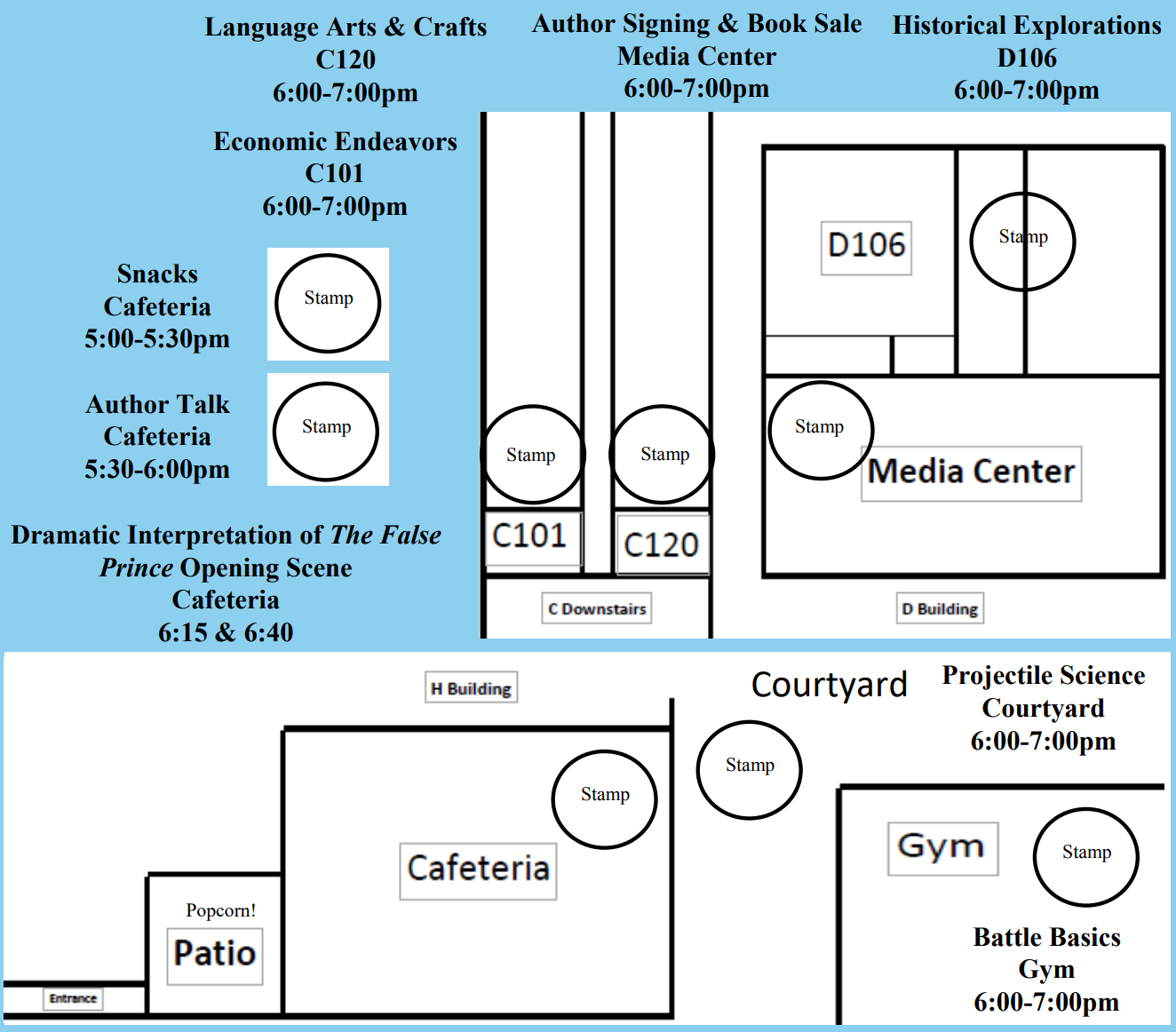
We [Kellee’s school] used one of the projectile science activities during our cross-curricular literacy night, and it was a great success! Thank you Matthew for this great post!

Author Guest Post!: “Exploring the Potential of Artificial Intelligence” by Angie Smibert, Author of Artificial Intelligence: Thinking Machines and Smart Robots

Share

“Exploring the Potential of Artificial Intelligence!”

Most students have grown up with computers as an integral part of home and school. Smartphones, laptops, gaming consoles—all of these are pretty familiar to most kids.

And now, many of them have AI assistants in their kitchens, GPS in their parents’ cars, and visions of the planet Mars digitally transmitted from a rover that’s working all by itself on the dusty surface of a far-away planet. All of these are different devices can be considered as some form of artificial intelligence, though true thinking machines are still in the future.

We’ve certainly come a long way from R2D2 and C3PO being purely the work of science fiction!

Kids are digital natives, working their devices with speed and proficiency the adults in their lives can rarely match. The world of artificial intelligence is a terrific opportunity for teaching kids to think critically and creatively about technology and the roles it plays in our lives. Not just because these programs and devices need human design, programming, and support, but also because the creativity and inspiration this field inspires can be very attractive to kids who are looking for ways to combine their love of gadgets with their natural curiosity about how the world works.

This intersection between tech and real life is a very fun place to learn from! And one of the most fascinating aspects of the tech world in general and AI in particular is that we don’t know where this is all heading. What is the world going to look like when today’s fifth graders graduate from college? That question might never have been as unanswerable as it is today.

You don’t need to dive straight into programming to start reaping the benefits of learning about AI—in fact, it’s useful to build a foundation of hands-on learning that will help support the more conceptual thinking that comes later. And remember, AI developed because someone asked really cool questions about machines, such as “Can machines think?”  And what do kids excel at? Far-out, really cool questions. Let them loose with these activities!

CODE ON PAPER

One of the first games AI researchers programmed a computer to play was tic-tac-toe. Have you ever played? It’s a game with simple rules and strategies. Think about how you might program a computer to play tic-tac-toe. How would you explain it to someone who doesn’t know how to play? How would you break down those instructions into simple moves? You’re going to write a program on paper that a person can follow.

Remember, a program—also called code—is just a set of instructions to follow!

In a notebook, define the problem. What is your goal? What does the code need to do?

Do some research on the game. What are the rules of tic-tac-toe? (You probably already know this!) What are some strategies for playing? Play a game against yourself or a friend. Take notes on moves you make. What else do you notice? For example, do games always end in a tie? Are there squares that are better to start with than others?

Now, write some code! Write instructions for one player, X or O, since you’ll be playing the other. Write out step-by-step instructions for winning a game. Computer code is often written in if-then statements. For example, if you were writing code for a maze game, you might write instructions such as this.

“Go forward one space. If player hits a wall, turn left. If not, go forward one space.”

For tic-tac-toe, you might use steps such as this:

“Put an X in the corner. If there’s already an O there, then go to the opposite corner.”

Test your code. One player will be the human and the other will be the AI following the code. For example, the human player will put an X somewhere on the grid. The AI player should look at the instructions to see what to do. If you get stuck, take notes. What do you need to change to make your code work?

Revise your code! You may have to test your code and revise it a few times. This is what real programmers do.

Play one last time. Write down your observations. Did it turn out as you expected? Did the game end in a tie, for instance? Do you think the paper program is intelligent? Why or why not?

Try This!

Try writing an algorithm for another simple game, such as rock, paper, scissors!

MAKE A BUGBOT

Robot designers often look to nature for inspiration. They’ve even designed robots that move, fly, and communicate like insects. For example, researchers at Harvard University designed RoboBee, a tiny bot that flies like a bee.

You, too, can make your own bug-inspired bot! You’ll need a few special supplies, including a 1.5- to 3-volt mini motor, often called a hobby motor, as well as a AA single battery holder with leads, AA battery, and foam board.

Attach the bottom of the battery holder to the flat side of the motor.

Tip: Leave the contacts exposed so you can attach the wires! If you don’t have a battery holder, cut out a small piece of foam board, no wider or longer than the motor. Glue the foam board to the top of the motor. Then glue the battery to the motor.

Unbalance the motor. Cut out and glue a small piece of foam board to the tip of the motor shaft. You can also use an eraser or anything else that unbalances the motor. Unbalancing the motor creates a wobble, which makes the bugbot move.

Attach the wires from the battery holder to the leads of the motor. You can twist the ends of the wires onto the leads.

Add legs! Cut out a small piece of foam board and glue it to the bottom of the motor. This will make it easier to attach legs. You can bend the ends of large paperclips and stick them into the foam board.

Glue or tape them to make the legs more secure. Experiment with other materials, too.

Decorate! You can add eyes or other items to your bugbot.

Insert the battery—and let it go. The bugbot should vibrate and move. If not, try adjusting the legs or unbalancing the motor more.

Take a picture or video of your bugbot and share it!

Try This!

Make another bugbot, but this time vary the design. What happens if you use something else for the legs?

DEBATE THE GREAT AI DEBATE!

Many tech entrepreneurs and scientists have been debating whether AI will be the end of us humans. Some of those experts include Elon Musk of SpaceX, Mark Zuckerberg of Facebook, Demis Hassabis of DeepMind, Larry Page and Sergey Brin  of Google, Steven Hawking of Cambridge University, and Bill Gates, the founder of Microsoft. You’re going to find out more about both sides and then debate the issue. Do this with a friend or classmate or divide a group into two teams.

Pick a side of the debate. Are you all in favor of AI or do you have some suspicions?

Do some research. What is each expert for or against? What do they think might happen? What evidence do they cite? How do they back up their arguments?

Write down your thesis and the best points/evidence to back up your argument. For instance, you might write: I think AI is _____________ because _____________, _____________, and _____________. Write down each of your reasons in more depth on separate note cards.

What are the best reasons for the opposing argument? How can you argue against them? This is your rebuttal of the other side.

Now, you’re ready to debate! Each side should take turns presenting its argument. Then, each gets a chance to rebut the other’s argument. Always be polite and respectful! Which side made the best argument?

Try This!

If you have to do this activity on your own, you can write a paper or make a speech presenting one side of the debate.

About the Author: Angie Smibert is the author of more than 20 nonfiction books about science and technology for kids. Some of those titles include Building Better RobotsHow it Works: The InternetAll about Coding, and 12 Great Moments that Changed Internet History. She also writes science fiction and fantasy for middle grade and young adult readers. Her novels include the Memento Noraand the Ghosts of Ordinary Objects series. Before writing full time, she helped pioneer online training at NASA’s Kennedy Space Center. She received NASA’s prestigious Silver Snoopy as well as several other awards for her work. Besides writing, she also teaches writing –and sometimes human-computer interaction—for Indiana University East. She lives in Roanoke, Virginia.
Website: angiesmibert.com/blog
Facebook: facebook.com/AngieSmibert

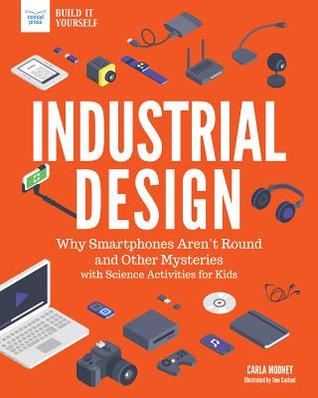
Artificial Intelligence: Thinking Machines and Smart Robots with Science Activities for Kids
Published August 3rd, 2018 by Nomad Press

About the Book: What is artificial intelligence? How is artificial intelligence going to change our lives?

In Artificial Intelligence: Thinking Machines and Smart Robots with Science Activities for Kids, readers ages 10 to 15 learn how machines develop into thinking, learning devices that can help humans perform tasks, make decisions, and work more efficiently. They can even help us have fun!

How can AI continue to improve our lives? Is there anything dangerous about AI? What are the ethical issues surrounding the use of AI? Essential questions, primary sources, and science-minded engineering activities let readers have a blast learning about the age of thinking machines we’re in right now.

Thank you to Angie for this wonderful post as well as amazing activities for the classroom! 

Countdown to NCTE/ALAN: Six authors Ricki’s Excited to See at ALAN Who She’s Never Seen or Met Before

Share

In honor of our favorite conferences—the NCTE (National Council of Teachers of English) Annual Convention followed by the ALAN (Assembly on Literature of Adolescents of NCTE) Workshop, we are doing a countdown over the next two weeks. Each day, we will feature a list that reflects the number of days left until the conference! We can’t wait to see many of you there! If you can’t be there, make sure to follow #ncte18 and #alan18 on Twitter and other social media to participate in this amazing PD from your home.

1. Cynthia Leitich Smith

Admittedly, I have seen her speak a few times. I am very fortunate to be introducing her, and I can’t wait to meet her!

2. Tomi Adeyemi

Tomi is a powerful force. I am really looking forward to hearing her speak.

3. Emily X. R. Pan

I regularly recommend The Astonishing Color of After. My students loved this book. I am really looking forward to listening to her panel!

4. Mark Oshiro

Yes! I can’t wait to hear Mark Oshiro speak. My students just finished Anger is a Gift!

5. Elizabeth Acevedo

This woman is an idol in my class. I can’t wait to listen to her!

6. Amy Reed

I am 3/4 of the way through The Nowhere Girls. Whew. This book is great!

It was difficult to limit my list to just six authors. The ALAN Workshop is going to be wonderful! I can’t wait!
Who are you excited to hear?

Countdown to NCTE/ALAN: Seven Authors Kellee is Excited to See at ALAN Who She’s Never Met Before

Share

In honor of our favorite conferences—the NCTE (National Council of Teachers of English) Annual Convention followed by the ALAN (Assembly on Literature of Adolescents of NCTE) Workshop, we are doing a countdown over the next two weeks. Each day, we will feature a list that reflects the number of days left until the conference! We can’t wait to see many of you there! If you can’t be there, make sure to follow #ncte18 and #alan18 on Twitter and other social media to participate in this amazing PD from your home.

1. Gayle Forman

2. Ibi Zoboi

3. Don Brown

4. Sharon Flake

5. Guadalupe Garcia McCall

6. Deborah Hopkinson

7. Renee Watson

I’m so excited to see these authors speak and to hopefully be able to tell them how much I love their writing. There are also so many new to me authors I look forward to seeing also–I can’t wait to share all of the amazingness that is ALAN afterwards. 

Countdown to NCTE/ALAN: Nine Presentations We Are Involved In at #NCTE18

Share

In honor of our favorite conferences—the NCTE (National Council of Teachers of English) Annual Convention followed by the ALAN (Assembly on Literature of Adolescents of NCTE) Workshop, we are doing a countdown over the next two weeks. Each day, we will feature a list that reflects the number of days left until the conference! We can’t wait to see many of you there! If you can’t be there, make sure to follow #ncte18 and #alan18 on Twitter and other social media to participate in this amazing PD from your home.


C.34 Honoring Student Passions: Using Genius Hour to (Re)Find Voice and Address Equity

Raising student voices requires time, space, and place for individualized, passion-based learning. Through interactive learning activities participants can use in their own classrooms, presenters will define Genius Hour and show how it can be implemented to facilitate equitable learning environments. They will share authentic student work from conception to completion.

Ricki is Presenting with Dr. Pamela Coke

E.18 Using Diverse Literature to Build Awareness and Empathy in Middle Schoolers

To help build awareness and empathy in middle schoolers, we must expose our readers to a wide range of diverse literature. Two middle school educators and six authors will discuss how diverse literature can help build empathy, tolerance, awareness, and an understanding of social justice.

Chair: Kellee Moye

Authors: Angela Dominguez, K.A. Holt, Jennifer Richard Jacobson, Jewell Parker Rhodes, N.H. Senzai, & Lindsey Stoddard

Respondent: Jennie Smith

F.07 Raising Student Voices by Using YA Literature to Encourage Acting Up and Speaking Out

Young adult literature changes us; it touches us and heals us. This Assembly on Literature for Adolescents of NCTE (ALAN)-sponsored session will offer roundtables, led by leaders of ALAN and YAL authors, that focus on the merits of YAL, YAL as mirrors and windows, and YAL’s call to action.

Kellee’s Roundtable: YAL and the Canon, will look at using young adult literature in place of or in addition to the canon, and will include an exploration of the idea of text sets, companion texts, or replacement texts.

Ricki’s Roundtable: YAL as Mirrors, will focus on diversity in young adult literature and the need for students to see themselves in the books in their schools and libraries and shows all students that they have a voice.

Other roundtable leaders: Beth Scanlon, Lisa Schreff, Lois Stover, Mark Letcher, Daria Plumb, Wendy Glenn

G.04 Teaching for Equity and Justice with Young Adult Literature

In this conversation session, award-winning author Laurie Halse Anderson discusses the ability of young adult literature to address social justice and equity with adolescents. Afterward, attendees rotate through three 15-min. roundtables of their choice to discuss a rich diversity of texts, issues of social justice, and teaching methods.

Ricki’s Roundtable with Wendy J. Glenn as respondent, Piecing Me Together: Race, Class, Power, and Privilege

Chair: Victor Malo-Juvera

Other Roundtable Leaders: Many teacher educators from ELATE

H.02 Meet the NCTE Editors

Participants will have the opportunity to meet journal editors, explore the publishing possibilities available with the NCTE journals program and with assembly journals, and discuss specific article prospects with the editors. Submission guidelines will be available for all NCTE journals.

Chair: Kurt Austin

This year, this session conflicts with the ALAN Breakfast, which Ricki is helping with. Because this is her last term as an editor for The ALAN Review, it doesn’t make sense for her to attend. That said, attend this session and look to get your ideas published! All of the NCTE journals will be there!

During H.02: ALAN Breakfast

ALAN Breakfast with A.S. King! We are so looking forward to this event! We include it on this list because we will be helping to set it up. It begins at 7am, and we look forward to seeing you there!

I.36 YA Lit IS Complex! Authors and Teachers Explore the Complexity of Writing Young Adult Literature

This session brings together YA authors and classroom teachers to explore text complexity through the lens of writing craft. Keynote speeches and roundtable discussions will explore how complexity can be found and made in YA lit when we weave authors’ accounts of writing process with close analysis of texts themselves.

Kellee’s Roundtable with David Levithan, focusing on his Every Day series

Ricki’s Roundtable with Ibi Zoboi, focusing on Pride

Chairs: Jennifer Buehler, Cathy Fleischer

Other roundtable leaders: Sarah Andrew-Vaughan, Wendy Glenn, Meredith Novak, Daria Plumb, Beth Scanlon, Beth Shaum

Other authors: Elizabeth Acevedo, David Arnold, Sharon Draper, Emily X.R. Pan, Randy Ribay, Andrew Smith

J. 13 In-Class Book Clubs: Fostering Collaboration, Critical Thinking, and Choice

Student-centered book clubs allow students the freedom to discuss titles they choose, thus creating positive reading experiences while utilizing two best practices: student collaboration and independent reading. Attendees will circulate through roundtables led by educators who have implemented in-class book clubs and will share book ideas, strategies, and student responses.

Kellee’s Roundtable: “Metacognition in Middle Schoolers”

Other roundtable leaders: Leigh Anne Eck, Sarah Krajewski, Amber Kuehler, Jennie Smith, Kelly Vorhis, Melinda Wallace, Sherry Williford

M.02 The Future is Now: Exploring 21st Century Teaching Ideas with the Next Generation of English Teachers

In this wide-ranging session sponsored by the ELATE Graduate Strand (ELATE-GS), undergraduate and master’s level pre-service and novice English teachers from across the nation will lead roundtables exploring 21st-century teaching ideas and research-driven pedagogical practices. Please join us to support this next generation of English teachers and NCTE members. *Student presenters are determined after the program deadline. Attendees will receive a separate program with the names of roundtable leaders and their presentation titles upon entering the session.

Ricki is Sponsoring three Master’s students to present at this session

Chair: Alan Brown

Other Roundtable Leaders: Many graduate students and teacher educators from ELATE

NCTE here we come! Hope if you are there that you will stop by!

 and

Author Guest Post!: “Introducing the World’s Rainbow of Cultures to Kids” by Tonja Drecker, Author of Music Boxes

Share

“Introducing the World’s Rainbow of Cultures to Kids”

I’ll never forget the first time two foreign students attended our school. The brothers, one who was in my grade, were refugees from Poland and shared stories about their experiences as they had moved through five different countries before finally being granted residency in the US. They spoke five languages fluently—something I still envy—celebrated holidays we’d never heard of and taught us games we didn’t know existed. In return, we introduced them to the basics of baseball, how to eat Oreo cookies the correct way and tried to explain why Thanksgiving was almost as important as Christmas when it came to American holidays. Thanks to these boys and other foreign students, who attended our school over the years, my interest in the world was sparked.

There are around 6,500 languages presently spoken in the world and more than 5,000 ethnic races. If each represented a different color in a rainbow swirl, it’d be an amazing mix!

Living in Europe, there wasn’t anywhere I could go without meeting people from various countries and cultures or hearing them converse in foreign languages as they went about their daily lives. Especially in the cities, the huge diversity was simply a part of life.

I was constantly amazed how the kids not only accepted this but thrived on it.

In the children’s choir I directed in Germany, there was a child from Italy and one from Spain. The first time we sang Happy Birthday (in German, and then in English), they each insisted on singing the song in their own languages too. Not wanting to feel left out, some of the other children went home and learned how to say ‘Happy Birthday’ in other languages. From then on, every birthday was celebrated through our growing list of wishes and songs. It grew to be quite the lengthy event, but the kids enjoyed every second.

Languages form an intimidating barrier, and the ‘strange habits’ of other cultures make the differences seem even larger, but especially kids look past such things and are open to other types and ways of life. How strange and fun it can be to let odd sounds roll across the tongue and know they have meaning! Or discovering an odd food or dressing in a completely different way. Cultures live and breathe and discovering this is exciting.

In the fifth grade, my son was assigned to do a report on Iceland. Of course, writing the report wasn’t exactly a joyful experience as he collected statistics surrounding the people, economy, history and political aspects of the country. Simply said, he hated doing it. Then, he had the chance to speak with someone from Iceland, learn a few words and phrases, discover some of their stranger foods and hear about other aspects of life.  The next weeks, he’d throw out random words in Icelandic, wanted to try Sheep’s Head Jelly (I was secretly happy we didn’t find it in any of the local stores), and—this I didn’t enjoy—spoke during meals while his mouth was full because ‘that’s what they do in Iceland’.

Thanks to the increased awareness of diversity, especially in children’s literature, it’s not difficult to find stories about other cultures or learn about the countries themselves. And the internet…well, that’s a realm of information all on its own. A word or phrase can be translated into almost any language instantly and spoken examples aren’t usually hard to find. My youngest loves to check her pronunciation for Chinese words on Youtube. She’ll pet the dog and say ‘gǒu’.

Games, toys, food, clothing, school life—most information is readily available and doesn’t dip into the looming hole of boredom. It’s these fun and seemingly strange morsels of information which also point toward larger explanations behind culture and history. There is a reason why people in Iceland don’t shy away from Sheep’s Head Jelly, and now, my son will never forget the importance of sheep in Iceland’s agriculture.

With an ‘international week’, kids can pick a culture and present a few words, games or other bits of information they discover and keep it fun. Even diving in with more depth into a few well known and less known cultures introduces the vast varieties of the world. But it’s not only about the differences. Everyone around the world eats, sleeps, can be afraid of the dark, loves their parents and enjoys jokes or playing around.

Introducing kids to the variety of the world isn’t only fun but broadens their way of thinking. There are several organizations and groups, which offer ideas and opportunities to help teach kids learn more. Some of these simply offer maps and virtual country tours, while others help organize Skype sessions with other classrooms or assist in connecting teachers and students with penpals from around the globe.

https://www.kidlink.org/ –  promotes a global dialogue for youth. It caters to teachers and students.
http://usa.ipfpenfriends.com/ – caters to classrooms and teachers
http://www.studentsoftheworld.info – started in 1995 and offers not only the chance to connect with youth around the world but has other information including games, maps and ‘virtual tours’ of other countries.

About the Author: Tonja Drecker is a writer, blogger, children’s book reviewer and freelance translator. After spending years in Germany exploring forgotten castles, she currently resides in the Ozarks with her family of six. When she’s not tending her chickens and cows, she’s discovering new adventures, nibbling chocolate and sipping a cup of tea.
https://twitter.com/TDrecker
http://tonjadrecker.blogspot.com
https://www.facebook.com/TDrecker

About the Book: “I only desire your talent…”

Twelve-year-old Lindsey McKay’s biggest dream is to be a famous ballerina. But after moving to New York, she ends up at the Community Center with a teacher who’s a burly bear in tights.
When she meets Madame Destinée, the teacher of a top dance school who offers her classes for free, Lindsey can’t believe her luck. In exchange, she must perform in the school’s exclusive midnight shows, ones sure to make her a star. But something’s not right…
One by one, the other dancers disappear. Each time they do, a music box with a figurine just like the missing ballerina joins Madame Destinée’s growing collection. If Lindsey doesn’t discover the truth about the dance school, she might end up a tiny figurine herself. https://www.goodreads.com/book/show/41452109

Thank you, Tonja, for your post!