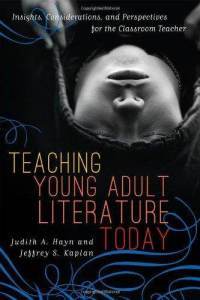
Teaching Young Adult Literature Today: Insights, Considerations, and Perspectives for the Classroom Teacher, Edited by Judith A. Hayn and Jeffrey S. Kaplan

Share

Teaching Young Adult Literature Today

Teaching Young Adult Literature Today: Insights, Considerations, and Perspectives for the Classroom Teacher
Edited by Judith A. Hayn and Jeffrey S. Kaplan
Published: March 15th 2012 by Rowman & Littlefield Publishers 

GoodReads Summary: Teaching Young Adult Literature Today introduces the reader to what is current and relevant in the plethora of good books available for adolescents. More importantly, literary experts illustrate how teachers everywhere can help their students become lifelong readers by simply introducing them to great reads smart, insightful, and engaging books that are specifically written for adolescents. Hayn, Kaplan, and their contributors address a wide range of topics: how to avoid common obstacles to using YAL; selecting quality YAL for classrooms while balancing these with curriculum requirements; engaging disenfranchised readers; pairing YAL with technology as an innovative way to teach curriculum standards across all content areas. Contributors also discuss more theoretical subjects, such as the absence of lesbian, gay, bisexual, transgender and questioning (LGBTQ) young adult literature in secondary classrooms; and contemporary YAL that responds to the changing expectations of digital generation readers who want to blur the boundaries between page and screen.

Review: This informative text is divided into the sections, “Where Has YAL Been?,” “Where is YAL Now?” and “Where is YAL Going?” I very much appreciated the expertise of the scholars who wrote each chapter. 

While each chapter was organized a bit differently, the research is solid. In one chapter, Laura A. Renzi, Mark Letcher, and Kristen Miraglia discuss LGBTQ Young Adult Literature in the Language Arts Classroom. I appreciated their recommendations for infusing LGBTQ texts into the school setting with recommendations tailored to the range of community environments: hostile, ignorant/open, open/accepting, and open. The texts were well-matched with the aims of bringing LGBTQ texts into focus. 

Another chapter I loved was “Crossing Boundaries: Genre-Blurring in Books for Young Adults” by Barbara A. Ward, Terrell A. Young, and Deanna Day. They give solid examples of authors who blur genres, making readers question genre classifications as a whole. These authors show the awesomely innovative authorship within the field of YAL.

Steven T. Bickmore writes a well-informed chapter about best-selling adult novelists who write YA fiction. He divides his piece into two sections–writers of adult best-sellers or pulp fiction and writers with literary accolades in adult fiction. I very much enjoyed his insight about this phenomenon. 

While I only highlight three chapters in this review, I must say that each chapter was special in its own way. The book begins with the history and background of YAL, and it ends with chapters about where the field is heading. As a researcher of this field, some of the information was not new to me, yet I learned much from the scholars of the text, whose extensive research is reflected in each chapter.

We Flagged: “[T]eachers need to gain insider perspectives by reading the books presented to their students. As a result, a wider range of quality adolescent literature will reach the hands of adolescents, and teachers will become increasingly confident about the merits of teaching with YAL”(Elliott-Johns, Chapter 3, Teachers as Readers of YAL section).

Read This If You Loved: Articles from The ALAN Review, Young Adult Literature in the 21st Century by Pam B. Cole, Literature for Today’s Young Adults by Alleen Nilsen & Ken Donelson

RickiSig

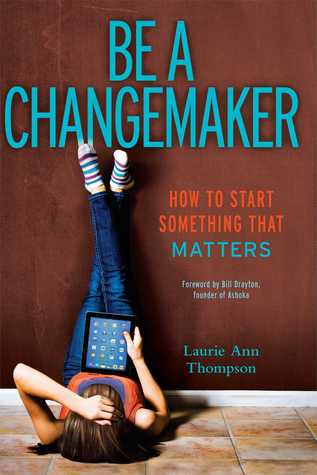
Blog Tour, Review, and Author Guest Post!: Be a Changemaker: How to Start Something That Matters by Laurie Ann Thompson

Share

NF PB 2014

Nonfiction Picture Book Wednesday and BE A CHANGEMAKER Blog Tour!

Nonfiction Picture Book Wednesday is hosted by Kid Lit Frenzy and was started to help promote the reading of nonfiction texts. Most Wednesdays, we will be participating and will review a nonfiction text (though it may not always be a picture book).
Be sure to visit Kid Lit Frenzy and see what other nonfiction books are shared this week!
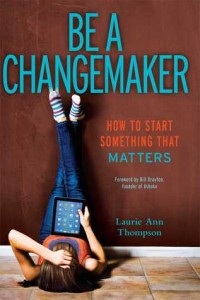
Be a Changemaker

Be a Changemaker: How to Start Something That Matters
Author: Laurie Ann Thompson
Expected Publication: September 16, 2014 by Simon Pulse/Beyond Words

Goodreads Summary: We’ve had the civil rights movement and the women’s movement—now it’s time for the youth movement.

When Divine Bradley was seventeen, he just wanted a safe place to hang out away from gangs and violence, and Team Revolution was born. At age eleven, Jessica Markowitz learned that girls in Rwanda are often not allowed to attend school, and Richard’s Rwanda took shape. During his sophomore year of high school, Zach Steinfeld put his love of baking to good use and started the Baking for Breast Cancer Club.

Gone are the days when kids were supposed to be “seen and not heard.” Today, youth everywhere are rising up, building new organizations, and creating the changes they want to see in their communities and around the world. Be a Changemaker gives readers the tools and confidence they need to affect real change. Readers will learn how to:

– Research ideas
– Build a strong and passionate team
– Create a business plan
– Enlist a savvy adult
– Plan events
– Work with the media
– And more!

Plus, profiles of youth-led social organizations show readers that it’s never too early to become a changemaker.

Ricki’s Review: My favorite aspect of this book is the way it is organized. The chapters and headings are very clear, and it moves in a fluent, understandable manner. Thompson provides very informative, necessary lessons about honing and fine-tuning leadership skills. Some of the sections I liked most were the tips about leading meetings (from standard operating procedures to icebreaker activities), the sample business plan with budgetary advice, the ways to make money (with grants and marketing tips), and the speaking skills (particularly the section about elevator pitches). Across the country, more and more states are requiring the development of advisory groups for high school students to learn life skills. This text would be perfect for this setting. I can also see the text working well in a business or entrepreneurship class. The best part about the way this book is set up is the fact that teachers can assign chapters to groups or teach the portions of the text that matter most to their syllabi or curricula.

Kellee’s Review: I was blown away by how much this book impacted me as I read it. I want to do something right now, so I know that this book will impact young readers. Like Ricki, I was fond of how it was organized. It is ultimately a step-by-step book for leadership, planning, and making a difference in the world.

What I liked the most about the book, though, was the “Profile” sections where actual groups started by kids were highlighted. This really connected it to real life and showed the reader that being a changemaker is definitely something that anyone can do.

Teachers’ Tools for Navigation: We recommend using this book for jigsaw discussions. This would maximize instruction and allow students to access all parts of the text. If you are unfamiliar with jigsawing, learn how to use this discussion technique here: http://www.jigsaw.org/steps.htm.

Throughout the book, there are steps to brainstorming, reflecting, and journaling in a “venture journal” to help plan the steps to becoming a changemaker. The activities Thompson lay out would be a really deep activity to do in a classroom.

Discussion Questions: What is a problem that you see in our society? In your life? What steps could you take to help solve or alleviate this problem?; Which of the highlighted organizations started by fellow kids did you find the most intriguing? How could you help this organization?

We Flagged: “How many times have you complained about something but done nothing to fix it? Or noticed something and thought, Someone should do something about that? We all have those thoughts sometimes. And it’s okay, because none of us can solve every problem we encounter. But guess what…you’re someone. And when you set your mind to it, you absolutely can do something that matters.” (p.1)

Read This If You Loved: The 7 Habits of Highly Effective Teens by Sean Covey; Don’t Sweat the Small Stuff for Teens by Richard Carlson

Author’s Guest Post: 

Recommended For: 

 classroomlibrarybuttonsmall closereadinganalysisbuttonsmall readaloudbuttonsmall

Guest Post by Laurie Ann Thompson

10 Ways Young People Can Make a Difference 

There are many ways for people of all ages to make a difference in their communities and around the world. Here are some ideas that can be adapted to a variety of different age groups and interests.

  1. Collect money. Gather funds to support a cause by placing collection cans in stores, having a penny drive at school, participating in a fundraising walk, etc. Kids (or their parents) can also create a page on a crowdfunding website like com. Either way, friends and family can be great sources of support.
  2. Collect goods. Organize ways for people to donate goods like food drives, donation bins in retail outlets, school supply collections, etc. Most nonprofits maintain a wish list of needed items. Or, kids can go the other direction by finding a cause that can use their excess goods. Last Halloween, for example, a student at my children’s school had the kids bring in their extra candy, which he then sent to U.S. troops stationed overseas.
  3. Donate gifts. Ask for donations to be made to a favorite charity in lieu of presents. Kids can quickly and easily collect a significant amount of money or goods, while also spreading awareness for the chosen cause. It’s a win-win!
  4. Make something. Many young people enjoy making things they can then donate or sell. Can they knit? Hats or scarves for the homeless are much appreciated. Do they make jewelry? Maybe they could sell it at a farmer’s market or on com to raise money. Almost anyone can make no-sew fringe-tie fleece blankets, which are great for animal shelters and child services organizations. And don’t forget the tried-and-true lemonade stand—or a new twist on the same idea!
  5. Form a club. If there’s something one kid is passionate about, chances are others will be, too. A club can help someone find other like-minded individuals as well as recruit others to the cause. Many of the most successful organizations I profiled in Be a Changemaker started when one kid joined with a few classmates to form a simple club at school.
  6. Start a petition, or sign one. These can be done on paper and delivered in physical form, or they can be rolled out online via websites like org or whitehouse.gov. For inspiration, check out how a high-school student got Gatorade to remove flame retardants from its sports drinks, or how grade-school kids are trying to get Dunkin’ Donuts to stop using Styrofoam cups. Kids can also check out existing petitions and sign the ones they support (or ask their parents to).
  7. Write letters. Even young kids can make their opinions known by writing letters to their government officials, local newspapers, magazines they read, companies whose products they use, etc. Against how chickens are treated in factory farms? Write to KFC and McDonald’s and let them know! Kids can multiply their impact by recruiting others to write letters, too.
  8. Get involved. Many governments and companies have a youth advisory board to help them understand the issues affecting their teen constituents or consumers. Most schools have a student council and/or appoint student representatives to the school board. Youth may not always get voting rights, but at least they’ll have a chance to voice their opinions about the issues that affect them. The adults in charge might not otherwise know the full impacts of their decisions.
  9. Check with local organizations and/or the nearest United Way to find appropriate organized opportunities to volunteer, or make your own. You may have to get creative, but the potential is boundless. Anyone can pick up trash at their local park or beach, many retirement homes welcome young performers, some animal shelters will allow the public to come in and socialize the animals, or perhaps an elderly neighbor would probably appreciate help with the yard work. Everyone has skills: they just need to find a place to put them to good use.
  10. Read! Obviously, reading can provide kids with facts and practical knowledge. But studies have also shown that reading builds empathy, an essential element for making a positive difference. Whatever kids (or adults!) choose to read, they’re sure to be expanding their world views, analyzing new ideas, and growing as human beings. So, when they’re not out there changing the world, make sure they have time to enjoy a good book. 

Be a Changemaker: How to Start Something that Matters, is loaded with advice, hands-on exercises, and examples for middle-school or high-school kids who want to take these ideas further, plus profiles of young people who already did.
laurieannthompson

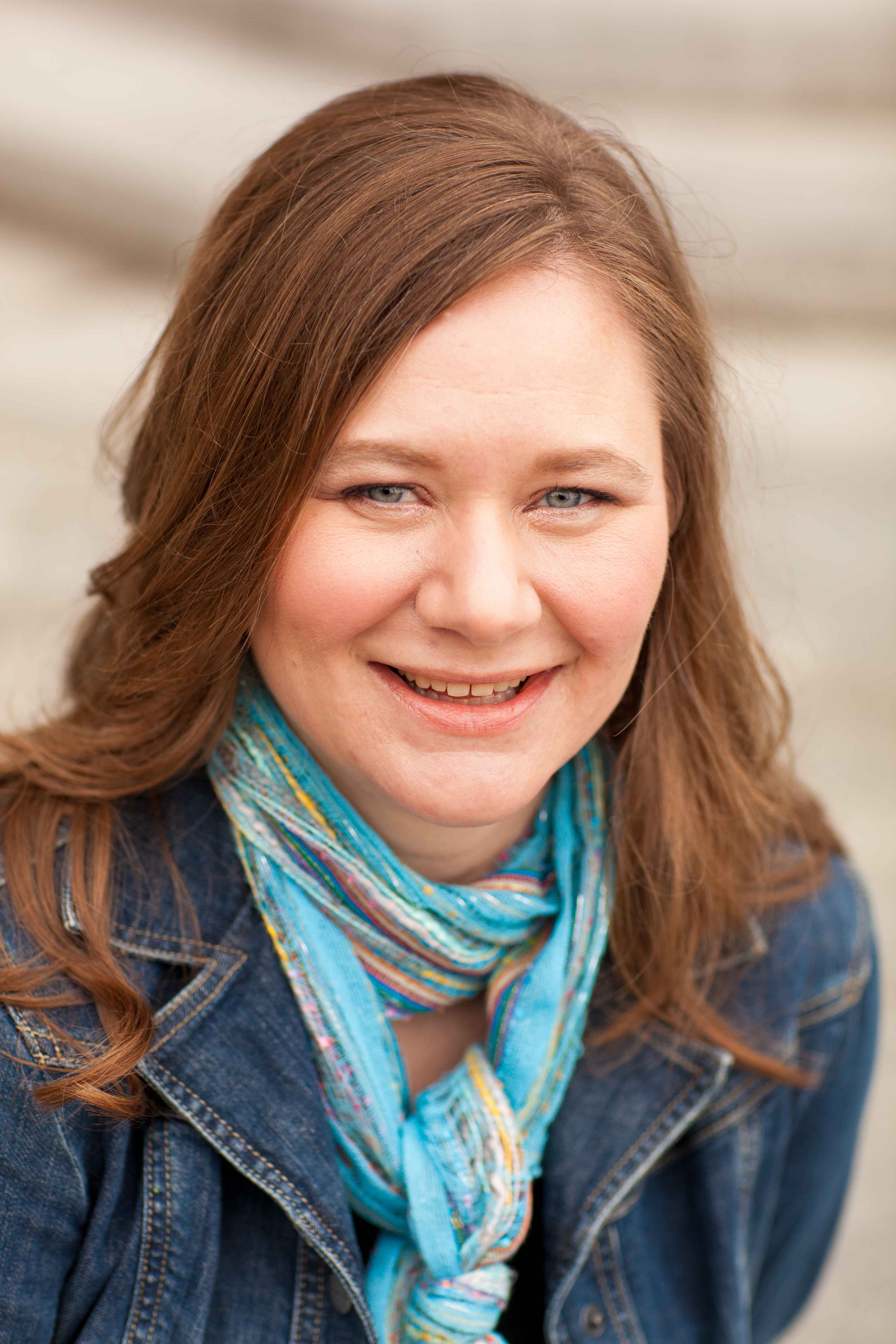
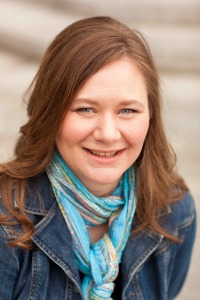
Laurie Ann Thompson comes from a family of entrepreneurs and small business owners. She has worked at IBM, Intel, and Microsoft, and she co-founded a successful internet startup. In addition, she has led a regional nonprofit professional organization and volunteered with Ashoka’s Youth Venture, which supports teens with big ideas. This is her first book. She lives with her family in the Pacific Northwest. Visit her at LaurieThompson.com.

Follow all of the stops on the blog tour!:

Mon, Sept 8
Sally’s Bookshelf
Tues, Sept 9
Girl Scout Leader 101
Wed, Sept 10
Unleashing Readers
Thurs, Sept 11
Teen Librarian Toolbox
Fri, Sept 12
The Nonfiction Detectives AND Kirby’s Lane
Sat, Sept 13
The Styling Librarian
Mon, Sept 15
NC Teacher Stuff
Tues, Sept 16
The Hiding Spot
Wed, Sept 17
Kid Lit Frenzy
Thurs, Sept 18
GreenBeanTeenQueen
Fri, Sept 19
A Foodie Bibliophile in Wanderlust
Sat. Sept 20
Elizabeth O. Dulemba
Teen Librarian’s Toolbox is creating a free downloadable workshop guide for libraries and classrooms for the book that will be available on Laurie Thompson’s website in late October.

Signatureand RickiSig

**Thank you to Barbara at Blue Slip Media for providing copies for review**

Top Ten Tuesday: Top Ten Underrated Books

Share

top ten tuesday

Top Ten Tuesday is an original feature/weekly meme created at The Broke and the Bookish. The feature was created because The Broke and Bookish are particularly fond of lists (as are we!). Each week a new Top Ten list topic is given and bloggers can participate.

 Today’s Topic: Top Ten Underrated Books

Books we love that need more recognition!

Ricki

1. Freedom Summer by Deborah Wiles

I discovered this picture book this week. Okay, it won an award, so it isn’t underrated. BUT, when I wrote about it on the IMWAYR post, so many people said they hadn’t heard of it. This is one of the best picture books I have ever read!

2. Ten Little Fingers and Ten Little Toes by Mem Fox

I just wrote about this book yesterday! I think it is the perfect picture book to read to a child. It seems simple, yet it emanates worldliness and love.

3. Thrice Told Tales: Three Mice Full of Writing Advice by Catherine Lewis

If I could have it my way, this would be the go-to book for every English teacher. Rather than teaching out of textbooks, this book could be creatively used to teach literary terms to students. Each page displays a different literary term, and the mice cleverly define each the terms within the context of the nursery rhyme.

4. Making the Match: The Right Book for the Right Reader at the Right Time, Grades 4-12 by Teri Lesesne

If you want to get kids reading, this book has phenomenal advice. I recommend it to any teacher who wants techniques to match readers to books. I am not sure if it is underrated, but because I recommend it so often to teachers, I am going to add it to my list. 🙂

5. Dr. Bird’s Advice for Sad Poets by Evan Roskos

I was blown away by this book when I read it this year. I know it received the Morris Award, but I wish I heard it referenced more, and I find it to be underrated. It is absolutely brilliant and belongs in every classroom.

Kellee

Picking only 5 books was really tough. There are so many great books out there that deserve to have more readers.

1. The Berlin Boxing Club by Robert Sharenow

Just one example of many amazing historical fiction books that are not in enough hands. Berlin Boxing Club is such a unique book, and so well written.

2. Curseworkers series by Holly Black

This is a great series that I felt fell by the wayside during the whole dystopian hype. (And the audiobook is phenomenal!)

3. Airborn and Half Brother by Kenneth Oppel

I put these books on a lot of my favorite book lists because I am a huge fan of Kenneth Oppel. His books in general deserve more credit.

4. Jumping off the Swings and Living with Jackie Chan by Jo Knowles

These two books are some of the best YA I read in the last year. Jo Knowles has a way of writing about tough subjects in a very accessible way. (See You at Harry’s is another example.)

5. Ginny Rorby books

I know I talk about her all of the time, but I really love her books. Read what I think about them and Ginny here, here, here, here, here, and here.

Which books do you think deserve more credit? 

RickiSig and Signature

It’s Monday! What Are You Reading? 9/8/14

Share

IMWAYR

It’s Monday! What Are You Reading? From Picture Books to YA!

It’s Monday! What are you Reading? is a meme hosted by Sheila at Book Journeys. It is a great way to recap what you read and/or reviewed the previous week and to plan out your reading and reviews for the upcoming week. It’s also a great chance to see what others are reading right now…you just might discover the next “must-read” book!

Jen Vincent, of Teach Mentor Texts, and Kellee decided to give It’s Monday! What Are You Reading? a kidlit focus. If you read and review books in children’s literature – picture books, chapter books, middle grade novels, young adult novels, anything in the world of kidlit – join us! We love this meme and think you will, too.

We encourage everyone who participates to support the blogging community by visiting at least three of the other book bloggers that link up and leave comments for them.

Last Week’s Posts

top ten tuesday violin Critical Encounters in High School English

0-545-33152-8 wartime3 wartime2 wartime

Tuesday: Top Ten Book Characters That Would Be Sitting At My Lunch Table

Friday: Laurie Calkhoven Guest Post

**Click on any picture/link to view the post**

 Last Week’s Journeys

Kellee: This last week seemed to be filled to the brim for us! I know I have the same time in the evenings as I did a few weeks ago, but they seem to go by so quickly, and I feel like I am busy every second. Hopefully it will slow down soon! Luckily, I was able to finish Be a Changemaker by Laurie Ann Thompson which we will share with you this week. So inspiring.

Trent and I read some fun picture books this week as well. Our favorites were:

  • We watched Pete the Cat on YouTube, and I’ve had the song in my head ever since.
  • I read Trent Green Eggs and Ham for the first time. I’ve been waiting to read it to him until he could fit into his Green Eggs and Ham shirt. I loved reading it! What fun rhyming and rhythm.
  • At school, I found a book, You are my Work of Art, at school that I bought years ago for my future child, so I brought it home and read it to him. What a great way to introduce young children to art, and it is so sweet as well.
  • Based off of recommendations, we got Ninja! by Arree Chung. What a fun imagination book!

Ricki: I turned thirty this week. Ahh! Luckily, Henry kept me distracted, so I didn’t have to worry about my age. I am embarrassed that I didn’t read much YA this week. I read about 30 scholarly articles and chapters for my classes. Henry and I read Lon Po Po: A Red-Riding Hood Story from China by Ed Young and enjoyed it. And there are four board books on my living room floor that I must have read with Henry close to sixty times this week. Our favorite board book (which we have read hundreds of times now) is Mem Fox’s Ten Little Fingers and Ten Little Toes. Those of you who follow the blog might remember this is one of my favorites to read with him.

This Week’s Expeditions

Kellee: This week I am going to start Rory’s Promise by Michaela MacColl in preparation for a future blog post, and I will continue to read Allie Gator and the Seven Stones on my phone (though admittedly, I didn’t get to read any last week!). Hopefully this upcoming week is a bit slower, so I can find more reading time in my days.

Ricki: Like Kellee, I am hoping to start Rory’s Promise and also Allie Condie’s Atlantia. I don’t suspect I will have much time to read others. As it is, I read from 7pm-2am each night to keep up with my coursework. I am not complaining! It is all very interesting. 🙂

Upcoming Week’s Posts

top ten tuesday Be a Changemaker Teaching Young Adult Literature Today touched

Tuesday: Top Ten Underrated Books

 So, what are you reading?

Link up below and go check out what everyone else is reading. Please support other bloggers by viewing and commenting on at least 3 other blogs. If you tweet about your Monday post, tag the tweet with #IMWAYR!

 Signature andRickiSig

Author Guest Post!: Turning Young Readers on to Historical Fiction by Laurie Calkhoven, author of the Boys of Wartime series

Share

“Turning Young Readers on to Historical Fiction” by Laurie Calkhoven

It’s hard to believe that something as small as a broken egg could change the course of American history, but one did. It was March of 1775 and the fifth anniversary of the Boston Massacre. The Sons of Liberty planned a church service at Old South Meeting House to honor the men who had died. All of the leaders of the Sons of Liberty, indeed all Patriots in Boston, would be in attendance.

The Redcoats had a plan to bring the colonial rebellion to an end. They ordered a soldier to go to the meeting and throw an egg at the speaker. An insult like that would start a riot, and they intended to arrest the leaders of the Sons of Liberty—Samuel Adams, John Adams, John Hancock, and the others—and ship them to England to stand trial for starting a riot. The British thought that with the leaders out of the way, those hotheads in Boston would settle down and stop their foolish rebellion.

The reason why you haven’t read about those arrests in your history texts is that the soldier fell on his way to the service. Not only did he break the egg. He hurt his leg so badly that he didn’t make it to the meeting at all. There were no arrests. The rebellion lived on. The next time the Redcoats went after those leaders, war erupted in Lexington and Concord.

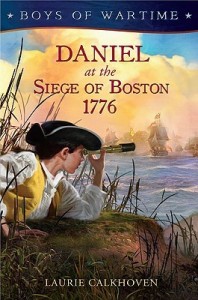
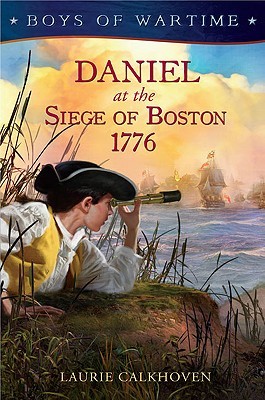
That egg incident, one I came across in long out-of-print history of the time period, frames the beginning of my novel Daniel at the Siege of Boston, 1776. Daniel helps foil the British plan and goes on to do much more, but if not for that broken egg, there wouldn’t be a story to tell.

Historical fiction can be a hard sell for young readers. Many of them expect it to be boring. When I visit schools and talk to young readers, I always begin by telling them stories—true stories. Soon they’re hooked. They want to know what happens next.

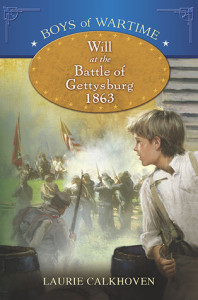
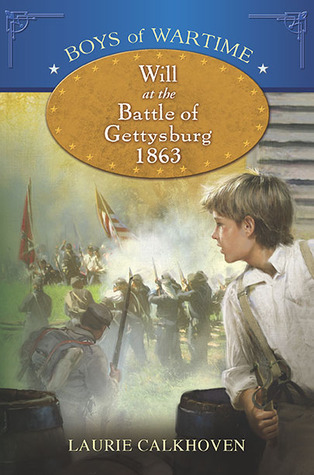
Kids love wacky facts, and so in my Civil War novel (Will at the Battle of Gettysburg, 1863), I included the fact that on the first night of the battle six-year-old Mary McLean stuck her head out of her window and sang a song to the Confederate soldiers who had taken her town—a song about their President, Jefferson Davis:

Hang Jeff Davis from a sour apple tree.

Mary’s father thought the whole family would be shot, but the Rebel soldiers only laughed and sang their own song about President Lincoln.

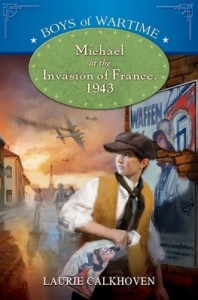
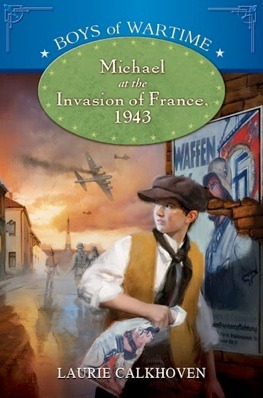
My latest Boys of Wartime novel, Michael at the Invasion of France, 1943, is about a boy who helps shot-down and trapped American airmen evade the Nazis in a World War II version of the Underground Railroad. Kids love to hear about all the everyday American habits that gave the men away. Things like walking with their hands in their pockets, or whistling—two things French men never did.

My Boys of Wartime novels are about ordinary boys who get caught up in extraordinary moments in history—they become spies for General Washington, help save the Union, and resist the Nazis. One ordinary person—just like them—and small ordinary moments can change the course of history. I research extensively to fill my novels with real-life action and adventure stories to keep my readers turning the pages.

All kinds weird, wacky, and wonderful stories never make it into our history textbooks. Historical fiction is full of those stories. Once your young readers figure that out, they’ll be back for more.


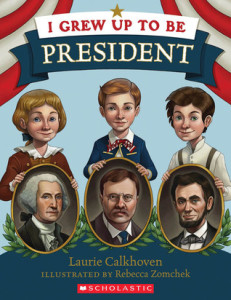
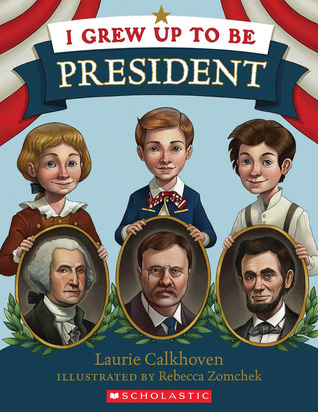
About the author: Laurie Calkhoven is the author of nearly fifty books for young readers including the Boys of Wartime series and I Grew Up to be President. Find CCSS activities and learn about her school visit program at lauriecalkhoven.com.

wartime3 wartime2 wartime 0-545-33152-8

Thank you Laurie for your post!

Signature

Teaching Critical Theory to ALL Students

Share

Critical Encounters in High School English

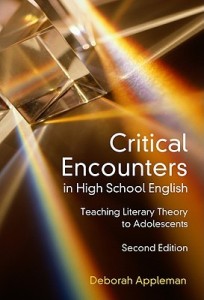
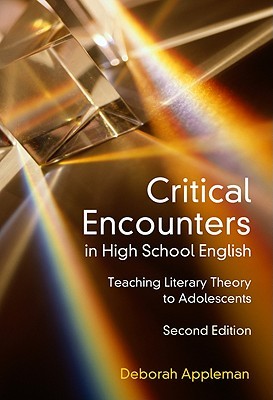
Commentary on Deborah Appleman’s Critical Encounters in High School English: Teaching Literary Theory to Adolescents

This professional development text made me reconsider my teaching philosophy. I’ve used lenses before. In my college credit course (for high school students), I asked students to use nonfiction and fiction as lenses to view other texts. It felt academic, and I believe my students benefited from this skill, but Appleman takes theory a step beyond what I was doing. As a graduate of English Education, critical theory was familiar to me, but I always felt as if I had to teach theory in a hidden way. We talked about gender, but I never told students they were using critical theory.

For most teachers, critical theory is important for advanced placement, high school English classrooms. Appleman provides scaffolding and proves that theory can be used in grades 6-12 and for all levels. Her materials are accessible and engaging.

According to Appleman, teachers should use literary theory as critical lenses to help students understand the ideologies inherent in texts (p. 3) and use skills of reading and writing to come learn about the world (p. 2).  When students read, there are multiple contexts at play, and she provides theoretical grounding and examples of various lenses for teachers: reader response, privilege and social class, gender, post colonialism, and deconstruction. Each lens has its own chapter in her book.

Students bring their own contexts to their reading of a text, so using critical theory allows them to view the literature through a different lens. Reading, interpretation and criticism are all important skills, and too often, teachers “relegate only the reading to students” (p. 6), and through Appleman’s suggestions, we give students authority and power.

No matter how uncomfortable it feels, students should learn to question the notion of a single truth and show the multiplicities that exist in reading. “Meanings are constructed; we create meanings that are influenced by who we are and what we are culturally; historically; psychologically; and, in the case of the Baker version of Miss Muffet, vocationally” (p. 20). Reading allows students to gain perspective of other lenses and theories, but also of their own lives, where the text acts as an equal partner with the reader (p. 31).

There are a plethora of activities and lessons for teachers in the appendix of the book. This book is extremely practical, and I felt as if I could immediately employ the ideas in the classroom, given the resources Appleman provides. I highly recommend this text to teachers.

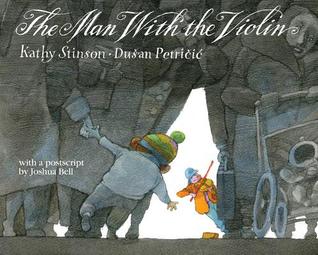
The Man with the Violin by Kathy Stinson (Kellee’s Review)

Share

NF PB 2014

Nonfiction Picture Book Wednesday

Nonfiction Picture Book Wednesday is hosted by Kid Lit Frenzy and was started to help promote the reading of nonfiction texts. Most Wednesdays, we will be participating and will review a nonfiction text (though it may not always be a picture book).
Be sure to visit Kid Lit Frenzy and see what other nonfiction books are shared this week!

violin

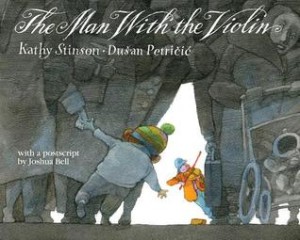
The Man with the Violin
Author: Kathy Stinson
Illustrated: Dušan Petričić
Published August 8, 2013 by Annick Press

Goodreads Summary: “Who is playing that beautiful music in the subway? And why is nobody listening?”

This gorgeous picture book is based on the true story of Joshua Bell, the renowned American violinist who famously took his instrument down into the Washington D.C. subway for a free concert. More than a thousand commuters rushed by him, but only seven stopped to listen for more than a minute. In “The Man With the Violin,” bestselling author Kathy Stinson has woven a heart-warming story that reminds us all to stop and appreciate the beauty that surrounds us.

Dylan is someone who notices things. His mom is someone who doesn’t. So try as he might, Dylan can’t get his mom to listen to the man playing the violin in the subway station. But Dylan is swept away by the soaring and swooping notes that fill the air as crowds of oblivious people rush by. With the beautiful music in his head all day long, Dylan can’t forget the violinist, and finally succeeds in making his mother stop and listen, too.

Vividly imagined text combined with illustrations that pulse with energy and movement expertly demonstrate the transformative power of music. With an afterword explaining Joshua Bell’s story, and a postscript by Joshua Bell himself.

My Review and Teachers’ Tools for Navigation: I must preface by saying that this book is not technically nonfiction. It is based on nonfiction, but the story is actually made up.

Too often our days go by without us slowing down and taking anything in. It may be that we are busy or stressed or late , but it has become too common to see people always rushing wherever they are going. This book shows how much we may be missing out on. It also shows the innocence of childhood, and how we need to allow children to explore and slow down even if we are moving fast. It is wonderful how the illustrations capture this for the reader. Combined with the story, this one definitely hits close to home.

Ricki also had some great thoughts and ideas in her review.

Discussion Questions: This book is an important discussion starter. What have you seen recently that was beautiful that others didn’t notice?; Sit ____ and listen to the sounds around you. What do you hear that is beautiful?; Why do you think people didn’t stop to hear Joshua Bell play?; Why did the author feel this was an important story to turn into a picture book?

Book Trailer: 

Read This If You Loved: The Noisy Paint Box by Barb Rosenstock, Herman and Rosie by Gus Gordon, Marvin Makes Music by Marvin Hamlisch

Recommended For: 

readaloudbuttonsmall classroomlibrarybuttonsmall

Signature

**Thank you to Annick Press and Netgalley for providing a copy for review**