Author Guest Post! by Sue Duff, Author of Sleight of Hand

Share

The Weir Chronicles is based on my love of earth and space sciences. I do extensive research and use what I can relate to modern science for the basis of the Weirs powers. If I take any liberties, it’s minimal, and extends from my belief of what might be, yet remains unproven or unexplained.

  1. What area of science do you believe shyfting — disappearing from one location and reappearing in another — might be explained? Does this phenomenon have scientific basis, or is it merely the author’s belief?
  2. The Weir’s ability to heal themselves comes from what’s found in nature. Calcium to repair broken bones, proteins for torn ligaments, etc. Name examples of homeopathic practices found today. What countries embrace those practices more than others? Choose one type of homeopathic method and research it. How old is it? What is used? Is it regionally based, and if so, why?
  3. Lightning plays a major role in SLEIGHT OF HAND. What elements and reactions are needed to create lightning? How hot does it get? Can the human body withstand a direct strike? What happens to the body when lightning is absorbed? What part of the body can actually melt? What are common ailments reported by those who have been struck and lived?
  4. The Weir believe that unless the energies found within the planet are in harmony with the energy housed across the surface, the planet will be out of balance and slowly self-destruct. Give an example of this occurring in present day earth. Can it be controlled, and if so, how?
  5. As the series unfolds, the plot encompasses Earth’s twin in an alternate dimension. There are countless books, television shows and movies based on similar beliefs to mine. What scientific basis is there to suggest there are parallel dimensions? Discuss your personal theories or beliefs about this. Would they be exact, or mirror images of each other? How many would there be? Would there be significant differences between them? Why or why not?

Whether or not you’ve read The Weir Chronicles, I hope the class discussions gave you a sneak peek into the extensive world building research that I did for the novels. Look out for the final two books in The Weir Chronicles series, Stack the Deck, coming in late 2016 and Dim the Lights, appearing in 2017.
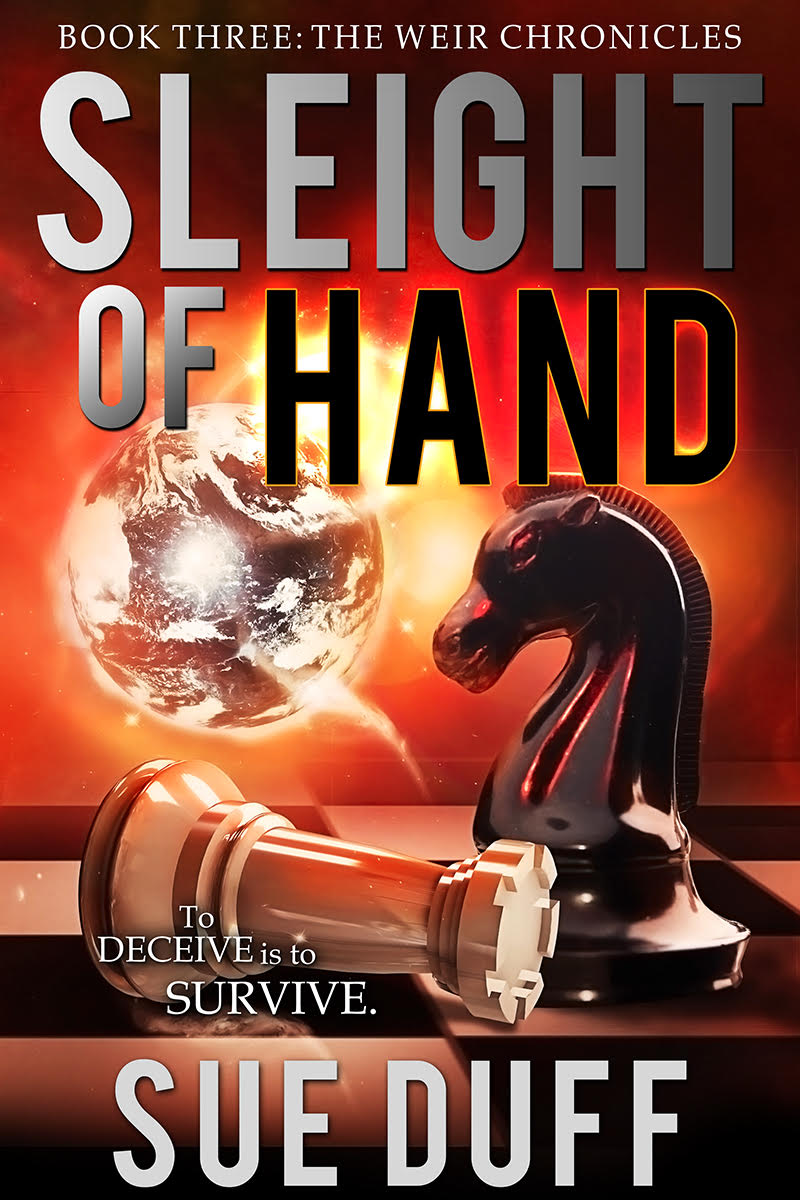
Sleight of Hand


The Weir Chronicles series follows a young man, Ian Black, as he finds purpose in the world and discovers his inner strength. He is the last born to the Weir, a magical race of beings who have kept the energies of earth in harmony. The Weir are dying out, and Ian is their final hope to prevent the planet from self-destructing. But Ian isn’t born with the Prophesized powers and in desperation, the Weir elders torture him, trying to bring his powers to the surface.

In book one, Fade to Black, Ian has abandoned his people and hides among humans as an illusionist. A nosey reporter uncovers his secrets and unwittingly exposes him to those who would kill for his connection to the earth. Ian fights to keep them both safe, and uncovers a Weir traitor bent on bringing about Earth’s destruction. In the second installment, Masks and Mirrors, Ian stumbles upon a band of rebels, fighting alongside the Weir to keep Earth safe, but the rebel leader gives Ian cause to question their motives for safeguarding the planet and he risks everything to discover their true agenda. The third book, Sleight of Hand continues the battle to protect Earth. The rebels poison Ian, and it’s up to his friends to find a cure before Ian succumbs and the planet is left in the hands of those intent on taking control of the resources that Earth has to offer.

Author Sue Duff

Sue Duff has dreamed of dragons and spaceships before she could even read, so it’s only natural that she now combines both fantasy and science fiction as her favorite genre. Having written since high school, Duff never took it seriously until a skiing accident laid her up for an entire summer and she turned on the word processor to combat the boredom. A couple years later, her first urban fantasy novel, Fade to Black, was one of five finalists in the RMFW Colorado Gold Writing Contest and in 2015, Duff’s writing earned her the PEN AwardShe is the second oldest of six girls with an avid reader mom and her dad, the family’ single drop of testosterone in a sea of estrogen. By day, Duff is a dedicated speech-language therapist at an inner city school district, a career she pursued much in part to her aunt who got her hooked on stories of the profession when Duff was younger. She is passionate about the work she does and regularly works to help those students that need it the most.

Sue is a member of the R ocky Mountain Fiction Writers and T he Pikes Peak WritersShe calls Colorado home and when not saving the world one page at a time, she can be found walking her great dane, getting her hands dirty in her garden, or creating something delicious in her kitchen.

Catch up with her through her website. www.sueduff.com

Facebook: https://www.facebook.com/sueduffwriter

Twitter: https://twitter.com/sueduff55

Instagram: sueduffauthor

Email: sueduffauthor@googlemail.com


Thank you for this post, Sue, and thank you to Sami for connecting us with Sue!

RickiSig andKellee Signature

Precepts: Analyzing and Reflecting Within the Middle School Classroom

Share

precepts

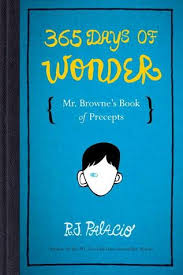
In Wonder by R.J. Palacio, Mr. Browne assigns his students a precept monthly that they will discuss and write an essay about. He defines precepts as “rules about really important things.” Mr. Browne truly inspired me. He is one of those teachers in books that you read and wish you could work with them. Ever since I’d finished Wonder, I’ve wanted to do a precept activity in my class, so this year, I jumped in and do a (mostly) weekly precept.

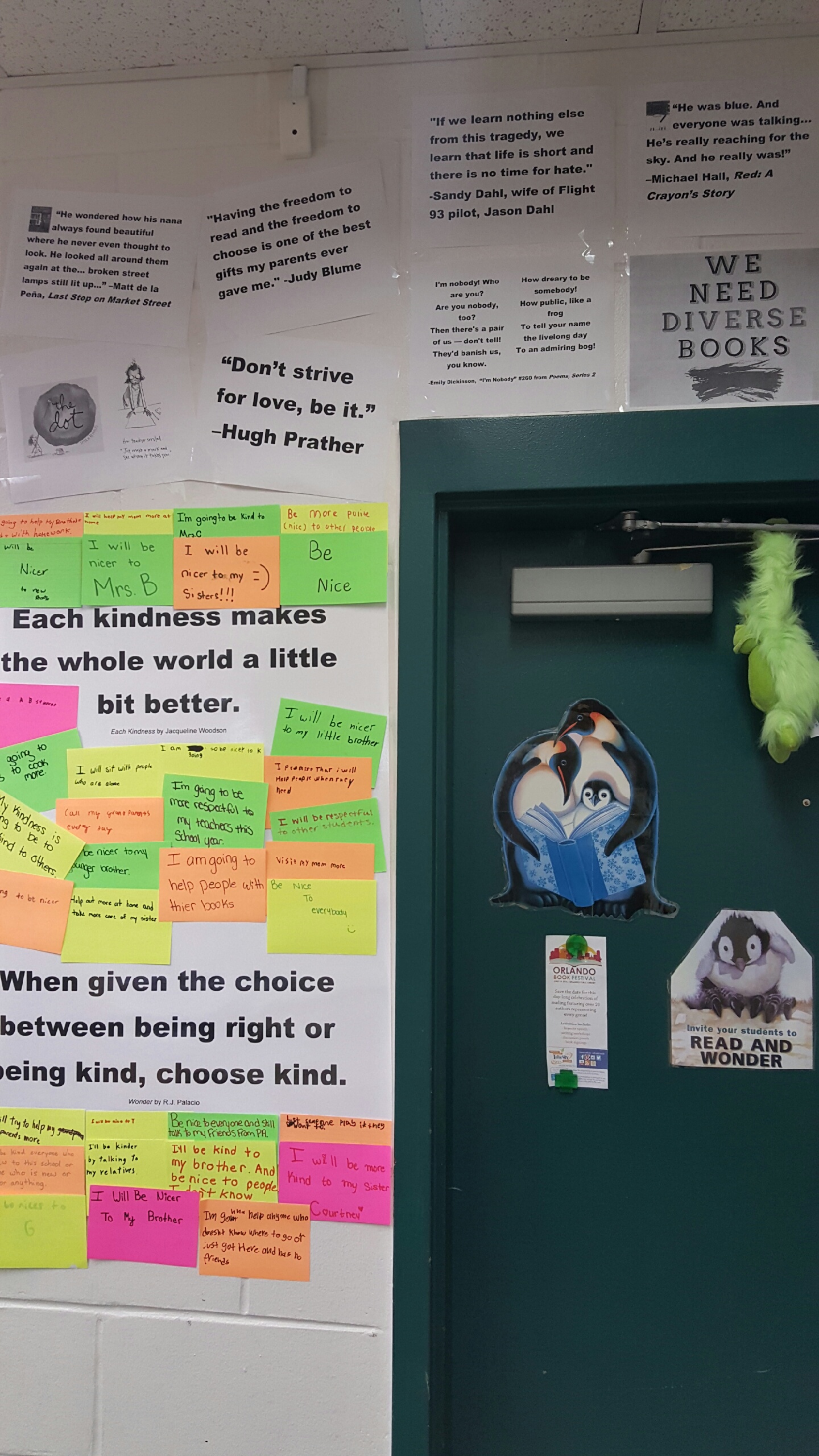
On most Fridays, students enter my classroom to a precept projected on the board. They read the precept and immediately begin writing. What is the theme of the precept? Why did the author say/write it? What does the precept mean to your life? Does it make you want to change anything? I let them write for about ten minutes and then we begin discussing.

I love many different things about tackling precepts with my students.

First, it gives them time to think about life. Too often during the school day the curriculum is just that: curriculum. Students don’t often get to reflect and think about their own life.

Second, it hits on reading and writing! Students are thinking about theme, author’s point of view, author’s perspective, inferences, and more then are writing a reflection sharing these using evidence and specific examples.

Third, we have some amazing discussions after they read, reflect, and write. Anyone who is worried about the future hasn’t had a really good conversation with a 12-year-old.

Blog20160208_160558 Blog20160208_160614 Blog20160208_160625

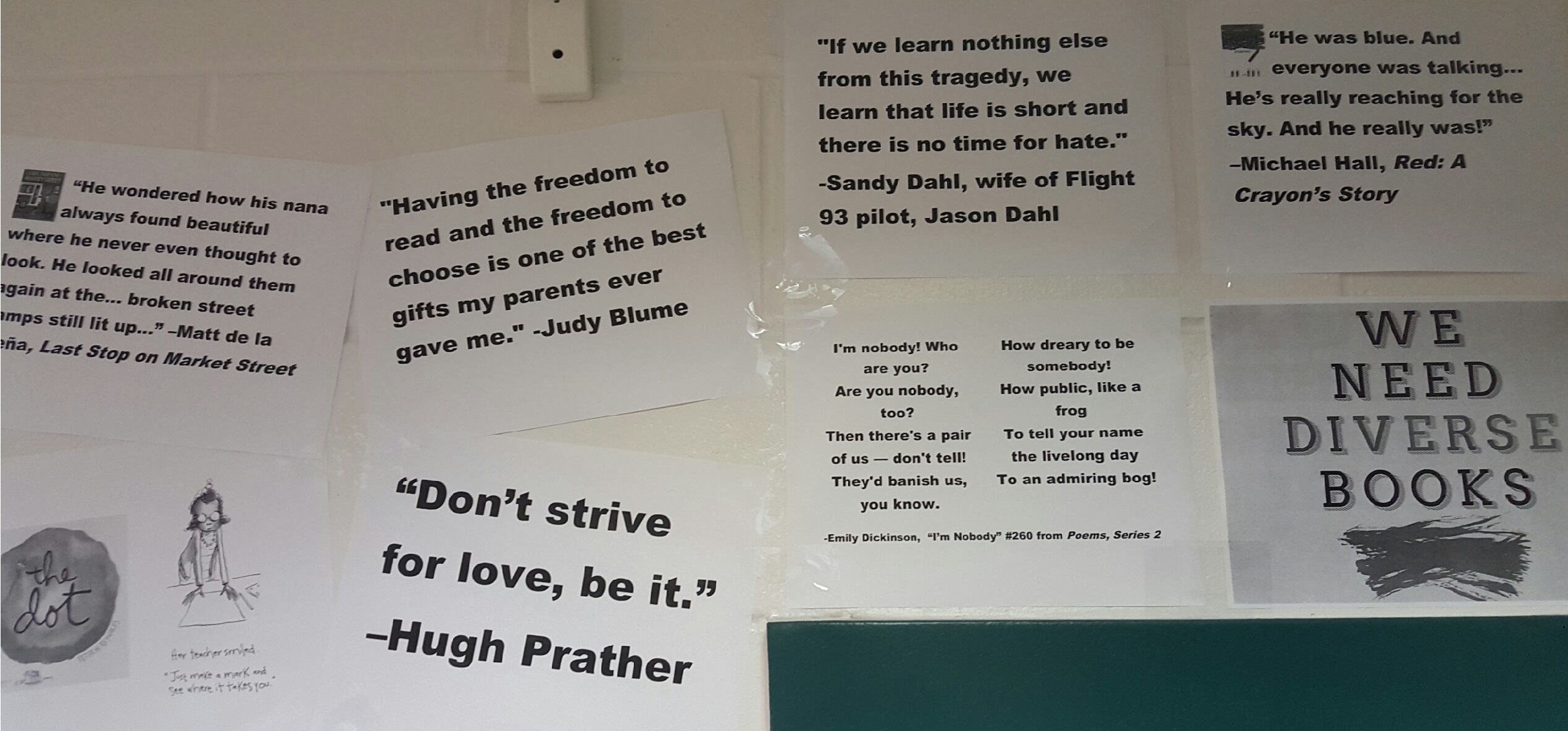
Although I have used Mr. Browne’s precepts as an inspiration, I’ve gone a bit rogue from the 365 Days of Wonder book and even include picture books as part of our precept activity. I’ve tried to tie the precepts to our units and also to what is going on in the world like a quote from a 9/11 widow. Here are the precepts we did during the first semester with some students responses.

Picture Books

Each Kindness by Jacqueline Wilson
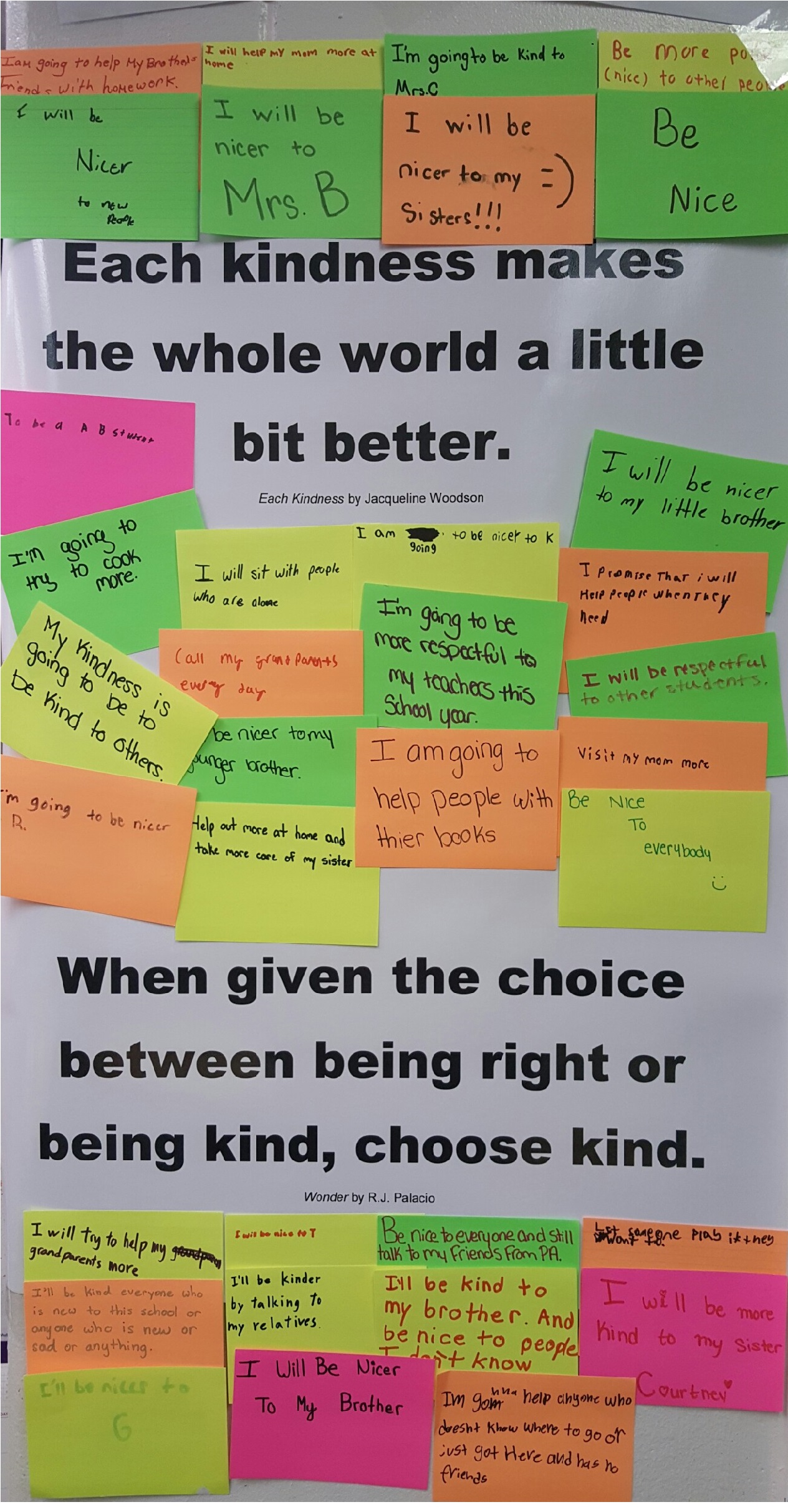
“Each kindness makes the whole world a little bit better.”

Students made vows of kindness that are posted around the precept.

The Dot by Peter H. Reynolds
“Just make a mark and see where it takes you.” 

Student response: I feel like this book means a lot. First it means that you might think that your not good enough and that doesn’t mean that your bad it just means you need practice and practice makes perfect. Then I feel like when someone inspires you and gives you kindness you should pass it on. Lastly I feel like if you start little and then you practice and become big don’t forget how you started who inspired you and cut the kindness, you should be big and kind to the little ones or the ones who are just starting because you never know when you can be the cause of something big. I think that this book can help a lot of people even though it was a picture book and that’s why you shouldn’t judge a book by how big it is or its cover because a little amount of words can change someone’s life.

Red: A Crayon’s Story by Michael Hall
“He was blue. And everyone was talking…He’s really reaching for the sky. And he really was!”

Student response: “Don’t  tell someone to be something they’re not. Let them discover who they are on their own.”

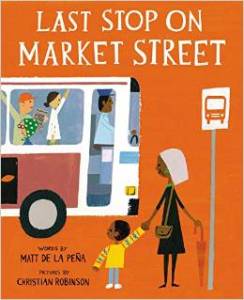
Last Stop on Market Street by Matt de la Peña
“He wondered how his nana always found beautiful where he never even though to look. He looked all around them again at the…broken streetlamps still lit up…”

Student response: Even if you are broken you can still shine brighter than others.

Poetry

I’m Nobody! Who Are You?” (260) by Emily Dickinson

Student response: I think the theme of the poem is that being a person that tries to be in the pinnacle of attention is not how you will achieve happiness. To me this poem means that being yourself is the easiest source of happiness of life.

Precepts

“When given the choice between being right or being kind, choose kind.” 
-Dr. Wayne Dyer, but found in Wonder by R.J. Palacio

Student response: We as people face choices everyday. Sometimes there easy, sometimes we don’t even realize we’re making one! This precept can be taken many different ways and all are correct. To me, this precept means love over opinion.

We Need Diverse Books

Student response: We need diverse books because when you read read the book and see all these races you think to yourself that its true,you look around you and you see the truth about the world. This is important because we need to be aware that all the people are different but they are all equal.

“If we learn nothing else form this tragedy, we learn that life is short and there is no time for hate.” 
Sandy Dahl, wife of Flight 93 pilot, Jason Dahl

Student response: This precept means that life is shorter than you think and if you live your life hated someone, you will live your life with hate. Most of the time, when you hate, you are angry, that is why you will live your life filled with hatred for another person. I think the author meant that she has partially forgiven the terrorists because she does not want to love her life with hatred. Mrs. Dahl doesn’t want you to live a terrible life just because of some people. You want to live your life to the fullest. This precept means to me that you should not live a short life filled with hate, but a short life living joyfully, which will seem longer than it is. This precept makes me think of many things: the people that have done wrong to me, the terrorists, and 9/11.

“Having the freedom to read and the freedom to choose is one of the best gifts my parents ever gave me.” 
Judy Blume

Student response: I think that this precept means that when you are given the freedom to choose which books you like it is really good because you can maybe relate to the book or learn from it. If you are deprived from books that you really enjoy, you might not even want to read at all because you want to read a certain type of book so much that any other book might not be fun to read. This is kind of like a movie you would want to watch. If you want to watch a movie for the right reasons, such as wanting to learn things or if it seems interesting, and you parents say you cannot watch it, other movies may not be that enjoyable because you are so set on watching a certain movie. You can also learn to be street smart smart from a book ahead of time so if you are in a situation, you have an idea of what to do. I think the author is happy that she was allowed to choose any book that she wanted because she might have learned something from books or maybe she gets very emotionally attached to certain books and she enjoys them very much. Maybe some people just read to go into a different world in their head because their family might be fighting or something. So, all in all the freedom of choosing whatever book you want to read is very important.

“Don’t strive for love, be it.”
Hugh Prather

Student response: I think the precept means that you should be the person to love not wait for someone to love you. Because if you wait you might never have love. And if you love you might get someone to love you back for who you are. Never be in the corner or in your room, always be out there to explore life and what it has to offer. Never give up who you like or what good qualities they have. Always stay true to yourself.

Precepts have given me a way to talk to my students about some tough subjects and get to know them better. Thank you R.J. Palacio and Mr. Browne for the inspiration!

Kellee Signature

Check out R.J. Palacios Nerdy Book Club post about Mr. Browne’s first precept
and her Tumblr post for a list of the Mr. Browne’s monthly precepts


The Happy Dandelion App

Share

Happy Dandelion

The Happy Dandelion App

We were contacted by Joshua and Donna Wilson, a husband-wife team and The Happy Dandelion creators, who asked if we’d review their picture book app. Because apps stray toward the advertising sector, we always review the apps carefully before we feature them on the blog. As you all know, we are not for-profit, and we are truly here for the love of teaching books, but after previewing the app, we decided it was too lovely not to share.

The books featured are picture books for all ages, and we were able to pull our sons (who are toddlers) onto our laps, and they loved pushing parts of the books to see the words spin, bump, and twist. It was fun to navigate the books because there were so many places to push, and we felt like we’d won for each time that we pushed the right places!

The first book we reviewed was The Sometimes Road. This was a calming book that is directed more for adults and is about the twists and turns of life. It was a story that will be appreciated by kids, too! There were many quotable sections that felt very zen to us. The music in the background was peaceful, and the storyline discusses the difficulties and triumphs we experience in life. The artwork is absolutely stunning. Ricki accessed this book after yoga class, and it was the perfect time to look at it. It kept her heart calm and made her feel peaceful.

We also accessed The UnStealer, which was very different from the first book. The watercolors popped, and there were many fun twists to this story. It is about an UnStealer who steals, “uns,” which was a very fun play on words. Our kids loved this one, and we think this would be very fun to use as a read-aloud in class. It would be great to take student volunteers to push different parts of the book during the read-aloud.

Check out The UnStealer in action:

We loved playing around with The Happy Dandelion app and think it would be a great resource in a classroom. This would be a great app to load onto an iPad for kids to use during independent reading or to use in groups at a reading station. A special thanks to Joshua and Donna Wilson for recommending their app to us. We had great fun!

RickiSigand Kellee Signature

Review and Teaching Guide!: Trashed by Derf Backderf

Share

NFPB2016

Nonfiction Wednesday

Nonfiction Picture Book Wednesday is hosted by Kid Lit Frenzy and was started to help promote the reading of nonfiction texts. Most Wednesdays, we will be participating and will review a nonfiction text (though it may not always be a picture book).
Be sure to visit Kid Lit Frenzy and see what other nonfiction books are shared this week!

trashed

Trashed
Author: Derf Backderf
Published November 3rd, 2015 by Harry N. Abrams

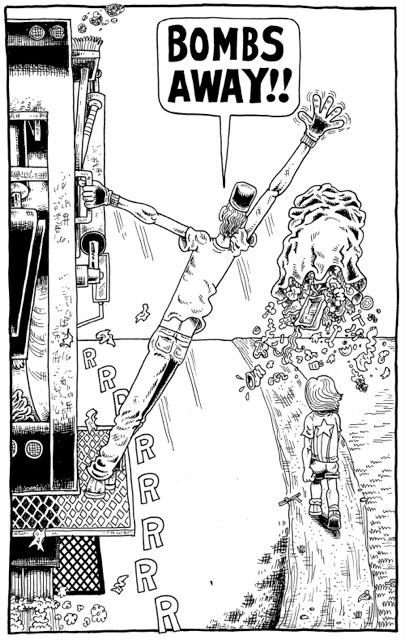
Goodreads Summary: Every week we pile our garbage on the curb and it disappears–like magic! The reality is anything but, of course. Trashed, Derf Backderf’s follow-up to the critically acclaimed, award-winning international bestseller My Friend Dahmer, is an ode to the crap job of all crap jobs–garbage collector. Anyone who has ever been trapped in a soul-sucking gig will relate to this tale. Trashed follows the raucous escapades of three 20-something friends as they clean the streets of pile after pile of stinking garbage, while battling annoying small-town bureaucrats, bizarre townfolk, sweltering summer heat, and frigid winter storms. Trashed is fiction, but is inspired by Derf’s own experiences as a garbage­man. Interspersed are nonfiction pages that detail what our garbage is and where it goes. The answers will stun you. Hop on the garbage truck named Betty and ride along with JB on a journey into the vast, secret world of garbage. Trashed is a hilarious, stomach-churning tale that will leave you laughing and wincing in disbelief.

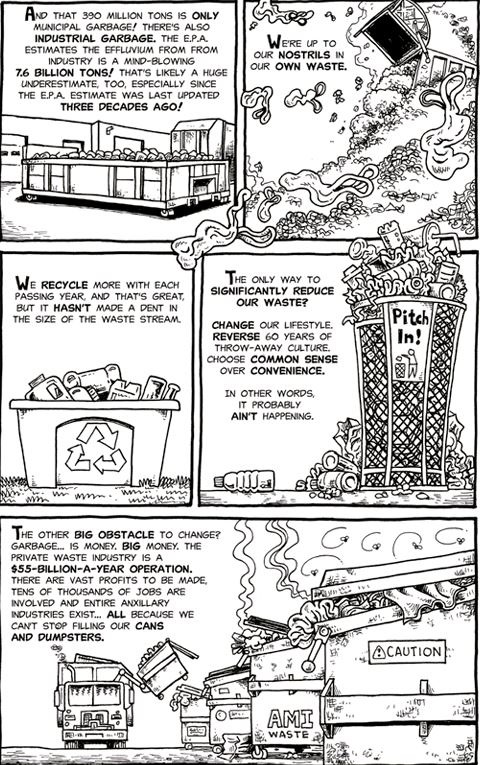
My Review:  I must first start by saying that this book is not completely nonfiction. The story is based roughly on Backderf’s life, but the story is overall fiction. However, the nonfiction aspect of the book lies in multi-genre aspect of this graphic novel. While Backderf tells you the story of JB’s life as a garbageman, he includes information about the state of garbage in the United States. The mix of JB’s story with information from Columbia University and an EPA report really makes this text so unique. Backderf does a great job balancing the fiction component (filled with dark humor and stark reality) with the information that puts everything in perspective.

Teachers’ Tools for Navigation: I have created a teaching guide for Trashed which can be found at:  https://www.scribd.com/doc/296747329/Trashed-Teaching-Guide 

Within the guide, I include discussion questions, but also a project-based assessment combining Trashed, the Columbia University report about municipal solid wast, an EPA report on advancing sustainable materials management, The Inconvenient Truth, and the six-step creative problem solving process.

Discussion Questions: Trashed’s structure is unique in its mix of fiction and fact. Why do you think the author chose to mix the two instead of sticking with only one genre? Also, why do you think he chose to not make this a memoir based on his own experiences and instead make a fictional narrative?; JB’s tone throughout the text is primarily negative seeming annoyed, bitter, or hopeless. Some examples of this can be found on pages 10-11, 37, and 202. How would you describe JB’s tone? What words were specifically used throughout the text to set the tone? Why do you think the author chose to write JB’s character this way?; What claim do you think Backderf is making by including all of the factual evidence about municipal waste? How is his claim developed over time? How did he use rhetoric throughout the text to advance his point of view?; Looking at the information Backderf shared from the Columbia University and EPA reports, how did the author choose the order in which he revealed information?; Was there any factual information shared in Trashed that surprised you? Why did it surprise you, and what does it make you reflect on?

We Flagged: 

Trashed 2trashed 1

Read This If You Loved: My Friend Dahmer by Derf Backderf, Nonfiction texts about the environment, Nonfiction graphic novels, Adult graphic novels

Recommended For: 

classroomlibrarybuttonsmall closereadinganalysisbuttonsmall

Signature

Top Ten Tuesday: Songs We Wish Were Books

Share

top ten tuesday

Top Ten Tuesday is an original feature/weekly meme created at The Broke and the Bookish. The feature was created because The Broke and Bookish are particularly fond of lists (as are we!). Each week a new Top Ten list topic is given and bloggers can participate.

 Today’s Topic: Songs We Wish Were Books

We include a verse to give you an idea of how great the book would be!

Ricki

I had way too much fun with this topic. It was hard to limit my list to five!

1. “Hello” by Adele

Hello, can you hear me
I’m in California dreaming about who we used to be
When we were younger and free
I’ve forgotten how it felt before the world fell at our feet

2. “A Boy Named Sue” by Johnny Cash

My daddy left home when I was three
And he didn’t leave much to ma and me
Just this old guitar and an empty bottle of booze.
Now, I don’t blame him cause he run and hid
But the meanest thing that he ever did
Was before he left, he went and named me “Sue.”

3. “The Devil Went Down to Georgia” by The Charlie Daniels Band

Well the Devil went down to Georgia
He was lookin’ for a soul to steal
He was in a bind ’cause he was way behind
And he was willin’ to make a deal

4. “Eleanor Rigby” by The Beatles

Eleanor Rigby picks up the rice in the church where a wedding has been
Lives in a dream
Waits at the window, wearing the face that she keeps in a jar by the door
Who is it for?

5. “The Thunder Rolls” by Garth Brooks

She’s waitin’ by the window
When he pulls into the drive
She rushes out to hold him
Thankful he’s alive
But on the wind and rain
A strange new perfume blows
And the lightnin’ flashes in her eyes
And he knows that she knows
And the thunder rolls

Kellee

1. “Yellow Submarine” by The Beatles

In the town where I was born
Lived a man who sailed to sea
And he told us of his life
In the land of submarines

So we sailed up to the sun
Till we found the sea of green
And we lived beneath the waves
In our yellow submarine

2. “The Hand That Feeds” by Nine Inch Nails

You’re keeping in step
In the line
Got your chin held high and you feel just fine
Cause you do
What you’re told
But inside your heart it is black and it’s hollow and it’s cold

Just how deep do you believe?
Will you bite the hand that feeds?
Will you chew until it bleeds?
Can you get up off your knees?
Are you brave enough to see?
Do you want to change it?

3. “Tangled Up in Blue” by Bob Dylan

Early one mornin’ the sun was shinin’
I was layin’ in bed
Wond’rin’ if she’d changed at all
If her hair was still red
Her folks they said our lives together
Sure was gonna be rough
They never did like Mama’s homemade dress
Papa’s bankbook wasn’t big enough
And I was standin’ on the side of the road
Rain fallin’ on my shoes
Heading out for the East Coast
Lord knows I’ve paid some dues gettin’ through
Tangled up in blue

4. “Locked Up and Lonely” Masked Intruder

In the loneliest place on Earth
I’m locked away
Still holding on for whatever it’s worth
Just waiting for love to save the day

And they say no one gets out alive
Well I pray it isn’t true
And I wait around for somebody
Somebody like you

5. “Yearbook” by Hanson

Oh, dear Amy see you in September
Hope that you remember me next year
Hey Jamie you’ve been a great friend to me
I hope that I’ll still see you around here

‘Cause I’m looking through the yearbook then I find that empty space
No he never wrote me nothing but I can’t forget his face

Which songs do you wish were books?

RickiSig and Signature

It’s Monday! What Are You Reading? #IMWAYR 2/15/16

Share

IMWAYR 2015 logo

It’s Monday! What Are You Reading? From Picture Books to YA!

It’s Monday! What are you Reading? is a meme started by Sheila at Book Journeys and now hosted by Kathryn at The Book Date. It is a great way to recap what you read and/or reviewed the previous week and to plan out your reading and reviews for the upcoming week. It’s also a great chance to see what others are reading right now…you just might discover the next “must-read” book!

Kellee and Jen, of Teach Mentor Texts, decided to give It’s Monday! What Are You Reading? a kidlit focus. If you read and review books in children’s literature – picture books, chapter books, middle grade novels, young adult novels, anything in the world of kidlit – join us! We love this meme and think you will, too.

We encourage everyone who participates to support the blogging community by visiting at least three of the other book bloggers that link up and leave comments for them.

Last Week’s Posts

top ten tuesday i want to be an astronaught i want to be a lion tamer

not if I see you first last stop on market street imp

Tuesday: Top Ten Tuesday: Favorite Literary Couples

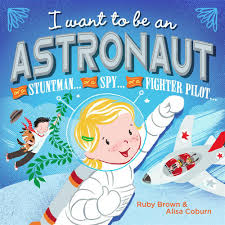
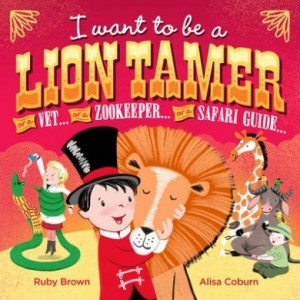
Wednesday: I Want to Be a… books by Ruby Brown

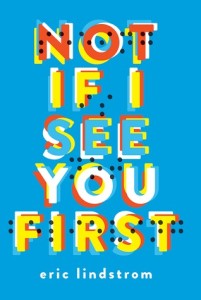
Thursday: Not If I See You First by Eric Lindstrom

Friday: Talking about Last Stop on Market Street in a Middle School Classroom

Sunday: Author Guest Post!: “All About Imps” by Henry Herz, Author of When You Give an Imp a Penny

**Click on any picture/link to view the post**

 Last Week’s Journeys

Kellee: This week was so wonderful! My sister, mom, brother, and brother-in-law all visited, I took off Thursday and Friday to spend time with them, we spent Thursday at Disney, and Trent’s party on Saturday was a success! It is nice to have today off, but it is back to the grind tomorrow. AND I even had time to read!

I finished two graphic novels: Lost in NYC by Nadja Spiegelman and Comic Squad #2: Lunch! edited by Jennifer L. Holm and Jarrett J. Krosoczka. I really liked Lost in NYC and how the book was a narrative but also informational about NYC, architecture, history, and the subway. Lunch! was a fun short graphic anthology, but I was mostly excited about Nathan Hale’s WWII story! It was so interesting, funny, and smart–just like his graphic novels. I also finally read the Caldecott winning Finding Winnie, and I loved that it was written by the great-granddaughter of Capt. Colebourn, the serviceman that owned Winnie originally.  It seemed almost primary source-like because of this connection. I also read Reproductive Rights: Who Decides? by Vicki O. Wittenstein which we’ll review next week. It was SO full of information. Finally, my sister and I read Oh My a Fly! by Jan Pieńkowski, which is a book from our childhood, with Trent! He is finally able to read pop-up books and is loving them!

Ricki: Henry and I read Snatchabook by Helen Docherty tonight for the first time since he was very young, so he understands it now. When we got to the scene where the books were being stolen, he started crying hysterically and saying, “No take the books!” over and over. We finally got to the ending, and he was still gasping for air, and he demanded that I read it two more times. I cut him off after this because I felt like I was emotionally traumatizing my child over and over! I had to stop him in the middle of the second and third reading, and say, “Henry, are the books going to come back?” He said, “Ya,” between his tears. Ha ha.  

I also read Education for Extinction: American Indians and the Boarding School Experience, 1875-1928 by David Wallace Adams. This is a comprehensive book about Indian boarding schools, and I highly recommend it. It is incredibly eye-opening and many aspects are applicable to schools today. 

This Week’s Expeditions

Kellee: I am currently in the middle of Kiki and Jacques, and I am enjoying it. I think it introduces middle grade readers to an important part of history while also being relatable. After that, I plan on reading The Honest Truth which is on my #mustreadin2016 list and is our first book in my school’s faculty book club!!! I also have a couple early reader biographies and picture books to read and review.

Ricki: I am hoping to read All American Boys by Jason Reynolds and Brendan Kiely tonight. I have so much work to get done for my class that I am worried I won’t finish it in time for my book club!

Upcoming Week’s Posts

top ten tuesday trashed

happy dandelion

Blog20160208_160614 Sleight of Hand

Tuesday: Songs We Wish Were Books

Wednesday: Trashed by Derf Backderf

Thursday: The Happy Dandelion App

Friday: Precepts

Sunday: Author Guest Post! by Sue Duff, Author of Sleight of Hand

 So, what are you reading?

Link up below and go check out what everyone else is reading. Please support other bloggers by viewing and commenting on at least 3 other blogs. If you tweet about your Monday post, tag the tweet with #IMWAYR!

 Signature andRickiSig

Author Guest Post!: “All About Imps” by Henry Herz, Author of When You Give an Imp a Penny

Share

“All About Imps”

According to German mythology, imps are lesser goblins who often seek humans on whom to commit mischievous, not evil, acts. Imps are described as small, wild and willful; in some cultures they are synonymous with fairies. They are sometimes depicted as unattractive small demons. Although immortal, imps could be harmed with magical weapons or kept out of one’s house with magical wards.

There’s a certain pathos associated with imps, as their mischief is meant to attract human attention and friendship, but typically produces the opposite effect. Even in “successful” situations, the imp remains true to its nature, and continues to play pranks on its human host. Hence the term “impish” is often used today to describe someone who is a trickster or practical joker.

Given their quasi-demonic appearance, some believed that imps were servants of witches and warlocks, sometimes known as familiars. Such familiars, in the form of the all-too-common black cat, black dog, or toad, were considered proof of witchcraft during the era of witch hunts. Science!!

Imp legend in some cases associates imps with an object. Some imps were kept within a container, like a bottle or lamp. Others were not contained within, but magically bound to an object like a sword or jewel.

Imps could be considered the alter-egos of the far more helpful brownies (not to be confused with young girl scouts or a delicious chocolatey treat). According to Scottish and English folklore, brownies are small humanoids that inhabit unused portions of houses, such as attics, basements, or within the walls. Brownies help with the household chores, but because they don’t like to be seen, they work at night. They appreciate gifts of food, particularly honey, porridge and dairy products. But brownies may depart the home if their gifts are referred to as payments, or if the human occupants mistreat them. It seems like a brownie would be a natural solution to an imp infestation.

Imps appear in the games Forgotten Realms and Dungeons & Dragon, and in the books THE BOTTLE IMP by Robert Louis Stevenson, LIVES OF THE NECROMANCER by William Godwin, THE IMP AND THE CRUST by Leo Tolstoy, The Oz series by L. Frank Baum, and MONSTER GOOSE NURSERY RHYMES by Henry Herz.

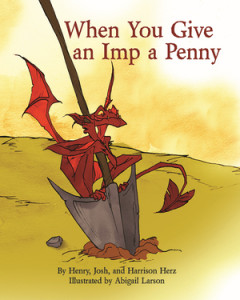
Henry Herz’s latest picture book, published by Pelican, is WHEN YOU GIVE AN IMP A PENNY. Before you lend an imp a penny, there’s something you should know—such a simple act of generosity could set off a side-splitting chain of events! A colorful picture book full of mythology, mischief, and magic, WHEN YOU GIVE AN IMP A PENNY shows us just what happens when an accident-prone—but well-intentioned—imp comes along asking for favors! The same writer/illustrator duo that brought you MONSTER GOOSE NURSERY RHYMES brings to life a comedy of fabled proportions.

From tracking mud on the floor to setting the broom on fire, this clumsy little imp causes accidents wherever he goes, but he’s determined make things right again. The only thing it will cost his host is a little patience—and maybe a bit of time cleaning up some messes! It won’t be long before this troublemaker has won over the entire family (except for the cat) with his irrepressible charm. Herz’s whimsical prose and Larson’s bold illustrations make this tale a laugh from beginning to end—and then again!

imp

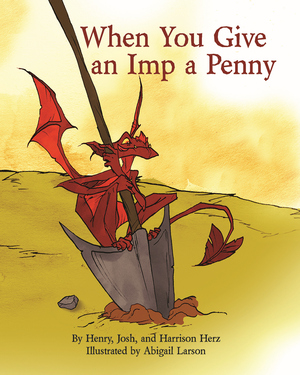
When You Give an Imp a Penny
Author: Henry, Josh, and Harrison Herz
Illustrator: Abigail Larson
Published February 1st, 2016 by Pelican Publishing Company

Goodreads Summary: If you’ve ever given an imp a penny, then you know how outrageous things can get. If you haven’t…consider yourself warned! In this vibrant new story from the writer and illustrator behind Monster Goose Nursery Rhymes, a well-meaning imp needs one tiny favor. But sometimes even the smallest of good deeds can lead to huge accidents! When he tries to help you clean house, this clumsy imp will leave everything messier than ever. And once he’s done burying his money bag for safekeeping, your yard might never be the same. With colorful illustrations right out of a fairy tale and a story that will get the whole family laughing, this book is a must-have for every lover of fantasy.

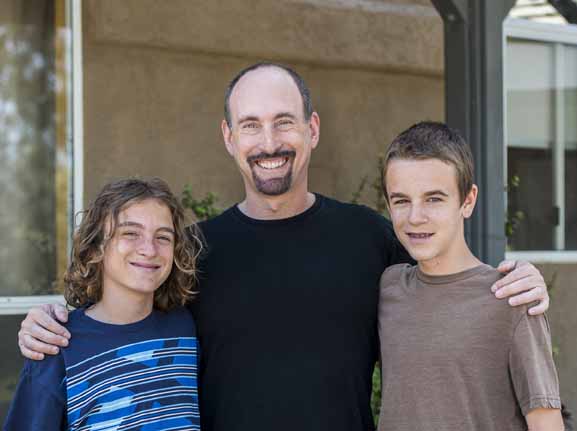
About the Author: Henry Herz writes fantasy and science fiction for children. He is represented by Deborah Warren of East/West Literary Agency. His debut traditionally published picture book, MONSTER GOOSE NURSERY RHYMES (reviewed here on 3/27/15), was published by Pelican in January 2015. WHEN YOU GIVE AN IMP A PENNY and LITTLE RED CUTTLEFISH will follow in 2016. Henry and his sons have also indie-published four children’s books. NIMPENTOAD reached #1 in Kindle Best Sellers large print sci-fi & fantasy, and was featured in Young Entrepreneur, Wired GeekDad, and CNN. BEYOND THE PALE featured short stories by award-winning and New York Times bestselling authors Saladin Ahmed, Peter S. Beagle, Heather Brewer, Jim Butcher, Rachel Caine, Kami Garcia, Nancy Holder, Gillian Philip & Jane Yolen, and reached #2 in Amazon Science Fiction & Fantasy > Fantasy > Anthologies.

Henry is a member of the Society of Children’s Book Writers & Illustrators (SCBWI) and the Science Fiction & Fantasy Writers of America (SFWA). Henry participates in literature panels at a variety of conventions, including San Diego Comic-Con and WonderCon. Henry created KidLit Creature Week (www.birchtreepub.com/kcw/), an annual online gallery of monsters, creatures, and other imaginary beasts from children’s books. Henry writes articles about children’s literature for TheWriteLife.com. He reviews children’s books for the San Francisco Book Review and the San Diego Book Review.

Blog: http://www.henryherz.com
Facebook: https://www.facebook.com/henry.herz/
Twitter: https://twitter.com/Nimpentoad

HerzHenry3-72

Thank you Henry for sharing your newest picture book!

RickiSig andKellee Signature