Engaging Classroom Discussion Strategies

Share

Engaging Classroom Discussion Techniques-page-001

My favorite part about teaching is that teachers love to share resources. We are a community. The more I teach methods courses at the university level, the more frequently I find myself sharing some ways I’ve hosted classroom discussions. I did not create any of these ideas below, and sadly, I cannot even share the source of the methods. I credit my advisor, Wendy Glenn, for introducing me to many of them. After I graduated and started teaching, I found other great books along the way which taught me others. While some of these ideas may be old news for you, I hope you are able to learn at least one new, useful method below.

1. The good ol’ fashioned circle (with a twist)

I never get tired of the circle, but my students often get tired of it. In my last year of teaching, I vowed that I would never create the discussion questions because I was working toward a student-centered classroom. After each reading, I required students to generate quality conversation starters. They submitted their questions on slips of paper, and whenever the conversation slowed down, we grabbed a new question.

2. Fishbowl

Every time I use the fishbowl in my college courses, the students are blown away at how fun it is. I remember feeling the same way as an undergraduate. This is a bit tricky to explain. There is an inner and an outer circle. Three to five kids are in the inner circle, and they are the only students allowed to speak. We draw questions (usually student-submitted questions), and those students have a conversation as if they are the only people in the room. When someone in the outer circle wants to make a comment, s/he taps the shoulder of a person in the inner circle, and they swap seats. I remind my students that they all must enter the inner circle twice, and they shouldn’t tap someone’s should unless they have made two comments. When the conversation gets dry, we pull a new question. This method takes some getting used to, but the kids find it to be quite fun. If the outer circle isn’t paying attention, I require them to take notes on the discussion.

3. Socratic Seminar

This method is similar to the fishbowl. I always use an inner and outer circle. Instead, the inner circle is closely examining a text and asking a lot of questions about it: Where did the idea come from? What is the purpose of this line?

I have an even number of inner students as outer students. Each inner student is paired with an outer student as his/her coach. At several points, I take a break and give that pair time to talk about how the inner student is doing. They can offer ideas and support to help the inner circle person contribute to the discussion. I find this video to be particularly helpful, and the website offers rubrics and ideas about helping students set goals for this discussion.

4. Jigsaw

For this technique, we ask four groups of students to read four different articles or research four different topics that have a common theme. Usually, they do this for homework. If I have 24 students in my class, six students will be reading Article 1, six students will be reading Article 2, six students will be reading Article 3, and six students will be reading Article 4.  When the students come to class, I group them by their article. This is their “home” group. They spend time discussing the article and outlining how they will present it to their peers. This gives them the confidence to share its content. Within each group, I assign each student a different letter. So for Article 1, if I have six students, I assign them A, B, C, D, E, and F. I go to each group and assign those same letters to each group. (I’ve also seen people line up students based on their articles, but both methods work fine). Then, all of the students regroup based on their letter. So out of the A students, I will now have four students in the group, one from each of the original four articles. The students’ job is to listen to each other and take notes (often in a graphic organizer I’ve created).

For those of you who are unfamiliar with this method, it might sound like a lot of work, but it really is quite easy to organize. The benefit is the students learn about four related articles without having to read them all. I used to do this when we talked about modern genocide as it related to the Holocaust text I was teaching. Instead of asking the students to research many countries, I assigned four countries to four groups. In the end, the students were responsible for sharing about the country they researched, and as a group, connecting that knowledge to the text.

5. Concentric Circles

We have an equal number of students in an inner circle and in an outer circle. The students in the inner circle face the students in the outer circle, and each student is paired with another student. I ask a discussion question (e.g. What did you think about the decision of the trial?) and only the inner circle person can speak. The outer circle person can only listen. Then, I ask the same question to the outer circle person, and his or her job is to listen. This teaches listening skills, and it also teaches the speaker to elaborate. After about thirty seconds, I ask the inner circle to rotate clockwise three people to swap partners (or however many times I feel like). I ask a different question (or sometimes, the same question!). The same process continues (either the inner or outer circle person is in charge of speaking and then it swaps). Then, I have the outer circle rotate counter-clockwise two people to swap partners. The students have fun discussing the questions with different people each time, and they find the turning of the circles to be wildly fun.

6. Give One, Get One

I ask the students to fold a piece of paper lengthwise so they have two columns. Then, I ask them to write everything they learned from the text in the right hand column. I tell them the more they write down, the better. When they are finished, I ask them to write numbers 1 through 10 in the right-hand column. Their job is to go around the room and to collect (from ten different peers) ten ideas that they don’t have on the left-hand side of their papers. This requires them to spend time with each peer, reviewing the information they learned and wrote down, and find something they missed or didn’t consider. They groan when you tell them what they have to do, but while they discuss the text, they are always laughing at the obscure or specific facts their peers come up with.

7. Post-It Walk

I post four to six major discussion questions in different areas of the room. I put small groups of students at each question and give them post-it notes. Their job is to discuss the question in front of them and write one idea/topic they discussed on the post-it note. Then, the entire class rotates clockwise. They read the question, read the post-it(s) from a previous group or groups. Their job is to discuss the question and come up with something different to put on their post-it note. After groups have rotated and put post-it notes on every discussion question, the groups stay at the last question on the wall. They are required to share out to the entire class one or two great ideas from the post-its on the question in front of them.

8. Pass the Butcher Paper

Students sit in groups. In front of each group is a different character (or topic). I ask them a question about that character (e.g. What do we know about him/her based on his/her actions in the book thus far?). They write notes on the butcher paper. Then, they pass the butcher papers clockwise, and they receive a new character. Their job is to read the notes of the previous group. Then I ask a different question (e.g. How do you predict the character will act in the rest of the novel?). They write notes, and we keep passing. This allows the students to see the ideas of many of their peers about different questions, and they feel like they are working as a whole class to create a complex understanding of each character. We post the butcher paper in the room.

9. Four Corners

This works best as a pre-reading activity for a book, but it could be modified for any subject area. I did it in my Methods class as an undergraduate student and loved it. My students enjoyed it, too. I provide a handout with major themes from a novel (e.g. Revenge is justifiable.), and ask students to circle “Strongly Agree,” “Agree,” “Disagree,” or “Strongly Disagree” for each statement. Then I read the questions aloud and ask students to walk to the corner of the room that has the sign (“Strongly Agree,” “Agree,” “Disagree,” “Strongly Disagree”) that matches their opinions. I ask a volunteer from each corner to share his/her opinion. This often leads to heated debates, and it gets the students thinking about the novel.

 10. Facts of Five

Ask students to write down the five main ideas they got from a text. (This can be adjusted in a variety of ways, but it is good to require students to write five ______. For instance, they might write down five ways to connect the text to the real world.) Then, ask students to get into groups of three. Their job is to talk through each of their lists and pair the fifteen ideas down to five ideas. Then, their group of three joins another group of three. The six group members talk through their ideas and reach a consensus of the top five ideas. Then, all of the groups share out, and we have a class discussion to agree on the five, main points. This discussion technique requires groups to talk through ideas and determine essential, important concepts from a text. It also allows students to spend time considering how their ideas fit in with the ideas of their peers.

11. The Pinwheel

I just came across this neat technique by Sarah Brown Wessling. I recommend you watch the 7-minute video to see how it is organized. Students are arranged into a pinwheel shape. Three groups are each assigned to a different author, and a fourth group serves as “provocateurs” who ask probing questions. This would be a great way to synthesize multiple texts that you have read in class.

Please, please post a comment explaining any methods that I’ve missed, and I will incorporate your ideas into the post! Want more ideas? Check out this page more closely related to novels!

RickiSig

Freedom Summer by Deborah Wiles (Kellee’s Review)

Share

NFPB2015

Nonfiction Picture Book Wednesday

Nonfiction Picture Book Wednesday is hosted by Kid Lit Frenzy and was started to help promote the reading of nonfiction texts. Most Wednesdays, we will be participating and will review a nonfiction text (though it may not always be a picture book).
Be sure to visit Kid Lit Frenzy and see what other nonfiction books are shared this week!

Disclaimer: This book is technically historical fiction, but I felt it belonged on a Wednesday because of its base in fact (see “A Note About The Text”).

freedom summer

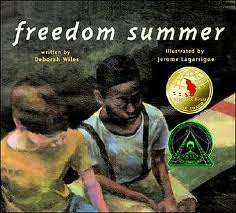
Freedom Summer
Author: Deborah Wiles
Illustrator: Jerome Lagarrigue
Published January 1st, 2005 by Aladdin

Goodreads Summary: 

John Henry swims better than anyone I know.
He crawls like a catfish,
blows bubbles like a swamp monster,
but he doesn’t swim in the town pool with me.
He’s not allowed.

Joe and John Henry are a lot alike. They both like shooting marbles, they both want to be firemen, and they both love to swim. But there’s one important way they’re different: Joe is white and John Henry is black, and in the South in 1964, that means John Henry isn’t allowed to do everything his best friend is. Then a law is passed that forbids segregation and opens the town pool to everyone. Joe and John Henry are so excited they race each other there…only to discover that it takes more than a new law to change people’s hearts.

My Review:  Deborah Wiles amazes me every time I read something by her. I think I need to get everything she has written and devour it. Her books make me a better person. This one is no exception to these statements. Freedom Summer starts with a personal story of Wiles’s and sets the stage for the book: What would it be like to have a best friend who is black in the South in 1964? Do you know what it is like? Any other friendship! Except many people felt that it was wrong and you cannot go places together. Freedom Summer is about Joe and John Henry. They are both young boys. They both like to swim. They both love ice cream. However, only one can go to the pool and only one can buy ice cream from the store. I think what makes this story so impactful is that Wiles sets the stage of the friendship as something so normal (because it is!!) then shows how different their lives are. So powerful. Made me cry. It’s lyrical writing, soft and beautiful illustrations, and powerful message are so moving. Go read it if you haven’t.

You can view Ricki’s review of Freedom Summer here.

Teachers’ Tools for Navigation: This book belongs in classrooms. It will start discussions and make students think. Luckily, Deborah Wiles helps us out a ton by sharing so many resources with us on her Pinterest board https://www.pinterest.com/debbiewiles/ and her website http://deborahwiles.com/site/resources-for-educators/.

Discussion Questions: Why was the pool being filled with tar?; What do you think will happen after the end of the book?; Based on Joe’s parents letting him be friends with John Henry, what can you infer their viewpoint of integration is?

We Flagged: 

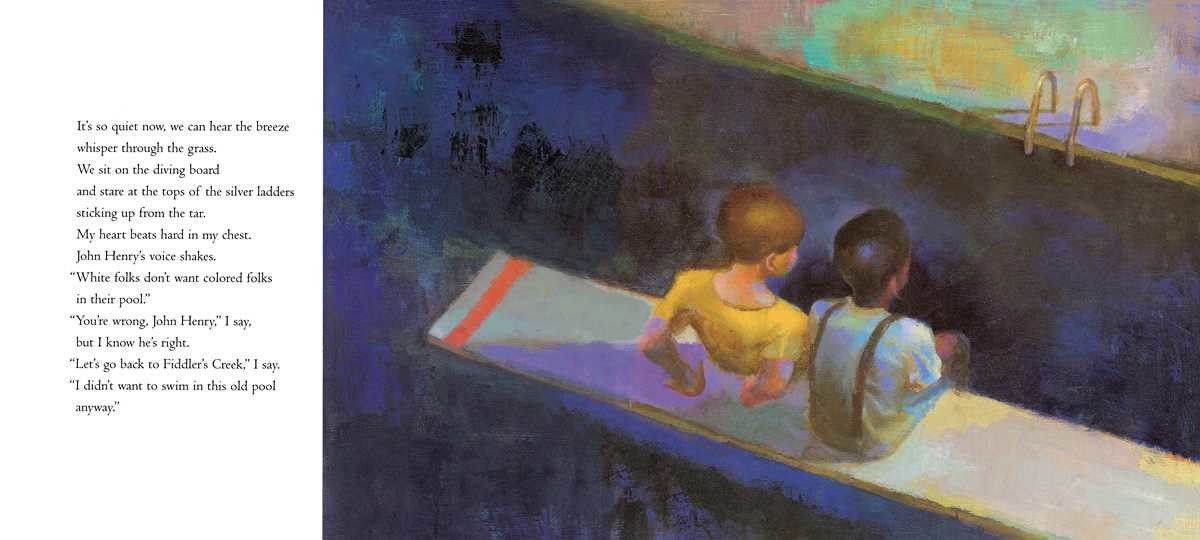
freedom summer spread
from http://books.simonandschuster.ca/Freedom-Summer/Deborah-Wiles/9781481422987

Read This If You Loved: Revolution by Deborah WilesSeeds of Freedom by Hester BassSeparate is Never Equal by Duncan TonatiuhThe Lions of Little Rock by Kristin Levine, Sin-In by Andrea Pinkney

Recommended For: 

classroomlibrarybuttonsmall readaloudbuttonsmall litcirclesbuttonsmall

Signature

Top Ten Tuesday: Last Ten Books We Bought for Our Boys

Share

top ten tuesday

Top Ten Tuesday is an original feature/weekly meme created at The Broke and the Bookish. The feature was created because The Broke and Bookish are particularly fond of lists (as are we!). Each week a new Top Ten list topic is given and bloggers can participate.

 Today’s Topic: Last Ten Books We Bought for Our Boys

We read a lot of picture books, and in order to keep up with diapers, we can only buy the books that are truly special. Here are the last ten that we bought. For those of you who are new to the blog, Ricki’s son is 19 months old, and Kellee’s son is 16 months old.

Ricki

1. Freedom Summer by Deborah Wiles

freedom summer

Readers of this blog know that I am head over heels for this book. I am going to read it to him very often when he is older.

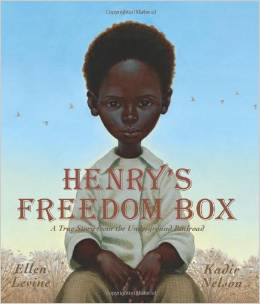
2. Henry’s Freedom Box by Ellen Levine

Henry's Freedom Box

I purchased this book because I saw many positive reviews. It is based on a true story. I read it to Henry, and he enjoyed listening, but I may wait a bit longer until he is at an appropriate age that I can begin to discuss the serious matters of the book. I look forward to reading it to him often.

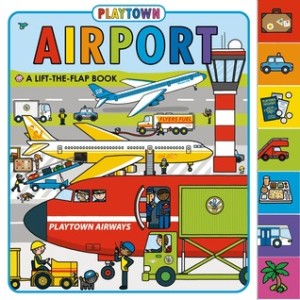
3. Playtown: Airport by Roger Priddy

Playtown Airport

My son is madly in love with the Playtown series. He owns the first book of the series and a few more installments are coming out within the next year or two. There is a chance we have to take a six-hour plane ride next month, so I bought this and hid it. I can’t WAIT to show it to him. He is going to be so excited.

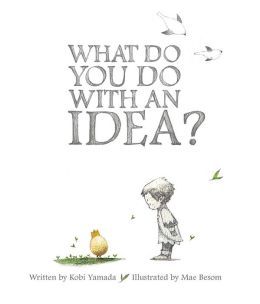
4. What Do You Do with an Idea? by Kobi Yamada

idea

I read this book in the bookstore and was blown away. I immediately bought a copy for Henry and a copy for my sister (who is a dreamer and constantly thinking of inventions). It is a beautiful book.

5. That’s Not My Train by Fiona Watt

That's Not My Train

This book is quite short and nothing too exciting, but my son loves it. I wouldn’t call it literary, but he always asks me to read it at night.

Kellee

I actually was quite lucky to have worked the Scholastic Warehouse Sale not that long ago, and when you work the sale, you get paid in books! This is perfect timing to get picture books for Trent, and these 5 books are the ones I am most excited about reading with Trent (I haven’t debuted them with Trent yet; we are still reading primarily board books). One of the reasons I’m highlighting these particular books that I got (out of 19) is because of the illustrators. Young, Brown, Santat, and Reynolds are by far on my favorites list of illustrators.

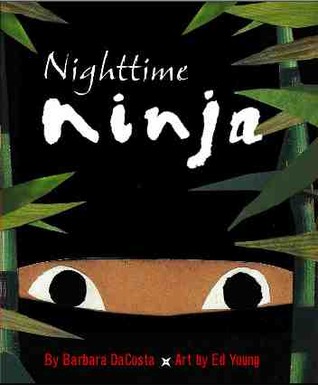
1. Nighttime Ninja by Barbara DaCost, Illustrated by Ed Young

nighttime ninja

I read this book when it first came out, and I knew that I would need to get it to read it to my son. It is so funny!

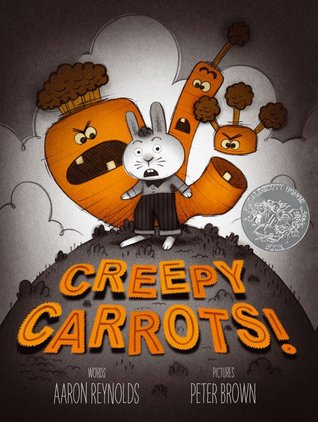
2. Creepy Carrots by Aaron Reynolds, Illustrated by Peter Brown

creepy carrot

I have wanted to read this book since it came out and even more once it received a Caldecott Honor. So excited to get my hands on it!

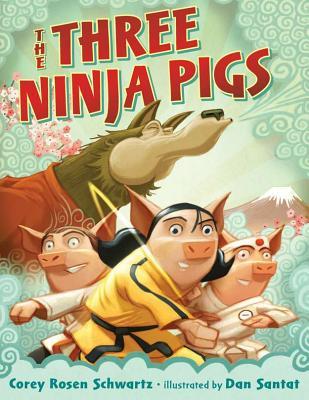
3. The Three Ninja Pigs by Corey Rosen Schwartz, Illustrated by Dan Santat

three ninja pigs

This was one of the books that Scholastic put on the posters all around the sale, and it cracked me up every time I walked by. I knew I had to have it.

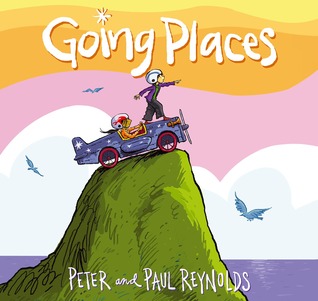
4. Going Places by Peter and Paul Reynolds

going places

This is one of those books that promotes friendship, imagination, and creativity. I cannot wait to read it to Trent.

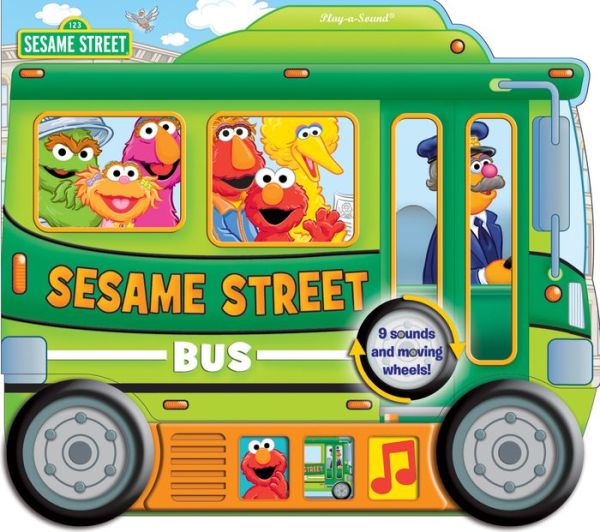
5. Sesame Street Bus

sesame street bus

This is the only one not purchased at Scholastic, but it is the most recent book we bought. Trent is in love with Elmo right now. I am not sure how he learned who Elmo is, but now everything is about Elmo. He saw this book in Target when we were shopping for a birthday present, and I had to get it for him. He loves pressing the Elmo button.

Which books do you recommend for our toddlers? 

RickiSig and Signature

It’s Monday! What Are You Reading? #IMWAYR 7/13/15

Share

IMWAYR

It’s Monday! What Are You Reading? From Picture Books to YA!

It’s Monday! What are you Reading? is a meme hosted by Sheila at Book Journeys. It is a great way to recap what you read and/or reviewed the previous week and to plan out your reading and reviews for the upcoming week. It’s also a great chance to see what others are reading right now…you just might discover the next “must-read” book!

Jen Vincent, of Teach Mentor Texts, and Kellee decided to give It’s Monday! What Are You Reading? a kidlit focus. If you read and review books in children’s literature – picture books, chapter books, middle grade novels, young adult novels, anything in the world of kidlit – join us! We love this meme and think you will, too.

We encourage everyone who participates to support the blogging community by visiting at least three of the other book bloggers that link up and leave comments for them.

Last Week’s Posts

top ten tuesday bigbooksummer Heather Has Two Mommies
stormy joyville

Tuesday: Top Ten Dystopian Books We’ve Ever Read

Wednesday: Big Book Summer Challenge: Revolution by Deborah Wiles & East of Eden by John Steinbeck

Sunday: Author Guest Post: “Be Careful or You Might Learn Something…” by Linda Fausnet, Author of The Joyville Sweat Sox

**Click on any picture/link to view the post**

 Last Week’s Journeys

Kellee: After my horrible reading week 2 weeks ago, I made sure that I read this week. I think what I have found that works the best for me is having books to read on my phone. I always have my phone on me, and I can read it the dark. Two very big pluses in my new mom world. So, this week I ended up reading five graphic novels and four board books. Phew! My brain feels much better!

The four board books are ones that Trent picked out while we were at the library story time (I will say that although I love my job, I love taking Trent to the library every Friday! Wish I could do it all year.), and so far they are all a hit which means I may need to buy them: Llama Llama Hippity Hop by Anna Dewdney, Planes Go by Steve Light, Countasaurus by Megan Bryant, and Chicka Chicka ABC by Bill Martin, Jr.

The graphic novels I read were:

  • Phoebe and her Unicorn and Unicorn on a Roll by Dana Simpson: I love Phoebe and her unicorn. Let me count the ways!
    1) Phoebe is a smart, strong, unique little girl. She doesn’t allow bullies to make her rethink who she is, and she is just so quirky.
    2) Heavenly Nostrils is the epitome of unicorn perfection. She is beautiful, knows she is beautiful, and will tell you she is beautiful. She cracks me up.
    3) I love this pair! This reminds me of a Calvin/Hobbes, Mal/Chad, Salem Hyde/Whammy relationship. They are just so perfect for each other.
    4) I want Phoebe and Big Nate to meet. I think they’d be awesome friends.
    5) Dana Simpson does what I heard Frank Cammuso talk about that he does with his Salem Hyde books: Each page is a part of a whole story, but is also a comic strip within itself. Each page has a punch line or a theme. Love this! Makes reading so much fun.

    I loved book #2 so much that as soon as I finished, I went and got #1 from my library. You will not regret picking up this GN 🙂 Also, this would be a great graphic novel to pair with Uni the Unicorn by Amy Krouse Rosenthal that I read a couple of weeks ago.

  • Fable Comics edited by Chris Duffy: I really enjoy Duffy’s anthologies. I love reading these compilations because I learn about new graphic novelists/comics, see their style, and all while reading stories. Also, what a fun and accessible way to share fables (and fairy tales in the first anthology). I love seeing the different artists’ work and seeing a new version of old stories.
    P.S. My favorite were O’Connor’s!
  • The Misadventures of Salem Hyde #3: Cookie Catastrophe by Frank Cammuso: While working on a presentation for ABRAMS, I realized I’d never read the 3rd Salem Hyde book (I am not sure how this one slipped through my fingers), so I picked it up this week. Like always, Salem is a firecracker who always has everything work out in the end. Big Foot was definitely the star of this one though.
  • Honor Girl by Maggie Thrash: This was such a lovely look at first love and sexual identity. I am definitely going to review this one on a Wednesday.

Ricki: This week, I read all of the recent manuscripts submitted to The ALAN ReviewI have also been reading a lot of methodology books for my phenomenological study. Henry *allowed* me to break out a new book I found in our collection. It is called Zoom! Zoom! Sounds of Things That Go in the City by Robert Burleigh. I loved the illustrations and Henry loved shouting, “Car!” as he pointed to the vehicles, but I found the rhyme to be a bit clunky. Because it features cars, I suspect we will be reading it night after night. His current favorite book is Goodnight, Goodnight Construction Site by Sherri Duskey Rinker. I’m sure you know it, but do you know it by heart? My husband does.

This Week’s Expeditions

Kellee: In preparation for our July 23rd Twitter book club meeting (#MirandusChat), I am reading Circus Mirandus. I just started, but I already love the language. I’ve also received some amazing picture books recently that I cannot wait to read. Also, Trent will definitely be reading some more of the board books that we picked up from the library. Can’t wait to see which ones he gravitates towards.

Ricki: I am very excited to join Kellee on that Circus Mirandus chat. I’ve read the book, and as I said last week, it is phenomenal! I will be reading Go Set a Watchman by Harper Lee this week. I’m a bit nervous, and I still have mixed feelings about reading it. It seems that all of the research is showing that she really did want this book released, but I am not sure if I should trust this—given senility. What do you think about it?

Upcoming Week’s Posts

top ten tuesday freedom summer Engaging Classroom Discussion Techniques-page-001

Space Boy ScareScapes_1_ebook

Tuesday: Last Ten Books We Bought For Our Boys

Thursday: Stop by for a variety of alternatives to the traditional classroom discussion

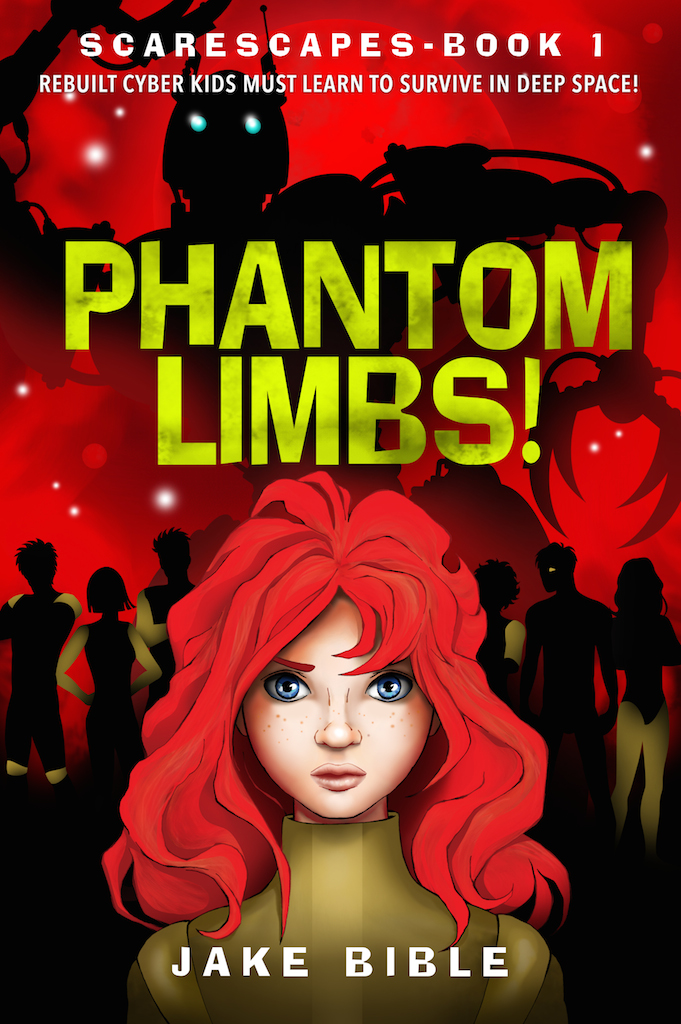
Sunday: “Reaching Reluctant Readers with Action and Suspense” by Jake Bible, Author of Phantom Limbs!, Scarescapes Book 1

 So, what are you reading?

Link up below and go check out what everyone else is reading. Please support other bloggers by viewing and commenting on at least 3 other blogs. If you tweet about your Monday post, tag the tweet with #IMWAYR!

 Signature andRickiSig

Author Guest Post!: “Be Careful or You Might Learn Something…” by Linda Fausnet, Author of The Joyville Sweat Sox

Share

“Be Careful or You Might Learn Something…”

I always hated summer reading lists as a kid. Teachers gave us a list of super-educational, historically accurate, classic books of literary significance to read over the summer so we could either write a book report or pass a test when we got back to school in September.

For me, this was the literary equivalent of brussels sprouts.

I actually liked to read in the summer. The trouble was, every time I picked up a book I actually wanted to read, I’d think to myself, “Ugh. I need to read those awful school books first.” I put off reading those books until later, so I ended up reading very little. Toward the end of the summer, I forced myself to read the brussels sprouts books, but really didn’t get much out of the experience.

It’s understandable that teachers want kids to learn from the books they read, but forcing kids to read Johnny Tremain isn’t likely to get them all fired up about reading. I remember reading Johnny Tremain at some point, but I remember precious little about the book.

Know what I do remember? My fourth grade teacher, Mrs. Garrett, reading to us for a few minutes at the end of the school day. I remember her reading Lenny Kendall, Smart Aleck, Tales of a Fourth Grade Nothing, and Superfudge. The books were uproariously funny, and I can clearly remember the sound of Mrs. Garrett’s voice; the inflection, the enthusiasm, the fun. I eagerly went to the library and got some of those books and reread them on my own.

A few years ago, I went to a wonderful used bookstore called Books With a Past. I asked if they had Lenny Kendall, Smart Aleck so I could read it to my kids. The lady in the store said she hadn’t heard of the book, but she put me on the list in case it ever turned up. Then I went to the barbecue restaurant next door with my kids. A few minutes later, the bookstore lady showed up there. She must have heard us mention where we were headed. Anyway, she showed up with Lenny Kendall in tow. She found it after all!

We took the book home and I happily read it aloud to my kids. It was such a wonderful experience. It brought back such great memories and I loved hearing my kids laugh.

I am a passionate writer who happens to be married a to a man who is dyslexic. He hates to read because it’s hard for him, and, try as I might, I’ve been unsuccessful at getting my kids to love reading. I’ve written several grown-up books which they are not allowed to read, but I’ve written two middle-grade ones that are appropriate for them. It’s been tough even to get them to crack those books!

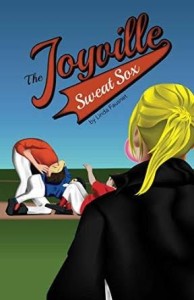
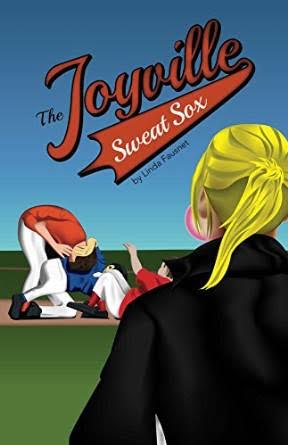
I recently published a middle-grade book about baseball entitled The Joyville Sweat Sox. (as in, there is no mud in Joyville. Baseball fans will get that…) I dedicated the book to my son, Noah, who plays Little League. I didn’t have to force him to read that one because 1. Mommy wrote it and, 2. It’s about baseball. Noah is a good-hearted kid who would tell me he loved it no matter what, so it was hard to tell if he really liked it. Then one day I came home from work and heard him laughing in the other room. He didn’t know I was home yet, so I knew his reaction was real. Sure enough, he was reading my book and though it was really funny. Is there any higher praise than that?

The Joyville Sweat Sox is about a young woman who is forced to coach a baseball team full of clueless kids as punishment for breaking her town’s No Anger law. It’s won’t be easy to teach them the rules of the game without losing her temper… The book does have some teachable information in it, I suppose. Okay, it would mainly be for physical education teachers… Kids who know how to play baseball will giggle at the players in the book who are a bit slow on the uptake to learn, and kids who are unfamiliar with the sport will easily learn it as the poor coach teaches her hapless players what to do.  However, the overarching lesson can be summed up when Konnie, the coach with anger management issues says, “Sometimes mean people aren’t mean. Sometimes they’re just sad.”

Konnie would know. Her anger and bitterness started when her father died, the same year that a mean guy stole baseball from the town of Joyville. Some of her happiest memories were of her times at the ballpark with her dad, and the idea that his last summer on earth was spent without baseball just hurts too much. At first, Konnie is annoyed beyond belief by these crazy kids she’s suddenly saddled with. Then she comes to care deeply for her little guys as she is able to teach them to love the game that meant so much to her and her father. At the end, the judge who sentenced her for getting mad in the first place actually comes to her defense for getting angry. This time, she got mad and risked severe punishment by standing up for her little players. The judge tells her that he’s proud of her, and that he saw a lot of her father in her that day.

My favorite type of book to write – and to read – is one that has both humor and heart. Joyville is funny (ask my son!) and definitely has heart. It made both my critique partner and my daughter cry – in a good way!

Kids want to be entertained as much as we want them to be educated. My philosophy is to encourage them to read something fun and hope they might learn a thing or two along the way.

joyville

About the Book: It’s against the law to get mad in Joyville. Will Konnie Mack be able to coach a ragtag team of kids who are clueless about baseball without completely losing her cool?

Twenty-one-year-old Konnie has broken the No Anger law for the third time. She has two choices for punishment: coach Joyville’s Little League baseball team for the summer, or spend five years in jail.

Konnie used to be the best baseball player in town, but she hasn’t played the game she loves since she was sixteen. That was the year Bobby Hearsay stole Joyville’s team in the middle of the night. It was also the year her father died.

The current team includes the likes of Clueless Joe Jackson, Joltin’ Joanna Demargio, and Carl Repkin, Jr. Keeping her temper in check with these kids won’t be easy, and it’s going to be nearly impossible for this bunch to win any games. But Konnie has no choice. Getting mad will land her in the slammer, and her punishment for losing will be far worse than any jail sentence. She will be banished from playing baseball forever….

The Joyville Sweat Sox is available here – http://www.amazon.com/dp/B00YXUD7FI

IMG_11735462659993

About the Author: Linda Fausnet is the author of several books, mostly adult fiction. She has also written numerous screenplays of various genres. Two of her scripts have been optioned by production companies in Los Angeles; Mega Films, Inc. and Runaway Productions. Her screenplay, Queen Henry, was a Finalist in the national Progress Writers Competition. Linda runs an educational and promotional website for indie writers at www.wannabepride.com
Twitter – @lindafausnet
Facebook for Readers – https://www.facebook.com/lindafausnet
Facebook Group for Writers – https://www.facebook.com/groups/369053709961293/
Email List – Choose either WRITER’S or READER’S list – http://wannabepride.com/blog/?page_id=3466

We very much agree–finding the right book and doing summer reading right are both so important!
Thank you to Linda for this post!

Signature andRickiSig

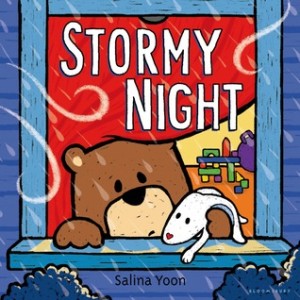
Stormy Night by Salina Yoon

Share

stormy

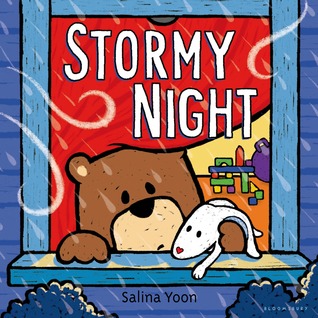
Stormy Night
Author and Illustrator: Salina Yoon
Published January 6th, 2015 by Bloomsbury USA Childrens

Goodreads Summary: When thunder shakes his house and rain pounds the windows, Bear is frightened. But comforting his Mama, Papa, and Floppy helps make the storm seem not so scary. Before Bear knows it, the storm has passed, because even storms need their sleep . . . and so do bears.

My Review and Teachers’ Tools for Navigation: Living in Florida means that we have pretty bad storms about 4-6 months of the year, so I really would see how this book could be used by parents and teachers to discuss ways to overcome storm anxiety. I could see a class that is  being held (sometimes for hours) in class after dismissal because of a storm sitting around reading this book and discussing how a storm can be scary but that the end would come soon.  I, being from tornado alley, had storm nightmares for years and storms still scare me, and I really think that a book like this would be a great read for kids that have the anxiety I have. I also love how Yoon had the little bear become the “strong one” during the storm to help him forget about what he is afraid of. This is a great strategy for helping kids forget about something that is scary.

Like always, Yoon’s illustrations are just so wonderful–I love how they completely cover the page and are so colorful. Also, Yoon also always captures her characters’ emotions so well!  Her books are always a pleasure to read, and I look forward to getting them.

Discussion Questions: How does Bear overcome his fear? How did his mom help? Hid dad?; Have you ever been scared during a storm? What did you do to make it through the storm?

We Flagged: 

From salinayoon.com

Read This If You Loved: Found by Salina Yoon, On my way to Bed by Sarah Maizes, A Book of Sleep by Il Sung Na, The Kissing Hand by Audrey Penn, Nightime Ninja by Barbara DaCosta

Recommended For: 

classroomlibrarybuttonsmall readaloudbuttonsmall

Signature

**Thank you to Linette at Bloomsbury for providing a copy for review!**

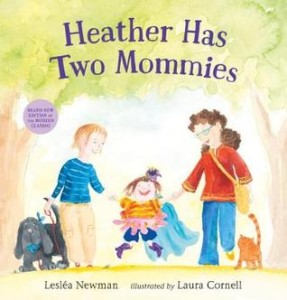
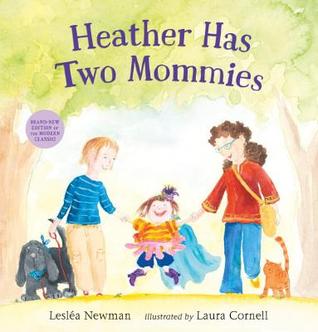
Heather Has Two Mommies by Lesléa Newman

Share

Heather Has Two Mommies

Heather Has Two Mommies
Author: Lesléa Newman
Illustrator: Laura Cornell
Published March 11, 2015 by Candlewick Press (First Published October 28, 1989)

Goodreads Summary: Candlewick relaunches a modern classic for this generation with an all-new, beautifully illustrated edition.

Heather’s favorite number is two. She has two arms, two legs, and two pets. And she also has two mommies. When Heather goes to school for the first time, someone asks her about her daddy, but Heather doesn’t have a daddy. Then something interesting happens. When Heather and her classmates all draw pictures of their families, not one drawing is the same. It doesn’t matter who makes up a family, the teacher says, because “the most important thing about a family is that all the people in it love one another.” This delightful edition for a new generation of young readers features fresh illustrations by Laura Cornell and an updated story by Lesléa Newman.

Ricki’s Review: This is a timeless classic, and I am so glad that Candlewick decided to republish it with new illustrations. I’ve always known what this book is about, but I’d never read it in its entirety. Heather’s story is one of many children growing up in the United States. She comes from a nontraditional family. I am sure that many parents have anxiety about sending their children to school because kids can be cruel. However, with some understanding and with books like these, children can understand that many of their peers come from different families, and this provides enrichment in the classroom. This book should be a staple in early elementary school classrooms. It teaches empathy.

Kellee’s Review: I love that this isn’t a book about LBGT families as much as it is a book about how there are so many different kinds of families. Although it seems a bit syrupy sweet at times, I think that tone was needed to be an introduction to a subject that may be new or different for readers. I think this book is an important one. I know that critics will say that the book is preachy, but if it is preachy about anything, it is about how everyone’s family is unique yet full of love. 

Teachers’ Tools for Navigation: The activity that the teacher uses in this book is one that should begin every kindergarten curriculum. Children should understand that loving families come in so many different forms. We’d love to pair this book with books like And Tango Makes Three by Justin Richardson and Peter Parnell. Students could read various books that deliver this message and talk about their similarities and differences. Kids might also write about a time that they felt different and how it made them feel. From an artistic side, teachers might show students the original 1989 publication of this book and ask them to compare the two versions of the text.

Discussion Questions: What kinds of nontraditional families can you think of? What do these families have in common?; What role does Heather’s favorite number play in this book? Did it enhance your reading of the story?; When have you felt different from other kids? How does this compare to Heather’s experience?

We Flagged: “‘What does your daddy do?’ David asks Heather.

‘I don’t have a daddy,’ Heather says. She looks around the circle and wonders, Am I the only one here who doesn’t have a daddy?

Read This If You Loved: And Tango Makes Three by Justin Richardson and Peter Parnell; ABC A Family Alphabet Book by Bobbie Combs; Donovan’s Big Day by Lesléa Newman; Daddy, Papa, and Me by Lesléa Newman; The Family Book by Todd Parr; King and King by Linda de Haan; A Tale of Two Daddies and A Tale of Two Mommies by Vanita Oelschlager; October Mourning by Lesléa Newman

Recommended For: 

classroomlibrarybuttonsmall readaloudbuttonsmall

 RickiSigandSignature

**Thank you to Candlewick Press for providing copies for review!**