Imogene’s Last Stand by Candace Fleming

Share

6399414

Imogene’s Last Stand
Author: Candace Fleming
Illustrator: Nancy Carpenter
Published October 13th, 2009 by Schwartz & Wade

Goodreads Summary: Meet Imogene, a plucky heroine with a passion for history.

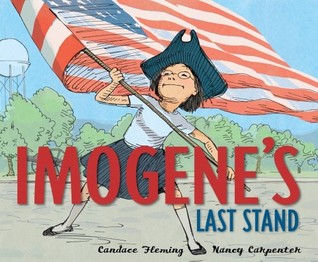
As a baby, Imogene’s first words were “Four score and seven years ago.” In preschool, she fingerpainted a map of the Oregon Trail. So it’s not surprising that when the mayor wants to tear down the long-neglected Liddleton Historical Society to make room for a shoelace factory, Imogene is desperate to convince the town how important its history is. But even though she rides through the streets in her Paul Revere costume shouting, “The bulldozers are coming, the bulldozers are coming!” the townspeople won’t budge. What’s a history-loving kid to do?

Filled with quotes from history’s biggest players—not to mention mini-bios on the endpapers—and lots of humor, here’s the perfect book for budding historians.

Review: Imogene is awesome! Her whole life she has loved history and has promoted history. History is her passion. When she finds out that the Liddleville Historical Center is up for demolition, she does everything in her power to save the history center. This, in a nutshell, is what makes her awesome: she is intelligent, passionate, and willing to stand up for her passion. Because of this, and the history allusions throughout the book, make this such an excellent book to use in classrooms. Imogene is such a great role model for any child.

The history aspects of this book were done so cleverly. Throughout Imogene’s story, she uses famous historical quotes to express how she feels at certain points. For example, when she was trying to get others to stop the bulldozing of the historical center dressed in her Paul Revere costume, she rode around Main Street (on her stick horse) yelling, “The bulldozers are coming! The bulldozers are coming!” These clever quotes are throughout the book. Then in the back and front end sheets Imogene’s historical tidbits are shared explaining all of the quotes.

Teacher’s Tools for Navigation: Like I said in the review, this book is a great for promoting history, intelligence, and passion. Like many of the amazing picture books I’ve been reading lately, it also promotes inquiry because it makes history interesting and fun.

Discussion Questions: What is a historical landmark in your city? Find out about what made it a landmark.; Imogene is passionate about history. What are you passionate about? Share the essentials of your passion.

We Flagged: “Imogene loved history. When she was a baby, her first words were “Four score and seven years ago.” As a preschooler, she finger-painted an accurate map of the Oregon Trail. And as a kindergartner, she used her show-and-tell time to give a series of lectures on important woman in history.” (p. 6)

To see a preview of the illustrations, visit Amazon’s “Look Inside” for Imogene’s Last Stand.

Read This If You Loved: Abe Lincoln’s Dream and John, Paul, George, & Ben by Lane Smith, Of Thee I Sing by Barack Obama,  Looking at Lincoln by Maira Kalman, Nonfiction books about the historical figures mentioned

Recommended For: 

readaloudbuttonsmall classroomlibrarybuttonsmall

Signature

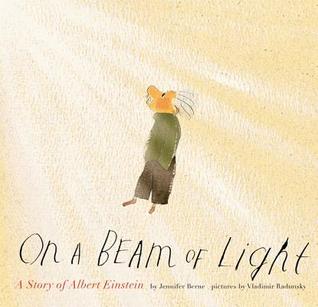
On a Beam of Light: A Story of Albert Einstein by Jennifer Berne

Share

NF PB 2013

Nonfiction Picture Book Wednesday

Nonfiction Picture Book Wednesday is hosted by Kid Lit Frenzy and was started to help promote the reading of nonfiction texts. Most Wednesdays, we will be participating and will review a nonfiction text (though it may not always be a picture book).
Be sure to visit Kid Lit Frenzy and see what other nonfiction books are shared this week!

on a beam

On a Beam of Light: A Story of Albert Einstein
Author: Jennifer Berne
Illustrator: Vladimir Radunsky
Published April 23rd, 2013 by Chronicle Books

Summary: Albert wasn’t like other children. He didn’t speak; he thought. He didn’t play with others; he was fascinated with everything around him. But it is all of this curiosity that led to his revolutionary ideas.

Review: I love how this book focuses on how Albert’s creativity is one of the keys to what made him the amazing scientist that he is. Also, as a teacher of struggling and gifted students, I love the focus on how he didn’t do well in school. It shows how just because a student is different or a disturbance or thinks differently doesn’t mean that they aren’t intelligent. The book definitely promotes wonderings, thinking, and imagination!

I also loved learning about the fun side of Einstein and how he likes to not wear socks, he liked to eat ice cream cones, and overall he just did what he want to have time to think.

Finally, the Author’s Note puts all of Einstein’s theories together so that the reader also gets this information.

Teacher’s Tools for Navigation: This book is perfect for a read aloud to promote creativity and intelligence. It also has a direct connection to science since it is about Albert Einstein. It would be a great discussion starter for an elementary classroom and is also a great jumping off point for discussing the basic Einstein theories.

Discussion Questions: After knowing about Albert’s experiences in school, what would you go back and tell Albert’s teachers? What does his experience and then who he became tell us about behavior, students, and teachers?; Albert said, “Imagination is more important than knowledge.” What parts of this book supports this quote?

We Flagged: “Albert started asking questions. Questions at home. Questions at school. So many questions taht some of his teachers told him he was a disruption to his class. They said he would never amount to anything unless he learned to behave like the other students. But Albert didn’t want to be like other students. He wanted to discover the hidden mysteries in the world.” (p. 14-15)

To see a preview of the illustrations, visit Amazon’s “Look Inside” for On a Beam of Light.

Read This If You Loved: Odd Boy Out by Don Brown, Who Was Albert Einstein? by Jess M. Brallier, Me…Jane by Patrick McDonnell, Jim Henson by Kathleen Krull, A Boy Called Dickens by Deborah Hopkinson

Recommended For: 

readaloudbuttonsmall

Signature

Genre/Format Introductions

Share

Earlier this month on Twitter, Andrea P. and Shannon C. asked me about my genre introductions that I do at the beginning of the year with my students. This made me think that it since the new school year is upon us, it may be time to share the lesson I used the last few years to share genres and formats with my students.  Now as my school’s reading coach, I look forward to sharing this post/lesson with my reading department so that they can continue to find the success that I did. 

      At the beginning of each school year, I know I need to acclimate my students to books and my classroom library. Since I teach intensive reading, many of my students are reluctant and struggling readers which means that they have not been around or fans of books, so my classroom library is a bit overwhelming. The best way I have found to introduce my students to my classsroom library and books in general is a mini-genre study. The way it works is I spend each day introducing a genre. I separate my genres into 7- realistic fiction, fantasy, science fiction, historical fiction, informational nonfiction, biography, and traditional literature – and 3 formats – graphic novels, poetry, and short stories.  Thus, the mini-study lasts approximately 10 days including 1 review day and 1 assessment day.
     Each mini-study goes the same: After discussion about what students think each genre is, I define the genre (using students’ words when I could) and we enter the definition onto a tree map. Then, the students brainstorm aspects and examples of the genre using a circle map. In the circle of the map, students put words that define the genre and examples of what could be in the books while in the square (frame of reference) they put examples of books, movies, TV shows, etc. for the genre. For example, if we are doing “Fantasy”, the circle would include things like: magic, vampires, talking animals, dragons, couldn’t ever happen, etc. while the frame of reference would include: Harry Potter, Twilight, Amulet, etc.
     Following our discussion of each genre I read a picture book of that genre and then we discuss how it is said genre. There are so many picture books for each genre, so have fun choosing! The picture books I used last year were:

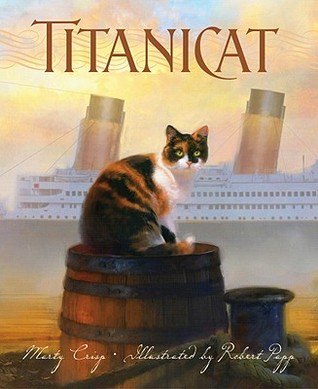
Historical Fiction: Titanicat by Marty Crisp

Biography: Martin’s Big Words or John’s Sweet Dreams by Doreen Rappaport [I let the kids choose.]
or
Realistic Fiction: First Day Jitters by Julie Danneberg

Fantasy: Where the Wild Things Are by Maurice Sendak

Traditional Literature: Lon Po Po by Ed Young

Science Fiction: Zathura by Chris Van Allsburg
(though we discuss how this one could be considered fantasy as well)

Informational Nonfiction: Volcano by Patricia Lauber [previewed the book]
volcano

Poetry: Falling Up by Shel Silverstein (read Strange Restaurant)
Short Story: Nightmare Hour by R.L. Stine [read part of Pumpkinhead]
Graphic Novel: Into the Volcano by Don Wood [previewed the novel]


     After each picture book/story, I use this opportunity to show students how to respond to writing like I am going to ask them to do weekly by modeling a journal entry after each complete picture book.
     Next, I allow my students to access the classroom library. Each student gets to pick two books of the discussed genre (books are marked with a sticker to distinguish between the genres).  I then do a book pass where students pass around the books they chose. With each set of books, the students get 2 minutes to preview the book and decide if they want to add it to their “Books to Read” list.
     The last thing we do, and this was new this year (an idea that I stole from my friend), was after the book pass, as an exit slip, they needed to tell me why the book at least one of the books they wrote about on their “Books to Read” list was the genre we are discussing. For example, if a student had Suck it Up by Brian Meehl they would put that Suck it Up is fantasy because it has vampires in it and vampires don’t exist.
     After going through all 7 genres and 3 formats, we review by playing the Pyramid Game and 4 corners and we finally end with an assessment which includes multiple choice, short answers, and students writing a story of a specific genre. By the end of the unit, students have a long list of books they want to read from all the genres and know how to find books in the classroom library.
This is the beginning of cultivating readers.
Happy growing!
Signature


Brave Girl by Michelle Markel

Share

NF PB 2013

Nonfiction Picture Book Wednesday

Nonfiction Picture Book Wednesday is hosted by Kid Lit Frenzy and was started to help promote the reading of nonfiction texts. Most Wednesdays, we will be participating and will review a nonfiction text (though it may not always be a picture book).
Be sure to visit Kid Lit Frenzy and see what other nonfiction books are shared this week!

brave

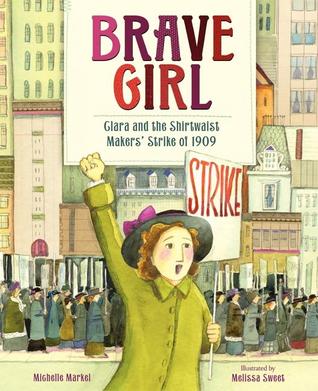
Brave Girl: Clara and the Shirtwaist Makers’ Strike of 1909
Author: Michelle Markel
Illustrator: Melissa Sweet
Published January 22nd, 2013 by Balzer + Bray

Summary: Clara and her family immigrated to New York. They were searching for the American dream. When her father could not find a job, Clara quit school and became a garment worker to support her family. The conditions at her factory were appalling: low wages, unfair rules, and locks on the door. After discussions between the workers, Clara helps urge the girls to fight for their rights.

Review: I am sucker for this biographical picture book for two reasons: 1) I had not known about the Shirtwaist Makers’ Strike of 1909 before and I love learning about new historical moments. I know that it interested me (as I know it would for kids), because after I read the additional information about the garment industry I was on the internet searching for more information. 2) Clara is such a great example of girl power! AND she is a historical figure that shows girls (and boys) that girls can stand up for themselves when they are not being treated well (in real life). I love that she overcame so much to not only stand up for her rights, but also to get an education and take care of her family. What an amazing person to learn about.

Teacher’s Tools for Navigation: The main way that I would use this book is as a read aloud. It will definitely cause a great discussion and may push students to do further research. It would also be a perfect read aloud for a unit on women’s rights, immigration, overcoming obstacles, girl power, labor laws, or the early 1900s to help make connections to history. 

Discussion Questions: Do you think that Clara continuing her education helped her in being able to fight for her labor rights?; Clara made a tough decision between continuing school during the day or working. Do you agree or disagree with her decision? Why or why not? How did her decision affect her life?; What caused the garment workers to strike?

We Flagged: “But Clara is uncrushable. She wants to read, she wants to learn! At the end of her shift, though her eyes hurt from straining in the gaslight and her back hurts from hunching over the sewing machine, she walks to the library. She fills her empty stomach with a single glass of milk and goes to school at night. When she gets home in the late evening, she sleeps only a few hours before rising again.” (p. 12-13)

To see a preview of the illustrations, visit Amazon’s “Look Inside” for Brave Girl.

Read This If You Loved: Here Comes the Girl Scouts! by Shana Corey, The Price of Freedom by Dennis Brindell Fradin, Boycott Blues by Andrea Davis Pinkney, Annie and Helen by Deborah Hopkinson

Recommended for: 

readaloudbuttonsmall closereadinganalysisbuttonsmall classroomlibrarybuttonsmall

Who is a female historical figure who shows as much girl power as Clara that you believe should be talked about more?

Signature

Building Our House by Jonathan Bean

Share

building

Building Our House
Author and Illustrator: Jonathan Bean
Published January 8th, 2013 by Farrar, Straus, and Giroux

Summary: Based on Jonathan Bean’s childhood experience, Building Our House follows a family who moves to a piece of land and builds their own home over the course of many years.

My Review: What an amazing story! It is even more amazing because it is based off of the author’s true childhood events. In the book, we follow the family from living in a trailer surrounded by bare land to living in their dream home. Though the summary seems so simple, it is much more than just watching a family build a home. It is about being determined, resilient, hardworking, a strong family, and patient. I also see it drawing in readers who are curious by building and tools. Finally, to make this story even better, the illustrations are so intricate and colorful which will also draw in readers (and has gotten it on Mock Caldecott lists).

Teacher’s Tools for Navigation: The story is told in a very sequential way and would be a great introduction or resource for teaching sequence. Then, I noticed as reading, that often there is more going on in the illustrations then is stated in the words. It would be a great activity to reinforce sequence to tell the other story to the story- the story told in the illustrations.

Discussion Questions: What character traits must the Mom and Dad have to work this long/hard on their dream home?; Put the main events in sequential order.; When was a time that your family came together to do something?

We Flagged: “Our crew works until the sun sets and the frame stands strong in the middle of the field. Mom makes places for everyone to sit around a fire. We eat and talk and play until the stars shine and the owls call.” (p. 24)

Read This If You Loved: Goodnight, Goodnight Construction Site by Sherri Duskey Rinker, The Little House by Virginia Lee Burton, Mike Mulligan and his Steam Shovel by Virginia Lee Burton, Mitchell Goes Bowling by Hallie Durand

Recommended For: 

closereadinganalysisbuttonsmall readaloudbuttonsmall classroomlibrarybuttonsmall

The building of his childhood home is a memory that has lasted for Jonathan Bean. If you were going to write a book about a moment or memory from your childhood, what would it be?

Signature

Stardines Swim High Across the Sky and Other Poems by Jack Prelutsky

Share

NF PB 2013

Nonfiction Picture Book Wednesday

Nonfiction Picture Book Wednesday is hosted by Kid Lit Frenzy and was started to help promote the reading of nonfiction texts. Most Wednesdays, we will be participating and will review a nonfiction text (though it may not always be a picture book). Be sure to visit Kid Lit Frenzy and see what other nonfiction books are shared this week!


stardines

Stardines Swim High Across the Sky and Other Poems
Author: Jack Prelutsky
Illustrator: Carin Berger
Published February 26th, 2013 by Greenwillow Books

Summary: Jack Prelutsky combines inanimate objects with animals to give us a new collection of fun poetry that is accompanied by Carin Berger’s amazing fine artwork.

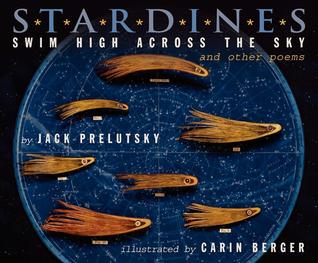
My Review: I love the concept behind this book. It is set up like an informational nonfiction book with each poem being presented like a specimen. Carin Berger’s artwork is full of found objects that were photographed to add to the nonfiction feeling of each poem.   And, of course, Prelutsky adds a sense of humor to each poem as that is what he does.

The creatures that Prelutsky came up with are so clever – SOBCATS who are sad cats, JOLLYFISH who are happy jellyfish, TATTLESNAKE are snakes that won’t stop tattling, and GLOOSE are a bird that keep sticking to everything. And these are just four examples of sixteen in the book.

I cannot review this book without talking about the artwork. I originally chose this book because I saw it on a Mock Caldecott list and I can definitely see why. Carin Berger illustrates this novel with beautiful pieces of artwork. As stated on the copyright page: “The miniature dioramas in this book are assemblages created using a combination of cut paper, found ephemera, vintage engravings (which were scanned, manipulated in Photoshop, and then printed out), beeswax, wire, thread, and wood. Once each piece was made, it was then photographed digitally to prepare the full-color art.” What a fantastic process to discuss with students and it definitely added an essential aspect to the book.

Teacher’s Tools for Navigation: Each poem is its own discussion starter. First, to separate the title creatures into the two words that were combined and looking at what the animals is and what the word is that it was combined with. For example: “Chormorants” is a combination of CORMORANT and CHORES. Then I’d look through the poem and find where the animal is represented and where the combined word plays a role. And on top of that, each poem can be looked at as a poem and look for poetic elements within it.  Each poem is a stand-alone, well done poem that is sure to start a conversation.

Discussion Questions: Which poem is your favorite? Why?; Combine an animal with a word and write a poem about this new creature.; How do you think Berger’s artwork added to the book? How would cartoon illustrations have made the book different?

We Flagged: Every poem is a gem, but this is my favorite-

“PLANDAS sit around all day,
Planning what to do.
Their plans amount to nothing,
For they never see them through.
They plan to run a marathon
Or take a railroad trip.
They plan to cross the ocean
On a wooden sailing ship.
***
They plan to learn to roller-skate,
To juggle, and to fence.
They plan to go to clown school
And cavort in circus tents.
They plan to play the saxophone
And form their own brass bands. . . .
But PLANDAS never do these things –
They just keep making plans.” (p. 21)

Read This If You Loved: Behold the Bold Umbrellaphant by Jack Prelutsky, My Teacher Likes to Say by Denise Brennan-Nelson,  Lemonade by Bob Raczka

Recommended For:

closereadinganalysisbuttonsmall readaloudbuttonsmall classroomlibrarybuttonsmall

Signature

Junket is Nice by Dorothy Kunhardt

Share

productimage-picture-junket-is-nice-337

Junket is Nice
Author: Dorothy Kunhardt
Published: June 25th, 2013 by NYR Children’s Collection
(First published: 1933)

Summary: An old man with a red beard and red slippers eats junket out of a big, red bowl. All of the people arrive and want to know what he thinks about while he eats his junket. The old man tells them the three things he is NOT thinking about, and the people try to guess what he is thinking. Only the little boy, who arrived last, truly knows what the old man is thinking while he is eating his junket.

Ricki’s Review: Kids will love the crowd’s nonsensical guesses of what the old man is thinking about while he eats his junket–from “a kangaroo jumping over a glass of orange juice so as not to spill it” to “a bear climbing a ladder because his toenails are too long for walking on the ground”–I can imagine a whole class giggling as the people make their guesses.

Dorothy Kunhardt has a very creative imagination that kids are sure to enjoy. The drawings are very humorous, and I couldn’t help but chuckle as I read this picture book–the idea of a “daddy-long-legs holding up his foot for the sun to warm it” is just very silly! Junket is Nice would allow for a lot of great, creative thinking in the classroom. Readers of Pat the Bunny are sure to enjoy this classic.

Kellee’s Review: This book is so full of imagination. The clever, funny animals that the crowd comes up with while trying to guess what the old man is thinking will definitely, like Ricki says, make a whole class giggle. It also will be the most discussed part of the book, I’m sure.  You can tell that Dorothy Kunhardt was full of imagination and wanted to make this book as fun as possible.  Her son remembers her being curious and appreciating the way young people viewed the book, and you can tell by Junket is Nice that she embraced this curiosity and put as much of it into her books as possible.

Teacher’s Tools for Navigation: Teachers could use this book and have students create their own riddles like Kunhardt’s–“What is the old man thinking while he eats his junket?” They could even create their own picture books for their riddles. Alternatively, a teacher might read all the way up to the section of the book that gives the answer to the riddle. Then, each student in the classroom might draw their own creative guess about what the old man is thinking. This would allow students to make predictions, based on the other guesses within the book.

Discussion Questions: What might the old man be thinking about when he eats his junket?; Why might the little boy be the only one who knows what the old man is thinking about?; Was the ending satisfying, or did you wish the old man was thinking about something else?

We Flagged: “‘People why don’t you try and guess what I am thinking about all the time I am eating my junket and if you guess right I will give you something nice'” (p. 16).

Read This If You Loved: Pat the Bunny by Dorothy Kunhardt, The Napping House by Audrey Wood, That is Not a Good Idea by Mo Willems, other picture book classics like Make Way for Ducklings by Robert McCloskey and The Little House by Virginia Lee Burton 

Recommended For:

readaloudbuttonsmall classroomlibrarybuttonsmall

Don’t forget to enter the giveaway below so you can win your own copy of Junket is Nice!

026F3FBCC8C3913BD3A4D3F6920340D5 andSignature

**Thank you to Media Masters Publicity for providing copies for us to review**