Author Guest Post: “Space: The Next Frontier in Children’s Books?” by Christopher Peter, Author of Danny Chaucer’s Flying Saucer

Share

“Space: The Next Frontier in Children’s Books?”

As a kid I loved science fiction. My imagination was fired by stories set in space, a place of boundless possibilities; tales of future worlds, stunning galaxies, brave human colonists, exotic aliens.

As I began writing the Danny Chaucer’s Flying Saucer series, I renewed my interest in all things space-y, particularly books aimed at 8-12-year-olds / middle grade. But sci-fi isn’t exactly in vogue in children’s literature right now, or at least not space-set books specifically. It got me thinking, why not?

Fashions come and go of course. But I also wonder whether it’s because, space-wise, the future turned out to be a bit of a, well, disappointment really. I mean, I’m too young to remember the Apollo moon missions of the 1960s and 1970s, but I did fall in love with books in the years soon after, and it was a time very much influenced by those heady lunar-treading days when anything seemed not only possible but also within imminent reach.

Look back at movies like 2001 and Blade Runner and TV shows like Space 1999. Back then, dates like 1999, 2001 – and certainly 2015 – seemed impossibly futuristic. Surely we’d have flying cars, moon bases, men on Mars, and charismatic yet slightly sinister AI computers by then, right? Well – um – not exactly … but hey, we do have very cool phones …

(And by the way, what happened to that army of robots that were supposed to gift us all carefree lives of leisure and pleasure??)

I’m not dismissing NASA by the way, nor the other research agencies and institutions with all their talented and dedicated people. Nor have I forgotten the space shuttle. And yes, space exploration is mind-numbingly expensive. It’s just that – I don’t know – as amazing as the International Space Station is, it’s not exactly a Martian colony. (And speaking of Mars, disappointingly it turned out not to be home to little green aliens after all.) I can’t help thinking the child of 1970 would be asking, ‘Is that it?’

And yet I believe things are changing. In 2019 we’ll be celebrating the 50th anniversary of Neil Armstrong’s historic first step on the moon, and we’ll be reminded again of what a galactically awesome achievement that really was (especially with 1960s technology!). Meanwhile there’s much excitement about a manned mission to Mars, with some even predicting it could happen in the next 10-15 years, with a permanent colony not long after.

The amazing pictures of Pluto recently sent back by the New Horizons probe have come after the steady stream of incredible images of deep space from the Hubble space telescope.

We’ve got the eagerly-awaited new Star Wars movie coming soon, and that’s following some pretty amazing sci-fi cinema in recent years – think Moon, Gravity, Ex Machina and Interstellar. Meanwhile sci-fi continues to thrive on the small screen too.

So why not children’s books?

The whole concept of space has the incredible ability to feed the imaginations of the young (and old). The possibilities are literally endless. We’ve already been to the moon and sent unmanned spacecraft to Mars and far beyond. What will the human race have achieved in another fifty years? A hundred? Five hundred?

And what about life on other worlds? Of course we haven’t come across aliens yet (or so we’re told …) but that mind-bending prospect remains.

Writing about space and sci-fi is also a brilliant opportunity to encourage kids’ interest in science. Space is an amazing, huge, fascinating place, about which we’re finding out more and more incredible things all the time. Just take a look at some of the dazzling Hubble images. Consider for example the famous picture of the Pillars of Creation in the Eagle Nebula. How dizzyingly huge it is, how unimaginably far away … and how it’s a place where stars are made! It’s almost beyond words (though I’ve had a crack at describing it in Danny Chaucer. I simply had to include it).

And of course (on a clear night at least) you can look up and see space for yourselves! Well part of it anyway.

I want kids today to discover the power of stories, especially boys who generally less inclined to read than girls and so may need more encouragement. And the 8-12 age group is a vitally important time for fostering a love of books, an age when children start to read more independently and develop their own tastes.

I wrote Danny Chaucer partly for my own sons, the older of whom is now 11 and hasn’t been getting into books very much. He doesn’t particularly like the fantasy, paranormal or dystopian themes which seem to dominate children’s fiction these days. He does however like science and gadgets and is into Doctor Who, so space is right up his street.

To finish, I’d like to highlight a small selection of kids’ sci-fi books – some old favourites, some new, but all have the power to launch young imaginations into the great beyond … all ideal for 8-12-year-olds, depending on reading ability, though the last two might be less suited to younger readers.

  • Doctor Who and the Daleks, by David Whitaker. A classic Who adventure, launching an ordinary man from his humdrum earth-bound existence to a distant alien world with distinctly unfriendly inhabitants. And if this goes down well, there are dozens of other Doctor Who books including a series aimed especially at younger readers (the Young Reader Adventures).
  • Cosmic, by Frank Cottrell Boyce. A young boy gets to go on a mission to the moon! Slightly slow build-up so it takes a long time to take off (literally), but it’s worth sticking with. The writing is great – funny and moving in places, with strong likeable characters. Quite educational too – the reader really gets a feel of what it would be like in space.
  • Jacob Wonderbar and the Cosmic Space Kapow, by Nathan Bransford. In contrast to Cosmic, this book makes no pretence to be educational, but it’s fun, fast-moving and wonderfully imaginative, and may appeal to younger readers in particular.
  • The Lotus Caves, by John Christopher. On the moon, two bored teenagers go off in a lunar rover and discover something amazing. A classic from a renowned YA sci-fi author.
  • Futuretrack 5, by Robert Westall. More YA (probably 11+ I’d say) with some adult themes, this is actually an earth-bound dystopian thriller, but I had to include it because it’s brilliant and by one of my all-time favourite authors. Dark, witty, compelling and with an unexpected ending.
  • Galactic Warlord, by Douglas Hill. Again, may be better for 10/11+ as there’s some violence, though nothing too gratuitous or graphic. I read this when I was about 10 and loved it. Set in distant space, a lone survivor of an attack on his planet broods and plans revenge … the first book in a series of five.

DCFS cover

Danny Chaucer’s Flying Saucer Summary:

One night Danny Chaucer, a lonely eleven-year-old boy, sees a strange light and hears odd sounds in his garden – and the next day there seems to be something there but he can’t quite see it. His Uncle Colin, who works at the mysterious Ganymede Institute, reveals that something top-secret has gone missing from there. Danny teams up with the new girl in his class, Nat Ford, to dodge the school bullies and investigate what’s going on. They encounter the sinister Captain Frost who is also on the trail of the mysterious missing object. Danny works out how to make the thing in his garden become visible, and it is revealed to be a flying saucer. Inside Danny and Nat meet the computer, BOB, who controls the saucer. Meanwhile Captain Frost is close to tracking down the saucer too, and she manages to get on board. They all take off and into space and then on a virtual reality journey to the Pillars of Creation in the distant reaches of the galaxy. Captain Frost intends to sell the saucer for her own profit, but Danny outwits her, and then the saucer terrifies the school bullies back on Earth. Finally BOB wipes Captain Frost’s memory to foil her plans, and then the saucer takes off leaving Danny and Nat to keep their adventure a secret.

Book Passage:

What would you do if a flying saucer landed outside your home?

Danny Chaucer is lonely. Life’s boring since his best friend moved away. Nat Ford is the new girl in class and spends half her time trying to dodge the school bullies.

Nothing interesting ever happens in their dead-end village. Nothing that is until one still, starry night when something lands in the trees behind Danny’s house. And then the sinister Captain Frost arrives…

There might be only one way to escape—and that’s up…


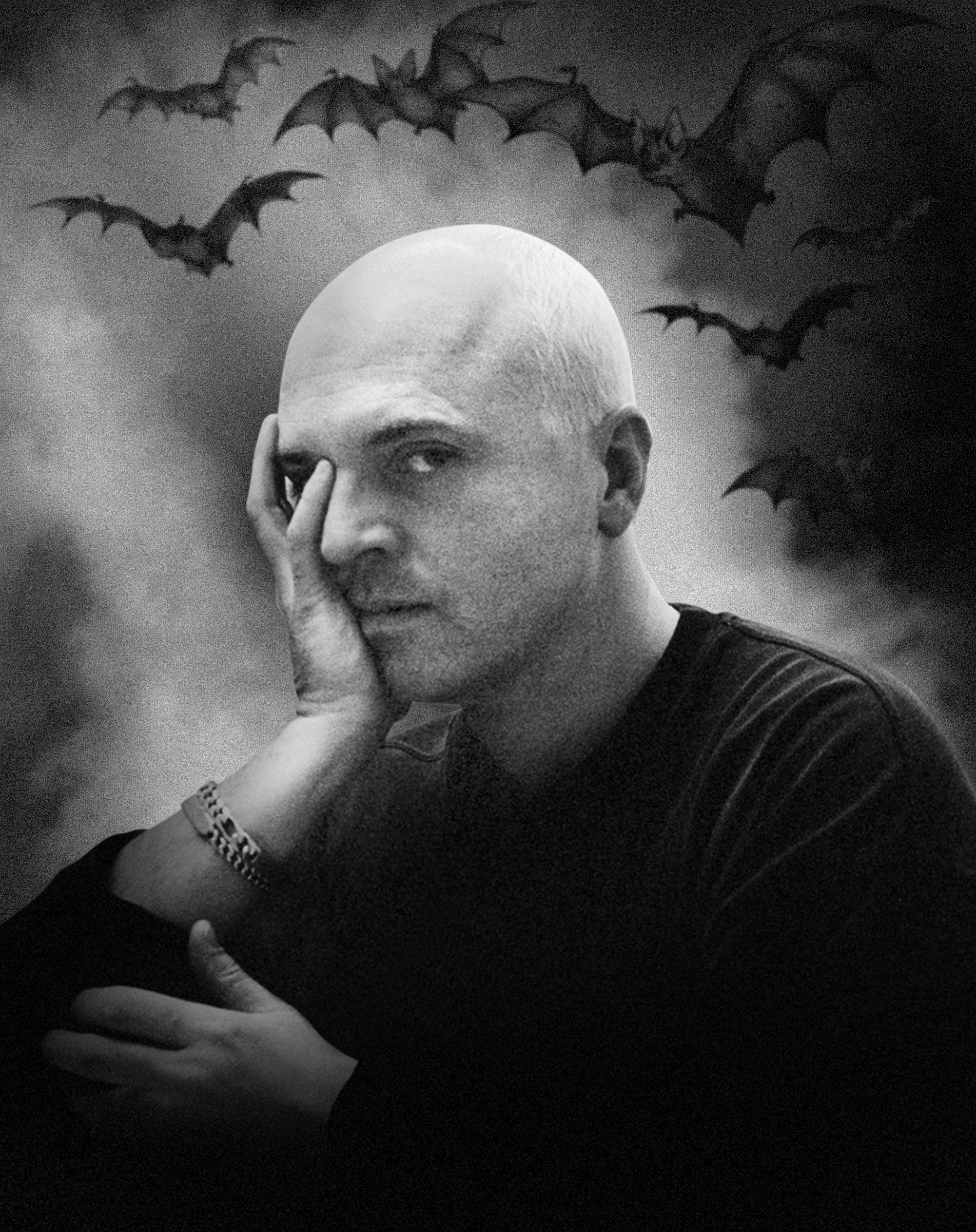
Christopher Peter author pic

About the Author: Christopher lives near Oxford, UK and is married with three children. He has always loved writing but only began to write more seriously after he turned 40 (a kind of mid-life crisis perhaps?). He self-published two YA novels (Falling Girl and BASIC Boy), before writing Danny Chaucer’s Flying Saucer. He has always leaned towards writing for children and teenagers because he feels strongly that good stories are very important to help the younger generation fall in love with the written word; this will enrich their whole lives; and also because he has such fond memories of the books he loved which shaped him when he was younger.

Thank you so much to Christopher for his reflections on space as the next frontier! 

RickiSigandSignature

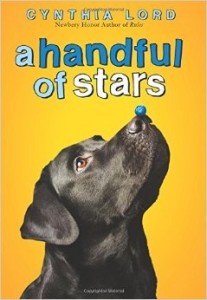
A Handful of Stars by Cynthia Lord

Share

Handful of Stars

A Handful of Stars
Author: Cynthia Lord
Published May 26th, 2015 by Scholastic

Goodreads Summary: This powerful middle-grade novel from the Newbery Honor author ofRules explores a friendship between a small-town girl and the daughter of migrant workers. When Lily’s blind dog, Lucky, slips his collar and runs away across the wide-open blueberry barrens of eastern Maine, it’s Salma Santiago who manages to catch him. Salma, the daughter of migrant workers, is in the small town with her family for the blueberry-picking season. After their initial chance meeting, Salma and Lily bond over painting bee boxes for Lily’s grandfather, and Salma’s friendship transforms Lily’s summer. But when Salma decides to run in the upcoming Blueberry Queen pageant, they’ll have to face some tough truths about friendship and belonging. Should an outsider like Salma really participate in the pageant—and possibly win? Set amongst the blueberry barrens and by the sea, this is a gorgeous new novel by Newbery Honor author Cynthia Lord that tackles themes of prejudice and friendship, loss and love.

My Review, Teachers’ Tools for Navigation, and We Flagged: Salma and Lily quickly become star friends (friends who may not always be together, but will look at stars to think of each other). Salma is different than anyone that Lily knows. Not only because she is a Hispanic migrant worker, but because she is carefree. Lily, on the other hand, is a rule follower, and Salma may be just what she needs and vice versa.

Every Cynthia Lord book I read, I am reminded of why I enjoy her writing so much. Her stories are always touching and find sweetness and love in situations that are not always examined. She also paints her stories with such beautiful imagery. “Our feet crunched the reindeer moss under our feet, as loud as if we were walking through autumn leaves. The only other sounds were the mind blowing the little American flags on the soldiers’ graves, the buzz of insects, the chirp of birds, and the occasional rumble of a car driving down the gravel road past the cemetery.” (p. 109) Beautiful. She always transports me.

As an art museum director’s daughter, I always appreciate some art love also, and Salma really shares the importance and immense greatness of art. Great quotes about art: p. 151-153, 156

Other favorite pages: p. 60, 74, 94-96

A couple other things I loved: Another wonderful grandfather in a book, the reference to Blueberries for Sal (p. 112), and the look at adolescences and how hard it is the grow up.

A Handful of Stars was also my informal Twitter book club’s August book choice. Some of my favorite things said from the chat were:

“I found I was absolutely connecting to the characters and story but having to stop and just be in awe of certain lines.” Carrie Gelson

“But somehow summer fills up & flies by…as August wore on, I couldn’t help feeling sad pangs.” A favorite quote shared by me and Michele Knott

“I love how @Cynthia_Lord talked about how being in a friendship can be lonely – ‘lonelier than if you were by yourself.’ pg 56” Carrie Gelson

“She just is such a great example of living in the moment, being true, taking risks. [About Salma]” Carrie Gelson

“I loved the differences in the approaches to art.” Michele Knott

“I think this would be a perfect pair with the Cesar Chavez PB.” Leigh Anne Eck

“And that there is more than one road to happiness and therefore, different kinds :-)” Carrie Gelson

This is a book that screams to be read with/by kids. Such a quiet, important book with so much within.

Discussion Questions: How was Salma different from Lily’s other friends?; How are Salma and Lily different?; What do you think will happen to their friendship?; How did Salma influence Lily? How did Lily change throughout the book?

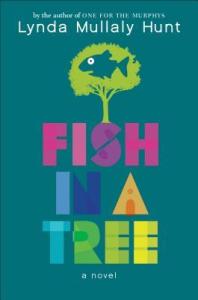
Read This If You Loved: Touch Blue by Cynthia Lord, Fish in a Tree by Lynda Mullaly Hunt, Rain Reign by Ann M. Martin, Eleanor series by Julie Sternberg, Crooked Kind of Perfect by Linda Urban

Recommended For: 
readaloudbuttonsmall classroomlibrarybuttonsmall

Kellee Signature

Author Guest Post and Giveaway!: “Why We Still Need Coming Out Stories in YA Fiction” by Emily O’Beirne, Author of A Story of Now

Share

“Why We Still Need Coming Out Stories in YA Fiction”

A friend of mine recently complained that the LGBT literary market seems to be dominated by coming out stories. “Why do all the gay stories have to be about people coming to terms with their sexual identity?” she asked. This focus is limiting and narrow, she argues.

I have seen this sentiment in many Goodreads reviews of LGBT stories, too, ya fiction included. And I see the point. I do. It is based in the argument that as much as we need diversity in the kinds of people we tell stories about, we also need diversity in the kinds of stories we tell about them. In this modern and increasingly tolerant world there should now be a place for books where the sexuality of gay characters need not be the focus of the story, but simply an element of character.

Sure, that sounds great, but coming from the perspective of someone who both teaches and writes for young people, I would argue (and did) that coming out narratives still have a vital role in the realm of ya fiction. And it doesn’t surprise me that those arguing for less focus on coming out stories on Goodreads are often adult readers and reviewers of ya fiction, not the primary audience.

I think we’d be pretty misguided to think we are living in a world so progressive that stories about realizing your sexuality aren’t still vital for young people who are in the process of discovering who they are. Because that’s growing up, isn’t it? It’s the experience of becoming yourself in the world. And it is a time when questions of your sexual identity have suddenly become psychologically and hormonally urgent.

Coming out stories give ya readers an opportunity to see how other young people negotiate these uncertain terrains, and to give perspective to an experience they are going through. And as anyone who has been through the war zone that is puberty can attest, it’s hard enough to go through the uncertainty of adolescence. But it’s even harder to discover you are different from most of those around you. And if you are gay, that is statistically likely to be the case. And difference, sadly, must always be made known, and it is always there to be noticed.

As a young gay person, you are asked to recognise and announce yourself in terms of your difference from others, and at a time of life when there is so much pressure to socially conform. For some this is difficult and stories about negotiating and surviving these pressures are vital. For example, in Kelly Quindlen’s Her Name in the Sky, Hanna and Baker both try to ignore their feelings for each other in order to conform to their religious and heteronormative environment, but ultimately realise they cannot. They slowly discover they do not need to fit into tightly prescribed social categories to be accepted and happy.

Coming out is also a jarringly public process. Few heterosexual girls will ever have to announce, ‘Hey, I’ve decided I want to make out with boys!’ In fact, it’s expected. But if it’s a teenage boy, he’s probably going to have to say it out aloud at least once. For some young people, the scrutiny this declaration invites can be awkward. For example, in A Story of Now, Mia is not uncomfortable about realising she is gay, but with the fact that her newfound identity is something she must announce to the world, rendering her private life immediately public.

Another point where I think my friend has really missed the importance of coming out stories is that coming out is as much about coming out to yourself as it is to the world. Coming out is also about a person figuring out who they mean when they say ‘I’, and where this places them in the world.

For some young gay people, accepting and embracing their sexual identity can be the most difficult part of coming out. A perfect example of a story that sympathetically depicts this struggle is A.S. King’s Ask the Passengers. For the reader, it might seem like the job of coming out is half-done at the start of the novel: Astrid has a girlfriend and she has gay friends. But Astrid is not yet ready to accept who she might be. And while everyone around her tries to push her toward certainty, she stubbornly takes her own sweet time to come to terms with her sexual identity.

How can books that shows readers how negotiate these experiences not just be good, but be necessary? George Gerbner describes storytelling as the process that makes us recognize ourselves. And as ya writers it remains our responsibility to pass down the kind of stories where young people have the opportunity to think, ‘Hey I feel like that too.’ We do this so they can recognize themselves at a crucial time in their lives. It. So I am sorry, my friend, you are wrong. There is one domain at least where coming out stories are still sorely needed.


a story of now

A Story of Now

About the Book: Nineteen-year-old Claire Pearson knows she needs a life. And some new friends. But brittle, beautiful, and just a little bit too sassy for her own good sometimes, she no longer makes friends easily. And she has no clue where to start on the whole finding a life front, either. Not after a confidence-shattering year dogged by bad break-ups, friends who have become strangers, and her constant failure to meet her parents sky-high expectations.

When Robbie and Mia walk into Claire’s work they seem the least likely people to help her find a life. But despite Claire’s initial attempts to alienate them, an unexpected new friendship develops.

And it’s the warm, brilliant Mia who seems to get Claire like no one has before. Soon, Claire begins to question her feelings for her new friend.

Author’s Note: The characters are university aged and thus the story contains elements like drinking and mild sexual content.

a Rafflecopter giveaway

About Emily O’Beirne

Author website: http://emilyobeirne.com/

Goodreads: https://www.goodreads.com/author/show/13543645.Emily_O_Beirne

Tumblr: http://it-used-to-be-fun.tumblr.com/

Excerpt of A Story of Now: http://emilyobeirne.com/2015/06/18/excerpt-a-story-of-now/


 Thank you so much to Emily for allowing us to host this giveaway and for writing about something we genuinely believe in. 

RickiSig and Signature

Author Guest Post: “When Things Aren’t Perfect” by Laurie McKay, Author of The Last Dragon Charmer Series

Share

“When Things Aren’t Perfect”

A long time ago, in this galaxy and not so far away, I was in an English class. My teacher returned my paper and there was a blue ninety-nine scribbled on the top corner. I looked over my work to see where I lost that one point, and found no marks, no grammatical mistakes, no misspelled words. So, of course, I asked about it.

My teacher raised her brows and told me, “Writing can’t be perfect.”

Well. Isn’t that the entire problem right there? If writing is never perfect, when is it good enough?

After working on my debut novel Villain Keeper, I found that it was good enough for the publisher after three content edits, one copy edit, and at least one proof pages pass. And these by no means were the first revisions I’d done.

When my agent first sold the book series to HarperCollins, I’d already revised book one myself over and over again. Also, my critique partners (from here on known as my mom and my sister) had made suggestions and my agent had given me feedback, all of which I’d applied.

What surprised me the most, however, was how much better the book became after listening to each person’s (my mom’s, my sister’s, my agent’s, my editor’s) critiques, reading their comments, and thinking – with as open a mind as possible – about those editorial suggestions.

Somewhere in the midst of all these revisions, my manuscript got in pretty good shape. I was proud of it at least. It still benefited from additional revisions.

This has changed the way I view criticism. Instead of thinking of it as censure, I think of it as analysis. It’s not meant to condemn my work, it’s meant to benefit it.

There is this phrase I see on writing sites sometimes:

Give yourself permission to write badly.

Or, as I prefer it, Give yourself permission to write not good – at least at first.

It helps me when I get stuck. I remind myself it’s alright for things not to be perfect. I’ve got to start somewhere. Write something down. Practice. Revise. Get feedback. Then write some more. I try not to put the pressure of instant perfection on myself. It’s counterproductive. The idea is to first get something written.

Nora Roberts once said, “I can fix a bad page, I can’t fix a blank one.” She’s written over two hundred books in thirty years. That’s an astounding six to seven novels per year.  She’s a NY Times bestselling author. She still has to give herself permission to write bad pages and fix them.

When it comes to fixing pages, I’ve probably applied about ninety percent of feedback I’ve received on my writing. But not all criticisms are equal.

There is another quote, this one attributed to Neil Gaiman, which inspires me when it comes to sorting good criticism from not-so-good criticism. He said, “Remember: when people tell you something’s wrong or doesn’t work for them, they are almost always right. When they tell you exactly what they think is wrong and how to fix it, they are almost always wrong.”

With my mom and sister, my agent, and my editor, the criticism I’ve gotten has been overwhelmingly wonderful. Writing is subjective, though. Occasionally, I don’t agree with them. When that happens, I make myself consider their opinion as carefully as possible. Sometimes, I decide they’re right. Their suggestion is better than what I have. Other times, I decide they’re not, and that’s okay.

When I see the results of applying those analyses and suggestions, I’m wowed. And appreciative. It’s probably important to note, giving good feedback is hard work, too.

I’m also a teacher. I’ve taught some combination of biology, chemistry, and math for the last ten years. Many of my students are like I was. They don’t want a mark of ninety-nine. They want a perfect hundred. They often don’t want to revise, either. And I understand. It’s almost like they think if it needs improvement, it’s a failure. Or, if they think it’s good already, it can’t be improved.

But I think it’s a better idea to think of writing not in terms of ‘good’ and ‘bad’, but it terms of a ‘work-in-progress’.  The goal isn’t to hit perfection. It’s to hone skills. Improve. And criticism and revision are essential. They are part of the process. Once I’ve been over the same piece of work many times, there comes a point where I decide I’m happy with it, and move on to the next thing.

I just finished editing the second book Quest Maker in my series. I went through several rounds of feedback and revisions on it as well. I hope, and believe, my skills keep improving. I’m happy with book two, too.

Besides, there is something wonderful about always having room for improvement, always having something to strive for. Who knows? Maybe that was what my English teacher was trying to tell me way back when with that blue ninety-nine.

VillainKeeperLastDragon_CVR

Villain Keeper Summary: All his life, Prince Caden has dreamed of slaying a dragon. But before he has the chance, he is ripped from his home in the Great Winterlands of Razzon and finds himself in Asheville, North Carolina—a land with no magic and no dragons.

Or so he thinks. The longer Caden spends in Asheville, the more he comes to realize that there is unexpected and dangerous magic in this strange land. There just may be dragons here, too. But what if Caden’s destiny isn’t to slay a dragon, after all?

Quest Maker Cover

Quest Maker (Book 2)
Expected Publication February 2nd, 2016 by HarperCollins

About the Author: Laurie McKay is an author and biology instructor who lives in Durham, NC. When she’s not working, she spends time with her family and her two elderly dogs. Her debut MG fantasy novel, VILLAIN KEEPER (The Last Dragon Charmer #1), is available now, and her second book QUEST MAKER (The Last Dragon Charmer #2) will be available Feb. 2, 2016. To learn more about her or to see pictures of her dogs (and her family) follow her at lauriemckay.net or on Twitter or Facebook. You can find her book at GoodreadsIndieboundAmazonBN, and wherever books are sold.
Thank you so much to Laurie for her reflections on revision and critique! Such a great lesson for students (and adult writers!)

Signature andRickiSig

In the World of Books: 25 Boys Who Stand Out For Kellee

Share

When Carrie Gelson shared her post about the 25 girls and 25 boys who stood out to her in young adult and middle grade literature and asked us to join in by writing our own, Ricki and I knew we had to. We read hundreds of books each year, but there are certain characters that stay in your heart year after year. Last week I highlighted the 25 girls who stand out for me, and today I will highlight the boys. Just as with the girls, I had a much longer list than 25 (56 originally to be exact), so narrowing it down to 25 was so difficult; however, I am very proud of the 25 young men who I did choose. They are a special bunch who I hope have affected you as much as they’ve affected me, or you feel inclined to read their book because of this list.

25 Boys Collage
**Click on any book title below to see my review or the Goodreads summary of the book**

  1. Matt Cruse from Airborn (Series: Matt Cruse) by Kenneth Oppel
  2. Aristotle and Dante from Aristotle and Dante Discover the Secrets of the Universe by Benjamin Alire Sáenz
  3. Nate Foster from Better Nate Than Ever (Series: Better Nate Than Ever) by Tim Federle
  4. Tater Henry from Call Me By My Name by John Ed Bradley
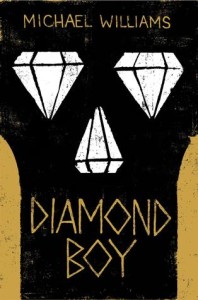
  5. Patson from Diamond Boy by Michael Williams
  6. Nick from Everlost (Series: Skinjacker) by Neal Shusterman
  7. Augustus Waters from The Fault in Our Stars by John Green
  8. Albert and Travis from Fish in a Tree by Lynda Mullaly Hunt
  9. Cole (Coltrane) from Ghetto Cowboy by G. Neri
  10. Jonas from The Giver (Series: Giver Quartet) by Lois Lowry
  11. Ben from Half Brother by Kenneth Oppel
  12. Zenji from Hunt for the Bamboo Rat (Series: Prisoners of the Empire) by Graham Salisbury
  13. Luis and Sam from Jumped In by Patrick Flores-Scott
  14. Todd Hewitt from The Knife of Never Letting Go (Series: Chaos Walking) by Patrick Ness
  15. Josh from Living with Jackie Chan (Series: Jumping Off Swings) by Jo Knowles
  16. Logan Bruno from Logan Likes Mary Anne! (Series: The Baby-Sitters Club) by Ann M. Martin
  17. Jack from Love that Dog (Series: Jack) by Sharon Creech
  18. Mal from Mal and Chad: The Biggest, Bestest Time Ever! (Series: Mal and Chad) by Stephen McCranie
  19. Arn Chorn-Pond from Never Fall Down by Patricia McCormick
  20. Rafe from Openly Straight by Bill Konigsberg
  21. Matt and Curtis from Personal Effects by E.M. Kokie
  22. Navin from The Stonekeeper (Series: Amulet) by Kazu Kibuishi
  23. Alex Rider from Stormbreaker (Series: Alex Rider) by Anthony Horowitz
  24. Luc from Threatened by Eliot Schrefer
  25. Ali and Needles from When I Was the Greatest by Jason Reynolds

Who makes it on your list?

Signature

Check out Ricki’s list of 25 girls that stand out for her.

Check out Ricki’s list of 25 boys that stand out for her. 

In the World of Books: 25 Boys Who Stand Out For Ricki

Share

When Carrie Gelson asked Kellee and I to join her post about 25 boys who stand out in middle grade and young adult literature, we jumped at the opportunity. Last week, I shared my 25 girls who stand out, and this week, I am excited to share the boys. Kellee and I devour hundreds of books each year, yet we find that there are characters who stick with us through the years. Just like the girls, it was difficult for me to narrow my list down to just 25 boys, but I am very proud of this group of brave, young men. Just like the girls, they don’t always make the right choices,  but they really stand out for me. I hope you find (or have found) these boys to be just as as special as I have.

25 boys Ricki

  1. Arnold “Junior” Spirit from The Absolutely True Diary of a Part-Time Indian by Sherman Alexie
  2. Aristotle and Dante from Aristotle and Dante Discover the Secrets of the Universe by Benjamin Alire Sáenz
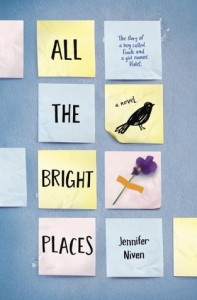
  3. Theodore Finch from All the Bright Places by Jennifer Niven
  4. Sticky from Ball Don’t Lie by Matt de la Peña
  5. Karl Stern from The Berlin Boxing Club by Robert Sharenow
  6. James Whitman from Dr. Bird’s Advice for Sad Poets by Evan Roskos
  7. Augustus Waters from The Fault in Our Stars by John Green
  8. Andrew Zanskey from Food, Girls, and Other Things I Can’t Have by Allen Zadoff
  9. Craig Gilner from It’s Kind of a Funny Story by Ned Vizzini
  10. Hassan from The Kite Runner by Khaled Hosseini
  11. DQ from The Last Summer of the Death Warriors by Francisco X. Stork
  12. Ishmael Beah from A Long Way Gone by Ishmael Beah
  13. Miles “Pudge” Halter from Looking for Alaska by John Green
  14. Marcelo from Marcelo in the Real World by Francisco X. Stork
  15. Danny from Mexican WhiteBoy by Matt de la Peña
  16. Steve Harmon from Monster by Walter Dean Myers
  17. Arn Chorn-Pond from Never Fall Down by Patricia McCormick
  18. Pierre-Anthon from Nothing by Janne Teller
  19. Charlie Scorsoni from The Perks of Being a Wallflower by Stephen Chbosky
  20. Kip from Right Behind You by Gail Giles
  21. Sam from The Rock and the River by Kekla Magoon
  22. Shawn McDaniel from Stuck in Neutral by Terry Trueman
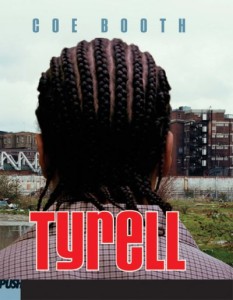
  23. Tyrell from Tyrell by Coe Booth
  24. August “Auggie” Pullman from Wonder by R. J. Palacio
  25. Malcolm Little from X by Ilyassah Shabazz and Kekla Magoon

Who makes it to your list?

RickiSig

Check out Kellee’s list of 25 girls that stand out for her.

Check out Kellee’s list of 25 boys that stand out for her.

Author Guest Post!: “How Settings Help Shape Characters’ Character” by Anne Boles Levy, Author of The Temple of Doubt

Share

How Settings Help Shape Characters’ Character

by Anne Boles Levy

I love long walks on sunlit beaches, or watching it rain outside my window, or listening to the happy screams of kids on a playground. I love settings, in other words. I’m in different moods in each of those places, and I’m always curious to see how that’s true of characters in novels and movies.

People react to their surroundings – think of yourself, stuck in traffic, with someone cutting in front of you. Honnnkkk! Then think of yourself in your favorite reading spot, curled up with a book and a cup of cocoa. I know where I’d rather be.

And why shouldn’t characters be the same? How would one of your students describe Katniss Everdeen hunting in the woods near her home versus her state of mind in the Hunger Games arena? Or Harry Potter living in the cupboard under the stairs versus his first view of Hogwarts?

I love teaching about setting to my middle schoolers, and I think I achieved a Zen-like bliss creating my own setting for The Temple of Doubt.

In it, my protagonist, Hadara, squirms with discomfort in a hot, sticky classroom on a tropical island. She can’t wait for the open spaces of her town and its surrounding wilds. She too reacts differently in each place, until it was hard for me to separate setting from situation, and situation from characterization. Her ability to wade through a swamp, shimmy up a tree, and find her way among treetop huts says something about the choices she makes and where she feels she can be herself.

Characters don’t merely interact in their settings – it’s not just a place where stuff happens. Take these two characters: one wakes up each morning between silk sheets, the sun streaming through high windows into an airy room. The other wakes up on a hard pallet in the hayloft of a barn, with only a scratchy horse blanket for warmth.

Without knowing anything else about the characters – gender or age, ethnicity or national origin – you’re likely already inferring a few facts about their life circumstances. Maybe you’re imagining that one is likely well off and the other, not so much. Were they born into these circumstances, or is this a recent quirk of fate for each? What might happen if they met?

When I taught 6th grade, I had my students keep a little chart for all the settings in A Wrinkle in Time, since Meg and her companions land on several planets, including a two-dimensional one! But we start at Meg’s comfy home, with its brightly lit kitchen, and we compare not only all the different places she winds up, but how her attitude and reactions also change.

Characters, like real people, are at least partly a product of their environments, and their sense of belonging – or not – can in turn spark the central conflict. Sometimes they fit perfectly in a setting, and it comes under attack, forcing them to act. Other times, home is no longer where the heart lies, and it’s time to journey on.

When seen through the character’s eyes, setting becomes so much more than a place and a time. It’s often a map to the parts of themselves that matter most.


Temple of Doubt

About the Book: 

It’s been two six-days since a falling star crashed into the marshes beyond Port Sapphire, putting the wilds of Kuldor off-limits to fifteen-year-old Hadara. She feels this loss deeply and is eager to join her mother beyond the city limits to gather illegal herbs and throw off the yoke of her tedious religious schooling. Medicines of any sort are heresy to the people of Port Sapphire, who must rely on magic provided by the god Nihil for aid. And if people die from that magic, their own lack of faith is surely to blame. At least, that’s what Hadara has been taught—and has so far refused to believe.

Hadara and her mother have ignored the priests’ many warnings about their herb gathering, secure in knowing their tropical island is far from Nihil’s critical gaze. Then two powerful high priests arrive from Nihil’s home city to investigate the fallen star, insisting it harbors an unseen demon. This sets off speculation that an evil force is already at work in Port Sapphire and brings one of the holy men to Hadara’s doorstep. When he chooses Hadara as a guide into the wilds, she sets off a chain of events that will upend everything she’s been taught about the sacred and the profane.

The Temple of Doubt is the first installment in a series that follows a teenager who is given a greater destiny and purpose than she could’ve ever imagined.

Excerpt from the Book:

My sandals thunked across age-worn planks on a bridge that linked the two halves of the city, east and west, commerce and families. The bridge’s arch gave me a flaw­less view of the flat rows of warehouses, the ships in their berths, the gleaming white of the Customs House at the mouth of the harbor. I could hear the singsong street ven­dors that gave Callers Wharf its name. It was already filling with crowds anticipating a spectacle. We hurried across the bridge and plunged into its teeming market. A brass trinket lured here, a whiff of savory spices pulled there. Amaniel tapped her foot impatiently while I took a peek into a few stalls before they closed.

“What if Nihil himself is coming? Honestly, Hadara, you’d make him wait while you tried on scarves.”

“The kiosks are always closed by the time school lets out.” I was sure I could face anything, even Nihil, in a pair of cloth slippers dyed a vivid pink, but they were about to vanish behind a reed shutter. “If Nihil’s coming, the port might be closed for a long time. If he isn’t, then maybe he won’t be offended if I shop some.”

Amaniel gripped my sleeve. “I’m dragging you if you don’t come. I mean it. I’m not missing this.”

“Alright, alright,” I said. “I don’t know what bitter root you’ve been eating today, but you’re all pucker.”


Anne Levy

About the Author: Anne Boles Levy has lived in eight states, forcing her to make up settings for her fantasy novels since she can’t remember what any real place looks like. She currently teaches English to middle schoolers after more than two decades writing and editing for print, web, and radio. Anne is a graduate of Smith College and studied abroad at University College London, and has her master’s in journalism from Columbia University. She’s also an amateur silversmith and the absent-minded wife to her long-suffering husband, Brett. They run around after two children and a cat in Scottsdale, Arizona.

Thank you to Cheryl at Skyhorse Publishing, Inc. for connecting us with Anne!

RickiSigandSignature