Who Wins?: 100 Historical Figures Go Head-to-Head and You Decide the Winner! by Clay Swartz

Share

NFPB2016

Nonfiction Wednesday

Nonfiction Picture Book Wednesday is hosted by Kid Lit Frenzy and was started to help promote the reading of nonfiction texts. Most Wednesdays, we will be participating and will review a nonfiction text (though it may not always be a picture book).
Be sure to visit Kid Lit Frenzy and see what other nonfiction books are shared this week!
who-wins

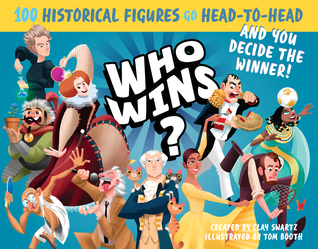
Who Wins? 100 Historical Figures Go Head-to-Head and You Decide the Winner!
Created by Clay Swartz
Illustrated by Tom Booth
Published July 12th, 2016 by Workman Publishing Company

Summary: Who would rock the mic at karaoke night? Abraham “The Great Emancipator” Lincoln or Jane “Lady Persuasion” Austen? How about a hot dog eating contest between Harry “Mr. Magic” Houdini and Mary “Mother of Frankenstein” Shelley? What about a pie contest? A staring contest? And who has a better chance of sneaking into Area 51, Isaac “Gravity Guy” Newton or Sacagawea aka “The Pathfinder”?

In Who Wins?: History, you decide the winner in over 50 head-to-head challenges between 100 of history’s most illustrious characters. But choosing the victor isn’t arbitrary. Readers must justify their answers using each of the historical figures’ six 0-10 category rankings in bravery, leadership, artistry, wealth, wisdom, and fitness; as well as facts from short biographies.

As funny as it is informative, the book is uniquely formatted so readers can match up each and every character in any of the head-to-head battles. History has never been so much fun!

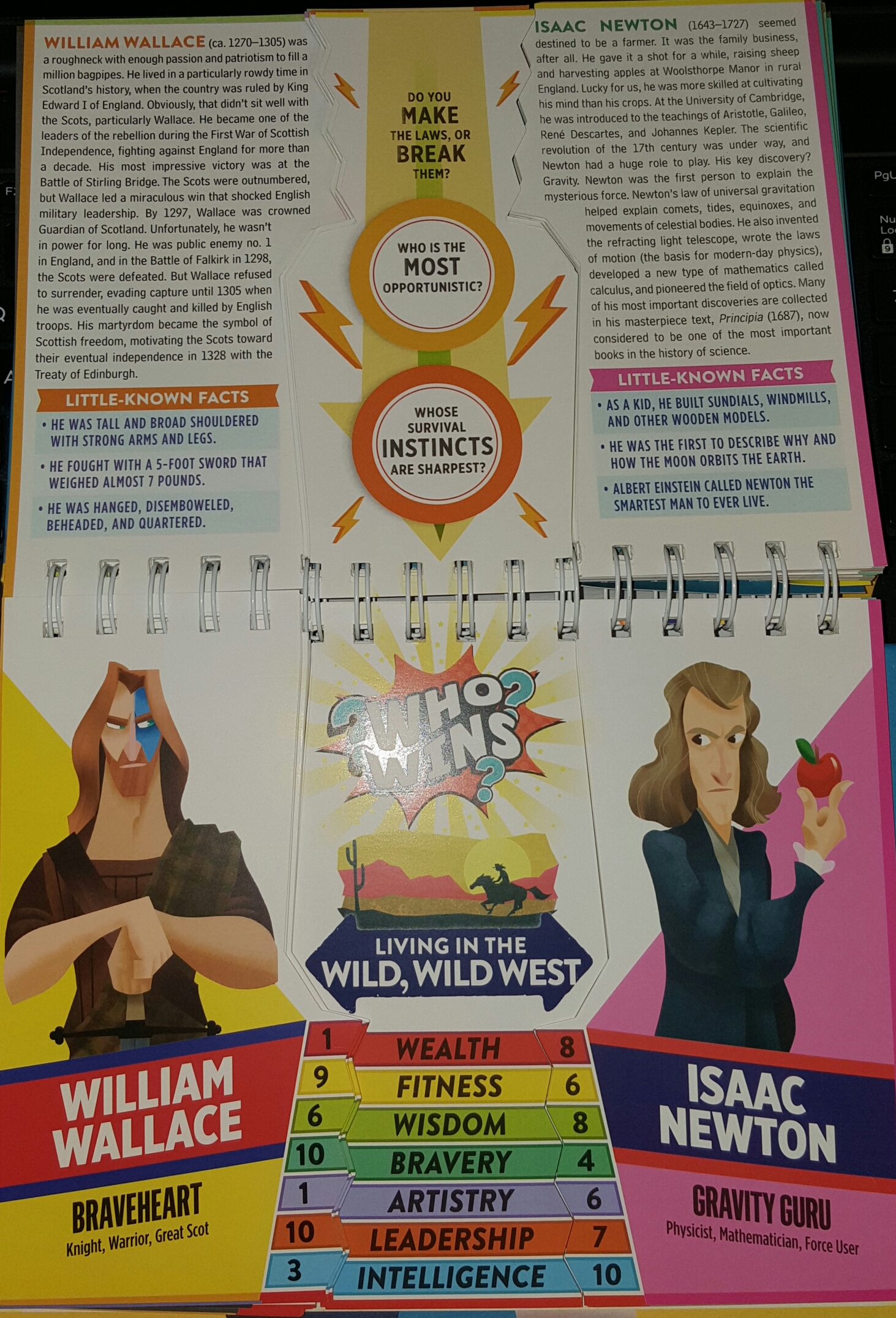
Kellee’s Review: Who Wins? is informative, funny, and so cleverly formatted that it is going to be a star in homes and classrooms. I love how the book gives each historical figure a nickname (either one they already were given, like Satchmo, or made up, like Gravity Guru for Isaac Newton) to add a bit of humor to the book; however, still makes sure to include a plethora of information about each figure including a bio then 3 little-known facts. Each head-to-head situation also helps guide your decision by giving some example questions to think about. Let’s look at a head-to-head, so you can really see how clever it is!

William Wallace “Braveheart” vs. Isaac Newton “Gravity Guru”
Who Wins Living in the Wild, Wild West?
20161008_221140-1

Ricki’s Review: What a clever concept! This spiral-bound book will be a staple for car rides. I could also see it being a great book for fast finishers in the classroom. The book consists of three columns that are split. So, for example, I randomly flipped to three pages (one of each column). At the far right, there is a short summary of Louis Armstrong’s biography and picture. Then, in the middle, the column I flipped to is the “talent show” and asks “Who is the most well-rounded? Who has the most experience entertaining?” Then on the far right, I flipped to Abraham Lincoln. While this one seems like a clear winner for Louis Armstrong, I think we could conceivably argue for either person for the two questions. I’ll be hanging on to this book. It will be a great book to give to my kids in the backseat. Fun family debates are the best!

Teachers’ Tools for Navigation: Are you an elementary school teacher or a social studies teacher or a language arts teacher? Then buy this. It is a perfect bell work or paper prompts or discussion starter or debate topic creator or whatever else you can think of!

Discussion Questions: Who wins?

Read This If You Love: History, Historical Figures, Debates 

Recommended For: 

closereadinganalysisbuttonsmall classroomlibrarybuttonsmall

Signatureand RickiSig

**Thank you to Estelle at Workman’s for providing copies for review!**
Author Guest Post!: “Alaska Smokejumpers” by Mark Thiessen, Author of Extreme Wildfire: Smoke Jumpers, High-Tech Gear, Survival Tactics and the Extraordinary Science of Fire

Share

fire-prevention-week

“Alaska Smokejumpers”

Imagine jumping out of a perfectly good airplane, deploying your parachute and landing at a very remote campsite. Except before you get a chance to enjoy camping, you have to fight a forest fire. That’s the job of smokejumpers and it’s unlike any other job in the world.

This summer I spent 4 weeks photographing smokejumpers for National Geographic Magazine working out of Fairbanks, Alaska. It’s a vast and remote landscape where the only way you can get to fires is by air. Most of these fires are caused by lightning. Thunderstorms roll through the landscape and pepper the forest with lightning bolts. The top of a tree may explode sending burning branches to the ground. They might sit there and smolder for a few days until the weather becomes hot, dry and windy. Then thin streams of white smoke rise up to the sky. These few smoldering branches are now burning and setting the neighboring trees and bushes on fire.

In Alaska it’s often a commercial or patrol aircraft will spot these new fires and radio the dispatch office. If these fires are in remote places far from any road, they call in the smokejumpers. Planes and parachutes are the fastest way to get firefighters to the scene.

Once a plane of smokejumpers is circling the area, they are looking out the windows trying to figure out where they will land and how they will approach each fire. After a “lightning bust” there will be many fires taking off at the same time. Right now they are small. That’s the idea, jump on them when they are small before they grow and require a lot more resources to put out.

Out they go….their parachutes burst open to slow their decent.  One by one they drop into a meadow or clearing and hopefully not into any trees. Loads of cargo are parachuted to the same drop point. In these boxes are chain saws, axes, shovels, and extra food. The smokejumpers tents, sleeping bags, and extra clothes are all held in pockets of their jump suit or in their personal gear bag hanging on their waist.

On the ground they quickly get out of their jumpsuits, grab their tools and attack the fire. Starting at the heel where it is the coolest, they work their way towards the head. In Alaska during the summer the permafrost has melted and the ground is wet just below the surface. They use a unique tool called a “beater”, which looks like a mud flap attached to a flexible pole.  They literally beat the flames down into the wet ground below. It doesn’t take much and works really well. As they work their way along the flank towards the head, they stay near the black area that has already burned, which is the safest place. There is always a chance the fire will blow up on them. Wildland firefighters have a saying, “Keep one foot in the black and you’ll always come back.”

When the fire gets knocked down, it could be in the wee hours of the morning. But in Alaska it never gets dark in the summer because it’s too far north. Exhausted from a hard day’s work, they eat their dinner, pitch their tents and reflect on what an amazing day it’s been.

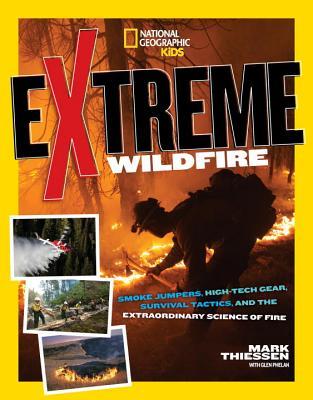
extreme-wildfire

Extreme Wildfire: Smoke Jumpers, High-Tech Gear, Survival Tactics and the Extraordinary Science of Fire
Author: Mark Thiessen
Published August 30th, 2016

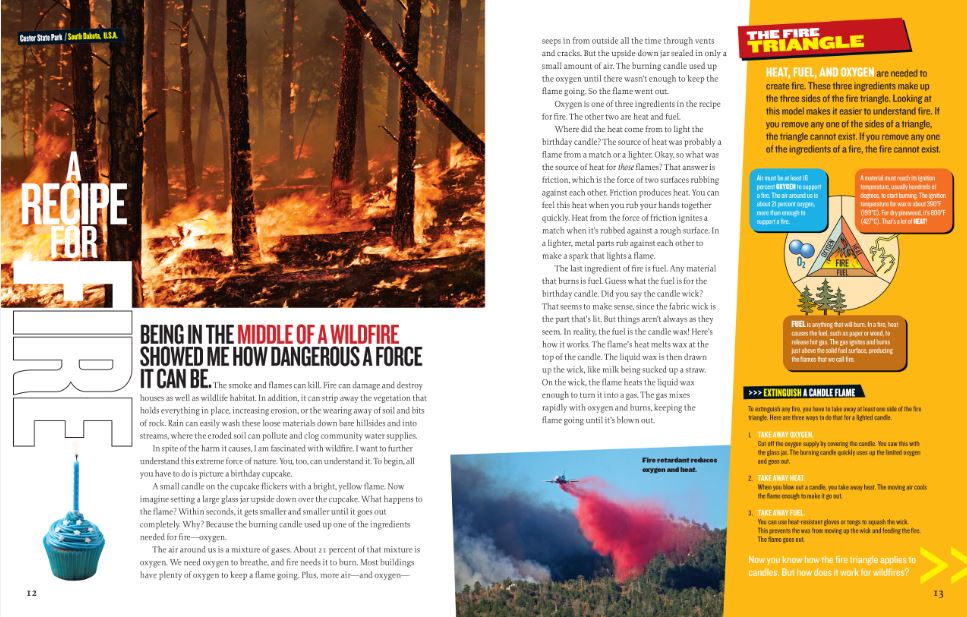
Ripped straight from this summer’s headlines, renowned National Geographic photographer and wildfire expert Mark Thiessen brings young readers right into the flames with Extreme Wildfire: Smoke Jumpers, High-Tech Gear, Survival Tactics and the Extraordinary Science of Fire (ages 8-12).  Featuring Thiessen’s adrenaline-filled first-person narrative and breathtaking photographs, readers can almost feel the impending heat and experience what it’s like to work side-by-side with the heroes who keep the world’s forests and their inhabitants safe.

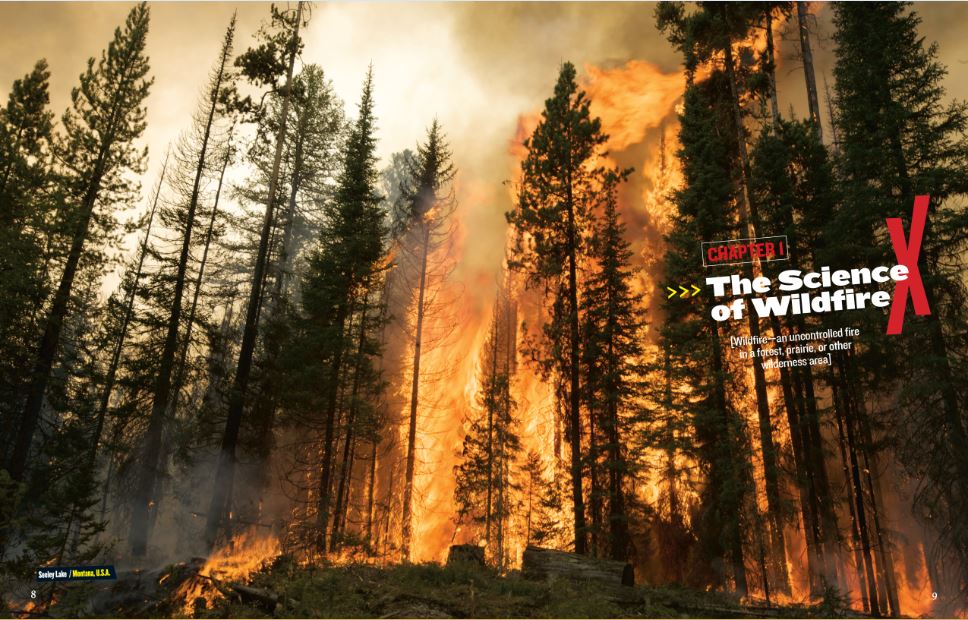
In one moment, there’s a simple spark, and then roaring flames surge 200 feet into the air, devouring forests. Trees, from root to canopy, are burned to the ground. Airtankers and helicopters hover above, executing an air attack. Brave firefighters, equipped with flame resistant suits, leap from helicopters onto the treetops and descend to the blazing forest floor.

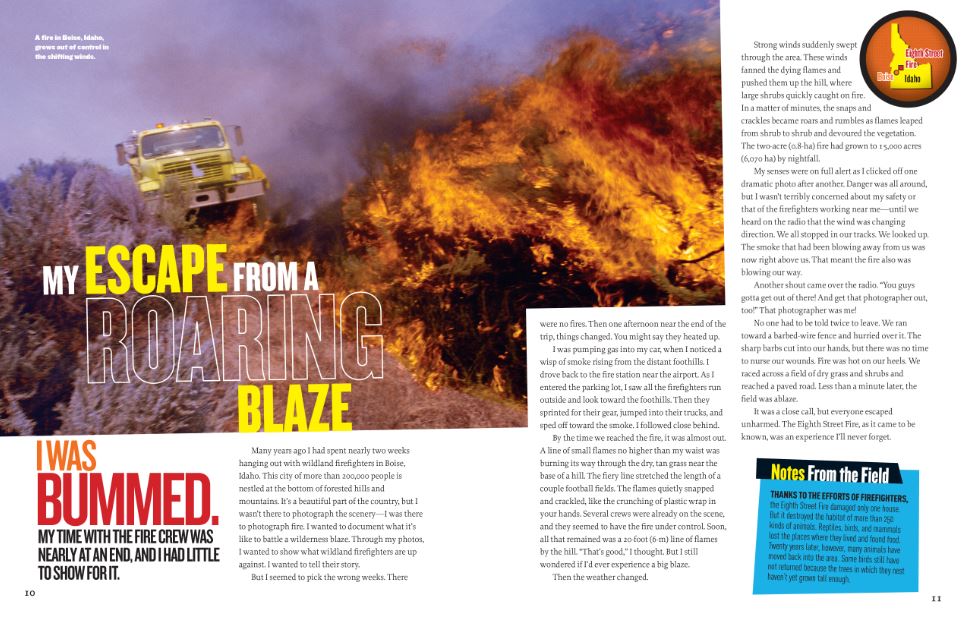
In this book, young readers will learn about the ecological impacts of wildfires, the ins and outs of fire science including tactics for prevention and containment, cutting-edge technology used to track wildfires and predict fire behavior, and about the impressive skill, survival tactics, and bravery required to control a wildfire. Also included are “Fire Facts,” Thiessen’s fascinating “Notes from the Field” and page after page of photographs’s from Thiessen’s 20+ years of photographing fires up close.

From a searing expanse of flames in Russia to barreling blazes in California, no wildfire is too extreme for Mark Thiessen.  Based in D.C., he has traveled across the globe investigating dangerous infernos and working alongside courageous firefighting teams. Mark is available for interview and can talk about his why his idea of a vacation is placing himself in the middle of blazing fires, fire prevention techniques and tips and the effects of fires on the environment and wildlife.  Here is a terrific video featuring Mark and his adventures: http://video.nationalgeographic.com/video/wildfire-photographer

extreme-wildfire-8-9

extreme-wildfire-10-11

extreme-wildfire-12-13

Thank you to Mark for this truly important post!
And thank you to Karen from Media Masters Publicity for helping set up the post!

Kellee Signature andRickiSig

Animal Planet’s Animal Bites: Farm Animals and Wild Animals

Share

NFPB2016

Nonfiction Wednesday

Nonfiction Picture Book Wednesday is hosted by Kid Lit Frenzy and was started to help promote the reading of nonfiction texts. Most Wednesdays, we will be participating and will review a nonfiction text (though it may not always be a picture book).
Be sure to visit Kid Lit Frenzy and see what other nonfiction books are shared this week!

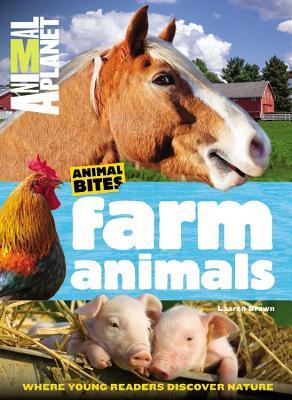
farm animals animal planet

Farm Animals

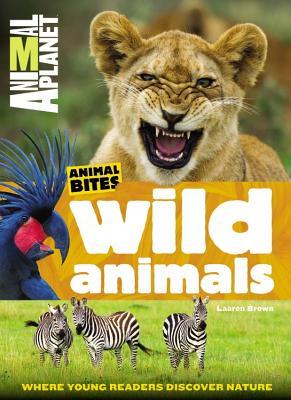
wild animals

Wild Animals

Animal Planet
Published June 21, 2016 by Animal Planet

Farm Animals Summary: With more than 200 gorgeous animal photos of cows, pigs, sheep, goats, chickens, llamas, and many others, Animal Planet Farm Animals is a fun, habitat-by-habitat guide that provides kids in the first years of schooling with the perfect bite-sized view of their favorite farm animals. Arranged thematically with focus on animal behavior and family relationships, young readers will explore sections about animal bodies, baby animals, food, play time, conservation and more. Special book features designed for this age group include Quick Bites sidebars with cool animal facts, simple infographics, and illustrated maps of life in on the farm and at the petting zoo.

Wild Animals Summary: With more than 200 gorgeous animal photos of lions, giraffes, ibexes, flamingos, hippopotamuses, and many others, Animal Planet Wild Animals is a fun, habitat-by-habitat guide that provides kids in the first years of schooling with the perfect bite-sized view of their favorite wild animals. Arranged thematically with focus on animal behavior and family relationships, young readers will explore sections about animal bodies, baby animals, food, play time, conservation and more. Special book features designed for this age group include Quick Bites sidebars with cool animal facts, simple infographics, and illustrated maps of life in the African savannah and Amazon rain forest.

A portion of the proceeds will benefit Animal Planet’s R.O.A.R. (Reach Out. Act. Respond.) project which partners with leading animal organization to make the world a better place for domestic and wild animals.

Kellee’s Review: I am so glad that Animal Planet is publishing this series that focuses on a different group of animals in each one. As a mom to a son that truly adores all types of animals, I am so glad that there are the variety of quality nonfiction animal texts out there for readers to access. 

Ricki’s Review: My son can’t get enough of these books. We have read all of the Animal Bites series books thus far, and he constantly brings them to me to read. I like them, too, because I can learn so much from each of the pages. The photography is beautiful and they are very nicely formatted. While my toddler is probably the age demographic that these are marketed to, I think it shows that these books will be appreciated by kids (and adults!) of all ages. 

Teachers’ Tools for Navigation: There are a wide variety of tools in these books that make it very easy for teachers to use them. They have colorful tabs, activities, resources, etc. I’d love to take each of the books in these series and create literature circles. It would be neat for each literature circle to pick out five interesting things they learned to share with the other groups. I imagine this would create interest and make the students more interested in reading the other books in the series.

Discussion Questions: What are some of your favorite facts from the books?; How do these books help you discover nature and animals more? How are the books formatted in ways that appeal to you visually? Which animal is your favorite, and why?

We Flagged: Some of the activities in these books sound like great fun:

In the farm activities section, for example, you can “race to the barn” with three other friends. Each of you will imitate an animal’s behavior from the text. You will see which animal probably moves the fastest. Also in this section, there is a craft section on how to make a flock of sheep!

Check out any of the Animal Bites books to find more activities to do in conjunction to the texts and information.

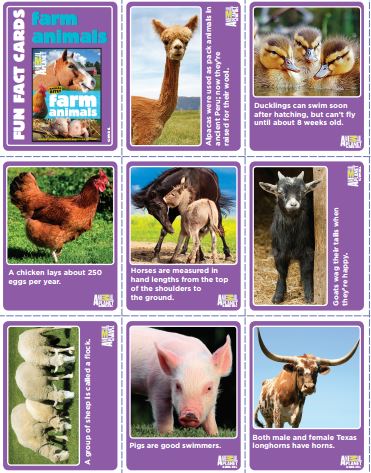
Animal Planet has also created FUN FACT cards for each of their Animal Bites books that can be accessed fore free HERE.

animal-fun-fact-cards

Read This If You Loved: Animal Planet’s Animal Bites: Ocean Animals and Polar AnimalsNational Geographic nonfiction animal texts, Seymour Simon animal texts, Extreme Ocean Records by Seymour Simon 

Recommended For: 

classroomlibrarybuttonsmall closereadinganalysisbuttonsmall

RickiSigandSignature


Author Guest Post!: “Robots are Awesome!” by Brian Castleforte, Author of Papertoy Glowbots: 46 Glowing Robots You Can Make Yourself!

Share

“Robots are awesome!”

Robots are awesome! But they are nothing without the creativity! When I was a kid, er, when I was a younger kid, I would create these wonderful robot costumes out of all sorts of random things – cardboard boxes and tubes wrapped in tin foil, old vacuum cleaner parts, and some not so old parts (thanks Mom), wires and hangers, light bulbs and flashlights, batteries, broken toys, metal, plastic, wood, paper, Play-Doh… You get the idea.

As an adult, er, as a big kid I still love to create all kinds of wonderful things, especially monsters and robots, be they costumes or paper toys. Designing my robots for Papertoy Glowbots was a lot of fun. There’s imaging the robots and then engineering the paper shapes, illustrating the skins, writing the stories and bios, naming them; it’s so much fun stepping into the challenge and experience of so much creative play. Like being a little kid again, I can’t help but imagine my bots getting into grand three dimensional adventures beyond the flat pages of my books. In the hearts, minds and hands of kids of all ages, there can be robot dance parties led by Big Fun and DJ Waveform, sending Sparxy and Traxx into space to search for life in distant galaxies, pitting The Bionic Yeti against Glitch Hardware in the robot battle of the century! Oops! My imagination is getting a little carried away there. You see, there is never a shortage of creativity inside us, we need only let it out.

As you can see, creativity is key. It is the driving force behind everything we think, say and do and ultimately create. This is what is meant by the expression “thoughts are things.” And it’s what makes us human.

So what will you create today? Remember it only takes a single piece of paper to jumpstart your imagination. I suggest you roll up your sleeves and dig in. You can start by creating papertoy monsters and robots from my books – with your kids or even without them. Trust me you aren’t the first “big kids” to play with my books. It’s fun. And it’s good for you. Good for your brain and fine motor skills, and it’s good for your inner child. And even better for inspiring the same kind of playfulness for the kids in your life.

Whether it’s a papertoy or working on your own creation, don’t forget you still have so many wonderful gifts of creativity waiting to be unwrapped and shared with the world. Gifts only you can create. And you’ll never know what those wonderful creations are until you get started.

So get glowing and get creative. The kid in you is waiting.

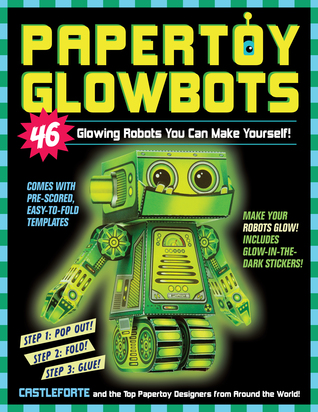
papertoy-glowbots

Papertoy Glowbots
Author: Brian Castleforte
Published August 23rd, 2016 by Workman Publishing Company

About the Book: Origami meets amazing creatures in a book of paper craft fun!

Papertoy Glowbots introduces 46 robots that have the added cool factor of lighting up, whether using glow-in-the-dark stickers that come with the book or light sources like flashlights, Christmas tree lights, and electric tea lights.

The 46 die-cut paper robots are created by Brian Castleforte, author of Papertoy Monsters, along with the hottest papertoy designers from around the world. Meet the robots and read about their entertaining backstories in the front, then turn to the card stock section in the back to build them. The templates are die-cut and ready to pop out, fold, and glue. Bold, colorful graphics ensure the robots look as amazing in the daytime as they do with the lights off.

About the Author: Brian Castleforte is an artist and graphic designer who has created cutting-edge graphics for Nike, Sony, Warner Brothers, MTV, and others. He is the creator of nicepapertoys.com, the first and only papertoy social network, and also created Papertoy Monsters. His work can also be found at Castleforte.com and on Twitter @castleforte.

Thank you to Brian for his creativity-inspiring post!

Kellee Signature andRickiSig

Blog Tour with Review!: Blood Brother: Jonathan Daniels and His Sacrifice for Civil Rights by Rich Wallace and Sandra Neil Wallace

Share

NFPB2016

Nonfiction Wednesday

Nonfiction Picture Book Wednesday is hosted by Kid Lit Frenzy and was started to help promote the reading of nonfiction texts. Most Wednesdays, we will be participating and will review a nonfiction text (though it may not always be a picture book).
Be sure to visit Kid Lit Frenzy and see what other nonfiction books are shared this week!

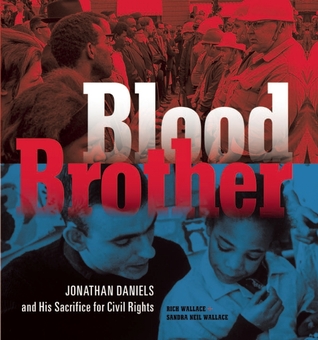
blood-brother

Blood Brothers: Jonathan Daniels and His Sacrifice for Civil Rights
Author: Rich Wallace and Sandra Neil Wallace
Published September 13th, 2016 by Calkins Creek

Goodreads Summary: Jonathan Daniels, a white seminary student from New Hampshire, traveled to Selma, Alabama, in 1965 to help with voter registration of black residents. After the voting rights marches, he remained in Alabama, in the area known as “Bloody Lowndes,” an extremely dangerous area for white freedom fighters, to assist civil rights workers. Five months later, Jonathan Daniels was shot and killed while saving the life of Ruby Sales, a black teenager. Through Daniels’s poignant letters, papers, photographs, and taped interviews, authors Rich Wallace and Sandra Neil Wallace explore what led Daniels to the moment of his death, the trial of his murderer, and how these events helped reshape both the legal and political climate of Lowndes County and the nation.

Blood Brother has received two starred reviews so far from Kirkus and Booklist, and a very strong review from School Library Journal:

*”This powerful biography of a little-known figure underscores the fact that civil rights workers in the 1960s South knowingly put their lives on the line for the cause…. The authors deftly convey Daniels’ complex personality, drawing from letters and interviews, including 18 they conducted. Numerous photographs, relatively large print, and an open design invite readers in… An unusually inspiring story skillfully told.”—Kirkus Reviews, starred review

*”Outside of his hometown (Keene, New Hampshire), the name Jonathan Daniels isn’t well known, but it should be… a thoroughly researched, meticulously documented biography, which is interesting from the start, but increasingly absorbing… The many well-chosen photos show up beautifully on the large, glossy pages. The riveting story of one individual among the many working for Civil Rights during the 1960s.”—Booklist, starred review

“In a masterly demonstration of scholarly research and nonfiction writing, the Wallaces have crafted a powerful biographical narrative of civil rights activist Jonathan Daniels…. careful annotations and thorough indexing help readers keep track of the many players and scenes in this true-life drama. The authors have created a biography that brings to light the life and legacy of a lesser-known civil rights activist… this visually stunning and morally significant history is highly recommended…” —School Library Journal

About the Authors: Sandra Neil Wallace had a lengthy career as a news anchor and ESPN sportscaster before writing realistic fiction and nonfiction for young readers. A pioneer in the journalism field, she was the first woman to cover the National Hockey League on network TV. Selected as a promising new voice in children’s literature by The Horn Book, Wallace’s titles have been named to state and national awards lists including Bank Street College’s Best Children’s Book of the Year, ALA-YALSA Quick Picks, and Booklist’s Top 10 Sports Books for Youth. Visit sandraneilwallace.com.

author_sandra_neil_wallace_2013

Rich has been writing since he was a little boy, when he wrote and illustrated his own comic books. He has since published more than 25 novels for kids and teenagers. Many of those books have been award winners. Rich has an extensive background as a writer and editor, having served for many years as a senior editor at Highlights for Children magazine. He still writes the monthly “Timbertoes” feature for that venerable publication. Writing about sports and athletes comes naturally to him, as he has competed in athletics his entire life. He was a champion runner in high school and college, and still competes in Masters track and field. He’s also played a lot of basketball and soccer. For several years he was a newspaper sportswriter.

These days, Rich continues to pen a wide range of novels in addition to writing about human nutrition and other health issues for the adult market. Rich and his wife Sandra recently moved to New England with their dog Lucy. He is the father of two sons.

author_rich_wallace

Review: This book is not just an important book for young adults to read, it is an important book PERIOD. The story of Jonathan Daniels and his impact within the Civil Rights Movement shows how rights for equality is a fight for all people, not just those who are being discriminated against. Daniels had the guts to stand up for what he believed in. The connection between Jonathan Daniels’s story and the current racial tension is scary yet hopeful because it shows how differences can be made by those who believe in equity, equality, kindness, and love.

Teachers’ Tools for Navigation: This is a text that needs to be in social studies and language arts classrooms in middle and high school. It needs to be shared. View the publisher’s Educator’s Guide, Blood Brother Educator’s Guide, to view some suggestions on how to use the text in your classroom.

Discussion Questions: How does the Civil Rights Movement compare to the Black Lives Matter movement?; Jonathan Daniels did what he knew was right even though there were dangers. What does this tell you about Daniels?; What did Daniels sacrifice for the Civil Rights Movement?; How did the structure of the text impact the central idea and theme of the text?

Book Trailer: 

Read This If You Love: Learning about the Civil Rights Movement 

Recommended For: 

classroomlibrarybuttonsmall closereadinganalysisbuttonsmall litcirclesbuttonsmall

Signature

**Thank you to Kerry at Boyds Mills Press for having me be part of the blog tour!**

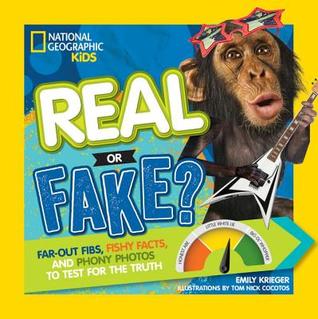
National Geographic Kids: Real or Fake? Far-Out Figs, Fishy Facts, and Phony Photos to Test for the Truth by Emily Krieger

Share

NFPB2016

Nonfiction Wednesday

Nonfiction Picture Book Wednesday is hosted by Kid Lit Frenzy and was started to help promote the reading of nonfiction texts. Most Wednesdays, we will be participating and will review a nonfiction text (though it may not always be a picture book).
Be sure to visit Kid Lit Frenzy and see what other nonfiction books are shared this week!

real or fake

Reeal or Fake? Far-Out Fibs, Fishy Facts, and Phony Photos to Test for the Truth
Author: Emily Krieger
Illustrator: Tom Nick Cocotos
Published May 10th, 2016 by National Geographic Children’s Books

Goodreads Summary: Can you tell the truth from a tall tale? Spot a phony photo a mile away? Figure out a fib in five second flat? Then Real or Fake? is the book for you! Put your amateur detective skills to work in this fun and wacky book and see if the truth triumphs as you encounter suspicious stories, fishy facts, lying lists, and more. You’ll even play interactive games that will leave you second-guessing everything you’ve ever read. Complete with awesome photos and hilarious collage art, this is one book that you have to read to believe . . . or disbelieve.

Kellee’s Review: This National Geographic text was really fascinating! I loved reading the little synopsis then trying to guess if the scenario is true or not. Although some were quite obvious to me, I best many of them will trick students! As a teacher, I also think this book will be a great addition to research units because it will begin a discussion about reliability and validity.

Ricki’s Review: This book would be a fabulous choice for a road trip. I can imagine reading the pages aloud to my kids as they guessed “Real!” or “Fake!” I also like how the facts aren’t all silly and pointless. There is a lot of good learning that happens in these pages–and as an adult, the facts weren’t obvious to me, either, so I would have fun on the car ride, too! I completely agree with Kellee’s smart suggestion that this would be a great book to introduce reliability and validity. With the political campaigning and the sharing of memes that are completely false (from both sides), I have been thinking about reliability and validity a lot lately!

Teachers’ Tools for Navigation: In addition to being an instant favorite in classrooms, Real or Fake? will definitely make anyone who reads it want to either research some of the real/fake information shared (Was Teddy Roosevelt shot but continued with his speech? and Did a chimp’s song became #19 on the European billboard charts?) or want to go research things they think they know! Real or Fake? will be a great book to use when talking about research and would be a fun introduction to Snopes.

We Flagged: “Plants make music: Real or Fake? It may sound crazy, but plants can play tunes. A new device converts electrical currents moving across a plant’s surface into synthesizer sound in real time. (Though the sound of the converted currents may not be music to your ears.) The device works in much the same way a lit-detector test does, only the probes are placed on leaves instead of on skin and the currents are translated into audio. What does this ‘music’ tell us about the secret life of plants? The inventors aren’t quite sure yet. They are, however, hoping the ‘biofeedback’ will eventually be revealing an help us learn more about the natural world. In the meantime, rest easy knowing that one day soon your houseplants could play a tune: An online fund-raising campaign to make the device available to people interested in purchasing it has reached its goal.”

Real! With its far-out sounds, the MIDI-sprout (‘MIDI’ stands for ‘musical instrument digital interface’) is changing the way people perceive plants. Scientists have known that plants send chemical and light signals to one another. Plants can even send chemical distress signals to get insects to come to their rescue! A study published in 2012 suggests that plants also may be able to use sound to communicate with one another, so why not talk to their human caretakers.

Fun Fact!: The MIDI Sprout can even be hooked up to humans! The electrical signals humans give off reportedly tell a lot about emotional states.” (p. 82-83)

*Disclosure: This quote cannot share the entire feeling of the book without the illustrations/photos. See the published book to see the complete experience.

Read This If You Loved: National Geographic’s 100 Things to Know Before You Grow UpMastermind by National Geographic, Weird but True series by National Geographic, National Geographic’s Awesome 8

Recommended For:

classroomlibrarybuttonsmall closereadinganalysisbuttonsmall readaloudbuttonsmall

Kellee Signature andRickiSig

**Thank you to Karen at Media Masters Publicity for providing copies for review!**
125 Wacky Roadside Attractions by National Geographic Kids

Share

NFPB2016

Nonfiction Wednesday

Nonfiction Picture Book Wednesday is hosted by Kid Lit Frenzy and was started to help promote the reading of nonfiction texts. Most Wednesdays, we will be participating and will review a nonfiction text (though it may not always be a picture book).
Be sure to visit Kid Lit Frenzy and see what other nonfiction books are shared this week!

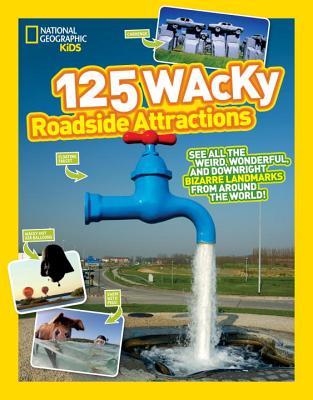
125 Wacky Roadside Attractions

125 Wacky Roadside Attractions: See All the Weird, Wonderful, and Downright Bizarre Landmarks from Around the World!
Published May 10, 2016 by National Geographic Children’s Books

Goodreads Summary: Going on a road trip? See the silly side of travel as you explore the wackiest landmarks from around the world — a place where you can walk in real dinosaur tracks, a hotel where you sleep in an igloo, a crazy beard festival, a UFO museum, and so much more. You won’t believe our world is full of so many bizarre and wonderful places!

My Review: I’ve become a huge fan of the National Geographic books. My toddler is obsessed with them, even though he is much younger than the intended audience. He loves telling us all about the things he learns in the books, and the pictures give us so much to talk about. For this book, we loved talking about all of the different places in the world and what we might see on a road trip. For older kids, this book is great to inspire them to want to travel and to visit all of these neat landmarks! I particularly liked the variety in this text. I can’t imagine that anyone could finish reading this text without adding places they want to visit to their bucket lists. There was a good balance between drivable places and also locations that are across the world. This book will keep a traveler quite busy!

Teachers’ Tools for Navigation: It would be so much fun to place these attractions on the map. Readers might examine how the authors balanced the locations. It also provides students with a good visual concept of where they want to travel next! Students might also be inspired to find a weird or wacky attraction that isn’t in the book. They can share these ideas with the class!

Discussion Questions: Which attraction was most interesting to you? Why?; Which of the closer attractions might you want to visit soon? Which is the farthest attraction that you are interested in visiting?; What neat themes did you see across different attractions?; What might inspire people to create weird and wacky attractions like these?

Read This If You Loved: National Geographic’s 100 Things to Know Before You Grow UpMastermind by National Geographic, Weird but True series by National Geographic, Animal Atlas, Almanacs, Travel Books

Recommended For: 

classroomlibrarybuttonsmall

RickiSig

**Thank you to Karen at Media Masters Publicity for providing a copy for review!**