Blog Tour with Review and Giveaway!: Garbage Island by Fred Koehler

Share

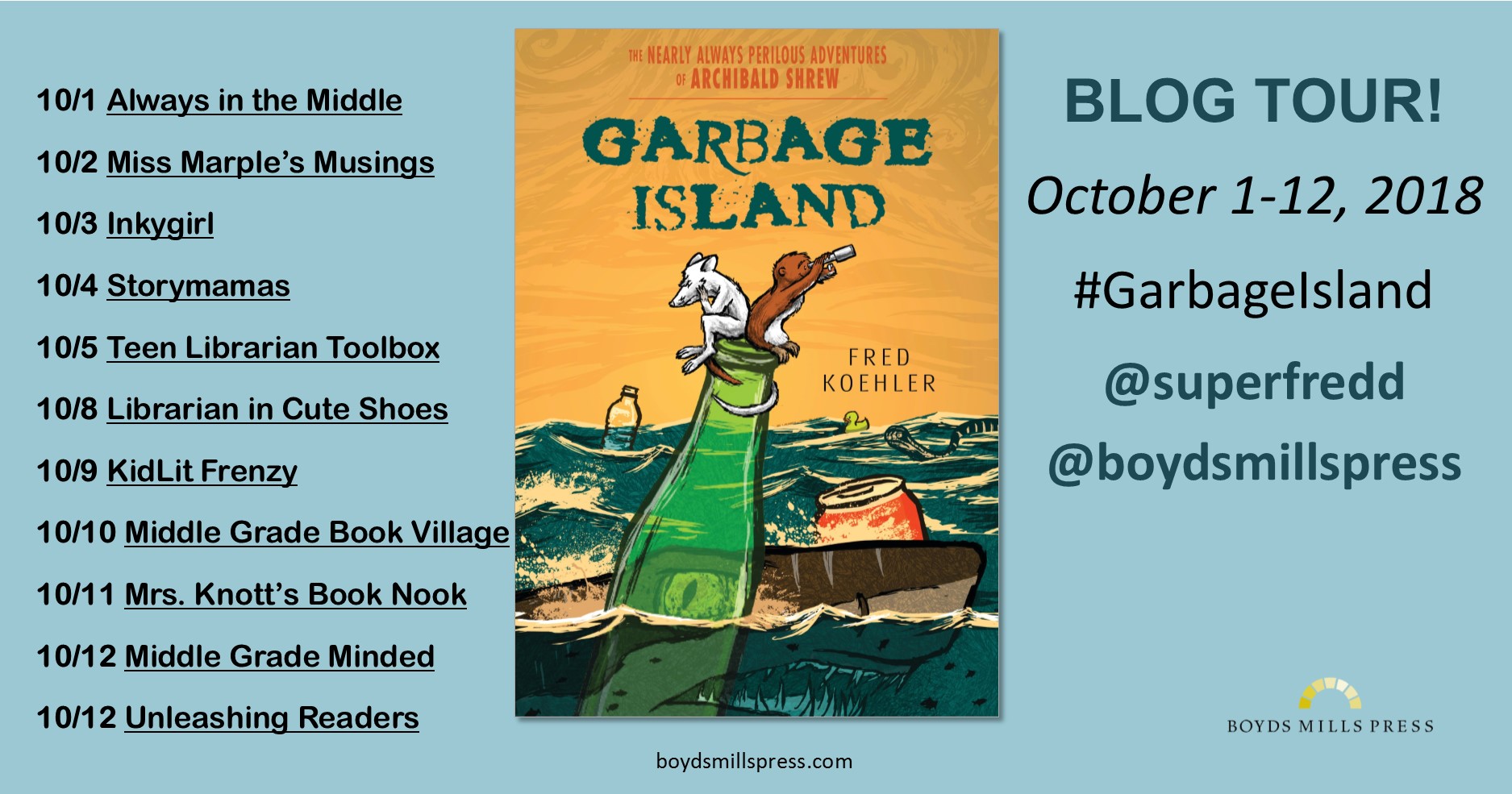
Garbage Island
Author and Illustrator: Fred Koehler
Published October 9th, 2018 by Boyds Mills Press

Summary: Mr. Popli, the mouse mayor of Garbage Island, is always at odds with Archibald Shrew, a brilliant but reckless inventor. When Garbage Island, their home in the Great Pacific Garbage Patch, splits apart, they are trapped together in Mr. Popli’s houseboat, desperate to find their way back home. At first, they only argue, but when they face a perilous thunderstorm and a series of predators, they begin to work together and recognize – in themselves and in each other – strengths they didn’t know they had.

About the Author: Fred Koehler won a Boston Globe/Horn Book Honor Award for his illustrations for One Day, The End. He is the author-illustrator of How To Cheer Up Dad, which received three starred reviews, and he is the illustrator of This Book Is Not About Dragons and Puppy, Puppy, Puppy and Flashlight Night.  He lives with his children in Lakeland, Florida.

Visit the Garbage Island Boyds Mills Press page to view an interview about his inspirations and what’s coming next!

Praise: 

“In this series opener, a mouse and a shrew find themselves unlikely allies as they unite to save Garbage Island. The clever pairing of opposites adds humor, making the gradual emergence of friendship…all the sweeter. Dramatic black-and-white illustrations highlight key action. Exciting, fast-paced adventure and unexpected friendship in a “trashy” venue.” –Kirkus Reviews

“This adventurous tale is packed with action, examples of creative thinking, and ingenuity. Use this as an introduction to STEM thinking, a science fair project, a lesson on ecology, or simply read it for the enjoyment the story provides. This book will appeal to the adventure seeker, animal lover, explorer, and just about everyone else. A must-read for readers ready to strap in for a great ride!” – School Library Connection, starred review

“(With) fast-paced action and danger… this entertaining animal adventure stands out… because of its strong characters and an underlying message of environmental awareness.”–School Library Journal

Review: I love Archibald Shrew. He actually reminds me of Tinkerbell, specifically from the movie Tinkerbell and the Lost Treasure. Archie is a genius; he just is a genius that sometimes makes a mess when he is creating or may forget something essential if he’s brainstorming or might put him or someone else in danger if trying something new. But he is just so gosh darn lovable! From the very first page when we meet him, and he’s trying out his bicycle invention. Archie is obviously just ahead of his time. And while Mr. Popli starts off as a bit of a stern, uptight character, he is forced to see what is most important through this journey. Lastly, Merri. She is a special character who I connect with so much. She tries so hard to take care of everyone. She is never not helping or doing something; everyone can rely on her. But she also feels a lot of pressure to be a caregiver in so many different ways; so much that she pushes herself way too hard sometimes. It is because of these three characters plus the plot arc of Mr. Popli and Archie’s nearly always perilous adventure that this book is hard to put down. I know this is going to be one that Trent and I will read when he is a bit older: so much to unpack and just so entertaining!

Teachers’ Tools for Navigation: There is an Educator Guide available:

Discussion Questions: 

  • How did Mr. Popli change over the course of the book?
  • What did the egg teach Archie and Mr. Popli?
  • What are the differing character traits between Archie, Mr. Popli, Merri, and Edward? Similarities?
  • How does Archie effect the other characters at the beginning of the book? The end?
  • What part of the book surprised you?
  • How does the book promote environmental awareness?
  • Which of the opponents was the biggest foe for Archie and Mr. Popli? Explain why you think that foe was the toughest?

Flagged Passages: Chapter 3

“A week into his punishment for the sea-cycle incident, Archie had taken to his new routine with all the enthusiasm of a one-armed starfish. During the day, he did everything that was asked of him, but the work made him hungry, and the hunger made him grumpy. And still, his yearning for his workshop rose in his throat each evening like the moon in the sky.

Merrie had come to visit Archie each night at the Watchtower. She was the only bird left on Garage Island. He was the only shrew. In many ways, they were kindred. But Merri was an outsider because of her species. And she was sure that Archie was treated as an outsider because of his actions. If she could get him to see that, perhaps his life could improve. Her attempts to convince him turned into another argument.” (p. 30)

Read This If You Love: Anthropomorphic stories like Redwall by Brian Jacques, Silverwing by Kenneth Oppel, Seekers series by Erin Hunter, Mez’s Magic by Eliot Schrefer, Good Dog by Dan Gemeinhart, An Army of Frogs by Trevor Pryce;Fiction that promotes environmental awareness; Plastics Ahoy! by Patricia Newman

Giveaway!:

a Rafflecopter giveaway

Don’t Miss Out on the Other Blog Tour Stops!: 

Mon 10/1           Always in the Middle
Tue 10/2             Miss Marple’s Musings
Wed 10/3           Inkygirl
Thu 10/4             Storymamas
Fri 10/5               Teen Librarian Toolbox
Mon 10/8           Librarian in Cute Shoes
Tue 10/9             KidLit Frenzy
Wed 10/10         Middle Grade Book Village
Thu 10/11          Mrs. Knott’s Book Nook
Fri 10/12             Middle Grade Minded
Fri 10/12            Unleashing Readers

Recommended For: 

classroomlibrarybuttonsmall 

Signature

**Thank you to Boyds Mills for providing copies for review and giveaway and for hosting the blog tour!**

When the Moon Was Ours by Anna-Marie McLemore

Share

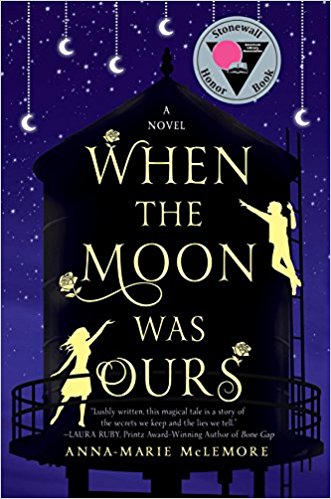
When the Moon Was Ours
Author: Anna-Marie McLemore
Published October 4, 2016 by Thomas Dunne

Goodreads Summary: To everyone who knows them, best friends Miel and Sam are as strange as they are inseparable. Roses grow out of Miel’s wrist, and rumors say that she spilled out of a water tower when she was five. Sam is known for the moons he paints and hangs in the trees, and for how little anyone knows about his life before he and his mother moved to town. But as odd as everyone considers Miel and Sam, even they stay away from the Bonner girls, four beautiful sisters rumored to be witches. Now they want the roses that grow from Miel’s skin, convinced that their scent can make anyone fall in love. And they’re willing to use every secret Miel has fought to protect to make sure she gives them up.

My Review: This book appears again and again on English department lists for courses about gender and sexuality. After I saw it for the dozenth time, I realized that I had to read it. I loved it so much that I adopted it for my course, and my students read it along with three other texts when we talked about gender and sexuality as they pertain to adolescence. I will admit that a few of my students had difficulty with the magical realism of the book, but overall, they found this book to be incredibly powerful and recommended I continue to use it in the course. There is so much to discuss, and it offers beautiful insight. I attach so many emotions to this book, which proves how much I cared deeply for the characters and content. If you missed this one, you should read it. I promise it will be different than any other book that you’ve read.

Teachers’ Tools for Navigation: The third of my class that read this book developed a great activity to inspire their peers to want to read it. They asked the students: “If an egg could cure your heartsickness, what color would it be? If a flower grew from your wrist, what type of flower would it be? If you could hang a moon from the trees to help you sleep at night, what would it look like? Or, pick another object to connect with.” We had a lot of fun discussing the great possibilities.

Discussion Questions: 

  • Why is this book used often in college English courses? What makes it so impactful?
  • What does this book teach you about people, places, life, and quite frankly, humanity as a whole?
  • There are a very many magically realistic objects in the text. If you examine them closely, what does each mean? For example, why are glass pumpkins growing in the town?

We Flagged: “Miel was a handful of foil stars, but they were the fire that made constellations” (p. 12).

Read This If You Love: Magical realism, books that make you think, books that push binary traditions of gender

Recommended For: 

closereadinganalysisbuttonsmall classroomlibrarybuttonsmall litcirclesbuttonsmall

RickiSig

Alice’s Magic Garden: Before the Rabbit Hole… by Henry Herz

Share

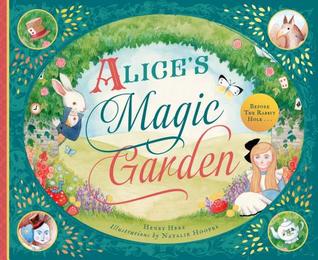
Alice’s Magic Garden: Before the Rabbit Hole…
Author: Henry Herz
Illustrator: Natalie Hoopes
Published September 1st, 2018 by Familius

Summary: Curiouser and curiouser!

In this imaginative prequel to Alice’s Adventures in Wonderland, Alice finds herself at a gray, dreary boarding school that is decidedly up the rabbit hole. From the relentless clocks to the beastly students, Alice’s world is void of color and cheer–until Alice finds a secret garden and begins tending its wilting inhabitants. When Alice’s love touches an ordinary caterpillar, a lorry bird, and a white rabbit, magical things will happen–and that, as you know, is just the beginning of the story. Filled with literary allusions and clever nods to its classic roots, Alice’s Magic Garden is a delightful prequel that begs an escape to the whimsy of Wonderland.

Review: I love when I find a twist on a classic story that is new and fresh! Herz’s story about how Alice’s garden came to be is so unique and definitely different than I’d ever heard or read before. While it holds true to the magic and silliness of Carroll’s original, it also adds a nice lesson in the vein of kindness and happiness which will lead to some great discussions as well.

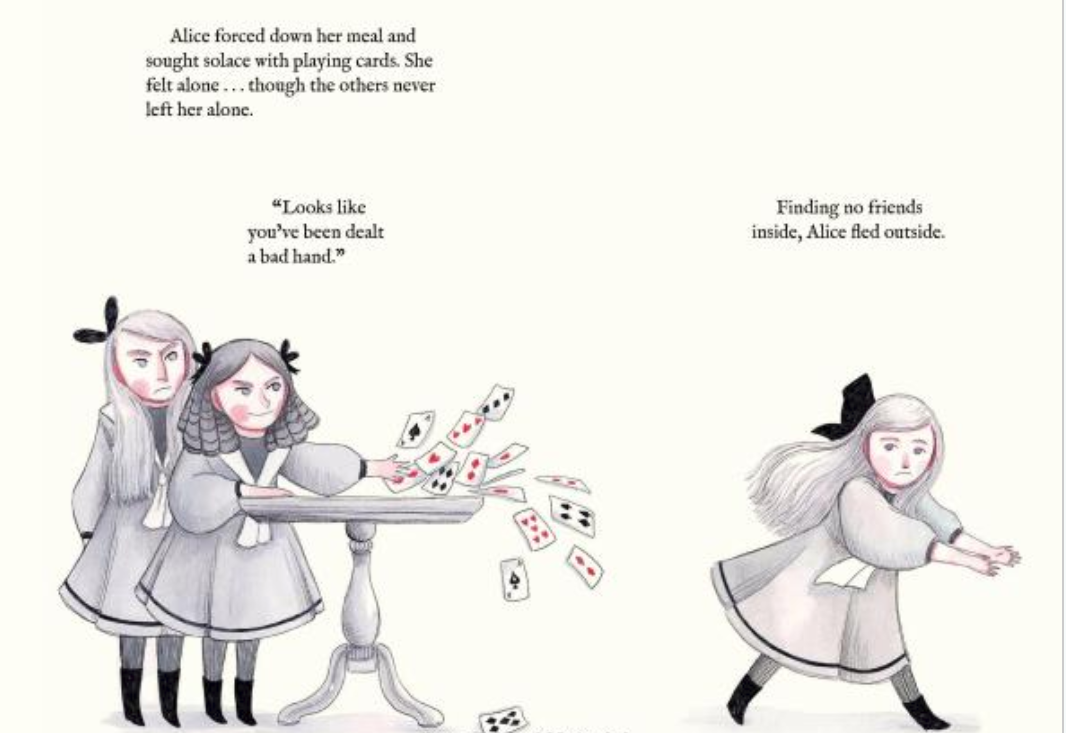
I’m also a huge fan of the illustrations. I loved how color was used to show the shift in Alice’s surroundings and the way the illustrator separated the real from the strange. Additionally, I truly loved the style of the artwork which, in my opinion, was a perfect style for the story: classic with a bit of whimsy.

Teachers’ Tools for Navigation: Use Alice’s Magic Garden as a mentor text for an imaginative prequel and ask students to create their own picture book as a prequel for a book they’ve read, a class novel, or a book club selection.

Also the story has some wonderful word choice that students can look at and discuss why the specific words were chosen.

Lastly, Alice’s could be used with secondary classes if the classic text is being read to look at allusions.

Discussion Questions: 

  • Why does the illustrator go from grayscale to color drawings?
  • What allusions to the original story do you see in the picture book?
  • How did kindness save the day?
  • How is Alice different than the other girls in her boarding school?

Flagged Passages: 

Read This If You Love: Alice’s Adventures in Wonderland by Lewis Carroll, Fractured fairy tales or other retellings, “Jabberwocky” and other poems by Lewis Carroll

Recommended For: 

classroomlibrarybuttonsmall 

Signature

**Thank you to Familius for providing a copy for review!**

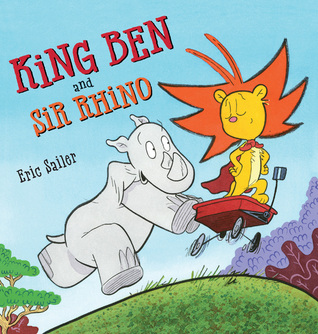
King Ben and Sir Rhino by Eric Sailer

Share

King Ben and Sir Rhino
Author and Illustrator: Eric Sailer
Published: August 7, 2018 by Two Lions

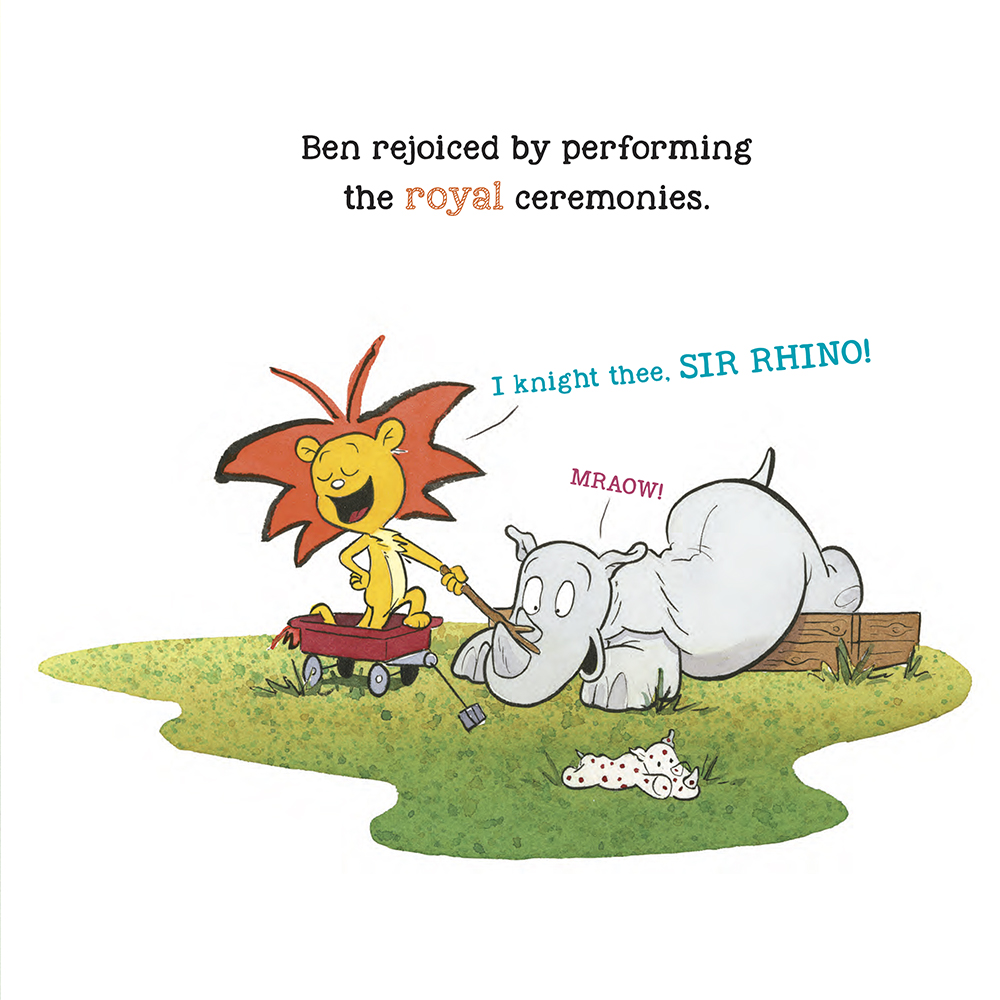
GoodReads Summary: Ben is king of the jungle. He does exactly what he pleases, as a king should. And he has everything a king could want: noble steeds, castles, and servants. What Ben doesn’t have is a loyal subject. Then he meets Rhino…and finds out what being a good king is all about.

Our Review: This adorable story offers teachers and parents opportunities to talk about bossiness! King Ben gets everything he pleases, and he decides he will make Rhino he loyal subjects. I feel like all children effort to make their parents their loyal subjects. I know that my own children have me wrapped around their fingers. This book offers opportunities to discuss why being King Ben might not always be the best approach. This makes for a very fun read-aloud.

Teachers’ Tools for Navigation: Students might have fun comparing and contrasting the King Bens and Sir Rhinos in popular culture and across history. For younger children, comparing and contrasting the good and bad things about being bossy would make for a fruitful discussion.

Discussion Questions: What are some of the things that King Ben makes Sir Rhino do?; Is King Ben being kind?; What could Sir Rhino do?; What might the characters learn from their relationship?

Flagged Passage: 

Read This If You Loved: Duck and Hippo series by Jonathan London; Elephant and Piggie series by Mo Willems; The Frog and Toad series by Arnold Lobel; Pug Meets Pig by Sue Lowell Gallion

Recommended For:

classroomlibrarybuttonsmall 

RickiSig

**Thank you to Kristin at Two Lions for providing a copy for review!**

Author Guest Post and Reading Guide!: “How a love of language and travel influenced The Magic of Melwick Orchard” by Rebecca Caprara

Share

“How a love of language and travel influenced The Magic of Melwick Orchard”

If you could have any superpower in the world, what would it be?

Flight? Invisibility? Super strength?

I’d choose Omniglotism, also known as the ability to speak every language in the world. Imagine the places you could go, the books you could read, the people and cultures you could connect with if you had a power like that.

As you can probably tell, my love of language is connected with my interest in travel. When I was a child, I dreamed of exploring the wide world and I’ve been globetrotting ever since, visiting more than 50 countries to date. Whenever I travel, I carry a notebook. In it, I sketch things I see, jot story ideas, and gather vocabulary—often in different languages. These words are like candy: sweet, colorful, delightful morsels worth savoring.

Some of my favorites include Selamat Pagi, which means Good Morning in Malay and sounds as cheerful as birdsong.

In Italian, I adore the term Aspirapolvere, which translates to Dust Breather—an infinitely cooler name for the humble household vacuum cleaner.

I also love words for which there is no English equivalent, such as the Japanese Komorebi, which describes the dance between light and leaves as the sun shines through treetops. It’s like an entire poem compressed into a single, miraculous word.

When I began writing my debut middle grade novel, The Magic of Melwick Orchard, my fascination with language inevitably found its way onto the page, primarily through the voice of Junie. In the book, 6-year-old Junie mashes and mixes words together in a process I call Frankensteining—an idea inspired by Mary Shelley’s novel, my travel notebooks, and a design exercise I learned in architecture school which involves cutting and pasting building plans of the same scale to generate new structures.

This process produced some of Junie’s signature vocabulary, such as perfecterrific (perfect + terrific), worstible (worst-most-horrible), and squg (a squeezing hug full of love). Even the mysterious Melwick Orchard is a hybrid, combining part of my mother’s name, Melissa, with my father’s nickname, Wick.

Some of the most rewarding early feedback I’ve received from readers has been their connection to these invented words. One 9-year-old reader, inspired by Junie’s wordsmithing, described feeling nerve-cited (nervous + excited) about leaving for sleep-away camp for the first time. Teachers and librarians have also reached out with their plans to use the book in conjunction with creative writing and literacy exercises in the classroom. In response to this, we developed several extension and enrichment activities within the Melwick Orchard Reading & Discussion Guide devoted to wordplay. The Reading Guide is aligned with Common Core Standards and is available as a free download through my website (https://www.rebeccacaprara.com/educators).

If you would like to share your own linguistic creations or feedback about the book, I would love to hear from you. Readers can contact me at CapraraBooks@gmail.com or connect with through social media @RebeccaCaprara.

The Magic of Melwick Orchard releases September 1, 2018 with Carolrhoda Books. For every pre-ordered copy of the book, a donation will be made to Alex’s Lemonade Stand Foundation, a nonprofit organization raising funds for childhood cancer research.

Rebecca Caprara graduated from Cornell University and practiced architecture for several years, before shifting her focus from bricks to books. An avid globetrotter, she has lived in Italy, Singapore, and Canada. She is now growing roots in Massachusetts with her family.

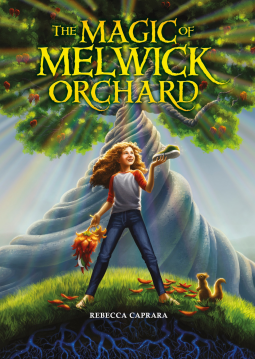
The Magic of Melwick Orchard
Author: Rebecca Caprara
Coming September 1, 2018
Published by Carolrhoda/Lerner
ISBN-10: 1512466875 / ISBN-13: 978-1512466874
First edition: Hardcover; 376 pages
Middle Grade Fiction (Age Range: 8 – 14 Years)

About the Book: After more moves than they can count, Isabel and Junie’s family finally put down roots. People in town whisper strange stories about the abandoned orchard behind their new home, but the sisters are happy to have acres of land to explore and trees to swing beneath. For the first time in a while, life feels perfecterrific.

But then Junie is diagnosed with cancer and everything changes. Isa’s mom falls into a deep depression, and mounting medical bills force Isa’s dad to work longer and longer days. As for Isa… well, she’s slowly becoming invisible. No one seems to notice that her clothes are falling apart, her stomach is empty, and her heart is breaking.

In an act of frustration, Isa buries her out-grown sneakers in the orchard. The trees haven’t produced fruit in decades, but the next day something magical happens: a sapling sprouts the strangest, most magnificent buds Isa has ever seen. When they bloom to reveal an entire harvest of new shoes, Isa feels inspired. Can she use the magical tree to save her family?

Reading Guide:

Thank you, Rebecca, for the wordly perfect post!


Maximillian Villainous by Margaret Chiu Greanias

Share

Maximillian Villainous
Author: Margaret Chiu Greanias
Illustrator: Lesley Breen Withrow
Publication Date: August 28th, 2018 by Running Press Kids

Summary: A humorous and important book about learning to follow your heart and proving that kindness can outweigh villainy any day.

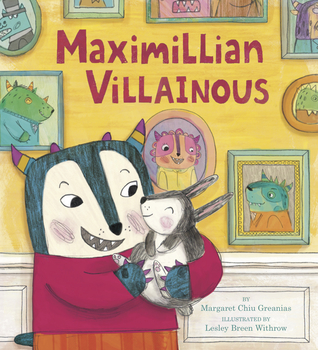
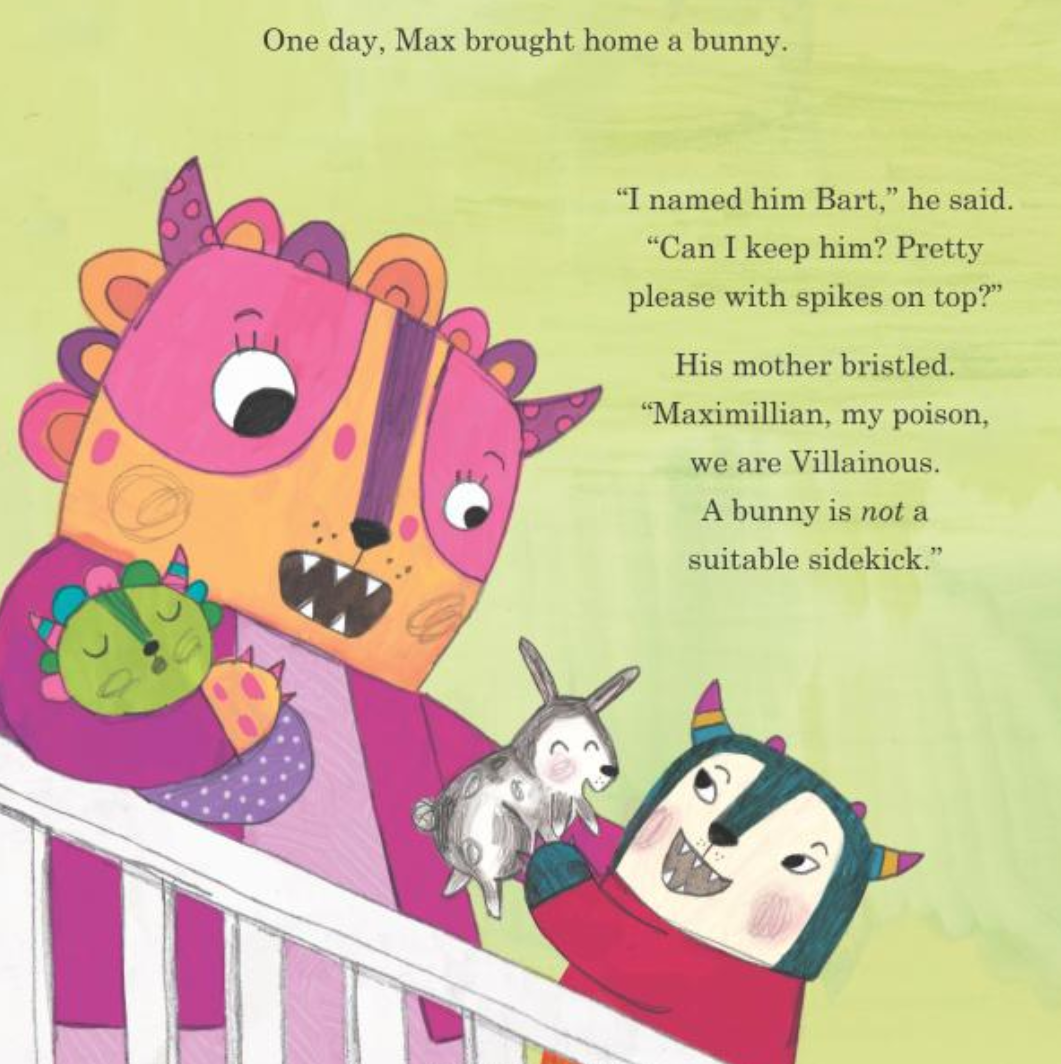
Maximillian Villainous is a monster who doesn’t have the heart to be a villain. His famous family pulls pranks on the likes of Santa Claus and the Tooth Fairy, and Max spends his time undoing them. So when he brings home a bunny to be his sidekick, Max’s disapproving mother hatches a plan. She challenges Max and the bunny to become a devious duo; otherwise . . . the bunny hops. If they want to stay together, Max and the bunny have no choice but to go against their nature. They blunder into villainy with comical effect until Max discovers that embracing his good heart may just be the key to pulling off the most devious deed of all and winning his family’s acceptance.

Delightfully fun and irreverent, Maximillian Villainous is an empowering story about embracing one’s true self and finding acceptance. Up and coming illustrator Lesley Breen Withrow brings the characters to life with bold and colorful illustrations in a style reminiscent of Richard Scarry.

About the Creators: 

Margaret Greanias was inspired by her children’s love of the Despicable Me movies and all things Minion when writing Maximillian Villainous, her debut picture book. She lives with her husband, three children, and a fluffle of dust bunnies in the San Francisco Bay area.

Lesley Breen Withrow is the illustrator of several picture books, including You’re My Boo by Kate Dopirak and Bunny Bus by Ammi-Joan Paquette. Her artwork can also be seen on many products, including stationery collections and children’s games, toys, and apps. Lesley lives on beautiful Cape Cod with her family, a couple of crazy cats, and her daughters’ large and ever-growing collection of stuffed animals.

ReviewMaximillian’s story primarily focuses on someone being different than their family and how expectations set by others in the family may not fit what another person excels at. As a teacher, I wish I could read this book to so many people because I really struggle with parents and educators expect a kid to be a certain way because they know a sibling or a family member. That isn’t how it always works. I think this same theme could be used to talk about how expectations have to be differentiated in general, so I could actually see this story being used to talk to evaluators, leaders, etc. to talk about why Maximillian needed a change of assessment instead of the same as everyone else. Underlying, the message is that we can’t expect anyone to be anyway. Let them show you who they are and accept and love them as they are.

And all of these deep messages are within a funny story with fun illustrations about a monster who loves his bunny even though he is expected to be a villain.

Teachers’ Tools for Navigation: Theme, theme, theme, theme!!! The author does a fabulous job writing a funny book that is just so perfect for talking about a lesson. The characterization of the Villainous family vs. Maximillian will allow for some fun compare/contrast and character trait activities as well. And this book definitely needs to join the empathy and community building read alouds–it will lead to some wonderful discussions and acceptance. Finally, I would love to see it used with teachers as a coaching tool to discuss the need to differentiate. Sometimes the directions we give need to be tweaked just a bit for certain kids, and we’ll get to see brilliance.

Discussion Questions: 

  • How is Maximmillian different than the rest of his family?
  • How does his family react to his differences?
  • What does Maximillian prove by the end of the book?
  • How did Maximillian manipulate the situation to show his worth?
  • Have you ever been in a situation where you felt that something was unfairly expected of you?
  • What is the message of Maximillian’s story?

Flagged Passages: 

Read This If You Love: Monsters vs. Kittens by Dani Jones, Normal Norman by Tara Lazar, Misunderstood Shark by Ame Dyckman

Recommended For: 

classroomlibrarybuttonsmall 

Signature

**Thank you to Running Press for providing a copy for review!**

Atlas of Imaginary Places by Mia Cassany

Share

Atlas of Imaginary Places
Author: Mia Cassany
Illustrator: Ana de Lima
Published: May 8, 2018 by Prestel Junior

Summary: This dreamy, gorgeously detailed picture book leads children on a journey to impossible but wonderfully imagined places.

Upside-down mountains, volcanoes that spew bubble gum, a gentle humpback whale keeping an entire city afloat. These and other wonderful worlds may not exist on Earth, but elsewhere–who knows? Each spread of this captivating book invites readers on a fantastic voyage. Ana de Lima’s whimsical, softly colored illustrations are filled with surprising details that reward close examination, while Mia Cassany’s soothing narrator is a nameless fellow traveler. A jungle where the animals exchange stripes, spots, and markings each time they sneeze, an archipelago made up of dessert-shaped islands, and a lighthouse so tall you can draw a new galaxy with your finger are just some of the wild places to visit. Perfect for before-bed reading, or daytime dreaming, this stunningly illustrated book will delight young readers and encourage them to conjure their own imaginary places.

My Review: Ever since I finished reading this book (the first time), I have been really looking forward to reviewing it. I cannot get over how wonderfully imaginative it is. It’s absolutely breath-taking. I’ve read it about fifteen times now, and every time, I notice something different. When my son pulls it off of the bookshelf for our nightly reading routine, I silently cheer. I love reading it and pouring through the pages with him. I include a spread below to give you a sense of the gorgeous pages within the book. In the spread featured below, a humpback whale rests just below the surface of the ocean. An entire city is afloat, and the page tells readers that when the city goes to sleep, the whale will wake. But because the city never sleeps, the whale will never wake. I sat with this page for quite some time. I love the magical notion that beneath the surface of the island rests a beautiful, unseen whale. I’ve read thousands of picture books, and this one ranks as one of my favorites. It’s remarkable.

Teacher’s Tools for Navigation: This book belongs in every creative writing class (at all age levels). Teachers might ask students to imagine their own imaginary place. They could write and illustrate a spread, and the spreads could be combined to form a class book. Older writers might examine the prose and the imagination that brings this book alive.

For my Teaching Writing college course, I intend to ask students to select a spread and begin to draft a story. The pages of this book make great story starters. It would also be a great book to talk about setting.

Discussion Questions: 

  • Which page is your favorite? Why?
  • Compare and contrast the pages. What is similar? What is different?
  • How do the author and illustrator seem to work to together to make this book come alive?
  • What is an imaginary place that you might add to this collection? What would it look like?

Flagged Passage: 

Read This If You Loved: What Do You Do with an Idea? by Kobi Yamada; What Do You Do With a Problem? by Kobi Yamada; The Most Magnificent Thing by Ashley Spires; The Dot by Peter H. Reynolds, The Noisy Paint Box by Barb Rosenstock, Lost and Found by Oliver Jeffers, Journey by Aaron Becker

Recommended For:

  readaloudbuttonsmall closereadinganalysisbuttonsmall classroomlibrarybuttonsmall

*Thank you to Casey from Media Masters Publicity for providing this book for an honest review!*