Top Ten Tuesday: Top Ten Books About Friendship

Share

top ten tuesday

Top Ten Tuesday is an original feature/weekly meme created at The Broke and the Bookish. The feature was created because The Broke and Bookish are particularly fond of lists (as are we!). Each week a new Top Ten list topic is given and bloggers can participate.

 Today’s Topic: Top Ten Books About Friendship

Ricki

1. Looking for Alaska by John Green

The friendship between the characters in this book is simply beautiful. When I think about Pudge, the Colonel, and Alaska, I get very emotional. Snapshots of their friendship flash through my head, and I realize that I am in love with these three characters because what they had as friends is very real to me.

2. The Perks of Being a Wallflower by Stephen Chbosky

“And in that moment, I swear we were infinite.” The bond between the friends in this book is incredibly special. This is the story of a wallflower who is pulled from the wall—because when we are in our darkest places, our friends are often the ones to reach us and pull us out.

3. The Kite Runner by Khaled Hosseini

I realize that this isn’t the traditional choice. Amir is a terrible friend to Hassan, but truly, this is a book about friendship and the mistakes we can make as friends. My students and I spend a lot of time discussing what the meaning and value of friendship when we read this text, and Amir teaches us many lessons.

4. Hold Still by Nina LaCour

Dear Caitlin, There are so many things that I want so badly to tell you but I just can’t. This is a book that is about the devastating loss of a friend. The power of Caitlin and Ingrid’s friendship still lingers with me, five years after I finished this book. The youtube trailer is beautiful. I always show it to my students before they start their book trailer projects, and they love it.

5. Of Mice and Men by John Steinbeck

George and Lennie. I love these two guys. We learn an awful lot (both good and bad) about friendship from them. They hold a special place in my heart.
Kellee

1. Charlotte’s Web by E.B. White

You can’t have a friendship list without talking about Wilbur and Charlotte. She was such an amazing friend to him. Shows you will find the best of friends in the most unlikely places.
2. The Lightning Thief by Rick Riordan

I love that Rick Riordan never turned these books into romance books. Annabeth and Percy are just friends and are friends that will risk their lives to save the other.

3. Elephant and Piggie by Mo Willems
These books are so funny, and it is because of the dynamic between Elephant and Piggie. They are such perfect friends–they need each other!

4. Frog and Toad by Arnold Lobel

Like Elephant and Piggie, Frog and Toad are opposites that make the best friends because they balance each other out.

5. Wonder by R.J. Palacio

This is story ultimately is about friendship and how friends can save your life.

What are your favorite books that celebrate friends?

RickiSig andSignature

Top Ten Tuesday: Top Ten Books We Almost Put Down

Share

top ten tuesday

Top Ten Tuesday is an original feature/weekly meme created at The Broke and the Bookish. The feature was created because The Broke and Bookish are particularly fond of lists (as are we!). Each week a new Top Ten list topic is given and bloggers can participate.

 Today’s Topic: Top Ten Books We Almost Put Down

But didn’t!

Ricki

1. Code Name Verity by Elizabeth Wein

It was very difficult for me to get into this book, but halfway through, I was hooked. Now, I would argue it has exemplary literary merit.

2. The Astonishing Life of Octavian Nothing by M.T. Anderson

This is incredibly well-written, and I even went on to read the sequel, but I have to humbly admit that there was a time that I wondered if I would make it through the first one.

3. Where Things Come Back by John Corey Whaley

When this won the Printz, I immediately picked it up to read it. I wasn’t sure I would enjoy it, but I did find it to be rewarding by the end.

4. Memoirs of a Geisha by Arthur Golden

When I was thirteen-years-old, I picked up this book because it was a bestseller at the time. I hated it but was  mad I spent my money on it, so I flipped to a random page and read it. I loved that random page, so I knew I had to make my way there. It was a fantastic book.

5. To the Lighthouse by Virginia Woolf

The only reason I finished this book was because it was for a class. I found it to be insufferable.


Kellee

1. Far Far Away by Tom McNeal

Was so slow at the beginning, but boy am I glad that I stuck with it. It is a beautiful novel that does an amazing job paying homage to Grimm fairy tales.

2. Perfect Escape by Jennifer Brown

I almost put this book down when I realized that Kendra was taking her brother, Grayson, without his medication. Just so selfish and wrong. But stuck with it and ended up truly enjoying the book.

3. Brother/Sister by Sean Olin

This is a pretty disturbing book. Still not sure what I think of it.

4. Luminous by Dawn Metcalf

Just had no connection to this book. I am still baffled by it even though I finished it.

5. Beauty Queens by Libba Bray

Talk about overwhelming! I just couldn’t keep up with everything at first. So much satire and filled with footnotes, but once I got the hang of it, MAN! did I love it and actually found it quite funny.

What books did you almost abandon?

RickiSig andSignature


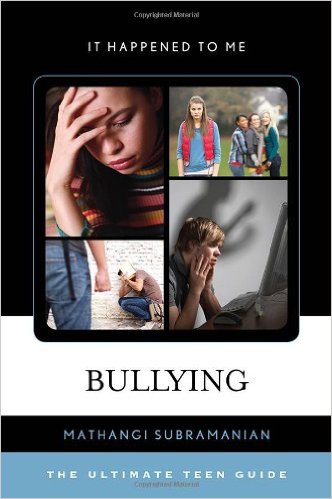
Author Guest Post!: My Top Ten YA Novels About Bullying by Mathangi Subramanian, author of Bullying: The Ultimate Teen Guide

Share

“My Top Ten YA Novels About Bullying” by Mathangi Subramanian

Growing up the bespectacled, bookish, brown-skinned daughter of Indian immigrants, I underwent my share of bullying. But while I was writing Bullying: The Ultimate Teen Guide, memories of witnessing—rather than experiencing—bullying loomed large. Most often, I was reminded of my brief tenure as a public school teacher, when I watched young people I cared about both act like and suffer from bullies.

As a child, my bullies felt like one-dimensional paper-cut outs of people that stopped existing after they terrorized me.  As a teacher, the bullies in my classrooms were more than their misguided actions. They were sons and daughters of parents I admired, musicians and artists and athletes that excelled outside of my classroom, and sheepish people-in-progress who asked me if maybe, even though I was a science teacher, I could help them with their love problems.

And, when my colleagues made comments about me being foreign (even though I am American), godless (even though I am Hindu) and young (okay, that was true), these teens were my defenders, telling me that they didn’t care what other people said, they liked me just fine. How, I wondered, could these compassionate, brilliant young people be the same ones who to hurt their peers?

The more I learn about bullying, the more I believe that it is the result of a failure of empathy. I don’t just mean from teens: I also mean from adults who tell victims to buck up and deal with it; from administrators who punish bullies without investigating what trauma may be driving them to violence; and from students and adults who witness bullying and egg it on.

In fact, the most effective anti-bullying policies—like restorative justice, mental health and social services, and social justice based curriculum—are those that are based on building empathy. It’s a shame that they are still not commonly used.

It’s true, most teachers can’t redo district policy or institute training programs. But here’s one thing they can do: assign some compelling fiction. After all, aren’t stories the best ways to walk in each other’s shoes? Below is a list of ten of my favorite YA books with protagonists that face bullying. These books break silences, feature diverse main characters, and are impossible to put down. Most importantly, they helped me empathize with characters whose lives and choices I ordinarily would find unforgiveable. From school shooters to mean girls to backstabbing friends, the characters in these books helped me realize that everyone has a backstory, and that what almost all of us want, more than anything, is a little forgiveness and a little understanding.

1. Hate List by Jennifer Brown – Valerie must piece her life together after her boyfriend, Nick, stages a school shooting and commits suicide. When she returns to finish her senior year, Valerie learns about forgiveness, redemption, community, and love.

2. Wonder by R.J. Palacio – A great book told from multiple perspectives about a boy with a visible genetic abnormality who decides to go to school for the first time.

3. Orchards by Holly Thompson – Told in verse through the voice of a biracial protagonist, this book is about Kana Goldberg’s journey to come to terms with her role in her friend’s suicide.

4. Jumped by Rita Williams-Garcia – When Trina the diva gets in the way of the angry basketball player Dominique, Leticia knows what’s going to happen – but she decides not to get involved.

5. Okay For Now by Gary D. Schmidt – The bullying eighth grader Doug faces at school is nothing compared to the bullying he faces at home at the hands of his father. Brilliant historical fiction tackling the little-addressed issue of adult bullies.

6. Shine, Coconut Moon by Neesha Meminger – A story about a Sikh teenager coming of age after September 11th, this book tackles dating violence, hate crimes, and Islamophobia.

7. The Absolutely True Diary of a Part Time Indian by Sherman Alexie – This semi-autobiographical book is about a Native American boy who decides to leave the reservation he lives on to get an education at the White school, and the bullying he faces because of his decision.

8. Blue Boy by Rakesh Satyal – Kiran, the main character in this book, is a gender non-conforming Indian American boy who is bullied at school and a puzzle to his parents.

9. I Am J by Cris Beam – The story of J, a transgendered boy trying to grapple with his identity and preserve his most important relationships.

10. Tell Us We’re Home by Marina Budhos – Jaya, Maria, and Lola are the daughters of nannies in a wealthy suburb. When Jaya’s mother’s employer accuses her of stealing, the three friends must fight adult and teen bullies. This book provides a sensitive and nuanced view of classism and xenophobia.


Mathangi Subramanian, EdD, is a writer and educator. She has been a classroom teacher, an assistant vice president at Sesame Workshop, and a senior policy analyst at the New York City Council.

happened bullying

Bullying: The Ultimate Teen Guide draws on stories from young teens around the country, this volume uncovers the social pressures and individual choices that lead to violence. The author surveys effective state, local, and national anti-bullying policies and provides examples of teens throughout the nation whose leadership and courage have helped stop violence. This volume also contains exercises and strategies for young adults to employ that can pave the way for social action. Bullying: The Ultimate Teen Guide is a much-needed resource to help stem the tide of this social epidemic. Featuring a diverse collection of teen voices, this book is designed to help teens take immediate action both individually and collectively. The advice and exercises will not only help teens think critically about bullying but will also empower them to change both themselves and the circumstances that foster abuse in their schools and communities.

Bullying is a topic that all teens deal with and should be discussed in our schools and classrooms. This resource helps make these conversations easier.

Signature andRickiSig

**Thank you to Mathangi Subramanian and Alyssa Washington from Rowan & Littlefield for this guest post**

Top Ten Tuesday: Covers We’d Frame As Pieces Of Art

Share

top ten tuesday

Top Ten Tuesday is an original feature/weekly meme created at The Broke and the Bookish. The feature was created because The Broke and Bookish are particularly fond of lists (as are we!). Each week a new Top Ten list topic is given and bloggers can participate.

 Today’s Topic: Top Ten Book Covers We’d Frame As Pieces Of Art

Ricki

I can’t help that I stole some of these from my top ten favorite covers list. I can’t change my favorites!

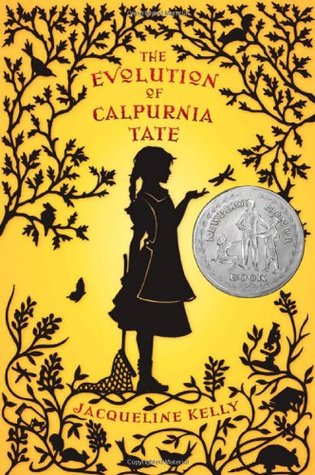
1. The Evolution of Calpurnia Tate by Jacqueline Kelly, Art by Beth White

I love this girl’s inquisitive nature. Check out more of Beth White’s cover art by clicking the link above.

evolution

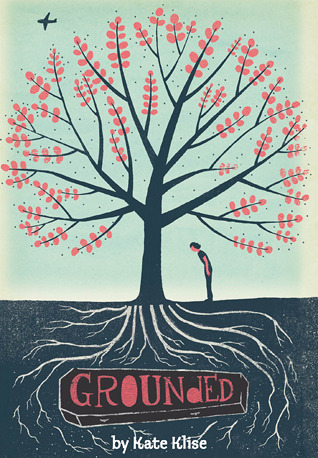
2. Grounded by Kate Klise, Art by ?? 

I don’t own this book, so I couldn’t look up the cover artist, and I couldn’t find it on the internet because they have since CHANGED the cover! I would never have changed this! Look at the lovely person under the tree. I want to be her.

grounded

3. Marcelo in the Real World by Francisco X. Stork, Art by Christopher Stengel

Doesn’t this cover make you want to read it?

 0-545-05474-5

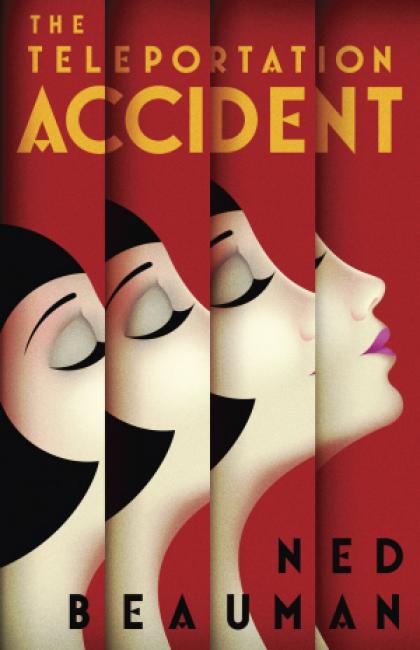
4. The Teleportation Accident by Ned Beauman, Art by Scot Bendall

I haven’t read this book yet, but isn’t the cover incredible?!

teleportation accident

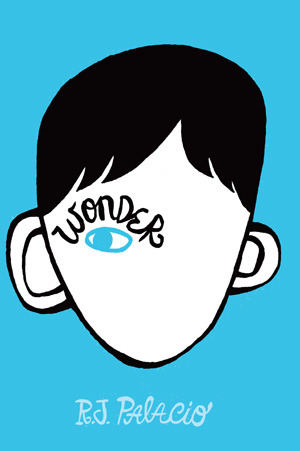
5. Wonder by R.J. Palacio, Art by Tad Carpenter

This feels very Picasso to me.

wonder

Kellee

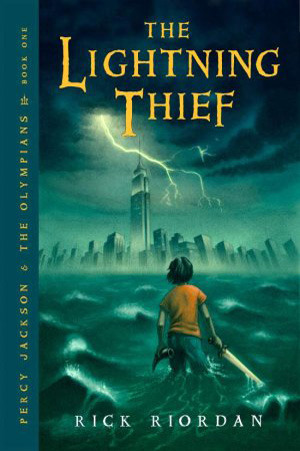
1. The Lightning Thief by Rick Riordan, Art by John Rocco
I actually have a framed print of this hanging in my son’s room!

lightning

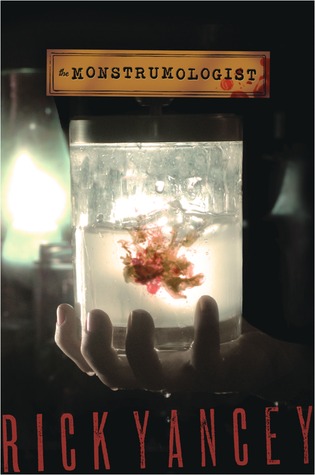
2. The Monstrumologist by Rick Yancey, Art by ?? (If you can find it please let me know!)
Creepy, right?! Just so fascinating. Beautiful digital art.

monstrumologist

3. Baseball Is… by Louise Borden, Art by Raul Colon
Beautiful! And being a fan of baseball, I’d love this (though I’d change the jersey to a Cubs one :D)

baseball

4. Wonder Show by Hannah Barnaby, Art by Evan B. Harris
I am a fan of the fun and quirkiness in this cover.

wonder

5. The Giver Quartet by Lois Lowry, Art by Cliff Nielsen
I just love the four new covers together. They look so beautiful!

giver quartet

What covers do you consider pieces of art?

RickiSig andSignature

Top Ten Tuesday: Characters Who Are Smart

Share

top ten tuesday

Top Ten Tuesday is an original feature/weekly meme created at The Broke and the Bookish. The feature was created because The Broke and Bookish are particularly fond of lists (as are we!). Each week a new Top Ten list topic is given and bloggers can participate.

 Today’s Topic: Top Ten Characters Who Are _Smart_. 

We decided to share some of the most intelligent characters. Note: We use the word nerd respectfully and endearingly. We are nerds, and being a nerd is something anyone should be proud of.

Ricki

1. Pudge from Looking for Alaska by John Green

I had to limit myself to one John Green character. Pudge is one of my favorite nerds. He can spout off the last words of famous folks. That takes a lot of brain power!

2. Auggie from Wonder by R.J. Palacio

Auggie is wise beyond his years. Instead of describing his deformities to readers, he says, “I won’t describe what I look like. Whatever you’re thinking, it’s probably worse.” The way Auggie handles his appearance shows immense bravery, confidence, and intelligence.

3. Tyrell from Tyrell by Coe Booth

With a deadbeat dad and loser mother, Tyrell is guaranteed to fail, right? But he isn’t the average kid. Instead of giving up, Tyrell uses his brains to make money to survive.

4. Amber Appleton from Sorta Like a Rockstar by Matthew Quick

Amber is a total nerd, and I greatly admire how she handles the hellish situations that slam into her life. When confronted with tragedy, she still manages to spread kindness to others.

5. Pierre Anthon from Nothing by Janne Teller

Pierre Anthon is, perhaps, too intelligent for his own good. He teaches his young peers: “From the moment we are born, we begin to die.” While his statement takes a depressing outlook of life, Pierre Anthon can definitely be categorized as an extremely intelligent child.

Kellee

1. Alaska from Looking for Alaska by John Green

You can’t have a list of smart characters without a John Green character. Alaska loves books and is wise beyond her years. Some of my favorite quotes from a book ever are about or by Alaska

2. Sam from Life From Outer Space by Melissa Keil

Sam is a big old nerd. Is he ashamed of it? Nope. He’s proud of his friends, movie knowledge, and World of Warcraft. Even when a sassy young lady enters his life, he never strays from his ways.

3. Tatum from Audition and Subtraction by Amy Fellner Dominy

Tatum  represents a population of middle schoolers that are not usually found in literature- a smart, math & music “nerd” thus making it so another group of girls will see themselves reflected in a book.

4. Matilda from Matilda by Roald Dahl

The first book worm I ever found in books. I finally saw myself reflected in someone although to a crazy extreme (I am not a genius, but Matilda was). It is great to have a main character who loves to read and learn.

5. Mal from Mal & Chad by Stephen McCranie

Mal is a genius and no one knows it. I mean he made his dog talk and has built time machines! He is one cool kid!

Who are some of the smartest characters you know? 

RickiSig andSignature

Amulet Books Graphic Novel Teaching Guide

Share

abrams

In January, I was contacted by a publicity and marketing associate from Abrams Books/Amulet Books out of the blue. In this email, I was asked to work on a teaching guide about their graphic novels: The Misadventures of Salem Hyde, Nathan Hale’s Hazardous Tales, Hereville, and the Explorer series.

1729025518405488 

13591161135911621729026018405492

1283377017290285

I was beyond honored! And, of course, I said that I would definitely love to do it as I had read all of the graphic novels, and I am a huge fan of them.

First, they asked me to write an introduction about graphic novels and their importance in the classroom. I am a huge advocate for using graphic novels in schools, so I immediately began researching and writing. Here is the introduction:

What are graphic novels? The easiest way to describe graphic novels is to say that they are book-length comic books. However, a more complex definition that educators and librarians use is “book-length narratives told using a combination of words and sequential art, often presented in comic book style” (Fletcher-Spear, 37). Graphic novels are not written in just one genre; they can be in any genre, since graphic novels are a format/medium. Graphic novels are much like novels, but they’re told through words and visuals. They have all narrative elements, including characters, a complete plot, a conflict, etc.

Middle grade and young adult graphic novels cover a wide spectrum of themes and topics. Some common themes found in graphic novels for this age include the hero’s journey; overcoming hardship; and finding one’s identity. For example, in Hereville, we meet Mirka, an everyday girl who learns to use her brains and brawn to overcome her foes. In The Misadventures of Salem Hyde, Salem is working on finding out just who she is (both as a witch and as a person) with the help of her friend Whammy. Graphic novels can cross curricular lines. One example is the Nathan Hale’s Hazardous Tales series—comical nonfiction that takes historical events and presents them in interesting ways, using graphics and humor that will make students want to learn even more about the historical time periods. In the Explorer series, stories include topics such as animal adaptation, volcanic eruptions, and the fate of humanity. Like novels, graphic novels offer opportunities in all subject areas to extend students’ thinking.

Over the past few years, graphic novels have become a hot topic, growing in popularity with both children and educators. While many teachers are beginning to include them in the classroom, there are still teachers, administrators, and librarians who struggle with including this format in their schools. So, why should you use them in your classroom and have them available for students?

  • Graphic novels can make a difficult subject interesting and relatable. (Cohen)
  • Students are visual learners, and today’s students have a much wider visual vocabulary than students in the past. (Karp)
  • Graphic novels can help foster complex reading skills by building a bridge from what students know to what they still have to learn. (NCTE)
  • Graphic novels can help with scaffolding when trying to teach higher-order thinking skills or other complex ideas.
  • For students who struggle to visualize while they read, graphic novels provide visuals that shows what good readers do. (NCTE)
  • Many graphic novels rely on symbol, allusion, satire, parody, irony, and characters/plot and can be used to teach these, and other, literary devices. (Miller; NCTE)
  • Often, in between panels (called the gutter), the reader must make inferences to understand how the events in one panel lead to the events in the next. (McCloud)
  • Graphic novels can make differentiating easier. (Miller)
  • Graphic novels can help ELL (English Language Learners) and reluctant and struggling readers since they divide the text into manageable chunks, use images (which help students understand unknown vocabulary), and are far less daunting than prose. (Haines)
  • Graphic novels do not reduce the vocabulary demand; instead, they provide picture support, quick and appealing story lines, and less text, which allow the reader to understand the vocabulary more easily. (Haines)
  • Research shows that comic books are linguistically appropriate reading material, bearing no negative impact on school achievement or language acquisition. (Krashen)
  • Students love them.

Although you can find graphic novel readers at all reading levels, graphic novels can truly be a gateway to the joys of reading for reluctant and struggling readers. Reluctant readers often find reading to be less fun than video games, movies, and other media, but many will gravitate toward graphic novels because of the visuals and the fast pace. Struggling readers will pick up graphic novels for these reasons as well but also because the graphic novel includes accommodations directly in the book: images, less text, etc.

All in all, graphic novels can interest your most reluctant and struggling readers and also extend all of your readers, including your most gifted.  

Resources

  • Cohen, Lisa S. “But This Book Has Pictures! The Case for Graphic Novels in an AP Classroom.” AP Central. CollegeBoard.
  • Fletcher-Spear, Kristin, Merideth Jenson-Benjamin, and Teresa Copeland. “The Truth About Graphic Novels: A Format, Not a Genre.” The ALAN Review Winter (2005): 37­–44.
  • Haines, Jennifer. “Why Use Comics in The Classroom?” Comic Book Daily. N.p., 20 Mar. 2012.
  • Karp, Jesse. “The Case for Graphic Novels in Education.” American Libraries. N.p., 1 Aug. 2011.
  • Krashen, Stephen. The Power of Reading. Englewood, CO: Libraries Unlimited, Inc. 1993.
  • McCloud, Scott. Understanding Comics. Northampton, Mass.: Kitchen Sink, 1993. 
  • Miller, Andrew. “Using Graphic Novels and Comics in the Classroom.” Edutopia. N.p., 11 Jan. 2012.
  • NCTE, comp. “Using Comics and Graphic Novels in the Classroom.” The Council Chronicle September (2005) http://www.ncte.org/magazine/archives/122031.

 I then began reading and rereading the graphic novels and planning activities and discussion questions that could go along with each book. I was asked to come up with activities for all subjects, so this pushed me out of my comfort zone a bit; however, I loved trying to figure out how these amazing books could be used throughout all classes.  Some examples:

  • Salem Hyde [Science]: At the end of Spelling Trouble, Salem and Whammy have to rescue a whale, but it is done in a very unconventional way. How would real scientists rescue a whale in distress?
  • Hazardous Tales [Language Arts/History]: The Provost (a British soldier) and Nathan Hale disagree about the cause of the Revolutionary War. Based on One Dead Spy, what events caused the Americans to revolt? Do you agree with the Provost or with Nathan Hale about the causes of the war? (This could also be used as a debate question in class.)
  • Hereville [Math]: On pages 31–32 [of Hereville 1], Mirka is given a math problem: Three people are splitting a cake, so they cut it into thirds. But then a fourth person shows up. How can they cut the cake so that each person gets an equalamount of cake? (Mirka comes up with a solution, but are there others?) What if two more people had shown up? Three more? Four more? 
  • Explorer [History]: On page 84 [of The Mystery Boxes], in The Soldier’s Daughter, the man says, “War is a dark power.” Where in history have we seen war consume someone? Have there been wars that did not need to be fought? Research past wars and determine if a war was started because of the need for power or if there was a legitimate reason for it. 

These are just some examples.

I am happy to share the entire teaching guide with you. It can be found at http://www.abramsbooks.com/academic-resources/teaching-guides/ along with other teaching guides. The direct link to the PDF is http://www.abramsbooks.com/pdfs/academic/GraphicNovels_TeachingGuide.pdf.

I hope you find it useful as I am very proud of it,

Signature

Biographical Picture Books about Strong Women

Share

NF PB 2014

Nonfiction Picture Book Wednesday

Nonfiction Picture Book Wednesday is hosted by Kid Lit Frenzy and was started to help promote the reading of nonfiction texts. Most Wednesdays, we will be participating and will review a nonfiction text (though it may not always be a picture book).
Be sure to visit Kid Lit Frenzy and see what other nonfiction books are shared this week!

Over the last few years I have noticed a trend (a trend I love!) of biographical picture books about strong women from history. After reading a wonderful batch of them, I decided I need to share all of the amazing ones that I have read.
[Each picture book cover can be clicked on to take you to either Goodreads or a review of mine.]

16075946 17245740

1405439 

13722312 16074914 15818081 

16002028 50175 13330625 

12396987 6891554 

I love that these woman are getting their stories told!

Were there any that I missed? Please share!

Signature