On a Beam of Light: A Story of Albert Einstein by Jennifer Berne

Share

NF PB 2013

Nonfiction Picture Book Wednesday

Nonfiction Picture Book Wednesday is hosted by Kid Lit Frenzy and was started to help promote the reading of nonfiction texts. Most Wednesdays, we will be participating and will review a nonfiction text (though it may not always be a picture book).
Be sure to visit Kid Lit Frenzy and see what other nonfiction books are shared this week!

on a beam

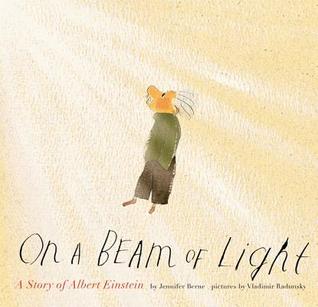
On a Beam of Light: A Story of Albert Einstein
Author: Jennifer Berne
Illustrator: Vladimir Radunsky
Published April 23rd, 2013 by Chronicle Books

Summary: Albert wasn’t like other children. He didn’t speak; he thought. He didn’t play with others; he was fascinated with everything around him. But it is all of this curiosity that led to his revolutionary ideas.

Review: I love how this book focuses on how Albert’s creativity is one of the keys to what made him the amazing scientist that he is. Also, as a teacher of struggling and gifted students, I love the focus on how he didn’t do well in school. It shows how just because a student is different or a disturbance or thinks differently doesn’t mean that they aren’t intelligent. The book definitely promotes wonderings, thinking, and imagination!

I also loved learning about the fun side of Einstein and how he likes to not wear socks, he liked to eat ice cream cones, and overall he just did what he want to have time to think.

Finally, the Author’s Note puts all of Einstein’s theories together so that the reader also gets this information.

Teacher’s Tools for Navigation: This book is perfect for a read aloud to promote creativity and intelligence. It also has a direct connection to science since it is about Albert Einstein. It would be a great discussion starter for an elementary classroom and is also a great jumping off point for discussing the basic Einstein theories.

Discussion Questions: After knowing about Albert’s experiences in school, what would you go back and tell Albert’s teachers? What does his experience and then who he became tell us about behavior, students, and teachers?; Albert said, “Imagination is more important than knowledge.” What parts of this book supports this quote?

We Flagged: “Albert started asking questions. Questions at home. Questions at school. So many questions taht some of his teachers told him he was a disruption to his class. They said he would never amount to anything unless he learned to behave like the other students. But Albert didn’t want to be like other students. He wanted to discover the hidden mysteries in the world.” (p. 14-15)

To see a preview of the illustrations, visit Amazon’s “Look Inside” for On a Beam of Light.

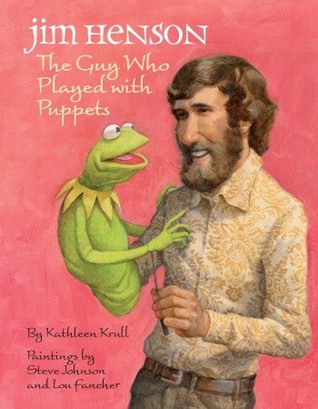
Read This If You Loved: Odd Boy Out by Don Brown, Who Was Albert Einstein? by Jess M. Brallier, Me…Jane by Patrick McDonnell, Jim Henson by Kathleen Krull, A Boy Called Dickens by Deborah Hopkinson

Recommended For: 

readaloudbuttonsmall

Signature

Brave Girl by Michelle Markel

Share

NF PB 2013

Nonfiction Picture Book Wednesday

Nonfiction Picture Book Wednesday is hosted by Kid Lit Frenzy and was started to help promote the reading of nonfiction texts. Most Wednesdays, we will be participating and will review a nonfiction text (though it may not always be a picture book).
Be sure to visit Kid Lit Frenzy and see what other nonfiction books are shared this week!

brave

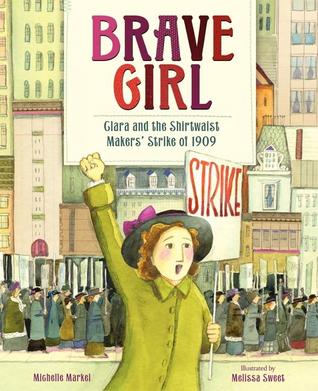
Brave Girl: Clara and the Shirtwaist Makers’ Strike of 1909
Author: Michelle Markel
Illustrator: Melissa Sweet
Published January 22nd, 2013 by Balzer + Bray

Summary: Clara and her family immigrated to New York. They were searching for the American dream. When her father could not find a job, Clara quit school and became a garment worker to support her family. The conditions at her factory were appalling: low wages, unfair rules, and locks on the door. After discussions between the workers, Clara helps urge the girls to fight for their rights.

Review: I am sucker for this biographical picture book for two reasons: 1) I had not known about the Shirtwaist Makers’ Strike of 1909 before and I love learning about new historical moments. I know that it interested me (as I know it would for kids), because after I read the additional information about the garment industry I was on the internet searching for more information. 2) Clara is such a great example of girl power! AND she is a historical figure that shows girls (and boys) that girls can stand up for themselves when they are not being treated well (in real life). I love that she overcame so much to not only stand up for her rights, but also to get an education and take care of her family. What an amazing person to learn about.

Teacher’s Tools for Navigation: The main way that I would use this book is as a read aloud. It will definitely cause a great discussion and may push students to do further research. It would also be a perfect read aloud for a unit on women’s rights, immigration, overcoming obstacles, girl power, labor laws, or the early 1900s to help make connections to history. 

Discussion Questions: Do you think that Clara continuing her education helped her in being able to fight for her labor rights?; Clara made a tough decision between continuing school during the day or working. Do you agree or disagree with her decision? Why or why not? How did her decision affect her life?; What caused the garment workers to strike?

We Flagged: “But Clara is uncrushable. She wants to read, she wants to learn! At the end of her shift, though her eyes hurt from straining in the gaslight and her back hurts from hunching over the sewing machine, she walks to the library. She fills her empty stomach with a single glass of milk and goes to school at night. When she gets home in the late evening, she sleeps only a few hours before rising again.” (p. 12-13)

To see a preview of the illustrations, visit Amazon’s “Look Inside” for Brave Girl.

Read This If You Loved: Here Comes the Girl Scouts! by Shana Corey, The Price of Freedom by Dennis Brindell Fradin, Boycott Blues by Andrea Davis Pinkney, Annie and Helen by Deborah Hopkinson

Recommended for: 

readaloudbuttonsmall closereadinganalysisbuttonsmall classroomlibrarybuttonsmall

Who is a female historical figure who shows as much girl power as Clara that you believe should be talked about more?

Signature

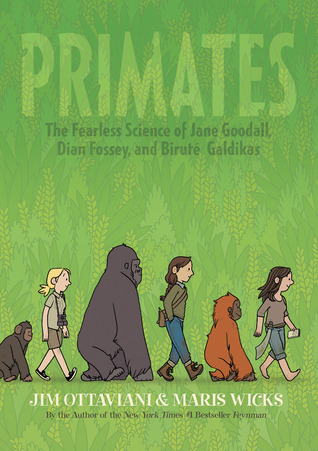
Primates: The Fearless Science of Jane Goodall, Dian Fossey, and Birute Galdikas by Jim Ottaviani

Share

NF PB 2013

Nonfiction Picture Book Wednesday is hosted by Kid Lit Frenzy and was started to help promote the reading of nonfiction texts. Most Wednesdays, we will be participating and will review a nonfiction text (though it may not always be a picture book). Be sure to visit Kid Lit Frenzy and see what other nonfiction books are shared this week!

16002028

Primates: The Fearless Science of Jane Goodall, Dian Fossey, and Birute Galdikas
Author: Jim Ottaviani
Illustrator: Maris Wicks
Published June 11th, 2013 by First Second

Summary: Three woman in the 1960s and 1970s took part in primatology research that would change the way that we think about primates. Three woman who took a chance and researched potentially dangerous animals in their wild habitats. Three woman who took risks when many did not believe that woman should be part of the sciences. Primates tells the stories of Jane Goodall, a researcher of chimps, Dian Fossey, a gorilla expert, and Birute Galdikas, an orangutan researcher, and how their lives overlap and differ.

My Review: I may be bias, but this is one of my favorite nonfiction graphic novels ever. Bias because I am a huge ape advocate and am fascinated by them. These creatures are amazing; their intelligence is so remarkable that it is hard to even fathom. The reason why I loved this book is because it takes you through the research of three groundbreaking woman scientists and what they learned about the three completely different apes. It makes sure to show how each ape is different and spectacular as well as how each lady’s research made an impact.

Teacher’s Tools for Navigation: I think that this book is a great introduction to apes and would be a perfect read aloud before book talking other books such as Endangered (about a different ape that isn’t mentioned in Primates), Hurt Go HappyHalf Brother, and other nonfiction like Chimpanzees I LoveMe…Jane, and Gorillas in the Mist.  Check out my Nerdy Book Club Post: Top Ten Ape Books (which I would definitely add this one to) to see what other books you could connect Primates too.

Discussion Questions: How do the apes that Jane, Dian, and Birute study similar? Different?; How did Dr. Leaky play a part in all three women’s research?; Which ape is your favorite? Why?

We Flagged: Part 1: But in my dreams, I did bigger things Ever since I was a very young girl I had Africa in my blood so to speak. Sometimes my mother Vanne might have hoped I’d get over it, but even as I grew older I never did. “I do wish you’d read something… else, on occasion” “But I do! I just finished Dr. Dolittle.” “Yes, for the… How many times is that?” “Seven, Mummy.” “Well you’ll never get into a top school if that’s all you study.” “I shan’t be going to college – I want to live with wild animals when I grow up!”” (p. 3)

Also check out the School Library Journal Blog’s interview with Jim Ottaviani to see some of the artwork.

Read This If You Loved: Me…Jane by Patrick McDonnell, Gorillas in the Mist by Dian Fossey, Any nonfiction book about apes including Chimpanzees I Love by Jane Goodall, Endangered by Eliot Schrefer, Hurt Go Happy by Ginny Rorby, Half Brother by Kenneth Oppel, Little Beauty by Anthony Browne, The One and Only Ivan by Katherine Applegate

Recommended For:

classroomlibrarybuttonsmall readaloudbuttonsmall

What is your favorite ape book?
Have you read Primates yet? What did you think?

Signature

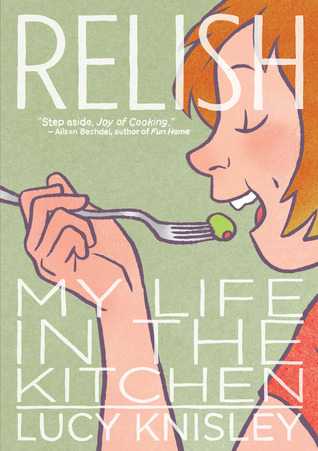
Relish: My Life in the Kitchen by Lucy Knisley

Share

NF PB 2013

Nonfiction Picture Book Wednesday is hosted by Kid Lit Frenzy and was started to help promote the reading of nonfiction texts. Most Wednesdays, we will be participating and will review a nonfiction text (though it may not always be a picture book). Be sure to visit Kid Lit Frenzy and see what other nonfiction books are shared this week!

15786110

Relish: My Life in the Kitchen
Author: Lucy Knisley
Published April 2nd, 2013 by Macmillan

Summary: In this autobiographical graphic novel, Lucy Knisley reveals her love for food. Raised by foodies, Lucy recalls that all of her earliest memories are reflected in food that she was eating at the time. Brimming with recipes and stories told through taste, Relish is sure to please readers, even advanced chefs. From her recipe for “The Best Chocolate Chip Cookies” to an “exploded view” of Huevos Rancheros to a diagram of how to make sushi rolls to a “Cheese Cheat Sheet,” each chapter ends with an illustrated recipe that will make readers want to jump into the kitchen.

Review:  Admittedly, I am obsessed with food (both cooking and eating). I can spend hours watching Food Network, so this was a sure-winner for me. It is easily one of the best graphic novels I have read. The illustrations made me laugh out loud, and I didn’t want to put it down–except to try out a few recipes (that were all delicious!). The book is a coming-of-age story. Lucy’s rebellious teenage years are reflected in the foods she ate, and she learns lessons from her dining experiences. While food is the center of this graphic novel, Kinsley shows how she grew as an individual from life-changing events like her parents’ divorce to a trip to Europe. She does a fantastic job showing passion–it reads like a beautiful love letter to food. Readers who don’t love food will still identify with her passion.

Teacher’s Tools for Navigation: We all have interests that shape our memories. For example, I can’t recall where I went on my trip to South Carolina, but I do remember the books I read on the beach that week. Students have interests like sports or hobbies that shape their memories. My husband can recall more soccer games than I care to count. Teachers might have students use this graphic novel as a model for students to illustrate how their interests have shaped their memories. The dialogue adds much to this book, so teachers could ask students to analyze how the dialogue shapes the story. As another option, I bet students would enjoy creating a graphic novel page of a step-by-step, illustrated recipe. This would lead to some great (and delicious) presentations.

Discussion Questions: What are your earliest food memories?; How has your family influenced your eating habits?; What is your favorite recipe? Why?; How has food shaped your life? Or, how has some other interest or passion shaped your life?

We Flagged: “I was a child raised by foodies. My parents probably don’t recall how old I was at my baptism, but they remember what I ate that day” (p. 8).

“When I got home, my mother, having heard about my rebellious breakfast, began a smear campaign to convince me that the hamburgers at McDonald’s were actually made of worm meat. Miraculously, I was undeterred. I remain undeterred to this day. It’s not often, but every once in a while, I need those fries. Say what you will…We wouldn’t be eating it if it didn’t taste good” (p. 49-50).

Please note: Our flagged passages don’t contain the gorgeous drawings and hilarious quote bubbles. Click on the “Look Inside” feature on the book cover to see samples from the graphic novel. We didn’t want to break copyright laws!

Read This If You Love: Graphic novels or food/cooking memoirs like  Julie and Julia: 365 Days, 524 Recipes, 1 Tiny Apartment Kitchen by Julie Powell

Recommended For:

readaloudbuttonsmall  classroomlibrarybuttonsmall

What did you think? Which recipe was your favorite?

RickiSig