Top Ten Tuesday: Books That Have Been on our TBR Lists the Longest

Share

Top Ten Tuesday is an original feature/weekly meme created at The Broke and the Bookish and is now hosted at That Artsy Reader Girl. This feature allows us to make lists, which may be one of our favorite things to do!

 Today’s Topic: Ten Books That Have Been on our TBR Lists the Longest

Ricki

This was an easy post to write! I popped onto GoodReads and found the five oldest books. I added these almost a decade ago.

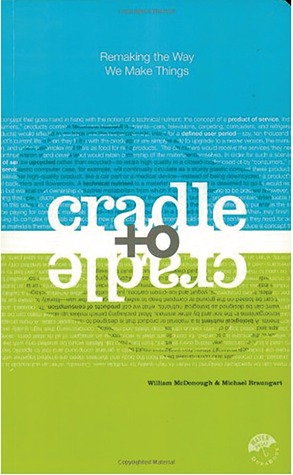
1. Cradle to Cradle: Remaking the Way We Make Things by William McDonough

This book is all about rethinking the way we make things to support sustainability. Even the actual book is made with sustainable materials.

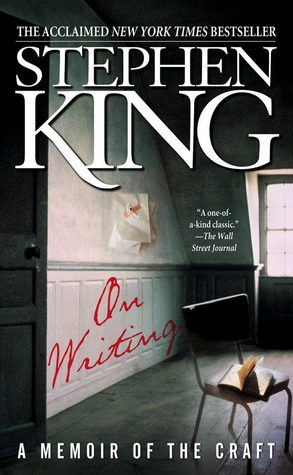
2. On Writing: A Memoir of the Craft by Stephen King

I know that a lot of creative writers find this book to be very helpful.

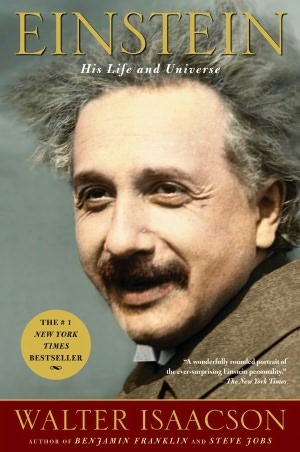
3. Einstein: His Life and Universe by Walter Isaacson

I am really interested in reading about Einstein’s life. The book is quite long, and I think that’s why I haven’t started it. Shame on me!

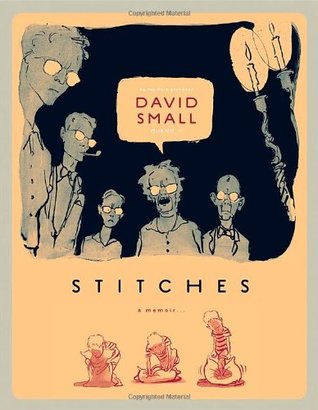
4. Stitches by David Small

I’ve heard this graphic novel is life-changing.

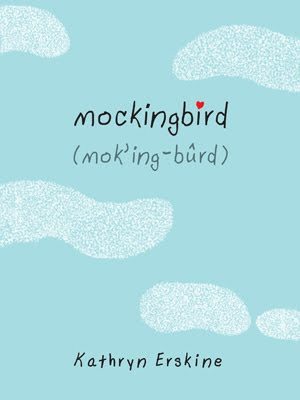
5. Mockingbird by Kathryn Erskine

This book comes highly recommended! I need to read it!

Kellee

Like Ricki, I went on Goodreads and found the first five books I added the first day I joined Goodreads (January 24th, 2009) that I haven’t read yet.

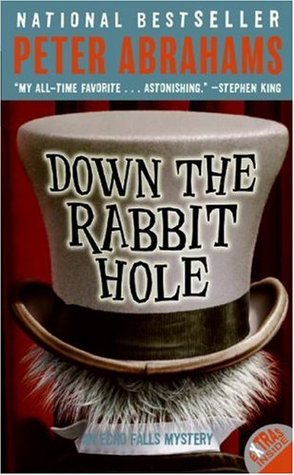
1. Down the Rabbit Hole by Peter Abrahams

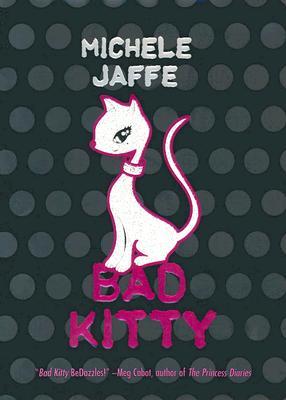
2. Bad Kitty by Michele Jaffe

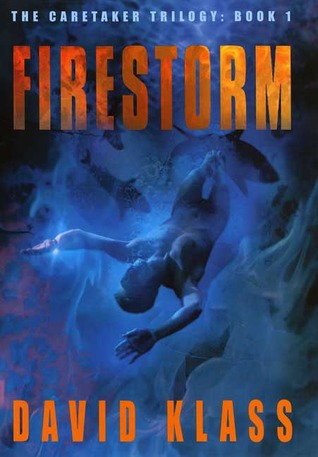
3. Firestorm by David Klass

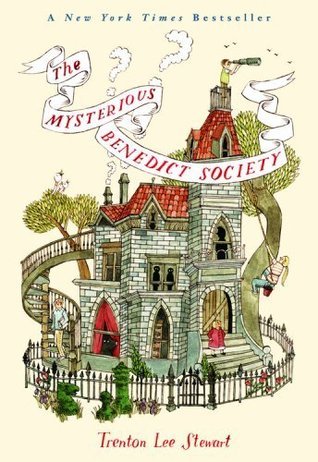
4. The Mysterious Benedict Society by Trenton Lee Stewart

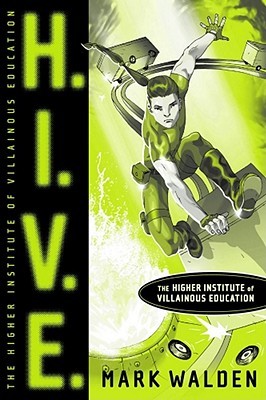
5. H.I.V.E. by Mark Walden

Which books have been on your TBR list the longest?
Have you read any of these books? 

RickiSig and Signature

Forest of a Thousand Lanterns by Julie C. Dao

Share

Forest of a Thousand Lanterns
Author: Julie C. Dao
Published: October 10, 2017 by Philomel

Guest Review by Kaari von Bernuth

Goodreads Summary: An East Asian fantasy reimagining of The Evil Queen legend about one peasant girl’s quest to become Empress–and the darkness she must unleash to achieve her destiny.

Eighteen-year-old Xifeng is beautiful. The stars say she is destined for greatness, that she is meant to be Empress of Feng Lu. But only if she embraces the darkness within her. Growing up as a peasant in a forgotten village on the edge of the map, Xifeng longs to fulfill the destiny promised to her by her cruel aunt, the witch Guma, who has read the cards and seen glimmers of Xifeng’s majestic future. But is the price of the throne too high?

Because in order to achieve greatness, she must spurn the young man who loves her and exploit the callous magic that runs through her veins–sorcery fueled by eating the hearts of the recently killed. For the god who has sent her on this journey will not be satisfied until his power is absolute.

Kaari’s Review: The entire time, I wasn’t entirely sure if the  protagonist was the hero or the villain. And, that isn’t necessarily a bad thing! I appreciated this book because it made me think. I’d be cheering for Xifeng and wanting her to win, and then she’d do an awful thing to help her win, and I’d be repulsed by her. This book highlights the struggle of ambition, and how difficult it is for a woman to achieve the dreams she has. And, while I am off put by Xifeng’s methods and don’t necessarily think they were the right decisions, her actions and the way she achieves power could spark great discussions.

The setting and the plot of this book was thrilling, and I Ioved the way that fantasy was woven into a world so seamlessly. The creatures and ideas introduced were thought provoking and had amazing descriptions that made me feel like I was living in the enchanted world with the characters. I do wish that there had been some more resolution regarding some of the magical beings and the warnings they gave, but I think that Dao intends for this to be the first in a series, and I’m sure that more resolution will come in later novels.

Teachers’ Tools for Navigation: I would definitely include this book in a classroom library for kids to check out if they want to read it. However, while this book is interesting, and explores an interesting take on female empowerment, I don’t think I would teach this book in a classroom setting, or use it in literature circles. I am a huge advocate for female empowerment, and discussing the paths for women to claim their power. However, I think that because Xifeng’s methods were so morally questionable, and readers aren’t sure if Xifeng is a hero or a villain, that Forest of a Thousand Lanterns is not the best novel to discuss for this topic. There are many other books that discuss female empowerment in a much more productive light. So, I’d include it in a classroom library, but not necessarily teach it in any way.

Discussion Questions: Do you think Xifeng’s methods were justifiable?; What does the social hierarchy look like in this novel?; Is Xifeng a hero or a villain in this story?; What is the effect of portraying a strong female protagonist in this way?; How is the fantasy world characterized?

We Flagged: “‘I’m a good man, Xifeng. I let you have your own way and speak your mind…’

‘You think I don’t know that? That I’m so blind and stupid?’

‘Yes, I do!’ he shouted, his face bright red. ‘I offer you the world…’

‘Yes, the world as you see it!’

‘I saved you from that evil woman!’

‘Only to trap me yourself.’ She watched him turn away and run a trembling hand over his head. ‘I was Guma’s, and now you want me to be yours. I have my own soul and my own destiny, and I’m tired of belonging to someone else’” (Advanced Reader Copy p. 125).

Read This If You Loved: Monstress by Marjorie M. Liu; Gunpowder Alchemy by Jeannie Lin; Girls Made of Snow and Glass by Melissa Bashardoust

Recommended For:

classroomlibrarybuttonsmall

  RickiSig

**Thank you to Kaari for reviewing this book!**

Top Ten Tuesday: Books We Can’t Believe We Read

Share

Top Ten Tuesday is an original feature/weekly meme created at The Broke and the Bookish and is now hosted at That Artsy Reader Girl. This feature allows us to make lists, which may be one of our favorite things to do!

 Today’s Topic: Ten Books We Can’t Believe We Read

Ricki

1. Les Misérables by Victor Hugo

It took me a long time to get through this book. I think I read it in year two of the blog. It was on my “currently reading” section of the IMWAYR post for a solid four months. I was teaching high school at the time, and I remember a student saying, “How are you still reading that?” I took a lot of breaks, but I finished it. Finally.

2. Fahrenheit 451 by Ray Bradbury

I listened to this book on audio. As a tip, if you want to read this book, get it in print. It is incredibly difficult to understand Ray Bradbury’s voice.

3. A Tale of Two Cities by Charles Dickens

I have read several Charles Dickens books. I really want to enjoy them, but I find them very difficult to enjoy for whatever reason. I read this book on my honeymoon, too. Ha!

4. All Quiet on the Western Front by Erich Maria Remarque


I read this in high school and loathed it. I wonder if I’d like it as an adult?

5. A Certain Book with “Grey” In Its Title

My only memory of this book was that it was ridiculous. There was one paragraph in which 8 sentences in a row started with “I.” This was a trendy book, though, so I decided it was in my best interest to read it. My husband made fun of me relentlessly. Needless to say, I had no interest in seeing the movies when they came out.

Kellee

I’m taking this post topic as, “OMG! I cannot believe I finished it! Yay me!” These are all books that I read during my literature degree that I was so proud of myself for finishing!

1. The Sound and the Fury by William Faulkner

If you have read Faulkner, you know how tough his style is! This was my first exposure, and I was so proud of reading it.

2. Tender is the Night by F. Scott Fitzgerald

Although I ended up liking The Great Gatsby, Fitzgerald is not my thing. I really love Hemingway’s bluntness and dialogue while Fitzgerald is a bit wordy for me. I had trouble finishing this novel, but was glad I did when I was finished.

3. The Prince by Machiavelli

Reading a book that some terrible people feel is the most important book ever is a bit tough.

4. The Monk by Matthew Lewis

I took a Gothic Literature class, and I ended up loving so much of what we read in that class with The Monk probably being my favorite. Super scandalous from 1796!

5. Oliver Twist by Charles Dickens

Like Fitzgerald, Dickens just isn’t my thing, but I ended up really loving Oliver Twist, and it actually started a huge research project for me looking at how prostitutes were written about and viewed in Victorian England.

Which books can you not believe that you read/finished?

RickiSig and Signature

There’s Someone Inside Your House by Stephanie Perkins

Share

There’s Someone Inside Your House
Author: Stephanie Perkins
Published: September 26, 2017 by Dutton

Guest Review by Kaari von Bernuth

Goodreads Summary: One-by-one, the students of Osborne High are dying in a series of gruesome murders, each with increasing and grotesque flair. As the terror grows closer and the hunt intensifies for the killer, the dark secrets among them must finally be confronted.

International bestselling author Stephanie Perkins returns with a fresh take on the classic teen slasher story that’s fun, quick-witted, and completely impossible to put down.

My Review: This book was gripping from the first page. I found myself getting sucked into it, trying to figure out the mystery of who the killer was, but also of what Makani’s past entailed. The author, Stephanie Perkins, did an amazing job of planting foreshadowing and clues that hinted toward the answers to the multiple mysteries that kept my brain working the entire time that I was reading.

I also loved the emphasis on friendship groups, feeling like an outsider, and bullying/hazing as many adolescents face these topics every day. The way that these topics were portrayed in Makani’s friend group, and the way that the friends help Makani to deal with her hazing trials were something that I appreciated. However, there were two things that I wish were approached differently in this book. 1. Even though this is a small point, one of the characters was a stereotypical, loud Christian character who tried to force his beliefs on everyone else, including a mention of how he managed to get rid of any mention of evolution in his school textbooks. He was characterized as a Lutheran. While this probably wouldn’t mean much to other people, I am a Lutheran, and all of the Lutherans I know believe and support evolution, and don’t at all act like this negative christian stereotype character does. But, this book makes it look like all Lutherans act this way. I wish that there had been no mention of the character’s denomination.  2. I wish that more emphasis had been placed on dealing with the deaths that occurred in the books, as well as the motivations of the killer, as those were both just glanced over. This is problematic as it leaves a huge hole in understanding of the novel, and makes it harder to talk about some of the prominent events in the story. Overall though, it was a very entertaining novel.

Teachers’ Tools for Navigation: This would be a great book to have in a classroom library for kids to enjoy. Given the graphic, violent nature of some of the scenes, I wouldn’t recommend teaching to an entire class. However, it will appeal to students who enjoy the horror genre. This book also has great potential in literature circles. Perkins does a great job of foreshadowing and giving hints not only as to what is going to happen, but to stories that have already happened that the readers don’t know about yet. As I was reading, I loved being able to piece together the clues that were given to try to guess what had happened and also what was going to happen. A literature circle could have a lot of fun trying to piece those clues together as a group. This book also touches on other important topics such as bullying/hazing and family struggles which could be discussed in a literature circle, as well as the elements of forgiving oneself/dealing with guilt (which Makani experiences as a result of the hazing incident). The one thing that I found this book lacking was any form of dealing/acknowledging grief and death, as well as an acknowledgement of mental health issues (which the killer would have to have). These failings in the book could also be discussed in relation as to how to acknowledge those topics in a healthy way.

Discussion Questions: Where do you see foreshadowing in the early parts of the books?; How does Perkins create suspense in her novel?; What is Makani’s relationship with her parents like?; What was Makani’s experience with hazing like? Have you experienced something similar?; How does blame and justice appear in this book? Is it always fair?

We Flagged: “Sharing her story now, however, had opened a valve of tremendous internal pressure. Her secret- this self-inflicted burden- had finally been released.” (page 207 of Advanced Reading Copy)

Read This If You Loved: The Merciless by Danielle Vega; Dead by Morning by Kayla Krantz; The Forest Dweller by Deborah McClatchey; Confessions: The Private School Murders by James Patterson

Recommended For:

classroomlibrarybuttonsmall  

  RickiSig

**Thank you to Kaari for reviewing this book!**

Author Guest Post!: “How to Get Your Toddler to Enjoy Reading” by Shana Hollowell, Author of Little Mouse’s Sweet Treat

Share

“How to Get Your Toddler to Enjoy Reading”

by Shana Hollowell, MPH

I cannot think of a better activity than reading with your child. Not only is it a great bonding experience, but it helps your child learn the meanings of words, explore new concepts through pictures, and stimulate their imagination. Some parents may feel reading to their child during the toddler years is a challenge due to their attention span and ability to sit quietly. However, the following are some easy tips to get your energetic, busy toddler to wind down and develop a love for reading.

Select the right book.

Choose a book that you think your toddler will enjoy, not necessarily a book that you want to read. Make sure it is fun and age appropriate. Books geared towards toddlers usually rhyme and are not too long, which is important as toddlers are not known for their attention span. Toddlers love animals, the alphabet, real pictures of children, a finger puppet, etc. When reading the book to your toddler, say the rhymes in a sing-song voice. Your child will enjoy hearing your voice and looking at the bright, colorful pictures.

Read every day.

Make sure that reading to your child is an important part of your day. Children love routine so whether you read before nap time, after bath time, before bed time, etc., try to read to your toddler at the same time every day. It also makes a good winding down activity for active toddlers. Soon your child will begin to expect and look forward to reading time.

Keep books accessible.

Store your child’s books so that they are readily accessible to them, not just you. View your child’s room from their eye level. Install book racks low on the wall so they are within your toddler’s reach or store books on the floor in a basket or bin. Create a special reading nook in their bedroom with a bean bag chair or a cool teepee.  The goal is to keep your child’s books low so they are able to see them and pick out a book to look at whenever they choose.

Change books as interests change.

As your toddler grows, they may begin developing new or different interests. You want your child to enjoy the books they read and learn that books are special so change books as your child’s interests change. You can also promote reading during special occasions. For instance, if you celebrate Christmas, when you put your Christmas tree up, place Christmas storybooks under the tree so your toddler can pick out a Christmas story to read leading up to Christmas Day. Websites that carry a variety of low cost children’s books are Thriftbooks and Amazon.

Involvement is key.

When you read to your child, do not just read the story word for word and close the book. Instead, explain and involve your child in the book. Let them hold and feel the book. Talk about what is in each picture before turning the next page. For instance, in “Little Mouse’s Sweet Treat,” little mouse meets different animals that share their preferred food with him. Talk to your toddler about the colors of each animal and the sounds they make. For example, on the page where little mouse meets the cow and the cow offers him grass to eat, you can also say “The cow is black and white. The cow says moo.” Then after a couple reads, you should be able to point to the cow and ask your toddler “what animal is this” and they will respond “cow” and then say “what does the cow say” and they will respond “moo.” Then, try to incorporate it into everyday life. For instance, when you drive past a cow pasture, say “look a cow just like little mouse met in the book.” Another fun activity in “Little Mouse’s Sweet Treat,” is to have your child find and point out the little snail that is hiding on each page. Toddlers get so excited when they find the snail that follows little mouse on his journey.

Keep at it.

If your toddler does not seem interested, do not give up. They are learning and absorbing so many new things. Just keep reading and soon your toddler will start asking you to read to them. Sometimes they may ask for one particular book to be read over and over, but just remember this is how they learn. They are internally building their memory, vocabulary, and understanding. Then, one day they will repeat phrases from the book and read to you. This makes it all worthwhile. I hope these tips help make reading an enjoyable experience for you and your toddler and they grow into becoming a lifelong reader.

Shana Hollowell is a public health professional and author of the children’s picture book, “Little Mouse’s Sweet Treat.” She has two boys age 8 months and 2 years old and reads to them every day. “Little Mouse’s Sweet Treat,” is recommended for children ages 0-5 and is available for purchase on Amazon and Barnes and Noble.

About the Book:

Little Mouse’s Sweet Treat is a cheerful, lyrical story that tells the tale of a little mouse that goes on an adventure in search of something sweet. He meets lots of friends along the way that share their preferred treats with him, but none are quite right. He is disappointed until he arrives home and realizes his Mommy baked the sweetest snack just for him – cookies! Toddlers, preschoolers, and kindergarteners love this book.

About the Author:

Shana Hollowell has a Master’s of Public Health in Health Care Management from Eastern Virginia Medical School and a Bachelor’s of Biology from Old Dominion University. She is a Supervisor for the Virginia Department of Health. She has a background in HIPAA compliance, medical research compliance, and veterinary management. She lives in Suffolk, Virginia, with her husband, two baby boys, four cats, 31 koi fish, and hundreds of bonsai trees. She has been published previously in scientific journals, but this is her first children’s picture book.

Thank you, Shana, for this very helpful advice!

and

What Do You Do with a Chance? by Kobi Yamada

Share

What Do You Do with a Chance?
Author: Kobi Yamada
Illustrator: Mae Besom
Published: July 1, 2016 by Compendium Inc.

Summary: The award–winning creators of The New York Times best sellers What Do You Do With an Idea?and What Do You Do With a Problem? return with a captivating story about a child who isn’t sure what to make of a chance encounter and then discovers that when you have courage, take chances, and say yes to new experiences, amazing things can happen.

In this story, a child is visited by his first chance and unsure what to do with it, he lets it go. Later on, when a new chance arrives he reaches for it, but this time he misses and falls. Embarrassed and afraid, he begins ignoring each new chance that comes by, even though he still wants to take them. Then one day he realizes that he doesn’t need to be brave all the time, just at the right time, to find out what amazing things can happen when he takes a chance.

The final addition to the award-winning What Do You Do With…? picture book series created by New York Times best selling author Kobi Yamada and illustrator by Mae Besom, What Do You Do With a Chance? inspires kids of all ages and parents alike to find the courage to go for the opportunities that come their way. Because you never know when a chance, once taken, might be the one to change everything.

Ricki’s Review: There is something absolutely magical about these books. This author/illustrator team is simply remarkable in their ability to make the abstract come alive. Each semester, I read one of the books from this series aloud to my preservice teachers. They will be teaching in secondary schools, but this book series makes it obvious about how they can powerfully use picture books in their classrooms. After I read the book aloud, I don’t need to go through a long justification of why picture books work well in middle and high schools. What I like about this series is that each book is different from the other two. They overlap in their conceptualization and they all are remarkable choices for the instruction of symbolism and creating writing–but they all teach very different, big ideas. I can see each book pairing well with a different canonical or YA text. 

Kellee’s Review: I hope each and every one my students leave my class with is that life is about trying and working hard and being creative and kindness and so much more than just passing tests, and Yamada’s series teaches all of these things in such a beautiful, fun, and inspiring way! The newest book in the series looks at the fear that comes with new things, and I think this is something that is so important to talk to kids about, doing anything different or new can be scary for a bunch of different reasons. And this ranges from toddlers (Trent is afraid of fast rides) to teenagers (who may be afraid of doing something that may look uncool or are too busy to grab a chance when it comes by). I am so sad that this is the final installation of the series, but I am so glad that we have the three we do. 

Teacher’s Tools for Navigation: In previous posts for this series, we have discussed how teachers might use this book to teach word choice, symbolism, and creative writing. Teachers might also consider reading all three books aloud to students and talking about the ways they are conceptually similar and different. Students might discuss the paratext of the novels and the marketing of the books. They might also compare and contrast how the books offer completely different, powerful illustrations of abstract ideas.

Discussion Questions: What do you do with a chance?; How do the author and illustrator work together to make the abstract concept of a “chance” more concrete?; What does the book teach about courage?; When have you taken a chance? Did it work out? What did it teach you? What famous people in history have taken chances? What do you think they learned?

Flagged Passage: 

Read This If You Loved: What Do You Do with an Idea? by Kobi Yamada; What Do You Do With a Problem? by Kobi Yamada; The Most Magnificent Thing by Ashley Spires; The Dot by Peter H. Reynolds, The Noisy Paint Box by Barb Rosenstock, Lost and Found by Oliver Jeffers, Journey by Aaron Becker

Recommended For:

  readaloudbuttonsmall closereadinganalysisbuttonsmall classroomlibrarybuttonsmall

 and

That Inevitable Victorian Thing by E. K. Johnston

Share

That Inevitable Victorian Thing
Author: E. K. Johnston
Published: October 3, 2017 by Dutton

Guest Review by Kaari von Bernuth

Goodreads Summary: Set in a near-future world where the British Empire was preserved, not by the cost of blood and theft but by effort of repatriation and promises kept, That Inevitable Victorian Thing is a novel of love, duty, and the small moments that can change people and the world.

Victoria-Margaret is the crown princess of the empire, a direct descendent of Victoria I, the queen who changed the course of history two centuries earlier. The imperial practice of genetically arranged matchmaking will soon guide Margaret into a politically advantageous marriage like her mother before her, but before she does her duty, she’ll have one summer incognito in a far corner of empire. In Toronto, she meets Helena Marcus, daughter of one of the empire’s greatest placement geneticists, and August Callaghan, the heir apparent to a powerful shipping firm currently besieged by American pirates. In a summer of high-society debutante balls, politically charged tea parties, and romantic country dances, Margaret, Helena, and August discover they share an unusual bond and maybe a one in a million chance to have what they want and to change the world in the process —just like the first Queen Victoria.

My Review: The futuristic setting of this novel that wasn’t a dystopia was very intriguing to me. Most of the futuristic novels that I’ve read have featured dystopian societies, so it was refreshing to have something that worked. I really enjoyed the multiple perspectives from the different characters, and became personally invested in their lives and experiences. I’d find myself hurting for Helena as she struggled to reconcile her identity, and rooting for August to do the right thing. In some way, all of the characters have to struggle to come of age and develop their identity based on who they want to be. 

However, I wish that this novel had placed a little more effort on the ending. While the rest of the novel had dealt with realistic challenges that an adolescent might face, the ending seemed rather contrived, and less realistic like the rest of the novel. The solution proposed at the end of the novel is not a solution that an adolescent in current society could replicate and learn from, which was disappointing.

Teachers’ Tools for Navigation: This book poses great questions about racism (or rather the eradication of racism), as well as questions of morality. It also would be great for discussions about the influence that society can have on your life verses the influence that you decide for your life. I think that this book would be a great addition to a classroom library for kids to enjoy, or a book to be used in a reading circle. It’s engaging and could lead to interesting discussions, especially about the futuristic government and setting of the novel, and the aforementioned topics of racism, morality, and societal influence vs self. However, I do think that other novels cover these topics in a better way, which is why I wouldn’t recommend it for large classroom discussions.  

Discussion Questions: Is this novel a utopia? Dystopia? Does it fit either criteria?; How is race approached in this novel? Is there racism in the society?; What is the role of colonialism in this novel?; What is the role of the Computer? Do you think this is a good advancement?; What does the computer lack?; What morality questions does this novel pose?

We Flagged: “The Computer is sufficient if you want to know your future without taking into account your soul. I don’t mean in the eternal sense, but in the worldly. The Computer can tell you if your genes are prone to carcinoma or if you might be six feet tall, but it cannot tell you if you will enjoy dancing or if you will prefer cake to pie. I would argue that the latter is more important in terms of a long and healthy relationship” (p. 254).

Read This If You Loved: Matched by Allie Condie; Delirium by Lauren Oliver; The Luxe by Anna Godbersen; The Selection by Kiera Cass

Recommended For:

classroomlibrarybuttonsmall  

  RickiSig

**Thank you to Kaari for reviewing this book!**