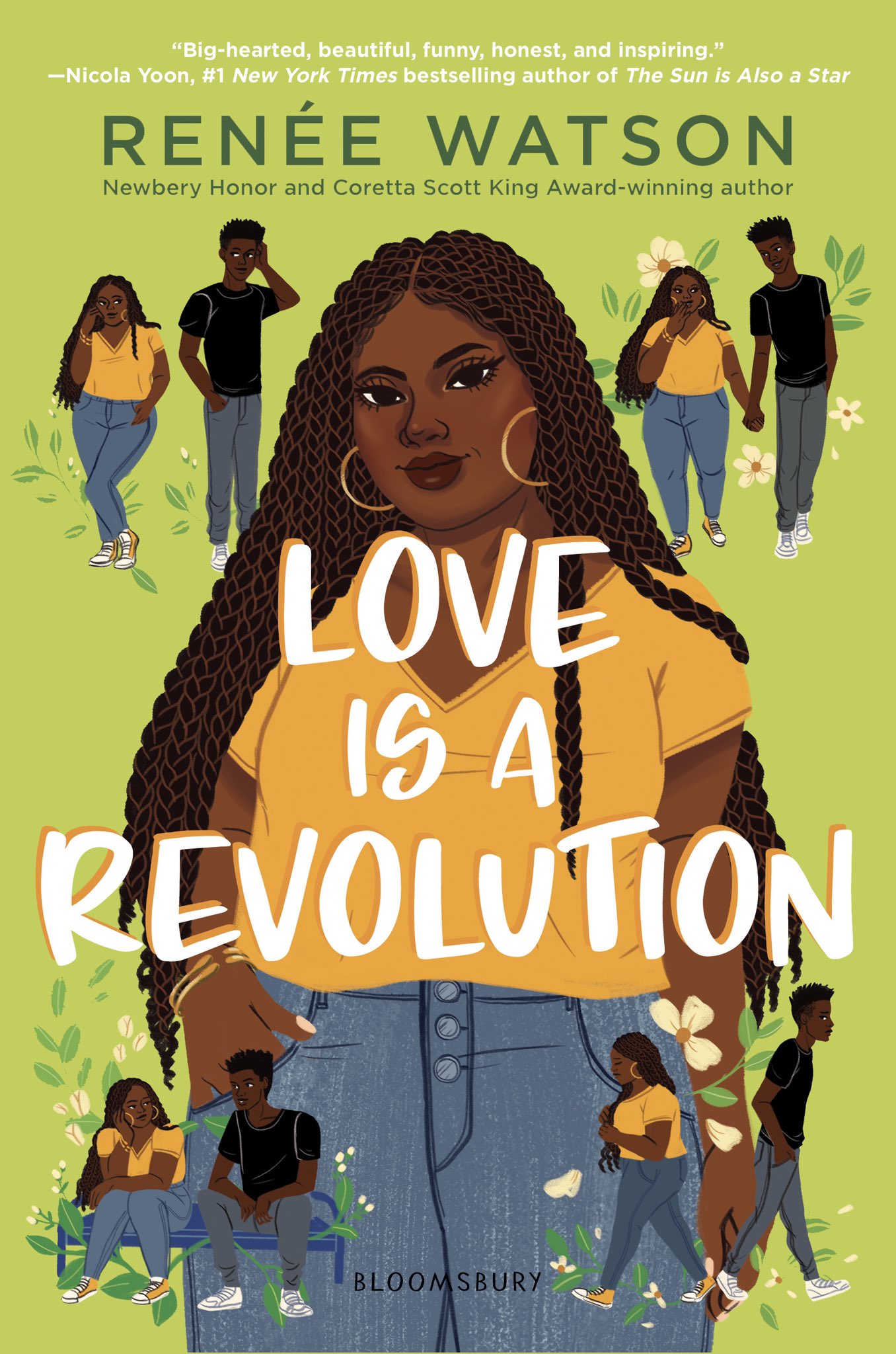
Author Guest Post: “Two Words That Can Help with Writer’s Block in Students!” by By I.M. Maynard, Author of the Roger Tarkington and the Magic Calendar

Share

“Two Words That Can Help with Writer’s Block in Students!”

Imagine, you’ve just announced an end-of-school year creative writing assignment for your students. You are expecting a positive response given your school just hosted a local author who talked about the writing process or your class just finished an inspiring novel. Besides, all students want to express themselves, right? And in creative writing, there are no wrong answers and so this should be a slam dunk assignment.

Then the arms shoot up into the air.

“What can we write about?” Anything, you respond.

“Can it be about space aliens?” Yes.

“How about super heroes?” Absolutely.

Can I write about myself?” Sure. This is your assignment. Be creative and have fun.

This is going really well. The students are as excited as you are about this assignment. But when you walk down the row of desks to check on their progress you notice that several notebooks or laptops remain blank. These students defend their lack of progress by saying that they have nothing to write about. They don’t know how to start. Even the students who started strong complained of writer’s block. “I don’t know what to write next. I’m stuck.”

If this scene plays out in your classroom, it is time to let them in on the creative writing secret that has launched stories and even writing careers. It was certainly key to my middle grade time travel series, Roger Tarkington and the Magic Calendar. The creative writing secret I refer to is what I call the what if technique. In my view, what if are the two most important words in creative writing.

The origin of my middle grade time travel series started as a what if. My toddler son was obsessed with calendars. About the same time, he was given a children’s magic kit with a cartoon magician featured on outside of the kit box. It got me thinking: what if the magic wand was used to turn the calendar magic? Thus started my journey with Roger Tarkington and his adventures at Jefferson Middle School.

While I can’t be certain, I would imagine that many stories started using what if.

          What if a boy were trapped inside a video game (Trapped in a Video Game)? What if a student with a face deformity went to school for the first time (Wonder)What if a boy was stranded alone in the woods (Hatchet)? Asking what if can help turn an ordinary situation, such as playing a video game, hiking in the woods, or going to school, into an intriguing premise for your next story.

Answering the what if question often leads to more questions. For example, how did a boy end up in the woods by himself? Perhaps the author used what if to come up with options, such as: What if he got lost by taking the wrong trail? What if he was on a school or Boy Scout outing and got separated from the group? What if the small plane he traveled in crashed in the middle of the woods?

I went through several what if scenarios before I settled on the premise of Roger Tarkington and the Magic Calendar. Originally, I was focused on the magic wand from the magic kit. I looked around my son’s playroom and asked a series of what if questions. What if the magic wand brought my son’s stuffed animals to life? I liked that idea, but it was too similar to the movie, Toy Story. What if the magic wand was used to turn my toddler son into a grown man? No, I wanted to tell a children’s focused story and so I opted against that idea. It wasn’t until I saw my son sitting near the magic kit while looking through a wall calendar that I came up with the premise of a magic calendar that allows someone to repeat days of the week by touching inside the calendar day. The idea matched my interest in writing about everyday school life, but with a fun time travel-like twist.

Inevitably, writer’s hit snags in their story. The what if technique is a great place to start in overcoming what seems like impossible roadblocks. During this brainstorming, I write down every what if answer, especially the silliest ones. If nothing stands out, I come back to the sheet of paper later and reread the answers. If nothing else, you’ll get a good laugh. However, this review often triggers new what if answers, sometimes ones that combine elements of two different answers.

The what if technique forces writers to face the creative problems they face with action. The technique also shifts the focus from negative thinking (i.e., I don’t have any ideas, I have writer’s block) to possibility simply by framing the roadblock as a question.

So does the what if technique solve every writing problem? Of course not. What if won’t motivate you to write, it won’t help with sentence structure or spelling, and it won’t address writer doubt or fatigue. However, the what if technique and similar writing strategies can help writers at any level or writing stages to address challenges and find solutions so that writers can get to the two next important words in creative writing: the end.

About the Book: Meet Roger Tarkington.

The almost 11-year-old has a plan for middle school greatness. A perfect plan that—lasts for all of about five minutes. 286 seconds, to be exact.

It’s all ruined when Kyle-the-Vile Brossman appears unexpectedly on the first day of school. Making matters worse, Kyle pledges to make Roger’s year miserable, just like he did at Bellingware Elementary School.

Roger’s unlucky start to sixth grade turns magical when his calendar turns into a time travel portal that allows him to repeat days.

Influenced by his Middle School Greatness Tip #31 (Don’t wait for it to happen, make it happen), Roger devises a new plan to use his magic calendar to beat Kyle, clearing his path to middle school greatness.

Foolproof plan for middle school success, right? Maybe in real life, but remember, this is middle school!

Will Roger succeed in using his magic calendar to standout at Jefferson Middle School and achieve middle school greatness?

Or will he fall under the constant attacks from Kyle and the unexpected, everyday obstacles of middle school?

About the Author: I.M. Maynard is the author of the Roger Tarkington and the Magic Calendar middle grade time travel series. The first book in the series, Roger Tarkington and the Magic Calendar: Quest for Middle School Greatness, was released in 2020. The second book in the series, Roger Tarkington and the Magic Calendar: Surviving Middle School, was released in 2021. I.M. Maynard is currently working on the third and final book in the series. When he isn’t writing, I.M. Maynard enjoys reading. HIs favorite contemporary authors include Louis Sachar (Holes), Stuart Gibbs (Spy School), Gordon Korman (Jackpot), and Chris Rylander (The Fourth Stall). Born and educated in the Midwest, I.M. Maynard now lives on the East Coast with his wife and son, who was the inspiration for the middle grade series. Learn more about I.M. Maynard at https://www.maynardauthor.com/.

Thank you, I.M., for this post showing how to help students get those creative juices flowing!

Review and Giveaway!: Rescue at Lake Wild by Terry Lynn Johnson

Share

Rescue at Lake Wild
Author: Terry Lynn Johnson
Published April 27, 2021 by HMH Books for Young Readers

Summary: In this funny and moving animals-in-peril adventure, a twelve-year-old girl and her two best friends determine to rescue two orphaned beaver kits—and soon find themselves trying to solve a local environmental crisis.

Everyone knows that twelve-year-old Madison “Madi” Lewis is not allowed to bring home any more animals. After she’s saved hairless mice, two birds, a rabbit, and a stray tom cat that ended up destroying the front porch, Madi’s parents decide that if they find one more stray animal in the house, she won’t be allowed to meet Jane Goodall at an upcoming gala event.

But when Madi and her two best friends, Aaron and Jack, rescue beaver kits whose mother was killed, they find themselves at the center of a local conspiracy that’s putting the beavers and their habitats in danger. As Madi and her friends race to uncover the threat targeting the beavers, Madi must put her animal whisperer skills to the test in both raising the orphaned beaver kits and staying out of trouble long enough.

About the Author: Terry Lynn Johnson writes about the wild with the wisdom and passion of someone who has spent her life working to preserve and protect it – both as a backcountry canoe ranger in Quetico Provincial Park and in her current job as a conservation officer with the Ontario Ministry of Natural Resources and Forestry. She lives at the edge of a lake in northern Ontario, Canada, where she loves watching all wildlife, including beavers. Visit her online at terrylynnjohnson.com

Twitter: @TerryLynnJ
Instagram: terry_lynn_johnson

Review: This book is everything the summary promises and more. I read it in one sitting because I couldn’t put it down. It was so interesting learning about beavers and conservation, but also watching Madi and her friends figure out the solution to a problem that adults automatically went to the extreme about.

Kids are going to love Madi and her friends. Their banter is so funny yet right on point for their age. I also love seeing how close they are even as they grow up and change.

In addition to the main story about the beaver rescue, Madi’s family situation will bring about good conversation about different types of families.

But truly, the real stars of this book are the beavers. I never knew as much about them as I do now, and they are such interesting animals. This book definitely led to inquiry as I wanted to learn so much more about environmental conservation and beavers.

Teachers’ Tools for Navigation: In addition to being a book that so many kids are going to want to pick up and read, this book lends itself perfectly to so much in the classroom!

Madi talks often in the book about her grandmother and Jane Goodall and all of the work they did to help preserve animals; however, there are tons of other scientists who help converse nature and animals’ habitats. Have students research these scientists, and remind them to think about local and smaller rescue facilities who do work that often aren’t recognized.

Madi LOVES animals and we learn so much about beavers in this book. Use the idea of Madi’s notebook to have students pick an animal and research it.

Madi solves a problem by going step by step through the problem solving process. Look at the six-step problem solving process and work through how Madi made her way through to help her town and the beavers.

Finally, learn about Terry Lynn Johnson’s inspiration for Rescue at Lake Wild here. This would lend to a great discussion about author’s purpose and point of view.

Discussion Questions: 

  • Why do the adults of the town automatically start killing beavers?
  • How does Madi figure out a solution to the problem?
  • How did the setting play a part in the story?
  • Which character did you most relate to and why?
  • Who do you look up to like Madi looks up to Jane Goodall?
  • What is your passion and how can you pursue it in your life?
  • How did having her two friends to help her lend to Madi being successful?
  • How did Madi’s grandmother inspire her? Who has inspired you in your life?
  • Madi’s mother said no more animals, which Madi obviously disagreed with, and although it seems harsh, she has her reasons. What do you feel about this? Can someone be right and wrong at the same time?

Flagged Passages: Chapter 1

I hear it again.

Urgent chattering reaches us from the mound of sticks and mud just off the bow of our boat.

“We’re going to have to do it,” I say, and then can’t help add, “I told you they were here.”

As an animal whisperer, I know these things, but sometimes I have to remind certain people.

A breeze catches the boat and swings us around the anchor line. The channel’s empty except for the beaver lodge, the three of us, and one bored dog.

“We’re sure the parents aren’t coming back, Madi?” Aaron asks.

“You saw their parents,” I say. “They’re not coming.” We’ve been here almost two hours to make sure there were no other adults in the lodge.

Finally Jack says, “Let’s do it already.”

“Before you say I should do it because I’m smallest,” Aaron says, “let me remind you I’ve been the rescuer the last two times.”

He’s talking about when we boosted him into a tree to save a raccoon that turned out not to need saving. Okay, I was wrong that one time. But the day we lowered him from the window by his feet to save the baby bird? That bird would have died without us.

“Out of the three of us, you’re the easiest to hang by the feet,” I say reasonably.

“It’s not my turn.” Aaron shifts on the aluminum seat. “And I’m not that small.”

“We’ve never done this before,” Jack says. “So it starts over.”

“What starts over?”

“Turns,” Jack says.

Adjusting the tiller handle, I move to sit next to Aaron in the middle of the boat. “We should play for it.” I hold up a fist, the universal sign for rock-paper-scissors. “So it’s fair.”

The three of us stick our fists together. Jack’s black Lab, Lid, pokes his nose into the circle too, ever hopeful that we’re about to unveil food.

“One, two, three!

“No!” Aaron yells at our scissors to his paper. “Rigged!”

“I’d take your shirt off if I were you,” Jack advises. “So it doesn’t get stuck and snag you down there. We probably wouldn’t be able to pull you up.”

Aaron pales but tries to look brave. “I always end up doing it,” he grumbles, reaching behind his back to pull off his T-shirt. The hot July sun bounces off his blinding white torso.

Aaron scowls at us and then glances over the side of the boat. He studies the brown water and mutters something about leeches.

“Maybe you should keep your shirt on for protection,” I suggest, eyeing his stick-thin arms covered in rust-brown freckles, and his pale shoulder blades that could cut a breakfast sausage.

“Are they even still alive?” Aaron says. “I can’t hear them anymore.”

He’s right. There’d been no sounds from the lodge in the last few minutes we’ve been sitting here arguing.

Earlier, we’d found two adult beavers floating dead on the other side of the channel. Jack, as usual, had wanted to investigate the crime scene immediately. But the noises from the lodge mean babies inside. Those babies will starve to death if we don’t rescue them.

We’ve been waiting here long enough to know there are no other adult beavers coming to take care of them. But how long have the young ones been alone in there? Maybe they’re starved already.

“Shhh!” I say. “Listen.”

We still our movements in the boat and drift. An enthusiastic frog trills next to us. The wind rustles the leaves of trembling aspen towering above. The water gently laps at the aluminum beneath us. We strain to hear anything. The silence stretches.

A long, high-pitched noise erupts from Lid’s rear end. It echoes strangely from the bottom of the boat, sounding like an optimistic elephant. Surprised, Lid looks behind him.

Aaron and Jack both burst out laughing. It’s so hard to keep boys focused.

“Guys, I don’t hear them. Maybe we waited too long.” Maybe the little beavers are just too weak now to make noise and desperately need help right this very second. I grab the anchor and haul it up. “We have to hurry!”

I yank at the oars and thrust the boat up onto the muddy bank of the lodge. Lid jumps out first, followed by Jack, who ties us off on a log. Aaron warms up, swinging his arms, further accentuating his shoulder blades.

Stepping onto the latticed sticks, I peer at a section of the lodge’s roof that’s been ripped apart, most likely by wolves. But the predators haven’t gotten through. The only way into an indestructible beaver lodge is underwater.

“Okay. You’re looking for the opening to the tunnel,” I say to Aaron. “It’ll be hidden among all the sticks. Hopefully it’ll be wide enough for you to fit. You can breathe once you get into the chamber. It’ll be a room above water like a den. That’s where you’ll find the baby beavers.”

Aaron nods while staring at the lodge. He examines the murky water.

I watch him uneasily and think about when we’d boosted him into that tree. He’d spent most of the time clutching the trunk and yelling for us to bring him down. And when we’d lowered him for the bird he insisted over and over, “Pull me up!”

This is actually dangerous. If Aaron panics, he could drown for real. He could get lost under there, or get caught on something, like Jack said.

A fluttery feeling builds inside my chest. Did Jane Goodall let someone else face aggressive chimps at the Tanzania research center? No.

It should be me.

Read This If You Love: Lost in the River of Grass and Hurt Go Happy by Ginny Rorby; Song for a Whale by Lynne Kelly;  Vet Volunteers by Laurie Halse Anderson; Primates: The Fearless Science of Jane Goodall, Dian Fossey, and Biruté Galdikas by Jim Ottaviani

Recommended For: 

classroomlibrarybuttonsmall

Giveaway!

a Rafflecopter giveaway

Signature

**Thank you to Barbara at Blue Slip Media for providing a copy for review and giveaway!**

It’s Monday! What Are You Reading? #IMWAYR 4/26/21

Share

It’s Monday! What Are You Reading?
Sharing Picture Books, Early Readers, Middle Grade Books, and Young Adult Books for All Ages!

It’s Monday! What Are You Reading? is a weekly blog hop co-hosted by Unleashing Readers and Teach Mentor Texts which focuses on sharing books marketed for children and young adults. It offers opportunities to share and recommend books with each other.

The original IMWAYR, with an adult literature focus, was started by Sheila at Book Journeys and is now hosted by Kathryn at The Book Date.

We encourage you to write your own post sharing what you’re reading, link up below, leave a comment, and support other IMWAYR bloggers by visiting and commenting on at least three of the other linked blogs.

Happy reading!

Bold_line

Tuesday: Pippa Park Raises Her Game by Erin Yun

Thursday: #MustReadin2021 Update

Saturday: Sofia’s Kids’ Corner: Breathing Underwater by Sarah Allen

**Click on any picture/link to view the post**

Bold_line

Kellee

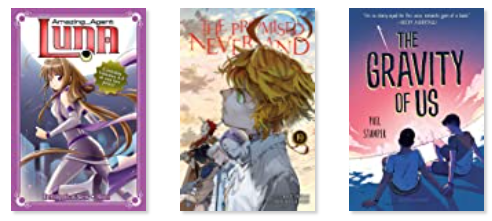
Little Witch Academia is a fun series, and I think my students will really like it!

But Amazing Agent Luna is definitely a new favorite! Ever since I have finished what is out for Promised Neverland, I have been trying to find a manga that I liked as much–Luna is it! Humor and drama and action–all the good stuff!

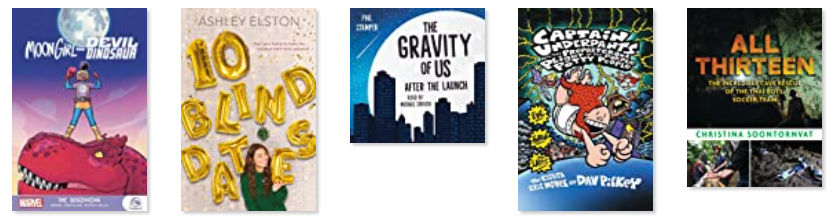
Trent and I finished what is probably his favorite Captain Underpants book yet–I mean, it is about a bionic booger boy! Onto part 2 of the bionic booger boy story!

To learn more about any of these books, check out my 2021 Goodreads Challenge page  or my read bookshelf on Goodreads.

Ricki

Hi, all! I am taking a two week break to finish out the college semester. I will see you in two weeks!

Bold_line

Kellee

Still reading: Crooked Kingdom by Leigh Bardugo

Reading during family reading time: Amazing Agent Luna by Nunzio DeFilippis and Christina Weir

Trent reading during family reading time: Hilda and the Bird Parade by Luke Pearson

Jim reading during family reading time: Fables Vol 2: Animal Farm by Bill Willingham

Listening: This Train is Being Held by Ismée Willems

Trent and I listening to: Captain Underpants #7 by Dav Pilkey

Bold_line

Tuesday: Review & Giveaway: Rescue at Lake Wild by Tera Lynn Johnson

Thursday: Review & Giveaway: Hudson and Tallulah Take Sides by Anna Kang, Illustrated by Christopher Weyant

Saturday: Sofia’s Kids’ Corner: My Life as a Billionaire by Janet Tashijian

Sunday: Author Guest Post by I.M. Maynard, Author of Roger Tarkington and the Magic Calendar: Quest for Middle School Greatness

Bold_line

Link up below and go check out what everyone else is reading. Please support other bloggers by viewing and commenting on at least 3 other blogs. If you tweet about your Monday post, tag the tweet with #IMWAYR!

 Signature andRickiSig

Kellee’s #MustReadIn2021 Spring Update!

Share

In January, I shared about the #MustReadin2021 challenge and my plans. Today, I am happy to share my progress!

(And make sure to check out Library Matters to see others’ updates!)

I chose 42 novels for my #MustReadin2021 challenge, and thus far, I have read 13 of them! I have linked each title to the IMWAYR post where I shared my thoughts on the book.

I also finished the Winter #BitAboutBooks challenge!

I have now started the Spring #BitAboutBooks Challenge and am almost done:

I’m having so much fun doing these challenges!
What are you reading? 

si

Pippa Park Raises Her Game by Erin Yun

Share

Pippa Park Raises Her Game
Author: Erin Yun
Published February 4th, 2020 by Fabled Film Press

Summary: Life is full of great expectations for Korean American Pippa Park. It seems like everyone, from her family to the other kids at school, has a plan for how her life should look. So when Pippa gets a mysterious basketball scholarship to Lakeview Private, she jumps at the chance to reinvent herself by following the “Rules of Cool.”

At Lakeview, Pippa juggles old and new friends, an unrequited crush, and the pressure to perform academically and athletically while keeping her past and her family’s laundromat a secret from her elite new classmates. But when Pippa begins to receive a string of hateful, anonymous messages via social media, her carefully built persona is threatened.

As things begin to spiral out of control, Pippa discovers the real reason she was admitted to Lakeview and wonders if she can keep her old and new lives separate, or if she should even try.

A Contemporary Reimagining of Great Expectations by Charles Dickens for Middle Graders

About the Author: Erin Yun grew up in Frisco, Texas. She received her BFA in English from New York University and served as president of its policy debate team. This experience came in handy when she became the debate consultant for the Tony-nominated Best Play on Broadway―What the Constitution Means to Me. Erin is a member of the Society of Children’s Book Writers and Illustrators and has written reviews and articles for BookBrowse. She developed her author program, an interactive writing workshop, which she has conducted in person and virtually at schools, libraries, and bookstores. She currently lives in New York City, and yes―she used to play basketball as a middle grader!

  1. She’s obsessed with personality quizzes and takes them for her characters.
  2. She is half Korean, and half Polish/Germanic.
  3. Her favorite foods include: kimchi-jjigae, cherry ice cream, and walnut cakes filled with red bean.
  4. She ran a bubblegum-selling business in middle school until it was shut down.
  5. Her family lore says that her grandfather lost part of his farm in a game of Go-Stop.
  6. She likes creating scavenger hunts in which participants dress like secret agents and follow clues.
  7. Her favorite places in the world include Seoul, London, and Tokyo.
  8. She was president of the New York University policy debate team.
  9. Her family dogs, Belle and Yoko, both bark incredibly loudly despite being foolishly tiny.
  10. She lives in New York City, but folks can tell she grew up in Texas by how often she says ya’ll.

Review: Okay, okay, I know we aren’t supposed to judge a book by its cover, but this cover was yelling READ ME to me, and I am so glad that I finally had the chance to and now share it with you all!

There is so much good happening in this book!

First, I love a good retelling! It brings a classical tale and its themes to a modern era.

Second, so many readers are going to connect with Pippa either because they understand what it is like to go to a new school or to fit in with a cool crowd or to have people not understand how important something is to you.

Third, there is so much to discuss with the book! You’ll see below in the discussion questions that in addition to connecting it with Great Expectations, there are opportunities to discuss family, the American Dream, culture, empathy, friendship, and more!

Fourth, I loved how complex the characters and situations were. Pippa is our protagonist but anything but perfect. Mina, Pippa’s sister, is so strict and seems heartless, but there is more there. Eliot is so cold, but there is a whole story there. And more! Such truth in the characterization of these middle schoolers and secondary characters.

Author Guest Post: Visit our Author Guest Post by Erin Yun as she shares five classics reimagined as middle grade novels.

Also, in her latest blog, Erin opened up on why she wrote this Korean American story for kids and how the recent #AAPI conversation about the lack of diverse Asian voices mirrors her own experience as a young reader. Read the blog here.

Teachers’ Tools for Navigation: At Pippa Park.com, there are so many wonderful resources to help use this book in classrooms!

The Tween Book Club Activity Kit includes the discussion questions below, word games, writing prompts, language arts guide, virtual author visit program, and an escape room activity! (The Common Core Language Arts Guide, Escape Room Activity, and Author Program Worksheet can also be downloaded separately.)

Erin Yun is also available for author events!

Discussion Questions: 

From the back matter (some aspects of the questions removed because of spoilers)

  • Pippa isn’t an orphan, but at times she feels like one. Describe Pippa’s relationship with Mina, her older sister. Why is Mina so tough on Pippa? Discuss whether Mina resents taking care of Pippa. How is Jung-Hwa, Mina’s husband, a father figure to Pippa? How does he make Pippa feel better after she has a fight with Mina?
  • What is the definition of family? Explain why Pippa’s mother had to return to Korea. How are Mina and Jung-Hwa realizing the American Dream? Discuss how Pippa’s family situation is similar to that of new American’s throughout our nation. How are many of them separated from their loved ones? Discuss why it’s important to celebrate all types of families.
  • Pippa says, “At Lakeview I could be anyone, as long as they didn’t find out the truth about me.” What doesn’t she want the kids at Lakeview to know about her? What does she do to keep her home life private? What does Pippa think would happen if the girls found out the truth about her?
  • How does trying to fit in cause Pippa Pippa to lose her sense of self? Why is she ashamed of her family and the way they live?
  • Pippa’s best friend at Victoria Middle School is Buddy Johnson. Think about how she betrays him.
  • Why does Pippa think that Eliot’s life is more messed up than hers? How does knowing about his family make her better understand Eliot?
  • Olive Giordana is the student ambassador that shows Pippa around the school. How does Olive’s desire to be popular affect her judgement?
  • Discuss what Jung-Hwa means when he says, “The lower you fall, the more room you have to rise.” What is Pippa’s lowest point? How do you know that she is about to rise? Have you ever felt that way?
  • Pippa’s family celebrates Chuseok: Korean Thanksgiving Day. Learn more about the traditions associated with this holiday on the Internet. Describe and discuss the holiday and the food that is prepared. What cultural holidays does your family celebrate? Is there anything special that you eat?
  • Pippa Park Raises Her Game is a contemporary reimagining of Great Expectations. Use books or the Internet to find out about the main characters in Great Expectations. What is each character’s counterpart in Pippa Park Raises Her Game? List the characters side by side and as a group apply two or three adjectives that best describe each of them.
  • Think about all that has happened to Pippa. Then consider the following quote from Great Expectations: “And it was not until I began to think, that I began fully to know how wrecked I was, and how the ship in which I had sailed was gone to pieces.” What is the metaphorical ship that Pippa sails? at what point does Pippa realized “how wrecked” her life is? How does she turn her life around once she begins “thinking”?
  • If you were to pick on character from Pippa Park Raises Her Game who is most like you, who would it be and why? Who is most unlike you and why? Which character from the book would you want as your friend and why?

Flagged Passages: “Chapter One: The Strange Encounter

I was the only person in the park.

Tucking a damp strand of hair back behind one ear, I surveyed the abandoned slides and empty benches. It was just past six p.m. on a Friday, but it looked like nobody else wanted to be out in the rain. As I strode briskly forward, icy wind numbed the tips of my fingers, making me clutch my basketball tighter. Even though we hadn’t officially left summer behind, the cold front that had settle over Victoria, Massachusetts, did show any signs of leaving.

So … empty court. Lousy weather. And things at home were just as dismal.

My older sister, Mina, had just grilled me for nearly an hour after finding out about the ‘unacceptable’ grade I had received on my latest algebra quiz. When she finally finished, I stormed out of the apartment, making sure to grab my basketball and water bottle; I planned on being gone awhile. Now I kind of wish I had taken a warmer jacket, too. Or at least a hat. But rain or shine, I wasn’t ready to go home yet.”

Read This If You Love: Get a Grip, Vivy Cohen by Sarah Kapit; Bouncing Back by Scott Ostler; Kiki and Jacque by Susan Ross; It Doesn’t Take a Genius by Olugbemisola Rhuday-Perkovich; Prom and Prejudice by Elizabeth Eulberg

Recommended For: 

classroomlibrarybuttonsmall 

Signature

**Thank you to Dienesa at Fabled Films for providing a copy for review!!**

It’s Monday! What Are You Reading? #IMWAYR 4/19/21

Share

It’s Monday! What Are You Reading?
Sharing Picture Books, Early Readers, Middle Grade Books, and Young Adult Books for All Ages!

It’s Monday! What Are You Reading? is a weekly blog hop co-hosted by Unleashing Readers and Teach Mentor Texts which focuses on sharing books marketed for children and young adults. It offers opportunities to share and recommend books with each other.

The original IMWAYR, with an adult literature focus, was started by Sheila at Book Journeys and is now hosted by Kathryn at The Book Date.

We encourage you to write your own post sharing what you’re reading, link up below, leave a comment, and support other IMWAYR bloggers by visiting and commenting on at least three of the other linked blogs.

Happy reading!

Bold_line


Tuesday: It Doesn’t Take a Genius by Olugbemisola Rhuday-Perkovich

Thursday: Furia by Yamile Saied Méndez

Sunday: Author Guest Post: “The Importance of Empathy” by Mel Darbon, Author of Rosie Loves Jack

**Click on any picture/link to view the post**

Bold_line

Kellee

My students are OBSESSED with mangas, so I am trying to read as many as I can to see if they are something I want to curate for my library. In my journey, a student recommended the Big Hero 6 manga by Haruki Ueno, and I was able to find them at my public library. They are so much fun–a perfect mix of changes from the movie and all of the feels of the movie.

Trent and I also finished listening to the 5th Captain Underpants. Onto the 6th!

Little Witch Academia by Yoh Yoshinari is another manga series that was recommended to me, and I found at the public library, and it is a cute witch academy story with adventure, school drama, and a funny protagonist.

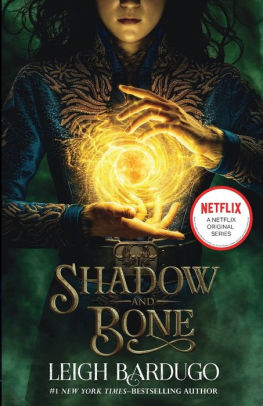
Six of Crows by Leigh Bardugo is the first in a duology but also a continuation of Shadow & Bone, and this heist book was amazing! Ended on a drastic cliffhanger which is why you’ll see Crooked Kingdom on my currently reading list.

I’ll be reviewing Pippa Park for you this week!

Raybearer by Jordan Ifueko is definitely one of the best fantasy novels I have ever read. I loved everything about it: the characters, the world, the traditions, the conflict… everything. And the audiobook was beautiful! I especially loved hearing the songs sung.

While working on my #MustReadin2021 post, I realized that I, for whatever reason, didn’t mark A Good Kind of Trouble by Lisa Moore Ramée as read, so I never shared it here on IMWAYR! I couldn’t let that past, even though I did finish it at least a month ago:

A Good Kind of Trouble is a perfect middle school book! It looks at changing identities, what true friends are like, and advocating for yourself.

To learn more about any of these books, check out my 2021 Goodreads Challenge page  or my read bookshelf on Goodreads.

Ricki

My kids loved Yes & No by Elisha Cooper. The grumpy morning cat reminded my 4yo of himself, and the energetic morning dog felt very much like my 7yo. They laughed and laughed and then asked to read it again.

Sunrise Summer by Matthew Swanson and Robbi Behr offers readers a glimpse of what a summer would be like on the Alaskan tundra. This would be a great book to read in the first week of school as students reflect on what they did over the summer. This untraditional, hard-working summer is a great story.

Jerry Craft is an amazing graphic novelist. I loved New Kid, and this companion was wonderfully written. The messages and themes will stick with readers. I recommend this one to those who haven’t read it yet! (I know it came out last year, and I am behind on reading it! I regret not reading it sooner!)

This was my SECOND time reading The Firekeeper’s Daughter by Angeline Boulley—this time with my ears. Gosh, this story is stunning, and I expect I’ll be reading it a third time. I am adopting this one for my course in the fall and can’t wait to talk about it with students.

Bold_line

Kellee

Reading: Crooked Kingdom by Leigh Bardugo

Reading during family reading time: Little Witch Academia Vol 3 by Yoh Yoshinari

Trent reading during family reading time: Hilda and the Bird Parade by Luke Pearson

Jim reading during family reading time: Fables Vol 2: Animal Farm by Bill Willingham

Listening: This Train is Being Held by Ismée Willems

Trent and I listening to: Captain Underpants #6 by Dav Pilkey

Ricki

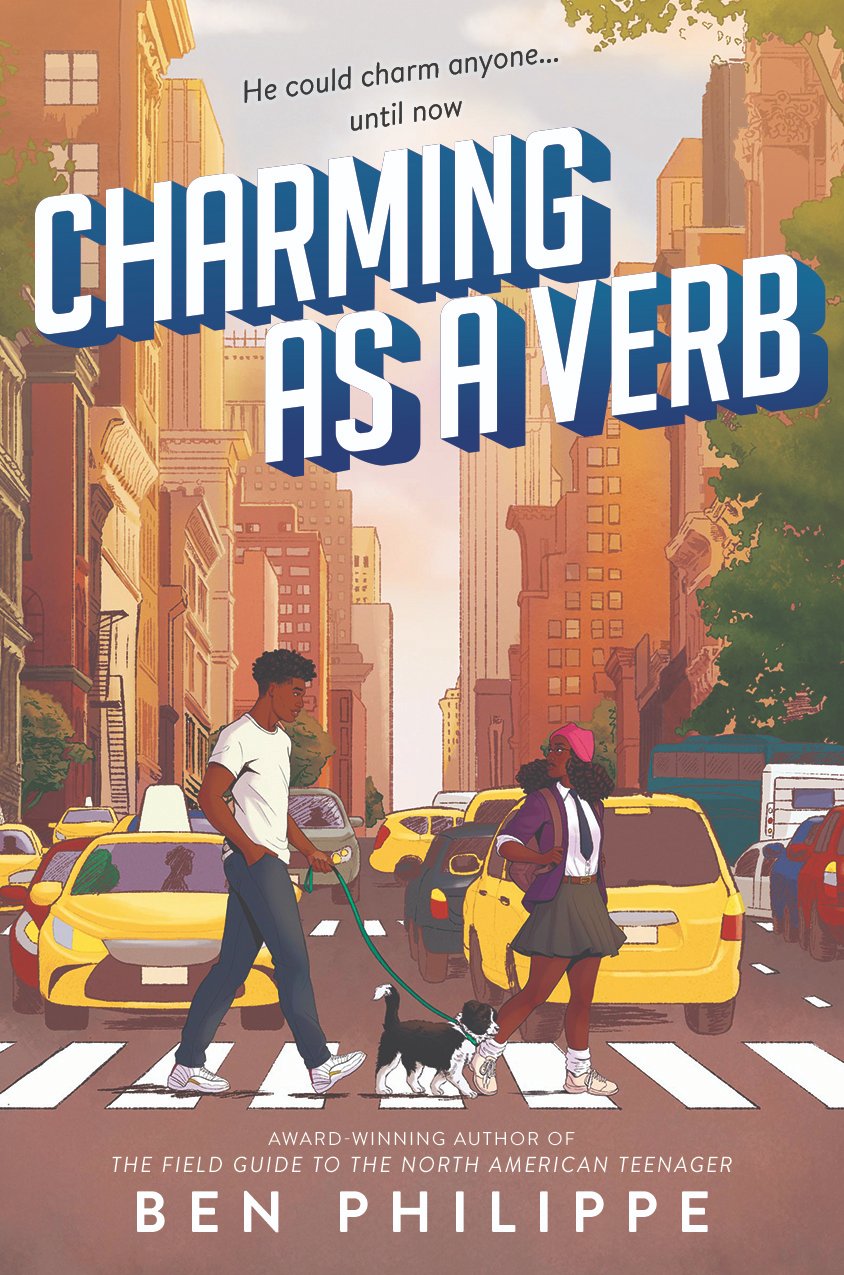
I am reading several books at once (and one with each child), but I’ll comment on one I am LOVING, which is Charming as a Verby by Ben Philippe. In fact, writing this post is making me a bit antsy because I want to get back to this book. So, goodnight, all!

Bold_line

Tuesday: Pippa Park Raises Her Game by Erin Yun

Thursday: #MustReadin2021 Update

Saturday: Sofia’s Kids’ Corner: Breathing Underwater by Sarah Allen

Bold_line

Link up below and go check out what everyone else is reading. Please support other bloggers by viewing and commenting on at least 3 other blogs. If you tweet about your Monday post, tag the tweet with #IMWAYR!

 Signature andRickiSig

Author Guest Post: “The Importance of Empathy: Making a Connection with a Viewpoint and Feelings That Are Not Your Own” by Mel Darbon, Author of Rosie Loves Jack

Share

The Importance of Empathy: Making a Connection with a Viewpoint and Feelings That Are Not Your Own

Without empathy you’ll walk by that homeless person in the street.” -Barack Obama

Why is empathy so important? I think this is a vital question to ask ourselves, especially in a world where our obsession with “self” has spiraled out of control.

Empathy is seeing, listening, and feeling with another person. Research has proven without a doubt that it can be taught and that by doing so, we give ourselves a chance to raise an empathetic generation. Compassion helps make the world a better place, without it intolerance and contempt become the norm.

Empathy isn’t feeling for somebody, it’s feeling with them. When you can see something from someone else’s perspective, you can support them so much better. Empathy transports you outside of your own landscape and into another person’s world and provides an opportunity for a person to reflect on their own perceptions and behaviour, while making a connection with someone else’s viewpoint and feelings. Without this connection we can become very inward-looking and isolated, which could lead to mental health problems. Everyone you meet is fighting a battle you know nothing about.

Stories have the power to build empathy and to endow children with the ability to understand different perspectives to their own. From this, children will learn how to interact with other human beings, how to form relationships, and how to navigate complex emotions. Writers have an important role to play since books transport you into somebody else’s life. The more you empathize with the characters in a book, the more you understand other people’s feelings. A writer must make their characters as fully rounded and as real as they can, so that their emotions connect with the reader. If this is the case, then empathy naturally follows on.

My book Rosie Loves Jack is written to show what it’s like to be a teenage girl with Down syndrome navigating a sometimes harsh and uncomprehending world. My character, Rosie, encounters many different people on her journey to be reunited with her boyfriend—some kind, some cruel—but she carries on regardless, fighting for what is right.

The book was inspired by my brother, who has a profound developmental disability. I have been an eyewitness on many occasions when my brother has been either verbally abused or completely ignored, as though he doesn’t count as a normal human being. My family has even been told that he should never have been born. I always knew that one day I would give my brother a voice, because I wanted people to see that his life is not unworthy and that we need to look beyond disability to ability. His experiences fueled my desire to help dispel the myths of disability because I need to make it clear that when you have a brother like mine the positives far outstrip the negatives. My brother has taught me compassion, kindness, patience, and above all else the ability to empathize.

My work later on as a teaching assistant with teenagers with Down syndrome reinforced my desire to write an inclusive book, as every one of these young people had a voice inside them, which needed to be heard.

It was at this time that I met the girl who inspired my character Rosie in Rosie Loves Jack. She was kind, funny, and fiercely independent, determined to get a job, fall in love, and one day get married. I learned from her how much people with Down syndrome are attuned to other’s feelings. They have incredible empathy—and always see the good in the world. I realized how much we all have to learn from them, and I wanted my character Rosie to show this through her innocent but brave eyes and for the reader to wonder at the world with her and to learn through her that kindness and compassion are so important. I wanted my reader to really feel and understand what it’s like to have assumptions made about you because of the way you look by “putting on Rosie’s shoes” and walking with her on her journey.

“Each one of us has lived through some devastation, some loneliness, some weather superstorm, or spiritual superstorm, when we look at each other we must say, I understand. I understand how you feel because I have been there myself. We must support each other and empathize with each other because each of us is more alike than we are unlike.” – Maya Angelou

Teachers’ Tools for Navigation: 

There is no right or wrong way to teach young people about compassion. It’s simply about listening, being emotionally connected and non-judgmental, and letting people know that they are not alone. In this workshop I want to help students to really think about what empathy means and how they can relate it to themselves and conduct themselves in the future. I want them to look beyond their own world and see it through new eyes.

Exercise 1

Ask the students to write down exactly what the word empathy means to them and why they think it is important to promote empathy in our lives.

Exercise 2

Sharing emotions and empathizing with them. Young people can find it hard to articulate their own emotions, so in this initial exercise I get them to warm up by thinking about and observing an event in my book and some of the characters reactions to.

  1. Read page 18–20 of Rosie Loves Jack. This is the scene where Rosie, after eight days of not hearing from her boyfriend Jack, overhears a conversation between her parents, mentioning some postcards that Jack has sent to her. Rosie’s father has hidden the postcards in his office in their house, so that Rosie thinks Jack doesn’t care about her anymore.
  2. Write down your thoughts on how you would feel if you were either Rosie or Jack and found this out. Get some of the students to read out their answers.
  3. Now switch to Rosie’s father’s viewpoint. Are his fears that Jack might hurt Rosie justified? Stand in his shoes and imagine what it would be like for a parent to have a daughter who is with someone who can be violent, even though Jack’s brain injury is not his fault and he never loses his temper with Rosie. Does Rosie’s father have the right to hide the postcards? It can be interesting to get two of your students to play the parts of Rosie and her father and each argue their case. The students can direct questions at them to see how they would respond in character. Get the two students playing the parts to swap over, so that they then argue from the opposite viewpoint.

Exercise 3

This is where the students choose one of their own emotional experiences to write about. Ask them to think of a time that they have been unjustly treated, because we all have a built-in sense of fairness. To start them off it can help to recount a time when you have been treated unfairly yourself. As an example, I’d tell the class about an incident when I was fifteen and my best friend stole a large cream cake from the teacher’s dining room and ran up to the top field to eat it. I got the blame for it, as someone said they’d seen me in the vicinity at the time it disappeared. I had to stay behind after school for a week doing extra work. I’m still fuming now! This is a powerful exercise to do, as students can get very passionate about what happened to them—and the other students can readily empathize with them. First, ask them to record exactly what happened and then to expand on how it made them feel. Get some of the students to read them out to the class. This is a great exercise for eliciting emotions and sharing them. Injustice can stir many painful feelings like anger, sadness, helplessness, frustration, and vengeance, and you can see and hear the sense of injustice building as the students recount their stories.

Exercise 4

Have the names of every student in the class folded up in a hat or box. Get each student to pick a name out of the hat. They then have to write a positive, kind, and thoughtful note of encouragement about the person they have picked, which they then hand over to that student at the end of the session. Encourage the class to read out what they have written about each person. These are often words that each child will never forget and is a great lesson in being mindful and providing an opportunity for each student to reflect on their own perceptions and behaviour.

Published March 1st, 2021 by Peachtree Publishing Company

About the Book: Rosie is a 16-year-old girl with Down syndrome, fighting for little freedoms, tolerance, and love amid the vast landscape of London in Mel Darbon’s powerful debut YA novel Rosie Loves Jack (Peachtree Publishing; March 2021; ISBN : 978-1-68263-289-5; HC $17.99; Ages 12+).

Rosie loves Jack. Jack loves Rosie. So when they are separated, Rosie will do anything to find the boy who makes the sun shine in her head. Even run away from home. Even struggle across London and brave the Tube stations to travel to Brighton alone during a snowstorm. Even though people might think a girl like Rosie could never survive on her own. Rosie must deal with new situations and experiences and some frightening unfamiliar places and people, but she’s determined to prove to everyone, especially her parents, that she’s just as capable as anyone at following her heart.

Written from Rosie’s perspective, this riveting novel gives readers an underrepresented but much-needed and thoughtful point of view. Author Mel Darbon’s voice-driven plot will immediately pull readers into Rosie’s world and have them excited, worried, proud, and cheering alongside her for every step of the journey, which is filled with lighthearted as well as darker moments. Featuring a diverse cast of characters and highlighting the range of abilities within the special needs community, this compassionate story drives home the message that we are all humans with feelings and the need to be valued and loved. Rosie Loves Jack was reviewed by a sensitivity reader from the Down syndrome community for accurate representation.

About the Author: MEL DARBON began telling stories to her autistic younger brother when they were children and has worked as a theater designer, freelance artist, teacher for adults with learning disabilities, and workshop teacher for teenage moms and young offenders. Mel is now focused on writing her second novel and developing creative writing workshops that encourage students with mixed abilities to work together for acceptance and inclusion. A graduate of Bath Spa’s MA in Writing for Young People, she lives in England. Follow her on Twitter @DarbonMel.

Thank you, Mel, for this wonderful post and empathy exercise! We agree that teaching about empathy all through school is so important!