Disney Villains: The Evilest of Them All by Rachael Upton

Share

Disney Villains: The Evilest of Them All
Author: Rachael Upton
Illustrator: Various Disney Story Art Team
Published 2018 by Fun Studio International

Summary: Dive into the devilish thoughts of Disney’s most masterful villains and become a part of the story . . . for better or for worse.

WANTED: The most evil, wicked, abhorrent, vile villain to ever curse this world . . . or any others.

A villain acting vile is merely part of the job description . . . but which of Disney’s famed scoundrels is the evilest of them all? Dive into the devilish thoughts of The Evil Queen, Jafar, Ursula, and more as they recall their most wicked achievements. With gatefolds and lift-the-flaps, readers can dive into minds of the best of the worst in this fun read for Disney fans of all ages.

Villains Include…
Evil Queen (Snow White)
Jafar (Aladdin)
Mother Gothel (Rapunzel)
Lady Tremaine (Cinderella)
Ursula (The Little Mermaid)
Scar (Lion King)
Cruella De Vil (101 Dalmatians)
Gaston (Beauty and the Beast)
Malificent (Sleeping Beauty)
Queen of Hearts (Alice in Wonderland)
Captain Hook (Peter Pan)
Hades (Hercules)
Dr. Facilier (The Princess and the Frog)

Review: I must share that I am very bias when it comes to this one. I love Disney. Period. However, this book was even better than expected. I loved the highlight of the villains and how the book was set up as a character profile for each of them like a business resume as well as fun anecdotal information about each of them–including a lot of humor!

Teachers’ Tools for Navigation: I am so ready to use this book in my class as an argumentative or debate activity! Each section does a phenomenal job breaking down the evilness of each of the villains including their skills, possessions, education, work experience, likes, dislikes, and a random list of information about them. Using this information, students would make an argument for why their villain is the “evilest of them all.”

The book also would fit perfectly in a compare and contrast unit since each villain has the same topics highlighted.

Discussion Questions: 

  • Which villain do you think is the evilest of them all?
    • Why do you think they are more evil than ____?
  • Who is the foe of _____?
  • Which villain has the most impressive skills? Explain.
  • How did the author use humor in the book to lighten the mood?

Flagged Passages: 

Read This If You Love: Disney, Villains, Profile Books, Humor

Recommended For: 

classroomlibrarybuttonsmall 

Signature

**Thank you to Casey at Media Masters Publicity for providing a copy for review!**

Blog Tour with Review, Book Trailer, and Giveaway!: Eduardo Guadardo, Elite Sheep by Anthony Pearson

Share

Eduardo Guadardo, Elite Sheet
Author: Anthony Pearson
Illustrator: Jennifer E. Morris
Published October 1st, 2018 by Two Lions

Summary: Eduardo Guadardo may look fluffy. He may look cute. But he’s no little lamb. He’s about to graduate from the FBI—that’s the Fairytale Bureau of Investigations—as an Elite Sheep. He knows five forms of kung fu, and he can outfox the foxiest of foxes. In fact, he’s so good they put him on his own case: to keep the farmer’s daughter, Mary, safe from Wolf, Troll, and Witch. It’s a job for somebody baaaaaaad—someone like a soon-to-be Elite Sheep. The thing is, protecting Mary isn’t quite as easy as Eduardo expected…

This imaginary backstory for “Mary Had a Little Lamb” is hilarious, action-packed, and filled with subterfuge (that means pulling the wool over your eyes, for you civilians).

About the Author: Anthony Pearson is not a spy. He’s not. We promise. He’s actually a school counselor, a child therapist, and the author of Baby Bear Eats the Night, illustrated by Bonnie Leick. But that didn’t stop him from digging for clues about “Mary Had a Little Lamb.” What he found made him imagine what could have inspired the rhyme: a sheep that is totally, absolutely, 100 percent in control of things … or maybe just 95 percent. And squirrels in sunglasses. Oh, and a witch flying a helicopter. But you didn’t hear about the Fairytale Bureau of Investigations from him. Anthony and his family live in deep cover in Georgia. Get more intel about him at www.AnthonyPearson.info. Twitter: @APearson_Writer

About the Illustrator: Jennifer E. Morris has written and illustrated award-winning picture books and has also illustrated children’s magazines, greeting cards, partyware, and educational materials. She has not illustrated classified documents nor is she a super secret agent. She is, however, the creator of May I Please Have a Cookie? which has infiltrated more than a million homes. If you say “The dove flies at noon,” she may tell you what the ducks recorded on their cameras. Maybe. But most likely not. Jennifer lives with her family in Massachusetts, just a few miles from the little red schoolhouse where “Mary Had a Little Lamb” originated. Read more of her dossier (that’s DAH-see-ay) at www.jenmorris.com. Twitter: @jemorrisbooks

Review: What a fun and quite smart idea! I didn’t know that I ever wondered how Mary got her lamb, but this backstory is one epic way for that nursery rhyme to come about! And Eduardo Guadardo is quite the character, and it really does give another outlook on why Mary’s lamb went to school with her. I also liked the additional layer that the author added to the story to show how arrogance does not lead to success and that even if you are good at something, if you can’t learn and work with others, you will not do well.

Teachers’ Tools for Navigation: Allusions, allusions, allusions! Eduardo Guadardo may be a backstory for Mary Has a Little Lamb, but so many other fairy tale and nursery rhyme characters are scattered throughout the book! Trent and I played a scavenger hunt for characters in the book and with older students who could do more discussions and analysis with these cameos.

Discussion Questions: 

  • What other fairy tale and nursery rhyme characters did you see in the book?
  • Why were the witch, troll, and wolf the bad guys in the story? What other stories are they the antagonists?
    • How did the author use your preconceived notions to trick you about these three in the end?
  • Why did Mary’s lamb follow her to school one day?
  • How did Mary trick Eduardo? What did the trick teach Eduardo?
  • Based on the final spread, what fairy tale are Eduardo and Mary going to take on next?
    • What do you think is going to happen?

Book Trailer: 

Read This If You Love: Fractured Fairy Tales!

Recommended For: 

classroomlibrarybuttonsmall 

Giveaway!

a Rafflecopter giveaway

Signature

*Thank you to Blue Slip Media and Two Lions for providing copies for review and giveaway!**

Teaching Tuesday: Close Reading Lesson with Tacky the Penguin, an Aesop Fable, a TED Talk, and Sit-Ins

Share

Just so we all have the same definition of close reading, I wanted to share how I define it:
The process of close reading is reading a short, worthy text more than once to get deeper into its meaning.
(See “A Secret About Close Reading” for more information.)

Here is a fun close reading activity I did with my reading classes a couple of weeks ago.

Standards for this lesson: RL.1 & RI.1 (Inference & text evidence), RL.2 (Theme), RI.2 (Central Idea), RL.3 (Narrative elements interact)

Tacky the Penguin by Helen Lester is a much more complex text than it first seems, so I really wanted to take this fun text and push my students’ thinking to realize that Tacky teaches us more than they first thought.

First read: For the first read of Tacky the Penguin, I just had my students enjoy the story. I love watching kids see this book for the first time because he is such a ridiculous yet awesome penguin.

Second read: When we read the story again, this time I chunked the text and had them take notes about a different characters’ emotions for each section. They then went on our Canvas discussion board and made an inference about how the character was feeling based on their notes and included evidence.

“The other penguins are much more accepting of Tacky at the end. In the text it shows that all the penguins hugged Tacky since his oddness had scared the hunters away and saved them. This action showed that even though they might disagree on how to do things they were still thankful of him.” -EX, 8th grade

“I think that the other penguins, Goodly, Lovely, Angel, Neatly and Perfect are happy that Tacky is around. In the story it is showing all the penguins celebrating that the hunters were gone. Usually when you are celebrating it is because someone has accomplished something and you feel happy for them. So, you can conclude that the other penguins are happy that Tacky is around because he got rid of the hunters and without Tacky they might’ve died.” -JK, 6th grade

For the final section of the text, I asked them to think about the theme of the story, and they answered their inferred theme with evidence on the discussion board.

“I think the theme of Tacky the penguin is that differences can be good. I think that because at first the other penguins didn’t like Tacky because he was very different in the way he acted. They thought he was annoying and didn’t really include him in their group. At the end, they appreciate him because he saved them from the hunters, so his differences were good.” -AN, 8th grade

“The theme is to treat everyone fairly. Because in the beginning the other penguins treated Tacky badly, by excluding him, being annoyed at his greets, singing, and diving. But when Tacky acted like a hero they all appreciated him like they should of in the beginning.” -AK, 8th grade

“I think the theme of TACKY THE PENGUIN is to always be yourself. In the beginning of the story, the other penguins didn’t seem to really like Tacky because he did things so differently from them. However, as the middle towards end of the story, Tacky uses that to his advantage to scare away the hunters. So really, because Tacky was himself, he saved the day!” -DV, 7th grade

As we know, there are many themes that can be taken from a story, and most of the themes I received were spot on and focused primarily on how Tacky may seem odd but that doesn’t mean being different is bad. But there was one theme that I didn’t have any students pick up on, and I felt it was a big one. So, for the third read, I added in another text.

Third read: For the third read, I had my students read an Aesop Fable to connect with Tacky. “The Lion and the Three Bullocks” has the theme “In Unity is Strength” because the bulls survive the predator because they work together. The students did a wonderful job realizing that this theme connected to Tacky because it was only when all the of the penguins worked together that they were able to ward off the hunters.

“The theme “Unity is Strength” works for both books because together they defeated the enemy(ies). In Tacky the Penguin it says, “ Tacky began to sing, and from behind the block of ice came the voices of his companions, all singing as loudly and dreadfully as they could.” This shows that together the penguins can work together to be strong. The next page says “The hunters could not stand the horrible singing” This evidence illustrates that together as a team they can do anything. In Aesop For Children (Three Bullocks and a Lion), it says that a hungry lion is looking for his next meal. He was only sitting and watching because all of them were together so he would lose. In a little bit the bullocks separated and it was the lion’s time to strike (He ate them). This shows that when you are together you can be even stronger then when you were alone.” -EN, 7th grade

At this point, I was so proud of the connections my students were making, but it was still on a level where they were not connecting it to life–they saw it as a penguin and bullocks lesson mostly. This meant that I added in another text that I had them close read:

Scila Elworthy’s TED Talk is titled “Fighting with Nonviolence” and shares how fighting violence with violence is not successful while using nonviolence has been successful. I love TED Talks because you have the video and the transcript! What a great text for the classroom! (And thank you Jennifer Shettel for pointing me in this direction!)

First read: We watched the first 5 minutes and 11 seconds of the TED talk, and I gave each student a Post-It note. I asked them to write down words that stuck out to them. We then shared the words and defined any words they didn’t know.

Second read: For their second read of the text, they went to the transcript and were to focus on the central idea of this section of the text. Each person wrote down their own central idea.

Then I did a variety on one of the discussion ideas that Ricki shared in her Engaging Classroom Discussion Techniques post. Kind of like in Facts of Five, I had students then go into groups of three and come up with a consensus of a central idea together. They then wrote these on sentences strips to display in the room. We also discussed each one and talked about the supporting evidence for each central idea. I called it “Most Important Point.”

“As a group for the “most important point activity” we came up with the point that “solving a problem with violence only ever causes more violence”. Toward the end of the ted talk the speaker gives an example of when her ‘heroine’ was faced with guns during a protest and solved it by walking up to them and getting them to put their guns down. Had she not solved that problem this way it can be assumed that the soldiers would have shot them. By solving a situation with non violence she avoided the problem all together. We concluded from this, and the other points she made in ted talk including Nelson Mandela and her own personal anecdote about non violence, that that was the central point.” -KA, 8th grade

Third read: For the culminating task for all of these texts, I added in one more text to truly make all of this connect to reality. I knew I wanted to pick an image from the Civil Rights Movement because it is a true example of this idea at work. I introduced my students to sit-ins.

I then asked, “Why did we watch this TED Talk and why did I share the Sit-In images after reading Tacky the Penguin and the Aesop Fable? How do they all connect? Write a short paragraph explaining the connection, and remember to Restate, Answer, have Text evidence, and Explain/elaborate.”

All of these connect because they all show them going against things together. In “Tacky the Penguin” all of the penguins started singing in the end together, driving them away. If it was only Tacky singing, the hunters might not have gone away if the other penguins had not shown up.  In “Three Bullocks and a Lion”, the lion would not attack them when they were together because he knew he was no match for all three of them combined. In the Sit- In photo, there are four people sitting at a counter, and in the other photo, it shows them getting drinks poured on them from other people in the restaurant. If there was only one person sitting at the counter, the point would not have been proven as well as it would if there were four. All of them show that when they are together, they are stronger.” -MA, 7th grade

The Ted Talk, Sit-in images, Tacky the Penguin, and Aesop Fable connect because they show how if we stick together and try to solve conflict in nonviolent ways, we will not have to resolve problems with more fighting.  The Ted Talk says that bullies use violence to intimidate, terrorize, and undermine, but “only very rarely in few cases does it work to use more violence.” This just makes people more and more violent. An example is when the “Students who participated in sit-ins refused to become violent” even when people were not treating them fair by not serving them or even pouring a drink on them. Tacky the Penguin helped save all the penguins from being taken away by hunters because he had the attitude that people should be friendly and kind to each other and because he acted like this, it scared the hunters and they ran away. In the Aesop Fable, the bulls were able to keep the lion from eating them by staying close and being strong together. When they began to argue and separated from each other, they were not strong enough alone to keep from being attacked. “It was now an easy matter for the lion to attack them one at a time, and this he proceeded to do with the greatest satisfaction and relish.” This shows that we need each other to be strong and reach our goals and when we begin to fight, we lose our strength against enemies. We can control all of this, like she says, “It’s my response, my attitude, to oppression that I’ve got control over, and that I can do something about.” -DA, 6th grade

I was so impressed with my students’ deep thinking, connections, inferences, and elaboration! And overall they truly loved the activity, and I think that it truly shows that a text to analyze can be more than the canon!


It’s Monday! What Are You Reading? #IMWAYR 10/15/18

Share

IMWAYR 2015 logo

It’s Monday! What Are You Reading? From Picture Books to YA!

It’s Monday! What are you Reading? is a meme started by Sheila at Book Journeys and now hosted by Kathryn at The Book Date. It is a great way to recap what you read and/or reviewed the previous week and to plan out your reading and reviews for the upcoming week. It’s also a great chance to see what others are reading right now…you just might discover the next “must-read” book!

Kellee and Jen, of Teach Mentor Texts, decided to give It’s Monday! What Are You Reading? a kidlit focus. If you read and review books in children’s literature – picture books, chapter books, middle grade novels, young adult novels, anything in the world of kidlit – join us! We love this meme and think you will, too.

We encourage everyone who participates to support the blogging community by visiting at least three of the other book bloggers that link up and leave comments for them.

Bold_line

Tuesday: Teaching Tuesday: Native November is Coming…

Wednesday: Vincent and Theo: The Van Gogh Brothers by Deborah Heiligman

Thursday: The Astonishing Color of After by Emily X.R. Pan

Friday: Blog Tour with Review and Giveaway!: Garbage Island by Fred Koehler
Giveaway open until Thursday!!!!

Sunday: “Behold the Power of Books!” by Cassidy Dwelis, Author of Braidy von Althuis series

**Click on any picture/link to view the post**

Bold_line

Kellee

  • Upside-Down Magic: Weather or Not really highlighted Willa, one of the secondary characters in Nory’s Upside-Down Magic class, and it was nice to get to know another character better. I will say that it shone a different light on Nory, but it is always good to see that your protagonist has flaws. I love every book in this series, and although this one is different, it is no exception.
  • The Dollar Kids by Jennifer Richard Jacobson looks at rural America from the eyes of an outsider who desperately wants to fit in. I really loved the different layers within this story–it looked at everything from starting a business to vlogging to feeling responsible for a death to accepting others who may be different to the decline of a town after a business closes and so much more. It was a fantastic read.

Ricki

Young Adult Books

I enjoyed Americanized: Rebel without a Green Card by Sara Saedi. This is my second time reading the book, and I am excited to talk about it with my students tomorrow. We are examining three works of nonfiction for adolescents. This one is a powerful memoir.

Emily X. R. Pan is blowing up. Everyone is raving about her. After reading The Astonishing Color of After, it is no surprise. The book is stunning. My students had so much to talk about after we read this book. It’s a bit on the longer side (460ish pages), and it isn’t a fast-paced read, but every student demanded that I use it in my course next time.

Picture Books

There’s a Hole in the Log on the Bottom of the Lake by Loren Long is an adorably cute book that is fun to read aloud. It is very similar to the There Was an Old Lady rhyme/book series.

Carmela Full of Wishes by Matt de la Peña is just as beautiful as everyone is saying it is. I found it to be very inspiring, and my son enjoys reading it.

Imagine by Juan Felipe Herrera. Whew. This book is magical. Herrera is one of the best writers today, in my humble opinion. His talent blows me away.

The Neighbors by Einat Tsarfati is my son’s new favorite book. he wants to read it every day, and he tells everyone about it.

A Parade of Elephants by Kevin Henkes is a fun counting book. I love how Henkes’ illustrations always pop.

There’s a Dinosaur on the 13th Floor by Wade Bradford is a very cute book. It’s quite silly, and it feels suspenseful!

We Are Grateful by Traci Sorell. I ended with this book. I am so happy it exists in the world. You’ve likely heard about this book, but if you haven’t, I recommend it highly. I will be reviewing it this Thursday!

Bold_line

Kellee

With Trent: Winnie-the-Pooh by A.A. Milne
Listening: Born a Crime by Trevor Noah
Reading: Death and Douglas by J.W. Ockler

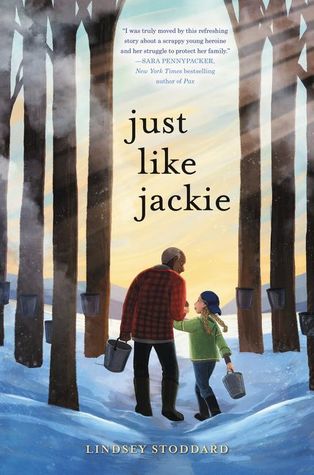
Up Next: Escape from Aleppo by N.H. Senzai or Someday by David Levithan or Just Like Jackie by Lindsey Stoddard

Ricki

I’ll be rereading Highly Illogical Behavior by John Corey Whaley next week for my class. I am hopeful I’ll fit in a couple of other YA books, too.

Bold_line

Tuesday: Teaching Tuesday: Close Reading Lesson with Tacky the Penguin, an Aesop Fable, a TED Talk, and Sit-Ins Image

Wednesday: Blog Tour with Review, Book Trailer, and Giveaway!: Eduardo Guadardo, Elite Sheep by Anthony Pearson

Thursday: We Are Grateful: Otsaliheliga by Traci Sorell

Friday: Disney Villains: The Evilest of Them All by Rachel Upton

Sunday: Author Guest Post! by Pepper Springfield, Author of the Bobs and Tweets series

Bold_line

Link up below and go check out what everyone else is reading. Please support other bloggers by viewing and commenting on at least 3 other blogs. If you tweet about your Monday post, tag the tweet with #IMWAYR!

 Signature andRickiSig

Author Guest Post: “Behold the Power of Books!” by Cassidy Dwelis, Author of the Braidy von Althuis series

Share

“Behold the Power of Books!”

Talking to kids about hard topics is tough. When your little one, or a little one you know, is going through a tough time, it can be challenging to talk to them about what is going on in their life. Many kids are embarrassed about it, and are afraid of speaking up. What can we do as parents, educators, and creators to help kids with difficult things in their life, whether they are issues with a turbulent household, bullying, or the loss of a loved one?

Behold the power of books!

The folks at www.stopbullying.gov say that the best way for educators and staff to help kids impacted by bullying is through creative writing and artistic works. By introducing students to books that cover difficult topics, it can be easier to talk to them about what is going on in their life, and easier for them to speak up. Having characters in works of fiction that are relatable is important to a lot of readers, and seeing someone who is going through a tough time, just like them, can help kids come up with creative solutions to their troubles. We are Teachers has a great list of books that have anti-bullying messages, Parents showcases books about divorce, and What’s Your Grief has a whopping 64 books for kids on death and grief. The resources are out there, and by putting these books in classrooms and libraries, we can open the conversation with kids about the tough things.

My favorite approach to these kinds of topics is in the books that do not directly say in the title that they are about the topic. Diverse experiences should be written into every character, and these kinds of struggles make young protagonists much more interesting. By having characters experience the everyday struggle and deal with things that almost all kids deal with, this allows us as educators, adults, and parents to more freely talk about the issues with little ones. By continuing to stay involved in our kids’ lives, we can help put a stop to the problems that they deal with, or, at the very least, lessen the blow that the difficult times often bring.

What are your favorite books about tough topics for kids? Have you ever utilized fiction to talk to your students about emotional topics?

About the Author: Elaborate storytelling is something that has entertained humankind since its start, and Cassidy’s goal is to take the words on the page and forge them to life, like a star being born. Using a variety of media, Cassidy uses her hands to weave magic on the canvas and visualize elements extant before only in dreams. By utilizing an expressive and traditionally-inspired quality in her work, Cassidy brings worlds and characters of all sorts into existence.

Cassidy Dwelis currently resides in Colorado, and has earned a BFA in both Illustration and Game Art. Cassidy writes Middle Grade, Young Adult, and New Adult fiction, and is currently acquiring her MA in Publishing. Cassidy’s dream is to help others bring their imagination to life, through the art of storytelling.

Braidy von Althuis and the Dastardly Djinn
Publishes October 30th, 2018

About the Book: “He should have known this would happen. Wishes in movies and books seemed to go bad, so why would this one be any different?”

Ten-year-old Braidy von Althuis misses his family dearly. Ever since his father, his aunt, and his uncle went to look for Gran in Europe, the house has been quiet and lonely. Even worse, Braidy’s cousin Blockhead is miserable after a breakup. Braidy wishes more than anything that he could do something to make his cousin happy.

His wish is granted by a mysterious djinni, but the wish does not solve all his problems. Something is wrong with Blockhead, and Braidy learns a dark secret about his family that changes everything he knew. Will Braidy and Blockhead be able to undo the djinni wish, or will Braidy spark a war that may change the world as he knows it?

Braidy von Althuis and the Dastardly Djinn is a story about identity, self-worth, consent, and responsibility.

Thank you, Cassidy, for this post reiterating what we truly believe!

Blog Tour with Review and Giveaway!: Garbage Island by Fred Koehler

Share

Garbage Island
Author and Illustrator: Fred Koehler
Published October 9th, 2018 by Boyds Mills Press

Summary: Mr. Popli, the mouse mayor of Garbage Island, is always at odds with Archibald Shrew, a brilliant but reckless inventor. When Garbage Island, their home in the Great Pacific Garbage Patch, splits apart, they are trapped together in Mr. Popli’s houseboat, desperate to find their way back home. At first, they only argue, but when they face a perilous thunderstorm and a series of predators, they begin to work together and recognize – in themselves and in each other – strengths they didn’t know they had.

About the Author: Fred Koehler won a Boston Globe/Horn Book Honor Award for his illustrations for One Day, The End. He is the author-illustrator of How To Cheer Up Dad, which received three starred reviews, and he is the illustrator of This Book Is Not About Dragons and Puppy, Puppy, Puppy and Flashlight Night.  He lives with his children in Lakeland, Florida.

Visit the Garbage Island Boyds Mills Press page to view an interview about his inspirations and what’s coming next!
Praise: 

“In this series opener, a mouse and a shrew find themselves unlikely allies as they unite to save Garbage Island. The clever pairing of opposites adds humor, making the gradual emergence of friendship…all the sweeter. Dramatic black-and-white illustrations highlight key action. Exciting, fast-paced adventure and unexpected friendship in a “trashy” venue.” –Kirkus Reviews

“This adventurous tale is packed with action, examples of creative thinking, and ingenuity. Use this as an introduction to STEM thinking, a science fair project, a lesson on ecology, or simply read it for the enjoyment the story provides. This book will appeal to the adventure seeker, animal lover, explorer, and just about everyone else. A must-read for readers ready to strap in for a great ride!” – School Library Connection, starred review

“(With) fast-paced action and danger… this entertaining animal adventure stands out… because of its strong characters and an underlying message of environmental awareness.”–School Library Journal

Review: I love Archibald Shrew. He actually reminds me of Tinkerbell, specifically from the movie Tinkerbell and the Lost Treasure. Archie is a genius; he just is a genius that sometimes makes a mess when he is creating or may forget something essential if he’s brainstorming or might put him or someone else in danger if trying something new. But he is just so gosh darn lovable! From the very first page when we meet him, and he’s trying out his bicycle invention. Archie is obviously just ahead of his time. And while Mr. Popli starts off as a bit of a stern, uptight character, he is forced to see what is most important through this journey. Lastly, Merri. She is a special character who I connect with so much. She tries so hard to take care of everyone. She is never not helping or doing something; everyone can rely on her. But she also feels a lot of pressure to be a caregiver in so many different ways; so much that she pushes herself way too hard sometimes. It is because of these three characters plus the plot arc of Mr. Popli and Archie’s nearly always perilous adventure that this book is hard to put down. I know this is going to be one that Trent and I will read when he is a bit older: so much to unpack and just so entertaining!
Teachers’ Tools for Navigation: There is an Educator Guide available:

Discussion Questions: 

  • How did Mr. Popli change over the course of the book?
  • What did the egg teach Archie and Mr. Popli?
  • What are the differing character traits between Archie, Mr. Popli, Merri, and Edward? Similarities?
  • How does Archie effect the other characters at the beginning of the book? The end?
  • What part of the book surprised you?
  • How does the book promote environmental awareness?
  • Which of the opponents was the biggest foe for Archie and Mr. Popli? Explain why you think that foe was the toughest?

Flagged Passages: Chapter 3

“A week into his punishment for the sea-cycle incident, Archie had taken to his new routine with all the enthusiasm of a one-armed starfish. During the day, he did everything that was asked of him, but the work made him hungry, and the hunger made him grumpy. And still, his yearning for his workshop rose in his throat each evening like the moon in the sky.

Merrie had come to visit Archie each night at the Watchtower. She was the only bird left on Garage Island. He was the only shrew. In many ways, they were kindred. But Merri was an outsider because of her species. And she was sure that Archie was treated as an outsider because of his actions. If she could get him to see that, perhaps his life could improve. Her attempts to convince him turned into another argument.” (p. 30)

Read This If You Love: Anthropomorphic stories like Redwall by Brian Jacques, Silverwing by Kenneth Oppel, Seekers series by Erin Hunter, Mez’s Magic by Eliot Schrefer, Good Dog by Dan Gemeinhart, An Army of Frogs by Trevor Pryce;Fiction that promotes environmental awareness; Plastics Ahoy! by Patricia Newman

Giveaway!:

a Rafflecopter giveaway

Don’t Miss Out on the Other Blog Tour Stops!: 

Mon 10/1           Always in the Middle
Tue 10/2             Miss Marple’s Musings
Wed 10/3           Inkygirl
Thu 10/4             Storymamas
Fri 10/5               Teen Librarian Toolbox
Mon 10/8           Librarian in Cute Shoes
Tue 10/9             KidLit Frenzy
Wed 10/10         Middle Grade Book Village
Thu 10/11          Mrs. Knott’s Book Nook
Fri 10/12             Middle Grade Minded
Fri 10/12            Unleashing Readers

Recommended For: 

classroomlibrarybuttonsmall 

Signature

**Thank you to Boyds Mills for providing copies for review and giveaway and for hosting the blog tour!**

Vincent and Theo by Deborah Heiligman

Share

Vincent and Theo: The Van Gogh Brothers
Author: Deborah Heiligman
Published April 18th, 2017 by Henry Holt and Co.

Summary: The deep and enduring friendship between Vincent and Theo Van Gogh shaped both brothers’ lives. Confidant, champion, sympathizer, friend, Theo supported Vincent as he struggled to find his path in life. They shared everything, swapping stories of lovers and friends, successes and disappointments, dreams and ambitions. Meticulously researched, drawing on the 658 letters Vincent wrote to Theo during his lifetime, Deborah Heiligman weaves a tale of two lives intertwined and the love of the Van Gogh brothers.

About the Author: Deborah Heiligman has written many books for children, including National Book Award Finalist Charles and Emma: The Darwins’ Leap of Faith and The Boy Who Loved Math. She lives with her family in New York City.

AccoladesMichael L. Printz Award – Honor, School Library Best Books of the Year, CPL: Chicago Public Library Best of the Best, NYPL Books for the Teen Age, Booklist Editors’ Choice, YALSA Award for Excellence in Nonfiction Finalist, YALSA Award for Excellence in Nonfiction Winner, BCCB Blue Ribbon Award, Boston Globe – Horn Book Award, Kirkus Best Teen Books of the Year, Publishers Weekly Best Books of the Year, Texas TAYSHAS High School Reading List, Horn Book Magazine Fanfare List

Praise: 

“A remarkably insightful, profoundly moving story of fraternal interdependence and unconditional love.” —Kirkus, starred review

“A breathtaking achievement that will leave teens eager to learn more.” —School Library Journal, starred review

“In fittingly painterly language, Heiligman offers vivid descriptions of Vincent’s artwork and life, which grow more detailed and colorful as Vincent’s own artistic style becomes richer and more refined . . . This illuminating glimpse into the van Goghs’ turbulent life and historical period will add compelling depth to readers’ understanding of the iconic painter. ” —Booklist, starred review

“A unique and riveting exploration of art, artists, and brotherly love.” —The Horn Book, starred review

“An intensive exploration of their turbulent lives” —Publishers Weekly, starred review

“This title is a treasure for readers who want to immerse in a roiling domestic drama and who don’t back away from a good cry” —The Bulletin, starred review

Review: I could not stop talking about this book while I was listening to it. That, and that I couldn’t stop listening to the book–I would listen whenever I could, show me what a fabulous book it was. Hieligman does an amazing job making Vincent and Theo’s story come to life through such emotional narrative that the reader cannot help but feel as if we are living alongside the Van Gogh brothers. As someone who loves learning about history and art as well as an interest in brain health, this was a story that was more fascinating than I can even describe.

Also, I feel personally connected to this book in a fun way. In November, 2016 Deborah Heiligman and I had a dinner at NCTE, and we got talking about art since she had just finished Vincent and Theo. If you didn’t know, my dad has a BA in Art History and a MFA in Museumology and runs art museums (currently the LSU Museum of Art), so I have grown up around art museums my whole life and with art as a big part of it. One of the things we spoke about is the new information that a painting thought to be a self-portrait (right below) was actually the only known painting of Theo Van Gogh that Vincent painted. One thing that made it hard to determine this was that Theo is wearing the straw hat that Vincent is known to wear while Vincent is wearing Theo’s business felt hat. And this is where Deborah’s question came in: “The hats on the cover matched the hats the men are wearing in the photo although those are not actually their hats. Does it matter?” Now although I love art, I am not the expert, so I offered to ask my dad, and he responded with, “I like the cover as it is. I think it causes a questioning that evidences the new research in an interesting way. It defies previous thoughts and expectations.” Thus the cover stayed as is with an explanation on the jacket (below).

But I think what can show you about the book more than just me raving is all of the awards it received, ⇑ see above, and all of the amazing information about how Deborah researched for the book, ⇓ see below, and of course an excerpt from the book, ⇓ also below.

Teachers’ Tools for Navigation: View Deborah Hieligman’s research for Vincent and Theo and view all the articles & interviews about the book to use with students when reading this nonfiction text. There is so much that can be done with this story and the author’s writing process; use this amazing text in your classrooms, have it in your libraries, read it yourself–however you see fit, but read and share it!

Discussion Questions: 

  • How were Vincent and Theo’s life parallel with each other?
  • In what way were Vincent and Theo’s view of love part of their downfall emotionally?
  • Looking at the two portraits above and after reading the article about the portrait being of Theo, what do you believe? What similarities and differences do you see between the two?
  • How did Deborah Hieligman take all of the letters and research she did and turn them into a narrative?
  • I described this book to my sister as “A love story about two brothers.” Why would I call it a love story?
  • How did Theo’s short but mighty marriage set up for the current popularity of Vincent Van Gogh?
  • Why did it take so long for Vincent to find art?
  • In what way did finding friends in the impressionist art community help Vincent as an artist?

Flagged Passages: 1. TWO BROTHERS, ONE APARTMENT, PARIS, 1887

There was a time when I loved Vincent very much, and he was my best friend, but that’s over now. —Theo van Gogh to his sister Willemien, March 14, 1887

THEO’S BROTHER VINCENT has been living with him for just over a year, and Theo cannot take it anymore.

It is “almost intolerable for me at home,” he writes to their sister Wil in March 1887. Even though Theo has moved them to a larger apartment, this one still feels too small to hold Vincent’s outsized personality and Theo’s desperate need for quiet. He’s dying to tell Vincent to move out, but he knows if he does, Vincent will just be more determined to stay.

Dogged. Contrary. Stubborn. Vincent.

Theo van Gogh is the manager of Goupil & Cie, a successful art gallery on the fashionable Boulevard Montmartre in Paris. Theo is good at his job, but it’s terrifically frustrating for him right now. The owners of the gallery want him to sell paintings in the traditional style because they’re popular and bring in money. Though Theo certainly needs to make money—he has to support himself and Vincent and help their mother—he wants to sell art that is truly exciting to him, paintings by the Impressionists and their crowd, friends of his and Vincent’s: Émile Bernard, Paul Gauguin, Claude Monet, and Henri de Toulouse-Lautrec. Soon, maybe even paintings by Vincent himself.

But these modern painters don’t bring in enough money, so it’s a constant battle with his bosses. Theo haspersuaded them to let him set up a little display of Impressionists on the entresol. The entresol is not the ground floor, and it’s not the first floor. It’s the floor in between. It’s as if the paintings are there, but not quite yet, a glimpse into the future. It’s a start. But he spends his days working hard and comes back to the apartment at 54 Rue Lepic exasperated and exhausted. What he needs at home is rest and peace, but instead he gets VINCENT.

Theo loves his brother’s brilliant mind, his gregariousness, even his fiery temperament. Vincent can be a good antidote to Theo’s own inwardness and tendency to melancholy.

But after so many months of the cold Parisian winter spent indoors with Vincent, Theo is a wreck both mentally and physically. A few months back, in December, he was actually paralyzed—he couldn’t move at all for a few days. Although Theo knows he can’t blame his bad health on his brother, to get better he needs a break from Vincent’s gusts, his squalls, his constant talking and lecturing.

And, to make matters worse, lately Vincent has been furious at him. “He loses no opportunity to let me see that he despises me and I inspire aversion in him,” Theo tells Wil.

A portrait done of the brothers at this time would be sizzling with streaks of red-orange paint.

* * *

WHEN VINCENT AND THEO were young, growing up in the village of Zundert in the Netherlands, their father, a pastor, had written a special prayer. All the Van Gogh children had to memorize it and recite it when they left home:

“O Lord, join us intimately to one another and let our love for Thee make that bond ever stronger.”

Theo has valiantly been living up to that prayer. He’s been Vincent’s best friend for most of the last fifteen years, ever since they made a pledge to each other on a walk. And through many ups and downs and storms, for the past seven years, Theo has been giving Vincent money for paint, pencils and pens, ink, canvases, paper, clothing, food, and, until he moved in, rent.

On March 30 Vincent turns thirty-four; on May 1 Theo will be thirty. They’ve made it this far in their journey together—how can Theo kick him out now?

* * *

VINCENT AND THEO VAN GOGH look a lot alike: They both have red hair, though Vincent’s is redder, Theo’s more reddish blond. Vincent has freckles; Theo does not. They are both medium height—around five feet seven—but Vincent is broader, bigger; Theo slighter, thinner. They have pale blue eyes that sometimes darken to greenish blue. They are definitely brothers.

But they couldn’t give more different impressions.

Vincent in his workman’s clothes spends his days painting, outside if it’s not too cold, or inside the apartment. He is covered with Parisian soot and grime, overlaid with splatters and spatters of paint: ochre, brick red, orange, lemon chrome, cobalt blue, green, black, zinc white.

He doesn’t bathe often, which is typical for a nineteenth-century man, but it’s even less often than he should. He stinks—of body odor, dirt, food, paint, turpentine, wine, and tobacco. He usually has a pipe in his mouth, though he has very few teeth left, and those that are left are rotten.

And yet Vincent looks healthy: he’s robust, sturdy, and vehemently alive. Passion pours from him, as if the world he’s trying to capture is inside him, bursting to come out.

Theo is tidy, well dressed in a suit, looking very much the proper Parisian businessman. His features are finer, more refined. He would be handsome if he weren’t so sick: he’s thin and pale; he looks as though the life is being sucked out of him. He feels that way, too.

* * *

IN MANY WAYS, Vincent’s move to Paris has been good for both brothers. Thanks to Theo’s influence, to the artists he’s met, and to his own tenacious work, Vincent’s paintings are better than ever: they are imbued with color and light and Vincent’s own particular style.

And Vincent has given Theo more of a life. He’d been lonely in Paris, so lonely, and now, even though he doesn’t have a wife and family, Theo at least has a circle of friends through Vincent. For that he is grateful. So even though he’s desperate, Theo doesn’t kick out his brother. Yet.

In April, Theo acknowledges to another sister, Lies, that he’s been ill, “particularly in my spirit, and have had a great struggle with myself.” If he were well, he could deal with Vincent.

In fact both brothers do better with sun and warm air and hours spent outside. The Parisian days are getting longer—by minutes, anyway. If only spring would arrive! But there’s still too much gloom outside and in.

Gloom and fire.

It’s as if there are two Vincents, Theo has told Wil. He knows both sides of his brother very well. Sometimes Vincent is ebulliently happy and kind, sometimes furiously angry and difficult. He has a huge heart, but he’s stubborn and argumentative.

Vincent argues not only with Theo, and with himself, but also with friends and people he admires. One cold and fiery night in the near future, Vincent will fight with another roommate. And that argument will end in blood.

Read This If You Love: History, Art, Brain health, Van Gogh, Heiligman’s writing

Recommended For: 

classroomlibrarybuttonsmall 

Signature