Amulet Books Graphic Novel Teaching Guide

Share

abrams

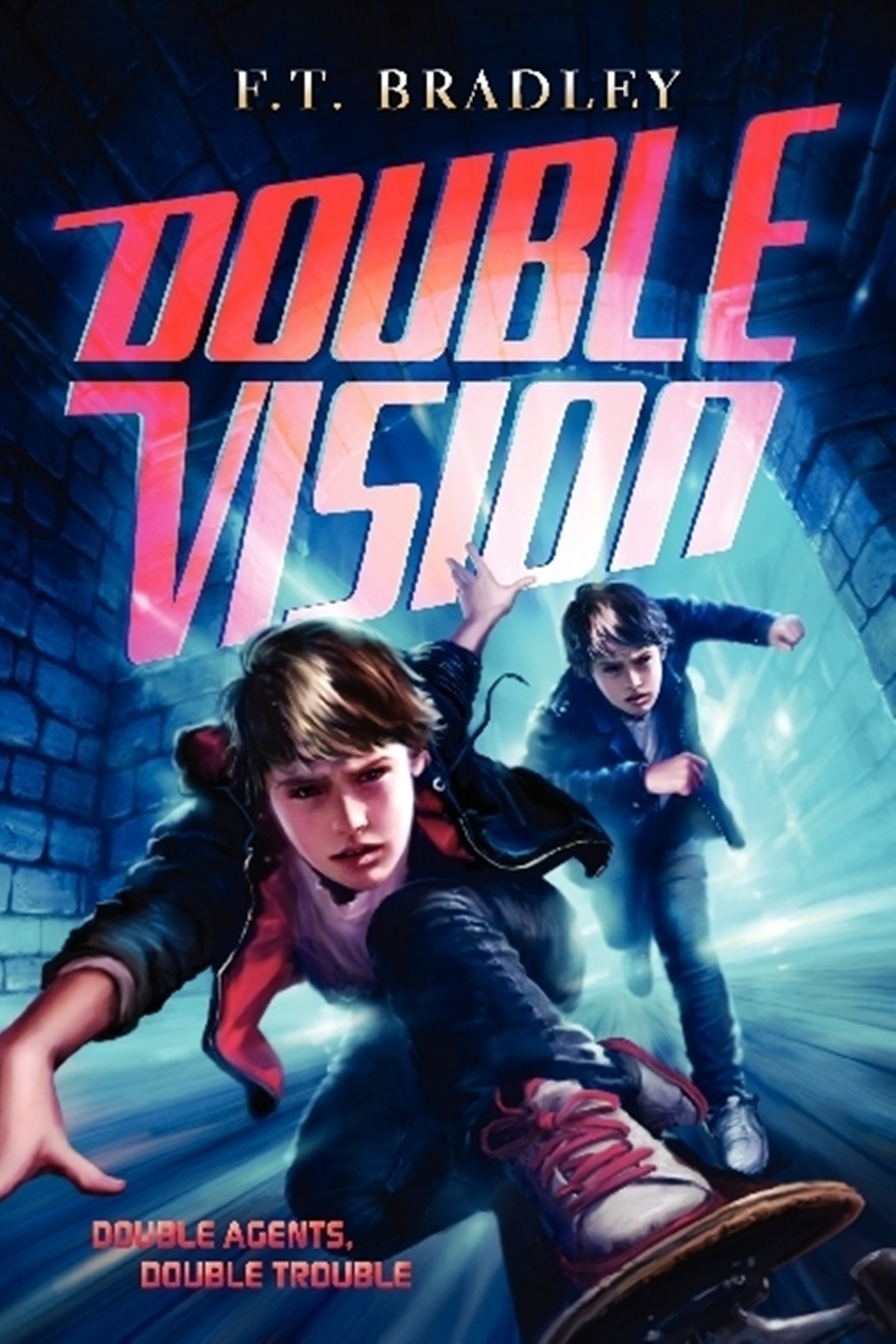
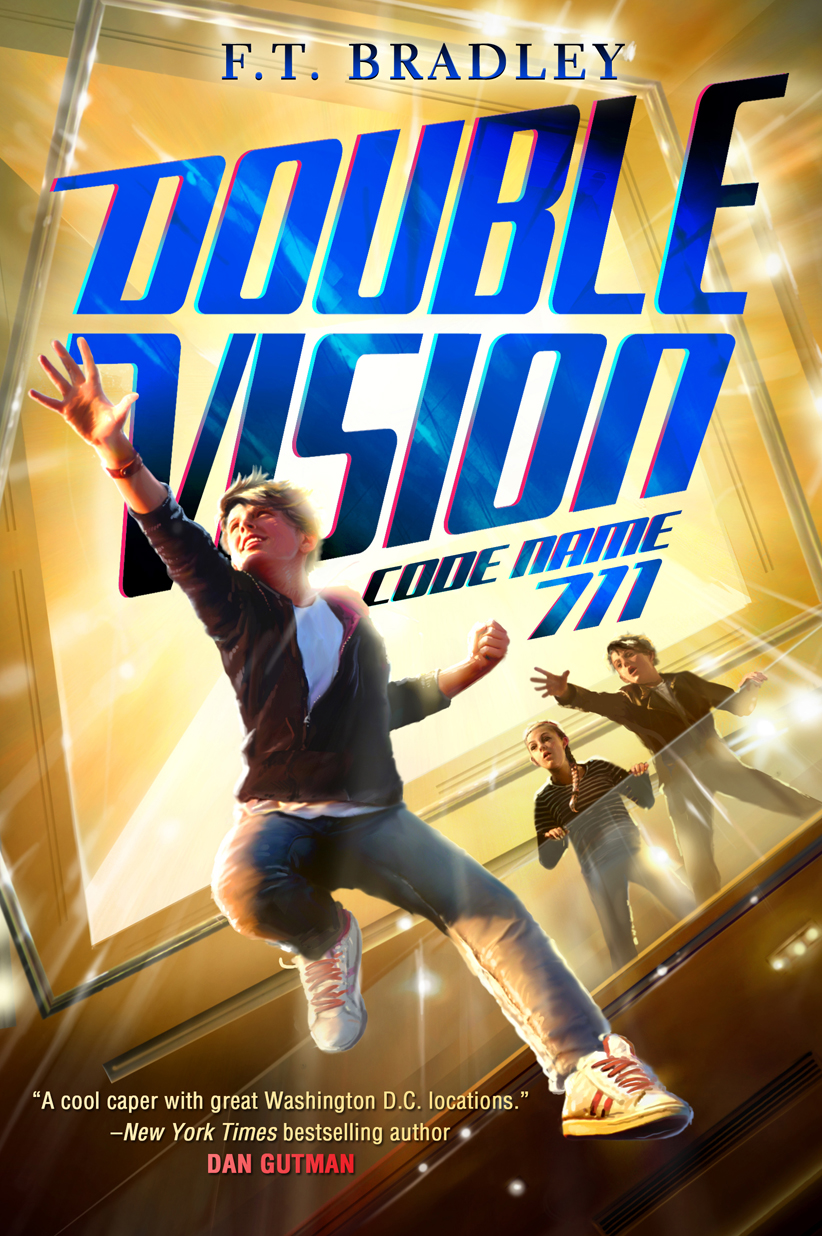
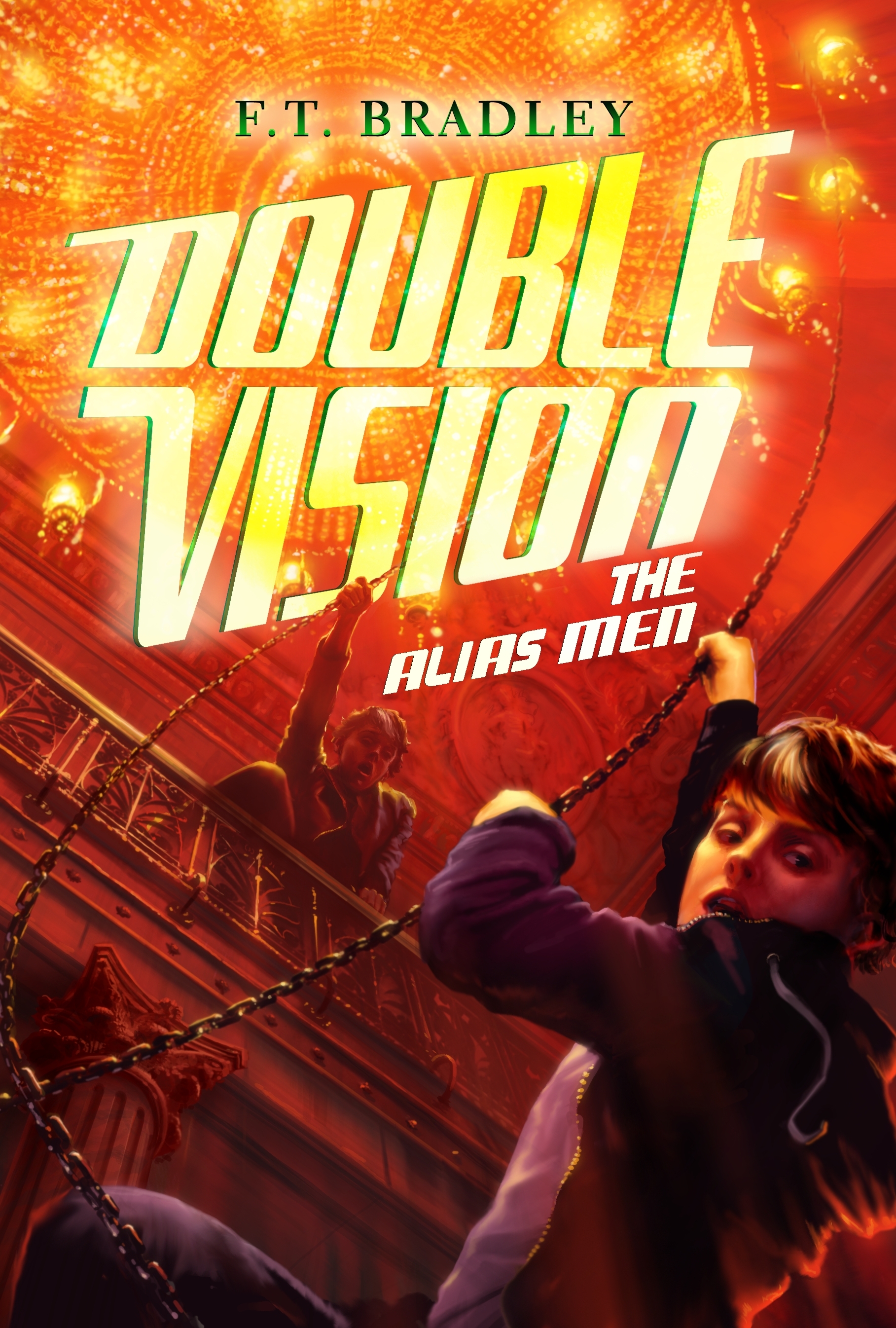
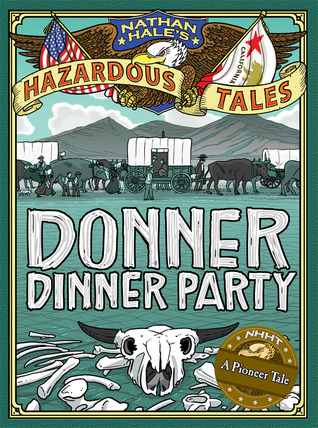
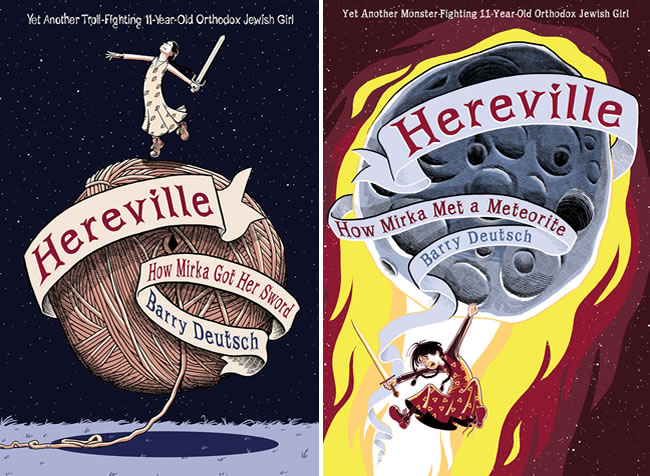
In January, I was contacted by a publicity and marketing associate from Abrams Books/Amulet Books out of the blue. In this email, I was asked to work on a teaching guide about their graphic novels: The Misadventures of Salem Hyde, Nathan Hale’s Hazardous Tales, Hereville, and the Explorer series.

1729025518405488 

13591161135911621729026018405492

1283377017290285

I was beyond honored! And, of course, I said that I would definitely love to do it as I had read all of the graphic novels, and I am a huge fan of them.

First, they asked me to write an introduction about graphic novels and their importance in the classroom. I am a huge advocate for using graphic novels in schools, so I immediately began researching and writing. Here is the introduction:

What are graphic novels? The easiest way to describe graphic novels is to say that they are book-length comic books. However, a more complex definition that educators and librarians use is “book-length narratives told using a combination of words and sequential art, often presented in comic book style” (Fletcher-Spear, 37). Graphic novels are not written in just one genre; they can be in any genre, since graphic novels are a format/medium. Graphic novels are much like novels, but they’re told through words and visuals. They have all narrative elements, including characters, a complete plot, a conflict, etc.

Middle grade and young adult graphic novels cover a wide spectrum of themes and topics. Some common themes found in graphic novels for this age include the hero’s journey; overcoming hardship; and finding one’s identity. For example, in Hereville, we meet Mirka, an everyday girl who learns to use her brains and brawn to overcome her foes. In The Misadventures of Salem Hyde, Salem is working on finding out just who she is (both as a witch and as a person) with the help of her friend Whammy. Graphic novels can cross curricular lines. One example is the Nathan Hale’s Hazardous Tales series—comical nonfiction that takes historical events and presents them in interesting ways, using graphics and humor that will make students want to learn even more about the historical time periods. In the Explorer series, stories include topics such as animal adaptation, volcanic eruptions, and the fate of humanity. Like novels, graphic novels offer opportunities in all subject areas to extend students’ thinking.

Over the past few years, graphic novels have become a hot topic, growing in popularity with both children and educators. While many teachers are beginning to include them in the classroom, there are still teachers, administrators, and librarians who struggle with including this format in their schools. So, why should you use them in your classroom and have them available for students?

  • Graphic novels can make a difficult subject interesting and relatable. (Cohen)
  • Students are visual learners, and today’s students have a much wider visual vocabulary than students in the past. (Karp)
  • Graphic novels can help foster complex reading skills by building a bridge from what students know to what they still have to learn. (NCTE)
  • Graphic novels can help with scaffolding when trying to teach higher-order thinking skills or other complex ideas.
  • For students who struggle to visualize while they read, graphic novels provide visuals that shows what good readers do. (NCTE)
  • Many graphic novels rely on symbol, allusion, satire, parody, irony, and characters/plot and can be used to teach these, and other, literary devices. (Miller; NCTE)
  • Often, in between panels (called the gutter), the reader must make inferences to understand how the events in one panel lead to the events in the next. (McCloud)
  • Graphic novels can make differentiating easier. (Miller)
  • Graphic novels can help ELL (English Language Learners) and reluctant and struggling readers since they divide the text into manageable chunks, use images (which help students understand unknown vocabulary), and are far less daunting than prose. (Haines)
  • Graphic novels do not reduce the vocabulary demand; instead, they provide picture support, quick and appealing story lines, and less text, which allow the reader to understand the vocabulary more easily. (Haines)
  • Research shows that comic books are linguistically appropriate reading material, bearing no negative impact on school achievement or language acquisition. (Krashen)
  • Students love them.

Although you can find graphic novel readers at all reading levels, graphic novels can truly be a gateway to the joys of reading for reluctant and struggling readers. Reluctant readers often find reading to be less fun than video games, movies, and other media, but many will gravitate toward graphic novels because of the visuals and the fast pace. Struggling readers will pick up graphic novels for these reasons as well but also because the graphic novel includes accommodations directly in the book: images, less text, etc.

All in all, graphic novels can interest your most reluctant and struggling readers and also extend all of your readers, including your most gifted.  

Resources

  • Cohen, Lisa S. “But This Book Has Pictures! The Case for Graphic Novels in an AP Classroom.” AP Central. CollegeBoard.
  • Fletcher-Spear, Kristin, Merideth Jenson-Benjamin, and Teresa Copeland. “The Truth About Graphic Novels: A Format, Not a Genre.” The ALAN Review Winter (2005): 37­–44.
  • Haines, Jennifer. “Why Use Comics in The Classroom?” Comic Book Daily. N.p., 20 Mar. 2012.
  • Karp, Jesse. “The Case for Graphic Novels in Education.” American Libraries. N.p., 1 Aug. 2011.
  • Krashen, Stephen. The Power of Reading. Englewood, CO: Libraries Unlimited, Inc. 1993.
  • McCloud, Scott. Understanding Comics. Northampton, Mass.: Kitchen Sink, 1993. 
  • Miller, Andrew. “Using Graphic Novels and Comics in the Classroom.” Edutopia. N.p., 11 Jan. 2012.
  • NCTE, comp. “Using Comics and Graphic Novels in the Classroom.” The Council Chronicle September (2005) http://www.ncte.org/magazine/archives/122031.

 I then began reading and rereading the graphic novels and planning activities and discussion questions that could go along with each book. I was asked to come up with activities for all subjects, so this pushed me out of my comfort zone a bit; however, I loved trying to figure out how these amazing books could be used throughout all classes.  Some examples:

  • Salem Hyde [Science]: At the end of Spelling Trouble, Salem and Whammy have to rescue a whale, but it is done in a very unconventional way. How would real scientists rescue a whale in distress?
  • Hazardous Tales [Language Arts/History]: The Provost (a British soldier) and Nathan Hale disagree about the cause of the Revolutionary War. Based on One Dead Spy, what events caused the Americans to revolt? Do you agree with the Provost or with Nathan Hale about the causes of the war? (This could also be used as a debate question in class.)
  • Hereville [Math]: On pages 31–32 [of Hereville 1], Mirka is given a math problem: Three people are splitting a cake, so they cut it into thirds. But then a fourth person shows up. How can they cut the cake so that each person gets an equalamount of cake? (Mirka comes up with a solution, but are there others?) What if two more people had shown up? Three more? Four more? 
  • Explorer [History]: On page 84 [of The Mystery Boxes], in The Soldier’s Daughter, the man says, “War is a dark power.” Where in history have we seen war consume someone? Have there been wars that did not need to be fought? Research past wars and determine if a war was started because of the need for power or if there was a legitimate reason for it. 

These are just some examples.

I am happy to share the entire teaching guide with you. It can be found at http://www.abramsbooks.com/academic-resources/teaching-guides/ along with other teaching guides. The direct link to the PDF is http://www.abramsbooks.com/pdfs/academic/GraphicNovels_TeachingGuide.pdf.

I hope you find it useful as I am very proud of it,

Signature

Balance, Where Are You?

Share

Balance

I wonder if every new mom comes to a point where she asks herself, how do I balance all of this? I only have one child (bless anyone who has more than one), but I often feel as if my eyes are just barely peeking above the surface of the murky swamp. As a new parent, I can’t help but try to balance all of the advice I get—don’t wake a sleeping baby, don’t let him sleep too long, don’t let him get overtired, keep him awake during the day, don’t overstimulate him, schedule naps, nap on demand, and don’t you dare rock him to sleep. I search for balance in my life (as I bounce my four-month-old up and down with my knees—his favorite motion), and I begin to ponder how the elusive qualities of balance might extend beyond parenting.

In my independent study, I am reading some of the greatest contributors to the field of education—Dewey, Bobbit, Apple, and Freire (to name a few). And I get riled up. (If you know me, this shouldn’t be surprising.)  Too many philosophers promote one style/theory of teaching, and we, as educators, are forced to juggle all of these philosophies and formulate our own. We read Kozol or Hirsch or Addams, and we try to mish-mosh their theories into one. Too often, philosophers push their theories as absolute, and while I often respect each theory, I crinkle my forehead when each is professed as the only theory. God forbid, when there are disparities between two of those theories, we feel like bad teachers because we see the merit in both. We want to feel firm in our beliefs. I read about Hirsch’s Cultural Literacy, for example, and I nodded in response when I read that our students must be prepared to emerge as literate adults who understand the language of American culture. And then I read his list of 5,000 words/phrases that EVERY literate person must know, and I shook my head. Perhaps, Hirsch is just one lens, and we, as teachers, are able to see our students through thousands of lenses. It seems that each philosophy we learn about adds a lens and makes our classrooms that much clearer.

I look to these philosophers, and I seek balance in my own philosophies, and I wonder why we find comfort in seeing qualities of life in black and white. I am, admittedly, guilty of this. When a friend posts a viewpoint that is so very different from my own, why am I compelled to post an argumentative reply? Can our polarized views—be them teaching, parenting, or politics—be balanced? What is it about this gray area that makes us so nervous?

And amidst this overwhelming stress of being a good mom, a good wife, a good keeper of the house, a good student, a good friend, and a good blogger, my son looks at me as I bounce him and lets out a belly laugh. Across the cyberspace, someone else’s son is laughing right now. That someone else might hold parenting views that are quite different from my own. And in another town, a teacher is grading assignments that are very different from my own. And what she is doing is working. So maybe this mom and I—and this teacher and I—maybe we are all right.

A Response (Ahem…Rant) Regarding E. D. Hirsch Jr.’s Cultural Literacy: What Every American Needs to Know

Share

cultural literacy

GoodReads Summary:

In this forceful manifesto, Hirsch argues that children in the U.S. are being deprived of the basic knowledge that would enable them to function in contemporary society. Includes 5,000 essential facts to know.

My Review: 

This text left me nodding vigorously at some sections and wanting to rip out the pages of other portions. Hirsch gives an impressively extensive background of the establishment of the English language. When my students ask, “Who made these grammar rules and spelling decisions?” I can now give them quite a long answer. I love a book that makes me think, and as an educator, this text truly made me ponder my beliefs about education. Hirsch contends that literate adults know things that illiterate adults do not. They have cultural literacy, and there are common ideas, phrases, and words that literate share that allow them to hold intelligent discussions and read newspapers. I agree with this notion, and Hirsch proves it well.

He then continues by arguing that teaching skills is not enough, and we need our children to learn these extensive facts in order for them to become functioning, literate adults. My biggest problem with this idea is his list. The appendix contains 5,000 words and phrases (about half of the book). If we spent time teaching from this list, our students would suffer. School wouldn’t be about inquiry—but about facts and cold information. I am more aligned with Dewey’s approach. Our students must be given exploratory opportunities to enact inquisition. If we teach our students to be curious, they will want to read and learn, and then they will slowly learn these words and phrases. I imagine educators agreeing with this text and wanting to create multiple choice tests.

My other issue with this text is the fact that Hirsch is narcissistic enough to think that he can create the list of the words and phrases cultured, literate Americans should know. He tries to validate this by arguing that he worked with a few others and they received feedback from over a hundred people. I was not impressed and found this to be quite pompous.

Hirsch ends with practical ways we might approach the integration of these words and phrases into curricula. I was extremely unhappy with his suggestion to provide a test for students at different levels to ensure that they are learning the facts. More tests? We would kill the love of learning with his approach to education.

While there are elements of Hirsch’s argument that are sound, I was disappointed by many of the ideas he put forth. I agree that students need to become culturally literate, and I found this concept to be quite interesting and important, but I don’t think that all educators will agree about which facts are most important. Hirsch does seem to understand this and explains how the process of picking these words and phrases is messy, and for me, the creation of this list is where many of the details of his argument are flawed.

He begins his book by explaining how saddened he is that a literary reference (“The tide falls”) is lost on many people. I understand this allusion, and I disagree with Hirsch. If I used this phrase in a conversation and another person didn’t understand it, I would explain it. That is the power of education and teaching each other. We are always learning, and we can always grow as cultured, literate adults. Knowing these specific 5,000 terms (or the many more his more extensive version) do not make us culturally literate.

Are you culturally literate? I included a few random words/phrases you should know from the “5,000 Essential Names, Phrases, Dates, and Concepts” section:

Luxembourg

metaphysics

microfiche

The Little Red Hen (title)

Interstate Commerce Commission

hubris

L’état c’est moi

Dolley Madison

Planck’s constant

philistinism

wildcat strike

Benedict Arnold

MX missile

juvenilia

intransitive verb

 How did you do? Did you get a few?

Celebrating Writers: From Possibilities Through Publication by Ruth Ayres

Share

18249491

Celebrating Writers: From Possibilities Through Publication
Authors: Ruth Ayres with Christi Overman
Published: November 28th, 2013 by Stenhouse Publishers

GoodReads Summary: Writing begins before students even pick up a pencil, but there are many reasons to stop and rejoice between the idea and the finished project. By helping students celebrate each stage of the writing process and applauding success, we help our students persevere through what can be an extended and challenging process.

In their innovative new book, Celebrating Writers, Ruth Ayres and Christi Overman discuss dozens of ways to respond, reflect, and rejoice along the journey to a finished project. This type of celebration nurtures students, makes them better writers, and helps them recognize that writing is a process filled with notable moments, not simply a result where publication is the only marker of success. From traveling notebooks to lunch-table writing, from author interviews with a writing partner to silent reflection, from swapping stories around a “campfire” to tweeting favorite lines, Ruth and Christi share dozens of fun and effective ways for you and your students to commemorate their progress as writers. As the authors write, “It’s time to expand the idea of celebration to include the process of writers and the products they create. Let’s build an approach that weaves celebration into the heart of all writers. Be ready to learn to refuel the writers in your classroom, even on the tough days.”

Review and Teacher’s Tools for Navigation: I know a professional development text is a good one when I feel compelled to get out of my bed to nab my highlighter. There are many flag-worthy passages in this book. My focus is Secondary English Education, and even though this book seems to be primarily focused on Elementary Education, I plan to share some of the ideas from this text with my students tomorrow. The true audience of this book is all teachers of writing. Ayres and Overman provide a plethora of ideas to help students celebrate their writing. They state, “When we celebrate throughout the process, we help students become people who know their words can influence, encourage, and incite change” (p. 7).

While I always thought I celebrated my students’ writing, this book taught me so many MORE ways to help them rejoice in order to truly nourish them as writers. Some of the ideas the authors include are methods for students to respond to their peers’ writing, ways for students to formally assess and reflect upon their own writing, ideas for students to examine their own strengths and weaknesses as writers, and numerous modes for students to share their writing with online communities. There are a variety of handouts that are all downloadable from the companion website (a HUGE plus for busy teachers). The fifth chapter of this book is my favorite—it details forty formal celebration ideas. These are ideas that are much more clever than asking students to bring in cupcakes.

Discussion Questions: How do I teach my students to rejoice in their writing? Why is this important?; How do I help my students share their writing with online communities?; How do I help my students learn to rejoice in the writing of their peers?

We Flagged: “Response, reflection, and rejoicing position us to celebrate the writer in addition to the writing. These frames also allow us to celebrate throughout the writing process instead of solely at the end. They move us to a focus on learning as writers. Our celebrations nourish writers, nudging them to continue writing with expertise and energy” (p. 15).

Read This If You Loved: Black Ants and Buddhists by Mary Cowhey, In the Middle by Nancie Atwell, Bird by Bird by Anne Lamott, Writing Workshop by Ralph Fletcher

026F3FBCC8C3913BD3A4D3F6920340D5

What is your favorite book for teaching writing? Have you read this one? What did you think? Please share your thoughts!

**Thank you, Stenhouse Publishers, for sending me this book for review!**

Helping our Students Achieve the Reading and Writing Flow

Share

Achieving Flow-page0001

Kelly Gallagher stresses balance in his book, Readicide. We, as teachers, try our best not to tear apart texts for students. We want to study author’s craft, but if we overanalyze and nitpick at every detail, it becomes terribly boring for students (and us!). So where is the balance? How do we help students come to appreciate the minute details of an author’s writing without committing this act of readicide? Gallagher also discusses the “reading flow.” It is important for teachers to understand when to stop students and when to allow them to find the flow—to get into the groove of reading. It makes sense, thinking of my own reading habits. If I was forced to stop at every page (or even every ten pages) to analyze an author’s writing, I would throw the book at the wall.

 How do you help your students achieve reading flow?

As a teacher, what works best for me (and this may not work best for you), is to analyze the first few pages of a text. I have my students do a close reading, and we try to examine elements like voice, writing style, form, and manipulation of language, among others. Then, I let them explore. I try to assign them enough reading so they can hit the flow but not too much reading that they don’t do the assignment. For me, this is the most effective way to help students find this “reading flow” that Gallagher discusses. Once I have helped my students grapple with and (hopefully) appreciate the language of an author, I set them free from the nest. This approach doesn’t work well with every text. For example, much more complex texts may require more analysis and comprehension techniques before I can set my students free.

But how do we find the flow for writing? Recently, I read a section of Murray’s Write to Learn. He made me think more about how this “reading flow” concept might be applied to writing. From my experience, my students feel like stuttering cars when they begin to write. Often, they can’t even get their cars to start. Some of the techniques that Murray offers are interesting when I look at them through the lens of the writing flow.

We need our students to connect to their writing. One way to start is by having students write down their territories. Murray starts this in a brainstorming list, where students make a list of topics. He suggests connect elements on their lists to try to find ideas for writing. Murray also describes other methods that won’t be new to most teachers like freewriting about topics or brainstorming in the form of a map or tree. With the map, students can show the way their thoughts emerge from and digress to each other. With the tree, students can brainstorm about a more focused topic. Murray also suggests interviewing ourselves.

How do you help your students achieve writing flow?

One technique I have found to be useful to help students start writing short stories is by providing the first sentence for them. I write a series of evocative sentences like “He was a most peculiar boy.” Or, “As his name was called, he knew his life would drastically change.” Or, “She woke up barefoot, lost, and with something unusual beside her.” My students brainstorm the second sentence for a dozen or so of these sentence starters. Then, I set them free to expand one of the starters a bit further. We don’t look at grammar, and instead, we focus on just keeping the flow. I remind them that authors often discuss how their first draft is terrible, and this is okay. We are getting ideas onto paper and finding our flow. We’ll worry about the revision and editing later, right?

Let’s share!

How do we get our students to hit this reading and/or writing flow?

Do any activities work well for you?

RickiSig

J&P Voelkel Author Visit

Share

j&p

On September 30th, my school was invaded…….. invaded by J&P VOELKEL!
J&P Voelkel are a husband/wife author team who have written
the Jaguar Stone series: 

middleworld endoftheworld riverofno

Meet 14-year-old Max Murphy from Boston, and Lola, the quick-witted Maya girl who teaches him to survive in the perilous rainforest. Together, Max and Lola must find the five legendary Jaguar Stones that gave ancient Maya kings their power – and save the world from the evil, cheating Lords of Death. 

In The Jaguar Stones, Book One: Middleworld, Max leaves his comfortable life in Boston far behind and heads for Central America in search of his archaeologist parents who have gone missing on a dig. Set against a backdrop of haunted temples, underground rivers and Maya magic, The New England Booksellers Council called Middleworld “funny, fast paced and entirely original.”

In The Jaguar Stones, Book Two: The End of the World Club, the action moves from Central America to Spain, as Max and Lola set off on the trail of the conquistadors. As the rest of the world panics about the end of the Maya Calendar, only Max and Lola can avert the coming doomsday as they continue their battle against the Maya Lords of Death. Booklist called The End of the World Club  “a fact-packed, thrilling ride. Rick Riordan fans will love it.”

In The Jaguar Stones, Book Three: The River of no Return, Max and Lola are back in the jungles of the Maya and the Death Lords are on the warpath. Can video-gaming, pizza-loving Max Murphy and Lola, his modern Maya sidekick, save the world one more time? Not if they can’t get past the zombie army, the mutant cave spiders, the subterranean hotel, and some very dark family secrets.

This author visit includes everything a teacher and student could want. Yes, you learn about the Jaguar Stone books (which sound amazing! I’d love to read them, but they are always checked out!), but it was so much more:

During the presentation (which entertained more than 400 of my reading students), they taught about the Mayans, their mythology, survival in the jungle (including having one of my teachers eat a mealworm!), blow darts, archaeology, rainforest ecology, monkey sounds, writing AND rock & roll. The presentation was a perfect mix of teaching, entertaining, interactive activities, and book talks keeping the students engaged the entire time.

20130923_100307 20130923_09590220130923_100654 20130923_102306

If a presentation ever made students want to read a book, this was the presentation! How often can a student say they learned about the Mayan god of death, a teacher ate a bug, they got sprayed by water, an author played guitar standing on a table AND they learned about a book?!?!

And it all doesn’t have to end when the visit does: They also have amazing ways for students to interact with them after the visit is over: The Jaguarstone Club. The club includes many exclusive articles, cartoons, a blog, news, and giveaways. Students can join on their website.

There are also amazing resources for teachers. The Jaguar Stone website has a FOR TEACHERS section that includes all sorts of resources: Lesson plans & Reader Guides, Maya Math, Jaguar Stone inspired school projects, Maya calendar, writing Maya glyphs, What’s your Maya birth sign?, making a Maya King costume, meet the real Indiana Joneses, and a list of Maya books.

We were so lucky to have J&P visit and you could be too!
Right on their FOR TEACHERS section of their website is a link to a school visit waitlist. It is through this waitlist that this amazing visit was able happen. Trust me,  you will not regret having these two come visit your school.

Signature

Black Ants and Buddhists by Mary Cowhey

Share

115000

Black Ants and Buddhists
Author: Mary Cowhey
Published: January 1st, 2006 by Stenhouse Publishers

Summary: What would a classroom look like if understanding and respecting differences in race, culture, beliefs, and opinions were at its heart? Welcome to Mary Cowhey’s Peace Class in Northampton, MA, where first and second graders view the entire curriculum through the framework of understanding the world, and trying to do their part to make it a better place.

Woven through the book is Mary’s unflinching and humorous account of her own roots in a struggling large Irish Catholic family and her early career as a community activist. Mary’s teaching is infused with lessons of her heroes: Gandhi, Eleanor Roosevelt, Helen Keller, Martin Luther King, and others. Her students learn to make connections between their lives, the books they read, the community leaders they meet, and the larger world.

If you were inspired to become a teacher because you wanted to change the world, and instead find yourself limited by teach-to-the-test pressures, this is the book that will make you think hard about how you spend your time with students. It offers no easy answers, just a wealth of insight into the challenges of helping students think critically about the world, and starting points for conversations about diversity and controversy in your classroom, as well as in the larger community.

Review and Teacher’s Tools for Navigation: Mary Cowhey’s book is a phenomenal resource for teachers. It is directed for elementary school educators, but I learned a lot, and I am a high school educator. Her main focus is to promote social justice, action, and independence in the classroom. Cowhey integrates stories from her personal life (she grew up without much money and as an adult, was a single mother on welfare) into her lessons to show how she helps her students feel comfortable and safe when sharing their own experiences. She teaches them that regardless of their social or economic standing, they have the ability to be successful.

Each chapter addresses important issues that teachers face, such as how to: set routines, differentiate, respond to tragedy, teach history so kids care, build trust with families, and go against the grain. When her students were dissatisfied with something, she had them write letters. They became young advocates. Cowhey has an extremely responsive classroom, where she takes the students’ interests and teaches different aspects of history, literature, and life each year. Some may find her ideas to be a bit liberal, but they are certainly adaptable for more conservative classrooms. Her students learn in the field, walking to see the mayor to demand a change in their town or visiting a sanitation company when a student wondered, “Where do the poops go?”

What I loved most about Cowhey’s book is that it showed me how to make my students more in-tune with their surroundings. I would love to have my own child in her classroom, as I know he or she would learn a lot about self-advocacy.

Discussion Questions: How do I teach my students to value social justice?; How do I create a culturally responsive and socially responsive classroom?; How do I make class meaningful for my students?; How do I create a safe and comfortable place for my students?; What do I do when students are distracted while I am trying to teach a concept?

We Flagged: “How we respond to tragedy, as teachers, as parents, as humans, not only provides comfort and security, but also can provide hope and power for children in a world that is often unfair, and sometimes unspeakably violent” (181).

Read This If You Loved: Reading, Writing, and Rising Up: Teaching about Social Justice and the Power of the Written Word by Linda Christensen, Pedagogy of the Oppressed by Paulo Freire, Teachers as Cultural Workers by Paulo Freire

RickiSig

What is your favorite book for professional development? Have you read this one? What did you think? Please share your thoughts!