Author Guest Post!: “The Joy of Comic Reprints” by Tom Eaton, Author of The Bug Zapper

Share

“The Joy of Comic Reprints”

When sharing my comic for kids, The Bug Zapper, at events throughout the year, I’m regularly asked for additional recommendations. Many kids have already devoured Calvin and Hobbes and TinTin – what next?

While there are many awesome new graphic novels for kids out there, I also like to recommend reprints and collections of older classics. Here are some of my favorites:

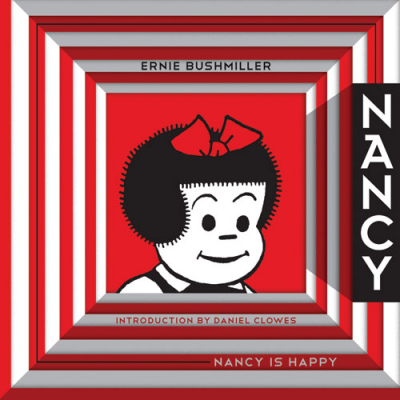
Nancy Is Happy

These original strips from Nancy creator Ernie Bushmiller are perfectly executed blasts of fun – often unabashedly cheesy, with bold, clear artwork. While they might seem like they’re for a younger audience, there’s something totally disarming about these that is universally appealing. They are the comic strip’s comic strip – as the Fantagraphics catalog tells us, Nancy strips have literally been used as the dictionary example of comics.

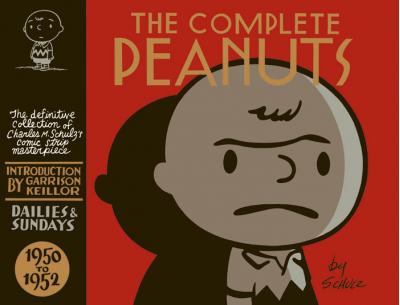
The Complete Peanuts

Similarly, the Fantagraphics reprints of early Peanuts are gems. One of my favorites is 1950-52, which reprints some of the earliest Peanuts cartoons. Everyone knows the Peanuts characters as the miniature adults they’d come to be, but in these, Charlie Brown starts out as more mischievous than neurotic, and the humor’s broader than it would end up being in later years.

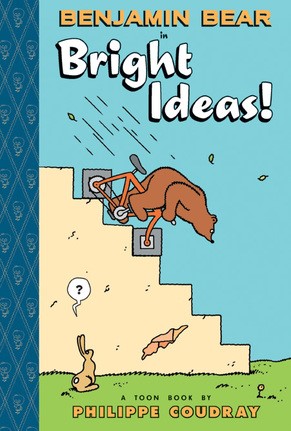
Benjamin Bear

I discovered these at our library while picking books out for my 5-year old, and was hooked. They’re reprints of a sparsely-worded French comic, now published by Toon Books (I’m not sure when they were originally published). As with Nancy, the strips are gag oriented and everything is staged perfectly to build to a clear yet surprising punchline. Perhaps for a bit younger age group than the Calvin and Hobbes crowd, but again, there’s something for everyone here.

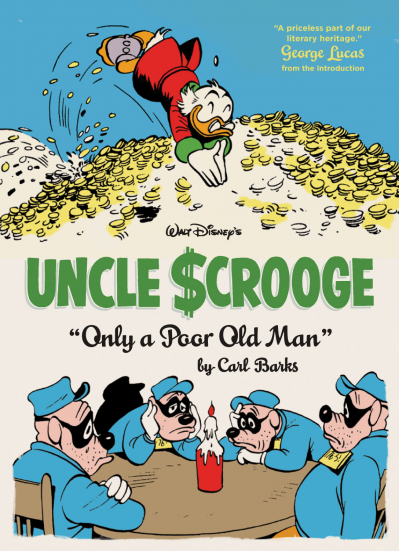
Uncle Scrooge “Only a Poor Old Man”

The cartoonist perhaps most synonymous with Uncle Scrooge is Carl Barks, and these reprints of his comic books (again, from Fantagraphics) are amazing. Given lots of creative control, Barks created a world of adventure and humor that would later inspire “Raiders of the Lost Ark” and its own DuckTales franchise. But this is the source. Each has a crazy premise at its heart – for instance, in one, Scrooge fears being shortchanged by Donald, so he sinks millions of quarters underwater just to create demand for a single coin. These outrageous concepts and clear artwork make these books a treat (and introduce basic economic principles, to boot!)

There are many more out there – when I discussed this with friends, they swore by Asterix (which I’m not as familiar with). I’m also personally a big fan of Moomin and Pogo, though I sometimes think they’re more for grown-ups. I’d love to hear more recommendations and what you think.

About the Author: I’m a Brooklyn, NY-based animator and professor, with an MFA in Digital Media from Lehman College. Professional animation industry experience includes Cartoon Network’s Sheep In The Big City and Codename: Kids Next Door, as well as Disney’s Little Einsteins.

Freelance projects include music videos for Sufjan Stevens (Put the Lights on the Tree) and the Danielson Famile (Idiot Boksen.) My original short animated films include the award-winning Don’t Smash, starring My Brightest Diamond’s Shara Worden as the voice of the bunny. Don’t Smash has screened in kids film festivals in the U.S. and internationally, and I’ve done Q&A sessions at the Brooklyn Academy of Music. My most recent work is a self-released graphic novel for kids, The Bug Zapper, an animated version of which was selected for the 2016 San Diego Comic Con Film Festival.

I’m an Assistant Professor of Animation at Kingsborough College in Brooklyn. I’ve also taught at Cooper Union and Queens College. Children’s classes have included animation and cartooning classes at the Brooklyn Design Lab in Brooklyn, NY and Creative Summer at the Mead School in Stamford, CT.

For even more of the nitty-gritty, check out my interview with HTML Giant.

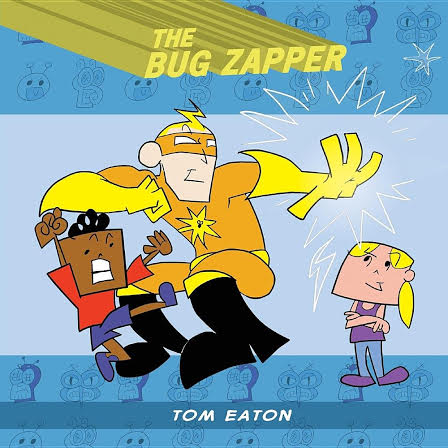
The Bug Zapper
Author and Illustrator: Tom Eaton

About the Book: The Bug Zapper is a superhero graphic novel for kids ages 6-8. It’s about a town full of bug villains, and the one superhero who must keep them in line. With the help of school reporters Robert and Amber, our hero must contend with Mean Mosquito, Bumblebeezy, and more.

You can check out The Bug Zapper at bugzappercomics.com, and facebook.com/BugZapperComics. It’s available as a print book, or an ebook series with extra animated scenes.

Tom Eaton also created a Bug Zapper animated short that has word balloons instead of audible dialogue, encouraging kids to read:

And remember teachers: Comics are reading, too!
Thank you, Tom, for this awesome reminder of these classic and timeless comics 🙂 

Author Guest Post!: “Reaching Reluctant Readers” by Brian Rock, Author of The Tyler Files

Share

Reaching Reluctant Readers

As a former teacher and current parent, I’ve had some experience in introducing kids to reading. And while there’s no magic potion that works for all kids, I’ve learned that oftentimes the messenger is as important as the message. Even reluctant readers will warm up to the task at hand when they see that someone else is actually enjoying it. So, when encouraging youngsters to read, remember to make it fun – for both of you! Here are a few suggestions:

Step out of routines:

Make special times to read. Don’t save reading time for just before bedtime, or it can become just another rote exercise like brushing teeth and washing up. You can have a reading night where you turn off the TV and let everyone pick a favorite book to read for thirty minutes or longer. For younger readers, you can create special snuggle-read time on weekends or after preschool.

Remember to take time after reading to discuss the book your child has read (or listened to someone else read.) Let them voice their opinions about what they liked best in a story. Even if they focus on illustrations, let them know that you value their insights about books. This discussion time is especially important because it lets even pre-readers feel like they’re part of the reading process.

Likewise, in the classroom, elevate reading from an assignment to an experience. A great way to do this is to find short, funny poems that you can read in under a minute, and read them to introduce a related class lesson. Shel Silverstein and Kenn Nesbitt are two great authors to begin with.

Lights, camera, read!:

Don’t just read a book, act it out. Without donning makeup and costume, you can bring characters to life with just a bit of inflection. Is the character sad? Use your saddest, poutiest tone to convey that emotion. Is the character happy? Unless you’re in a library, let your child feel the character’s joy through your own exuberance and RAISED VOICE. Is there more than one main character? Use different voices for each character. In my picture book, The Deductive Detective, I create fourteen unique voices to bring the story to life and give each character its own distinct personality.

Is your child already starting to read? Let them read the text for one character and you read the text for the other. Some great books for together reading are The Duckling Gets a Cookie?!?, Green Eggs and Ham, and You Read To Me, I’ll Read To You. For older, elementary school age readers, look for books with lots of dialogue. Tom Angleberger, Kate DiCamilla, Chirs Grabenstein are great authors for compelling characters and dialogue.

Celebrate books:

Make trips to the library or bookstore special occasions instead of errands. Let your kids see other children enjoying books. Let them linger, browse and choose their own books. It’s a special feeling when one book out of hundreds on the shelf “speaks to you.” Kids have so little autonomy in their lives, let them enjoy this one freedom of choosing their own book and it will make reading that much more special for them.

For teachers, try offering several books that you’ve pre-selected for a specific lesson and let the class vote, or even better, let individual students (especially the reluctant readers) take turns voting for which book to read. That small, simple action gives them reason to be invested in the book.

Get serious about reading with series:

Most reluctant readers don’t have favorite books, they have favorite characters. That’s why most book series are character driven. Once young readers make a connection with a character, the effort to make sense of language and understand plot becomes less intimidating, because they are in the company of a friendly character with whom they relate.  In each subsequent book in the series, the characters, setting and premise are familiar, so understanding those elements takes less effort. With each book, the process gets easier and more enjoyable. In my chapter book series, The Tyler Files, for example, readers will find the same characters, with the same mannerisms, in the same school setting. The only change is a new source of mystery in each book, but because readers are familiar with the characters and premise, it’s easier to dive right in and get to the heart of the story.

For the very young, you can’t beat Dr. Seuss and Mo Willems. For chapter book readers, Mary Pope Osbourne and Jim Benton have wonderfully engaging series.

Make “em laugh, make ‘em laugh, make ‘em laugh!:

But by far, the best way to hook reluctant readers is to hit them in the funny bone. According to the Kids & Family Reading Report, 70% of kids want to read a book that will make them laugh and 54% want books that allow them to use their imagination. That’s why I make sure all the books I write are 70% funny and 54% creative!

For a child that sees the written page as a chore akin to taking out the trash, an unexpected burst of laughter can change their whole perspective. I know many teachers feel it’s their duty to be “serious” about reading, but getting kids seriously into reading is more important than boring them to death with serious lessons. There will be plenty of time for serious lessons later, but if you don’t hook a reader in elementary school, you never will. And study after study has shown that kids respond best to books that make them laugh – even if their sense of humor is worlds apart from your own.

For funny picture books, I recommend Mar Barnett, Doreen Cronin, and Jon Scieszka. For comical chapter books, check out Dav Pilkey and Herman Parish.

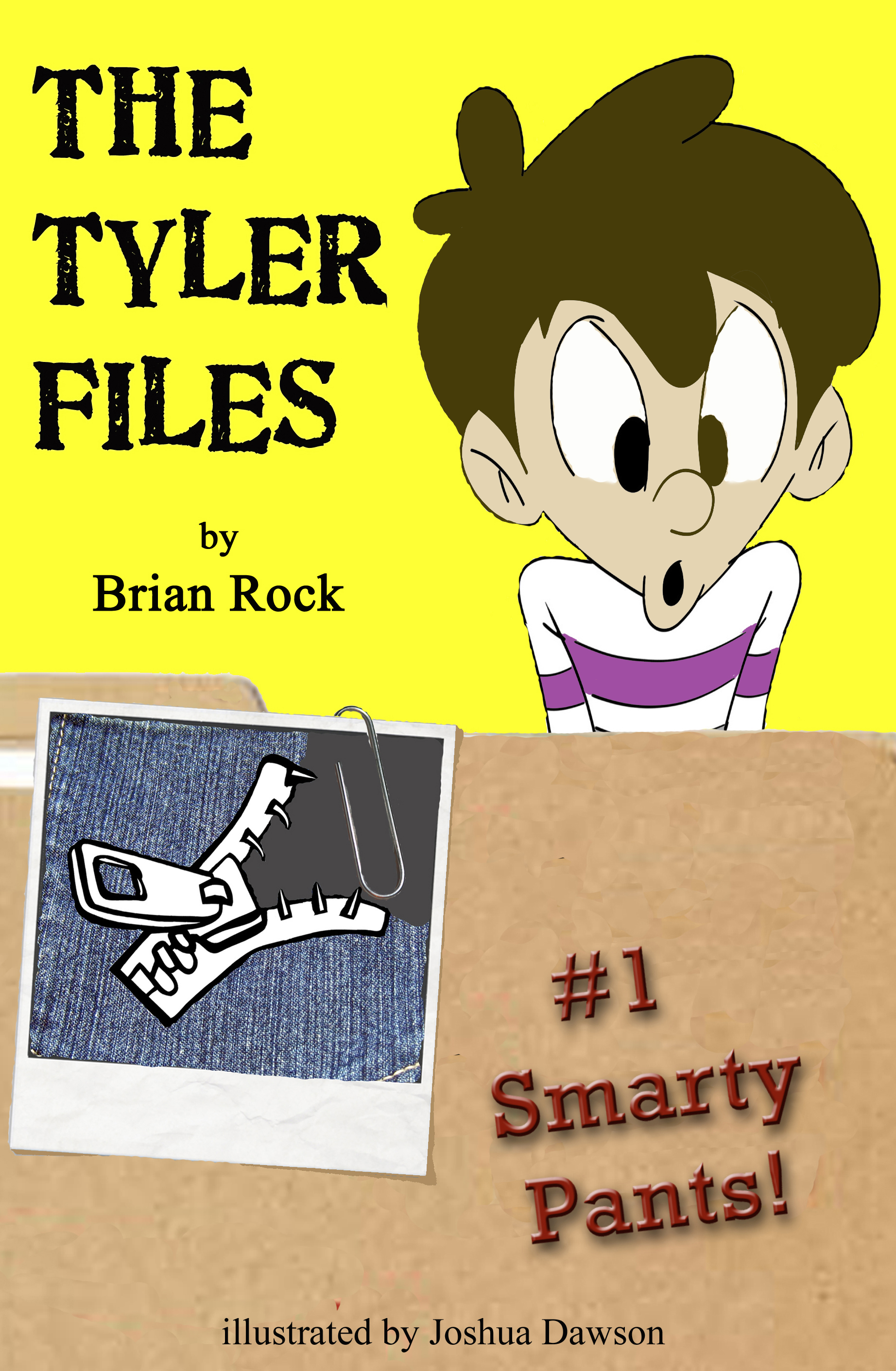
About the Book: Tyler has a big problem. His pants won’t stop talking! How will he make it through the day without becoming the school laughingstock? And how will Tyler survive his pants’ “off the cuff” remarks to the school bully (and to his secret crush?) With a little help from his best friend, Tyler gives a first-hand account of the mysterious, improbable and occasionally funny events that are so strange they can only be found in THE TYLER FILES.

In addition, THE TYLER FILES breaks new ground in the chapter book genre by adding interactive backmatter to the end of the story. Tyler poses questions to stimulate creative thinking in readers. He introduces and give examples of idioms related to the story. He gives 10 fun facts about pants, and even tells some jokes!

About the Author: Brian Rock’s latest PB was MARTIAN MUSTACHE MISCHIEF (First Light Publishing, 2015.) His previous PB, THE DEDUCTIVE DETECTIVE, (Arbordale, 2013) was a featured title of the month by the Children’s Book Council (Feb 2013.) His additional PBs include WITH ALL MY HEART (Tiger Tales, 2012) and DON’T PLAY WITH YOUR FOOD! (First Light Publishing, 2005.) Children’s Poet Laureate, Kenn Nesbitt included one of Brian’s poems in his anthology of poetry, ONE MINUTE TILL BEDTIME (Little Brown, 2016.) Brian received his master’s degree in Children’s Literature/Creative Writing from Hollins University. His poems for children have appeared in Highlights for ChildrenPoetry Train, and various regional publications. He is a former teacher who taught at-risk students for six years, and he is a member of SCBWI.

The Tyler Files looks like the perfect book to use to reach a reluctant reader! Thank you for the post, Brian!

 and 

Author Guest Post!: “How Kids Can Help Homeless Children” by Melody J. Bremen, Author of The Boy Who Painted the World

Share

How Kids Can Help Homeless Children

While writing my latest novel, The Boy Who Painted the World, I did research on homeless people – specifically, homeless children. The main character of the book, Indigo, is a ten-year-old homeless boy and I wanted to understand a little bit about what his world is like. I came upon some pretty scary statistics:

There are 100 million homeless children around the world.

There are 2.5 million homeless children in the United States. That means there is likely to be one homeless child in every classroom.

That’s a lot of kids without a permanent roof over their head. These children might be sleeping in a shelter, a motel, or even in a car. They’re under a lot of stress, which causes them to do poorly socially and in school. Their circumstances can affect them great later in life with both physical and psychological issues.

What Can I Do?

Every person, no matter how old, can help, and it doesn’t have to be anything mind-blowing or difficult. Even a simple smile to someone on the street can cheer someone up.

Here are some easy ways that you can make a difference:

  1. Give money: Carry some small change with you and give it to people who are asking for money on the street. That money may just buy them their next meal.
  2. Donate clothing: Save old clothing and shoes that you no longer wear and donate it.
  3. Donate toys and books: Donate gently used toys and books that you are no longer using.
  4. Volunteer: Volunteer some of your time and help out at a shelter or soup kitchen. You can also tutor kids and help them out with their homework.

If everyone person does a little something, it can go a long way to alleviating the hardships of the homeless.

Links to websites that can help you take action

Stand Up for Kids: http://www.standupforkids.org/

School on Wheels: https://www.schoolonwheels.org/

Volunteers of America: https://www.voa.org/


The Boy Who Painted the World
Author: Melody J. Bremen
Published 2017

About the Book: Indigo is a boy with a dream. He spends his mornings in a refrigerator box, his afternoons shoveling snow, and his nights in the basement of a homeless shelter. But during every free moment, he draws and dreams of becoming a famous artist. His best friend Jade looks after him, but she is arrested for shoplifting and he’s left all alone. With his box of pencils under his arm, he sets out on a quest to search for Jade and discovers a whole new world… full of the art he loves.

His journey brings him friendship, family, and the courage to hold onto his dreams.

About the Author: Melody J. Bremen writes books for middle grade and young adult readers. She lives on a distant planet where all they do is write and read books. (Sometimes they eat jelly beans.) She has a faithful computer named Oswald.

Visit Melody’s blog: http://melodybremen.com/blog/
Sign up for Melody’s newsletter: http://www.subscribepage.com/newsletter-sign-up

Thank you, Melody, for this important guest post!

 and

Author Guest Post!: “Cap’n Rex’s Steps to Writing a Fictional Picture Book” by Henry Herz, Author of Cap’n Rex & His Clever Crew

Share

“Cap’n Rex’s Steps to Writing a Fictional Picture Book”

Today, author Henry Herz joins us. His picture books include: MONSTER GOOSE NURSERY RHYMES, WHEN YOU GIVE AN IMP A PENNY, MABEL & THE QUEEN OF DREAMS, AND LITTLE RED CUTTLEFISH.  His latest, just out from Sterling, is CAP’N REX & HIS CLEVER CREW. The protagonist, Cap’n Rex, has agreed to offer advice about how to get classrooms excited about a writing assignment, and some of the other things they will learn along the way. Please welcome, Cap’n Rex.

Arrr! It’s a pleasure to be aboard, me lasses. I may be a long-in-the-tooth dinosaur pirate, but I’ve a mess o’ experience teaching wee sailors how to write fictional picture books. It keeps ’em from getting bored on our long sea voyages. There be seven steps on my map to the buried treasure of children’s literacy. Read on, if ye dare!

  1. Form crews – Arrr, there be nothin’ like a little friendly competition to inspire performance. Arrange yer students into teams o’ four. Have each team pick a name. Some o’ me favorites arrr Mystery Marauders, Biography Buccaneers, and Paranormal Pirates. But, I may be biased toward piratey appellations. Each team’ll be writing their own picture book. Savvy?
  2. Define the details – Have each team parley among themselves to figger out the story elements listed below. This here be a bonus learning opportunity to teach them some writing concepts.
    • Main character – What is the main character’s name, race/species, gender, title/role, and personality traits?
    • Other characters – Do the same for yer other characters. Limit yerself to no more than four characters in all.
    • Theme – If yer story will offer a lesson for the reader, what is it? Fer example, do unto others as you’d have others do unto you, or think outside the box.
    • Goal/obstacles – Stories are more fun if there’s tension. What goal is the main character trying to reach (in my case, it’s usually booty). And what obstacle(s) must he or she overcome to reach that goal? One tried and true formula is: try-fail, try-fail, try-succeed. That makes victory all the sweeter, me buccos.
    • Time frame – Will yer story take place in the past, present, or future? How far back in the past or into the future?
    • Setting – Where will your tale unfold? On the high seas? In yer backyard? On Mars? In an ant hill?
    • Genre – Will yer tale be fantasy, science fiction, mystery, historical, comedy, romance, horror, tragedy, or somethin’ else?
    • Point of view – Does it work better if the tale be told by the main character or by a narrator?
    • Tense – Should the tale be told in the present tense, as if it’s happening right now? Or, would it be better described in the past tense as something that’s already happened?
  3. Tell yer tale – Fictional picture books can have anywhere from zero (it’s true!) to 1,000 words. Aim fer about 500 words. Since there are often fourteen two-page “spreads”, that works out to an average of 36 words (three to four sentences) per spread. Picture books are usually written fer three to seven year-olds. So, make sure yer word choices are suitable for younger readers. Not too many syllables per word or words per sentence, or ye’ll walk the plank! Now yer teams can write their first draft of the manuscript.
  4. Time fer inspection – Just as dinosaur pirates have their work inspected by their handsome T-rex captain, yer young writers will need some guidance. Pair up yer teams. Have each member of one team read the other team’s story. Then, they offer feedback, alternating between things they liked about the story and things in the story that didn’t make sense or didn’t seem to help the story. Team members should not defend their writing. Just listen politely and take notes.
  5. Swab the deck – Just as a ship’s deck needs cleaning, so too does yer writin’. Now it be time for the teams to use the feedback they received to revise their story and make it seaworthy.
  6. Draw yer pictures – Now it be time to paint a pretty picture. A spread can be completely filled with a single illustration. Or, it can contain two to four smaller spot images. The latter is often used when the story pace has quickened. Give each team fourteen 11”x17” pieces o’ paper. Each team will divide their revised manuscript text up across the fourteen spreads. Then they’ll draw or paint pictures that help describe what is happening.
  7. Celebrate – Treats and grog (non-alcoholic) fer all when the stories be done! Each team takes turn reading their yarn to the class. Stories can be posted on the mainmast fer later parental enjoyment. What fine little writers ye arrr!

Cap’n Rex & His Clever Crew
Author: Henry L. Herz
Illustrator: Benjamin Schipper
Published August 1st, 2017 by Sterling Children’s Books

Shiver me timbers! It’s the DINOSAUR PIRATES!

Meet Captain Rex and his band of buccaneers. These dinosaur pirates sail the seven seas in search of buried treasure, but whenever they hit an obstacle—like a giant shark or pea-soup fog—the crew members are quick to say they can’t overcome. To this, Captain Rex just glares with teeth bared and says, “CAN’T YE?” And, somehow, the crew always comes up with a clever solution.

A delightful story about using one’s creativity and individual strengths to solve problems. It will encourage kids everywhere to think and say, “I can!”

Learn more about CAP’N REX & HIS CLEVER CREW and author Henry Herz at www.henryherz.com.

We Thank Ye fer Today’s Post, Cap’n Rex & Henry!

 and

Author Guest Post!: “An Interview with…Myself!” by Ann Herrick, Author of The Ugly Girl Party

Share

I ask and answer my own questions. Who better to reveal the real me?

Do you have an inspirational picture, photo or saying that you look to when you are depressed or have a terminal case of writers block?

Yes. It’s that any day when you can make someone smile is a good day. Of course, I hope that my writing will make people smile (and laugh, cry, think), but in every-day life giving (and receiving) smiles is a great reward.

What gets your creative juices flowing?

Daydreaming. My first YA novel, Practice Makes Perfect (now titled My Fake Summer Boyfriend), was a result of daydreaming about what I would have liked my summers to have been when I was a teenager. After that, it’s sitting at the computer and promising myself I’ll write at least two sentences. Once I’ve done that, I’m on my way.

What will stop your creative muse the quickest?

Interruptions and/or knowing there is something else besides writing that really needs to be done. That’s one reason I like to write in the afternoon. I try to get everything else out of the way in the morning, so I don’t have it hanging over my head when I sit down to write.

If you could be anything other than a writer, what would your second choice be?

My second choice would be to own a racing stable and have a horse that would win the Triple Crown. That was my first childhood dream, and it’s still a pretty good one–though not exactly practical. 🙂

If you could be anything other than a human, what would you be and why?

I’d have to say a cat (in a good home with an owner such as myself who believes in totally spoiling her cats). Purring seems like such a cool thing to be able to do.

Imagine your fairy godmother were to wave her magic wand and bestow a million dollars in your bank account. What would you do with the money?

I think I’d set up a fund for people here in Eugene who have endured some unexpected hardship. There are several charities to which I’d donate. And then I’d probably get the Home & Garden TV Curb Appeal crew to work on my house’s curb appeal!

If you were, for some reason, to lose the ability to write, what would you do with all the creative instincts you could no longer use?

I’d love to learn to draw (even though there’s no reason to believe I’d be very good at it!) or study landscape architecture.

Name the one thing in life you do not at this moment possess, but wish to have with all your heart.

An organized house? A tidy yard? Um, wow, I can’t really think of any things I need/want terribly much right now, but I’d love to have all my books hit the best-seller list. 🙂

The Ugly Girl Party
Author: Ann Herrick
Published June 12th, 2017

Tell us about your latest book.

The Ugly Girl Party is a tween/teen novel about a sophomore in high school, Faith, whose wish to get off to a good start at her new high school is shattered on the first day, as she quickly discovers that drop-dead gorgeous Hunter and friends decide she lives in the “wrong” house and wears the “wrong” clothes. They systematically harass her and seem determined to make her life miserable. She fantasizes about how she’ll get even some day when she is a famous singer/actress, but meanwhile just wants to make it through the day. She meets a couple of possible friends, but finds it hard to trust anyone.

When maybe-friend Julia tells her about the upcoming talent show, Faith is determined to win in order to impress her tormentors. Then nice-guy neighbor Riley invites her to the homecoming dance. She’s excited to go until she gets there and realizes that something is up–something terrible. And when she reacts, she finds herself in danger of being suspended from school. Faith questions her own goals, decisions, and values as she struggles to find her way.

It is available at Amazon and Barnes and Noble in paperback, and also as an ebook at Amazon.

Ann Herrick is the award-winning author of several books and short stories for kids and teens. Included in the awards her books have won are the ALA Recommended Book for Reluctant Readers, IRA/CBC Children’s Choice and EPIC Best YA Novel Finalist.

Ann grew up in Connecticut, where she graduated from The Morgan School and Quinnipiac University.  She now lives in Oregon with her husband, who was her high-school sweetheart.  Their wonderful daughter is grown, married and gainfully employed, and has given Ann her only grand-dog, Puff, a bloodhound-Rottweiler-beagle mix and six grand-kitties.  While she misses the East Coast, especially houses built before 1900, she enjoys the green valleys, fresh air and low humidity in the Willamette Valley of Oregon.  Ann loves cats, walking, the Oregon Ducks and working in her back yard.  In addition to stories and books for children and young adults, Ann also writes copy for humorous and conventional greeting cards. She loves to hear from her readers and can be contacted through her web site:  http://annherrickauthor.com

Facebook:  https://www.facebook.com/AnnHerrickAuthor/
Twitter: https://twitter.com/ann_herrick
Blog: http://www.authorsden.com/visit/viewblog.asp?AuthorID=841

Thank you Ann and Ann!

 and


Author Guest Post and Giveaway!: “Creepy Crawley Science” by Kim Kasch, Author of Irma the Inventor and the Vampire Spiders

Share

“Creepy Crawley Science” 

S.T.E.M. (or Science, Technology, Engineering and Math) might not sound interesting to you. But, did you know when you play with Legos you’re using a form of engineering to create something?

And, who isn’t interested in flying cars, robots, and undersea ships? Well, those things are simply science, technology, engineering and math set in motion.

It’s all about finding easy ways to use these complicated disciplines to create new opportunities with common components…and some not so common ingredients, like spider silk.

Believe me, these teeny-tiny creatures create silk that can be used for breathtaking breakthroughs.

Spiders . . . ?

Yes. Spiders. I know you might think these eight-legged creatures sound more creepy than creative but did you know that spider silk is one of the strongest substances around? Well, it is. Scientists even call spider silk a “wonder material”.

I’m talking about that sticky stuff you sometimes walk through in the garden that sends shivers running up your spine.  Walking through a spider web immediately sends you searching for those little, unwelcome visitors which might be hiding in your hair. And, it’s stronger than steel and super flexible.

For decades scientists have been searching for a convenient way to harvest that silk so they would be able to use huge quantities.

It’s true. They have.

But, as you might expect, very few people want to become spider farmers simply to spend their afternoons walking up and down spider-infested rows to collect sticky webs dangling from trees, stuck to shrubs or clinging to bushes.

So what’s the answer to this scientific conundrum?

Well, you might want to read this article to find out more about sustainable spider silk: https://www.businessgreen.com/bg/news/3013893/scientists-develop-sustainable-spider-silk-in-green-materials-breakthrough in BusinessGreen.com

And if you think that’s interesting, you really might enjoy reading Irma the Inventor and the Vampire Spiders.

How many kids do you know who can build robotic spiders out of scrap metal, develop a substance that’s stronger than steel, or crash a cyber-wizard’s computer from an undetectable monitor? Well, that’s Irma. Still, all she really wants is to make some friends and blend in for once, but no matter how hard she tries, Irma always seems to stand out.

This laugh-out-loud middle grade novel encourages readers to explore the STEM fields while never losing its sense of fun.

Irma the Inventor & the Vampire Spiders
Author: Kim Kasch
Published August 21st, 2017 by 50/50 Press

About the Book: 

How many kids do you know who can build robotic spiders out of scrap metal, develop a substance that’s stronger than steel, or crash a cyber-wizard’s computer from an undetectable monitor? Well, that’s Irma. Still, all she really wants is to make some friends and blend in for once, but no matter how hard she tries, Irma always seems to stand out.

This laugh-out-loud middle grade novel encourages readers to explore the STEM fields while never losing its sense of fun.

About the Author Kim Kasch: 

I grew up in a family with 9 kids and grandma living in the back bedroom. Not surprising that I have a few stories to tell, especially since we only had 1 t.v.

I spent my days reading and, later, trying to create another world where I could escape all those brothers and sisters-and grandma-by writing. Maybe that’s why I love books so much. Well, that and the fact that I was near the end of that long sibling-chain and never had the clout to pick the t.v. shows we watched. But I’d run home after school to catch the last fifteen minutes of Barnabus Collins in Dark Shadows…

I still love to run or maybe I should say, I love to wog (a cross between walking and jogging).

Here in Portlandia, I love Halloween themed runs – where people don costumes and run. It’s a lot of fun…and I know those two words don’t always go together: fun…and…run. But here, in the damp days of fall, I think it is.

And, with all those Halloween themed runs, I guess Dark Shadows had more of an influence than some people might think. Even today my favorite author is Stephen King. My all-time favorite book is Salem’s Lot, which might have something to do with Irma the Inventor and the Vampire Spiders 🙂 

Sorry to be so long-winded but did I say I love to write, and talk, and knit, and sew, and bake… I could go on but I’ll stop by saying, I hope you’ll stop by my blog, send me a tweet, or check out my Facebook page. I’ll be sharing news about new books over there.

Thanks for listening and, hopefully, reading 🙂

Join me on Twitter or stop by and see what I’m pinning on  Pinterest and, if you read Irma the Inventor and have a question or simply want to share a comment, please feel free to send me an email. I love connecting with readers.

Goodreads
Amazon Author Page
Facebook
Website

GIVEAWAY!!!

Enter to win a STEM prize package and a copy of Irma the Inventor and the Vampire Spiders!

a Rafflecopter giveaway

Thank you, Kim, for this science-rific guest post and giveaway!

 and

Author Guest Post!: “How Do You Engage Restless Fourth Graders During the Last Weeks of School? With a Good Book, Of Course!” by Miriam Spitzer Franklin, Author of Call Me Sunflower

Share
 “How Do You Engage Restless Fourth Graders During the Last Weeks of School? With a Good Book, Of Course!”

This spring I was asked to fill in for a fourth grade teacher on maternity leave. I was excited to get back in the classroom, though a little nervous about taking over during those last hazy crazy days when students have already checked out and are dreaming of spending their homework-free vacation at the swimming pool or doing some other activity that doesn’t involve sitting still and listening to the teacher.

When I stepped in during April, most of the weeks were full of to-do lists with structured plans already in place. But once the end-of-year testing was completed, I was left with three weeks to fill. I was told I should continue the math lessons according to the manual, and should do some project-based learning to cover the science unit on matter.

But what was the best use of time during the language arts block? The director said I didn’t need to continue with vocabulary or spelling units. We had finished Junior Great Books, and there wasn’t a reading workshop set in place. So how was I going to keep my restless students engaged and involved for the last three weeks of school? The answer was simple: by reading an amazing book.

Luckily, I found a worn-out set of Number the Stars by Lois Lowry, one of my all-time favorites and a novel I had taught to sixth graders for many years. Since the students in my class were reading above grade level and this was a Jewish Day School, I felt the difficulty and content would be appropriate for fourth grade.

I introduced the book in the usual way: studying the cover, giving some author background, finding out what students knew about the Holocaust, doing a quick map study. The real fun began when I told the class we were going to hold Reader’s Theater each day to read and act out the chapters together. I set up some ground rules:

1) You may turn down a part if you don’t want it

2) We will rotate the parts each day

3) If you participate, you must try your best to read loudly and with expression

4) You should act out any motions described by the narrator

5) Anyone who does not take his/her part seriously will be replaced by another student for the day

Each day, I made a list of props that would be helpful for the next day’s reading and asked for volunteers to bring them in. Students began bringing in other props that they thought of as well. I used name cards to randomly draw parts until all students had been chosen. Sometimes I swapped out partway through a chapter, depending on the length.

I made up Rule #1 since some students did not want roles for the opposite gender, and I wanted to allow them the choice of just following along if they did not want to be onstage. (This would also be helpful if you have a classroom of varied reading skills so that everyone has the option of participating.) I began by reading the part of Narrator but about halfway through the book I chose others to read the part.

I included Rule #5 because I wanted the students to understand and respect the seriousness of the story. I had to give a few warnings and remind students of their goals, but I only had to replace a student once for talking in a silly voice during a serious scene. This was a learning experience for everyone as it led to journal responses and a discussion about what it would feel like if you were woken in the middle of the night by Nazi soldiers looking for your best friend.

We covered two chapters each day, one with Reader’s Theater and one read silently. Students kept journals where they wrote predictions along with other responses each day. Sometimes they responded to specific prompts; sometimes they wrote from the point of view of a character; sometimes they picked out the best descriptions and drew pictures to match. We started each day with a swapping of journals and a brief discussion in small groups. We finished the book in a little over two weeks, leaving the last week for final activities that included group murals, A to Z picture books, character interviews, and quiz bowls.

During the last few weeks of school, there were unexpected interruptions: extra practices for the end-of-year musical performance, an invitation to watch another class’s PBL presentations, a guest speaker. We may not have gotten to journal entries each day, but through it all, we never skipped the day’s reading. Students came in talking about the book in the morning, wanting to play with the props and act out parts.

No one can deny that it’s hard to hold a student’s attention during those hot last days of school when fourth graders are already looking at themselves as fifth graders and students are ready to escape the four walls of the classroom and run barefoot through the grass, the sun beating down on their shoulders.

But as I discovered when I taught fourth grade this year: if there was one time where I captured the attention of all of my students, it was during reading time. So if you want to beat the I’m-ready-for-summer-vacation blues, find a good book and read it from start to finish during the last weeks of school. Lois Lowry wove a spell over my students and made them forget that school was almost out. For an hour each day, we were transported to a different time and place where the challenges the characters faced became challenges of our own. This is the power of the well-chosen word; this is the magic of books.

About the Book:

Sunny Beringer hates her first name—her real first name—Sunflower. And she hates that her mom has suddenly left behind her dad, Scott, and uprooted their family miles away from New Jersey to North Carolina just so she can pursue some fancy degree. Sunny has to live with a grandmother she barely knows, and she’s had to leave her beloved cat and all her friends behind. And no one else seems to think anything is wrong.

So she creates “Sunny Beringer’s Super-Stupendous Plan to Get My Parents Back Together”—a list of sure-fire ways to make her mom and Scott fall madly in love again, including:

Send Mom flowers from a “Secret Admirer” to make Scott jealous and make him regret letting them move so far away.
Make a playlist of Scott’s favorite love songs—the mushier the better—and make sure it’s always playing in the car.
Ask them about the good old days when they first fell in love.

But while working on a photo album guaranteed to make Mom change her mind and rush them right back home, Sunny discovers a photo—one that changes everything.

Sunny’s family, the people she thought she could trust most in the world, have been keeping an enormous secret from her. And she’ll have to reconcile her family’s past and present, or she’ll lose everything about their future.

Review from Atlanta Journal Constitution: “Much as she did in her 2015 debut “Extraordinary,” North Carolina author Franklin delivers a moving and realistic story (with subplots, such as one that involves protesting the luxury fur business). “Sunflower” shines with emotion, convincing dialogue and relatable characters.”

About the Author:

Miriam Spitzer Franklin has taught elementary and middle school students for over 20 years in public, private, and homeschool settings. She is passionate about reading, writing, figure skating, and animal rights and environmental causes. She has coached her daughter’s Odyssey of the Mind team for the past five years and loves to see creativity in action! Her debut novel, EXTRAORDINARY, was published by Skypony Press in May 2015 and her second middle grade novel, CALL ME SUNFLOWER, was published by Skypony in May 2017.

Thank you to Miriam for this wonderful post!

and