Educator Guest Post: “Story Talk: Use Conversation to Fall in Love with a Book–A Reading Resource using Float by Daniel Miyares” by Hillary Wolfe

Share

“Story Talk: Use Conversation to Fall in Love with a Book–A Reading Resource using Float by Daniel Miyares”

Reading a story with a child is one of the most loving ways to build a relationship. Snuggled up together, you can laugh, feel sad, be curious, and learn something, together. Stories open up worlds and let us see things through the eyes of another. It’s the best way to teach empathy.

The first few times you read a story, just enjoy the experience of saying the words, or looking at the pictures. How is your child responding? Let them just sit with the feelings they have.

But you don’t have to stop there. The real reason to read a story more than once or twice is so you can get to know it better, learn its secrets, discover what it’s trying to tell you. Just like a new friend, the first few times you meet, you just want to have fun. But each time you return to the story, try to learn a little more about it. This is how you fall in love with storytelling, and with reading.

Here’s a secret about authors: They wish they could be in the room with you, talking to you about their story. Since they can’t do that, they leave you clues instead. It’s like a puzzle – can you figure out what the author was thinking about? Why did they use that word, that color, or those images? The author loves it when you take the time to get to know what they are thinking.

Once you feel like you understand howthe author thinks, see if you can determine whythe author thinks that way. What was this story really trying to tell you?

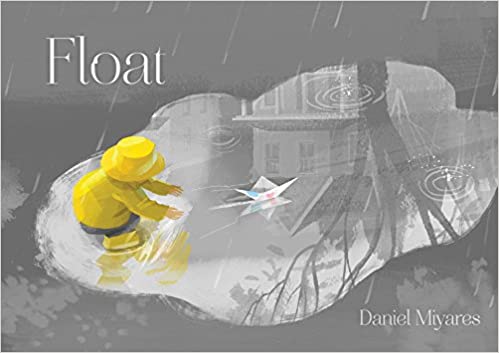
Take a look at the picture book Float by Daniel Miyares. There are no words, but it is most definitely a rich story. The first time you read it, just flip through the pages and ask your child what is happening. What is this story about?

After a few reads, you can stop at a few places on each page and point to something, pose a question, and ponder with your child about the choices that the author or illustrator made. Not only are you getting to know the story better, you are providing your child with a blueprint for how to approach reading. Can they visualize something? Will they make a prediction? Does this story connect with their own life in any way? When children can do these things on their own, they are more likely to stay engaged with reading, and to go beyond the surface to explore deeper understanding.

If you want an example of how this can look, follow the prompts in the figure below. On each page of the story, notice the feature identified under “Stop at…”. Have a conversation about the feature. As you do this, you are modeling great reading strategies, such as Visualizing, Making Predictions, Summarizing, Asking Questions, Inferring, or Making Connections to the text. These conversations are reading skill-builders.

Then, go a little deeper. Ask your child to consider what the author was thinking about, or to try to explain a choice the author made. These questions will help the child understand that behind every story is a human being who just wants a moment of your time to talk to you about something they care about.

In school, teachers will call this “close reading.” Close reading means reading a text more than once, for multiple purposes. First, read to get the gist. What is the story about? Who are the characters? What happens first, in the middle, and at the end?

Next, read for author’s craft. This means paying attention to the word choices the author made, the text structure they chose, the images they used. What was the context for the story? From whose point of view is the story told?

Finally, read to evaluate the ideas from multiple perspectives. What does the story stir up in you? Does it make you want to take an action, or make a change in your own life?

This may sound very dry and academic and like it takes a lot of work. But it doesn’t have to be so formal. It’s a conversation, a way to make friends with a story, and let it into your life. Get to know it, ask it questions, try to understand its point of view. Be a good friend. In return, you may get a companion that will stay with you for a long, long time.

As you read…

Page Suggestions of Places to Pause… Focus on a Reading Strategy… Have a Discussion About…
Inside cover Arrows and dotted lines Visualize: What do the arrows mean? What do the dotted lines mean?

How many sheets of paper will be needed to make this?

Text Structure: What is the author/illustrator showing us?
Title Float Inferring: What did the instructions on the previous page make? (Hint: There’s a clue on the cover)
1-2 Picture: Notice the blue square Inferring: How many people are in the picture? Who do you think they are? Author’s/Illustrator’s Craft: Why is there only a little bit of color on the paper? What does the illustrator want you to notice?
3-4 What the child is wearing; the sky Predicting: What will the weather be like? Author’s/Illustrator’s Craft: Why did the author make the coat and boots the only color in the picture?
5-6 Third panel Questioning: How does the child feel in the first panel? In the second? In the third? Author’s/Illustrator’s Craft: What do the three panels represent?
7-8 Yellow Visualize: Does this look like rainstorms you have seen?

Make Connections: Do you like the rain?

Gist: What is this story about so far?
9-10 Reflections Question: Has the weather changed? Why is the picture of the house and tree upside down? Citing Evidence: How do you know it is still raining?
11-12 Blurred lines, ripples Summarizing: Explain what is happening in this picture. Citing Evidence: How does the author/illustrator show movement?
13-14 Second panel Visualizing: What angle are we seeing the child from? How do you know?

What do the wavy white lines mean?

Gist: What did the rain provide for the boat?
15-16 Child holding his hat; perspective Predicting: Who is faster- the child or the boat?

What will happen to the boat?

Citing Evidence: The child is holding onto the hat. Is it windy or is the child running fast? What are the clues in the picture?
17-18 Child’s pose Summarize: Explain what has happened. Integration of Ideas: How has the child’s feelings about the boat changed so far?
19-20 Top panel Questioning: Did the child see the boat cross the street?
21-22 Child’s pose Predicting: What is about to happen to the boat?
23-24 Child’s face Making Connections: How does it feel to lose something you care about? Author’s/Illustrator’s Craft: The illustrator used the color black and drew a shadow across the boat. Do you think the child will be able to find the boat?
25-26 Water Inferring: Where did the boat go?  
27-28 Third panel Inferring: How does the child feel? Integration of Ideas: The weather has changed again. What is the relationship between the rain and the child’s mood?
29-30 Shadow Visualizing: What time of day is it? Where is the child going?  
31-32 Boat Questioning: Who opened the door? Gist: What do you think the child will tell the adult about what happened?
33-34 First and third panels Making Connections: What do you do when someone you care about is sad? What makes you feel better when you are sad?  
35-36 Pink picture in the paper Predicting: What do you think they will make with the paper? Citing Evidence: Is it morning or night-time? What clues did the illustrator give you?
37-38 Color of the sky; what the child is holding Summarizing: What time of day is it? How do you know?

Predicting: What is going to happen next?

Integration of Ideas: Yellow is a bright color. What does the author/illustrator want us to know about how the child is feeling?
39-40 Child’s pose, clothes Predicting: Was your prediction from the last page correct? Integration of Ideas: What is something you can tell yourself when something makes you sad? What determines if you will be happy or sad?
41-42 Arrows, dotted lines Questioning: Why did this story end this way? Text Structure: How is this page the same as, and different from, the opening page?
Furthering the Conversation
Think about the title. What does the word “float” mean? Explain what it means for a boat or for a plane. How could you use the word “float” to describe an attitude?

Do you have a favorite story that you would like broken down this way? Please send suggestions to Story Talk, a website for engaging in reading conversations. https://hillwolfe.wixsite.com/story-talk, or email me at hw.storytalk@gmail.com.

About Educator Hillary Wolfe: Hillary Wolfe is a Director of Curriculum and Instruction in El Monte, CA, who has worked with students from grades pre-K through 12, and has served as an instructional coach, intervention coordinator, and media specialist. As a classroom teacher, she created a writing curriculum for middle- and high school literacy students reading two or more years below grade level, helping her students achieve substantial gains on state exams. Ms. Wolfe also brings 10 years as a journalist and an education columnist to her understanding of instruction and best practices. She has written books on writing strategies (Capstone 2013/2015), and teachers guides for phonemic awareness activities (Capstone 2017), as well as articles on literacy and intervention in national journals. She has made presentations around literacy for national organizations, and has served as an editor, curriculum writer, and Academic Officer in educational publishing as well as a Coordinator for Academic Interventions for the Orange County Department of Education.

Float
Creator: Daniel Miyares
Published June 9th, 2015 by Simon & Schuster Books for Young Children

About the Book:A boy’s small paper boat and his large imagination fill the pages of this wordless picture book, a modern-day classic from the creator of Pardon Me! that includes endpaper instructions for building a boat of your own.

A little boy takes a boat made of newspaper out for a rainy-day adventure. The boy and his boat dance in the downpour and play in the puddles, but when the boy sends his boat floating down a gutter stream, it quickly gets away from him.

So of course the little boy goes on the hunt for his beloved boat, and when the rain lets up, he finds himself on a new adventure altogether.

This seemingly simply story from Daniel Miyares is enriched with incredible depth and texture that transcend words.

Thank you, Hillary, for this amazing resource!

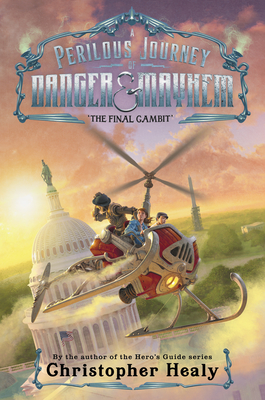
Author Guest Post: “Character Interview with Jasper Bloom” by Christopher Healy, Author of A Perilous Journey of Danger & Mayhem #3—The Final Gambit

Share

Character Interview: A Perilous Journey of Danger & Mayhem—The Final Gambit

On the occasion of the publication of The Final Gambit, the third installment of the Perilous Journey of Danger & Mayhem trilogy, author Christopher Healy will be interviewed by one of the characters from that series, humble ashman turned heroic sidekick, Jasper Bloom.

Jasper: Okay, I will not take offense to being called a character, because I most certainly am one—as in, look at that Jasper Bloom, ain’t he charming, he is such a character. Nor do I have any problem with most of the other words in that sentence: Humble? Yes. Heroic? Yes. Ashman? Well, to be truthful, I got fired from my job at the ash dump after I missed several days of work on account of I was helping save a certain pair of children from a certain villain who tried to destroy New York in the first book of a certain series. But anyways, I must note my objection to the term, “sidekick.” Jasper Bloom is not sidekick material. Now, if you wanna call Balthazar Birdhouse a sidekick, well, you’d better think twice about that too, ‘cause the man wouldn’t take kindly to it. One time at the dump, I referred to him as my “handy helper” and the man swore revenge with a scheme that involved a water hose, three grapefruit, and an angry chihuahua. You shoulda seen the way—

Christopher Healy: Um, Jasper? Excuse me, but aren’t you supposed to be asking me questions?

Jasper: I’m getting to it! For someone whose job is making up words, you sure don’t want anybody else getting any in, do you?

Christopher Healy: That’s not what I—

Jasper: So, tell me: Why did you set your story in 1883?

Christopher Healy: It was the Golden Age of Invention. And this is a story that revolves greatly around inventors and their inventions. But 1883 was also a very difficult time in history for women to get recognized for their work, which is why so many of the characters—

Jasper: Thank you! I would have also accepted, “Because that’s when Jasper Bloom was around.” Next question! Tell me some new and exciting bits of business from this third book that we haven’t seen in the first two books. I apologize—that wasn’t really a question. It was more of a command. But I do expect you to follow through on it.

Christopher Healy: Well, there are cowboys. And a museum heist. And a swamp man.

Jasper: Ooh, like one of them monsters that are all green and weedy and shamble around like an angry salad?

Christopher Healy: I think you’re thinking of the trolls from my other books. No, this is just a man who lives in a swamp in Florida.

Jasper: Ooh, I lived in a Florida swamp once too. If by “Florida,” you mean “Central Park.” And by “swamp,” you mean “a big flowerpot.” And by “lived in” you mean “fell asleep in after I got tired of chasing Balthazar Birdhouse all over the city and shouting at him to give me my good spatula back.”

Christopher Healy: I didn’t mean any of that.

Jasper: Fair enough. So, tell me. Is there going to be another Perilous Journey book after The Final Gambit?

Christopher Healy: No. That’s why it’s called The Final Gambit.

Jasper: Hmmph! Tell that to Sherlock Holmes! Man appears in a story called “The Final Problem,” falls off a cliff, and then—abra-kazam!—he’s in like forty more stories after that.

Christopher Healy: Um, that’s true, but—Hey, wait a minute. The character of Sherlock Holmes wasn’t even created until 1887. How do you know about—

Jasper: That’s all the time we have for today, folks! In closing, I would just like to say that this book series, A Perilous Journey of Danger & Mayhem, has a whole lot more than just danger and mayhem. It’s got action and humor and mystery. It’s got flying vehicles, and talking robots, and heroic ashmen (though not in nearly enough scenes, if you ask my humble opinion). It’s got devious, villainous scoundrels that try to pull off some nasty stuff that even Balthazar Birdhouse would think twice before trying. It’s got exotic locations, like Antarctica and Ohio. It’s got historical folks like Thomas Edison and Chester A. Arthur and other people who act in way you might not be expecting them to act if you’ve only ever read about them in history books. And it’s got a couple of spunky kid heroes that even a man of my expertise and abilities is constantly impressed by. I suggest you read it.

Christopher Healy: Why, thank you, Jasper. That was very kind of you to say.

Jasper: You are most welcome. Now, if I could just grab you for a moment, I have a spinoff idea I would like to run by you.

Published December 1st, 2020 by Walden Pond Press

About the Book: The thrilling conclusion to Christopher Healy‘s funny, action-packed, acclaimed alt-history adventure!

It is 1884, and Molly and Cassandra Pepper, Emmett Lee, and Emmett’s long-lost father are sailing back to New York following their death-defying adventure in Antarctica. Having discovered a subterranean world at the South Pole while saving the world from certain doom once again, surely their accomplishments will finally earn them the recognition they deserve.

Unless, of course…well, you know by now.

And so do the Peppers and Lees. They’re used to having their deeds covered up by the government in order to protect powerful men, and frankly, they’re sick of it. And when their return to New York doesn’t go the way they’d planned, they decide that maybe it’s best to go into hiding and accept that, perhaps, the forces aligned against them are just too great.

As the 1884 presidential election approaches, however, our heroes discover a plot against leading candidate Thomas Edison that only they can stop. It’ll be up to them to decide whether to come out of hiding, make the perilous journey to Washington, DC, and do the right thing one last time. Even if it means risking everything they have left.

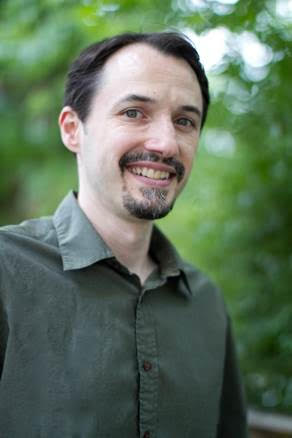
About the Author: Christopher Healy is the author of The Hero’s Guide to Saving Your Kingdom series and A Perilous Journey of Danger & Mayhem trilogy. Before becoming a writer, he worked as an actor, an ad copywriter, a toy store display designer, a fact-checker, a dishwasher, a journalist, a costume shop clothing stitcher, a children’s entertainment reviewer, and a haunted house zombie. He lives in New Jersey with his wife, two children, and a dog named Duncan. You can visit him online at www.christopherhealy.com.

Thank you, Christopher, for this hilarious piece–anyone who reads it can see the humor that you bring to your adventures!

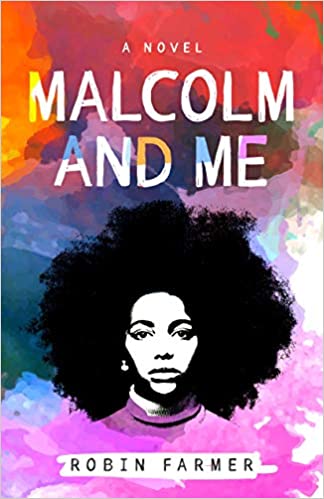
Author Guest Post: “The Role of Empathy in Literature and Our Lives” by Robin Farmer, Author of Malcolm and Me

Share

“The Role of Empathy in Literature and Our Lives”

I was around 13 when I read To Kill A Mockingbird and discovered a quote in Chapter 3 that embedded itself into my brain.

“You never really understand a person until you consider things from his point of view, until you climb into his skin and walk around in it,” Atticus Finch tells his daughter Scout.

His advice for Scout to explore the heart and mind of another person initially fails to register with the 10-year-old.  Soon after their conversation, Scout joins in a cruel taunting game aimed at neighbor Boo Radley, a mentally challenged and socially awkward man that the town considers a “monster” because few took the time to see things from his viewpoint.

A heartfelt connection

This Pulitzer-Prize winning novel — with themes that touch on good and evil, racism, social inequality, courage, and family life — electrified my heart and mind, and made me vow to write a book one day.

A voracious reader as a child, books not allowed me to travel the globe without leaving my home while experiencing the lives of people who differed from me. That’s the definition of “empathy.” Harper Lee’s only book, one I have read  nearly a dozen times, seared itself in my psyche because 1) Atticus, a white lawyer respected by Black people, wanted to defend an innocent black man, 2) Scout’s stubbornness reminded me of myself, and 3) the initial fear I had of Boo evolved into protectiveness, and 4) The story felt emotionally true.

Over the years, To Kill A Mockingbird has generated valid controversy for its racial stereotypes. The adult I have become understands its shortcomings. The girl in me remembers the power of this story at a time when few books in my school touched on racial inequity or a had a character I so identified with, despite stark differences. Scout was a Southerner while I called Philly home. She lived with her father, I stayed with my Mom. Her tomboyish ways did not match my frilliness. Yet, I connected to her willful nature, sensitive soul, thoughtful questions and fierce love for her father — a father whose patience, earnestness and steady adoration of his children I longed for as a girl of divorced parents. As different as we were, I saw myself in Scout because I walked around in her skin.

Specific viewpoint, universal appeal

Knowing the emotional power of walking in someone else’s shoes allowed me to write the empathetic character of Roberta Forest, the 13-year-old protagonist in Malcolm and Me. The story kicks off with the teen doing the unthinkable: She fights her nun. Could there be a less likely person for readers to connect with?

And yet, that girl was me and I was not a monster. I wanted readers to understand the multi-layered Roberta, a reluctant teen rebel with the heart of a poet. That meant I had to develop a relatable character with shortcomings and strengths who draws readers in and makes them feel what she experiences.

Roberta is a new teen who is smart, sensitive, strong, sassy and a bit spoiled. Making her relatable meant presenting her in a realistic manner, warts and all. And so she lives on the pages as a moody, thoughtful, vulnerable but resilient teen with a sense of humor and fairness.  I hope readers root for her. And are inspired by her to speak up, think critically, ask questions and defend the truth, especially now that alternative facts exist.

Bridging the divide

Recently, Bridget, who writes book reviews for Bridgetandthebooks.com, reviewed my debut novel. She is 11, the same age I was when I read the Autobiography of Malcolm X.  On the surface, she couldn’t appear more different from Roberta. But Bridget connected to the story and recommended my book. What really made my heart flutter was her wondering why she hadn’t learned anything about Malcolm X. One of the goals in writing the book was to get readers, especially younger ones, to read the book that changed my life in so many ways. What I especially love is the importance of walking around in Malcolm’s skin and experiencing his heartaches, struggles, achievements and growth.

That Bridget recommends Malcolm and Me feels like I won an award! What better validation than for readers who are like and unlike Roberta to connect to her story.

Empathy empowers

Research shows that books can help readers develop empathy, which I argue we need more of. Take a look at this divided nation. Take a look at our divided nation and the lack of civility – and it’s not just among the adults. We all know too well about the dangerous bullying that occurs in schools and well as on social media.

Empathy won’t solve all of our problems, whether they are political or personal. But listening to each other is a start.

I encourage young readers to develop the bravery of Roberta. Sometimes she sweated behind her knees, but she found the courage to not only defend truth, but also think about the feelings of others, including a nun who humiliated her and a father who disappointed her. In both cases, Roberta learns to forgive. That would be impossible for her to do so without empathy.

Steps to Take

Roberta, like Scout, took some steps to walk around in the skin of someone else. As students, follow her lead with these seven actions.  To help remember what to do, I wrote an acrostic that spells out how to develop more EMPATHY:

Explore your heart and mind
Meet people different from you in books and at school
Practice kindness
Ask thoughtful questions
Talk less, listen more
Help others and ask for help
Yield to creative endeavor such as writing and drawing to express feelings

As students, by working on your empathy, you improve your understanding of each other’s thoughts and feelings. Doing so plays a role in how you respond to one another during conflict. Find opportunities to build better relationships, which can help you find success in all parts of your lives.

Published November 17, 2020 by SparkPress

About the Book: Philly native Roberta Forest is a precocious rebel with the soul of a poet. The thirteen-year-old is young, gifted, black, and Catholic—although she’s uncertain about the Catholic part after she calls Thomas Jefferson a hypocrite for enslaving people and her nun responds with a racist insult. Their ensuing fight makes Roberta question God and the important adults in her life, all of whom seem to see truth as gray when Roberta believes it’s black or white.

An upcoming essay contest, writing poetry, and reading The Autobiography of Malcolm X all help Roberta cope with the various difficulties she’s experiencing in her life, including her parent’s troubled marriage. But when she’s told she’s ineligible to compete in the school’s essay contest, her explosive reaction to the news leads to a confrontation with her mother, who shares some family truths Roberta isn’t ready for.

Set against the backdrop of Watergate and the post-civil rights movement era, Malcolm and Me is a gritty yet graceful examination of the anguish teens experience when their growing awareness of themselves and the world around them unravels their sense of security—a coming-of-age tale of truth-telling, faith, family, forgiveness, and social activism.

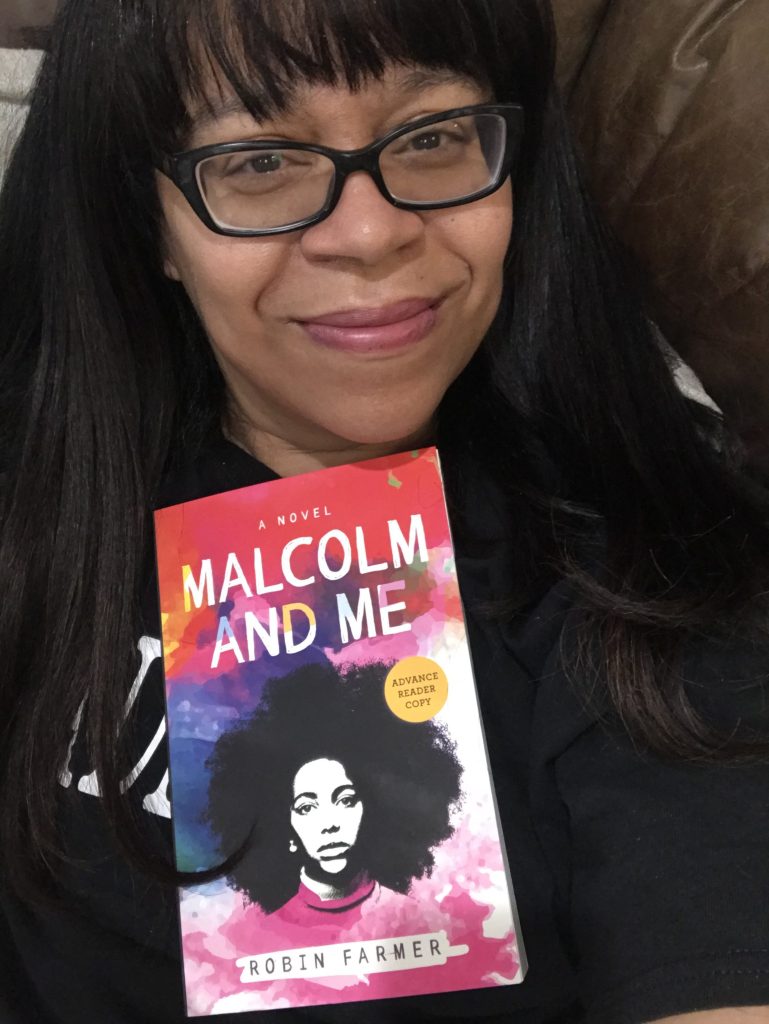
About the Author: Robin Farmer is a national award–winning journalist and transplanted Philadelphian who currently calls the Richmond, VA, area home. At eight, she told her mother she would write for a living, and she is grateful that her younger self knew what she was talking about (many young folks do). Her other interests include screenwriting, poetry, movies, and traveling. She’s still hoping to write stories about young people for television and film. Robin earned her degree in journalism from Marquette University. She lives in Richmond, VA.

Thank you, Robin, for this timely and thought-provoking piece!

Authors Interview with Philippe Cousteau and Austin Aslan, Authors of The Endangereds

Share

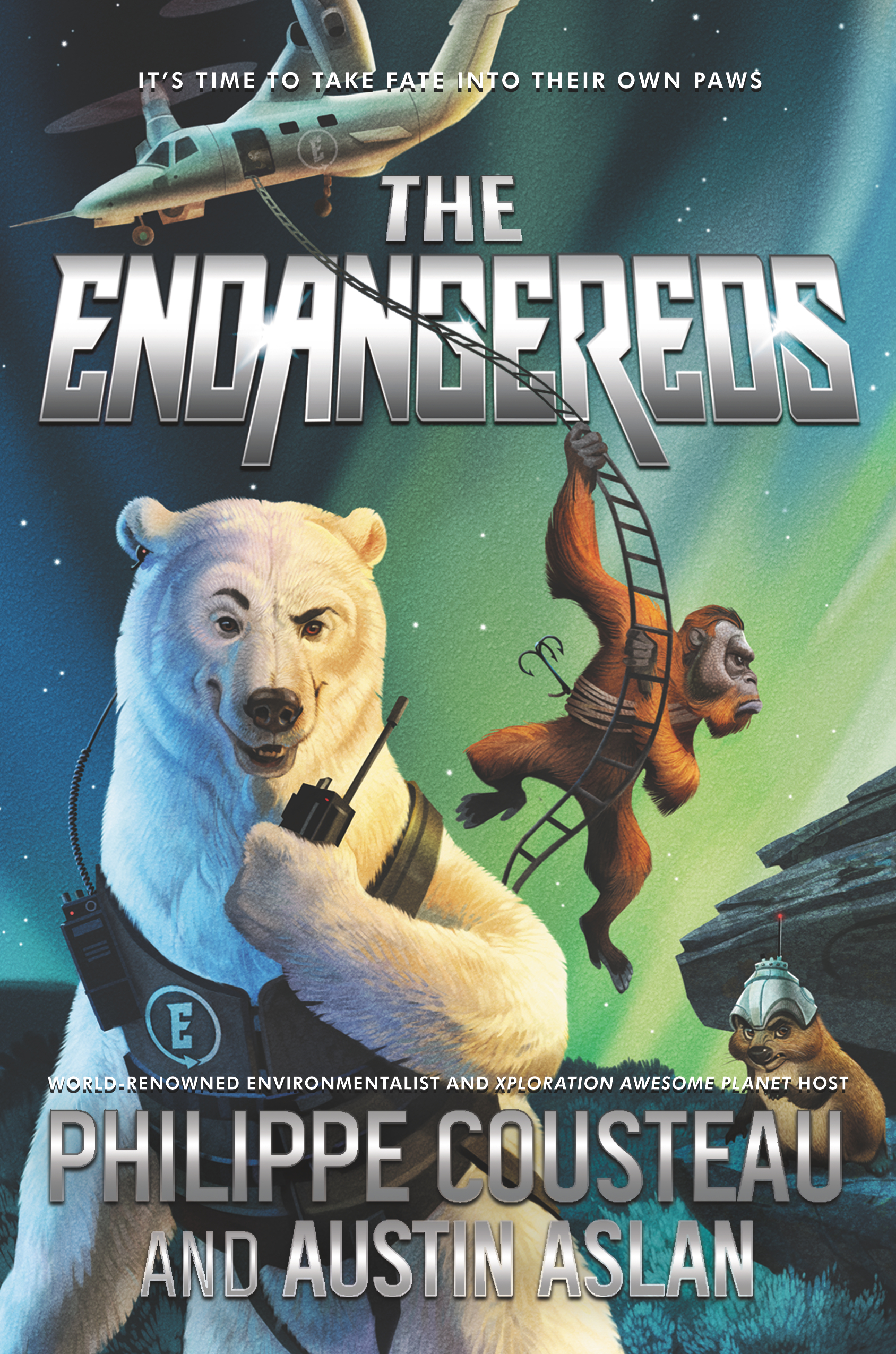
The Endangereds
Authors: Philippe Cousteau and Austin Aslan
Published September 29th, 2020 by HarperCollins

Summary: It’s time for animals to take fate into their own paws! The Endangereds is the first book in a thrilling new adventure series by world-renowned environmentalist and Emmy-nominated host of Xploration Awesome Planet Philippe Cousteau and award-winning TURBO Racers author Austin Aslan.

Innocent animals are in trouble: temperatures are climbing, tides are rising, and nature is suffering. Someone needs to step in to rescue animals from extinction. Someone needs to turn this mess around, before it’s too late.

And that someone is . . . the Endangereds, the unlikeliest heroes you’ll ever meet—a superstrong polar bear, a pangolin with a genius for engineering, an extremely sarcastic narwhal, and an orangutan with a big dream.

Together, these four daredevils are determined to save endangered species across the globe, no matter what the risk. Rappelling into an underground cavern to save the day? No problem. Looping video footage to sneak through buildings unnoticed? Got it covered. Opening a doorknob? Okay, pretty hard without thumbs. But don’t worry. No matter what it takes, the Endangereds will get the job done.

But when two of their friends get kidnapped by a villain with a dastardly agenda, the team finds themselves up to their snouts in trouble. Can the Endangereds save the day? Or will this villain put humans and animals alike on the extinction list?

The A-Team meets the animal kingdom in the first book in the thrilling new adventure series from the host of Xploration Awesome Planet Philippe Cousteau and award-winning author Austin Aslan.

About the Authors: 

Philippe Cousteau is a multi-Emmy-nominated TV host, author, speaker, and social entrepreneur.  He has hosted numerous TV programs for Discovery, BBC, CNN, Travel Channel and more.  Currently he is the host of the syndicated television show Xploration Awesome Planet and producer/narrator of a new Virtual Reality experience Drop in the Ocean.  Philippe is the author of several award-winning books and is a sought-after speaker having keynoted events for the United Nations, Harvard University, and more. In 2004 he founded EarthEcho International; the leading environmental education organization dedicated to inspiring youth to take action for a sustainable planet. Philippe and his wife, fellow explorer and TV host Ashlan Gorse-Cousteau, reside in Los Angeles.

Austin Aslan is the author of the TURBO Racers series and the Islands at the End of the World series. A National Science Foundation Graduate Research Fellow, he can often be found camping in a tent on a punctured air mattress. In other lives, Austin drove ambulances way too fast, served as an ecotourism Peace Corps volunteer in a Honduran cloud forest, and managed a variety of campaigns. He lives in Flagstaff, Arizona.

Interview: 

Philippe Cousteau is a world-renowned environmental advocate, filmmaker and explorer. Austin Aslan’s debut novel, The Islands at the End of the World, was named a Best Book of 2014 by Kirkus Reviews. It was ranked by The Guardian as a top-ten climate fiction read. Together, they’re the authors of The Endangereds, the first book in a new science-backed, high action middle grade series.

AUSTIN: Philippe, it’s always an honor to wrap back around with you to discuss The Endangereds! The collaborative process of writing the first two books in the series has been a career highlight for me and a wonderful, thrilling ride. It’s great to be here with you on the Unleashing Readers blog for this guest Q&A. Readers should know that we both thought it would be fun to engage in a bit of a back-and-forth with each other to share with you some of the insights we’ve gathered along the way. Philippe, I’ll go ahead and get us started with a question about the “sausage-making” process for designing an action-packed book that intentionally includes some educational components, as well as a message or two. I’ve heard you repeat in the past that your grandfather always used to say to you, “Before we can talk about the environment, we must talk about education.” That sounds totally on point to me! But I’m curious, tell us more about your vision for this series as a mix of swashbuckling entertainment and environmental activism.

PHILIPPE: That’s a good question as the idea of creating a book that is first and foremost fun and exciting but also educational has been the central driving challenge of The Endangereds. For several years through my non-profit EarthEcho International, we have focused on education, channeling my grandfather’s advice to me, but we realized pretty early on that we couldn’t just focus on education in the traditional sense.  We also have to find ways of reaching people through other means. I have always been interested in fiction and how we can leverage fictional stories to tell important truths like the fact that biodiversity on earth is declining and hundreds of species go extinct every year.  The Endangereds was our way to do that because we know that young people are already interested in animals and that many of them are also clued in to the problems nature faces today but what they need is some inspiration to get them engaging in actively solving the problems we face. What better way to do that then create a team of inspiring heroes who are overcoming adversity to solve problems and help nature?

AUSTIN: I’ll never forget that first moment when I was approached by you and our editor about teaming up to make this idea a reality. The concept just sparkled for me, right away. I was electrified. I know my mind raced with ideas. The connection to the A-Team was obvious from the title alone. But you and our editor, David Linker at HarperCollins, had already zeroed in on the four main characters (and one of them shared a name with an A-Team member): A polar bear, an orangutan, a narwhal, and a pangolin! What a fabulous line up. What inspired this particular combination of species, do you think? I’ll say that I particularly gravitated toward the idea of including the narwhal, named Murdock. What’s not to like about narwhals? Also: from the “sausage-making” angle, I personally loved the challenge of including a two-ton marine mammal as part of the team. The possibilities and the potential humor of it fascinated me. And indeed, Murdock turned out to be one of my favorite characters. So, why these four animals in particular, and not, say, the lion, giraffe, hippo, and zebra from the Madagascar movies, if you know what I mean? Oh, also: I grew up watching the A-Team, and I believe you did too. What’s the role of our generation’s nostalgia for 80’s entertainment in The Endangereds’ success?

PHILIPPE: Good questions, as we were coming up with the animals I wanted to focus on some that where familiar, like a Polar Bear and mix in some that were not so familiar, like a Pangolin, as a way to provide comfort to readers but also introduce them to a new species.  Pangolins are arguably one of the most endangered animals on earth, and they are just cool looking with their claws, scales, and powerful tail.  I also chose Arief because of an experience I had filming with CNN about 6 years ago in Sumatra at an Orangutan rehabilitation facility.  They take Orangutans that have been illegally caught and sold into the pet trade and re-introduce them into the wild.  Orangutans are also highly endangered, especially Sumatran ones, and so I wanted to tell that story, and of course, like you said, Narwhals are just cool!  Because this book has a purpose—to entertain and educate—we really wanted to be able to highlight animals that could embody the main issues facing endangered species, like habitat loss, illegal wildlife trade, climate change etc.  As for the A-Team, as you’ll attest Austin, we agreed early on that we wanted to have some easter eggs for the adults who might be reading this book to their children to enjoy and who doesn’t like the A-Team?

AUSTIN: Did I say Murdock the narwhal was “one” of my favorites? They’re all my favorites! Seriously, I even love the mystery animal villains we’re crafting for the series. Without giving too much away, I wanted to spend a minute talking about who the “bad guys” are in these stories. While the world’s present biodiversity threats are mostly human-caused, I think it’s too easy and too obvious, from a storytelling perspective, to just throw humans under the bus all the time. The reality is that a lot of people care about biodiversity and would join the Endangereds in their missions if they could. The rancher in the Four Corners area where our first book takes place, for example, isn’t the nefarious environmental destructor he’s taken for at first. He may even prove to be an ally to the black-footed ferrets our E-Team is deployed to protect! Philippe, can you say a few words about the buzz-term of environmental justice, and how important that concept is to understand in terms of our collective ability to arrive at real solutions?

PHILIPPE: I remember our long conversations about this, and our agreement that, as you said, it would be too easy to make humans the villains.  A theme that I really love in the series is one of balance; Arief, the Orangutan leader, talks about it a lot. The idea that the Endangereds exist because the world is out of balance, and since the Endangereds are really a proxy for humanity, diving into this world was really important.  But we didn’t want to make shallow evil characters; in a way, we wanted to be able to sympathize with them a little bit, they have motivations that aren’t hard to understand, they have been wronged like the E-Team, but have taken a different path. For me, it’s a metaphor for the choices we make as people—do we want to be positive and solve problems or be negative and cause them. Obviously, our message to youth is that the best way forward is to work together to solve problems. Austin, I know we are wrapping this up but before we do, I have a question for you.  What was the biggest challenge in writing this book and how did you overcome it?

AUSTIN: In terms of “sausage making” there were several challenges, as with any book. But I find that a story’s biggest potential rewards lie where the difficulties are. That’s where things get interesting…and fun! But rather than dwell on the craft elements that kept me up at night while drafting, I’d like to focus on the challenge of overcoming doubt and allowing myself to feel worthy of the aspirations of this series—and our partnership. We’re out to save the world, after all, through inspiring a new generation of environmental stewards to take up the mantle of a great cause. That’s a tall order. It feels like a lot of responsibility! Was I out of my league? Should I have stepped aside?

I think we all struggle with “impostor syndrome” in our various professions. The key breakthrough is realizing that, in this life, we’re all in it together! And that we’re all human and that means we’re each a package-deal full of talent and shortcomings. If we each defer to someone in the shadows to eventually come forward and do the work that needs to be done…none of us will ever get anywhere. And that’s one of the core messages of the book, ironically! Our animal heroes aren’t demigods. They’re not perfect angels sent from on high. They’re flawed, they’re uncertain, they’re scared. But they’re the ones who came forward and answered the call. I think that’s what kids need to take away most of all, and I like to think that we’re practicing what we preach by putting ourselves out there to pull these stories off.

That’s enough out of me (for now)! Philippe, any closing thoughts?

PHILIPPE: I think you said it perfectly. I just want to add that as part of The Endangereds, we have partnered with my non-profit EarthEcho International, World Wildlife Fund, and Exploring by the Seat of Your Pants to offer several live webinars where I will sit down with experts who work every day to protect these animals in the wild. Young people who join us will have a chance to ask me and the experts questions and hear stories about what wildlife conservation is like in the real world.  Go to www.TheEndangereds.com to register for FREE to join us.

Thank you, Phillipe and Austin, for being a guest on Unleashing Readers! Your focus on environmentalism is so important, and we are so glad that this book is out there for kids!

Interview with Lamar Giles, Author of The Last Mirror on the Left

Share

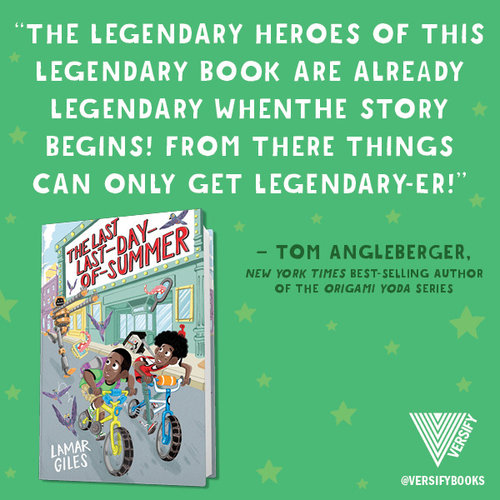
A Legendary Alston Boys Adventure: The Last Mirror on the Left
Author: Lamar Giles
Illustrator: Dapo Adeola
Pulication Date: October 20th, 2020 from Versify

Summary: In this new Legendary Alston Boys adventure from Edgar-nominated author Lamar Giles, Otto and Sheed must embark on their most dangerous journey yet, bringing a fugitive to justice in a world that mirrors their own but has its own rules to play by.

Unlike the majority of Logan County’s residents, Missus Nedraw of the Rorrim Mirror Emporium remembers the time freeze from The Last Last-Day-of-Summer, and how Otto and Sheed took her mirrors without permission in order to fix their mess. Usually that’s an unforgivable offense, punishable by a million-year sentence. However, she’s willing to overlook the cousins’ misdeeds if they help her with a problem of her own. One of her worst prisoners has escaped, and only the Legendary Alston Boys of Logan County can help bring the fugitive to justice.

This funny and off-the-wall adventure is perfect for readers of Jonathan Auxier and Lemony Snicket.

Praise: 

“A fantastic second addition to an already-acclaimed series.” – Kirkus Reviews (Starred Review)

“An emotionally resonant and action-packed sequel that manages to be an even greater adventure than its predecessor.“ – Booklist (Starred Review)

“A complex and exciting fantasy adventure that encourages readers to question what they know about incarceration, justice, laws, and the people who enforce them.“ – School Library Journal (Starred Review)

Learn about the first Alston Boy adventure, The Last Last-Day-of-Summer, HERE.

About the Author: Lamar Giles is a well-published author and a founding member of We Need Diverse Books. Lamar has two novels forthcoming in 2020: NOT SO PURE AND SIMPLE his first Contemporary Coming-of-Age Story (HarperTeen/HarperCollins) and THE LAST MIRROR ON THE LEFT (Versify/HMH), the sequel to his 2019 hit THE LAST LAST-DAY-OF-SUMMER.

Lamar is a two-time Edgar Award finalist in the YA category, for his debut YA thriller FAKE ID (HarperCollins, 2014), and his second YA thriller, ENDANGERED (HarperCollins, 2015). His third and fourth YA thrillers, OVERTURNED (Scholastic, 2017) and SPIN (Scholastic, 2019), as well as his middle-grade debut THE LAST LAST-DAY-OF-SUMMER received glowing New York Times reviews, and was named to multiple Best Of lists, including Time Magazine, Kirkus Reviews, and Amazon. FAKE ID has been optioned by Sony Pictures.

Lamar is the editor of the We Need Diverse Books YA short story anthology FRESH INK (Random House, 2018), and a contributor to many YA and middle-grade anthologies including THREE SIDES OF A HEART (HarperCollins, 2017), BLACK ENOUGH: STORIES OF BEING YOUNG & BLACK IN AMERICA (HarperCollins / Balzer & Bray, 2019), THE HERO NEXT DOOR (Random House, 2019), HIS HIDEOUS HEART (Flatiron Books, 2019) and SUPER PUZZLETASTIC MYSTERIES (HarperCollins, 2020). He has published several short stories for adults.  You can see tv interviews with Lamar here, and here, and here, and in a truly fun “Fun Facts” short interview, created by HarperCollins.

Interview:

Unleashing Readers: What have you been most excited about when it comes to the reception of The Last-Last-Day-of-Summer?

Lamar Giles: The most exciting thing was hearing from parents, or sometimes the readers themselves, how much they enjoyed Otto and Sheed and all the other fun characters in Logan County. The reviews and recognition are great, don’t get me wrong, but when the readers are happy, I’m happy.

UR: You have written both YA and MG novels; which do you prefer creating?

LG: No preference, honestly. I’m actually writing YA a book in the mornings, and an MG book in the afternoon right now. I think they allow me to divide up the subject matter I want to discuss, though. I save the most grim stuff for my YA, and reserve my fun & zany for MG. The two age groups allow me to really explore a range of topics and tone. 

UR: As a founding member of We Need Diverse Books, how does it feel to see an idea turn to reality and have such an impact?

LG: It’s amazing to see the work WNDB did was received so well by people all up and down the publishing ladder.  As many people know, the organization was the brainchild of author Ellen Oh, and she invited me along on a journey none of us could’ve imagined. That it’s six years later and the organization is still doing great work beyond what its founding members could’ve ever dreamed (I stepped down from my leadership role back in 2018) is exactly what we wanted and hoped for.

UR: Otto and Sheed went from normal kids to heroes. Did that change them?

LG: I don’t think so. Otto and Sheed understand what they are to Logan County and the town of Fry, and I think they recognize if they let that go to their head, or became some else entirely, they might not be so different from the threats they often face down. Otto and Sheed (and Wiki and Leen, let’s not forget them) are heroes because their mission and attitudes don’t change. They’re here to do what’s right.

UR: If there is one thing you want readers to get from your books, specifically Otto and Sheed’s stories?

LG: I really want readers to recognize that Otto and Sheed don’t back down when they see injustice. That’s something that can make anybody into a hero. Let’s all be like Otto and Sheed.

UR: What’s next in your book world?

LG: Next up, another Logan County adventure. I don’t know how much I’m allowed to say just yet, but trust me–we’re only just getting started! 

Hear more from Lamar by listening to him on on the Literaticast podcast!

Thank you to Lamar Giles for taking part in the interview with us, and we cannot wait to go on another adventure with the Alston Boys!

Author Guest Post: “Literary Pilgrimages and Armchair Pilgrimages Today!” by Kath Rothschild and the Class of 2K20 Books

Share

“Literary Pilgrimages and Armchair Pilgrimages Today!”

With students, authors, and readers stuck near home for the foreseeable future, the debut author group, Class of 2K20 Books, decided to share some of our favorite memories of our literary pilgrimages, and share some literary pilgrimages you can take from home!

MASQUERADE: AMPTHILL, ENGLAND

One of the most celebrated children’s books of all time is the mystical, beautifully-rendered mystery of Jack Hare, Masquerade, published in 1979 by Kit Williams. The book, a gloriously illustrated riddle, purported to lead to a treasure for the person who could solve the book’s mystery—a golden jeweled hare. After a bit of a scandal involving cheating, two British teachers solved the location of the jeweled hare. But, the lasting legacy of the book, other than its enjoyment as a beautifully illustrated book, is its contribution to children’s literature. The book created a sub-genre of writing, called “The Armchair Treasure Hunt Book,” which author Kit Rosewater, of THE DERBY DAREDEVILS series, wrote about in her masters thesis. When Rosewater sent a copy of her thesis to Masquerade author Kit Williams, he invited her “to an art show at his home in a tiny town in the UK. The art show was only three weeks after I got the invitation, but I was able to find cheap airline tickets and fly myself to and from London to meet him.” She attests that this literary pilgrimage was one of the absolute highlights of her life.

Armchair Travel: Ampthill, England!

From home, you can take a literary pilgrimage through the story of Jack Hare, and the real adventures of those treasure-hunt-obsessed locals through this BBC article, which shows both images of the book, and tells the story of the real-life frenzy of the treasure hunt. You can see the original gold and jewel encrusted hare in several images, and pictures of the location in England where the treasure was found, in Ampthill, and of the author unveiling the treasure. When you’re done traveling through the world of Masquerade, perhaps it will inspire a treasure hunt of your own!

ENGLAND, JANE AUSTEN and PRIDE AND PREJUDICE

England has many sites of literature. KayLynn Flanders, author of SHIELDED, went out of her way to find “the statue of Hodge, Samuel Johnson’s cat.” She also visited “Platform 9 3/4 and the Globe Theater, and the British Library, with its Gutenberg Bible.” But perhaps the most famous British literary adventures involve a love of Jane Austen, and locations visited by the writer herself, as well as the many locations where films were made of her many books. Amanda Sellet, author of BY THE BOOK: A NOVEL OF PROSE AND CONS, worked in England as a nanny, and “had a chance to wander around Bath and Lyme Regis like an Austen heroine.” There is no substitute for being in the moors and crossing muddy grounds in heavy skirts, but Sellet helps us imagine it. “Feeling that windblown sogginess first-hand helped me understand why everyone was so moody and also prone to taking to their beds at the first sniffle!”

Armchair Travel: Jane Austen’s England!

One way to immerse yourself in Austen’s world—perhaps in a cozy armchair with a just-poured cup of tea—is to virtually visit her home, which is now a museum. If you click on “explore” then on “the collection” you can find images from many of the precious items in the house, including the Clementi piano, the “Chawton leaf” wallpapered room, and the dining room fireplace and iron-forged grate. There are also images of the first editions of many books, of personal letters, and of Jane Austen’s jewelry.

NEW YORK CITY and DASH & LILY’S BOOK OF DARES

New York City, arguably the center of the publishing world, has long been a mecca for literary pilgrimages. Chumley’s in Greenwich Village—a forge turned speakeasy—was a gathering spot for many famous authors, including Willa Cather and Edna St. Vincent Millay. And the New York Public Library is one of the most famous libraries in America, with copies of many famous first editions. But there are some secret literary spots as well. “When my family visited New York City, my teenage daughter and I insisted on visiting The Strand, the bookstore where Dash finds Lily’s journal in Dash and Lily’s Book of Dares by Rachel Cohn and David Levithan,” says Amy Noelle Parks, author of THE QUANTUM WEIRDNESS OF THE ALMOST KISS. And Kath Rothschild, author of the forthcoming WIDER THAN THE SKY, visited the Muppet Workshop at FAO Schwartz with her three-year-old to commemorate the location where each Dash and Lily make their own Muppets on their quest to get through the book of dares—and find one another.

Armchair Travel: New York City!

In addition to a virtual visit to The Strand, another famous literary bookstore in New York is Books of Wonder, a children’s literature bookstore, has an extensive online presence, with links to their artwork—one of the most special things about the actual location. In the actual Books of Wonder, the back of the shop has many amazing children’s books illustrations on display—but you can admire and discuss many through their website as well. And, although the FAO Schwartz and the Muppet Whatnot Workshop have closed, you can still create a Muppet through this blog: https://theawesomer.com/make-your-own-muppet/93745/, that shares the templates used by the original workshop. A fun activity to do with kids, cutouts of these eyes, noses, and make myriad different Muppets of your favorite literary characters.

NEW ORLEANS, GHOSTS, VAMPIRES, and WITCHES

Ghosts and writers are equally abundant in New Orleans. An evocative place for a literary pilgrimage, New Orleans was home to Anne Rice, best known for Interview with a Vampire and The Witching Hour, and other Southern authors, like Tennessee Williams. It is a landmark for literature—from the hole-in-the-wall bookstore Faulkner House Books, in Pirate’s Alley in the French Quarter to the resting place of the famous voodoo priestess and midwife, Marie Laveau in the Garden District’s Lafayette Cemetery No. 1, referenced in many books and films. Haunted New Orleans is also the location for the third season of American Horror Story, which was filmed in the French Quarter and at one of the most famous haunted houses, the LaLaurie Mansion (1114 Royal Street). Rothschild visits the city that inspired so much literature annually. “There is nothing like walking through the streets of New Orleans. You can feel the history, the ghosts, pressing in on you. I listen and always find a story.”

Armchair Travel: New Orleans!

Today, you can take a visual tour of Anne Rice’s old New Orleans home, and imagine the ghosts that the touched-up photos hide. Two locations feature images of the interior and grounds of her old home, here and here.

And, a short video brings you to the LaLaurie Mansion, to imagine the ghost stories it inspires even today.

Enjoy your armchair pilgrimages!

To find out more about the debut middle grade and young adult books in the Class of 2k20 books, visit https://classof2k20books.com/, Twitter @Class2k20Books; Instagram @class2k20books.

Thank you, Barbara, for writing about this for middle schoolers! It is a topic that needs to be talked about; we’re glad this book exists!

Author Guest Post: “The Global Hunger and Migration Project” by Victor Hinojosa and Coert Voorhees, Authors of A Journey Toward Hope

Share

“The Global Hunger and Migration Project”

When we began the Global Hunger and Migration Project, we wanted to understand why some 850,000 children and families were leaving their homes in Central America and coming to the United States to request asylum.  The journey to the U.S. is incredibly long: between 1200 and 2500 miles from the most common border crossing in Mexico to most destinations at the U.S. border. It is also incredibly dangerous, and the refugees know the dangers long before they set out on the journey.  They know all about the horrors of La Bestia (the train they will hop aboard for some of the way) and the people waiting to rob them and take advantage of them along the way.  They all know people who’ve made the journey – they’ve heard the stories.  Yet they come anyway.  Why?

We’re still learning a lot about that.  We’re learning about violence in their home countries and terrible choices their families are making in attempt to keep them safe.  We’re learning about food insecurity and despair (and about drought and climate change that is causing some of it).

We’re also learning how hard it is to know something well.  And how important it is to do the hard work of knowing something well.  My students learned early on just how complex the crisis is and that in order to make a difference on one aspect of it, we needed to understand how that one thing fits into the bigger picture.  We’ve also learned that failure is part of the process and we’ve had great ideas that we just couldn’t quite  figure out how to get off the ground.  But you can’t let fear of failure stop you from trying.

We’ve learned that we can make a difference.  All of us. When we work hard and bring out talents and creativity and passions to a project, and work together, we can do more than we ever thought possible.  We’re convinced – even more convinced now than when we started – that we can help make things just a little bit better. And that’s enough.

Mostly we’ve learned that it begins with empathy.  With meeting people who’ve made the journey. Most often this comes from reading stories and interviews and accounts of the journey.  But a spring break service-learning trip let some of my students meet and interact with refugees who had already made it to the United States.  My students have learned that though these refugees come from other countries and have different experiences and may speak a different language and share a different culture, they’re not all that different from you and me.  And when you meet these children and families, well, you want to do the hard work of knowing the situation well and making a difference.

We wanted you to meet some of the amazing children we met. Nando and Alessandra and Rodrigo and Laura are a lot like the children we met in our studies.  We hope when you meet them you will find where you want to make a difference.  Most of my students, like most of you, will not spend their lives working with refugees. I hope they’ve learned to love learning, and to love using what they know in the service of others. What do you want to learn to do well? How will you help others?

Published July 7th, 2020 by Six Foot Press

About the Book: Every year, roughly 50,000 unaccompanied minors arrive at the US/Mexico border to present themselves for asylum or related visas. The majority of these children are non-Mexicans fleeing the systemic violence of Central America’s “Northern Triangle”: Honduras, El Salvador, and Guatemala.

A Journey Toward Hope tells the story of Rodrigo, a 14-year-old escaping Honduran violence; Alessandra, a 10-year-old Guatemalan whose first language is Q’eqchi’; and the Salvadoran siblings Laura and Nando. Though their reasons for making the journey are different and the journey northward is perilous, the four children band together, finding strength in one another as they share the dreams of their past and the hopes for their future. Written in collaboration with Baylor University’s’ Social Innovation Collaborative, A Journey Toward Hope is a celebration of their humanity and an ode to the power of hope and connection even in the face of uncertainty and fear.

About the Authors: 

Victor Hinojosa, Ph.D., is Associate Professor of Political Science in the Honors Program at Baylor University where his primary research is in Latin American Politics and U.S.-Latin American relations. His articles have appeared in scholarly books and journals including Terrorism and Political Violence, Political Science Quarterly, the Journal for the Scientific Study of Religion, and the Mennonite Quarterly Review. Dr. Hinojosa currently directs the Global Hunger and Migration Project, a social innovation laboratory at Baylor University that is bringing together an interdisciplinary team of faculty and students to address the challenges of child migration from Mexico and the Northern Triangle of Central America (Guatemala, Honduras, and El Salvador).

Coert Voorhees is the author the novels On the FreeIn Too Deep (2013 Junior Library Guild Selection), Lucky Fools (2012 Junior Library Guild Selection), and The Brothers Torres (2009 ALA Top Ten Best Books for Young Adults), as well as the picture book Storm Wrangler. He has been a Fulbright scholar in Chile and Visiting Writer in Residence at Rice University, and he now lives with his family in Houston, Texas.

Thank you for showing us how we can make a difference and what you are doing to do so also!