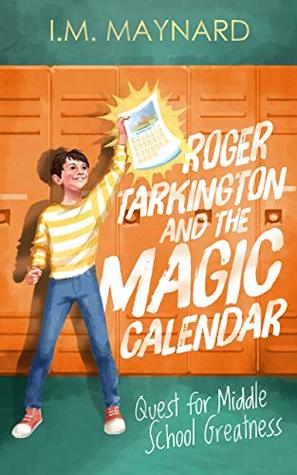
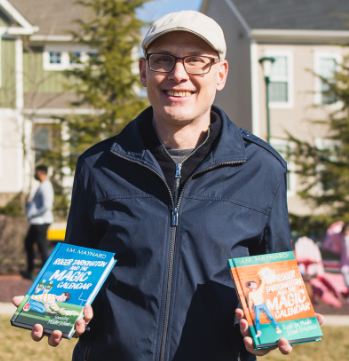
Author Guest Post: “Two Words That Can Help with Writer’s Block in Students!” by By I.M. Maynard, Author of the Roger Tarkington and the Magic Calendar

Share

“Two Words That Can Help with Writer’s Block in Students!”

Imagine, you’ve just announced an end-of-school year creative writing assignment for your students. You are expecting a positive response given your school just hosted a local author who talked about the writing process or your class just finished an inspiring novel. Besides, all students want to express themselves, right? And in creative writing, there are no wrong answers and so this should be a slam dunk assignment.

Then the arms shoot up into the air.

“What can we write about?” Anything, you respond.

“Can it be about space aliens?” Yes.

“How about super heroes?” Absolutely.

Can I write about myself?” Sure. This is your assignment. Be creative and have fun.

This is going really well. The students are as excited as you are about this assignment. But when you walk down the row of desks to check on their progress you notice that several notebooks or laptops remain blank. These students defend their lack of progress by saying that they have nothing to write about. They don’t know how to start. Even the students who started strong complained of writer’s block. “I don’t know what to write next. I’m stuck.”

If this scene plays out in your classroom, it is time to let them in on the creative writing secret that has launched stories and even writing careers. It was certainly key to my middle grade time travel series, Roger Tarkington and the Magic Calendar. The creative writing secret I refer to is what I call the what if technique. In my view, what if are the two most important words in creative writing.

The origin of my middle grade time travel series started as a what if. My toddler son was obsessed with calendars. About the same time, he was given a children’s magic kit with a cartoon magician featured on outside of the kit box. It got me thinking: what if the magic wand was used to turn the calendar magic? Thus started my journey with Roger Tarkington and his adventures at Jefferson Middle School.

While I can’t be certain, I would imagine that many stories started using what if.

          What if a boy were trapped inside a video game (Trapped in a Video Game)? What if a student with a face deformity went to school for the first time (Wonder)What if a boy was stranded alone in the woods (Hatchet)? Asking what if can help turn an ordinary situation, such as playing a video game, hiking in the woods, or going to school, into an intriguing premise for your next story.

Answering the what if question often leads to more questions. For example, how did a boy end up in the woods by himself? Perhaps the author used what if to come up with options, such as: What if he got lost by taking the wrong trail? What if he was on a school or Boy Scout outing and got separated from the group? What if the small plane he traveled in crashed in the middle of the woods?

I went through several what if scenarios before I settled on the premise of Roger Tarkington and the Magic Calendar. Originally, I was focused on the magic wand from the magic kit. I looked around my son’s playroom and asked a series of what if questions. What if the magic wand brought my son’s stuffed animals to life? I liked that idea, but it was too similar to the movie, Toy Story. What if the magic wand was used to turn my toddler son into a grown man? No, I wanted to tell a children’s focused story and so I opted against that idea. It wasn’t until I saw my son sitting near the magic kit while looking through a wall calendar that I came up with the premise of a magic calendar that allows someone to repeat days of the week by touching inside the calendar day. The idea matched my interest in writing about everyday school life, but with a fun time travel-like twist.

Inevitably, writer’s hit snags in their story. The what if technique is a great place to start in overcoming what seems like impossible roadblocks. During this brainstorming, I write down every what if answer, especially the silliest ones. If nothing stands out, I come back to the sheet of paper later and reread the answers. If nothing else, you’ll get a good laugh. However, this review often triggers new what if answers, sometimes ones that combine elements of two different answers.

The what if technique forces writers to face the creative problems they face with action. The technique also shifts the focus from negative thinking (i.e., I don’t have any ideas, I have writer’s block) to possibility simply by framing the roadblock as a question.

So does the what if technique solve every writing problem? Of course not. What if won’t motivate you to write, it won’t help with sentence structure or spelling, and it won’t address writer doubt or fatigue. However, the what if technique and similar writing strategies can help writers at any level or writing stages to address challenges and find solutions so that writers can get to the two next important words in creative writing: the end.

About the Book: Meet Roger Tarkington.

The almost 11-year-old has a plan for middle school greatness. A perfect plan that—lasts for all of about five minutes. 286 seconds, to be exact.

It’s all ruined when Kyle-the-Vile Brossman appears unexpectedly on the first day of school. Making matters worse, Kyle pledges to make Roger’s year miserable, just like he did at Bellingware Elementary School.

Roger’s unlucky start to sixth grade turns magical when his calendar turns into a time travel portal that allows him to repeat days.

Influenced by his Middle School Greatness Tip #31 (Don’t wait for it to happen, make it happen), Roger devises a new plan to use his magic calendar to beat Kyle, clearing his path to middle school greatness.

Foolproof plan for middle school success, right? Maybe in real life, but remember, this is middle school!

Will Roger succeed in using his magic calendar to standout at Jefferson Middle School and achieve middle school greatness?

Or will he fall under the constant attacks from Kyle and the unexpected, everyday obstacles of middle school?

About the Author: I.M. Maynard is the author of the Roger Tarkington and the Magic Calendar middle grade time travel series. The first book in the series, Roger Tarkington and the Magic Calendar: Quest for Middle School Greatness, was released in 2020. The second book in the series, Roger Tarkington and the Magic Calendar: Surviving Middle School, was released in 2021. I.M. Maynard is currently working on the third and final book in the series. When he isn’t writing, I.M. Maynard enjoys reading. HIs favorite contemporary authors include Louis Sachar (Holes), Stuart Gibbs (Spy School), Gordon Korman (Jackpot), and Chris Rylander (The Fourth Stall). Born and educated in the Midwest, I.M. Maynard now lives on the East Coast with his wife and son, who was the inspiration for the middle grade series. Learn more about I.M. Maynard at https://www.maynardauthor.com/.

Thank you, I.M., for this post showing how to help students get those creative juices flowing!

Author Guest Post: “The Importance of Empathy: Making a Connection with a Viewpoint and Feelings That Are Not Your Own” by Mel Darbon, Author of Rosie Loves Jack

Share

The Importance of Empathy: Making a Connection with a Viewpoint and Feelings That Are Not Your Own

Without empathy you’ll walk by that homeless person in the street.” -Barack Obama

Why is empathy so important? I think this is a vital question to ask ourselves, especially in a world where our obsession with “self” has spiraled out of control.

Empathy is seeing, listening, and feeling with another person. Research has proven without a doubt that it can be taught and that by doing so, we give ourselves a chance to raise an empathetic generation. Compassion helps make the world a better place, without it intolerance and contempt become the norm.

Empathy isn’t feeling for somebody, it’s feeling with them. When you can see something from someone else’s perspective, you can support them so much better. Empathy transports you outside of your own landscape and into another person’s world and provides an opportunity for a person to reflect on their own perceptions and behaviour, while making a connection with someone else’s viewpoint and feelings. Without this connection we can become very inward-looking and isolated, which could lead to mental health problems. Everyone you meet is fighting a battle you know nothing about.

Stories have the power to build empathy and to endow children with the ability to understand different perspectives to their own. From this, children will learn how to interact with other human beings, how to form relationships, and how to navigate complex emotions. Writers have an important role to play since books transport you into somebody else’s life. The more you empathize with the characters in a book, the more you understand other people’s feelings. A writer must make their characters as fully rounded and as real as they can, so that their emotions connect with the reader. If this is the case, then empathy naturally follows on.

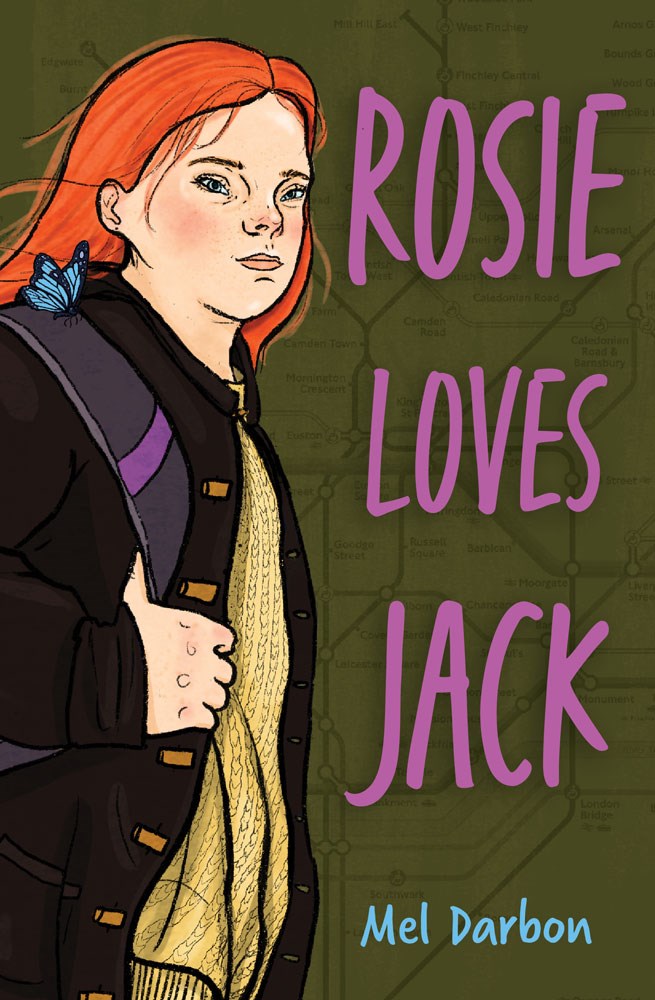
My book Rosie Loves Jack is written to show what it’s like to be a teenage girl with Down syndrome navigating a sometimes harsh and uncomprehending world. My character, Rosie, encounters many different people on her journey to be reunited with her boyfriend—some kind, some cruel—but she carries on regardless, fighting for what is right.

The book was inspired by my brother, who has a profound developmental disability. I have been an eyewitness on many occasions when my brother has been either verbally abused or completely ignored, as though he doesn’t count as a normal human being. My family has even been told that he should never have been born. I always knew that one day I would give my brother a voice, because I wanted people to see that his life is not unworthy and that we need to look beyond disability to ability. His experiences fueled my desire to help dispel the myths of disability because I need to make it clear that when you have a brother like mine the positives far outstrip the negatives. My brother has taught me compassion, kindness, patience, and above all else the ability to empathize.

My work later on as a teaching assistant with teenagers with Down syndrome reinforced my desire to write an inclusive book, as every one of these young people had a voice inside them, which needed to be heard.

It was at this time that I met the girl who inspired my character Rosie in Rosie Loves Jack. She was kind, funny, and fiercely independent, determined to get a job, fall in love, and one day get married. I learned from her how much people with Down syndrome are attuned to other’s feelings. They have incredible empathy—and always see the good in the world. I realized how much we all have to learn from them, and I wanted my character Rosie to show this through her innocent but brave eyes and for the reader to wonder at the world with her and to learn through her that kindness and compassion are so important. I wanted my reader to really feel and understand what it’s like to have assumptions made about you because of the way you look by “putting on Rosie’s shoes” and walking with her on her journey.

“Each one of us has lived through some devastation, some loneliness, some weather superstorm, or spiritual superstorm, when we look at each other we must say, I understand. I understand how you feel because I have been there myself. We must support each other and empathize with each other because each of us is more alike than we are unlike.” – Maya Angelou

Teachers’ Tools for Navigation: 

There is no right or wrong way to teach young people about compassion. It’s simply about listening, being emotionally connected and non-judgmental, and letting people know that they are not alone. In this workshop I want to help students to really think about what empathy means and how they can relate it to themselves and conduct themselves in the future. I want them to look beyond their own world and see it through new eyes.

Exercise 1

Ask the students to write down exactly what the word empathy means to them and why they think it is important to promote empathy in our lives.

Exercise 2

Sharing emotions and empathizing with them. Young people can find it hard to articulate their own emotions, so in this initial exercise I get them to warm up by thinking about and observing an event in my book and some of the characters reactions to.

  1. Read page 18–20 of Rosie Loves Jack. This is the scene where Rosie, after eight days of not hearing from her boyfriend Jack, overhears a conversation between her parents, mentioning some postcards that Jack has sent to her. Rosie’s father has hidden the postcards in his office in their house, so that Rosie thinks Jack doesn’t care about her anymore.
  2. Write down your thoughts on how you would feel if you were either Rosie or Jack and found this out. Get some of the students to read out their answers.
  3. Now switch to Rosie’s father’s viewpoint. Are his fears that Jack might hurt Rosie justified? Stand in his shoes and imagine what it would be like for a parent to have a daughter who is with someone who can be violent, even though Jack’s brain injury is not his fault and he never loses his temper with Rosie. Does Rosie’s father have the right to hide the postcards? It can be interesting to get two of your students to play the parts of Rosie and her father and each argue their case. The students can direct questions at them to see how they would respond in character. Get the two students playing the parts to swap over, so that they then argue from the opposite viewpoint.

Exercise 3

This is where the students choose one of their own emotional experiences to write about. Ask them to think of a time that they have been unjustly treated, because we all have a built-in sense of fairness. To start them off it can help to recount a time when you have been treated unfairly yourself. As an example, I’d tell the class about an incident when I was fifteen and my best friend stole a large cream cake from the teacher’s dining room and ran up to the top field to eat it. I got the blame for it, as someone said they’d seen me in the vicinity at the time it disappeared. I had to stay behind after school for a week doing extra work. I’m still fuming now! This is a powerful exercise to do, as students can get very passionate about what happened to them—and the other students can readily empathize with them. First, ask them to record exactly what happened and then to expand on how it made them feel. Get some of the students to read them out to the class. This is a great exercise for eliciting emotions and sharing them. Injustice can stir many painful feelings like anger, sadness, helplessness, frustration, and vengeance, and you can see and hear the sense of injustice building as the students recount their stories.

Exercise 4

Have the names of every student in the class folded up in a hat or box. Get each student to pick a name out of the hat. They then have to write a positive, kind, and thoughtful note of encouragement about the person they have picked, which they then hand over to that student at the end of the session. Encourage the class to read out what they have written about each person. These are often words that each child will never forget and is a great lesson in being mindful and providing an opportunity for each student to reflect on their own perceptions and behaviour.

Published March 1st, 2021 by Peachtree Publishing Company

About the Book: Rosie is a 16-year-old girl with Down syndrome, fighting for little freedoms, tolerance, and love amid the vast landscape of London in Mel Darbon’s powerful debut YA novel Rosie Loves Jack (Peachtree Publishing; March 2021; ISBN : 978-1-68263-289-5; HC $17.99; Ages 12+).

Rosie loves Jack. Jack loves Rosie. So when they are separated, Rosie will do anything to find the boy who makes the sun shine in her head. Even run away from home. Even struggle across London and brave the Tube stations to travel to Brighton alone during a snowstorm. Even though people might think a girl like Rosie could never survive on her own. Rosie must deal with new situations and experiences and some frightening unfamiliar places and people, but she’s determined to prove to everyone, especially her parents, that she’s just as capable as anyone at following her heart.

Written from Rosie’s perspective, this riveting novel gives readers an underrepresented but much-needed and thoughtful point of view. Author Mel Darbon’s voice-driven plot will immediately pull readers into Rosie’s world and have them excited, worried, proud, and cheering alongside her for every step of the journey, which is filled with lighthearted as well as darker moments. Featuring a diverse cast of characters and highlighting the range of abilities within the special needs community, this compassionate story drives home the message that we are all humans with feelings and the need to be valued and loved. Rosie Loves Jack was reviewed by a sensitivity reader from the Down syndrome community for accurate representation.

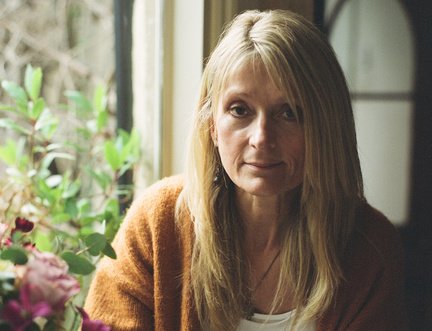
About the Author: MEL DARBON began telling stories to her autistic younger brother when they were children and has worked as a theater designer, freelance artist, teacher for adults with learning disabilities, and workshop teacher for teenage moms and young offenders. Mel is now focused on writing her second novel and developing creative writing workshops that encourage students with mixed abilities to work together for acceptance and inclusion. A graduate of Bath Spa’s MA in Writing for Young People, she lives in England. Follow her on Twitter @DarbonMel.

Thank you, Mel, for this wonderful post and empathy exercise! We agree that teaching about empathy all through school is so important!

Author Guest Post: “Insights from a First Time Author” by Vali Benson, Author of Blood and Silver

Share

“Insights from a First Time Author”

Hello! My name is Vali Benson and I have been a writer all my life. I can also now call myself a published author. It still seems like a dream, but it’s true. Ever since I can remember, I have had a book in my hand. As a lifelong reader, I often thought, “I could do better than that”. So I decided to finally do something about it. People have asked me to explain the writing process but I can’t. I don’t think there is a right way or wrong way to write a book. But I do know what works for me.

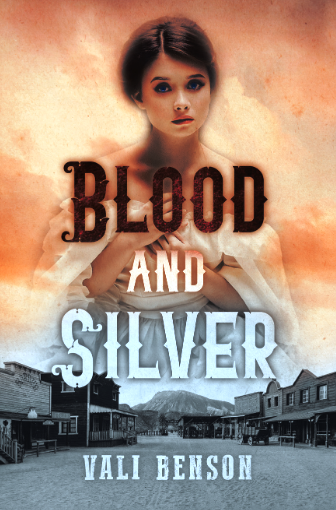
The first step is to come up with an idea. It must be something that interests you, or that you feel strongly about. If you don’t care what you are writing about, you will simply get board and the work will suffer. Once when I had severe writers block, a great teacher told me, “Write about what’s in your own backyard”. I took my teacher’s advice and turned in an award winning essay. That was the inspiration in writing my book; a young adult historical fiction novel called Blood and Silver. The story takes place in Tombstone, Arizona. For thirty years, I have lived in Tucson, Arizona. Tombstone is only forty five minutes down the road, practically backyard distance.

The population of Tombstone today sits at about thirteen hundred. On the weekends, many of the residents dress up in western garb – as cowboys, sheriffs, frontier gamblers, proper matrons and saloon girls. At first glance, it seems as though this may be a retirement community designated for extras of John Ford films. However, Tombstone does have one enduring claim to fame – the shoot out at the O.K. Corral.  It is called “the most famous thirty seconds in the history of the American west”. The legendary incident is a gunfight that occurred in 1881. The shoot out involved Doc Holiday, Wyatt Earp and two Earp brothers against a gang of outlaws called the Cowboys. Three men were killed, all of them Cowboys. The Earps and Doc Holiday were already famous in the west.  The gunfight made them infamous.

Tombstone was the largest city between St. Louis and San Francisco in 1884, with over 150 businesses, including 100 saloons, and a thriving red light district. Apparently this arid little tourist trap, only forty five minutes from my hometown, was more important than I thought!

This information began to spin my inquisitive wheels.  I began to wonder what it would have been like to live in this obscure place in 1880. The first step was complete; I had a premise that sparked my interest.  Now, it was time for the part of the writing process that gives life to the story, research.

Research is pivotal no matter the genre. It allows the author to properly prepare the reader so that they are engaged in the narrative. One needs to look in unusual places, not just the top three Google hits. I love sourcing museums, libraries, newspaper archives, and even historical homes. Don’t rely on your computer only. Everyone can get that information. Not only is it not original, it is not interesting.

One tip that I would like to emphasize to a burgeoning writer is to seek out primary sources whenever possible. If you can work from the original source, it falls on you to interpret the story. This allows you to not have to depend on someone else’s version of the truth.

As I began to delve deeper into the true story of Tombstone, I also uncovered unexpected angles. The most prominent of which was the effect of the Chinese population. The result of this research led me to a real person whom I could never had made up, a woman named “China Mary”. This woman lived in Tombstone from 1879 – 1906 and essentially ran the town. In addition to operating a gambling hall behind her general store, she was also the preeminent broker for opium, laudanum and Chinese prostitutes. After I discovered the real life splendor of China Mary, I made her one of my central characters and twisted my fictional story around her actual exploits. None of that could have been possible without an extensive research period.

Being a writer of historical fiction, historical accuracy is the most important component of the piece to me. It is even more pivotal than the narrative. I cannot tell you how many times I have quit reading a book that claims to be factual because the information and events are incorrect. It really annoys me! It is also important to realize that research is never ending because you can’t ever learn everything there is to know. At some point, you just have to make up your mind that you have enough to craft the story you want to write. Then start writing!  I begin writing using my research as a reference and don’t worry if I have a fully formed concept. I believe in the Jodi Picoult approach, “You can always edit a bad page. You can’t edit a blank page”.

Many writers believe in outlines as a method of organizing and categorizing their research. Outlines don’t work for me. I tend to be too specific.  I end up writing the whole story in my outline.  What works best for me is to simply write.  Just start, and see where it takes you.  I flesh out the characters first. You can do whatever you want with your people, just be sure you wind it up so that it makes sense.

As far as my writing habits are concerned, I don’t have many. I just do it. I know that many professional writers say the best method is to treat writing like a regular job with set start and stop times. I’ve tried this and it never feels right. For one thing, when I get on a creative roll, it is nearly impossible for me to stop. Conversely, I cannot force an idea. When I don’t feel like it’s happening, I walk away. I commit a lot of time thinking about my characters; which may be the most crucial part of the writing process. When inspiration strikes, I will sit down with my glass of sweet iced tea and see how my characters handle the new twist. I know that strong coffee is the traditional nectar of the working writer, but I need my sweet tea. The sweeter the better!

When your story is finished, it doesn’t mean that you’re done writing. Now is the time for my least favorite part of the writing process, editing. Editing is obviously extremely important but I find it terribly frustrating. I try to remember not to over edit as there is a difference between editing and rewriting. Aside from the occasional grammatical error, most of my editing is about subtraction rather than addition. I choose to think of my editing time as a tightening up period. This is when I can really focus on making my narrative flow the way that I want. I also make sure the story is always kept in perspective and unfold s the way that I want it to.

When is your story finished? It is finished when you think it is. Before you begin, you will know where you will end up. If you don’t, don’t start. This is why research is so important, because if I can understand the period in which my characters live, I can shape their circumstances and attitudes into the narrative.  With Blood and Silver, because I had taken the time to insure that every aspect of my world would be historically accurate, the attitudes and tones of my characters occurred organically. I simply placed my fictional characters into actual settings and let them take me where they wanted to go.

Thanks for reading and happy writing!
Best, Vali

Published August 3rd, 2020

About the Book: What is a twelve year old girl to do when she finds herself in the silver boom town of Tombstone, Arizona, in 1880, and her only home is a brothel and her only parent is a drug-addicted mother? If she is Carissa Beaumont, she outsmarts the evil madam and figures a way out.

After tricking the madam, Miss Lucille, into summoning a doctor for her mother, Lisette, she discovers that Miss Lucille has been drugging her. She and the kind doctor make a plan to try to save Lisette by dosing her down on the drug.

Doctor Henderson tells Carissa that the only source for the drug is a Chinese immigrant named China Mary, who lives in Hoptown, at the other end of Tombstone. Carissa has no choice but to go to the powerful woman for help. Many say that China Mary is the one who really controls Tombstone.

China Mary admires Carissa’s brave spirit, and uses her influence to get her a job at the new Grand Hotel, which will free Carissa from her many duties at Miss Lucille’s. She will work along with Mary’s twelve year old niece, Mai-Lin. The two girls become fast friends.

Then, disaster strikes, and the two girls must work together to stay alive.

With a host of colorful characters and meticulous attention to period detail, Blood and Silver is a story of the best and worst of human nature, the passion for survival and the beauty of true friendship.

About the Author: Vali grew up in the Midwest. She now lives in Tucson with her husband, two sons and grandchildren.

After graduating from the University of Illinois, Vali started and sold two successful businesses before she decided to pursue her real passion of writing. She published several articles in a variety of periodicals, including History Magazine before she decided to try her hand at fiction.

In April of 2020, Vali published her first novel, Blood and Silver. That same month, she was also made a member of the Western Writers of America.

Thank you, Vali, for sharing your experiences as a first time writer and for sharing your debut book!

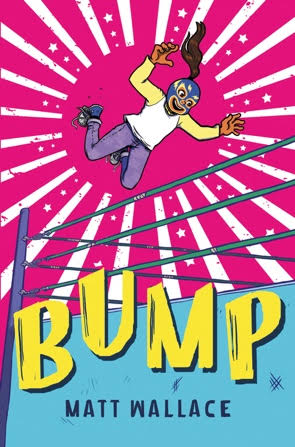
Author Guest Post: “Asking the Important Questions about Action Scenes” by Matt Wallace, Author of Bump

Share

“Asking the Important Questions About Action Scenes”

I love a good scrap in my stories, and I always have. Battles, boss fights, chases, sports, middle grade novels are as filled with thrilling scenes of action as any other genre of fiction, and mine are no exception. These scenes are fun to write and can be a lot of fun to read, but that’s far from all they are, or all they should be. There is a lot written and said about how to compose a clear and well-paced action scene, but too often the “why” of those scenes is neglected.

There can be a tendency, I think, to assume there isn’t much narrative substance to be found in explosions, and that scenes of action are separate from the “serious” aspects of the story. While we may acknowledge the high, even mortal stakes of some of those climactic battles or other struggles, many of us still fail to appreciate them as and directly connect them to the deeper issues of fiction. While that type of action certainly isn’t necessary in order to tell a compelling and emotional story that conveys important lessons and truths, it also doesn’t detract from any of those things. To the contrary, the action in a novel can and should be as much a part of story and character arcs as any other scene, and can be a vibrant way to discuss those topics with young readers.

I grew up in the professional wrestling business. Many of the most important and formative lessons I learned about life, storytelling, and myself happened inside a wrestling ring, without words. Those experiences deeply inform the stories I write. Fight scenes in fiction are about more than flash and fury, they are about motivations. They have the ability to strip characters down to their purest sense of self and most unfiltered emotions. They are about the dynamic between the characters participating in the conflict. These are all things that can and should be examined when discussing action in stories. Action can be an easily accessible and entertaining window into the deeper human issues of any novel, and into the story being told.

There is perhaps no greater example of this than a professional wrestling match. While on the surface it can seem like no more than choreographed violence for its own sake, professional wrestling is, at its core and its best, a storytelling medium. The motivations of the wrestlers and the personal conflict and story unfolding between them often do more than simply enhance the stakes of the action and the outcome of their contest. When planned and executed well, that story is far more compelling and important than the outcome of the match itself. Wrestling fans don’t root for winners, they root for characters whose personalities and personal journeys connect with them.

This was at the forefront for me when I wrote Bump, some of the most important character and story scenes of which play out through professional wrestling matches. I wanted to write thrilling, fast-paced, and entertaining scenes of action that also provided a vehicle for my characters to grow as people and advance the story I was telling. The main character, MJ, is forced to confront all of her worst fears and insecurities about herself every time she steps through the ropes of a wrestling ring and in front of a frantic crowd of spectators. The journey she undertakes as she wrestles in her first matches is as important to her overall arc as all the events that take place outside the ring. That physical action provides MJ with opportunities for creative problem solving and personal reflection, and gives her a mirror for the problems she’s experiencing in her life, dealing with grief and isolation. Wrestling is the catalyst for her to overcome so much in such a unique and exciting way.

Action is like any other narrative device, it can be used to express anything and everything the author wants to express. Particularly for new and young readers, action can be a great hook, and an even better opportunity to discuss character motivation, the roots of conflict, both physical and emotional, and ultimately, conflict resolution. The important thing is to ask these questions about the action scenes we read, rather than dismissing or decrying them as nothing more than popcorn entertainment.

Published January 26th, 2021 by Katherine Tegen Books

About the Book: A moving and triumphant middle grade contemporary debut from award-winning author Matt Wallace about a heroic young girl—who dreams of becoming a pro wrestler—learning to find courage and fight for what she loves.

MJ knows what it means to hurt. Bruises from gymnastics heal, but big hurts—like her dad not being around anymore—don’t go away. Now her mom needs to work two jobs, and MJ doesn’t have friends at school to lean on.

There is only one thing MJ loves: the world of professional wrestling. She especially idolizes the luchadores and the stories they tell in the ring. When a chance encounter with her neighbor Mr. Arellano reveals that he runs a wrestling school, MJ has a new mission in life: join the school, train hard, become a wrestler. Once MJ starts training at Victory Academy, she feels like the hurts in her life are beginning to heal.

But trouble lies ahead. After wrestling in a showcase event, MJ attracts the attention of Mr. Arellano’s enemy at the State Athletic Commission. There are threats to shut the school down, putting MJ’s new home—and the community that welcomed her—at risk. What can MJ do to save her new family?

Praise for Bump: 

“Matt Wallace makes every pro-wrestling fan’s dream come true in Bump. Not only does he know his way around a wrestling ring—he’ll have you booing at the heels and cheering for the faces, just like you would ringside—but he knows how to tell a story. Middle-school gymnast turned wrestler MJ isn’t just trying to find herself, but the courage to be herself, in a world where cliques, cruelty, unfairness, and grief beat you down. But Bump teaches you that, in life and Lucha, there’s always a surprise move that can save you from defeat and pin your opponent—and your fears—down.”    (Carlos Hernandez, Pura Belpré Award-winning author of the Sal and Gabi series)

“This book did a pile drive on my heart. I was so quickly captivated by MJ as she navigated grief and excitement, fear and joy.” (Mark Oshiro, author of Anger Is a Gift and Each of Us a Desert)

“My favorite books have two things: A world I’ve never seen before and a great character to experience it with. Bump delivers both in a heartfelt, powerful way. I loved stepping into the world of small-time professional wrestling with M.J. I winced every time she took a hit inside the ring and out, and I cheered every time she got up. What a great middle-grade debut. I truly cannot wait to see what Matt Wallace does next.”  (Greg van Eekhout, author of Voyage of the Dogs and Cog)

“I love kids with big dreams, and MJ is a heroine to root for. Bump introduces readers to the world of professional wrestling while also telling a story about grief, friends that become family, and finding your voice. An entertaining and heartwarming read!” (Janae Marks, author of From the Desk of Zoe Washington)

About the Author: Matt Wallaceis the Hugo–winning author of Rencor: Life in Grudge City, the Sin du Jour series, and Savage Legion. He’s also penned over one hundred short stories in addition to writing for film and television. In his youth he traveled the world as a professional wrestler, unarmed combat, and self-defense instructor before retiring to write full-time. He lives in Los Angeles with his wife, Nikki. You can visit him at www.mattwallace.com.

Thank you, Matt, for this post about the importance of action sequences even in heartfelt books!

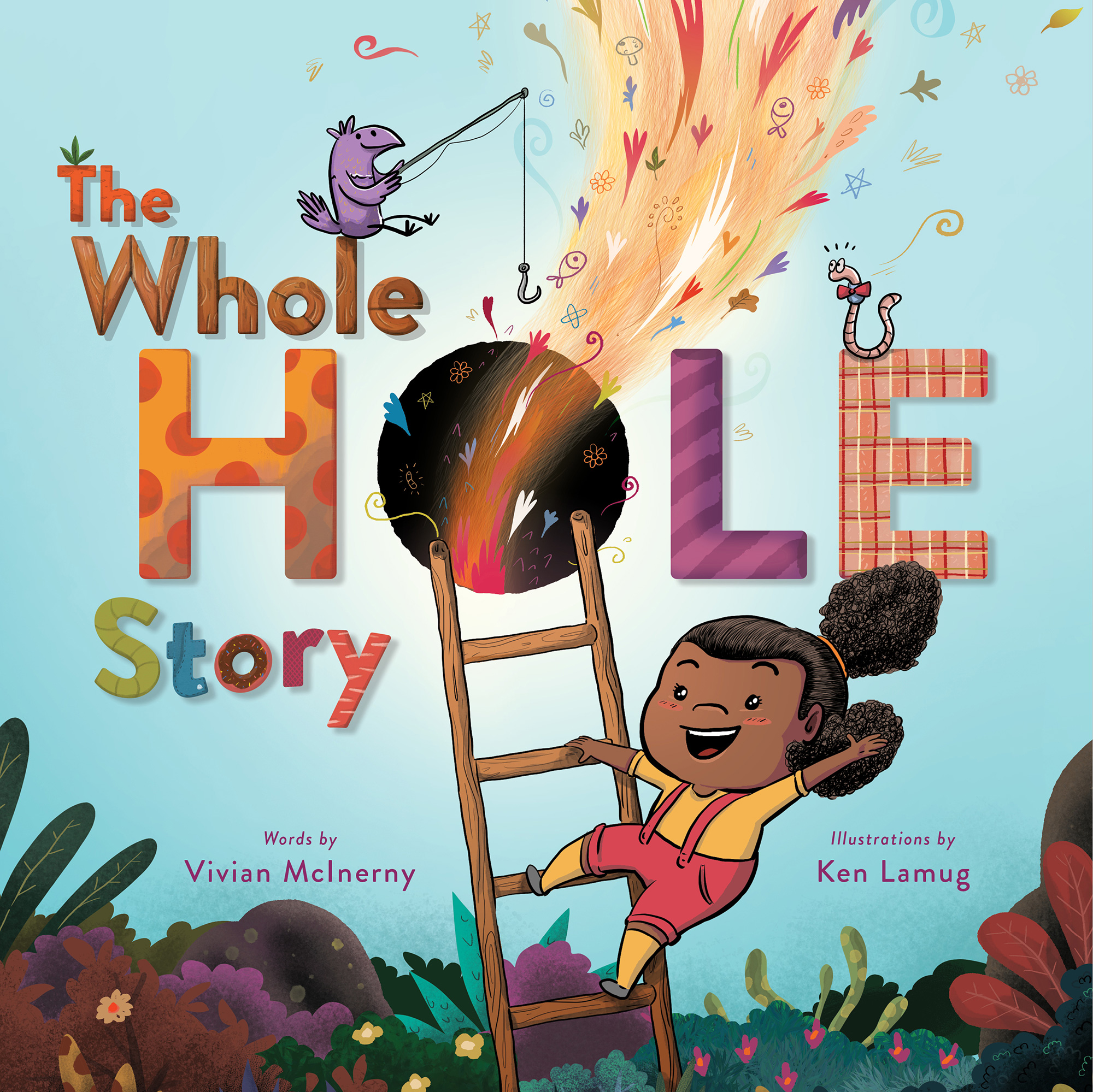
Author Guest Post by Vivian McInerny, Author of The Whole Hole Story

Share

Typically, I think of reading as a way to settle and quiet my mind. I hope The Whole Hole Story has the opposite effect on readers. I wrote the story with the opposite intention. I hope the story and illustrations  spark and excite young minds to consider the infinite possibilities of their own imaginations.

In The Whole Hole Story, young Zia discovers a hole in her pocket. She imagines all the things a hole might be, from a swimming hole to an elephant trap, and even a tunnel to the other side of the world. It’s a simple concept that allows room for imagination. 

The idea is similar to the kind of “constraint” prompts often used in writing workshops such as, write about two strangers on a bus or write about this particular object for ten minutes —go! The paradox is that rigid constraints incite rather than stifle imagination.

I took several Massive Open Online Courses (MOOCS) through the University of Iowa taught by leaders of their famous Iowa Writers Workshop. (Highly, highly recommend —and they are free.) One class suggested writing a short story in which every sentence contained a number. Some participants created clever lists. Others wrote stories in which the numbers were more or less buried, and might even go unnoticed by an unsuspecting reader.

I’m one of those annoying workshop participants who initially dismissed such “tricks,” convinced they wouldn’t work on me. It was a delight to discover constraints useful for jumpstarting ideas. It occurred to me later that as a staff journalist for a daily newspaper, I routinely wrote with rigid constraints. Facts were a kind of constraint. (Despite opinion of the media to the contrary, most journalists really do rely on facts!) Looming deadlines were a form of time constraint. 

I think young children often feel discouraged by a world of which they have little control. I hope Zia prompts them to consider imaginative thinking as an ultimate form of autonomy.

Classroom discussion suggestions from author Vivian McInerny and illustrator Ken Lamug.

  •  Imagine the possibilities of an ordinary object such as a crochet hook or colander. Like Zia, they can imagine the object bigger, smaller, rigid, flexible, bent, filled, turned this way or that, multiplied, etc. (As a past volunteer coach with The Odyssey of the Mind program, I found this prompt useful.) 
  •  Consider how the imaginative illustrations of Ken Lamug further the story. When the elephant is trapped in the hole, Lamug imagines Zia with a rope to help him out. When Zia digs the hole deeper, Lamug imagines buried treasure, dinosaur bones, and a busy mole. And when the hole falls on top of Zia for two whole pages, Lamug adds the element of time with day turning to night. None of those things are mentioned in the text but come from the unleashed imagination of the artist.

From illustrator Ken Lamug

  •  Draw what you think could come out of the hole.
  • Talk about India and what kind of outfits the elephant might wear. Significance of those outfits. clothes.
  • Consider the different kinds of animals that go to the watering hole. Significance of water as a finite resource. How would you preserve water?
  • Playful things you can make with mud? 
  • What are cool things to collect that fit in your pocket?

Published January 12, 2021 by Versify

About the Book: In Vivian McInerny’s playful debut, readers will fall in love with wonder again as Zia imagines what might happen if the hole in her pocket became big enough to fall right through. The Whole Hole Story is perfect for readers looking for a fresh take on the classic Harold and the Purple Crayon.

Zia is used to the hole in her pocket—she frequently fills it with frogs and other objects. And as it gets bigger and bigger, she starts to wonder what might happen . . . if she fell right through. Would she cover it with a blanket to catch an elephant, or dig a tunnel to the other side of the world? The possibilities are endless, and readers will love following Zia’s adventurous imagination from beginning to end.

With hilarious wordplay paired with Ken Lamug’s bright and colorful illustrations, The Whole Hole Story will appeal to kids’ divine sense of silliness. Perfect for fans of Du Iz Tak?, and They All Saw a Cat.

Video Interview with publisher Kwame Alexander, illustrator Ken Lamug & author Vivian McInerny:

Vivian McInerny is a journalist and fiction writer. Her short stories are published in several literary magazines including 805 Lit+Art, Dunes Review, and Literature for Life. The Whole Hole Story is her first children’s book.  Vivian McInerny TwitterFacebook  Ello

Illustrator Ken Lamug is an award-winning professional dabbler. He was born in the Philippines and moved to the US with his entire family during his teenage years. Currently, he enjoys his life as an author/illustrator of picture books and graphic novels for middle-graders to middle-agers.

In his past life he was a beekeeper, race car driver, filmmaker and chicken herder. He currently lives in Las Vegas (although he doesn’t gamble) where he spends time with his family and two dogs.

Ken is the Illustrator Coordinator for Nevada Chapter of SCBWI (Society of Children’s Book Writers and Illustrators). He also teaches graphic novels for Storyteller’s Academy and a team member of #KidLitGN Pitch event.

Thank you, Vivian, for sharing about the book!

Author Q&A with Kenneth C. Davis, Author of Strongman: The Rise of Five Dictators and the Fall of Democracy

Share

Strongman: The Rise of Five Dictators and the Fall of Democracy
Author: Kenneth C. Davis
Published October 6th, 2020 by Henry Holt and Co.

About the Book: From the bestselling author of the Don’t Know Much About books comes a dramatic account of the origins of democracy, the history of authoritarianism, and the reigns of five of history’s deadliest dictators.

What makes a country fall to a dictator? How do authoritarian leaders—strongmen—capable of killing millions acquire their power? How are they able to defeat the ideal of democracy? And what can we do to make sure it doesn’t happen again?

By profiling five of the most notoriously ruthless dictators in history—Adolf Hitler, Benito Mussolini, Joseph Stalin, Mao Zedong, and Saddam Hussein—Kenneth C. Davis seeks to answer these questions, examining the forces in these strongmen’s personal lives and historical periods that shaped the leaders they’d become. Meticulously researched and complete with photographs, Strongman provides insight into the lives of five leaders who callously transformed the world and serves as an invaluable resource in an era when democracy itself seems in peril.

Q&A

Q1. What led you to choose this topic and this audience (teens) for your new book?

A1.   I have been writing about history for some thirty years and was always fairly optimistic about the future of America. In spite of the flaws I have catalogued in my books, I always believed in the United States as the “last, best hope on earth”—Lincoln’s words—and that its democratic system still moved towards more progress.

But something has changed. And for some time now, I have been concerned that democracy, at home and abroad, was under assault. That is not only sad but dangerous. I felt I had to tell the story of these dictators and how quickly democracy can vanish. It is meant as a warning, a cautionary tale for our time.

On the question of writing for teens, let me first say that I think my books aimed at younger readers are not that different from my earlier work aimed at older adults. In fact, many older readers don’t know these are “Young Adult” books. I try and write for everyone in an accessible style that welcomes the reader, older or younger.

I started writing for younger readers several years ago because I have spoken to so many of them in classrooms over time and came away impressed by their curiosity, engagement, and interest in history. But I wanted to deliver a message to those young people that democracy can’t be taken for granted and that they have a real stake in protecting our rights and freedoms.

Q2.   What is the key takeaway you hope that young people get from reading it?

A2.   There are several key issues at work in this book and, I would say, all of my work. First is that history is not a collection of facts—dates, battles, speeches, laws – but real stories about real people doing real things. When we read about history that way, it becomes far more compelling and connected to our own lives.

Next is that we read and learn from these accounts to understand who we are and how we got here. Part of that idea is the story of how enormous sacrifices have been made in the name of rights and progress—from abolition to suffrage, civil rights, and fair labor laws. That often comes from the bottom up, not the top down, which means people without a vote still had a voice.

It is also a book that asks hard questions about what people are willing to do in following a leader. And that brings me to my earlier point: Democracy is not a spectator sport. We must protect it if we think it is worth keeping.

Q3.   What was the hardest part about writing the book?

A3.   I actually write about that in the closing words of the book. This was, in many ways, an extremely difficult project. I have written about many hard and awful events and periods in the past, including the stories of racial slavery I told in my earlier book, In the Shadow of Liberty.

But describing the levels of cruelty, inhumanity, and indecency are unavoidable in writing the history of the Strongmen –the murderous dictators whose stories I tell. We can’t sugarcoat that history. Or ignore it. That made this project a true test of my fundamental belief in the general goodness of humanity. I had to write about the vast numbers of people who were complicit in the genocidal crimes of a Strongman like Hitler or Stalin.

Q4.   If a teacher asked for recommendations for teaching your book, what would you suggest?

A4.   My writing career has mostly been about asking questions and presenting facts and evidence in real stories. I think that teachers –especially those in Social studies—can follow that general premise with their students. Ask questions and allow students to find answers through accurate, documented evidence.

This approach of getting students to do real research, assess evidence, check sources, and make considered judgments based on facts is the essence of thinking for themselves. It is what today’s education must be about, especially in this era as facts and truth are under such assault.

In a more practical way, this book should fit into a number of curriculum areas – 20th century history; the Holocaust; civics and government; ethics, religion, and basic philosophy; economics; sociology and the behavior of crowds. I have always been a proponent of crossing disciplines.

Q5.   What other resources do you feel would complement STRONGMAN in a curriculum?

A5.   I would start with reputable journalism, including newspapers and websites that accurately document their reporting. We must establish the clear connection between history and the headlines. That will also help develop those “media literacy” skills that all of us –not just students—need to negotiate the world we live in.

Certainly, there are also a great many other books that could be placed beside Strongman –biographies, war narratives, Holocaust and other memoirs from each of these eras. I’ve included many of them in the Bibliography of Strongman.

I think you can include some historical fiction –cautiously reminding students that novels are not always accurate depictions of events. There are also a wealth of documentary films and series, often starting with what is offered from PBS.

Finally, I did not set out to write three books as a “set” – but I think that my earlier books can be read alongside Strongman. I think that In the Shadow of Liberty provides more context for how the history of slavery developed alongside American democracy. More Deadly Than War provides background for the role World War I played in shaping the world that produced the dictators I profiled in Strongman. And that is how we must read history – as a long, complex, series of connected narratives, not a list of events that are unrelated.

About the Author: Kenneth C. Davis is the New York Times–bestselling author of America’s Hidden History and Don’t Know Much About® History, which gave rise to the Don’t Know Much About® series of books for adults and children. He is also the author of the critically acclaimed In the Shadow of Liberty, which was an ALA Notable Book and a finalist for the YALSA Award for Excellence in Nonfiction, as well as More Deadly Than War, which was named a Washington Post Best Children’s Book of the Month. A frequent guest on national television and radio and a Ted-Ed Educator, Davis lives in New York City.

Ken also offers free classroom visits to teachers through his website, which might be of interest to include: https://dontknowmuch.com/for-teachers/

Thank you, Kenneth, for sharing the truth of history with our students!

Author Guest Post: “Nine Steps for Writers Dealing with Rejection” by Erica S. Perl, Author of The Ninth Night of Hanukkah

Share

“Nine Steps for Writers Dealing with Rejection”

By Erica S. Perl

“It’s just not what we’re looking for right now…”

“I really wanted to love it, but…”

“I didn’t connect with it…”

I’m not going to sugar coat it. Rejection stinks. Given the choice, I’d pick a root canal any day.

But, like it or not, rejection is part of every writer’s journey. So, I’ve come up with a process to deal with rejection, and I’m happy to share. If you have the skin of a rhinoceros, maybe you’ll never need it. But if you’re human like the rest of us, it just might come in handy someday.

  1. Get mad and stomp around. Seriously! Let the rejection wash over you and feel the white-hot rage and indignation. It’s not a happy feeling, but it is intense and you owe it to yourself to feel it, if only so that you can use that experience for material.
  2. Write down all the angry things you want to say to the editor who rejected your work (on paper, so you don’t accidentally click “send” or “reply all”). Be creative!
  3. Crumple up that paper (feel free to uncrumple it later and save it, so when someone else buys your book and it wins prizes or sells a zillion copies you can frame it and hang it in your office).
  4. Complain to your most sympathetic friend. This can be a friend who is covered in fur or plush. Or a human being, if you want. Just make sure it is someone who will listen and let you rant as long as you need to.
  5. Go for a long run. Or a long walk. Or just go outside. Listen to something distracting, like loud music or soothing music or a podcast that has nothing to do with your book! Truly get your mind off your troubles and perhaps get your adrenaline pumping.
  6. Take a deep breath. Or several deep breaths. Or several days of deep breaths, away from your piece. It’s tempting to go right back in but time away actually helps.
  7. When you’re ready, read the editor’s comments again.
  8. See if you can find anything useful in them, to make your work better. There’s a really difference between “it’s not for me” and “the pacing felt off and the character’s voice seemed too old….” The latter may or may not ring true for you, but it gives you something to look at and consider, should you wish to revise. Also, if you hear the same kind of feedback from more than one editor, it might suggest an area worth addressing.
  9. Start to revise. There are always ways to improve a piece and this is an opportunity to look at your piece with fresh eyes. So, take the time to see if it needs anything else before you send it out again. Hopefully, doing another round of edits will remind you of everything you love about your piece… everything that, hopefully, the next editor will see.

I wish I could tell you that, after a certain number of successful books, you no longer have to deal with rejection. Unfortunately, that’s not true. Rejection and revision paved the path to all of my successful books, including my newest one: The Ninth Night of Hanukkah.

And actually, I’m grateful. Because sometimes rejection has a silver lining: it pushes you to take your books to new heights, and make them better than you ever thought possible. So, please, hang in there. It will make the editorial acceptance you eventually receive taste all the sweeter, I promise!

Published September 15, 2020 from Sterling Children’s Books

About the Book: A heartwarming picture book with a fresh twist on a Hanukkah celebration: celebrating a ninth night with new neighbors and friends!

It’s Hanukkah, and Max and Rachel are excited to light the menorah in their family’s new apartment. But, unfortunately, their Hanukkah box is missing. So now they have no menorah, candles, dreidels, or, well, anything! Luckily, their neighbors are happy to help, offering thoughtful and often humorous stand-in items each night. And then, just as Hanukkah is about to end, Max and Rachel, inspired by the shamash (“helper”) candle, have a brilliant idea: they’re going to celebrate the Ninth Night of Hanukkah as a way to say thanks to everyone who’s helped them!

This book is not only a heartwarming and fun story, it’s also an invitation to join in a beautiful new Hanukkah tradition!

There is a free event kit that can be accessed via this page on Erica Perl’s website, including all sorts of goodies to have your own Shamash Night this season—pennants, thank you cards, a cultural guide, a special blessing, activities, and more!

Erica S. Perl is the author of more than thirty popular and critically-acclaimed books for young readers. Her middle grade novels include All Three Stooges (National Jewish Book Award, Sydney Taylor Honor Book) and When Life Gives You O.J. (Sydney Taylor Notable Book, ALA Notable Book. Her picture books include Chicken Butt!Goatilocks and the Three Bears, and Ferocious Fluffity. She also writes the Truth or Lie!Arnold and LouiseLucky Dogs, and Craftily Ever After (as “Martha Maker) series. And she keeps an Instagram cartoon journal @espcrawl. Visit her at ericaperl.com and follow her online @ericaperl.

Thank you, Erica, for being so open and honest about rejection!