Author Guest Post: “The Hidden Value of Reading ‘Above Level’” by Julie Mathison, Author of Elena the Brave

Share

“The Hidden Value of Reading ‘Above Level’”

Here in the information age, we love our boxes. I recently read an interesting post on Unleashing Readers entitled “This is my Anti-Lexile, Anti-Reading Levels Post.” I’m not an educator: I’m a former child-reader, a parent of two reading teens, and an author of middle grade and young adult novels. I didn’t know about Lexile numbers until I read this post, but I agree with the author’s perspective on it. Here’s why.

I came of age reading “old fashioned” children’s books – Heidi, The Hobbit, A Wrinkle in Time, Little Women, The Borrowers, Anne of Green Gables. The list goes on and on. These books contain complex vocabulary and diction. They take their time; they’re not concerned with “grabbing eyeballs.” And accordingly, I sank into these books, dwelt there, and I absorbed the complexity without even knowing it.

Take The Hobbit, for instance. I first read it during elementary school, then again as a teenager, then a few times as an adult, and at each age, the book enchanted, engaged and delighted me. Most likely, there were words I didn’t know when I first read it as a child, and some of the complex diction might have lost me, but did that make any difference to my experience? No. I was swept away from the first word, lost in a world of magical creatures. I remember the trolls! Gollum, deep under the mountain by his subterranean lake! I was there, living this book, and I have the memories to prove it. The intimacy of that experience is its own reward, but I’m also convinced that these complex books developed my imagination, my thinking, and my capacities in ways that are impossible to measure.

To the extent that the Lexile rating system embraces the educational value of linguistic complexity for the developing mind, I wholeheartedly agree. But the dangers are apparent. When readers are discouraged from reading “above level,” even if that is not the system’s intent, they miss out on the myriad of ways in which encountering language beyond our ken stretches us. When a child is captivated by a book that is “above level,” that complexity engages their faculties unconsciously, effortlessly. Interest drives one beyond one’s perceived boundaries. A child reads for love and gains the educational benefits anecdotally.

But then, I’m a curmudgeon of the analog age, a dinosaur, doomed to live on beyond my time. I noted, in a peripheral fashion, the rise of assessment in education during the 90’s—a rise that perfectly coincided with that in most other sectors. My husband’s corporate job devolved into a mind-numbing “capturing” of information as middle managers sought to compare like with like. Widgets. What was once “consulting” became “information-gathering.” That’s hard enough to see in the adult sphere, but when it becomes the defining context of the education of our children, it’s heart-breaking.

Ricki and Kellee got it spot on in quoting Teri Lesesne’s Reading Ladders in their Anti-Lexile Post: “rigor should be determined by sophistication of thought, depth of character development, stylistic choices, and mastery of language on the part of the author.” And I cannot say it any better than the author of that post when she counsels that the best way to guide young readers is to read, read, read.

Let’s bring back intuition! Creativity. Personal judgement. Let’s empower teachers to do what they already do – teach real, live, individual children. I’d even welcome a few of the pitfalls that inevitably result from empowering discretion. The attempt to quantify the qualitative has always been, to my mind, a doomed expedition, fraught with danger. Enthralled with the map, we forget the territory and lose our way. I would love to see our children’s libraries stuffed to the ceiling with enchanting, enthralling “above-reading-level” tomes, and children empowered do just what I did – bring home armloads of books, lay them out on the floor, and decide which world to enter first. Because no imagination can be captured by a metric.

Old Rus #2
Publishing March 1st, 2022 by Starr Creek Press

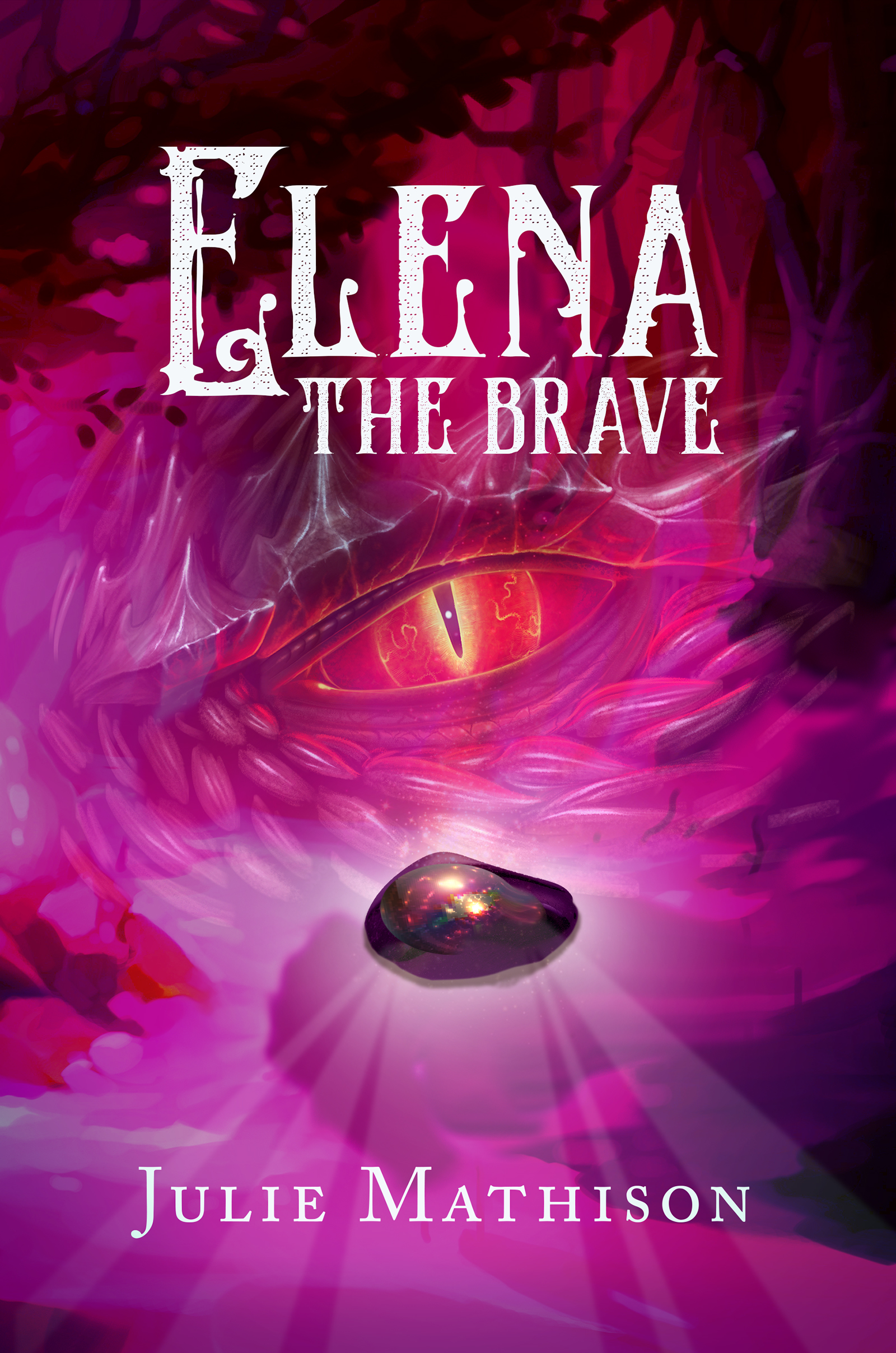
About the Book: From award-winning indie author Julie Mathison comes the sequel to BookLife Semifinalist VASILISA.

Old Rus, a land of witches and ogres, bogatyr warriors and six-headed dragons, magic and myth. A land lurking below the waking world, a fabled land – except for the chosen few.

It’s 1942, and the world is at war. Elena Petrovna Volkonsky is just a schoolgirl in a Pennsylvania steel town, the Russia of her forebears long forgotten – except in tales, sung by her babka in haunting tones. Elena can picture Old Rus clearly as she ponders her pet rock, its surface black and smooth, but its depths strange. Such visions! The snow-swollen Dnepr, wending southward through the wild steppe all the way to Byzantium. Vladimir of the Bright sun, ruling from glorious Kiev!. If only it were real. If only hers was not just an ordinary family in trying times. An ordinary family – with an extraordinary destiny.

Be careful what you wish for.

Meanwhile, Old Rus is in crisis. A dragon flies, a maiden is captured, and the great bogatyr, Dobrynya, is tasked with her rescue. But his son, Mitya, senses treachery on all sides. How can you save a man who will not save himself? And must he venture alone, trailing his father across the steppe where warring nomads range, even to the distant peaks of the Sorochinsk Mountains? He is prepared to do just that when a strange girl appears in the prince’s stables and upends all his plans.

What happens when two worlds – and hearts – collide?

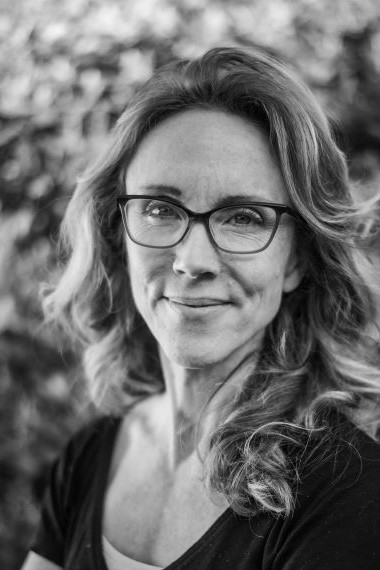
About the Author: Julie Mathison is the founder of Starr Creek Press and the award-winning author of books for young people that seek to delight, transport and inspire the child inside every reader. Her debut novel, Believe, won the 2021 Eric Hoffer Book Award for best middle reader and First Horizon Award for debut books. Vasilisa, Book One in her Old Rus series, was a 2021 BookLife Prize Semifinalist. She lives in the Pacific Northwest with her husband, two teenage children, six sheep, four goats, one dog, and more chickens than you can shake a stick at (literally, she has tried). Visit her at https://www.juliemathison.com.

Thank you, Julie, for this addition to our Anti-Reading Level post! It was great to have another point of view. 

Author Guest Post: “Parent – Educator Partnership” by Punam V. Saxena, Author of Parent Power: Navigating School and Beyond

Share

“Parent – Educator Partnership”

Parent Power: Navigate School and Beyond strives to normalize parenting. Every day is different presenting its own unique rewards and challenges. We often feel like we are on a merry-go-round and cannot seem to change the mundaneness of our routines.

I felt the same way while raising my four children, I often wondered whether I was doing a good job. Often, it felt like I was “winging it” and was hoping for the best. As a former educator and then stay-in-the-car-mom (I was never at home!) for more than 20 years, it was intuitive for me to build relationships with those who interacted with my children: teachers, administrators, and coaches. I assumed that’s what we, as parents, were supposed to do. We each learned from each other, and I soon became a trusted partner at the school and district levels where we made systemic changes for our children county-wide.

Educators are at a tipping point. They have the monumental task of ensuring our students receive the education they deserve while juggling the ever-changing pandemic world of schools opening, virtual learning, or even going hybrid. It has become almost comical at what is expected and what is reasonable.

Wouldn’t it be nice for educators to have a resource that has insight and expertise in the student’s physical and mental well-being? Someone who we can partner with to help the student where they currently are academically and then help them reach their full potential?

Parents! They are our ticket to helping our students achieve the success they deserve. We need their input, their perspective of how the child learns, or if any happenings at home are affecting the student’s school performance. Their knowledge is critical to helping educators navigate learning in the manner that is most beneficial and impactful for the student.

In this uncertain time, teachers need, more than ever, parent input and guidance.  We are counting on them to help us. But we also must realize the burden parents carry right now. It is imperative to create a symbiotic relationship between schools and parents for students to feel supported and achieve success.

In my debut book, Parent Power: Navigate School and Beyond, I share my insights on how an educator turned Parent Impact Coach built a relationship, became an advocate for schools and students, and helped create systemic changes at the school and district level that affected students and staff county-wide. My education background along with compassion and empathy catapulted me to the forefront of issues that impacted students long-term.

Published May 4, 2021

About the Book: Parent Power: Navigate School and Beyond strives to normalize parenting. Every day is different presenting its own unique rewards and challenges. We often feel like we are on a merry-go-round and cannot seem to change the mundaneness of our routines.

Parent Power offers insight, ideas, and methods to navigate this exhilarating, exhausting task – raising productive, compassionate, future generations. Tackling relevant topics that parents face, with a head-on approach to:

  • Social media
  • Sports
  • Discrimination
  • And many more

Each chapter ends with Punam’s Perspective, a personal anecdote that prompted the need to write the chapter. Those experiences shaped Punam as a parent and an advocate, and, eventually, on this journey to build a formidable team of parent, teacher, and school.

Mom’s Choice Awards, Gold Seal

Amazon #1 Release

Review
Reader’s Favorite, 5-Stars:

Parent and author Punam V. Saxena shares her experiences on becoming a partner in the educational process in Parent Power: Navigate School and Beyond. This invaluable work tells the tale of a stay-at-home mom who became passionate about enhancing students’ educational experience by getting involved in the academic community and forging a trusting relationship with faculty members. She addresses parenting issues related to self-care, community participation, social media control, bullying, discrimination, and quarantined parenting. The book aims to guide parents in raising emotionally intelligent kids by engaging them in dialogues that help them understand the value of diversity and justice as a concept of fairness. As parenting is a lifetime vocation, this work becomes a supportive teammate.

If you’re like most parents, you feel you’re doing a fine job in raising and dealing with your kids based on your child-rearing philosophy. You exhaust all the means to be a good provider. But at some point, it will drain you. One particular aspect that I enjoyed in Parent Power is Saxena’s take on self-care. Children can prove to be a handful, and as a parent, you too deserve tender loving care. Saxena writes with no promises but assures that it is feasible, at the very least, to decrease the frequency of your most challenging parenting days. I strongly recommend Parent Power to all parents for its inspirational and realistic approach to developing strategies to help parents become more centered and productive.

-Vincent Dublado

About the Author: Punam V. Saxena is a mother of four, holds a Bachelor’s degree in Psychology, and a Master’s in Education. Throughout her 30 years of experience between teaching and volunteering in her children’s schools, she implemented several procedures that benefited students and administrators within the school district.

She is a Parent Impact Coach, TEDx speaker, author of Parent Power: Navigate School and Beyond, and podcaster. Her work focuses on bridging the gap and fostering and stronger relationship between parents and schools by empowering parents to become partners in their child’s education.

Punam has been recognized as Volunteer of the Year at Harrison School for the Arts and has received a Key to the City in Lakeland, Florida. She has been featured in the magazines Podcast MovementShoutout Atlanta, Global Fluency, and Women Who Podcast. She has also spoken at several mainstage events including She Podcasts Live, Passionistas Project’s “I’m Speaking and Podcast Movement’s Virtual Summit. Additionally, Punam has been featured on NBC’s Atlanta & Company, CBS, ABC, and FOX.

In her spare time, she enjoys running, cooking, reading, and spending time with her family.

Link to website: www.edu-Me.net
Link to TEDx Ocala Talk: https://www.youtube.com/watch?v=DrY3dM-AvOg

Follow on social media here:
www.facebook.com/theedume
www.twitter.com/edume19
www.instagram.com/theedume
https://www.linkedin.com/in/punam-saxena-m-ed-7981b9124/
https://www.youtube.com/watch?v=DrY3dM-AvOg

Thank you, Punam, for this post! We agree that parents need to support educators and the amazing work they are doing, more importantly now than ever. It is the partnership that is important; parents should not be telling educators what to do or micromanaging instruction or instructional materials, but instead working as a parent with their own children and with their schools to ensure success of students. 

Author Guest Post and Educators’ Guide: I Am Today by Matt Forrest Esenwine, Illustrated by Patricia Pessoa

Share

“Non-grammatical doesn’t always mean wrong”

The year that shall live in infamy…

School was at home, play dates were via computer, vacation plans were stalled.

The pandemic shut-down was difficult for many people in many ways; however, as hard as it was for as adults to deal with, it was especially hard on kids, many of whom had no idea what was going on, or why. I felt like I needed to write something to empower kids, to help them realize they do have some control over certain things.

So in late summer of last year I began brainstorming ideas by doing something unusual. I made a concerted effort to come up with a non-grammatical title. A strange way to begin the writing process, but I thought a non-grammatical title might not only be poetic and thought-provoking but would certainly catch attention sitting on a bookshelf!

As I thought about it, the phrase “I am today” eventually popped into my head, and I loved it! Kids are always being told they are “the Future” – but what if a child doesn’t want to wait, to make a difference? The concept for my next picture book was born.

Non-grammatical doesn’t always mean “wrong”:

These days, it seems grammar police are everywhere; allow auto-correct to add an apostrophe to the word “its” in your social media post and suddenly a cute little possessive pronoun is the subject of derision and ridicule by everyone who reads it. And let’s not even get started on the “your” and “you’re” brigade!

No one appreciates proper grammar more than me. Certainly, it’s important to teach grammar, spelling, and such. Verb conjugations, parts of speech, sentence diagrams are all important and all have their place in education. But as someone who writes a lot of poetry, I would suggest that going out of one’s way to be non-grammatical on purpose might have some uses – and be quite fun.

You see, a phrase is only non-grammatical when there is no context, or it is used out of context. Take the title of my new picture book, “I Am Today.” How can a person be an adverb?? (Yes, “today” can also be a noun, but we’re not going to split hairs) On its own, the phrase “I am today” would not normally make sense – but once the story is read and we understand what the main character is thinking, it suddenly makes all the sense in the world.

We tell kids “they are the future” – which, to be honest, could be considered just as non-grammatical as “I am the future.” So if we are proud when children consider themselves to be “the future,” it’s not much of a stretch to understand why a child might want to be “today.”

Putting non-grammatical phrases to use…

Now that you (hopefully) understand my rationale for cheering on grammar that would make my high school English teacher Mrs. Jencks scream, here’s what I think is really cool:  getting students to think creatively and/or poetically by deliberately creating non-grammatical phrases!

Think about it:  why can’t phrases like “puddles of books” or “running the rainbow” or “soccer seriously” be legitimate springboards to something fantastic – a story, a poem, a song?

Many of us (your faithful guest poster, included) are always encouraging young people to come up with new ideas for writing, yes? Since essays, stories, homework assignments always need to be correct and proper, why not turn things on their head for a change and give kids a chance to do something totally different?

Encourage students to put together phrases that sound completely wrong, then have them write the story or poem that goes with it. Or better yet, put all their non-grammatical phrases together and draw them randomly so students need to write based on someone else’s phrase.

Phrases like those three I mentioned earlier, while possibly a bit odd-sounding, would all be perfectly at home in a poem. That’s what poets do, after all – coin phrases, turn words around, make unexpected connections.

Poets speak in terms that are new to their readers, using metaphors, similes, and comparisons that are thought-provoking and unforeseen. What better way to get students thinking in this way than by showing them the value of putting words together that everyone normally tells them not to do?

Knowing most middle school and high school students, they’ll seize any opportunity to do something they’re not supposed to do. So capitalize on that – and see what happens!

About the Author from the Author: 

As a former radio broadcaster, I spent a good part of my life writing and producing commercials, comedy bits, and news stories. At various times I was also an event DJ, country dance instructor, news reporter, cook, telemarketer, ice cream scooper, and photography sales dude…and never figured out how to make a living doing any of it.

I also loved poetry – my first published poem was in 1984 when I was still in high school – and over the years I’ve had numerous adult-oriented poems published in various journals and anthologies including the Donald Hall tribute, “Except for Love (Encircle, 2019). In 2012 my poem, “Apple-Stealing” was nominated for a Pushcart Prize and in 2019 I was the recipient of the MacGregor Poetry Prize, coordinated by the Robert Frost Farm board of trustees and Derry (NH) Public Library.

Anyhoo…little did I know all this short-form writing would lead to my debut picture book, “Flashlight Night” (Boyds Mills & Kane, 2017), which received numerous positive reviews including a Kirkus star and was selected by the New York Public Library as one of the Best Books for Kids 2017. I now have a dozen books out or under contract, including “Once Upon Another Time” (Beaming Books, 2021), co-authored with my friend, Charles Ghigna (aka, Father Goose®).

Meanwhile, my children’s poetry can be found in anthologies like “The National Geographic Book of Nature Poetry” (National Geographic Children’s Books, 2015), “Night Wishes” (Eerdmans, 2020), and “Construction People” (Wordsong, 2020), the latter of which chosen by Kirkus as one of the Best Picture Books of the Year. Take a gander at all my books here.

Matt lives in New Hampshire with his wife, kids, and more pets than he has fingers, so don’t ask him to count.

Expected Publication November 30th, 2021 by POW! Kids Books

About the Book: A young girl realizes that she doesn’t have to wait until she’s grown-up to stand up for what is right and make a big impact.

While playing on the beach in her coastal town, a young girl comes across a sea turtle ensnared by a wire. Her town is home to a factory that has provided jobs for many of her neighbors, including her mother, but it has also been dumping garbage from a pipe into the waters, threatening the creatures that live in them.

Children are used to being asked what they’ll do and be when they grow up, but the girl knows there is so much she can do today to help. Unable to forget the sight of the struggling turtle, with a fantastic act she inspires the townspeople to compel the factory to change its destructive ways.

Written in spare and evocative poetry, I Am Today is an empowering story for children who want to be the change the world needs.

Teachers’ Tools for Navigation and Discussion Questions: 

Please view and enjoy the educators’ guide for I Am Today

Flagged Passages:

Thank you, Matt, for this post to make us, as adults, think a little bit more out of the box!

Author Guest Post: “Inviting Student Wonder in the Diversity of the World’s Languages” by Claudia Mills, Author of The Lost Language

Share

Inviting Student Wonder in the Diversity of the World’s Languages

When I was a child, I read my way through the Golden Book Encyclopedia. In the volume for E, I became entranced by the entry on Esperanto, a language created in the late 19th century to be a universal language that could be shared by speakers all over the world. How wonderful it would be, I thought, if everyone in the world could speak the same language! I was wild to find a way that I could start learning Esperanto myself.

As the years went by, however, I began to appreciate the amazing diversity of the world’s languages; I no longer valued the search for one single language everyone in the world could speak. When I learned that Earth’s treasury of languages was becoming increasingly endangered by the forces of globalization, I thought how I would have felt if I had known this as a child. Just as, decades ago, I had wanted to learn Esperanto to promote universal understanding, today I would have wanted to learn an endangered language, to save it from utter extinction. This was the seed from which my recent verse novel, The Lost Language, grew.

In the book, my protagonist’s mother is a linguistics professor who does field work to study endangered languages and document their vocabulary and grammar. When my protagonist, Betsy (AKA Bumble), tells her best friend, Lizard, about this, Lizard asks, “What if instead of WRITING about dying languages, like your mom, you and I SAVED one instead?” The girls choose the endangered language of Guernésiais, a distant cousin of French, spoken by just a few hundred remaining speakers on the Isle of Guernsey, in the English Channel between France and England. Lizard and Bumble decide that if they can learn Guernésiais, and teach it to other kids at their middle school, at least a few more people in the world will know this language and be able to speak at least a little bit of it. Of course, this is not how languages in the real world get saved, because language is inextricably tied up with a culture, and a people, and a place. My two characters learn this in the course of the story in a devastating way.

But I hope the book will inspire young readers to become interested in learning about the wealth of the world’s estimated 7000 languages, 40 percent of which are currently endangered through globalization, as young people choose to speak languages that allow them to participate more fully in life outside of their small communities. The website the girls use in The Lost Language is based on the Endangered Languages Project website (endangeredlanguages.com), which features a map of the world where students can click on different countries to learn which languages are endangered there. The website offers resources on how to learn some 3450 endangered languages.

Here are some questions to spark student discussion.

  • Do you think it would be a good thing if everybody in the world spoke the same language? Why or why not?
    • Possible answers for why this would be a good thing might include: it would be easier to understand people and avoid miscommunication, and so easier to work together for common goals. Possible answers for why it wouldn’t be a bad thing might include: it would be boring! Why would we want to have sameness instead of diversity?
  • Do you think there are any endangered languages in the United States? Which languages might be endangered here and why?
    • The Endangered Languages Project website reports 167 endangered languages in the USA, primarily Indigenous languages, lost through deliberate attempts to force assimilation of Indigenous people by extinguishing Indigenous culture, including both religion and language.
    • One reason to preserve languages is that each language has some words or expressions that convey something difficult to translate into any other language. For example, in German, there is the word schadenfreude, which means “pleasure in somebody else’s misfortune.” In Japanese, wabi-sabi means “finding beauty in imperfection.” The French verb flâner means “to wander aimlessly in a city.” Is there anything you think there should be a word for in English that isn’t a word now? Can you create a new word for it?
  • Which language or languages would you most like to learn? Why? Would it bother you if you had to stop speaking in your own language, the language you grew up with, and start speaking in a completely different language? Of course, learning a language is not easy! But even if you could learn the new language effortlessly, what do you think might be lost by speaking only the new language now?

Publishing October 12th, 2021 by Margaret Ferguson Books

About the Book: Betsy is the one who informs her best friend, Lizard, that thousands of the world’s languages are currently threatened by extinction; Betsy’s mother is a linguistics professor working frantically to study dying languages before they are lost forever. But it is Lizard who, gripped by the magnitude of this loss, challenges Betsy, “What if, instead of WRITING about dying languages, like your mom, you and I SAVED one instead?”

As the girls embark on their crusade to learn as much as possible of the near-extinct language of Guernésiais (spoken on the Isle of Guernsey, off the coast of France), their friendship faces unexpected strains. With Lizard increasingly obsessed with the language project, Betsy begins to seek greater independence from her controlling and charismatic friend, as well as from her controlling and charismatic mother. Then tragedy threatens Betsy’s life beyond what any words can express.

Written in verse, The Lost Language takes its characters on a quest both to save the words of a dying language and to find the words to save what may be a dying friendship.

About the Author: Claudia Mills has published over 60 books for young readers, including the middle-grade novels The Lost Language, Zero Tolerance, and Write This Down, and several chapter book series, most recently Franklin School Friends and After-School Superstars. Her books have been chosen as Junior Library Guild selections, named Notable Books of the Year by the American Library Association, translated into half a dozen languages, and nominated for dozens of state readers’ choice awards. She has written all her books between 5 and 7 in the morning while lying on the couch and drinking hot chocolate.

Thank you, Claudia, for this great conversation starter with students and for introducing us to your new book!

Author Guest Post: “Point-of-View Flip as a Way into Creative Writing” by Shirley Reva Vernick, Author of Ripped Away

Share

“Point-of-View Flip as a Way into Creative Writing”

I’m a big fan of the “point-of-view flip” activity for young writers. That’s where students are asked to retell an existing story (or scene or chapter) from a POV other than the one presented in the original. This exercise can be done with a short and simple tale like The Three Little Pigs (e.g., the wolf’s first-person POV) or with more advanced texts. I like this literary workout because, besides being just plain fun, it can help writers grow their skills. Here’s my thinking:

It’s hard to write creatively, from blank, on demand. That’s why I always hated assignments like, “Write a story from this week’s spelling words.” It’s why I’ve never gone to writers’ retreats, where I’d be put up for a random week not of my own choosing and expected to produce. I can no sooner schedule my creative juices than I can schedule the rain. I suspect that many students feel the same way.

With the POV flip exercise, students don’t have to pull characters or plots out of thin air. Those elements are already there, freeing students to focus on the craft of show-not-tell, dialogue, pacing, etc.

POV flipping shows writers how much hinges on POV when telling a story. After publishing four novels and several short stories, I’m more certain than ever that POV is among the most pivotal—and challenging—determinations to make in the writing process.

Take, for instance, my new upper-MG/early-YA novel, Ripped Away, which is set in Victorian London during the Jack the Ripper spree. I wrote my first draft in the third-person perspective of a boy growing up in London during that time. Something wasn’t right though. This POV didn’t feel immediate enough, intimate enough. So I rewrote the book in the first-person POV of that same character. It was an improvement, but I still wasn’t satisfied. Something was missing.

Eventually, I understood that the book wanted a narrator with a modern voice and contemporary sensibilities, because that’s how the tale would best resonate with readers. So I re-wrote it again, and that’s how Ripped Away became a time-travel fantasy.

When I think about how different the book would be if told from yet a different viewpoint—that of another character, or several other characters, or even an omniscient narrator—I see that Ripped Away could have been many stories. It took time and effort to discover the best POV for the story I wanted to tell, and it was well worth the investment. If students get the chance to experiment with viewpoint through the POV flip exercise, I think it will help them choose the right POV when they do create their own original text.

The flip activity keys students into POV in their reading. You can’t play around with viewpoint in your writing without it seeping into your awareness of what you read. I know several readers who actually use POV as a guide to selecting their leisure reading. Some insist on female first-person POV, others on third-person limited, yet others on multiple points of view. My own daughter goes for first-person stories that are told from the distance of time—an older adult looking back on his or her youth. I, for one, am drawn to the first-person peripheral narrator, like The Great Gatsby’s Nick Carraway. Throw in a dash of unreliability, and I’m hooked. I also like books that skillfully mix it up—part first-person, part third-person, and a sprinkling of second-person for added intensity.

So who knows? Maybe we can get kids to read more by guiding them to stories with the POV they prefer. And kids who read more—anyone who reads more—will be a better writer for it.

Coming February, 2022

About the Book: Ripped Away is based on the real experiences of Jewish immigrants to London during the Jack the Ripper spree, when xenophobia ran high.

In the story, a fortune teller reveals that classmates Abe and Mitzy may be able to save someone’s life…and then she sweeps them to the slums of Victorian London in the middle of the Jack the Ripper spree. To get back home, they’ll have to figure out how the fortune teller’s prophecy is connected to one of history’s most notorious criminal cases. They’ll also have to survive the outpouring of hate toward Jewish refugees that the Ripper murders triggered.

Vernick’s purpose in writing Ripped Away is to illuminate this episode in history, as well as to inspire readers to contemplate possible responses to intolerance. National Jewish Book Award-winning author Anne Blankman calls Ripped Away “an engrossing adventure. From the moment Abe and Mitzy are swept back in time to the infamous Jack the Ripper, readers will clamor to find out what happens next.”

Book Trailer: 

About the Author: Shirley Reva Vernick is the author of four novels for young readers. The Blood Lie is an American Library Association Best Fiction for Young Readers pick and a Sydney Taylor Book Award honoree. Remember  Dippy won the Dolly Gray Literature Award from the Council for Exceptional Children. The Black Butterfly is a Junior Library Guild selection. Ripped Away will be released February 8, 2022 by Regal House Publishing.

Shirley is a graduate of Cornell University and an alumna of the Radcliffe Writing Seminars. When not creating stories, she mentors incarcerated individuals with their writing via the Prisoner Express program.

Please see www.shirleyrevavernick.com for more.

Thank you, Shirley, for your wonderful creative writing activity and for sharing your book–we cannot wait until it is published!

Author Guest Post: “Tech Timeout, a Playwriting Lesson” by Joy Jones, Author of Jayla Jumps In

Share

“Tech Timeout, a Playwriting Lesson”

An irritated parent accosted me in the parking lot. “Don’t make my son do that assignment,” she pleaded.

Some years ago I taught playwriting to middle schoolers. The class was an elective so all of them had chosen to be there. Yet when it came time to start writing, all I heard was “I can’t think of anything.” or “I don’t have any ideas.”

That’s when I came up with an idea to help them come up with ideas. Prior to beginning the playwriting process, their homework was to ‘Just say no.’ to electronic entertainment. No broadcast or cable television viewing. No computer games or internet browsing. However, using the computer for responding to email, using the internet for teacher-assigned projects and attending movies or plays at a theater were permitted. (This was before cell phones became so pervasive.) And that’s why this mother grabbed me in the parking lot. “You’re punishing the whole family,” she said. “To prevent him from doing it, we have to not do it, too.”

This mother was a lady I liked. She knew I was an author and had aspirations for writing fiction herself but hadn’t gotten around to it. Life in the big city keeps you pretty busy, after all. I would try to encourage her to sit down and write but somehow her schedule would never allow for it.

Despite her impassioned objections to the no TV, no internet rule, I held firm. The assignment required students to abstain for four consecutive days. They could use the computer for homework in other classes, but not for fun. Parents had to sign a sheet documenting that their children had complied. I also sent home a list of things they could do besides watch television or play video games. Among the things I suggested: practice a musical instrument, go to a friend’s house, ride a bicycle, fix that thing that’s been broken forever, sort out a closet, play outdoors. The first item on the list was: start writing your play.

After the experiment, they also had to write about the experience. Some of their comments:

It was okay living without TV. I dont really watch a lot of television anyway, except on weekends. I went outside for bike rides, went for some ice cream, and played sports…   I also read a lot, and wrote e-mails, letters, essays and poems.  —Alicia K.

It was a nightmare going without TV… I thought I was going to die. Living without TV for four days was not as bad as I thought it was but it was still a little boring. Life went on and I and everybody around me lived.This might sound a little abnormal but I held it in. The temptation was there… I mean once in awhile I felt like getting up and turning on the TV.  —Colby J.

Going without [technology] was not hard. It was actually kind of fun. I got all of my homework done (that is not usual.) I was able to read a book and enjoyed it. I had free time to myself. I was able to work on all my projects and turn them in on time. —Jamela S.

After this period of abstinence, students ‘magically’ had great story ideas to put down on paper. It was easier for them to get their plays underway. Emptying their minds of electronic clutter seeded and strengthened their imaginations.

Although I, too, am guilty of spending too much time bouncing between You Tube and the boob tube, sometimes I actually act on my own advice.

I distinctly remember an occasion when I jumped in the car and reflexively reached for the radio. But before my hand could make contact with the tuner, that still, small voice said “No.”

I stifled the urge to fill the car with noise and stayed silent. As I drove in the quiet, I began thinking about my MG novel JAYLA JUMPS IN, which was still in progress. As I mused about my plot, I was able to work out several scenes. Being willing to put the tech in check enhanced my creative process.

Julia Cameron, creativity guru and author of THE ARTIST’S WAY, calls this practice ‘media deprivation’ when you deliberately call a time-out from consuming all forms of artificial amusement to give your brain a re-set.

Not long after the assignment to temporarily go screen-free so that her son could write a play, that same mom stopped me again in the parking lot. This time she wasn’t angry, she was bubbling over with excitement. “Guess what!” she said. “I finally started my short story!”

Would your students benefit from a technology break?

Would you?

Jayla Jumps In
Author: Joy Jones
Published September 1st, 2020 by Albert Whitman & Company
Paperback releasing Fall, 2021

About the Book: When eleven-year-old Jayla finds out that her mother used to be a Double Dutch champion, she’s stunned. Her mom, who’s on doctor’s orders to lower her blood pressure, could move like that?!? Jayla decides to follow in her mom’s footsteps, thinking that maybe double Dutch can make her stand out in her big, quirky family. As she puts together a team at school and prepares to compete, Jayla finds that Double Dutch is about a lot more than jumping rope–and it just might change her life in ways she never imagined. Full of hilarious family dynamics and plenty of jump rope action, Jayla Jumps In follows one girl’s quest to get her mom healthy and find her place in her community.

Positive review by School Library Journal
STARRED review by Booklist

About the Author: Joy Jones is an author, trainer, and playwright.  Her play, Outdoor Recess, won the Promising Playwrights’ Competition by the Colonial Players in Annapolis, MD. Among her children’s books are the acclaimed picture book, Tambourine Moon, and Fearless Public Speakinga how-to for teens. Her newest bookJayla Jumps In, an MG novel, will be released in paperback Fall, 2021.Jayla Jumps In was inspired by the multi-generational double Dutch program she founded, DC Retro Jumpers. Visit her on the web at: http://www.joyjonesonline.com.

Kindly, Joy Jones has offered readers of Unleashing Readers a gift!

If they enter this code on my website, they can download these free ebooks:

For kids – the Jayla Jumps In Activity Book – http://joyjonesonline.com/freebies/ In order to complete the download, they need to enter the code  895$230

For adults – Not Everybody Likes to Exercise, But Everybody Likes to Play –  http://joyjonesonline.com/freebies/. In order to complete the download, they need to enter the code 248#795.

Thank you, Joy, for this awesome activity and for your generous gifts! We are thankful for you!

Author Guest Post: “Spread Hope and Optimism with STEM Picture Books” by Linda Zajac, Author of Robo-Motion: Robots That Move Like Animals

Share

“Spread Hope and Optimism with STEM Picture Books”

Last year was a challenging year for children. The pandemic disrupted familiar routines associated with school, play, and family life. Kids were thrust into a world with masks, Zoom, and isolation that have taken a toll on their social, emotional, and academic well-being. While news outlets reported grim statistics, students struggled to focus. For some families, basic needs like food and shelter were challenges. Mental-health related visits to pediatric emergency departments increased 24 percent for children aged 5–11 from mid-March 2020 to October 2020.

When the situation seems insurmountable, it’s hope and optimism that help us deal with the stress. Researchers from the University of Minnesota and the National and Kapodistrian University of Athens, Greece studied the qualities that make kids resilient to disasters like pandemics. They wrote that hope and optimism in families, schools, and communities contribute to resiliency.

In these extraordinary times, hope and optimism can brighten a world that seems dark. They can temper feelings of anger, worry, loneliness, anxiety, and despair. Hope and optimism in STEM books can educate, illuminate, and inspire while shining a light on science.

In STEM books, hope is a promising discovery, a new method, a novel solution, or an advancement in technology that benefits society. In addition to educating readers, STEM books with visions of a better tomorrow inspire them. In a time of rising seas, raging covid variants, and racist tensions, hopeful books can help a child cope and inspire them to action.

They are many benefits in giving kids hope. Hopeful children have better health and less anxiety. Studies show hope improves academic and athletic performance. It builds resilience and lessens stress in challenging times. Hope can motivate a child to take action towards a long-term goal.

In my book, Robo-Motion: Robots That Move Like Animals, (Millbrook, 9/7/2021) the design team at Millbrook Press took my words and made them richer by surrounding them with color, intrigue, and hope. On each spread, in strikingly similar poses, animals are paired with the robots that mimic their motion,. Robo-Motion, a book about biomimicry, has action verbs on every page. Like animals in the wild, robots in the lab skitter, scuttle, grip, and glide. If we could move like animals, we could jump without getting tired, squeeze into tight spaces, and climb up glass. By building robots that mimic animal motion, we can move like them. Robo-Motion is a hopeful book about how robots can benefit society. A portion of the proceeds will be donated to charity.

With the following exercises, you can use Robo-Motion to boost hope and optimism in your classroom:

EXERCISE 1 – Gratitude

Ask children to pick the robot they are most thankful for. Have them write down the robot name and why they picked it.

EXERCISE 2 – Boost optimism

Have children close their eyes and spend some time thinking about the robot they picked. Ask them to imagine a scene where the robot is doing its job. The robot could be saving a life, cutting costs, gathering information, or making work more efficient.  Have them imagine that everything works out for the best.

EXERCISE 3 – Writing skills

Ask children to write an optimistic story about the robot they picked and how it helped society.

EXERCISE 4  – Spread optimism

Ask children to share their optimistic stories with the class.

You can also bring hope and optimism into your classroom with these recent STEM nonfiction picture books:

  • Crossings by Katy Duffield (Beach Lane, 2020) is a unique STEM book about structures built to protect wildlife from traffic. Although the vehicles that make crossings dangerous for animals are never mentioned in the main text, they appear in nearly all the illustrations. The book takes a fascinating look at manmade structures created to help various animals avoid traffic in the United States and abroad. The common thread is the desire to help wildlife and the hope that they will survive and flourish.
  • The Brilliant Deep by Kate Messner (Chronicle, 2018) is another book with a hopeful message. First, readers meet Ken Nedimyer, a diver. Then, in a wordless full-page spread, readers see the effect of one hotter-than-normal summer—bleached coral. Nedimyer and the Coral Restoration Foundation are farming corals and transplanting them to restore reefs. They’ve planted thousands of coral stalks off the Florida Keys and they’re working with other countries to help their threatened reefs. The book gives readers hope something can be done to regenerate corals damaged by warming ocean waters from climate change.
  • Mario and the Hole in the Sky by Elizabeth Rusch (Charlesbridge, 2019) is a story about Mario Molina discovering and helping to solve a global problem. In the 1980s, scientists discovered a huge hole in the ozone layer over Antarctica. When countries came together and agreed to stop making the CFC’s that were in everything from aerosols to air conditioners, the ozone layer began to recover. By comparing the ozone problem with climate change, readers see that by working together countries can solve global problems. We’ve done it before, we can do it again.
  • A leaking oil pipeline can wreak havoc on the environment. In We Are Water Protectors by Carole Lindstrom (Roaring Brook, 2020), the Ojibwe tribe fights to protect the ecosystem. A black snake symbolizes the oil pipeline that’s never mentioned in the text. The last page gives readers the opportunity to sign a pledge to protect the Earth. With gorgeous illustrations, this book is a rallying cry to action. It leaves the reader feeling hopeful that the tribe, along with others, will not give up their fight to protect water, land, plants, and animals.

STEM books with hope and optimism have power. They can broaden a child’s horizons, expand a child’s mind, and brighten a child’s world. In Emily Dickinson’s poetry collection, hope is the thing with feathers. In a post-pandemic classroom, hope is the thing with pages.

Resources:

Published September 7th, 2021 by Millbrook Press

About the Book: Like animals in the wild, robots in the lab skitter, scuttle, grip, and glide. In this STEAM title about biomimicry, crisp color photographs of animals are paired with the robots that mimic their motion. Action verbs and literary devices introduce each animal on the left, while details about each robot and its purpose grace the opposite page. This nonfiction picture book is a hopeful look at how robots can benefit society. Back matter includes a glossary and information about biomimicry. The book will appeal to young readers interested in animals, engineering, technology, and science. A portion of the proceeds will be donated to charity.

About the Author: Linda Zajac is an award-winning science writer. She’s a former computer programmer, systems analyst, and consultant who would have jumped at the chance to program a robot. Linda writes about cutting-edge science, technology, and biotechnology and how they’re used to save wildlife, advance medicine, and protect the environment. Linda is a Tassy Walden winner and a recipient of the PEN New England Susan P. Bloom Children’s Book Discovery Award. Her published works include six Minecraft books for kids along with many magazine articles in Highlights, MUSE, ChemMatters, and more. Robo-Motion: Robots That Move like Animals was published September 7, 2021 by Millbrook Press.

Thank you, Linda, for this post focusing on the social and emotional learning our students need to do in addition to academic and a way to combine the two!