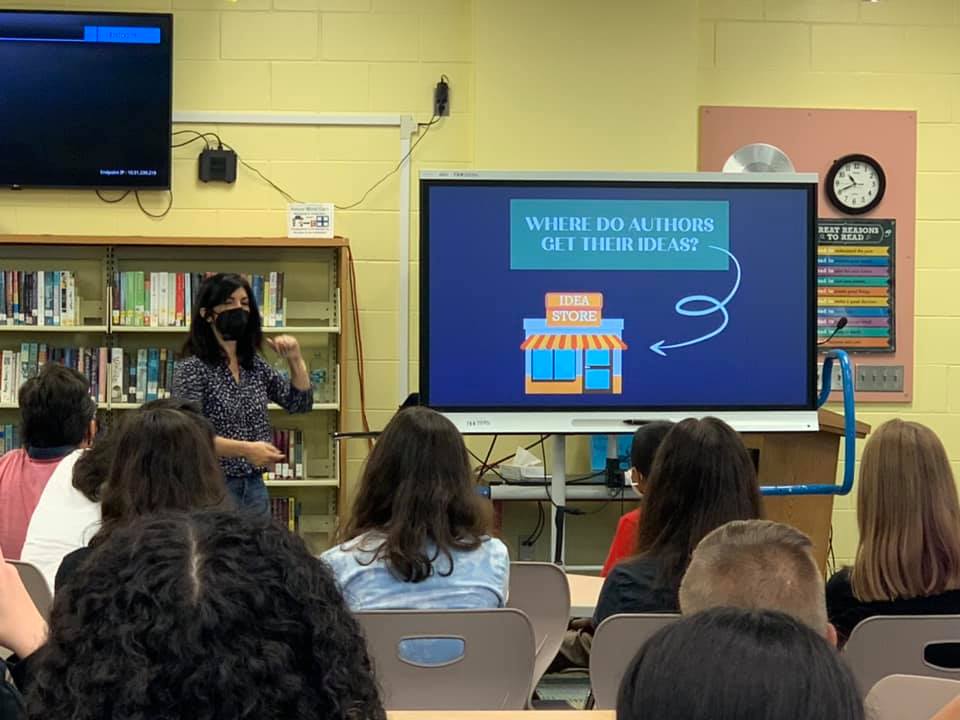
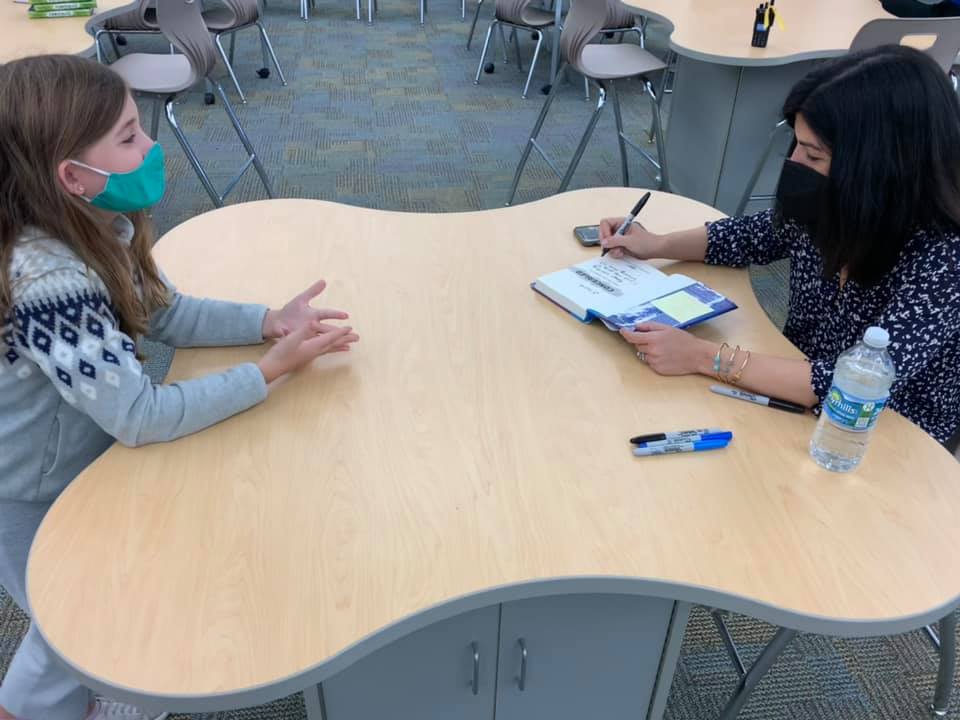
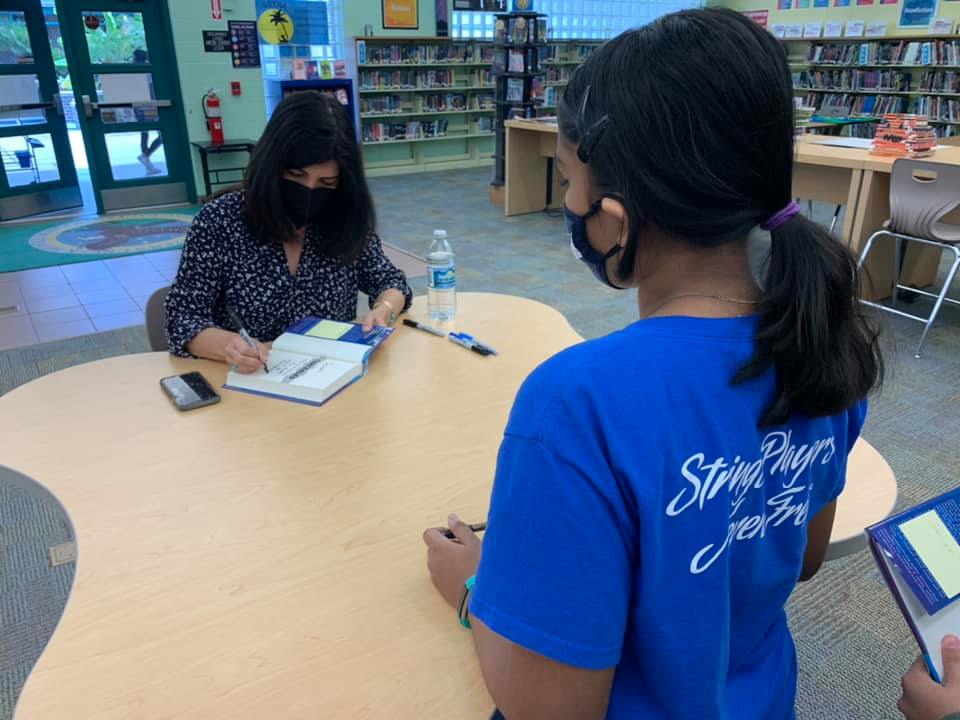
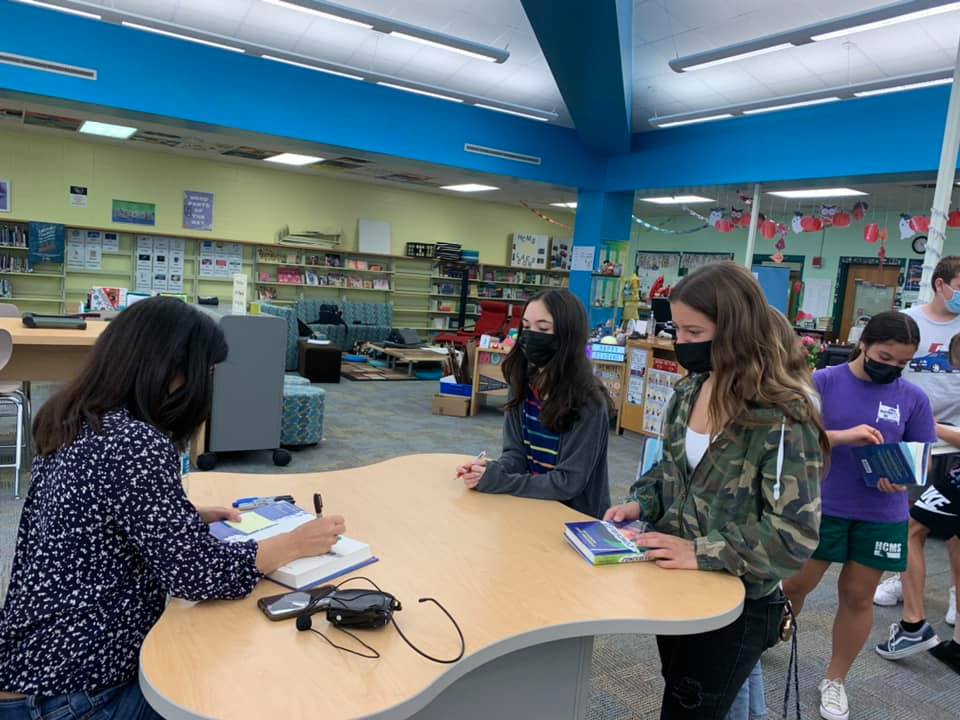
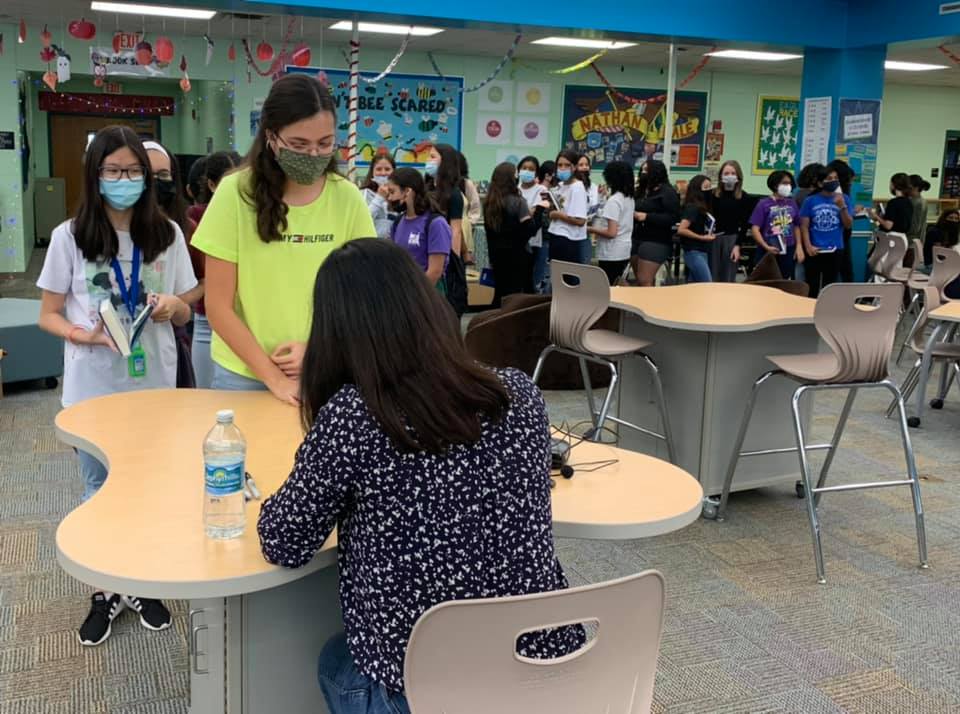
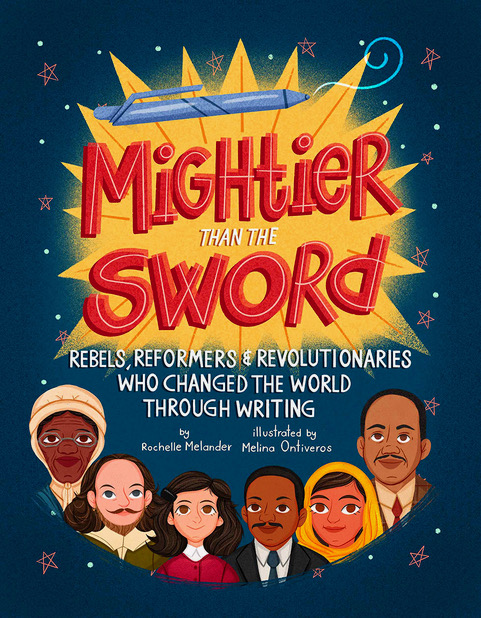
Author Guest Post: “Using Anthologies to Teach Writing” by Rochelle Melander, Author of Mightier than the Sword: Rebels, Reformers, and Revolutionaries Who Changed the World Through Writing

Share

“Using Anthologies to Teach Writing”

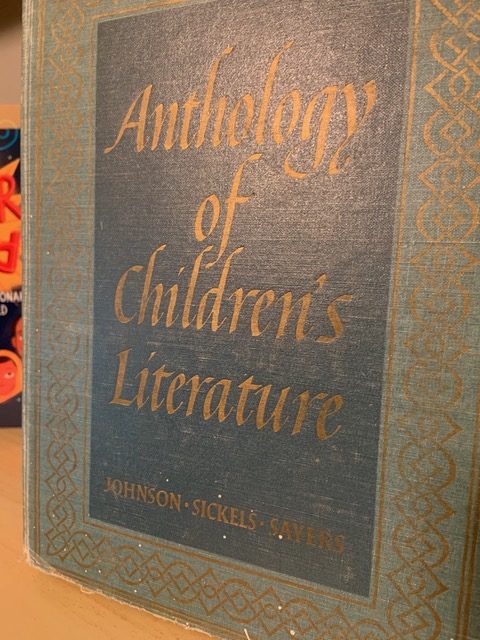
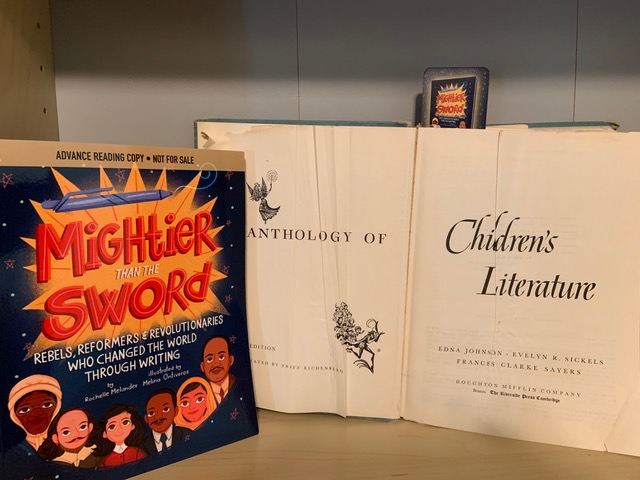
When I was growing up, our family had an Anthology of Children’s Literature. (No doubt one of my mom’s college textbooks!) Even though we regularly checked out books from the library, I spent a lot of time browsing through that book. I loved that I could find stories from all over the world. In that volume, I discovered new tongue twisters, Lewis Carroll’s “Jabberwocky,” and James Weldon Johnson’s “The Creation.”

Today, biographical anthologies have become popular in the children’s literature market. You can find anthologies on a wide range of topics like sports, science, technology, math, and more. They provide young people with an easy way to access stories about people who overcame obstacles to achieve success.

Because anthologies collect the stories of people around a theme, they offer many ways for readers to engage with the stories. Readers can take a treasure hunt through the essays in search for someone that interests them. Students might seek someone who:

+Champions a cause that matters to them.

+Overcame difficulties in school.

+Plays their favorite sport.

+Works in a career that interests them.

+Did something brave.

But how do you get young people to engage with these stories? When I wrote Mightier Than the Sword, an anthology of stories about people who used their words to change the world, I chose people from many disciplines because I wanted young people to see that many people write, not just storytellers. I added interactive writing exercises so that young people could write to change their own worlds.

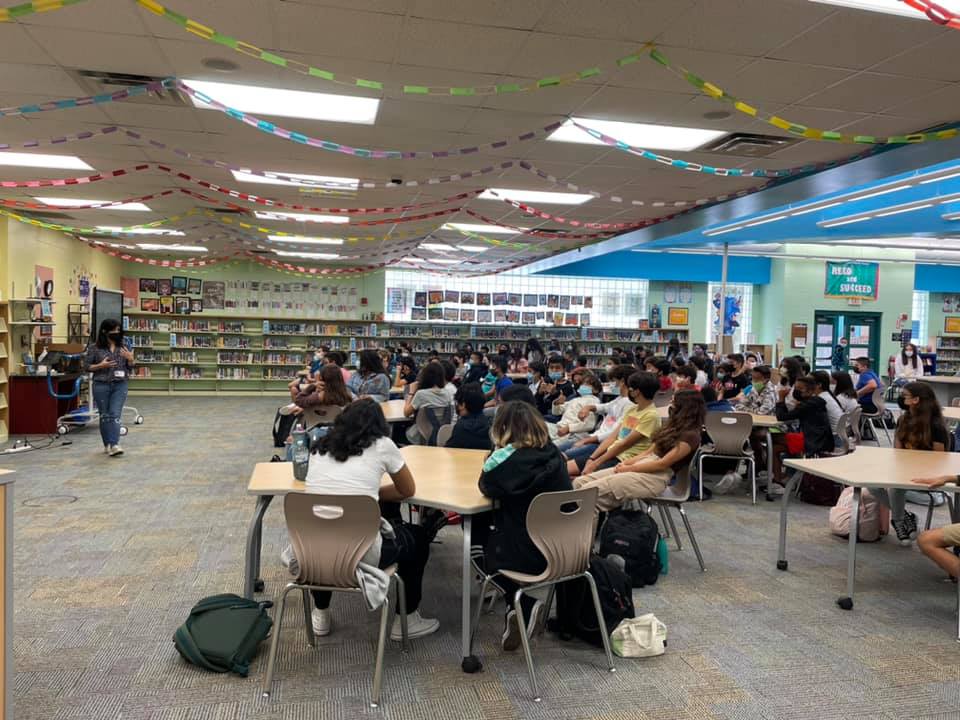
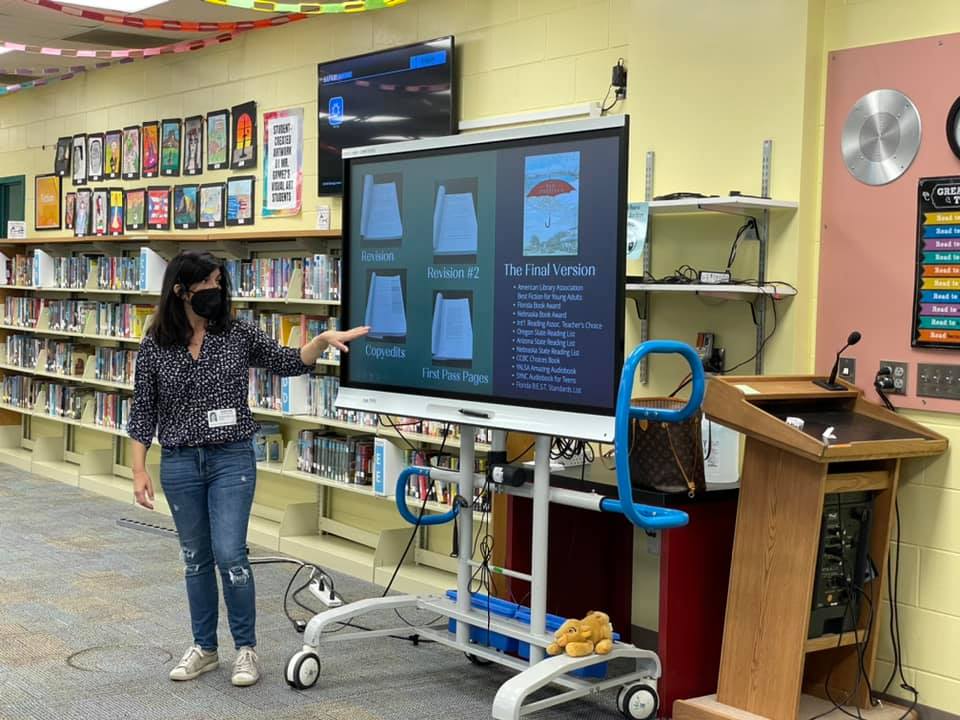
I’ve been an artist educator since 2001, teaching in classrooms, libraries, and museums. I often use mentor texts and anthologies to engage young people in learning history and inspire their writing. Here are three writing exercises—and an art exercise—I use with historical texts:

Writing Exercise #1: Social Media Profile

Sei Shonagon (965-1010) captured court life in her writing, a genre known as zuihitsu that combined lists, advice on conversation and letter writing, observations about events, and suggestions on how priests should preach and dress. Had Sei Shonagon lived today, she might have developed a social sharing site like Instagram or Twitter.

Try this: Invite students to create a social media profile and several posts for the person they’ve chosen. This will especially fun when working with historical people. Maybe George Orwell would write a status update like: “Big brother? This whole platform is sus.”

Note: You can use any social media site that your students can relate to. There are several kid-friendly social media sites that might work, like GromSocial and PopJam.

Writing Exercise #2: Protest Song

The Afghan rapper and activist Sonita Alizadeh was angry about her parents’ plan to sell her into marriage, partly to help raise money to purchase a bride for her brother. To protest this, she wrote and performed the song “Brides for Sale” and posted it on YouTube. Alizadeh’s song saved her from an arranged marriage and paved the way for her to go to school.

Try this: Invite students to write a protest song for a cause that they care about.

Writing Exercise #3: Letter Campaign

Young Sophie Cruz wrote a letter to the Pope, asking him to fight for the rights of immigrants in the United States. Martin Luther King, Jr. wrote “Letter from a Birmingham Jail” to protest the advice to “wait” for justice. His letter became a sermon and then was published in newspapers and magazines across the country.

Try this. Ask students to write a letter to encourage change. Perhaps several students will want to create a letter-writing campaign to challenge an organization, government agency, or a government official.

Bonus Exercise: Protest Art!

To protest the lack of women’s works of art at the Metropolitan Museum of Art in New York City, the Guerilla Girls plastered posters on New York City buses asking: “Does a woman have to be naked to get into the Met. Museum?” The poster featured a reproduction of the nude in Jean-Auguste-Dominique Ingres’ La Grande Odalisque, with her face hidden by the group’s signature gorilla mask. The poster educated readers on the statistics: “Less than 5 percent of the artists in the Modern Art Sections are women, but 85 percent of the nudes are female.”

Try this: Invite students to create an art poster or social media meme to support their favorite cause.

Choosing Anthologies

The library is full of many kinds of anthologies on a wide range of topics like sports, science, technology, math, and more. Check out a big stack and let your students browse. The more they read, the better chance they will have of finding a role model who matters to them.

Published July 27th, 2021 by Beaming Books

About the Book: Mightier Than the Sword: Rebels, Reformers, and Revolutionaries Who Changed the World through Writing is a middle grade social justice book that tells the stories of historical and contemporary writers, activists, scientists, and leaders who used writing to make a difference in their lives and the world. The stories are accompanied by writing and creative exercises to help readers discover how they can use writing to explore ideas and ask for change. Sidebars explore types of writing, fun facts, and further resources.

Download the free activity pack: https://ms.beamingbooks.com/downloads/Activity_Packet_MightierThanTheSword.pdf

About the Author: Rochelle Melander wrote her first book at seven and has published 11 books for adults. Mightier Than the Sword: Rebels, Reformers, and Revolutionaries Who Changed the World through Writing is her debut book for children. She’s a professional certified coach, an artist educator and the founder of Dream Keepers, a writing workshop for young people. She lives in Milwaukee, Wisconsin with her husband, children, and two dogs. Visit her online at writenowcoach.com or rochellemelander.com

Thank you, Rochelle, for your book and for this incredible post with such useful classroom ideas! 

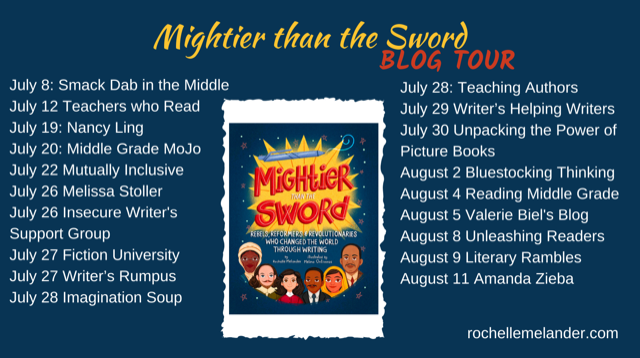
Don’t miss out on other stops on the Mightier than the Sword Blog Tour!

Author Guest Post: “7 Ways to Get Your Child Who Reads Less Frequently to Read More” by Paul Lonardo, Author of The Goblin Pitcher

Share

“7 Ways to Get Your Child Who Reads Less Frequently to Read More”

1.  LEAD BY EXAMPLE

If your children see you reading, they will be more inclined to read themselves, especially if they see that you are genuinely engrossed in a book and will to share your experience by talking about what you are reading and expressing to them what it is about the story or subject that fascinates you. By explaining what you like about a particular story, whether it is the mood, the setting, or an interesting plotline or character, in essence you are encouraging them to pick up a book without having to force them to read. Plenty of studies have shown that forcing students to read something that they have little interest in is likely to result in students not reading books at all. The enthusiasm that you show for a book alone could spark a child’s interest, if not in the same book you’re reading, then perhaps in a different one. But it is not a bad idea to read books yourself that are written for the age of your child. You might even be pleasantly surprised how well-written and entertaining many young adult, middle grade, and even children’s book are for any age reader.

2. THE BROCCOLI PRINCIPLE

Similar to foods children don’t like to eat, like broccoli, or whatever vegetable it might be, the best way to get them to eat it is by giving them small portions. It makes sense. You can’t put a plateful of broccoli in front of them and expect that they are going to eat all of it. Whatever they eat will be better than nothing, so give them a small portion to start off. Even a little bit will benefit them. Take the same approach with reading. Set aside some time every day for reading. Keep in mind, it doesn’t have to be a significant amount of time. However long it might be, five minutes, ten, fifteen, it is better than nothing. It’s a starting place, and it can only grow from there. You may be surprised what even this minimal effort will accomplish over time. Maybe it’s just a chapter at night, but after a few weeks, or a month, if a book really takes root with your child’s imagination, they may want to read multiple chapters each day to find out what will happen next, and before you know it, fifteen minutes a day could quickly extend to twenty minutes, twenty-five, or more on certain days. And that is something you have to look at as a victory.

3. CHOSE BOOKS WITH A SUBJECT MATTER THAT INTERESTS THEM

This may be obvious, but it’s really important. Everybody has an interest or two, and you know your child better than anyone. Find out what they are into. Whether it is a nature, animals or magic, plots in stories involve a wide variety of subjects and interests. It doesn’t even have to be fiction. A nonfiction book that become an enjoyable experience achieves the goal you are seeking, which in this case is getting your child to go from not reading at all to reading something on a regular basis.

When my son was younger, it was a challenge to get him to read anything that wasn’t required. For me, as a writer, this was a real dilemma. Like any parent in this situation, I had to find ways to get him to read more. I knew the two things he liked more than anything was baseball and creepy stories, anything in the Goosebumps and Scooby-Doo vein. My new novel, THE GOBLIN PITCHER, is a kids’ book that I wrote with him in mind. Hopefully, it will be of interest to other finicky readers.

4. VISIT LIBRARIES AND BOOKSTORES

Visit as many as you can, chain and independents alike. Finding topics that your child is interested will be a cinch if you show them that there are ample books on whatever subjects that matter most to them. Seeing shelf after shelf spreading out in all directions might just be a source of inspiration, showing your child how books are revered, old and new titles alike. Watch them explore and see what sections they gravitate to. The library/bookstore experience is made easier these days with the children-friendly themes and attractions you are likely to find inside as well as outside, where there is often a playground. For the parents, coffee is usually available because it could turn into a long afternoon. But it is well worth it if your child finds a hidden treasure to take home.

5.  START SMALL

Lengthy books can be intimidating and a turn off for young people who do not read a lot. Start with chapter books or short novels. It doesn’t matter if they read one long book or a couple of shorter works. It tends to be easier to draw beginning readers into narratives of shorter stories. Everything happens faster, and there are few if any subplots to detract from the main action, which was why they chose the book to begin with.

When I began writing, I eased into it by writing short stories. This is not something all writers do, of course, but for me it was easier than jumping into writing a full-length book my first time out. Graphic novels are a great way to introduce young readers to books. They are illustrated, but there are story lines and plots to follow just as there are in traditional novels.

6. BASED ON A NOVEL
Take your child to the movies. Yes, that’s right, the movies. Whether in the theater or at home, on Netflix, or whatever platform you prefer. Pick a movie that your child likes and has seen before, or one you know they will enjoy. The only thing you must do is make sure the movie was based on a book, the more popular the better, and preferably one that can be enjoyed at any age, such as The Wizard of Oz, Cloudy with a Chance of Meatballs, Willy Wonk and the Chocolate Factory, or Lemony Snicket’s A Series Of Unfortunate Events. There is bound to be a movie or two they have seen that they did not know had been a book first. If your child liked to film, it might just be enough to get them to seek out the original source to learn even more about the characters and storylines that did not make it into the film.

7. READ, READ AGAIN

It’s okay to read the same book twice, or even multiple times. If a child enjoys a book, there’s nothing wrong with them reading it as many times as they want. It’s all about reading and enjoyment. In rereading the story, they are liable to discover things about their favorite characters and the story that they did not know before, and they might end up seeking out another book by the author. And today, with so many books that are part of a series, odds are there are other adventures with the same characters that they can follow.

These are my humble suggestions to get young people interesting in books. You might have some other ways, but whatever it takes to ease children onto that road to discovery and fascination, you will be initiating an experience that they will enjoy for a lifetime.

The Goblin Pitcher
Author: Paul Lonardo
Published April 11, 2021 by PL Publishing

About the Book: The one thing eleven-year-old Jake Lupo loves more than anything else is baseball. However, despite his father being a professional pitcher, Jake’s fear of failing has kept him from competing against children his own age. When his father, who has recovered from a serious arm injury, is invited to pitch for an independent team, Jake and his parents move to Pine Barrows, a far flung forested mountain outpost. Jake is excited about his father’s chance at a comeback, but he soon learns that he is not the only one in Pine Barrows who loves baseball. Goblins love to play baseball, too, and Pine Barrows happens to be chock full of them. Then Jake discovers that the region is occupied by two factions of warring goblins.

Seeking to take control of the goblin kingdom, the leader of the evil goblins kidnaps Jake’s mother and bans baseball, a game which itself is a natural source of power for the goblins.

It turns out that Jake has a secret kinship with the legendary beings, and he is the only one who can save them, their kingdom and his mother. However, Jake must believe in himself and play a winner-take-all game against the best goblin players in Pine Barrows.

About the Author: While this is my first book for young people, I have authored both fiction and nonfiction books in a variety of genres, from true crime to romance. As a freelance writer, I often collaborate with people to help them write and publish their biographies, memoirs, or to tell of a particularly compelling personal experience.

I studied filmmaking / screenwriting at Columbia College – Hollywood. I earned an A.S. (Mortuary Science) from Mount Ida College and a B.A. (English) from the University of Rhode Island.

I live in Lincoln, RI with my wife and son.

Thank you, Paul, for sharing strategies to encourage kids to read more!

Author Guest Post: “I Write About the Real World and Real Feelings… by Using Magic” by Corey Ann Haydu, Author of Hand-Me-Down Magic Series

Share

“I Write About the Real World and Real Feelings… by Using Magic”

I like to say that I write about myself without writing about myself, that I try to understand my feelings by writing about someone else’s very similar feelings.

And I use magic to do it.

I have never owned a second hand shop filled with cuckoo clocks and birdcages and patchwork purses and chandelier earrings. I have never participated in an end of the school year parade, and, regrettably, I didn’t have a cousin who lived in the apartment downstairs from me when I was growing up. And most of all, as much as I wish I could, I have never witnessed magic. At least not the kind that shows up in my books. Not the magic passed down through generations, not the kind of magic that the best friend cousins of my HAND-ME-DOWN MAGIC series encounter in book after book.

But. I did have a best friend growing up, and we did it get into fights. I did have family that I sometimes felt part of and sometimes felt confused about my place in. I did feel jealous when a friend had something I wanted, and I did feel scared when things didn’t feel entirely in my control. Some of those things—fighting with a friend, feeling jealous or scared or left out or uncertain about who you are—are a little bit scary. Uncomfortable. Hard to talk about, and harder still to write a whole book or series of books about. When I am feeling those hard and scary and uncomfortable feelings, for myself or for my characters, I know it’s time for magic.

When something feels hard to look at straight on, I introduce a bit of magic to help make it easier to understand. Because there’s a lot about the world I don’t understand! There’s a lot about my characters’ worlds that I don’t understand right away. I don’t know when I first start writing why a particular bag in a particular shop window could make someone feel like they would become the best version of themselves if only they had it over their shoulder. And I don’t know why someone else’s happiness can sometimes feel like a personal slight. Or why it is hard to share in that happiness sometimes. I don’t even really know how to solve those problems, or any of the strange and awkward and tricky and uncomfortable problems that arise simply from being a person in the world interacting with other people. But I do know that many of us think we aren’t supposed to talk about those messier parts of our hearts and friendships and lives. And I do know that if I add magic, the conversation becomes easier.

I don’t try to hide the truth in my books—that doesn’t feel fair to anyone—me or my readers or the characters I spend so much time writing and falling in love with. But I try to make the truth easier to understand, easier to look at straight on, easier to manage. Magic helps manage hard truths—big ones, sure, but small ones too, little moments where your heart hurts or you are blushing and wish you weren’t, or your best friend is making you mad or sad or uncomfortable and you don’t know why. Look! Look at me! Magic says in those hard moments in my books,  I’m here too! Maybe I can help? Maybe I can explain it? Or maybe I just make things a little lighter, a little prettier, a little more interesting than regular old life is.

Sometimes, I use magic to make a feeling bigger: what if Alma feels a little left out of her family life, not just because she hasn’t lived in the same home as them ever before, but also because the rest of them have a belief in magic that she just can’t seem to muster?

It’s an added layer to bulk up the feelings I want to discuss. A way to turn up the volume on the circumstances, so make sure they come through loud and clear.

Sometimes, I use magic to make the feeling easier: Someone I loved did something mean to me: maybe it was because of magic?

Mostly I use magic to make things easier to talk about: Life is confusing and big and hard to understand and not in our control and that is scary. But Del doesn’t want to say all of that. Or even think it. Del is scared of a crystal ball telling fortunes that come true in tricky ways. Let’s talk about that, and maybe it will show us some other things along the way.

Magic is sneaky. Maybe when we talk about Del’s fear of her crystal ball, we can start talking about other things that happen unexpectedly or other times we think something bad might be our fault. Magic lets a conversation evolve naturally, instead of going right to the center of things. Magic is a beautiful and fun and silly and shiny way in to the scary things.

It is easier to talk about the world—a world which is sometimes very challenging and uncomfortable and sometimes even a bit sad and lonely, especially lately—when there is a mix of the familiar and the mysterious. A mix of real life and magic. A combination of the things we understand and the things we never fully will. Magic, when done well, is the bridge between those two things.

Using a bit of magic to talk about the real world reminds me of an old fashioned radio dial. Magic can turn things up or down, it can cut through the static, it can help you search for the story you want to hear, it is a tool in the toolbox of a writer, and a reader, and a person in the world, when you are a bit lost and bit frightened and a bit unsure. I am those things pretty often. That’s why I use magic so much!

The truth is—I’m a writer and a reader and a parent and a person in the world, and I’m just as flummoxed as everyone else, about why things are the way they are or feel the way they feel. Magic helps me make sense of it all too, it gives me a little space and perspective, a new angle at which to look at my character’s circumstances. Which in turn helps me make sense of my own. I believe it can help make sense of things for young readers, too. Magic can bring order to the mess and can put a magnifying glass to the tiny tricky details. It can amplify what we need to look at more closely, a quiet what feels too scary to approach head on.

We all want to reach young people, we all want a way in. For me, magic is the way.

Maybe it can be for you too.

Hand-Me-Down Magic: Perfect Patchwork Purse
Author: Corey Ann Haydu
Illustrator: Luisa Uribe
Published May 4, 2021 by Katherine Tegen Books

About the Book: Family magic saves the day for best-friend-cousins Del and Alma in the third Hand-Me-Down Magic book! With adorable illustrations and short, easy-to-read chapters, this series is perfect for fans of Ivy & Bean and Dory Fantasmagory.

Almaknew it the first time she saw it: The patchwork purse in the window of the Curious Cousins Secondhand Shoppe was magical. Special. Perfect. But when her friend Cassie spots the purse and buys it, what could Alma do but agree that the purse really did look just right on Cassie?

Del decides it’s up to her to bring some homespun magic back into Alma’s life, and she’s got just the plan to do it. After all, she is the EXPERT on magic!

All she needs is some glitter and lots and lots of glue . . . because she knows magic can always come from the most unexpected places, but most importantly, that best-friend-cousins never let each other down.

About the Author: Corey Ann Haydu is the author of EventownThe Someday Suitcase, and Rules for Stealing Stars and four acclaimed books for teens. She grew up in the Boston area, earned her MFA at the New School, and now lives in Brooklyn, New York, with her dog Oscar. Find out more at www.coreyannhaydu.com.

Thank you, Corey, for sharing how you use magic to tackle what is real!

Author Guest Post: “Using Similes and Metaphors to Spark Conversations about the Power of Empathy” by Michelle Schaub, Author of Kindness is a Kite String

Share

Using Similes and Metaphors to Spark Conversations about the Power of Empathy

One of the most important things we can do as parents and educators is encourage kids to be kind.  Not only does fostering a culture of kindness and empathy create a positive learning environment, but it also improves kids’ sense of well-being and agency. Besides, spreading kindness makes the world a little brighter. And who doesn’t want that?

How can you cultivate kindness, both in the classroom and at home?

One simple way to develop this much needed virtue is by sharing books that model kind behavior. My picture book, Kindness is a Kite String, does just that. The book starts with the words, “Kindness is like sunshine, it starts the day off right” and shows a child hugging his mom. This starts a wave of kindness that ripples through the community, connect diverse groups of people. As readers follow the story, they gather ideas for ways they can lift others with kindness.

Building Connections with Similes and Metaphors

Each action in Kindness is a Kite String is described using a simile or metaphor. For example, “Kindness is an open door to welcome others through,” and “Kindness runs like dominoes. Reach out and tip a tile.” As a writer and teacher, I know that similes and metaphors are powerful tools. They unlock readers’ imaginations and inspire mental pictures. Similes and metaphors build connections that promote understanding. They help kids comprehend something unfamiliar or abstract (like kindness) by comparing it to something they know well (like sunshine or an open door). In this way, similes and metaphors go hand in hand with kindness. When you act with kindness, you also bridge the gap between something familiar (yourself) and something that might seem new or different (others).

Kindness is a Kite String packs a double educational punch. Not only does the book help spark conversations about empathy, but it also provides models of similes and metaphors in action. That’s good news, considering knowledge of figurative language, including similes and metaphors, is part of the ELA Common Core Standards starting in grade three. However, this concept is often introduced with even younger kids.

Kindness is…

How can you use Kindness is a Kite String to reinforce the concept of similes and metaphors?

One way is by creating a collective “kindness poem.” I have found writing collective poems to be a very effective and engaging strategy to use with students. In a collective poem, each child contributes a line according to a provided prompt or rule. Collective poetry is a great warm-up writing activity because it invites all students to participate without the pressure of having to compose an entire poem from the get-go. It’s also an effective way to explore different perspectives on a topic, like kindness.

After reading KINDNESS IS A KITE STRING with your class, take some time to define and review similes and metaphors. The Authors Note at the back of the book will help you do this. Then provide the provide the prompts, “Kindness is  like…”(for similes)  and/or “Kindness is… (for metaphors.) If you’re working with students in person, you can write this prompt on the board. If you’re working with students remotely, try posting the prompt with an online program like Padlet or Flipgrid.  Ask students to think of something that they enjoy doing or something makes them happy. Ask them how this activity or object might relate to kindness. After modeling some possible responses, invite each student to contribute their own simile or metaphor to complete the prompt. String the student responses together and you’ll have a kindness poem to display in your classroom or home.

Here’s an example of a kindness poem I started with second and third graders:

Kindness is
a cuddly kitten-
it makes you feel warm and cozy.

Kindness is like
a trampoline
bouncing happiness from one person to another.

Kindness is
Lego bricks
because kind deeds build on one another.

Kindness is like
a bowl of popcorn
because it’s meant to be shared.

Not only will your kindness poem remind kids to act with kindness, but it will also serve as great student-created examples of similes and metaphors.

Continue the Kindness Chain

There are many other ways Kindness is a Kite String can spark conversations about the power of empathy. The front of the book includes prompts to use before, during, and after reading. For example, one prompt says: “The last line of the book is ‘When you catch it, pass it on.’ Ask your child what kindness they have caught. What can they do to pass it on?” A free Readers Guide, downloadable from my website,  also accompanies the book. It includes activities like a printable Kindness certificates and a kindness journal for kids to log their empathetic actions.

You can continue to reinforce kindness by exploring other recent picture books with themes of empathy, including Evie’s Field Day, by Claire Noland, Be Kind, by Pat Zietlow Miller, The Big Umbrella, by Amy June Bates, and Scribble Stones, by Diane Alber.

I hope I’ve inspired you with some new ways to promote kindness with kids.  After all, as I say at the end of Kindness is a Kite String, “kindness is contagious. When you catch it… pass it on!”

Kindness is a Kite String: The Uplifting Power of Empathy
Author: Michelle Schaub
Illustrator: Claire LaForte
Published April 1st, 2021 by Cardinal Rule Press

About the Book: Cultivating kindness is easy when you try. Spread a little kindness and watch empathy ripple through the community… spreading happiness like sunshine, connecting diverse groups like a footbridge and lifting hope like a kite string.

How can YOU lift others with kindness?

This compelling book illustrates simple, yet impactful ways, to spread kindness and brighten the lives of others. Through poetry, the inspiring words uplift young readers, planting seeds of empathy, kindness and community support.

The best book for positively teaching kindness.

Kindness is a Kite by Michelle Schaub carries the key message of kindness as well as how to teach similes and metaphors supported by the many advocates of positive parenting solutions. It’ll sit comfortably on your shelf alongside other books that focus on the power of kindness.

This book comes with a free Reader’s Guide for children. The guide is available for free download from the publisher website. Lesson plans, activities and discussion questions to allow parents, teachers and caregivers to explore the topic further and deepen comprehension.

READER’S GUIDE

COLORING PAGES

READ-ALOUD

SEE INSIDE THE BOOK

About the Author: Michelle Schaub is an award-winning children’s author and language arts teacher. Her previous books include Dream Big, Little Scientists, Finding Treasure: A Collection of Collections, and Fresh-Picked Poetry: A Day at the Farmers’ Market. Her poems appear in several anthologies, including Great Morning! Poems for School Leaders to Read Aloud. Michelle speaks at conferences on the power of poetry to boost literacy. Michelle lives near Chicago, where she loves finding creative ways to cultivate kindness.

Thank you, Michelle, for writing this book for kids. Kindness and empathy are what is going to change this world–thank you for opening up the conversation more!

Author Guest Post: “Two Words That Can Help with Writer’s Block in Students!” by By I.M. Maynard, Author of the Roger Tarkington and the Magic Calendar

Share

“Two Words That Can Help with Writer’s Block in Students!”

Imagine, you’ve just announced an end-of-school year creative writing assignment for your students. You are expecting a positive response given your school just hosted a local author who talked about the writing process or your class just finished an inspiring novel. Besides, all students want to express themselves, right? And in creative writing, there are no wrong answers and so this should be a slam dunk assignment.

Then the arms shoot up into the air.

“What can we write about?” Anything, you respond.

“Can it be about space aliens?” Yes.

“How about super heroes?” Absolutely.

Can I write about myself?” Sure. This is your assignment. Be creative and have fun.

This is going really well. The students are as excited as you are about this assignment. But when you walk down the row of desks to check on their progress you notice that several notebooks or laptops remain blank. These students defend their lack of progress by saying that they have nothing to write about. They don’t know how to start. Even the students who started strong complained of writer’s block. “I don’t know what to write next. I’m stuck.”

If this scene plays out in your classroom, it is time to let them in on the creative writing secret that has launched stories and even writing careers. It was certainly key to my middle grade time travel series, Roger Tarkington and the Magic Calendar. The creative writing secret I refer to is what I call the what if technique. In my view, what if are the two most important words in creative writing.

The origin of my middle grade time travel series started as a what if. My toddler son was obsessed with calendars. About the same time, he was given a children’s magic kit with a cartoon magician featured on outside of the kit box. It got me thinking: what if the magic wand was used to turn the calendar magic? Thus started my journey with Roger Tarkington and his adventures at Jefferson Middle School.

While I can’t be certain, I would imagine that many stories started using what if.

          What if a boy were trapped inside a video game (Trapped in a Video Game)? What if a student with a face deformity went to school for the first time (Wonder)What if a boy was stranded alone in the woods (Hatchet)? Asking what if can help turn an ordinary situation, such as playing a video game, hiking in the woods, or going to school, into an intriguing premise for your next story.

Answering the what if question often leads to more questions. For example, how did a boy end up in the woods by himself? Perhaps the author used what if to come up with options, such as: What if he got lost by taking the wrong trail? What if he was on a school or Boy Scout outing and got separated from the group? What if the small plane he traveled in crashed in the middle of the woods?

I went through several what if scenarios before I settled on the premise of Roger Tarkington and the Magic Calendar. Originally, I was focused on the magic wand from the magic kit. I looked around my son’s playroom and asked a series of what if questions. What if the magic wand brought my son’s stuffed animals to life? I liked that idea, but it was too similar to the movie, Toy Story. What if the magic wand was used to turn my toddler son into a grown man? No, I wanted to tell a children’s focused story and so I opted against that idea. It wasn’t until I saw my son sitting near the magic kit while looking through a wall calendar that I came up with the premise of a magic calendar that allows someone to repeat days of the week by touching inside the calendar day. The idea matched my interest in writing about everyday school life, but with a fun time travel-like twist.

Inevitably, writer’s hit snags in their story. The what if technique is a great place to start in overcoming what seems like impossible roadblocks. During this brainstorming, I write down every what if answer, especially the silliest ones. If nothing stands out, I come back to the sheet of paper later and reread the answers. If nothing else, you’ll get a good laugh. However, this review often triggers new what if answers, sometimes ones that combine elements of two different answers.

The what if technique forces writers to face the creative problems they face with action. The technique also shifts the focus from negative thinking (i.e., I don’t have any ideas, I have writer’s block) to possibility simply by framing the roadblock as a question.

So does the what if technique solve every writing problem? Of course not. What if won’t motivate you to write, it won’t help with sentence structure or spelling, and it won’t address writer doubt or fatigue. However, the what if technique and similar writing strategies can help writers at any level or writing stages to address challenges and find solutions so that writers can get to the two next important words in creative writing: the end.

About the Book: Meet Roger Tarkington.

The almost 11-year-old has a plan for middle school greatness. A perfect plan that—lasts for all of about five minutes. 286 seconds, to be exact.

It’s all ruined when Kyle-the-Vile Brossman appears unexpectedly on the first day of school. Making matters worse, Kyle pledges to make Roger’s year miserable, just like he did at Bellingware Elementary School.

Roger’s unlucky start to sixth grade turns magical when his calendar turns into a time travel portal that allows him to repeat days.

Influenced by his Middle School Greatness Tip #31 (Don’t wait for it to happen, make it happen), Roger devises a new plan to use his magic calendar to beat Kyle, clearing his path to middle school greatness.

Foolproof plan for middle school success, right? Maybe in real life, but remember, this is middle school!

Will Roger succeed in using his magic calendar to standout at Jefferson Middle School and achieve middle school greatness?

Or will he fall under the constant attacks from Kyle and the unexpected, everyday obstacles of middle school?

About the Author: I.M. Maynard is the author of the Roger Tarkington and the Magic Calendar middle grade time travel series. The first book in the series, Roger Tarkington and the Magic Calendar: Quest for Middle School Greatness, was released in 2020. The second book in the series, Roger Tarkington and the Magic Calendar: Surviving Middle School, was released in 2021. I.M. Maynard is currently working on the third and final book in the series. When he isn’t writing, I.M. Maynard enjoys reading. HIs favorite contemporary authors include Louis Sachar (Holes), Stuart Gibbs (Spy School), Gordon Korman (Jackpot), and Chris Rylander (The Fourth Stall). Born and educated in the Midwest, I.M. Maynard now lives on the East Coast with his wife and son, who was the inspiration for the middle grade series. Learn more about I.M. Maynard at https://www.maynardauthor.com/.

Thank you, I.M., for this post showing how to help students get those creative juices flowing!

Author Guest Post: “The Importance of Empathy: Making a Connection with a Viewpoint and Feelings That Are Not Your Own” by Mel Darbon, Author of Rosie Loves Jack

Share

The Importance of Empathy: Making a Connection with a Viewpoint and Feelings That Are Not Your Own

Without empathy you’ll walk by that homeless person in the street.” -Barack Obama

Why is empathy so important? I think this is a vital question to ask ourselves, especially in a world where our obsession with “self” has spiraled out of control.

Empathy is seeing, listening, and feeling with another person. Research has proven without a doubt that it can be taught and that by doing so, we give ourselves a chance to raise an empathetic generation. Compassion helps make the world a better place, without it intolerance and contempt become the norm.

Empathy isn’t feeling for somebody, it’s feeling with them. When you can see something from someone else’s perspective, you can support them so much better. Empathy transports you outside of your own landscape and into another person’s world and provides an opportunity for a person to reflect on their own perceptions and behaviour, while making a connection with someone else’s viewpoint and feelings. Without this connection we can become very inward-looking and isolated, which could lead to mental health problems. Everyone you meet is fighting a battle you know nothing about.

Stories have the power to build empathy and to endow children with the ability to understand different perspectives to their own. From this, children will learn how to interact with other human beings, how to form relationships, and how to navigate complex emotions. Writers have an important role to play since books transport you into somebody else’s life. The more you empathize with the characters in a book, the more you understand other people’s feelings. A writer must make their characters as fully rounded and as real as they can, so that their emotions connect with the reader. If this is the case, then empathy naturally follows on.

My book Rosie Loves Jack is written to show what it’s like to be a teenage girl with Down syndrome navigating a sometimes harsh and uncomprehending world. My character, Rosie, encounters many different people on her journey to be reunited with her boyfriend—some kind, some cruel—but she carries on regardless, fighting for what is right.

The book was inspired by my brother, who has a profound developmental disability. I have been an eyewitness on many occasions when my brother has been either verbally abused or completely ignored, as though he doesn’t count as a normal human being. My family has even been told that he should never have been born. I always knew that one day I would give my brother a voice, because I wanted people to see that his life is not unworthy and that we need to look beyond disability to ability. His experiences fueled my desire to help dispel the myths of disability because I need to make it clear that when you have a brother like mine the positives far outstrip the negatives. My brother has taught me compassion, kindness, patience, and above all else the ability to empathize.

My work later on as a teaching assistant with teenagers with Down syndrome reinforced my desire to write an inclusive book, as every one of these young people had a voice inside them, which needed to be heard.

It was at this time that I met the girl who inspired my character Rosie in Rosie Loves Jack. She was kind, funny, and fiercely independent, determined to get a job, fall in love, and one day get married. I learned from her how much people with Down syndrome are attuned to other’s feelings. They have incredible empathy—and always see the good in the world. I realized how much we all have to learn from them, and I wanted my character Rosie to show this through her innocent but brave eyes and for the reader to wonder at the world with her and to learn through her that kindness and compassion are so important. I wanted my reader to really feel and understand what it’s like to have assumptions made about you because of the way you look by “putting on Rosie’s shoes” and walking with her on her journey.

“Each one of us has lived through some devastation, some loneliness, some weather superstorm, or spiritual superstorm, when we look at each other we must say, I understand. I understand how you feel because I have been there myself. We must support each other and empathize with each other because each of us is more alike than we are unlike.” – Maya Angelou

Teachers’ Tools for Navigation: 

There is no right or wrong way to teach young people about compassion. It’s simply about listening, being emotionally connected and non-judgmental, and letting people know that they are not alone. In this workshop I want to help students to really think about what empathy means and how they can relate it to themselves and conduct themselves in the future. I want them to look beyond their own world and see it through new eyes.

Exercise 1

Ask the students to write down exactly what the word empathy means to them and why they think it is important to promote empathy in our lives.

Exercise 2

Sharing emotions and empathizing with them. Young people can find it hard to articulate their own emotions, so in this initial exercise I get them to warm up by thinking about and observing an event in my book and some of the characters reactions to.

  1. Read page 18–20 of Rosie Loves Jack. This is the scene where Rosie, after eight days of not hearing from her boyfriend Jack, overhears a conversation between her parents, mentioning some postcards that Jack has sent to her. Rosie’s father has hidden the postcards in his office in their house, so that Rosie thinks Jack doesn’t care about her anymore.
  2. Write down your thoughts on how you would feel if you were either Rosie or Jack and found this out. Get some of the students to read out their answers.
  3. Now switch to Rosie’s father’s viewpoint. Are his fears that Jack might hurt Rosie justified? Stand in his shoes and imagine what it would be like for a parent to have a daughter who is with someone who can be violent, even though Jack’s brain injury is not his fault and he never loses his temper with Rosie. Does Rosie’s father have the right to hide the postcards? It can be interesting to get two of your students to play the parts of Rosie and her father and each argue their case. The students can direct questions at them to see how they would respond in character. Get the two students playing the parts to swap over, so that they then argue from the opposite viewpoint.

Exercise 3

This is where the students choose one of their own emotional experiences to write about. Ask them to think of a time that they have been unjustly treated, because we all have a built-in sense of fairness. To start them off it can help to recount a time when you have been treated unfairly yourself. As an example, I’d tell the class about an incident when I was fifteen and my best friend stole a large cream cake from the teacher’s dining room and ran up to the top field to eat it. I got the blame for it, as someone said they’d seen me in the vicinity at the time it disappeared. I had to stay behind after school for a week doing extra work. I’m still fuming now! This is a powerful exercise to do, as students can get very passionate about what happened to them—and the other students can readily empathize with them. First, ask them to record exactly what happened and then to expand on how it made them feel. Get some of the students to read them out to the class. This is a great exercise for eliciting emotions and sharing them. Injustice can stir many painful feelings like anger, sadness, helplessness, frustration, and vengeance, and you can see and hear the sense of injustice building as the students recount their stories.

Exercise 4

Have the names of every student in the class folded up in a hat or box. Get each student to pick a name out of the hat. They then have to write a positive, kind, and thoughtful note of encouragement about the person they have picked, which they then hand over to that student at the end of the session. Encourage the class to read out what they have written about each person. These are often words that each child will never forget and is a great lesson in being mindful and providing an opportunity for each student to reflect on their own perceptions and behaviour.

Published March 1st, 2021 by Peachtree Publishing Company

About the Book: Rosie is a 16-year-old girl with Down syndrome, fighting for little freedoms, tolerance, and love amid the vast landscape of London in Mel Darbon’s powerful debut YA novel Rosie Loves Jack (Peachtree Publishing; March 2021; ISBN : 978-1-68263-289-5; HC $17.99; Ages 12+).

Rosie loves Jack. Jack loves Rosie. So when they are separated, Rosie will do anything to find the boy who makes the sun shine in her head. Even run away from home. Even struggle across London and brave the Tube stations to travel to Brighton alone during a snowstorm. Even though people might think a girl like Rosie could never survive on her own. Rosie must deal with new situations and experiences and some frightening unfamiliar places and people, but she’s determined to prove to everyone, especially her parents, that she’s just as capable as anyone at following her heart.

Written from Rosie’s perspective, this riveting novel gives readers an underrepresented but much-needed and thoughtful point of view. Author Mel Darbon’s voice-driven plot will immediately pull readers into Rosie’s world and have them excited, worried, proud, and cheering alongside her for every step of the journey, which is filled with lighthearted as well as darker moments. Featuring a diverse cast of characters and highlighting the range of abilities within the special needs community, this compassionate story drives home the message that we are all humans with feelings and the need to be valued and loved. Rosie Loves Jack was reviewed by a sensitivity reader from the Down syndrome community for accurate representation.

About the Author: MEL DARBON began telling stories to her autistic younger brother when they were children and has worked as a theater designer, freelance artist, teacher for adults with learning disabilities, and workshop teacher for teenage moms and young offenders. Mel is now focused on writing her second novel and developing creative writing workshops that encourage students with mixed abilities to work together for acceptance and inclusion. A graduate of Bath Spa’s MA in Writing for Young People, she lives in England. Follow her on Twitter @DarbonMel.

Thank you, Mel, for this wonderful post and empathy exercise! We agree that teaching about empathy all through school is so important!

Author Guest Post: “Insights from a First Time Author” by Vali Benson, Author of Blood and Silver

Share

“Insights from a First Time Author”

Hello! My name is Vali Benson and I have been a writer all my life. I can also now call myself a published author. It still seems like a dream, but it’s true. Ever since I can remember, I have had a book in my hand. As a lifelong reader, I often thought, “I could do better than that”. So I decided to finally do something about it. People have asked me to explain the writing process but I can’t. I don’t think there is a right way or wrong way to write a book. But I do know what works for me.

The first step is to come up with an idea. It must be something that interests you, or that you feel strongly about. If you don’t care what you are writing about, you will simply get board and the work will suffer. Once when I had severe writers block, a great teacher told me, “Write about what’s in your own backyard”. I took my teacher’s advice and turned in an award winning essay. That was the inspiration in writing my book; a young adult historical fiction novel called Blood and Silver. The story takes place in Tombstone, Arizona. For thirty years, I have lived in Tucson, Arizona. Tombstone is only forty five minutes down the road, practically backyard distance.

The population of Tombstone today sits at about thirteen hundred. On the weekends, many of the residents dress up in western garb – as cowboys, sheriffs, frontier gamblers, proper matrons and saloon girls. At first glance, it seems as though this may be a retirement community designated for extras of John Ford films. However, Tombstone does have one enduring claim to fame – the shoot out at the O.K. Corral.  It is called “the most famous thirty seconds in the history of the American west”. The legendary incident is a gunfight that occurred in 1881. The shoot out involved Doc Holiday, Wyatt Earp and two Earp brothers against a gang of outlaws called the Cowboys. Three men were killed, all of them Cowboys. The Earps and Doc Holiday were already famous in the west.  The gunfight made them infamous.

Tombstone was the largest city between St. Louis and San Francisco in 1884, with over 150 businesses, including 100 saloons, and a thriving red light district. Apparently this arid little tourist trap, only forty five minutes from my hometown, was more important than I thought!

This information began to spin my inquisitive wheels.  I began to wonder what it would have been like to live in this obscure place in 1880. The first step was complete; I had a premise that sparked my interest.  Now, it was time for the part of the writing process that gives life to the story, research.

Research is pivotal no matter the genre. It allows the author to properly prepare the reader so that they are engaged in the narrative. One needs to look in unusual places, not just the top three Google hits. I love sourcing museums, libraries, newspaper archives, and even historical homes. Don’t rely on your computer only. Everyone can get that information. Not only is it not original, it is not interesting.

One tip that I would like to emphasize to a burgeoning writer is to seek out primary sources whenever possible. If you can work from the original source, it falls on you to interpret the story. This allows you to not have to depend on someone else’s version of the truth.

As I began to delve deeper into the true story of Tombstone, I also uncovered unexpected angles. The most prominent of which was the effect of the Chinese population. The result of this research led me to a real person whom I could never had made up, a woman named “China Mary”. This woman lived in Tombstone from 1879 – 1906 and essentially ran the town. In addition to operating a gambling hall behind her general store, she was also the preeminent broker for opium, laudanum and Chinese prostitutes. After I discovered the real life splendor of China Mary, I made her one of my central characters and twisted my fictional story around her actual exploits. None of that could have been possible without an extensive research period.

Being a writer of historical fiction, historical accuracy is the most important component of the piece to me. It is even more pivotal than the narrative. I cannot tell you how many times I have quit reading a book that claims to be factual because the information and events are incorrect. It really annoys me! It is also important to realize that research is never ending because you can’t ever learn everything there is to know. At some point, you just have to make up your mind that you have enough to craft the story you want to write. Then start writing!  I begin writing using my research as a reference and don’t worry if I have a fully formed concept. I believe in the Jodi Picoult approach, “You can always edit a bad page. You can’t edit a blank page”.

Many writers believe in outlines as a method of organizing and categorizing their research. Outlines don’t work for me. I tend to be too specific.  I end up writing the whole story in my outline.  What works best for me is to simply write.  Just start, and see where it takes you.  I flesh out the characters first. You can do whatever you want with your people, just be sure you wind it up so that it makes sense.

As far as my writing habits are concerned, I don’t have many. I just do it. I know that many professional writers say the best method is to treat writing like a regular job with set start and stop times. I’ve tried this and it never feels right. For one thing, when I get on a creative roll, it is nearly impossible for me to stop. Conversely, I cannot force an idea. When I don’t feel like it’s happening, I walk away. I commit a lot of time thinking about my characters; which may be the most crucial part of the writing process. When inspiration strikes, I will sit down with my glass of sweet iced tea and see how my characters handle the new twist. I know that strong coffee is the traditional nectar of the working writer, but I need my sweet tea. The sweeter the better!

When your story is finished, it doesn’t mean that you’re done writing. Now is the time for my least favorite part of the writing process, editing. Editing is obviously extremely important but I find it terribly frustrating. I try to remember not to over edit as there is a difference between editing and rewriting. Aside from the occasional grammatical error, most of my editing is about subtraction rather than addition. I choose to think of my editing time as a tightening up period. This is when I can really focus on making my narrative flow the way that I want. I also make sure the story is always kept in perspective and unfold s the way that I want it to.

When is your story finished? It is finished when you think it is. Before you begin, you will know where you will end up. If you don’t, don’t start. This is why research is so important, because if I can understand the period in which my characters live, I can shape their circumstances and attitudes into the narrative.  With Blood and Silver, because I had taken the time to insure that every aspect of my world would be historically accurate, the attitudes and tones of my characters occurred organically. I simply placed my fictional characters into actual settings and let them take me where they wanted to go.

Thanks for reading and happy writing!
Best, Vali

Published August 3rd, 2020

About the Book: What is a twelve year old girl to do when she finds herself in the silver boom town of Tombstone, Arizona, in 1880, and her only home is a brothel and her only parent is a drug-addicted mother? If she is Carissa Beaumont, she outsmarts the evil madam and figures a way out.

After tricking the madam, Miss Lucille, into summoning a doctor for her mother, Lisette, she discovers that Miss Lucille has been drugging her. She and the kind doctor make a plan to try to save Lisette by dosing her down on the drug.

Doctor Henderson tells Carissa that the only source for the drug is a Chinese immigrant named China Mary, who lives in Hoptown, at the other end of Tombstone. Carissa has no choice but to go to the powerful woman for help. Many say that China Mary is the one who really controls Tombstone.

China Mary admires Carissa’s brave spirit, and uses her influence to get her a job at the new Grand Hotel, which will free Carissa from her many duties at Miss Lucille’s. She will work along with Mary’s twelve year old niece, Mai-Lin. The two girls become fast friends.

Then, disaster strikes, and the two girls must work together to stay alive.

With a host of colorful characters and meticulous attention to period detail, Blood and Silver is a story of the best and worst of human nature, the passion for survival and the beauty of true friendship.

About the Author: Vali grew up in the Midwest. She now lives in Tucson with her husband, two sons and grandchildren.

After graduating from the University of Illinois, Vali started and sold two successful businesses before she decided to pursue her real passion of writing. She published several articles in a variety of periodicals, including History Magazine before she decided to try her hand at fiction.

In April of 2020, Vali published her first novel, Blood and Silver. That same month, she was also made a member of the Western Writers of America.

Thank you, Vali, for sharing your experiences as a first time writer and for sharing your debut book!