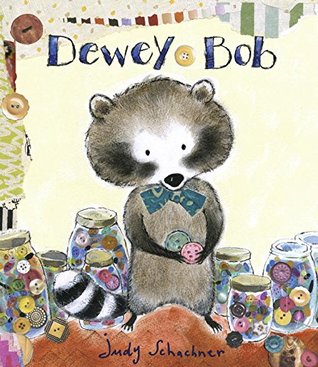
Dewey Bob Author and Illustrator: Judy Schachner
Published September 8th, 2015 by Dial Books
Summary: Dewey Bob Crockett is a durn cute raccoon who lives by himself in a house filled to the brim with the wonderful objects he collects. Buttons, wheels, furniture and bricabrac adorn his cozy quarters and keep him busy as he finds and fixes, turning trash into treasures. But there’s something missing from Dewey’s collections—a friend! He tries gathering up some critters and bringing them home in his shopping cart, but that doesn’t work out so well. In the end, a friend does come Dewey’s way, and, with a little DIY help from this clever raccoon, returns again and again.
Combining art and heart with storytelling genius and a lilting twang, Judy Schachner’s tale of unexpected friendship will delight readers young and old.
Author Judy Schachner Introduces Dewey Bob:
My Review: Dewey is a little different than the other raccoons, so he finds himself in a beautiful home with a lot of things but no friends or family. Although Dewey is a bit untraditional, he finds himself a friend who will warm your heart!
Judy Schachner has a way with story telling. She brings her character’s voice to life, this time with a little bit of twang and rhyming. By being able to hear the character’s voice, the book is more engaging because you connect with the character more. Additionally, her illustrations in Dewey Bob are brilliant. They are a mixture of her what I believe is pencil and watercolor illustrations with found object collage. It is perfect for Dewey’s story.
Teachers’ Tools for Navigation: Dewey Bob gives many opportunities for discussion while reading aloud. You can discuss the difference between Dewey and the other raccoons, how the book is structured, Dewey’s rhyming and accent, Dewey’s friend, and even the illustrations. Each page really has opportunities for you to talk to your students about what is happening. This book is going to be a favorite read aloud for many.
Discussion Questions: How is Dewey Bob different than the other raccoons?; How does the author choose what goes in speech bubbles and what was in her prose?; How does the collage illustration help with the experience of reading Dewey Bob?
We Flagged: “‘No pants for me! No pants for me! Cuz’ I’m gonna live in a big oak tree,’ he sang, looking straight up at his future home.
The place was empty as a hatched egg…and filthy, too! But a little dirt didn’t scare Dewey. ‘I’m a mean, clean, washin’ machine!” said the li’l raccoon as he scrubbed the place spotless. Then he took a long soak in the tub with some of his favorite buttons.”
Read This If You Loved: This is a Moose by Richard T. Morris, The Snatchabook by Helen Docherty, Odd Duck by Cecil Castellucci, Skippyjon Jones by Judy Schachner
Recommended For:
**Thank you to Lauri at Dial Books for providing a copy for review!!**
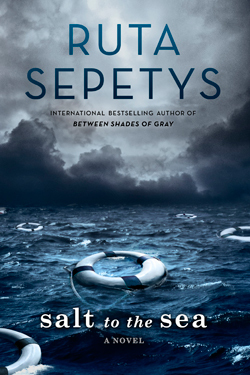
Salt to the Sea
Author: Ruta Sepetys
Published: February 2nd, 2016 by Philomel Books
GoodReads Summary: The author of Between Shades of Gray returns to WWII in this epic novel that shines a light on one of the war’s most devastating—yet unknown—tragedies.
In 1945, World War II is drawing to a close in East Prussia, and thousands of refugees are on a desperate trek toward freedom, almost all of them with something to hide. Among them are Joana, Emilia, and Florian, whose paths converge en route to the ship that promises salvation, the Wilhelm Gustloff. Forced by circumstance to unite, the three find their strength, courage, and trust in each other tested with each step closer toward safety.
Just when it seems freedom is within their grasp, tragedy strikes. Not country, nor culture, nor status matter as all ten thousand people aboard must fight for the same thing: survival.
My Review: This is a book about humanity. Each voice serves a unique purpose to foster a complete picture of this great tragedy in history. The characters feel real, and their stories and perspectives are so different that readers are able to fully understand a diversity of experiences toward the war. Wow, wow, wow. I don’t feel that summarizing or reviewing this book will even do it justice. I felt like I couldn’t eat or sleep until I finished it. Salt to the Sea takes readers on an epic adventure and throws them for an emotional tailspin. After I closed the cover, I was reeling. The language is powerful and the story is captivating.
Ruta Sepetys holds a special place in my heart. She is a powerful force in historical fiction, and this book is no exception. Several years ago, I was fortunate to be sharing a drink with Ruta at the ALAN cocktail party. When I asked her what she was working on, her eyes glinted as she talked about the concept of this book. She felt a connection to this tragedy, and while nothing had been written at the time, I knew it would be a remarkable novel. For the next several years, I thought about the way Ruta described the historical event, and I consistently checked her pages to see if I would see any further information about its progress. Several years later, I would (fortunately) receive this book in the mail. Boy was it worth the wait.
Teachers’ Tools for Navigation: The teaching opportunities for this book are endless. I would love to use this book to teach the theme: What does it mean to be human? or What does it mean to be a good person? Then, I might pair other texts (e.g. Kite Runner by Khaled Hosseini) and create a text set to consider these themes. The perspective and voice of these characters are strong, and I imagine rich classroom discussions about the ways these four characters show us a slice of humanity. (One of the four main characters is debatably evil, and this would offer excellent, critical conversations). Beyond these four characters, readers might consider the minor characters of this text (or tangential war figures, such as Hitler or Stalin). Are humans innately selfish? Are the innately good? Are we all flawed? Are there any universal characteristics amongst these characters, or are they too different?
Discussion Questions: How does the author balance historical information and story? What tools does she use to do this?; Why do you think the author chose to feature four points-of-view rather than one? Does it add or detract from the story? What similarities do you see across these voices? What differences?
We Flagged: “Survival had its price: guilt.”
*Quote taken from an advanced reader copy. It may change after publication.*
Read This If You Loved:Between Shades of Gray by Ruta Sepetys; The Watch that Ends the Night by Allan Wolf; The Book Thief by Markus Zusak; A Night to Remember by Walter Lord; The Guernsey Literary and Potato Peel Pie Society by Mary Ann Shaffer; Schindler’s List by Thomas Keneally; Code Name Verity by Elizabeth Wein
Nonfiction Picture Book Wednesday is hosted by Kid Lit Frenzy and was started to help promote the reading of nonfiction texts. Most Wednesdays, we will be participating and will review a nonfiction text (though it may not always be a picture book).
Be sure to visit Kid Lit Frenzy and see what other nonfiction books are shared this week!
Because of It’s Monday! What Are You Reading? posts, I find myself often with huge piles of picture books from the library that were highly recommended by fellow bloggers. I celebrate many of the nonfiction pictures books on Wednesdays, but I want to share some of the fiction picture books I have enjoyed. So, I decided to start series here on UR where I can pass on the love for these books sporadically as I read them. Here is a list of some great pictures books that I’ve read recently from my huge library pile (part 9!).
However, at the end of the year when blogs such as Kid Lit Frenzy and There’s a Book for That were sharing their favorite nonfiction texts from 2015, I realized there were some amazing books I had not read yet, but I made sure to fix that! Last week I shared three of the titles; today I am going to share four more.
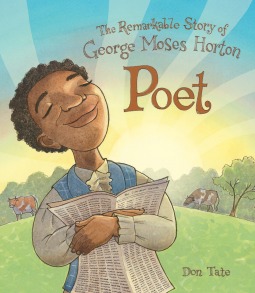
Poet: The Remarkable Story of George Moses Horton Author and Illustrator: Don Tate
Published September 1st, 2015 by Peachtree
I know that I am blessed to live as I do, but I forget that even words are something that I am lucky to have. Tate’s story of George Moses Horton shows that words are not something we should take for granted, and also shows the beauty and strength of words. In Horton’s story, words not only influence him to become a poet but allow him to make money and live on his own throughout some of his life. Eventually, as a free man after the Civil War, Horton was able to live as the poet he always was. My favorite quote is the last lines of the book: “George’s love of words had taken him on a great journey. Words made him strong. Words allowed him to dream. Words loosened the chains of bondage long before his last day as a slave.”
Water is Water Author: Miranda Paul
Illustrator: Jason Chin
Published May 26th, 2015 by Roaring Brook Press
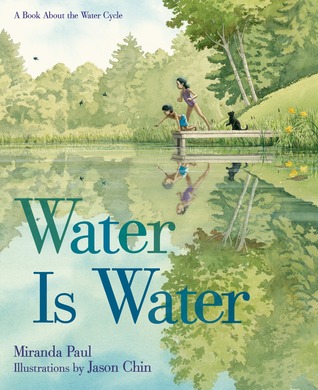
Chin’s artwork is some of my favorite of all picture book illustrators, and in this story of the beauty behind the water cycle, Chin’s illustrations bring Paul’s words to life. I really love the set up of this book. It is a mix of science and poetry. The only way to show you the beauty is to give an example:
” Drip. Sip. Pour me a cup. Water is water unless… it heats up. Whirl. Swirl. Watch it curl by. Steam is steam unless…”
Winnie: The True Story of the Bear Who Inspired Winnie-the-Pooh Author: Sally M. Walker
Illustrator: Jonathan D. Voss
Published January 20th, 2015 by Henry Holt and Co.
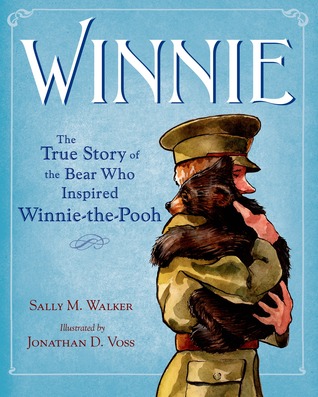
Winnie-the-Pooh is such a beloved character, but it is not common knowledge that Winnie was an actual bear that had quite a journey, and I loved learning the story behind the story. Walker begins the book with actual photos of Harry, the soldier who owned Winnie, and Winnie which grabs the readers attention and drags you into the time period and the truth of the story. She then writes a tribute to Winnie and Harry alongside Voss’s beautiful watercolor illustrations. By the end you love Winnie as much as Winnie-the-Pooh.
Earmuffs for Everyone!: How Chester Greenwood Became Known as the Inventor of Earmuffs Author and Illustrator: Meghan McCarthy
Published January 6th, 2015 by Simon & Schuster/Paula Wiseman Books
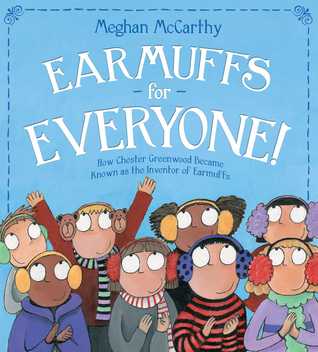
Often times we forget that things we use every day were once none existent and someone had to invent them. This is the story of ear muffs and how one man didn’t invent them but instead made them better and is thought to be the inventor. McCarthy gives quite a history into muffs and ear muffs and other inventions alongside her fun illustrations.
Are there any must read 2015 nonfiction titles that I missed?
Want to see Part One? You can view it HERE. Want to see Part Two? You can view it HERE.
Want to see Part Three? You can view it HERE.
Want to see Part Four? You can view it HERE.
Want to see Part Five: We Need Diverse Books (NF)? You can view it HERE.
Want to see Part Six: We Need Diverse Books (F)? You can view it HERE.
Want to see Part Seven? You can view it HERE.
Want to see Part Eight: 2015 Nonfiction Titles? You can view it HERE.
Top Ten Tuesday is an original feature/weekly meme created at The Broke and the Bookish. The feature was created because The Broke and Bookish are particularly fond of lists (as are we!). Each week a new Top Ten list topic is given and bloggers can participate.
Today’s Topic: 2015 Releases We Wish We’d Gotten To
Book guilt. The worst guilt of all!
Ricki
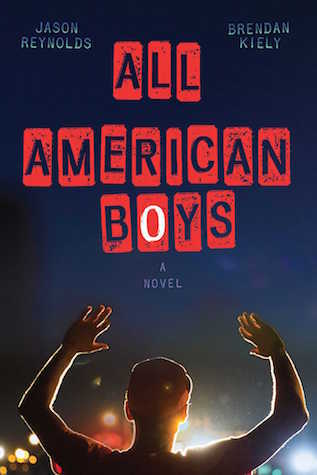
1. All American Boys by Jason Reynolds and Brendan Kiely
I added this one to my #mustreadin2016 list!
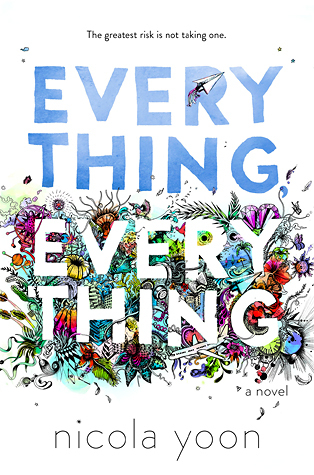
2. Everything, Everything by Nicola Yoon
I’ve heard this book is really intriguing. Another for my #mustreadin2016 list!
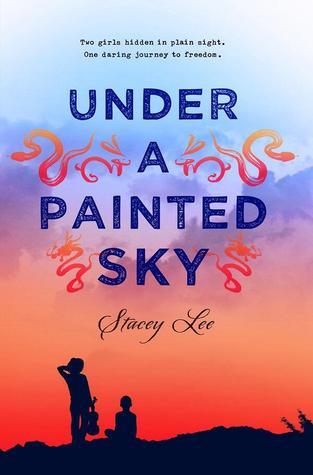
3. Under a Painted Sky by Stacey Lee
Not only is the cover beautiful, but I hear the story is incredible.
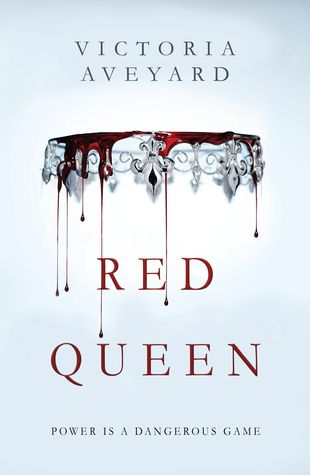
4. Red Queen by Victoria Aveyard
This book intrigued me, but I didn’t have time to get to it!
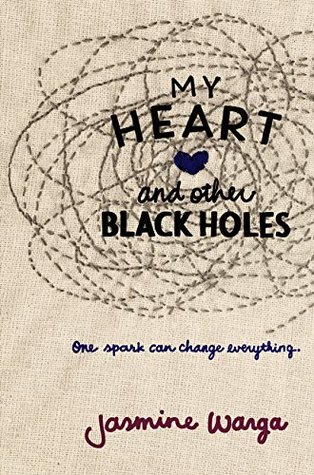
5. My Heart and Other Black Holes by Jasmine Warga
The book summary is so intriguing. But I didn’t have a copy of it and neither did my library, so I didn’t get to it.
Kellee
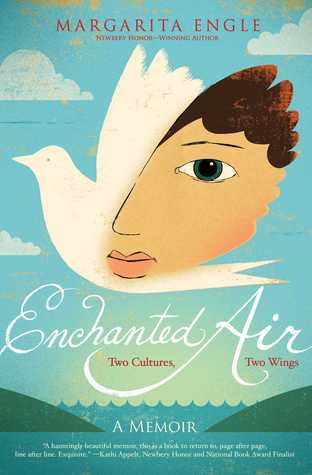
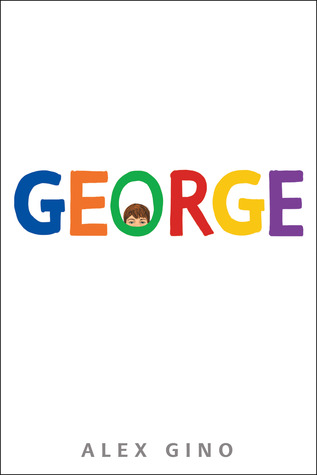
All of these are on my #mustreadin2016 list! And I wrote this before the ALA Youth Media Awards, and I am so happy to say that All American Boys, Enchanted Air, and George were all honored! I am even more excited about getting to these!
1. All American Boys by Jason Reynolds and Brendan Kiely
It’s Monday! What Are You Reading? From Picture Books to YA!
It’s Monday! What are you Reading? is a meme started by Sheila at Book Journeys and now hosted by Kathryn at The Book Date. It is a great way to recap what you read and/or reviewed the previous week and to plan out your reading and reviews for the upcoming week. It’s also a great chance to see what others are reading right now…you just might discover the next “must-read” book!
Kellee and Jen, of Teach Mentor Texts, decided to give It’s Monday! What Are You Reading? a kidlit focus. If you read and review books in children’s literature – picture books, chapter books, middle grade novels, young adult novels, anything in the world of kidlit – join us! We love this meme and think you will, too.
We encourage everyone who participates to support the blogging community by visiting at least three of the other book bloggers that link up and leave comments for them.
Kellee:I thought all weekend on how to make my week of reading sound better than it was, but then I realized there’s no point. I didn’t read this week. Well, I did, but not enough to finish anything. Or even say that I’m “into” a book. Sad, but true. I’ve been working on NCTE proposals and then Jim had his marathon weekend and then Trent was sick again, and here I am with no books read. Hopefully this upcoming week is better reading-wise! I’ll be home a couple of days with Trent, so hopefully I can read during nap.
Ricki: This week, I read House of Purple Cedar by Tim Tingle. What a beautiful story! I thought it was YA, but then I learned that it is an adult book that is also marketed to YA. I feel like Tim Tingle’s writing is like Sherman Alexie met John Steinbeck. Tingle beautifully develops character and interweaves a variety of plots in a way that is quite masterful. The book is quiet and loud at the same time.
This Week’s Expeditions
Kellee:I started two books that I am so excited to read! First, Salt to the Sea by Ruta Sepetys! I hope to finish it this week though that won’t be enough time to review it with Ricki on Thursday, but it’ll be my first #mustread title for 2016 🙁 I also started Full Cicada Moon by Marilyn Hilton. Carrie Gelson recommended this one and it is on my #mustread lit. After these, I have some books to read for the blog that I am looking forward to.
Ricki:I’ve been listening to Grasshopper Jungle by Andrew Smith. I made the mistake of downloading this one on Audible. My son is always in the car when I listen to audiobooks, and there are simply too many swears for his 2-year-old ears. So I’ve been listening to it when he isn’t in the car. Anyone who is a mom knows that is not a frequent occurrence! I am also reading several books, but I haven’t gotten far enough in any of them to comment yet. 🙂
Upcoming Week’s Posts
Tuesday: 2015 Releases We Meant to Get to But Didn’t
Wednesday: From Kellee’s (Huge) Library Pile Part Nine: More Nonfiction 2015 titles
Thursday: Salt to the Sea by Ruta Sepetys
Friday: Dewey Bob by Judy Schachner
So, what are you reading?
Link up below and go check out what everyone else is reading. Please support other bloggers by viewing and commenting on at least 3 other blogs. If you tweet about your Monday post, tag the tweet with #IMWAYR!
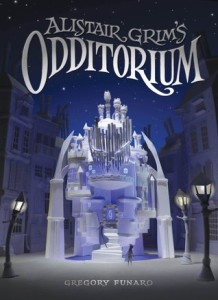
Alistair Grim’s Odditorium Author: Gregory Funaro
Illustrator: Vivienne To
Published January 6th, 2015 by Disney-Hyperion
Summary: Grubb, age twelve (or thereabouts), has never known anything beyond his miserable existence as a chimney sweep, paid only in insults and abuse by his cruel master.
All of that changes the day he stows away in the coach belonging to a mysterious guest at the inn that he is tasked with cleaning. Grubb emerges from Alistair Grim’s trunk and into the wondrous world of the Odditorium. Fueled by a glowing blue energy that Grubb can only begin to understand, the Odditorium is home to countless enchanted objects and an eccentric crew that embraces Grubb as one of their own.
There’s no time for Grubb to settle into his new role as apprentice to the strange, secretive Mr. Grim. When the Odditorium comes under attack, Grubb is whisked off on a perilous adventure. Only he can prevent the Odditorium’s magic from falling into evil hands-and his new family from suffering a terrible fate.
Grubb knows he’s no hero. He’s just a chimney sweep. But armed with only his courage and wits, Grubb will confront the life-or-death battle he alone is destined to fight.
About the Author: Gregory Funaro is the NY Times Best Selling author of the Odditorium series from Disney-Hyperion. He grew up in Cranston, Rhode Island, and wrote his first story, “The Ghost in the Window”, in the fourth grade. He considers this to be his finest work, but unfortunately it has been lost to time. Following high school Greg majored in theatre at the University of New Hampshire, and after various acting gigs, received his AM in Theatre Arts from Brown University and an MFA in Acting from the FSU/Asolo Conservatory. Greg teaches drama at East Carolina University, and spends far too much time on the internet looking for vintage lunchboxes.
Review: Take a bit of Oliver Twist add in some Harry Potter and Charlie and the Chocolate Factory mix it with the snark of Lemony Snicket and Frankenstein’s monster then top it off with some Emerald Atlas and (more) Harry Potter adventure with mythology and fairy tale sprinkles and voila! You have yourself Alistair Grim’s Odditorium. But do not let me fool you into thinking that Gregory Funaro’s story is like anything you’ve read before because even though it alludes to many fantastical adventures, it is its own story through and through.
What makes Odditorium soar is not just the amazing adventure that Grubb and Mr. Grim go on (because it is amazing!), but the cast of characters that accompany them. Without Mrs. Pinch, Nigel, Mack, Lord Dreary, the samurai, and others, the book just wouldn’t be the same. Gregory Funaro did an amazing job creating a fully-developed supporting cast of characters that help push this adventure to the next level.
Author Interview: Thank you so much to Gregory for being willing to answer some questions for us!
Kellee: Alistair Grim’s Odditorium seems to allude to many traditional stories such as mythology and Grimm fairy tales. What other pieces of literature inspired your story?
Gregory Funaro: The works of Charles Dickens, especially Great Expectations and Oliver Twist. The setting is Dickensian London, and you’ll find a lot of common themes from Victorian literature running throughout the series, such as hidden identities, unrequited love, upper-class destiny, etc. There are echoes of Charlie and the Chocolate Factory, of course, and the fantasy works of Lloyd Alexander (The Chronicles of Prydain), but like so many Dickens novels, underneath all the magic and adventure, Odditorium is just a simple story of one boy’s journey toward acceptance and self-discovery.
K: Grubb has quite an odd name–how did that come about?
GF: His original name was Twip–a mash-up of Twist (Oliver) and Pip from Great Expectations. However, one day when I was writing in my office (the building is very old) I spied what looked like a maggot in the cracks between the floor tiles. It ended up being just a rogue grain of rice from some sushi I’d had a few days earlier, but the “maggot” sparked the idea for grub. The extra “b” was just something I threw in there for fun.
K: The illustrations in the novel really help bring it to life and seem to perfectly embody your words. What was your process with working with the illustrator?
GF: Along with the editors, at the beginning of the publication process I was very involved in the initial shape explorations of the Odditorium itself, but after that, as far as I know Vivienne To was pretty much on her own. I was also involved in some tweaking of illustrations along the way to make sure they jived with the story–especially in Aquaticum–but in terms of conceptualizing characters and whatnot, all that came from Vivienne. Fine by me. She is amazing.
K: Although the story is primarily adventure and fantasy, you threw in some humor throughout (I particularly love Mack!). How important do you think it was to add that to your story?
GF: Indispensable. You must have humor even in the most tragic of stories. You need a break once in a while from all the tension(Shakespeare was the master at this) and having a humorous character like Mack (who can also be serious if needed), provides a much richer experience for the reader. I think having a “comedian” in children’s books is especially important because kids can relate. However, you have to be careful, because too much (i.e., just throwing in a bunch of random jokes or snarky comments) can get annoying very quickly.
K: You majored in and teach theater–how did you find yourself writing for young adults?
GF: I actually started writing thrillers during my spare time about eight years ago. I had a couple published (they weren’t very good) and then moved over to children’s literature after the birth of my daughter. Oddly, though, I didn’t see Odditorium as a children’s book at first. In the original premise, Nigel (Mr. Grim’s right hand man) was going to be the focus of a story about Frankenstein’s monster being reunited with his long lost daughter. That idea rolled around in my head until the following summer, and by the time I started Odditorium, it was a children’s book, the monster’s daughter had somehow become Grubb, and the focus was on his journey with Alistair Grim. Nigel and his daughter’s story still exists in the book, but it’s one of the subplots.
K: Book 2 is out now! Can you give us a non-spoilery peak into what Alistair and Grubb are up to next?
GF: Book 2, Alistair Grim’s Odd Aquaticum, centers around an underwater quest for the legendary sword Excalibur–the only weapon powerful enough to penetrate Prince Nightshade’s armor. That’s right, the evil prince and his gang of baddies are back, along with some new characters, including a banshee assassin and a witch named Mad Malmuirie, who wants revenge on Grim for stealing her magical objects. The rest of the Odditorium’s crew is back, too, and they all journey to the mythical realm of Avalon, where the story takes a magical turn that not even Alistair Grim could have predicted.
Teachers’ Tools for Navigation: First and foremost, I think this book is going to find some major love in libraries. If we can get this into students’ hands, they are going to talk about it and pass it around. It is that kind of book. Students will want to talk about it.
In addition, aspects of the book can definitely be used to discuss allusion. Teachers can pull out excerpts of the text and excerpts of the alluded text to compare and contrast and look at how the author made parts of or ideas from the classic text come alive in this new story.
Discussion Questions: Do you believe what Mr. Grim did to help Nigel was right?; What part does Mrs. Pinch play in the story?; What stories/books does Alistair Grim’s Odditorium remind you of? Which parts of the story remind you of what story/book?; Did the author give you any clues (foreshadowing) about Grubb’s true identity?; What do you think happened to Kiyoko?
Book Trailer:
Read This If You Loved: Harry Potter (series) by J.K. Rowling, Charlie and the Chocolate Factory by Roald Dahl, Emerald Atlas by John Stephens, Series of Unfortunate Events (series) by Lemony Snicket, The Magician’s Elephant by Kate DiCamillo, Circus Mirandus by Cassie Beasley, The Vanishing Islands by Barry Wolverton, The Dungeoneers by John David Anderson
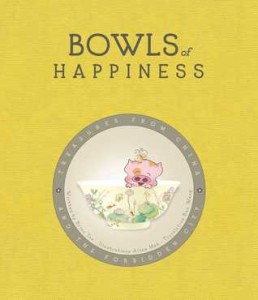
Bowls of Happiness
Author: Brian Tse, Illustrator: Alice Mak, Translator: Ben Wang, Editor: Nancy S. Steinhardt
Published: November 17, 2015 by China Institute in America
GoodReads Summary: Piggy’s mom loves her so much that she has decided to make a special porcelain bowl just for her. As mom makes the bowl, Piggy enters the world being painted on its outside. There she meets and learns about the animals used on these Chinese artworks and the messages of happiness and good-fortune that they convey.
Created by internationally renowned children’s book artists Brian Tse and Alice Mak, this book teaches children about Chinese artwork and culture and their universal spirit of generosity, love, and respect for nature. The lovable illustrations are coupled with photographs of porcelain art found in the Palace Museum’s collection. Children will learn about how bowls are made and be able to draw their own Bowl of Happiness after they have finished reading the story.
My Review: It was a lot of fun reading this book. It begins with an imaginative story reflecting the designs on a Chinese bowl. Then, in the second part, the book shifts to informational nonfiction. The author shares a variety of different bowls and their meaning. In the last portion, the readers are given instructions on how to create their own bowls. This book taught me a lot about these bowls of happiness, and I wanted to make my own bowl! Readers will enjoy learning about these bowls and will be intrigued to learn and research more.
Teacher’s Tools for Navigation: I would love to teach a book like this one. I’d have students begin by researching even more about these bowls, their symbolic meaning. Then, I might have the students create drafts of their own bowls. The book provides a wealth of information about the symbols and colors of bowls, and students could select their own designs and symbols. While their bowls would not be authentic and teachers would have to be careful to explain appropriation, it would teach the students to enjoy and appreciate another culture and reinforce their knowledge about the bowls.
Discussion Questions: What symbols do you find most interesting? If you could have any of the bowls in the book, which would you pick, and why?; What symbols are used in your culture? How might they compare to the symbols on these bowls?; Why do you think the author divided the book into such different sections?
We Flagged: “These two bowls were not used for eating. Chinese emperors used them for important rituals that paid respect to Heaven and Earth.”
Read This If You Love: Books about culture, history, art, or museums