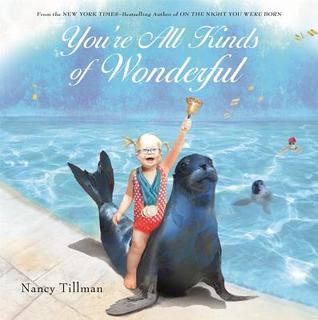
You’re All Kinds of Wonderful by Nancy Tillman

Share

You’re All Kinds of Wonderful
Author and Illustrator: Nancy Tillman
Published: October 3, 2017 by Feiwel and Friends

Summary: We’re not all the same. Thank goodness we’re not.
Life would be boring, and I mean… a lot.

And so, when we’re born, we’re supplied at the start 
with our own bells and whistles to set us apart.

Think of your bells as the things you do best
things tucked away in your own treasure chest.

Part of growing up is discovering–and embracing–what makes us unique. From different abilities to different personalities, we are all wonderfully made with our own bells and whistles.

My Review: I love Nancy Tillman. Her book On the Night You Were Born is a staple in our bedtime routine. She has a way with words that is simply magical. This book does not disappoint. When I read this book to my son, I paused at the end and looked at him, and he said, “Can we read it again?” It was a great book to talk about how we all have different talents and strengths. This is a lesson that can’t be iterated enough to children. Parents will love reading this book to their kids and discussing how that particular shines and offers something different and beautiful to the world.

Teachers’ Tools for Navigation: Teachers might ask each student to illustrate a page for a book that shares what their talents or positive characteristics. All of the pages could be combined into a bound book.

Discussion Questions: Look through each page. What makes each of the children special? How are you special? What do you add to this world?

Flagged Passage: “We’re not all the same. Thank goodness we’re not. / Life would be boring, and I mean—a lot. / And so, when we’re born, we’re supplied at the start / with our own bells and whistles to set us apart.”

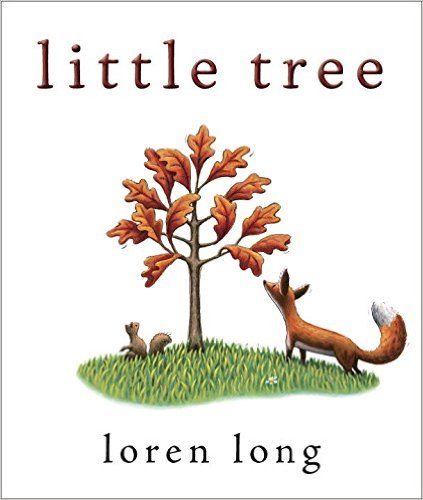
Read This If You Loved: On the Night You Were Born by Nancy Tillman; Little Tree by Loren Long, Giraffes Can’t Dance by Giles Andreae, Say Hello by Jack Foreman, The Cloud by Hannah Cumming, Each Kindness by Jacqueline Woodson

Recommended For:

  readaloudbuttonsmall classroomlibrarybuttonsmall

RickiSig

**Thank you to Kelsey at Macmillan for providing a copy of this book for review!**

All My Friends Are Fast Asleep by David Weinstone

Share

All My Friends Are Fast Asleep
Author: David Weinston; Illustrator: Magali Le Huche
Published September 5, 2017 by FSG

Summary: After tossing and turning in his bed, a little boy embarks on a nighttime quest to find a cozy place to rest. He visits one animal friend after another, from a lark in its nest to a mole in its hole. But while all the animals he meets are happily dozing off, this tuckered-out wanderer remains wide-awake–until he finally finds the perfect spot to lay his head.

From David Weinstone, the popular children’s musician and creator of the Music for Aardvarks program, comes All My Friends Are Fast Asleep, a rhythmic, cheerily illustrated bedtime story sure to smooth the way to sleep for young insomniacs everywhere.

Ricki’s Review: I love books that feature a different animal on each page. This book is different from others that I’ve read because it explores the different ways in which animals sleep. My son enjoyed reading this with me, and he demonstrated each of the animal’s ways of sleeping. It was very fun and interactive. The illustrations are simply lovely. They pop off the page and lure the reader to want to turn the page to see which animal is next. We had a lot of fun with this book—we enjoyed stopping on each page to discuss the animal together.

Kellee’s Review: One of Trent’s favorite board books is A Book of Sleep by Il Sung Na which has a little owl that ventures out to visit other animals and they are all sleeping. We talk about the differences between all of the different animals and how different they sleep. All My Friends are Fast Asleep elevates this conversation and will be a great ladder up from the board book. In this book, the young protagonist is having trouble sleeping, so he goes and visits animals to try to sleep how they are to see if it’ll help. In the end, he realizes that the best way to sleep is in his bed, but we, as the reader, in the end have learned about many different animals’ sleeping habits. Additionally, the book ends with guitar chords to accompany the book to turn it into a song–how much fun!
Teachers’ Tools for Navigation: Teachers might ask students to pick one animal in the book and research other aspects of that animal’s life. Or, students could find other animals in the wild and draw additional pages of this book. They could compile those pages into a sequel!

Visit www.allmyfriendsarefastasleepbook.com for a free download of David Weinstone’s musical version of the text!

Discussion Questions: Which is your favorite animal page? Why? How is this animal different from all of the other animals in the book?; Why does the boy end up in his bed at the end of the night? What other animals could he have found?

We Flagged: “It’s time for bed and overhead / the moon has risen high / but I can’t seem to fall asleep, / no matter how I try.”

Read This If You Loved: Twenty Yawns by Jane Smiley; Goodnight Moon by Margaret Wise BrownGoodnight Songs by Margaret Wise BrownA Book of Sleep by Il Sung Na, I’m Not Sleepy by Jonathan Allen, Hoot & Honk Just Can’t Sleep by Leslie Helakoski 

Recommended For: 

readaloudbuttonsmall classroomlibrarybuttonsmall

RickiSigand Kellee Signature

**Thank you to Kelsey from Macmillan for sharing these books with us!**

Here Comes Teacher Cat by Deborah Underwood

Share

Here Comes Teacher Cat
Author: Deborah Underwood
Illustrator: Claudia Rueda
Published: August 8, 2017 by Dial

Goodreads Summary: It’s back to school for the New York Times bestselling Cat when he steps in as a substitute teacher.

Cat is not pleased to be tapped as substitute teacher. Not only is it cutting into his naptime, but a roomful of kittens is a little, well, scary. At school, he’s faced with six adorable kittens and follows the lesson plan of music, building, and painting–only in pure, mischief-making Cat style. By the end, Cat has learned a thing or two about inspiring others by being himself. But even more heart-melting and humorous is what the kittens have learned from Cat.

Ricki’s Review and Teachers’ Tools for Navigation: This book is very funny. Every time my son and I read it together, he giggles wildly across the pages. Cat is very unhappy when he is asked to play the role of teacher for the day. He doesn’t want to have to deal with the kitties, and he just wants to nap. He gets pretty creative, though, and it makes for a wonderfully fun story. I really like this book because it is very easy to ask my son questions while reading it. For example, I will ask him “What is Teacher Cat doing now? How do you think he feels? What are the kitties doing?” It is also very easy to practice making predictions with this text.

Discussion Questions: How does Teacher Cat change from the beginning to the end of the story?; How is he creative?; What does this story teach us?; Why did the author/illustrator choose to have Teacher Cat and the kitties hold up signs rather than speak?; Who is the narrator?

Reading by Brightly: 

Read This if You Loved: Any of the Here Comes _____ Cat books by Deborah Underwood, Won Ton and Chopstick by Lee Wardlaw; One Leaf Rides the Wind by Celeste Davidson Mannis; If Not for the Cat by Jack Prelutsky; I Haiku You by Betsy E. Snyder; Dogku by Andrew Clements

 Recommended For: 

readaloudbuttonsmall  classroomlibrarybuttonsmall


RickiSig

**Thank you to Penguin for providing a copy of this book for review!**

Review and Giveaway!: It’s Not Jack and the Beanstalk by Josh Funk

Share

It’s Not Jack and the Beanstalk
Author: Josh Funk
Illustrator: Edwardian Taylor
Anticipated Publication: September 19, 2017 by Two Lions

Goodreads Summary: A fresh take on a young Jack who is not keen on climbing any beanstalks and would much prefer to tell his own story.

Ricki’s Review: This book is hysterical. My four-year-old and I love reading it. (I am not entirely sure he understands that it is a fairy tale retelling, but he still adores it.) Every night, it is the first book he picks to read together. The book has an unnamed narrator who insists on telling the traditional “Jack and the Beanstalk” story. Jack has other plans, though. He and the giant decide that they don’t want to follow the traditions of the story. As you can see below in the flagged spread, Jack pushes back on the tale. I laugh every time I read this. My favorite part is the appears of Cindy (Cinderella), who invites Jack to her ball. Josh Funk is an incredible author, and I will read anything that he writes. This is a fantastic book for teachers to use in their classrooms.

Kellee’s Review: Trent loves the story of Jack and the Beanstalk. They must read it at his school because he knew the whole story, and I think it is hilarious that he argues with me about what is happening in the book. We’ve talked about how this is a different Jack story but he, like the narrator, just really wants Jack to do what he is supposed to. I love the way that Josh Funk has broken the 4th wall and has the narrator talk to the characters; it is such a unique way to twist the fairy tale and makes it so hilarious. I look forward to reading this to Trent and students for many years.

Teachers’ Tools for Navigation: Most obviously, this book would be great to kick off a unit on writing fairy tale retellings. It teaches students to break the mold and repurpose stories to add humor and intrigue. It would also be fun to pair this story with other fairy tale retellings to ask students: What did the authors do to revision the stories? How are they successful?

Check out a book trailer, collector’s cards, and more at https://www.joshfunkbooks.com/stuff-for-kids

Discussion Questions: How does Jack break our expectations?; How are Jack and the Giant different from the narrator? Who did you find yourself rooting for?; How does the author add humor to the story?; How is the text structured to help the reader follow both the narrator and Jack?; What other fairy tales could you retell?

Flagged Spreads: 

Giveaway:

a Rafflecopter giveaway

Read This If You Loved: Dear Dragon by Josh Funk; Lady Pancake & Sir French Toast by Josh Funk; Whose Story is This, Anyway? by Mike Flaherty; Battle Bunny by Jon Scieszka and Mac Barnett; A Tale Dark and Grimm by Adam Gidwitz

Recommended For: 

readaloudbuttonsmall classroomlibrarybuttonsmall closereadinganalysisbuttonsmall

About the Author and Illustrator:

Like Jack, Josh Funk loves telling his own stories. He is the author of the popular picture books Lady Pancake & Sir French Toast and itssequel, The Case of the Stinky Stench, illustrated by Brendan Kearney; Dear Dragon, illustrated by Rodolfo Montalvo; and the upcoming How to Code a Sandcastle illustrated by Sara Palacios in partnership with Girls Who Code. Josh lives in New England with his wife and children. Learn more about him at www.joshfunkbooks.com, and follow him on Twitter @joshfunkbooks.
Edwardian Taylor currently works as a visual development artist and character designer for TV and animation feature film. His work can also be seen in mobile games, films, and commercials. He is the illustrator of the picture book Race!, written by Sue Fliess. Edwardian lives in Texas with his partner, their three dogs, and seven chickens. Learn more about him at www.edwardiantaylor.com, and follow him on Twitter and Instagram @edwardiantaylor.

RickiSigandSignature

**Special Thanks to Barbara at Blue Slip Media for Providing Copies to Review*

Adolescents’ Literature Syllabus

Share

Colorado State University

Dr. Ricki Ginsberg

COURSE DESCRIPTION

This course focuses on adolescence and the reading, analysis, and understanding of young adult literature. Some of the themes we will explore include: the body and mind, culture, (dis)ability, gender, grief, intersectionality, race, sexuality, and social class. Because the course is designed primarily for future English teachers to prepare them to examine issues of adolescents/ce, we will also consider supportive practices for teaching young adult texts critically in the classroom. This course will allow us the time and space to (re)consider our perspectives of adolescence. The reading and coursework is designed to be both rigorous but rewarding.

REQUIRED TEXTS

Required, Whole Class Texts:

Alexie, S. (2007). The absolutely true diary of a part-time Indian. New York, NY: Little, Brown.

Farizan, S. (2013). If you could be mine. Chapel Hill, NC: Algonquin.

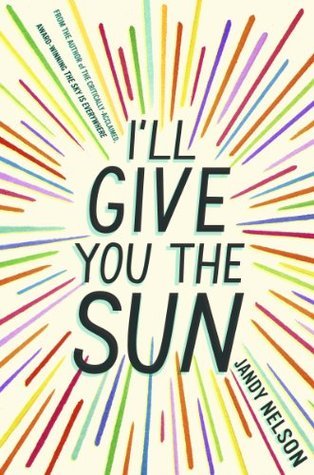
Nelson, J. (2014). I’ll give you the sun. New York, NY: Speak.

Roskos, E. (2013). Dr. Bird’s advice for sad poets. New York, NY: Houghton Mifflin Harcourt.

Saenz, B. A. (2012). Aristotle and Dante discover the secrets of the universe. New York, NY: Simon & Schuster.

Schrefer, E. (2012). Endangered. New York, NY: Scholastic.

Sepetys, R. (2011). Between shades of gray. New York, NY: Speak.

Shusterman, N. (2007). Unwind. New York, NY: Simon & Schuster.

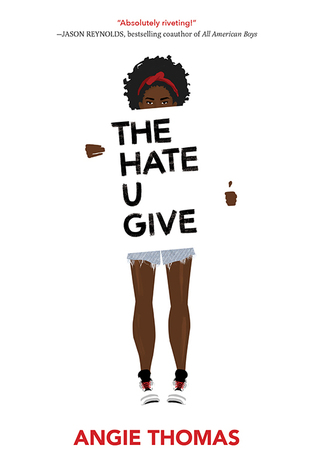
Thomas, A. (2017). The hate u give. New York, NY: Balzer + Bray.

Woodson, J. (2014). Brown girl dreaming. New York, NY: Nancy Paulsen.

Yang, G. L. (2006). American born Chinese. New York, NY: First Second.

Zentner, J. (2016). The serpent king. New York, NY: Ember.

Literature Circle Group Text (Disability and the Body):

You will select this text during the first week.

Anderson, L. H. (2009). Wintergirls. New York, NY: Penguin Group.

Draper, S. (2010). Out of my mind. New York, NY: Atheneum.

Van Draanen, W. (2011). The running dream. New York, NY: Ember.

Palacio, R. J. (2012). Wonder. New York, NY: Knopf.

Gemeinhart, D. (2015). The honest truth. New York, NY: Scholastic.

Stork, F. X. (2008). Marcelo in the real world. New York, NY: Scholastic.

Lindstrom, E. (2015). Not if I see you first. New York, NY: Poppy.

Sloan, H. G. (2013). Counting by 7s. New York, NY: Puffin.


STUDENT LEARNING OUTCOMES

  1. Analyze and critique a wide range of adolescents’ literature across genre and form (as evidenced in the reading portfolio, classroom discussions, and Book Bistro conversations).
  2. Examine research and theories of adolescence through a range of scholarly sources and (re)consider our own assumptions (as evidenced in the discussion of the Youth Lens and in the Scholarly Journal Article critique).
  3. Evaluate the purpose of literature that is written explicitly for adolescents and the value of using this literature for classroom instruction (as evidenced in each course requirement, particularly the Leading a Class Discussion assignment).
  4. Explore the ways in which adolescents’ literature can be highly political in nature (as evidenced in the selected required texts and the focused discussions and classroom activities in weeks 14 and 15).

COURSE REQUIREMENTS AND GRADING

The outside work for this course adheres to the instructional time equivalent to the federal credit hour definition of 2 hours of outside work for each contact hour. As such, you can expect to do approximately 5 hours of outside work each week. Much of this time will be dedicated to the course reading (required and free choice). I will not accept assignments after they are due. Please wait 24 hours to dispute a grade.

1.   Free Choice Reading Portfolio (25%)

You will be required to read a total of 3,000 pages of books written for and about adolescents.

The portfolio will reflect this work and must include:

  • A cover sheet listing the books and total number of pages that you read. If you prefer to keep track by hand, feel free to print the book log available on Canvas. At the bottom of your cover sheet, please include a signed honor statement that indicates that you read all of the pages that you list on this page.
  • A one-pager for each of the books that you read. Examples of one-pagers will be provided in class. The only requirement is that the one-pager must fit on one side of a piece of paper. Please complete these one-pagers as you read. You will be showing them to your peers during Book Bistro meetings.

Selecting texts:

  • Select texts from a variety of authors, forms, genres, subjects, and marketed age levels. Do not read over 1,000 pages of the same author, genre, or form.
  • Do not read a classic text unless it was expressly written for adolescents. For example, To Kill a Mockingbird and Catcher in the Rye were written for adults, but The Chocolate War and The Contender were written for adolescents. Check with me if you are unsure whether a text is traditionally considered to be a YA text.
  • Do not read books that were written for adults (Crichton, Grisham, King, Steele, etc.). You may, however, read books that are very popular, free choices among adolescents (e.g. Books on the Alex Awards lists).
  • Consult adolescents, librarians, the adolescent literature collections at the Morgan Library and 322 Eddy, ALA Award lists, and other published listings of texts. The Fort Collins libraries have great collections. Ask your peers what they are enjoying, and share books with each other. I will make ever attempt to flood you with books that you might be interested in reading, and I will bring a rolling classroom library to most classes.
  • ENJOY what you are reading. I typically use a 50-page rule. If I am not enjoying a book after 50 pages, I put it down. Please use whatever system works for you and keeps you reading. You can (and should) count the pages of unfinished books toward the 3,000-page requirement.

2. Class Participation (20%)

I cannot emphasize enough the importance of your participation in class. You are expected to read the entire required texts before you come to class. I am not a fan of reading quizzes, but I need to know that you are doing your homework. As such, you will complete a reading quiz at the beginning of many classes. If you are late or absent, you will miss this assignment for the week. Your literature circle presentation will also be included in this grade.

3. Leading a Class Discussion (in pairs) (15%)

You will sign up with a peer to lead an hour-long discussion of one of the required texts. You and your peer can decide how to structure the class time and activities. You do not need to focus your discussion on the weekly topic listed in the schedule. The only requirements are: a) you will give a 5-minute reading quiz at the beginning of the hour, and b) you will lead a discussion of the reading for some portion of the time. You and your peer will grade the reading quizzes and return them to me the following class.

 4. Book Bistro Participation (10%)

You will participate in five scheduled Book Bistro meetings. You will be in charge of leading one of these meetings and inspiring conversation around the books that the members in your group are reading. You will sign up to lead the meeting in the beginning of the semester.

5. Scholarly Journal Article Critique (in pairs) (10%)

Working in pairs, you will read and critique a scholarly journal article about young adult literature or adolescence. I will help find this article. You will present your findings, complete with a handout, to the class. Your presentation should last between five and ten minutes and can include discussion.

6. Final Exam (20%)

You will design a project for the final exam that meets your personal and professional needs and passions. I will provide suggestions from previous courses that I have taught, but I recommend that you design a project that you will find exciting. We will dedicate some class time to help you determine, workshop, and independently work on this project, but you will complete most of the work outside of class. You will present your project during the university-sanctioned final exam time. The exam is scheduled for Monday, December 11, from 4:10pm-6:10pm.

7. Graduate Students Only (10%, overall grade calculated out of 110%)

In an effort to help you organize and synthesize your thinking about your Master’s thesis or project, you can choose to write five annotated bibliography entries (choose a combination of the require texts—novels and articles—for this course plus texts of your own choosing.

OR

You can design a similar project tailored to your needs. Please see me early in the semester to discuss this course requirement and to solidify your choice. This work is due to me on December 3, 2017.

 8. Honors Credit Only (10%, overall grade calculated out of 110%)

Those who seek honors credit will be required to read five advanced reader copies (galleys) of texts within (not in addition to) their 3,000 page required. They will complete five book reviews in the form of blog posts. If these students choose, I can publish these blog posts on www.unleashingreaders.com, and this work can be featured as publications on their resumes. Please see me if you are seeking honors credit.

 Grade Overview

  1. Free Choice Reading Portfolio (25%)
  2. Class Participation (20%)
  3. Leading a Class Discussion (in pairs) (15%)
  4. Book Bistro Participation (10%)
  5. Scholarly Journal Article Critique (in pairs) (10%)
  6. Final Exam (20%)

As per University policy, I use +/- grading. Calculations on a 4.0 scale are:  A+ = 4.0; A = 4.0; A- = 3.667; B+ = 3.334; B = 3.00; B- = 2.667; C+ = 2.334; C = 2.00; D = 1.00; F = 0.00


POLICIES

Attendance Policy

Attendance is critical for your success in this course. I expect you to be punctual. Absences beyond two per semester will result in a grade deduction of ½ grade, as this is equivalent to over a week of missed classes. For instance, if you earn an A in the course but miss three class sessions, your grade will reduce to an A-. You will also miss reading quizzes, which will impact your grade. Please see me with any concerns about your attendance. Excused absences will not count against your grade, and these will include participation in University-sanctioned activities, as well as participation in religious holidays and observances. If you will be absent for an excused reason, please see me in advance of class or email me at least one day in advance.

It is respectful to email me prior to class if you will be absent. This will help me (and your peers who are presenting) adjust class plans and groups accordingly. Please do not sign up to present on a day that you anticipate you will be absent for an excused purpose.

Academic Integrity and Student Conduct

The course will adhere to the Academic Integrity Policy of the Colorado State University General Catalog and the Student Conduct Code. Do not plagiarize. Any student who plagiarizes or cheats on any assignment in this course faces penalties that may include an F on the assignment or an F in the course.

Cell Phones and Computers

Please remember to turn off your cell phone before coming into class. That means no text messaging during class. Please be respectful about your computer use and do not surf the internet or check emails while in class. Abuse of this policy will result in a lower classroom participation grade.

Safety, Reporting and Resources:  

CSU’s Discrimination, Harassment, Sexual Harassment, Sexual Misconduct, Domestic Violence, Dating Violence, Stalking, and Retaliation policy designates faculty and employees of the University as “Responsible Employees.”  This designation is consistent with federal law and guidance, and requires faculty to report information regarding students who may have experienced any form of sexual harassment, sexual misconduct, relationship violence, stalking or retaliation. This includes information shared with faculty in person, electronic communications or in class assignments.  As “Responsible Employees,” faculty may refer students to campus resources (see below), together with informing the Office of Support and Safety Assessment to help ensure student safety and welfare. Information regarding sexual harassment, sexual misconduct, relationship violence, stalking and retaliation is treated with the greatest degree of confidentiality possible while also ensuring student and campus safety.  CSU’s Discrimination, Harassment, Sexual Harassment, Sexual Misconduct, Domestic Violence, Dating Violence, Stalking, and Retaliation policy designates faculty and employees of the University as “Responsible Employees.”  This designation is consistent with federal law and guidance, and requires faculty to report information regarding students who may have experienced any form of sexual harassment, sexual misconduct, relationship violence, stalking or retaliation. This includes information shared with faculty in person, electronic communications or in class assignments.  As “Responsible Employees,” faculty may refer students to campus resources (see below), together with informing the Office of Support and Safety Assessment to help ensure student safety and welfare. Information regarding sexual harassment, sexual misconduct, relationship violence, stalking and retaliation is treated with the greatest degree of confidentiality possible while also ensuring student and campus safety.

Any student who may be the victim of sexual harassment, sexual misconduct, relationship violence, stalking or retaliation is encouraged to report to CSU through one or more of the following resources:

  • Emergency Response 911
  • Deputy Title IX Coordinator/Office of Support and Safety Assessment (970) 491-1350
  • Colorado State University Police Department (non-emergency) (970) 491-6425

For counseling support and assistance, please see the CSU Health Network, which includes a variety of counseling services that can be accessed at: CSU Health Network (http://www.health.colostate.edu/).  And, the Sexual Assault Victim Assistance Team is a confidential student resource that does not have a reporting requirement and that can be of great help to students who have experienced sexual assault. The web address is: Sexual Assault Victim Assistance Team (http://www.wgac.colostate.edu/need-help-support).

Accommodations

If you are a student who will need accommodations in this class, please do not hesitate to make an appointment to see me to discuss your individual needs. Accommodations must be discussed in a timely manner prior to implementation.   A verifying letter from Resources for Disabled Students may be required before any accommodation is provided.

COURSE SCHEDULE

Week 1           What is Adolescent Literature? and Introductions

08/21   Introductions, Select Literature Circle Texts

Read: The Youth Lens article and the Book Bistro article

Watch: “The Danger of a Single Story.”

Begin: Your choice reading. Anticipate reading about 150 pages of choice per week, and you will be successful.

08/23   Histories and Definitions of Adolescents’ Literature

Resources for Finding and Using YA Literature

Draw table numbers for Book Bistro, Sign up to lead class.

Read: The Absolutely True Diary of a Part-Time Indian


Week 2           Identity Part I

08/28   Discuss The Absolutely True Diary of a Part-Time Indian

08/30   The Absolutely True Diary of a Part-Time Indian

Read: American Born Chinese.

Bring: All of your book pages thus far to share in class.


Week 3           Identity Part II

09/04   NO CLASS: LABOR DAY

09/06   American Born Chinese

Book Bistro #1

Read: The Serpent King


Week 4           Family and Friendship

09/11   The Serpent King

09/13   The Serpent King

Read: Aristotle and Dante Discover the Secrets of the Universe


Week 5           Sexuality

09/18   Aristotle and Dante Discover the Secrets of the Universe

09/20   Aristotle and Dante Discover the Secrets of the Universe

Read: I’ll Give You the Sun


Week 6           Negotiating Death and Grief

09/25   I’ll Give You the Sun

Research project proposal due

Bring: All of your book pages thus far to share in class.

09/27   I’ll Give You the Sun

Book Bistro #2

Read: Dr. Bird’s Advice for Sad Poets


Week 7           Mental Health

10/02   Dr. Bird’s Advice for Sad Poets

Bring: One text that you’ve loved and enjoyed this semester.

10/04   Dr. Bird’s Advice for Sad Poets

Midway Book Talks

Read: Between Shades of Gray


Week 8           Adolescents Across Time and Place: Part I

10/09   Between Shades of Gray

10/11   Between Shades of Gray

Read: Endangered


Week 9           Adolescents Across Time and Place: Part II

10/16   Endangered

Bring: All of your book pages thus far to share in class.

10/18   Endangered

Youth Lens looking across all texts???

Book Bistro #3

Read: Brown Girl Dreaming


Week 10         Adolescents in the “Real World” (Nonfiction)

10/23   Brown Girl Dreaming

10/25   Brown Girl Dreaming

Read: Unwind


Week 11         Adolescents in the Imagined Worlds (Fantasy and Science Fiction)

10/30   Unwind

11/01   Unwind

Read: Literature Circle Text


Week 12         Disability and the Body

11/06   Literature Circle Text of Choice (See first page of syllabus)

Bring: All of your book pages thus far to share in class.

 11/08   Literature Circles

Book Bistro #4

Bring: Anything you need for your literature circle presentation.


Week 13         Disability and the Body

11/13   Literature Circle Presentations

Read: If You Could Be Mine

11/15   No Class (Ricki at NCTE) – Independent Reading and Work on Final Project


Thanksgiving Break; No Class; November 20-24, 2017


Week 14         The Politics of Adolescence

11/27   If You Could Be Mine

11/29   If You Could Be Mine, Skype with Sara Farizan

Read: The Hate U Give

Graduate Students: Paper Due Next Class


Week 15         Adolescents as Agents

12/04   The Hate U Give

Bring: Your completed Reading Portfolio

12/06   The Hate U Give

Book Bistro #5


Week 16         Final

12/11   Final Exam Presentations


2017 Picture Book 10 for 10: Favorite Picture Books to Use in the Secondary Classroom #PB10for10

Share

Thank you to Cathy Mere and Mandy Robek for hosting the Picture Book 10 for 10 (#PB10for10).

The rules are simple:

What:  10 picture books you can’t live without
Hashtag:  #PB10for10
Who:  Anyone who is interested—educators, authors, media specialists, librarians, parents, and book lovers.
When:  Thursday, August 10, 2017
Where:  All posts will be linked on the Picture Book 10 for 10 Google Community Site.


Our 2017 Topic: Favorite Picture Books to Use in the Secondary Classroom

Freedom Summer by Deborah Wiles (Aladdin, 2005).
(Ricki’s Review  |  Kellee’s Review)

Ricki: This book is beautifully written and the characterization is wonderfully done. I enjoy reading this book to discuss the intricacy of picture books and their application within units. This books reminds older students that picture books aren’t just for young kids.

Kellee: I feel that this picture book portrays a part of the Civil Rights Movement that most kids don’t know about unless they’ve been explicitly talked to about it. Freedom Summer gives me a way to start the conversation.

Red: A Crayon’s Story by Michael Hall (Greenwillow, 2015).

Ricki: We use this book when we talk about identity. I love reading this text aloud and then asking students about the author’s purpose. Many think that he is discussing disability and others argue that he is discussing gender identity. The interpretations remind us how texts give different interpretations, and this is a very good thing.

Kellee: Identity is something that everyone is struggling with in middle school, and I loved reading this book with my students and listening to their conversation about the crayons. When they begin to connect it to human identity, some really fascinating discussions break out.

Each Kindness by Jacqueline Woodson (Nancy Paulsen, 2012).
(Ricki’s Review  |  Kellee’s Review)

Ricki: I love to read this book on the first day or on any day that I am noticing classroom tensions. What I love about this book is that it teaches kindness without being didactic. The story goes beyond the theme of kindness and reminds readers about regret. This is a beautiful book that earns its place in classrooms of all levels.

Kellee: I begin every year with this book, and my students make kindness goals for the year to help ripple kindness throughout the school.

Locomotive by Brian Floca (Atheneum, 2013). 

Ricki: I love to show this book right before a research project/paper. It shows an example of high quality research and reminds readers that a lot of research is required in order to present a high quality product.

Tomás and the Library Lady by Pat Mora (Knopf, 1997). 

Ricki: This is a great book to start a conversation about being culturally responsive to other people. The library lady is very sensitive to Tomás, and the book makes readers want to be better people. My bilingual education teacher read this to my class, and I think of it often. I always enjoy reading it aloud.

The Dot by Peter H. Reynolds (Candlewick, 2003).

Kellee: I love to participate in Dot Day because it truly shows kids the range of what art is and the importance of creativity. I use The Dot to introduce this discussion then every student makes their own dot that symbolizes them.

Ricki: This is a fantastic book to discuss imagination. I show this book when I am trying to kickstart ideas about projects. Because I make strong attempts to allow a lot of flexibility in projects, this book is great to simply inspire students to examine ideas differently.

Last Stop on Market Street by Matt de la Peña (Putnam, 2015).
(Kellee & Ricki’s Review)

Kellee: I wrote a whole post just on using this book with my middle school students because students really found the depth and beauty in this amazing picture book.

Ricki: This book reminds us that picture books are anything but simple. I love to use this book to talk about themes and hidden messages in writing. Then, we apply this idea to our own writing. Reading this book reminds us to look at writing more deeply.

The Day the Crayons Quit by Drew Daywelt (Philomel, 2013).

Kellee: This is another superb crayon text that uses the idea of crayons being expected to act or do one thing really stunting the creativity and identity of the crayons. Also, the book is written in

Ricki: This book is funny, creative, and cleverly written. I’ve had students use this book for readers’ theater, and their performance was hysterical. Each student took the time to memorize their speech, and we talked about all of the qualities of a good speech.

Normal Norman by Tara Lazar (Sterling, 2016).
(Kellee & Ricki’s Review)

Kellee: I love the discussions of normal that this book brings up. You’ll notice, a lot of the picture books I read with my students discuss identity and kindness because picture books are such a perfect way to get conversations about tough subjects started. Norman shows us that what you think is normal may not be what another person thinks is normal, and being abnormal doesn’t mean anything is wrong.

Ricki: This is a great book to talk about what it means to be “normal.” I love to use this book to kick off discussions that queer the concept of normalcy.

Dear Dragon by Josh Funk (Viking, 2016).
(Kellee & Ricki’s Review)

Kellee: I am going to use Dear Dragon in my classroom for the first time this year! I want to get my student pen pals, and I am going to use Dear Dragon as an introduction to the idea. I’m not sure how I’m going to execute the pen pals yet, but there is also the theme of first impressions and judging based on looks that is perfect for our discussion on themes!

Ricki: Yes, Kellee! I have yet to use this book, but it would be a phenomenal text to start a student pen pal program! You might also use this book to talk about expectations and judgment.


What are your favorite books to use in the secondary classroom? 

Don’t forget to check out all of the other #PB10for10 posts by visiting the Google community site or searching on Twitter!

 and

The Misadventures of Max Crumbly: Locket Hero by Rachel Renee Russell

Share

The Misadventures of Max Crumbly: Locket Hero
Author: Rachel Renee Russell
Published: June 7, 2016 by Aladdin

A Guest Review by Emily Baseler

GoodReads Summary: Max Crumbly is about to face the scariest place he’s ever been: South Ridge Middle School. There’s a lot that’s great about his new school, but there’s also one big problem—Doug, the school bully whose hobby is stuffing Max in his locker. If only Max could be like the hero in his favorite comics. Unfortunately, Max’s uncanny, almost superhuman ability to smell pizza from a block away won’t exactly save any lives or foil bad guys. But that doesn’t mean Max won’t do his best to be the hero his school needs!

Review: This book is the beginning of a soon to be very popular series. I suggest you purchase a copy of this book for your classroom library while you still can. In June, the 2nd book will be released and I have a feeling it will not be available on the shelf for long. This book has a very similar style to the “Dairy of a Wimpy Kid” series which children across grade levels love. This book introduces relevant themes to a middle grade reader such as peer conflict, coping with bullying, pop culture, relationships, friendship, surviving middle school, and learning to laugh at yourself. This book was an easy ready and would be ideal for a more reluctant reader or to read for pleasure.

Teachers’ Tools for Navigation: This book is one of the rare few written in second person. Max Crumbly, the narrator, is writing journal entries addressing the reader as “you.” “The Adventures of Max Crumbly” would be an interesting text to explore point of view with your students. You could also use the text to highlight the use of exclamation and variation of font. Additionally, the text could be a resource when reviewing the writing process. There are entire sentences scratched out, arrows redirecting the narrative, edits, revisions, and inclusions in the final text.

Discussion Questions: Is this style of writing something you think you would be able to create?; How does the point of view of the narrator impact your perceptions as a reader?; What value did the illustrations add to the text—if any?; Are there any themes or topics in which you can identify/connect with?

Book Trailer: 

Online Resource: http://maxcrumbly.com/

Read This If You Loved: Dork Diaries series by Rachel Renee Russell, Dairy of a Wimpy Kid series by Jeff Kinney

Recommended For:
 classroomlibrarybuttonsmall

Thank you, Emily!

RickiSig