Author Guest Post: “Little Red and the Big Bad Educator’s Guide” by Rebecca Kraft Rector, Author of Little Red and the Big Bad Editor

Share

“Little Red and the Big Bad Educator’s Guide”

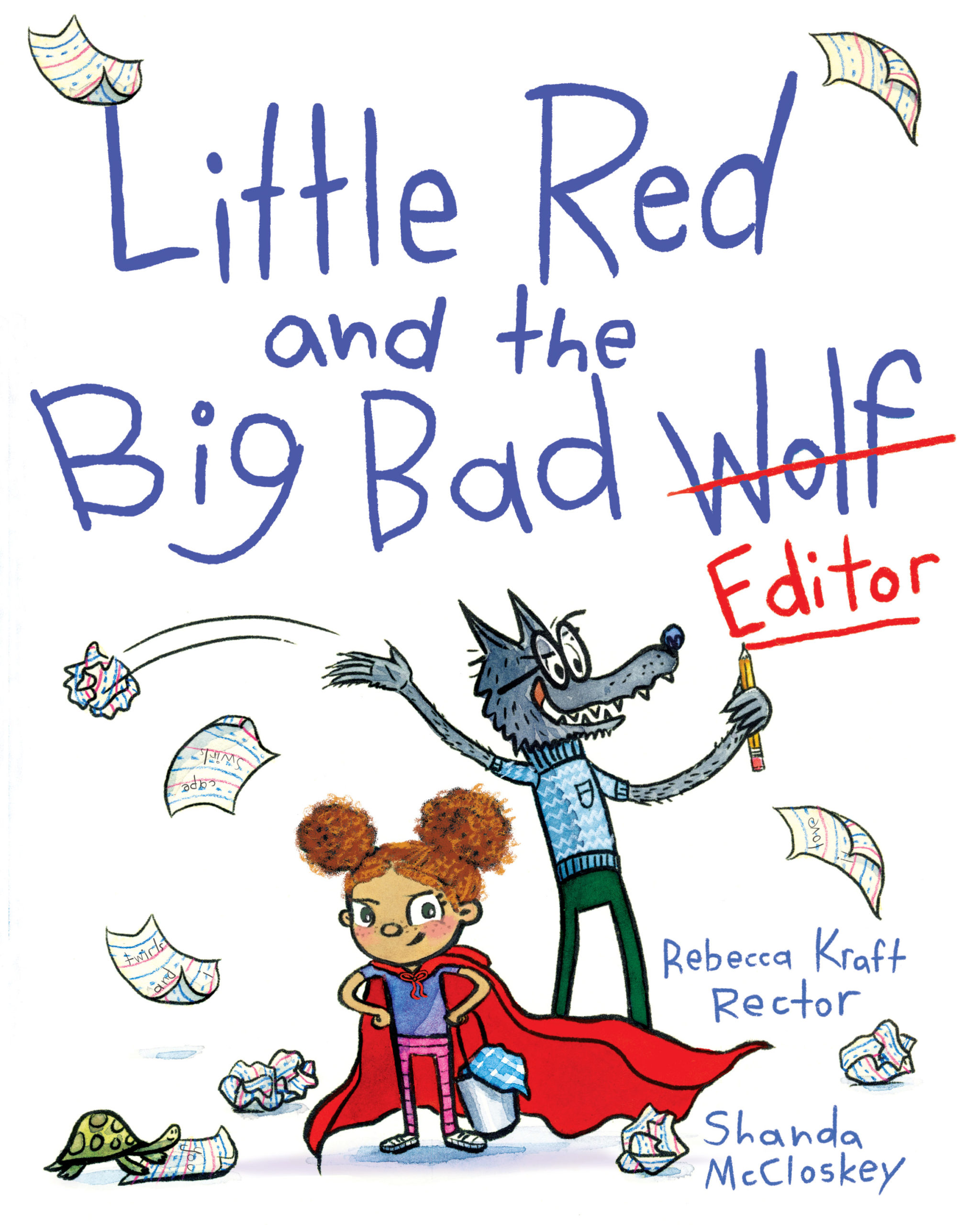
When I learned Shanda McCloskey would be illustrating my story LITTLE RED AND THE BIG BAD EDITOR, I was ecstatic. I knew her art would bring to life my story of the Big Bad Wolf correcting Little Red’s thank you letter to Granny. And I was right. The vibrant colors! The actions! The humor! I was so lucky to be paired with Shanda.

Then I learned Shanda, like me, had an educational background and she wanted to collaborate on an educator’s guide for LITTLE RED AND THE BIG BAD EDITOR. What a great idea! Many publishers and editors provide educator’s guides for their picture books.

There are so many ways to use picture books in classrooms from kindergarten on up. They’re rich in vocabulary and can have a higher reading level than many novels. They’re short and appealing to lower-level readers, ESL, and special needs students. For a generation that enjoys graphic novels and sharing pictures and stories on social media, picture books can be a familiar format. In fact, picture books often introduce new concepts and facts in an accessible way. They are an excellent entry point for all ages about topics that are difficult to understand or discuss.

But what about LITTLE RED AND THE BIG BAD EDITOR? Could we put together a useful educator’s guide for a fun story about correcting a heartfelt but poorly written letter? No problem! I’d done a basic guide for my first picture book SQUISH SQUASH SQUISHED and even produced a short video for a school librarian presentation. My brain was stuffed with methods for meeting curriculum standards after writing lesson plans, test passages, questions and answers for educational publishers.

I told Shanda “Yes!” and got to work.

Like Little Red, I whipped out my crayons (computer) and started writing. And like the Big Bad Wolf, I crumpled up those pages and threw them away. The Big Bad Wolf couldn’t fault me on my capitalization and finger spacing, but there were just too many elements that I wanted to include.

For instance, I could ask students to look for examples of characterization, plot, setting, theme, and story structure. They could practice story prediction by guessing what would happen in the story based on the cover and title.

So many possibilities for discussions and story prompts, too! Students could write their own stories by thinking about what happens before or after the story, or within the pictures. What was Little Red doing before the present arrived? What happened after the last page of the story? What about that little turtle, what’s his story?

Maybe I should focus on figurative language—the assonance, alliteration, similes, idioms, onomatopoeia, etc. in LITTLE RED. Find the simile: “Little Red was pleased as punch. Granny had sent her a present! Red ripped off the wrappings and removed a cape as scarlet as a ripe tomato.”

What about sequencing and cause and effect? Oh, we could use Shanda’s art for that! Which picture shows what comes first, middle, and last? Which picture shows what caused Little Red to write a thank you note?

And I couldn’t forget about compare/contrast! Both SQUISH SQUASH SQUISHED and LITTLE RED are “fractured” versions of folktales. SQUISH SQUASH SQUISHED is considered a modern version of both TOO MUCH NOISE and IT COULD ALWAYS BE WORSE. After reading an original version and the new version, students could compare/contrast the stories for all of the elements listed above, plus author’s voice and even author’s purpose. Younger students could compare/contrast the illustrations for the stories.

Shanda created awesome activities within a week. She even included practice sheets for writing letters and cursive writing. But after a month I still struggled with narrowing down all the possibilities.

Finally, I realized (why did it take me so long?!) that I couldn’t include everything. Some things would have to be left out. But we’re both really happy with the final product and would be thrilled if you’d take a look. It’s on my website https://rebeccakraftrector.wordpress.com and Shanda’s https://www.shandamc.com and here’s a direct link http://ow.ly/IHPC50KffBh.

Published September 6th, 2022 by Aladdin/Simon & Schuster

About the Book: In this clever and playful fractured fairy tale picture book, the Big Bad Wolf is so distracted by Little Red’s poorly written thank you note to her grandmother that he keeps missing the chance to eat her!

Once upon a time, Little Red received a bold new cape from her Granny. She wrote her a thank you note, packed a basket of goodies, and walked through the meadow to Granny’s house. But swish swash SWOOP, the big bad wolf stops her in her tracks, opens his mouth wide, leans in close and…​

Sees the note.

Mr. Wolf can’t believe how sloppy the letter is—Red can’t give this to Granny! He corrects her grammar but misses out on his dinner while he’s distracted each time he encounters Red on the path. Can she keep outsmarting the Big Bad Editor and make it all the way to Granny’s house?

About the Author: Rebecca Kraft Rector is a retired librarian and the author of more than thirty fiction and nonfiction books for children. Her cats Ollie and Opal keep her company while she writes. When she isn’t writing and eating chocolate, she’s trying to keep deer out of her garden.

LITTLE RED AND THE BIG BAD EDITOR is Rebecca’s second picture book, coming from Aladdin/Simon & Schuster on September 6, 2022.

Visit Rebecca online at https://rebeccakraftrector.wordpress.com

Thank you, Rebecca, for introducing us to your book and how useful it will be in classrooms and libraries!

Author Guest Post: “The Whole Book Approach” by Diane deGroat, Author of The Adventures of Robo-Kid

Share

The Whole Book Approach to The Adventures of Robo-Kid

The Whole Book Approach to story time reading was developed by Megan Dowd Lambert in association with the Eric Carle Museum of Picture Book Art to “bring children’s ideas and questions to the center of shared reading while celebrating the picture book as a visual form.” Yes, it’s a mouthful, but when witnessed in action, it becomes an exciting way to share picture books with children by drawing inspiration from Visual Thinking Strategies (www.vtshome.org). As Megan says in the preface to her book, Reading Picture Books with Children: How to Shake Up Storytime and Get Kids Talking About What They See (Charlesbridge 2015), we should invite children to react to “the whole book­”—its text, art, design, production, and materiality.

How have the designers tested the limits of its “bookness?” Not only does it have shape and weight and visual appeal, but it is mobile. It can be opened and closed. It is an object, not just a story to be listened to. In this day of eBooks and streaming, a printed book is an art form which has staying power. Children can engage with great picture book art and critical thinking skills when the discussion starts before reading the book, continues after reading it, and, importantly, includes a large amount of discussion during the reading of the book. Studies have found that this dialogic reading enhances comprehension, engagement, vocabulary, and literacy skills. More information about the Whole Book Approach can be found on Megan’s website: www.megandowdlambert.com.

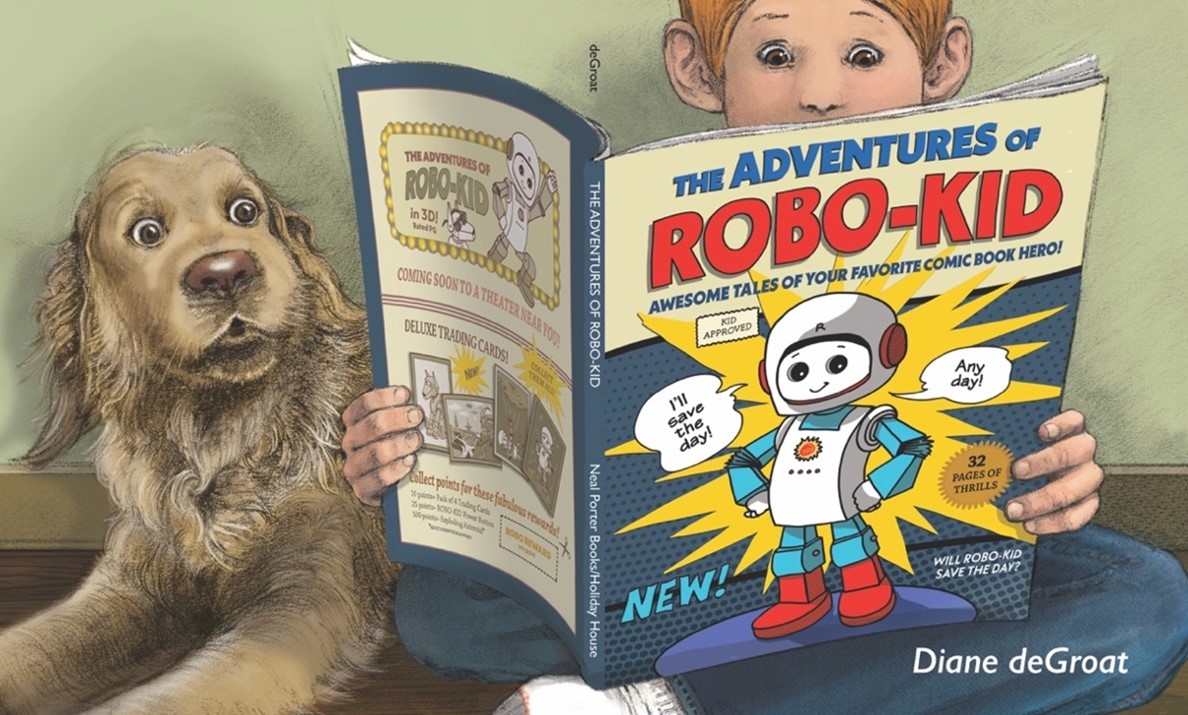
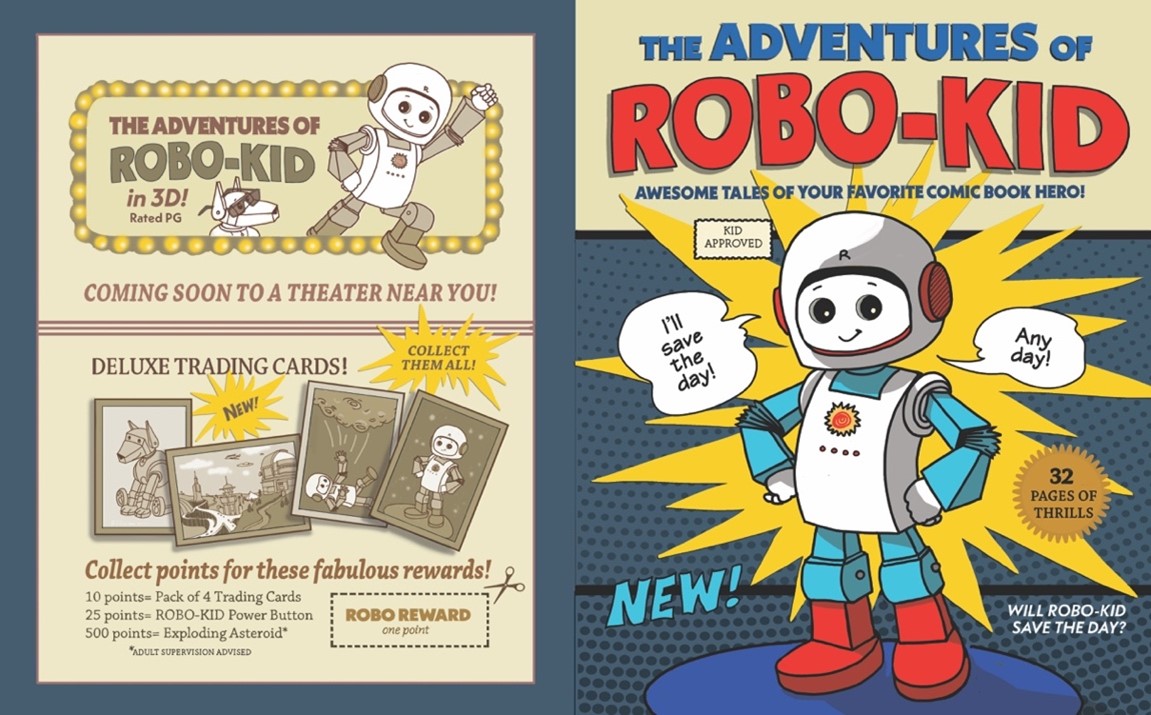
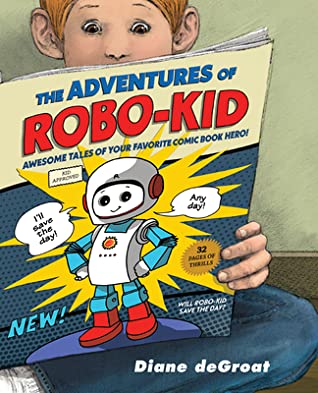
Now for an example. I designed my new book, The Adventures of Robo-Kid with all of the above in mind. Take a look at the dustjacket and start with questions inspired by Visual Thinking Strategies: What do you see happening in this picture? What do you see that makes you say that? What else can you find? Then consider, what do you think the book will be about? Notice the two styles of art I used. One is realistic and the other is cartoony. Why do you think I did It that way?

Turn the book over and look at the back of the book. Notice that I made one continuous illustration wrap around from the front to the back. Why do you think I did that? What do you think will be more important in the book—the realistic part or the comic part? Or will they be equally important?

Take the paper dustjacket off. Look at the art pasted onto the hardcover underneath it and compare it to the dustjacket. See the difference? Do you feel like you are reading a comic book now, and not a picture book? That was my goal! Why do you think I did that?

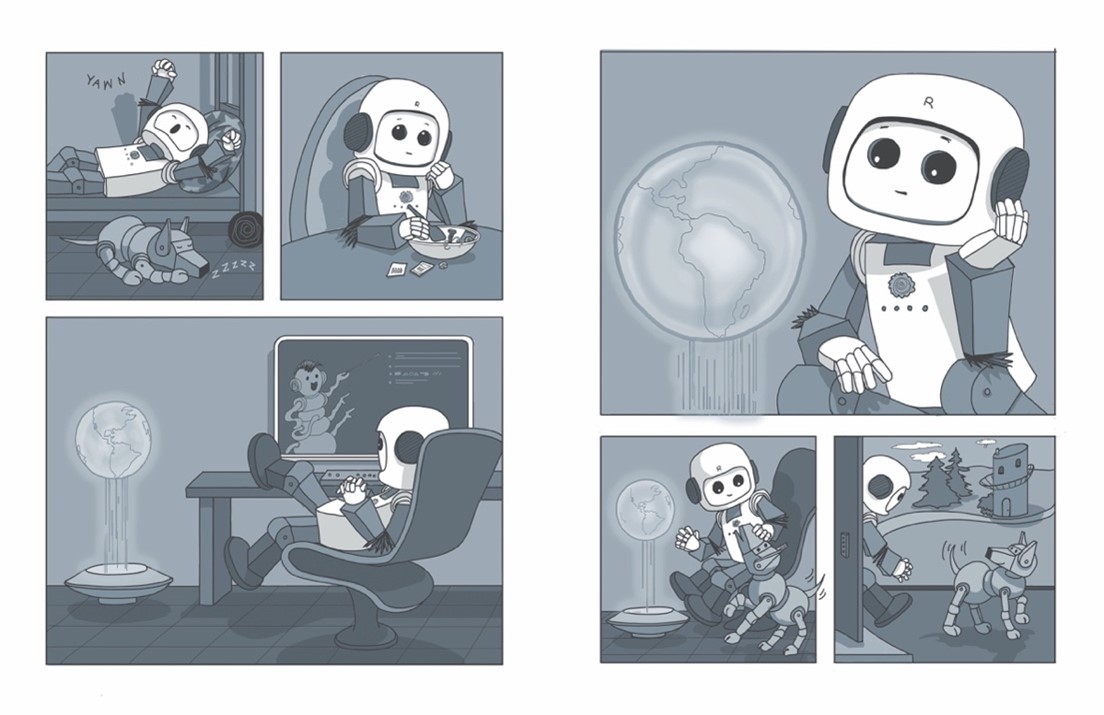
Now open to the front endpapers. Megan says in her book, “Endpapers give us clues.” My endpapers introduce us to Robo-Kid and his dog even before the story has begun. Go back to using those VTS-inspired questions, or ask yourself: How does Robo-Kid get schooled? Why do you think he’s looking at the Earth globe with so much interest? What do you think his dog wants? If you miss seeing all this, the story inside the book still makes sense, but adding endpapers like this offers more material for the person/child who finds it to enjoy as the enter the story.

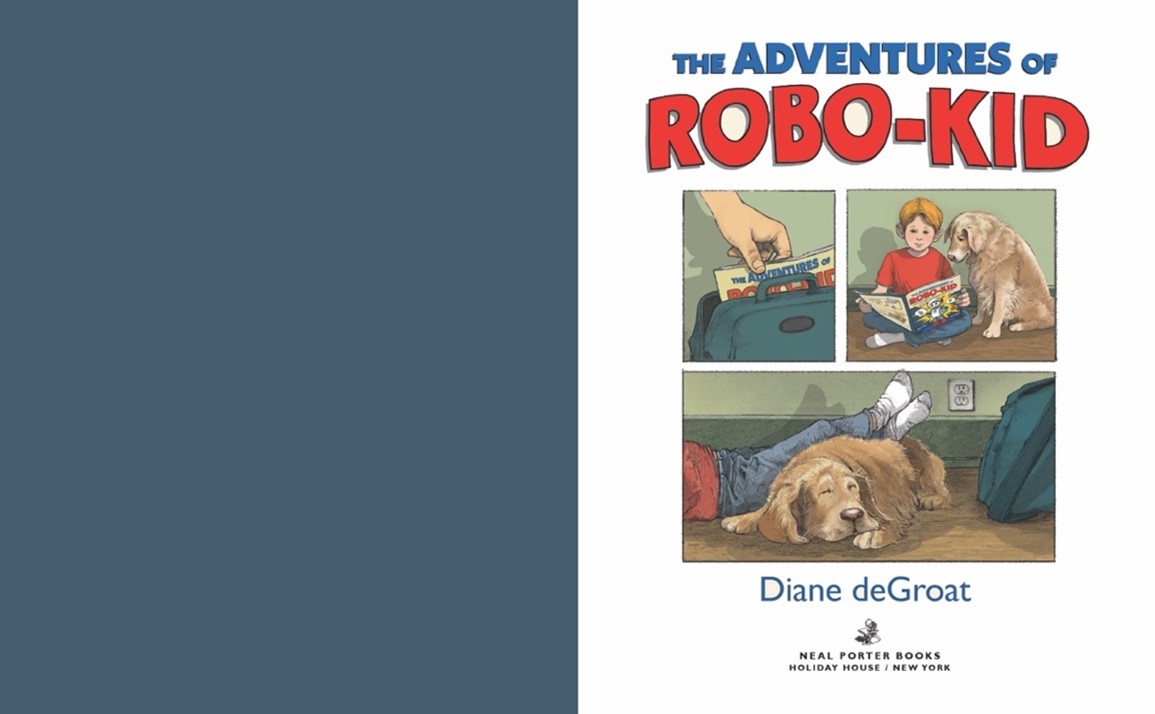
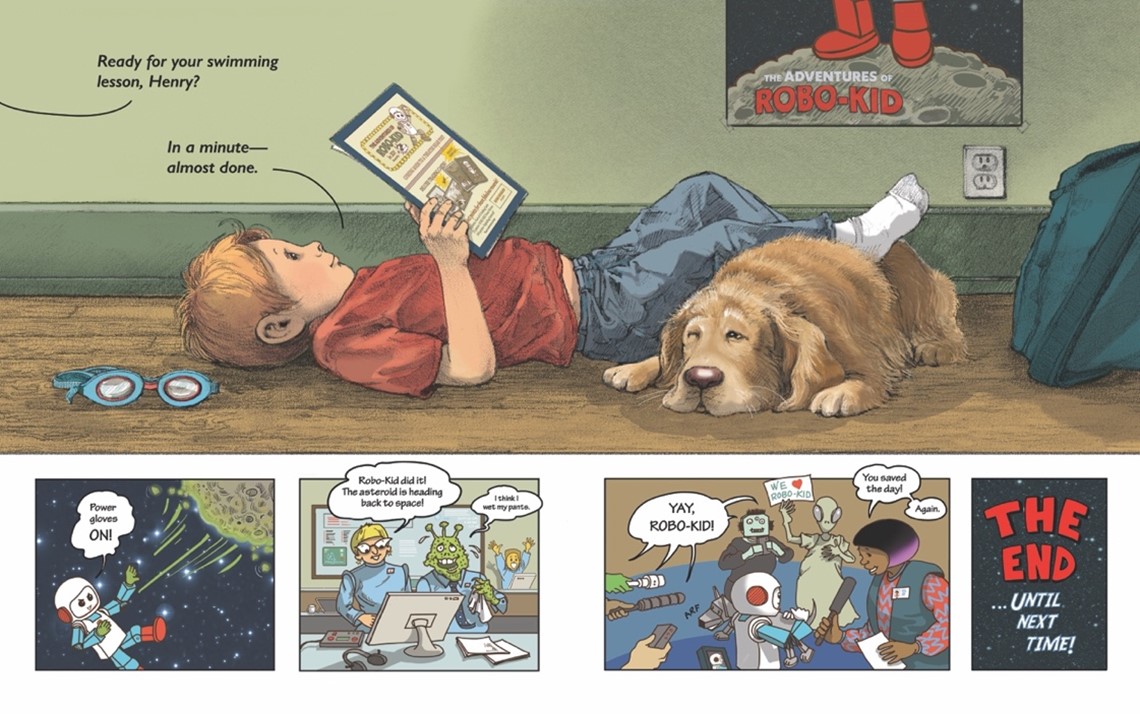
On the next spread, the title page will introduce us to Henry and his dog in my realistic style of art. So now you see why I used two styles—one for the comic book story and one for the “real” world story. But can you still find what is the same about the two characters and their worlds?

When you start to read the story you can see how I melded the two worlds into one book. Henry is engaged in reading his Robo-Kid comic. The comic art shows what he is reading.

The two stories will continue on spreads, with Henry’s at the top, and Robo-Kid’s below it—until they come together!

After the book was printed, and I read it to kids, I learned an important lesson. When reading a comic-type book to non-readers, it’s important to point to the panel and the text you are reading. Otherwise, showing the whole spread with so many different actions going on could be confusing.

I hope you can share this book with your students using the Whole Book Approach. Remember to look carefully at the art. Especially the very last page with Henry’s dog. What does he see that the others don’t? And don’t miss the back endpapers, which continue the story!

Published June 28, 2022 by Neal Porter Books

About the Book: A comic-book superhero climbs off the page and into the real world. When they get into trouble, his biggest fan is there to save the day.

Imagine you could meet your favorite comic-book hero in the real world. What kinds of questions would you ask? Would you go on new and exciting adventures? While heroes might seem larger than life, everyone can use some help from a friend.

Follow two intersecting stories set in the real world and inside a comic book as a real-life kid finds the courage to cope with his anxiety with the help of Robo-Kid, a comic superhero with his own vulnerabilities. With two distinctive art styles blending comic book and traditional picture book formats, Diane deGroat’s The Adventures of Robo-Kid is an inspiring tale about what it takes to be a hero.

Diane deGroat has been writing and illustrating picture books for more than thirty years. For the last ten years she has been illustrating the highly popular Charlie the Ranch Dog series with blogger, author, food-writer, and television personality Ree Drummond, also known as the Pioneer Woman.

About the Author: 

Diane deGroat
www.dianedegroat.com
www.thestorybehindthestories.com

Thank you, Diane, for this in depth look at using your book with readers!

Author Guest Post: “Their Story, Our Legacy” by Emily Francis, Author of If You Only Knew: Letters from an Immigrant Teacher

Share

“Their Story, Our Legacy”

During the first days back this year, our school received a special guest speaker, former educator and coach, who left a remarkable legacy. Coach Smith was fired up, sharing the wonderful stories that highlighted the amazing history of our school which he collected from 1893 to the day he retired.

I began to think about how his passionate stories impacted every staff member listening. The power of a story hit me to my core, and I began wondering about our students’ stories: What stories are students telling about our school? About us as teachers? Just like Coach Smith can share his powerful and impactful stories about a building, so our students are out and about telling stories about us.

Of course, I connected it to my personal experience as a former student new to the USA. As a fifteen-year-old scared immigrant, I entered high school with so much passion and persistence but left with shattered dreams. My story about my experience as a student in the USA is not a good one. It’s a story of pity and sadness and pain. I can close my eyes and feel exactly how I felt in my high school classes. These were uneasy feelings I don’t want my students to feel.

I cannot remember a teacher who would have incorporated practices to support my culture, identity, and strength. My high school years made me question my own identity. Just the fact that it was never acknowledged made me question my own existence.

Thinking about my personal stories from my former high school and listening to Coach Smith led me to think about my legacy. George Couros said, “Your legacy is not what you do. It’s what your students do because of you.” I dare to add… It’s what your students SAY because of you.

Feeling like we have been robbed of our identity may cause dysfunction in society. I know. I lived it. I now strive every year to make sure equitable practices are in place to better serve our students.

Sense of Belonging

A sense of belonging is imperative. Creating and maintaining a sense of belonging for our immigrant students is key to their success. As an individual from a diverse background, feeling a sense of belonging gives me the space I need to be myself without having to become someone that I am not. It’s the validation and the permission we need to develop our individuality and identity. Look at the decor around your learning space. Does it reflect their experiences, their cultural background? Does it provide an opportunity to not only embrace diversity but also validate other cultures? Make the space say, “We all belong.”

Pedagogical Practices

I have to quote Maya Angelou: “Do the best you can until you know better. Then when you know better, do better.” Some pedagogical practices we implement in the classroom may actually hinder students. The “I’ve always done it this way” approach does not work anymore. Our classrooms are more diverse than ever; meaning, our practices must change, and we must do better for our new generation. I wholeheartedly believe that being an open-minded life-long learner can help us as educators on the lookout for better practices that support students. Immigrant students work twice as much as monolingual English-speaking students to understand what is happening in lessons. With our help and effective classroom practices, we can ensure our students’ success instead of traumatize their learning experiences.

Amplify their Voices

We are not our students’ voices. All students need, especially students with marginalized backgrounds, is a microphone and a space to share who they are. When my high school economics teacher gave me an assignment to read the law of supply and demand, my mind traveled back to when I was in Guatemala City selling oranges for our family business. I was so happy to make a personal connection with the content I was learning. Unfortunately, I didn’t have a relationship with my teacher to ask if I could share that experience. He had never asked about my experiences, so he didn’t know of the asset I would have gladly shared. To amplify students’ voices, we MUST know their stories. We must intentionally embed lessons that serve as opportunities to get to know our students at a deeper level.

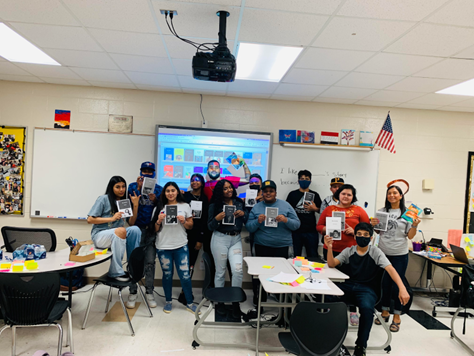
One way I encourage my students to share about themselves and their stories is through literature. I choose books that not only represent my students’ cultural backgrounds but also open their perspectives to others. Once students see characters that reflect their journeys, they feel validated, affirmed, and encouraged to tell their own. I’ve seen students cry because they couldn’t believe an immigrant story such as crossing the Rio Grande or deserts was worth telling. They begin to embrace their experiences and use them as stepping stones to success, to enter society with their heads held high and pride in their identity — ready to impact our community and world.

So, what are you doing to make sure your students are telling good stories about you and their learning experience? What’s your legacy?

Published September 1st, 2022 by Seidlitz Education

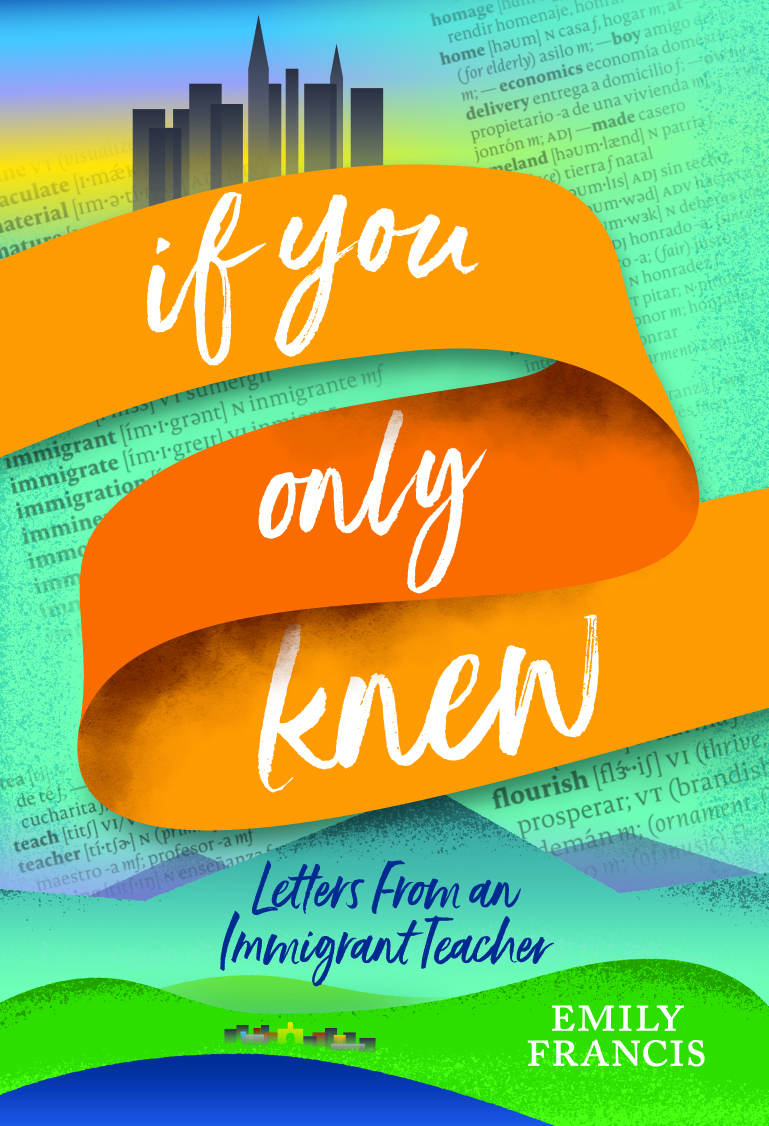
About the Book: Written with passion and a visceral commitment to her students, If You Only Knew: Letters from An Immigrant Teacher reflects the journey and experiences of Emily Francis, an immigrant and unaccompanied minor who travels from Guatemala to the USA to become a teacher. Once in the classroom, “Ms. Francis” learns about her students’ stories and journeys and begins to see her own life reflected in the lives of her students. Emily starts writing letters to her students in which her story is intertwined with theirs. This offers a unique expression of empathy, which helps them on their own personal journeys as immigrants living and learning in a new country.

“I could… imagine the fear you probably felt as you prepared to walk in a brand new school in a brand new country, so I made a promise that… I would make sure your experience would be a whole lot different than the one you had in that “icebox” with immigration.” (from the letter, “Dear Orlando”)

Speaking to both young adults and their teachers, If You Only Knew delivers support, solace, and empathy for immigrant students whose stories are too often are ignored. From personal experience, Emily Francis’ mission to offer a leg up to immigrant students deeply resonates with everyone interested in the immigrants and their journeys.

About the Author: Emily Francis is a high school ESL (English as a Second Language) teacher at Concord High School in Concord, North Carolina. Her experience as an immigrant from Guatemala and English Language Learner inspired her to become an ESL teacher and equipped her with a deep understanding of the challenges her immigrant students must overcome to find success. Cabarrus County Board of Education’s Teacher of the Year in 2016, she serves as a professional development facilitator, motivational speaker, and board member for the Carolina TESOL. Her book, If You Only Knew: Letters from an Immigrant Teacher, delivers support, solace, and empathy for immigrant students whose stories are too often ignored.

Thank you, Emily, for this post celebrating your students!

Author Guest Post: “It’s Okay to be Optimistic” by Laura Schaefer, Author of A Long Way from Home

Share

“It’s Okay to be Optimistic”

The soul of A Long Way from Home is its optimism, which leads me to reflect a little bit about where that comes from in my own life. Some of my best memories growing up involved my family’s regular visits to Florida in wintertime. Not only did I love the sun and the beach, but like most kids, I couldn’t get enough of Disney World. There was something about Epcot Center in particular that captured my imagination. The combination of Walt Disney’s cheerful vision of a World’s Fair-style utopia and the regular shuttle launches from Florida’s nearby Space Coast has always stayed with me.

When I moved with my family from Madison, Wisconsin to Central Florida as an adult, I knew I wanted to explore what the future could promise, and what our role could be in creating some kind of real solarpunk society. Feeling inspired by the advent of SpaceX and the ongoing work of NASA, with its regular rocket launches visible from our front yard, I began writing A Long Way from Home in 2018. Though I’m not a scientist or engineer by a long shot, I thought a lot about the people who were making these launches possible—and the skills, dedication, and hard work these events required.

I’m lucky to count among my friends and family several engineers, whose abilities impress and baffle me. The best thing about being a writer is it gives me good excuse to pester them about what they do and why they do it. It was with their help that A Long Way from Home came to fruition. I hope if it contains any glaring inaccuracies, they’ll forgive me…or figure out a way for me to go back in time and fix them.

My wish for this book as it travels out into the world is that readers will get the sense that the events of history and the way that the future unfolds isn’t something apart from them or their lives. Each of us—as individuals and as pieces of a larger community—is engaged all the time in the act of creation. We create the kind of society we want to live in, which is why maintaining core optimism really matters. I believe it’s possible to make our world a peaceful and green one in which more than just a lucky few get to thrive.

It’s not my intention to sound Pollyanna-ish, but it is my intention to sound hopeful. I want to tell stories that inspire readers to make and do beautiful, astounding things in loving, fully participatory lives.

I also want readers to know that if they’re anxious or sad, they’re not alone and that it’s not forever. I see anxiety and sadness as part of being human. If we all talk about these feelings more and the ways we’ve learned to cope, we can be less isolated. Connection with others isn’t a cure, exactly, because there isn’t a cure. But connection is a way forward, even when it’s hard to find hope. I love the fact that Abby is changed by her time with Adam and Bix, and by the choices she makes in order to help them. Her new perspective on the enormity of the universe and the possibilities it contains breaks her malaise and puts her in the captain seat of her life. That’s optimism.

Other people (sometimes from very, very far away) can and do change us, usually for the better.

One of the best ways I personally deal with my feelings and fears is by reading a lot of fiction. It makes me feel better to know other human beings have grappled with tough situations or challenging emotions and grown as a result. Some of my favorite middle grade and young adult reads include:

  • Harriet the Spy by Louise Fitzhugh
  • Tangerine by Edward Bloor
  • A Wrinkle in Time by Madeleine L’Engle
  • From the Mixed-Up Files of Mrs. Basil E. Frankweiler by E.L. Konigsburg
  • When You Reach Me by Rebecca Stead
  • The Secret Garden by Frances Hodgson Burnett
  • A Tree Grows in Brooklyn by Betty Smith

Some of my favorite authors these days are Andy Weir, Neal Stephenson, Stuart Gibbs, Emily Calandrelli, Jennifer L. Holm, Tana French, Kira Jane Buxton, Hank Green, Ted Chiang, Martha Wells, Becky Chambers, Emily St. John Mandel, Ali Benjamin, Samantha Irby and Ann Patchett.

There’s nothing like a great book if you’re looking to feel better.

Publishing October 4th, 2022 by Carolrhoda Books

About the Book: Twelve-year-old Abby has a lot to worry about: Climate change. The news. The Great Pacific Garbage Patch. And now moving to Florida for her mom’s new job at an aerospace company.

On the Space Coast, Abby meets two boys, Adam and Bix, who tell her they’re a long way from home and need her help. Abby discovers they’re from the future, from a time when all the problems of the 21st century have been solved. Thrilled, Abby strikes a deal: She’ll help them–if they let her come to the future. But soon Abby is forced to question her attachment to a perfect future and her complicated feelings about the present.

About the Author: Laura Schaefer is the author of The Teashop Girls, The Secret Ingredient, and Littler Women: A Modern Retelling. Born and raised in Wisconsin, Laura currently lives in Windermere, Florida, with her husband and daughter, where she enjoys visiting theme parks and watching rocket launches from her front yard. Visit her online at lauraschaeferwriter.com and twitter.com/teashopgirl.

Thank you, Laura, for this enlightening post!

Author Guest Post: “Understand the Rules, Then Forget Them” by Erin Entrada Kelly, Author of Surely Surely Marisol Rainey

Share

“Understand the Rules, Then Forget Them”

I run a kids book club at my local library. It’s for ages eight to twelve. Each month, we read and discuss a middle grade book then complete a related activity. After we read The Year I Flew Away by Marie Arnold, we created a mural inspired by Haitian art. For Jennifer L. Holm’s The Lion of Mars, one of the students crafted a clay astronaut. To celebrate Gregor the Overlander by Suzanne Collins, we excavated bugs.

One afternoon, as we prepared to discuss Dan Santat’s The Aquanaut, I pulled paper and pencils out of my bag. One of the young readers, Anthony, wrinkled his nose.

“Oh, no,” he said. “We’re not gonna write, are we?”

As a lifelong writer, it’s difficult for me to imagine not wanting to write. But over the years I have come to accept a disappointing reality: A lot of kids really hate writing. For them, it feels like work.

“I’m not good at it,” Anthony said. With a tilted whine to his voice, he added: “I haaaate writing.”

While it’s true that some young people hate writing, will forever hate writing, and will instead excel in some other trade or craft, it’s my mission, as a lifelong wordsmith, to make them hate it a little less.

One of the ways to do that is to eliminate all the qualities about writing that feel like work. Anything that shackles them. Anything that limits their imagination. When our goal is to simply create something, without worrying whether it’s grammatically correct or good or even readable, we are suddenly free to make mistakes. And if there’s one thing I know about young people—they don’t like making mistakes. It’s the mistakes that often prevent them from trying. It’s the mistakes that make them think they’re not good at something.

What if we limit the possibility of error? What if we create simply for the joy of creating?

Here are a few things I’ve done with students.

  • Toss the rules. Give students a writing prompt and encourage them to respond however they want. Tell them not to worry about any rules of grammar or spelling. They won’t be graded on either. In fact, they won’t be graded at all. It will be a ten-minute writing sprint and that’s it. Afterward, give them the freedom of choice: They can keep what they wrote, share it with a friend, or toss it in the trash.
  • Encourage storythinking. When you read books together, stop at the end of each chapter and ask them what they think will happen next. If too many students answer at once, take differing answers from two or three students then take a poll with the rest of the class. If you want to incorporate writing, ask your students to write one or two sentences with their predictions. They don’t need to show their predictions to anyone if they don’t want to.
  • Encourage storytelling. When you finish reading a chapter or a book, ask them how they would have written it to make it more interesting. I ask my book club these questions all the time. Their answer is almost always the same: “More dragons.” In their opinion, dragons always make things more interesting. If your students say “more dragons,” your instinct may be similar to mine—you’ll find yourself explaining why dragons aren’t logical in a story like Charlotte’s Web. But instead of launching into your logical explanation, why not embrace all their ideas? That’s what I did with my book club, and they were immediately engaged, firing off one idea after another, until they reached the end of their own story. For me, the importance of the moment wasn’t to force them to think critically about Charlotte’s Web. It was to get them excited about stories and all the possibilities they offer.

To develop a love of writing, we must develop a love of creativity, a love of storytelling, and an appreciation of how words create stories. Rules, logic, grammar, spelling—all of these sound like work. Because they are work. They serve a purpose, certainly, but they also confine us.

There are times when it’s okay to prioritize creativity above all else, and let the work come later. As grown-ups, we often forget that.

Published August 9th, 2022 by Greenwillow Books

About the Book: Everyone loves sports . . . except Marisol! The stand-alone companion to Newbery Medal winner and New York Times-bestselling Erin Entrada Kelly’s Maybe Maybe Marisol Rainey is an irresistible and humorous story about friendship, family, and fitting in. Fans of Clementine, Billy Miller Makes a Wish, and Ramona the Pest will find a new friend in Marisol.

Marisol Rainey’s two least-favorite things are radishes and gym class. She avoids radishes with very little trouble, but gym is another story–especially when Coach Decker announces that they will be learning to play kickball.

There are so many things that can go wrong in kickball. What if Marisol tries to kick the ball . . . but falls down? What if she tries to catch the ball and gets smacked in the nose? What if she’s the worst kickballer in the history of kickball? Marisol and her best friend Jada decide to get help from the most unlikely–and most annoying–athlete in the world: Marisol’s big brother, Oz.

Told in short chapters with illustrations by the author on almost every page, Erin Entrada Kelly’s stand-alone companion novel to Maybe Maybe Marisol Rainey celebrates the small but mighty Marisol, the joys of friendship, the power of being different, and the triumph of persevering.

About the Author: New York Times–bestselling author Erin Entrada Kelly was awarded the Newbery Medal for Hello, Universe and a Newbery Honor for We Dream of Space. She grew up in Lake Charles, Louisiana, and now lives in Delaware. She is a professor of children’s literature in the graduate fiction and publishing programs at Rosemont College, where she earned her MFA, and is on the faculty at Hamline University. Her short fiction has been nominated for the Philippines Free Press Literary Award for Short Fiction and the Pushcart Prize. Erin Entrada Kelly’s debut novel, Blackbird Fly, was a Kirkus Best Book, a School Library Journal Best Book, an ALSC Notable Book, and an Asian/Pacific American Literature Honor Book. She is also the author of The Land of Forgotten Girls, winner of the Asian/Pacific American Award for Literature; You Go First, a Spring 2018 Indie Next Pick; Lalani of the Distant Sea, an Indie Next Pick; and Maybe Maybe Marisol Rainey which she also illustrated.

Thank you, Erin, for this reminder to allow kids to write freely!

Author Guest Post: “Five Tips to Excite Students About Writing” by Laurel Solorzano, Author of The Land of Fake Believe

Share

“Five Tips to Excite Students About Writing”

One of the most difficult parts of teaching writing is convincing all students to be involved in the various activities. Some of my students have reached the end of the writing period with NOTHING on their paper. How many distractions could they possibly have had? These five tips should help you get those students not only involved but excited to tell their story.

Tip #1

Allow Alternative Ways to Tell Their Story. Most of the time, my students who have trouble putting words on paper are the ones who talk. Everyone else may be working quietly, but they are talking- to me, to the other students, to themselves. It doesn’t matter if anyone is responding or not, their mouths are moving.

One way I’ve been able to get these students involved is by using a recording device (a phone or an app on a tablet works well). I move them out into the hall and have them record themselves telling their story or answering the prompt. I usually tell them that they have two minutes to record it (any longer than that, and transcription takes a while).

They LOVE doing this, because they can talk and avoid writing for a few minutes with the teacher’s permission!

Once they’ve recorded themselves, depending on the student’s age, I can either use an online program to transcribe it for them (I then have them read what they “wrote” and fix the errors), OR I’ll have them transcribe it themselves.

Tip #2

SHARE their writing. Some of my students have disliked writing because they don’t get the chance to talk/share with their classmates. They prefer to tell the story out loud rather than write it down and pass it to me.

Whenever I’ve given them the chance to read their story/writing out loud, then they get more excited about writing it. They can’t wait to make their classmates laugh!

I give other students the chance to share too, but don’t force it on the quieter ones who already enjoy the writing.

Tip #3

Give them creative freedom. While mentor texts or examples that students can follow is helpful for SOME students, it can make others struggle. How can they make their writing sound like that writing? They become overwhelmed trying to make it perfect, so they either don’t try at all or copy the example writing and just change a word or two.

For example, if you give them the topic of writing about a favorite memory, then give them subject examples, but not paragraph examples. “Did you ever receive a special Christmas or birthday present? What made it special? Where have you gone that you really enjoyed? The zoo, amusement park?” This can get their ideas pumping without feeling like they have to churn out a perfect paragraph.

Tip #4

Don’t compare writing. You probably already know this, and you wouldn’t do it on purpose. However, sometimes, comments slip out accidentally. “Wow! Did everyone see what a great paragraph Johnny wrote?” or maybe even something that you think is more subtle because you are just speaking to the student. “Johnny, that was really great. I don’t know how you do it!”

Written feedback helps avoid this comparison. I always write one thing each student did well and one thing they can improve. Instead of writing that one student needs to fix their verb tenses and their quotation marks, indent their paragraphs, not use fragments, and. . . well, you get the idea. That would be overwhelming as an adult.

Pick one, concrete thing that they can improve, and write that one. For example, “Don’t start sentences with ‘and’” or “Use an apostrophe to show possession.” That way, they can improve and not be overwhelmed.

Tip #5

Connect reading and writing. A lot of students who don’t necessarily enjoy writing do enjoy listening to stories. Even when students can read on their own, they aren’t too old to be read to as well.

Once they have a story in their head, writing prompts related to the story can turn on their creativity.

Read-aloud continues in my classroom even through fifth grade, which is why I love picking stories that are fun not only for the kids but for me to read year after year as well. Check out my book below for a fun classroom read!

Fun Writing Ideas

Now that you have some ideas about how to involve the non-writers in writing time, here are some prompts to use in your class.

  • If you could meet one fairy tale character, who would it be? What would happen when you meet them?
  • (After reading a book or part of a book together) What do you think should happen in the next chapter?
  • Pick one notoriously bad guy (the Joker, the Big Bad Wolf, or Maleficent for example) and write about them as if they were good.

Published September 1st, 2022

About the Book: The Land of Fake Believe is a twisted fairy tale about two siblings and their fateful encounter with real amusement park characters. It is geared to children ages eight to twelve, but can be read aloud to younger children.

In this fractured fairy tale story, twelve-year-old Taylan is angry when her mom scolds her for telling her five-year-old sister, Judy, that Cinderella isn’t real, just as the little girl is about to meet her favorite princess at the famed Happily Ever After amusement park. Relegated to their vacation hotel room for the evening as a punishment, Taylan enlists the help of her ten-year-old brother, Colby, to prove her mom wrong. What they discover in the park after dark is beyond their wildest dreams—or nightmares.

Soon, the siblings find themselves in the middle of a secret century-long battle among the park’s characters—the good Ever Afters and the dark Ever Afters—and are in a race to help their new friends before the Evil Queen takes over the park for good. With Beauty, Cindy, and Peter Pan on their side, will they be able to survive the conflict before it’s too late?

Fun activities after reading the book including a coloring sheet, quiz, and maze: https://www.laurelsolorzano.com/activities

About the Author: Children’s book author Laurel Solorzano has been creating stories since she first learned how to write, completing her first full-length novel while in middle school. Her love for fairy tales is what inspired her to write The Land of Fake Believe.

Hailing from Raleigh, North Carolina, where she lives with her husband, Yader, Laurel is a Spanish and English teacher. When she’s not penning creative stories for young readers, Laurel enjoys reading and spending time with her two dogs. Also the published author of five young adult books, Laurel’s book The Land of Fake Believe is the debut book in a series of twisted fairy tales including book 2-Once Upon a Climb and book 3- The Princess and the Key.

Author Q&A can be seen here. https://www.laurelsolorzano.com/about

Facebook- https://www.facebook.com/laurelsbooks

Signing up for her newsletter on her website is the best way to stay connected!

Thank you, Laurel, for these amazing engaging tips!

Author Guest Post: “In Praise of the Standalone Book” by Stacy Nockowitz, Author of The Prince of Steel Pier

Share

“In Praise of the Standalone Book”

In 2010, I switched careers. I had been a middle school language arts teacher for many years, and I decided it was time for a change. So, I became a school librarian. It’s the perfect career for someone who loves kids, books, and kids’ books. It’s also a great job choice for someone who doesn’t want to grade even one more essay written by a 12-year-old. And because of this shift to the library, I was able to pursue my lifelong dream of writing books. The Prince of Steel Pier is my debut novel.

You know which parts of my job I love the most? First, I thoroughly enjoy matching students with the perfect book for them. This process is called Readers’ Advisory in librarian lingo. It’s a mini-interview and discussion that helps the librarian connect readers with great book choices specific to their likes and needs. I start off every Readers’ Advisory by asking what I think is the most telling question: What’s the last book you read that you really loved?

The other best part of my job? Filling the shelves! I get to order ALL the books and materials. It’s like a childhood fantasy come true! Yes, I’ll order that one and that one, and oh, I have to get the new book by that author, and I must order that one. It’ll fly off the shelves! Between being a middle school librarian and being a children’s book author, I know what kids like.

And what they like is a long book series. They like getting comfortable with a set of characters and reading about those characters again and again and again. Investing time and emotion in a new protagonist is hard! The path of least resistance, which, honestly, kids are prone to take, means they’ll reach for Diary of a Wimpy Kid #5 and #8 and #16, and on and on. I have reserve lists five-kids deep every time Stuart Gibbs publishes the next Spy School novel. In kids’ minds, long book series rule.

Or do they?

Let’s go back to my Readers’ Advisory opening question: What’s the last book you read that you really loved? Last year, I received an answer from a sixth grader that caught me off guard in the best way. She said, “The last book I really loved was A Night Divided by Jennifer Nielsen. I don’t really want to read another series. After, like, the third book, they all get repetitive and boring.”

I wanted to hug her when she said that.

Stand-alone books make me smile. And as a writer, I understand how difficult a great stand-alone is to pull off. Stand-alone books do all their own heavy lifting. They work their 250-page tails off (or 350 or 180; you get the idea). The author of a stand-alone knows she only has one shot at capturing her audience. None of this “You’ll find out in book 4 why he and his dad don’t get along” or “It will all make sense once you finish book 7” stuff. Good stand-alone books give readers a satisfying character arc and a complete storyline. A reader can finish the last page of a stand-alone and close the book with a gratified exhale. Nothing more is needed. It’s like leaving the dinner table sated after a delicious meal. Sure, you can raid the fridge for leftovers later, but the experience just isn’t the same, is it?

Historical fiction is especially well-suited for the stand-alone format. Authors of historical fiction evoke a moment in time, the only moment when that story could have happened to that person in that place. Thanhha Lai didn’t need to make Inside Out & Back Again into a six-book series. This National Book Award-winning stand-alone tells us one story: Hà’s story, as her family flees war-torn Vietnam and comes to the United States. There’s no need for us to see what happens to Hà the following year, or the year after that, or the year after that. Inside Out & Back Again beautifully presents the family’s traumas and triumphs of that singular experience. Lai leaves it to us, her readers, to imagine Hà’s future, rather than simply telling us everything that happens to her. That stand-alone novel, that no more-no less story, is enough.

This is exactly what I hope I’ve achieved with The Prince of Steel Pier. The main character, 13-year-old Joey Goodman, doesn’t cease to exist after the last page of the book. I’m sure he goes on to have more adventures and more experiences. But you’ll have to envision them for yourself. Joey’s story from two weeks in August of 1975 stands alone. His moments of happiness and moments of fear, his epiphanies and realizations, can only happen in that one special time in his life. Making my book into an endless series would take away from the power of what Joey learns about himself and his world in The Prince of Steel Pier.

I’m not calling for the abolishment of the long children’s book series. Not at all! Kids need to be able to rely on Percy Jackson getting himself into another mythological mess. They love the continuing escapades of Dogman and The Last Kids on Earth.

But here’s to the stand-alone book, the book that needs no sequels, no books #3-#10. Here’s to a story that thrills kids from its inciting incident all the way through its climax and denouement, and that’s it. Here’s to the books that have no more to say because they’ve said it all, perfectly, the first time around.

Some of my favorite stand-alone middle grade books:

The Magical Imperfect by Chris Baron
Where the Watermelons Grow by Cindy Baldwin
A Place to Hang the Moon by Kate Albus
Alone by Megan Freeman
Orphan Island by Laurel Snyder
Too Bright to See by Kyle Lukoff
When You Reach Me by Rebecca Stead
Red, White, and Whole by Rajani LaRocca
Some Kind of Happiness by Claire Legrand
One Jar of Magic by Corey Ann Haydu

The Prince of Steel Pier
Published September 1st, 2022 by Kar-Ben Publishing

About the Book:

Poor 13-year-old Joey Goodman is not suited for 1975 Atlantic City: he’s anxious, fearful, and prone to puking at any moment. On top of it all, his tight-knit Jewish family babies him more than they do his younger brother! With wanting to prove his mettle top of mind, Joey ends up working for kingpin Artie Bishop, whose gangsters are impressed by how Joey handles thieves who steal his prize tickets. Joey suddenly feels important as he runs around with Artie and his crew – but after a streak of deceiving his loved ones and dangerous jobs that put his family at risk, Joey’s resolve will be put to the test. This adventure-filled middle grade will have young readers relating to Joey as he goes through his fair share of feelings (like a crush!), goons, and finding that his place was with his real family all along.

Advance Praise for THE PRINCE OF STEEL PIER:

  • “What a wonderful book! I loved the sense of atmosphere, all the things that Joey struggles with, and most of all, that big, beautiful family.” —Rajani LaRocca, Newbery Honor-winning author of Red, White, and Whole 
  • “I love the funny voice of Joey/Joseph/Squirt Goodman. (Who wouldn’t fall for a Skeeball champion with a big heart and a nervous stomach?) I was captivated by Joey’s large lovable family and the authentic rendering of the 1970’s Atlantic City setting complete with gangsters, gangster’s daughters, lucky frog fountains, sinister business and mysterious packages. A fun read from start to finish.” —Gennifer Choldenko, Newbery Honor-winning author of the Alcatraz series
  • The Prince of Steel Pier has everything a great book needs: an engaging main character, a blooming crush, page-turning adventure, and a loving, quirky family that owns a hotel on the delightfully nostalgic Atlantic City boardwalk. Oh, and don’t forget to throw in some just-short-of-too-scary gangsters and a huge helping of heart.” —Nora Raleigh Baskin, ALA Schneider Family Book Award–winning author of Anything But Typical

About the Author: Stacy Nockowitz is a middle school librarian and former language arts teacher with more than 25 years of experience in middle school education. Stacy received her BA from Brandeis University and holds Master’s Degrees from Columbia University Teachers College and Kent State University. She is also an MFA candidate in Writing for Children and Young Adults at Vermont College of Fine Arts. Stacy received a PJ Library Writer’s Incentive Award in 2020 for her debut novel THE PRINCE OF STEEL PIER, coming in September 2022 from Kar-Ben Publishing. An unrepentant Jersey Girl, Stacy still teases her hair and uses plenty of spray. When she’s not writing or matching great kids with great books, Stacy can most likely be found reading or rooting on her beloved Philadelphia Eagles. Her kids have flown the coop, so Stacy lives in central Ohio with her husband and their cat, Queen Esther. Find her on Twitter @snockowitz or at www.stacynockowitz.com

Thank you, Stacy, for sharing the joy in the standalone!