Moon by Alison Oliver

Share

Moon
Author and Illustrator: Alison Oliver
Expected Publication April 17th, 2018 by Clarion Books

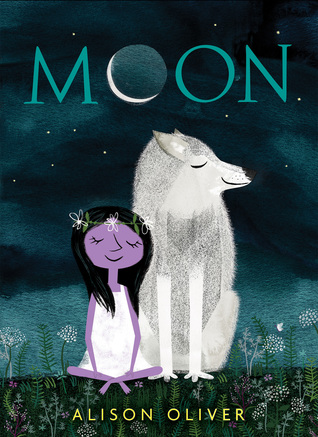
Summary: Like many children, Moon leads a busy life. School, homework, music lessons, sports, and the next day it begins again. She wonders if things could be different. Then, one night, she meets a wolf.

The wolf takes Moon deep into the dark, fantastical forest and there she learns to howl, how to hide, how to be still, and how to be wild. And in that, she learns what it’s like to be free.

ReviewJust as Where the Wild Things Are made children think about controlling our inner wild things (anger), Moon has us look at the new pressures of childhood and the need to let kids unleash their inner wild thing (playfulness). I talk often about the pressure that kids with other parents and teachers about the pressure that kids have on them now. Computer programs and homework starting in kindergarten, multiple standardized testing starting in 3rd grade, high school classes starting in middle school, AP classes required for almost everyone, etc. etc. etc. It makes me so sad to see that a lot of the joys of childhood are being pushed away to make kids grow up earlier (but then we complain about kids growing up quicker…). Moon, the main character, represents so many of our kids, and her adventure shows how important it is to let our kids just be themselves to be happy and to remove some of the pressure. I loved this message, and I thought it was told in a beautiful and figurative way that will lead to wonderful discussions and lots of rereading.

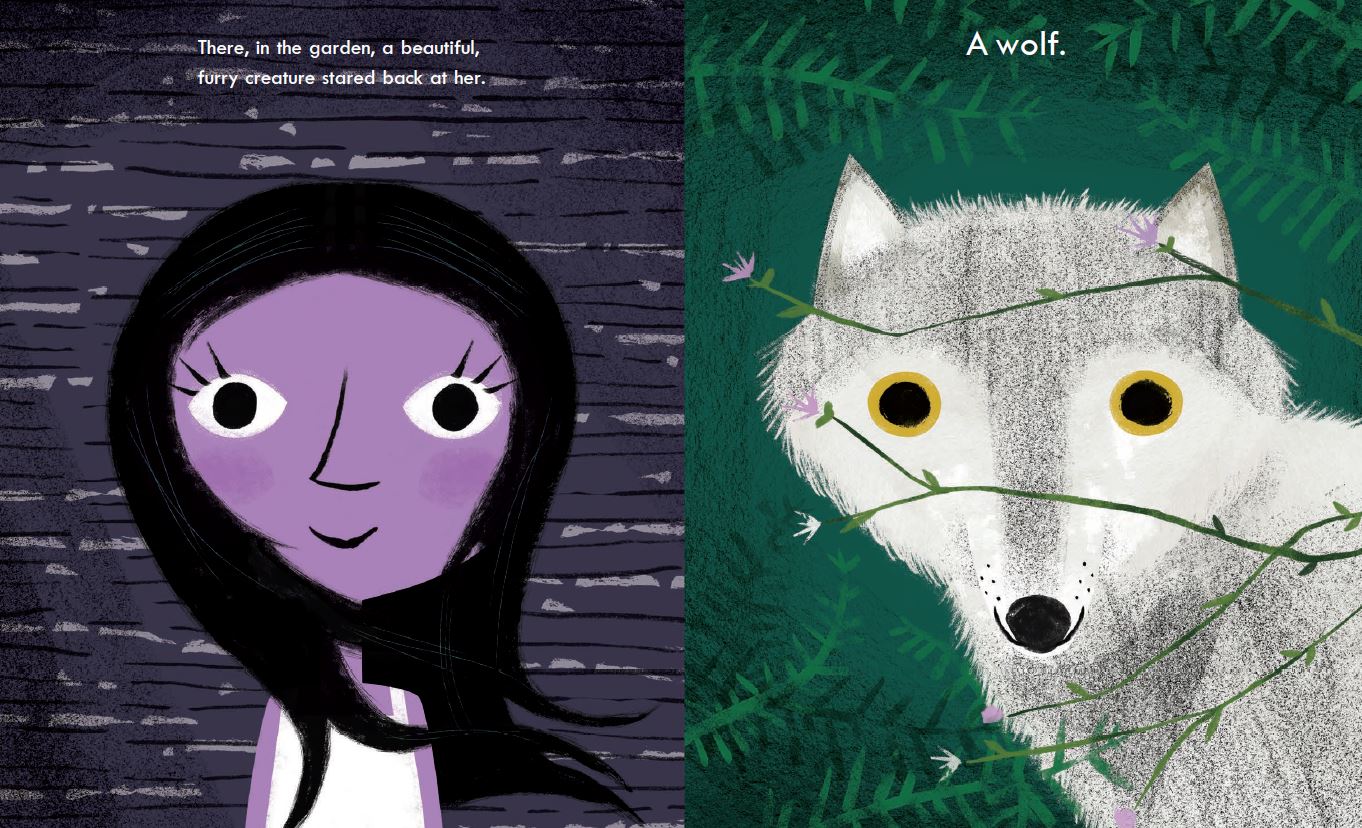
And I couldn’t review this book properly without commenting on the beautiful illustrations. I particularly loved the palette changes to highlight time and place and the bits of humor in the illustrations. Just a wonderful combination of artwork and story.

Teachers’ Tools for Navigation: Moon‘s theme and symbolism are what jump out to me first, and I see them being what is discussed the most when it comes to this book, and I could see it be extended from early elementary all the way to middle school just pushing the conversation to different levels the older students get.

Discussion Questions: 

  • What do the wolves symbolize in Moon’s story?
  • How is your life similar to Moon’s at the beginning of the book?
  • How does Moon’s life change from beginning to end?
  • What lesson was the message the author was trying to spread from Moon? 
  • Do you see any differences between Moon from the first couple of pages and the last couple of pages?

Flagged Passages: 

Read This If You Love: Where the Wild Things Are by Maurice Sendak, Yellow Kayak by Nina Laden, Wolf in the Snow by Matthew Cordell

Recommended For: 

Signature

Blog Tour with Review and Educators’ Resource Guide!: Bat and the Waiting Game by Elana K. Arnold

Share

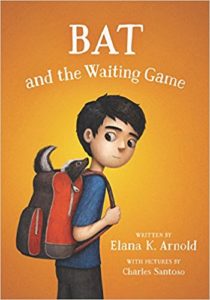
Bat and the Waiting Game
Author: Elana K. Arnold
Illustrator: Charles Santoso
Published March 27th, 2018 by Walden Pond Press

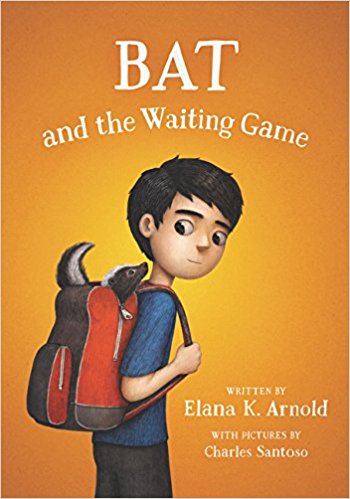
Summary: The second book in the irresistible and “quietly groundbreaking”* young middle grade series starring Bat, an unforgettable boy on the autism spectrum.

For Bixby Alexander Tam (nicknamed Bat), life is pretty great. He’s the caretaker of the best baby skunk in the world—even Janie, his older sister, is warming up to Thor.

When Janie gets a part in the school play and can’t watch Bat after school, it means some pretty big changes. Someone else has to take care of the skunk kit in the afternoons.

Janie is having sleepovers with her new friends. Bat just wants everything to go back to normal. He just has to make it to the night of Janie’s performance…

*Kirkus Reviews

Critical Praise: 

“Delightful. This humorous follow-up is even stronger than its predecessor and will leave readers hoping for a third book featuring Bat and his family.” — School Library Journal

“A gentle tale of shared similarities rather than differences that divide and a fine read-aloud with a useful but not didactic message of acceptance.”  — Kirkus Reviews

A winsome blend of humor and heart, vibrant characters, and laugh-out-loud dialogue. Arnold’s narrative also gracefully explores life through the eyes of a boy on the autism spectrum.  The ever-lovable Bat is sure to resonate with readers of all ages. — Booklist Online

About the Author: Elana K. Arnold grew up in California, where she, like Bat, was lucky enough to have her own perfect pet — a gorgeous mare named Rainbow — and a family who let her read as many books as she wanted. She is the author of picture books, middle grade novels, and books for teens, including the National Book Award finalist title What Girls Are Made Of. Elana lives in Huntington Beach, California, with her husband, two children, and a menagerie of animals. She calls the “Bat” series for Walden Pond Press “books of her heart.” You can find her online at www.elanakarnold.com.

ReviewBat is one of my favorite characters ever. He is a flawed character but is also so perfect as who he is! What I love about Bat, other than his amazingly sweet personality, his brilliance when it comes to skunks, and his coping skills, is that he teaches us to treasure the little things. Also, the way that Elana write Bat, his story will help middle grade readers think about their classmates who may not think or act the way that they think is normal. We are all normal for who we are! Bat’s story shows about the good in life and teaches us what good humans are like.

Teachers’ Tools for Navigation: In addition to an amazing read aloud opportunity, I can definitely see the text being part of lit circles. Bat himself is unique, but he and his story remind me of so many other characters who I love and I wish all students would read about: Auggie from Wonder; Melody from Out of my Mind; David from Rules; Candice from The Categorical Universe of Candice Phee; Rose from Rain, Reign; and Adam from How to Speak Dolphin. All of these texts are must reads! I picture all of these texts with their extraordinary characters being part of lit circles with a focus on disabilities/disorders and empathy. [From my review of A Boy Called Bat, 3/10/17]

Educators’ Resource Guide: 

Flagged Passages: “Maybe, Bat though, there was something better in the world than cradling a sleepy, just-fed baby skunk in your arms. But at this moment, it didn’t seem likely.

Bat was sitting in his beanbag chair, having just put down the tiny, nearly empty bottle of formula. In Bat’s hand, licking his fine soft whiskers with a tiny pink tongue and then yawning widely to reveal two rows of new white teeth, was a six-week-old skunk kit named Thor.” (p. 1-2)

“When Israel first handed [a skunk kit sculpture] to Bat last Monday at school, it had taken Bat a moment to figure out what exactly he was holding…

Bat had rubbed his thumb down the smooth shiny back of the clay ump. It didn’t look much like a skunk kit, but its pleasant weight felt good in his hand. And when he had flipped it over to find the words ‘From Israel’ on the bottom, a warm good feeling spread through his chest and up his neck.

A friend had given him a gift. And even if it didn’t look much like the real baby skunk now nestled in his hands, it definitely deserved a place on his bookshelf,a long with his other important things.” (p. 4-5)

Read This If You Love: A Boy Called Bat by Elana K. Arnold, Any lit circle book listed under Teacher’s Tools

Recommended For: 

 

Don’t miss out on the other blog tour stops!

3/12 For Those About to Mock, @abouttomock Sam Eddington

3/15 Mrs. Knott’s Book Nook @knott_michele Michele Knott

3/15 @iowaamber Amber Kuehler

3/16 The Hiding Spot @thehidingspot Sara Grochowski

3/18 Educate*Empower*Inspire…Teach @guerette79 Melissa Guerrette

3/19 Maria’s Melange @mariaselke Maria Selke

3/20 Nerdy Book Club post by Elana

3/20 Writers Rumpus @kirsticall Kirsti Call

3/22 Bluestocking Thinking @bluesockgirl Nicole Levesque

3/28 Unleashing Readers @unleashreaders Kellee Moye

Signature

**Thank you to Walden Pond Press for hosting the blog tour and providing a copy for review!!**

I Walk with Vanessa: A Story About a Simple Act of Kindness by Kerascoët

Share

I Walk with Vanessa: A Story About a Simple Act of Kindness
Illustrator: Kerascoët
Anticipated Publication: April 24, 2018 by Schwartz & Wade

Goodreads Summary: This simple yet powerful picture book–from a New York Times bestselling husband-and-wife team—tells the story of one girl who inspires a community to stand up to bullying. Inspired by real events,  I Walk with Vanessa explores the feelings of helplessness and anger that arise in the wake of seeing a classmate treated badly, and shows how a single act of kindness can lead to an entire community joining in to help. With themes of acceptance, kindness, and strength in numbers, this timeless and profound feel-good story will resonate with readers young and old.

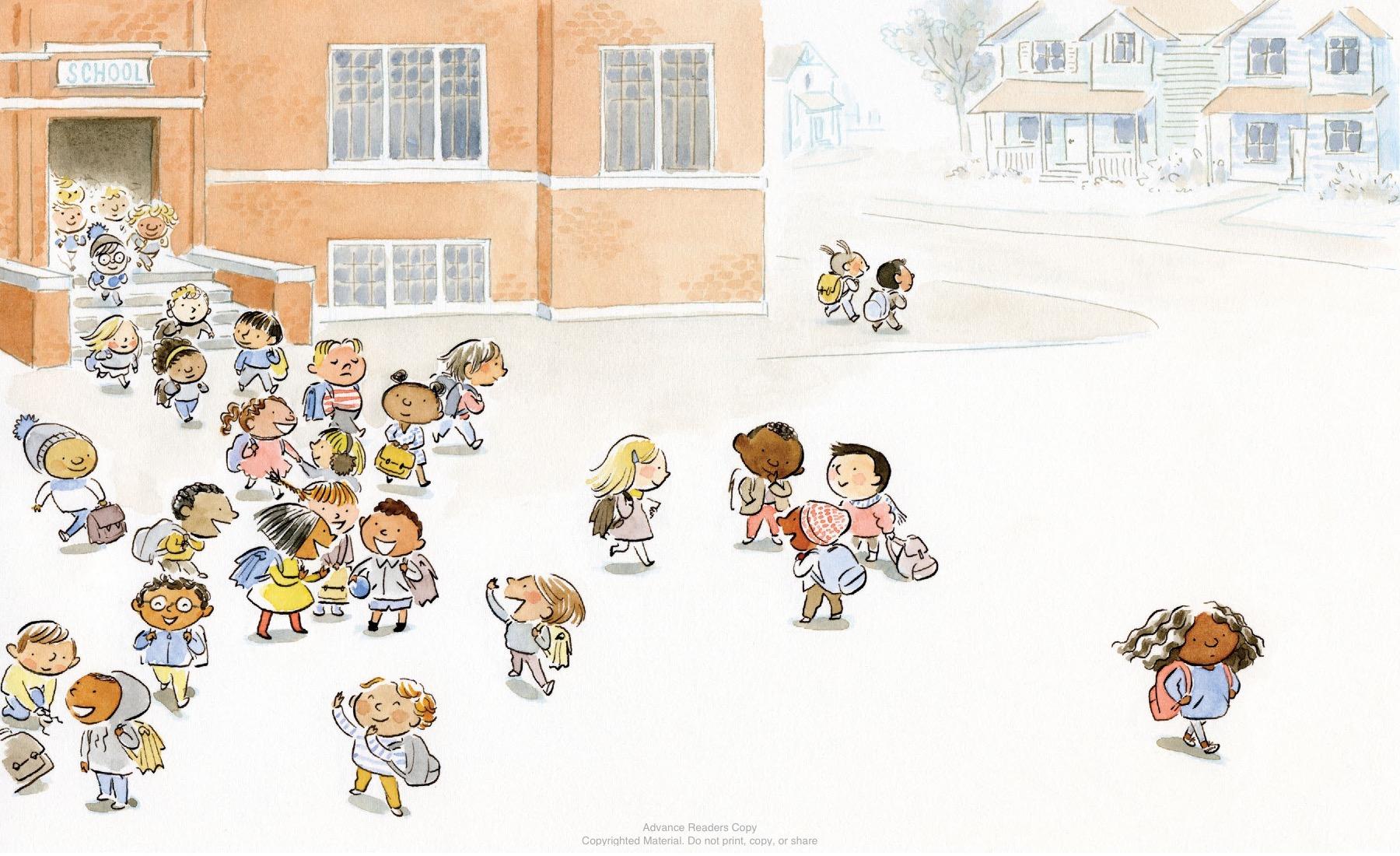
My Review: I was very fortunate to receive an F&G of this book at ALA Midwinter. Whew! I was told that this book was inspired by a true story of a large group of students who walked with a student who was being bullied. It’s really quite magical. This is the kind of book that will appeal to a wide assortment of readers at a wide range of ages. I wouldn’t be surprised if this book rakes in a few awards next year. The story is beautifully done. It inspired some great conversations with my four-year-old. We were able to point to each of the characters and talk about what they were doing in each situation. That said, if I had to place this book in one age group, I think it would make a great fit at the early elementary school level.  

Teachers’ Tools for Navigation: This is a phenomenal book to talk about the bystanders. It would pair beautifully with Jacqueline Woodson’s Each Kindness. When I read this with my son, we spent a lot of time point out several of the students on the pages. We talked about what each of them were doing and in some cases, what they weren’t doing. This book is a must-read.

Discussion Questions: Why do you think the illustrator team chose to make the book wordless? How does this make the book more or less powerful for you?; What emotions do you see in the characters? Why are they feeling the way that they feel?; Do bystanders have a responsibility?

Flagged Passage: 

Image from Amazon

Read This If You Loved: My Friend Maggie by Hannah E. Harrison; Each Kindness by Jacqueline Woodson (Kellee’s Review | Ricki’s Review); Be Kind by Pat Zietlow Miller

Recommended For: 

readaloudbuttonsmall classroomlibrarybuttonsmall

RickiSig

George the Hero Hound by Jeffrey Ebbeler

Share

George the Hero Hound
Author: Jeffrey Ebbeler
Published March 20th, 2018 by Two Lions

Summary: George is a good ol’ hound dog. He helps Farmer Fritz with the chores and—most important of all—he keeps those sneaky cows out of the cornfield.

Then Farmer Fritz moves away, and a new family from the city moves in. The Gladstones have a lot to learn. George tries to help, but they don’t understand his job on the farm…until the day little Olive goes missing, and George shows everyone what it means to be a hero hound!

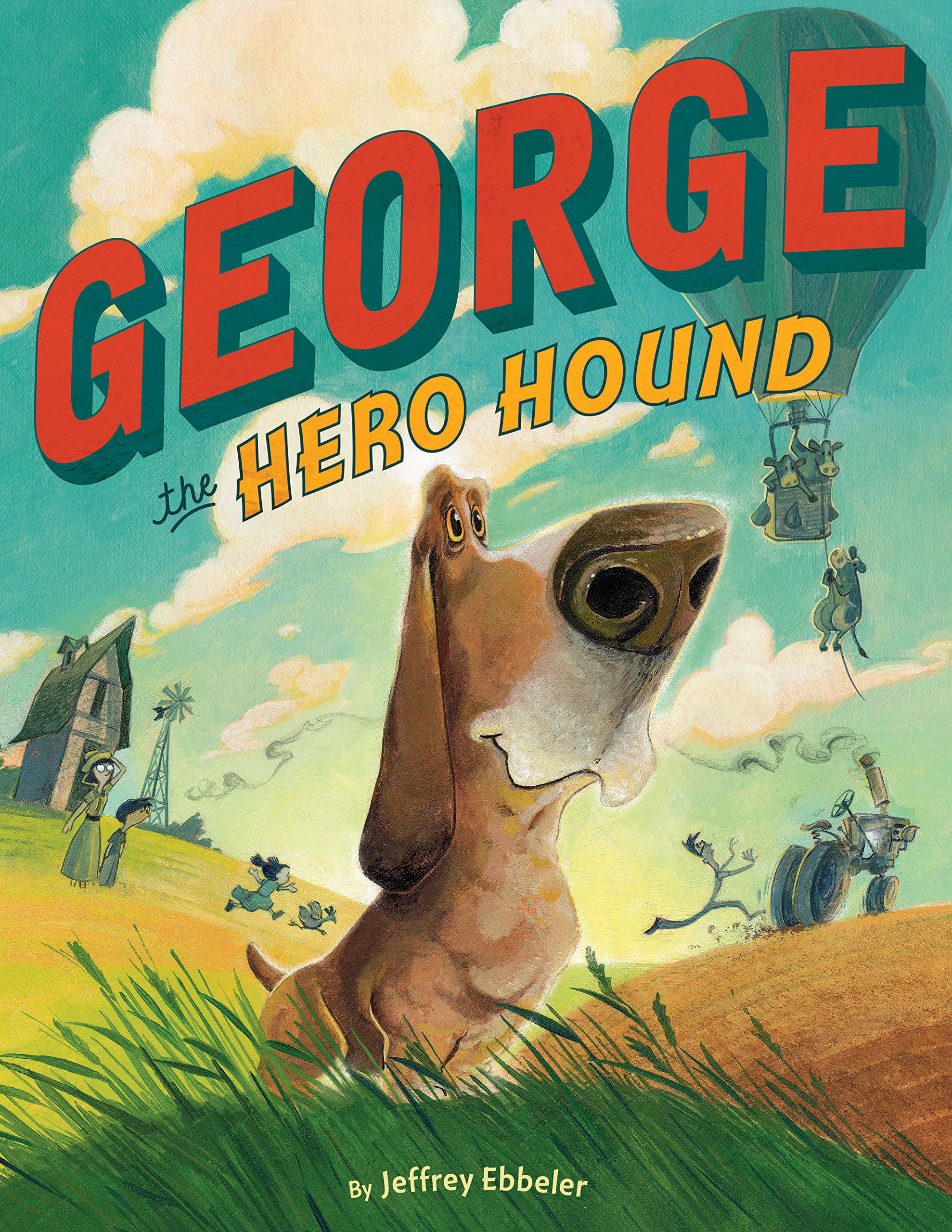
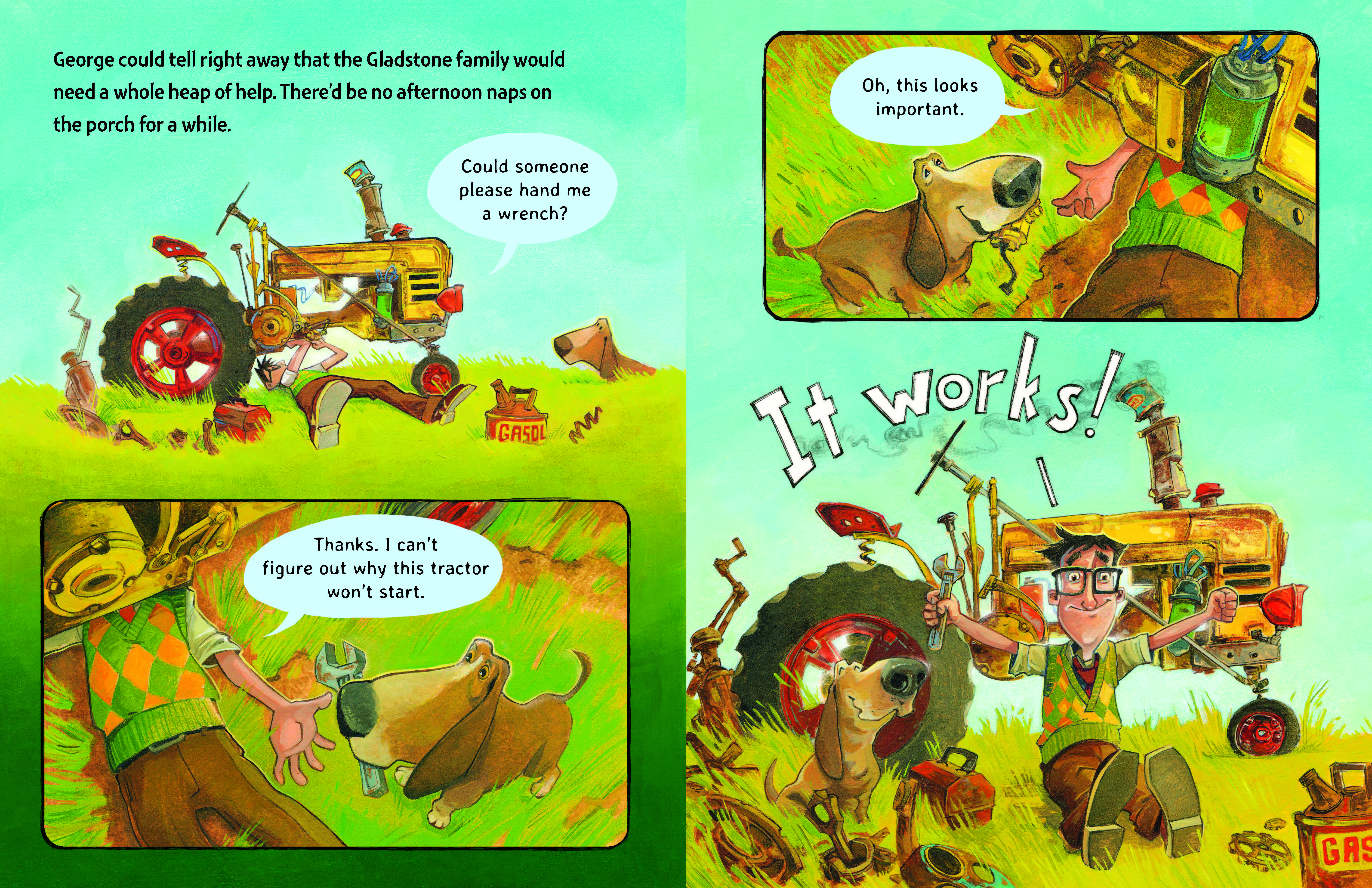
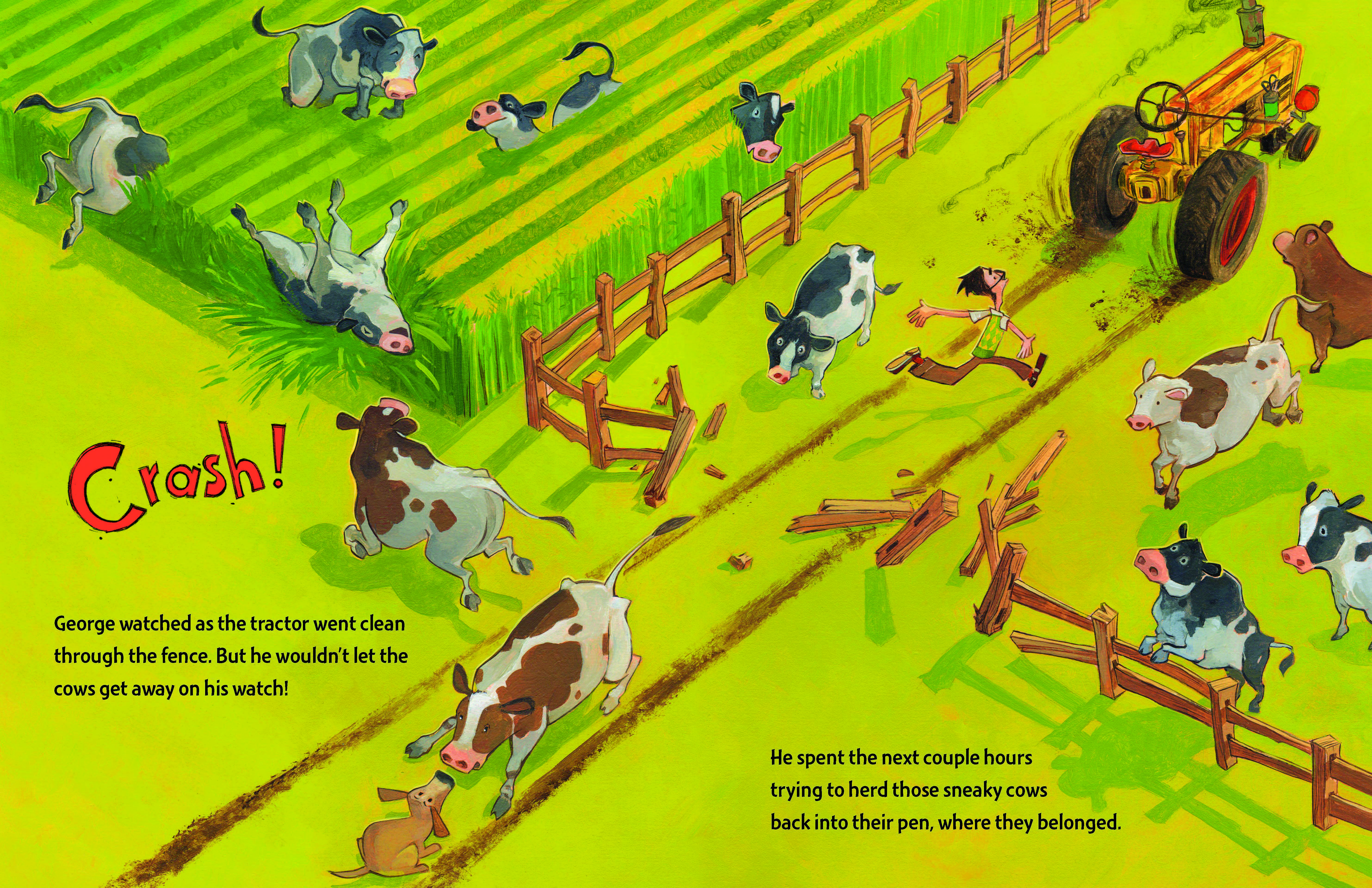
ReviewFirst, I have to talk about how much I just love George, his expressions, and his story. Just look at that cover! Don’t you want to just follow him around?! But you want to know what made the story for me? The extra story that was told through the illustrations. George’s story that is told through the text is a look at figuring out home when things change and dealing with a new situation, and George is definitely the hero in all of it; however, it is the hilarious stories told in the background that add just the extra HAs! to the story. Watch for the cows to make some Mission Impossible-esque moves and for the Gladstones to make some silly mistakes.

Teachers’ Tools for Navigation: What a great way to introduce storytelling through words and illustrations. When I did my Caldecott unit with my middle schoolers, so many of them didn’t know how to read a story without being told it in words. Use the illustrations in the background for a creative writing prompt to have students write an alternate text for each page using what is going on in the background of the told story.

George’s tale would also be a good text to use to introduce theme and the idea that a text can have more than one theme, depending on which character you are learning from.

Discussion Questions: 

  • How is George a hero?
  • What do you think the cows’ master plans include?
  • How are the Gladstones different from Farmer Fritz?
  • What are clues that the Gladstones are from the city?
  • How does the author indicate dialogue versus narration?
  • What is a clue that would have told the Gladstones George’s name?

Flagged Passages: “George was a good old hound dog. Every day George was up, even before the chickens, to help old Farmer Fritz with the cores. That rust-bucket tractor was always falling apart. . . and those wily cows were always plotting to get out and feast on the cornfield.”

And some passages from after the Gladstone family moves in:

Read This If You Love: Officer Buckle and Gloria by Peggy Rathman; My Dog is the Best by Laurie Ann Thompson; Click, Clack, Moo by Doreen Cronin; Farmer Duck by Martin Waddell; Chicken Dance by Tammi Sauer

Recommended For: 


Signature

**Thank you to Two Lions for providing a copy for review!**

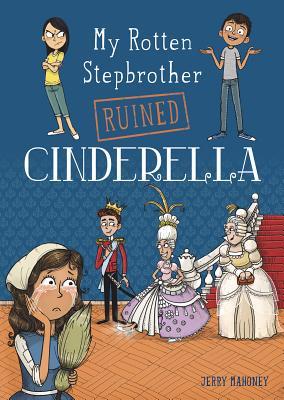
My Rotten Stepbrother Ruined Cinderella by Jerry Mahoney

Share

My Rotten Stepbrother Ruined Cinderella
Author: Jerry Mahoney
Illustrator: Aleksei Bitskoff
Published August 1st, 2017 by Stone Arch Books

Summary: Holden, what have you done?! It wasn’t enough to ruin Maddie’s report on Cinderella, but now you’ve somehow broken the ACTUAL fairy tale? The ugly stepsister is marrying the prince and there’s no happy ever after! You need to fix this and the only way seems to be by entering the story. But beware: if you can’t mend it, you can never return…

ReviewEveryone! You listening?!?! If you or any of your students are a fan of the Whatever After series, you need to get this for you/them. It is a perfect companion for them! But don’t think that this is just a duplicate of the series, it is similar yet also so different! First, Holden and Maddie already don’t work well together, so going into the fairy tale is not only about fixing the fairy tale but also about fixing their relationship. Second, the fracturing of fairy tales gets even more ridiculous than you can even imagine. Third, Holden and Maddie are in the fairy tales as characters, not as themselves. I will say that both this book and the Mlynowski series looks at the problems in fairy tales and how the stories could be better told to make everyone happy.

(I will say the only “issue” I had was I really don’t like the negative connotation around step-siblings, so calling a step-brother rotten really doesn’t help that idea; however, I do like how Maddie has to learn that her opinion on her stepbrother may not be correct.)

Teachers’ Tools for Navigation: First and foremost, this book will be a hilarious read aloud and an independent reading books that will fall into so many hands. Additionally, in the backmatter of the book, the author includes a glossary including the harder vocabulary in the book, a think again section with three questions for readers to think about, and finally a section about how to write a ruined version of a favorite tale. All three of these activities help make the book even more useful in a classroom.

Discussion Questions: (From the “Think Again” section by the author)

  • Everyone has someone in their life like Holden, who’s unavoidable and hard to get along with. Who’s someone you’ve struggled to relate to, and what would you do if you had to work with him or her to “fix” a fairy tale?
  • There are details about the wicked stepsisters that weren’t in the original tale, such as Beautianna’s desire to go to art school. Think of a supporting character from one of your favorite books whom you wish you knew more about. Come up with your own ideas for his or her character traits, wants, and needs. You can even try to write the whole story from that character’s perspective.
  • What do you think of the questions Holden raises about Cinderella? Do you think he makes some good points, or would you be as annoyed with him as Maddie was? Pick another story you know well and try to imagine what Holden’s problems with that story might be.

Flagged Passages: “Maddie hadn’t seen her before, but she could tell this woman had plenty to be sad about, starting with her clothes. They were filthy, patched-up work clothes, and her hair was tied back with a rag. She sat in front of a pile of roses, and one by one, she plucked the thorns off each stem and placed them into a vase. Her hands were scratched and bruised from hours of performing this tedious, excruciating task. No wonder she was crying.

‘Do you need a tissue?’ Maddie asked her.

‘Tissue?’ the woman replied. ‘What’s a tissue?’ The woman turned her head and gazed at Maddie, confused.

Of course, Maddie thought. They don’t have tissues in fairy tales. They weren’t invented yet. While she wondered how to explain this, she had another realization. This wasn’t any ordinary, sad woman. She was kind and familiar, the most beautiful woman Maddie had ever seen. She had bright blue eyes and, underneath the rag on her head, hair that seemed to be made from pure gold.

‘Oh my gosh!’ Maddie exclaimed. ‘You’re–you’re Cinderella!’

‘You seem surprised to see me, Glamoremma,’ the young woman replied.” (p. 29-30)

Read This If You Love: Whatever After by Sarah Mlynowski, It’s NOT Jack and the Beanstalk by Josh Funk, Fractured fairy tales

Recommended For: 

Signature

**Thank you so much to the author for providing a copy for review!**

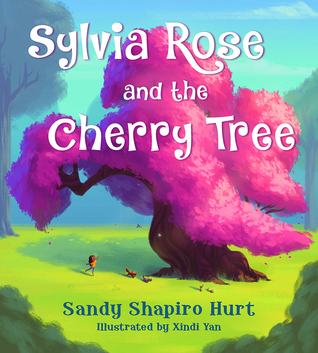
Sylvia Rose and the Cherry Tree by Sandy Shapiro Hurt

Share

Sylvia Rose and the Cherry Tree
Author: Sandy Shapiro Hurt
Illustrator: Xindi Yan
Published Tilbury House Publishers

Summary: This very strange tale began in May.

in a friendly forest on a sunny day

Skipping along a path in the wood

danced Sylvia Rose, and man, she was GOOD!

Laughing and leaping came Sylvia Rose,

Whirling and twirling on twinkly toes.

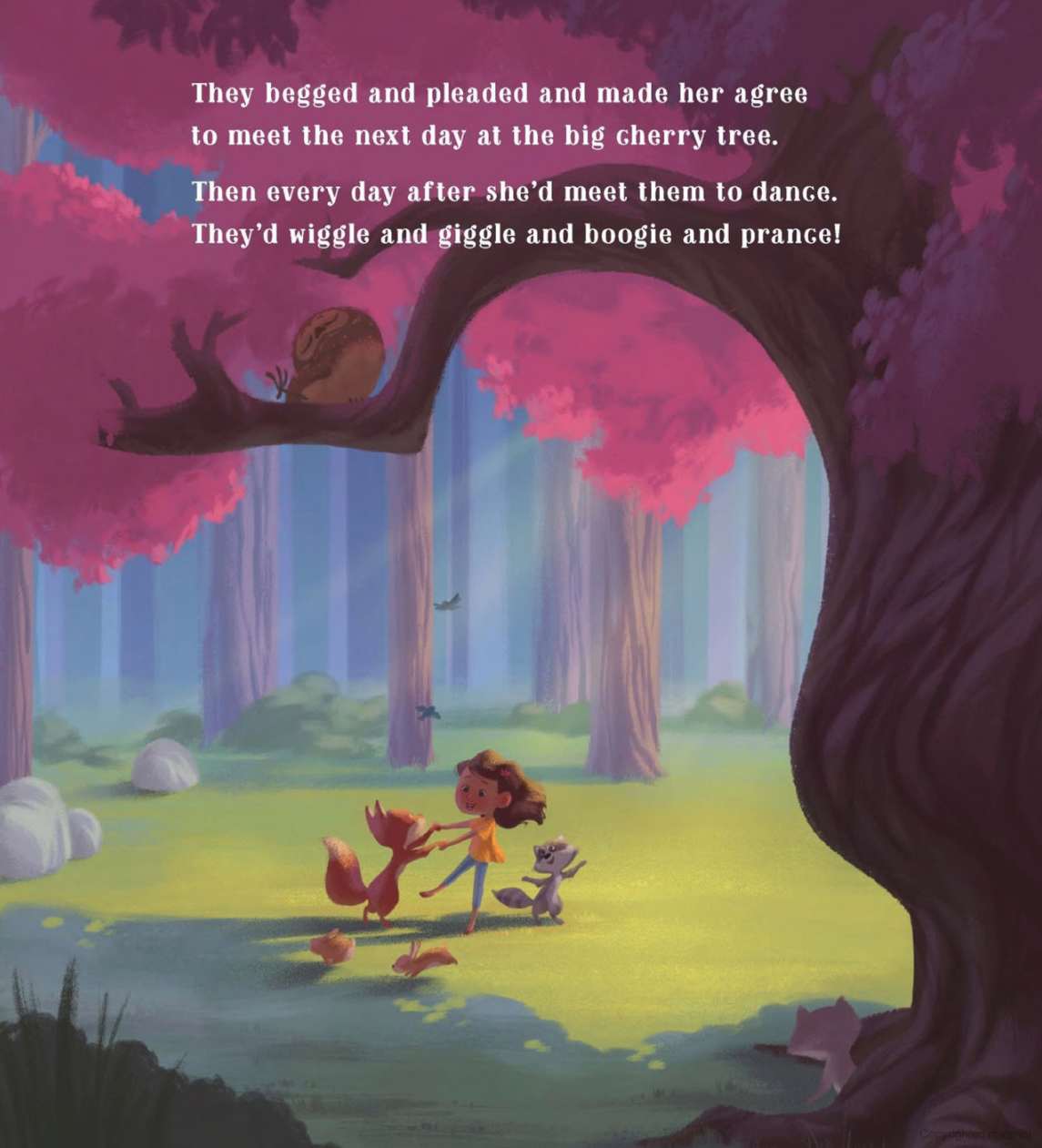
Bold, adventurous Sylvia Rose loves visiting the animals and trees of the forest. The girl and her favorite cherry tree share almost everything, including dancing and stories, but they can’t travel the world together because the tree is rooted deep in the earth. Determined to overcome this obstacle, Sylvia Rose enlists her animal friends to uproot the glorious tree, and Sylvia and the tree set off globetrotting together, taking in the wonders of the world from the Eiffel Tower to the Sydney Opera House, each sight more amazing than the last.

Back home in the forest, however, the animals begin to suffer without the food and shelter of their life-sustaining cherry tree. Can the tree give up her newfound freedom and return to her role in the forest ecosystem?

ReviewThis was such a fun book to read aloud! The rhyming and rhythm make it so sing-songy which always makes a book a pleasure to read aloud. Hurt was very smart with her rhymes and none of them seemed forced. She also kept a very specific rhythm throughout the book which made everything seem clean. I also was immediately taken by the artwork. Yan’s vibrant colors and exuberant characters really pull everything together, and as the reader I could not help but smile as Sylvia and the Cherry Tree go on their adventures. While reading, I was immediately excited for this book to make its way to classrooms, and I cannot wait to share it with my friend that teaches 2nd grade.

Teachers’ Tools for Navigation: Sylvia Rose and the Cherry Tree is a perfect mentor text for the introduction of rhyming and rhyme scheme because of the clear rhyming and easy pattern. Students could write their own story of one of the animals in the story using the rhyme scheme and rhythm of the book.

Sylvia Rose and the Cherry Tree also is a good story to use when talking about big ideas including priorities, fun vs. responsibilities, and homesickness. This discussion could also grow into one about theme.

Finally, cross curricularly the story could be used to look at habitats. The animals that live in the forest suffer when the Cherry Tree leaves because their home is no longer there. This conversation could also include why removing forests is detrimental to the wildlife in the area.

Discussion Questions: 

  • Why is the tree and all the animals immediately drawn to Sylvia Rose?
  • Why does the tree want to go on adventures?
  • What are some effects of the tree’s decision to go with Sylvia Rose?
  • Using clues in the illustration, where did Sylvia Rose and the Cherry Tree go visit?
  • Do you agree with the decision that the tree made in the end? Why or why not?

Flagged Passages: 

Read This If You Love: The Giving Tree by Shel Silverstein, The Day the Crayons Quit by Drew Daywalt, A Bad Case of the Stripes by David Shannon

Recommended For: 


Signature

Blog Tour with Review!: Granted by John David Anderson

Share

Granted
Author: John David Anderson
Published February 13th, 2018 from Walden Pond Press

Summary: From the author of beloved novels Ms. Bixby’s Last Day and Posted comes a hilarious, heartfelt, and unforgettable novel about a fairy-in-training.

Everyone who wishes upon a star, or a candle, or a penny thrown into a fountain knows that you’re not allowed to tell anyone what you’ve wished for. But even so, there is someone out there who hears it.

In a magical land called the Haven lives a young fairy named Ophelia Delphinium Fidgets. Ophela is no ordinary fairy—she is a Granter: one of the select fairies whose job it is to venture out into the world and grant the wishes of unsuspecting humans every day.

It’s the work of the Granters that generates the magic that allows the fairies to do what they do, and to keep the Haven hidden and safe. But with worldwide magic levels at an all-time low, this is not as easy as it sounds. On a typical day, only a small fraction of the millions of potential wishes gets granted.

Today, however, is anything but typical. Because today, Ophelia is going to get her very first wish-granting assignment.

And she’s about to discover that figuring out how to truly give someone what they want takes much more than a handful of fairy dust.

About the Author: John David Anderson is the author of Ms. Bixby’s Last Day, Posted, Sidekicked, Minion, and The Dungeoneers. A dedicated root beer connoisseur and chocolate fiend, he lives with his wife, two kids, and perpetually whiny cat in Indianapolis, Indiana. You can visit him online at www.johndavidanderson.org.

ReviewJohn David Anderson never ceases to amaze me. I have read all but one of his books, and I am learning that I cannot even guess what he’s going to tackle next; although, I can assume he is going to do it well!

But I will be honest, I would not have guessed that his newest would be about a super sweet, determined, and a bit quirky fairy named Ophelia Fidgets. But yes, Ophelia is our phenomenal fairy protagonist who every reader will immediately love. She is a perfectionist but also does things her own way–she just has very high standards for her own way. She also has a silly sidekick in both Charlie, a fellow granting fairy, and Sam, a homeless dog, and I must say that Anderson does one of the best dog voices I’ve ever read, I could hear it while I read.

Other than the characters, I think there were two other things that this novel did exceptionally well: world building and making the reader think about priorities. Everywhere Ophelia went, Anderson described enough to make sure that we could visualize it, but he also ensured that he didn’t overwhelm the reader with too much information. He also did a truly fantastic job at setting up the fairy world and all the rules within it to where the reader understood Ophelia’s task, her job, etc. Also, through Ophelia’s journey to grant the wish she’s been assigned, Anderson gets the reader to look at wishing and what is truly important in the world.

Lastly, I loved that in the backmatter of the book, Anderson acknowledges the long history of fairies, including Tinkerbell!, and reminds readers to keep reading about them.

Teachers’ Tools for Navigation: Like all of Anderson’s books, I know this one will find readers on my shelves. This book is perfect for fans of fairy, animal, or quirky adventure books. And it will also be a wonderful read aloud! Even if you don’t have enough time to read the entire book, the first chapter and synopsis will truly suck readers in.

Discussion Questions: 

  • What does Sam teach Ophelia?
  • Why does Ophelia make the choice she does make when granting the wish?
  • Do you agree with Ophelia or Squint when it comes to wish granting?
  • Do you believe that Charlie deserved the punishment he received?
  • What character traits does Ophelia possess that led her on not giving up?
  • How does Granted allude to other fairy tales you know? How does it break fairy stereotypes often found in other fairy tales?

Flagged Passages: “The last time you blew out your birthday candles, what did you wish for?

Did you blot them all out on the first breath? It doesn’t count otherwise. Also, do not let your brother or sister help you; at best they will waste your wish. At worst they will steal it for themselves.

Same for dandelions–the one breathe rule–or else the wish won’t fly. It’s harder than you think, getting all those seeds off in one huff. Harder than candles on a cake. If you can’t manage it, though, don’t worry. There are a dozen more ways to make a wish. A quarter flipped into a fountain. A penny dropped down a well. Some might tell you that bigger coins make stronger wishes, but that’s simply not true. A silver dollar or even a gold doubloon doesn’t increase the chances you’ll get what you want. Your dollar is better spent on gumballs or ice cream; use a nickel instead. Wishes aren’t for sale to the highest bidder.” (p. 1-2)

And my favorite passage:

“‘Humans are bad,’ [Sam] agreed.

Ophelia stopped fidgeting with her petal and looked over at Sam. Of course he would think so. And she couldn’t blame him. Not after how he’d been treated. She leaned into him, nestling in his fur.

‘Maybe they’re not all bad,’ she amended. ‘They just lose sight of what’s important sometimes, worrying so much about what they don’t have that they forget what they’ve already got.’

‘Like home,’ Sam said.” (p. 207)

Read This If You Love: Tinker Bell, Folk lore about fairies, Wishapick by M.M. Allen, Spiderwick Chronicles by Holly Black, Seekers by Erin Hunter, Mez’s Magic by Eliot Schrefer

Recommended For: 

Signature

**Thank you to Danielle at Blue Slip Media for setting up the blog tour!**